


 Tiếng Việt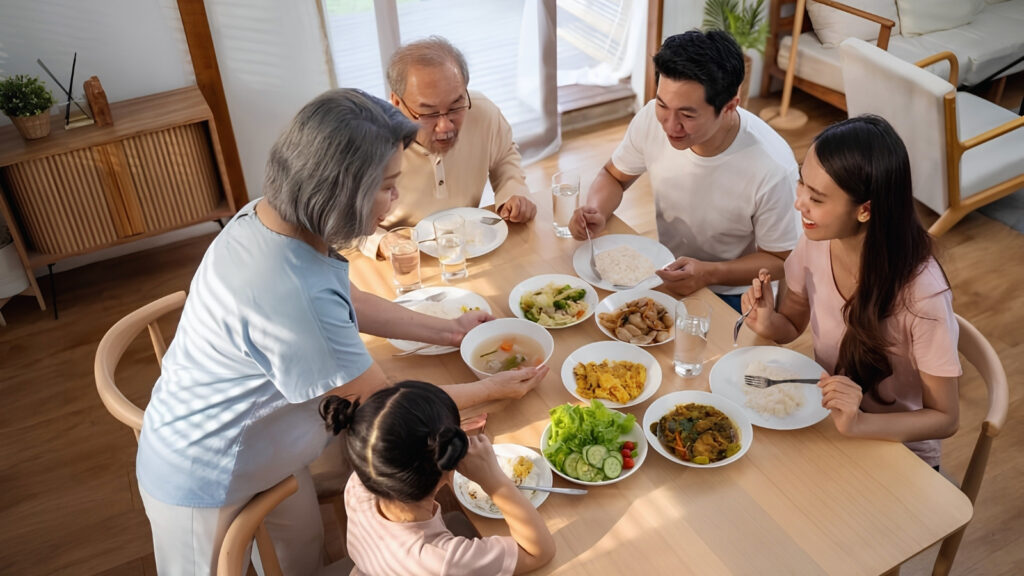
The first sign that you’re beginning to understand Vietnam probably won’t happen at a famous landmark.
It might happen around a family dinner table.
You slip off your shoes at the front door, following your host’s quiet example. A cup of hot green tea appears in your hands before you’ve had time to look around. Three generations gather around a table filled with shared dishes, yet no one reaches for the food. Everyone waits until the oldest family member picks up their chopsticks. A few minutes later, someone places another spring roll into your bowl with a smile.
“Please, eat a little more.”
It’s a simple meal, but it reveals something profound.
In Vietnam, customs aren’t performed for visitors or preserved only for festivals. They’re part of everyday life—woven into family dinners, neighborhood conversations, temple visits, and countless small acts of kindness that locals rarely think twice about.
Understanding these traditions does more than help you avoid cultural mistakes. It helps you understand why Vietnamese people welcome guests so warmly, why family remains at the heart of society, and why even the smallest everyday interactions often carry deeper meaning.
Whether you’re exploring Hanoi’s Old Quarter, cruising through the Mekong Delta, or sharing coffee with locals in Ho Chi Minh City, these are the Vietnamese customs and traditions that will help you experience Vietnam beyond its famous sights.
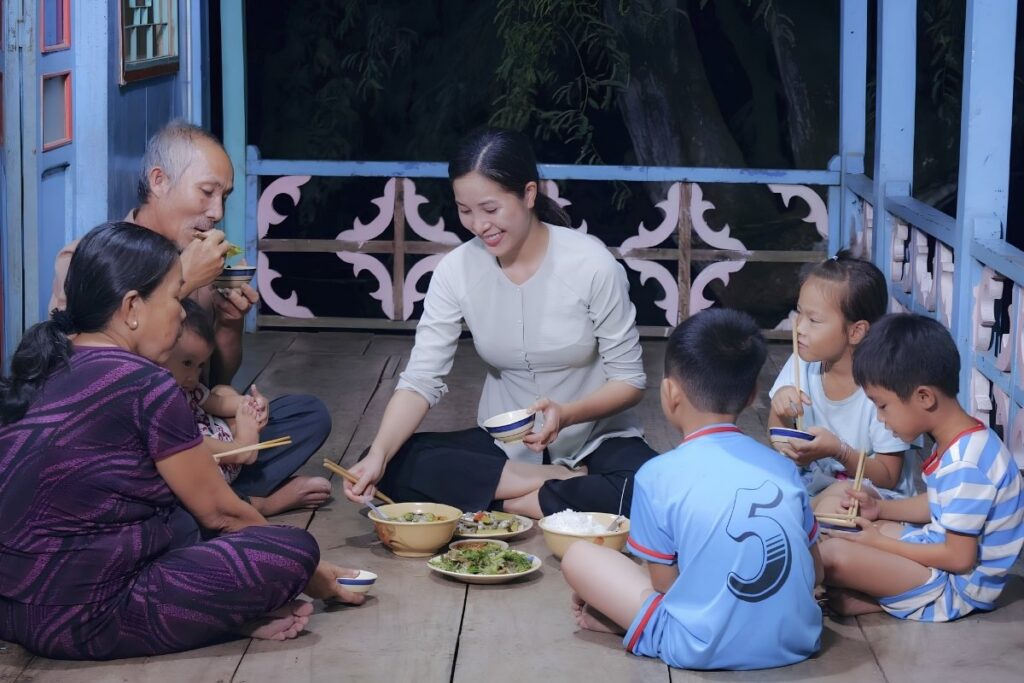
Table of Contents
Vietnam Makes More Sense Once You Understand Its People
Your first few hours in Vietnam can feel wonderfully overwhelming.
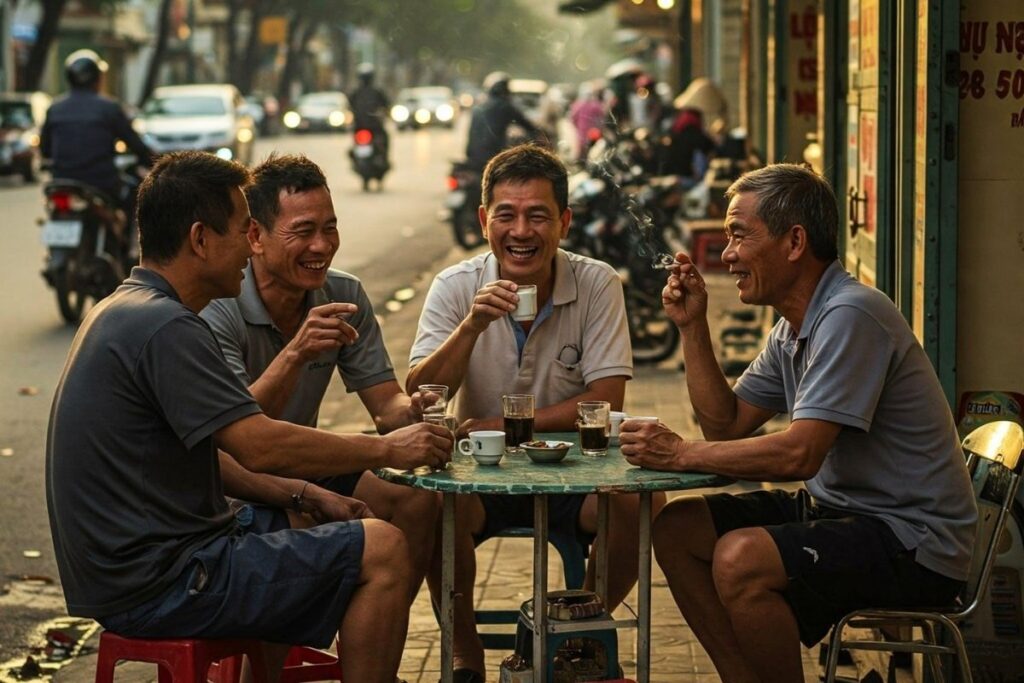
Motorbikes flow through intersections with astonishing precision. Sidewalks transform into breakfast cafés before sunrise. Street vendors balance baskets of tropical fruit while office workers sip iced coffee on tiny plastic stools. Everywhere you look, life seems energetic, colorful, and constantly moving.
At 5:30 every morning, Hoan Kiem Lake slowly fills with retirees practicing tai chi, grandparents pushing strollers, and office workers stopping for breakfast before heading to work. It’s an ordinary weekday scene—but one that quietly reveals how community shapes daily life in Vietnam.
Then something unexpected happens.
A hotel receptionist remembers your name after just one conversation.
A market vendor slips an extra piece of fruit into your bag with a smile.
A family you’ve only just met insists that you join them for lunch.
Someone asks whether you’re married before asking what you do for a living.
For many first-time visitors, these moments are surprising—not because they’re unusual, but because they don’t always fit the social expectations they bring from home.
And that’s exactly why understanding Vietnamese customs matters.
The customs you’ll encounter in Vietnam aren’t simply a collection of etiquette rules. They’re everyday expressions of values that have shaped Vietnamese society for centuries: respect for family, hospitality toward guests, gratitude for previous generations, and the belief that strong relationships are more important than individual convenience.
Once you begin seeing those values behind everyday interactions, Vietnam starts to feel less unfamiliar—and much more welcoming.
Quick Answer: What Are Vietnamese Customs and Traditions?
Vietnamese customs and traditions are the everyday social practices that reflect the country’s core cultural values. They influence how people greet one another, share meals, welcome guests, celebrate festivals, honor ancestors, and interact with family members and the wider community.
Although customs vary across different regions of Vietnam, several values remain remarkably consistent throughout the country:
- Family comes before the individual.
- Respect for elders is deeply rooted in everyday life.
- Hospitality is expressed through generosity rather than formality.
- Harmony is often valued over direct confrontation.
- Remembering previous generations is considered an important part of family life.
- Community relationships often matter as much as personal independence.
Visitors don’t need to memorize every custom before arriving.
Understanding these values is usually enough to make everyday interactions feel natural and enjoyable.
Why Understanding Customs Will Change Your Trip
Many travelers spend weeks researching where to eat, which beaches to visit, or how to get from Hanoi to Ha Long Bay.
Far fewer spend time learning how Vietnamese people think.
That’s a missed opportunity.
The difference between a good trip and an unforgettable one often has very little to do with famous attractions.
Instead, it comes from the moments that aren’t listed in guidebooks.
Sharing dinner with a local family.
Being invited to drink tea by a shop owner.
Watching three generations gather around the same table on a Sunday evening.
Joining thousands of local residents for an early morning walk around Hoan Kiem Lake.
These experiences become far more meaningful when you understand the customs behind them.
Without context, a Vietnamese host insisting that you take another helping of food may seem unusually persistent.
With context, you realize they’re expressing kindness in one of the most traditional ways they know.
Without context, questions about your age or family might feel unexpectedly personal.
With context, they become a friendly attempt to understand how to relate to you respectfully.
Learning a little about Vietnamese customs doesn’t simply help you avoid awkward situations.
It helps you experience Vietnam through the eyes of the people who live there.
Vietnam Is a Culture Built on Relationships
One idea explains more about Vietnam than perhaps any other.
Anthropologists often describe Vietnamese society as relationship-oriented, shaped by centuries of Confucian influence and extended family traditions.
In many Western cultures, people often define themselves through personal achievements, independence, or individual goals.
In Vietnam, identity has traditionally been understood through relationships.
Someone is a daughter.
A grandfather.
A teacher.
A neighbor.
A guest.
A lifelong friend.
These roles influence everyday interactions in ways visitors quickly begin to notice.
A younger person waits for an elder before beginning a meal.
Family members travel across the country for Tet to reunite with parents and grandparents.
A shop owner spends extra time helping a customer instead of rushing to the next sale.
Neighbors greet one another each morning outside local cafés.
Relationships aren’t treated as separate from daily life.
They are daily life.
This relationship-centered way of thinking has been shaped by centuries of Confucian philosophy, village traditions, ancestor remembrance, and close-knit family structures. While modern Vietnam has changed dramatically over the past few decades, these cultural foundations continue to influence how people communicate, celebrate, and care for one another.
Vietnam is also home to 54 officially recognized ethnic groups, each contributing its own customs, festivals, languages, and traditions to the country’s cultural identity. While everyday customs differ from region to region, many core values—family, respect, and hospitality—are shared across communities.
For visitors, recognizing this perspective makes countless everyday customs easier to understand.
Customs Are About Values, Not Rules
When people hear the word “customs,” they often think about rules.
Remove your shoes.
Use both hands.
Dress modestly.
Wait for older people before eating.
Those customs certainly exist.
But treating them as isolated rules misses the bigger picture.
Imagine entering a Vietnamese home.
Your host offers you tea before asking your name.
Grandparents are greeted before everyone else.
The best food is quietly placed onto your plate.
Nobody raises their voice, even when opinions differ.
These actions aren’t happening because someone memorized a list of etiquette.
They’re expressions of values that most Vietnamese people begin learning in childhood.
Respect.
Hospitality.
Gratitude.
Humility.
Harmony.
Once you understand those values, individual customs begin to feel logical rather than surprising.
That’s why travelers who approach Vietnam with curiosity often leave with much deeper memories than those who simply visit famous attractions.
A Country Where Old and New Live Side by Side
One common misconception is that traditional customs belong only to Vietnam’s past.
The reality is much more interesting.
Walk through Ho Chi Minh City today and you’ll see people paying for coffee with QR codes, attending startup networking events, and working from modern coworking spaces.
A few hours later, many of those same people return home to eat dinner with their parents, light incense at the family altar, or prepare for a weekend gathering with grandparents.
Modern life hasn’t replaced Vietnamese traditions.
Instead, the two have learned to coexist.
That’s one of the most fascinating aspects of contemporary Vietnam.
Visitors don’t experience a country trapped in history.
They experience a society where centuries-old customs continue to evolve alongside one of Asia’s fastest-growing economies.
Understanding this balance helps explain why Vietnam feels both familiar and wonderfully different at the same time.
What You’ll Discover in This Guide
Vietnam’s customs aren’t defined by a single tradition or etiquette rule. Instead, they’re woven into the rhythm of everyday life—in family dinners, neighborhood cafés, temple visits, holiday celebrations, and countless small interactions that visitors experience throughout the country.
In this guide, you’ll discover why family remains at the heart of Vietnamese society, how respect for elders shapes daily life, and why hospitality often leaves such a lasting impression on travelers. You’ll also explore the traditions behind ancestor remembrance, the subtle art of indirect communication, and the ways regional customs vary from North to South.
Most importantly, you’ll see how these traditions continue to evolve in modern Vietnam, where QR-code payments, startup culture, family altars, and Tet reunions all coexist in everyday life.
Rather than offering a checklist of cultural dos and don’ts, this guide explains the values behind Vietnamese customs—helping you understand not only what people do, but why those traditions continue to shape one of Southeast Asia’s most fascinating cultures.
By the time you finish reading, you’ll likely discover that Vietnam’s greatest attractions aren’t only its breathtaking landscapes, world-famous cuisine, or historic landmarks.
They’re the people—and the customs that quietly bring them together.
Family First — The Foundation of Vietnamese Customs and Traditions
“If you want to understand Vietnam, don’t begin with its temples or festivals. Begin with its families.”
Ask a Vietnamese person what matters most in life, and you’ll hear many different answers.
Health.
Happiness.
Education.
Meaningful work.
But woven through nearly every answer is something deeper:
Family.
In Vietnam, family is more than the people you live with.
It is your first community, your strongest support system, and often the lens through which life’s biggest decisions are made. From childhood to old age, family relationships influence how people celebrate, communicate, care for one another, and define success.
For many Western visitors, this is one of the most noticeable cultural differences.
In societies that often celebrate independence and individual achievement, adulthood is frequently associated with leaving home, making your own decisions, and building your own path.
Vietnam tells a different story.
Here, becoming independent doesn’t necessarily mean becoming separate.
Home Is Where Everyday Life Happens
One of the simplest ways to understand Vietnamese culture is to observe what happens around dinner time.
As offices close and schools empty, streets fill with people heading home.
Parents pick up children.
Grandparents prepare evening meals.
Neighbors stop to chat outside their houses before joining their families for dinner.
Inside many homes, the television may be on in the background, but it rarely becomes the center of attention.
The dining table does.
Dinner is more than a meal.
At around 6 p.m., narrow streets across Vietnam begin to change. Scooters pull into family courtyards, the aroma of simmering soup drifts from open kitchens, and grandparents wait at the doorway for children returning from school. Within minutes, three generations are gathered around the same table.
It’s the moment when families reconnect after a busy day.
Parents ask about school.
Children talk about their friends.
Grandparents share neighborhood news or family stories.
Phones are often set aside—not because of strict rules, but because conversation still matters.
Even as modern work schedules become busier, many Vietnamese families continue to protect this daily ritual whenever possible.
For visitors staying in a homestay, these shared meals often become the most memorable part of the trip—not because of the food alone, but because they offer a glimpse into everyday Vietnamese life.
Three Generations Under One Roof
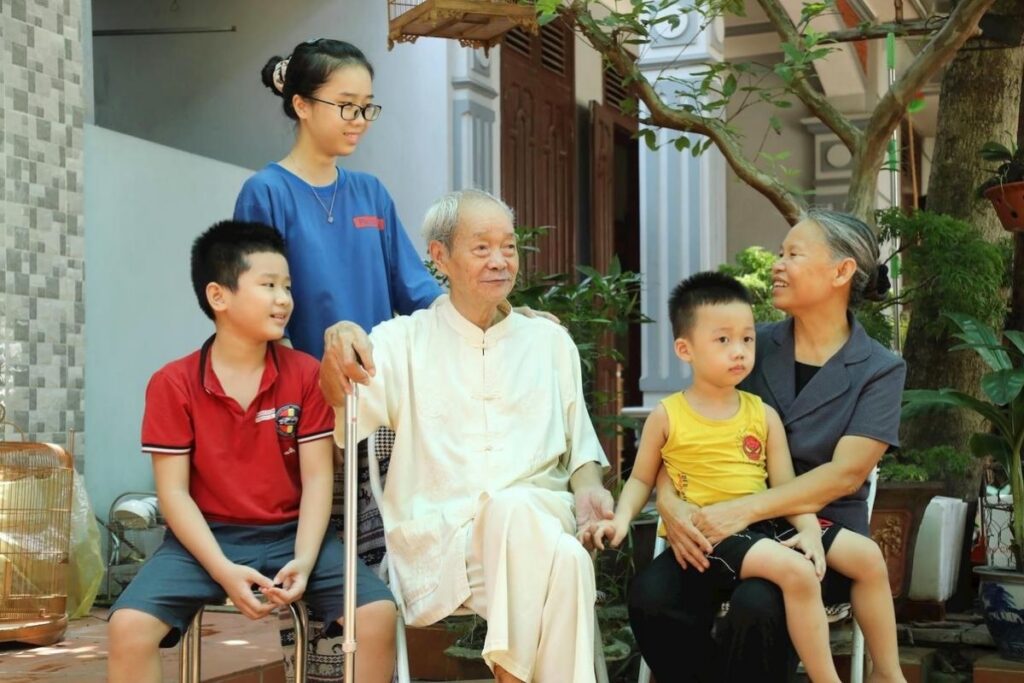
Although living arrangements are changing, multigenerational households remain common throughout Vietnam.
Grandparents, parents, and children may all live in the same home, sharing both responsibilities and daily routines.
To visitors from countries where older adults often live independently or in retirement communities, this can feel unfamiliar.
In Vietnam, it’s simply another expression of family life.
Grandparents help care for young children while parents are at work.
Adult children support aging parents.
Important decisions are discussed together.
Daily life becomes a shared responsibility rather than an individual one.
Even families who no longer live together often remain closely connected.
It’s common for adult children to visit their parents several times a week, call every day, or travel home during holidays and important family events.
Distance doesn’t necessarily weaken family ties.
Respect Begins Long Before Adulthood
Family is also where Vietnamese children first learn many of the customs visitors later observe.
Children are taught to greet older relatives politely.
To wait for elders before beginning a meal.
To listen before speaking.
To help prepare food during family gatherings.
These habits aren’t usually introduced through formal lessons.
They’re learned through observation.
Children watch parents caring for grandparents.
Older siblings helping younger ones.
Relatives working together during weddings, memorial ceremonies, or Tet celebrations.
Over time, respect becomes less about following rules and more about understanding one’s role within the family.
That early education continues to influence Vietnamese society well into adulthood.
Success Is Often Shared
Visitors sometimes notice another cultural difference when talking with Vietnamese friends.
Achievements are rarely described as purely personal.
A university graduate may speak first about the sacrifices their parents made to pay for school.
A successful entrepreneur may describe building a business as a way to give their family a better life.
Someone working abroad often sends money home to support parents or younger siblings.
This doesn’t mean Vietnamese people lack personal ambition.
Modern Vietnam is filled with innovators, artists, engineers, entrepreneurs, and professionals pursuing individual dreams.
What often distinguishes those dreams is that success is viewed as something to be shared.
Personal achievement becomes even more meaningful when it benefits the people who helped make it possible.
Family Gatherings Are Part of the Culture
If you happen to walk through a Vietnamese neighborhood on a weekend, you’ll probably notice one thing.
People gather.
Birthdays bring together several generations.
Engagement ceremonies fill homes with relatives.
Weekend lunches stretch well into the afternoon.
During Tet, millions of people travel across the country—not for vacations, but to return home. Every year, Tet triggers one of the largest seasonal migrations in Southeast Asia as workers, students, and families travel back to their hometowns for reunions. During the weeks surrounding the Lunar New Year, airports, train stations, and highways across Vietnam operate at their busiest, reflecting the holiday’s importance as a family celebration rather than simply a public holiday.
For visitors, this annual migration is astonishing.
Flights sell out.
Highways become crowded.
Train stations overflow with travelers carrying gifts, flowers, and luggage.
Yet the reason is beautifully simple.
Home is where Tet begins.
No matter how modern Vietnam becomes, the Lunar New Year remains, above all else, a family celebration.
Returning home isn’t simply tradition.
For many people, it feels essential.
Family Hospitality Extends to Guests
One of the most charming aspects of Vietnamese family life is how quickly visitors are welcomed into it.
If you’re invited to someone’s home, you may notice that everyone immediately starts looking after you.
Someone brings tea.
Another person slices fruit.
The best seat is quietly offered to you.
Children are encouraged to greet you.
Grandparents ask where you’re from.
Before long, you may feel less like a visitor and more like a distant relative.
This warmth isn’t accidental.
In Vietnamese culture, treating guests well reflects positively on the entire family.
Hospitality isn’t measured by luxury or elaborate decorations.
It’s expressed through thoughtfulness.
Making sure you’ve eaten.
Making sure you’re comfortable.
Making sure you don’t leave empty-handed.
Many travelers say these simple acts of generosity become some of their strongest memories of Vietnam.
The Family Altar: A Quiet Reminder of Where We Come From
In many Vietnamese homes, visitors notice a beautifully arranged altar placed in a prominent location.
Fresh flowers.
Seasonal fruit.
Family photographs.
Incense.
At first glance, it may appear to be purely religious.
In reality, it reflects something even broader.
It reminds each generation that they are part of a much longer family story.
Parents explain to children who the photographs belong to.
Grandparents tell stories about relatives they remember.
During important holidays, families gather before the altar to express gratitude to those who came before them.
This tradition reinforces an idea that appears throughout Vietnamese culture:
The family doesn’t begin with the people sitting around today’s dinner table.
It stretches backward through generations and forward into the future.
A Modern Family Looks Different—but Feels Familiar
Like every society, Vietnam continues to evolve.
Young professionals move to large cities.
More couples establish independent households.
Women pursue careers across every profession.
Children study overseas before returning home—or sometimes build lives abroad.
Daily routines look very different from those of previous generations.
Yet many values remain surprisingly consistent.
Families still reunite for important holidays.
Parents remain deeply involved in their children’s lives.
Grandparents continue to play a central role in raising younger generations.
Technology has changed how families communicate, but not necessarily how they care for one another.
Video calls replace some visits.
Family group chats replace handwritten letters.
The connections remain.
Why Understanding Family Changes Everything
By now, you may have noticed that many Vietnamese customs share the same starting point.
Why are elders greeted first?
Because family teaches respect.
Why are guests encouraged to eat more?
Because hospitality begins at home.
Why do people return home for Tet?
Because family comes before celebration.
Why are ancestor altars treated with such care?
Because family extends beyond the present generation.
Once you understand the importance of family, many other Vietnamese customs stop feeling like separate traditions.
They become chapters of the same story.
And perhaps that’s the best way to understand Vietnam itself.
Not as a country defined only by famous landscapes or historic landmarks, but as a society where family continues to shape the rhythm of everyday life—one shared meal, one conversation, and one generation at a time.
Respect for Elders — The Value You’ll Notice Everywhere in Vietnam
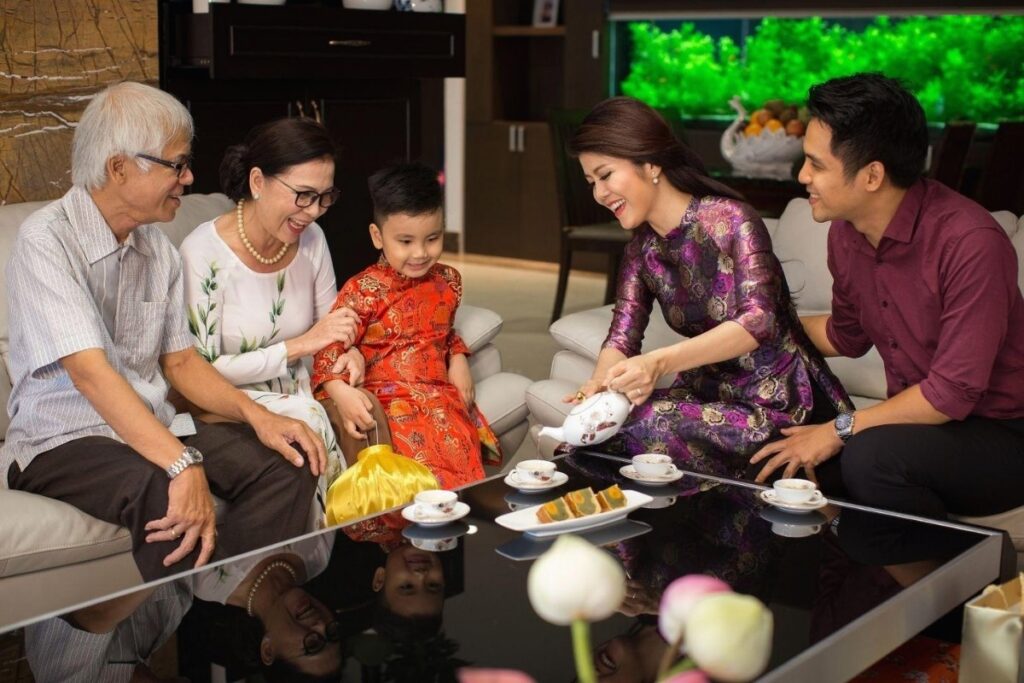
“In Vietnam, respect isn’t reserved for special occasions. It’s woven into everyday life, often in ways visitors don’t notice until someone points them out.”
One evening, you might be invited to dinner with a local family.
Everyone is seated around the table. The food is ready, the bowls are filled, and the conversation has already begun.
Yet nobody starts eating.
Instead, everyone waits.
Only after the oldest family member picks up their chopsticks does the meal quietly begin.
It’s a small moment—one that lasts only a few seconds.
But it reflects one of the oldest and most enduring values in Vietnamese culture: respect for elders.
For travelers, these moments appear everywhere once they know what to look for. They reveal not a society bound by rigid rules, but one where experience, gratitude, and family responsibility continue to shape everyday interactions.
Respect Begins with Everyday Actions
In many cultures, respect is expressed through formal ceremonies or important occasions.
In Vietnam, it’s often communicated through simple habits repeated every day.
A younger person stands to greet an older relative.
In Hanoi’s Hoan Kiem district, it’s common to see young office workers quietly giving up their seats on crowded buses without a word. The gesture is brief, almost unnoticed, yet it reflects the same respect taught at home from childhood.
The best seat at the table is quietly offered to a grandparent.
Tea is poured for elders before anyone serves themselves.
Children lower their voices when speaking to older family members.
None of these gestures is dramatic.
Most happen naturally, without discussion or instruction.
For Vietnamese people, they’re simply part of good manners.
Visitors sometimes expect respect to look formal or ceremonial.
Instead, it appears in dozens of ordinary moments that quietly reinforce family relationships.
Language Reflects Relationships
Perhaps nowhere is respect more visible than in the Vietnamese language.
English has one simple word:
“You.”
Vietnamese has many.
The word used depends not only on who you’re speaking to, but also on age, family relationship, and social context.
An older woman may be addressed as bà (grandmother).
A middle-aged woman may be called cô (aunt).
An older man might become chú or bác, depending on his age.
Someone only a few years older than you may be addressed as anh (older brother) or chị (older sister).
These terms aren’t limited to family.
They’re used with neighbors, shopkeepers, teachers, colleagues, and even people you’ve just met.
Rather than emphasizing distance, they create a sense of relationship.
For visitors, the system can seem wonderfully complicated.
Fortunately, Vietnamese people rarely expect foreigners to master it.
Simply making an effort is often appreciated.
Age Is About Respect, Not Status
Many Western visitors feel surprised when someone they’ve just met asks:
“How old are you?”
In some cultures, age is considered private.
In Vietnam, it’s often practical.
Knowing someone’s approximate age helps determine the most respectful way to address them.
The question isn’t usually about judging your age.
It’s about avoiding accidental disrespect.
This reflects a broader cultural difference.
Age is often associated with experience rather than social status.
Older people aren’t respected because they hold authority over everyone else.
They’re respected because they’ve lived longer, cared for their families, and accumulated knowledge that younger generations value.
Listening Can Be a Form of Respect
Visitors sometimes notice that younger Vietnamese people speak differently with parents or grandparents than they do with close friends.
Conversations are often calmer.
Interruptions are less common.
Advice is listened to carefully, even when younger family members ultimately choose a different path.
This doesn’t mean families always agree.
Like families everywhere, Vietnamese households have different opinions about careers, education, relationships, and lifestyle.
The difference often lies in how disagreement is expressed.
Many people prefer discussing sensitive topics privately rather than challenging an elder in front of others.
The goal isn’t to avoid honest conversation.
It’s to protect everyone’s dignity while keeping family relationships strong.
Respect Doesn’t End at Home
The influence of respect extends far beyond family life.
You’ll notice it in schools, where students greet teachers politely before class begins.
In offices, younger colleagues often acknowledge senior coworkers first during meetings.
At neighborhood gatherings, older residents are invited to speak before younger participants.
Even in busy cafés, it’s common to see younger customers offering seats to elderly people without being asked.
These gestures aren’t required by law or enforced through social pressure.
They persist because they’re widely viewed as thoughtful and considerate.
For visitors, recognizing these small interactions provides a deeper understanding of Vietnamese society than any history book alone.
Modern Life Has Changed the Way Respect Is Expressed
Vietnam today is one of Asia’s fastest-changing societies.
Young entrepreneurs build technology companies.
Students study overseas.
International workplaces encourage flatter organizational structures and more open discussions.
As lifestyles evolve, so do family relationships.
Many young Vietnamese now speak with their parents more casually than previous generations did.
Children who live abroad often maintain close family relationships through daily video calls instead of living under the same roof.
Yet despite these changes, the underlying value remains remarkably consistent.
Respect hasn’t disappeared.
It has adapted.
The form may change.
The intention remains.
What Travelers Should Know
Visitors aren’t expected to understand every cultural nuance.
Vietnamese people generally appreciate sincerity more than perfection.
If you’re spending time with local families, a few simple habits go a long way.
Greet older people first when entering a room.
Wait for your host to begin eating before starting your meal.
Accept tea, gifts, or business cards with both hands whenever practical.
Listen attentively when older people are speaking, even if you don’t understand every word.
These small gestures communicate something universal:
“I respect your home and your culture.”
And that’s far more important than memorizing complicated etiquette.
Respect Is the Thread That Connects Everything
By now, one pattern is becoming clear.
Respect for elders isn’t an isolated custom.
It explains many others.
Why do people ask your age?
To address you appropriately.
Why do family meals begin in a particular order?
To recognize senior family members.
Why are grandparents so central to family life?
Because their experience is valued.
Why do families travel extraordinary distances during Tet?
Because honoring older generations remains one of the year’s most meaningful traditions.
Each custom points back to the same idea.
In Vietnam, respect isn’t measured by grand speeches or formal ceremonies.
It’s expressed through countless quiet actions repeated every single day.
And for many travelers, those ordinary moments become one of the country’s most extraordinary lessons.
Vietnamese Hospitality — Why Visitors Often Feel Like Family
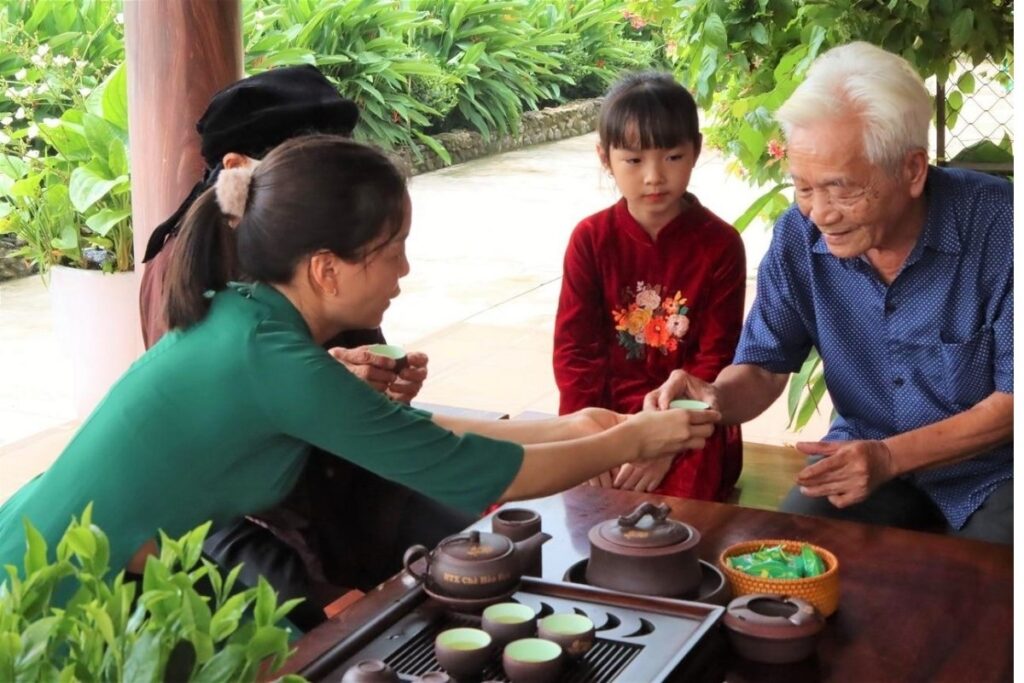
“Many travelers arrive in Vietnam expecting beautiful landscapes and incredible food. What they don’t expect is the kindness of complete strangers.”
Ask people what they remember most about Vietnam, and the answers often have little to do with famous landmarks.
They remember the café owner who refused to let them leave without trying homemade yogurt.
The elderly couple who invited them to sit down for tea after a brief conversation.
The market vendor who quietly added an extra mango to their bag with a smile.
The hotel receptionist who walked outside just to make sure they found the right taxi.
These aren’t extraordinary stories.
They’re everyday examples of something deeply rooted in Vietnamese culture:
Hospitality.
Across Vietnam, welcoming guests isn’t viewed as a special occasion. It’s simply part of being a good host.
Guests Are Treated as a Blessing
There’s an old Vietnamese saying:
“Khách đến nhà, không trà thì nước.”
A simple translation might be:
“When guests come to your home, always offer them something to drink.”
The saying isn’t really about tea or water.
It’s about the idea that no visitor should ever feel unwelcome.
Whether someone stays for five minutes or five hours, the instinct to offer tea, fruit, snacks, or a meal remains remarkably strong.
Even in homes with modest means, hosts often apologize that they “don’t have much to offer”—while placing a table full of food in front of their guests.
To many Western visitors, the apology seems unnecessary.
To Vietnamese hosts, it’s an expression of humility rather than a reflection of reality.
Why Everyone Wants You to Eat More
Few experiences are more memorable than sharing a meal with a Vietnamese family.
Just as you think you’ve finished eating, another piece of grilled fish appears in your bowl.
Someone passes you fresh herbs.
Another relative insists you try the spring rolls.
“Please, eat a little more.”
For visitors unfamiliar with the custom, this can feel surprisingly persistent.
Are they worried you’re still hungry?
Usually not.
In Vietnam, encouraging guests to eat is one of the simplest ways to express care.
Food has long represented security, generosity, and family. Offering another serving isn’t about your appetite—it’s about making sure you feel welcome.
A polite smile, genuine appreciation, and perhaps one final bite are often the perfect response.
“When we ask guests to eat more, we don’t think they’re still hungry,” says Mrs. Lan, a retired teacher in Hue. “It’s simply how we show we’re happy they’re here.”
Hospitality Doesn’t Depend on Wealth
One of the most remarkable aspects of Vietnamese hospitality is that generosity isn’t measured by the size of a home or the cost of a meal.
In the mountains of Ha Giang, a family may welcome visitors with tea made from leaves grown nearby.
In the Mekong Delta, a farmer may cut open a fresh coconut straight from the garden.
Along the central coast, fishermen might proudly invite guests to taste the morning’s catch.
The offering itself may be simple.
The intention behind it is not.
Visitors often discover that some of their warmest memories come from people who expected nothing in return.
Kindness Often Appears in Small Ways
Not every act of hospitality involves a family dinner.
Sometimes it’s much quieter.
A shopkeeper points you toward a better restaurant instead of trying to sell you something.
A bus driver waits a few extra seconds because he sees you running toward the stop.
A stranger notices you’re looking at a map and offers directions before you ask.
A café owner remembers how you like your coffee after only two visits.
Shortly after sunrise, neighborhood cafés begin filling with familiar faces. Before some customers even sit down, the owner is already preparing their usual order. These quiet routines are part of what makes Vietnam’s café culture feel less like a business and more like a community.
These gestures rarely make headlines.
They aren’t performed for tips or online reviews.
They’re simply part of everyday life.
For many travelers, these small moments create a lasting impression of Vietnam long after the journey ends.
Learning to Accept Kindness
Visitors sometimes feel uncomfortable receiving so much generosity.
They worry about imposing.
They try to refuse every offer.
They insist on paying for everything.
While those reactions come from good intentions, they can occasionally make hosts feel that their kindness has been declined.
In Vietnam, accepting a cup of tea, sharing a piece of fruit, or allowing someone to recommend a favorite local dish isn’t just receiving hospitality.
It’s participating in it.
The exchange isn’t about the value of what’s offered.
It’s about acknowledging the relationship being created, however briefly.
Hospitality Looks Different Across Vietnam
Like many aspects of Vietnamese culture, hospitality varies from region to region.
In Hanoi, warmth may appear gradually as conversations become more familiar.
In Hue, hospitality often takes the form of thoughtful attention to detail and carefully prepared meals.
In Ho Chi Minh City and the Mekong Delta, visitors frequently notice a more spontaneous style—strangers strike up conversations easily, and invitations to join for coffee or lunch are not uncommon.
These differences reflect regional personalities rather than different values.
Across the country, the message remains remarkably consistent:
A guest deserves to feel welcome.
The Best Souvenir Isn’t Something You Can Buy
Many travelers leave Vietnam carrying handcrafted lanterns, packets of locally roasted coffee, or tailored clothing.
Those are wonderful reminders of the trip.
But ask experienced travelers what they treasure most, and the answer is often something else entirely.
The woman who chased them down the street because they forgot their sunglasses.
The family that insisted on taking a group photo before saying goodbye.
The elderly man who walked several blocks to help them find the right bus stop.
These moments can’t be packed into a suitcase.
Yet they’re often the memories that last the longest.
Because Vietnam’s hospitality isn’t defined by grand gestures.
It’s found in ordinary acts of kindness that quietly remind visitors they’re more than tourists.
For a little while, they’re treated like guests.
And sometimes, almost like family.
One Country, Many Regional Traditions
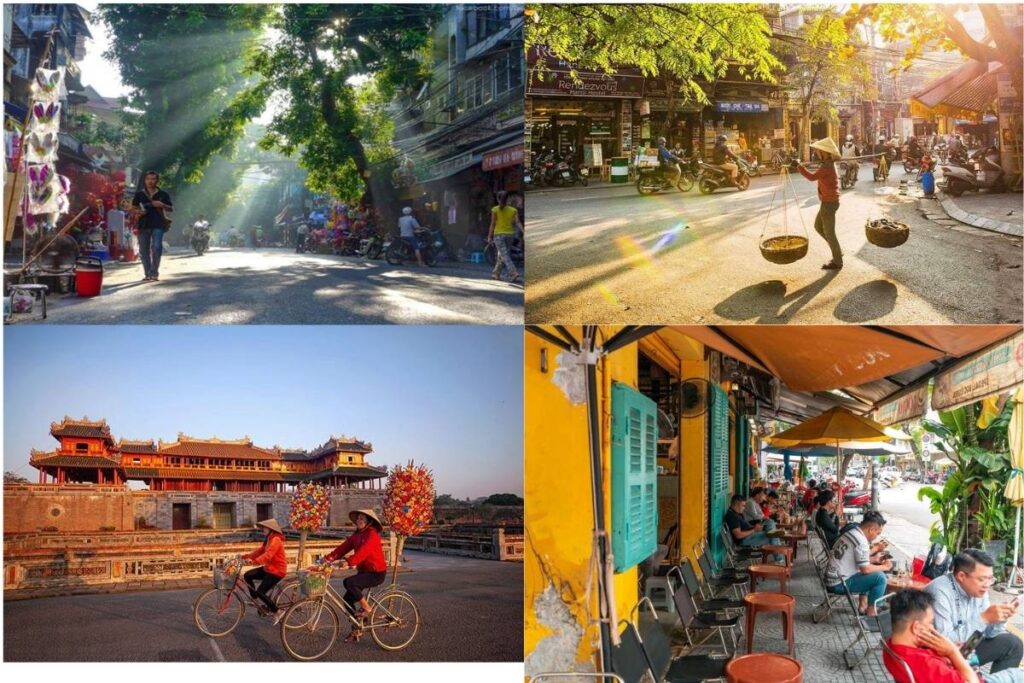
“The longer you travel in Vietnam, the more you realize that there isn’t just one Vietnamese culture—there are many local expressions of the same shared values.”
Stretching more than 1,600 kilometers (1,000 miles) from north to south, Vietnam is a country of remarkable regional diversity. Landscapes change dramatically from misty northern mountains to the imperial heritage of Central Vietnam and the fertile waterways of the Mekong Delta. Along the way, you’ll notice different accents, local dishes, architectural styles, and even subtle differences in how people communicate.
For first-time visitors, these variations can be surprising.
A conversation that feels reserved in Hanoi may become lively and spontaneous in Ho Chi Minh City. A family meal in Hue may follow customs that look slightly different from those in the Mekong Delta. Yet despite these regional differences, the values at the heart of Vietnamese culture remain strikingly consistent.
Understanding these distinctions helps travelers appreciate Vietnam not as a single cultural experience, but as a collection of unique regional identities connected by shared traditions.
Northern Vietnam: Reserved, Thoughtful, and Rich in Tradition
Many travelers begin their journey in Hanoi, where first impressions are often shaped by the city’s long history and measured pace of life.
Compared with southern Vietnam, people in the North may appear more reserved during initial conversations. Shopkeepers often focus on their work before engaging in small talk, and friendships sometimes develop gradually rather than immediately.
This doesn’t mean people are unfriendly.
Rather, relationships are often built slowly and sincerely.
Northern Vietnam has long been the country’s political and cultural center, and many customs here continue to reflect centuries of Confucian influence. Respect for elders, traditional etiquette, and family hierarchy remain especially visible in daily life.
Visitors who spend more time in the region often discover that what first feels reserved gradually becomes genuine warmth built on trust.
Central Vietnam: Where History Lives Alongside Everyday Life
Central Vietnam offers a noticeably different atmosphere.
Cities such as Hue, Hoi An, and many surrounding towns are deeply connected to Vietnam’s imperial history and long-standing family traditions.
Here, customs often feel quieter and more ceremonial.
Family anniversaries, ancestral remembrance, and traditional celebrations continue to play an important role in community life. Meals are prepared with great care, historic homes remain occupied by generations of the same family, and many local traditions have been preserved alongside modern development.
Hospitality in Central Vietnam is often expressed through thoughtful gestures rather than lively conversation.
A carefully prepared meal, a patient explanation of local customs, or a sincere invitation for tea may reveal more warmth than words alone.
For many travelers, the region offers one of the country’s richest cultural experiences.
Southern Vietnam: Open, Energetic, and Easygoing
By the time travelers reach Ho Chi Minh City or the Mekong Delta, many notice another shift.
Conversations often begin more easily.
People smile readily.
Strangers are more likely to start chatting while waiting for coffee or sitting beside you on a ferry.
The South has long been shaped by trade, migration, and agriculture, creating communities known for their openness and adaptability.
Visitors frequently describe southern Vietnam as energetic, optimistic, and welcoming.
Markets feel lively.
Coffee shops buzz with conversation.
Families readily invite guests to share meals or taste local fruit.
While modern Ho Chi Minh City is one of Southeast Asia’s fastest-growing business hubs, its relaxed social atmosphere remains one of its defining characteristics.
Different Personalities, Shared Values
Although regional customs vary, visitors soon notice that the same cultural values appear throughout the country.
Families gather around dinner tables regardless of where they live.
Respect for older generations remains deeply rooted.
Guests are welcomed with generosity.
Ancestor remembrance continues to connect families across generations.
Modern lifestyles may look different in Hanoi, Hue, or Ho Chi Minh City, but the principles behind everyday life remain remarkably similar.
Rather than asking which region represents the “real” Vietnam, it’s more rewarding to appreciate how each contributes its own personality to the country’s cultural identity.
The North offers history and tradition.
The Center preserves heritage with quiet elegance.
The South reflects openness and entrepreneurial energy.
Together, they create a Vietnam that is both diverse and unmistakably united.
Travel from the mountains of the North to the waterways of the Mekong Delta, and you’ll encounter different accents, different flavors, and different traditions. Yet the values that define Vietnam—family, hospitality, and respect—remain unmistakably the same.
Modern Vietnam: Where Tradition Meets Tomorrow
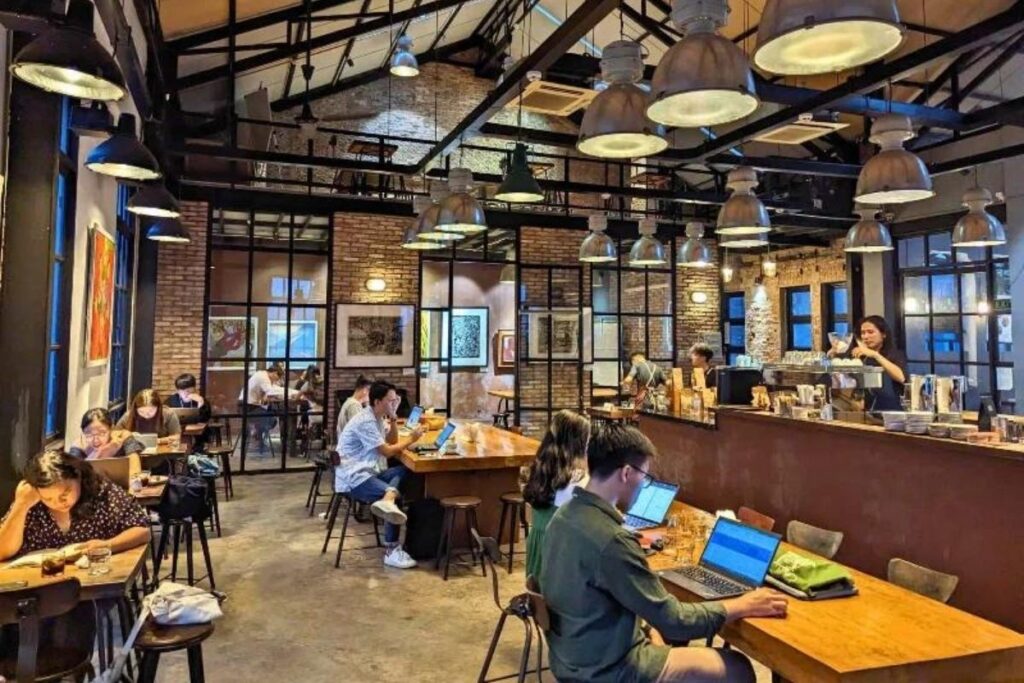
One of the biggest misconceptions about Vietnam is that its customs belong only to the past.
Visitors sometimes arrive expecting a country preserved in tradition—a place of ancient temples, conical hats, and timeless villages.
They certainly find those things.
But they also discover something else.
Young entrepreneurs discussing artificial intelligence over Vietnamese coffee.
Many young professionals begin their day by ordering breakfast through a delivery app, paying with a QR code, and commuting on Green Sm or Grab before spending the afternoon in coworking spaces or international offices. Digital payments are now part of everyday life in Vietnam’s major cities, making it possible to buy everything from street food to coffee without using cash.
University students paying for lunch with QR codes.
Families sharing photos from Tet on social media while preparing traditional holiday meals.
Vietnam has also become an increasingly attractive destination for entrepreneurs, freelancers, and digital nomads. Cities such as Ho Chi Minh City and Da Nang offer modern coworking spaces, reliable internet, vibrant café culture, and a rapidly growing startup ecosystem. Yet even among this younger, globally connected generation, traditions such as returning home for Tet, honoring parents, and maintaining close family ties remain remarkably strong.
Children learning English in the morning and visiting their grandparents in the evening.
On any weekday afternoon, it’s common to see university students studying in specialty coffee shops, software engineers working remotely from cafés, and young entrepreneurs pitching startup ideas over Vietnamese coffee. Modern work habits may look familiar to visitors from Silicon Valley or London, but the conversations often pause as someone answers a video call from their parents or discusses plans for the next family gathering.
Modern Vietnam isn’t replacing its traditions.
It’s finding new ways to carry them forward.
This balance is part of what makes the country so fascinating.
A centuries-old family altar may stand just a few steps away from a smart television.
A software engineer working for a global company still returns home for Tet each year.
A teenager who spends hours on social media may also help prepare offerings for ancestors during important family celebrations.
For travelers, these contrasts often become one of Vietnam’s greatest surprises.
The country isn’t caught between the past and the future.
It embraces both.
Final Thoughts: The Best Way to Experience Vietnamese Culture
Before visiting Vietnam, many travelers focus on practical questions.
What should I eat?
Which cities should I visit?
How do I cross the street?
Those are useful things to know.
But the experiences people remember most rarely come from an itinerary.
Instead, they remember the quiet moments.
The grandmother who insisted they take one more spring roll.
The café owner who remembered their favorite drink.
The family who welcomed a stranger to join dinner.
The peaceful silence inside a neighborhood pagoda on a rainy afternoon.
These moments reveal something that no guidebook or checklist can fully explain.
Vietnamese customs are not performances created for tourists.
They’re part of everyday life.
They’re expressed through shared meals, respectful conversations, family gatherings, neighborhood cafés, early morning parks, and countless small acts of kindness that most locals hardly notice.
You don’t need to understand every tradition before arriving or speak fluent Vietnamese.
You don’t even need to remember every etiquette rule.
What matters most is approaching the country with curiosity, patience, and respect.
Observe before judging.
Listen before comparing.
Accept invitations when appropriate.
Smile often.
And remember that many customs make more sense once you understand the values behind them.
Because Vietnam isn’t simply a place where ancient traditions have survived.
It’s a country where those traditions continue to shape modern life in quiet, meaningful ways.
And perhaps that’s why so many visitors leave with the same feeling.
They came to discover Vietnam.
But somewhere along the journey, they also discovered a different way of thinking about family, community, and what it means to make someone feel welcome.
Frequently Asked Questions about Vietnamese Customs and Traditions
What are the most important Vietnamese customs visitors should know?
The most important customs include showing respect for elders, removing your shoes before entering many homes, accepting hospitality graciously, dressing modestly when visiting temples, and understanding that family plays a central role in everyday life. Rather than memorizing every rule, it’s more helpful to understand the values of respect, hospitality, and community that shape these customs.
Why do Vietnamese people ask personal questions?
Questions about your age, family, or marital status are usually meant as friendly conversation rather than an invasion of privacy. Knowing these details helps people choose appropriate forms of address and build a more personal connection.
Should I remove my shoes before entering a Vietnamese home?
Yes, in most cases.
Removing shoes is a common sign of respect and helps keep the home clean. If you’re unsure, look near the entrance—rows of shoes or slippers are usually a clear indication of local custom.
Is it rude to refuse food in Vietnam?
Not necessarily, but it’s best to refuse politely.
Vietnamese hosts often encourage guests to eat more as a sign of hospitality. A sincere compliment about the meal and a warm thank you are usually appreciated if you’re already full.
What should I wear when visiting temples or pagodas?
Wear clothing that covers your shoulders and knees, remove hats where appropriate, and keep your voice low. Remember that most temples in Vietnam are active places of worship, not simply historical attractions.
Are customs the same throughout Vietnam?
No.
Northern, Central, and Southern Vietnam each have distinct traditions, communication styles, and local customs. However, values such as family, respect for elders, hospitality, and gratitude toward previous generations are shared throughout the country.
Is Vietnam becoming less traditional?
Vietnam is changing rapidly, but many traditions remain an important part of daily life.
Modern technology, international business, and urban lifestyles now exist alongside customs such as family dinners, ancestor remembrance, Tet celebrations, and respect for elders. Rather than disappearing, many traditions have adapted to contemporary life.
Why do Vietnamese people smile when they’re embarrassed?
Visitors sometimes mistake a smile for agreement or amusement. In Vietnam, smiling can also be a polite way of easing an awkward situation, expressing uncertainty, or avoiding unnecessary conflict.
Can tourists join Tet celebrations?
Yes. Many festivals welcome visitors, provided they participate respectfully. If you’re invited to a family celebration, following your host’s guidance is usually the best approach.
Should I bow when greeting Vietnamese people?
Not usually. A smile and a polite greeting are perfectly acceptable. In formal settings, a light handshake is common.
Can I politely refuse alcohol?
Yes. Simply explain that you don’t drink or aren’t drinking today. Most people will understand, especially in larger cities and tourist areas.
Is tipping expected in Vietnam?
No. Tipping is not traditionally expected in Vietnam, especially at local restaurants, cafés, taxis, or street food stalls. However, it is always appreciated for excellent service and has become more common in tourist areas, luxury hotels, and guided tours. If you choose to tip, consider it a gesture of appreciation rather than an obligation.
Continue Exploring Vietnam
If you’d like to explore Vietnamese culture in greater depth, these guides provide a closer look at specific traditions and everyday experiences:
- Vietnamese Family Culture: Why Family Comes First
- Vietnamese Etiquette: Cultural Tips Every Traveler Should Know
- Ancestor Worship in Vietnam: Understanding a Living Tradition
- Tet Holiday in Vietnam: Traditions, Food, and Family Celebrations
- Vietnamese Hospitality: Why Guests Are Treated Like Family
- Living in Vietnam: Everyday Customs That Surprise Foreigners
- Vietnam Coffee Culture: More Than Just a Drink
- Vietnam Travel Guide: Everything You Need to Plan Your Trip
👉 Vietnam Transportation Guide
For more local stories, travel tips, and cultural insights, visit our YouTube channel:
TAM VOC VIET – VIETNAM INSIGHTS
About the Author
Tam Voc Viet Editorial Team
The Tam Voc Viet Editorial Team creates in-depth travel and culture guides that help international visitors understand Vietnam beyond its famous attractions. Combining local knowledge, careful research, and firsthand cultural insights, our goal is to explain not only what travelers see, but why Vietnamese traditions, family values, and everyday customs continue to shape life across the country.
Whether you’re planning your first visit or hoping to experience Vietnam more like a local, we aim to help you travel with greater confidence, deeper understanding, and genuine cultural appreciation.
Explore more: Vietnam Travel Guide, Vietnam Culture Guide, Vietnam Food Guide, and Living in Vietnam.
Last updated: July 2026
Editorial review: Tam Voc Viet Editorial Team
Estimated reading time: 25 minutes
