


 Tiếng Việt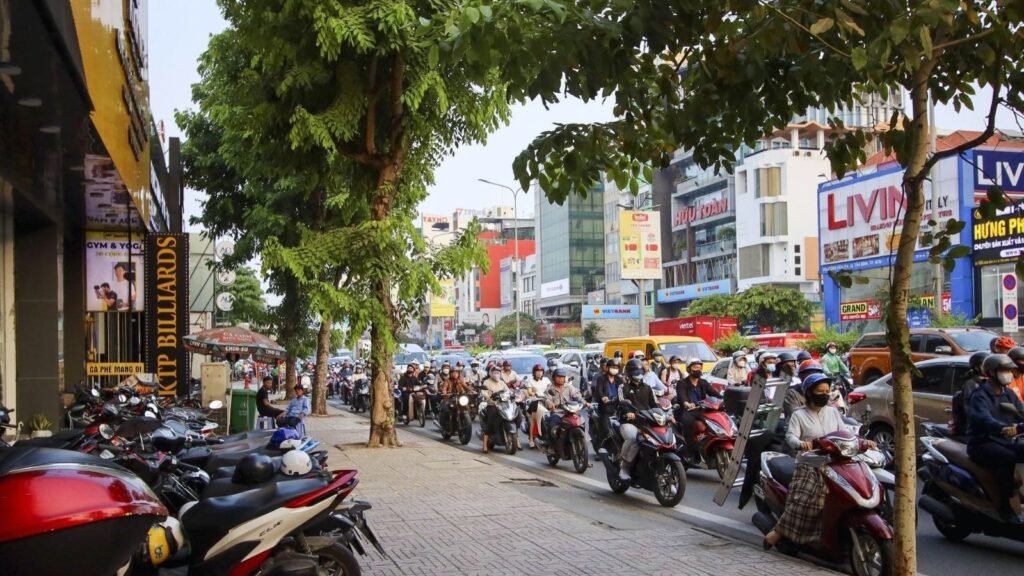
Why Vietnam feels chaotic is one of the first questions many visitors ask themselves somewhere between the airport and their hotel.
A motorbike slips through a gap that looks far too small. Another appears from the opposite direction. Someone crosses the street. A delivery driver stops at the curb. A woman pulls a small plastic stool onto the sidewalk. A café table sits almost where you expected a pedestrian to walk. Horns sound from three different directions.
For a few seconds, Vietnam feels chaotic in a way that is difficult to explain if you have never been here before.
And yet, somehow, everyone seems to know what they are doing.
The traffic keeps moving. People cross the street. Food arrives. Deliveries get made. A street that looked impossibly crowded in the morning becomes a breakfast spot, then a parking area, then a row of tiny restaurants by evening.
Table of Contents
Quick Answer
Why is Vietnam chaotic to a first-time visitor? Everyday life often relies on flexibility, negotiation, social cues, and informal coordination rather than rigid boundaries and highly predictable routines. Traffic is the clearest example: drivers and pedestrians constantly read speed, distance, movement, and signals from the people around them. The same principle appears on sidewalks, where walking, parking, eating, shopping, and working may happen within the same small space.
The question “why Vietnam is chaotic” can be misleading. Some parts of urban life are genuinely disorderly, but much of what visitors perceive as chaos comes from different activities sharing limited space and people adapting to one another in real time.
1. Why Vietnam’s Public Spaces Can Feel So Unstructured
One of the first things that can make Vietnam feel chaotic has surprisingly little to do with traffic.
It is the way everyday activities spill into the spaces around them.
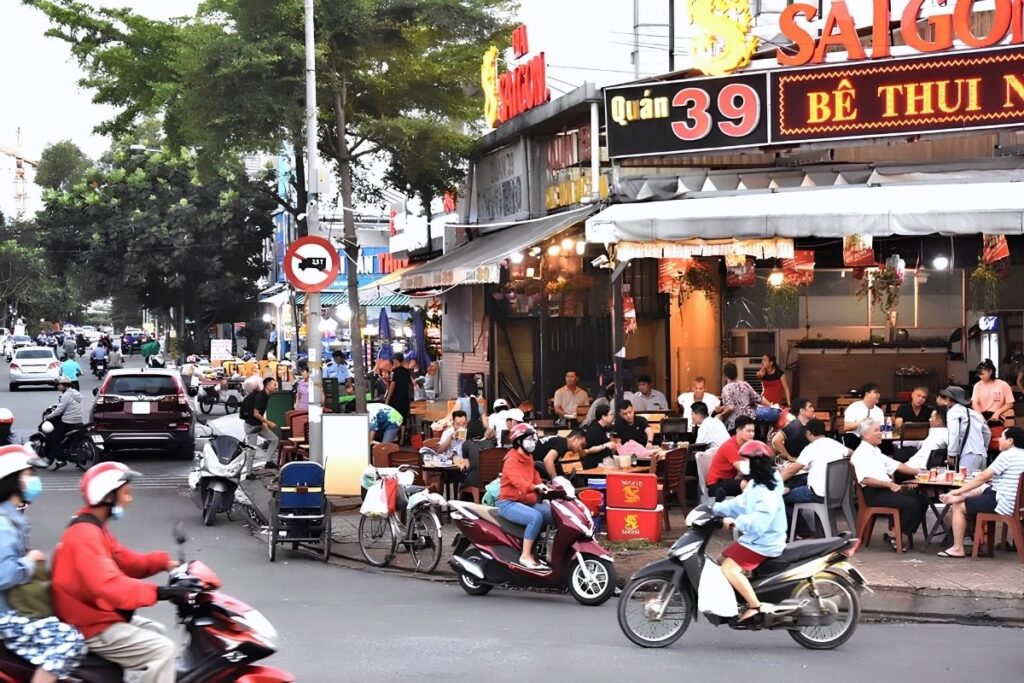
A family may live behind a small shop. Breakfast is prepared near the front door. Motorbikes are parked along the pavement. A mechanic works beside the road. A café puts a few low chairs outside. A vendor sets up a cart for the morning.
To a visitor used to clearly defined urban functions, the boundaries can seem blurred.
Where does the home end?
Where does the business begin?
Where is the sidewalk supposed to be?
In Ho Chi Minh City, urban researcher Annette M. Kim studied precisely this question. Her research examined how sidewalks function as contested public spaces rather than simply pedestrian infrastructure, using surveying and ethnography to map different patterns of sidewalk use. The study found that sidewalks can accommodate multiple uses and users within the same urban space.
A Vietnamese sidewalk can therefore be a walkway, parking area, dining space, workplace, and social space — sometimes within the same few meters.
That does not mean the arrangement is always convenient.
A crowded sidewalk can obstruct pedestrians. Motorbikes can make walking difficult. Businesses and vendors can compete with people trying to pass through. Accessibility can become a genuine problem.
But the activity is not necessarily random.
People are responding to the space available to them.
This is particularly visible in Ho Chi Minh City, where commercial activity, residential life, transportation, and sidewalk use often exist unusually close together. Kim’s research describes the possibility of a mixed-use sidewalk that can accommodate different users and functions, while also highlighting the tensions involved in deciding who has legitimate claims to that space.
That distinction matters.
A visitor may see disorder.
A local may see a familiar arrangement of activities that has developed around the needs of a particular street.
The two perceptions can exist at the same time.
That is one reason why Vietnam feels chaotic before it feels familiar.
You are not simply looking at a street.
You are looking at several layers of everyday activity occupying the same physical space.
2. The Street Is Part of Everyday Life
In many American cities, a street is primarily something you move through.
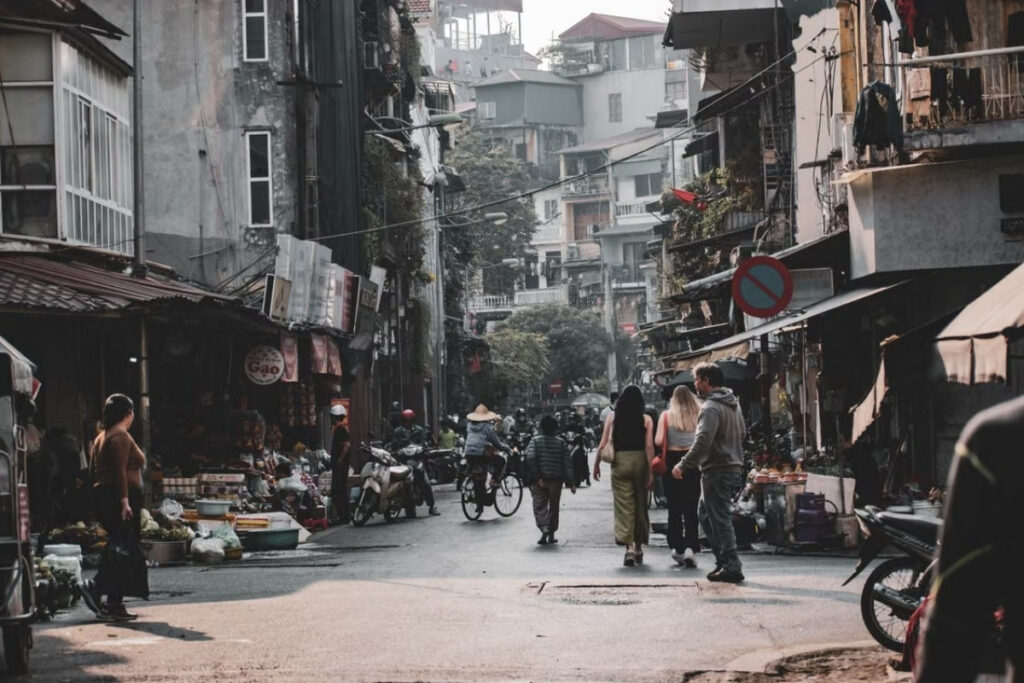
In Vietnam, it can also be somewhere you spend part of your day.
You eat breakfast there.
You drink coffee there.
You buy vegetables there.
You repair a motorbike there.
You sit with friends there.
You wait for a delivery there.
You watch children walk home from school.
This is one reason everyday life in Vietnam can feel so different from the version of urban life many American visitors know. The street is not simply the space between one destination and another. It can be part of the destination itself.
Morning makes this especially obvious.
At around 6:30, one neighborhood might be filled with breakfast stalls, coffee drinkers, people exercising, schoolchildren, and commuters.
By midday, the same space can feel quieter.
In the evening, restaurants, cafés, families, and groups of friends can transform it again.
The physical street has not necessarily changed.
Its users have. Its rhythm has.
Research on Hanoi’s pedestrian streets helps explain this temporal side of Vietnamese public space. A 2025 study published in Geoforum examined how pedestrian streets in downtown Hanoi are used and negotiated by planners, residents, informal vendors, and visitors. The researchers combined systematic observation with 70 in-depth interviews and found that different groups create different rhythms of activity and influence how public spaces are used.
That idea of rhythm is useful far beyond pedestrian streets.
A photograph freezes one moment and can make that moment look permanent.
Living in a neighborhood reveals the sequence.
Breakfast gives way to commuting. Commuting gives way to work. Work gives way to lunch. The afternoon brings another set of routines. Evening brings another.
Once you notice that sequence, the street starts to make more sense.
A visitor may see a crowded sidewalk.
A resident may see breakfast time.
A visitor may see dozens of motorbikes.
A resident may recognize the school rush.
A visitor may see a restaurant occupying part of the pavement.
A local may simply know that this is where people eat in the evening.
The street is therefore not just infrastructure.
It is part of the neighborhood’s social and economic rhythm.
And that rhythm is something a short visit can easily miss.
3. Why Vietnam Feels Chaotic on the Streets
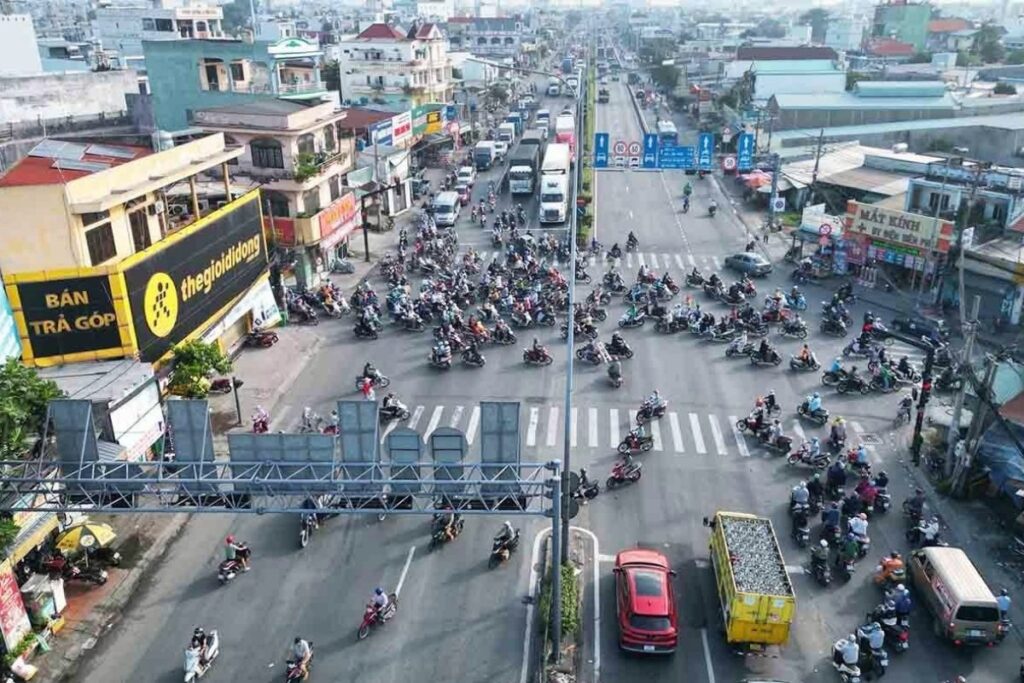
If you want to understand why Vietnam feels chaotic, start with the road.
Traffic is usually the first thing that overwhelms visitors.
A motorbike approaches from the side.
Another moves around you.
A car turns across the flow.
Someone crosses the street.
A delivery rider stops near the curb.
A horn sounds.
Then another.
To someone used to highly separated traffic lanes and clearly predictable right-of-way behavior, the scene can look like a collection of independent decisions.
But there is another way to read it.
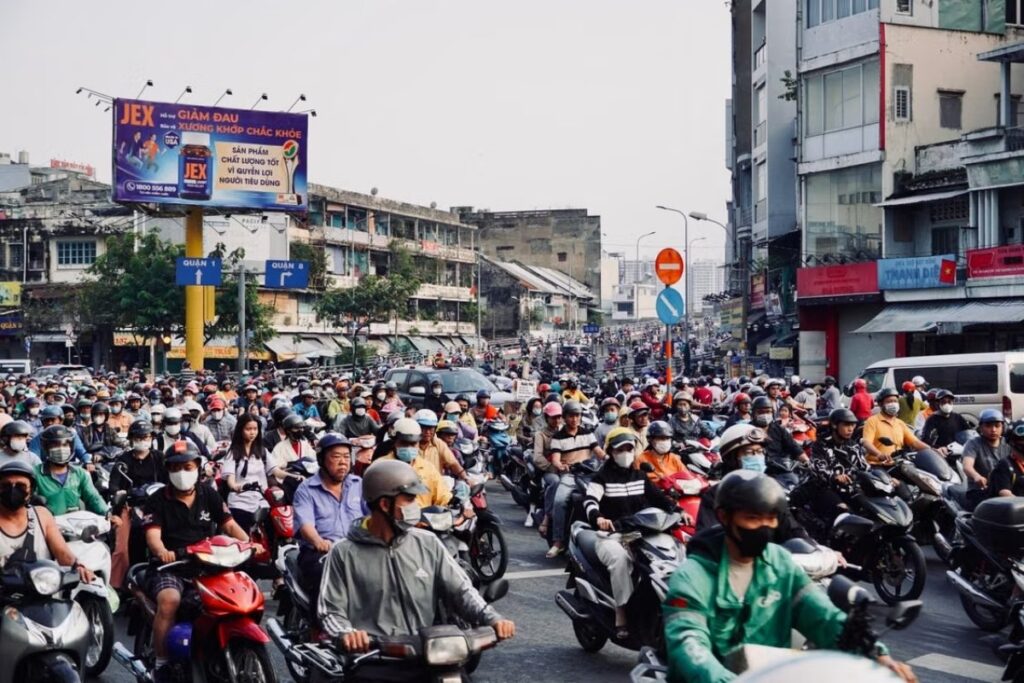
Vietnam’s urban traffic developed around extremely high motorcycle use, dense neighborhoods, and limited road space. World Bank research has noted that Hanoi and Ho Chi Minh City have high urban densities and relatively sparse road networks, creating intense competition among motorcycles, cars, buses, and other road users for limited space.
That physical context matters.
The apparent chaos is not simply a cultural preference for disorder.
It is also a product of how many people are moving through relatively constrained urban networks.
And motorcycles change the visual character of that movement.
They are smaller than cars, easier to maneuver, and able to occupy spaces that a larger vehicle cannot.
This produces a traffic environment with many more small movements.
From the sidewalk, it can look unpredictable.
From inside the flow, those movements often become easier to anticipate.
That does not make every maneuver safe.
It does not mean Vietnamese traffic has no rules.
It means that formal rules are only one part of what road users are responding to.
They are also watching one another.
They are estimating speed.
They are leaving space.
They are adjusting.
And they are constantly making small decisions about what happens next.
That is why a first impression of chaotic Vietnam can be misleading.
The traffic really is dense.
The road environment really can be stressful.
But density and apparent disorder are not exactly the same thing.
4. The Horn Is Part of the Conversation
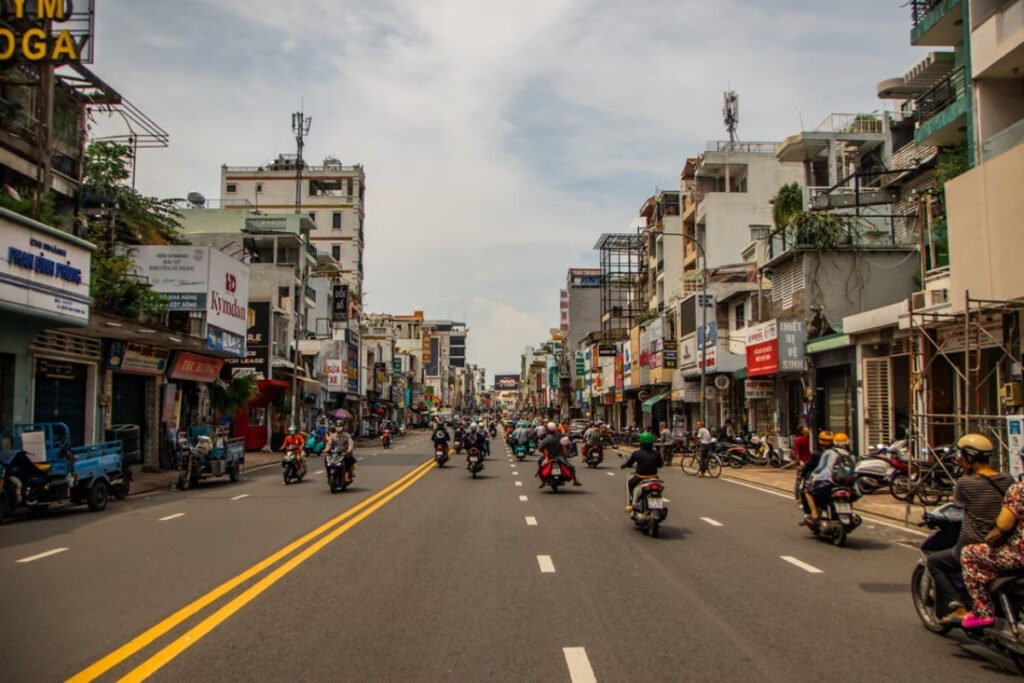
One of the quickest ways to misunderstand Vietnamese traffic is to interpret the horn only through the cultural meaning you brought with you.
In some places, a horn usually means anger, impatience, or frustration.
In Vietnam, it can also function as information.
A rider may use it to signal that they are approaching.
A driver may sound the horn before passing.
Someone may be warning another road user not to move unexpectedly.
The sound can be brief and almost routine.
That does not mean every horn is polite.
Traffic can certainly be aggressive, noisy, or frustrating.
The useful point is simply that communication on the road is not limited to signs and painted lines.
Position matters.
Speed matters.
Eye contact matters.
Movement matters.
And sometimes the horn matters.
For a foreign visitor, this is one of those small differences that can make Vietnam feel chaotic even when local road users are responding to signals that have become familiar to them.
You do not need to adopt every local habit to understand it.
You simply need to recognize that the same behavior can carry a different meaning in a different traffic culture.
5. People Are Constantly Negotiating Space
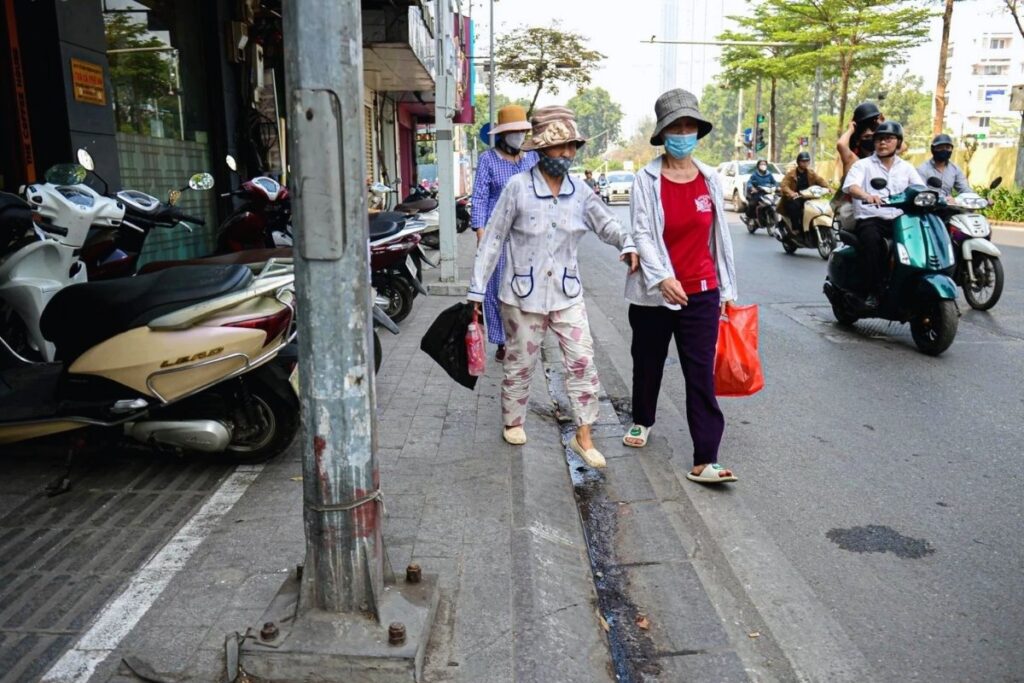
This is perhaps the most important idea in the entire article.
A crowded Vietnamese street is not simply a place where everyone follows a fixed script.
People are constantly negotiating space.
A pedestrian approaches a motorbike.
The rider slows slightly.
The pedestrian adjusts direction.
A vendor moves a stool.
A delivery rider finds a gap.
A customer steps toward the curb.
A car waits for a moment.
The interaction may last only a few seconds.
Nobody announces the rules.
They adjust.
This becomes especially visible when the boundaries between different activities are not rigid.
A sidewalk can support walking, parking, eating, selling, waiting, and socializing. A narrow lane can serve residents, deliveries, motorbikes, and pedestrians. A small shop may use the space immediately outside its entrance because that is where customers naturally gather.
These arrangements can create friction.
But they also require constant micro-negotiation.
That is one reason Vietnamese street life can look more fluid than the urban environments many visitors are accustomed to.
The question is not always:
Who has absolute priority?
Sometimes it is:
How can we both move through this space?
This does not mean everyone cooperates perfectly.
They do not.
People get frustrated. Pedestrians are blocked. Drivers make mistakes. Vendors occupy space they should not. Someone refuses to yield.
But the street keeps functioning because thousands of small interactions are happening continuously.
That is a different kind of coordination.
It is less visible than a traffic signal.
It is less formal than a painted line.
And it is much harder for a newcomer to understand.
6. What Looks Random to a Foreigner Is Often Familiar to a Local
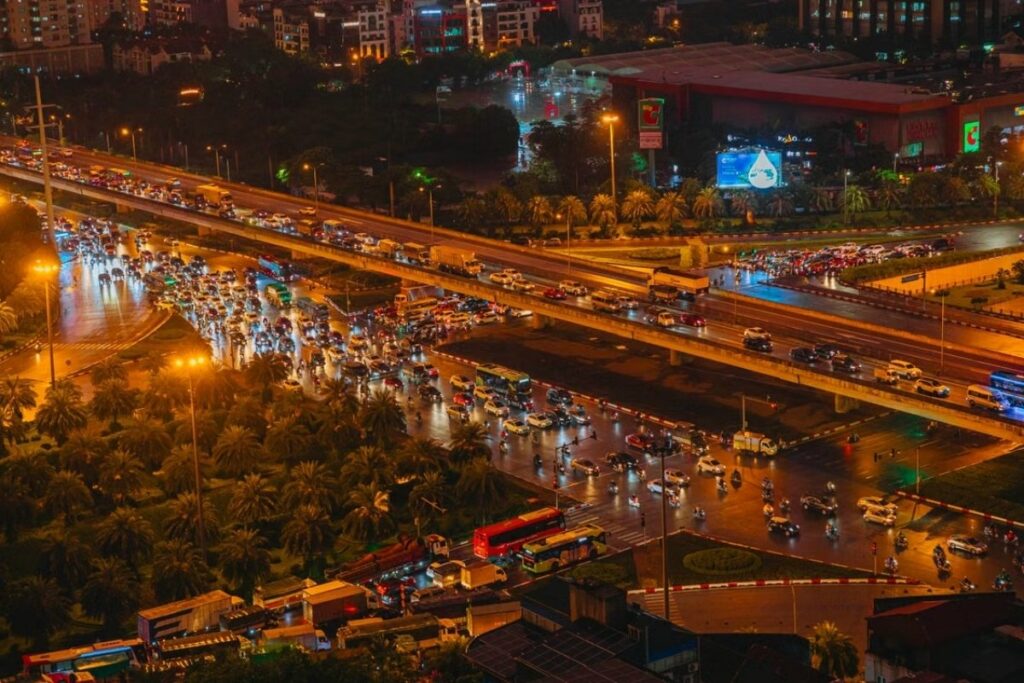
There is a strange moment that happens to many long-term visitors.
The city has not become quieter.
The streets have not become emptier.
Traffic has not suddenly started behaving according to the rules you learned at home.
And yet, something feels different.
You understand more of it.
At first, a visitor sees hundreds of details without knowing which ones matter.
A motorbike turns.
A horn sounds.
Someone crosses the road.
A vendor moves a chair.
A delivery rider stops.
Another vehicle appears behind you.
Each event feels like a separate surprise.
Later, they begin to connect.
You start recognizing the morning school rush.
You know when a particular café will fill up.
You notice which side of a street becomes crowded first.
You recognize a familiar vendor.
You learn where motorbikes usually park.
You begin to anticipate movement without consciously thinking about it.
The environment has not necessarily become more predictable.
You have become better at reading it.
That distinction is important for foreigners living in Vietnam.
People naturally learn the rhythms of places they spend time in.
You probably know which intersection in your hometown becomes difficult during rush hour. You know when your local grocery store is quiet. You know which street is busy on Friday evening.
You absorbed those patterns without formally studying them.
Living in Vietnam works the same way.
You develop a mental map that is partly geographic and partly social.
This is why everyday life in Vietnam can feel dramatically different after several weeks or months than it does during a first visit.
The city may not have changed.
Your context has.
7. Flexibility Is One Way the System Keeps Moving
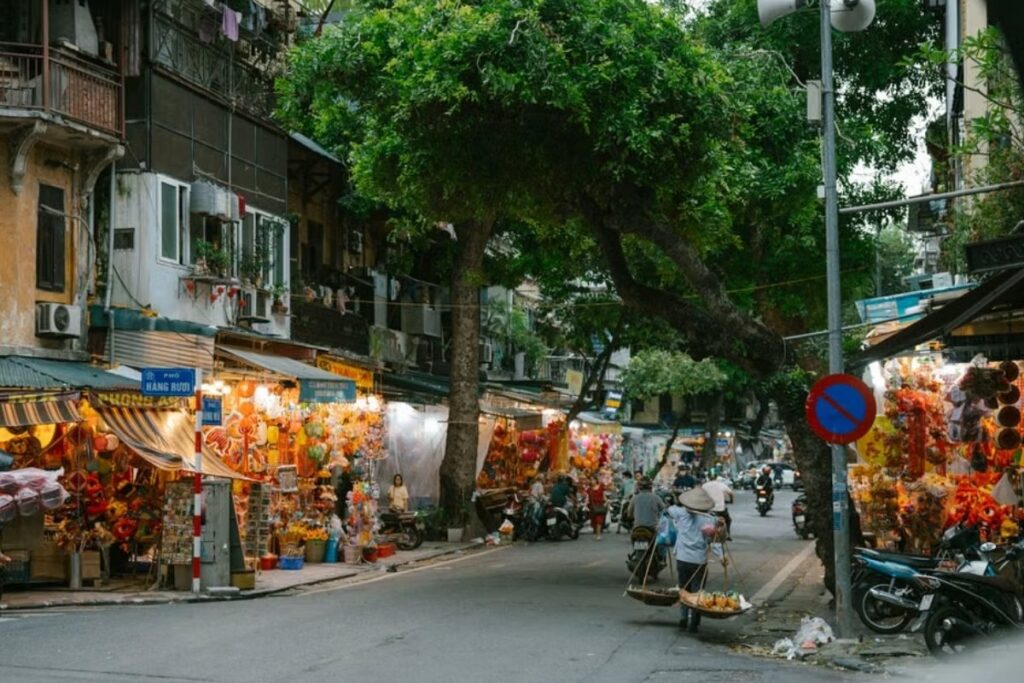
Vietnamese street life often depends on a willingness to adjust.
A delivery arrives earlier than expected.
A customer asks for something slightly different.
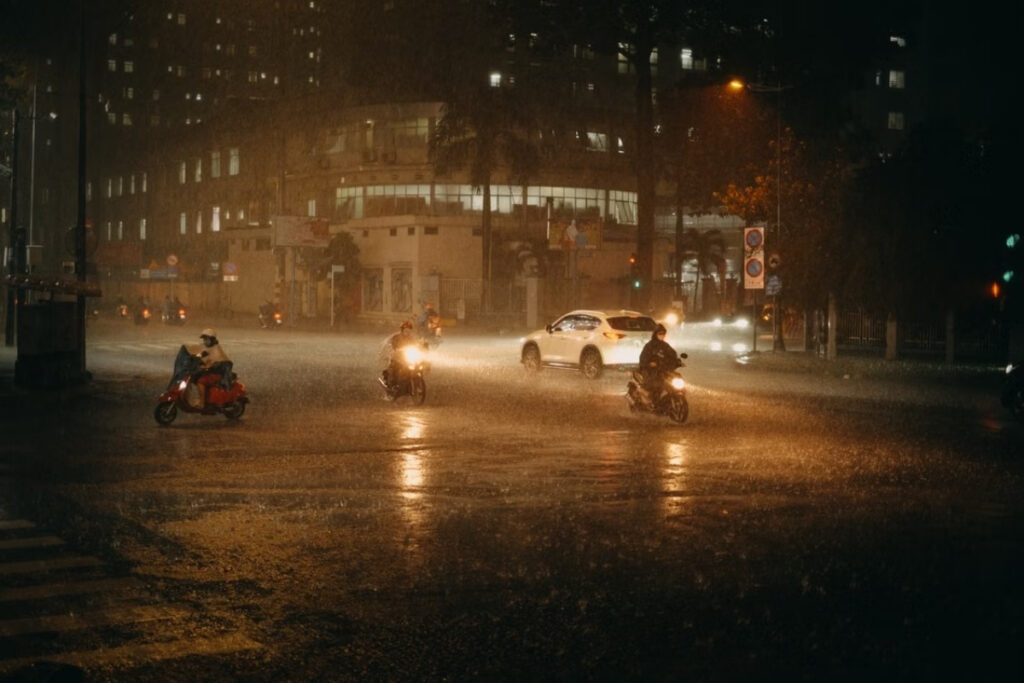
Rain starts.
A road becomes crowded.
A shop needs more space.
A meeting changes.
A vendor moves.
The response is often practical:
Adjust.
This flexibility can be incredibly useful in a dense urban environment.
If every small problem required a formal process, daily life would become much slower.
Instead, people often solve minor problems as they appear.
That does not mean Vietnamese systems are inherently better because they are flexible.
Flexibility has a cost.
A process that can be adjusted easily can also feel inconsistent.
A person who is used to clear rules may wonder why the answer seems to depend on the situation.
That tension appears throughout life in Vietnam.
The same flexibility that helps people deal with reality can also make reality harder to predict.
For a foreigner, learning when flexibility is expected — and when a rule really is a rule — can take time.
That is one of the quieter adjustments involved in living here.
You are not simply learning new regulations.
You are learning when the situation itself is part of the regulation.
8. Small Businesses Make the Street Highly Adaptive
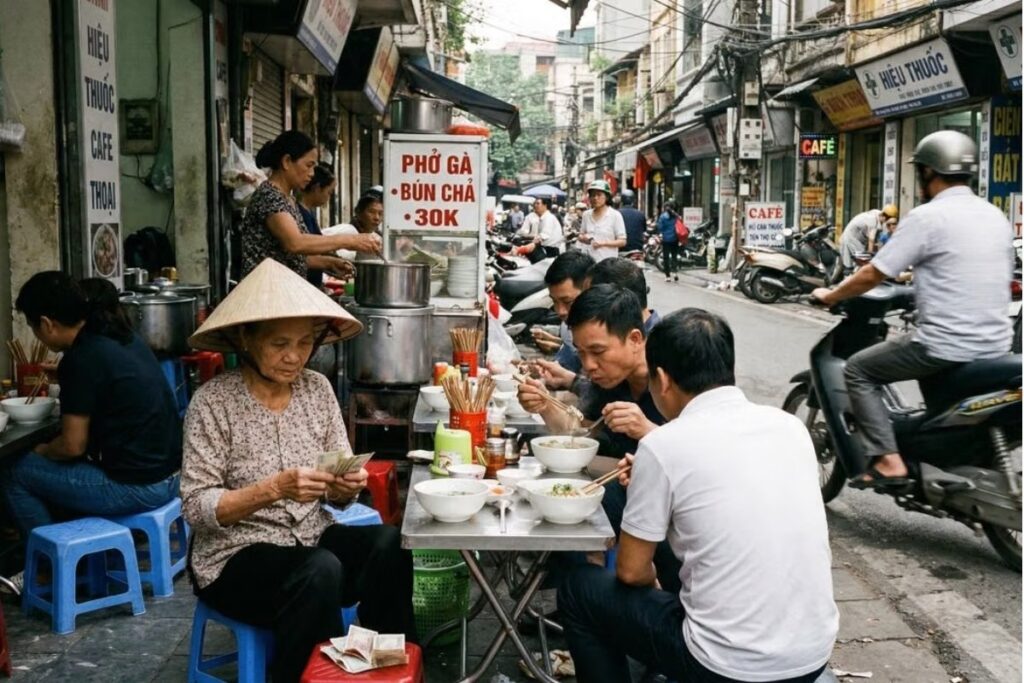
The small business is one of the clearest examples of this flexibility.
A tiny restaurant may have only a few tables.
A café may use stools instead of chairs.
A food vendor may occupy a small section of pavement.
A repair shop may operate almost directly beside the street.
A family business may combine retail, storage, food preparation, and living space within a compact property.
These businesses are often responding to immediate conditions.
If customers arrive, space expands.
If traffic increases, the arrangement changes.
If rain begins, tables move.
If the sidewalk becomes crowded, goods are rearranged.
This helps explain why Vietnamese street life can appear so dynamic.
The street is not merely carrying people from one place to another.
It is also supporting thousands of small commercial interactions.
That is particularly visible in older urban neighborhoods, where businesses have developed around narrow streets and close relationships with nearby residents.
But again, adaptability should not be romanticized.
A business using public space may create an obstacle for pedestrians.
A parked motorbike may help a shop but inconvenience someone in a wheelchair.
A lively sidewalk can be economically useful while still creating accessibility problems.
The interesting part is not that every arrangement works perfectly.
It is that people constantly modify their behavior around changing conditions.
The result can look messy.
It can also be remarkably responsive.
9. Sometimes the System Is the People
Formal systems matter.
Roads matter.
Signs matter.
Rules matter.
Infrastructure matters.
But everyday life does not run on infrastructure alone.
It also runs on relationships.
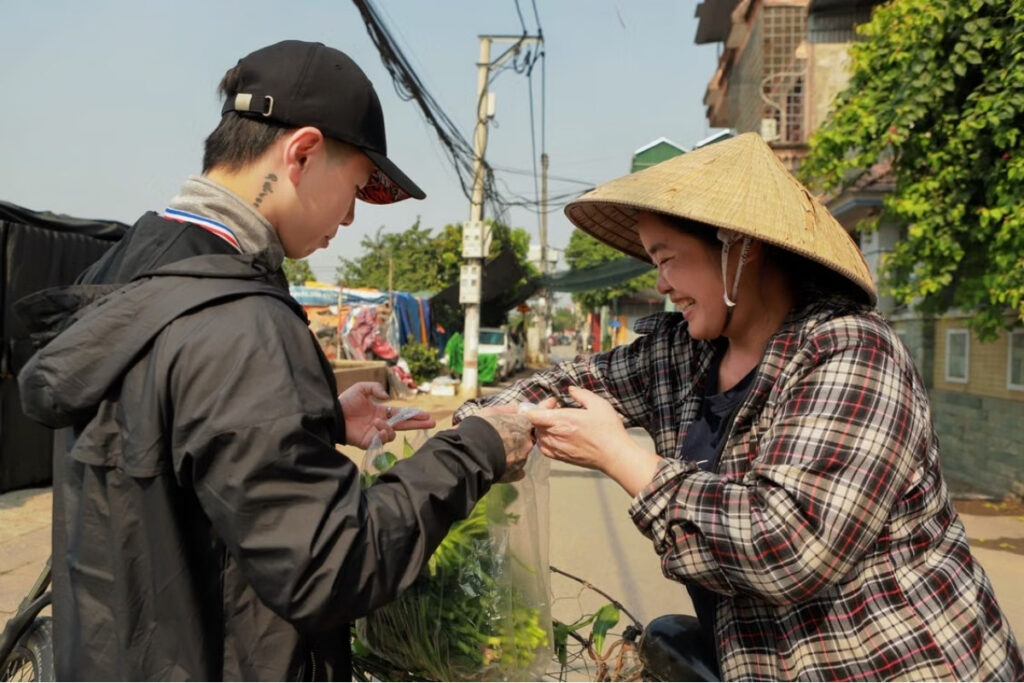
A neighbor tells you where to buy something.
A shop owner recognizes a regular customer.
A security guard knows who lives in the building.
A colleague helps solve a small problem.
A vendor remembers what someone usually orders.
A friend knows which office to call.
These interactions rarely appear in a tourist guide.
Yet they can make a large difference to how smoothly ordinary life works.
This is particularly important when formal processes are slow, unfamiliar, or difficult for outsiders to navigate.
People often become part of the practical infrastructure.
Not literally, of course.
But socially.
Knowing someone who knows the neighborhood can be more useful than knowing every written rule.
This is one reason the experience of everyday life in Vietnam can become easier as relationships deepen.
A foreigner who has lived in the same neighborhood for a year is not experiencing exactly the same city as someone who arrived yesterday.
They know faces.
They recognize routines.
They know where to ask.
They understand more of the context behind an interaction.
That accumulated familiarity creates a kind of social infrastructure.
It does not eliminate bureaucracy, congestion, or inconvenience.
But it can make the environment easier to navigate.
And that is another piece of the puzzle.
Sometimes the system works because the formal system works.
Sometimes it works because people know how to work around its limitations.
10. But Vietnam’s Chaos Has Real Costs
There is a danger in making the phrase “organized chaos” sound too romantic.
Vietnam’s urban disorder is not merely charming.
Some of it is a genuine problem.
That distinction matters when asking why Vietnam is chaotic in the first place.
Not every crowded sidewalk is an example of clever adaptation.
Not every traffic interaction reflects an efficient informal system.
Some conditions are simply the result of congestion, limited infrastructure, competing demands on public space, or inconsistent enforcement.
Traffic safety is a serious concern.
Sidewalks can become difficult for pedestrians to use. People with disabilities may encounter barriers that are almost invisible to visitors who can easily step around them. Congestion costs time. Noise affects quality of life. Street activity can also conflict with attempts to make urban spaces safer and more accessible.
World Bank research has highlighted the structural pressure created by dense urban development, sparse road networks, and competition for limited road space in Hanoi and Ho Chi Minh City.
So if you are trying to understand chaotic Vietnam, it is important not to turn the phrase into a compliment.
There is a difference between adaptation and disorder.
A vendor finding a way to operate on a crowded street can be an example of adaptation.
A blocked sidewalk that forces pedestrians into traffic is a problem.
A driver adjusting smoothly to surrounding traffic can demonstrate local familiarity.
A dangerous maneuver is still dangerous.
A neighborhood finding ways to share limited space can be remarkably efficient.
A lack of accessible pedestrian space is still a planning problem.
The two realities can exist side by side.
This is particularly clear in Hanoi, where pedestrian streets and public spaces bring together residents, visitors, vendors, and planners with different priorities. Recent research describes these spaces as ongoing negotiations over rhythms, access, and use rather than perfectly stable systems.
That negotiation can produce energy and spontaneity.
It can also produce friction.
The same sidewalk that gives a neighborhood somewhere to eat, trade, socialize, and work may make it harder for someone else to walk through.
The same flexibility that allows a small business to respond quickly to customers can make the environment less predictable.
The same informal habits that help people navigate crowded streets can become difficult when the city grows faster than its infrastructure.
This is why why Vietnam feels chaotic cannot be explained simply by saying Vietnamese people have found a clever way to make disorder work.
Sometimes the system works because people adapt.
Sometimes it struggles because too many people are adapting to limitations that should be addressed structurally.
That distinction makes the story more interesting — and more honest.
11. When Flexibility Becomes Friction
Flexibility is useful until different people want different things from the same flexibility.
A resident may want a quiet sidewalk.
A vendor needs customers to stop.
A restaurant needs outdoor seating.
A pedestrian needs somewhere to walk.
A motorbike rider wants to park close to the destination.
A city planner wants clearer public-space rules.
None of these interests is automatically unreasonable.
The difficulty comes from limited space.
This is where the idea of chaotic Vietnam becomes more complicated.
The same informality that makes a neighborhood lively can also make it difficult to regulate.
The same adaptability that helps a small business survive can create uncertainty for someone expecting consistent rules.
The same street that feels wonderfully alive to a visitor may be frustrating to a resident trying to get somewhere quickly.
This tension is particularly important in rapidly changing cities.
Hanoi and Ho Chi Minh City are not static environments. Development, rising car ownership, changing commercial patterns, new transportation systems, and efforts to reorganize public space all interact with older ways of using streets.
As cities change, informal arrangements that once seemed workable can become harder to sustain.
A street that comfortably supported motorcycles, vendors, pedestrians, and small businesses at one level of activity may struggle when traffic and commercial demand increase.
So flexibility should not be confused with perfection.
It is a way of coping with complexity.
Sometimes it works beautifully.
Sometimes it creates another problem.
12. Eventually, You Stop Seeing Random Events
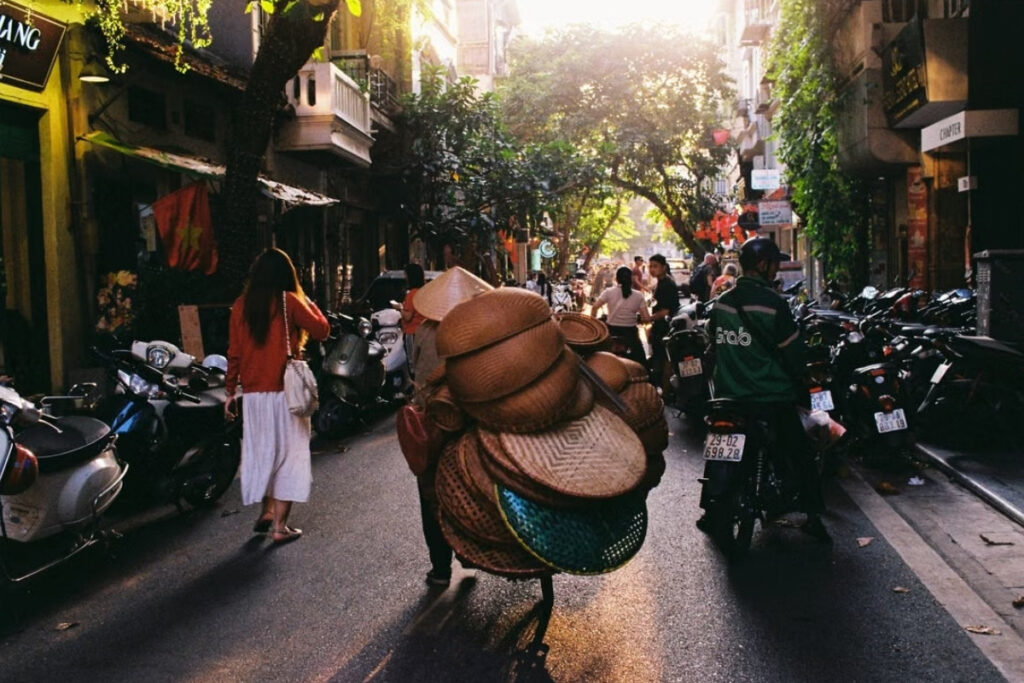
This is where the experience of Vietnam can change.
Not physically.
In your head.
The same street that looked impossible during your first week can begin to feel surprisingly readable.
You see a motorbike approaching and understand where it is likely to go.
You notice that a restaurant is about to get busy because chairs are appearing outside.
You know when a school nearby is about to release a wave of students.
You recognize the morning vendor before you see what she is selling.
You know which side of a street tends to fill first.
Nothing supernatural has happened.
You have acquired context.
At first, Vietnam feels chaotic because you are seeing hundreds of details without knowing which ones matter.
A horn sounds.
A motorbike turns.
Someone crosses the road.
A delivery rider stops.
A vendor moves a chair.
Each event feels like a separate surprise.
After a while, they stop feeling separate.
You begin to recognize patterns.
The horn becomes a signal rather than simply noise.
The approaching motorbike becomes something you can anticipate.
The crowded sidewalk becomes a space whose function changes according to the time of day.
The morning street market becomes part of the neighborhood’s routine rather than an unexpected obstacle.
This is not because the city has suddenly become orderly.
It is because you have learned how to read it.
Think about your own hometown.
You probably know which intersection backs up before work. You know when a particular café is busiest. You know which streets are quiet late at night and which ones become crowded after school.
You probably never sat down and studied these rules.
You absorbed them.
Foreigners living in Vietnam eventually do something similar.
They develop a mental map that is partly geographic and partly social.
They learn when to expect certain activities.
They recognize familiar faces.
They understand small signals.
They become better at anticipating what might happen next.
This is one reason everyday life in Vietnam can feel dramatically different after several weeks or months than it does during a first visit.
The environment may not have changed much.
The observer has.
At first, you see movement.
Later, you see relationships between movements.
A sidewalk is no longer just a sidewalk.
It is a place that changes function throughout the day.
Traffic is no longer simply a mass of vehicles.
It is a pattern of people constantly adjusting to one another.
A crowded street is no longer automatically evidence that nobody knows what they are doing.
It may simply mean you have not yet learned what everyone else already knows.
That does not mean every unfamiliar behavior has a hidden explanation.
Sometimes a street is simply overcrowded.
Sometimes a driver is careless.
Sometimes a business is poorly organized.
Sometimes a sidewalk is genuinely blocked.
Learning to read Vietnam does not mean finding an excuse for everything you see.
It means becoming better at distinguishing what is unfamiliar from what is actually dysfunctional.
And that distinction changes the experience of being here.
The city does not necessarily become less complicated.
You become better at reading the complexity.
13. You Start Reading the Rhythm
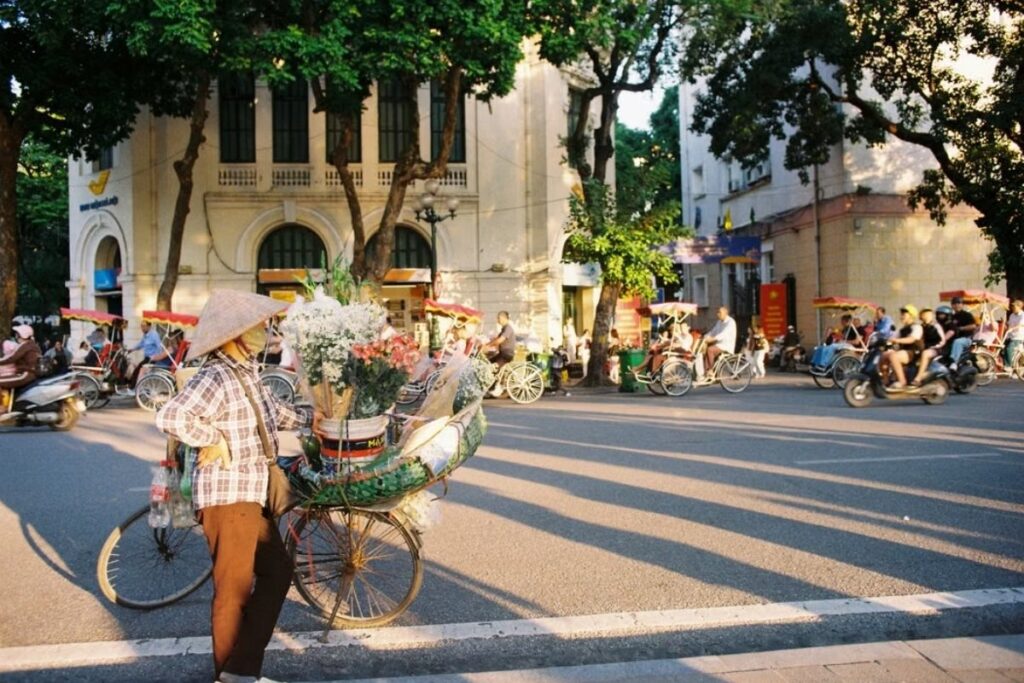
Eventually, unfamiliarity begins turning into recognition.
You know that a particular street is quiet early in the morning but crowded later.
You know which café fills up before work.
You know when the market becomes busiest.
You know when school traffic appears.
You know which streets are easier to cross at certain times.
These are small pieces of knowledge.
Together, they form a rhythm.
That rhythm is one of the most important differences between visiting Vietnam and spending enough time here to become familiar with a place.
A tourist sees moments.
A resident sees sequences.
This is particularly noticeable in Hanoi.
A street around Hoàn Kiếm may feel different in the early morning from the way it feels during the afternoon, and different again once pedestrian activity and evening social life take over. Research on Hanoi’s pedestrian streets has specifically examined how these changing rhythms are produced by different groups using the same spaces at different times.
Ho Chi Minh City offers a different version of the same idea.
Its sidewalks often reveal the relationship between space and activity more directly: parking, commerce, food, walking, and social interaction can coexist in a compact area. Kim’s research on Ho Chi Minh City shows why sidewalks are better understood as contested, mixed-use spaces than as simple pedestrian corridors.
The two cities are different.
But both demonstrate the same broader principle:
Urban life is not static.
It changes according to time, people, purpose, and context.
Once you understand that, many things that initially seemed random become easier to anticipate.
Not everything becomes predictable.
You simply become more comfortable with a system that does not always announce its rules.
And that is a significant shift.
You are no longer asking why everyone is doing something differently from what you expected.
You are starting to ask what the local pattern actually is.
14. The Difference Between Order and Predictability
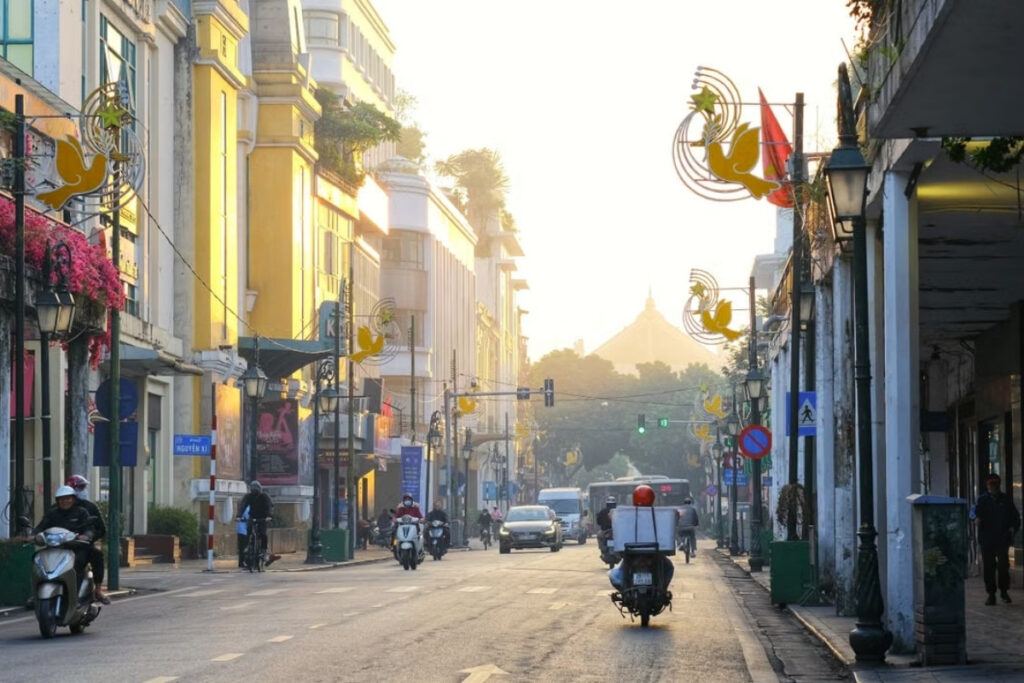
This may be the distinction that makes the whole country easier to understand.
Order and predictability are not the same thing.
A system can be highly predictable without being especially flexible.
Another system can be difficult to predict from the outside while remaining remarkably adaptive.
Vietnam often feels unusual to Western visitors because its order is not always expressed through the visual cues they expect.
You may not see a perfectly clear boundary.
You may not see a rigid sequence.
You may not know exactly what will happen next.
But people may still understand what they are doing.
That is the key.
The street vendor knows when to arrive.
The coffee shop knows when customers will come.
The driver knows how much space to leave.
The pedestrian knows when to move.
The local resident knows which parts of the sidewalk are usually occupied.
The system exists.
It is simply not always displayed through signs, markings, fixed boundaries, or predictable routines.
This helps explain why Vietnam feels chaotic to someone encountering it for the first time.
A visitor often looks for order in the physical environment.
Where is the line?
Where is the boundary?
Who has priority?
What happens next?
In many everyday situations, the answer is not written down.
It is understood through context.
People watch one another.
They adjust.
They negotiate.
They rely on routines.
They recognize familiar patterns.
Research on Hanoi’s streets describes this through multiple rhythms and ongoing negotiations among different users. Research on Ho Chi Minh City’s sidewalks similarly shows how public space can function through socially negotiated use rather than through one fixed purpose.
That does not make Vietnam’s model superior.
It does make it different.
And it helps answer why Vietnam is chaotic only if we first question what we mean by chaos.
If chaos means nothing follows a pattern, then much of Vietnamese street life does not fit the definition.
There are patterns.
They are simply not always visible to an outsider.
If chaos means the environment is crowded, noisy, unpredictable, and sometimes difficult to navigate, then yes — parts of Vietnam genuinely can feel chaotic.
Both observations can be true.
That is why the phrase chaotic Vietnam is useful as a first impression but incomplete as an explanation.
The deeper story is about how people coordinate complexity.
Sometimes they do it through formal rules.
Sometimes through habit.
Sometimes through social signals.
Sometimes through relationships.
Sometimes through simple trial and adjustment.
And sometimes they fail.
That last part matters.
A system does not have to work perfectly to have an internal logic.
A city can be difficult to predict while still being familiar to the people who live there.
A sidewalk can be contested while still supporting a remarkable amount of daily activity.
A street can look disorganized while thousands of people move through it without constantly stopping to explain what they are doing.
This is also why everyday life in Vietnam can teach something that a short visit often cannot.
You gradually stop asking whether the country is organized according to the standards you brought with you.
You start asking a more useful question:
How is this particular place actually being coordinated?
Once you ask that, the details become more interesting.
The motorbike is not just traffic.
The sidewalk is not just infrastructure.
The street vendor is not just a business.
The horn is not just noise.
The crowded café is not just a tourist scene.
Each is part of a larger network of routines, relationships, constraints, and adaptations.
Vietnam does not always look organized.
But that does not mean there is no order.
And once you stop looking for the system you expected to find, you start noticing the system that was there all along.
Final Thoughts: Vietnam Doesn’t Always Look Organized — But It Has Its Own Logic
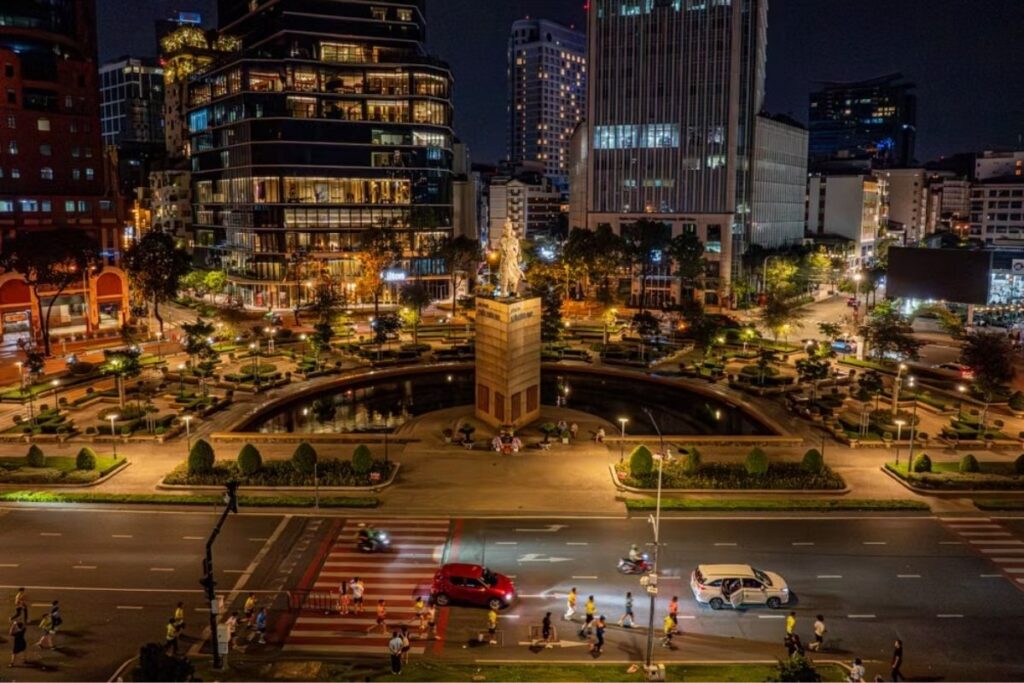
Perhaps the biggest mistake a visitor can make in Vietnam is deciding too quickly that what looks chaotic must be disorganized.
Sometimes it is.
But often, there is more going on.
A sidewalk is carrying several functions.
A street is changing with the hour.
A driver is responding to another driver’s movement.
A vendor is adapting to the space available.
A business is solving a problem without a long chain of formal procedures.
A neighborhood is relying on habits that locals understand but visitors have not yet learned.
None of this makes Vietnam perfectly efficient.
It does not excuse unsafe traffic, blocked sidewalks or poor urban planning.
And it certainly does not mean every foreigner should simply “get used to” things that genuinely create problems.
The point is more subtle.
Vietnam’s apparent chaos is often a mixture of constraint, adaptation, familiarity, negotiation and constant movement.
The country does not always organize everyday life by separating everything into clearly defined spaces.
It often allows different activities to overlap.
It does not always make every interaction predictable.
People often adjust as circumstances change.
It does not eliminate conflict.
People negotiate it.
And when formal systems do not answer a small everyday problem, there may be a person nearby who knows what to do.
That is why the first impression can be so misleading.
You arrive in Hanoi or Ho Chi Minh City and see traffic, noise, overlapping businesses, motorbikes, pedestrians and sidewalks that appear to have forgotten their original purpose.
You think:
How does this work?
Then you stay a little longer.
You learn the signals.
You notice the rhythms.
You begin to recognize the invisible agreements.
The city does not become silent.
The streets do not suddenly become perfectly orderly.
Instead, something changes in the way you see them.
What once looked random starts to look patterned.
What looked disorganized starts to look negotiated.
What felt unpredictable starts to feel familiar.
And eventually, you may realize that the question was slightly wrong.
It was never simply:
Why is Vietnam so chaotic?
It was:
What kind of order was I expecting to see?
Because order does not always look like straight lines, empty sidewalks, clearly separated spaces and predictable routines.
Sometimes it looks like a crowded Hanoi street that somehow keeps moving.
Sometimes it looks like a Ho Chi Minh City sidewalk changing function three times in one day.
Sometimes it looks like a motorbike slipping through a gap that seemed impossible five minutes earlier.
And sometimes, it looks like a person simply saying:
“Để tôi xem.”
Let me see.
Not everything works.
But enough of it works, often through people, habits and adaptation rather than through the kind of structure a foreign visitor expected to find.
Once you stop looking for the system you expected to find, you start noticing the system that was there all along.
FAQs: Why Vietnam Feels Chaotic but Somehow Works
Why does Vietnam feel so chaotic to foreigners?
Vietnam can feel chaotic to foreigners because traffic, pedestrians, businesses and everyday activities often share limited urban space. Many interactions also depend on familiarity, social signals and real-time adjustment rather than clearly separated functions. What looks disorganized at first can become easier to understand once visitors learn the local rhythm.
Is Vietnam actually chaotic or does it just look that way?
Vietnam can be genuinely crowded, noisy and unpredictable, and some forms of urban disorder create real problems. But not everything that looks chaotic is disorganized. Vietnamese street life often works through a combination of formal rules, informal expectations, negotiation and adaptation.
Why is traffic in Vietnam so chaotic?
Traffic in Vietnam can feel chaotic because motorcycles, cars, buses and pedestrians often compete for limited road space, particularly in dense cities such as Hanoi and Ho Chi Minh City. Road users also make constant adjustments based on movement, distance and surrounding traffic, which can look unpredictable to visitors accustomed to more rigid lane behavior.
Why do Vietnamese people use sidewalks for so many activities?
Vietnamese sidewalks often serve more than one purpose. Depending on the location and time of day, they may be used for walking, parking, street vending, eating, socializing or other everyday activities. Research on Ho Chi Minh City has documented sidewalks as mixed-use public spaces whose functions can change throughout the day.
Do Vietnamese people follow traffic rules?
Vietnam has formal traffic laws and regulations, but everyday road behavior also involves informal communication and constant adjustment. Drivers and pedestrians respond to one another’s speed, position and movement. This does not mean traffic rules are unimportant; it means formal rules are only one part of how road users navigate crowded streets.
Why does Vietnam seem disorganized but still function?
Much of everyday life in Vietnam depends on a combination of familiarity, flexibility, negotiation, social signals and practical problem-solving. People often adjust to changing circumstances rather than relying entirely on rigid procedures. The result can look unpredictable to outsiders while remaining familiar and functional to people who use the system every day.
Continue Exploring Vietnam
If this article changed the way you look at Vietnam’s streets, there is more to discover beyond the usual travel checklist.
Explore Vietnam Insights from Tam Voc Viet for stories about everyday life, Vietnamese culture, food, traditions, relationships, and the small details that reveal how the country works beneath the surface.
Recommended next reads:
- Living in Vietnam: The Complete Guide for Foreigners — A broader look at the practical and cultural realities of building a life in Vietnam.
- Vietnamese Culture — Explore the traditions, values, beliefs, and everyday customs that shape Vietnamese life.
- Vietnamese Family Culture — Understand how family relationships, respect, responsibility, and tradition influence everyday life.
- The Story Behind Vietnam’s Street Food Culture — Discover why street food is such an important part of everyday Vietnamese life.
- Why Do Vietnamese Families Eat Together? — Explore the social meaning of shared meals and the role food plays in family relationships.
- Why Do Vietnamese Wake Up So Early? — Discover the morning routines and daily rhythms that shape life across Vietnam.
- 15 Things That Surprise First-Time Visitors to Vietnam — See how the experience of visiting Vietnam can differ from the experience of actually living here.
- Common Culture Shocks in Vietnam — Explore some of the cultural differences that foreigners may encounter when adapting to life in Vietnam.
Together, these stories form part of Vietnam Insights, looking beyond famous destinations to explore how Vietnam is experienced, understood, and lived.
Sources & Further Reading
This article draws on academic research and institutional research into Vietnam’s urban streets, sidewalks, public spaces, transportation, and the changing ways people use and negotiate them.
- Annette M. Kim — The Mixed-Use Sidewalk: Vending and Property Rights in Public Space
A peer-reviewed study of Ho Chi Minh City’s sidewalks examining how different users share and negotiate public space, including vendors, pedestrians, property owners, and authorities. Published in the Journal of the American Planning Association.
Read the research on Taylor & Francis - Annette M. Kim — Sidewalk City: Remapping Public Space in Ho Chi Minh City
A book-length study based on extensive fieldwork examining the social, economic, and spatial life of Ho Chi Minh City’s sidewalks and the multiple groups that use them.
View the book at the University of Chicago Press - Dang, Huu Lieu; Pham, Thi-Thanh-Hien; Boudreau, Julie-Anne — Rhythmanalysis of pedestrian streets in Hanoi: A spatial–temporal reading of public spaces
Published in Geoforum in 2025, this research examines how residents, visitors, informal vendors, and planners use and negotiate pedestrian streets in central Hanoi. The study combines systematic observation with 70 in-depth interviews.
Read the research on ScienceDirect - World Bank — Developing Networked Mobility in Vietnam
Research examining urban mobility, road-space constraints, congestion, and transportation challenges in Vietnam’s largest cities, including Hanoi and Ho Chi Minh City.
Read the World Bank report - World Bank — Vietnam Urbanization Review
Research on Vietnam’s rapid urbanization, transportation infrastructure, land use, density, and the challenges facing Hanoi, Ho Chi Minh City, and other growing urban areas.
Read the World Bank research - Taylor & Francis — Saigon–Ho Chi Minh City is a “Walker’s Paradise”, so why are people not walking?
Recent research examining walking and local urban factors in Ho Chi Minh City, with further discussion of sidewalk conditions and the city’s relationship with pedestrian mobility.
Read the research on Taylor & Francis
How these sources inform this article
These sources provide context for the article’s discussion of mixed-use sidewalks, street rhythms, traffic pressure, public-space negotiation, and urban adaptation.
They do not establish that all Vietnamese streets or communities operate in the same way. Instead, they provide evidence for specific urban patterns observed in Hanoi and Ho Chi Minh City.
The broader cultural interpretation in this article is the editorial perspective of Tam Voc Viet, informed by those sources and by the distinction between formal urban systems and the informal, everyday practices through which people navigate them.
Editorial Note
Vietnam does not have one single street culture, urban rhythm, or everyday experience.
A narrow lane in Hanoi’s Old Quarter can feel very different from a residential neighborhood in Ho Chi Minh City. Da Nang has its own pace, while smaller cities and provincial towns may operate according to entirely different rhythms.
The same is true of the people who use these spaces.
A street vendor, office worker, student, business owner, commuter, visitor, and foreign resident may experience the same street in completely different ways.
This article therefore does not suggest that every Vietnamese person behaves in the same way or that every example applies everywhere in the country.
Instead, it looks at recurring patterns in Vietnamese urban life and asks a broader question:
What lies beneath the apparent chaos?
Some of the answer is cultural.
Some of it comes from limited urban space, rapid development, transportation patterns, and economic activity.
And some of it is simply the result of people constantly adapting to one another.
That distinction matters.
Understanding Vietnam does not mean pretending that every aspect of everyday life works perfectly.
It means learning to recognize both the strengths and the tensions within the way its streets, neighborhoods, businesses, and public spaces function.
About Tam Voc Viet
Tam Voc Viet explores Vietnam for international readers who want to understand more than where to go.
Our Vietnam Insights stories look at the culture, people, traditions, food, relationships, and everyday experiences that can be difficult to understand from a short visit.
Rather than presenting Vietnam as a collection of stereotypes or travel clichés, we aim to provide context — helping readers understand not only what they see, but also why it may work the way it does.
Vietnam is changing quickly.
Its cities are growing, public spaces are evolving, technology is reshaping everyday routines, and younger generations are developing new ways of living alongside long-standing traditions.
Our goal is to document and explain those changes with curiosity, context, and respect.
Because sometimes the most interesting part of Vietnam is not what happens at the famous places, but what happens on an ordinary street.
Article Information
Category: Vietnam Insights
Topic: Everyday Vietnam / Vietnamese Culture / Street Life
Focus Keyword: why Vietnam feels chaotic
Published: August 2026
Last Updated: August 2026
Author: Tam Voc Viet Editorial Team
