


 Tiếng Việt
The first few minutes of traffic in Vietnam can feel completely overwhelming.
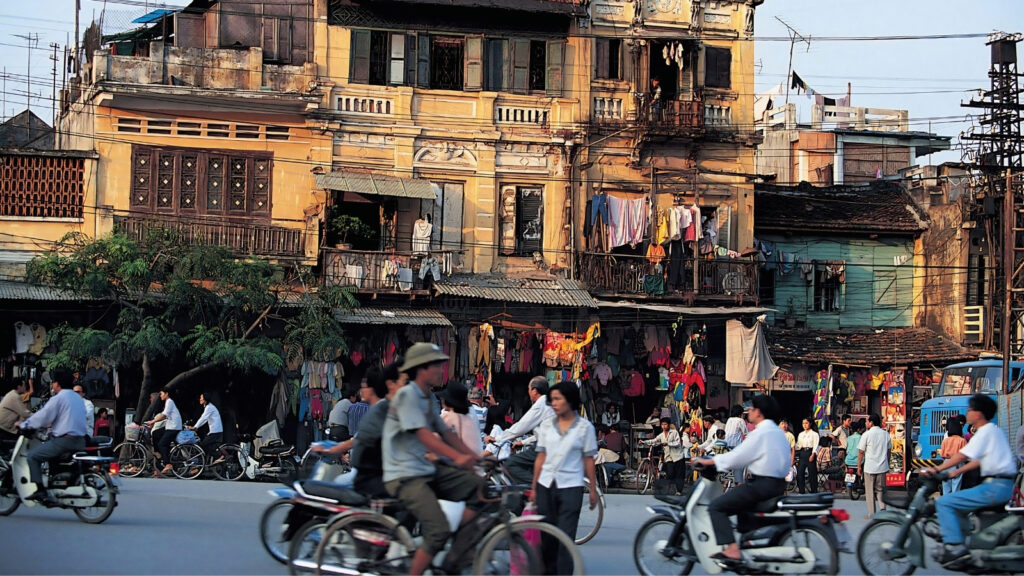
In Hanoi especially, it almost looks impossible to cross the street. Scooters move from every direction at once, drivers lean on their horns constantly, and intersections rarely work the way visitors expect.
The first instinct for many visitors is honestly just to stand on the sidewalk and wait for a gap that never comes.
Then something strange happens:
After a day or two, your brain adjusts to the rhythm surprisingly fast.Overnight trains rattle down the coast past rice paddies and fishing villages. Sleeper buses somehow manage to carry backpackers, local families, giant cardboard boxes, and karaoke speakers all at the same time.
Then, usually within a few days, Vietnam starts making sense.
Despite its reputation for intense traffic, Vietnam is actually one of the easiest countries in Southeast Asia to travel around once you understand how locals move. Domestic flights are cheap, ride-hailing apps work surprisingly well, trains cover much of the country, and even remote mountain towns are connected by overnight buses.
For most travelers, transportation in Vietnam becomes part of the experience — not just a way to get from one destination to another.
This Transportation in Vietnam Travel guide breaks down the best ways to travel around Vietnam, what first-time visitors should expect, how to avoid common transportation mistakes, and which options are actually worth your money.
Table of Contents
What Transportation in Vietnam Is Really Like
Vietnam stretches more than 1,000 miles from north to south, and every region feels different.
In Hanoi, traffic moves like organized chaos. In Central Vietnam, coastal train rides become part of the scenery. In the Mekong Delta, boats often matter more than roads. Up north near Ha Giang or Sapa, winding mountain roads can turn a short distance into a full-day journey.
That variety is exactly why there is no single “best” way to get around Vietnam.
Most people end up mixing several transportation styles throughout the trip — usually flights for long distances, trains for scenic routes, and sleeper buses or Xanh SM/ Grab rides for shorter regional travel.
And honestly, that is usually the smartest approach.
Why Vietnam Traffic Looks Scarier Than It Is
The traffic looks far more dangerous than it actually feels.
Crossing the street in Vietnam can seem terrifying the first time, especially in Hanoi or Ho Chi Minh City. Thousands of scooters move constantly, often ignoring what visitors expect from Western traffic patterns.

But here is what surprises most travelers:
What feels strange at first is that traffic rarely stops completely. Instead, drivers constantly adjust around whatever is moving in front of them — including pedestrians.
Instead of stopping suddenly or running unpredictably, the safest strategy is usually to walk slowly and consistently while drivers naturally adjust around you.
The key is confidence and steady pacing — not sprinting.
After a few days, most visitors adapt faster than they expected.
Flying Saves Time — But You Miss a Lot
Vietnam is long enough that flying can save huge amounts of travel time.
A train from Hanoi to Ho Chi Minh City can take more than 30 hours. A flight takes about two.
If your itinerary is short, domestic flights are often worth every dollar.
The Best Domestic Airlines in Vietnam
Most travelers end up flying either Vietnam Airlines or VietJet. Bamboo Airways also operates domestic routes, although availability changes more frequently.
Vietnam Airlines usually feels smoother and more organized, especially for international travelers unfamiliar with Vietnam. VietJet, on the other hand, is popular because fares can be extremely cheap — although delays and baggage fees are fairly common.
For budget travelers, that trade-off is usually acceptable.
Flights in Vietnam Are Often Cheaper Than Travelers Expect
One of the biggest surprises for Americans visiting Vietnam is how affordable domestic flights can be.
On some routes, flying costs only slightly more than taking an overnight train or sleeper bus.
Flights become especially useful on longer routes like Hanoi to Ho Chi Minh City or island connections such as Phu Quoc.
If you book a few weeks ahead, short domestic flights can sometimes cost less than dinner back home.
Vietnam’s Trains Are Slower — But Far More Memorable

If flights are about efficiency, trains are about experience.
On daytime routes, it is common to see people quietly sharing snacks, drinking instant coffee, or staring out the window for hours as the scenery shifts from crowded cities to rice fields and empty coastline.
Vendors occasionally walk through the train selling snacks, hard-boiled eggs, coffee, and surprisingly good boxed meals.
The famous Reunification Express connects Hanoi and Ho Chi Minh City, though most travelers ride shorter segments instead of the full route.
The stretch between Hue and Da Nang is especially beautiful. The train curves along the Hai Van Pass with views of jungle cliffs dropping into the sea below. Even travelers who normally avoid trains often remember this ride as one of the highlights of their Vietnam trip.
What Overnight Trains in Vietnam Are Actually Like
Soft sleeper cabins are usually the best choice for international travelers.
They are not luxury experiences, but they are generally comfortable enough for one night.
The cabins are compact and fairly simple, with firm beds, cold air conditioning, and just enough space for a backpack or small suitcase. It is not luxury travel, but for one night, most travelers find it perfectly manageable.
One thing many tourists do not expect:
Vietnamese trains can get surprisingly cold at night.
Even in tropical weather, bringing a hoodie or light jacket makes a huge difference.
Sleeper Buses Are Either Fun or Miserable
Sleeper buses are practically a backpacker rite of passage in Vietnam.
You remove your shoes before boarding, climb into a narrow reclining bunk, and spend the next several hours rolling through highways while Vietnamese pop music or action movies play quietly in the background.
Sleeper buses in Vietnam tend to become either a favorite memory or a story people laugh about later. Sometimes both.

A sleeper bus ride in Vietnam can feel surprisingly comfortable or completely exhausting depending on the route, weather, traffic, and how much personal space you need.
If you are taller than six feet, sleeper buses can feel cramped very quickly.
Still, for budget travelers, they remain one of the cheapest ways to cross the country.
Routes Where Sleeper Buses Usually Make Sense
Sleeper buses work especially well for:
- Hanoi to Ha Giang
- Hanoi to Sapa
- Da Lat to Ho Chi Minh City
- Nha Trang to Mui Ne

On shorter routes, limousine vans are often a more comfortable alternative.
Why Grab or Xanh SM Is One of the Best Things to Happen to Travel in Vietnam
Before ride-hailing apps became common, dealing with taxis in Vietnam could be frustrating for tourists.
Now, most travelers simply use Grab or Xanh SM.
In larger cities, many travelers now alternate between Grab and Xanh SM depending on availability and price.
The electric vehicles used by Xanh SM are noticeably quieter, especially after spending hours around heavy scooter traffic.
If you have used Uber before, the system feels familiar immediately.
The apps work similarly to Uber, allowing travelers to book everything from quick motorbike rides to airport transfers directly through their phones.
Prices are shown upfront, which removes the awkward negotiation process many visitors worry about.

For short city rides, Grab or Xanh SM bikes are often faster than cars because scooters can move through traffic more efficiently.
Even relatively long rides within Da Nang or Hanoi often cost less than most travelers expect.
Should Tourists Rent Scooters in Vietnam?
This depends entirely on where you are.
In smaller destinations like:
- Hoi An
- Ninh Binh
- Phu Quoc
- Mui Ne

Renting a scooter can be one of the best parts of the trip. Roads are calmer, traffic is lighter, and having freedom to explore beaches or countryside areas feels incredible.
In Hanoi or Ho Chi Minh City, however, first-time riders are often overwhelmed almost instantly.
Intersections in Ho Chi Minh City can involve hundreds of scooters moving simultaneously, which catches many first-time visitors off guard almost immediately.
Rain also changes road conditions very quickly in Vietnam, especially in cities where streets can flood within minutes during heavy storms.
For many travelers, Vietnam is a better place to learn how to ride slowly than aggressively.
The Mistake Many Tourists Make With Scooters
A lot of visitors underestimate how physically tiring Vietnamese traffic can be.
Even experienced riders are sometimes surprised by how mentally exhausting Vietnamese traffic can feel after several hours on the road, especially during rain or rush hour.
If you are not confident on a scooter already, quieter towns are much safer places to practice than major cities.
Also important:
many travel insurance policies will not cover motorbike accidents unless you have the proper license or International Driving Permit.
Trains vs Flights vs Buses in Vietnam
There is no universal winner.
The best transportation option depends on your priorities.
Choose Flights If:
Travelers with limited time usually prefer domestic flights, especially for north-to-south routes where buses and trains can consume an entire day or more. Trains appeal more to travelers who care about scenery and slower travel experiences, while sleeper buses remain the cheapest option for flexible itineraries.
Choose Trains If:
- You enjoy scenery
- You want a more relaxed pace
- Overnight travel sounds fun
- You value experience over speed
Choose Sleeper Buses If:
- You are traveling on a tight budget
- You want maximum route flexibility
- You do not mind basic comfort
Most experienced Vietnam travelers use a combination of all three.
The Part of Vietnam Where Transportation Gets Harder
Northern Vietnam tends to involve longer travel days and more winding mountain roads.
Places like:
are visually spectacular, but transportation is slower and less predictable than in the south.
Distances in Northern Vietnam often look deceptively short on Google Maps because mountain roads slow everything down.
Road conditions can change quickly during rainy season, and mountain fog sometimes delays buses or private transfers.
The upside is that northern Vietnam also contains some of the country’s most unforgettable road trips.
Why Central Vietnam Feels Easier for Travelers
For many travelers, Central Vietnam is where transportation becomes easiest.
Destinations like:
are relatively close together, roads are better organized, and transportation infrastructure is very tourist-friendly.
This region works especially well for:
- Scooters
- Private drivers
- Short train rides
- Grab or Xanh SM rides
Transportation in Southern Vietnam Moves Faster
Ho Chi Minh City moves quickly.
Traffic feels denser, the weather is hotter, and distances between districts can be surprisingly large.
At the same time, southern Vietnam also has some of the country’s easiest flight connections thanks to Tan Son Nhat International Airport.
For island destinations like Phu Quoc or Con Dao, flying is usually the most efficient option.
Common Transportation Mistakes Travelers Make in Vietnam
Booking Flights With Unrealistically Tight Connections
Vietnamese airports can become crowded quickly, especially during holidays and weekends.
Leaving extra time between connections reduces stress significantly.
Assuming Google Maps Is Always Accurate
In older neighborhoods, especially small alleys, map locations can occasionally be wrong or misleading.
This happens more often than many visitors expect.
Taking Random Airport Taxis
Using Grab, Xanh SM or reputable taxi companies like Mai Linh is usually safer than accepting random rides outside airports.
Forgetting How Cold Overnight Transportation Gets
Vietnam is hot, but buses and trains often blast air conditioning aggressively.
A hoodie becomes surprisingly valuable on overnight journeys.
How Much Transportation Costs in Vietnam
Vietnam remains one of the most affordable countries in Asia for transportation.
Compared to North America or Western Europe, transportation in Vietnam feels remarkably affordable. Even airport rides, domestic flights, and overnight transportation are often cheaper than many travelers expect before arriving.
Essential Transportation Apps for Vietnam

A few apps make traveling around Vietnam dramatically easier.
Most travelers rely heavily on:
- Grab or Xanh SM
- Google Maps
- 12Go Asia
- Baolau
- Google Translate
Downloading them before arrival saves a surprising amount of time.
Final Thoughts: The Best Way to Travel Around Vietnam
Transportation in Vietnam looks intimidating from the outside.
Then you arrive, take your first Grab or Xanh SM ride through a sea of scooters, board an overnight train along the coast, or watch the sunrise from a mountain bus near Ha Giang — and suddenly the movement itself becomes part of the story.
That is one reason so many travelers end up loving Vietnam.
The country is constantly in motion.
And once you learn how to move with it, getting around becomes far easier than most people expect.
FAQ About Transportation in Vietnam
Is transportation in Vietnam safe for tourists?
Generally yes, although traffic can feel overwhelming at first. Using Grab or Xanh SM, reputable transportation companies, and avoiding risky scooter driving helps minimize problems.
What is the cheapest way to travel around Vietnam?
Sleeper buses are usually the cheapest long-distance transportation option in Vietnam.
Is Grab or Xanh SM available throughout Vietnam?
Grab or Xanh SM is widely available in major cities including Hanoi, Da Nang, and Ho Chi Minh City.
Are trains in Vietnam worth taking?
Absolutely — especially scenic coastal routes like Hue to Da Nang.
Should tourists rent scooters in Vietnam?
Scooters are great in smaller towns and coastal areas, but major cities can be difficult for inexperienced riders.
Travelers heading north toward Ha Giang or Sapa should expect significantly longer travel times than distances on the map might suggest.
- Vietnam Visa Guide
- Best Places to Visit in Vietnam
- Best Vietnam Tours
- Best Resorts in Vietnam
- Best Places for Digital Nomads in Vietnam
- Vietnam Transportation Guide
These internal guides help travelers better understand transportation, budgeting, itineraries, accommodation, and local travel experiences across Vietnam.
Some of the most memorable moments in Vietnam happen while moving between destinations rather than at the destinations themselves.
Some of the best experiences happen outside the itinerary itself — from random roadside coffee stops to unexpected conversations with locals or quiet mornings that never appear in guidebooks.
The most memorable trips in Vietnam are rarely the ones that move the fastest.
IfWe also document transportation, food culture, and everyday travel experiences across Vietnam through TAM VOC VIET – VIETNAM INSIGHTS
Author Note
This guide is based on repeated travel experiences across Hanoi, Ho Chi Minh City, Da Nang, Hoi An, and Phu Quoc, and multiple train, sleeper bus, and domestic flight routes used by international travelers throughout Vietnam between 2025 and 2026.
Vietnam is not just easy to visit in 2026 — it remains one of the most rewarding and budget-friendly travel experiences in the world.
