


 Tiếng Việt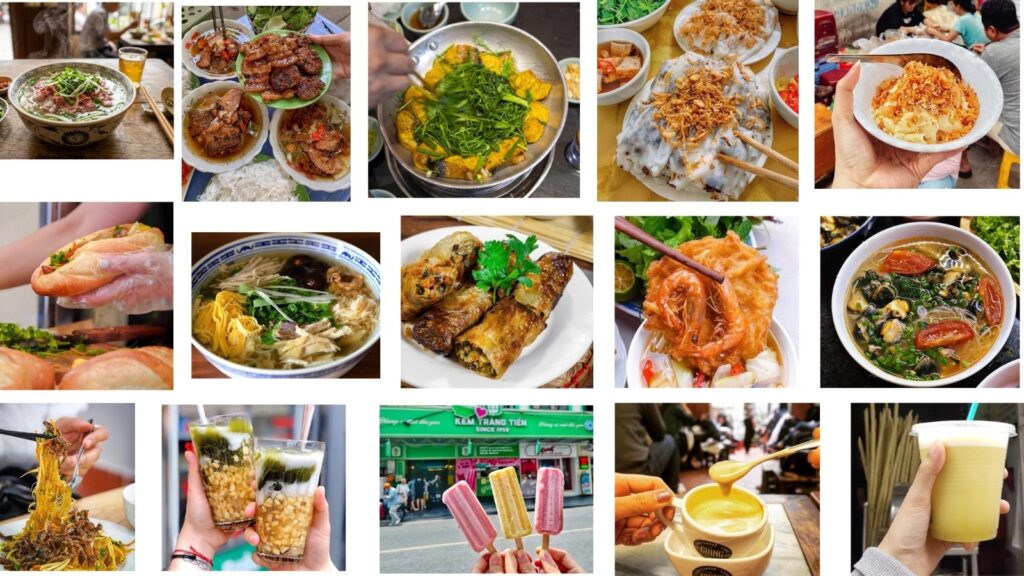
Few cities in Asia revolve around food quite like Hanoi.
Before the city fully wakes, plastic stools are already filling with commuters sipping steaming bowls of pho. By noon, the scent of charcoal-grilled pork drifts through narrow alleys, and after sunset, entire sidewalks become open-air dining rooms.
Long before sunrise, the scent of simmering beef broth drifts through quiet neighborhoods as street vendors prepare their first bowls of pho. By lunchtime, charcoal grills fill the air with the smoky aroma of bun cha, while tiny cafés tucked into narrow alleys serve creamy egg coffee to regulars who have been stopping by for years. After sunset, sidewalks transform into lively open-air dining rooms where friends gather over grilled skewers, steaming noodle soups, and cold local beer.
For travelers, the city offers one of Southeast Asia’s richest culinary experiences. Hanoi’s cuisine reflects centuries of Northern Vietnamese traditions, emphasizing balance, fresh herbs, clear broths, delicate seasoning, and recipes passed down through families. While many visitors arrive looking for famous dishes like pho or bun cha, they soon discover a food culture that extends far beyond international favorites.
Whether you’re wandering through the bustling lanes of the Old Quarter, exploring quiet residential neighborhoods, or searching for hidden local eateries recommended only by residents, every meal reveals another layer of Hanoi’s history and identity.
Quick Answer: What Food Is Hanoi Famous For?
If you’re short on time, these are the dishes every first-time visitor should try.
Hanoi is best known for its traditional Northern Vietnamese cuisine, including Pho Bo (beef noodle soup), Bun Cha (grilled pork with rice noodles), Cha Ca (turmeric fish with dill), Banh Cuon (steamed rice rolls), Bun Thang, Egg Coffee, Xoi (sticky rice), Banh Tom, Bun Oc, and Nem Ran. Most of these dishes originated in Hanoi or have been perfected there over generations, making the city one of Vietnam’s top destinations for authentic local food.
Why Hanoi Is One of Asia’s Great Food Cities
Travelers often compare Hanoi with culinary capitals like Bangkok, Osaka, Singapore, or Taipei. While each city has its own strengths, this Hanoi food guide explores why Vietnam’s capital stands apart through its remarkable balance between centuries-old culinary traditions and everyday local life.
What truly distinguishes Hanoi is consistency rather than spectacle. Across the city, many cooks dedicate themselves to a single specialty instead of offering extensive menus. For visitors, that often means the simplest eateries deliver the most memorable meals.
Table of Contents
What Makes Hanoi Food Special?
At first glance, Vietnamese cuisine may appear similar from north to south. Noodle soups, rice dishes, grilled meats, and fresh herbs can be found throughout the country. Yet after only a few meals in Hanoi, most travelers notice that the flavors here are distinctly different.
Northern Vietnamese cooking favors subtlety over intensity. Instead of relying on bold sweetness or heavy spice, Hanoi’s chefs aim for harmony. Broths are clear yet deeply flavorful, herbs are used thoughtfully rather than generously, and seasonings enhance rather than overpower the natural taste of fresh ingredients.
Take pho, for example. While variations exist across Vietnam, Hanoi’s version is widely regarded as the original. Its broth is patiently simmered for hours from beef bones and aromatic spices, resulting in a clean, elegant flavor that needs little more than fresh scallions and a squeeze of lime.
The same philosophy extends to many of the city’s signature dishes. Bun cha combines smoky grilled pork with cool rice noodles and a lightly sweetened dipping sauce. Cha ca balances turmeric-marinated fish with fragrant dill and spring onions. Even simple breakfast foods like xoi or banh cuon highlight texture and freshness over elaborate seasoning.
History also plays an important role in shaping Hanoi’s cuisine. As Vietnam’s capital for centuries, the city absorbed influences from royal kitchens, village traditions, and later French colonial culture. This blend gave rise to distinctive specialties such as egg coffee, pâté-filled bánh mì, and elegant noodle dishes that remain unique to Northern Vietnam.
One of Hanoi’s greatest strengths is that exceptional food remains remarkably accessible. Whether dining at a neighborhood noodle shop or a long-established restaurant, visitors rarely need large budgets to enjoy memorable meals.
Key Takeaways
- Hanoi is the birthplace of several iconic Vietnamese dishes, including pho and bun cha.
- Most local eateries specialize in just one signature recipe.
- Street food is generally safe when you choose busy vendors serving freshly cooked meals.
- Three days is the ideal amount of time to explore Hanoi’s diverse food scene.
- Don’t miss seasonal specialties and neighborhood markets beyond the Old Quarter.
15 Must-Try Foods in Hanoi Food Guide
If there’s one mistake first-time visitors make in Hanoi, it’s assuming pho is the beginning and end of the city’s food culture.
While Vietnam’s most famous noodle soup certainly deserves its reputation, it represents only a small part of what locals eat every day. Breakfast might be a steaming bowl of noodles, but lunch could mean grilled pork over charcoal, dinner may revolve around turmeric-marinated fish sizzling at the table, and an afternoon break is often accompanied by freshly made rice rolls or sticky rice wrapped in banana leaves.
The best way to experience Hanoi is to eat throughout the day, following the same rhythm as the city’s residents. Many specialty shops serve only one signature dish, often for just a few hours before selling out. Rather than searching for one “best restaurant,” allow yourself to explore several small eateries, each with its own decades-old recipe and loyal local following.
These are the first five dishes every traveler should experience in Hanoi.
1. Pho Bo – Hanoi’s Most Iconic Breakfast
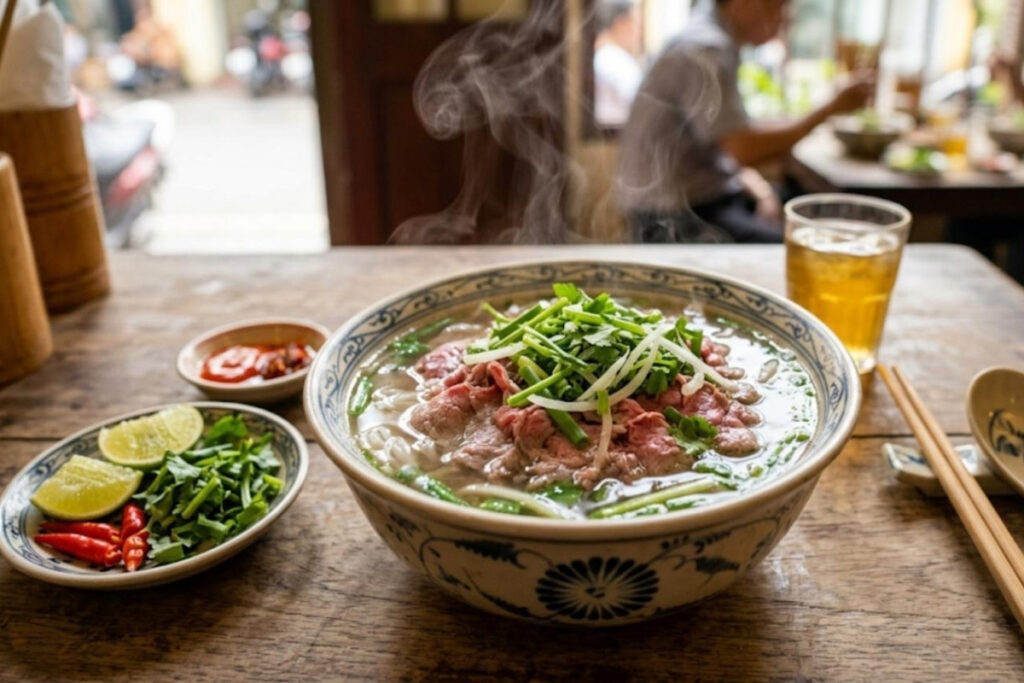
Few dishes are more closely associated with Vietnam than pho, and nowhere does it feel more authentic than in Hanoi, where many historians believe the dish first emerged in the early twentieth century.
Editor’s Insight
Arrive before 7:30 a.m. and you’ll notice something interesting. Most customers aren’t tourists—they’re office workers grabbing breakfast before work, retirees reading the morning paper, and families sharing a quiet meal. By 9 a.m., many of the city’s best pho shops have already sold a significant portion of the day’s broth.
Before traffic reaches its morning peak, neighborhood pho shops quietly fill with regulars enjoying breakfast before the day begins.
Unlike many international versions that rely on abundant garnishes, Hanoi-style pho is intentionally restrained. The broth is crystal clear yet deeply flavorful, the rice noodles are soft but never mushy, and thin slices of beef cook gently in the hot liquid moments before serving. A scattering of scallions, a touch of black pepper, and perhaps a squeeze of lime are often all that’s needed.
For first-time visitors, the simplicity can be surprising. Rather than masking flavors with sauces, locals appreciate the delicate balance created through hours of slow simmering beef bones, spices, and careful preparation.
When to eat: Early morning (6:00–9:00 AM) is considered the classic time for pho, although some restaurants serve it throughout the day.
Typical price: Around 50,000–90,000 VND (approximately USD $2–4).
Traveler’s Tip: If a pho shop has only one or two menu items and a constant stream of local customers, that’s usually a very good sign. Long menus are rarely necessary when a family has spent decades perfecting a single recipe.
2. Bun Cha – The Lunch Every Visitor Should Experience
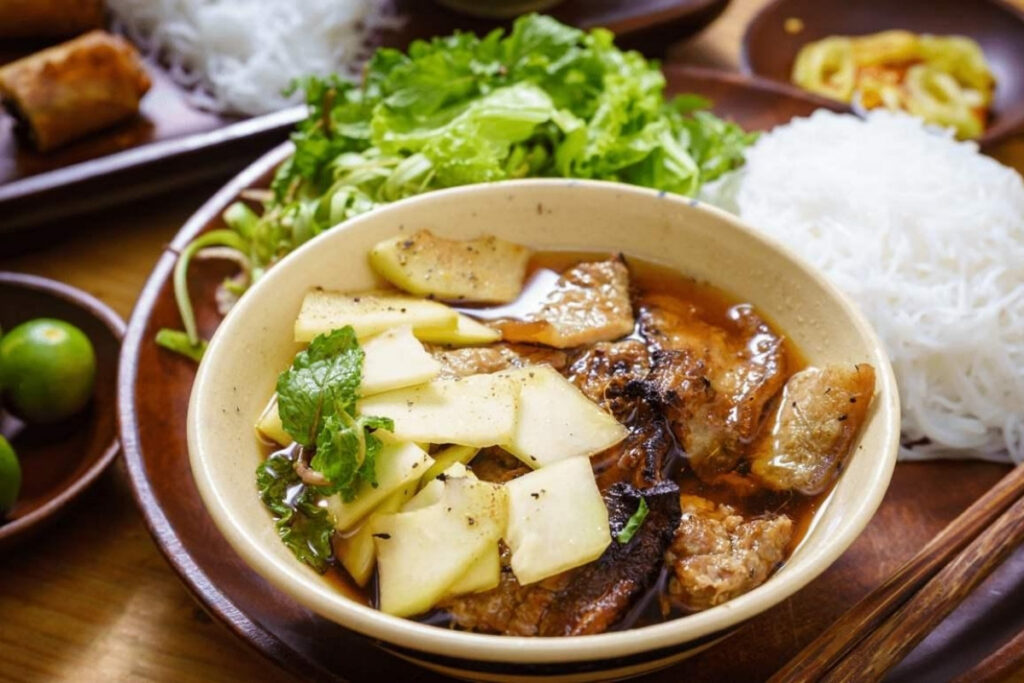
If pho belongs to the morning, bun cha belongs to lunchtime.
As noon approaches, the smell of pork grilling over charcoal drifts through neighborhoods across Hanoi. Metal grills line the sidewalks while cooks fan glowing coals, sending smoke into the streets and drawing hungry customers from nearby offices.
A serving of bun cha arrives in several separate bowls and plates. One contains grilled pork patties and slices of caramelized pork belly resting in a warm, lightly sweetened fish sauce broth. Another holds cool rice noodles, while baskets of fresh herbs add brightness and texture.
Unlike noodle soups, bun cha is assembled one bite at a time. Diners dip noodles into the broth, add herbs, pick up a piece of grilled pork, and create their own perfect combination.
The dish gained worldwide attention after former U.S. President Barack Obama shared a meal of bun cha during his visit to Hanoi in 2016. Yet despite the international spotlight, bun cha remains a humble everyday favorite for locals.
When to eat: Most bun cha restaurants open only for lunch and often close once the day’s grilled pork is sold out.
If you’re still searching for lunch after 2 p.m., you’ll quickly discover why locals say Hanoi waits for no one—many bun cha shops are already closed.
Typical price: 60,000–120,000 VND (USD $2.50–5).
Traveler’s Tip: Don’t expect elaborate presentation. The best bun cha is often served in modest family-run shops where recipes have changed little over generations.
Local Insight
Most Bun Cha restaurants only serve lunch because the pork is prepared fresh each morning. Once sold out, they close for the day rather than preparing another batch.
3. Cha Ca – Hanoi’s Legendary Turmeric Fish
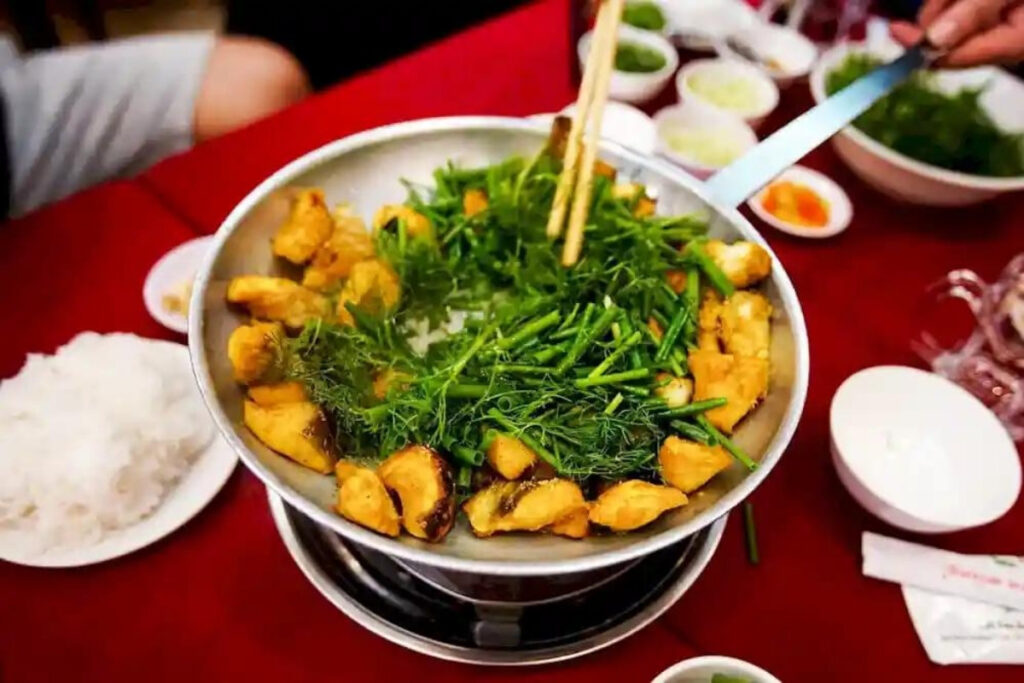
Some meals are memorable because of the food itself. Others stay with you because of the experience. Cha ca offers both.
Unlike most Vietnamese dishes, cha ca is finished directly at your table. Chunks of freshwater fish marinated in turmeric and galangal arrive in a hot pan alongside generous handfuls of dill and spring onions. As the herbs wilt in the sizzling oil, the entire table fills with an unmistakable aroma unlike anything else in Vietnamese cuisine.
Each bite combines flaky fish, fresh herbs, roasted peanuts, rice noodles, and fermented shrimp paste—or fish sauce for those who prefer a milder flavor.
Cha ca is deeply connected to Hanoi’s culinary history. One of the city’s oldest streets, now known as Cha Ca Street, earned its name because of the restaurants specializing in this dish.
The meal encourages conversation. Rather than eating quickly, families and groups cook together, share plates, and enjoy the slow pace of dining.
When to eat: Lunch or dinner.
Typical price: 180,000–350,000 VND per person depending on the restaurant.
Traveler’s Tip: If you’re unsure about shrimp paste, ask for fish sauce instead. You’ll still experience the essential flavors while easing into one of Hanoi’s most distinctive specialties.
4. Banh Cuon – Hanoi’s Delicate Morning Favorite
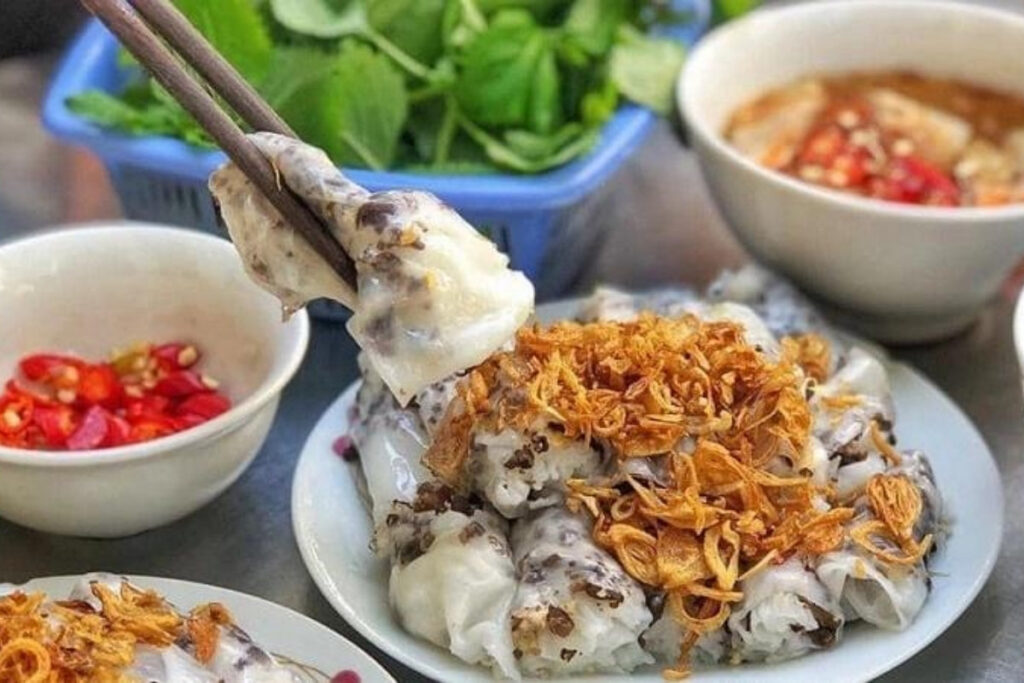
Watching banh cuon being made is almost as enjoyable as eating it.
Inside many neighborhood shops, cooks stretch a thin layer of fermented rice batter across steaming cloth, cover it for a few seconds, then carefully lift the silky sheet before filling it with seasoned minced pork and wood ear mushrooms. The entire process takes less than a minute, yet mastering it requires years of practice.
Served with crispy fried shallots, Vietnamese pork sausage, fresh herbs, and a light fish sauce dipping sauce, banh cuon feels surprisingly delicate compared with heavier breakfast options.
Its soft texture and subtle flavors reflect many of the qualities that define Northern Vietnamese cooking—precision, restraint, and freshness.
Because each roll is made to order, diners often watch the entire preparation from their tables, adding another layer to the experience.
When to eat: Breakfast or late morning.
Typical price: 40,000–70,000 VND (USD $1.50–3).
Traveler’s Tip: Freshly made banh cuon should be almost translucent and incredibly soft. If it’s been sitting for too long, the texture quickly changes.
5. Xoi – The Breakfast You’ll See Everywhere
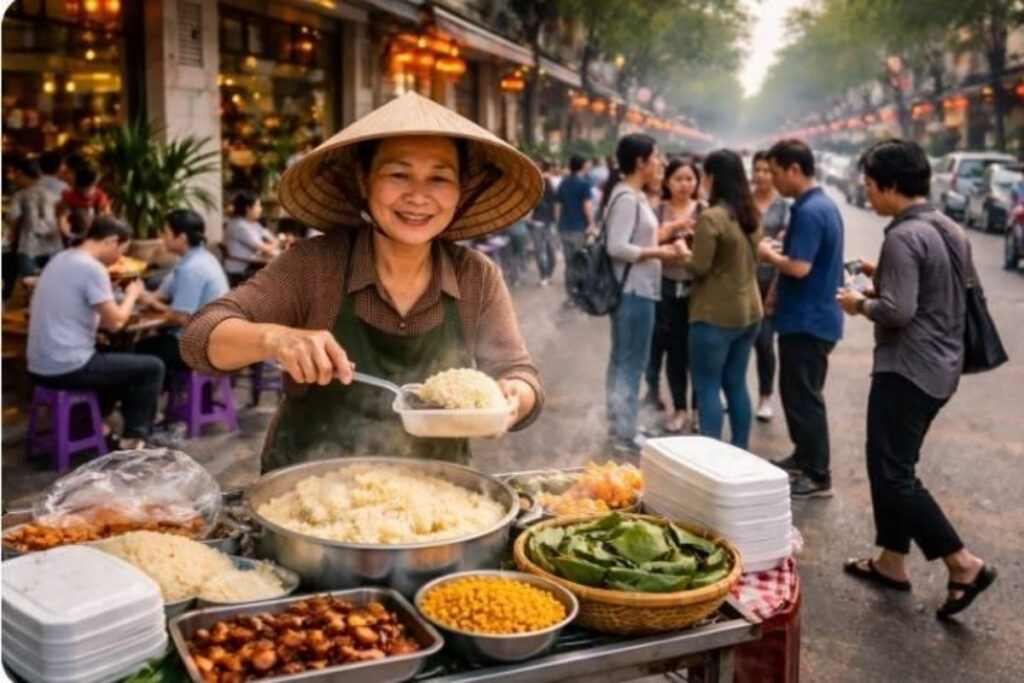
Not every memorable meal in Hanoi comes in a bowl.
During the morning commute, countless street vendors sell packets of xoi, or sticky rice, wrapped neatly in banana leaves or paper. Office workers grab one on their way to work, students carry them to school, and construction workers enjoy them as a filling breakfast.
The beauty of xoi lies in its versatility.
Some versions are savory, topped with shredded chicken, Chinese sausage, braised pork, or mung bean. Others lean toward the sweeter side with coconut, sesame, peanuts, or sugar.
Despite its simplicity, sticky rice has long been associated with Vietnamese agriculture and harvest traditions. Rice is more than a staple food—it has shaped the country’s culture, festivals, and daily life for centuries.
Eating xoi from a street vendor offers visitors a glimpse into everyday Hanoi that few restaurant meals can match.
When to eat: Early morning or as an afternoon snack.
Typical price: 20,000–50,000 VND (less than USD $2).
Traveler’s Tip: Look for vendors with steaming baskets rather than pre-packaged portions. Freshly steamed xoi has a noticeably softer texture and richer aroma.
Local Dining Tip: Follow the Crowd, Not the Reviews
One of the easiest ways to find excellent food in Hanoi is to follow the crowds during local meal times. Restaurants specializing in one dish with a steady stream of customers are often a more reliable sign of quality than online reviews.
6. Bánh Mì Hà Nội – A French Legacy with a Distinct Northern Twist
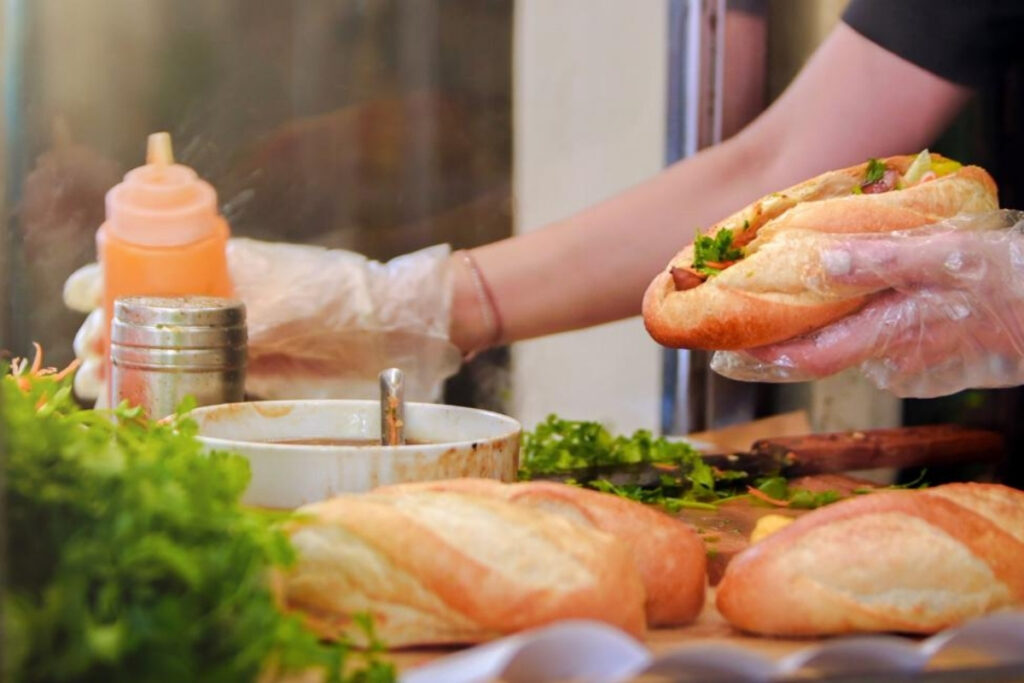
Travelers often arrive in Vietnam expecting the Vietnamese bánh mì, only to discover that the sandwich changes dramatically from one region to another.
In Hanoi, bánh mì is less extravagant than its southern counterpart. Rather than overflowing with dozens of fillings, the Northern style celebrates balance. A crisp French baguette is lightly toasted before being layered with pâté, roasted pork, Vietnamese ham, pickled vegetables, fresh cucumber, cilantro, and a touch of chili sauce for those who enjoy a little heat.
The influence of French colonial rule is impossible to miss. The baguette itself is a reminder of that era, yet everything inside reflects unmistakably Vietnamese flavors. What emerged over time wasn’t simply a fusion dish but a uniquely local creation that has become part of everyday life.
Unlike a leisurely bowl of pho, bánh mì is Hanoi at full speed.
Compact, affordable, and easy to carry, banh mi has become one of Hanoi’s most convenient meals for busy mornings and afternoons. Every bakery adds its own signature touch, giving travelers plenty of reasons to try more than one.
Best time to eat: Breakfast, lunch, or a quick afternoon meal.
Typical price: 25,000–60,000 VND (about USD $1–2.50).
Traveler’s Tip: Order your bánh mì fresh rather than pre-made. The contrast between the warm crust and cool fillings is one of the sandwich’s defining characteristics.
7. Bún Thang – Hanoi’s Most Elegant Bowl of Noodles
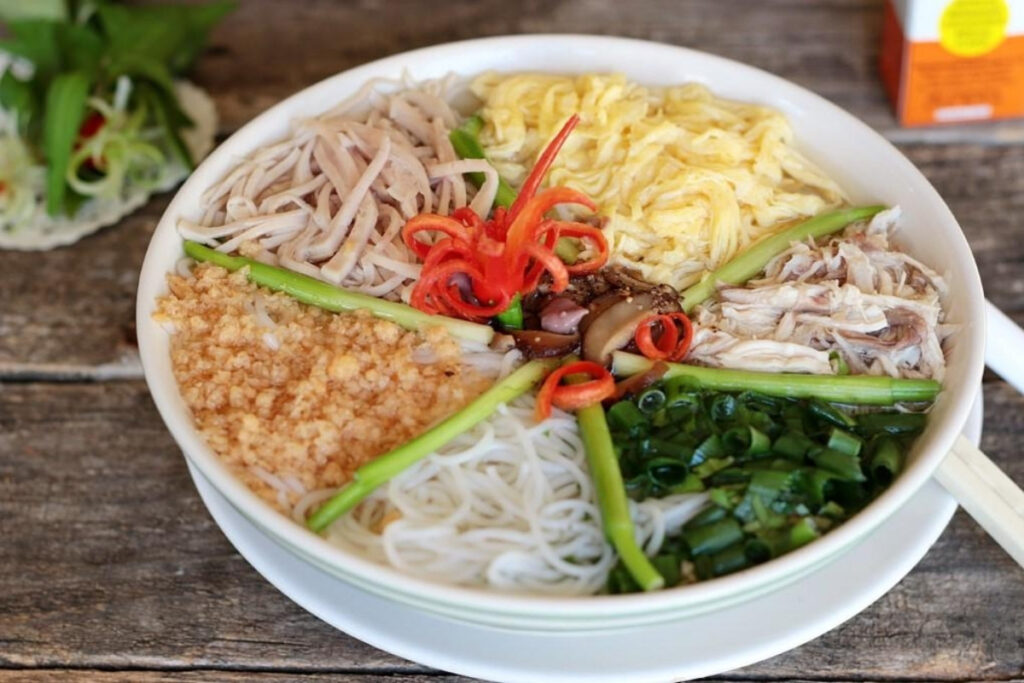
If pho represents comfort and bun cha embodies everyday life, bún thang showcases Hanoi’s culinary refinement.
At first glance, the dish appears almost too beautiful to eat. Thin rice noodles disappear beneath carefully arranged strips of shredded chicken, delicate ribbons of egg omelet, slices of Vietnamese pork sausage, fragrant herbs, mushrooms, and occasionally dried shrimp or preserved radish. Every ingredient is cut with remarkable precision, giving the bowl an elegant, almost ceremonial appearance.
Its name, thang, refers to the idea of combining many carefully measured ingredients into a harmonious whole—a fitting description for one of Hanoi’s most intricate traditional recipes.
Historically, bún thang was associated with the Lunar New Year. Families would transform leftover holiday ingredients into an exceptionally delicate soup, ensuring nothing went to waste while creating something entirely new. Today, it can be enjoyed year-round, though it remains less common than pho or bun cha.
The broth deserves particular attention. Rather than relying on bold seasoning, it is intentionally light and clear, allowing each ingredient to contribute its own subtle flavor. The result is a bowl that feels refined without ever becoming complicated.
Because preparing bún thang requires time, skill, and attention to detail, relatively few restaurants specialize in it. Finding a good bowl often feels like discovering one of Hanoi’s best-kept culinary secrets.
Best time to eat: Breakfast or lunch.
Typical price: 60,000–120,000 VND.
Traveler’s Tip: This is an excellent choice if you’ve already tried pho and want to experience another side of Northern Vietnamese cuisine. Its delicate flavors reveal the craftsmanship behind Hanoi’s cooking traditions.
8. Nem Rán – Vietnam’s Crispiest Celebration Dish
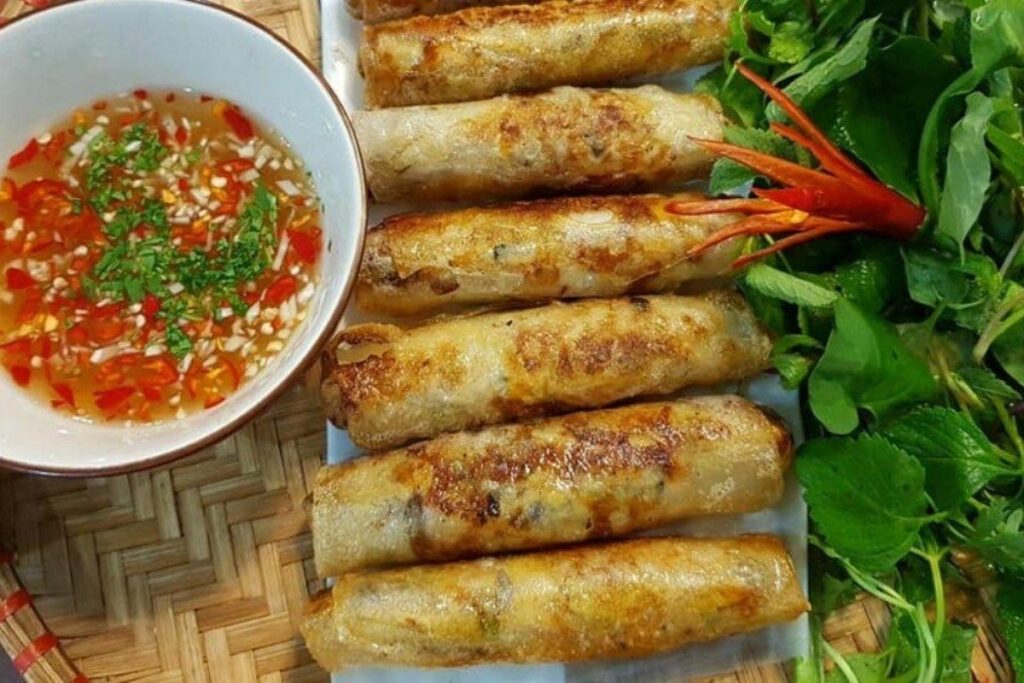
Visitors often recognize nem rán as Vietnamese spring rolls, but in Hanoi, they’re much more than an appetizer.
For many local families, nem rán is a dish reserved for celebrations. Weddings, Lunar New Year gatherings, anniversaries, and family reunions rarely feel complete without a plate of freshly fried rolls placed at the center of the table.
Each roll begins with thin rice paper wrapped around a filling of minced pork, wood ear mushrooms, vermicelli noodles, vegetables, and aromatic seasonings. Once fried, the exterior becomes remarkably crisp while the inside remains moist and flavorful.
Unlike larger spring rolls served elsewhere, Northern-style nem rán are often smaller and exceptionally crunchy. They are typically wrapped in fresh lettuce, accompanied by herbs such as mint and perilla, then dipped into a lightly sweetened fish sauce with garlic and chili.
The combination of hot, crispy filling and cool herbs creates one of the most satisfying contrasts in Vietnamese cuisine.
Because nem rán are commonly shared, they’re an ideal dish for groups exploring Hanoi together. Ordering several plates allows everyone to sample different specialties while experiencing the communal style of dining that defines much of Vietnamese food culture.
Best time to eat: Lunch or dinner.
Typical price: 50,000–120,000 VND depending on portion size.
Traveler’s Tip: Eat them immediately after they’re served. Their signature crispness lasts only a few minutes.
9. Bánh Tôm – West Lake’s Golden Seafood Snack
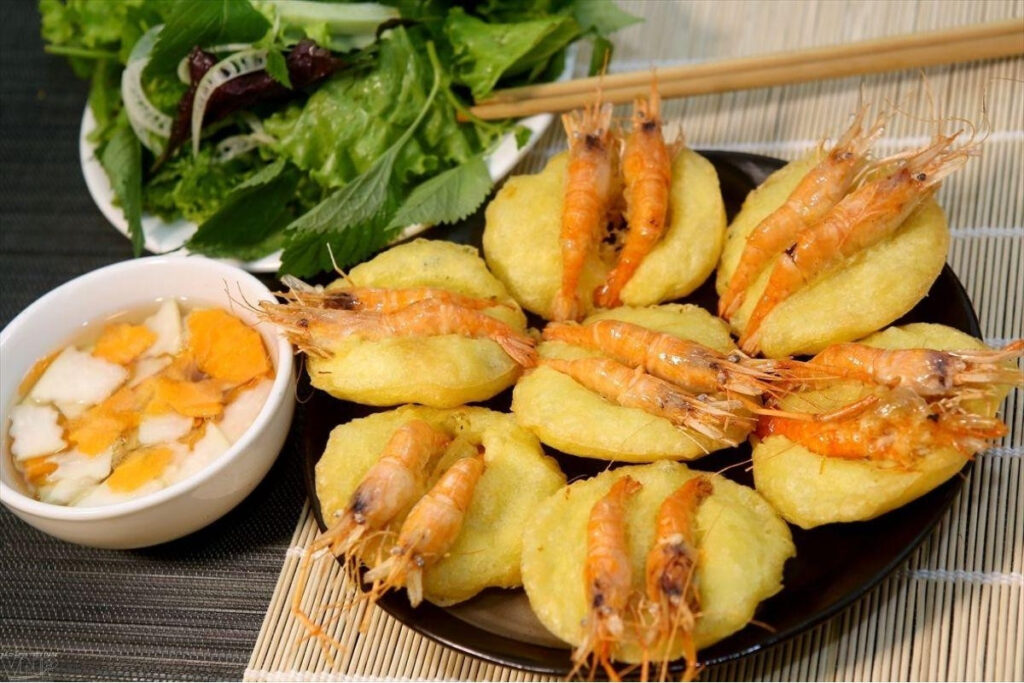
Few snacks are as closely connected to a specific part of Hanoi as bánh tôm Hồ Tây.
For decades, visitors have made their way to the shores of West Lake to enjoy these golden shrimp cakes while overlooking the water. The setting is almost as memorable as the food itself.
Whole freshwater shrimp are coated in a light batter mixed with shredded sweet potato before being deep-fried until perfectly crisp. The result is a delicate balance of textures: crunchy on the outside, tender shrimp inside, and naturally sweet strands of potato that become beautifully caramelized during frying.
Served with fresh herbs and a tangy dipping sauce, bánh tôm feels lighter than many fried dishes despite its satisfying crunch.
It has long been one of Hanoi’s favorite afternoon snacks, particularly during cooler months when enjoying something freshly fried beside the lake becomes part of the experience.
Many visitors combine a stop for bánh tôm with a leisurely walk around West Lake, making it one of the city’s most enjoyable culinary excursions outside the Old Quarter.
Best time to eat: Afternoon or early evening.
Typical price: 60,000–120,000 VND.
Traveler’s Tip: Visit outside peak weekend hours if you want a quieter atmosphere and a better chance of finding a table overlooking the lake.
10. Bún Ốc – A Bowl That Surprises Almost Everyone
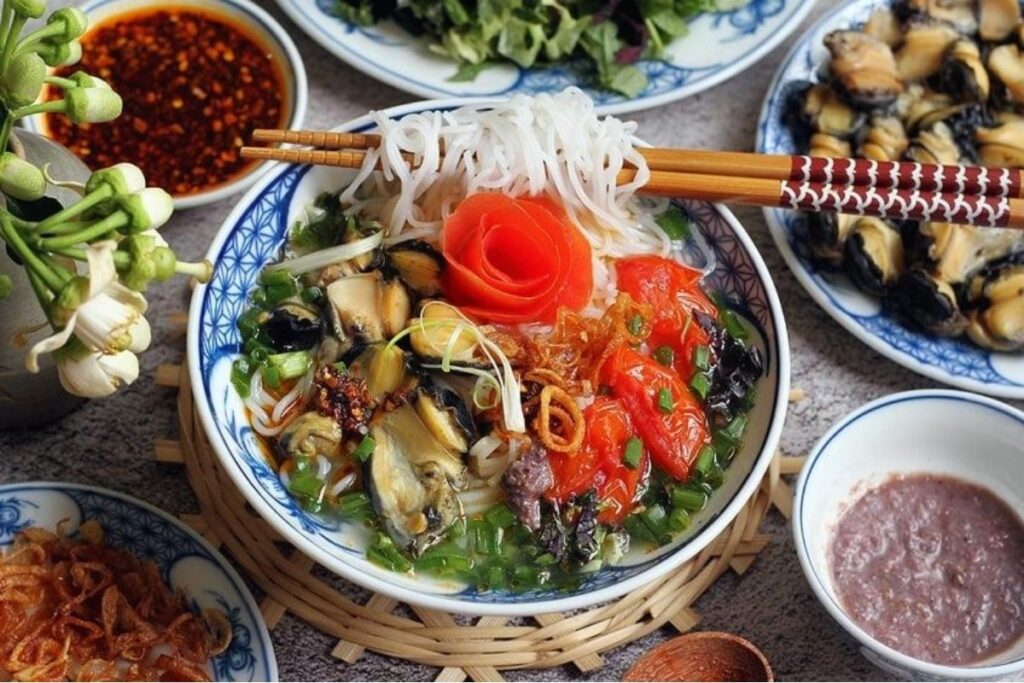
Snails may not be the first ingredient international travelers think of trying in Vietnam, yet bún ốc often becomes one of the most memorable meals of their trip.
The dish combines rice vermicelli with freshwater snails in a bright, tomato-based broth that’s gently soured with rice vinegar or fermented fruit. The result is refreshing rather than heavy, making it particularly appealing on warm Hanoi afternoons.
The snails themselves have a pleasantly chewy texture, offering a contrast to the soft noodles and delicate herbs. Fried tofu, tomatoes, scallions, and fragrant perilla leaves frequently accompany the bowl, creating layers of flavor that unfold with each bite.
For many Hanoians, bún ốc is comfort food—something enjoyed after work, on weekends, or whenever they’re craving a lighter alternative to richer noodle soups.
First-time visitors are often hesitant, but those willing to step beyond familiar dishes frequently discover one of Hanoi’s most distinctive culinary traditions.
Best time to eat: Lunch or dinner.
Typical price: 50,000–90,000 VND.
Traveler’s Tip: If you’re uncertain about trying snails, start with a smaller bowl. The broth alone is worth experiencing, even before you develop an appreciation for the main ingredient.
11. Miến Lươn – Crispy or Soft, One Dish with Two Personalities
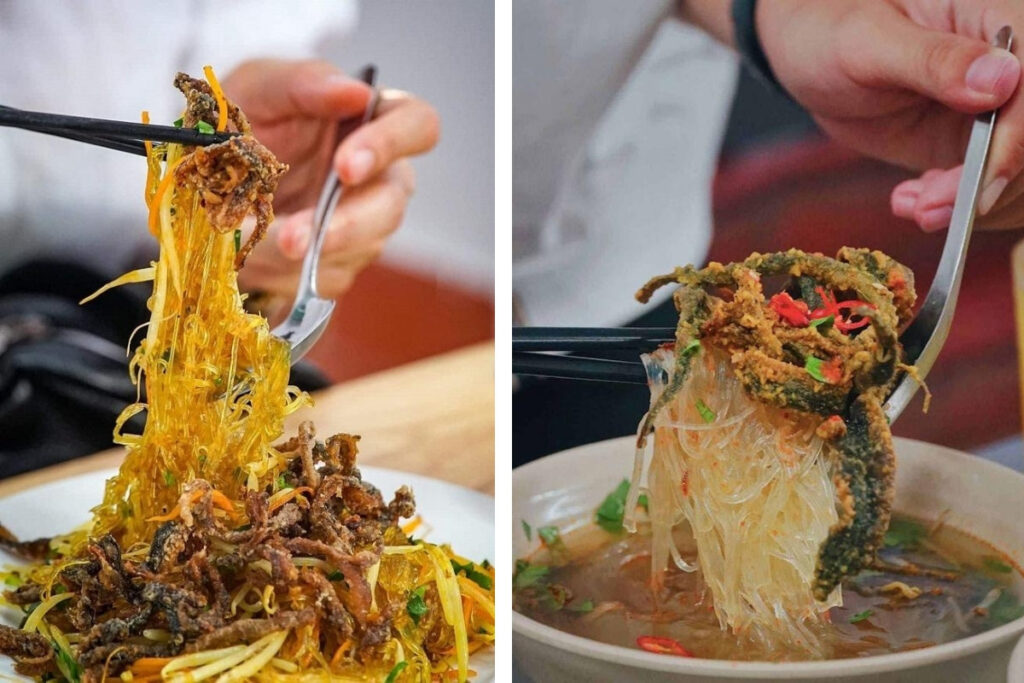
Among Hanoi’s lesser-known specialties, miến lươn deserves far more international attention.
Made with glass noodles instead of rice noodles, the dish features freshwater eel prepared in one of two ways. Some restaurants serve the eel crispy and golden, adding a satisfying crunch to every bite. Others prefer it soft and tender, gently simmered in a light, aromatic broth.
Both versions have loyal fans, and many Hanoians have spent years debating which is better.
The broth is typically made from pork bones and seasoned just enough to complement the naturally rich flavor of the eel. Fresh herbs, bean sprouts, fried shallots, and black pepper add texture without overwhelming the dish.
Although eel may seem unfamiliar to some visitors, its mild flavor is often compared to a delicate white fish. It’s a comforting meal that feels both nourishing and surprisingly light.
Best time to eat: Lunch or dinner.
Typical price: 60,000–120,000 VND.
Traveler’s Tip: If you’re trying eel for the first time, order the crispy version. Its texture tends to be more approachable for first-time visitors.
12. Chè – Hanoi’s Colorful World of Vietnamese Desserts
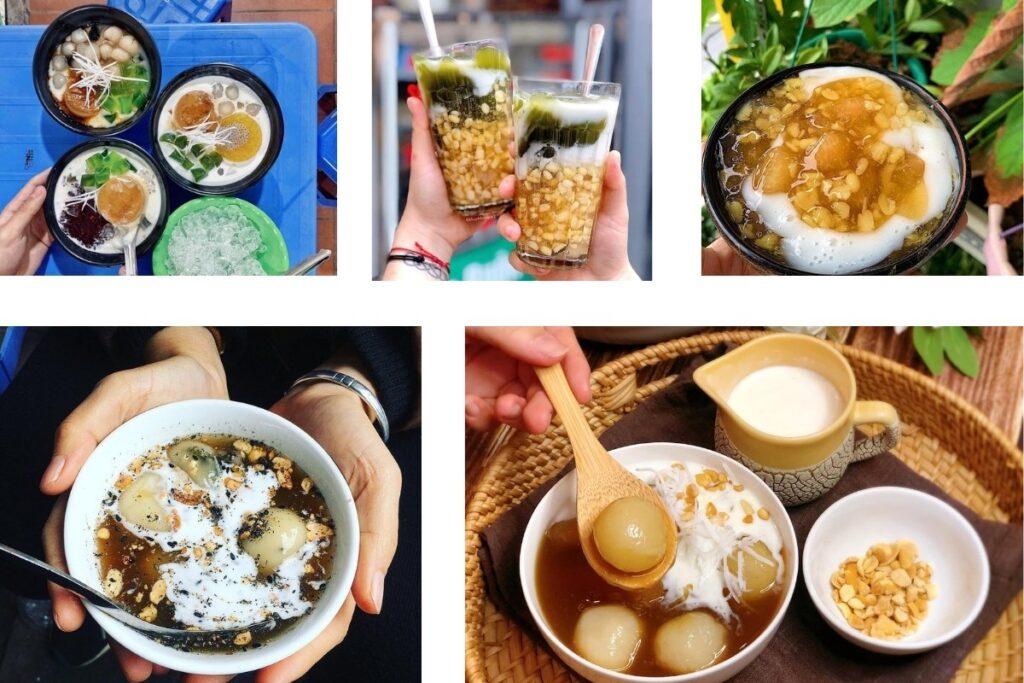
Ask locals where to find dessert in Hanoi, and many will simply answer, “Let’s get chè.”
Unlike Western desserts, chè isn’t a single recipe. Instead, it’s an entire family of sweet dishes made with combinations of beans, coconut milk, sticky rice, lotus seeds, taro, jelly, tropical fruit, or mung beans.
Some varieties are served warm during winter, while others arrive over crushed ice—perfect for Hanoi’s humid summer afternoons.
One bowl might contain creamy coconut milk and soft red beans. Another combines lotus seeds, longan fruit, and delicate herbal syrup. Every shop has its own specialties, making dessert-hopping an enjoyable part of exploring the city.
For visitors, chè offers a chance to experience Vietnamese ingredients in an entirely different way.
Best time to eat: Afternoon or after dinner.
Typical price: 25,000–50,000 VND.
Traveler’s Tip: Don’t hesitate to ask what each bowl contains. Many dessert shops display dozens of options, and trying something unfamiliar is part of the fun.
13. Kem Tràng Tiền – Hanoi’s Most Nostalgic Ice Cream
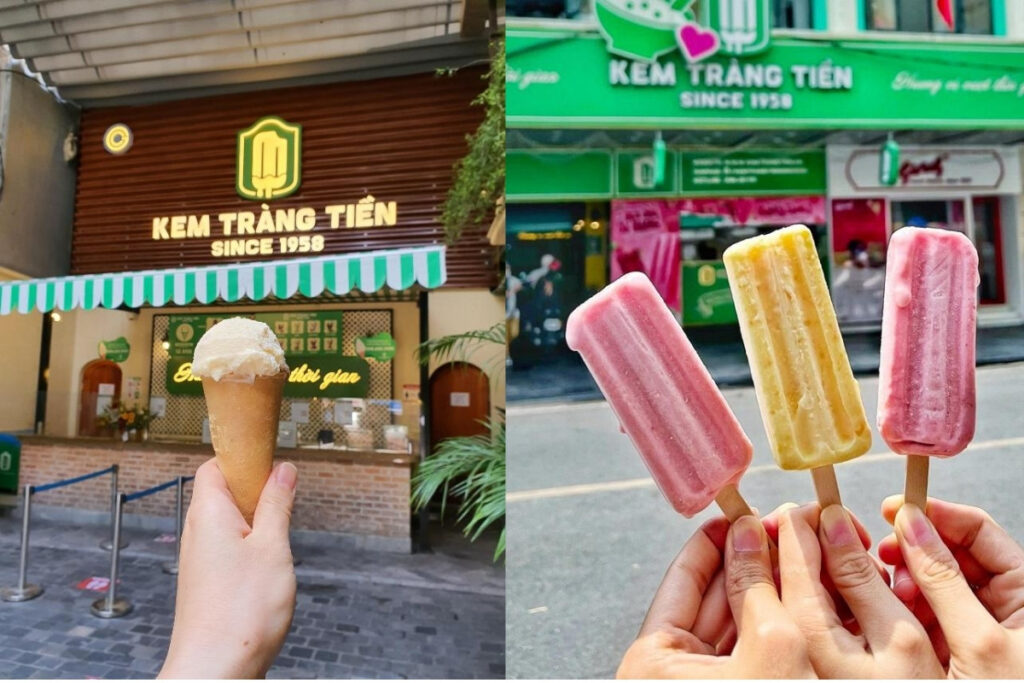
Some foods become famous because of extraordinary flavors. Others become icons because generations grow up with them.
Kem Tràng Tiền belongs firmly to the second category.
Located near the city’s historic center, this legendary ice cream has been enjoyed by Hanoians for decades. Parents who visited as children now bring their own children, making it as much a cultural landmark as a dessert stop.
The ice cream itself is intentionally simple. Flavors such as coconut, green bean, chocolate, vanilla, and milk remain favorites, while fruit bars provide a refreshing alternative during Hanoi’s hottest months.
Visitors often notice long lines stretching outside the shop, especially on weekends. Fortunately, the service is fast, and the lively atmosphere adds to the experience.
Eating an ice cream while strolling around nearby streets has become something of a Hanoi tradition.
Best time to eat: Afternoon or evening.
Typical price: 15,000–40,000 VND.
Traveler’s Tip: Visit after exploring the nearby historic district. It’s an ideal way to cool down before continuing your walk.
14. Egg Coffee – Hanoi’s Most Famous Drink
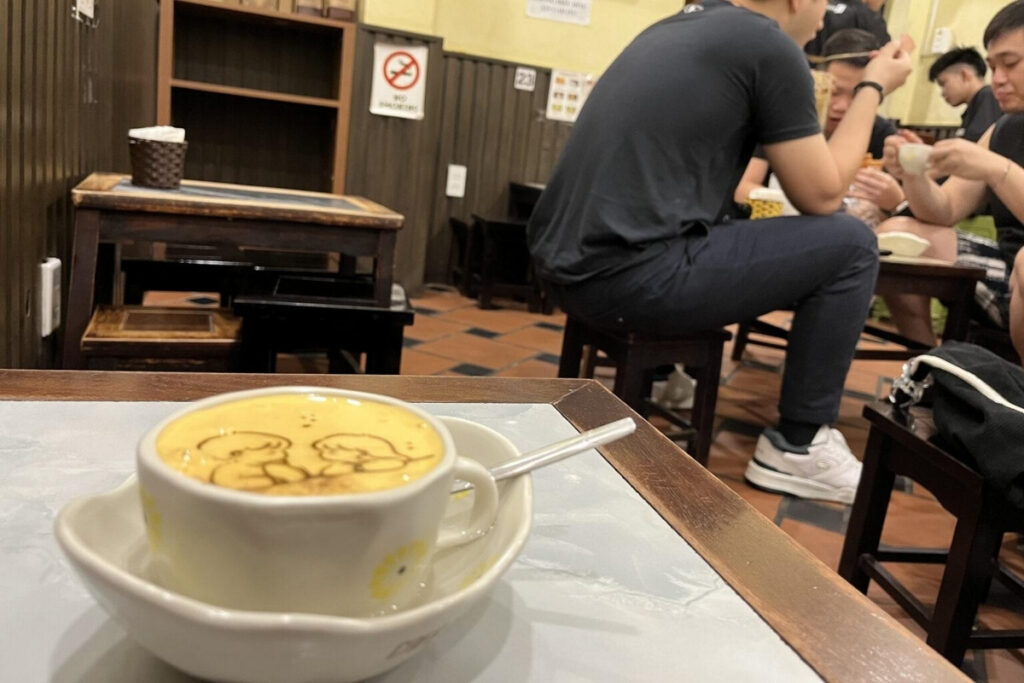
Few drinks generate as much curiosity as egg coffee.
The first impression is often disbelief.
Eggs? In coffee?
Yet one sip explains why this unusual creation has become one of Hanoi’s defining culinary experiences.
Invented during a period when fresh milk was scarce, egg coffee combines strong Vietnamese coffee with whipped egg yolk, sugar, and sweetened condensed milk. The result is a smooth, velvety foam that resembles a rich dessert while preserving the bold intensity of Vietnamese coffee beneath.
Served warm in a small cup placed inside hot water, egg coffee is meant to be enjoyed slowly.
Many travelers describe the taste as somewhere between espresso, tiramisu, and crème brûlée, though none of those comparisons fully capture its unique character.
Beyond the drink itself, visiting one of Hanoi’s traditional cafés is part of the experience. Hidden upstairs rooms, vintage décor, old photographs, and quiet balconies offer a welcome contrast to the busy streets outside.
If you’re interested in learning more about Vietnam’s unique coffee traditions, be sure to read our Vietnam Coffee Guide, where we explore the country’s regional coffee culture, brewing methods, and café traditions in greater depth.
Best time to enjoy: Mid-morning or afternoon.
Typical price: 40,000–80,000 VND.
Traveler’s Tip: Stir gently before drinking. The creamy foam and strong coffee are designed to be enjoyed together.
Did You Know?
Egg coffee was created during a milk shortage in the 1940s.
15. Fresh Sugarcane Juice – Hanoi’s Ultimate Refreshment
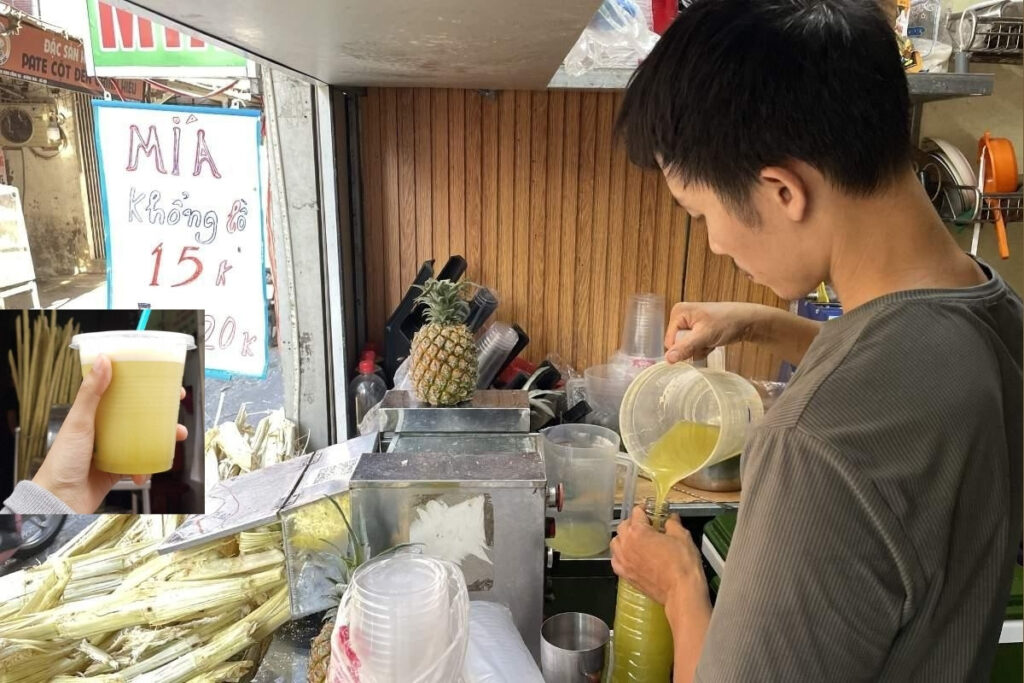
After spending hours exploring Hanoi’s bustling streets, few drinks are more refreshing than a glass of freshly pressed sugarcane juice, known locally as nước mía.
Street vendors feed long stalks of sugarcane through mechanical rollers, extracting a naturally sweet juice that’s often poured over ice and finished with a squeeze of kumquat or citrus.
The drink is simple, inexpensive, and surprisingly hydrating despite its sweetness.
Watching the juice being pressed is part of the experience, and the process hasn’t changed much in decades.
It’s the kind of everyday refreshment locals rarely think twice about—but one that many visitors remember long after returning home.
Best time to enjoy: Throughout the day, especially during warm weather.
Typical price: 15,000–30,000 VND.
Traveler’s Tip: Choose vendors who press each drink to order rather than serving juice that’s been sitting for long periods.
Best Street Food in Hanoi
Hanoi’s street food scene changes throughout the day. Planning meals around local dining hours is often more rewarding than searching for a single famous restaurant, as many specialties are only available for a few hours before selling out.
Morning (6:00–9:00 AM)
The streets wake up with steaming bowls of pho, freshly made banh cuon, and sticky rice wrapped in banana leaves. This is also the best time to experience Hanoi’s quieter neighborhoods before traffic reaches its peak.
Midday (11:00 AM–1:30 PM)
Lunch belongs to bun cha. Across the city, charcoal grills begin smoking as cooks prepare marinated pork over open flames. Many bun cha restaurants serve only during lunch hours, making this one of the few meals worth planning your schedule around.
Afternoon (2:00–5:00 PM)
When the heat builds, locals slow down. This is the perfect time for egg coffee, chè, sugarcane juice, or bánh tôm near West Lake.
Evening (6:00–9:00 PM)
As temperatures cool, Hanoi transforms into one of Asia’s most exciting street food cities. Sidewalks fill with grilled seafood, barbecue skewers, fried snacks, noodle soups, and local beer. Families linger over dinner while friends gather for conversation that often lasts much longer than the meal itself.
Late Night
Even after midnight, you’ll still find steaming bowls of pho, grilled meats, and food stalls serving shift workers, students, and night owls. Hanoi rarely goes to sleep hungry.
Traveler’s Tip
Don’t chase viral restaurants on social media. Instead, look for small shops with steady streams of local customers. In Hanoi, the busiest places usually earn their reputation through consistency rather than advertising.
Where to Eat in Hanoi
One of the biggest mistakes visitors make is eating exclusively in the Old Quarter.
While it’s undoubtedly Hanoi’s most famous dining district, every neighborhood tells a different story through its food.
Old Quarter
The historic heart of Hanoi is the city’s most accessible area for first-time visitors. Narrow streets are packed with family-run restaurants, cafés, noodle shops, dessert stalls, and late-night eateries.
This is where you’ll find many of Hanoi’s classic dishes within walking distance of one another, making it ideal for a self-guided food tour.
Best for:
- First-time visitors
- Street food
- Night dining
- Walking food tours
French Quarter
Wide boulevards and elegant colonial architecture create a noticeably different atmosphere.
Restaurants here often blend traditional Vietnamese recipes with refined presentation, while historic cafés continue serving some of Hanoi’s best coffee.
It’s an excellent neighborhood for travelers looking to combine sightseeing with leisurely meals.
Best for:
- Cafés
- Fine dining
- Historic restaurants
- Vietnamese coffee
West Lake (Tây Hồ)
West Lake offers a slower pace than central Hanoi.
Lakeside cafés, seafood restaurants, bánh tôm vendors, and sunset dining make this one of the city’s most enjoyable neighborhoods for an afternoon or evening excursion.
The area is also popular among long-term expatriates, giving it a more international dining scene alongside traditional Vietnamese eateries.
Best for:
- Seafood
- Bánh tôm
- Sunset dining
- Cafés
Ba Đình
Home to government buildings, museums, and quiet residential streets, Ba Đình is where many locals go for traditional neighborhood restaurants.
The atmosphere feels less touristy, making it an excellent place to experience everyday Hanoi.
Đống Đa
If you’re looking for authentic local dining without large crowds, Đống Đa is worth exploring.
The district is filled with casual restaurants, university cafés, noodle shops, and affordable street food frequented almost entirely by residents.
Best Food Markets in Hanoi
Markets are where Hanoi’s food culture begins.
Long before dishes appear in restaurants, fresh herbs, vegetables, seafood, spices, meat, and tropical fruits arrive at the city’s bustling markets each morning.
For travelers, visiting a market offers an opportunity to experience the ingredients that define Northern Vietnamese cuisine.
Dong Xuan Market
The city’s largest traditional market is famous for street food, fresh produce, snacks, and local specialties.
Come hungry—this is one of the best places to sample several dishes in a single visit.
Quang Ba Flower Market
Although primarily known for flowers, early-morning visitors will also find small food stalls serving pho, sticky rice, and traditional Vietnamese breakfast dishes.
It’s one of Hanoi’s most photogenic morning experiences.
Hom Market
Popular with local residents rather than tourists, Hom Market provides a fascinating glimpse into everyday shopping habits while offering numerous food vendors nearby.
Traveler’s Tip
Visit markets before 9:00 AM to experience their busiest—and most authentic—hours.
Traditional Drinks You Shouldn’t Miss
Vietnam’s drinks deserve just as much attention as its food.
Egg Coffee
Hanoi’s signature drink remains a must for every visitor.
Vietnamese Drip Coffee
Slow-brewed using a traditional metal filter, this rich coffee perfectly reflects Vietnam’s unique coffee culture.
Lotus Tea
Delicately scented with lotus blossoms, this traditional tea has been enjoyed in Hanoi for generations.
Fresh Sugarcane Juice
Pressed to order and served over ice, it’s one of the city’s most refreshing drinks during the warmer months.
Bia Hơi
Fresh draft beer is an essential part of Hanoi’s social life. Every evening, sidewalks fill with locals gathering over inexpensive glasses of beer and simple shared dishes.
Drinks are just as much a part of Hanoi’s food culture as noodle soups. Whether it’s a slow-dripped coffee, a glass of bia hơi after work, or freshly pressed sugarcane juice on a humid afternoon, each drink reflects a different rhythm of daily life in the capital.
Vegetarian Food in Hanoi
Although Vietnamese cuisine is often associated with meat and seafood, vegetarian dining has deep cultural roots.
Influenced by Buddhist traditions, many restaurants serve entirely plant-based menus featuring tofu, mushrooms, seasonal vegetables, rice noodles, and creative meat-free versions of classic dishes.
Travelers following vegetarian or vegan diets will find Hanoi considerably easier to navigate than many first-time visitors expect.
Should You Join a Hanoi Food Tour?
The answer depends on your travel style.
If this is your first visit to Vietnam, a food tour can shorten the learning curve considerably. Local guides introduce hidden eateries, explain unfamiliar ingredients, and share stories behind dishes that many visitors would otherwise miss.
Independent travelers, however, shouldn’t feel obligated to book one.
Hanoi is remarkably walkable, and many of its best restaurants are clustered within neighborhoods that are easy to explore at your own pace.
A food tour is ideal if you:
- Have only one or two days in Hanoi.
- Want cultural insights beyond the food itself.
- Feel hesitant about ordering from Vietnamese menus.
- Enjoy meeting other travelers.
If you have three or more days, consider taking a tour on your first evening and exploring independently afterward.
One-Day Hanoi Food Itinerary
If you have just one full day in Hanoi, here’s how to experience the city’s culinary highlights like a local.
| Time | Experience |
|---|---|
| 7:30 AM | Breakfast with a bowl of Pho Bo |
| 9:00 AM | Visit a traditional Vietnamese café for Egg Coffee |
| 11:30 AM | Explore Dong Xuan Market |
| 12:30 PM | Lunch with Bun Cha |
| 3:00 PM | Walk around West Lake and enjoy Bánh Tôm |
| 5:00 PM | Refresh with Sugarcane Juice or Chè |
| 7:00 PM | Dinner featuring Chả Cá or Bún Thang |
| 9:00 PM | Finish with Kem Tràng Tiền or another local dessert |
This itinerary balances iconic dishes with neighborhood exploration, allowing you to experience the rhythm of Hanoi rather than simply checking famous foods off a list.
Practical Food Tips for First-Time Visitors
A few local customs can make your dining experience smoother and more enjoyable.
- Carry cash, as many small eateries do not accept credit cards.
- Expect to share tables during busy meal times.
- Don’t judge a restaurant by its appearance—some of Hanoi’s best meals are served in the simplest settings.
- Learn a few Vietnamese food words, such as phở, bún, and cà phê. Locals appreciate the effort.
- Eat during local meal times for the freshest food. Many popular shops close once they sell out.
- Be open to trying unfamiliar ingredients. Some of Hanoi’s most memorable dishes—like bún ốc or chả cá—often become travelers’ unexpected favorites.
- Respect local dining etiquette by keeping noise levels moderate and returning shared condiments after use.
Common Mistakes
👉 Arriving too late.
👉 Only eating in Old Quarter.
👉 Not carrying cash.
👉 Skipping breakfast.
Frequently Asked Questions About Hanoi Food Guide
Is Hanoi a good destination for food lovers?
Absolutely. Hanoi is widely considered one of Asia’s top culinary destinations, thanks to its rich street food culture, traditional Northern Vietnamese cuisine, and affordable dining. From family-run noodle shops and bustling local markets to charming cafés and historic restaurants, the city offers an extraordinary range of authentic food experiences for every budget.
What food should I try first in Hanoi?
If you’re visiting Hanoi for the first time, start with the city’s signature dishes:
- Pho Bo (beef noodle soup)
- Bun Cha (grilled pork with rice noodles)
- Cha Ca (turmeric fish with dill)
- Banh Cuon (steamed rice rolls)
- Egg Coffee
These dishes represent the flavors and culinary traditions that have made Hanoi famous around the world.
Is street food in Hanoi safe to eat?
In most cases, yes.
One of the easiest ways to find good street food is to follow the locals. Busy vendors with a constant turnover of customers are generally a better choice than empty stalls.
Look for food that is:
- Cooked fresh in front of you.
- Served hot.
- Prepared with clean utensils.
- Popular with local diners.
As with any destination, use common sense and drink bottled or filtered water.
How much does food cost in Hanoi?
Hanoi is one of the most affordable food cities in Asia.
Typical prices include:
| Food | Average Price |
|---|---|
| Pho | USD $2–4 |
| Bun Cha | USD $2.50–5 |
| Banh Mi | USD $1–2.50 |
| Egg Coffee | USD $2–3 |
| Local Beer | USD $1–2 |
| Street Snacks | Under USD $2 |
Even travelers with a modest budget can enjoy several authentic local meals each day.
What is the best area for street food in Hanoi?
The Old Quarter is the city’s best-known street food destination, offering everything from pho and bun cha to grilled seafood, desserts, and late-night snacks within walking distance.
Other excellent neighborhoods include:
- French Quarter for traditional cafés and upscale Vietnamese restaurants.
- West Lake for seafood, bánh tôm, and lakeside dining.
- Ba Đình for long-established local eateries.
- Đống Đa for neighborhood restaurants popular with residents.
Each district offers a slightly different perspective on Hanoi’s food culture.
Is Hanoi food spicy?
Not compared with many other Asian cuisines.
Northern Vietnamese cooking emphasizes balance rather than heat. Most dishes are mildly seasoned, allowing diners to add fresh chili or chili sauce according to their own preference.
If you enjoy spicy food, simply ask for fresh chili (ớt) or chili sauce.
Can vegetarians eat well in Hanoi?
Yes.
Although many traditional dishes include meat or fish sauce, vegetarian dining has become increasingly accessible.
You’ll find:
- Vegetarian pho
- Mushroom hot pots
- Tofu dishes
- Fresh spring rolls
- Rice and vegetable specialties
- Buddhist vegetarian restaurants
Many cafés also serve plant-based options alongside traditional Vietnamese coffee.
Should I join a food tour in Hanoi?
A guided food tour can be an excellent introduction to Hanoi, especially if it’s your first visit.
Local guides often take visitors to family-run eateries hidden in residential neighborhoods that are easy to overlook independently. You’ll also gain insight into the history, customs, and etiquette behind many of the city’s iconic dishes.
That said, independent travelers can also enjoy an outstanding culinary experience by exploring one neighborhood at a time and following the busiest local restaurants.
How many days do I need to experience Hanoi’s food scene?
While it’s possible to sample several famous dishes in a single day, most travelers benefit from spending three to four days exploring the city’s culinary landscape.
This allows enough time to enjoy breakfast specialties, street food, traditional cafés, local markets, and neighborhood restaurants without feeling rushed.
What food souvenirs should I buy in Hanoi?
Popular edible souvenirs include:
- Vietnamese coffee beans
- Lotus tea
- Green tea
- Dried tropical fruits
- Traditional candies
- Local spices
- Packaged instant pho
- Handmade cookies and pastries
Many specialty food stores also sell beautifully packaged gifts that travel well.
Final Thoughts on Hanoi Food Guide
The best way to understand Hanoi isn’t by checking landmarks off an itinerary—it’s by sitting down for a meal.
It might be a steaming bowl of pho shared with commuters before sunrise, a plate of smoky bun cha enjoyed on a shaded sidewalk at lunchtime, or an egg coffee sipped slowly from a hidden café overlooking the Old Quarter. These everyday moments reveal as much about the city’s character as its temples, museums, and historic streets.
Hanoi’s food culture isn’t driven by trends or fine dining. It’s shaped by families who have spent generations perfecting a single recipe, neighborhood cafés where regulars gather each morning, and market vendors who know many of their customers by name. That sense of continuity is what makes eating here feel so authentic.
For first-time visitors, the city’s culinary scene can seem overwhelming. There are countless dishes to try, streets to explore, and small eateries tucked away in places no guidebook can fully capture. The key is not to rush. Follow the rhythms of local life, stay curious, and don’t hesitate to step into the busy restaurant with plastic stools and a handwritten menu. More often than not, that’s where you’ll find the meal you’ll remember long after your trip ends.
Of course, Hanoi is only one chapter in Vietnam’s remarkable food story. Every region offers its own distinctive flavors, traditions, and specialties waiting to be explored.
To continue planning your culinary journey, you may also enjoy:
- Vietnam Coffee Guide – Discover why Vietnam is the world’s second-largest coffee producer and learn how regional coffee traditions differ from north to south.
- Food Markets in Vietnam – Explore the country’s most vibrant markets, where local ingredients and street food come together.
- Pho vs Bun Bo Hue – Compare two of Vietnam’s most iconic noodle soups and discover what makes each unique.
- Best Food Cities in Vietnam – From Hanoi to Hue, Da Nang, Ho Chi Minh City, and beyond, find out which destinations belong on every food lover’s itinerary.
- Hanoi Travel Guide – Plan the perfect visit with recommendations for attractions, neighborhoods, transportation, and the best time to explore the capital.
Whether you come to Hanoi in search of its famous pho or simply to experience everyday Vietnamese life, one thing quickly becomes clear: the city’s greatest attraction isn’t found behind museum walls or inside ancient temples. It’s waiting at a street corner, rising from a bowl of hot broth, shared across a small table where food brings people together.
And that’s exactly why Hanoi remains one of the world’s most unforgettable destinations for travelers who believe the best way to discover a place is through its cuisine.
Continue Planning Your Vietnam Trip
👉 Vietnam Transportation Guide
If you enjoy slower, experience-focused travel, we also share local insights, food experiences, and practical Vietnam travel advice through our YouTube channel:
TAM VOC VIET – VIETNAM INSIGHTS
About the Author
This Hanoi food guide was researched and written by the editorial team at Tam Voc Viet, a publication dedicated to helping international travelers discover Vietnam through trusted, in-depth travel content.
Our articles combine local knowledge, historical context, on-the-ground research, and insights from Vietnamese culinary traditions to create practical guides for first-time visitors and returning travelers alike. Every recommendation is carefully reviewed to prioritize authenticity, cultural significance, and the overall travel experience rather than short-lived trends.
For this Hanoi Food Guide, we drew on traditional Northern Vietnamese food culture, interviews and insights from local culinary sources, and extensive research into the city’s long-established dining neighborhoods. Our goal is simple: to help you experience Hanoi the way many locals do—one memorable meal at a time.
We regularly update our travel guides to reflect changes in local businesses, visitor information, and travel recommendations, ensuring our readers receive accurate and reliable advice when planning their journey through Vietnam.
Last updated: July 2026
• Editorial review by the Tam Voc Viet Team
• Estimated reading time: 25 minutes
