


 Tiếng Việt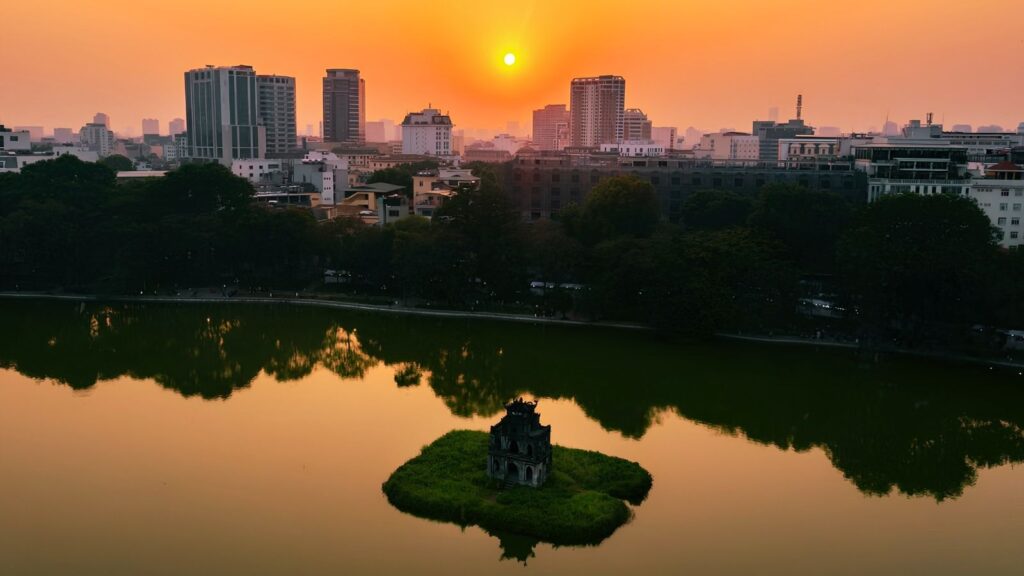
Hanoi is a city you understand gradually.
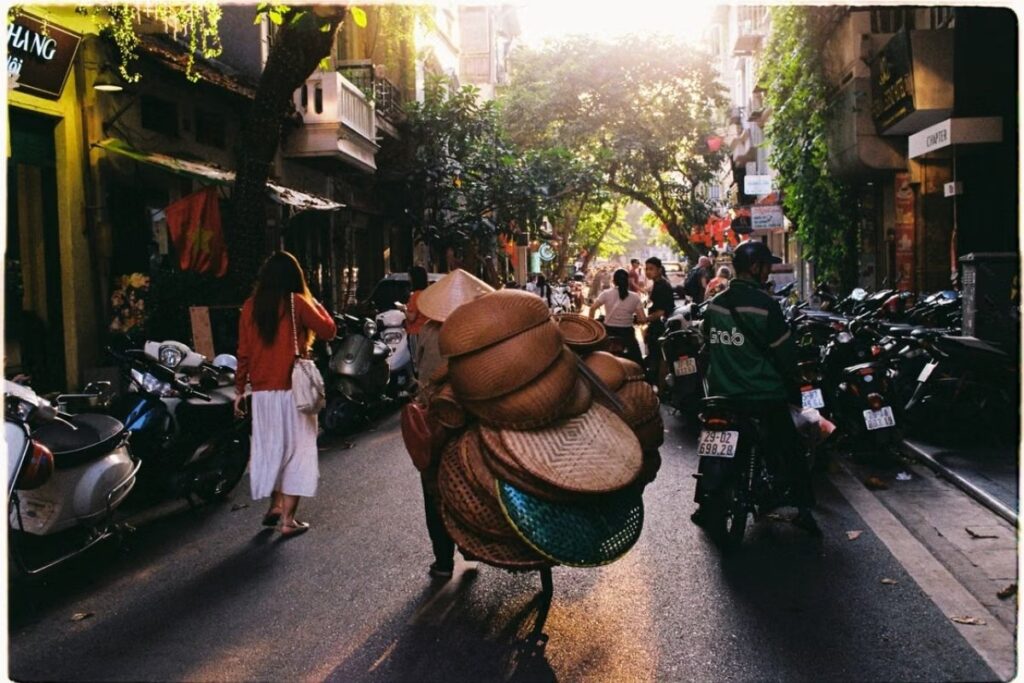
At first, it may seem defined by movement: motorbikes flowing through intersections, vendors setting up breakfast on the sidewalk, cafés opening their doors, and people weaving through streets that can feel impossibly busy.
Stay a little longer, and another side appears.
Behind the traffic are centuries-old temples, French colonial buildings, family-run food stalls, quiet courtyards, lakeside neighborhoods, and small routines that have little to do with sightseeing.
That contrast is what makes Hanoi such an interesting place to visit.
The city is Vietnam’s political and historical capital, but you don’t experience it only through museums and monuments. Much of its character is found in ordinary places — sitting over a cup of Vietnamese coffee, eating breakfast at a neighborhood stall, walking around Hoan Kiem Lake, or watching a busy street gradually become quieter in the evening.
For first-time visitors, Hanoi can also be a little overwhelming. Traffic takes some getting used to. Sidewalks don’t always work the way you might expect. The weather can change the pace of a day, and choosing where to stay can make a noticeable difference to your experience.
This guide is designed to make those decisions easier.
You’ll find the major sights worth your time, the foods you should look for, the best areas to stay, practical ways to get around, seasonal advice, suggested itineraries, and the details that are easy to overlook when planning from outside Vietnam.
If this is your first visit, three days is a good starting point. It gives you enough time to explore the Old Quarter and Hoan Kiem area, experience some of Hanoi’s history and food culture, and still leave room for the slower moments that make the city memorable.
And if you have more time, Hanoi works particularly well as a base for exploring northern Vietnam, including Ninh Binh, Ha Long Bay, Sapa, and Ha Giang.
Table of Contents
Quick Answer: Is Hanoi Worth Visiting?

Yes — especially if you want to experience Vietnam through food, history, culture, and everyday city life rather than focusing only on beaches and resorts.
For most first-time visitors, 3 days in Hanoi provides a good balance between major attractions and time to explore without rushing.
The easiest approach is to stay in or near Hoan Kiem and the Old Quarter, walk when attractions are close together, and use Grab or Green SM for longer journeys.
If you have four or more days, consider adding a day trip to Ninh Binh or another destination in northern Vietnam rather than filling every day with attractions inside the city.
Hanoi at a Glance
| Travel Detail | What to Know |
|---|---|
| Location | Northern Vietnam |
| Recommended stay | 3 days for most first-time visitors |
| Best for | Food, culture, history, coffee, street life |
| Best first-time area | Old Quarter and Hoan Kiem |
| Airport | Noi Bai International Airport (HAN) |
| Getting around | Walking, ride-hailing apps, taxis, buses |
| Currency | Vietnamese dong (VND) |
| Language | Vietnamese |
| Known for | Old Quarter, pho, bun cha, egg coffee, historic sites |
| Good to know | Traffic, heat, and humidity can affect how quickly you move around |
Why Hanoi Belongs on a First Vietnam Trip
Hanoi makes a particularly strong first stop because several sides of Vietnam come together here.
For food travelers, it is one of the country’s best places to explore northern Vietnamese cuisine, from pho and bun cha to dishes that are harder to find elsewhere.
For history and culture, the city offers an unusually dense collection of temples, historic buildings, museums, and sites connected to Vietnam’s long and complicated past.
For travelers interested in everyday life, Hanoi offers something that a conventional sightseeing itinerary can miss. Morning markets, sidewalk cafés, neighborhood restaurants, and the constant rhythm of street life are part of the destination itself.
And geographically, Hanoi is an excellent starting point for exploring northern Vietnam.
You can spend several days getting to know the capital, then continue toward mountains, rice terraces, limestone landscapes, and the coast without having to retrace your route.
The trick is not to try to see everything at once.
Give Hanoi enough time to reveal itself.
What to Eat in Hanoi

Food is one of the easiest ways to get to know Hanoi.
You don’t need a long restaurant list to enjoy it. Some of the city’s most memorable meals are simple dishes served quickly at small local restaurants, neighborhood stalls, or modest cafés.
For a first visit, start with a few dishes that are strongly associated with Hanoi and northern Vietnamese cuisine.
Pho
Hanoi is closely associated with pho, particularly the northern style of the dish.
Compared with many versions found outside Vietnam, Hanoi pho is generally more restrained: a clear broth, rice noodles, herbs, and thinly sliced meat, with the balance of the broth playing an important role.
Pho is commonly eaten for breakfast, although restaurants serving it throughout the day are easy to find.
Travel tip: Don’t judge a bowl only by its appearance. The broth is often where the character of a good bowl becomes apparent.
Bun Cha
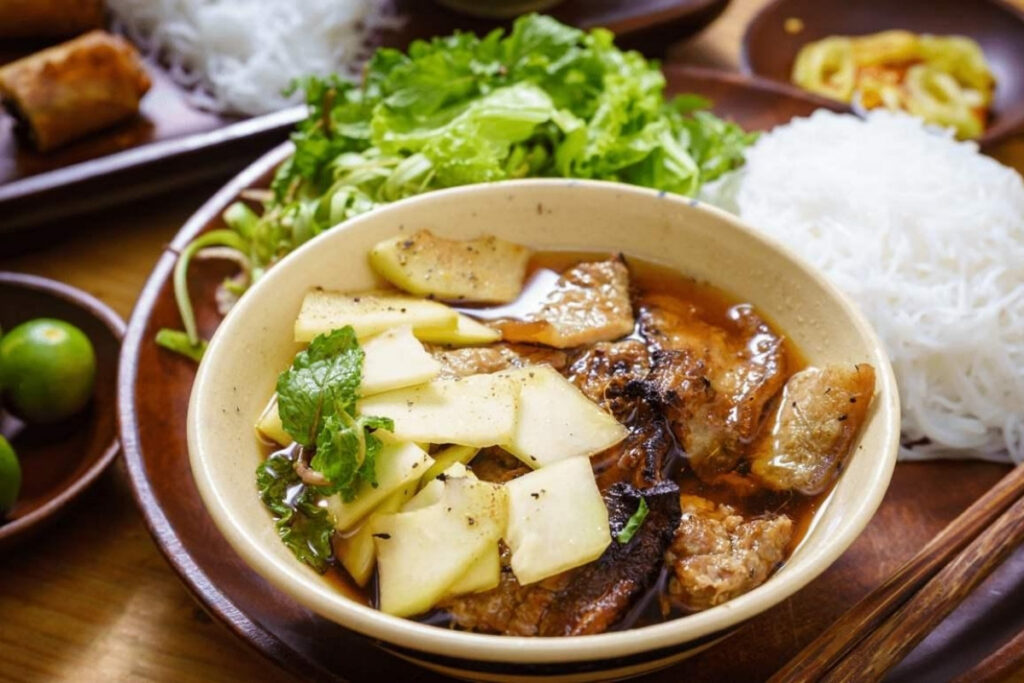
Bun cha is another Hanoi classic.
Grilled pork is served with rice noodles, herbs, and a sweet-savory dipping sauce. Unlike pho, where everything arrives together in a bowl, bun cha is more interactive: you combine the ingredients yourself as you eat.
It is one of the dishes I would prioritize on a first Hanoi visit because it is closely tied to the city’s food culture.
Cha Ca
Cha ca is a Hanoi specialty built around grilled or pan-fried fish, usually served with herbs, noodles, peanuts, and other accompaniments.
The dish is traditionally cooked or finished at the table, making the meal as much an experience as a plate of food.
It is particularly worth trying if you want something beyond the better-known pho and bun cha.
Bánh Mì

Vietnam’s famous baguette sandwich is a convenient and inexpensive way to experience the country’s everyday food culture. In Hanoi, you’ll find versions filled with pâté, cold cuts, grilled meats, pickled vegetables, herbs, and fresh chili.
For many travelers, bánh mì is one of the easiest Vietnamese foods to try on the go—especially for breakfast or a quick lunch.
Banh Cuon
Banh cuon consists of delicate steamed rice-flour rolls filled with ingredients such as seasoned minced pork and wood ear mushrooms, then served with herbs and dipping sauce.
It is often eaten as a light breakfast or meal.
Because the rolls are thin and freshly prepared, watching them being made can be part of the experience.
Egg Coffee
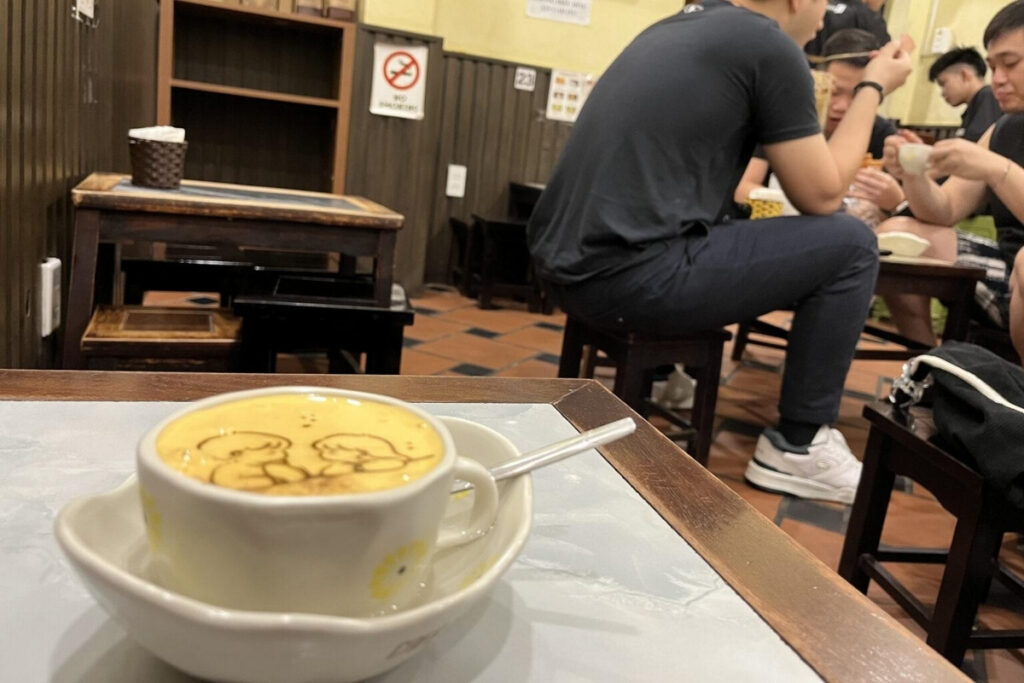
Hanoi’s egg coffee is perhaps its most famous coffee specialty.
Strong Vietnamese coffee is combined with a rich egg-based cream, creating something closer to a dessert than a conventional cup of coffee.
It is worth trying at least once, but don’t feel that every coffee experience in Hanoi needs to revolve around egg coffee.
The wider café culture — sitting, talking, watching the street, and taking your time — is just as important.
How to Approach Food in Hanoi
The best strategy is not to turn every meal into a restaurant hunt.
Instead, mix a few well-known dishes with whatever looks interesting while you are exploring.
Look for places that are busy with local customers, pay attention to turnover, and choose food that is being prepared fresh when possible.
If you are eating street food, basic precautions still make sense. Travelers with sensitive stomachs may prefer busy establishments with high turnover and freshly cooked dishes, particularly during the first few days of a trip.
For a deeper guide covering more Hanoi dishes, where to eat, food neighborhoods, prices, vegetarian options, and food-safety considerations, continue to our Hanoi Food Guide.

What First-Time Visitors Should Know
You don’t need to master Vietnamese food terminology before arriving.
Start with a few dishes:
Pho → Bun Cha → Cha Ca → Banh Cuon → Egg Coffee
Then explore from there.
Meals in Hanoi can be quick and informal. A small plastic stool, a low table, and a bowl of noodles may be all you need.
That’s not a compromise on the experience.
For many travelers, it is the experience.
Where to Stay in Hanoi
Where you stay can noticeably change your experience of Hanoi.
The city has several neighborhoods that work well for visitors, but they offer very different atmospheres. For a first trip, you don’t necessarily need the “best” area — you need the area that fits the way you plan to travel.
For most first-time visitors, Hoan Kiem and the Old Quarter are the easiest places to start because many major sights, restaurants, cafés, and transportation options are close by.
But staying outside the historic center can also make sense if you prefer quieter streets, more space, or a different side of the city.
Best Areas to Stay in Hanoi
1. Old Quarter — Best for First-Time Visitors
The Old Quarter is the most convenient choice if you want to be close to Hanoi’s historic core and experience the city at street level.
You’ll be surrounded by narrow streets, small restaurants, cafés, shops, markets, and a constant flow of pedestrians and motorbikes.
The advantage is convenience. Many first-time sights can be reached on foot, and you’ll have plenty of food and café options nearby.
The trade-off is noise.
The Old Quarter can be busy late into the evening, particularly around the livelier streets. Rooms on quieter side streets are generally more comfortable for light sleepers than properties directly above busy nightlife areas.
Best for: First-time visitors, short stays, nightlife, food, and travelers who want to be in the middle of the action.
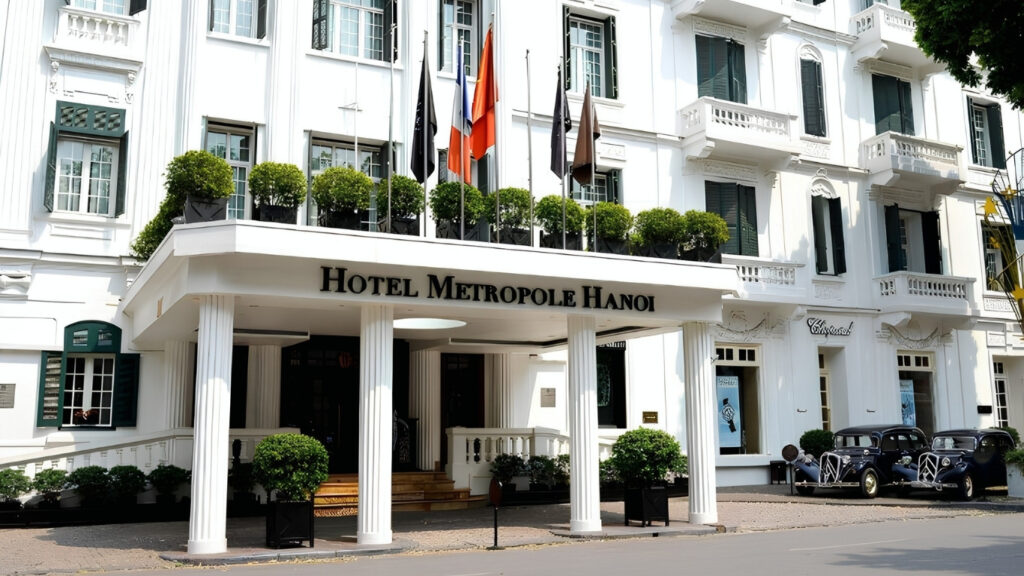
2. Hoan Kiem — Best for Convenience
The area around Hoan Kiem Lake offers an excellent balance between location and atmosphere.
You are still within easy reach of the Old Quarter, while the lake provides a more open environment for walking.
It’s particularly convenient if your itinerary includes several central attractions and you don’t want to spend much time commuting.
The area also works well for travelers who enjoy getting out early in the morning, when the lake becomes part of Hanoi’s daily routine.
Best for: First-time visitors, couples, families, sightseeing, and travelers who value convenience.
3. French Quarter — Best for Architecture and a Quieter Central Stay
South of Hoan Kiem Lake, the French Quarter has a noticeably different character from the Old Quarter.
Broad streets, colonial-era buildings, upscale hotels, restaurants, and cultural landmarks give the area a more spacious feel.
It can be a good choice if you want to remain central but prefer a less hectic environment than the busiest parts of the Old Quarter.
Best for: Couples, architecture lovers, upscale stays, and travelers who want a central location without being surrounded by Old Quarter nightlife.
4. West Lake — Best for Longer Stays and a More Relaxed Atmosphere
West Lake (Ho Tay) is a different Hanoi experience.
The area is more spread out, with waterfront cafés, restaurants, residential streets, and a larger international community.
It isn’t as convenient for walking between the Old Quarter’s major attractions, so you’ll probably rely more on Grab or Green SM.
In return, you get more space and a slower pace.
For a trip of four or five days — or for travelers who have already visited Hanoi before — West Lake can be a particularly appealing option.
Best for: Longer stays, digital nomads, families, cafés, restaurants, and travelers who prefer a quieter base.
5. Ba Dinh — Best for History and a Residential Feel
Ba Dinh is home to several important political and historical sites, including the Ho Chi Minh Complex.
Compared with the Old Quarter, parts of the district feel more spacious and residential.
It can be a good option if historical sightseeing is a major priority and you prefer to stay away from the busiest tourist streets.
The downside is that some parts of Ba Dinh are less convenient for walking to the Old Quarter, so transportation becomes more relevant.
Best for: History-focused travelers, longer stays, and visitors who prefer a quieter neighborhood.
Which Area Should You Choose?
If you’re unsure, use this simple guide:
| Your priority | Recommended area |
|---|---|
| First trip to Hanoi | Old Quarter / Hoan Kiem |
| Best overall convenience | Hoan Kiem |
| Nightlife and street life | Old Quarter |
| Quieter central location | French Quarter |
| Upscale hotels | French Quarter / Hoan Kiem |
| Longer stay | West Lake |
| Cafés and relaxed atmosphere | West Lake |
| History and museums | Ba Dinh |
| Family trip | Hoan Kiem / West Lake |
| Walking to major sights | Old Quarter / Hoan Kiem |
Our recommendation for first-time visitors
If this is your first visit and you’re staying only 2–3 nights, I would choose Hoan Kiem or the quieter edges of the Old Quarter.
You will spend less time getting from place to place and more time actually experiencing the city.
If you’re staying longer, don’t be afraid to choose a neighborhood based on atmosphere rather than proximity to every attraction.
A good hotel in the right neighborhood is often more valuable than a better hotel in the wrong part of the city.
What to Check Before Booking
Location matters, but there are a few practical details worth checking before you book.
Noise
Don’t assume a centrally located hotel will be quiet.
Check recent guest reviews for comments about traffic, nightlife, construction, and street noise.
Access
Some smaller streets in the Old Quarter are difficult for cars to enter directly.
If you’re arriving with luggage, check how close a vehicle can get to the property.
Air conditioning
Hanoi can become hot and humid, particularly during the warmer months.
Reliable air conditioning can make a significant difference to your stay.
Elevator access
Some smaller hotels and guesthouses occupy narrow buildings with limited elevator space or stairs.
If you have heavy luggage, mobility concerns, or are traveling with young children, check this before booking.
Breakfast
A hotel breakfast can be convenient, but don’t choose accommodation solely because breakfast is included.
Hanoi has an enormous breakfast culture outside hotels.
Sometimes the more interesting option is to walk outside and find a local bowl of pho or another breakfast dish nearby.
A Better Way to Choose Your Hanoi Hotel
Don’t start by asking:
“What is the best hotel in Hanoi?”
Start with:
“Where do I want to wake up?”
If you want to step outside into busy streets, cafés, food stalls, and historic buildings, choose the Old Quarter or Hoan Kiem.
If you want more space and a slower morning, look toward West Lake.
If architecture and a quieter central setting appeal to you, consider the French Quarter.
And if history is the main reason you’re visiting, Ba Dinh may make more sense.
The neighborhood is part of the Hanoi experience — not just the address on your hotel booking.
Best Things to Do in Hanoi
Hanoi is not a city where you need to spend every hour moving between attractions.
A better approach is to combine a few important historical sites with time for food, coffee, walking, and simply seeing how the city changes throughout the day.
These are the experiences worth prioritizing on a first visit.
1. Walk Around Hanoi’s Old Quarter
The Old Quarter is the natural starting point for most first-time visitors.
Its narrow streets were historically associated with different trades, and traces of that commercial history can still be seen in the names and character of many streets today.
The neighborhood is busy, noisy, and sometimes chaotic. Motorbikes compete with pedestrians, shopfronts spill onto sidewalks, and the streets can feel completely different from one block to the next.
That’s precisely why walking is the best way to experience it.
Don’t treat the Old Quarter as an attraction you simply “see.” Give yourself a few hours to wander, stop for coffee, look into small shops, and follow streets that aren’t on your itinerary.
Best for: First-time visitors, photography, food, architecture, and experiencing Hanoi’s street life.
Allow: 2–4 hours, depending on how much you stop.
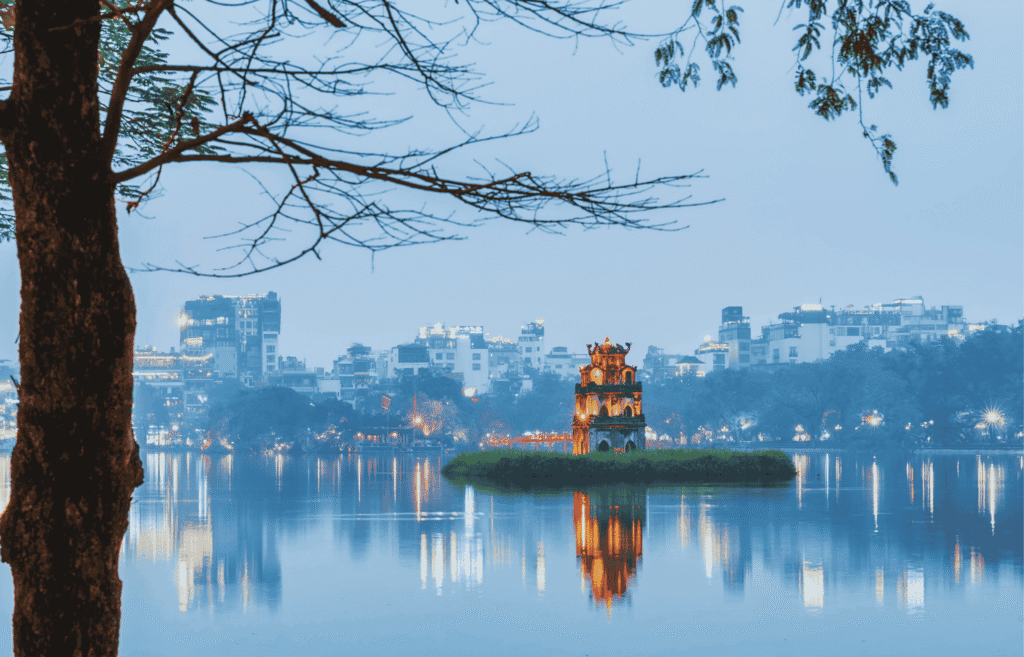
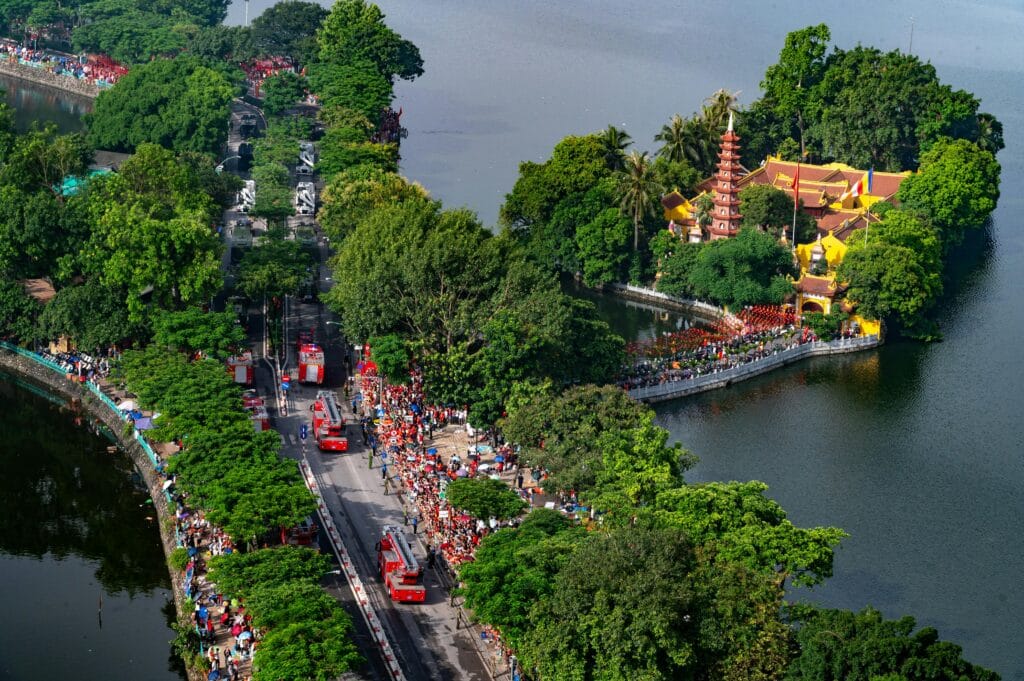
2. Walk Around Hoan Kiem Lake
Hoan Kiem Lake provides a welcome change of pace from the surrounding streets.
Early in the morning, the area becomes part of Hanoi’s daily routine. Residents walk, exercise, stretch, meet friends, and gather around the lake before the city becomes fully busy.
Later in the day, the atmosphere changes again as locals and visitors gather around the waterfront.
The lake is particularly easy to combine with the Old Quarter because they are within walking distance of each other.
Best time: Early morning or late afternoon.
Best for: A slower introduction to Hanoi, people-watching, photography, and combining with the Old Quarter.
3. Visit the Temple of Literature
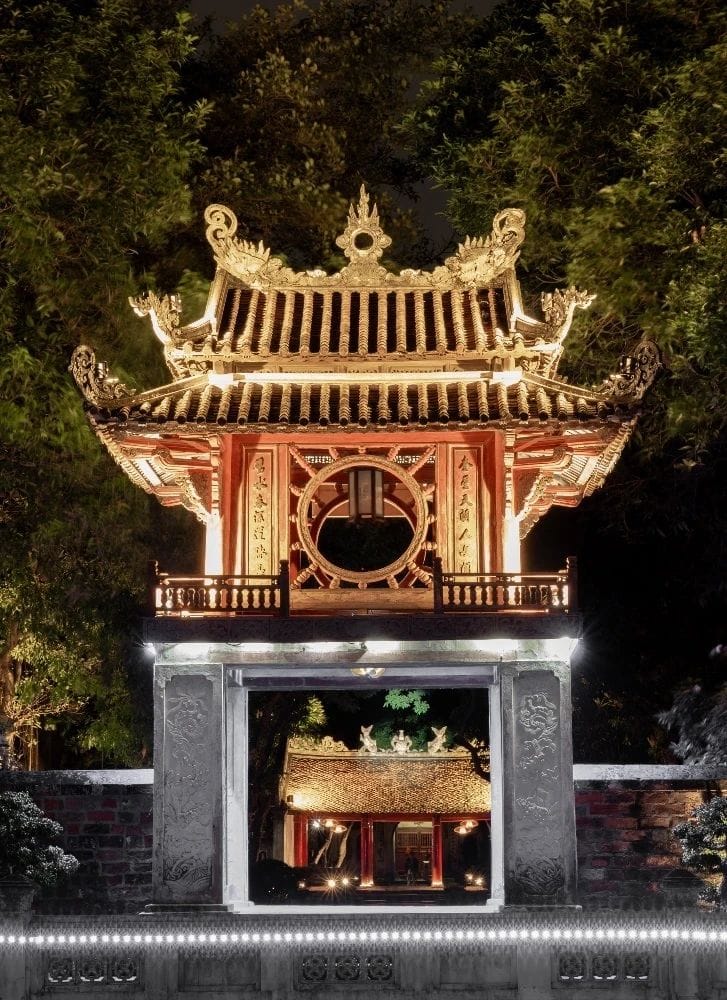
The Temple of Literature is one of Hanoi’s most important historical and cultural sites.
Founded in 1070 and later associated with Vietnam’s imperial examination system, the complex provides a useful introduction to the country’s long educational and intellectual traditions.
The courtyards, gates, gardens, and stone steles make it one of the more atmospheric historical sites in the city.
It is also a good example of why Hanoi is worth exploring beyond its busiest streets.
Allow: Around 1–1.5 hours.
Best for: History, architecture, photography, and travelers interested in traditional Vietnamese culture.
4. Explore the Ho Chi Minh Complex

The Ho Chi Minh Complex brings together several important sites connected with Ho Chi Minh and modern Vietnamese history.
Depending on your interests and the current access arrangements, you may visit the Ho Chi Minh Mausoleum, the Presidential Palace area, Ho Chi Minh’s Stilt House, and the One Pillar Pagoda.
This is one place where practical planning matters. Opening schedules, access restrictions, and dress expectations can affect the experience, so check current official information before visiting.
Best for: History and travelers interested in modern Vietnam.
Allow: 1.5–3 hours depending on which sites you visit.
5. Learn About the War Years at Hoa Lo Prison
Hoa Lo Prison offers a very different perspective from Hanoi’s temples and colonial architecture.
The site was originally built during the French colonial period and later became associated with American prisoners of war during the Vietnam War.
Its exhibitions present a complex history from Vietnamese and historical perspectives. Allow enough time to read rather than treating it as a quick photo stop.
Best for: History travelers and visitors who want a deeper understanding of Vietnam’s modern past.
Allow: Around 1–2 hours.rical attractions, so it can be combined efficiently into a half-day itinerary.
6. Spend an Afternoon Around West Lake
West Lake (Ho Tay) feels noticeably different from the dense center of Hanoi.
The area is known for its waterfront, cafés, restaurants, residential streets, and a more spacious atmosphere.
You don’t need a long list of attractions here.
Instead, West Lake works well as a slower afternoon or evening: walk along the water, stop at a café, visit a nearby temple, and watch the city move at a different pace.
For travelers staying several days, it can also be a good alternative to spending every evening in the Old Quarter.
Best for: Cafés, sunset, longer stays, and travelers who prefer a less concentrated urban environment.
7. Experience Hanoi’s Coffee Culture

Coffee is part of Hanoi’s daily rhythm, not simply something to drink between sightseeing stops.
Traditional Vietnamese coffee is often strong and slow-brewed, while Hanoi is particularly associated with egg coffee, a creamy preparation that has become one of the city’s best-known specialties.
But don’t feel that you need to chase one “best coffee shop.”
One of the pleasures of Hanoi is choosing a small café, sitting down, and watching the street outside.
Best for: Food travelers, coffee lovers, and anyone who wants a slower break between attractions.
8. Eat Your Way Through Hanoi
Hanoi deserves time at the table.
Start with classics such as pho, bun cha, banh cuon, and cha ca, then explore smaller dishes and snacks as you move through different neighborhoods.
Street food is particularly important to the city’s identity. Many meals are quick, inexpensive, and highly specialized — a small restaurant may become known for doing one dish exceptionally well.
Rather than trying to find every famous dish in a single day, spread your food experiences across the trip.
For a more detailed list of dishes, neighborhoods, food safety advice, and where to eat, see our [Hanoi Food Guide].
Best for: Everyone, especially first-time visitors interested in Vietnamese cuisine.
9. See a Water Puppet Performance

Water puppetry is one of Vietnam’s distinctive traditional performing arts, with roots in the country’s northern Red River Delta.
A performance combines wooden puppets, water, music, traditional instruments, and storytelling.
The most convenient option for visitors staying in central Hanoi is the Thang Long Water Puppet Theatre near Hoan Kiem Lake.
You don’t need to understand every story to appreciate the performance. The combination of music, movement, craftsmanship, and theatrical tradition is what makes it memorable.
Best for: Families, culture travelers, and first-time visitors.
Allow: About 1 hour for the performance, plus time to arrive and collect tickets.
10. Visit a Local Market
Markets offer a different way to experience Hanoi from museums and major monuments.
Depending on the neighborhood and time of day, you may find fresh produce, meat, seafood, flowers, household goods, clothing, and prepared food.
Dong Xuan Market is the most prominent traditional market in the Old Quarter, while smaller neighborhood markets can offer a more everyday experience.
Go with curiosity rather than a shopping checklist.
Watch how vendors organize their goods, notice what local shoppers are buying, and pay attention to the pace of the market.
For a deeper look at bargaining, market etiquette, and the role of markets in Vietnamese daily life, explore our [Vietnamese Markets & Bargaining Culture Guide].
11. Explore Hanoi’s French Colonial Architecture
Hanoi’s architectural character reflects several layers of history.
Around the French Quarter, you’ll find broad streets, colonial-era buildings, government architecture, villas, and landmarks that contrast sharply with the narrow streets of the Old Quarter.
You don’t need to join a formal architecture tour to appreciate the area.
Walking between the Hanoi Opera House, Trang Tien Street, Hoan Kiem Lake, and surrounding streets gives you a good sense of how different parts of the city developed.
Best for: Architecture, history, photography, and travelers who enjoy exploring cities on foot.
12. Take a Morning Walk Before Hanoi Gets Busy
This is not a conventional attraction, but it is one of the experiences I would deliberately leave room for.
Start early around Hoan Kiem Lake, then walk through nearby streets while cafés and food stalls are opening for the day.
You may see residents exercising, vendors preparing breakfast, deliveries arriving, and shop owners setting up for the morning.
It is a quieter side of Hanoi that can disappear once the day’s traffic and activity fully begin.
Best for: Travelers interested in everyday life and photography.
Best time: Around sunrise through the early morning.
How to Prioritize These Experiences
You do not need to visit all 12.
For a first trip, I would prioritize:
If you have 2 days
Old Quarter → Hoan Kiem Lake → Temple of Literature → Ho Chi Minh Complex → Hoa Lo Prison → Vietnamese food → coffee
If you have 3 days
Add:
West Lake → Water puppetry → French Quarter → a local market
If you have 4+ days
Slow the pace rather than simply adding more attractions.
Use the extra time for:
- neighborhood exploration
- food experiences
- cafés
- museums
- West Lake
- or a day trip outside Hanoi
That approach gives you a better sense of the city than trying to collect every attraction on a checklist.
How to Get Around Hanoi
Getting around Hanoi is easier once you stop expecting the city to work like a typical Western capital.
Central Hanoi is compact enough to explore on foot, but traffic, heat, uneven sidewalks, and the sheer amount of motorbike activity can make longer journeys less comfortable.
For most visitors, the easiest approach is simple:
Walk when you’re exploring nearby neighborhoods, and use a ride-hailing app when you need to cross the city.
You generally don’t need to rent a car, and renting a motorbike is not necessary for a first visit.
Walking
Walking is one of the best ways to experience central Hanoi.
The Old Quarter, Hoan Kiem Lake, French Quarter, and several major attractions can be combined into walking routes, allowing you to see much more than you would from inside a vehicle.
The downside is that Hanoi’s sidewalks don’t always function as dedicated pedestrian space. Parked motorbikes, street vendors, shop displays, and traffic can all compete for the same space.
Don’t expect a perfectly pedestrian-friendly environment.
Instead, think of walking as part of the Hanoi experience.
Best for: Old Quarter, Hoan Kiem, French Quarter, nearby attractions, and short distances.
Good to know: Early morning and late afternoon are usually more comfortable for longer walks, particularly during the hotter months.
Grab
Grab is one of the most convenient options for getting around Hanoi.
You can request cars or motorbike rides through the app, see the estimated fare before booking, and avoid negotiating the price of a ride on the street.
For many international visitors, this is the easiest way to travel between neighborhoods when walking isn’t practical.
A GrabBike can be particularly useful for short trips through heavy traffic, while a GrabCar is more comfortable if you’re traveling with luggage, children, or another passenger.
Best for: Most visitors, especially first-time travelers who want predictable app-based transportation.
Green SM

Green SM is another major app-based transportation option in Hanoi.
The service is known for its electric vehicles and offers app-based car and motorbike rides in Vietnam.
For travelers, the practical difference between Green SM and other ride-hailing services is less about sightseeing and more about having another reliable option when you need a ride.
It’s worth having more than one ride-hailing app available, particularly during busy periods when availability or pricing can vary.
Best for: Airport transfers, longer city journeys, travelers who prefer electric vehicles, and visitors who want an alternative to Grab.
Public Buses

Hanoi’s public bus network can be useful if you’re traveling on a budget and don’t mind allowing more time for the journey.
Buses are inexpensive and connect many parts of the city, but they are not always the simplest choice for first-time visitors.
Routes, stops, traffic conditions, and payment methods can require more planning than using a ride-hailing app.
For a short vacation, the time saved by using Grab or Green SM may be worth the additional cost.
Best for: Budget-conscious travelers and longer stays.
Cyclo Rides
A cyclo is a three-wheeled bicycle taxi in which the passenger sits in front while the driver pedals from behind.
Today, cyclo rides are more of a sightseeing experience than an essential form of transportation.
A short ride around the Old Quarter or Hoan Kiem area can be enjoyable if you want to see Hanoi at a slower pace.
Agree on the price and route before starting, or use a clearly established service, to avoid misunderstandings.
Best for: A short sightseeing experience rather than practical transportation.
Motorbike Taxis
Motorbike taxis can be one of the fastest ways to move through Hanoi’s traffic.
Services such as GrabBike and Green SM’s motorbike option allow passengers to book rides through an app rather than negotiating with drivers on the street.
For first-time visitors, however, there is an important distinction:
You don’t need to ride a motorbike yourself to experience Hanoi’s motorbike culture.
If you’re not comfortable riding as a passenger in dense traffic, choose a car instead.
Best for: Solo travelers and short trips when traffic is heavy.
Getting From Hanoi Airport to the City
Most international visitors arrive at Noi Bai International Airport (HAN), roughly 30 kilometers north of central Hanoi.
The journey into the city can take considerably longer during busy traffic periods, so don’t judge the distance by kilometers alone.
Ride-hailing
For many travelers, booking a GrabCar or Green SM car is the simplest option.
You can arrange the ride through the app, confirm the destination before departure, and avoid negotiating with drivers.
This is particularly convenient if you’re arriving for the first time with luggage.
Airport buses
Public and airport bus services provide a lower-cost alternative.
They can make sense for budget travelers who are comfortable navigating their route and carrying luggage through the final part of the journey.
Private transfer
A pre-arranged private transfer can be worthwhile if you’re arriving late, traveling with children, carrying substantial luggage, or simply want the least complicated arrival possible.
Do You Need to Rent a Motorbike in Hanoi?
For most visitors, no.
Hanoi’s traffic is intense, and navigating the city on a motorbike requires confidence, local traffic awareness, and an appropriate license.
For a short trip, using walking, ride-hailing services, and occasional taxis is usually much simpler.
If you’re an experienced rider planning a longer motorcycle journey through northern Vietnam, that’s a different situation. But that is a travel style of its own and doesn’t require renting a motorbike simply to explore central Hanoi.
What Is the Best Way to Get Around Hanoi?
For most first-time visitors, I would keep it simple:
| Situation | Best option |
|---|---|
| Exploring the Old Quarter | Walk |
| Hoan Kiem + nearby attractions | Walk |
| Short cross-city trip | Grab / Green SM |
| Heavy traffic | Motorbike ride |
| Traveling with luggage | Car |
| Airport arrival | Grab / Green SM / private transfer |
| Budget travel | Public bus |
| Sightseeing experience | Cyclo |
| Self-driving | Usually unnecessary |
You don’t need to choose one transportation method for your entire trip.
The best way to get around Hanoi is to combine them.
Walk through the areas where the city is most interesting at street level, then use a ride-hailing service when distance, weather, or traffic makes walking impractical.
Best Time to Visit Hanoi
There isn’t one perfect month to visit Hanoi.
The best time depends on what you want from the trip — comfortable walking weather, fewer weather disruptions, summer greenery, or the chance to experience Hanoi during an important Vietnamese festival.
For many first-time visitors, October through April offers the most comfortable conditions for exploring the city, although each part of the year has its own character.
The important thing is to understand that Hanoi’s seasons are noticeably different. A trip in January can feel completely different from one in July.
October to December: Cool, Comfortable & Good for Exploring
For many travelers, October through December is one of the most appealing periods to visit Hanoi.
Temperatures generally become more comfortable after the heat and humidity of summer, making it easier to spend several hours walking through the Old Quarter, around Hoan Kiem Lake, or between historical sites.
October and November can be particularly pleasant for travelers who want to spend a lot of time outdoors.
December is cooler and can occasionally feel damp, especially in the mornings and evenings.
Best for: First-time visitors, walking, sightseeing, photography, and travelers who prefer cooler weather.
January to March: Cool, Damp & More Atmospheric
Winter and early spring can surprise visitors who expect Vietnam to be warm year-round.
Hanoi can be cool, cloudy, and damp, particularly in January and February. Temperatures may not look especially low on a weather forecast, but humidity can make the air feel colder.
This period also overlaps with Tet, Vietnam’s Lunar New Year.
Tet can be a fascinating time to experience Vietnamese traditions, family celebrations, decorations, and seasonal food. But it can also affect business hours, transportation, and the availability of some services.
If you specifically want to experience Tet, plan around it rather than arriving without checking holiday schedules.
Best for: Cultural travelers, Tet experiences, cooler-weather travelers, and visitors who don’t mind cloudy or damp days.
April to June: Warmer & Increasingly Humid
By April, Hanoi begins moving toward warmer weather.
April can still be comfortable for sightseeing, while May and June become increasingly hot and humid.
Rain showers also become more common.
This doesn’t make Hanoi impossible to visit, but it changes how you should plan your days.
Early mornings become more valuable, particularly if you want to walk for several hours. Midday can be a good time for lunch, museums, cafés, or a break at your hotel.
Best for: Travelers with flexible schedules, café and food experiences, and visitors comfortable with heat and humidity.
July to September: Hot, Humid & Wetter
Summer is generally the most challenging period for travelers who prefer cool, dry weather.
July and August can be particularly hot and humid, with periods of heavy rain.
September can begin to feel more comfortable, although weather conditions can still be unpredictable.
The upside is that Hanoi remains very much alive during this period. Outdoor life continues despite the weather, and travelers who plan around afternoon heat and sudden rain can still have an excellent trip.
Best for: Travelers comfortable with tropical weather, longer stays, and visitors whose schedules don’t allow them to choose another season.
Hanoi Weather at a Glance
| Period | Typical feel | Best for |
|---|---|---|
| Oct–Nov | Cooler, generally comfortable | ⭐ Excellent for first visits |
| Dec | Cool, sometimes damp | Sightseeing and walking |
| Jan–Mar | Cool to mild, often cloudy/damp | Culture and Tet |
| Apr | Warm, increasingly humid | Outdoor exploration |
| May–Jun | Hot and humid | Flexible itineraries |
| Jul–Aug | Hot, humid, wetter | Travelers comfortable with heat |
| Sep | Warm, variable | Shoulder-season travel |
Weather varies from year to year, so use this as a planning guide rather than a guarantee.
When Is Hanoi Least Crowded?
There isn’t a single period when Hanoi becomes “empty.”
The city is a major Vietnamese capital, so its streets remain active throughout the year.
Instead of choosing your travel dates solely around crowds, consider how you want to experience the city.
Early mornings are often noticeably calmer than the middle of the day, regardless of season.
If you visit during major Vietnamese holidays, particularly Tet, expect a different rhythm. Some businesses may close or change their hours while local travel can become significantly busier.
Should You Avoid Hanoi During the Rainy Season?
Not necessarily.
Rain is one of the realities of Hanoi’s climate, but it doesn’t automatically ruin a trip.
A heavy shower may last for a relatively short period before daily life resumes.
The better strategy is to build flexibility into your itinerary.
For example:
- Plan major walking routes for the morning.
- Keep museums and cafés as backup options.
- Carry a compact umbrella or lightweight rain jacket.
- Don’t schedule every outdoor activity back-to-back.
- Check the forecast before committing to longer day trips.
In other words, plan around the weather rather than trying to eliminate it from your trip.
When Should You Visit Hanoi for Tet?
If experiencing Vietnamese culture is a major reason for your trip, Tet can be an extraordinary time to visit.
Tet is Vietnam’s most important traditional holiday and is centered on family reunions, ancestral traditions, food, decorations, and the beginning of the lunar new year.
But Tet is not simply a festival designed for tourists.
It is a major national holiday, and that means the normal tourist infrastructure can change.
Restaurants, shops, attractions, and transportation services may operate on different schedules, while domestic travel can become extremely busy.
If you want the cultural experience without as much disruption, consider visiting before or after the main holiday period.
For a deeper explanation of the traditions and what travelers should expect, see our Tet Holiday in Vietnam Guide.
So, When Should You Visit Hanoi?
If you’re planning your first Hanoi trip and have complete flexibility, I’d lean toward October–November or March–April, depending on the type of weather you prefer.
For cooler conditions, October through December is attractive.
For spring atmosphere and cultural experiences, March and April can work well.
For Tet, plan specifically around the lunar calendar rather than choosing January or February simply because they fall in winter.
And if your only opportunity is summer, don’t automatically rule Hanoi out.
The city doesn’t stop because it rains. Your itinerary just needs more breathing room.
Essential Travel Tips for Hanoi

Hanoi is relatively easy to explore, but a few practical details can make the difference between a frustrating first day and a much smoother one.
You don’t need to prepare for every possible situation. Just understand how a few everyday things work before you arrive, then give yourself enough flexibility to adjust once you’re here.
Money, Mobile Data & Useful Apps
Vietnam is increasingly cashless, but cash is still useful in Hanoi, particularly for street food, small cafés, local markets, and smaller businesses. Carry some Vietnamese dong rather than relying entirely on a credit card.
For getting around, Grab and Green SM (Xanh SM) are two useful ride-hailing options for travelers. Green SM operates electric vehicles and can be a convenient alternative when you prefer a car rather than negotiating directly with a street taxi.
Download the apps you expect to use before you need them, and keep your hotel’s name and address saved on your phone. Having the address available in Vietnamese can also make it easier to show a driver where you’re going.
For mobile data, an eSIM or local SIM can make navigation, translation, ride-hailing, and restaurant searches much easier. If your phone supports eSIM, setting it up before arrival can save time at the airport.
Traffic, Walking & Personal Safety
Hanoi’s traffic is one of the first things many visitors notice.
Motorbikes, cars, buses, bicycles, pedestrians, and delivery vehicles share the same streets, often with much less separation than travelers may be used to at home.
When crossing the street, don’t make sudden movements or run. Look in the direction of approaching traffic, move at a steady pace, and let vehicles anticipate your path.
Walking is one of the best ways to experience central Hanoi, but don’t assume that every sidewalk will function like a conventional American sidewalk. Sidewalks may also be used for parking, small businesses, food stalls, or seating.
For personal safety, the usual precautions are generally sensible: keep valuables secure in crowded areas, pay attention when using your phone near the street, and avoid leaving bags unattended.
The biggest everyday hazard for many first-time visitors is not crime.
It’s traffic.
Weather, Clothing & What to Pack
Hanoi’s weather changes considerably by season, so what you pack should depend on when you visit.
In warmer and more humid periods, lightweight clothing, comfortable walking shoes, sunscreen, and a compact umbrella are useful. During cooler months, especially from late fall into winter, mornings and evenings can feel surprisingly cool compared with the tropical image many visitors have of Vietnam.
Rain can also change your plans quickly.
A small umbrella or lightweight rain jacket takes up little space and can be worth carrying when the forecast looks unsettled.
For most travelers, comfortable shoes matter more than dressing up. Hanoi is a city where you may walk farther than expected, often on uneven sidewalks and streets.
When visiting temples, pagodas, and other religious sites, choose clothing that is reasonably modest and follow any posted rules.
Food, Water & Tipping
Hanoi’s food culture is one of the reasons to come hungry rather than overly cautious.
Street food is an important part of the city’s culinary identity, but use common-sense judgment when choosing where to eat. Busy places with a steady flow of local customers often have high turnover, which can be a useful practical signal.
For drinking water, most international visitors will find bottled or properly filtered water the simplest choice. Use sealed bottled water when you’re unsure, including when brushing your teeth if you are particularly cautious.
Tipping is not a universal obligation in Vietnam in the way it is in the United States.
At restaurants, cafés, taxis, and everyday local businesses, you generally don’t need to calculate a standard percentage every time. In situations where service has been particularly helpful, a small tip or simply a sincere thank-you is appreciated.
This is one area where travelers coming from the United States sometimes need to reset their expectations.
Local Etiquette & Useful Vietnamese
You don’t need to speak Vietnamese to travel successfully in Hanoi, but a few words can make everyday interactions warmer.
Useful expressions include:
- Xin chào — hello
- Cảm ơn — thank you
- Bao nhiêu? — how much?
- Không — no / not
- Xin lỗi — excuse me / sorry
When visiting temples, pagodas, memorial sites, or other religious places, dress respectfully, keep your voice down, and follow local instructions.
Be similarly considerate when photographing people.
A quick gesture asking permission can go a long way, particularly when you’re photographing someone up close rather than simply capturing a busy street scene.
Vietnamese hospitality can be informal and friendly, but that doesn’t mean every interaction is an invitation to photograph, touch, or enter someone’s personal space.
Travel respectfully, and you’ll usually find that Hanoi meets you halfway.
Travel at a Comfortable Pace
One of the easiest mistakes in Hanoi is trying to make every hour productive.
The city has enough attractions to fill a very long checklist, but that doesn’t necessarily create a better trip.
Leave room between major sights.
Stop for coffee. Sit down for a bowl of noodles. Walk into a neighborhood you didn’t originally plan to visit. Give yourself time to return to a place you enjoyed.
This is especially important in Hanoi because some of the city’s most memorable experiences are not formal attractions.
They happen while you’re moving between them.
You don’t need to see everything in Hanoi to understand it.
You just need enough time to notice what is happening around you.
How Many Days Do You Need in Hanoi?
For most first-time visitors, three full days is a good starting point for Hanoi.
That gives you enough time to experience the Old Quarter and Hoan Kiem Lake, explore the city’s history and cultural landmarks, eat your way through Hanoi’s food scene, and still leave some room for cafés, neighborhoods, and unplanned discoveries.
If you have less time, Hanoi can still work. If you have more, you can slow down or use the extra days to explore northern Vietnam.
The right length depends less on how many attractions you want to see and more on how you want to experience the city.
1 Day in Hanoi: A First Taste
One day is enough for a quick introduction, but not enough to see everything.
Focus on a compact area rather than crossing the city repeatedly.
Start around Hoan Kiem Lake, then explore the Old Quarter on foot. Leave time for a local breakfast or lunch, Vietnamese coffee, and one major cultural or historical attraction.
In the evening, have dinner in the Old Quarter and consider a traditional water puppet performance if the schedule works.
Best for: travelers passing through Hanoi or using the city as a short stop before continuing elsewhere in Vietnam.
The goal is not to complete a checklist.
It is to get a first impression of how Hanoi feels.
2 Days in Hanoi: The Essential Highlights
Two days gives you enough time to see Hanoi’s best-known areas without rushing quite as much.
Day 1 — Old Quarter & Hoan Kiem
Explore Hoan Kiem Lake and the Old Quarter, then spend time on Hanoi’s food and coffee scene.
Leave part of the afternoon flexible rather than filling every hour with attractions.
Day 2 — History & Culture
Use your second day for some of Hanoi’s major historical and cultural sites, such as the Temple of Literature, Ho Chi Minh Complex, or Hoa Lo Prison.
Choose a few rather than trying to visit them all.
End the day with dinner and a slower evening.
Best for: travelers with limited vacation time who want a balanced introduction to Hanoi.
3 Days in Hanoi: The Sweet Spot
For most first-time visitors, three days offers the best balance between sightseeing and actually experiencing the city.
Day 1 — Old Quarter & Hoan Kiem
Start early around Hoan Kiem Lake, when local residents are exercising and the city is beginning its day.
Continue into the Old Quarter for breakfast, street food, cafés, and wandering.
Keep the afternoon flexible and return to the area in the evening for dinner or a water puppet performance.
Day 2 — Hanoi’s History
Explore the city’s major historical and cultural landmarks.
The Temple of Literature, Ho Chi Minh Complex, and Hoa Lo Prison can form the backbone of the day, depending on opening arrangements and your interests.
Don’t feel obliged to add another major attraction after a full day of sightseeing.
Dinner and Vietnamese coffee may be a better use of the evening.
Day 3 — A Different Side of Hanoi
Use the third day to see a less concentrated side of the city.
You could explore West Lake, visit Tran Quoc Pagoda, spend time in local neighborhoods, visit a museum, take a food-focused experience, or simply slow down and explore without a fixed route.
This is also the day you can adjust according to what you enjoyed most during the first two days.
Best for: first-time visitors who want a well-rounded Hanoi experience without turning the trip into a checklist.
4 Days in Hanoi: Travel More Slowly
Four days does not mean you need four days of sightseeing.
Instead, use the extra time to experience Hanoi at a slower pace.
You might revisit a neighborhood you enjoyed, spend a longer morning at a café, explore additional museums and markets, or take a short trip outside the city.
Four days can also work particularly well for families, travelers who prefer slower mornings, or anyone who dislikes tightly scheduled itineraries.
A fourth day should add depth, not another checklist.
5 Days or More: Add Northern Vietnam
If you have five or more days, consider whether you really want to spend all of them inside Hanoi.
The capital works especially well as a starting point for exploring northern Vietnam.
Depending on your wider itinerary, you could combine Hanoi with:
- Ninh Binh for limestone landscapes, rivers, temples, and countryside
- Ha Long Bay for karst islands and a cruise experience
- Sapa for mountain scenery and trekking
- Ha Giang for dramatic mountain landscapes and road travel
These destinations require different amounts of time, so don’t try to force all of them into a short trip.
For many travelers, three days in Hanoi plus additional time elsewhere in northern Vietnam creates a more varied trip than spending a full week in the capital.
Should You Take a Day Trip From Hanoi?
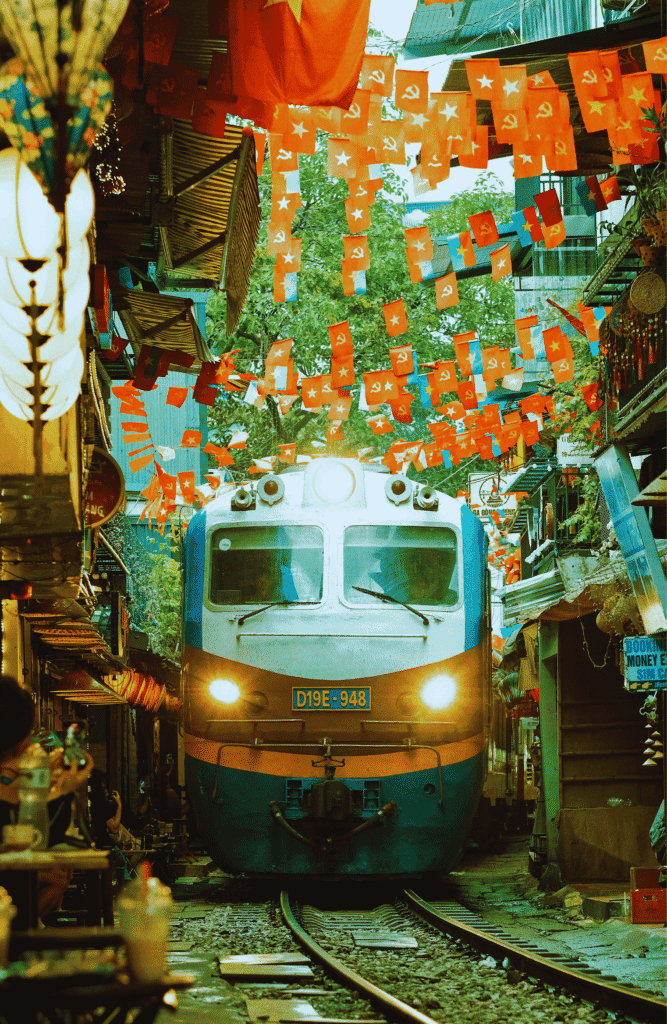
Yes — but only if it fits the rest of your itinerary.
Ninh Binh is one of the easiest additions for travelers who want to combine Hanoi’s urban atmosphere with rivers, rice fields, limestone mountains, and rural scenery.
A day trip is possible, although staying overnight allows for a slower experience. If you only have three days in Hanoi, I would keep those days in the city. With four or five days, Ninh Binh becomes easier to justify.
For more information, see our Ninh Binh Travel Guide.
Ha Long Bay offers a completely different experience, centered on limestone islands, water, and cruising.
A day trip from Hanoi is possible, but it creates a long travel day. If your schedule allows, an overnight cruise generally gives you more time to enjoy the bay rather than spending much of the day in transit.
For a deeper look at the destination, see our Ha Long Bay Travel Guide.
If you’re already planning to visit Ninh Binh, Ha Long Bay, Sapa, or Ha Giang later in your Vietnam trip, there is little reason to squeeze them into a Hanoi day trip simply to add another destination to the list.
Hanoi Itinerary at a Glance
| Time Available | Best Approach |
|---|---|
| 1 day | Hoan Kiem Lake, Old Quarter, one major cultural site, and local food |
| 2 days | Old Quarter and Hoan Kiem + Hanoi’s major historical and cultural sites |
| 3 days | Core Hanoi + history and culture + slower neighborhood exploration |
| 4 days | Three-day itinerary with more flexibility, food, cafés, and local experiences |
| 5+ days | Hanoi plus one or more northern Vietnam destinations |
One final tip: don’t overplan Hanoi.
You don’t need to fill every free hour with another attraction.
A coffee stop, an unplanned bowl of noodles, a neighborhood market, or simply walking one more street can become part of the experience.
Leave some empty space in your itinerary.
In Hanoi, empty space isn’t wasted time.
It is often where the city becomes most interesting.
Is Hanoi a Good Fit for Your Trip?
Hanoi is not the easiest city in Vietnam to understand on the first day.
It can be noisy, crowded, humid, and occasionally chaotic. Sidewalks may not work the way you’re used to, traffic takes some getting used to, and the city’s most interesting experiences are often found between the major attractions rather than inside them.
For the right traveler, however, those same qualities are part of the appeal.
Hanoi is particularly rewarding if you enjoy food, history, local neighborhoods, cafés, and cities where everyday life remains visible alongside the major sights.
Your travel style also matters.
Hanoi for Families
Hanoi can be a rewarding destination for families, but it works best when you avoid trying to follow an overly ambitious sightseeing schedule.
Young children may enjoy the city’s lakes, parks, open spaces, street food, and colorful everyday activity. Families can also build a comfortable itinerary around shorter sightseeing periods, relaxed meals, and regular breaks.
Traffic and crowded sidewalks require extra attention, particularly when traveling with younger children.
For families, three or four days can be more comfortable than trying to see Hanoi in a rushed two-day visit.
The key is to treat the city as an experience rather than a checklist.
Hanoi for Solo Travelers
Hanoi is a strong choice for solo travelers who enjoy exploring at their own pace.
It is easy to build a day around walking, cafés, local food, museums, markets, and neighborhood exploration without needing a tightly organized schedule.
The city also offers plenty of opportunities to join a food tour, day trip, cooking class, or other small-group experience if you want some company along the way.
Solo travelers should still use normal precautions in crowded areas and around traffic, particularly when crossing busy streets or using a phone near the roadside.
For independent travelers, one of Hanoi’s biggest advantages is simple:
You can make the day your own.
Hanoi for Couples
Hanoi may not be the first city that comes to mind when planning a romantic trip to Vietnam, but couples who enjoy food, culture, and atmosphere can find plenty to appreciate.
A morning walk around Hoan Kiem Lake, a long Vietnamese coffee, dinner at a small local restaurant, an evening stroll through the Old Quarter, or time beside West Lake can become memorable precisely because they are simple.
Hanoi’s appeal for couples is less about traditional resort-style romance and more about sharing the experience of discovering a city together.
If you prefer beaches, private resorts, and a slower tropical atmosphere, another destination in Vietnam may suit you better.
If you enjoy wandering, eating, and discovering places together, Hanoi can be an excellent part of a Vietnam itinerary.
The Bottom Line
Hanoi is a good fit if you want food, culture, history, and everyday Vietnamese life rather than a perfectly polished tourist experience.
It may take a little patience at first.
But if you’re willing to slow down, stay curious, and let the city reveal itself beyond the headline attractions, Hanoi can become one of the most memorable stops on a first trip to Vietnam.
Before You Go: Check your entry requirements, accommodation, mobile data, transportation apps, weather, and hotel address.
Hanoi Travel FAQ
Is Hanoi good for first-time visitors to Vietnam?
Yes. Hanoi is one of the strongest starting points for a first Vietnam trip, especially if you want a combination of food, history, culture, and everyday city life. The main adjustment is getting used to the traffic, crowds, and pace of the streets.
Is Hanoi easy to explore independently?
Yes. Central Hanoi is relatively straightforward to explore on your own, particularly around Hoan Kiem Lake and the Old Quarter. For longer distances, ride-hailing services such as Grab and Green SM can make getting around easier.
Is Hanoi expensive for US travelers?
Hanoi can be quite affordable compared with many major US cities, although costs vary considerably depending on your hotel, restaurants, tours, and transportation choices. You can travel comfortably at several different budget levels.
Do you need to speak Vietnamese in Hanoi?
No. You can travel around Hanoi without speaking Vietnamese, particularly in tourist areas. Learning a few simple expressions such as cảm ơn (thank you) and xin chào (hello) can nevertheless make everyday interactions easier and more pleasant.
Is Hanoi suitable for a short trip?
Yes. You can get a good introduction to Hanoi in two days, but three full days gives most first-time visitors a more comfortable balance between major sights and time to explore without rushing.
What should you know before visiting Hanoi?
The biggest adjustment for many first-time visitors is the city’s pace. Traffic, crowded sidewalks, humid weather, cash-based small businesses, and spontaneous street life can feel very different from what you’re used to at home. Once you stop trying to control every detail, Hanoi becomes much easier to enjoy.
Final Thoughts: Is Hanoi Worth Your Time?
Hanoi is not a city that tries to make itself easy for visitors.
It doesn’t always give you a clean sidewalk, a quiet intersection, or an obvious answer about where to go next.
And that’s part of the point.
The city asks you to pay attention.
Look at the old buildings above the shops.
Notice how people use the sidewalks.
Watch the morning activity around the lake.
Sit down for coffee instead of taking it to go.
Try the dish you can’t pronounce.
Walk one more street before turning back.
Hanoi becomes more rewarding the less you try to control every minute of your visit.
For a first trip, three days is a strong starting point. Stay around Hoan Kiem or the Old Quarter if convenience matters most, spend time eating and walking, and leave enough space in your itinerary for the unexpected.
Then, if you have more time, venture beyond the city to Ninh Binh or Ha Long Bay.
But don’t make the mistake of treating Hanoi simply as the place where you sleep before your next tour.
Give the capital a chance to be the destination.
That’s when Hanoi tends to stay with you.
Explore More Vietnam Travel Guides
Planning more than just Hanoi? Continue exploring Vietnam with our detailed travel guides covering the country’s most popular destinations and regions.
- Vietnam Travel Guide — Start with our complete guide to traveling in Vietnam.
- North Vietnam Travel Guide — Build a complete northern Vietnam itinerary around Hanoi and its surrounding destinations.
- Sapa Travel Guide — Explore mountain landscapes, rice terraces, and local culture in northern Vietnam.
- Ha Long Bay Travel Guide — Plan your trip to Vietnam’s iconic limestone islands and emerald waters.
- Ninh Binh Travel Guide — Discover dramatic karst landscapes, rivers, temples, and countryside near Hanoi.
- Ha Giang Travel Guide — Explore one of northern Vietnam’s most spectacular mountain regions.
Together, these guides can help you build a more complete northern Vietnam itinerary — combining Hanoi’s history, food, and everyday city life with mountains, countryside, rivers, and coastal landscapes.
Go Beyond the Tourist Checklist
Hanoi is more than its famous landmarks.
To understand the city more deeply, explore Vietnam Insights, where we look beyond conventional travel itineraries to explore Vietnamese culture, food, traditions, everyday life, and the perspectives that shape the experience of traveling through Vietnam.
These stories can help you understand why Vietnam feels the way it does, not simply where to go.
Editor’s Note
Hanoi is one of those cities that becomes more interesting the longer you spend in it.
The major landmarks provide an important introduction to the capital’s history, but much of Hanoi’s character is found between them — in neighborhood cafés, morning markets, family-run food stalls, narrow streets, lakeside walks, old shop houses, and the everyday rhythm of local life.
For first-time visitors, it can be tempting to move quickly from one attraction to the next.
We recommend doing the opposite whenever your schedule allows.
Leave room to walk without a destination. Stop for coffee. Try a dish you haven’t heard of. Watch how a neighborhood changes from early morning to evening.
Some of the most memorable parts of Hanoi aren’t attractions at all. They’re the small moments that happen while you’re moving between them.
What We Think First-Time Visitors Should Know
After researching Hanoi as part of our broader coverage of Vietnam, one thing stands out:
Hanoi is best experienced as a living city, not simply as a collection of attractions.
Its history is visible in its architecture and monuments, but it also survives in everyday routines — the way people gather for breakfast, drink coffee, use the sidewalks, shop for fresh ingredients, and spend time with family and friends.
That is why a good Hanoi itinerary needs more than a list of places to visit.
You need to understand how to move around the city, where to stay, when to go, what to eat, and when to slow down.
The more you understand those details, the easier it becomes to experience Hanoi on its own terms.
References & Trusted Resources
This guide combines destination research, official tourism information, historical references, and practical travel research.
Because some Hanoi travel information can change over time — including transportation services, attraction access, operating arrangements, and visitor requirements — we recommend checking current official information when planning your trip.
- Vietnam National Authority of Tourism – Official tourism information covering destinations, attractions, travel resources, and tourism activities throughout Vietnam.
- Hanoi Department of Tourism – Local tourism information and resources relating specifically to Hanoi.
- UNESCO – Internationally recognized information on Vietnam’s cultural and natural heritage.
- Vietnam Ministry of Culture, Sports and Tourism – Official information relating to Vietnam’s cultural heritage, tourism, museums, and cultural preservation.
- Green SM – Official information about Green SM’s ride-hailing and electric transportation services in Vietnam.
Important: Travel information such as entry requirements, transportation services, opening hours, and ticket policies can change. Always check the relevant official source before traveling.
About the Author
Tam Voc Viet Editorial Team
The Tam Voc Viet Editorial Team creates travel and cultural guides for international readers who want to understand Vietnam beyond its most familiar tourist attractions.
Our work focuses on Vietnam travel, food, history, culture, and everyday life, combining destination research with official Vietnamese tourism and government sources, UNESCO resources, historical references, and practical travel information.
We aim to explain not only where to go, but also what travelers should expect once they arrive — including local customs, transportation, food culture, neighborhoods, and the small details that can make a first trip easier.
Travel information that may change over time is reviewed against current official or relevant sources when articles are published or updated.
Each guide is reviewed for factual accuracy, clarity, usefulness, and unnecessary repetition before publication.
Article Information
Category: Vietnam Travel
Topic: Hanoi Travel Guide
Published: May 2026
Last Updated: August 2026
Author: Tam Voc Viet Editorial Team
Follow Tam Voc Viet on YouTube: TAM VOC VIET – VIETNAM INSIGHTS
