

 Tiếng Việt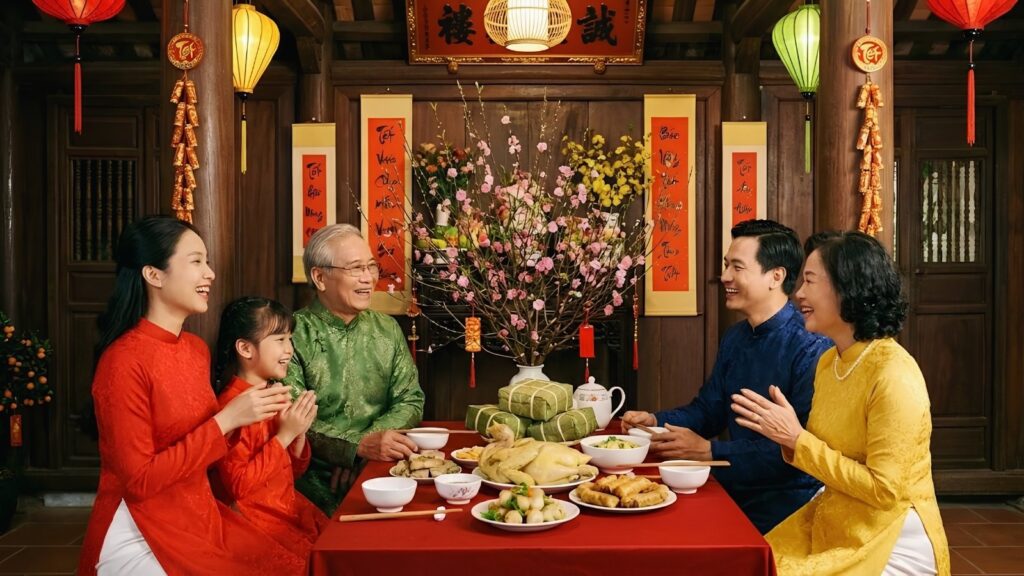
If you arrive in Vietnam a few days before Tet, you’ll notice the country beginning to transform.
Before sunrise, flower markets are already bustling. Trucks unload peach blossoms in Hanoi, while in Ho Chi Minh City, workers put the finishing touches on Nguyễn Huệ Flower Street. Families hurry home carrying gifts, kumquat trees, and bags of festive food as the country prepares for its most important celebration.
By the time the sun rises, streets are already alive with the colors of spring. Cafés decorate their entrances with flowering trees, temples welcome early worshippers, and families make the final preparations for reunion dinners that will soon bring generations together under one roof.
Known as Tet Nguyen Dan, the Vietnamese Lunar New Year marks the arrival of spring and the beginning of a new lunar year. More importantly, it is a time when families reunite, ancestors are honored, traditions are renewed, and hopes for the year ahead are shared around the dinner table.
For international travelers, Tet offers far more than colorful festivals and seasonal food. It provides a rare opportunity to experience Vietnam through the traditions, values, and everyday moments that shape family life across the country.
Whether you’re planning to visit Vietnam during Tet or simply curious about its customs, this guide explains the history, traditions, foods, etiquette, and travel tips that will help you better understand Vietnam’s most cherished holiday.
Table of Contents
Quick Answer
Tet Holiday, or Tet Nguyen Dan, is the Vietnamese Lunar New Year and the country’s most important annual celebration. Falling between late January and mid-February, Tet marks the beginning of the lunar calendar and the arrival of spring.
Unlike New Year’s celebrations in many Western countries, Tet centers on family reunions, ancestor worship, traditional foods, and wishes for health, happiness, and prosperity. In the weeks before the holiday, millions of Vietnamese return to their hometowns, decorate their homes with flowers, prepare festive dishes, and gather with loved ones to welcome the new year.
For travelers, Tet is one of the best times to experience Vietnam’s cultural traditions, though planning ahead is essential as transportation becomes busy and many local businesses close for several days.
At a Glance
When: Late January to mid-February (dates vary each year)
Duration: Official public holiday of several days, with celebrations lasting much longer
Best for: Culture lovers, photographers, food enthusiasts, and first-time visitors
Top Experiences:
- Flower markets
- Reunion dinners
- Lion dances
- Traditional Tet foods
- Temple visits
Why Tet Matters in Vietnam
To understand Vietnam, it’s impossible to overlook Tet.
No other celebration influences daily life on such a scale. Schools close, businesses pause operations, and millions of people travel home for family reunions. For many Vietnamese, Tet is the one time of year when work gives way to family, tradition, and reflection.
More than a public holiday, Tet celebrates the values that continue to shape Vietnamese society:
- Family reunion and togetherness
- Respect for parents and elders
- Honoring ancestors
- Gratitude for the past year
- Hope for health, happiness, and prosperity
- Strengthening relationships with relatives and friends
These traditions have been passed down for generations, making Tet not only Vietnam’s biggest holiday but also one of Southeast Asia’s most meaningful cultural celebrations.
What You’ll Learn in This Guide
In this guide, you’ll discover:
- What Tet Holiday is and why it matters
- The history and origins of the Vietnamese Lunar New Year
- Traditional customs, family rituals, and lucky traditions
- The symbolic foods enjoyed during Tet
- Travel tips for visiting Vietnam during the holiday
- The best places to experience Tet across the country
Whether you’re visiting Vietnam for the first time or exploring its culture from afar, this guide will help you understand why Tet remains the heart of Vietnamese family life.
What Is Tet Holiday in Vietnam?
Tet Holiday, officially known as Tet Nguyen Dan (Tết Nguyên Đán), is the Vietnamese Lunar New Year and the country’s most important annual celebration.
Observed according to the lunisolar calendar, Tet usually falls between late January and mid-February, marking not only the beginning of a new year but also the arrival of spring.
Unlike January 1 celebrations in many Western countries, Tet is less about parties and countdowns than about reconnecting with family, honoring ancestors, and starting the year with gratitude and optimism.
Today, nearly every Vietnamese family celebrates Tet, whether they live in Hanoi, Ho Chi Minh City, a rural village, or overseas. For millions of people, it is the one time each year when returning home becomes more important than work, travel, or business.
More Than a New Year’s Celebration
To many international visitors, Tet is often compared with Chinese New Year because both follow the lunar calendar and share some historical roots.
While that comparison helps explain the timing, it doesn’t capture what makes Tet uniquely Vietnamese.
The holiday reflects Vietnam’s own history, regional traditions, and family values. Across the country, families prepare traditional foods, clean and decorate their homes, visit ancestral graves, exchange lucky money, and gather for reunion dinners that may be the only time several generations sit around the same table all year.
Rather than celebrating the passing of another year, Tet celebrates belonging—to a family, a community, and a cultural heritage that has been preserved for centuries.
The Meaning Behind Tet
For Vietnamese people, Tet represents a fresh beginning.
Before the holiday arrives, homes are cleaned, old debts are settled when possible, and misunderstandings are often left behind. The first days of the new year are believed to influence the months ahead, encouraging people to welcome Tet with kindness, optimism, and generosity.
This spirit of renewal explains why you’ll often hear cheerful greetings, see homes decorated with fresh flowers, and notice families making every effort to create a joyful atmosphere.
More than changing the calendar, Tet offers an opportunity to begin the year with hope.
From Rice Fields to Modern Cities
Tet’s origins are closely connected to Vietnam’s agricultural heritage.
For centuries, rice farming shaped the rhythm of daily life, and the arrival of spring marked the beginning of a new growing season. Communities celebrated the changing seasons with offerings, family gatherings, and prayers for favorable weather and abundant harvests.
Although Vietnam has become a modern, fast-growing nation, traces of those agricultural traditions remain visible today—from sticky rice cakes and seasonal flowers to family rituals that continue to bring generations together every Lunar New Year.
When Is Tet Celebrated?
Typical Tet Timeline
2–3 weeks before Tet
- House cleaning
- Shopping
- Flower markets
- Preparing food
New Year’s Eve
- Reunion dinner
- Ancestor offerings
- Fireworks
First Day
- Family visits
- Lucky money
- Temple visits
Following Days
- Visiting relatives
- Community celebrations
- Spring festivals
Because Tet follows the lunar calendar, the exact date changes every year, typically falling between late January and mid-February.
While the official public holiday lasts only a few days, the celebration itself stretches much longer. Preparations begin weeks in advance, and family visits often continue well after New Year’s Day.
For travelers, this timeline matters. Transportation becomes increasingly busy before Tet as millions of people travel home, while the first days of the holiday are often the quietest time of year in Vietnam’s major cities.
Is Tet the Same as Chinese New Year?
The short answer is no.
Tet and Chinese New Year share the same lunar calendar and some ancient cultural influences, but Vietnam has developed its own customs over many centuries.
Distinctive Vietnamese traditions include:
- Bánh Chưng in the north and Bánh Tét in the south.
- Peach blossoms decorating homes in northern Vietnam, while yellow apricot blossoms symbolize Tet in the south.
- Xông Đất, the tradition of choosing the first visitor to enter a home after midnight.
- Family rituals, ancestral offerings, and regional customs that vary across Vietnam.
For travelers, the differences become clear once they experience Tet firsthand. Although the holiday shares a common calendar with other Lunar New Year celebrations in Asia, its traditions, atmosphere, and family-centered spirit are unmistakably Vietnamese.
| Tet | Chinese New Year |
|---|---|
| Vietnamese traditions | Chinese traditions |
| Bánh Chưng | Dumplings |
| Peach & Apricot blossoms | Plum blossoms |
| Xông Đất | First-footing traditions vary |
| Vietnamese family customs | Chinese family customs |
The History of Tet Holiday in Vietnam
Did You Know?
Tet has been celebrated in Vietnam for more than two thousand years, making it one of the country’s oldest living cultural traditions.
Every Tet celebration tells a story that stretches back thousands of years.
Long before Vietnam became a modern nation, the arrival of spring marked a turning point in the lives of farming communities. It was a season of renewal—a time to give thanks for the previous harvest, pray for favorable weather, and gather with family before a new agricultural cycle began.
Although today’s Tet includes fireworks, flower festivals, and bustling city celebrations, its core purpose has changed remarkably little: bringing families together while honoring the past and welcoming the future.
Ancient Roots in an Agricultural Society
Tet developed in a society where rice farming shaped everyday life.
For generations, Vietnamese families depended on seasonal rains and successful harvests. The arrival of spring signaled not only warmer weather but also renewed hope for the year ahead.
Communities celebrated by preparing special meals, making offerings, and gathering with relatives—traditions that continue to influence Tet celebrations today.
Even in Vietnam’s modern cities, echoes of this agricultural heritage remain visible in seasonal flowers, sticky rice cakes, and family rituals passed down through generations.
A Celebration That Became Uniquely Vietnamese
Like other Lunar New Year celebrations across East Asia, Tet shares historical roots with ancient regional traditions.
Over centuries, however, Vietnam shaped the holiday into its own cultural celebration.
Distinctive customs—including Bánh Chưng, Bánh Tét, Xông Đất, ancestral offerings, and regional flower traditions—reflect Vietnam’s history rather than simply following broader Lunar New Year practices.
Today, these traditions help make Tet instantly recognizable as a uniquely Vietnamese celebration.
The Legend of Bánh Chưng
One of Tet’s most enduring stories is the legend of Prince Lang Liêu.
According to Vietnamese folklore, an ancient king asked his sons to prepare the most meaningful offering to determine his successor. While other princes searched for rare delicacies, Lang Liêu chose humble ingredients that represented everyday life—sticky rice, mung beans, and pork.
His square rice cake, Bánh Chưng, symbolized the Earth and expressed gratitude for nature and agriculture. The king admired its simple yet meaningful symbolism and chose Lang Liêu as his heir.
Today, Bánh Chưng remains one of Tet’s most iconic foods, reminding Vietnamese families that gratitude and togetherness matter more than extravagance.
Honoring Ancestors Across Generations
Another tradition that has endured for centuries is ancestor worship.
During Tet, families prepare home altars with flowers, fruit, incense, and traditional dishes to honor parents, grandparents, and earlier generations. These rituals express gratitude for the past while asking for blessings in the year ahead.
Rather than dwelling on loss, Tet emphasizes the continuing bond between generations—a value that remains central to Vietnamese family life today.
Tet in Modern Vietnam
While modern life has changed how people celebrate, the meaning of Tet remains remarkably consistent.
Families still travel home for reunion dinners, prepare traditional foods, exchange New Year greetings, and gather around the family table.
At the same time, newer traditions have emerged. Cities host flower festivals and fireworks displays, digital lucky money has become increasingly popular, and younger generations often combine long-standing customs with contemporary celebrations.
This blend of tradition and modern life is one of the reasons Tet continues to resonate with Vietnamese people of all ages.
Why Understanding Tet’s History Matters
Knowing the history of Tet helps visitors appreciate the holiday beyond its colorful decorations and festive atmosphere.
A family wrapping Bánh Chưng, a carefully prepared ancestral altar, or a crowded flower market is more than a beautiful scene—each reflects traditions that have connected Vietnamese families for generations.
For travelers, understanding these stories transforms Tet from a holiday into a window on Vietnam’s cultural identity.
How Vietnamese Prepare for Tet
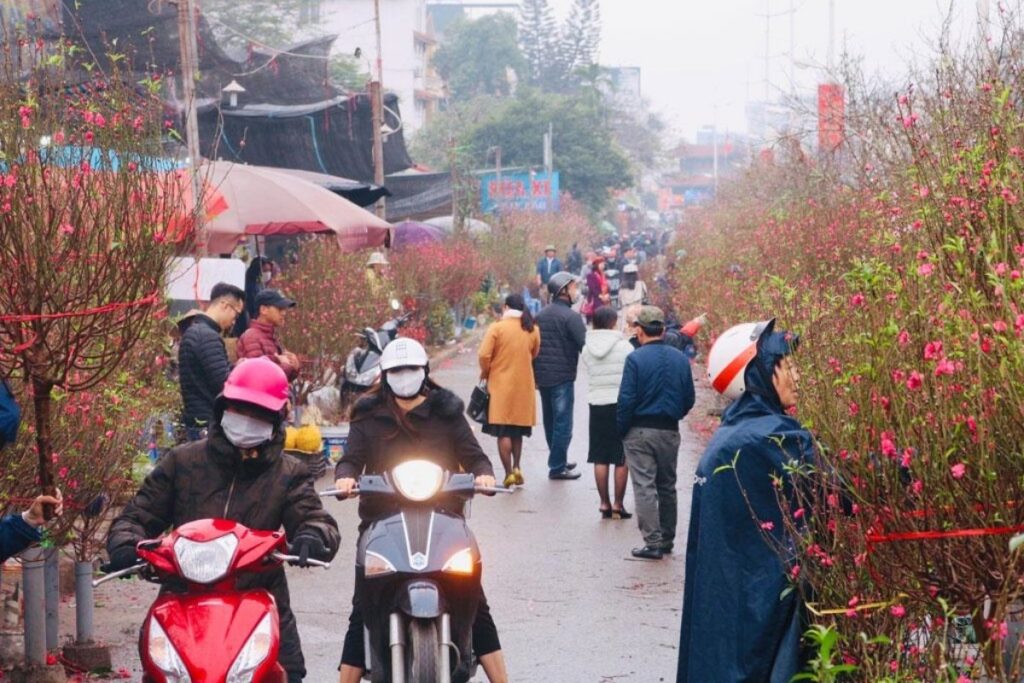
For many travelers, the most exciting part of Tet begins before the holiday itself.
A week or two before Lunar New Year, Vietnam feels noticeably different. Flower markets spill onto sidewalks, supermarkets buzz with last-minute shoppers, and buses, trains, and airports fill with families heading home. Everywhere you look, homes, cafés, and shopping streets are decorated in red and gold to welcome the new year.
Unlike many holidays that last only a day or two, Tet is the result of weeks of preparation. Every tradition—from cleaning the house to choosing the right flowers—reflects the belief that a good beginning leads to a fortunate year ahead.
Cleaning the House
One of the first signs that Tet is approaching is the annual house cleaning.
Families tidy every room, repair broken items, and decorate their homes with fresh flowers and festive ornaments. Beyond simple housekeeping, this tradition symbolizes leaving behind the disappointments of the old year and welcoming a fresh start.
Once Tet officially begins, however, many households avoid sweeping the floor on the first day because it is traditionally believed to sweep away good fortune.
Shopping for Tet
Shopping becomes a major part of daily life in the weeks leading up to Tet.
Traditional markets and supermarkets fill with people buying everything needed for family celebrations, including:
- Fresh fruit for ancestral offerings
- Flowers and ornamental plants
- Traditional ingredients for Tet dishes
- Candies and snacks for guests
- New clothes for children and adults
- Gifts for relatives, friends, teachers, and colleagues
For visitors, local markets offer one of the best opportunities to experience the festive atmosphere before the holiday begins.
Flower Markets Come to Life
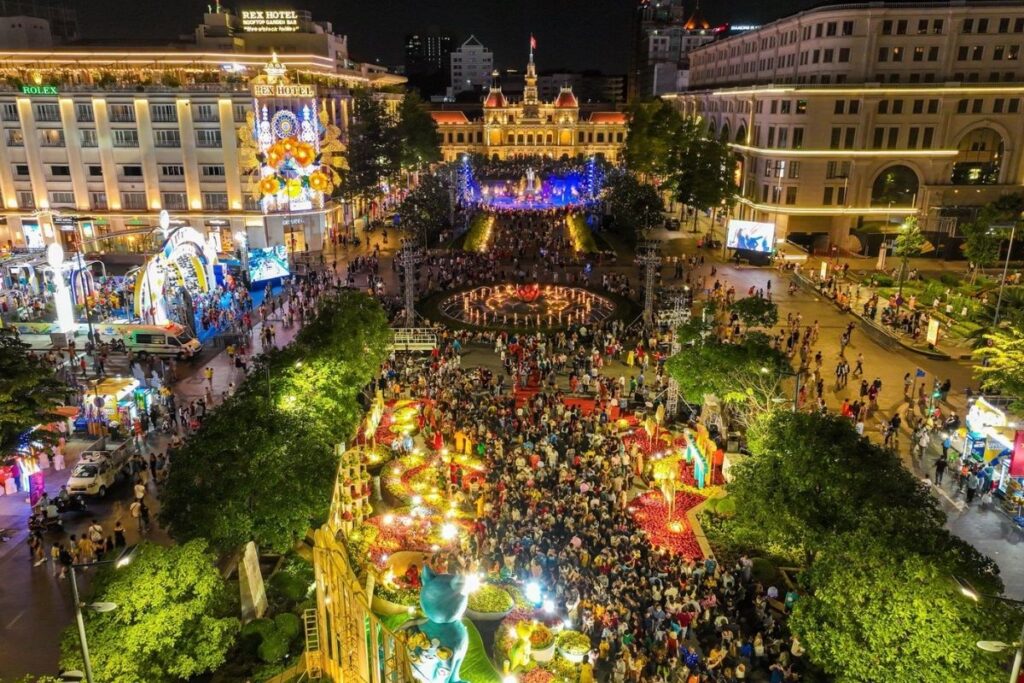
If you’re in Hanoi before Tet, don’t miss Quảng Bá Flower Market, where florists begin trading long before sunrise. In Ho Chi Minh City, Nguyễn Huệ Flower Street becomes one of the country’s most photographed Tet attractions, drawing thousands of visitors every evening.
Seasonal flower markets are among Vietnam’s most beautiful Tet traditions.
Before the holiday, temporary markets appear in cities across the country, selling thousands of flowering trees and ornamental plants.
Regional traditions are easy to spot:
- Peach blossoms symbolize Tet in northern Vietnam.
- Yellow apricot blossoms are the signature flower of the south.
- Kumquat trees are popular nationwide as symbols of prosperity and abundance.
One of the most memorable sights is watching families carefully transport flowering trees home on motorbikes—a uniquely Vietnamese scene that surprises many first-time visitors.
Preparing Traditional Foods
Tet is also the busiest season in the kitchen.
Families prepare dishes several days in advance so they can spend more time welcoming relatives during the holiday.
In many households, making Bánh Chưng or Bánh Tét remains a cherished tradition. Family members gather to wrap rice cakes by hand before slowly boiling them for hours, often staying together late into the night while sharing stories, tea, and conversation.
Alongside the rice cakes, families prepare other festive dishes that will be enjoyed throughout the holiday and shared with visiting guests.
Decorating the Home
Fresh flowers, lucky decorations, and family altars transform Vietnamese homes before Tet.
Common decorations include:
- Peach or yellow apricot blossoms
- Kumquat trees
- Red couplets
- Traditional calligraphy
- Lanterns and festive ornaments
- The Five-Fruit Tray displayed on the family altar
Together, these decorations express hopes for peace, prosperity, and happiness in the year ahead.
The Journey Home
Perhaps no Tet tradition is more emotional than returning home.
Each year, millions of Vietnamese travel across the country to celebrate with their families, making Tet the busiest travel season in Vietnam. Flights and trains often sell out weeks in advance as people leave major cities to reunite with parents and grandparents.
For many families, New Year’s Eve is the only time during the year when several generations gather around the same table.
Finishing the Old Year Well
Before Tet arrives, many people also try to complete unfinished responsibilities.
Bills are paid, borrowed items are returned, and personal disagreements are often resolved before the new year begins. The tradition reflects a simple belief: entering the new year with peace of mind creates a positive start for the months ahead.
What Travelers Will Notice
If you visit Vietnam during the weeks before Tet, expect to experience one of the country’s most vibrant seasons.
You’ll see:
- Streets lined with colorful flowers.
- Busy traditional markets.
- Families carrying flowering trees home.
- Neighborhoods decorated with festive banners.
- Crowded transportation hubs as people return to their hometowns.
For many visitors, these preparations are just as memorable as Tet itself, offering a glimpse into how millions of Vietnamese families come together to welcome the Lunar New Year.
Traditional Tet Decorations and Their Meanings
One of the easiest ways to recognize Tet is through Vietnam’s colorful streets and homes.
In the weeks before Lunar New Year, flower markets, shopping districts, cafés, hotels, and family homes are transformed with seasonal decorations. Far more than festive ornaments, these symbols express hopes for prosperity, happiness, good health, and a fresh beginning.
For travelers, understanding their meaning adds a deeper appreciation to every market, temple, and neighborhood visited during Tet.
Peach Blossoms – The Symbol of Tet in Northern Vietnam
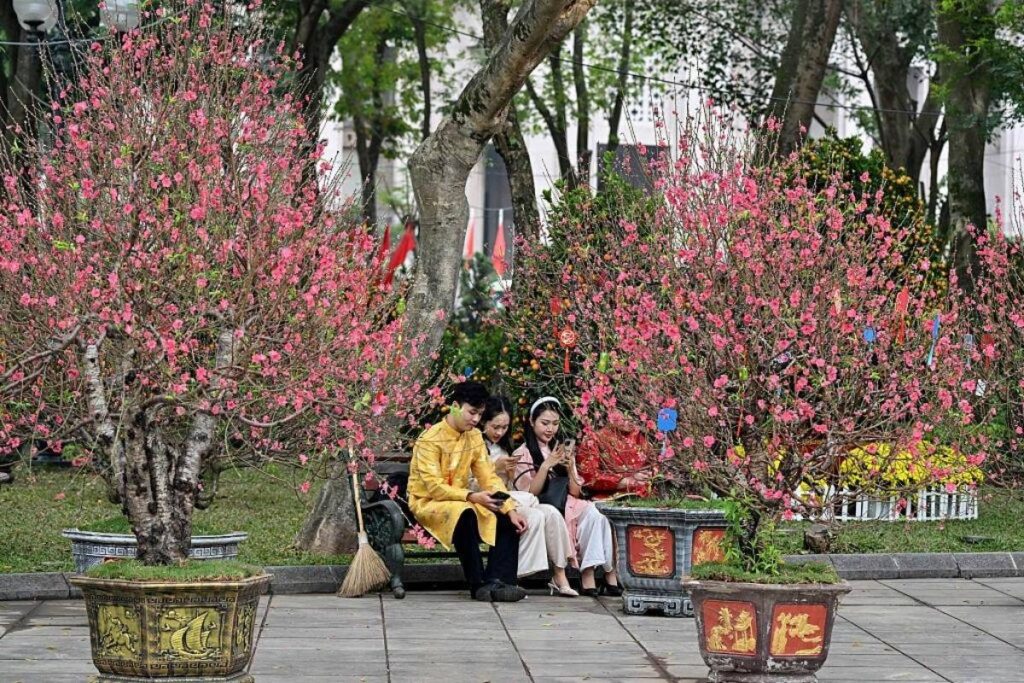
For photographers, the week before Tet is one of the best times to capture everyday life in Vietnam. Families browse flower markets together, children pose in traditional áo dài, and entire neighborhoods become filled with the colors of spring.
In northern Vietnam, peach blossoms (hoa đào) are the unmistakable symbol of Tet.
Their soft pink flowers bloom just as spring arrives, representing renewal and good fortune. Families carefully choose flowering branches or small trees to display in their homes, believing they welcome positive energy while creating a warm atmosphere for family reunions.
If you’re visiting Hanoi before Tet, you’ll find peach blossoms filling flower markets and appearing in homes, hotels, restaurants, and shopfronts throughout the city.
Photography Tip
The best time to photograph Tet flower markets is early in the morning, when vendors are arranging fresh blossoms and local families are choosing decorations for their homes.
Yellow Apricot Blossoms – A Southern Tradition
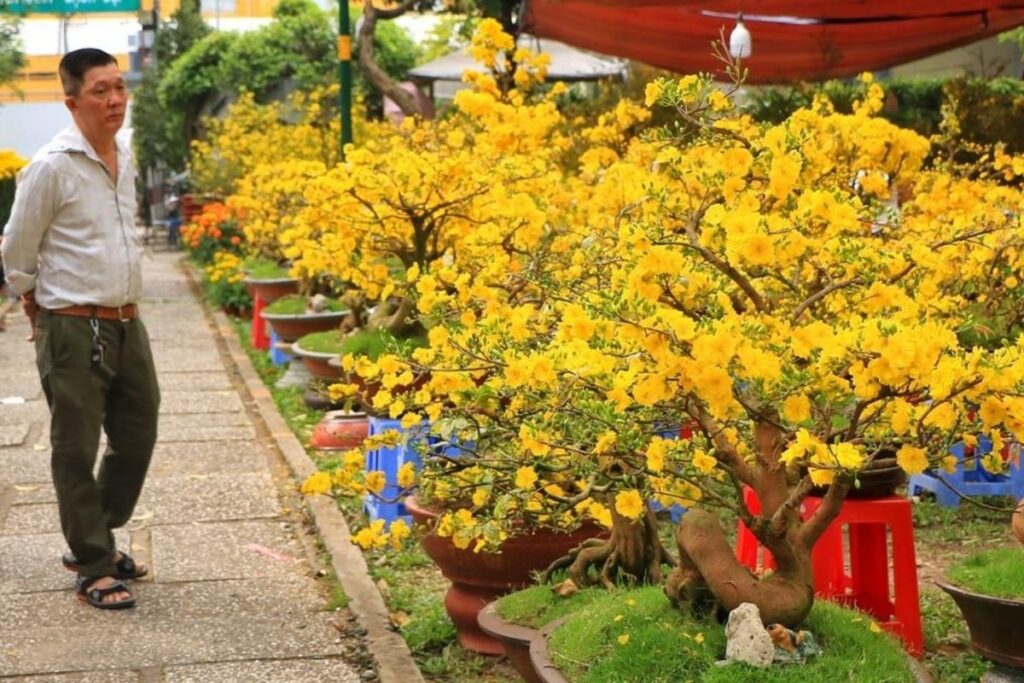
Travel south, and the scenery changes.
Instead of pink peach blossoms, homes are decorated with bright yellow apricot blossoms (hoa mai). Their golden flowers symbolize prosperity, success, and good luck for the year ahead.
From Ho Chi Minh City to the Mekong Delta, apricot trees become the centerpiece of Tet decorations in homes, businesses, and public spaces.
Kumquat Trees – A Wish for Prosperity
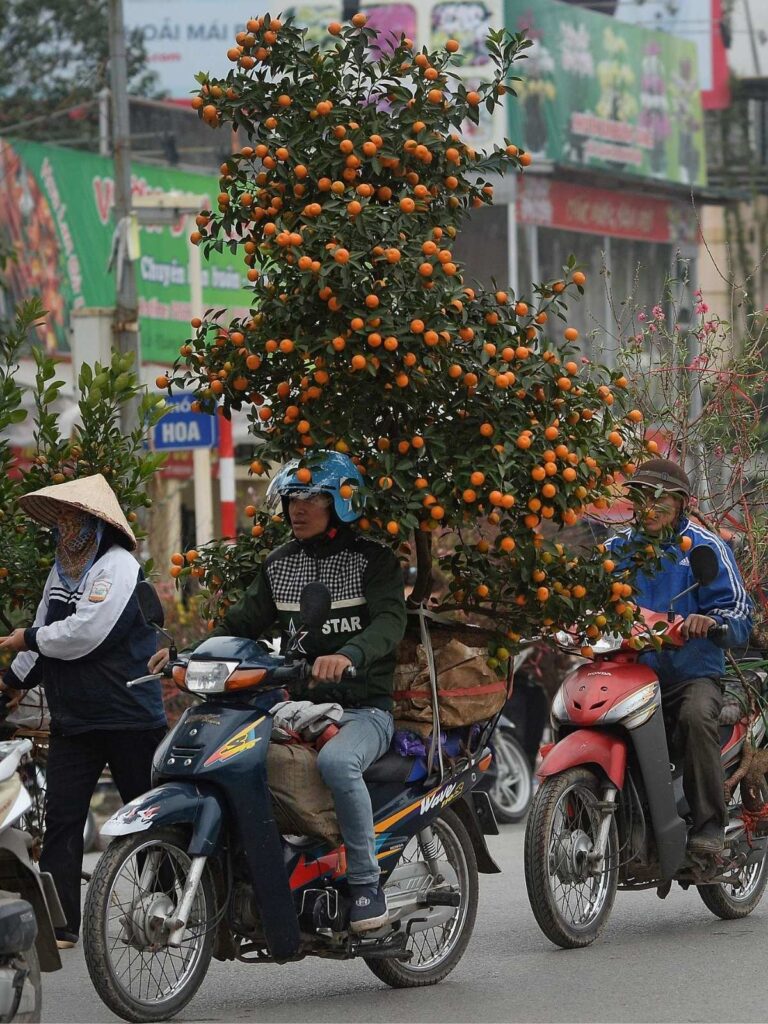
Another familiar sight during Tet is the kumquat tree.
Covered with glossy leaves and bright orange fruit, these miniature trees symbolize abundance, growth, and lasting prosperity.
One of the most memorable scenes before Tet is watching families transport carefully chosen kumquat trees home on motorbikes—a uniquely Vietnamese tradition that often surprises first-time visitors.
The Five-Fruit Tray
Almost every traditional family altar features a Five-Fruit Tray (Mâm Ngũ Quả).
The carefully arranged fruit offering represents gratitude for the previous year and hopes for health, happiness, prosperity, and peace in the year ahead.
The selection of fruit varies across Vietnam. Northern families often choose bananas, pomelos, and Buddha’s hand fruit, while southern households favor combinations based on symbolic wordplay and regional customs.
Although the fruits differ, the message remains the same: welcoming the New Year with gratitude and optimism.
Red Decorations and Lucky Couplets
Red dominates Tet celebrations throughout Vietnam.
Homes and businesses are decorated with red banners, lanterns, paper ornaments, and traditional couplets carrying wishes for prosperity, longevity, happiness, and success.
You’ll often notice these decorations hanging beside front doors or family altars, where they are believed to invite good fortune into the home.
Vietnamese Calligraphy
Another cherished Tet tradition is Xin Chữ, the custom of requesting handwritten calligraphy from respected calligraphers.
Temporary calligraphy stalls appear in many cities before Tet, where visitors can watch artists create elegant characters such as:
- Phúc (Blessing)
- Lộc (Prosperity)
- Thọ (Longevity)
- An (Peace)
- Hiếu (Filial Piety)
Many families display these works throughout the year as reminders of the values they hope to uphold.
For visitors, a piece of traditional calligraphy makes a meaningful cultural souvenir.
Wearing New Clothes
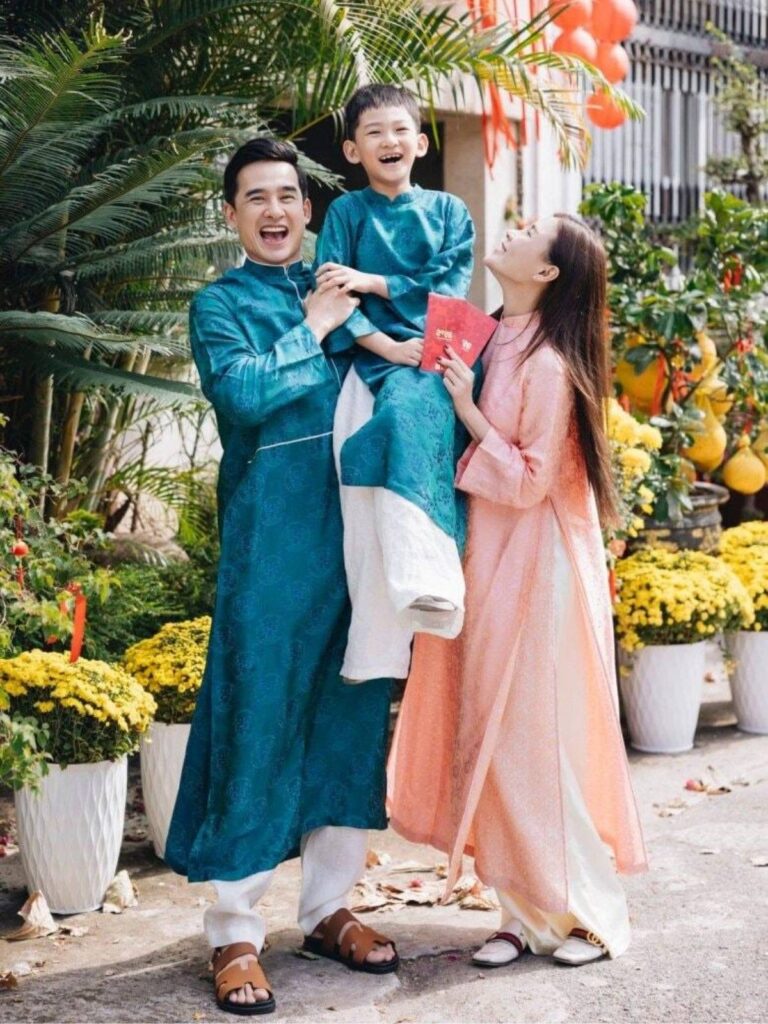
New clothing is also an important part of Tet.
Many families buy new outfits—especially for children—to symbolize a fresh beginning. Bright colors such as red, yellow, and pink are particularly popular because they are associated with joy, luck, and prosperity.
It’s also common to see families wearing traditional áo dài for New Year photographs in parks, flower streets, and historic landmarks across Vietnam.
A Celebration Filled with Symbols
Every Tet decoration tells a story.
A flowering branch welcomes spring.
A fruit-laden tree represents abundance.
A handwritten character reflects family values.
Together, these traditions transform homes and public spaces into celebrations of optimism, gratitude, and renewal.
For travelers, they offer more than beautiful photographs—they provide a glimpse into the beliefs and traditions that continue to shape Vietnamese culture today.
Family Reunion: The Heart of Tet Holiday
If you travel through Vietnam just before Tet, you’ll notice an extraordinary movement across the country.
Airports are packed with passengers carrying gifts, train stations are busier than ever, and highways fill with buses and motorbikes heading toward hometowns. For millions of Vietnamese, Tet means one thing above all else:
It’s time to go home.
For many Vietnamese, this journey isn’t optional. It’s an annual tradition that often takes priority over work commitments, vacations, or business schedules—a reflection of how deeply family is valued during Tet.
No matter where people study or work, returning to family is the tradition that defines the holiday.
The Biggest Journey of the Year
Tet marks Vietnam’s busiest travel season.
Weeks before Lunar New Year, millions of people leave major cities such as Ho Chi Minh City, Hanoi, and Da Nang to reunite with parents, grandparents, and relatives.
Flights often sell out weeks in advance, while trains and long-distance buses operate at full capacity.
For many families, this is the only time all generations are together under one roof.
The Reunion Dinner
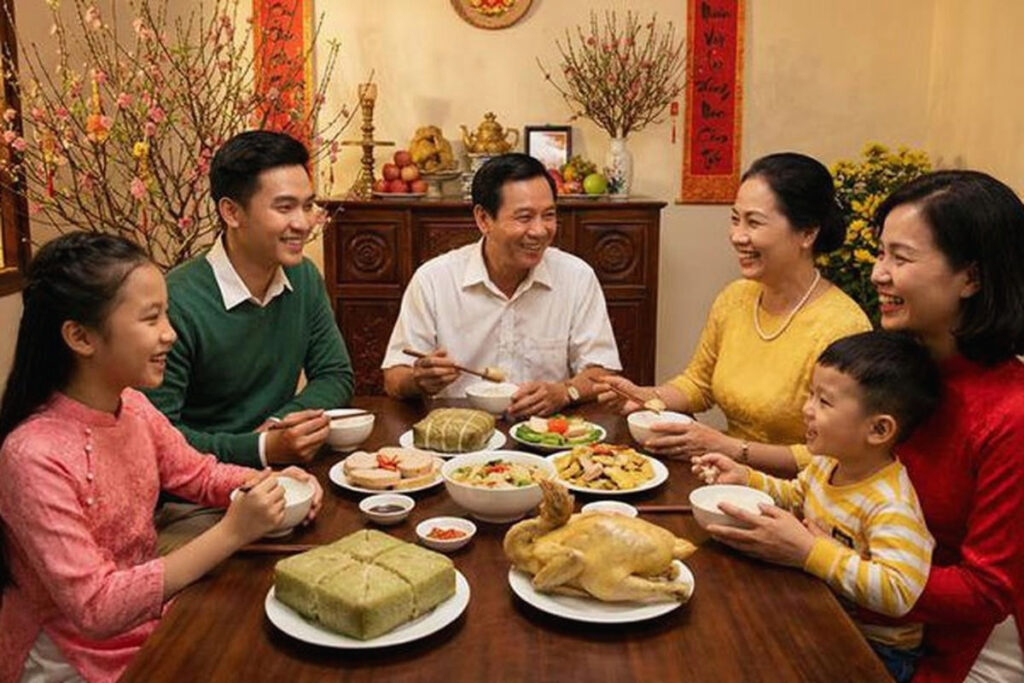
The emotional highlight of Tet is the New Year’s Eve reunion dinner, known as Bữa Cơm Tất Niên.
As evening falls, families gather around a table filled with traditional dishes prepared over several days. Before the meal begins, many households place food on the family altar to honor their ancestors.
Only then does the family sit down to eat together, sharing stories from the past year while welcoming the new one with hopes for health, happiness, and prosperity.
For many Vietnamese, this dinner—not the countdown or fireworks—is the true beginning of Tet.
Visiting Family and Friends
The celebration continues long after New Year’s Eve.
During the first days of Tet, families visit grandparents, relatives, neighbors, teachers, and close friends to exchange greetings and New Year wishes.
Guests are typically welcomed with tea, candied fruits, and traditional snacks before conversations begin.
For visitors fortunate enough to receive an invitation into a Vietnamese home, these gatherings offer a genuine glimpse into local hospitality.
Tet Beyond Vietnam
Tet also brings home millions of overseas Vietnamese.
Families living in countries such as the United States, Australia, Canada, France, and Japan often return to Vietnam to celebrate together. Those unable to travel gather online through video calls, ensuring that distance doesn’t prevent families from sharing the holiday.
The tradition reflects how Tet continues to unite Vietnamese communities around the world.
More Than a Family Gathering
For many international travelers, Tet reveals a side of Vietnam that isn’t found in museums or guidebooks.
Watching grandparents prepare traditional foods with grandchildren, seeing several generations gathered around one table, or simply hearing families laugh together over endless cups of tea offers a deeper understanding of Vietnamese culture than any monument can provide.
This is why family remains at the heart of Tet—not simply as a tradition, but as the reason the holiday exists.
Ancestor Worship During Tet: Honoring Those Who Came Before
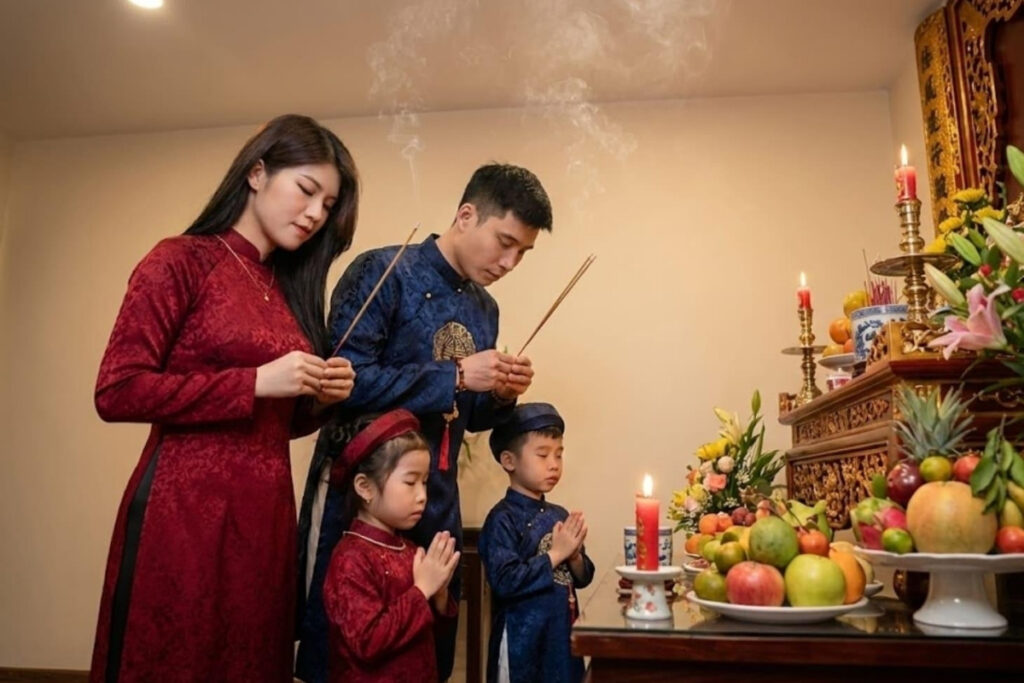
For many first-time visitors, one of the most memorable moments of Tet is seeing a family gathered quietly around a home altar, lighting incense before sharing their New Year’s meal.
This tradition, known as ancestor worship, is at the heart of Tet celebrations across Vietnam. Rather than worshipping ancestors as deities, Vietnamese families honor previous generations with gratitude, believing that the New Year is a time to remember those whose lives helped shape the family today.
The Family Altar
In many Vietnamese homes, the family altar becomes the focal point of Tet preparations.
Before the holiday begins, it is carefully cleaned and decorated with fresh flowers, fruit, incense, candles, and traditional dishes prepared for the New Year.
For visitors, the altar offers a glimpse into one of Vietnam’s most enduring cultural traditions, where family history remains an important part of everyday life.
Welcoming Ancestors Home
On New Year’s Eve, many families prepare a special offering before gathering for their reunion dinner.
Incense is lit, food is presented on the altar, and quiet prayers are offered to express gratitude for the past year while asking for peace, health, and happiness in the year ahead.
Although customs differ from one family to another, the tradition reflects a shared belief that the New Year should begin by remembering those who came before.
Visiting Family Graves
In the days leading up to Tet, many families also visit the graves of parents and grandparents.
They clean the area, replace flowers, burn incense, and spend a few quiet moments together before the holiday begins.
For younger generations, these visits are also an opportunity to learn about their family’s history and strengthen the connection between past and present.
A Tradition That Continues Today
Modern lifestyles have changed many aspects of Tet, but ancestor worship remains an important part of the holiday for millions of Vietnamese families.
Whether living in a rural village, a city apartment, or overseas, many people still return home for these ceremonies or join family members online when distance makes travel impossible.
The rituals may evolve, but the values behind them—gratitude, remembrance, and respect for previous generations—continue to define Tet today.
What Visitors Should Know
If you’re invited into a Vietnamese home during Tet, you may have the opportunity to witness an ancestor worship ceremony.
The best approach is simply to observe respectfully.
A few simple guidelines include:
- Dress modestly.
- Wait for your host’s invitation before approaching the altar.
- Avoid touching offerings or ceremonial objects.
- Follow your host’s lead if you’re invited to participate.
Most Vietnamese families are happy to explain the meaning of these traditions, and many visitors find them to be one of the most meaningful parts of experiencing Tet.
Want to learn more? Explore our complete guide to Ancestor Worship in Vietnam, where we explain the history, beliefs, rituals, and cultural significance of this enduring tradition.
Tet Customs, Lucky Traditions, and Superstitions
Tet is filled with traditions that reflect one simple belief: a good beginning brings a good year.
From choosing the first visitor to a home to exchanging lucky money, many customs are designed to welcome the New Year with optimism and avoid anything considered unlucky.
While not every Vietnamese family follows these traditions in the same way today, they remain an important part of the holiday and offer fascinating insights into local culture.
Xông Đất – The First Visitor of the Year
One of Tet’s most distinctive traditions is Xông Đất, or First Footing.
The first person to enter a home after the New Year begins is traditionally believed to influence the family’s fortunes for the coming year.
For this reason, many families invite someone they consider cheerful, healthy, successful, or simply someone who brings positive energy. Some homeowners even become their own first visitor by briefly stepping outside before midnight and returning moments later.
For travelers, it’s a reminder that first impressions carry special meaning during Tet.
Lucky Money (Lì Xì)
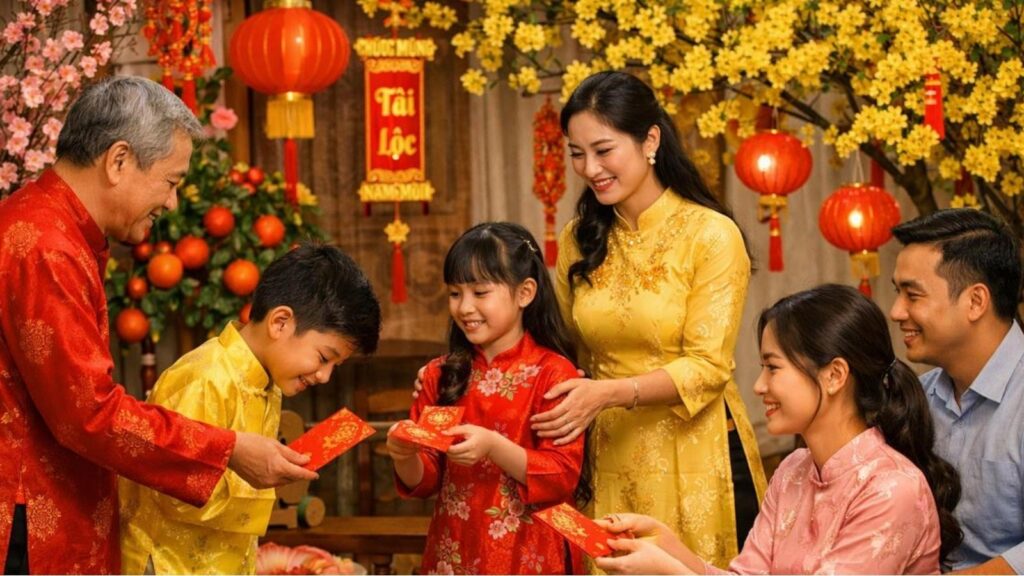
Giving Lì Xì, or lucky money, is one of the traditions children look forward to most.
Presented in red envelopes, the money represents blessings rather than financial value. Parents, grandparents, relatives, and sometimes employers give lucky money while wishing the recipient health, happiness, and success in the year ahead.
Today, digital red envelopes have become increasingly popular, but the tradition itself remains unchanged.
New Year Greetings
Exchanging New Year wishes is another important part of Tet.
A simple greeting such as “Chúc Mừng Năm Mới” (Happy New Year) is appreciated everywhere, while longer wishes are often shared among family members, friends, and colleagues.
Learning just one or two Vietnamese greetings is an easy way for visitors to connect with local people during the holiday.
Customs Many Families Still Observe
Although traditions vary across Vietnam, many families continue to observe a few well-known customs during the first days of Tet.
These often include:
- Avoiding arguments or negative conversations.
- Wearing bright colors instead of black.
- Not sweeping the floor on the first day of Tet.
- Avoiding breaking dishes or glassware.
- Visiting temples to pray for health and peace.
Rather than strict rules, these customs reflect a shared hope for beginning the year with harmony and optimism.
A Living Tradition
Like many cultural traditions, Tet customs continue to evolve.
Younger generations may send digital lucky money, arrange family gatherings through social media, or celebrate with friends after visiting relatives. Yet the values behind these customs remain remarkably consistent: showing kindness, respecting family, and starting the New Year with hope.
Tips for Travelers
Visitors aren’t expected to know every Tet tradition, but a little awareness is always appreciated.
If you’re celebrating Tet in Vietnam:
- Greet people with “Chúc Mừng Năm Mới.”
- Accept gifts or lucky money with both hands.
- Respect family customs if invited into a home.
- Observe before participating in unfamiliar traditions.
Approaching Tet with curiosity and respect is the best way to experience one of Vietnam’s most meaningful celebrations.
Traditional Tet Foods: A Taste of Vietnamese New Year
One of the best ways to experience Tet is through its food.
If you’re lucky enough to celebrate Tet with a Vietnamese family, don’t expect a single festive meal. Food is served throughout the day as relatives, neighbors, and unexpected guests stop by to exchange New Year wishes.
In the days leading up to Lunar New Year, kitchens across Vietnam become gathering places where recipes are shared, rice cakes are wrapped, and family meals are prepared for relatives arriving home. Many of these dishes appear only once a year, making them an essential part of the holiday.
More than festive recipes, Tet foods represent family, gratitude, and hopes for a prosperous year ahead.
Bánh Chưng – Vietnam’s Iconic New Year Rice Cake
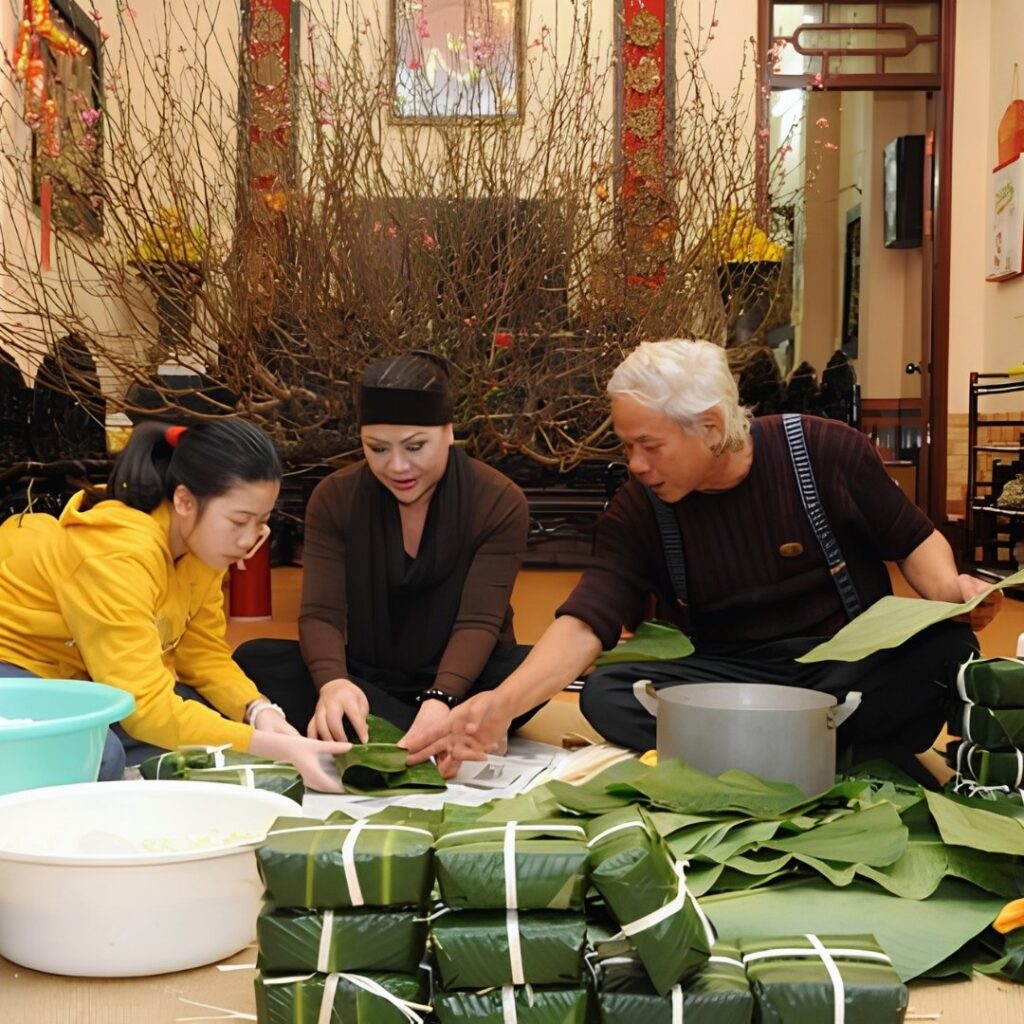
No dish is more closely associated with Tet than Bánh Chưng.
Made from glutinous rice, mung beans, and pork, this square rice cake is a symbol of northern Vietnam and one of the country’s oldest culinary traditions.
According to Vietnamese legend, it represents the Earth and expresses gratitude for nature and a successful harvest. Many families still gather to wrap and boil the cakes together, turning the preparation itself into a cherished Tet tradition.
Travel Tip
If you’re invited to a Vietnamese home during Tet, accepting a slice of Bánh Chưng is more than enjoying a local specialty—it’s sharing in one of Vietnam’s oldest New Year traditions.
Bánh Tét – A Southern Favorite
In central and southern Vietnam, Bánh Tét takes center stage.
Although made from similar ingredients, its cylindrical shape reflects regional traditions. It’s commonly served with pickled vegetables or braised pork and is enjoyed throughout the holiday as relatives and friends visit one another.
Traditional Dishes on the Tet Table
Alongside rice cakes, a typical Tet meal often includes:
- Boiled chicken
- Sticky rice (xôi)
- Vietnamese pork sausage (giò lụa)
- Braised pork with eggs (thịt kho tàu)
- Pickled vegetables (dưa hành)
Together, these dishes create a balanced meal that has been shared by Vietnamese families for generations.
Sweet Treats for Guests
No Tet visit is complete without a tray of Mứt Tết, the colorful assortment of candied fruits, seeds, and sweets served with hot tea.
Common favorites include candied ginger, lotus seeds, coconut candy, roasted watermelon seeds, and dried fruits.
These treats are offered whenever guests arrive, making them one of the first flavors many visitors associate with Tet.
Fresh Fruit and the Five-Fruit Tray
Fresh fruit is another essential part of the celebration.
Beautifully arranged on the family altar before being shared with relatives and guests, the Five-Fruit Tray symbolizes wishes for health, prosperity, and happiness.
The choice of fruit varies across Vietnam, reflecting regional traditions and local harvests.
Tea and Conversation
Tea may seem simple, but it plays an important role throughout Tet.
Whether welcoming relatives, neighbors, or unexpected visitors, Vietnamese families often begin every conversation with a pot of hot tea accompanied by sweets or seasonal snacks.
For many travelers, these quiet moments around the tea table become just as memorable as the holiday’s larger celebrations.
More Than a Holiday Meal
Tet food is about much more than what’s on the table.
Preparing meals together, welcoming guests, and sharing family recipes are traditions that bring generations together every Lunar New Year.
For visitors, tasting these dishes offers more than an introduction to Vietnamese cuisine—it provides a deeper understanding of the hospitality and family spirit that define Tet.
Lion Dances, Fireworks, and Festive Performances
While Tet is best known for family traditions, it is also one of the liveliest times to explore Vietnam’s streets.
From colorful lion dances and flower festivals to midnight fireworks, public celebrations add energy and excitement to the country’s most important holiday. For travelers, these events offer a chance to experience Tet beyond the family home.
Lion Dances
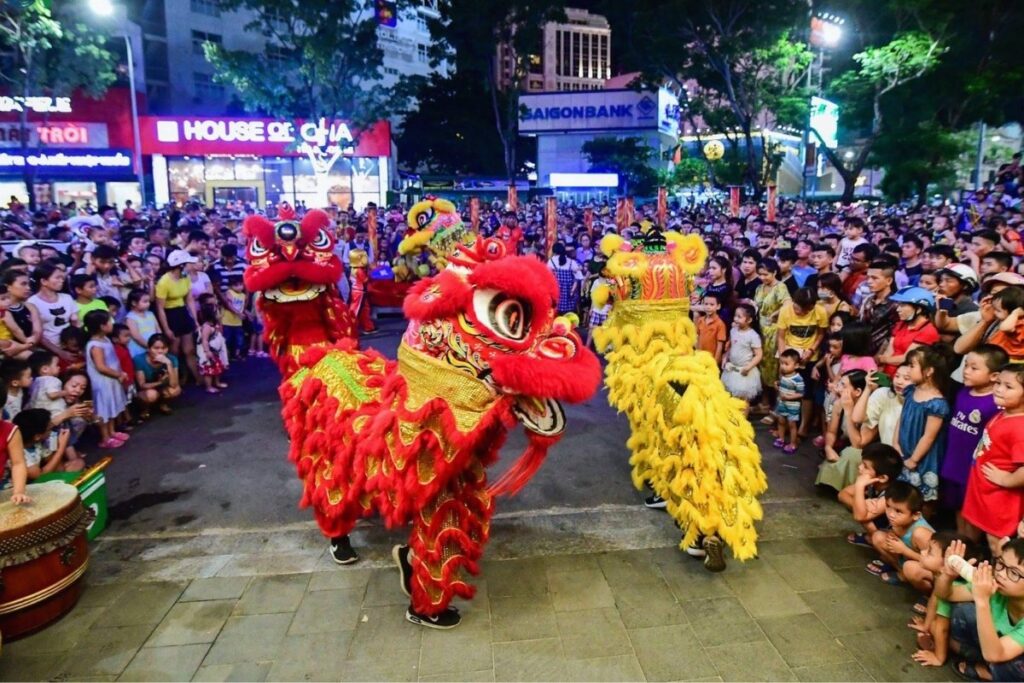
One of the highlights of Tet is the lion dance (Múa Lân).
Accompanied by the rhythmic sound of drums and cymbals, performers bring brightly colored lions to life through energetic jumps, playful movements, and impressive acrobatics.
Businesses, shopping centers, temples, and neighborhoods often invite lion dance teams to perform at the beginning of the new year, believing the performances bring good fortune and prosperity.
For many children, hearing the drums echo through the streets is one of Tet’s most exciting traditions.
Fireworks at Midnight
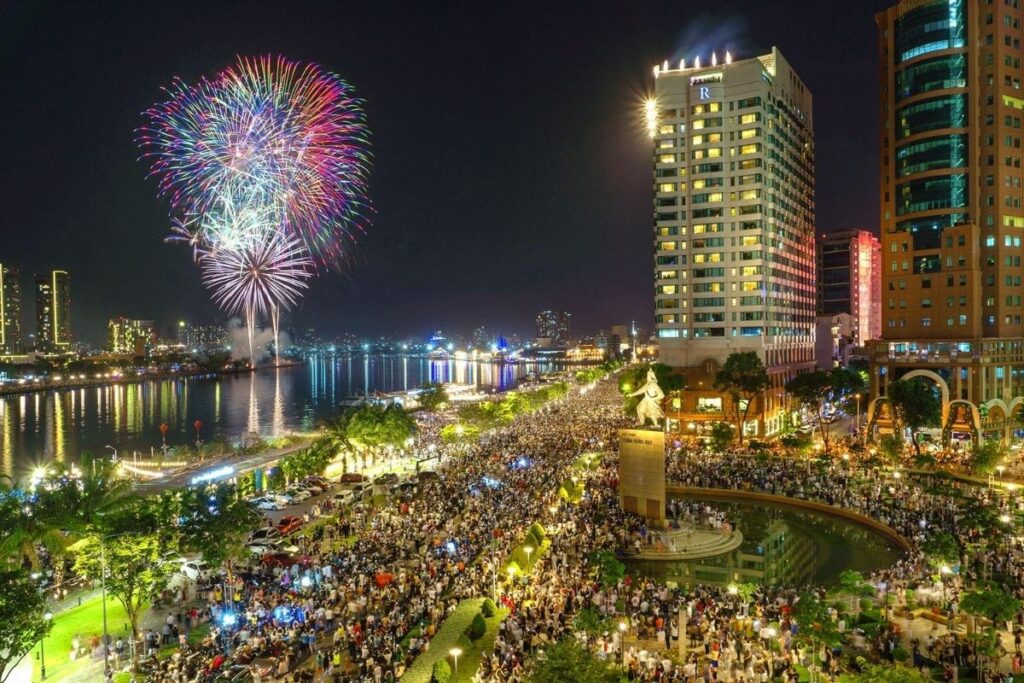
As the Lunar New Year begins, major cities across Vietnam celebrate with spectacular fireworks displays.
Families gather outdoors to watch the sky light up before exchanging New Year greetings and welcoming the first moments of spring together.
Whether you’re in Hanoi, Ho Chi Minh City, Da Nang, or another major destination, the countdown to Tet creates a festive atmosphere shared by both locals and visitors.
Flower Festivals
Before and during Tet, many cities host seasonal flower festivals that transform public spaces into colorful displays.
Walking streets, parks, and city squares are filled with peach blossoms, yellow apricot trees, orchids, chrysanthemums, kumquat trees, and traditional New Year decorations.
Some of the most popular places to experience these displays include:
- Nguyễn Huệ Flower Street in Ho Chi Minh City
- Hoàn Kiếm Lake and nearby flower markets in Hanoi
- Hoi An Ancient Town during the Lunar New Year
- Public flower festivals in Hue and Da Nang
These locations become favorite gathering places for families taking New Year photographs.
Traditional Performances
Tet is also an opportunity to experience Vietnam’s traditional arts.
Depending on where you travel, you may encounter:
- Traditional music performances
- Folk dances
- Water puppet shows
- Martial arts demonstrations
- Calligraphy exhibitions
- Community festivals
Many museums, temples, and cultural centers organize special holiday programs that introduce visitors to Vietnam’s artistic heritage.
Experiencing Tet Like a Local
The best Tet memories often happen away from major tourist attractions.
You might discover a lion dance outside a neighborhood café, hear festival drums while exploring a quiet street, or come across families dressed in colorful áo dài taking New Year photographs beneath blooming flowers.
Rather than planning every hour of your itinerary, leave time to wander.
Some of the most authentic Tet experiences are the ones you don’t expect.
Visiting Vietnam During Tet: What Travelers Should Expect
For travelers, Tet is one of the most rewarding—and sometimes surprising—times to visit Vietnam.
The country is filled with flower displays, traditional celebrations, and a festive atmosphere that can’t be experienced at any other time of year. At the same time, it’s also Vietnam’s most important public holiday, meaning daily life operates differently from usual.
A little preparation will help you enjoy the holiday while avoiding common surprises.
Is Tet a Good Time to Visit Vietnam?
Absolutely—if you’re interested in experiencing Vietnamese culture.
Rather than sightseeing alone, Tet offers the chance to witness traditions that define everyday life in Vietnam: family reunions, temple visits, flower markets, lion dances, and seasonal foods.
If your priority is checking off every tourist attraction, however, you should expect a slower pace, as some local businesses temporarily close during the first days of the holiday.
What Changes During Tet?
Vietnam doesn’t shut down completely, but the rhythm of daily life changes.
International airports, major hotels, large shopping malls, and most attractions in popular destinations continue operating, although opening hours may be adjusted.
Many family-owned restaurants, neighborhood cafés, local markets, banks, and government offices close for several days as people return home to celebrate with their families.
For visitors, this quieter atmosphere often becomes part of the experience rather than an inconvenience.
Plan Transportation Early
Tet is the busiest travel season of the year.
Millions of Vietnamese travel home in the days before Lunar New Year, creating high demand for flights, trains, and long-distance buses.
If your itinerary includes traveling between cities, it’s best to book transportation well in advance, especially for popular routes connecting Hanoi, Da Nang, Hoi An, and Ho Chi Minh City.
Where to Experience Tet
Editor’s Tip
If this is your first Tet in Vietnam, consider staying in one city rather than traveling between destinations during the first three days of the holiday. You’ll experience more local traditions while avoiding the busiest travel period of the year.
Every region celebrates Tet in its own way.
Some of the best places to experience the holiday include:
- Hanoi for traditional northern customs, temples, and peach blossom markets.
- Hue for imperial heritage and cultural performances.
- Hoi An for lantern-lit streets and festive riverside celebrations.
- Ho Chi Minh City for vibrant flower streets, fireworks, and public events.
- The Mekong Delta for a more traditional countryside atmosphere.
Each destination offers a different perspective on Vietnam’s biggest celebration.
Common Mistakes Travelers Make
- Booking domestic flights too late
- Expecting every restaurant to be open
- Planning to change cities on the first day of Tet
- Forgetting to carry cash
Practical Tips for Travelers
A little flexibility goes a long way during Tet.
Before you travel:
- Book flights and accommodation early.
- Confirm attraction opening hours.
- Carry some cash for small purchases.
- Learn a simple greeting like “Chúc Mừng Năm Mới.”
- Respect local customs if invited into a family home.
Rather than planning every hour of your trip, leave room for unexpected experiences—whether it’s discovering a neighborhood lion dance or stumbling upon a local flower market.
Why Tet Is Worth Experiencing
For many travelers, the most memorable parts of Tet aren’t the fireworks or decorations.
They’re the quieter moments:
Sharing tea with welcoming hosts.
Watching three generations prepare a reunion dinner.
Seeing children proudly dressed in áo dài for New Year photographs.
Walking through flower-filled streets as families celebrate the arrival of spring.
These experiences offer something few guidebooks can capture: a chance to see Vietnam through the traditions that continue to shape everyday life.
Tet Etiquette for Visitors: How to Celebrate Respectfully
One of the easiest ways to enjoy Tet is simply to follow local customs with respect and curiosity.
Vietnamese people don’t expect international visitors to know every tradition. A smile, a few New Year greetings, and an open mind are often appreciated far more than perfect etiquette.
If you’re visiting Vietnam during Tet, these simple guidelines will help you feel more confident wherever you go.
Learn One Simple Greeting
The easiest way to connect with local people is to say:
Chúc Mừng Năm Mới
(Happy New Year)
You’ll hear this greeting everywhere during Tet—from hotel staff and shopkeepers to families visiting relatives.
Even if your pronunciation isn’t perfect, making the effort is always appreciated.
Dress Respectfully
Many Vietnamese wear new clothes or traditional áo dài during Tet, especially when visiting temples or gathering for family celebrations.
Visitors don’t need to wear traditional clothing, but it’s a good idea to choose:
- Clean, neat clothing.
- Bright or cheerful colors.
- Modest outfits when visiting temples or family homes.
If You’re Invited Into a Home
Being invited to celebrate Tet with a Vietnamese family is a memorable experience.
A few simple gestures show respect:
- Remove your shoes before entering if your host does.
- Accept tea or gifts with both hands.
- Wait for your host before approaching the family altar.
- Observe quietly during family ceremonies.
Most hosts will happily explain their traditions if you’re interested.
Visiting Temples
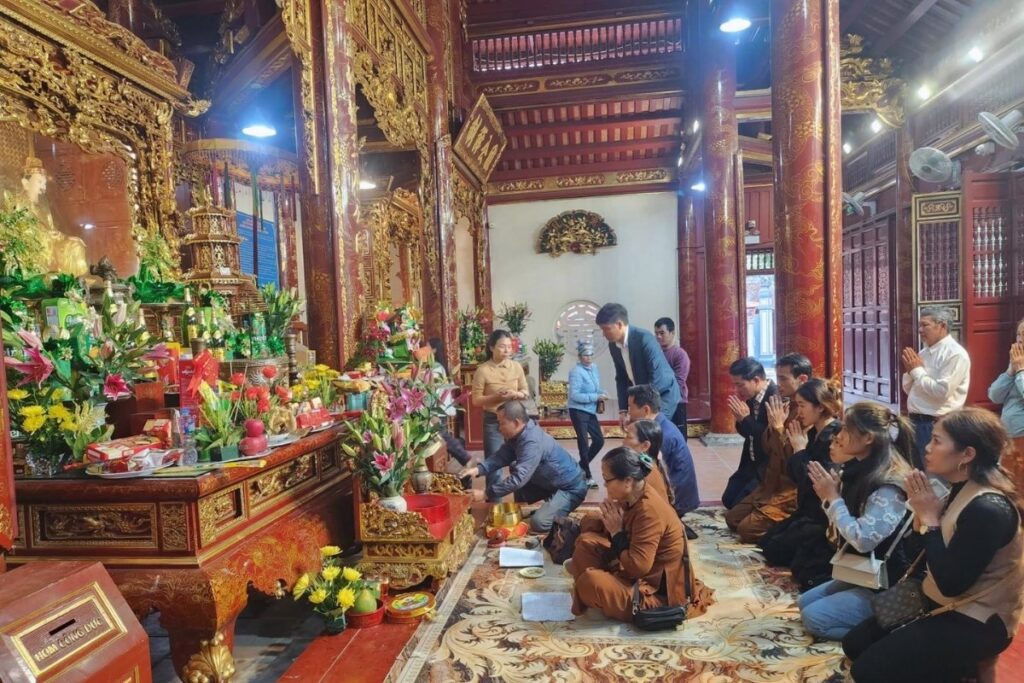
Temples become especially busy during Tet as families pray for health, happiness, and a successful year.
When visiting:
- Dress modestly.
- Keep your voice low.
- Respect people who are praying.
- Follow local customs if you’re unsure where to stand or walk.
The atmosphere is welcoming, but it’s important to remember that these are active places of worship rather than tourist attractions.
A Few Simple Do’s and Don’ts
Do
- Learn a few Vietnamese New Year greetings.
- Respect family traditions.
- Accept hospitality graciously.
- Ask before taking photographs inside private homes.
- Be patient with holiday schedules.
Don’t
- Touch family altars or ceremonial objects without permission.
- Interrupt family rituals.
- Expect every business to be open.
- Criticize local customs.
- Treat Tet simply as another tourist event.
Respect Matters More Than Perfection
You don’t need to understand every Tet custom to enjoy the holiday.
What Vietnamese families appreciate most is genuine curiosity and respect for their traditions.
Whether you’re watching a lion dance, visiting a temple, or sharing tea with a local family, approaching each experience with kindness and an open mind will leave a lasting impression—not only on you, but also on the people who welcome you during Vietnam’s most important celebration.
Frequently Asked Questions About Tet Holiday in Vietnam
What is Tet Holiday in Vietnam?
Tet Holiday, or Tet Nguyen Dan, is the Vietnamese Lunar New Year and the country’s most important annual celebration. It marks the beginning of the lunar calendar and is celebrated with family reunions, ancestor worship, traditional foods, and New Year traditions across Vietnam.
When is Tet celebrated?
Tet follows the lunar calendar, so the date changes each year. It usually falls between late January and mid-February, with celebrations beginning weeks before New Year’s Day.
Is Tet a good time to visit Vietnam?
Yes—especially if you’re interested in Vietnamese culture.
Tet offers a unique opportunity to experience family traditions, flower festivals, lion dances, and seasonal foods. Keep in mind that transportation is busy and some local businesses close during the first days of the holiday.
Are tourist attractions open during Tet?
Most major tourist attractions, hotels, and airports remain open, although opening hours may vary. Smaller family-run businesses, local markets, banks, and government offices often close for several days.
What foods are eaten during Tet?
Traditional Tet dishes include:
- Bánh Chưng
- Bánh Tét
- Sticky rice (xôi)
- Braised pork with eggs
- Vietnamese pork sausage (giò lụa)
- Pickled vegetables
- Candied fruits (mứt Tết)
Why do Vietnamese give lucky money?
Lucky money, or Lì Xì, symbolizes wishes for health, happiness, success, and prosperity. It is traditionally given in red envelopes to children and younger family members during Tet.
What should visitors know before traveling during Tet?
Book transportation and accommodation early, expect some local businesses to close, learn a simple New Year greeting, and respect family traditions if you’re invited into a Vietnamese home.
Can foreigners celebrate Tet with Vietnamese families?
Yes. Many Vietnamese families warmly welcome foreign guests during Tet. If you’re invited into a home, follow your host’s customs, dress respectfully, and enjoy the opportunity to experience one of Vietnam’s most meaningful traditions.
Why Tet Holiday in Vietnam Is a Must-Experience Cultural Celebration
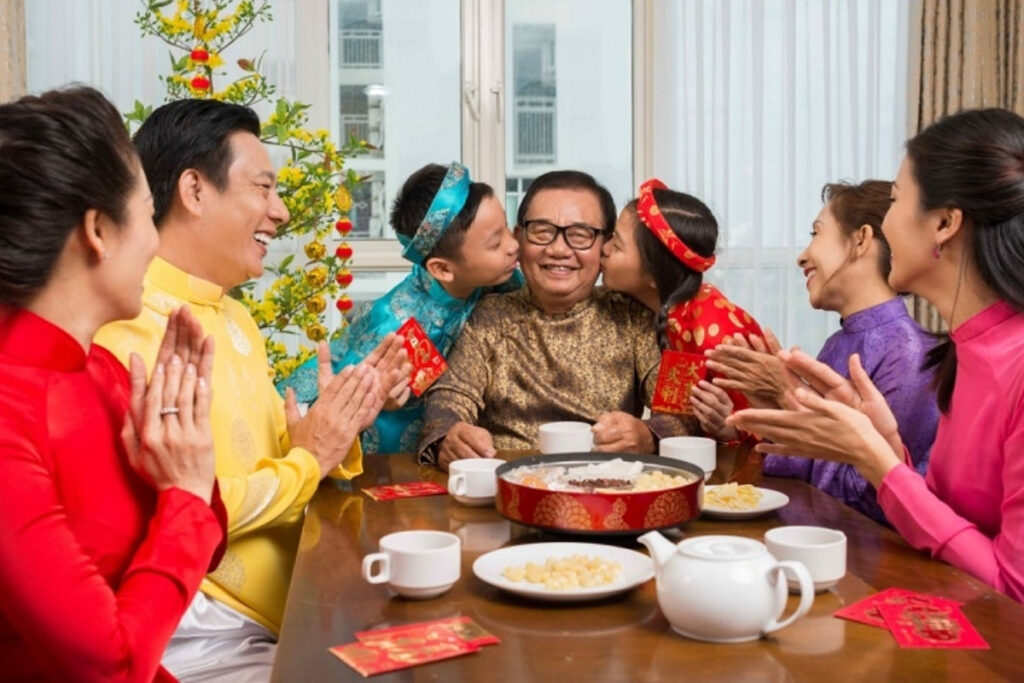
For visitors, Tet is much more than Vietnam’s Lunar New Year.
It is a celebration where family comes before work, traditions connect generations, and simple moments—sharing tea, preparing a reunion dinner, or walking through flower-filled streets—become lasting memories.
While the holiday may temporarily slow the pace of daily life, it offers something few travelers experience elsewhere: the chance to see Vietnam not only through its famous destinations, but through the customs and values that continue to shape everyday life.
If your trip coincides with Tet, embrace the slower rhythm, explore beyond the usual attractions, and take time to experience the traditions unfolding around you. Years after visiting Vietnam, most travelers won’t remember every restaurant they tried or every attraction they visited. What often stays with them is something quieter—the laughter around a family dinner table, the scent of incense drifting from a neighborhood temple, and the feeling of witnessing a tradition that continues to bring millions of Vietnamese home every spring.
That is the lasting memory of Tet, and perhaps the most meaningful way to understand Vietnam.
For many visitors, Tet becomes more than a holiday—it becomes the moment they truly understand the heart of Vietnam.
Continue Exploring Vietnam
Interested in learning more about Vietnam?
Continue with these in-depth guides:
- Vietnamese Culture Guide – Explore the traditions, beliefs, and customs that shape modern Vietnam.
- Vietnamese Family Culture – Discover why family remains at the heart of Vietnamese society.
- Ancestor Worship in Vietnam – Learn about one of Vietnam’s oldest cultural traditions.
- Vietnamese Festivals Guide – Explore celebrations throughout the year.
- Ao Dai: Vietnam’s National Dress – Discover the history of Vietnam’s iconic traditional clothing.
- Vietnam Food Guide – Taste the country’s most iconic dishes and regional specialties.
- Vietnam Travel Guide – Plan your journey with practical travel advice and destination guides.
Further Reading
👉 Vietnam National Authority of Tourism
👉 UNESCO – Viet Nam Intangible Cultural Heritage
👉 Ministry of Culture, Sports and Tourism of Viet Nam
About the Author
Tam Voc Viet Editorial Team
The Tam Voc Viet Editorial Team creates research-based travel and cultural guides that help international readers experience Vietnam beyond its famous landmarks.
Our editorial content is reviewed regularly and updated to reflect current travel information, local perspectives, and Vietnamese cultural practices. Whenever possible, we combine historical research with firsthand observations to help international readers experience Vietnam with greater understanding and confidence.
Sources for this guide include Vietnamese cultural publications, official tourism resources, and firsthand observations collected by the Tam Voc Viet Editorial Team.
Last updated: July 2026
Editorial review: Tam Voc Viet Editorial Team
Estimated reading time: 25 minutes
