


 Tiếng Việt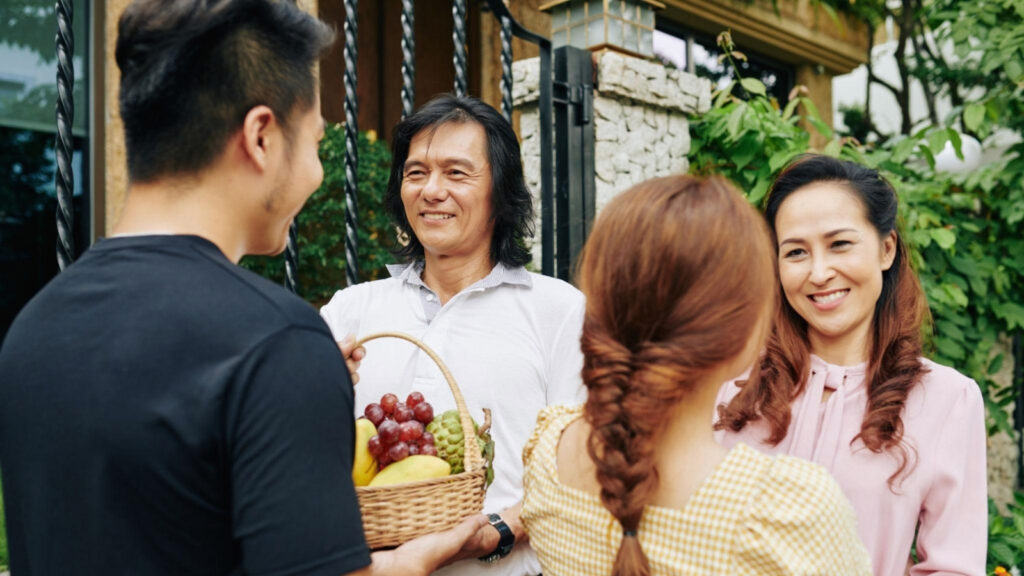
The first etiquette lesson in Vietnam often happens before anyone says a word.
A local family welcomes you inside. Shoes are neatly lined up by the front door. Before you can ask whether you should take yours off, your host quietly removes theirs with a smile. A few minutes later, someone places a cup of green tea in your hands and gestures toward the dining table.
Without realizing it, you’ve already experienced three important customs—removing your shoes, accepting hospitality, and following your host’s lead.
You don’t have to spend long in Vietnam before realizing that everyday life follows its own rhythm.
On your first day, you might step into a small café and notice everyone quietly waiting to be seated. Later, you’re invited into a local home where shoes are neatly lined up by the front door. That evening, someone places another spring roll into your bowl just as you’re about to say you’re full.
None of these moments comes with instructions.
Yet each offers a small glimpse into Vietnamese etiquette.
For first-time visitors, these customs can feel unfamiliar at first. Should you remove your shoes? Is it polite to refuse more food? Why does everyone wait before starting the meal? And why do people ask your age only minutes after meeting you?
Fortunately, Vietnamese etiquette isn’t built on complicated rules or formal ceremonies. Most customs are guided by a few simple values: respect for others, consideration for guests, humility, and the importance of family.
Once you understand those values, everyday situations become much easier to navigate—and far more meaningful.
This guide explains the etiquette you’ll encounter most often while traveling in Vietnam, from greeting local people and visiting family homes to dining with friends, exploring temples, and interacting in public. Rather than simply telling you what to do, we’ll explain why these customs matter, helping you travel with greater confidence, avoid common misunderstandings, and experience Vietnam with genuine cultural appreciation.
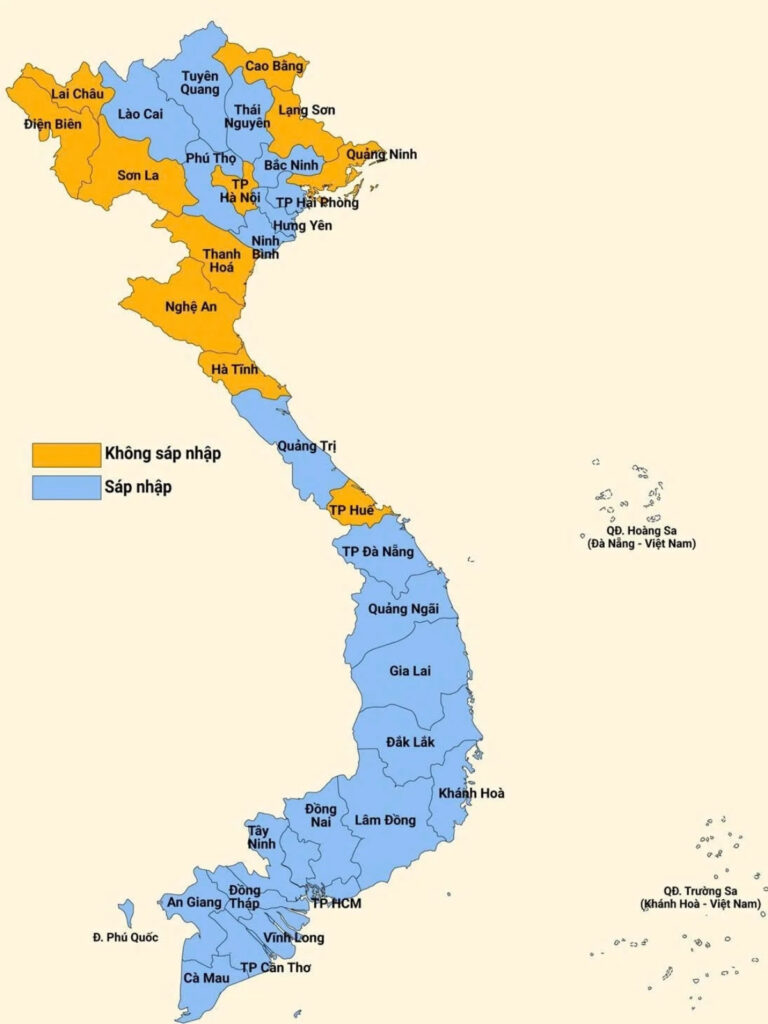
Table of Contents
The Best Travelers Don’t Just Visit a Country—They Learn How to Respect It
Most travelers prepare for Vietnam by researching visas, booking hotels, and making a list of must-see attractions.
They learn how to cross the street.
They discover where to eat the best pho.
They compare cruises in Ha Long Bay or tailor shops in Hoi An.
Yet many overlook something that can shape almost every interaction during their trip:
Local etiquette.
Fortunately, Vietnamese etiquette isn’t about memorizing dozens of complicated rules.
Most customs are rooted in a few simple values—respect, humility, family, and consideration for others.
Once you understand those values, everyday situations become much easier to navigate.
You’ll feel more confident when entering someone’s home, dining with a local family, visiting a temple, or simply chatting with a market vendor.
The goal isn’t to behave like a local overnight.
It’s to show that you’re interested in understanding the culture rather than simply passing through it.
Quick Answer: What Is Vietnamese Etiquette?
Vietnamese etiquette refers to the everyday social customs that guide how people greet one another, show respect, welcome guests, share meals, and interact in public.
Visitors aren’t expected to know every tradition, but making a genuine effort is always appreciated.
A few simple habits can make a big difference:
- Smile and greet people politely.
- Remove your shoes when entering most homes.
- Dress modestly at temples and pagodas.
- Wait for your host before beginning a meal.
- Accept hospitality graciously.
- Stay calm during disagreements.
- Observe what locals do before acting.
These aren’t rigid rules.
They’re practical ways of showing respect for the people and places you’re visiting.
Why Etiquette Matters More Than You Think
Many cultural misunderstandings don’t happen because travelers intend to be rude.
They happen because people interpret the same situation differently.
For example, declining food after the first offer may seem perfectly polite in one culture.
In Vietnam, your host may simply assume you’re being modest and encourage you to have another helping.
Likewise, being asked about your age or whether you’re married may feel surprisingly personal to some visitors.
In most cases, these questions aren’t meant to invade your privacy.
They’re simply a way of starting a friendly conversation and understanding how to address you respectfully.
Learning a little etiquette helps you see these moments from a local perspective.
Instead of feeling awkward, they become opportunities to connect.
Etiquette Is About Respect, Not Perfection
One of the biggest misconceptions travelers have is that they’ll offend people by making a small mistake.
In reality, Vietnamese people are generally very understanding toward visitors.
No one expects tourists to know every custom.
What usually leaves the strongest impression isn’t perfect etiquette.
It’s your attitude.
A traveler who observes quietly, smiles often, thanks people sincerely, and shows curiosity about local culture will almost always be welcomed warmly.
Making an effort matters far more than getting every detail right.
What You’ll Learn in This Guide
Rather than presenting a long list of rules, this guide focuses on the everyday situations travelers are most likely to experience—from greeting local people and visiting family homes to dining etiquette, temples, shopping, and public behavior. Along the way, you’ll discover not only what to do, but why these customs matter and how they reflect everyday life in Vietnam.
We’ll begin with one of the first cultural situations almost every traveler experiences: how to greet people in Vietnam. From handshakes and smiles to using respectful forms of address, you’ll learn why first impressions in Vietnam are often shaped by warmth, humility, and simple acts of courtesy.
How to Greet People in Vietnam
“Your first interaction in Vietnam probably won’t be with a tour guide or hotel receptionist. It will be with someone offering a smile.”
Whether you’re checking into a hotel, ordering a bowl of pho from a street vendor, or meeting a local family for the first time, greetings are often your first opportunity to make a positive impression.
The good news?
Vietnamese greetings are simple.
Visitors don’t need to memorize complicated etiquette or worry about making every gesture perfectly.
What matters most is showing warmth, politeness, and respect.
A Smile Goes a Long Way
Local Insight
In Vietnam, children are often taught to greet older relatives before anyone else when entering a home. Visitors aren’t expected to follow this custom perfectly, but greeting older people first is always appreciated.
One of the easiest ways to greet someone in Vietnam is also the most universal.
Smile.
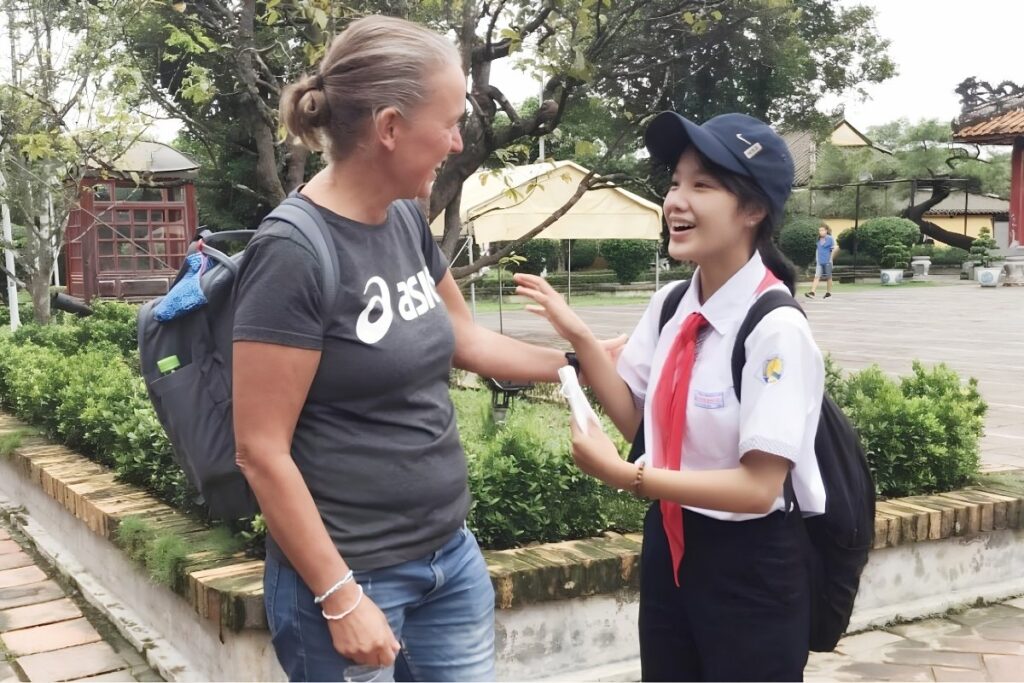
A genuine smile immediately communicates friendliness and openness.
You’ll notice that many Vietnamese people greet strangers with a warm smile before saying anything else, whether they’re welcoming guests into a hotel, serving coffee, or helping someone with directions.
Unlike some cultures where enthusiastic greetings are expected, Vietnamese greetings are often gentle and understated.
There’s no need for exaggerated gestures.
A relaxed smile and polite eye contact are usually enough.
Handshakes Are Common in Formal Situations
In business settings, hotels, or when being introduced to someone for the first time, a handshake is perfectly appropriate.
Handshakes are generally light rather than firm.
Many Vietnamese people don’t expect the strong grip that is common in North America.
If someone extends their hand, simply respond naturally.
If they don’t, a smile and verbal greeting are equally acceptable.
When greeting older people or someone in a position of authority, a slight nod of the head adds an extra touch of respect.
Don’t Be Surprised If People Don’t Hug
Travelers from countries where hugs or cheek kisses are common may notice an immediate difference.
Outside close family members and intimate friends, physical greetings are generally more reserved.
A handshake, smile, or verbal greeting is far more common than a hug.
This is especially true when meeting someone for the first time.
As a visitor, it’s best to follow the other person’s lead.
If they offer a handshake, shake hands.
If they simply smile and greet you, there’s no need to initiate a hug.
Learning a Few Vietnamese Words Makes a Big Difference
You don’t need to speak Vietnamese to travel comfortably.
However, learning a few basic phrases often creates an instant connection.
Even simple greetings show that you’ve made an effort to appreciate the local culture.
Some useful expressions include:
| English | Vietnamese |
|---|---|
| Hello | Xin chào |
| Thank you | Cảm ơn |
| Excuse me / Sorry | Xin lỗi |
| Goodbye | Tạm biệt |
Don’t worry if your pronunciation isn’t perfect.
Most locals genuinely appreciate the effort and often respond with encouragement rather than correction.
Why People Ask Your Age So Early
Many visitors are surprised that one of the first questions they hear is:
“How old are you?”
This isn’t considered impolite in most parts of Vietnam.
Unlike English, Vietnamese uses different words for “you” depending on age and relationship.
Knowing your approximate age helps people choose the most respectful way to address you.
It’s less about curiosity and more about courtesy.
If you’d rather not answer, a friendly smile and a general response are perfectly acceptable.
Greeting Older People First
If you’re introduced to a family or group, it’s considered polite to greet the oldest person first.
This simple gesture reflects one of Vietnam’s most important cultural values: respect for elders.
You don’t need to know everyone’s exact age.
Simply acknowledging older family members before younger ones is usually enough.
If you’re visiting someone’s home, it’s also common to greet grandparents or parents before chatting with younger relatives.
Small Gestures Leave a Lasting Impression
First impressions in Vietnam are rarely created by perfect language skills.
They’re created by small acts of consideration.
Smile when greeting people.
Speak politely.
Be patient if there’s a language barrier.
Thank people sincerely.
Observe how locals interact before copying their behavior.
These simple habits communicate respect far more effectively than trying to memorize dozens of cultural rules.
Traveler’s Tip
If you’re unsure how to greet someone, don’t overthink it.
A warm smile, a friendly “Xin chào,” and respectful body language will almost always be appreciated.
Vietnamese people understand that visitors come from different cultures, and genuine kindness matters far more than perfect etiquette.
Want to understand why age and family relationships are so important in everyday conversations? Read our complete guide to Vietnamese Customs and Traditions, where we explore the cultural values behind these greetings and many other aspects of daily life.
Entering a Vietnamese Home: Simple Etiquette Every Visitor Should Know
“One of the easiest ways to show respect in Vietnam happens before you even step inside the house.”
If you’re invited to a Vietnamese home, congratulations.
It’s often a sign that your host genuinely wants to welcome you into their daily life rather than simply meet you as a tourist.
Unlike restaurants or hotels, a family home is considered a private and meaningful space. Fortunately, showing respect doesn’t require memorizing complicated customs.
A few thoughtful gestures are enough to make a wonderful first impression.
Remove Your Shoes Before Going Inside
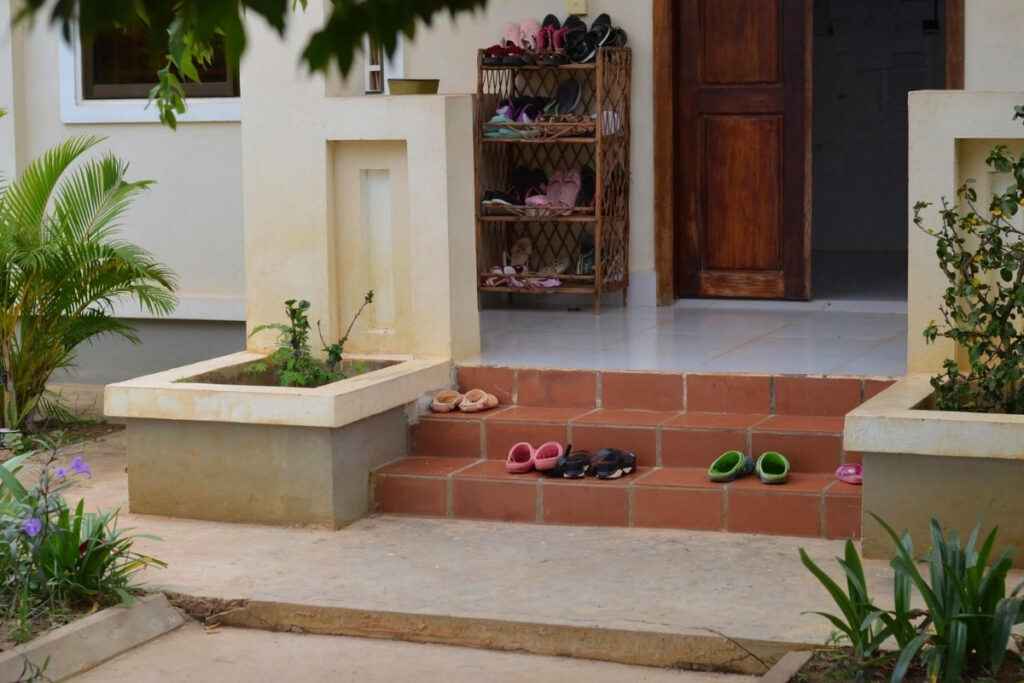
On a rainy afternoon in Hanoi, it’s common to see an entire family’s shoes lined up outside the front door—from grandparents’ sandals to children’s sneakers. Without anyone saying a word, every guest quietly follows the same routine before stepping inside.
One of the first things you’ll notice is a row of shoes neatly lined up near the front door.
In most Vietnamese homes, guests remove their shoes before entering.
The custom helps keep the house clean, especially during the rainy season, but it also reflects respect for the family’s living space.
If you’re unsure, simply pause at the entrance and look around.
If everyone else is barefoot or wearing indoor slippers, follow their example.
Many hosts will offer you a pair of guest slippers, so there’s no need to worry about walking around barefoot.
Bring a Small Gift if You’re Invited
You don’t need to arrive with an expensive present.
In fact, simple gifts are often the most thoughtful.
Popular choices include:
- Fresh fruit
- Flowers
- Tea or coffee
- Local sweets
- A small souvenir from your hometown
The value of the gift matters far less than the gesture itself.
Avoid giving overly expensive presents, as they may make your host feel uncomfortable or obligated to reciprocate.
Wait for Your Host to Guide You
Every home is different.
Rather than walking in and choosing a seat immediately, wait for your host to invite you inside and show you where to sit.
In many homes, the most comfortable chair is offered to guests.
Accepting it graciously is perfectly appropriate—it reflects your host’s hospitality, not social status.
Expect Tea Before Conversation
Don’t be surprised if a cup of tea appears almost as soon as you sit down.
Offering tea is one of Vietnam’s oldest traditions of hospitality.
Sometimes fresh fruit, snacks, or homemade sweets quickly follow.
Your host isn’t trying to impress you.
They’re simply making sure you feel welcome.
Even if you don’t drink much tea, accepting a small cup before politely declining more is usually appreciated.
Compliment the Home and the Meal
Vietnamese hosts often apologize by saying things like:
“I’m sorry we don’t have much to offer.”
Even when the table is filled with delicious food.
This isn’t a sign that they’re dissatisfied.
It’s a traditional expression of humility.
A sincere compliment such as:
“Your home is beautiful.”
or
“Everything smells wonderful.”
is always appreciated.
If you’re invited to share a meal, mentioning a dish you particularly enjoyed is another thoughtful way to thank your host.
Let the Host Begin the Meal
If you’re staying for lunch or dinner, avoid picking up your chopsticks immediately.
Most families wait until the oldest person—or occasionally the guest of honor—is invited to begin eating.
If you’re unsure, simply follow your host’s lead.
Watching for a few seconds is often the easiest way to avoid awkward moments.
Don’t Worry About Finishing Everything
Many visitors feel overwhelmed by the generosity of Vietnamese hosts.
Just when you think you’ve finished eating, someone adds another piece of fish or another spoonful of soup to your bowl.
This isn’t pressure.
It’s hospitality.
You aren’t expected to finish every bite, but showing appreciation by trying a little of everything is considered polite.
If you’re full, smile warmly and explain that the meal was delicious.
Most hosts will understand—even if they encourage you to have “just one more.”
Before You Leave
As your visit comes to an end, take a moment to thank your host personally.
A simple compliment about the meal or the time you spent together is often more meaningful than a formal farewell.
If you’ve been welcomed into a family home, you’ve experienced something many travelers never do.
It’s a reminder that some of Vietnam’s richest cultural experiences aren’t found at famous landmarks—they happen around an ordinary dining table, shared with people who were once strangers.
Traveler’s Tip
If you’re ever unsure what to do, simply watch your host.
Vietnamese etiquette is often learned through observation rather than spoken instructions. Following your host’s example—whether it’s removing your shoes, waiting before eating, or accepting a cup of tea—is almost always the safest and most respectful approach.
Dining Etiquette in Vietnam: How to Eat Like a Respectful Guest
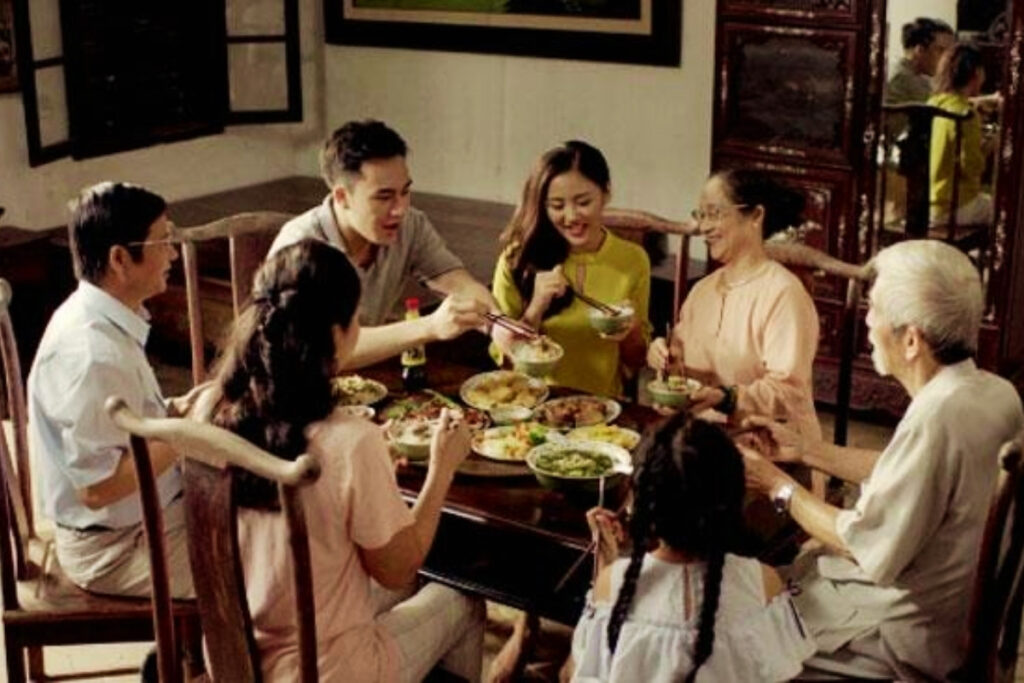
“A meal in Vietnam is rarely just about food. It’s one of the easiest places to experience the country’s culture, hospitality, and family values.”
Whether you’re enjoying street food in Hanoi, seafood in Da Nang, or dinner with a local family in the Mekong Delta, you’ll quickly notice that mealtimes in Vietnam feel different from those in many Western countries.
Meals are shared.
Conversations are unhurried.
Guests are encouraged to eat more than they planned.
The good news is that you don’t need to know every dining custom to enjoy the experience.
A few simple habits will help you feel comfortable and show respect for your hosts.
Wait Before You Start Eating
If you’re dining with a Vietnamese family, avoid being the first person to pick up your chopsticks.
It’s customary to wait until the oldest family member—or your host—begins the meal or invites everyone to start eating.
In restaurants with friends, the atmosphere is usually much more relaxed, but when you’re a guest in someone’s home, following your host’s lead is always the safest approach.
If you’re unsure, simply pause for a few seconds and observe what everyone else is doing.
Meals Are Meant to Be Shared
Unlike many Western meals where each person orders an individual dish, Vietnamese family meals are usually served in the center of the table for everyone to share.
You’ll typically find:
- Steamed rice
- One or two meat or seafood dishes
- Vegetables
- Soup
- Fresh herbs
- Dipping sauces
Instead of thinking about “your plate” and “my plate,” think of the meal as something enjoyed together.
Take small portions each time so everyone has a chance to enjoy every dish.
Don’t Stick Chopsticks Upright in Your Rice
One of the best-known dining customs in Vietnam concerns chopsticks.
Avoid leaving them standing vertically in a bowl of rice.
The arrangement resembles incense offered during memorial ceremonies and ancestor remembrance, making it inappropriate at the dining table.
When you’re not using your chopsticks, simply place them neatly across your bowl or on the chopstick rest if one is provided.
It’s a small detail, but one many Vietnamese people notice.
Try a Little of Everything
If you’re eating with a local family, your host has probably spent considerable time preparing the meal.
Trying a little of each dish is a simple way to show appreciation.
You don’t need to finish everything or pretend to enjoy food that doesn’t suit your taste.
However, sampling a variety of dishes demonstrates respect for your host’s effort and curiosity about Vietnamese cuisine.
Visitors are often surprised by how many different flavors appear during a single meal—from savory grilled meats to fresh herbs, light soups, and seasonal vegetables.
Why Your Host Keeps Adding Food to Your Bowl
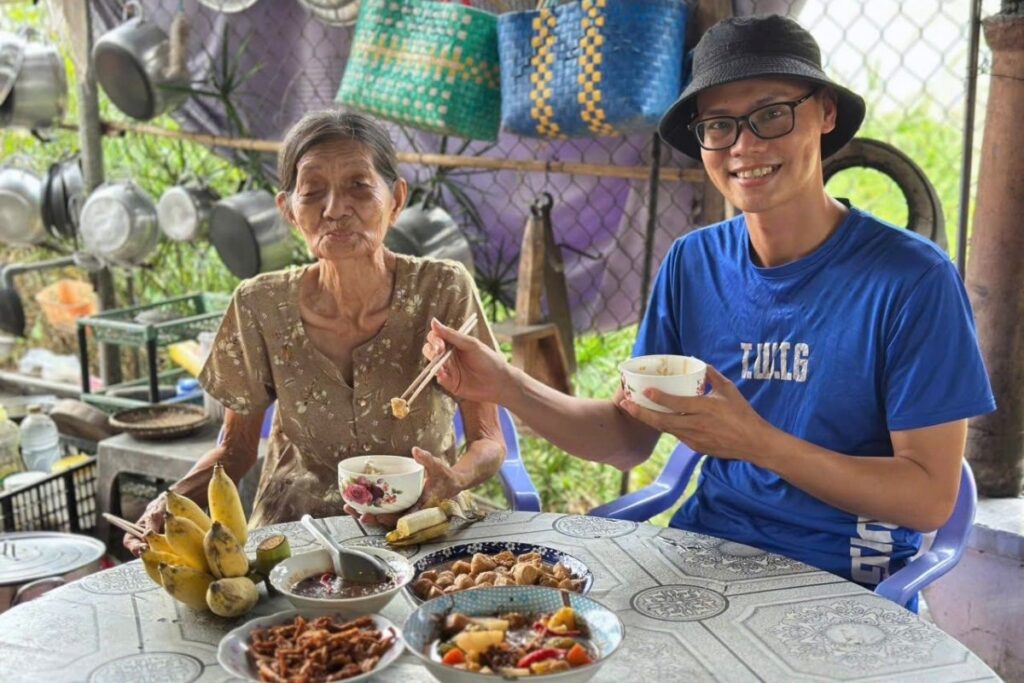
For many Vietnamese families, offering guests more food is a traditional expression of generosity rather than an indication that you’re still hungry. The gesture reflects a long-standing belief that a well-fed guest is a well-cared-for guest.
One of the most memorable dining customs for visitors is discovering that their bowl never seems to stay empty.
Just when you’ve finished a piece of fish, another appears.
Someone adds vegetables.
Another relative offers you spring rolls.
This isn’t because people think you’re still hungry.
It’s their way of saying:
“We’re happy you’re here.”
If you’ve had enough, smile warmly and thank your host.
A simple compliment such as,
“Everything is delicious. I’m completely full,”
is usually the most graceful way to decline another serving.
Drinking Together Is About Celebration
If you’re sharing a meal with Vietnamese friends or colleagues, especially in the evening, someone may raise a glass and say:
“Một, hai, ba, dzô!”
The phrase simply means:
“One, two, three, cheers!”
Joining the toast—even with water or a soft drink—is a friendly way to participate.
If you don’t drink alcohol, it’s perfectly acceptable to explain politely.
Most people will respect your choice.
The purpose of the toast isn’t to encourage drinking.
It’s to celebrate spending time together.
Pay Attention to Your Host
Every family has its own traditions.
Some serve elders first.
Others invite guests to begin eating before everyone else.
Rather than worrying about every etiquette rule, pay attention to your host’s example.
Following their lead is almost always appreciated.
Vietnamese dining etiquette is remarkably forgiving toward visitors who show genuine respect and curiosity.
Traveler’s Tip
If you’re invited to a Vietnamese family meal, remember one simple principle:
Observe first, then follow.
Watching your host for just a few moments will tell you when to start eating, how dishes are shared, and how the meal naturally unfolds.
Good manners in Vietnam aren’t about perfection—they’re about showing appreciation for the people you’re sharing the table with.
Temple & Pagoda Etiquette: Visiting Vietnam’s Sacred Places Respectfully
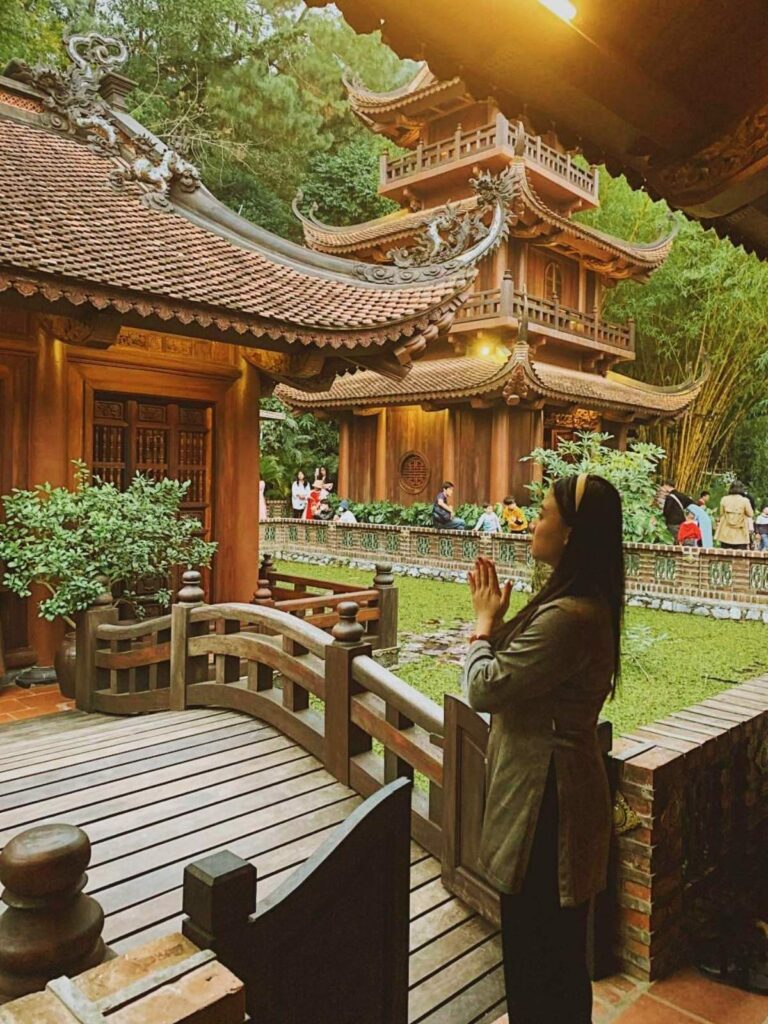
“Vietnam’s temples aren’t just beautiful places to visit—they’re places where people come to pray, reflect, and remember.”
Whether you’re exploring the ancient pagodas of Hanoi, wandering through Hue’s historic temples, or discovering a quiet neighborhood shrine in Ho Chi Minh City, you’ll notice that these places feel different from other tourist attractions.
People speak more softly.
They move more slowly.
Many visitors come not to sightsee, but to pray, light incense, or spend a few peaceful moments away from the busy streets.
As a traveler, showing respect is simple.
You don’t need to participate in religious rituals—you simply need to recognize that you’re entering an active place of worship.
Dress Modestly
One of the easiest ways to show respect is through appropriate clothing.
When visiting temples or pagodas, choose clothing that covers your shoulders and knees.
Lightweight trousers, longer skirts, or dresses, and T-shirts with sleeves are ideal, especially during Vietnam’s warm weather.
Beachwear, very short shorts, crop tops, or revealing clothing are best saved for the beach rather than religious sites.
Most temples won’t turn visitors away for minor dress-code issues, but dressing modestly shows consideration for local customs.
Speak Quietly
Unlike busy markets or lively cafés, temples are places of reflection.
Keep your voice low.
If you’re traveling in a group, avoid loud conversations or phone calls while walking through prayer halls.
Silence your phone or switch it to vibrate before entering.
Many visitors are surprised by how peaceful Vietnamese temples feel, even when they’re located in the middle of crowded cities.
Helping preserve that atmosphere is one of the simplest ways to show respect.
Be Respectful When Taking Photos
Vietnam’s temples are incredibly photogenic.
Ancient architecture, colorful lanterns, incense smoke, and peaceful gardens make them some of the country’s most beautiful places to photograph.
However, remember that many people around you are there for personal or religious reasons.
Avoid photographing people while they are praying unless you’ve received permission.
If monks or nuns are present, always ask politely before taking close-up portraits.
Sometimes the best photograph is the one you take after a ceremony has finished.
Don’t Touch Religious Objects
You may see statues, offerings, ceremonial objects, or altars throughout the temple.
Although they may look fascinating, avoid touching them unless you’re specifically invited to do so.
Likewise, don’t lean on altars, place bags against sacred objects, or move offerings to take a better photograph.
When in doubt, admire with your eyes rather than your hands.
Follow Local Visitors
One of the easiest ways to understand temple etiquette is simply to observe.
Notice where people remove hats.
Watch how they move through the temple.
Pay attention to areas that appear especially quiet or reserved for worship.
If you’re uncertain whether a particular space is open to visitors, following the flow of local worshippers is usually the safest approach.
Observation is often the best etiquette guide.
Lighting Incense
Many visitors wonder whether they should light incense.
The answer is simple:
You don’t have to.
If you’re invited by a local friend or guide, you’re welcome to participate respectfully.
If not, quietly observing is perfectly appropriate.
Remember that your presence isn’t measured by whether you perform the ritual.
Respect matters far more than participation.
Children Are Welcome Too
One detail that surprises many foreign visitors is seeing entire families at temples.
Grandparents, parents, and children often visit together, especially during weekends, holidays, or important festivals.
Children aren’t expected to remain completely silent.
You’ll often hear quiet laughter or see families walking through temple gardens together.
The atmosphere is peaceful rather than strictly formal.
Visitors should simply follow the same respectful tone.
A Temple Is More Than a Tourist Attraction
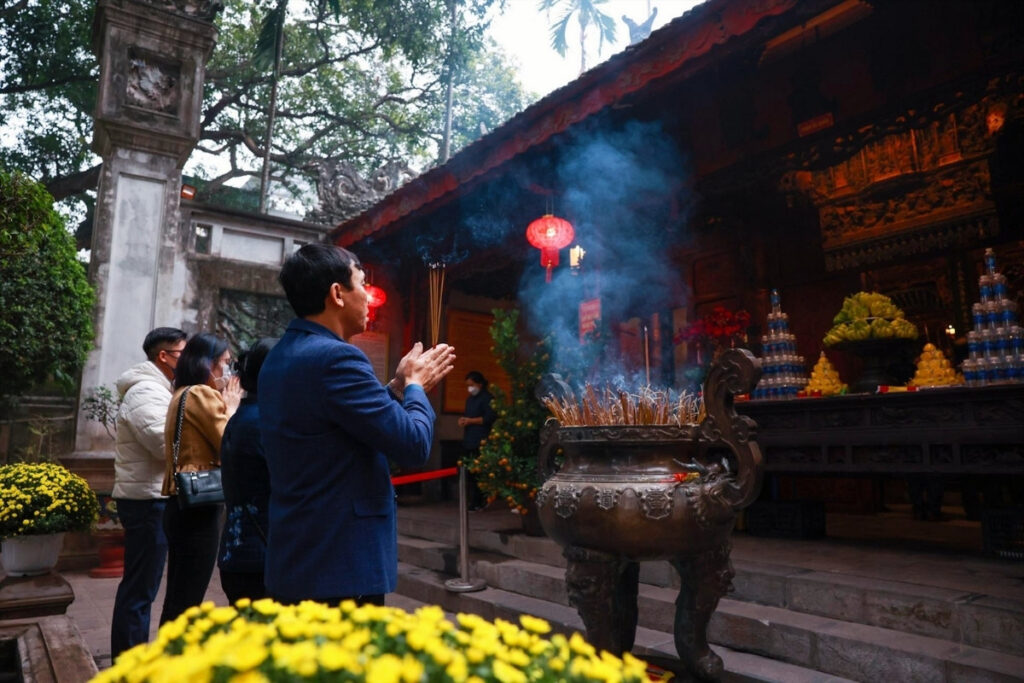
Early in the morning, it’s common to see office workers stopping by a neighborhood pagoda before work. Some light a single stick of incense, pause quietly for a moment, and then continue with the rest of their day. For many people, these brief visits are simply part of everyday life.
It’s easy to admire the architecture, take photographs, and move on to the next destination.
But slowing down—even for a few minutes—often changes the experience.
Sit quietly in the courtyard.
Listen to the sound of the bell.
Watch local families lighting incense.
Notice how people bow their heads before continuing with their day.
These ordinary moments reveal something guidebooks rarely explain.
For many Vietnamese people, temples remain part of everyday life, not just reminders of the past.
Traveler’s Tip
If you’re ever unsure about what to do inside a temple, remember one simple rule:
Act as though you’re visiting someone’s home rather than a tourist attraction.
Dress respectfully, speak softly, observe before acting, and avoid interrupting people who are there to worship.
Those small gestures are appreciated everywhere in Vietnam.
Gift-Giving Etiquette in Vietnam: Thoughtful Gestures That Mean More Than Expensive Gifts
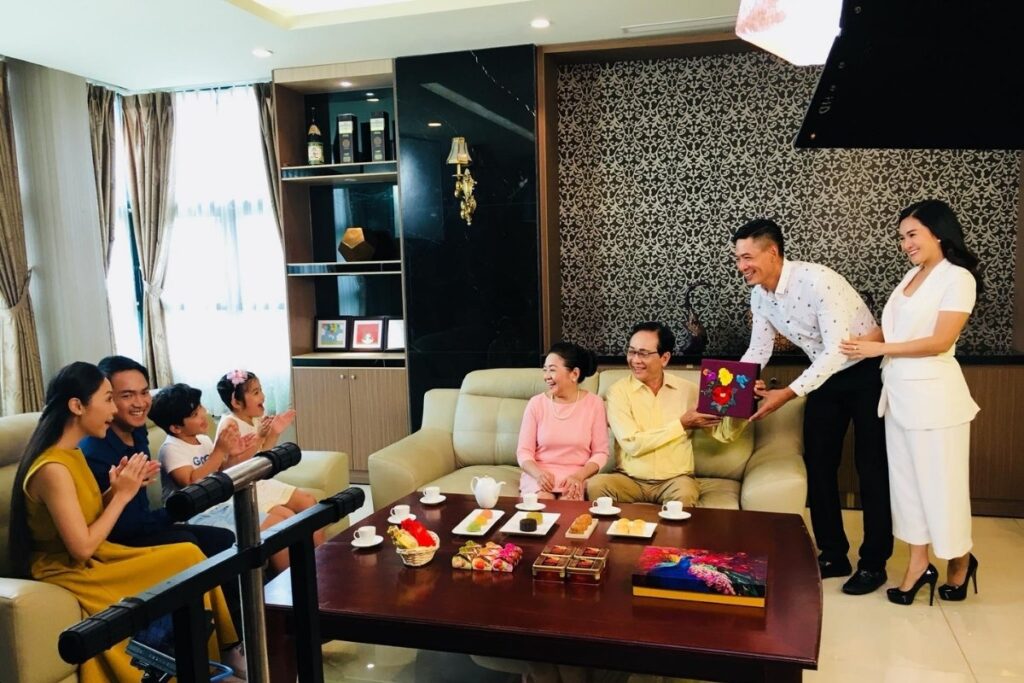
“In Vietnam, a thoughtful gift is rarely judged by its price. It’s appreciated for the kindness behind it.”
Whether you’re invited to a family home, meeting business partners, or staying with a local host, bringing a small gift is a thoughtful way to express appreciation.
Unlike in some cultures where gifts are expected, gift-giving in Vietnam is usually a gesture of goodwill rather than a social obligation.
The best gifts are often the simplest ones.
Bring Something Small and Meaningful
If you’re invited to someone’s home, there’s no need to arrive with an expensive present.
Instead, choose something modest that reflects thoughtfulness.
Popular gifts include:
- Fresh fruit
- Flowers
- Tea or coffee
- Chocolates or local sweets
- A specialty from your hometown or country
These gifts are practical, easy to share with the family, and appropriate for most occasions.
The gesture itself is usually more important than the value of the gift.
Present Your Gift Politely
When offering a gift, it’s considered polite to use both hands whenever possible.
This small gesture shows respect and sincerity.
Likewise, if someone offers you a gift, receive it with both hands and thank them warmly.
Visitors aren’t expected to follow this custom perfectly, but making the effort is always appreciated.
Don’t Be Surprised If the Gift Isn’t Opened Immediately
Many visitors mistakenly assume the recipient doesn’t like the gift. In reality, waiting to open it is often considered more modest and helps keep the attention on the relationship rather than the gift itself.
One custom that surprises many foreign visitors is that gifts are not always opened in front of the person who gives them.
In many Vietnamese families, opening a gift immediately may feel too eager or unintentionally place attention on its value.
Instead, your host may set it aside and open it later.
This shouldn’t be interpreted as a lack of appreciation.
On the contrary, it’s often considered a polite and respectful response.
Flowers Are Usually a Safe Choice
Flowers are a popular gift throughout Vietnam, especially when visiting someone’s home.
Fresh flowers are commonly displayed in living rooms and on family altars, making them a thoughtful and practical present.
When choosing flowers, simple arrangements are usually preferable to extravagant bouquets.
If you’re unsure what to buy, your florist can recommend seasonal flowers that are appropriate for social visits.
Gifts in Business Settings
Gift-giving also exists in Vietnamese business culture, although practices vary depending on the company and the occasion.
Small corporate gifts, local specialties, or souvenirs from your home country are generally appropriate after establishing a business relationship.
The emphasis should remain on courtesy rather than value.
Expensive gifts may unintentionally make the recipient uncomfortable, particularly in formal or international business environments.
It’s the Thought That People Remember
Visitors sometimes spend too much time worrying about finding the “perfect” gift.
Most Vietnamese hosts care far more about your thoughtfulness than your shopping skills.
A box of tea shared over conversation.
Fresh fruit enjoyed after dinner.
Chocolate for the children.
These simple gestures often become part of a warm memory rather than a formal exchange.
As in many aspects of Vietnamese etiquette, sincerity matters far more than perfection.
Traveler’s Tip
If you’re invited into a Vietnamese home, don’t feel pressured to buy an expensive present.
A small gift, offered with a smile and genuine appreciation, is more than enough to express your gratitude—and it’s often remembered long after the visit itself.
Public Behavior in Vietnam: Small Etiquette Tips That Make a Big Difference
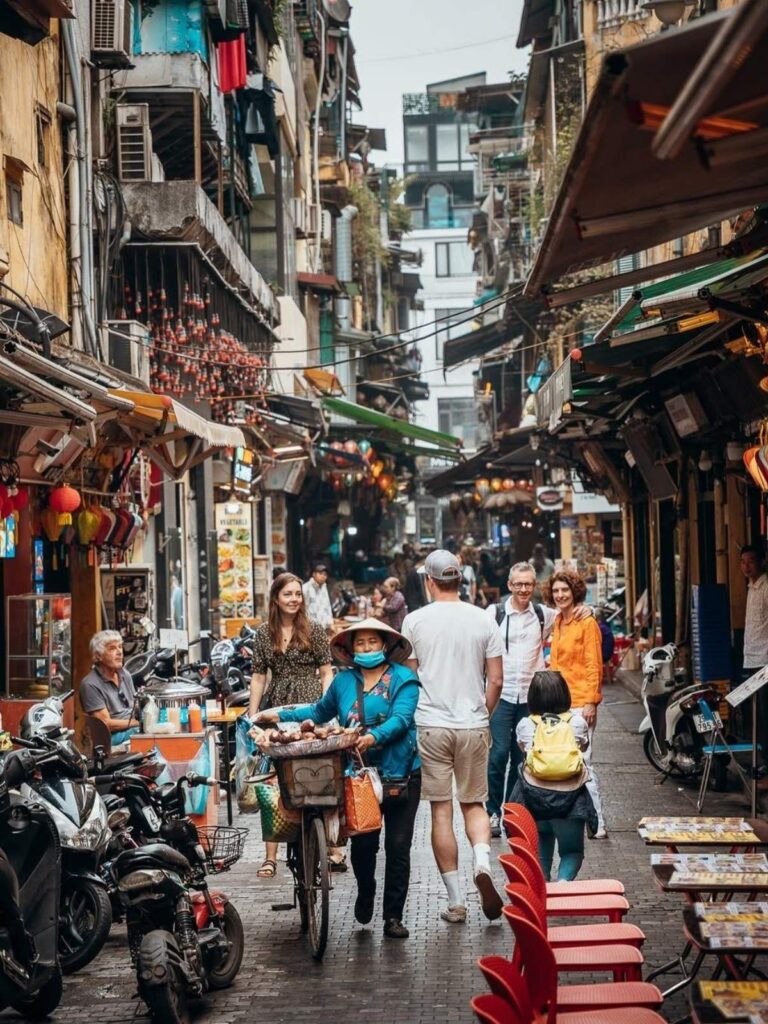
“Respect in Vietnam is often expressed through quiet, thoughtful actions rather than grand gestures.”
Visitors are sometimes surprised by how relaxed daily life feels in Vietnam.
Sidewalk cafés are full of conversation.
Markets are lively.
Families gather in parks long after sunset.
Despite this energy, you’ll also notice that many Vietnamese people place a high value on courtesy and consideration for others.
You don’t need to behave perfectly to fit in.
A few simple habits will help you navigate everyday situations with confidence and leave a positive impression wherever you travel.
Keep Your Voice Calm
Vietnam is a lively country, but that doesn’t mean loud public arguments are common.
If something goes wrong—a delayed taxi, the wrong restaurant order, or a misunderstanding—raising your voice is unlikely to improve the situation.
Most Vietnamese people appreciate calm, polite communication, even when discussing a problem.
A smile and patience often achieve much better results than frustration.
Dress for the Occasion
Vietnam’s major cities are modern and international, and you’ll see a wide range of clothing styles.
However, it’s still a good idea to dress appropriately for the place you’re visiting.
Swimwear belongs at the beach or pool.
Light, comfortable clothing is ideal for sightseeing.
When visiting temples, pagodas, or family homes, clothing that covers your shoulders and knees shows respect for local customs.
There’s no need to dress formally—just thoughtfully.
Avoid Public Displays of Anger
Every culture handles conflict differently.
In Vietnam, people generally try to avoid creating embarrassment in public.
If a misunderstanding occurs, speaking quietly and respectfully is usually the most effective approach.
This doesn’t mean you can’t express concerns.
It simply means that calm conversations are often better received than confrontation.
Ask Before Taking Photos of People
Vietnam offers endless opportunities for photography.
Colorful markets.
Street food vendors.
Children playing in village lanes.
Farmers working in rice fields.
While many people are happy to be photographed, it’s always polite to ask first, especially when taking close-up portraits.
A smile, a simple gesture toward your camera, or asking permission verbally can make all the difference.
You’ll often find that people respond with an even bigger smile once they know you’re interested in their story rather than simply taking their picture.
Be Patient in Busy Places
Traffic in Vietnam can appear chaotic at first, but experienced visitors soon discover that it follows its own rhythm. Staying calm and moving predictably is often safer than stopping suddenly or trying to rush across the street.
Vietnam’s streets can feel wonderfully chaotic at first.
Traffic flows differently from what many visitors expect.
Queues aren’t always perfectly straight.
Markets can be crowded and energetic.
Rather than becoming frustrated, try embracing the rhythm around you.
You’ll quickly discover that what first appears chaotic often follows its own quiet logic.
Patience is one of the most valuable travel skills you can bring to Vietnam.
Respect Personal Space Differently
Vietnamese cities are densely populated, and everyday life naturally happens closer together than in many Western countries.
People may stand closer while talking, markets can feel crowded, and public transportation is often busy during peak hours.
These situations are usually a reflection of limited space rather than a lack of courtesy.
Likewise, visitors should be mindful of blocking sidewalks, temple entrances, or narrow walkways while taking photos.
Being aware of the people around you is one of the simplest ways to show consideration.
Public Affection Is Best Kept Low-Key
Holding hands is common among couples, particularly in larger cities.
More intimate displays of affection, however, are less common in public spaces, especially in rural areas or around religious sites.
Visitors don’t need to worry excessively about this, but keeping affection relatively discreet helps you blend comfortably into local surroundings.
Observe Before You Act
One of the best pieces of etiquette advice has nothing to do with rules.
Simply watch what local people do.
Notice whether shoes are left outside a home.
Observe how people behave inside a temple.
Watch how meals begin.
Pay attention to how people greet one another.
Vietnamese culture is often learned through observation rather than instruction, and travelers can do exactly the same.
Traveler’s Tip
When you’re unsure what’s considered polite, choose the quieter, more respectful option.
Speak calmly, observe your surroundings, and follow your host’s lead.
These simple habits will help you feel comfortable in almost any situation during your travels in Vietnam.
Money, Bargaining & Tipping Etiquette in Vietnam
“Knowing how to pay politely can be just as important as knowing what to say.”
One of the first things many visitors notice in Vietnam is how different payment situations can feel.
In one place, prices are clearly displayed and payment takes only seconds with a QR code.
In another, friendly bargaining is part of the shopping experience.
Meanwhile, a local family may refuse to let you pay for dinner at all.
These situations aren’t contradictory.
They’re simply part of everyday life in Vietnam.
Understanding a few basic customs will help you feel more confident whether you’re shopping at a local market, dining with friends, or exploring the country’s vibrant street food scene.
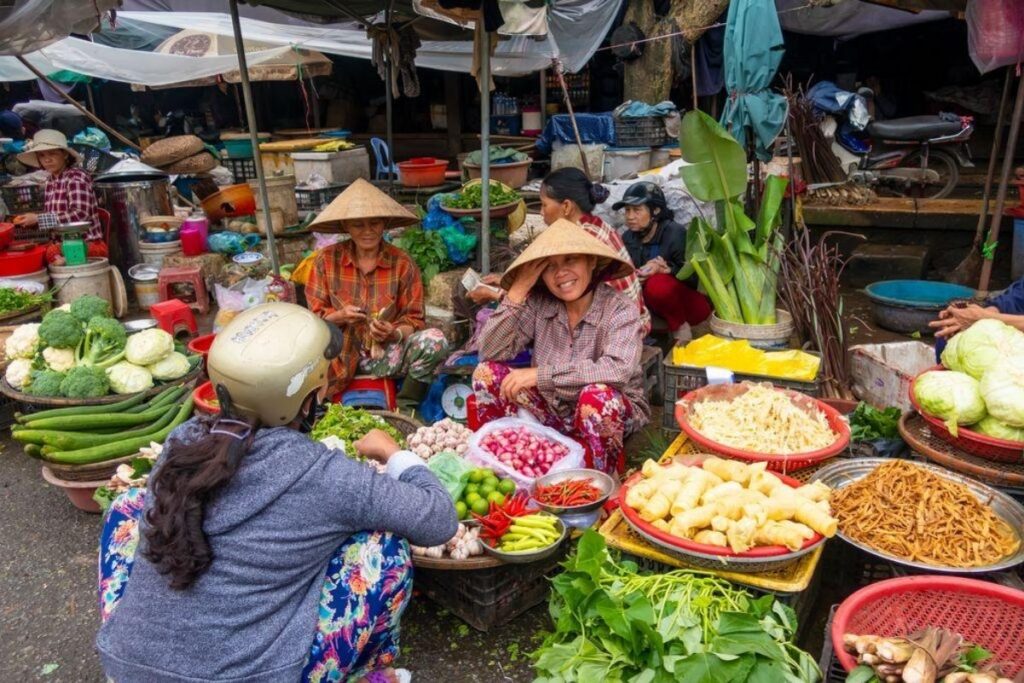
Bargaining Is Normal—But Only in Certain Places
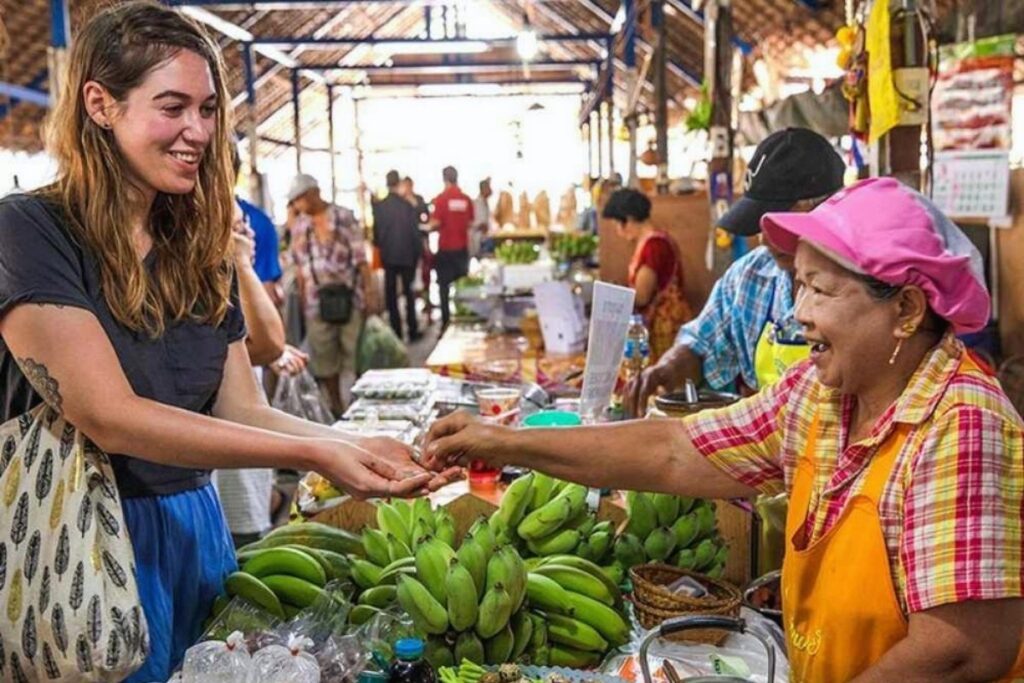
Negotiating prices is common in traditional markets, souvenir stalls, and some independent shops, particularly in tourist areas.
However, it’s generally not expected in:
- Supermarkets
- Shopping malls
- Convenience stores
- Chain cafés
- Restaurants with printed menus
If prices are clearly displayed, they’re usually fixed.
In local markets, bargaining is often done with a smile and a relaxed attitude.
Think of it as a friendly conversation rather than a competition.
If you can’t agree on a price, simply thank the seller and continue browsing.
There’s no need to argue.
Be Respectful When Negotiating
Many visitors enjoy bargaining because it feels like part of the travel experience.
That’s perfectly fine.
Just remember that the difference you’re negotiating over may be relatively small.
Rather than trying to “win,” aim for a price that feels fair to both you and the seller.
A friendly attitude will almost always lead to a better interaction than aggressive negotiation.
Most vendors appreciate customers who bargain respectfully and understand that it’s simply part of local market culture.
Carry Small Bills
Although digital payments are becoming increasingly common in Vietnam’s cities, cash is still useful in many situations.
Street food vendors, local markets, and small family-run businesses may not always have enough change for large banknotes.
Keeping smaller denominations with you makes everyday purchases easier for both you and the seller.
It’s a simple habit that can save time and avoid awkward situations.
QR Payments Are Becoming Everyday Life
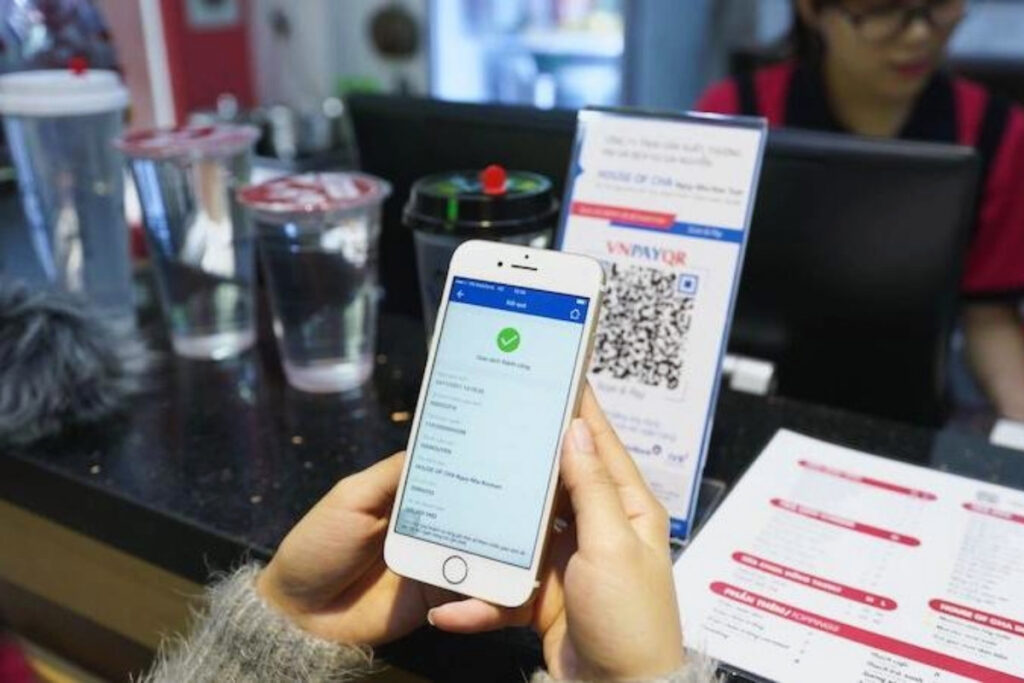
Many digital payment systems in Vietnam, such as QR codes linked to local banking apps, are designed primarily for domestic users. International visitors should still carry some cash and a credit card, especially when traveling outside major cities or shopping at traditional markets.
Visitors are often surprised by how quickly Vietnam has embraced digital payments.
In major cities such as Hanoi, Ho Chi Minh City, and Da Nang, you’ll frequently see customers paying with QR codes at cafés, restaurants, supermarkets, and even some street food stalls.
Many local payment systems are designed for Vietnamese bank accounts, so international visitors may still find cash or international credit cards more convenient in certain situations.
Having both payment options available is usually the easiest approach.
When Someone Insists on Paying
If you’re dining with Vietnamese friends, don’t be surprised if a friendly debate begins when the bill arrives.
You reach for your wallet.
Your host reaches first.
“No, you’re our guest.”
This exchange is common.
Offering to pay is considered polite.
So is accepting graciously if your host insists several times.
Rather than treating the moment as a financial transaction, think of it as part of Vietnamese hospitality.
The opportunity to host someone is often valued just as much as the meal itself.
Is Tipping Expected?
Unlike in some Western countries, tipping is not traditionally expected in Vietnam, especially at local restaurants, cafés, taxis, or street food stalls.
However, tipping is always appreciated for exceptional service and has become increasingly common in luxury hotels, guided tours, spas, and tourist-oriented businesses.
If you choose to leave a tip, think of it as a gesture of appreciation rather than an obligation.
Traveler’s Tip
When it comes to money in Vietnam, remember one simple principle:
Be flexible.
Use fixed prices where they’re expected, bargain politely where it’s appropriate, carry a little cash, and don’t worry too much about tipping.
Most importantly, treat every interaction with patience and respect.
People are likely to remember your kindness long after they’ve forgotten the amount you paid.
Common Cultural Mistakes Travelers Should Avoid in Vietnam
“The good news? Most cultural mistakes in Vietnam are easy to avoid—and locals are usually very forgiving when visitors show genuine respect.”
No traveler gets everything right.
Even people who have visited Vietnam several times occasionally misunderstand local customs or social expectations.
Fortunately, Vietnamese people rarely expect foreign visitors to know every cultural tradition.
What they appreciate most is a willingness to learn.
Avoiding a few common mistakes can help you feel more comfortable, build better connections with local people, and show respect for the culture you’re exploring.
Entering a Home Without Removing Your Shoes
❌ Don’t walk into a Vietnamese home wearing your shoes.
✅ Instead, pause at the entrance and follow your host’s example.
This is probably the most common mistake first-time visitors make.
In many Vietnamese homes, shoes are removed at the entrance to keep the living space clean and comfortable.
If you’re invited into someone’s home, simply pause at the door and look around.
A row of shoes or slippers is usually all the guidance you need.
Starting a Meal Before Your Host
❌ Don’t start eating as soon as the food arrives.
✅ Instead, wait until your host or the oldest family member begins the meal.
If you’re dining with a local family, avoid picking up your chopsticks as soon as the food arrives.
Instead, wait until your host or the oldest family member begins eating or invites everyone to start.
It’s a small gesture that shows patience and respect.
Speaking Too Loudly in Temples
❌ Don’t speak loudly inside temples or answer phone calls.
✅ Instead, keep conversations quiet and silence your phone before entering.
Vietnamese temples are active places of worship.
Visitors often come to pray, reflect, or spend a few quiet moments with family.
Keeping your voice low, silencing your phone, and moving calmly through the temple helps preserve that peaceful atmosphere for everyone.
Touching Religious Objects
❌ Don’t touch statues, altars, or offerings.
✅ Instead, admire them respectfully and observe local worshippers.
Altars, statues, offerings, and ceremonial items should be admired respectfully rather than handled.
If you’re unsure whether something may be touched, it’s best to leave it exactly where it is.
Looking is always safer than reaching.
Forgetting to Ask Before Taking Portraits
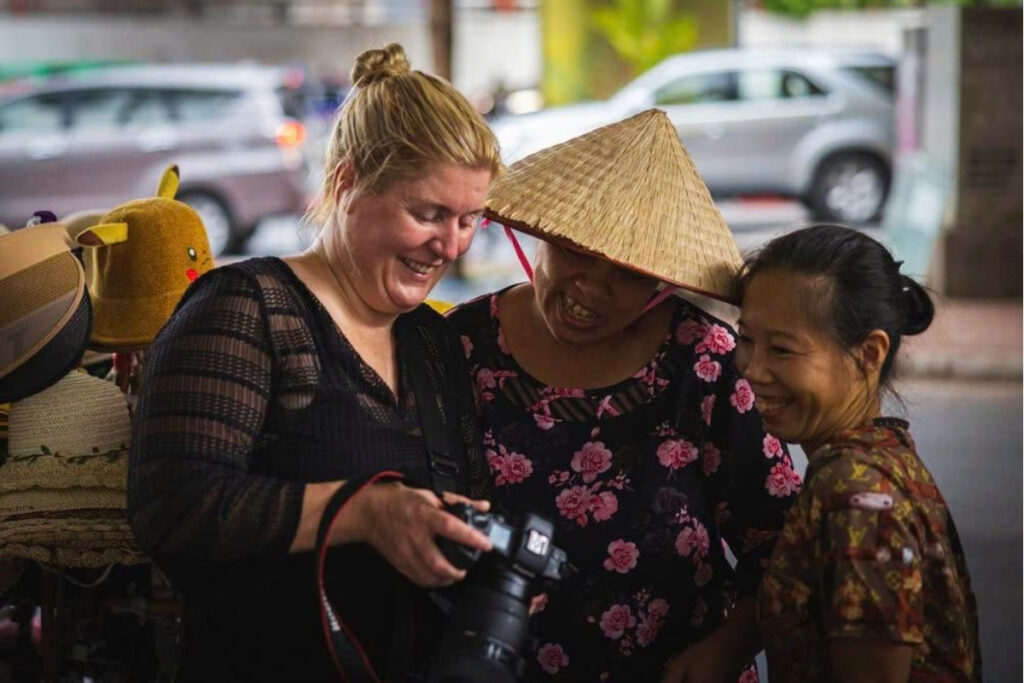
❌ Don’t photograph people without asking first.
✅ Instead, smile, gesture toward your camera, or ask permission before taking close-up portraits.
Vietnam is incredibly photogenic, but not every moment is meant for a camera.
Before photographing street vendors, elderly people, monks, or children, ask permission whenever possible.
A simple smile and gesture toward your camera often communicates your intention.
Most people appreciate being asked.
Why it matters
In Vietnam, many people are happy to be photographed, but asking first shows that you’re interested in the person—not just the picture. This small gesture often leads to warmer interactions and more natural portraits.
Becoming Too Aggressive When Bargaining
❌ Don’t bargain aggressively at local markets.
✅ Instead, negotiate with a smile and treat it as a friendly conversation.
Negotiating prices at local markets is perfectly normal.
Turning it into a confrontation is not.
Bargain with a smile, remain friendly, and remember that you’re often negotiating over relatively small amounts.
If the price doesn’t feel right, politely thank the seller and continue exploring.
Assuming Every Custom Is the Same Everywhere
❌ Don’t assume customs are identical across Vietnam.
✅ Instead, stay curious and adapt to local differences.
Vietnam is remarkably diverse.
Customs, accents, food, and even communication styles vary between Northern, Central, and Southern Vietnam.
Instead of assuming one experience represents the entire country, stay curious and enjoy the regional differences.
Expecting Everyone to Speak English
❌ Don’t expect everyone to speak English.
✅ Instead, learn a few simple Vietnamese phrases.
English is widely spoken in many tourist destinations, hotels, and larger cities, but not everywhere.
Learning just a few Vietnamese words—such as Xin chào (Hello) and Cảm ơn (Thank you)—often creates an immediate connection and shows respect for the local culture.
Judging Too Quickly
❌ Don’t judge unfamiliar customs too quickly.
✅ Instead, ask questions and observe before forming opinions.
Some customs may feel unfamiliar at first.
Being offered more food after you’ve said you’re full.
Being asked personal questions shortly after meeting someone.
Seeing three generations living under one roof.
Rather than assuming these customs are strange, take a moment to understand the cultural values behind them.
Very often, they’re expressions of hospitality, family, or respect.
Traveler’s Tip
You don’t need to behave like a local to be welcomed in Vietnam.
The most appreciated visitors are simply those who observe, ask questions politely, and approach unfamiliar customs with curiosity rather than judgment.
A little cultural awareness goes a long way.
Before You Go…
By now, you’ve learned the etiquette that shapes everyday life in Vietnam—from greetings and family visits to dining, temples, public behavior, and shopping.
The most important lesson, however, is surprisingly simple.
Vietnamese etiquette isn’t about following a long list of rules.
It’s about showing consideration for the people around you.
When you travel with patience, humility, and genuine curiosity, you’ll discover that Vietnamese people are remarkably welcoming—and often eager to share their culture with those who respect it.
The best trips aren’t measured by how many places you visit.
They’re remembered because of the people you meet along the way.
Frequently Asked Questions About Vietnamese Etiquette
Is Vietnamese etiquette difficult to learn?
Not at all. Most Vietnamese customs are based on simple values such as respect, kindness, and consideration for others. Visitors aren’t expected to know every tradition, and local people are generally understanding when travelers make an honest effort to learn.
Should I bow when greeting someone in Vietnam?
No. A friendly smile, a polite greeting, and, in formal situations, a light handshake are perfectly appropriate. Rather than following strict greeting rituals, simply match the level of formality of the person you’re meeting.
Why do Vietnamese people ask personal questions?
Questions about your age, family, or marital status are usually meant as friendly conversation rather than an invasion of privacy. Knowing these details helps people choose respectful forms of address and build a more personal connection.
Is it rude to refuse food in Vietnam?
No, but it’s best to refuse politely. Vietnamese hosts often encourage guests to eat more as a sign of hospitality. A warm smile, a sincere compliment about the meal, and a gentle explanation that you’re already full are usually appreciated.
Can I refuse alcohol?
Yes. If you don’t drink alcohol, simply explain politely that you don’t drink or aren’t drinking today. Most Vietnamese people will respect your choice, especially in larger cities and tourist areas.
Is tipping expected in Vietnam?
No. Tipping is not traditionally expected in Vietnam, especially at local restaurants, cafés, taxis, or street food stalls. However, it is always appreciated for excellent service and has become more common in luxury hotels, guided tours, and tourist-oriented businesses.
Can tourists join Vietnamese festivals and celebrations?
Absolutely. Many festivals welcome visitors, and locals are often happy to share their traditions. Simply follow your host’s guidance, dress respectfully, and remember that many celebrations are important cultural and family occasions—not just tourist events.
What’s the biggest etiquette mistake travelers make?
The most common mistake is assuming that Vietnamese customs work the same way as those at home. Taking a moment to observe local behavior, follow your host’s lead, and approach unfamiliar situations with curiosity will help you avoid most cultural misunderstandings.
Can I use my left hand?
Visitors don’t need to worry about using one hand over the other in everyday situations. However, offering gifts, business cards, or important items with both hands is considered a polite gesture.
Should I bring a gift if I’m invited to a Vietnamese home?
Yes. A small gift such as fruit, tea, coffee, or sweets is a thoughtful way to thank your host.
Is bargaining rude?
No. Bargaining is common in traditional markets but should always be done politely and with a smile.
What should I do if I accidentally break a cultural rule?
Don’t worry. Most Vietnamese people understand that visitors come from different backgrounds. A sincere apology and a friendly attitude are usually more important than knowing every etiquette rule.
Final Thoughts on Vietnamese Etiquette Guide
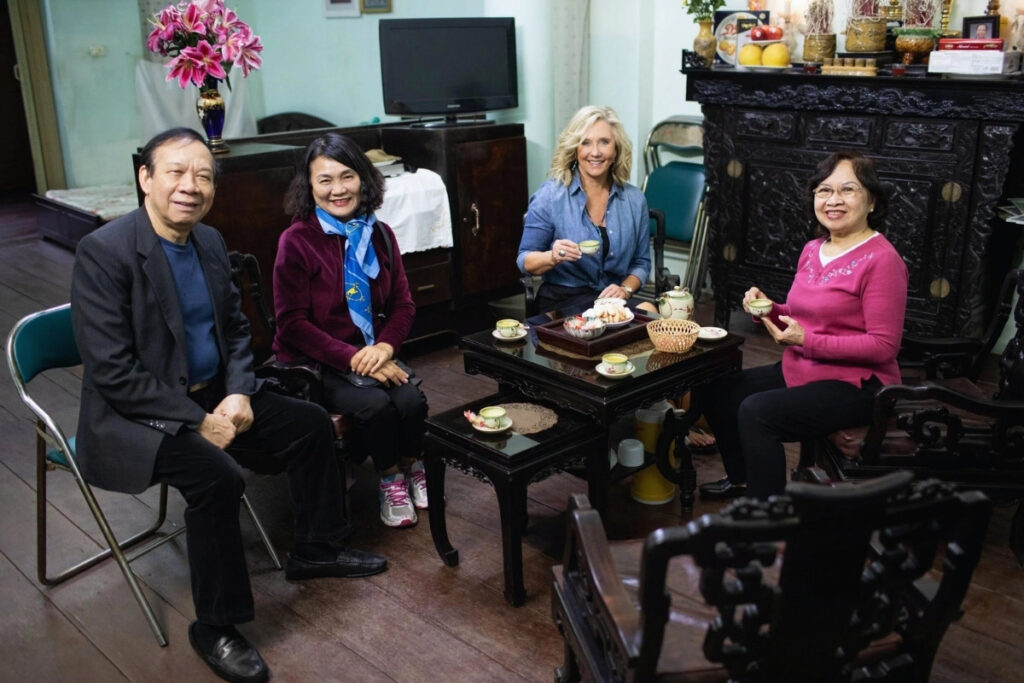
Learning Vietnamese etiquette isn’t about trying to behave like a local.
It’s about traveling with awareness.
Every country has its own social customs, and Vietnam is no different. The more you understand the values behind everyday interactions, the easier it becomes to appreciate why people remove their shoes before entering a home, why meals are shared, why elders are greeted first, and why hospitality plays such an important role in daily life.
You won’t remember every etiquette rule after your trip.
But you’ll probably remember the family who welcomed you to their dinner table.
The café owner who remembered your favorite drink.
The stranger who walked out of their way to help you find the right street.
Those experiences happen not because visitors know every cultural custom perfectly, but because they approach Vietnam with respect, patience, and genuine curiosity.
In the end, good etiquette isn’t about avoiding mistakes.
It’s about building meaningful connections with the people who make Vietnam such an unforgettable place to visit.
Continue Exploring Vietnam
If you’d like to understand Vietnam beyond everyday etiquette, explore these in-depth guides:
- Vietnamese Customs and Traditions: A Traveler’s Guide to Understanding Vietnam
- Vietnamese Family Culture: Why Family Comes First
- Ancestor Worship in Vietnam: Understanding a Living Tradition
- Tet Holiday in Vietnam: Traditions, Food, and Family Celebrations
- Living in Vietnam: Everyday Customs That Surprise Foreigners
- Vietnam Coffee Culture: More Than Just a Drink
- Vietnam Travel Guide
👉 Vietnam Transportation Guide
For more local stories, travel tips, and cultural insights, visit our YouTube channel:
TAM VOC VIET – VIETNAM INSIGHTS
About the Author
Tam Voc Viet Editorial Team
The Tam Voc Viet Editorial Team creates in-depth travel, culture, and everyday life guides that help international visitors experience Vietnam with greater confidence and understanding. Combining local knowledge, careful research, and firsthand cultural insights, our goal is to explain not only what travelers see, but why Vietnamese traditions continue to shape modern life.
Whether you’re planning your first trip or returning to explore beyond the typical tourist trail, we’re here to help you discover the real Vietnam—through its people, culture, and everyday stories.
Explore more: Vietnam Travel Guide, Vietnam Culture Guide, Vietnam Food Guide, and Living in Vietnam.
Last updated: July 2026
Editorial review: Tam Voc Viet Editorial Team
Estimated reading time: 18 minutes
