


 Tiếng Việt
The first thing many visitors notice in Vietnam isn’t a famous landmark or a bustling street market.
It’s family.
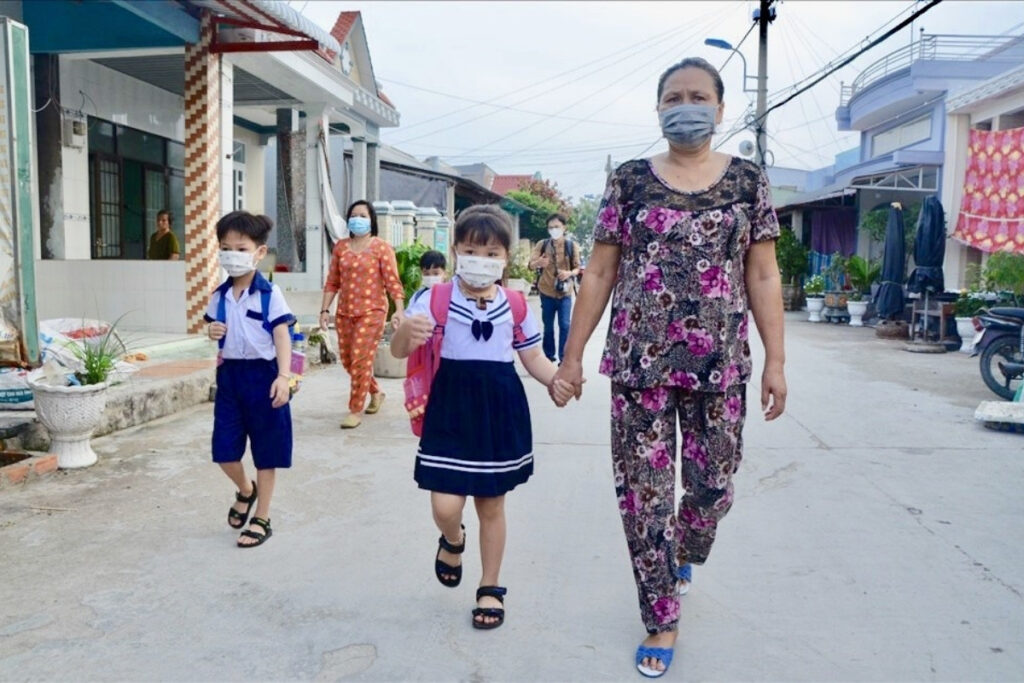
Walk through a neighborhood early in the morning, and you’ll see grandparents taking children to school while parents stop for coffee before work. Visit a local restaurant at lunchtime, and three generations may be sharing dishes around the same table. During holidays, highways fill with people traveling home—not for sightseeing, but to reunite with their families.
In Vietnam, family isn’t simply part of life.
For many people, it is the center of life.
This strong sense of family influences everything from the way children are raised and elders are respected to how major decisions are made and celebrations are shared. It shapes everyday etiquette, traditions, and even the pace of modern life.
For travelers, understanding Vietnamese family culture offers something guidebooks often overlook. It explains why guests are welcomed so warmly, why meals are meant to be shared, why grandparents often live with their children, and why millions of people return to their hometowns every Lunar New Year, no matter how far away they have moved.
Once you understand the importance of family, many aspects of Vietnamese culture begin to make perfect sense.
This guide explores the traditions, values, and everyday practices that place family at the heart of Vietnamese society. Along the way, you’ll discover how these customs continue to evolve in modern Vietnam while remaining one of the country’s strongest cultural foundations.
“In Vietnam, family isn’t simply where life begins—it’s where life continues.”
Table of Contents
The Influence of Confucian Values on Vietnamese Family Life
“To understand why family is so important in Vietnam today, it helps to look back hundreds of years.”
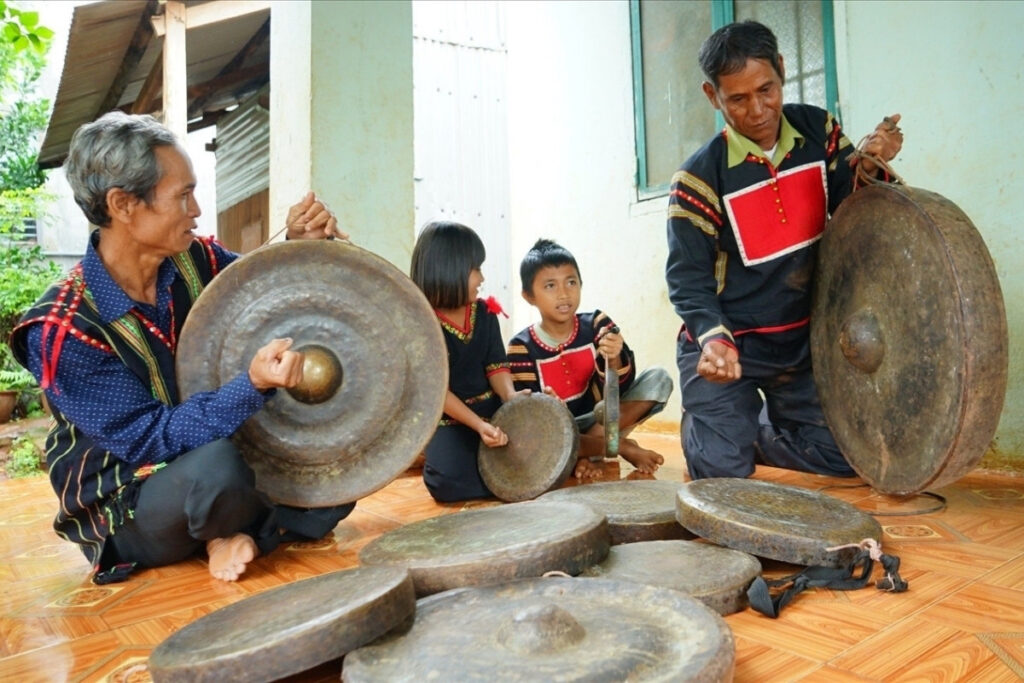
Many of the values that continue to shape Vietnamese family life can be traced to the influence of Confucian philosophy, which spread throughout East Asia centuries ago. Although modern Vietnam has changed dramatically, many of these traditional ideals remain visible in everyday relationships between parents and children, grandparents and grandchildren, and even among siblings.
At its core, Confucian thought emphasizes harmony, responsibility, education, and respect within the family. Rather than encouraging individuals to focus only on personal goals, it teaches that every family member has responsibilities toward one another.
These ideas became deeply woven into Vietnamese society over generations—not simply as philosophical concepts, but as everyday habits.
Respect Begins at Home
One of the most enduring values influenced by Confucian thought is respect for parents and elders.
From childhood, Vietnamese children are taught to greet older family members politely, listen carefully when they speak, and show appreciation for their experience and guidance.
This respect isn’t based solely on age.
It’s also a way of acknowledging the sacrifices parents and grandparents have made for the family.
Visitors often notice this during family gatherings, where younger people typically greet older relatives first and may invite them to begin the meal before everyone else.
These small gestures reflect values that have been passed down through generations.
Family Before the Individual
In many Western cultures, independence is often viewed as an important milestone of adulthood.
In Vietnam, personal independence is certainly valued, but it is frequently balanced with a strong sense of responsibility toward the family.
Adult children commonly remain closely connected with their parents, even after getting married or moving to another city.
Many people continue to seek advice from their parents before making significant decisions, such as choosing a career, buying a home, or planning a wedding.
Rather than being seen as dependence, this is often viewed as a sign of mutual trust and respect.
Family members support one another throughout different stages of life, creating a network of relationships that extends well beyond childhood.
Education as a Family Priority
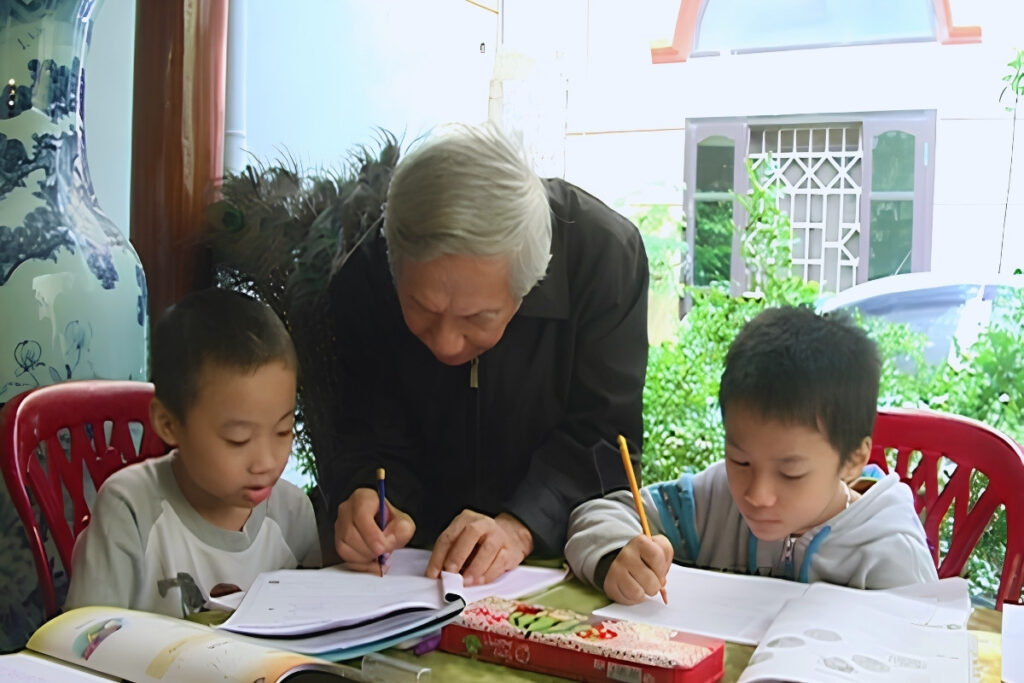
Another lasting influence of Confucian values is the importance placed on learning.
Education has long been regarded as a path to personal growth, family honor, and future opportunity.
Parents and grandparents often invest significant time and resources in supporting children’s education, celebrating academic achievements as accomplishments for the entire family rather than for one individual alone.
This emphasis on education continues today.
Across Vietnam, it’s common to see parents helping children with homework, grandparents accompanying grandchildren to school, and families gathering to celebrate important milestones such as university admissions or graduation ceremonies.
For many Vietnamese families, success is something shared—not achieved alone.
Harmony Matters More Than Winning an Argument
Confucian traditions also encourage maintaining harmony within the family.
Disagreements certainly happen, as they do in every culture, but many people try to resolve conflicts calmly rather than through open confrontation.
Compromise, patience, and preserving family relationships are often considered more important than proving who is right.
Visitors may notice that conversations during family gatherings are generally respectful, even when different opinions are expressed.
The goal is often to maintain good relationships rather than create unnecessary tension.
A Tradition That Continues to Evolve
Modern Vietnam is far more dynamic than it was even a generation ago.
Young professionals move to large cities.
Students study overseas.
Smaller households are becoming increasingly common.
At the same time, many traditional family values remain remarkably resilient.
Respect for parents, appreciation for education, and a strong sense of family responsibility continue to shape everyday life, even as lifestyles become more modern.
Rather than disappearing, these traditions are gradually adapting to contemporary Vietnam.
Today’s families may communicate through video calls instead of living under one roof, but the desire to stay connected across generations remains just as strong.
Researchers studying East Asian societies have long noted the influence of Confucian philosophy on family relationships, particularly in areas such as respect for elders, education, and intergenerational responsibility. Vietnam has adapted these ideas over centuries while developing its own distinct cultural traditions.
Did You Know?
Vietnamese doesn’t use a single word for “you.” Instead, people often choose different pronouns based on age, family relationships, and social status. This reflects the importance of respect and family hierarchy in everyday communication, even outside the home.
Traveler’s Insight
If someone introduces you to several members of their family, don’t be surprised if they explain each person’s relationship—such as older brother, younger sister, aunt, or grandmother—before introducing names. In Vietnamese culture, family roles often carry just as much importance as individual identity.
Curious how these values influence everyday conversations and social behavior? Explore our guide to Vietnamese Etiquette, where we explain how respect for age, family roles, and hospitality shapes daily interactions across Vietnam.
Respect for Parents and Elders: A Value That Shapes Everyday Life
“In Vietnam, respect isn’t reserved for special occasions. It’s expressed through everyday words, small gestures, and lifelong relationships.”
One of the first cultural differences many visitors notice in Vietnam is the way people interact with older family members.
Children greet their grandparents before anyone else.
Younger relatives often wait for elders to sit down before taking their own seats.
At family meals, grandparents are usually invited to begin eating first, while younger members naturally help serve food or pour tea.
These customs may seem simple, but together they reflect one of the strongest values in Vietnamese family culture: respect for parents and elders.
Rather than being viewed as a social obligation, this respect is widely seen as a way of expressing gratitude for the care, guidance, and sacrifices made by previous generations.
Respect Is Learned from Childhood
Vietnamese children begin learning respectful behavior at an early age.
Parents encourage them to greet grandparents politely, listen when older people are speaking, and use appropriate family titles when addressing relatives.
Instead of calling everyone by their first name, children learn to say Ông (grandfather), Bà (grandmother), Bác, Chú, Cô, Dì, or Anh, Chị, depending on age and family relationships.
These forms of address continue into adulthood and are commonly used even outside the family.
Visitors often notice that Vietnamese people rarely call older adults by their first names alone.
Choosing the correct form of address is considered a sign of courtesy and respect.
Filial Piety in Everyday Life
The idea of filial piety—showing devotion and respect to one’s parents—is deeply rooted in Vietnamese culture.
However, this value is expressed less through formal ceremonies than through everyday actions.
Adult children often visit their parents regularly, help with household responsibilities, provide financial support when needed, and remain actively involved in family life.
Many people also consult their parents before making major life decisions, such as getting married, changing careers, or buying a home.
These traditions aren’t necessarily about seeking permission.
They’re about recognizing the experience and wisdom of older generations while maintaining close family relationships.
Caring for Aging Parents
In many Vietnamese families, caring for elderly parents is viewed as a natural part of adult life.
Rather than relying solely on professional care facilities, many families choose to support aging parents within the family whenever possible.
This support can take many forms.
Some parents live with their adult children.
Others live independently but receive frequent visits, daily phone calls, or regular help with shopping, medical appointments, and household tasks.
As lifestyles continue to evolve, more families are balancing traditional expectations with modern work schedules.
Even so, maintaining close contact with parents remains an important value for many Vietnamese people.
Respect Is Shown Through Small Gestures
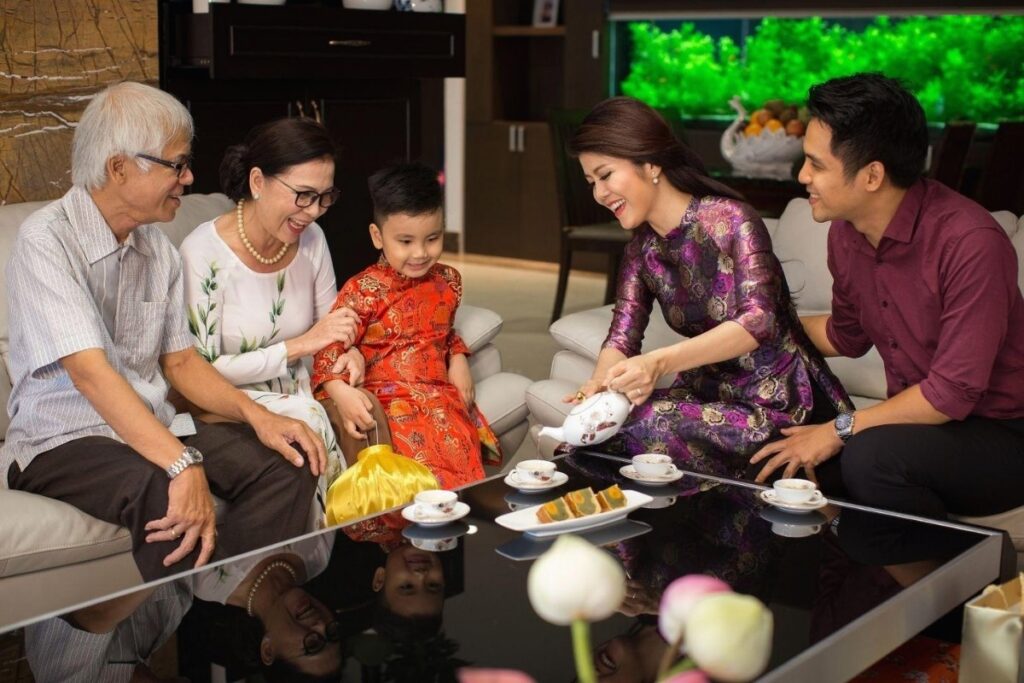
Visitors sometimes expect respect to be demonstrated through elaborate traditions.
In reality, it often appears in quiet, everyday moments.
Offering the most comfortable seat to an older guest.
Serving tea before pouring your own.
Listening without interrupting.
Helping an elderly relative carry heavy bags.
Walking slightly behind grandparents as they move through a crowded street.
None of these actions are dramatic.
Yet together they communicate consideration, gratitude, and affection.
These small gestures often leave a stronger impression than formal ceremonies.
Modern Families, Traditional Values
Vietnam’s younger generations are growing up in a rapidly changing society.
Many study abroad, build international careers, and live independently in large cities.
Daily routines may look very different from those of their grandparents.
Yet respect for parents and elders remains remarkably consistent across generations.
Young professionals may not live in the same household, but many still return home on weekends, celebrate important holidays with their families, and stay closely connected through daily phone calls or messaging apps.
Technology has changed the way families communicate.
It hasn’t changed why they stay connected.
Local Insight
If you attend a Vietnamese family gathering, you’ll often notice that younger family members naturally stand up when older relatives arrive, help prepare the table, or offer food and tea before serving themselves. These gestures are rarely requested—they’re simply part of everyday family life.
Did You Know?
Vietnamese family titles are so important that people often continue using them outside the family. A neighbor, shopkeeper, or colleague may be addressed as Aunt, Uncle, Older Brother, or Older Sister, even when no family relationship exists. This reflects the cultural emphasis on respect and social harmony.
Traveler’s Tip
If you’re invited into a Vietnamese home and aren’t sure how to greet older family members, simply smile, greet them first, and follow your host’s lead. Visitors aren’t expected to know every family title, but showing respect through your attitude is always appreciated.
Multi-Generational Living: Why Several Generations Often Share One Home
“For many visitors, one of the most surprising aspects of life in Vietnam isn’t the busy streets or bustling markets—it’s seeing three generations living happily under the same roof.”
In many parts of the world, young adults move out soon after finishing school, and grandparents often live independently or in retirement communities.
Vietnam can feel quite different.
Although modern lifestyles are gradually changing, it’s still common to find grandparents, parents, and children sharing the same home—or living only a short distance from one another.
For many Vietnamese families, living together isn’t simply about convenience.
It’s about staying connected, supporting one another, and strengthening family bonds across generations.
A Home Shared Across Generations
Walk through a residential neighborhood in Hanoi, Hue, or Ho Chi Minh City, and you may notice several generations gathering for breakfast before everyone begins their day.
Grandparents prepare breakfast.
Parents leave for work.
Children get ready for school.
Each person has a different routine, yet the day often begins together.
This arrangement reflects a practical balance between family life and everyday responsibilities.
Grandparents can help care for young children while parents work, and younger family members are nearby to support older relatives whenever needed.
Rather than dividing family life into separate households, many Vietnamese families see daily life as something shared.
Grandparents Play an Active Role
In many Vietnamese households, grandparents are far more than respected elders.
They are active participants in family life.
It’s common to see grandparents walking grandchildren to school, preparing afternoon meals, helping with homework, or simply spending time together after school.
For working parents, this support is both practical and deeply valued.
For children, growing up alongside grandparents creates close relationships that naturally pass on family stories, traditions, and everyday customs.
Visitors are often surprised by how naturally these generations interact.
Rather than occasional visits, they share ordinary moments that become part of daily life.
Independence Looks Different
Visitors sometimes assume that living with parents after marriage or adulthood means someone lacks independence.
In Vietnam, that isn’t necessarily the case.
Many families choose to live together because it allows them to share responsibilities, reduce living expenses, and care for both children and older relatives more easily.
Even when adult children establish successful careers, living close to family is often seen as a positive choice rather than a temporary arrangement.
Success is not measured only by individual independence.
It’s also reflected in the ability to support and remain connected with family.
When Families Live Apart, They Stay Close
As Vietnam’s economy grows, more young professionals move to major cities or work overseas.
Naturally, not every family now lives under one roof.
Even so, family relationships often remain remarkably close.
Daily phone calls.
Family group chats.
Weekend visits.
Returning home for important celebrations.
These routines help maintain strong connections despite physical distance.
Technology has made communication easier, but the desire to stay involved in one another’s lives has always been there.
Family Gatherings Matter
One reason visitors often see large family gatherings in Vietnam is that many occasions are celebrated together.
Birthdays.
Wedding anniversaries.
Ancestor remembrance ceremonies.
The Mid-Autumn Festival.
Tet (Lunar New Year).
These aren’t simply events on the calendar.
They’re opportunities for relatives from different cities—and sometimes different countries—to come home, share meals, exchange stories, and spend time together.
For many families, being present matters just as much as the celebration itself.
Modern Homes, Traditional Values
Today’s Vietnam looks very different from the country many travelers imagine.
Modern apartments rise above historic neighborhoods.
Young professionals work for international companies.
Children attend bilingual schools.
Yet inside many homes, familiar traditions continue.
Grandparents are still respected.
Family dinners remain important.
Parents continue encouraging children to care for relatives and stay connected as they grow older.
The appearance of family life may evolve.
Its values remain remarkably consistent.
Local Insight
Don’t be surprised if someone introduces not only their parents, but also their grandparents, cousins, or even neighbors who have become “part of the family.” In Vietnam, the idea of family often extends beyond the people who share the same surname.
Did You Know?
According to Vietnam’s most recent population and housing data, multi-generational households remain common, particularly outside major urban centers. Even when family members live separately, regular contact and mutual support continue to be important parts of everyday life.
Traveler’s Tip
If you’re invited into a Vietnamese home, don’t be surprised to meet several generations at once. Taking time to greet grandparents, parents, and children individually is a thoughtful way to show respect and appreciation for the family’s hospitality.
Want to learn how these close family relationships influence Vietnam’s biggest celebration? Explore our guide to Tet Holiday in Vietnam, where family reunions, ancestor worship, and shared traditions take center stage.
Family Meals: More Than Just Food
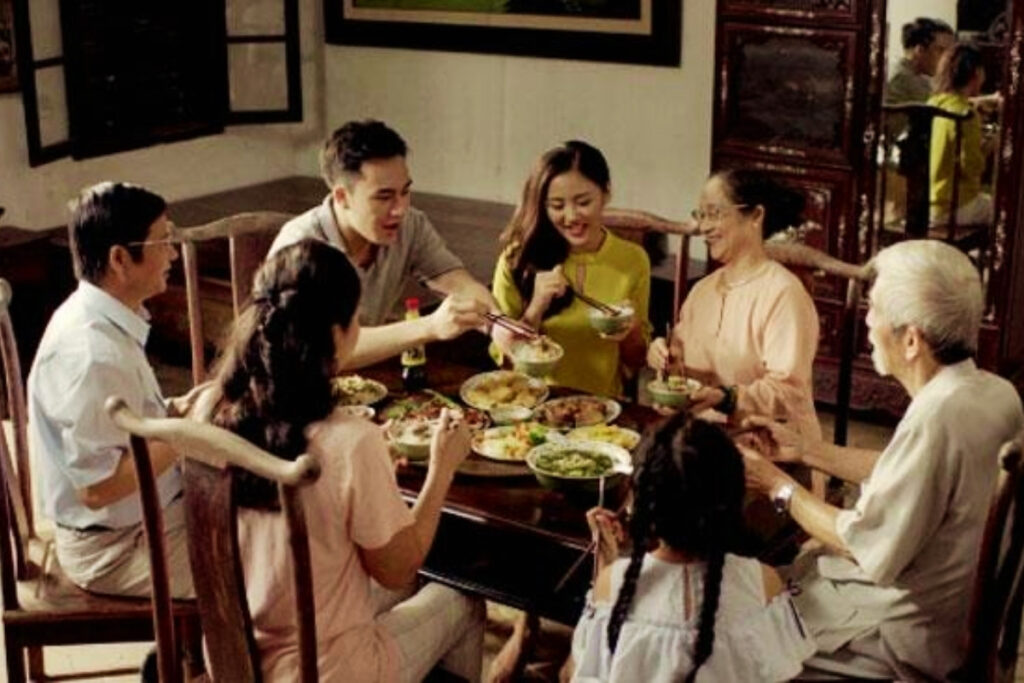
“If you want to understand Vietnamese family culture, don’t begin at a museum. Sit down at a family dinner table.”
For many Vietnamese people, the most meaningful conversations of the day don’t happen in meeting rooms or cafés.
They happen around the dining table.
Whether it’s a quick weekday dinner or a long meal during Tet, eating together remains one of the simplest—and most important—ways families stay connected.
Unlike meals that focus mainly on individual plates, Vietnamese family dinners are built around sharing.
Dishes are placed in the center of the table.
Everyone helps themselves.
Stories are exchanged between bites.
Children talk about school.
Parents discuss work.
Grandparents share memories and advice.
The meal becomes more than nourishment.
It becomes part of everyday family life.
Eating Together Is Part of Daily Life
In many Vietnamese households, dinner is one of the few moments when everyone slows down.
After work and school, family members gather around the table, not only to eat but also to reconnect after a busy day.
The menu may be simple.
A bowl of soup.
Fresh vegetables.
Rice.
One or two meat or fish dishes.
Yet the importance of the meal rarely depends on how elaborate the food is.
What matters is spending time together.
Even families with demanding schedules often try to share dinner whenever possible.
For many people, this daily routine remains one of the strongest traditions carried from one generation to the next.
Meals Are Designed to Be Shared
One of the biggest differences visitors notice is that Vietnamese meals are rarely served as individual portions.
Instead, everyone shares the same dishes.
Each person takes a small amount of food, combines it with rice, and continues sampling different flavors throughout the meal.
This style of dining naturally encourages conversation.
People reach for the same dishes.
Recommend favorite foods.
Offer one another another piece of fish or vegetables.
The experience feels less like individual dining and more like enjoying the meal together.
For first-time visitors, this shared style often becomes one of the most memorable parts of Vietnamese hospitality.
Hospitality Is Served One Bowl at a Time
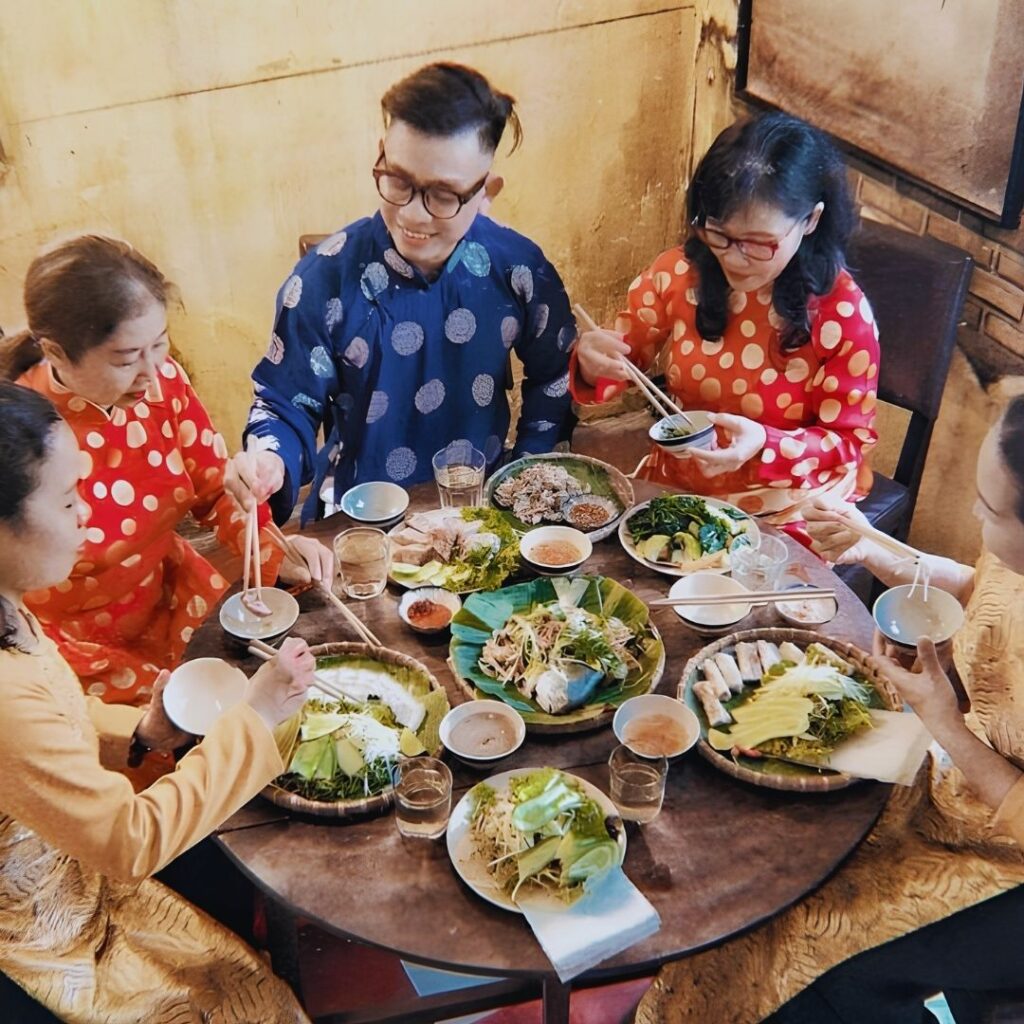
If you’ve ever been invited to a Vietnamese home, you may notice something unexpected.
Just when your bowl is empty, someone quietly places another piece of chicken inside.
Before you’ve finished your soup, more vegetables appear.
When you politely decline, your host smiles and encourages you to have just a little more.
This isn’t because they think you haven’t eaten enough.
It’s one of Vietnam’s oldest expressions of hospitality.
Offering food is a way of showing care.
Accepting at least a small amount is often seen as appreciating your host’s kindness.
Visitors don’t need to finish every bite, but trying a little of each dish is a thoughtful way to thank the family for welcoming you.
Every Generation Has a Place at the Table
A Vietnamese family meal often reflects the relationships within the household.
Grandparents are usually invited to begin eating first.
Parents serve younger children.
Teenagers help bring dishes from the kitchen.
Everyone contributes in small ways.
These routines aren’t strict rules.
They’re habits developed through years of living together.
Visitors may not immediately notice them, but they create an atmosphere where respect and cooperation feel completely natural.
The Dining Table Is Where Traditions Are Passed Down
Many family traditions aren’t taught through formal lessons.
They’re learned while sharing everyday meals.
Children hear stories about their grandparents.
Recipes are passed from one generation to another.
Family history is remembered.
Advice is offered.
Plans for upcoming holidays begin to take shape.
Over time, the dining table becomes more than a place to eat.
It becomes one of the places where Vietnamese culture quietly continues from one generation to the next.
Modern Life Has Changed the Schedule, Not the Tradition
Busy workdays, long commutes, and changing lifestyles mean that not every family can eat together every evening.
In larger cities, parents may arrive home late.
Students may attend evening classes.
Young professionals sometimes live far from their hometowns.
Yet the tradition itself remains remarkably resilient.
Many families make a special effort to eat together on weekends.
Others gather for Sunday lunch instead of weekday dinners.
During Tet and other important celebrations, relatives travel long distances simply to share a meal around the same table once again.
The schedule may change.
The meaning of the meal rarely does.
“A Vietnamese family meal isn’t about finishing your plate. It’s about making sure no one eats alone.”
Local Insight
If you’re invited to dinner in a Vietnamese home, don’t be surprised if your host keeps adding food to your bowl before serving themselves. This isn’t considered intrusive—it’s a traditional way of showing that guests are genuinely welcome.
Did You Know?
Unlike many Western dining traditions, Vietnamese family meals are typically served all at once rather than in separate courses. Rice, soup, vegetables, and main dishes are shared together, allowing everyone to enjoy the meal at their own pace while talking throughout dinner.
Traveler’s Tip
If you’re invited to a family meal, try a little of every dish, compliment the food, and don’t rush to leave as soon as you’ve finished eating. In Vietnam, the conversation after the meal is often just as meaningful as the meal itself.
Why Visitors Often Feel Like Part of the Family
One reason many travelers remember Vietnamese hospitality so vividly is that guests are often treated as though they are already part of the family.
A host may insist that you eat more.
Parents may introduce you to grandparents.
Children may ask questions with genuine curiosity.
Rather than creating distance between guests and hosts, Vietnamese families often try to make visitors feel comfortable as quickly as possible.
Hospitality is rarely viewed as a formal duty.
Instead, it’s considered a natural extension of family values.
Many of the kindnesses visitors experience—from sharing meals to offering help with directions—reflect the belief that welcoming others warmly brings honor not only to the individual, but to the family as a whole.
Filial Piety and Everyday Responsibilities: Caring for Family Across Generations
“In Vietnam, caring for your family isn’t viewed as an extraordinary act. It’s simply part of growing up.”
One of the values visitors hear about most often when learning about Vietnamese culture is filial piety—the belief that children should honor, respect, and care for their parents throughout life.
The idea may sound formal, but in everyday Vietnam, it’s rarely expressed through grand speeches or elaborate ceremonies.
Instead, it appears in small, consistent acts of responsibility.
Calling your parents after work.
Visiting them on weekends.
Helping with household repairs.
Taking them to medical appointments.
Returning home for important family occasions.
These everyday gestures quietly reflect one of the strongest values in Vietnamese family culture.
Respect Means More Than Obedience
Visitors sometimes misunderstand filial piety as simply obeying parents.
In reality, it’s much broader than that.
For many Vietnamese families, respect includes listening to parents’ opinions, appreciating their sacrifices, and remaining involved in one another’s lives even after children become adults.
Parents generally hope their children will become independent and successful.
At the same time, children are encouraged to remember where they came from and the people who helped them along the way.
The relationship is built not only on authority, but also on gratitude and mutual care.
Family Responsibilities Continue Into Adulthood
In many cultures, adulthood is often associated with becoming completely independent from one’s parents.
In Vietnam, adulthood usually brings new family responsibilities rather than fewer.
Adult children may help support younger siblings through school, contribute to household expenses, assist aging parents, or organize important family gatherings.
Even when relatives live in different cities, staying involved is often considered part of maintaining a close family relationship.
Responsibility is viewed less as a burden than as a natural expression of family connection.
Returning Home Matters
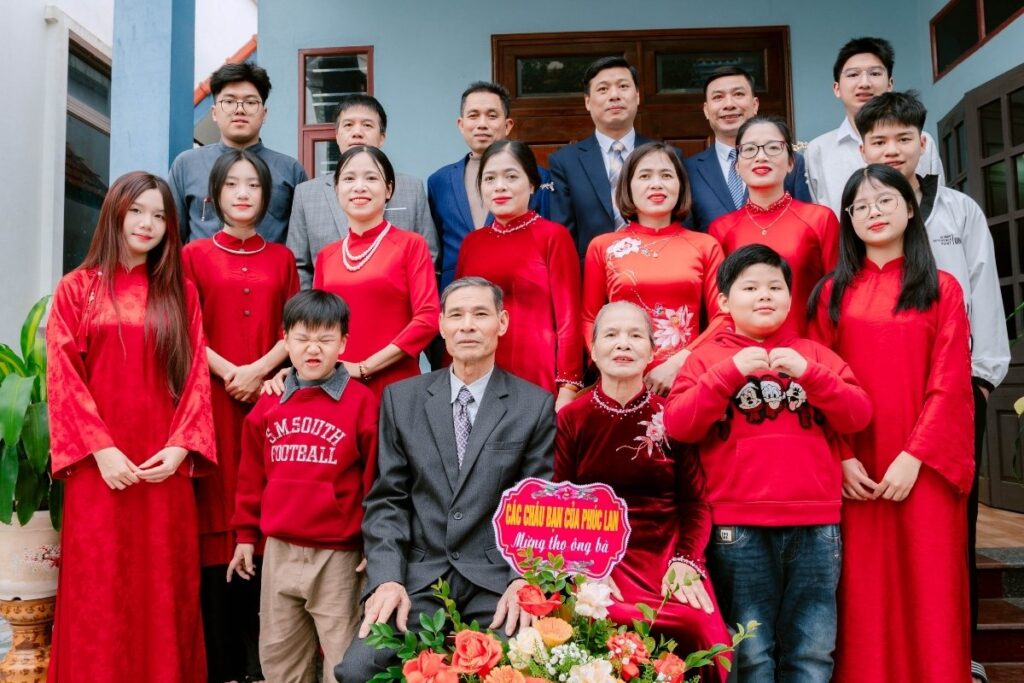
One tradition that surprises many international visitors is how often Vietnamese people return to their hometowns.
Weekends.
Family anniversaries.
Ancestor remembrance ceremonies.
Tet.
Even a short visit home carries meaning.
For many people, these journeys aren’t simply social visits.
They’re opportunities to reconnect with parents, spend time with grandparents, and strengthen relationships that remain important regardless of distance.
During Tet, millions of people travel across the country to reunite with their families.
For many Vietnamese, going home is the most important part of the holiday.
Looking After Parents as They Grow Older
As parents age, family responsibilities often evolve.
Adult children may help with healthcare, transportation, household tasks, or financial planning.
Some families choose to live together, while others remain close through frequent visits and daily communication.
The arrangement itself is less important than the relationship.
What matters is making sure older family members continue to feel respected, supported, and included in family life.
Modern Vietnam offers many different ways of caring for parents, but the underlying value of responsibility remains remarkably consistent.
Gratitude Is Often Shown Through Actions
One of the most distinctive aspects of Vietnamese family culture is that appreciation is often expressed through actions rather than words.
Helping prepare a family meal.
Driving parents to an appointment.
Repairing something around the house.
Visiting with fresh fruit.
Calling to ask how their day went.
These everyday acts may seem ordinary, yet they often communicate love and gratitude more naturally than formal expressions.
Visitors sometimes notice that affection within Vietnamese families is frequently demonstrated through practical care instead of verbal declarations.
A Balance Between Tradition and Modern Life
Like every society, Vietnam continues to evolve.
Young professionals build careers abroad.
Students study overseas.
Many families now communicate through video calls instead of gathering every evening.
Yet the desire to stay connected remains remarkably strong.
Technology has changed how families communicate.
It hasn’t changed why they communicate.
Across generations, the idea that family members should support one another continues to shape relationships throughout Vietnamese society.
Local Insight
It’s common for Vietnamese people living in another city to call their parents almost every day. These conversations are often brief—asking whether everyone has eaten, discussing work, or checking in on grandparents—but they help maintain close family relationships despite the distance.
Did You Know?
The Vietnamese phrase “Công cha như núi Thái Sơn, nghĩa mẹ như nước trong nguồn chảy ra” is one of the country’s best-known proverbs. It compares a father’s love to a great mountain and a mother’s love to an endless flowing spring, reminding children to appreciate their parents’ lifelong care and sacrifices.
Traveler’s Tip
If you’re talking with Vietnamese friends, don’t be surprised if conversations naturally turn to parents or family. Asking polite questions about someone’s hometown or family is often a friendly way to build rapport, provided the conversation remains respectful and relaxed.
Family responsibility continues long after childhood—and one of its most meaningful expressions can be seen during Ancestor Worship in Vietnam, where generations come together to honor those who came before them. Explore our guide to learn how remembrance remains an important part of Vietnamese family life.
The Role of Grandparents: The Keepers of Family Traditions
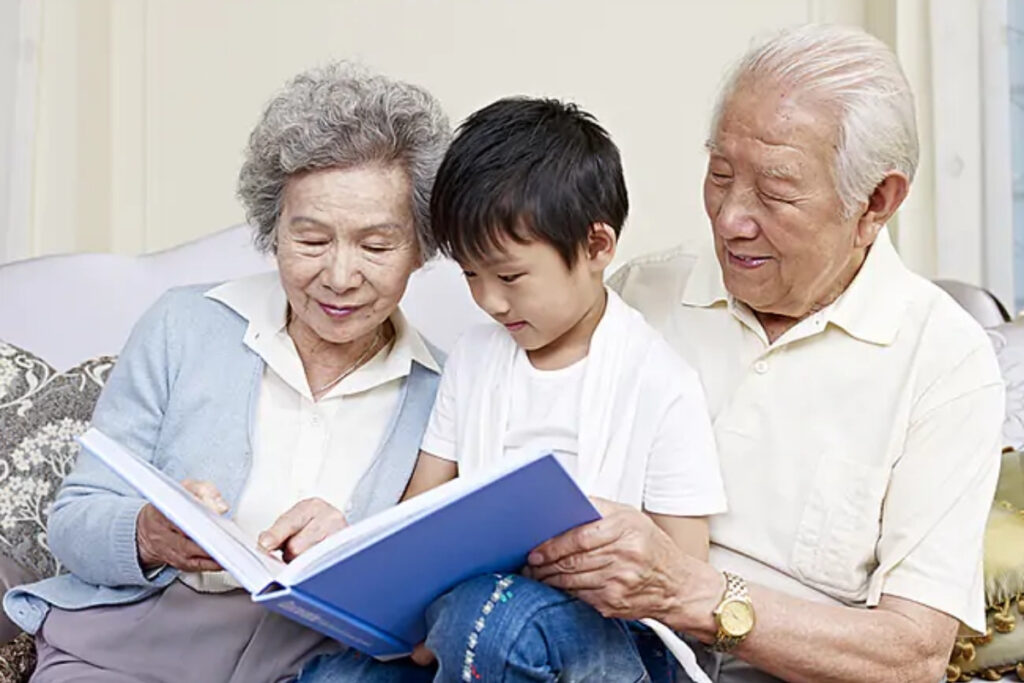
“In many Vietnamese families, grandparents don’t simply tell stories about the past—they help shape the future.”
Spend time with a Vietnamese family, and you’ll quickly notice that grandparents often play an active role in everyday life.
They walk children to school.
Prepare family recipes that have been passed down for generations.
Share stories about the family’s history.
Offer advice during important moments.
Sometimes they quietly sit in the living room, watching several generations come and go throughout the day.
Their presence is rarely symbolic.
For many families, grandparents remain an essential part of daily life, helping preserve traditions while providing practical support to younger generations.
More Than Loving Grandparents
In many cultures, grandparents are mainly associated with holidays or occasional visits.
In Vietnam, they are often deeply involved in raising children from an early age.
While parents work, grandparents may prepare breakfast, accompany children to school, supervise homework, or care for young grandchildren during the day.
These routines are not viewed as extraordinary.
They’re simply part of family life.
Growing up alongside grandparents allows children to build close relationships while learning values that cannot easily be taught in a classroom.
Family History Lives Through Stories
Many Vietnamese children first learn about their family’s history from conversations with their grandparents.
Stories about childhood.
The village where the family once lived.
Traditional celebrations.
Past hardships.
Old family recipes.
Rather than reading these stories in books, children often hear them naturally during family meals, quiet evenings, or holiday gatherings.
In this way, family history becomes something living—passed from one generation to the next through conversation rather than formal lessons.
Passing Down Traditions
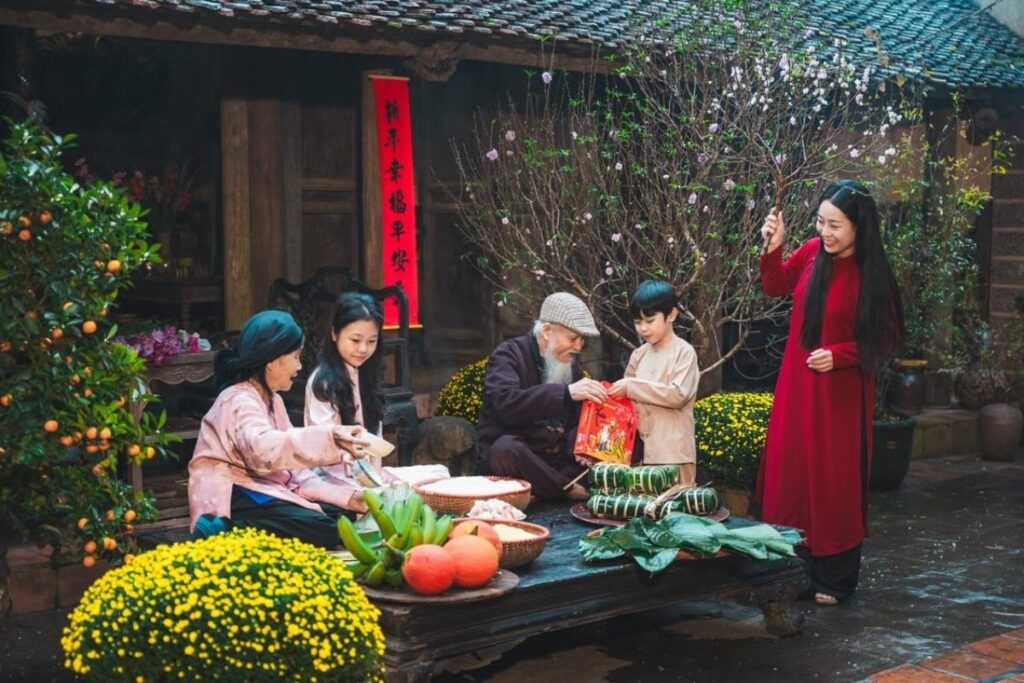
Grandparents also help preserve many of Vietnam’s cultural traditions.
They may teach grandchildren how to prepare traditional dishes for Tet.
Explain why incense is offered on the family altar.
Show younger family members how to wrap bánh chưng or bánh tét during the Lunar New Year.
Share the meaning behind Mid-Autumn Festival celebrations.
Many customs survive not because they are written down, but because they are practiced together at home.
Through these shared experiences, traditions become part of everyday family life rather than distant history.
Wisdom Built Through Experience
Visitors often notice that grandparents are listened to carefully during family conversations.
This respect is rooted less in authority than in experience.
Having lived through different periods of Vietnam’s history, many older family members provide practical advice based on decades of life experience.
Younger relatives may seek their opinions when discussing education, careers, marriage, or important family decisions.
Even when the final decision belongs to the younger generation, listening to grandparents remains a meaningful expression of respect.
Modern Families, Lasting Connections
Today’s Vietnamese families don’t always live under one roof.
Many young adults move to larger cities for work or study.
Some build careers overseas.
Despite these changes, grandparents often remain closely connected with the family.
Daily phone calls.
Weekend visits.
Video chats with grandchildren.
Returning home during Tet.
Technology has made these relationships easier to maintain, but the emotional connection has always been there.
Whether living together or apart, grandparents continue to play an important role in family life.
Love Is Often Shown Through Everyday Care
One aspect of Vietnamese family culture that surprises many visitors is how quietly affection is expressed.
A grandmother peels fruit before anyone asks.
A grandfather waits outside the school gate every afternoon.
Someone remembers your favorite soup.
Another reminds you to take an umbrella before it rains.
These moments may seem ordinary.
Yet together they reflect a form of care that runs deeply through Vietnamese family life.
Love is often demonstrated through thoughtful actions rather than dramatic words.
Local Insight
Many Vietnamese grandparents know exactly what their grandchildren enjoy eating. It’s common to see them buying favorite snacks on the way home from the market or preparing traditional dishes whenever the family gathers for the weekend.
Did You Know?
Many Vietnamese children grow up calling not only their own grandparents Ông and Bà, but also using these respectful titles for elderly neighbors. This reflects the broader cultural value of treating older people with warmth and respect, even outside the family.
Traveler’s Tip
If you visit a Vietnamese family and meet the grandparents, take a moment to greet them first with a smile. Even if you don’t share the same language, this simple gesture is widely appreciated and immediately shows respect for one of Vietnam’s most important cultural values.
Many traditions passed down by grandparents are closely connected with Vietnam’s most important festivals. Explore our guide to Tet Holiday in Vietnam to discover how family recipes, ancestor worship, and Lunar New Year customs continue to bring generations together.
Celebrating Life Together: Family Traditions and Special Occasions
“In Vietnam, celebrations are rarely just about the event itself. They’re about bringing the family together.”
Throughout the year, Vietnamese families come together to celebrate birthdays, weddings, festivals, anniversaries, and important milestones.
For visitors, these occasions often feel lively and joyful.
Tables fill with food.
Several generations gather under one roof.
Children play while grandparents catch up with relatives they haven’t seen for months.
Conversations continue long after the meal has ended.
The celebration itself matters.
But for many Vietnamese families, being together matters even more.
Family Comes Home for Important Occasions
One of the first things many visitors notice is how willing Vietnamese people are to travel long distances for family events.
Someone working in Ho Chi Minh City may return to a hometown in the Mekong Delta.
A university student studying in Hanoi may spend an entire night on a train to celebrate a family anniversary.
Relatives living overseas often plan their visits around Tet or weddings.
These journeys are rarely viewed as inconvenient.
They’re simply part of maintaining close family relationships.
Being present often carries more meaning than bringing an expensive gift.
Tet Is Above All a Family Celebration
For international visitors, Tet is often known as Vietnam’s Lunar New Year.
For Vietnamese families, however, it is first and foremost a time for reunion.
Every Tet, millions of Vietnamese travel home, creating one of the largest annual migrations in the world.
Homes are cleaned and decorated.
Special dishes are prepared.
Children receive lucky money.
Families gather around the dinner table.
Visits begin with grandparents, parents, and close relatives before extending to friends and neighbors.
Although Tet includes many customs and traditions, its emotional heart is the opportunity for generations to spend time together.
For many Vietnamese people, no celebration is complete without family.
Celebrating Every Stage of Life
Family gatherings aren’t limited to national holidays.
Vietnamese families also come together to celebrate life’s personal milestones.
Birthdays.
Graduations.
Housewarmings.
Wedding anniversaries.
New babies.
Retirement.
Each occasion provides another reason to gather around a shared meal and strengthen family relationships.
Rather than focusing only on the individual, these celebrations often recognize the support and encouragement of the entire family.
Success is viewed as something achieved together.
Weddings Bring Families Together
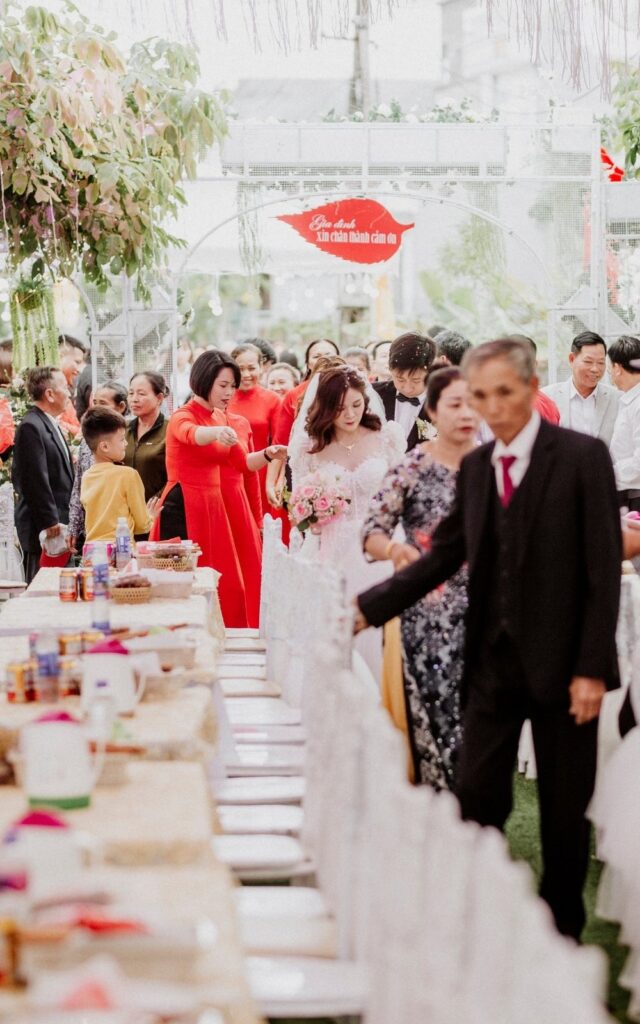
A Vietnamese wedding is not simply the union of two people.
It’s also the coming together of two families.
Parents, grandparents, aunts, uncles, cousins, neighbors, and lifelong friends all play important roles.
Guests often travel from different provinces to attend.
Meals are shared.
Stories are exchanged.
New relationships begin alongside old ones.
Visitors are often surprised by the warmth and sense of community surrounding these celebrations.
Food Is Always Part of the Celebration
No matter the occasion, one tradition remains remarkably consistent.
People gather around food.
Preparing meals together.
Sharing favorite family recipes.
Offering guests another serving.
Talking long after everyone has finished eating.
Food becomes a language of hospitality.
A way of expressing care.
A reminder that some of life’s happiest moments are best enjoyed together.
This is one reason why visitors often leave Vietnam remembering not only what they ate, but who they shared it with.
Traditions Continue Across Generations
One of the most remarkable aspects of Vietnamese family celebrations is how naturally traditions are passed from one generation to the next.
Grandparents explain why certain dishes are prepared.
Parents teach children how to greet older relatives.
Older siblings help younger cousins prepare decorations.
Children watch, participate, and gradually become the next generation responsible for continuing these customs.
Traditions remain alive because families continue practicing them together.
Local Insight
If you’re invited to a Vietnamese celebration, don’t be surprised if several people encourage you to eat more, join family photos, or stay longer than you planned. Making guests feel included is considered an important part of Vietnamese hospitality.
Did You Know?
Tet creates one of the world’s largest annual migrations as millions of Vietnamese travel back to their hometowns to reunite with family. For many people, the journey home is just as meaningful as the holiday itself.
Traveler’s Tip
If you have the opportunity to attend a Vietnamese family celebration, accept the invitation if you can. Whether it’s a birthday, wedding, or Tet gathering, these occasions offer one of the most authentic ways to experience Vietnamese culture beyond the usual tourist attractions.
How Vietnamese Family Culture Is Changing in Modern Society
“Vietnam has changed rapidly over the past few decades. Yet despite modern lifestyles, the importance of family remains remarkably strong.”
Visitors who return to Vietnam after several years often notice dramatic changes.
Modern apartment buildings replace old neighborhoods.
Coffee shops become shared workspaces.
Young professionals build careers with international companies.
Technology connects people across continents in seconds.
At first glance, Vietnam may seem very different from the country previous generations knew.
Yet beneath these changes, one value has remained remarkably consistent.
Family still comes first.
While the way Vietnamese families live is evolving, the importance of staying connected across generations continues to shape everyday life.
Smaller Households Are Becoming More Common
In the past, it was common for three or even four generations to live under one roof.
Today, especially in large cities such as Hanoi and Ho Chi Minh City, many young couples choose to live independently after marriage.
Apartments closer to work.
Smaller households.
More private living spaces.
These changes reflect practical needs rather than a rejection of traditional family values.
Many young families continue visiting parents regularly, sharing weekend meals, or returning home during important holidays.
Living separately doesn’t necessarily mean becoming emotionally distant.
Careers Are Taking Families Further Apart
Vietnam’s growing economy has created opportunities that previous generations could only imagine.
Young professionals move to major cities.
Students study abroad.
Some family members build careers in Singapore, Australia, Europe, or North America.
As a result, families are often separated by hundreds—or even thousands—of kilometers.
Distance, however, has changed relationships less than many visitors expect.
Parents and children frequently speak by phone each day.
Family group chats remain active.
Video calls allow grandparents to watch grandchildren grow up, even from another country.
Modern technology has become another way of keeping traditional family bonds alive.
Women and Men Share New Roles
Family life in Vietnam has also become more flexible.
More women pursue higher education and professional careers than ever before.
Many fathers take a more active role in caring for children.
Household responsibilities are increasingly shared, particularly among younger couples living in urban areas.
These changes don’t replace traditional values.
Instead, they reflect the way Vietnamese families continue adapting to modern society while maintaining strong relationships.
Respect, responsibility, and mutual support remain central, even as family roles become more balanced.
Technology Keeps Families Connected
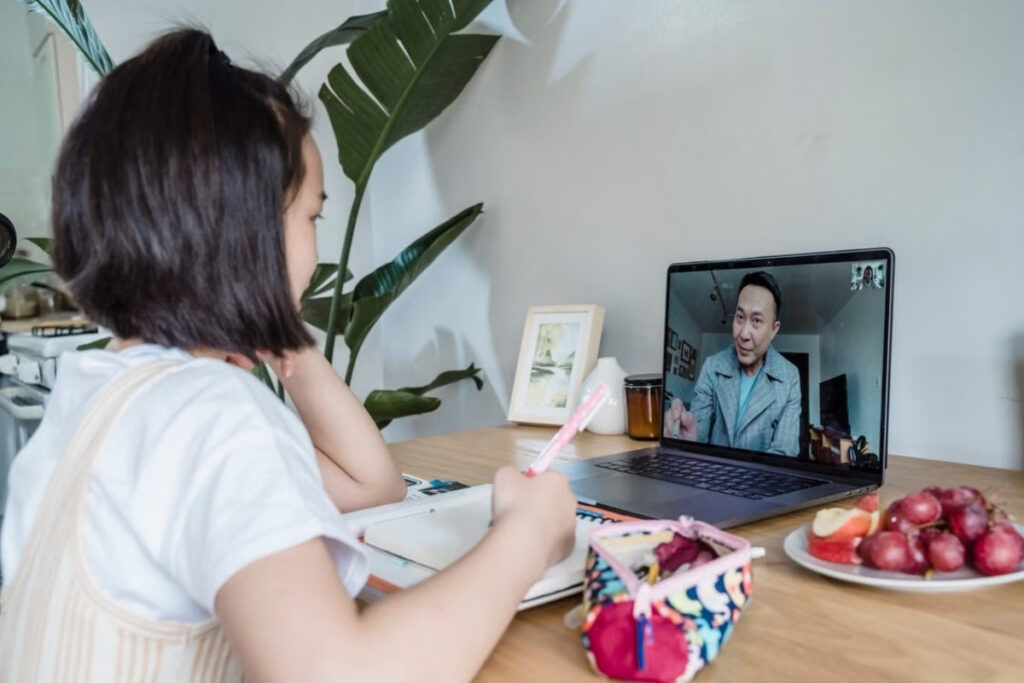
It’s now common to see grandparents video-calling grandchildren who live in another city.
Parents share family photos through messaging apps.
Relatives organize holiday gatherings in family group chats.
Technology hasn’t replaced family traditions.
It has simply become another tool for maintaining them.
Whether people live together or apart, staying involved in each other’s lives remains an important priority.
Young People Value Both Independence and Family
Many young Vietnamese adults today seek greater independence than previous generations.
They build careers.
Travel internationally.
Start businesses.
Pursue personal interests.
At the same time, most continue placing great importance on family relationships.
It’s not unusual for someone to live independently during the week while returning home almost every weekend to have dinner with parents or grandparents.
Rather than choosing between tradition and modern life, many young Vietnamese are finding ways to embrace both.
A Tradition That Continues to Grow
Culture never stands still.
Vietnamese family life today looks different from that of fifty years ago, and it will continue evolving in the future.
Yet one theme continues to unite generations.
Family remains the place where people celebrate success, find support during difficult times, and stay connected to their roots.
The houses may become smaller.
Families may live farther apart.
Daily routines may change.
But the importance of family continues to shape Vietnamese society in ways visitors quickly notice—and often admire.
According to recent population and housing statistics published by Vietnam’s General Statistics Office, household structures continue to evolve as urbanization increases. At the same time, close family relationships remain a defining characteristic of Vietnamese society.
Local Insight
Many young professionals who work in Hanoi or Ho Chi Minh City travel back to their hometown almost every weekend. Spending time with parents and grandparents remains an important part of life, even for people with demanding careers.
Did You Know?
Vietnam has one of Southeast Asia’s fastest-growing urban populations. Despite rapid urbanization, family gatherings during Tet and other important holidays continue to bring millions of people back to their hometowns every year.
Traveler’s Tip
Don’t assume that modern apartment buildings or busy city lifestyles mean traditional family values have disappeared. Behind many contemporary homes are the same close family relationships that have shaped Vietnamese society for generations.
Want to see how modern family life influences everyday experiences? Explore Living in Vietnam, where we look at how contemporary lifestyles, work, and tradition come together in today’s Vietnam.
Family Traditions Across Vietnam
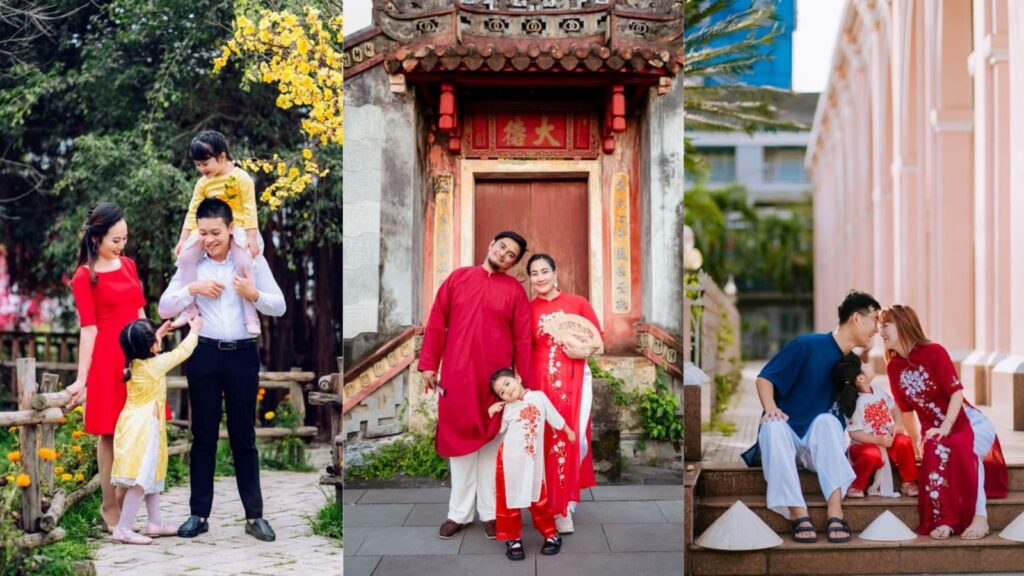
“Although family values remain remarkably consistent throughout Vietnam, the way they’re expressed can vary from one region to another.”
Traveling from north to south, visitors quickly discover that Vietnam is not culturally identical.
Regional cuisine changes.
Accents change.
Even the pace of daily life feels different.
Family traditions also reflect these regional characteristics while sharing the same underlying values of respect, responsibility, and togetherness.
Northern Vietnam
Families in Northern Vietnam are often described as more traditional in their approach to family life.
Respect for elders tends to be expressed more formally, and traditional customs surrounding family gatherings, ancestor worship, and important celebrations remain especially visible.
Visitors may notice a stronger emphasis on hierarchy during family meals and formal occasions.
Central Vietnam
Central Vietnam is known for preserving many long-standing cultural traditions.
Historic cities such as Hue continue to influence local customs, where courtesy, modesty, and family rituals often play an important role.
Many traditional ceremonies are observed with quiet dignity rather than elaborate displays.
Southern Vietnam
In Southern Vietnam, family life is often perceived as slightly more relaxed and informal.
Greetings may feel more casual, conversations more expressive, and hospitality especially spontaneous.
Despite these differences, respect for parents, grandparents, and extended family remains just as important as in other regions.
More Similar Than Different
Visitors sometimes focus on regional differences, but the similarities are often far more significant.
Whether you’re invited into a home in Hanoi, Hue, Can Tho, or Ho Chi Minh City, you’ll likely experience the same generosity, shared meals, and close family relationships that define Vietnamese culture throughout the country.
Common Misunderstandings Foreign Visitors Have About Vietnamese Families
“Looking at a culture through your own experiences is natural. Understanding it through local perspectives is where real travel begins.”
Visitors often describe Vietnamese families as close-knit, welcoming, and supportive.
At the same time, some everyday customs can feel unfamiliar to people from different cultural backgrounds.
Why do adult children still seek their parents’ advice?
Why do grandparents spend so much time caring for grandchildren?
Why does everyone seem to encourage you to eat more?
These moments are easy to misunderstand if viewed only through the lens of another culture.
Understanding the reasons behind them offers a much richer picture of everyday life in Vietnam.
Misunderstanding #1: “Adult Children Depend Too Much on Their Parents”
One of the most common misconceptions is that close family relationships mean adult children are not independent.
In reality, many Vietnamese adults build successful careers, manage their own households, and make important life decisions independently.
What often surprises visitors is that they also continue seeking advice from parents and staying closely involved in family life.
For many Vietnamese people, independence and family support are not opposites.
They complement one another.
Remaining connected to parents is generally viewed as a sign of respect rather than dependence.
Misunderstanding #2: “Grandparents Are Babysitters”
Visitors frequently see grandparents walking children to school or caring for them during the day.
From an outside perspective, it may appear that grandparents are simply providing childcare.
For many Vietnamese families, however, their role is much deeper.
Grandparents help pass on family stories, traditions, language, and values.
Time spent together strengthens relationships across generations while allowing children to grow up surrounded by family.
Their contribution is measured not only in practical help, but also in cultural continuity.
Misunderstanding #3: “They Keep Offering Me Food Because They Think I’m Hungry”
Many travelers experience this during their very first family meal.
You finish your bowl.
Someone adds more food.
You politely decline.
Another serving appears anyway.
It’s easy to assume your host believes you haven’t eaten enough.
In reality, this tradition is usually an expression of hospitality.
Offering food is a way of saying:
“We’re happy you’re here.”
Most hosts don’t expect you to keep eating forever.
They simply want you to feel welcomed and cared for.
Misunderstanding #4: “Everyone Lives Together”
While multi-generational households remain common, they no longer represent every Vietnamese family.
Many young couples now live independently.
Students study abroad.
Professionals relocate to major cities.
What has remained consistent is not necessarily the living arrangement, but the relationship.
Families may live separately while speaking every day, visiting regularly, and celebrating important occasions together.
Closeness is defined by connection rather than sharing the same address.
Misunderstanding #5: “Traditional Values Are Disappearing”
Modern Vietnam is often associated with skyscrapers, technology, and rapid economic growth.
Some visitors assume that traditional family values have been left behind.
In reality, many traditions have simply adapted.
Family dinners may happen less frequently during busy weekdays.
Video calls may replace daily face-to-face conversations.
Holiday reunions may require flights instead of short walks across the neighborhood.
The form has changed.
The values remain remarkably familiar.
Respect, responsibility, and family support continue to shape everyday life throughout the country.
Seeing Beyond the Surface
Travel becomes more meaningful when we move beyond first impressions.
What initially appears unusual often reflects values that have developed over generations.
A crowded family dinner.
Grandparents caring for children.
Adult siblings helping one another.
Parents offering advice long after their children have grown up.
These moments are not exceptions.
They are everyday expressions of a culture that continues to place family at the center of life.
For many visitors, understanding these traditions transforms simple observations into lasting appreciation.
Local Insight
Many Vietnamese people introduce close family friends as “Aunt,” “Uncle,” or “Older Brother,” even when no blood relationship exists. These forms of address reflect warmth and respect rather than literal family ties.
Did You Know?
Vietnamese family relationships are often described using detailed kinship terms rather than first names. The language itself reflects the importance of age, family roles, and respect in everyday communication.
Traveler’s Tip
If something about family life in Vietnam feels unfamiliar, don’t hesitate to ask respectful questions. Most Vietnamese people enjoy sharing their traditions and are often delighted when visitors show genuine curiosity about their culture.
Frequently Asked Questions About Vietnamese Family Culture
Why is family so important in Vietnamese culture?
Family is widely considered the foundation of Vietnamese society. From childhood, people are encouraged to value close relationships, respect parents and elders, and support relatives throughout different stages of life. These values influence everything from daily routines and major life decisions to holidays and family celebrations.
Do Vietnamese families still live together?
Many do, particularly in smaller towns and rural areas where multi-generational households remain common. In larger cities, however, young couples increasingly establish their own homes. Even when living separately, families usually maintain close relationships through regular visits, phone calls, and shared celebrations.
Why do Vietnamese people respect their elders so much?
Respect for elders reflects appreciation for their experience, guidance, and lifelong sacrifices for the family. This respect is expressed through everyday gestures, such as greeting older relatives first, listening carefully to their advice, and including them in important family decisions.
What is filial piety in Vietnam?
Filial piety refers to the lifelong responsibility of honoring and caring for one’s parents. In Vietnam, this is often expressed through everyday actions rather than formal ceremonies—visiting parents regularly, helping them when needed, maintaining close family relationships, and showing gratitude for their care and support.
Why do grandparents play such an important role?
Grandparents often help care for young children while parents work, but their role goes far beyond childcare. They pass down family traditions, recipes, stories, cultural values, and life experience, helping connect younger generations with their family’s history and identity.
Why do Vietnamese families eat together so often?
Sharing meals is one of the most important ways Vietnamese families stay connected. Family dinners provide time to talk, celebrate everyday life, and strengthen relationships across generations. Even as modern schedules become busier, many families continue making shared meals a priority whenever possible.
Do young Vietnamese people still follow traditional family values?
Yes, although family life has evolved. Many young Vietnamese pursue higher education, international careers, and independent lifestyles while continuing to value close relationships with parents and grandparents. Modern lifestyles have changed how families stay connected, but not necessarily why they do.
What should visitors know when visiting a Vietnamese family?
Visitors don’t need to understand every tradition perfectly. Removing your shoes before entering, greeting older family members first, accepting hospitality graciously, and showing genuine appreciation are usually more important than following every custom exactly. A respectful attitude is always welcomed.
“Understanding Vietnamese families means understanding Vietnam itself.”
Final Thoughts on Vietnamese Family Values
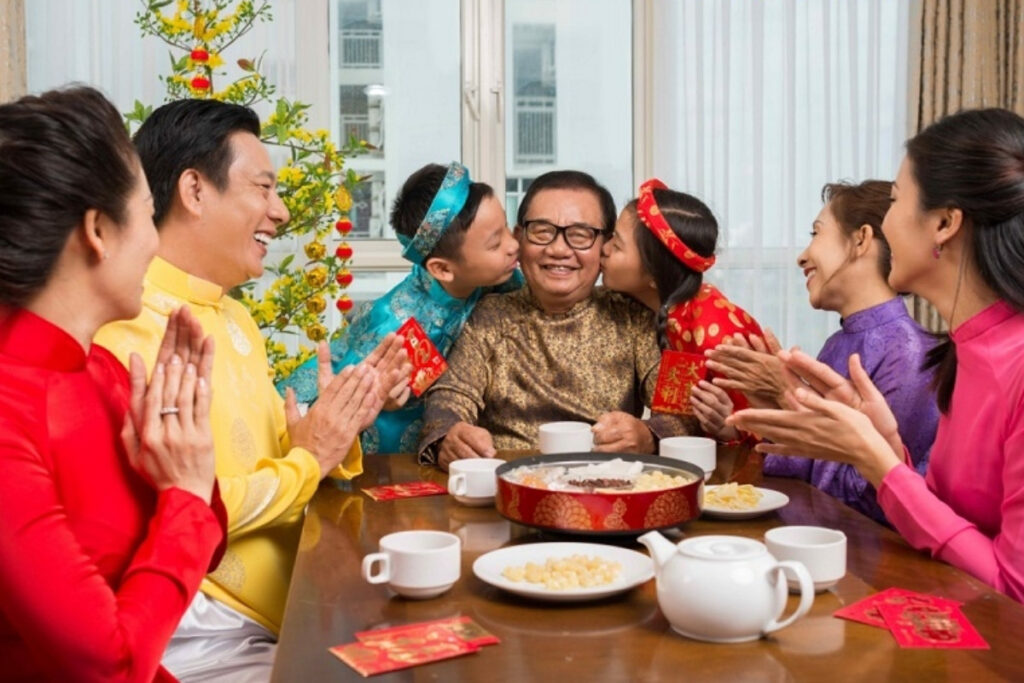
Family is often described as the heart of Vietnamese culture.
After spending time in Vietnam, many visitors realize this isn’t simply a saying—it’s something they experience firsthand.
It’s there in the grandmother preparing breakfast before sunrise.
In the parents who travel hundreds of kilometers to celebrate a family milestone.
In the children who grow up surrounded by grandparents, cousins, and family friends.
In the dinner table where stories are shared as naturally as the food itself.
Vietnam today is modern, ambitious, and constantly evolving.
Cities are expanding.
Young people are studying overseas.
Technology has transformed the way families communicate.
Yet beneath these changes, one tradition remains remarkably constant.
Family continues to be the place where people find support, celebrate success, care for older generations, and pass traditions from one generation to the next.
For travelers, understanding Vietnamese family culture offers far more than cultural knowledge.
It provides a deeper understanding of the people themselves.
Many of the kindnesses visitors experience in Vietnam—from warm hospitality and shared meals to genuine curiosity and lasting friendships—begin with the values people first learn at home.
Long after you’ve forgotten the names of individual streets or attractions, you may still remember sitting around a family table, sharing food, listening to stories, and realizing that the most meaningful part of Vietnam was never just the places you visited.
It was the people who welcomed you into their lives.
Continue Exploring Vietnam
If you’d like to learn more about the traditions that shape everyday life in Vietnam, explore these guides:
- Vietnamese Customs and Traditions: A Traveler’s Guide to Understanding Vietnam
- Vietnamese Etiquette: 25 Cultural Tips Every Traveler Should Know
- Ancestor Worship in Vietnam: Understanding a Living Tradition
- Tet Holiday in Vietnam: Traditions, Food, and Family Celebrations
- Living in Vietnam: Everyday Customs That Surprise Foreigners
- Vietnam Coffee Culture: More Than Just a Drink
👉 Vietnam Transportation Guide
For more local stories, travel tips, and cultural insights, visit our YouTube channel:
TAM VOC VIET – VIETNAM INSIGHTS
About the Author
Tam Voc Viet Editorial Team
The Tam Voc Viet Editorial Team creates in-depth travel and culture guides that help international visitors understand Vietnam beyond its famous attractions. Through careful research, local perspectives, and firsthand cultural insight, we explore the traditions, values, and everyday experiences that continue to shape modern Vietnamese life.
Our goal is not only to explain what travelers see, but also why those customs matter—helping readers experience Vietnam with greater understanding, respect, and confidence.
Explore more: Vietnam Travel Guide, Vietnam Culture Guide, Vietnam Food Guide, and Living in Vietnam.
Last updated: July 2026
Editorial review: Tam Voc Viet Editorial Team
Estimated reading time: 25 minutes
