


 Tiếng Việt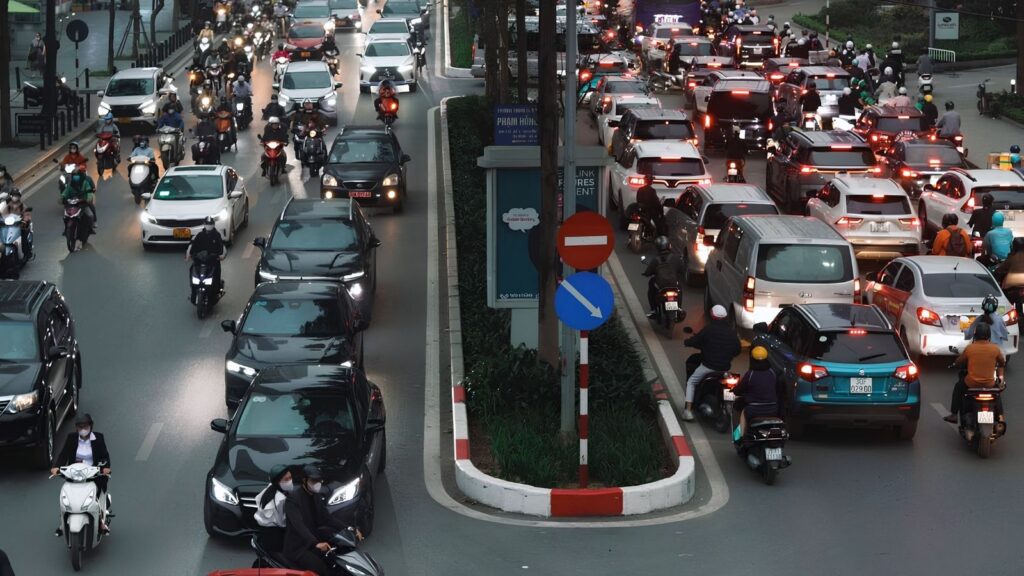
Vietnam has a way of surprising you in places you don’t expect.
The famous sights are easy to anticipate: limestone mountains rising from Ha Long Bay, lanterns glowing in Hoi An, bowls of pho on plastic tables, and thousands of motorbikes moving through the streets.
But the surprises that stay with you are often smaller.
A sidewalk suddenly becomes a restaurant. A coffee shop becomes a place to work for half the afternoon. A stranger asks your age within minutes of meeting you. Three generations sit down for dinner together. A motorbike seems to pass impossibly close to you—and somehow everyone keeps moving.
None of these things are particularly unusual to Vietnamese people.
That’s what makes them interesting.
They are ordinary parts of everyday life that can look completely different to someone arriving from the United States for the first time.
Quick Answer: What Surprises First-Time Visitors to Vietnam?
First-time visitors to Vietnam are often surprised by the country’s informal traffic patterns, sidewalk culture, strong coffee, communal meals, direct personal questions, street noise, multigenerational family life, and the way traditional customs exist alongside a rapidly modernizing lifestyle.
The biggest surprises are usually not the famous tourist attractions. They are the ordinary details of daily life.
Table of Contents
1. Vietnamese Traffic Has an Informal Language
Your first impression of Vietnamese traffic may simply be:
How does anyone know what anyone else is doing?
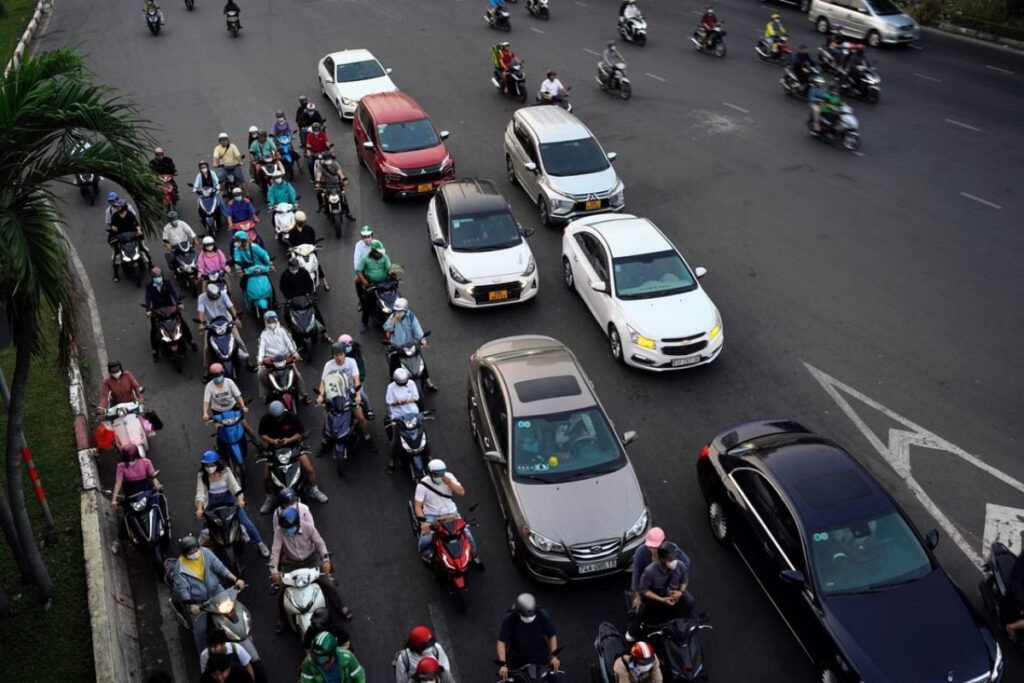
Motorbikes move around cars, pedestrians step into traffic, delivery riders pull over wherever there is space, and vehicles frequently use their horns.
To an American visitor, it can look like everyone is improvising.
In reality, drivers are constantly communicating through speed, position, eye contact, and small movements.
A rider may slow down without stopping. A driver may move slightly to one side to signal that you can pass. A short horn blast can mean little more than “I’m here.”
These aren’t formal traffic rules in the American sense. They are informal signals that become easier to recognize once you’ve spent time watching them.
That doesn’t make Vietnamese traffic harmless. Busy roads can be genuinely dangerous, and visitors should be cautious.
But understanding that there is a pattern behind the apparent chaos makes the streets much easier to read.
Why It Feels Different to Americans
In the United States, drivers generally rely heavily on marked lanes, traffic signals, stop signs, and clearly defined right-of-way.
Vietnamese traffic often depends much more visibly on continuous negotiation between road users.
Neither system can be reduced to a simple “better” or “worse.”
They are simply organized differently.
Travel tip: don’t imitate local traffic behavior just because you see locals doing it. When you’re unfamiliar with an intersection, use marked crossings and traffic signals whenever available.
2. Crossing the Street Is Less About Waiting Than Reading Traffic
This is where the first lesson about Vietnamese traffic becomes personal.
You stand on the curb.
A steady stream of motorbikes approaches.
You wait.
And wait.
Eventually you realize that the road is probably never going to become completely empty.
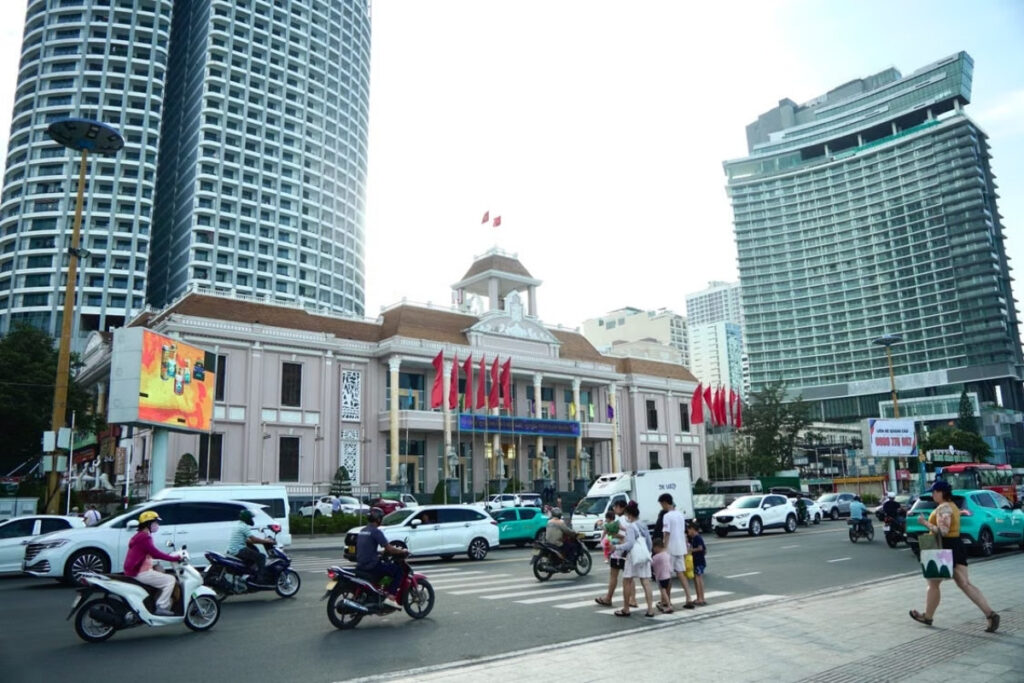
In busy Vietnamese cities, pedestrians often cross by moving steadily while approaching vehicles adjust around them.
For a first-time visitor, the instinct is usually to make a sudden dash during a small opening.
That can actually make things harder.
A predictable, steady pace gives approaching riders a better chance to understand where you’re going.
The first crossing can feel absurdly stressful.
The second one feels slightly easier.
By the third or fourth, you may find yourself walking across a busy street with considerably more confidence than you expected.
You haven’t learned a secret trick.
You’ve simply started reading the movement around you.
What Should You Do?
If you’re nervous, watch how experienced pedestrians cross before attempting a busy road yourself.
Use pedestrian crossings and traffic lights when available.
And don’t assume that a local’s confidence means the road is safe for an unfamiliar visitor.
The goal isn’t to become fearless. It’s to become predictable.
3. A Coffee Shop May Be a Living Room, Office, and Meeting Place
Vietnam is famous for coffee, but the bigger surprise for many visitors is what people actually do in cafés.
In the United States, coffee can be highly transactional:
Order. Pick up. Leave.
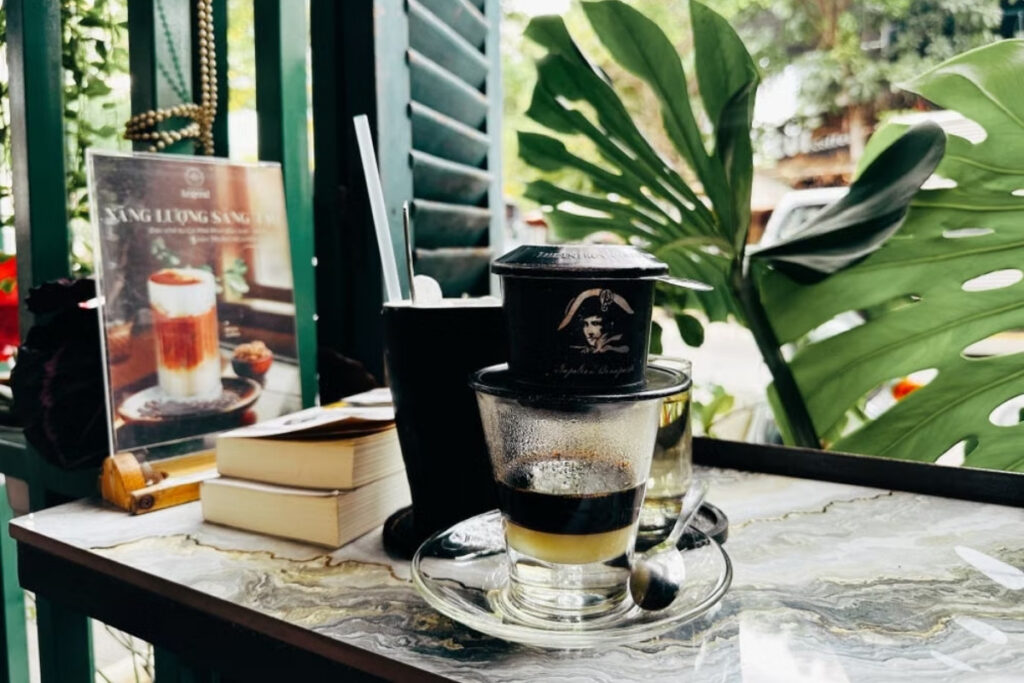
In Vietnam, a coffee shop can function as a neighborhood meeting place, workspace, study room, social club, and place to simply sit and watch the street.
You might see someone drinking one coffee for a surprisingly long time.
A student may spend an afternoon studying.
Friends may sit together without ordering much food.
Someone working on a laptop may occupy a table for hours.
And outside major chains, cafés can range from tiny sidewalk spaces to elaborate multi-story buildings.
The drink matters, of course.
But the café itself is part of the experience.
This is particularly noticeable in Hanoi, where sitting with a coffee and watching the street can be as much a part of urban life as sightseeing.
Why This Can Feel Unusual to Americans
American coffee culture certainly includes cafés where people work or socialize. But many travelers notice that Vietnamese cafés can feel more integrated into everyday neighborhood life.
You don’t necessarily go there because you need coffee.
You may go because you want somewhere to sit.
What to Try
Order a traditional cà phê sữa đá—Vietnamese iced coffee with sweetened condensed milk—and give yourself time to sit rather than immediately rushing to the next attraction.
If you’re sensitive to caffeine, remember that Vietnamese coffee can be considerably stronger than what you’re accustomed to.
See more about Vietnam’s coffee in this article: Vietnam Coffee Culture Guide
4. The Sidewalk Is Part of Everyday Life
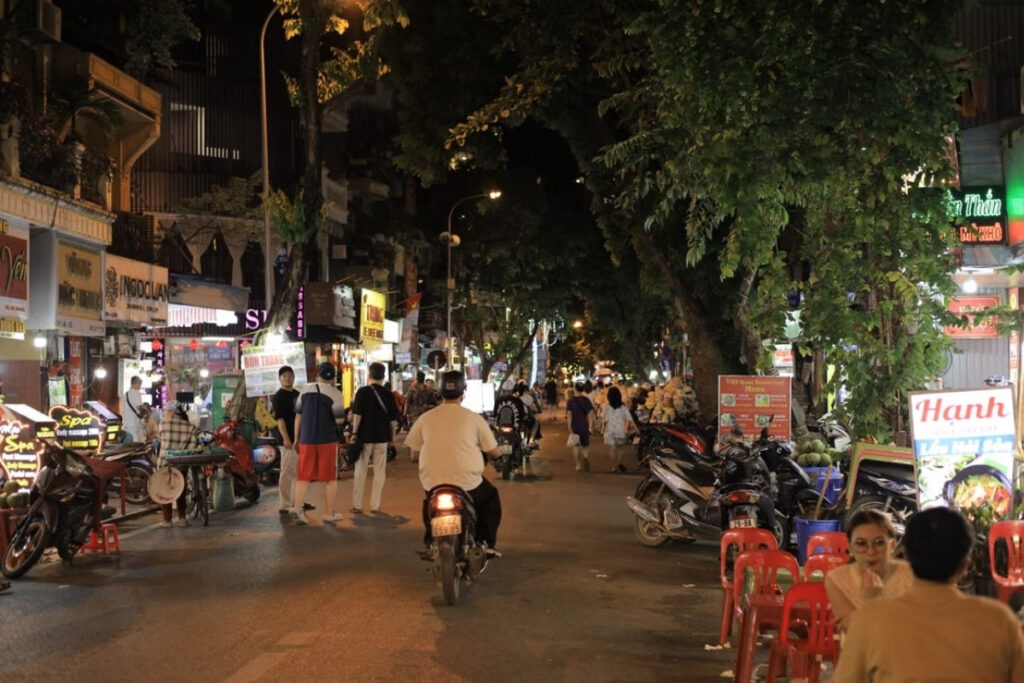
One of the easiest ways to understand a Vietnamese city is to stop looking at the sidewalk as merely a pedestrian path.
Depending on the neighborhood and time of day, the same stretch of pavement may become a parking area, food stall, coffee shop, gathering place, shop display, or informal dining room.
You may see people eating breakfast beside the street before work.
Later, motorbikes may fill the same space.
In the evening, small tables and stools can appear outside restaurants.
For an American visitor, this can be confusing because the boundary between public space and commercial space is much less rigid.
It can also make walking difficult in some neighborhoods.
But there is something revealing about it.
Vietnamese street life often spills outward.
Instead of keeping daily activities behind closed doors, people frequently interact with the street.
The result is a city that can feel unusually close to you.
You don’t just walk through it.
You see people cooking, eating, talking, working, shopping, and socializing right beside you.
A Useful Change in Perspective
In many American cities, the sidewalk mainly connects one destination to another.
In Vietnam, the sidewalk can itself be part of the destination.
That distinction helps explain why sitting on a tiny stool beside a busy road can feel perfectly ordinary to a local—and strangely intimate to a visitor.
5. People May Ask Questions Americans Usually Consider Private
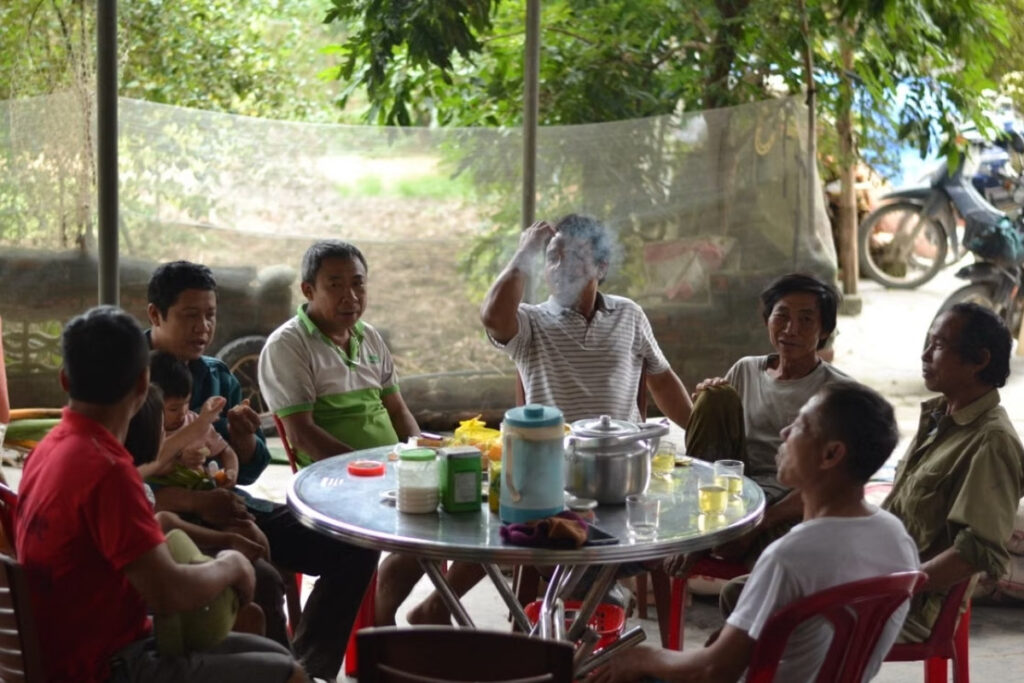
A Vietnamese person you’ve just met may ask:
How old are you?
Are you married?
Do you have children?
Where are you staying?
What do you do for work?
For an American visitor, the first few questions can feel surprisingly personal.
In Vietnam, they can simply be part of establishing a social relationship.
Age matters in Vietnamese communication because it can help determine how people address one another. Family and occupation are also common topics when people are getting acquainted.
The important distinction is context.
Someone asking your age isn’t necessarily trying to invade your privacy.
They may be trying to figure out how to address you politely.
You are still free not to answer questions you don’t want to answer.
Why the Difference Matters
American culture often places a strong boundary around personal information, particularly when meeting someone for the first time.
Vietnamese social interaction can place more emphasis on understanding someone’s age, family position, and relationship to you.
So a question that sounds intrusive in English may have a much more ordinary social purpose in Vietnamese.
This is one reason understanding Vietnamese etiquette can make everyday interactions much easier.
6. A Vietnamese Meal Is Often Designed to Be Shared
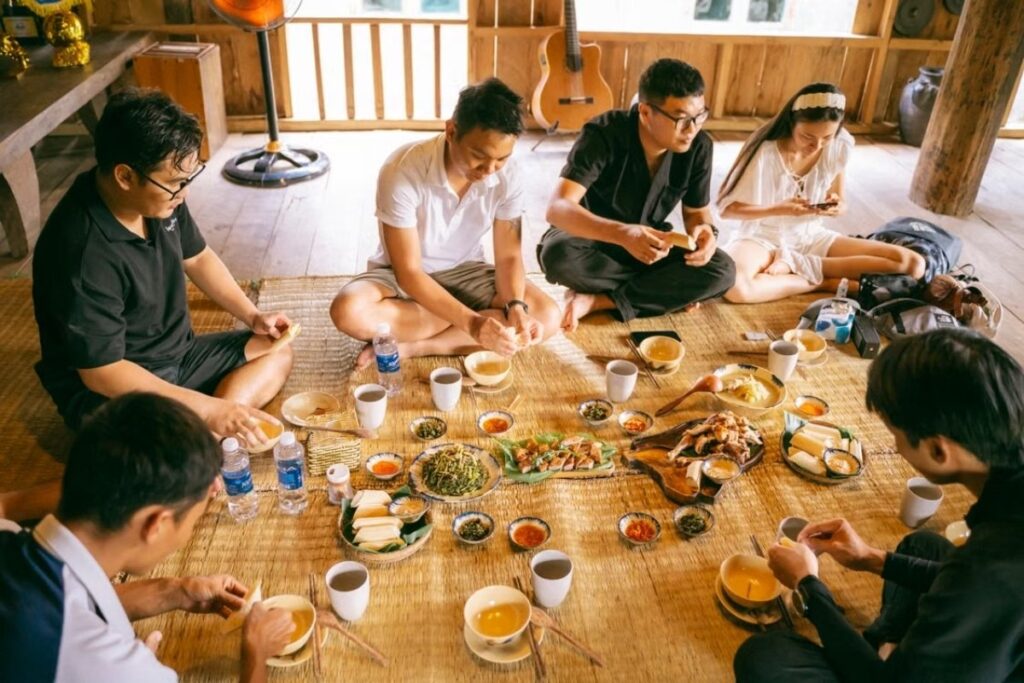
One of the easiest ways for an American traveler to misunderstand a Vietnamese menu is to think entirely in terms of individual entrées.
A family meal may work very differently.
Rice and several dishes can be placed in the center of the table. People take portions from shared plates and combine different foods with rice, vegetables, herbs, soup, and dipping sauces.
There may not be one obvious “main course.”
Instead, the meal is built from several components.
This changes the social experience, too.
Eating isn’t simply about getting your own plate of food.
It becomes something the group does together.
You may also notice that Vietnamese diners use smaller portions of several foods rather than ordering one large dish for each person.
For visitors accustomed to American-style individual meals, the arrangement can initially feel unfamiliar.
After a few meals, it starts to feel completely natural.
One Small Etiquette Point
When eating a shared meal, don’t automatically reach across the entire table with your own chopsticks for the most distant dish.
If serving utensils are provided, use them.
And if you’re eating with Vietnamese hosts, it’s usually polite to let older guests or hosts begin first.
The exact etiquette varies by family and setting, so observation is often your best guide.
7. Fresh Herbs Aren’t a Garnish—They’re Part of the Dish
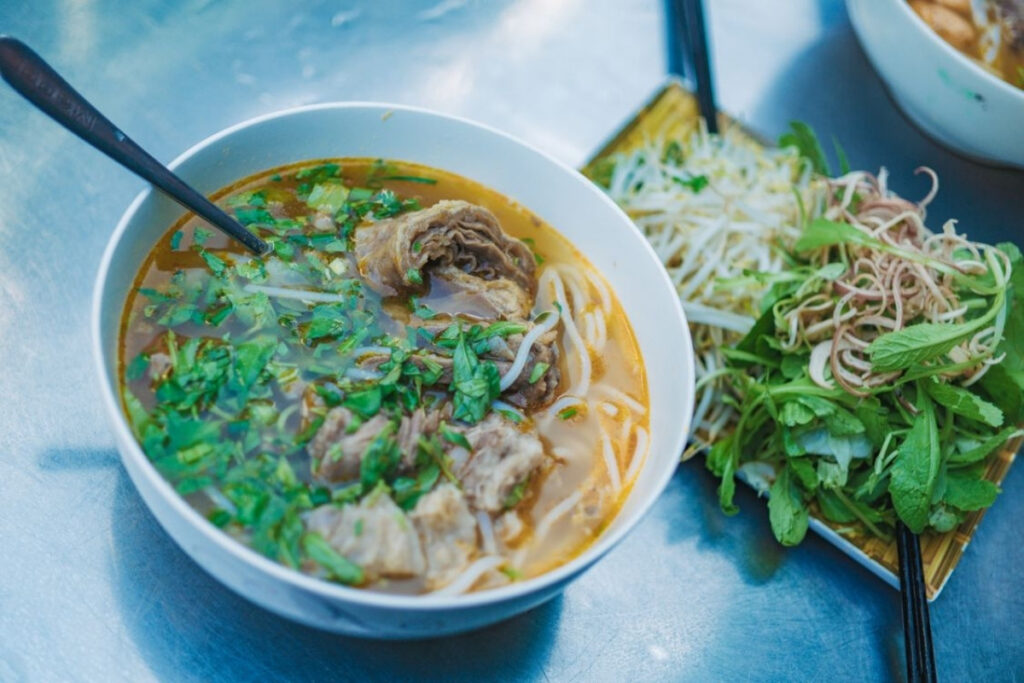
A plate of Vietnamese food may arrive with a pile of leaves and herbs that looks, at first, like decoration.
It isn’t.
Fresh herbs can fundamentally change the flavor of a dish.
Mint, basil, cilantro, perilla, lettuce, bean sprouts, and other greens may be eaten alongside noodles, grilled meat, soups, rice dishes, and spring rolls.
Instead of adding one small garnish at the end, diners often build each bite themselves.
One bite might be mostly noodles.
Another might include herbs, vegetables, meat, and dipping sauce.
That means the same dish can taste different from one bite to the next.
For someone used to a plated American meal where the chef determines most of the final combination, this can be a subtle but important difference.
The Surprise
Vietnamese food often gives the diner part of the job.
You’re not simply eating the dish.
You’re finishing it at the table.
If you’re unsure what to do with an unfamiliar plate of greens, watch how other diners use them.
There’s no need to add everything at once.
8. A Small Restaurant Can Be More Specialized Than You Expect
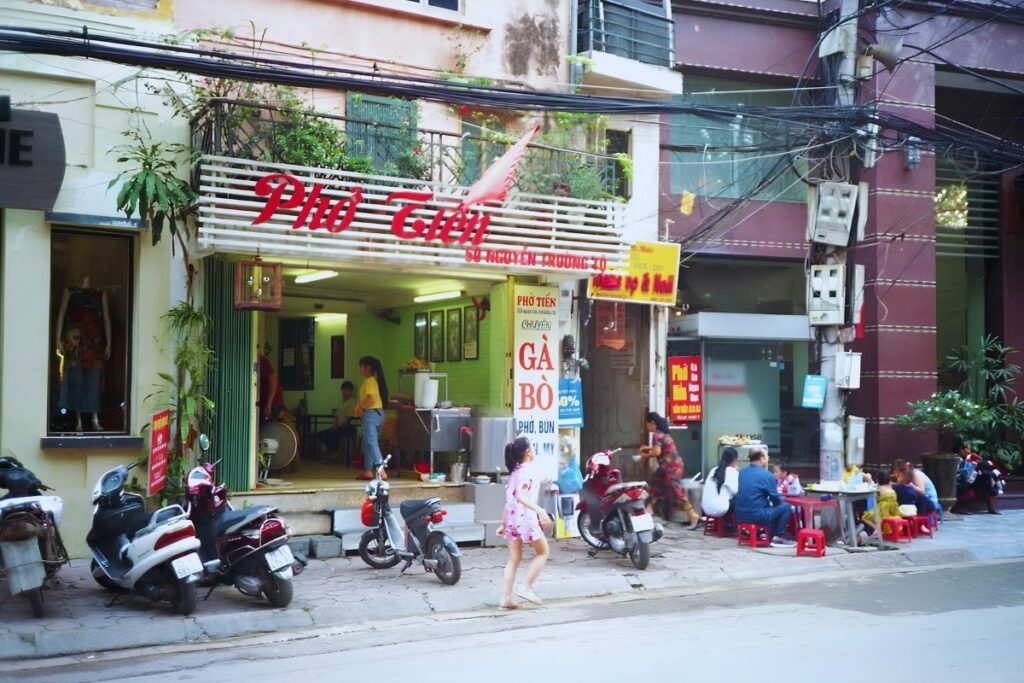
The word “restaurant” can create a specific image for American travelers: a storefront, dining room, host stand, tables, menu, and perhaps a bar.
In Vietnam, the reality can be much more casual.
A place serving excellent food may consist of a kitchen, a few tables, tiny stools, and a menu that is extremely short—or barely visible at all.
Some establishments specialize in one dish.
They don’t need twenty pages of options because they’ve spent years making the same thing.
This can be intimidating when you’re used to choosing from a detailed English-language menu.
But it can also be one of the best parts of eating in Vietnam.
A crowded little shop with only a handful of dishes can sometimes tell you more about local eating habits than an elaborate restaurant designed specifically for tourists.
That doesn’t mean every small restaurant is automatically better.
It simply means size and formality aren’t reliable measures of quality in Vietnam.
A Practical Tip for First-Time Visitors
Look for places that are busy with local customers, especially during normal Vietnamese meal times.
A short menu can also be a good sign that a restaurant has a particular specialty rather than trying to serve everything.
9. The Horn Is Often Communication, Not Anger
American visitors may have a strong emotional reaction to the amount of honking they hear.
In the United States, a horn often suggests irritation:
Get out of the way.
What are you doing?
Move!
In Vietnam, honking can have a much broader function.
A rider may use the horn to let someone know they are approaching from behind.
A driver may signal before moving around another vehicle.
A short burst may simply mean:
“I’m here.”
That doesn’t mean every horn is polite or friendly.
Traffic can still be frustrating.
But assuming every honk represents anger can make Vietnamese streets seem much more aggressive than they actually are.
After a few days, you may begin to hear different kinds of honking almost as a vocabulary of the road.
Why This Matters
This is a good example of why travel can be misleading when you interpret another country’s behavior entirely through your own cultural expectations.
The same sound can carry a different social meaning.
10. Family Can Be Present in Decisions Americans Usually Make Alone
For many American travelers, adulthood is strongly associated with independence.
Where you live, who you date, what job you take, and how you spend your money are generally considered personal decisions.
Vietnamese family life can place more visible emphasis on the family as a unit.
Parents may remain closely involved in their adult children’s lives.
Grandparents may play an important role in raising children.
Major decisions can involve conversations with parents or other relatives.
That doesn’t mean Vietnamese adults lack independence.
And younger generations—particularly in large cities—are increasingly making choices that look much more individualistic.
But family remains an important social reference point.
You may notice this in something as simple as a family dinner.
Instead of seeing only parents and young children, you may see several generations sharing the same table.
The American-Vietnamese Contrast
The difference is often less about whether people are “independent” and more about how independence is balanced with family responsibility.
A Vietnamese adult can be highly independent while still considering parents, grandparents, siblings, or children when making major decisions.
That distinction is easy to miss if you only look at the surface.
11. Those Tiny Plastic Stools Actually Make Sense
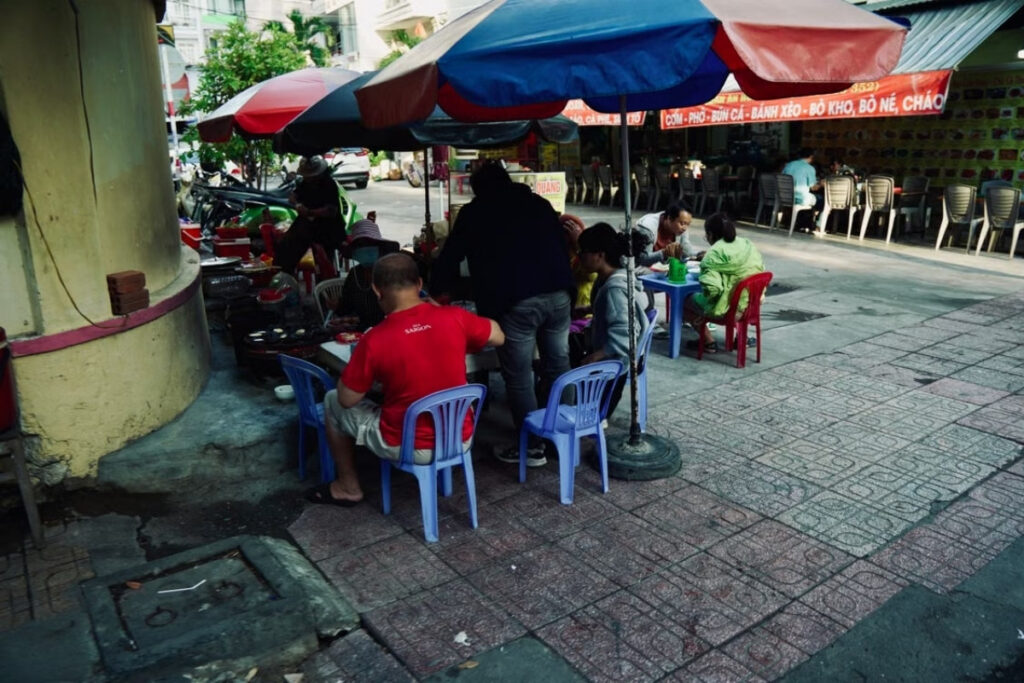
You’ve probably seen them in photographs.
Tiny plastic stools.
Then you arrive in Vietnam and discover they’re everywhere.
They look almost comically small compared with the chairs in an American restaurant.
But they make sense once you see how street dining works.
They’re inexpensive, lightweight, easy to stack, and easy to move when the sidewalk needs to serve another purpose.
A noodle vendor can set up a few stools in minutes.
When customers leave, the entire seating arrangement can be moved or packed away.
The stool is not trying to be comfortable furniture.
It’s a tool for flexible urban life.
And eventually, something funny happens.
After spending a few days in Vietnam, sitting on one no longer seems strange.
It just seems normal.
One Thing to Know
If you’re tall or have mobility issues, street seating may not be particularly comfortable.
That’s another reason Vietnam rewards flexibility.
A restaurant that looks very basic from the outside may still offer an excellent meal—but it may not offer the furniture or service style you would expect from a typical American restaurant.
12. Three Generations May Be Part of the Same Everyday Scene
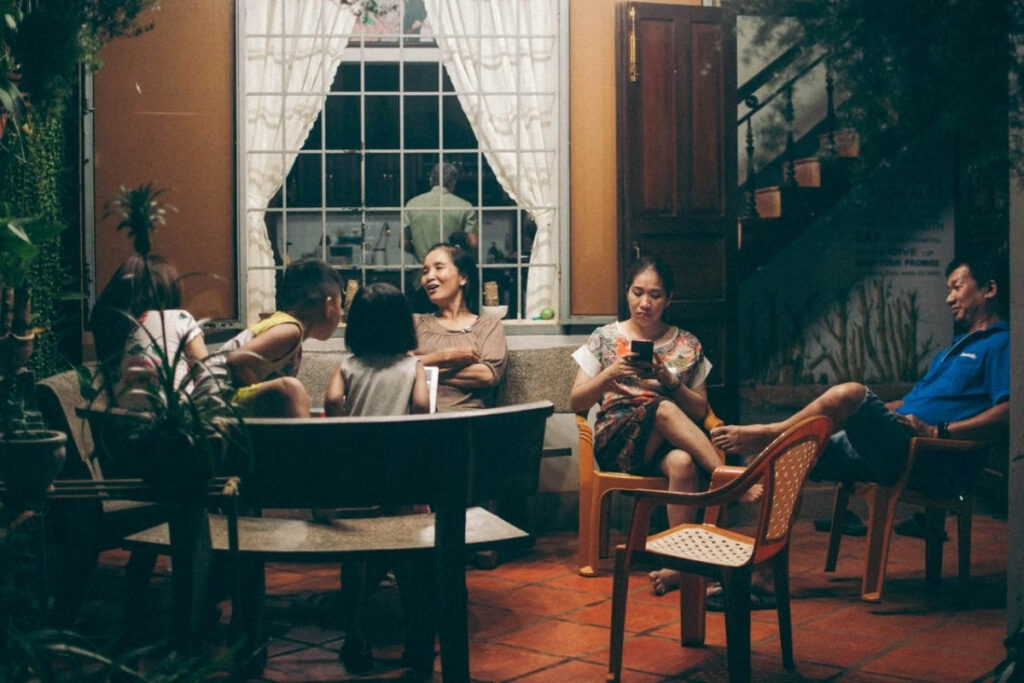
One of the more subtle surprises for American visitors is how often different generations appear together.
You might see grandparents walking with grandchildren in the morning, several generations eating together at night, or an older family member helping with childcare while parents work.
Vietnamese family structures vary enormously, and urban life is changing quickly.
Still, multigenerational relationships remain highly visible.
This can affect everyday routines.
Grandparents may have an active role in childcare.
Adult children may live with or near their parents.
Family gatherings can include relatives of very different ages.
For Americans used to households becoming increasingly independent as children become adults, this close proximity can stand out.
It also helps explain why family is such a recurring theme in Vietnamese celebrations, food traditions, and everyday conversation.
If you want to understand this part of Vietnam more deeply, learning about Vietnamese family culture provides useful context that a travel itinerary alone cannot.
13. Modern Vietnam Doesn’t Look Like the Vietnam in Old Travel Photos
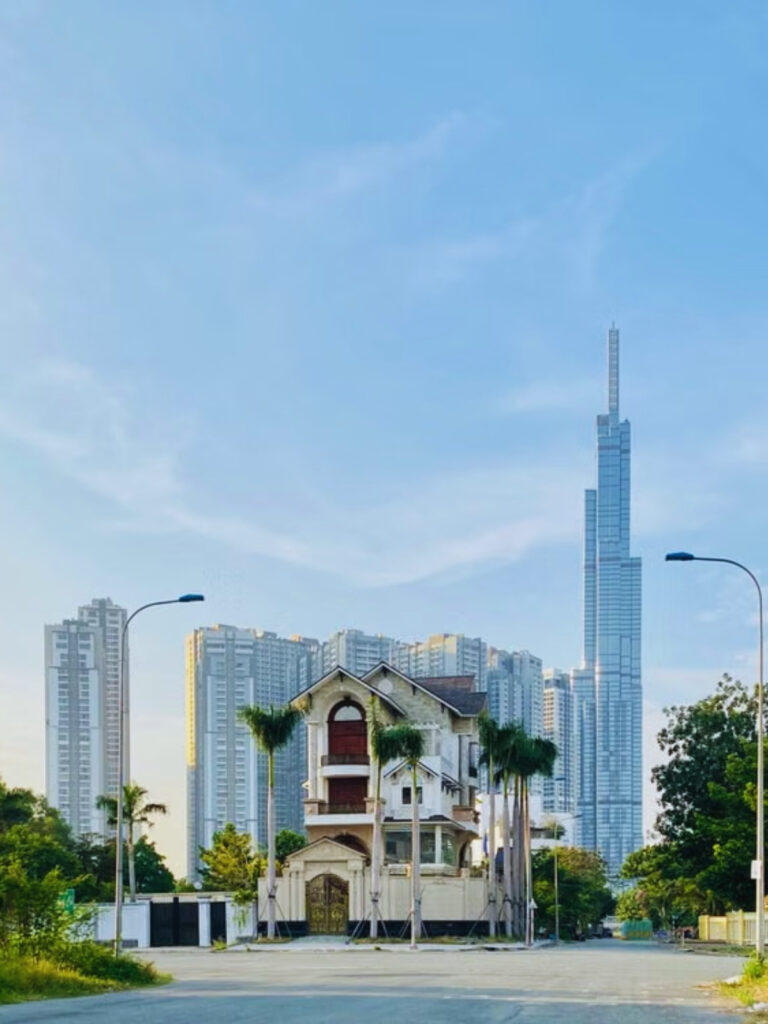
Many visitors arrive with two images of Vietnam in their heads.
One is traditional:
Rice fields, conical hats, bicycles, old temples, street markets.
The other is tourist Vietnam:
Beaches, lanterns, pho, and historic towns.
Then they arrive in Hanoi or Ho Chi Minh City.
There are smartphones everywhere.
Young people order food through apps.
Coffee shops look like contemporary design studios.
Skyscrapers rise behind older neighborhoods.
Motorbike delivery services operate alongside centuries-old markets.
A young Vietnamese professional may wear global fashion brands, work remotely, speak excellent English, and still return home for a traditional family celebration.
Vietnam’s past hasn’t disappeared.
It exists alongside an increasingly modern economy and urban lifestyle.
The Important Nuance
It’s tempting for travel writing to describe Vietnam as a country “caught between tradition and modernity.”
That description is too simple.
Modern Vietnam isn’t necessarily replacing traditional Vietnam.
Often, the two exist in the same household, the same family, and sometimes the same person.
That’s a much more interesting story.
14. Convenience Can Look Completely Different Here
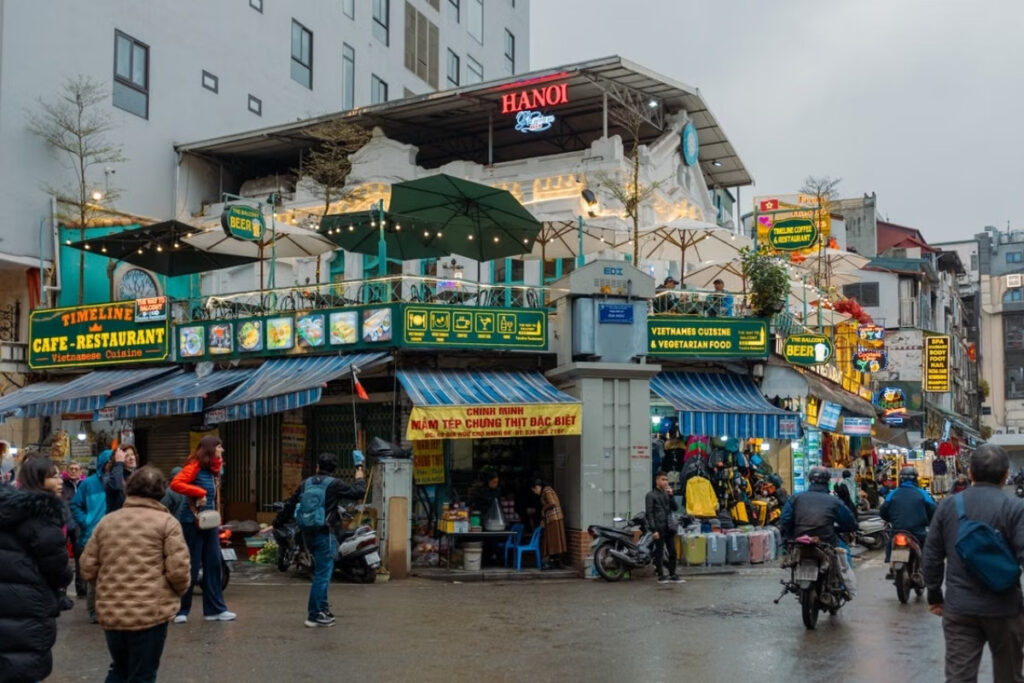
Vietnamese cities can be remarkably convenient in ways that aren’t always obvious to first-time visitors.
Food can be delivered to your door.
A coffee can be brought to your table from a tiny neighborhood shop.
A motorbike can take you through streets where a car would be inconvenient.
Small stores and food vendors operate throughout residential neighborhoods.
Need breakfast?
There may be a noodle shop downstairs.
Need coffee?
There may be three options within a few minutes’ walk.
Need a late-night snack?
Someone may still be cooking.
For an American visitor accustomed to driving to a shopping center or relying on large chains, this hyper-local convenience can be surprising.
The city itself becomes the infrastructure.
Instead of putting everything in one large commercial space, everyday services are distributed throughout the neighborhood.
But There Is a Trade-Off
This convenience often comes with less predictability.
A tiny neighborhood shop may not have an English menu.
A street vendor may accept only cash.
A sidewalk restaurant may have no obvious entrance or formal waiting area.
So Vietnam can feel incredibly convenient and slightly confusing at exactly the same time.
That’s part of the learning curve.
15. Some of Your Best Vietnam Experiences Won’t Be on Your Itinerary
This may be the biggest surprise of all.
The moments you remember most may not be the ones you carefully planned.
It could be the breakfast stall you noticed because of the smell.
A coffee shop you entered to escape the heat.
A conversation with a hotel employee.
A neighborhood you wandered into after taking the wrong turn.
A bowl of noodles eaten on a tiny plastic stool.
A family sitting together at the next table.
Travelers naturally focus on attractions.
But Vietnam is particularly rewarding when you leave a little space around them.
Don’t fill every hour.
Walk without a destination for a while.
Sit at a café.
Eat somewhere that wasn’t in your original plan.
Watch how people use the streets.
Pay attention to the small details.
Those ordinary moments are often where a country becomes more than a collection of tourist attractions.
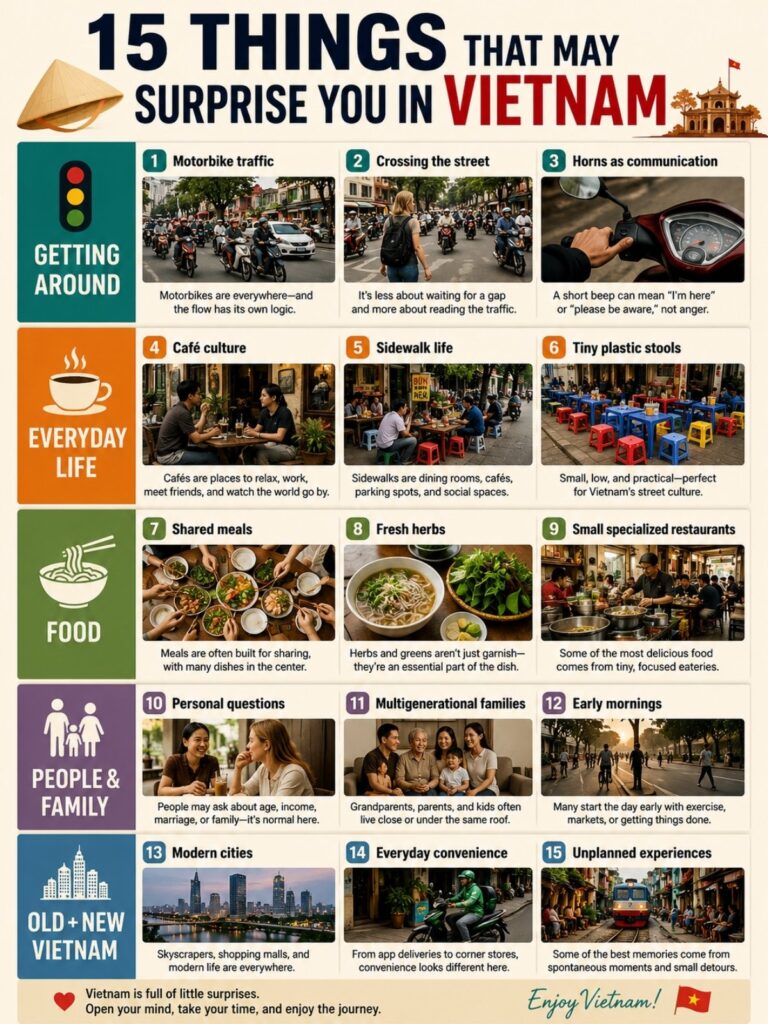
What Should First-Time Visitors Know About Vietnam?
If you’re visiting Vietnam for the first time, expect a learning curve.
The traffic may seem confusing.
The food may arrive with unfamiliar herbs.
Someone may ask your age five minutes after meeting you.
Your coffee may come through a tiny metal filter.
A sidewalk may suddenly turn into a restaurant.
A meal may arrive as several shared dishes instead of one large entrée.
None of these things are obstacles to overcome.
They’re clues.
They tell you how everyday life in Vietnam is organized.
The more you observe before judging, the easier the country becomes to understand.
And the more you understand those small differences, the more enjoyable the bigger experiences become.
Final Thoughts on Things That Surprise First-Time Visitors to Vietnam
Vietnam is easy to describe through its famous images.
Pho.
Motorbikes.
Lanterns.
Rice fields.
Coffee.
Beaches.
But those images only tell part of the story.
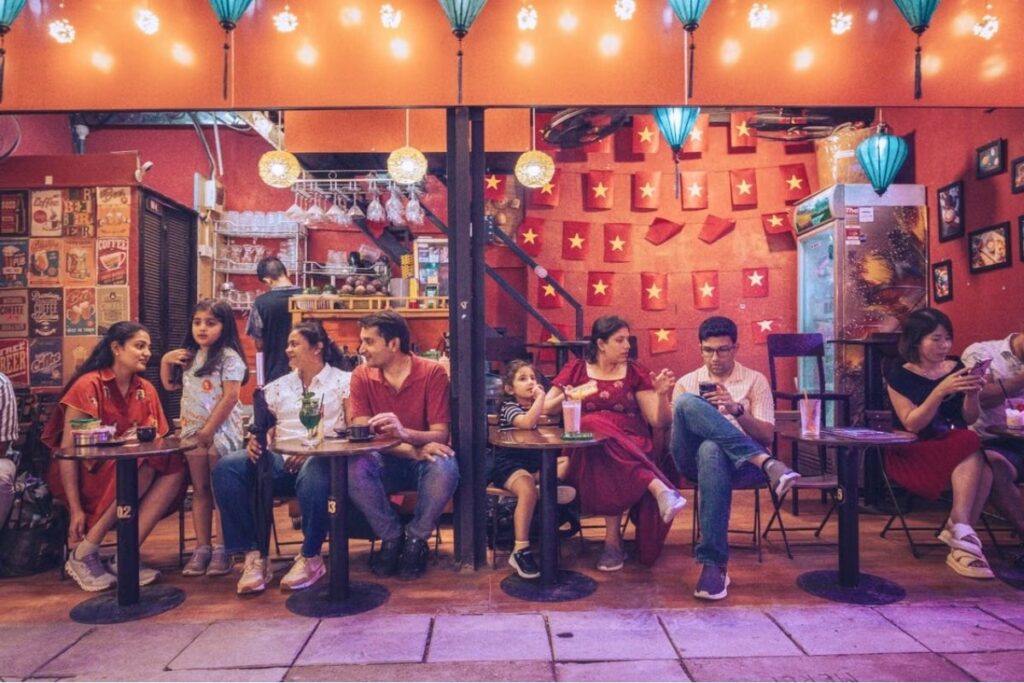
The more revealing Vietnam is often found in the details: how people share food, how streets function, how families interact, how cafés are used, and how old traditions continue alongside a rapidly changing society.
You don’t need to understand all of it before you arrive.
In fact, you probably shouldn’t.
Come to Vietnam with a plan, but leave enough room to discover the things no itinerary can predict.
Continue Exploring Vietnam Insights
Want to understand Vietnam beyond the usual tourist checklist? Continue exploring these Vietnam Insights from Tam Voc Viet, covering everyday life, local perspectives, food culture, and the experiences that often surprise international visitors:
- Common Culture Shocks in Vietnam
- Why Are There So Many Motorbikes in Vietnam?
- Why Is Coffee So Important in Vietnam?
- Why Do Vietnamese Families Eat Together?
- Why Do Vietnamese Wake Up So Early?
- The Story Behind Vietnam’s Street Food Culture
- What It’s Really Like to Celebrate Tet in Vietnam
- Vietnamese Work Culture Explained
- What Foreigners Love Most About Living in Vietnam
- Living in Vietnam: The Complete Guide for Foreigners
Together, these Vietnam Insights offer a closer look at the everyday experiences, perspectives, and cultural details that can be easy to miss on a first trip.
A Note for First-Time Visitors
You don’t need to understand everything about Vietnam before you arrive.
In fact, trying to fit every cultural difference into a list of rules can sometimes make travel more complicated than it needs to be.
Instead, pay attention.
Notice how people use the sidewalk. Watch how a family shares a meal. Listen to the different ways people use their voices and horns in traffic. Look at how older and younger generations interact. Spend some time in a local café without immediately checking your next destination.
If something seems strange at first, give yourself a moment before deciding what it means.
A behavior that feels unusual from an American perspective may have a perfectly ordinary explanation in Vietnam.
That doesn’t mean you have to adopt every local habit.
It simply means that curiosity is often more useful than comparison when you’re traveling in another culture.
And some of the things that initially surprise you may eventually become the parts of Vietnam you remember most.
Sources & Further Reading
This guide draws on established information about Vietnamese culture, everyday life, travel practices, and social customs.
For cultural topics, readers should distinguish between documented traditions, regional practices, and the experiences of individual travelers. Vietnam is a diverse and rapidly changing country, so customs can vary by region, generation, family, and setting.
For practical travel information such as transportation, opening hours, ticket prices, visa requirements, and current regulations, always check official sources before your trip because these details can change.
Suggested sources:
- Vietnam National Authority of Tourism / Vietnam Tourism – Official information about destinations, tourism, culture, and travel in Vietnam.
- Vietnamese Museum of Ethnology – A major Vietnamese museum providing background on Vietnam’s ethnic groups, cultural traditions, and material and social heritage.
- Vietnamese cultural institutions and museums – For cultural background, traditional practices, history, and heritage, use official museum and cultural-institution resources such as the Vietnam Museum of Ethnology.
- Vietnam Government Portal – Legal Documents – Official government database for laws, decrees, regulations, and other current legal documents relevant to travel, transportation, and public administration.
Editorial note: Vietnam is a diverse and rapidly changing country, and everyday experiences can vary by region, generation, family, and individual. The observations in this guide describe things that first-time visitors may commonly notice, rather than rules or behaviors that apply to every Vietnamese person or every part of the country. Tam Voc Viet aims to provide cultural context while recognizing the differences between traditional customs, regional practices, and modern life in Vietnam.
About the Author
Tam Voc Viet Editorial Team
The Tam Voc Viet Editorial Team creates practical travel and cultural guides for international readers who want to understand Vietnam beyond its most famous destinations.
Our guides explore Vietnam through its history, culture, food, traditions, people, and everyday life, with an emphasis on practical information and cultural context for international travelers.
For cultural and travel topics, we consult official Vietnamese sources, established cultural references, and relevant research where appropriate. We aim to present Vietnam in a way that is informative and respectful while recognizing that everyday life can vary across regions, generations, and communities.
Our goal is simple: to help international visitors experience Vietnam with more context, curiosity, and confidence.
Article Information
Category: Vietnam Insights
Topic: First-Time Visitors to Vietnam
Published: August 2026
Last Updated: August 2026
Author: Tam Voc Viet Editorial Team
