


 Tiếng Việt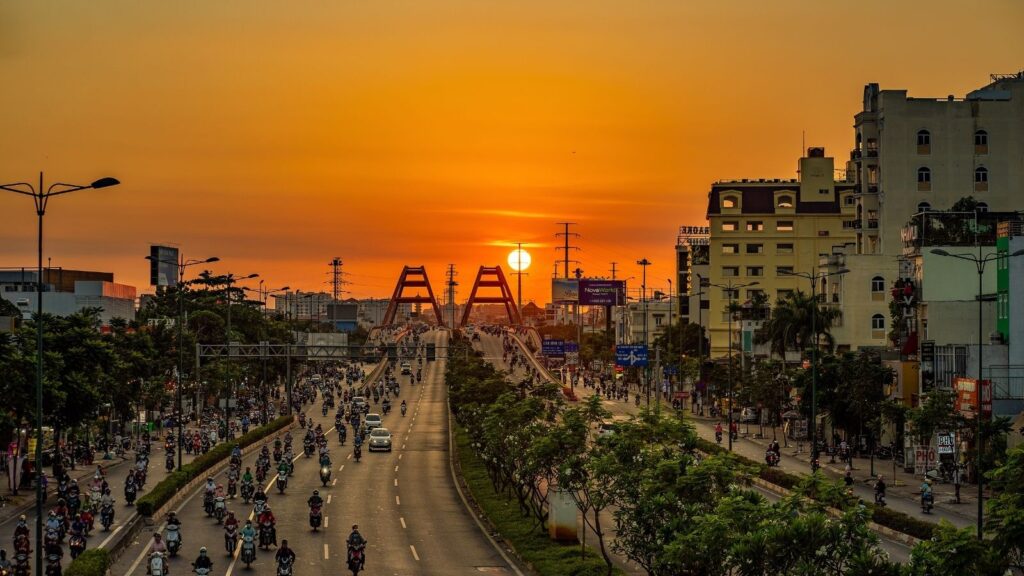
Vietnam can feel wonderfully familiar and completely different at the same time.
For American travelers, some surprises are obvious from the moment you arrive: the flow of motorbikes, the sound of horns, the sidewalk cafés, and the sheer amount of activity happening on the street.
Others are more subtle. You may notice them during a meal, a conversation with a local, or a simple trip to a neighborhood café.
These aren’t necessarily “good” or “bad” differences. They’re simply examples of how everyday life in Vietnam follows social habits that may be unfamiliar to visitors from the United States.
Here are 15 common culture shocks in Vietnam—and what you should know before experiencing them yourself.
Table of Contents
Quick Answer: What Are the Biggest Culture Shocks in Vietnam?
For first-time visitors from the United States, common culture shocks in Vietnam include motorbike traffic, crossing busy streets, sidewalk life, shared meals, strong coffee culture, personal questions, age-based forms of address, crowded public spaces, late evening activity, family-centered life, different tipping customs, bargaining, and a more informal approach to service.
Most of these differences are not difficult to navigate once you understand the cultural context. The key is to observe local habits, stay flexible, and avoid assuming that a different way of doing things is necessarily wrong.
The 15 culture shocks covered in this guide:
- Motorbike traffic
- Crossing the street
- Sidewalk life
- Shared meals and tiny stools
- Fresh herbs
- Vietnamese coffee culture
- Personal questions
- Age-based forms of address
- Personal space and queues
- Evening street life
- Family-centered life
- Tipping culture
- Bargaining
- Service and hospitality
- Understanding cultural differences
1. Motorbike Traffic Feels Chaotic—Until You Understand the Flow
If you’re visiting Vietnam for the first time, traffic may be one of the first things that makes you think, “How does this work?”
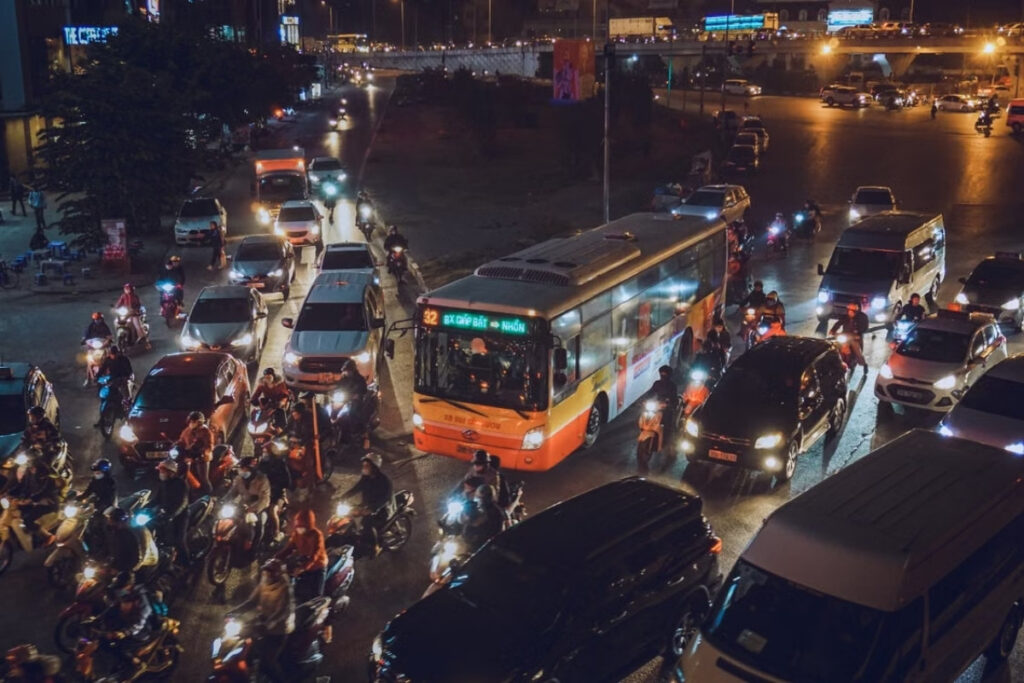
In cities such as Hanoi and Ho Chi Minh City, motorcycles and scooters are everywhere. They move alongside cars, buses, bicycles, and pedestrians, sometimes through streets that appear far less orderly than what you’re used to in the United States.
At first, it can look chaotic.
But watch for a few minutes and you’ll notice that drivers are constantly communicating through movement. They slow down, adjust their position, anticipate what others are doing, and use short horn taps to signal their presence.
The horn doesn’t always mean anger.
A quick beep can simply mean:
“I’m here.”
That doesn’t make Vietnamese traffic risk-free, and visitors should still be cautious. But understanding that the traffic has its own rhythm can make the experience much less intimidating.
What should you do?
Don’t try to imitate local drivers immediately.
When walking near traffic:
- Stay alert.
- Watch approaching motorcycles.
- Avoid sudden changes in direction.
- Don’t assume a driver has seen you.
- Use crossings and traffic signals when available.
After a few days, you may notice that you’re no longer seeing thousands of individual motorcycles.
You’re starting to see the flow.
2. Crossing the Street Works Differently Here
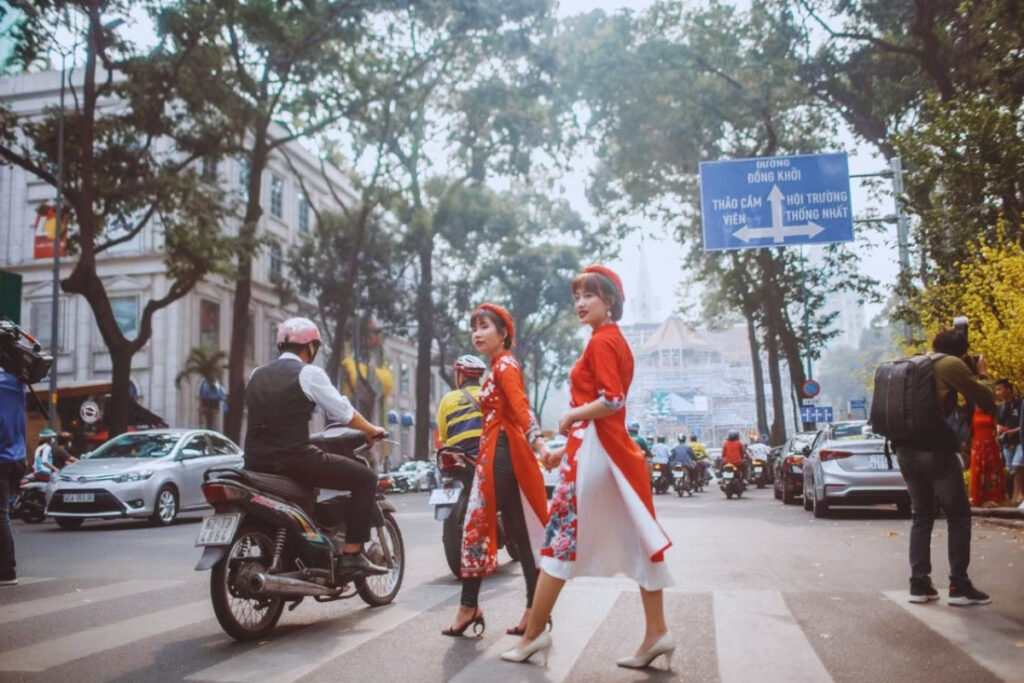
For many first-time visitors, crossing a busy Vietnamese street is the moment when traffic stops being something you watch and becomes something you have to figure out.
In the United States, pedestrians generally expect traffic to stop for them at a marked crossing or wait until there is a clear gap.
In Vietnam, especially on busy urban streets, you may see people cross while motorcycles are still moving.
The trick is predictability.
If you need to cross, move at a steady pace and avoid suddenly stopping or changing direction. Approaching motorbike riders are often watching your movement and adjusting their path accordingly.
That doesn’t mean you should blindly walk into traffic.
Choose a suitable crossing point, watch carefully, and use pedestrian signals when available. If a road looks too busy or fast-moving, wait for a safer opportunity.
And don’t feel embarrassed about waiting.
You are a visitor learning a completely different traffic environment.
One useful rule
Don’t run unless you absolutely have to.
Sudden movements can make your path harder for approaching drivers to predict.
After a few crossings, the streets may start to feel less frightening.
You haven’t necessarily become braver.
You’ve learned how to read the traffic.
3. Sidewalks Are More Than Sidewalks
An American visitor may think of a sidewalk as a straightforward place to walk.
In Vietnam, particularly in older and densely populated neighborhoods, the sidewalk can have many more jobs.
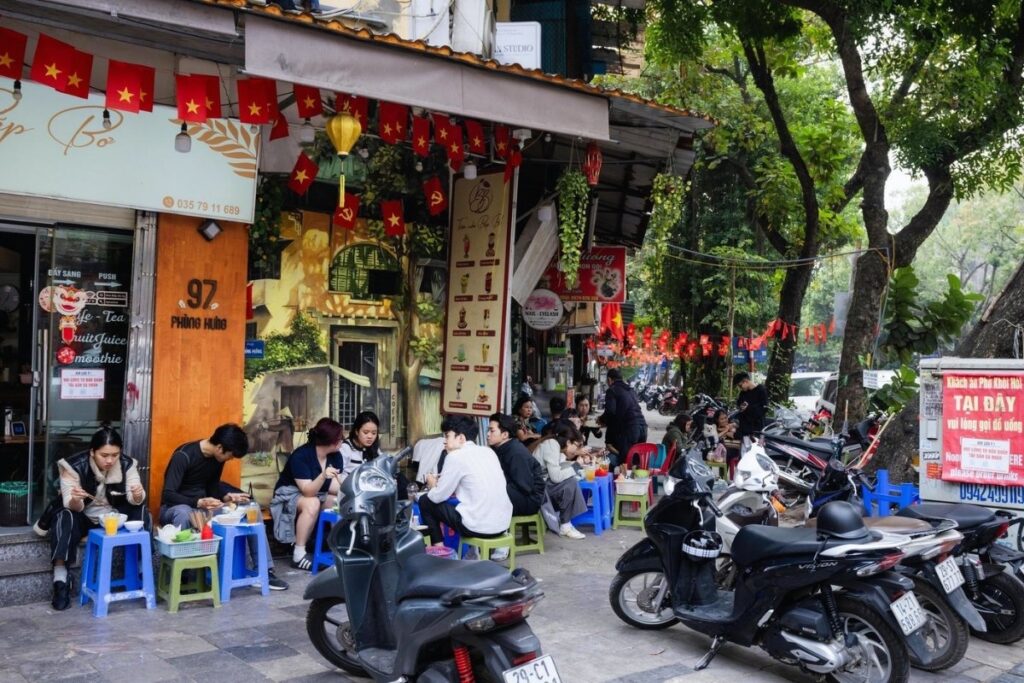
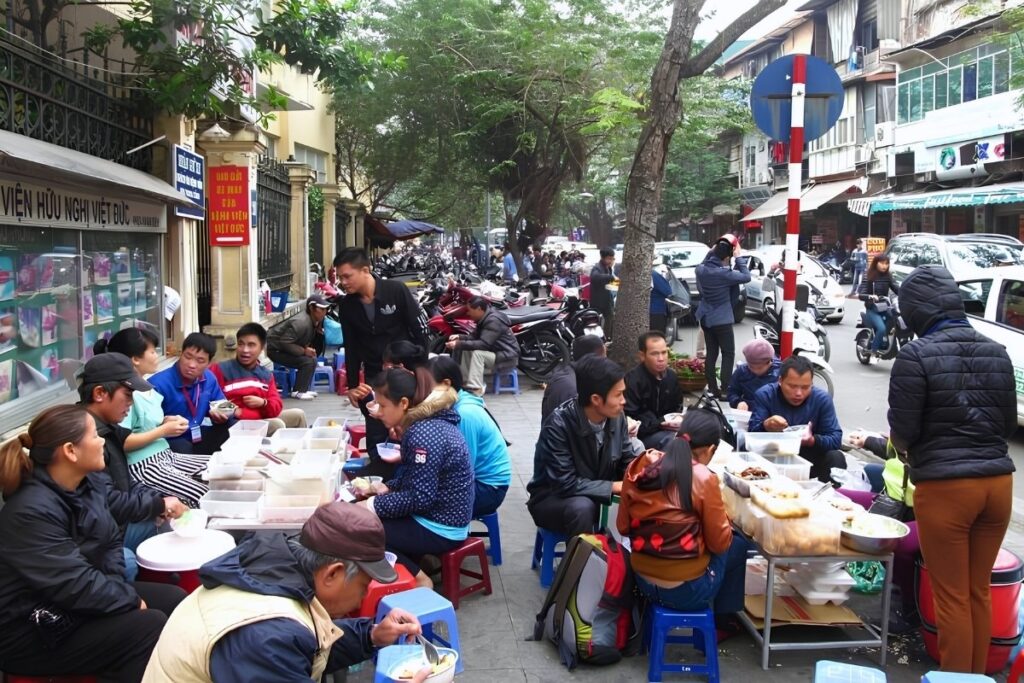
It may be a walkway, parking area, café, restaurant, shopfront, meeting place, or even an extension of someone’s home.
A few steps can take you past parked motorbikes, a food vendor preparing breakfast, a row of tiny plastic stools, and a group of people drinking coffee.
It can look chaotic.
But this is part of how everyday urban life works.
Limited space is used creatively, and many activities that might happen indoors in the U.S. happen partly outdoors in Vietnam.
That’s why the sidewalk can feel unusually lively.
Don’t expect a perfectly clear walking path
You may occasionally need to move around parked scooters or temporarily adjust your route.
If you’re carrying luggage, traveling with children, or walking at night, pay particular attention to where you’re stepping.
But don’t see the sidewalk only as an obstacle.
Stop at a small café.
Try a street-food stall.
Sit on a plastic stool.
Watch the neighborhood for a few minutes.
You may discover that the sidewalk isn’t simply infrastructure.
It’s one of the places where Vietnamese daily life happens.
4. A Casual Meal May Mean Shared Dishes and Tiny Stools
One of the biggest food-related culture shocks for American visitors is that a Vietnamese meal may look very different from the individual-entrée model common in the U.S.
At a casual restaurant or family meal, several dishes may be placed in the middle of the table for everyone to share.
Rice, vegetables, meat, fish, soup, herbs, and other dishes become part of one communal meal.
Instead of ordering one large plate for yourself, you take a little from several dishes.
Someone may even encourage you to try something or place food into your bowl.
The meal becomes a social experience rather than simply a way to eat.
Then there are the chairs.
Or more accurately, the tiny plastic stools.
They’re everywhere—from sidewalk noodle shops to casual street-food restaurants.
They may look almost comically small to an American visitor, but they’re perfectly normal in Vietnam.
The setting can be extremely simple while the food is excellent.
Don’t judge the meal by the furniture
Some of the most memorable Vietnamese meals may happen at places with:
- Plastic stools
- Tiny tables
- No fancy décor
- A very short menu
- Lots of local customers
The lack of formal surroundings doesn’t necessarily mean a lack of quality.
Sometimes, the opposite is true.
In Vietnam, great food doesn’t need a fancy dining room.
5. Fresh Herbs Aren’t Just Garnish
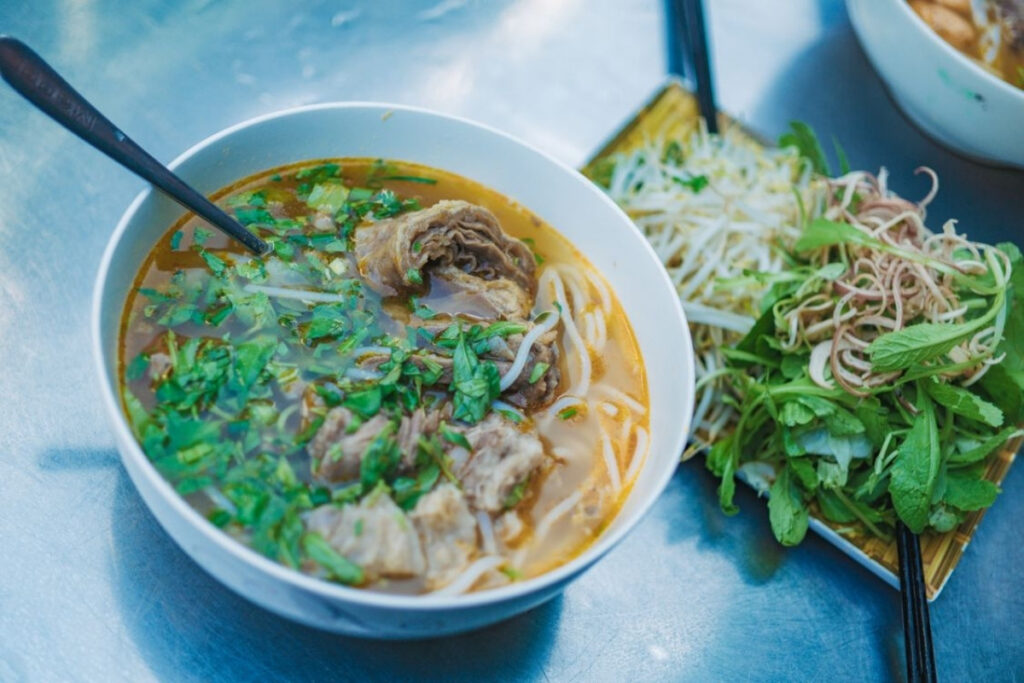
If a plate of fresh herbs arrives beside your Vietnamese meal, don’t assume it’s decoration.
It’s often part of the dish.
Vietnamese cuisine makes extensive use of fresh herbs and greens to add aroma, texture, freshness, and contrast.
With phở or other noodle dishes, for example, you may receive herbs, bean sprouts, lime, or chili separately so you can adjust the bowl to your taste.
Try adding a little at a time.
A handful of herbs can completely change the flavor of a bite.
The same idea appears across Vietnamese cuisine. Fresh greens may accompany grilled meats, rice dishes, spring rolls, savory pancakes, and many other foods.
You don’t need to identify every herb before eating it.
Taste one.
Then try it with the food.
If you don’t like it, leave it aside.
The bigger cultural difference
Vietnamese diners often have a more active role in finishing and balancing a meal.
You add herbs.
You squeeze lime.
You adjust the heat.
You wrap ingredients.
You dip.
The dish isn’t always completely “finished” when it reaches the table.
Part of the experience is making it your own.
6. Vietnamese Coffee Is as Much About the Place as the Drink
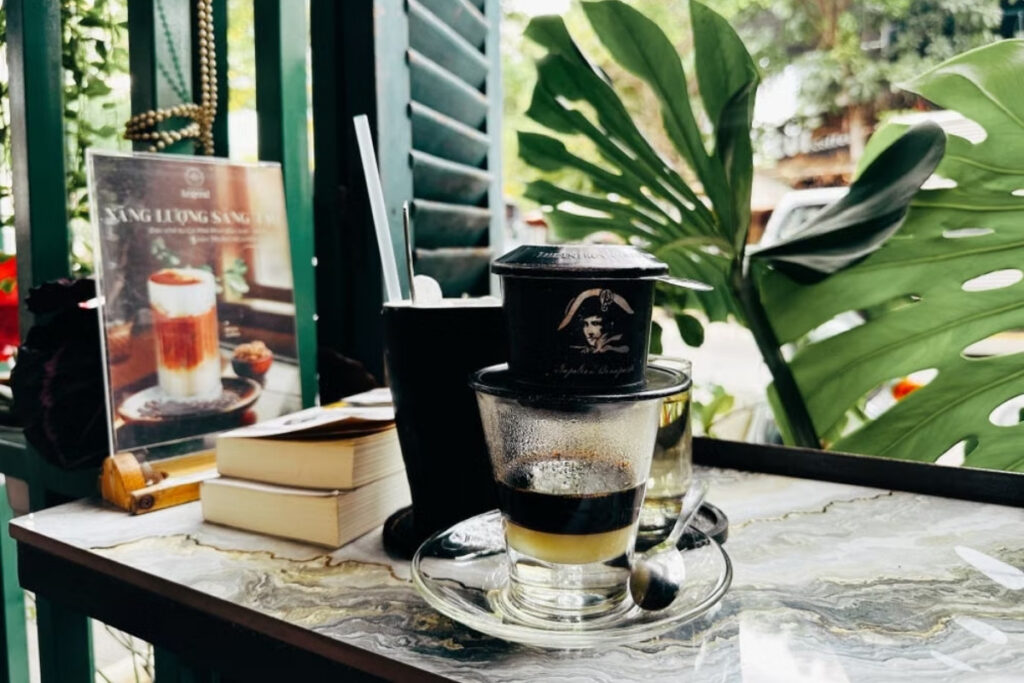
If you’re used to grabbing coffee on the way to work, drinking it in the car, and moving on, Vietnam may change your idea of what a coffee shop is for.
Here, a café can be a meeting place, workspace, study spot, social gathering place—or simply somewhere to sit and watch the street.
Traditional Vietnamese coffee is often brewed through a small metal phin filter, producing a strong, concentrated drink. Cà phê sữa đá, made with coffee, condensed milk, and ice, is one of the classics visitors should try.
But the bigger culture shock isn’t necessarily the coffee.
It’s the pace.
In the U.S., coffee culture often emphasizes convenience:
Order. Pick up. Go.
In Vietnam, the café itself can be the destination.
People may sit over one drink for an hour or more, talking, working, studying, or watching the world go by.
Try this
Instead of visiting only famous cafés, spend some time at a neighborhood café.
Order a local coffee.
Sit outside.
Watch the street.
You may discover that the best part isn’t the drink.
It’s having nowhere else you need to be.
7. People May Ask Questions That Feel Surprisingly Personal
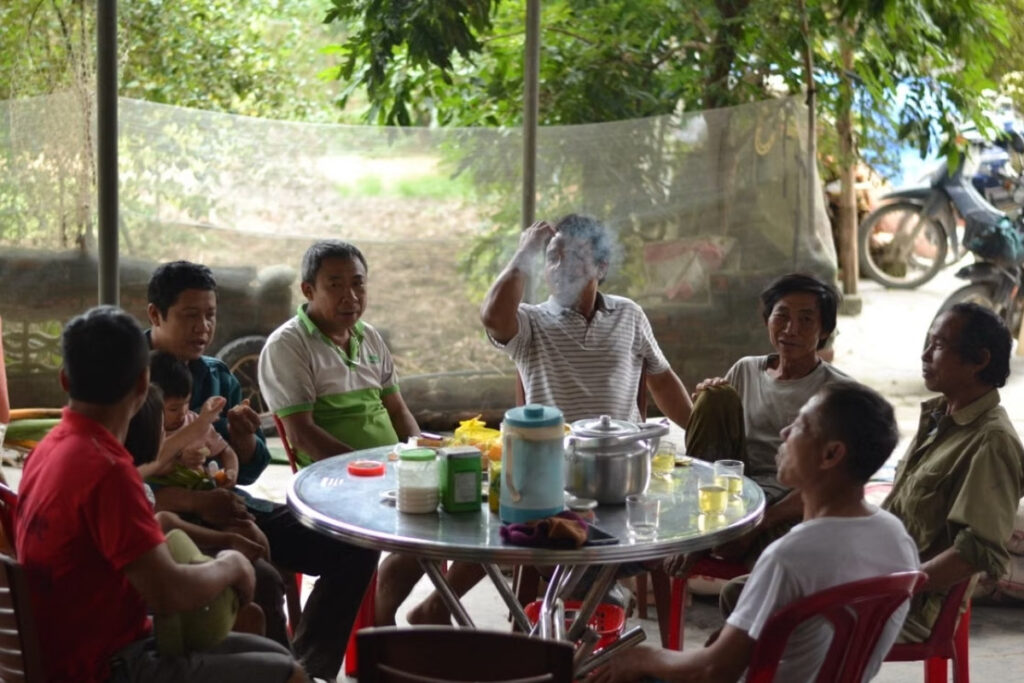
One of the more unexpected culture shocks in Vietnam can happen during an ordinary conversation.
Someone you’ve just met may ask:
Where are you from? How old are you? Are you married? Do you have children? What do you do?
For an American visitor, some of these questions may feel unusually personal.
In Vietnam, however, they can be a natural way of getting to know someone.
Family is an important part of social life, and age can help determine how people address one another. Asking about these things doesn’t necessarily mean someone is trying to invade your privacy.
It may simply be curiosity or an attempt to establish a friendly connection.
Of course, you don’t have to answer anything you’re uncomfortable discussing.
A short answer, a smile, or a change of subject is perfectly acceptable.
You can also turn the conversation around:
“How about you?”
That often turns an awkward question into a genuine conversation.
The key difference
In American culture, a personal question can sometimes signal:
“That’s private.”
In Vietnam, the same question may signal:
“I’m interested in getting to know you.”
Understanding that difference can prevent a lot of unnecessary misunderstandings.
8. Age Changes How People Address One Another
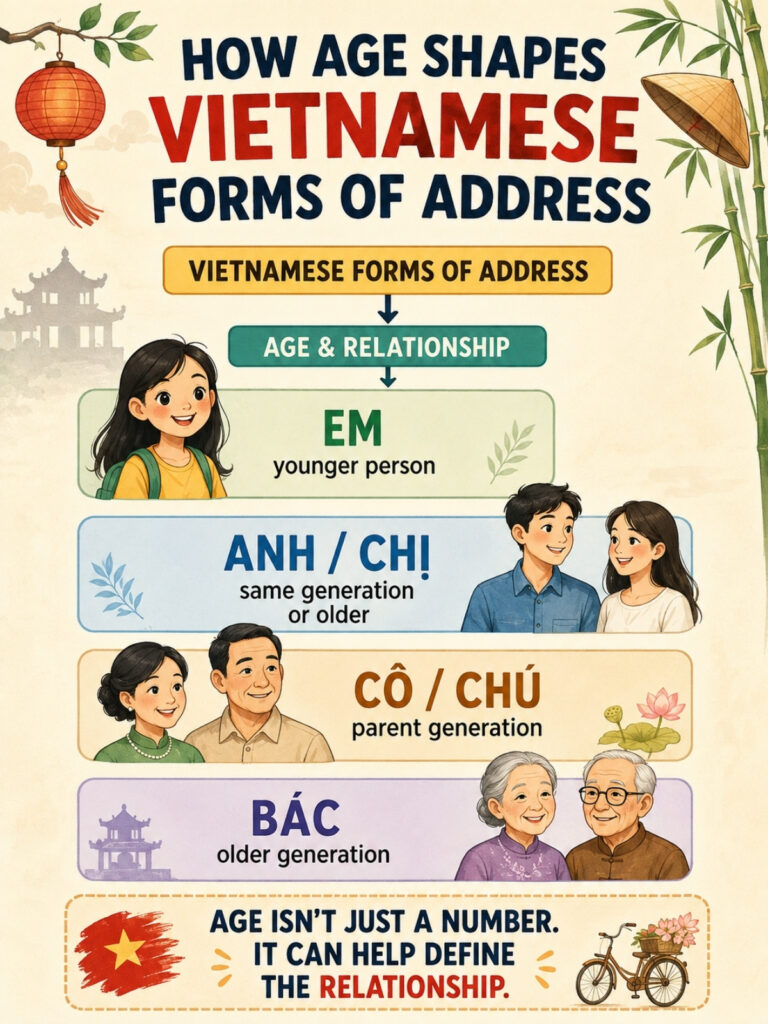
Vietnamese can be especially interesting for English speakers because everyday forms of address often reflect the relationship between the people speaking.
Instead of relying on one universal equivalent of “you,” Vietnamese speakers may use terms such as anh, chị, em, cô, chú, or bác, depending on age, gender, and social context.
That’s why someone may ask your age surprisingly early in a conversation.
They’re not necessarily trying to judge you.
They may simply be figuring out how to address you appropriately.
For example, a younger person may be addressed as em, while someone around the speaker’s generation may be addressed as anh or chị. Older generations may be addressed with different terms.
The system is more complicated than this, and usage varies by relationship and context. Even Vietnamese speakers don’t simply calculate someone’s exact age and apply a formula.
What should visitors do?
Don’t worry about getting everything perfect.
Listen to how locals address one another.
Learn a few basic terms.
If you’re unsure, ask.
Vietnamese people generally understand that foreigners are learning an unfamiliar system.
And making a small mistake is usually less important than making an effort.
The fascinating part is that these words do more than identify a person.
They establish a relationship.
9. Personal Space—and Even Queues—Can Feel Different
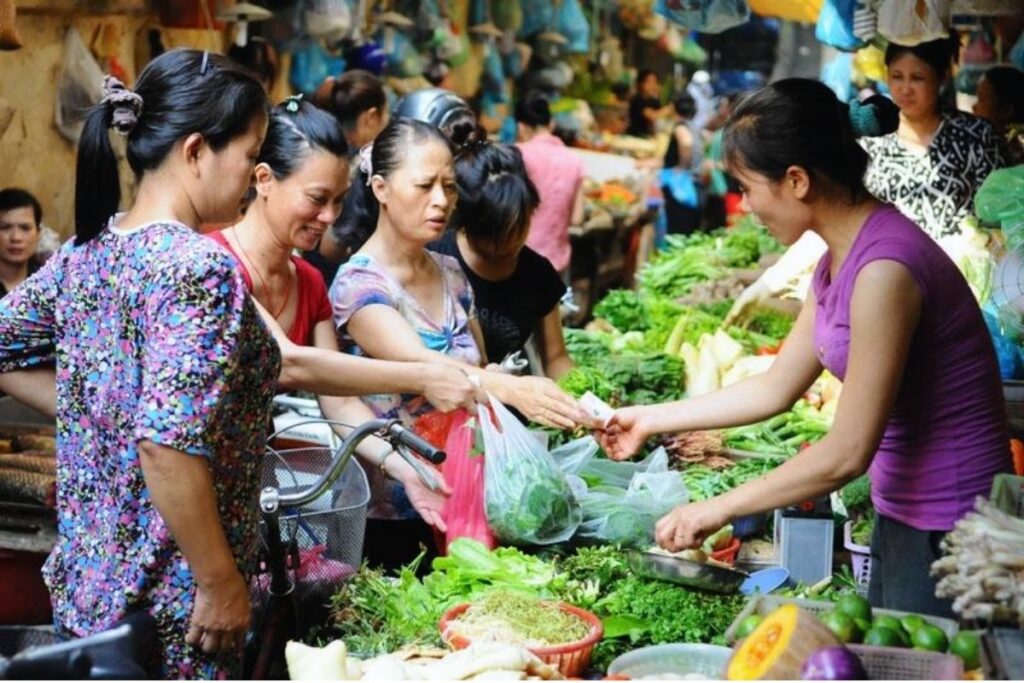
If you’re accustomed to the amount of personal space common in the United States, Vietnam can sometimes feel physically closer.
In crowded markets, cafés, sidewalks, buses, and shops, people may stand closer together than you expect.
Someone may pass very close to you.
A stranger may reach across you to pick something up.
In a busy environment, this usually isn’t intended as disrespect.
There’s simply less physical space available.
The same can apply to informal queues.
At airports, banks, supermarkets, and major attractions, you’ll often find clearly organized lines.
At a tiny food stall or crowded market counter, however, the system may be much less obvious.
Several people may gather around the vendor without forming a perfect single-file line.
If you’re unsure who’s next, don’t immediately assume someone is cutting in front of you.
Watch first
Look at what everyone else is doing.
If necessary, ask the vendor:
“Who’s next?”
The same principle applies to personal space:
Different doesn’t automatically mean rude.
You don’t have to abandon your own boundaries. If you’re uncomfortable, step back or move away.
But learning to observe the local rhythm before judging it will make everyday situations much easier.
10. The Streets Can Stay Busy Long After Dinner
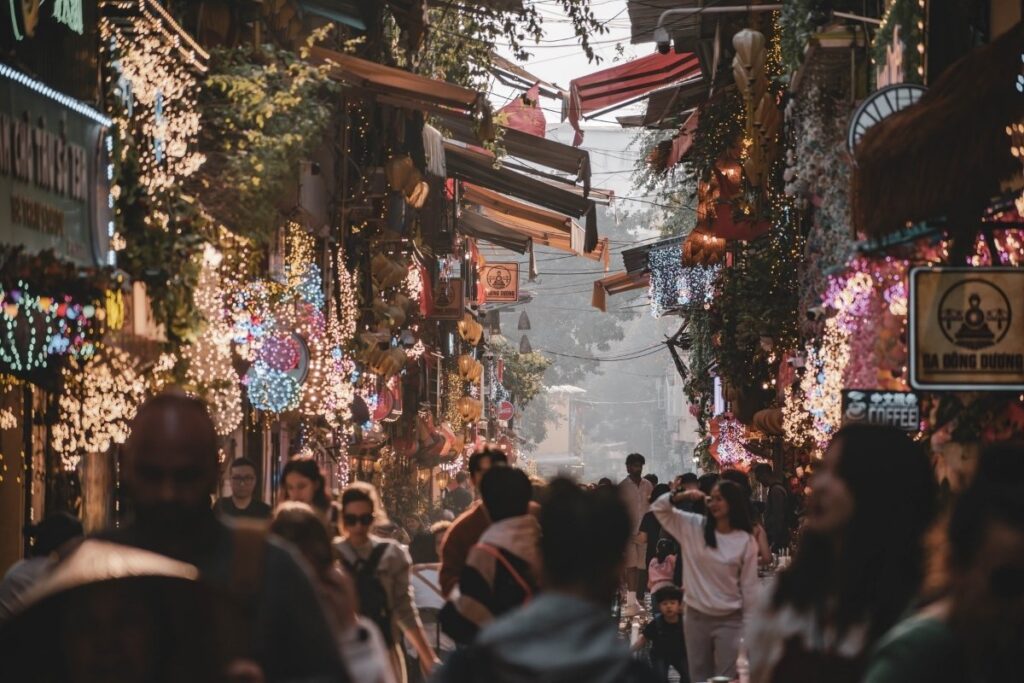
In Vietnam, sunset doesn’t necessarily mean the day is winding down.
In many cities, the streets become more active in the evening.
Families go out for food.
Friends meet for coffee.
People gather at street-food stalls.
Children play outside.
Parks fill with people exercising or socializing.
Small shops and cafés continue serving customers.
For an American traveler used to an earlier dinner followed by a quieter evening, this can feel surprisingly lively.
But there’s an important distinction:
Late activity doesn’t necessarily mean nightlife.
Much of what you’re seeing is simply ordinary life.
People are eating dinner, buying groceries, meeting friends, talking with neighbors, or taking their children outside.
A neighborhood that looked relatively quiet during the afternoon may become much more social after sunset.
Make use of the rhythm
This can actually work in a traveler’s favor.
On a hot day, spend the afternoon resting or visiting an indoor attraction. Then head back outside after sunset.
Walk through the neighborhood.
Find a local restaurant.
Stop for coffee or dessert.
Watch the street.
You don’t need to fill every evening with attractions.
Sometimes the most interesting experience is simply seeing how a Vietnamese neighborhood changes after dark.
Nightfall doesn’t always signal the end of the day. It can be the beginning of the evening.
11. Family Life Is More Visible—and More Interconnected
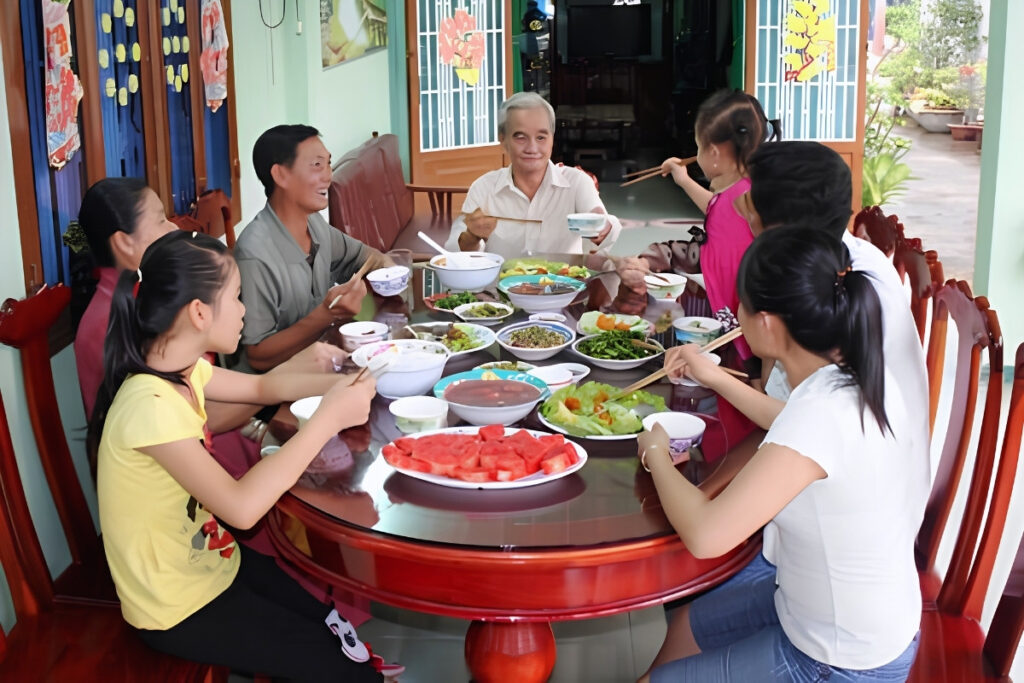
For many American visitors, one of the biggest cultural differences becomes apparent when they see how closely family members may be involved in one another’s everyday lives.
Multigenerational households are relatively common in Vietnam, and grandparents may play an active role in caring for grandchildren. Family meals, visits, and decisions can involve several generations rather than just parents and children.
You may also notice that Vietnamese people often talk about their family quite naturally.
Where someone lives, whether they are married, whether they have children, and how they spend time with relatives can be ordinary parts of conversation.
This doesn’t mean every Vietnamese family follows the same pattern. Vietnam is changing quickly, particularly in larger cities, and younger generations may have lifestyles that look increasingly similar to those in other urban societies.
Still, family remains a strong part of everyday social life.
What visitors may notice
If you’re invited to someone’s home, don’t be surprised if you meet several relatives.
A meal may involve grandparents, parents, children, and other family members.
The gathering may feel more communal than the typical American dinner with only the immediate household.
For travelers, this offers an interesting insight into Vietnam:
Family isn’t always something kept separate from everyday life. It is often part of everyday life.
12. Tipping Doesn’t Work the Same Way as in the U.S.
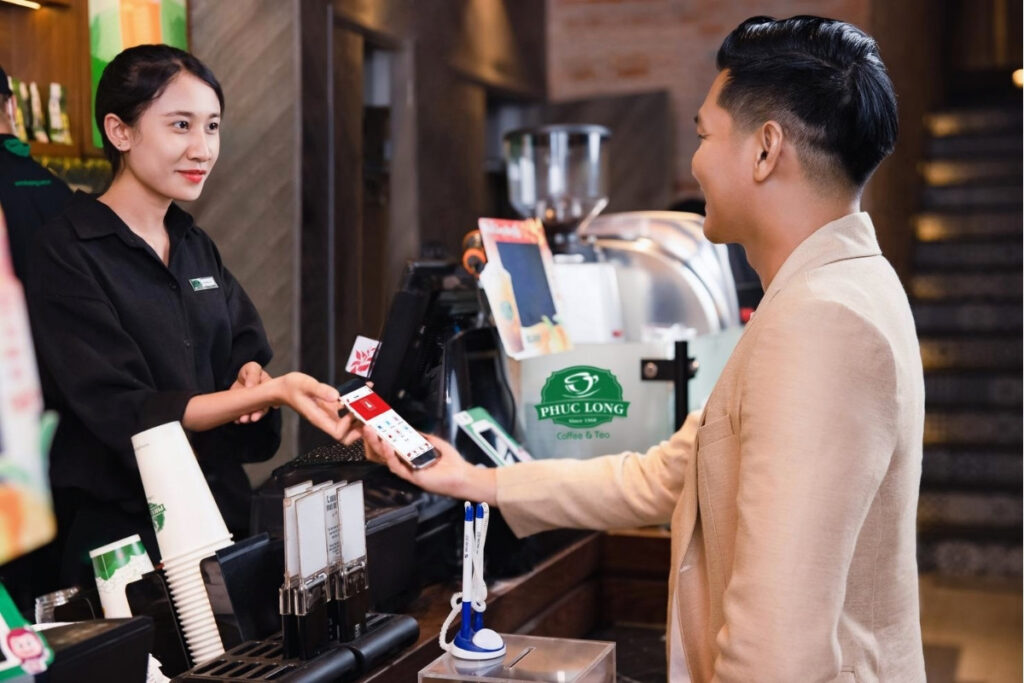
American travelers may experience a moment of uncertainty when the bill arrives in Vietnam:
“Am I supposed to tip?”
The short answer is: not in the same way you would in the United States.
Vietnam does not generally have the same deeply ingrained tipping culture found in the U.S., where customers may routinely calculate a percentage of the bill.
In many everyday situations, a service charge or tip is not expected.
That doesn’t mean tipping is never appropriate.
At upscale restaurants, hotels, spas, private tours, or for particularly good service, leaving something extra may be appreciated. Some establishments may also already include a service charge.
Check before adding more
Look at the bill.
If a service charge has already been included, you don’t necessarily need to add another percentage simply because you’re accustomed to doing so at home.
And don’t feel uncomfortable if nobody reaches for a tip jar after serving you.
The absence of a tip isn’t automatically a sign that you’ve received poor service.
It’s simply a different system.
The biggest adjustment for Americans
In the U.S., tipping can feel like part of the basic cost of dining out.
In Vietnam, it’s better to think of tipping as situational rather than automatic.
If you’re unsure, check the establishment’s policy or ask your guide or hotel staff.
That simple step can save you from overthinking every bill.
13. Bargaining Is Sometimes Part of Shopping—but Not Everywhere
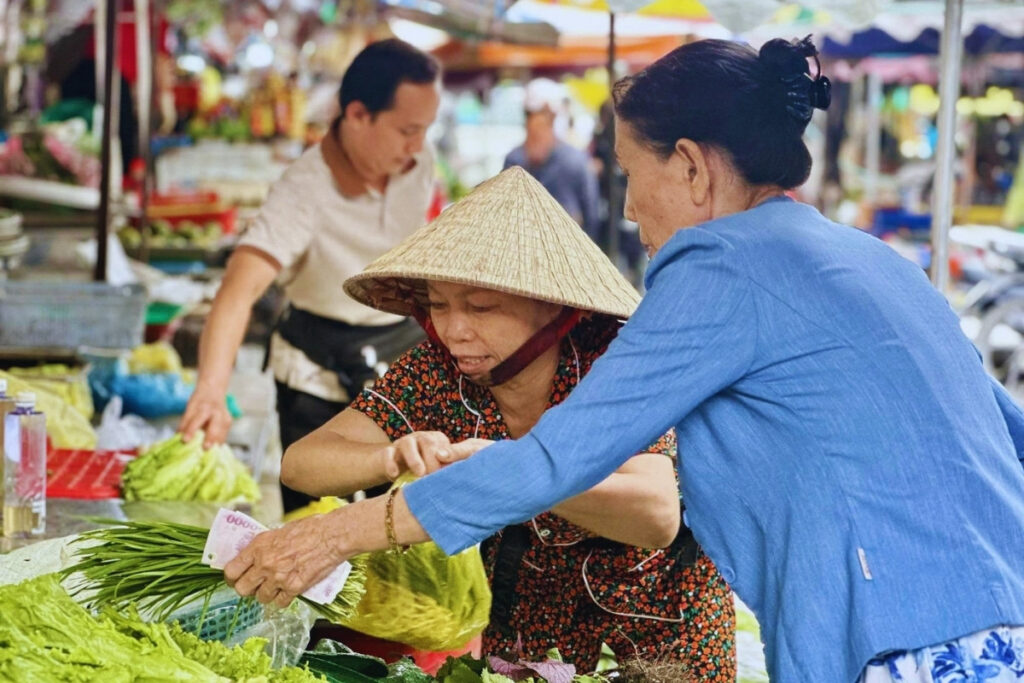
If you walk into a traditional Vietnamese market, you may discover another major difference from shopping in the United States:
The first price isn’t always the final price.
Bargaining can be normal in some traditional markets, particularly for souvenirs, clothing, handicrafts, and certain goods sold to tourists.
But this does not mean you should negotiate everywhere.
Supermarkets, convenience stores, shopping malls, chain stores, cafés, restaurants, and most established businesses generally have fixed prices.
The same is true of many professional services.
How should you bargain?
Keep it light.
Ask the price.
If you think it’s too high, offer a reasonable counterprice.
If the seller declines, you can either accept it or politely walk away.
There’s usually no need to turn a small purchase into an aggressive negotiation.
And remember that a few dollars may mean something very different to you than to the person selling the product.
The goal isn’t to “win”
For travelers, bargaining is better understood as a social part of shopping rather than a competition.
Smile.
Stay friendly.
Know roughly what something should cost.
And don’t bargain for a price you’re genuinely happy to pay just because you can.
Not every Vietnamese shopping experience is a negotiation—and knowing when not to bargain is just as important as knowing how.
14. Service and Hospitality May Follow Different Rules
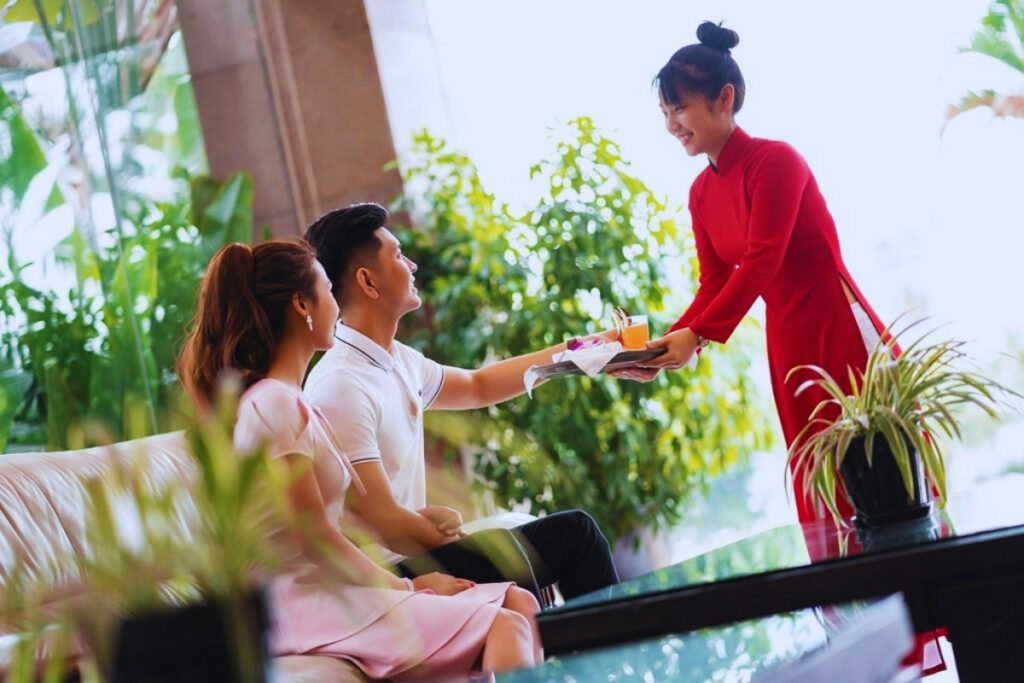
American travelers sometimes expect service to look a certain way:
A server checks on the table regularly.
A hotel employee asks whether everything is okay.
Someone smiles and says “Have a great day.”
In Vietnam, service may feel different.
A restaurant employee may not come back to your table repeatedly.
A small family-run hotel may have a much more informal atmosphere than a large American chain.
A shopkeeper may interact with you in a direct, practical way rather than following a scripted customer-service routine.
That doesn’t necessarily mean the service is worse.
The style is different.
Vietnamese hospitality can also be expressed in less formal ways.
A host may insist that you eat more.
Someone may offer you tea.
A local friend may go out of their way to help you find somewhere or arrange transportation.
A family may make an enormous effort to make a guest feel welcome.
These gestures don’t always resemble the polished service language familiar to American travelers.
Don’t confuse informality with indifference
This is one of the most useful cultural distinctions to remember.
A quiet server isn’t necessarily unfriendly.
A small hotel without formal procedures isn’t necessarily unprofessional.
A direct interaction isn’t necessarily rude.
Look at the overall experience rather than judging it against a specific American service model.
If something genuinely isn’t working, communicate clearly and politely.
Most problems become easier to solve once both sides understand what the other expects.
15. “Different” Is Often the Real Culture Shock
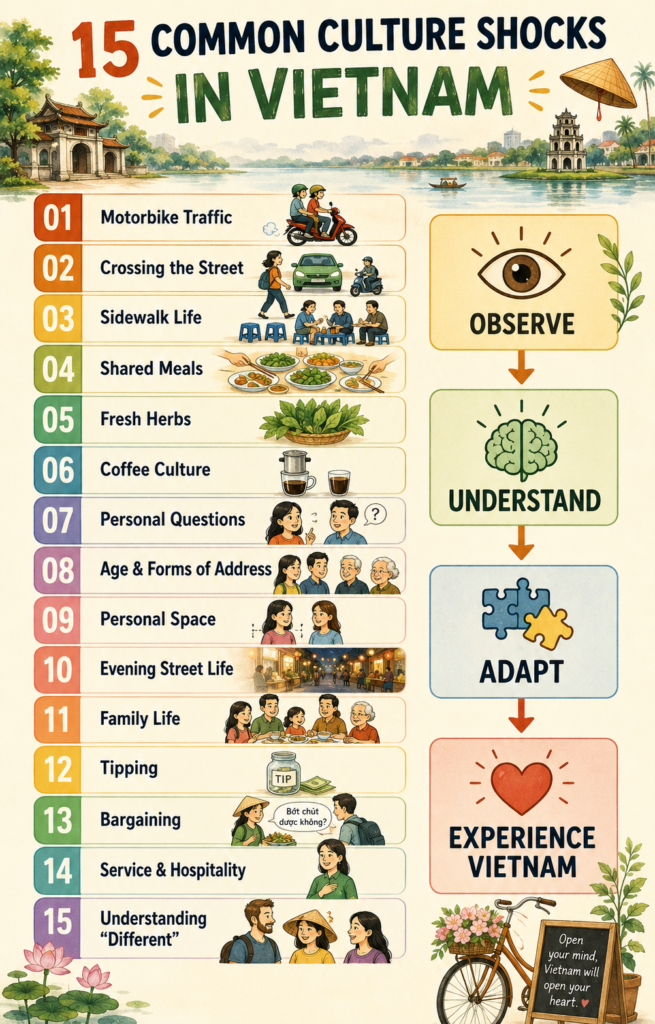
After experiencing Vietnam’s traffic, food, cafés, conversations, family life, markets, and everyday streets, you may notice that the biggest adjustment isn’t any single custom.
It’s learning to stop measuring everything against home.
Vietnam may feel noisier.
More crowded.
More informal.
More communal.
More spontaneous.
Sometimes less predictable.
But those differences are also part of what makes the country interesting.
A sidewalk isn’t always just a sidewalk.
A coffee shop isn’t always just somewhere to buy coffee.
A meal isn’t always an individual experience.
A personal question isn’t necessarily an invasion of privacy.
And a busy evening street isn’t necessarily nightlife.
These small differences become easier to appreciate once you understand the context behind them.
A Better Way to Experience Cultural Differences
You don’t have to adopt every Vietnamese habit.
You don’t have to pretend that something feels comfortable when it doesn’t.
And you certainly don’t have to abandon your own boundaries.
Instead, try three simple things:
Observe.
Watch how local people behave before assuming you understand the situation.
Ask.
If you’re unsure, a polite question is usually better than making assumptions.
Adapt.
Give yourself permission to experience something differently from how you would at home.
That’s really the point of cultural travel.
You’re not visiting Vietnam to find an American version of Vietnam.
You’re visiting to experience Vietnam as Vietnam.
And some of the moments that initially feel strange may eventually become the moments you remember most.
Final Takeaway
Culture shock doesn’t always mean something went wrong.
Sometimes it simply means:
“This isn’t how we do it at home.”
That realization is one of the most valuable parts of traveling.
Vietnam has its own rhythms, social rules, flavors, sounds, and ways of sharing everyday life. The more you understand them, the less strange they feel—and the more deeply you can experience the country beyond the usual tourist attractions.
So when something surprises you in Vietnam, take a breath before judging it.
Look again.
Ask why.
Then decide what you think.
You may find that the culture shock is actually the beginning of understanding Vietnam.
What to Know Before Visiting Vietnam
Vietnam can feel unfamiliar at first, but most culture shocks become much easier once you understand the context.
You may encounter busy motorbike traffic, shared meals, personal questions, crowded sidewalks, informal shopping, and a very different rhythm of daily life. None of these experiences needs to be approached as something “wrong” or “right.” They are simply part of how life works in Vietnam.
The best approach is to stay curious, observe how locals behave, and give yourself time to adjust.
You don’t need to understand everything before you arrive. You just need to be willing to notice.
And often, that’s when Vietnam becomes much more interesting.
Related Vietnam Culture Guides
- Vietnamese Etiquette: What Visitors Should Know
- Vietnamese Family Culture: Why Family Comes First
- Vietnamese Coffee Culture Guide
- Vietnamese Markets & Bargaining Culture
- Vietnamese Names & Naming Traditions
- Vietnam Travel Guide for First-Time Visitors
Frequently Asked Questions about Vietnam Culture Shocks
Is Vietnam culturally different from the United States?
Yes. Visitors may notice significant differences in traffic, communication, dining, family life, personal space, shopping, and everyday social behavior.
What is the biggest culture shock in Vietnam?
Are Vietnamese people friendly to foreigners?
Vietnamese people are generally welcoming toward visitors, although communication and social interactions may follow different cultural expectations than those common in the United States.
Is tipping expected in Vietnam?
Not in the same automatic way it is in the United States. Tipping is generally more situational, although it may be appreciated for certain services.
Should tourists bargain in Vietnam?
Bargaining can be appropriate in some traditional markets and for certain goods, but fixed prices are normal in supermarkets, malls, restaurants, cafés, and many established businesses.
What should Americans know before traveling to Vietnam?
Be prepared for a different traffic environment, more communal dining, a lively street culture, different forms of address, and a less formal approach to some everyday interactions. Staying observant and flexible will make the transition much easier.
Continue Exploring Vietnam Insights
Want to understand Vietnam beyond the usual tourist checklist? Continue exploring these Vietnam Insights from Tam Voc Viet, covering everyday life, local perspectives, food culture, and the experiences that often surprise international visitors:
- 15 Things That Surprise First-Time Visitors to Vietnam
- Why Are There So Many Motorbikes in Vietnam?
- Why Is Coffee So Important in Vietnam?
- Why Do Vietnamese Families Eat Together?
- Why Do Vietnamese Wake Up So Early?
- The Story Behind Vietnam’s Street Food Culture
- What It’s Really Like to Celebrate Tet in Vietnam
- Vietnamese Work Culture Explained
- What Foreigners Love Most About Living in Vietnam
- Living in Vietnam: The Complete Guide for Foreigners
Together, these Vietnam Insights offer a closer look at the everyday experiences, perspectives, and cultural details that can be easy to miss on a first trip.
A Note for First-Time Visitors
You don’t need to understand everything about Vietnam before you arrive.
In fact, trying to fit every cultural difference into a list of rules can sometimes make travel more complicated than it needs to be.
Instead, pay attention.
Notice how people use the sidewalk. Watch how a family shares a meal. Listen to the different ways people use their voices and horns in traffic. Look at how older and younger generations interact. Spend some time in a local café without immediately checking your next destination.
If something seems strange at first, give yourself a moment before deciding what it means.
A behavior that feels unusual from an American perspective may have a perfectly ordinary explanation in Vietnam.
That doesn’t mean you have to adopt every local habit.
It simply means that curiosity is often more useful than comparison when you’re traveling in another culture.
And some of the things that initially surprise you may eventually become the parts of Vietnam you remember most.
Sources & Further Reading
This guide draws on established information about Vietnamese culture, everyday life, travel practices, and social customs.
For cultural topics, readers should distinguish between documented traditions, regional practices, and the experiences of individual travelers. Vietnam is a diverse and rapidly changing country, so customs can vary by region, generation, family, and setting.
For practical travel information such as transportation, opening hours, ticket prices, visa requirements, and current regulations, always check official sources before your trip because these details can change.
Suggested sources:
- Vietnam National Authority of Tourism / Vietnam Tourism – Official information about destinations, tourism, culture, and travel in Vietnam.
- Vietnamese Museum of Ethnology – A major Vietnamese museum providing background on Vietnam’s ethnic groups, cultural traditions, and material and social heritage.
- Vietnamese cultural institutions and museums – For cultural background, traditional practices, history, and heritage, use official museum and cultural-institution resources such as the Vietnam Museum of Ethnology.
- Vietnam Government Portal – Legal Documents – Official government database for laws, decrees, regulations, and other current legal documents relevant to travel, transportation, and public administration.
Editorial note: Vietnam is a diverse and rapidly changing country, and everyday experiences can vary by region, generation, family, and individual. The observations in this guide describe things that first-time visitors may commonly notice, rather than rules or behaviors that apply to every Vietnamese person or every part of the country. Tam Voc Viet aims to provide cultural context while recognizing the differences between traditional customs, regional practices, and modern life in Vietnam.
About the Author
Tam Voc Viet Editorial Team
The Tam Voc Viet Editorial Team creates practical travel and cultural guides for international readers who want to understand Vietnam beyond its most famous destinations.
Our guides explore Vietnam through its history, culture, food, traditions, people, and everyday life, with an emphasis on practical information and cultural context for international travelers.
For cultural and travel topics, we consult official Vietnamese sources, established cultural references, and relevant research where appropriate. We aim to present Vietnam in a way that is informative and respectful while recognizing that everyday life can vary across regions, generations, and communities.
Our goal is simple: to help international visitors experience Vietnam with more context, curiosity, and confidence.
Article Information
Category: Vietnam Insights
Topic: First-Time Visitors to Vietnam
Published: August 2026
Last Updated: August 2026
Author: Tam Voc Viet Editorial Team
