


 Tiếng Việt
Updated May 2026 • By TamVocViet Local Travel Team • 12 min read
Thousands of travelers arrive in Vietnam every month with small visa mistakes that can delay immigration for hours — from incorrect passport numbers to choosing the wrong airport on the e-visa application.
Before you book hotels in Hanoi, cruise Ha Long Bay, or eat your way through Ho Chi Minh City’s street food scene, there’s one important thing you need to handle first: your Vietnam visa.
The good news is that Vietnam’s e-visa system has become much easier for international travelers in recent years. Most tourists can now apply online in just a few minutes without visiting an embassy.
Still, visa mistakes remain surprisingly common. Every week, travelers arrive at Vietnam airports with incorrect passport numbers, blurry document uploads, or missing paperwork that delays their entry process.
This Vietnam visa guide for tourists explains exactly how the Vietnam tourist visa process works in 2026, including e-visa requirements, processing times, entry rules, airport arrival tips, and common mistakes travelers should avoid before visiting Vietnam. With the right preparation, travelers can enter Vietnam smoothly and avoid unnecessary visa problems.
Table of Contents
Do You Need a Visa for Vietnam?
Most foreign travelers need a visa to enter Vietnam. However, Vietnam currently offers several options for tourists, including:
- Visa-free entry for selected countries
- Vietnam e-visas
- Multiple-entry tourist visas
- Limited visa-on-arrival services
For most travelers from the United States, Canada, Australia, and Europe, the Vietnam e-visa is the easiest and most popular option.

Vietnam E-Visa Explained
Vietnam’s e-visa system allows tourists to apply online before arriving in the country.
As of 2026, travelers can apply for:
| Visa Type | Duration | Entry Type |
|---|---|---|
| Tourist E-Visa | Up to 90 days | Single or Multiple Entry |
The Vietnam e-visa is accepted at major:
- International airports
- Land borders
- Seaports
For most international tourists, the Vietnam e-visa is now the standard way to enter the country.
Travelers arriving at major airports like Hanoi, Ho Chi Minh City, and Da Nang typically use the e-visa system instead of embassy-issued tourist visas. The process is significantly faster and more convenient than traditional visa applications used in previous years.
Who Can Apply for a Vietnam E-Visa?
Vietnam currently allows citizens from most countries to apply online for tourist visas, including travelers from:
- United States
- Canada
- United Kingdom
- Australia
- New Zealand
- India
- Singapore
- South Korea
- Japan
- Most EU countries
Because immigration rules can change, travelers should always verify current eligibility before departure.
Vietnam Visa Exemption Countries
Some nationalities can visit Vietnam without a visa for a limited number of days.
| Country | Visa-Free Stay |
|---|---|
| United Kingdom | 45 days |
| France | 45 days |
| Germany | 45 days |
| Italy | 45 days |
| Spain | 45 days |
| Japan | 45 days |
| South Korea | 45 days |
| Thailand | 30 days |
| Singapore | 30 days |
Even visa-free travelers should ensure their passport is valid for at least six months from the date of entry.
How to Apply for a Vietnam E-Visa
Applying for a Vietnam e-visa is usually straightforward if your documents are prepared correctly.
Step 1: Prepare Your Documents
You will typically need:
- A passport valid for at least 6 months
- Passport information page scan
- Passport-style photo
- Accommodation information
- Entry and exit dates
- International payment card
Many rejected Vietnam e-visa applications happen because travelers photograph their passport under yellow indoor lighting or crop the passport edges too tightly on mobile devices. Blurry passport scans are one of the most common reasons applications get delayed.
Step 2: Complete the Online Application
One of the most common traveler mistakes is rushing through the application form on mobile devices. Many visa delays happen because tourists accidentally enter incorrect passport expiration dates or upload cropped passport photos.
Before submitting your application, review every detail carefully exactly as it appears on your passport.
When filling out the form, double-check:
- Full legal name
- Passport number
- Date of birth
- Entry checkpoint
- Intended arrival date
Many tourists accidentally enter incorrect passport numbers or misspell their names, which can create problems during immigration checks.
Step 3: Pay the Visa Fee
Approximate government fees:
| Visa Type | Fee |
|---|---|
| Single-entry e-visa | Around USD $25 |
| Multiple-entry e-visa | Around USD $50 |
Fees are generally non-refundable, even if mistakes are made on the application.
Step 4: Wait for Processing
Standard processing time is usually:
- 3–5 business days
However, during major travel periods like Tet Holiday, processing may take longer.
TamVocViet recommends applying at least:
- 2–3 weeks before departure
This gives travelers enough time to fix unexpected issues if needed.
Vietnam Visa on Arrival (VOA)
Vietnam still offers visa-on-arrival services in certain situations, but it is far less common than before.
Visa on arrival usually requires:
- A pre-approval letter
- Airport arrival only
- Additional stamping fees
- Longer waiting times after landing
For most tourists, the Vietnam e-visa is faster, simpler, and less stressful.
Vietnam Entry Requirements for Tourists
Besides an approved visa, travelers should prepare several important documents before arriving in Vietnam.
Passport Validity
Your passport should:
- Be valid for at least six months
- Have blank pages available
Return or Onward Ticket
Immigration officers occasionally request proof of:
- Return flights
- Onward travel
- Hotel reservations
This does not happen to every traveler, but it is best to prepare printed or digital copies.
Travel Insurance
Although not always mandatory, travel insurance is strongly recommended for:
- Motorbike travel
- Adventure trips
- Island activities
- Trekking routes in northern Vietnam
Many travelers underestimate how physically active Vietnam trips can become.
What Actually Happens After Landing in Vietnam?
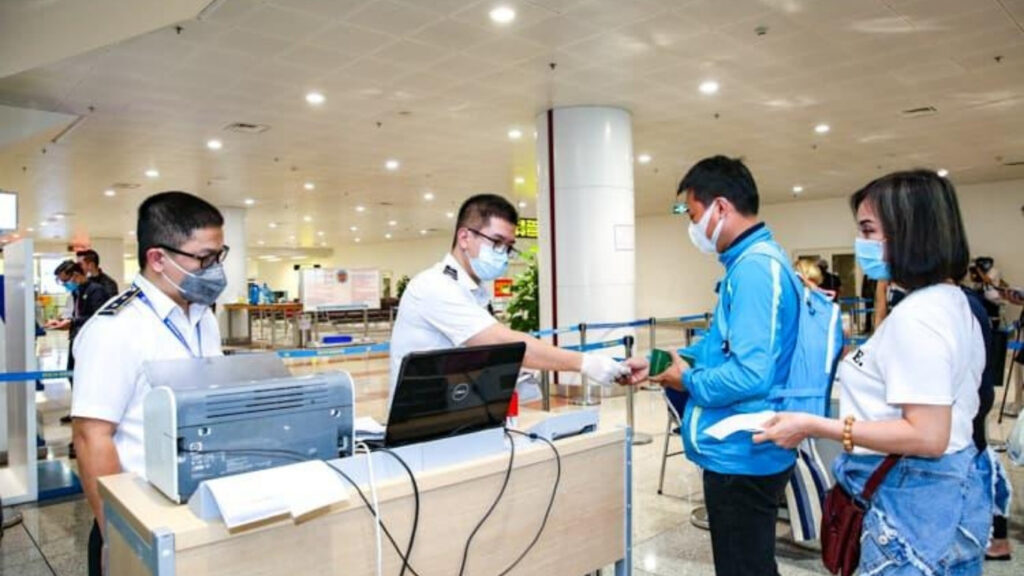
For most travelers, the arrival process in Vietnam is straightforward, but airports can feel overwhelming after long international flights.
After landing, passengers typically go through:
- Immigration checks
- Baggage claim
- Customs inspection
- SIM card kiosks and currency exchange
- Taxi or ride-hailing pickup areas
At busy airports like Tan Son Nhat in Ho Chi Minh City, late evening immigration lines can sometimes take over an hour during peak travel seasons.
Travelers who prepare printed visa approvals and hotel addresses in advance usually move through the airport much faster.
Real Arrival Experience at Vietnam Airports
Another common surprise for first-time visitors is transportation after arrival.
While taxis are available outside every airport, many international travelers prefer using Xanh SM or Grab — Vietnam’s most popular ride-hailing app. However, the app requires mobile data, which is why many visitors purchase a Vietnam eSIM before departure or immediately after landing.

For first-time visitors, arriving in Vietnam is usually straightforward — but there are a few things travelers should know.
At airports like Hanoi’s Noi Bai International Airport and Ho Chi Minh City’s Tan Son Nhat Airport, immigration lines can become extremely long during peak evening arrival hours.
Travelers who prepare printed copies of:
- E-visa approvals
- Hotel bookings
- Return tickets
often move through immigration faster and with fewer questions.
Another important tip:
Many visitors expect airport Wi-Fi to work immediately after landing, but connections can sometimes be unstable. Having a Vietnam eSIM or local SIM card prepared in advance makes arrival much easier.

You can also read:
- “Vietnam SIM Card & Internet Guide”
- “Transportation in Vietnam”
- “Best Hotels in Vietnam”
to prepare for your arrival.
Common Vietnam Visa Mistakes Travelers Make
Uploading Incorrect Passport Photos
Low-quality images are a frequent reason for delays.
Use:
- Good lighting
- Clear scans
- No cropped passport edges
Choosing the Wrong Entry Port
Your approved airport or border crossing should match your travel plans.
Changing entry points last minute can create unnecessary complications.
Waiting Too Long to Apply
Some travelers assume e-visas are always approved quickly.
During busy travel seasons, delays can happen unexpectedly.
Applying early is always safer.
Overstaying Your Visa
Overstaying can lead to:
- Fines
- Immigration issues
- Problems with future Vietnam visits
Always monitor your visa expiration date carefully.
Can You Extend a Vietnam Tourist Visa?
Vietnam visa extension policies change frequently.
Today, many travelers prefer:
- 90-day e-visas
- Multiple-entry visas
instead of relying on extensions after arrival.
If you plan to stay long-term in Vietnam, it is best to consult updated immigration information or local visa agencies.
Best Airports for International Arrivals
Most international travelers arrive through:
Hanoi – Noi Bai International Airport
Best for:
- Northern Vietnam
- Ha Long Bay
- Sapa
- Ninh Binh
- Ha Giang
Ho Chi Minh City – Tan Son Nhat International Airport
Best for:
- Southern Vietnam
- Mekong Delta
- Phu Quoc Island
Da Nang International Airport
Best for:
- Central Vietnam
- Hoi An
- Hue
- Beach resorts
Helpful Vietnam Travel Tips After Arrival
Many travelers also arrange airport pickup services, Vietnam eSIM plans, and domestic transportation before arriving to avoid airport stress after long international flights.
Once your visa is approved, planning the rest of your trip becomes much easier.
Many first-time travelers also prepare:
- Airport transportation
- Local SIM cards or eSIMs
- Hotel bookings
- Domestic flights
- Travel insurance
If you’re planning your first trip, these TamVocViet guides can help you prepare more easily:
- Vietnam SIM Card & Internet Guide — how to stay connected immediately after arrival
- Transportation in Vietnam — airports, trains, buses, and domestic flights
- Best Places to Visit in Vietnam — top destinations for first-time travelers
- Best Hotels in Vietnam — where to stay across different regions
These guides help travelers avoid common mistakes and plan smoother trips throughout Vietnam.
Because immigration policies can change, travelers should always verify the latest requirements through official Vietnam immigration sources before departure.
FAQ About Vietnam Tourist Visa
Can Americans get a Vietnam visa online?
Yes. US citizens can apply for a Vietnam e-visa online. Tourist e-visas are available for up to 90 days with single or multiple-entry options.
How long does Vietnam e-visa approval take?
Processing typically takes 3–5 business days, although delays may happen during major holidays.
Is Vietnam visa on arrival still available?
Yes, but it is more limited than before and usually requires a pre-approval letter.
Can I get a multiple-entry Vietnam tourist visa?
Yes. Vietnam now offers multiple-entry e-visas for eligible travelers.
How early should I apply for a Vietnam visa?
Applying 2–3 weeks before departure is strongly recommended.

Final Thoughts
Vietnam has become one of the easiest destinations in Southeast Asia for international tourists to visit thanks to its expanded e-visa system and improved travel infrastructure.
Still, visa mistakes can quickly create unnecessary stress before a trip. Applying early, double-checking passport details, and preparing printed travel documents can make your arrival much smoother.
Once your Vietnam visa is approved, the real adventure begins.
From the lantern-lit streets of Hoi An and the mountain roads of Ha Giang to the coffee culture of Hanoi and tropical beaches of Da Nang, Vietnam offers one of the most rewarding travel experiences in Southeast Asia.
Many travelers spend weeks planning where to go in Vietnam — but the visa process itself is now easier than ever for most international visitors.
With the right preparation, your arrival in Vietnam can be smooth, fast, and stress-free.
Vietnam is not just easy to visit in 2026 — it’s one of the most rewarding travel experiences in the world.
Our Youtube Channel: TAM VOC VIET – VIETNAM INSIGHTS
About TamVocViet
TamVocViet is a Vietnam-based travel website focused on helping international travelers explore Vietnam more easily through local insights, practical travel guides, transportation tips, and destination recommendations across the country.
