


 Tiếng Việt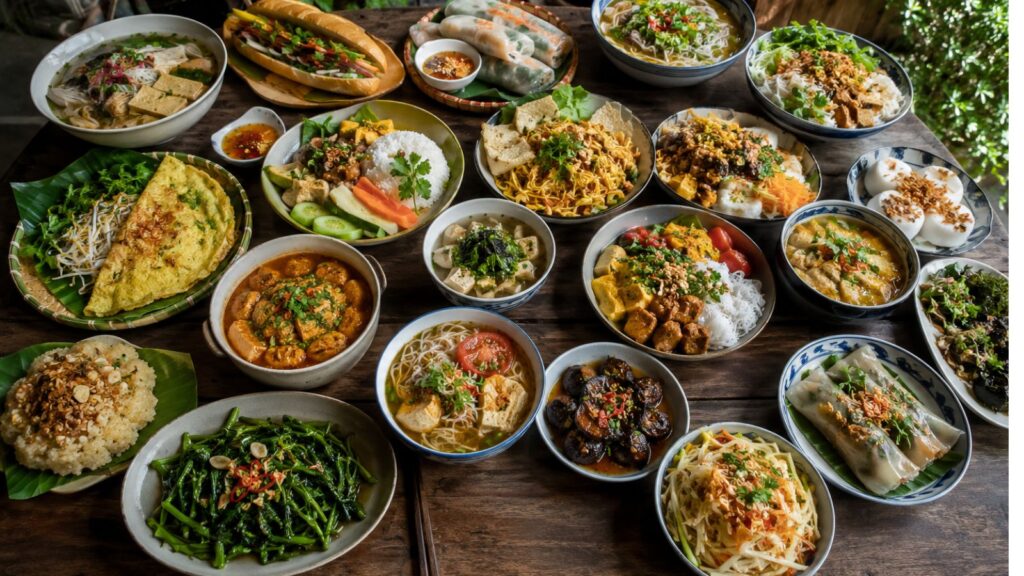
At first glance, Vietnam seems like a paradise for meat lovers. Bowls of steaming phở, sizzling street-side grills, and countless seafood restaurants dominate the country’s food scene. Yet behind these familiar images lies another culinary tradition that many international travelers don’t discover until they arrive.
Across Vietnam, vegetarian cuisine—known locally as ẩm thực chay—has been part of everyday life for centuries. Rooted in Buddhist traditions but embraced far beyond religious practice, it appears everywhere from humble neighborhood eateries and temple kitchens to modern vegan cafés and upscale restaurants.
For many Vietnamese, eating chay isn’t about following a strict diet. It’s simply a way to enjoy lighter meals, celebrate important Buddhist holidays, or appreciate seasonal ingredients at their freshest. As a result, vegetarian food in Vietnam feels authentic rather than alternative.
Whether you’re a lifelong vegetarian, a vegan traveler, or simply curious to explore another side of Vietnamese cuisine, you’ll discover far more than salads and tofu. From fragrant bowls of phở chay to elegant Hue specialties and creative plant-based street food, Vietnam offers one of Asia’s richest and most rewarding vegetarian dining experiences.
This guide explores the history behind Vietnamese vegetarian cuisine, explains the meaning of chay, introduces the country’s most memorable meat-free dishes, and shares practical tips to help you dine with confidence throughout your journey.
Table of Contents
Quick Answer: Is Vietnam good for vegetarians?
Yes. Vietnam is one of the easiest countries in Southeast Asia for vegetarian travel. Dedicated quán chay (vegetarian restaurants) are common in every major city, while many traditional Vietnamese dishes naturally adapt well to meat-free cooking.
What makes Vietnam especially rewarding is that vegetarian cuisine isn’t treated as a niche trend. Influenced by centuries of Buddhist traditions, chay meals are part of everyday life for many locals, creating an impressive variety of authentic dishes built around tofu, mushrooms, fresh herbs, rice, and seasonal vegetables.
If you follow a vegan diet, you’ll simply need to check whether fish sauce, oyster sauce, eggs, or dairy are used in a particular dish. Choosing dedicated vegetarian restaurants usually makes ordering straightforward.
Worth Knowing
Many Vietnamese who regularly eat meat still choose vegetarian meals several days each month. For locals, eating chay is often less about following a vegetarian lifestyle and more about Buddhist traditions, lighter meals, and seasonal cooking.
How Does Vietnam Compare with Other Vegetarian-Friendly Destinations?
Asia is home to some of the world’s best destinations for vegetarian travelers, but each country offers a very different experience. While India is known for its vast vegetarian traditions and Japan for its refined temple cuisine, Vietnam stands out because plant-based food is woven naturally into everyday life.
Unlike India, where dairy products and legumes play a central role, Vietnamese vegetarian cooking focuses on fresh herbs, tofu, mushrooms, seasonal vegetables, rice noodles, and delicate broths. The result is a cuisine that feels lighter while still delivering remarkable depth of flavor.
Thailand is another excellent choice for vegetarians, although many traditional dishes rely on fish sauce or shrimp paste unless specifically prepared otherwise. Vietnam presents a similar challenge, but the widespread availability of dedicated quán chay makes fully vegetarian dining surprisingly straightforward.
Japan’s shōjin ryōri offers an unforgettable temple dining experience, while Taiwan is famous for its extensive Buddhist vegetarian culture. Vietnam shares elements of both traditions yet remains uniquely its own. Here, vegetarian food isn’t reserved for temples or specialty restaurants—it appears in neighborhood cafés, busy markets, family-run eateries, and modern restaurants across the country.
Perhaps that’s what makes Vietnam so memorable. Instead of adapting international vegetarian cuisine, it has developed its own rich collection of dishes that locals have enjoyed for generations, whether for religious traditions, healthier eating, or simply because the food tastes good.
Worth Knowing
Unlike many countries where vegetarian restaurants mainly serve people following a vegetarian lifestyle, many customers at Vietnamese quán chay also eat meat regularly. They simply enjoy chay as part of Buddhist traditions or because it’s considered a lighter, healthier meal.
| Destination | Vegetarian Experience | Best For |
|---|---|---|
| Vietnam | Buddhist-inspired cuisine, fresh herbs, tofu, noodle dishes, affordable quán chay | Travelers seeking authentic local food |
| India | Naturally vegetarian regional cuisines with rich spices and dairy | Long vegetarian culinary traditions |
| Thailand | Vibrant street food and modern vegetarian cafés | Travelers who enjoy bold flavors |
| Japan | Elegant Buddhist temple cuisine (shōjin ryōri) | Fine dining and seasonal ingredients |
| Taiwan | Extensive Buddhist vegetarian culture | Urban vegetarian travel |
Why Vietnam Is a Great Destination for Vegetarians
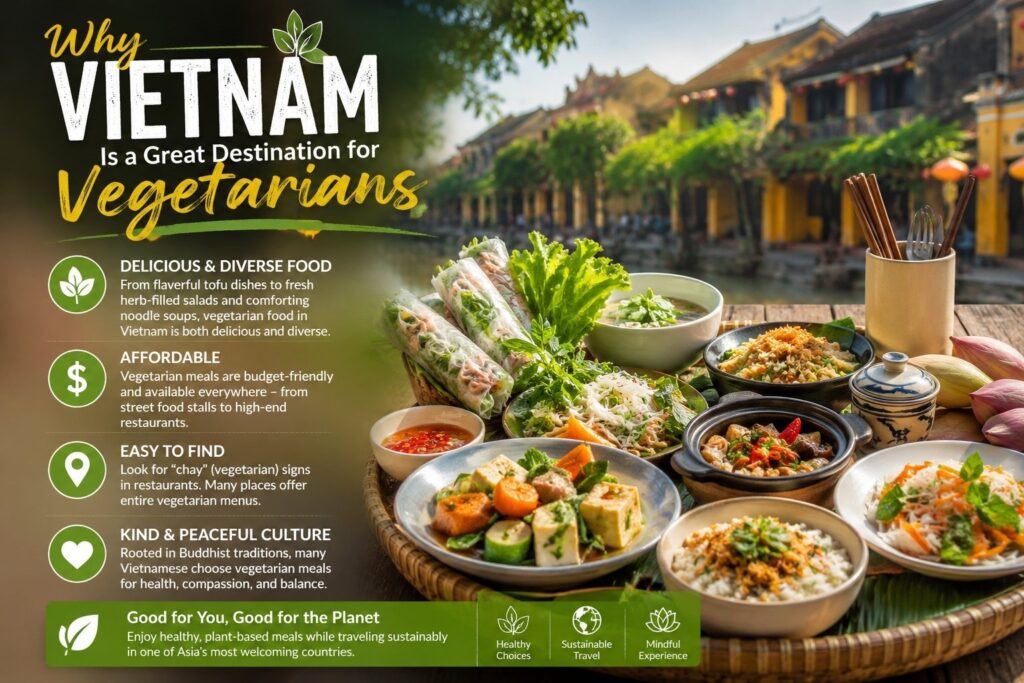
Vegetarian food has never been a niche trend in Vietnam. Long before plant-based dining became popular around the world, millions of Vietnamese were already enjoying chay meals as part of everyday life.
Walk into a neighborhood vegetarian restaurant just before lunchtime and you’ll see office workers sharing tables with students, retirees, and Buddhist devotees. Some are there for religious reasons, while others simply appreciate the lighter flavors, affordable prices, and generous portions.
That everyday popularity explains why vegetarian cuisine has developed far beyond simple tofu dishes. Menus often feature dozens of recipes built around mushrooms, lotus root, banana blossom, pumpkin, taro, fresh herbs, and seasonal vegetables. Many are inspired by traditional family recipes or Buddhist temple cooking passed down through generations.
Regional diversity makes the experience even more rewarding. Northern Vietnam favors clean, delicate flavors, Central Vietnam—especially Hue—is renowned for its sophisticated vegetarian cuisine, while the south embraces tropical ingredients and a naturally sweeter style of cooking.
For travelers, this means vegetarian dining is more than just finding something without meat. It’s an opportunity to experience a side of Vietnamese culture that many visitors overlook, yet many locals enjoy every week.
A Brief History of Vegetarian Cuisine in Vietnam
Vietnam’s vegetarian culinary tradition dates back centuries and is closely intertwined with the spread of Mahayana Buddhism, which became deeply rooted in Vietnamese society from around the 10th century onward. While not everyone follows a vegetarian lifestyle year-round, many Vietnamese families choose to eat chay on the 1st and 15th days of the lunar month, during Buddhist festivals, or as part of spiritual observances.
Historically, vegetarian meals were first prepared in Buddhist temples, where monks developed recipes that transformed simple ingredients into nourishing, flavorful dishes. Tofu, mushrooms, lotus root, taro, seasonal vegetables, and fresh herbs became the foundation of temple cooking, while carefully balanced seasonings created satisfying meals without meat or seafood.
Over time, these culinary traditions spread beyond temple kitchens into homes and local restaurants. Today, vegetarian cuisine is no longer viewed solely as religious food. Many Vietnamese people enjoy chay simply because it is light, nutritious, affordable, and full of fresh flavors. Younger generations have also embraced vegetarian and vegan dining as part of a healthier lifestyle, leading to the growth of modern plant-based cafés alongside long-established Buddhist restaurants.
This unique blend of history, religion, and everyday life gives Vietnamese vegetarian cuisine a character unlike that of many other countries. Rather than being a recent food trend, it represents a living tradition that has evolved over generations while remaining deeply connected to Vietnam’s cultural identity.
What Makes Vietnamese Vegetarian Food Different?
Vegetarian cuisine exists around the world, but Vietnam offers a distinctive approach that reflects its own culinary philosophy.
Unlike many Western vegetarian dishes, which often rely on cheese, cream, butter, or heavily processed meat substitutes, Vietnamese cooking emphasizes freshness, balance, and natural flavors. Meals are built around vegetables, tofu, mushrooms, rice, noodles, and an abundance of fragrant herbs, creating dishes that feel both light and deeply satisfying.
Another defining characteristic is the use of herbs. Mint, Thai basil, cilantro, perilla, Vietnamese coriander, and other fresh greens are not simply garnishes—they are essential ingredients that shape the flavor of each dish. Combined with ingredients such as lemongrass, ginger, chili, and roasted peanuts, they create layers of aroma and texture without overwhelming the palate.
Vietnamese vegetarian cuisine also celebrates seasonal produce. Markets change throughout the year, and many restaurants adjust their menus according to what is fresh and locally available. Pumpkin, banana blossom, lotus root, taro, young jackfruit, water spinach, and a wide variety of mushrooms all appear in different regions and seasons.
Perhaps most importantly, vegetarian dishes in Vietnam are rarely treated as substitutes for meat-based meals. Classics such as phở chay, bún Huế chay, and bánh mì chay have developed into beloved dishes in their own right, enjoyed by vegetarians and meat-eaters alike. Even when plant-based versions of traditional recipes are served, the goal is not simply to imitate meat but to highlight the natural flavors of local ingredients.
For travelers, this means every vegetarian meal offers an opportunity to experience authentic Vietnamese cooking rather than a modified version designed solely for special diets.
Seasonal Vegetarian Specialties
The best time to explore Vietnam’s vegetarian food scene may surprise many visitors.
Throughout the lunar calendar, particularly on the 1st and 15th days of each month, millions of Vietnamese people choose to eat chay as part of Buddhist traditions or personal spiritual practice. During these occasions, vegetarian cuisine becomes even more visible across the country.
Many restaurants expand their vegetarian menus, while temporary food stalls appear near temples, markets, and residential neighborhoods. Local bakeries prepare vegetarian versions of popular snacks, and some families gather to cook elaborate meat-free meals at home using recipes passed down through generations.
Major Buddhist celebrations, such as Vesak (Buddha’s Birthday), also inspire a wider variety of vegetarian dishes. Restaurants often create special seasonal menus featuring beautifully arranged platters, colorful vegetable dishes, lotus-inspired recipes, and refined temple cuisine that may not be available during the rest of the year.
For travelers, these occasions offer a unique opportunity to experience vegetarian food as local communities do—not simply as a dietary preference, but as an expression of culture, tradition, and mindfulness. Visiting Vietnam during one of these periods reveals a side of the country’s culinary heritage that many guidebooks only briefly mention.
Even outside religious observances, seasonal ingredients continue to shape Vietnamese vegetarian cooking. Fresh tropical fruits, herbs, mushrooms, leafy greens, and vegetables vary throughout the year, meaning the same dish may taste slightly different depending on when and where you travel. This close connection to the seasons is one of the reasons Vietnamese cuisine feels so fresh, vibrant, and rooted in local traditions.
Understanding “Chay” in Vietnam
One of the first words vegetarian travelers should learn before visiting Vietnam is “chay” (pronounced roughly like chai). You’ll see it everywhere—from restaurant signs and market stalls to food delivery apps and supermarket labels. Understanding what this word means will make it much easier to find suitable meals during your trip.
What Does “Chay” Mean?
In Vietnam, chay generally refers to food prepared without meat or seafood. The term is closely associated with Buddhist cuisine, which has influenced Vietnamese cooking for centuries.
Restaurants with signs reading Quán Chay, Cơm Chay, or Nhà Hàng Chay specialize in vegetarian dishes. Their menus often include meat-free versions of traditional Vietnamese favorites, allowing diners to enjoy familiar flavors without animal meat.
Unlike some Western vegetarian restaurants, Vietnamese chay restaurants rarely focus on salads or plant-based substitutes alone. Instead, they showcase the country’s culinary traditions through rice, noodles, tofu, mushrooms, fresh herbs, and seasonal vegetables.
Is “Chay” the Same as Vegetarian or Vegan?
Not exactly. While chay usually means vegetarian, the exact definition can vary depending on the restaurant and local customs.
In many traditional Buddhist restaurants, dishes are completely plant-based and contain no meat, seafood, eggs, or dairy. These meals closely match what international travelers would consider vegan.
However, some restaurants may serve vegetarian dishes that include eggs or milk, especially those catering to younger customers or international visitors. A few dishes may also contain seasonings such as fish sauce or oyster sauce if they are not prepared in a dedicated vegetarian kitchen.
If you follow a strict vegan diet, it’s always worth confirming the ingredients before ordering.
Common Ingredients in Vietnamese Vegetarian Cuisine
One reason Vietnamese vegetarian food is so flavorful is its reliance on fresh, natural ingredients rather than heavy processing.
You’ll frequently find:
- Tofu in many textures, from silky to crispy fried
- Fresh mushrooms, including oyster, shiitake, straw, and wood ear mushrooms
- Seasonal vegetables such as morning glory, bok choy, cabbage, pumpkin, and eggplant
- Rice noodles and vermicelli
- Rice paper for fresh spring rolls
- Fragrant herbs including Thai basil, mint, cilantro, and perilla
- Soy sauce, fermented bean curd, and mushroom-based seasonings
- Peanuts, sesame seeds, and roasted shallots for added texture
These ingredients create dishes that are light yet satisfying, with a balance of fresh aromas, savory flavors, and natural sweetness.
Mock Meats: A Unique Part of Vietnamese Vegetarian Cooking
Visitors are often surprised to discover realistic-looking vegetarian versions of chicken, beef, pork, shrimp, and even fish.
These mock meats are commonly made from soy protein, wheat gluten (seitan), tofu skin, mushrooms, or other plant-based ingredients. They are especially popular in Buddhist restaurants and during vegetarian festivals, where they allow people to enjoy familiar textures while following a meat-free diet.
Although mock meats are widely available, they are only one part of Vietnamese vegetarian cuisine. Many of the country’s best dishes celebrate fresh vegetables, tofu, and mushrooms without trying to imitate meat at all.
How Easy Is It to Find Vegetarian Food?
Finding vegetarian food in Vietnam is generally straightforward, especially in cities and popular tourist destinations. Nearly every city has dedicated vegetarian restaurants, while many regular restaurants can prepare simple meat-free dishes upon request.
Vegetarian options are especially common near Buddhist temples, local markets, universities, and residential neighborhoods. On the 1st and 15th days of the lunar month, many Vietnamese people choose to eat chay, so restaurants often expand their vegetarian menus and some temporary food stalls appear just for these occasions.
In major destinations such as Hanoi, Hue, Da Nang, Hoi An, and Ho Chi Minh City, travelers will also find a growing number of modern vegan cafés serving smoothie bowls, plant-based burgers, vegan desserts, and creative fusion cuisine alongside traditional Vietnamese dishes.
Ordering with Confidence
Learning just one simple phrase can make dining much easier:
“Tôi ăn chay.”
I am vegetarian.
If you’re vegan or have stricter dietary requirements, it’s helpful to ask whether a dish contains fish sauce, oyster sauce, eggs, or dairy. Most restaurant staff are familiar with these requests, particularly in tourist areas.
Once you understand the meaning of chay, you’ll discover that Vietnam offers far more than a few vegetarian alternatives. It opens the door to an entire culinary tradition shaped by history, religion, and an abundance of fresh local ingredients.
Vegetarian vs Vegan in Vietnam
| Vegetarian | Vegan |
|---|---|
| Usually easy | Need to ask |
| Eggs sometimes | No eggs |
| Fish sauce maybe | Ask carefully |
18 Must-Try Vegetarian Dishes in Vietnam
Some of Vietnam’s most memorable meals don’t contain meat at all.
From steaming noodle soups served outside Buddhist temples to crispy street-food snacks prepared on busy sidewalks, vegetarian dishes reveal a different side of Vietnamese cuisine—one that’s every bit as authentic as the country’s famous beef pho or grilled pork.
Many recipes have been enjoyed for generations, while others were inspired by temple cooking before becoming everyday favorites. Together, they showcase the remarkable diversity of Vietnam’s regional food culture and prove that eating vegetarian here never feels like settling for less.
1. Phở Chay (Vegetarian Pho)
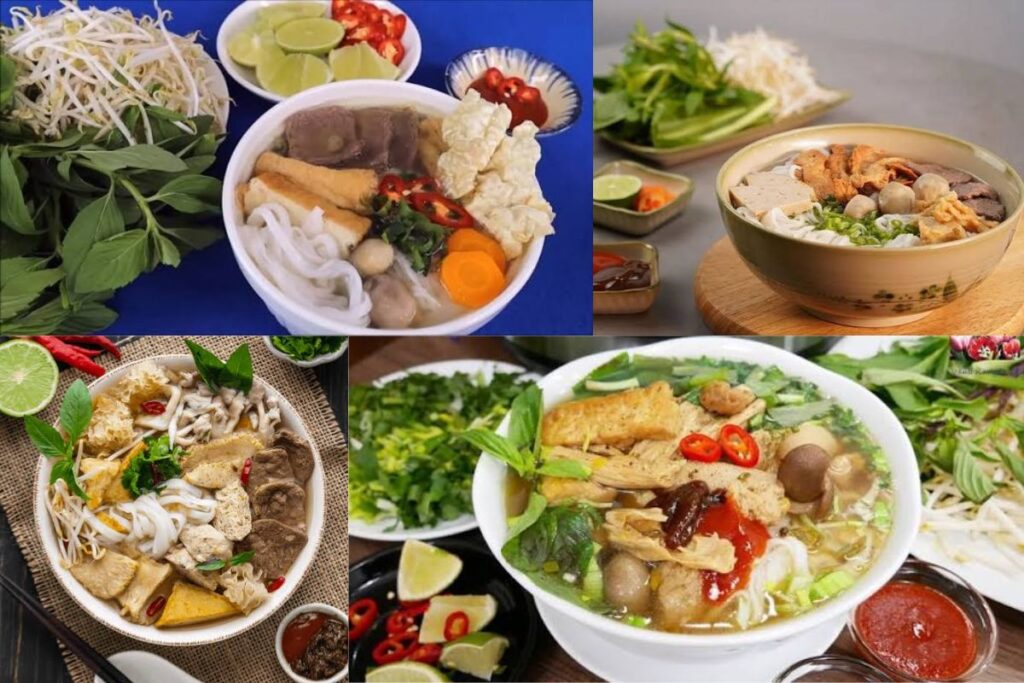
If there’s one vegetarian dish every traveler should try in Vietnam, it’s phở chay.
At first glance, it looks much like the country’s famous beef pho. The difference becomes clear with the first spoonful. Instead of relying on beef bones, the broth develops its depth from slow-simmered mushrooms, roasted onions, daikon, carrots, ginger, and warming spices such as cinnamon, star anise, and cloves. The result is lighter than traditional pho yet surprisingly rich and aromatic.
Many Vietnamese don’t order phở chay because they’re vegetarian. It’s a favorite choice during Buddhist observances, on the first and fifteenth days of the lunar month, or simply when people want a comforting meal that feels lighter than meat-based soups.
A typical bowl is topped with silky rice noodles, tofu, mushrooms, fresh herbs, bean sprouts, lime, and chili. Every region prepares it slightly differently, making it worth trying more than once during your journey.
Local Insight: Early morning is often the best time to enjoy phở chay, as many neighborhood restaurants prepare only one fresh batch of broth each day.
2. Bánh Mì Chay (Vegetarian Bánh Mì)
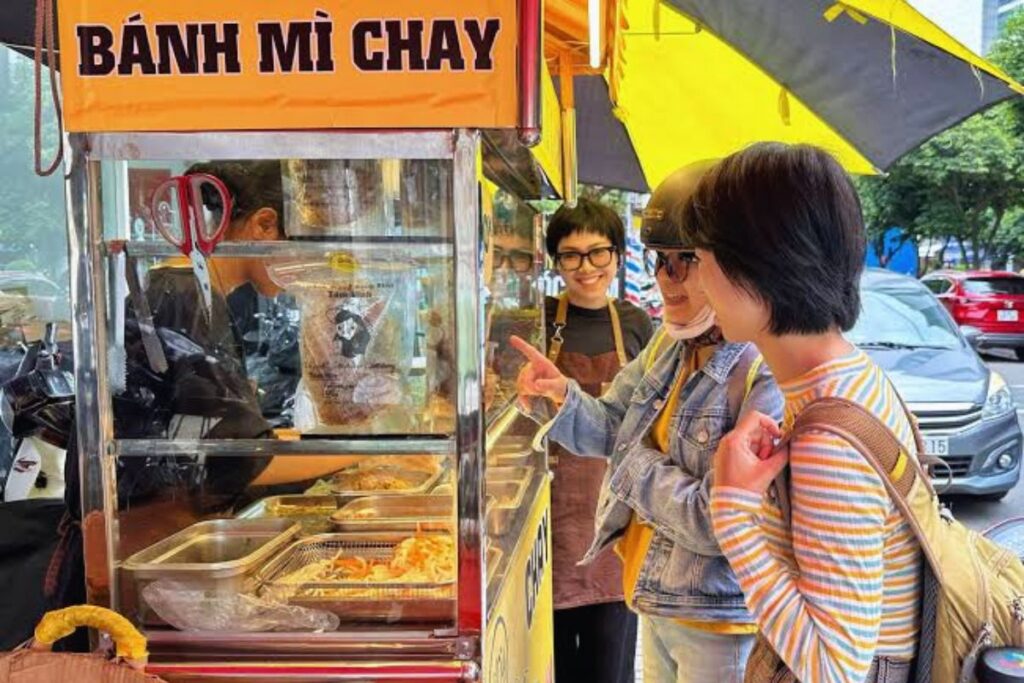
Vietnam’s iconic baguette sandwich proves that street food doesn’t need meat to be unforgettable.
Freshly baked baguettes are filled with lemongrass tofu, sautéed mushrooms, vegetarian pâté, crisp cucumber, pickled carrots, daikon, cilantro, and homemade sauces. Every vendor has a slightly different recipe, which is part of the fun—no two bánh mì chay taste exactly alike.
The contrast of textures is what makes this sandwich so satisfying: a crackling crust, soft bread, crunchy vegetables, and fragrant herbs in every bite.
Worth Knowing: Many bakeries prepare vegetarian bánh mì only on Buddhist vegetarian days, so you’ll often discover more varieties on the first and fifteenth days of the lunar month.
3. Gỏi Cuốn Chay (Fresh Vegetarian Spring Rolls)
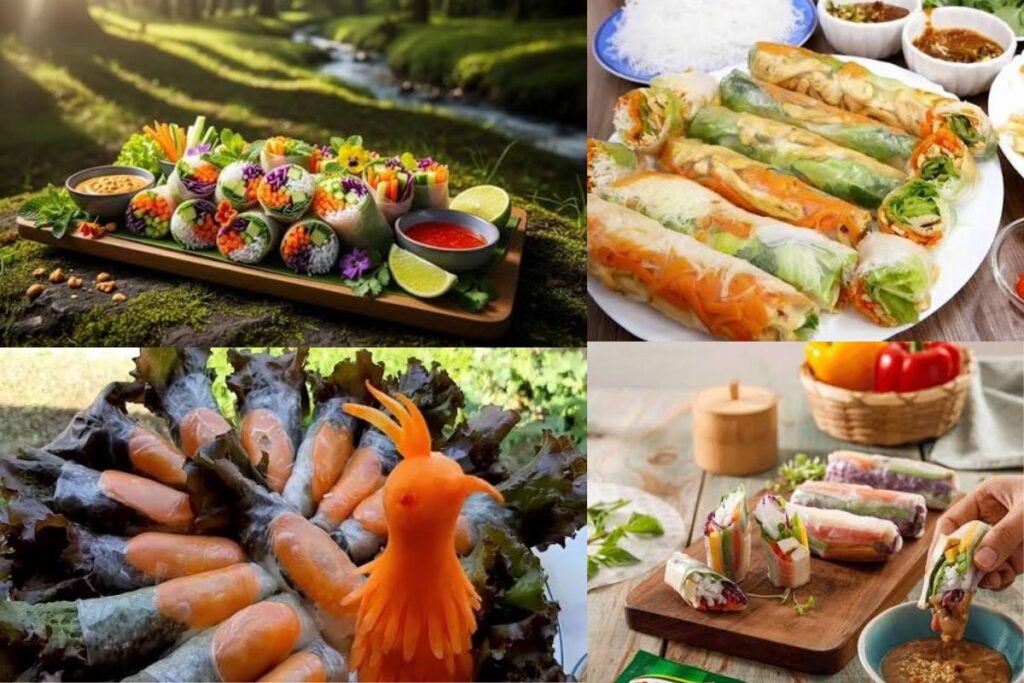
Fresh spring rolls capture everything that makes Vietnamese cuisine so appealing: freshness, balance, and simplicity.
Rice paper wraps are filled with vermicelli noodles, lettuce, herbs, cucumber, tofu, mushrooms, and seasonal vegetables before being rolled by hand just moments before serving.
Rather than overpowering the delicate ingredients, the accompanying peanut dipping sauce adds richness while allowing the herbs to remain the star of the dish.
Unlike fried spring rolls, gỏi cuốn chay feels light enough for Vietnam’s tropical climate, making it a popular lunch or afternoon snack throughout the country.
Worth Knowing
Many Vietnamese vegetarian recipes weren’t created to imitate meat. Instead, they celebrate ingredients such as mushrooms, lotus root, tofu, taro, and fresh herbs that have been part of local cooking for centuries.
4. Bún Huế Chay
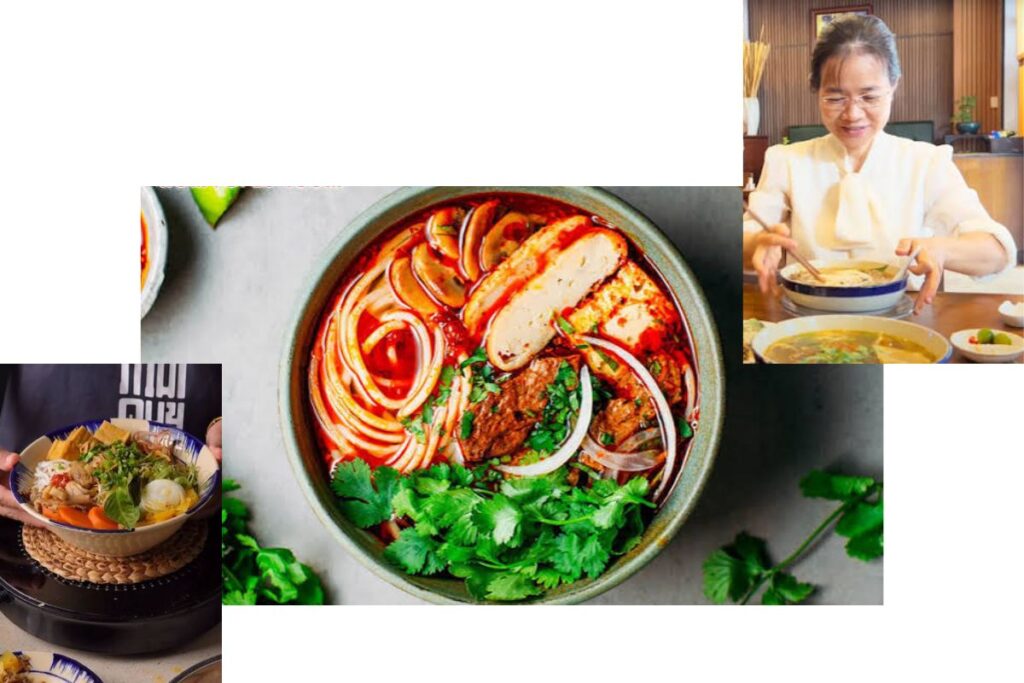
In Hue, vegetarian cuisine isn’t an alternative—it’s part of the city’s identity.
Arrive early at a neighborhood quán chay, and you’ll often find locals enjoying bowls of bún Huế chay before heading to work. Inspired by the imperial city’s rich Buddhist traditions, the soup combines thick rice noodles with mushrooms, tofu, pineapple, lemongrass, and a fragrant vegetable broth that’s both spicy and refreshing.
Compared with phở chay, the flavors are bolder and more aromatic, reflecting Central Vietnam’s love of chili and lemongrass.
Local Insight: Many of Hue’s best vegetarian restaurants close after lunch once the day’s dishes have sold out.
5. Bánh Xèo Chay (Vegetarian Crispy Pancake)
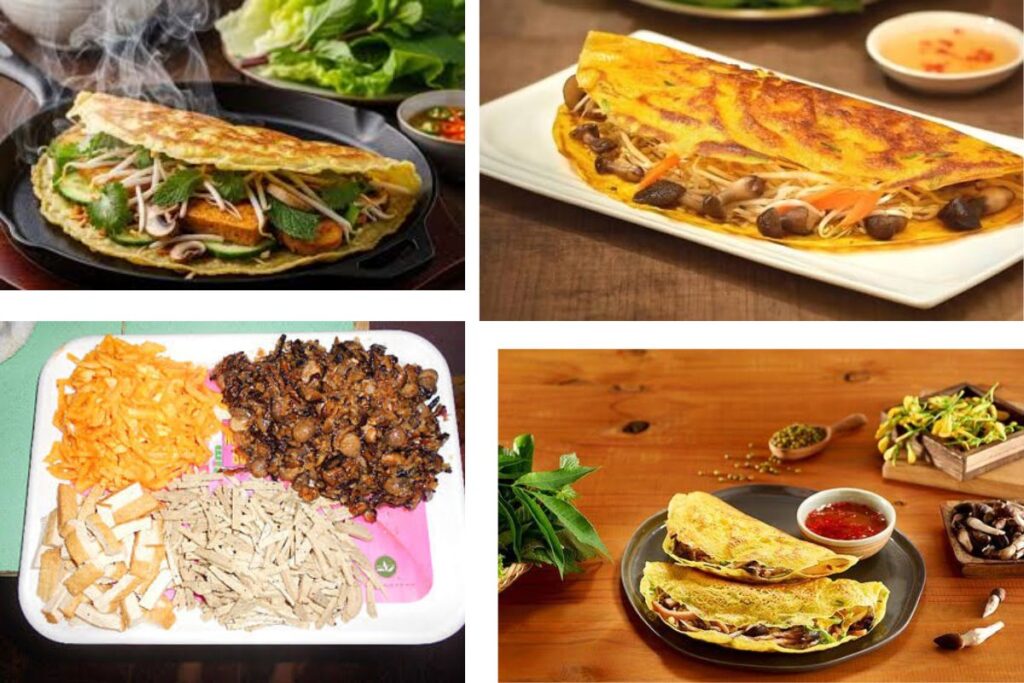
The sound comes before the flavor.
As batter hits a hot pan, it sizzles loudly—giving bánh xèo its name, which loosely imitates the crackling sound made during cooking.
The vegetarian version replaces pork and shrimp with mushrooms, tofu, bean sprouts, and seasonal vegetables while keeping the same crisp golden shell.
For the full experience, wrap each piece in lettuce and fresh herbs before dipping it into vegetarian sauce. The contrast between crunchy pancake, cool herbs, and tangy sauce is one of Vietnam’s most satisfying combinations of textures.
6. Cơm Chay (Vietnamese Vegetarian Rice)
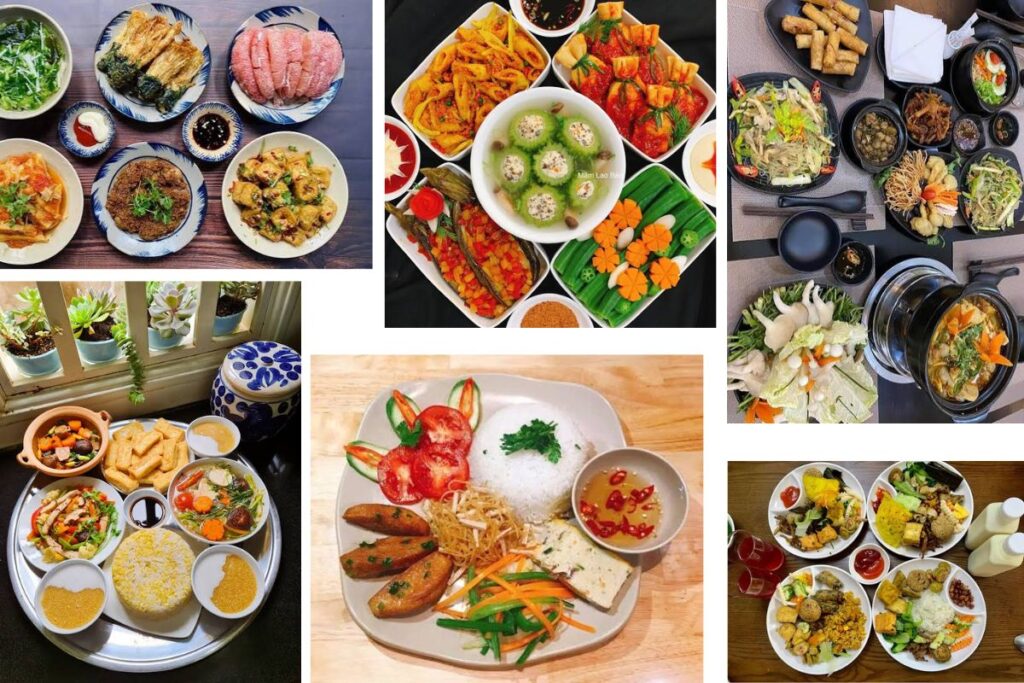
For many Vietnamese, cơm chay isn’t a special occasion meal—it’s simply lunch.
Around midday, neighborhood vegetarian restaurants become surprisingly lively as office workers, students, and retirees gather around shared tables. Instead of ordering individual dishes, many choose a tray of steamed rice accompanied by several seasonal vegetable dishes, tofu, soup, and braised mushrooms.
The menu changes daily, depending on what’s fresh at the local market. One day you might find caramelized tofu and pumpkin, while the next features lotus root, water spinach, or stir-fried eggplant.
Traveler Tip: Buffet-style vegetarian restaurants are one of the easiest ways to sample a wide variety of Vietnamese dishes in a single meal, making them an excellent choice for first-time visitors.
7. Hủ Tiếu Chay
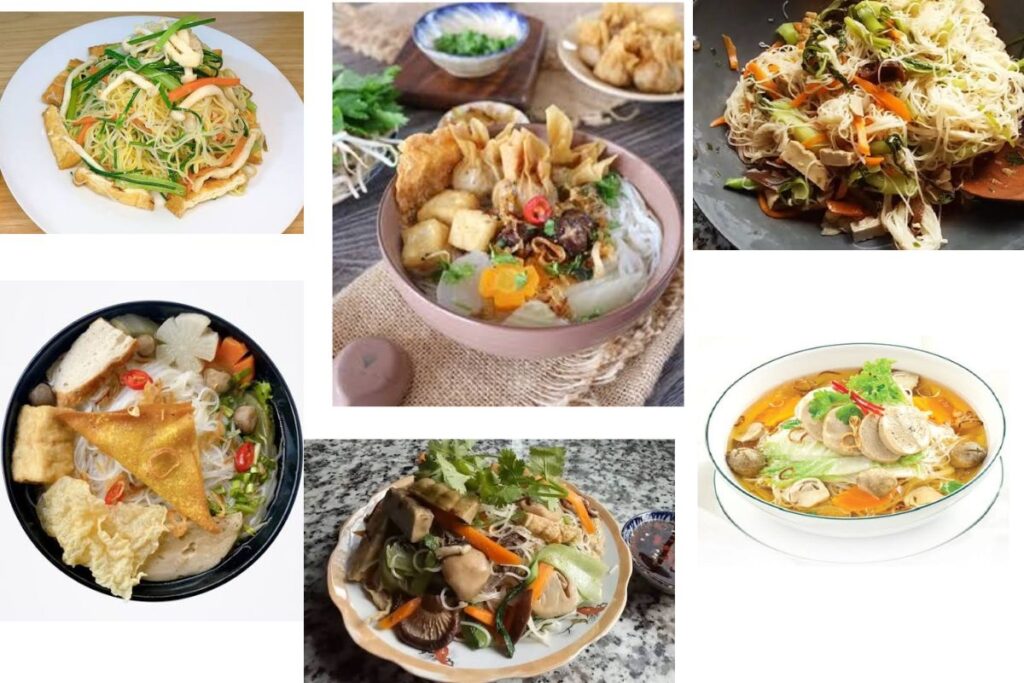
Southern Vietnam’s warm climate has inspired a cuisine that’s lighter, slightly sweeter, and wonderfully refreshing. Hủ tiếu chay reflects that character perfectly.
The clear vegetable broth is delicate rather than rich, allowing the flavors of tofu, mushrooms, fresh herbs, and crunchy fried shallots to shine. A squeeze of lime and a little chili are often all that’s needed to complete the bowl.
Unlike the deeper, more aromatic broths found in northern Vietnam, hủ tiếu chay feels bright and refreshing—ideal after a morning exploring Ho Chi Minh City or the Mekong Delta.
Local Insight
Unlike many Western countries, buffet-style vegetarian restaurants are extremely popular in Vietnam. Locals often return several times a week because the menu changes with the seasons.
8. Mì Quảng Chay
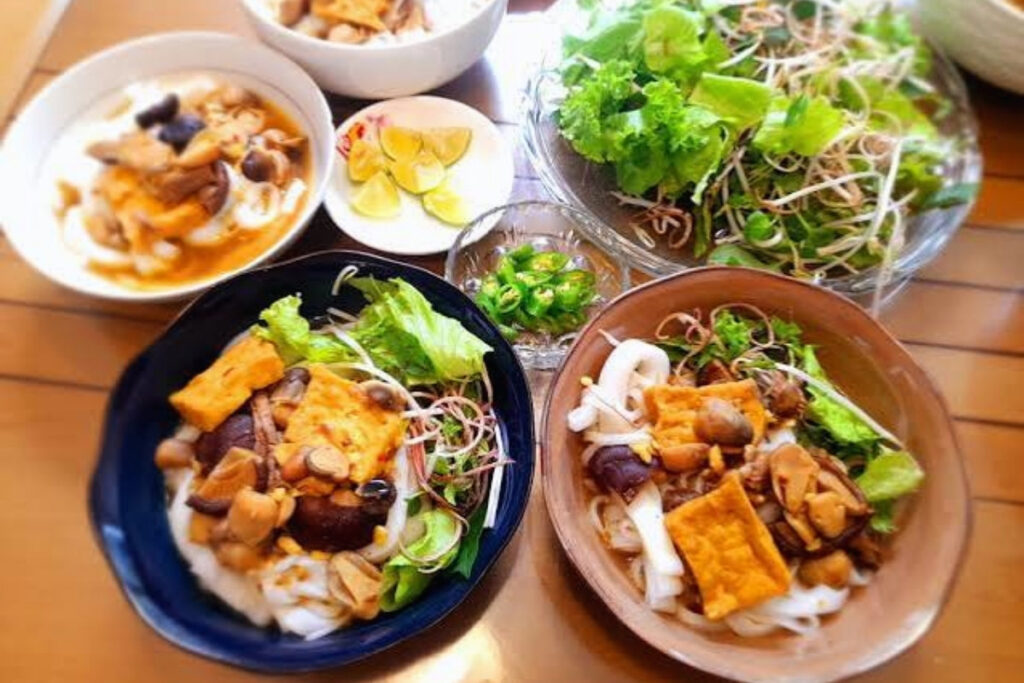
Unlike most Vietnamese noodle soups, mì Quảng isn’t meant to be swimming in broth.
Only a small amount of concentrated stock is added, allowing the wide turmeric-colored noodles, roasted peanuts, rice crackers, herbs, and tofu to take center stage.
Every bite feels different. One combines crunchy sesame crackers with fresh herbs, while the next brings soft noodles and earthy mushrooms together.
It’s this contrast of textures that has made mì Quảng one of Central Vietnam’s most distinctive regional specialties.
9. Bún Thịt Nướng Chay
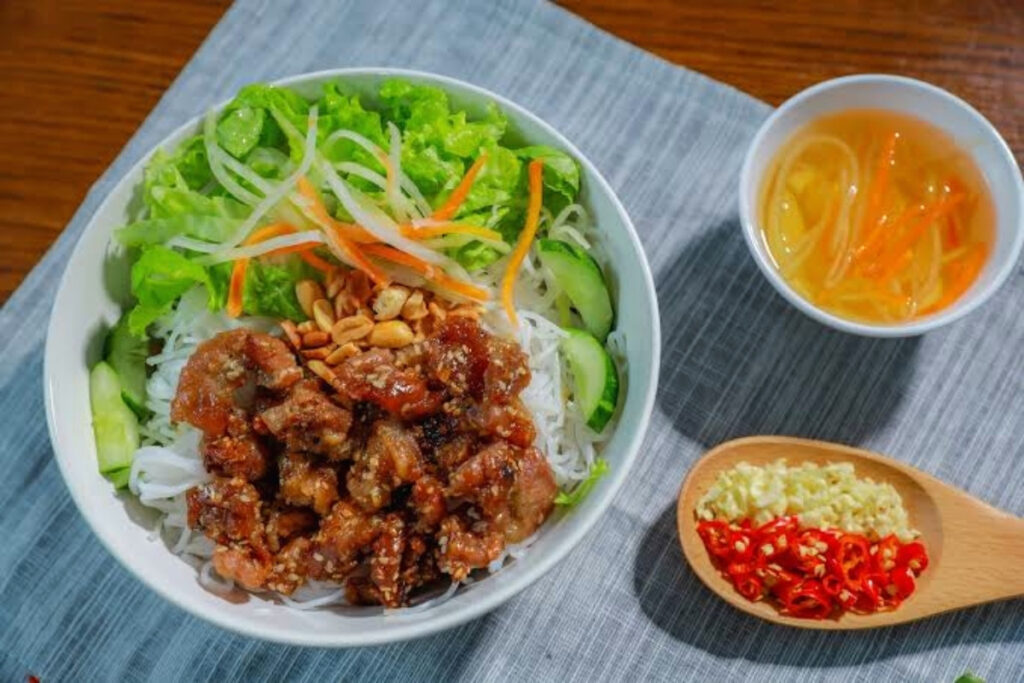
Despite its name, no grilled meat appears in this vegetarian version of one of Vietnam’s most popular noodle dishes.
Instead, marinated tofu or plant-based protein is grilled over charcoal until lightly caramelized, creating the smoky aroma that defines the original dish.
Served with vermicelli, pickled vegetables, peanuts, herbs, and vegetarian sauce, every bowl balances sweetness, acidity, crunch, and freshness—qualities that define so much of Vietnamese cuisine.
Many meat-eaters happily order this dish simply because they enjoy the flavors.
Traveler Tip
Don’t hesitate to try the same vegetarian dish in different cities. Regional cooking styles can completely change the flavors, ingredients, and presentation.
10. Xôi Chay (Vegetarian Sticky Rice)
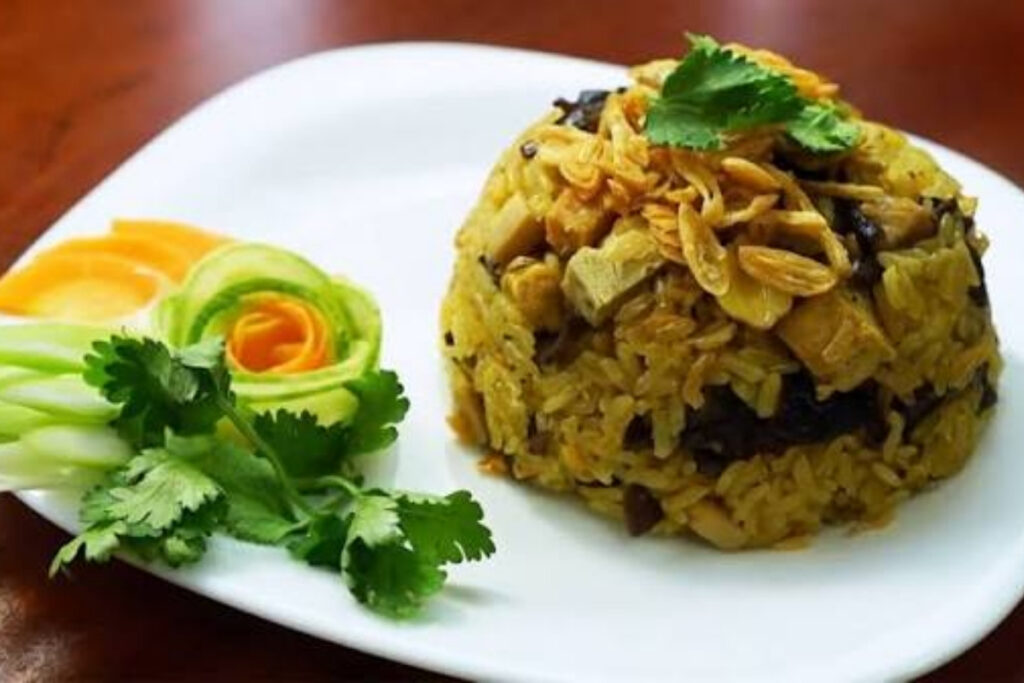
Long before cafés begin serving breakfast, street vendors across Vietnam are already selling xôi chay.
Prepared with sticky rice, mung beans, peanuts, sesame salt, fried shallots, and occasionally braised mushrooms or tofu, it’s one of the country’s simplest yet most satisfying morning meals.
Wrapped to take away and easy to eat on the go, xôi chay has fueled generations of students, workers, and travelers starting their day before sunrise.
11. Đậu Hũ Sốt Cà (Tofu in Tomato Sauce)
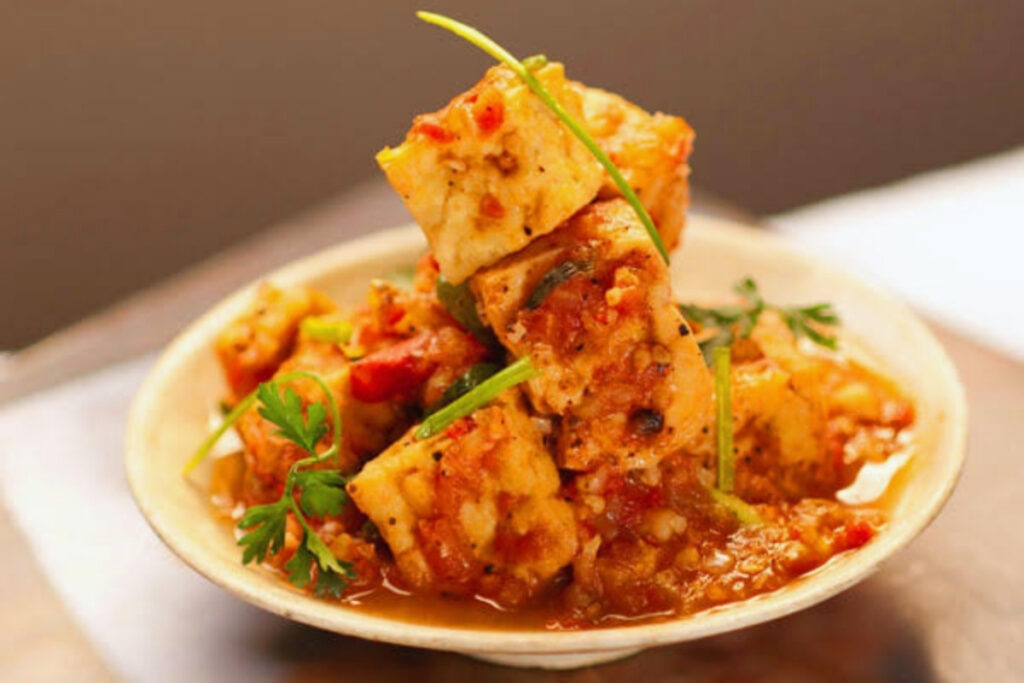
Few dishes better capture the comfort of Vietnamese home cooking than đậu hũ sốt cà.
Golden pieces of tofu gently simmer in a bright tomato sauce flavored with garlic, onions, and fresh herbs until every bite absorbs the sweet, tangy broth.
Unlike elaborate restaurant specialties, this is the kind of meal many Vietnamese grow up eating at home, making it one of the country’s most familiar vegetarian dishes.
12. Rau Muống Xào Tỏi (Stir-Fried Morning Glory with Garlic)
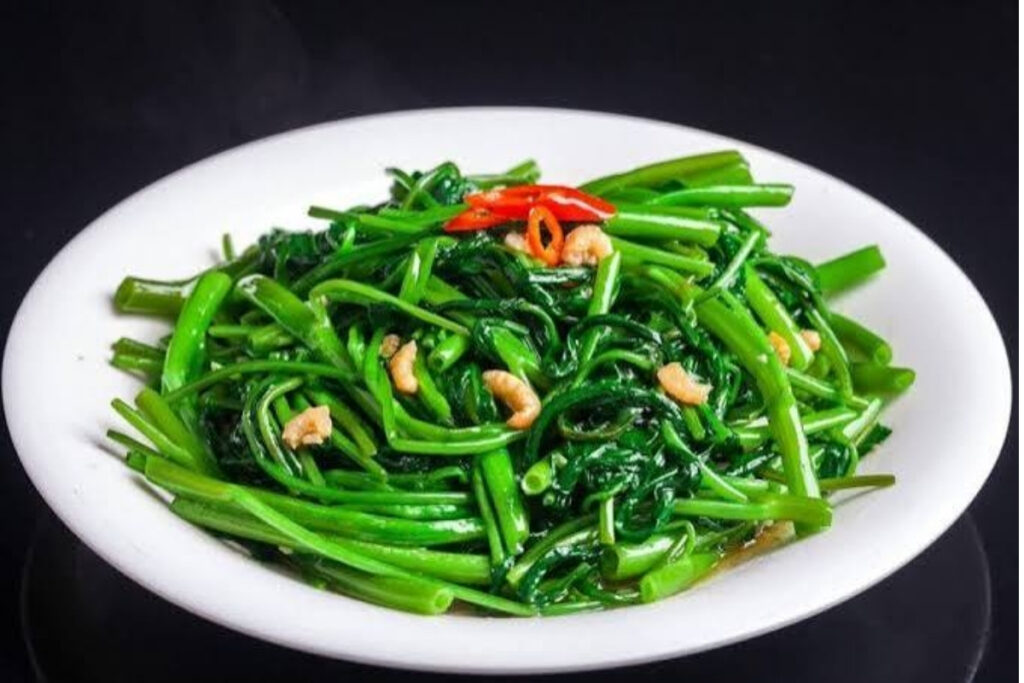
Some of Vietnam’s most memorable dishes are also the simplest.
Fresh morning glory is stir-fried over intense heat with generous amounts of garlic, preserving its crisp texture while releasing an unmistakable aroma that drifts through open-air kitchens.
Although often served as a side dish, many travelers find themselves ordering it again and again. Paired with steamed rice and tofu, it perfectly demonstrates how Vietnamese cooking transforms everyday ingredients into something unexpectedly memorable.
13. Bún Riêu Chay
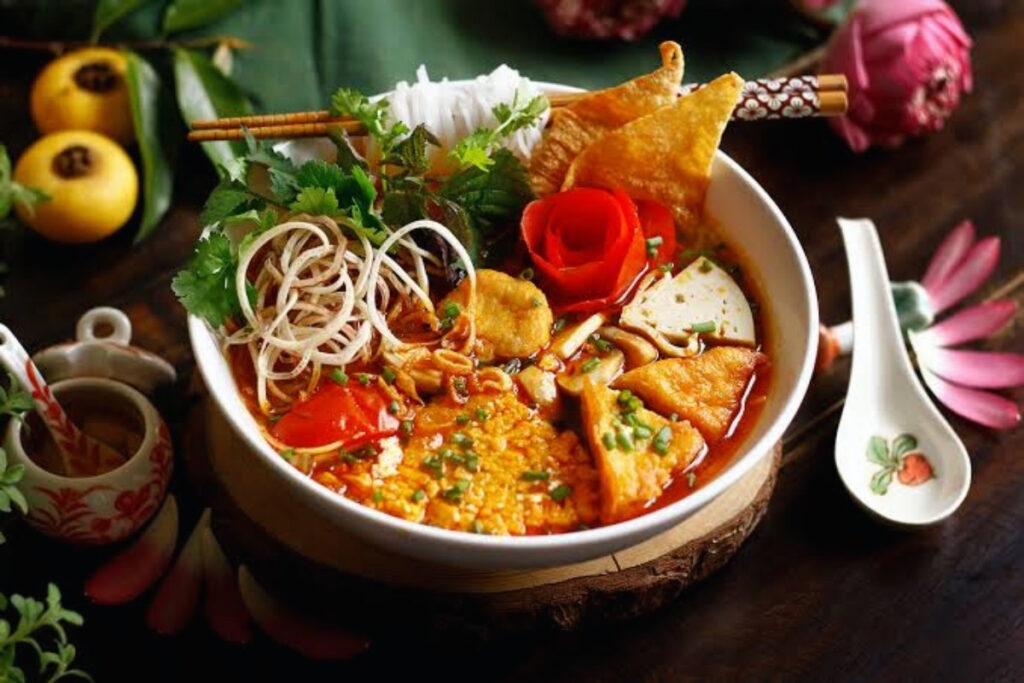
While bún riêu is traditionally known for its crab-based broth, the vegetarian version proves that rich flavor doesn’t depend on seafood.
Instead, the soup develops its character from tomatoes, mushrooms, tofu, pineapple, and slow-simmered vegetables. The broth is slightly tangy, naturally sweet, and wonderfully aromatic, making it especially refreshing on warm afternoons.
Rice vermicelli, crispy tofu, fresh herbs, bean sprouts, and slices of tomato create a bowl that’s both colorful and satisfying without feeling heavy.
Local Insight: Many Buddhist restaurants prepare bún riêu chay only for lunch, so arriving before noon often means enjoying the freshest broth of the day.
14. Canh Chua Chay (Vietnamese Sweet and Sour Soup)
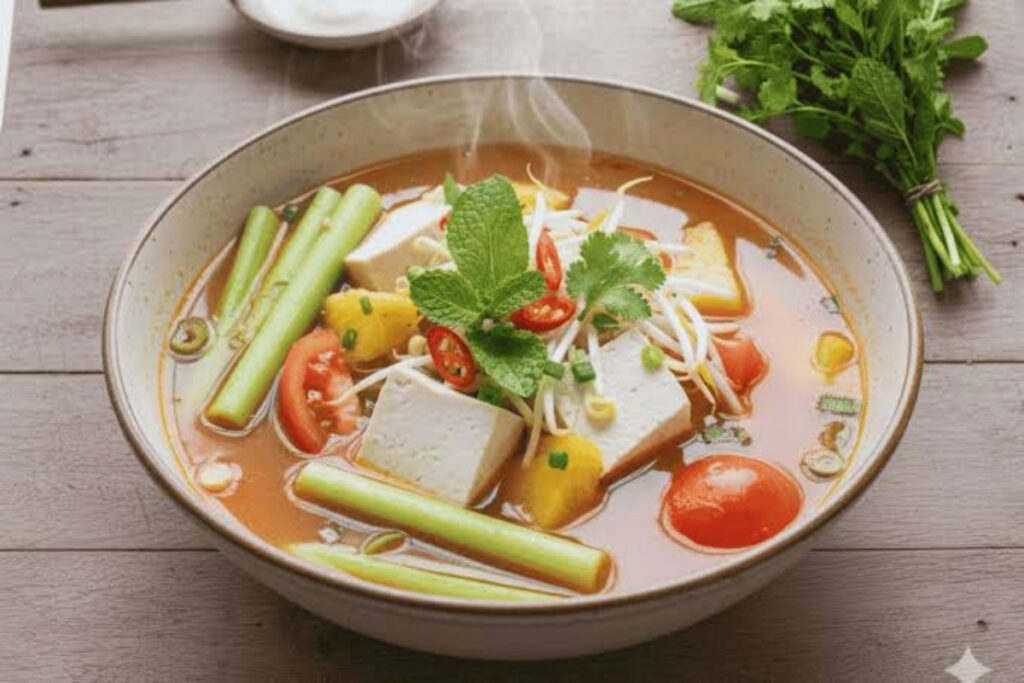
Few soups capture the freshness of Southern Vietnamese cooking quite like canh chua chay.
The broth balances gentle sweetness with bright acidity using pineapple, tomatoes, tamarind, okra, bean sprouts, elephant ear stem, and herbs. Tofu or mushrooms usually replace fish, allowing the vegetables to become the stars of the dish.
Served alongside steamed rice, canh chua chay is both comforting and refreshing—a combination that makes it especially popular during Vietnam’s hot, humid summers.
Unlike many Western soups, the flavors are intentionally light and vibrant, highlighting seasonal produce rather than rich stocks or heavy cream.
15. Nấm Kho Tiêu (Braised Mushrooms with Black Pepper)
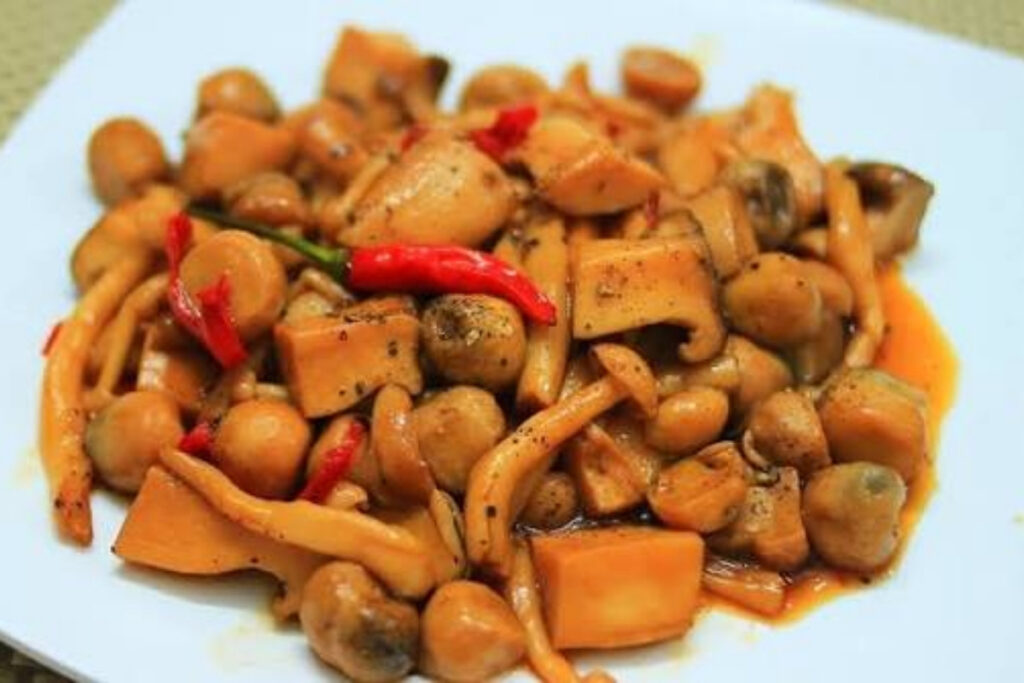
Sometimes the most memorable dishes are also the simplest.
Nấm kho tiêu slowly braises mushrooms in soy sauce, black pepper, garlic, and a touch of sugar until the sauce becomes glossy and intensely flavorful. Every bite delivers deep umami balanced by the gentle heat of freshly cracked pepper.
Although commonly served as part of a family meal, this humble dish appears in many vegetarian restaurants throughout Vietnam.
Worth Knowing: Black pepper from Phú Quốc and central Vietnam is widely regarded as some of the finest in the country, giving this simple recipe remarkable depth of flavor.
16. Gỏi Ngó Sen Chay (Lotus Stem Salad)
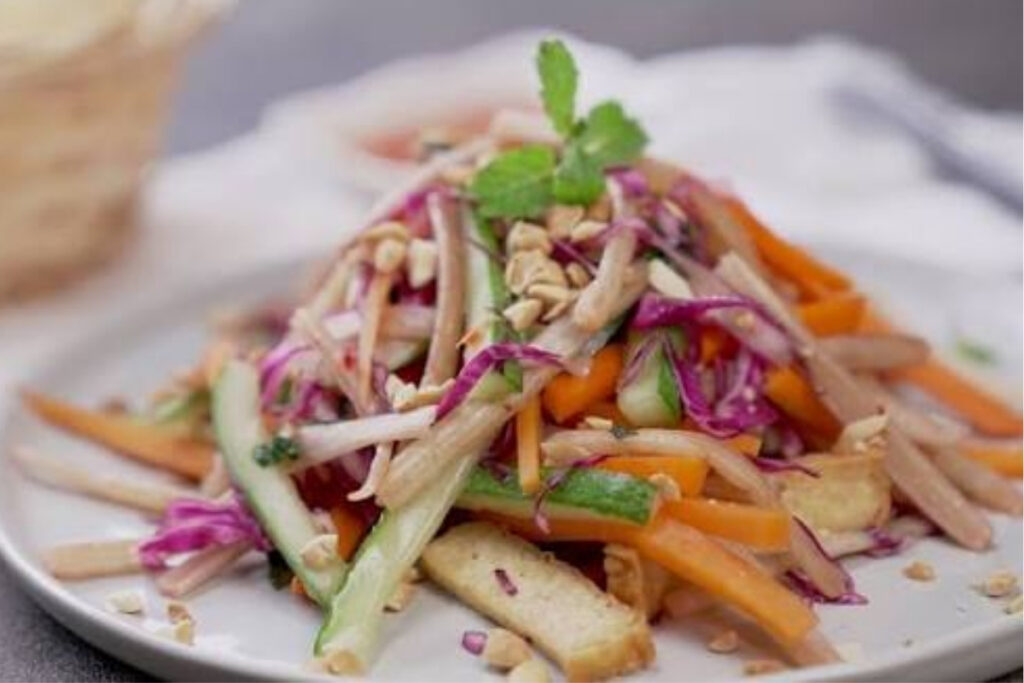
Crisp, refreshing, and beautifully balanced, gỏi ngó sen chay is one of Vietnam’s finest vegetarian appetizers.
Thin slices of lotus stem are tossed with carrots, cucumber, herbs, tofu, roasted peanuts, and a light sweet-and-sour dressing that highlights the natural crunch of the vegetables.
The salad perfectly reflects the Vietnamese approach to flavor—combining freshness, acidity, sweetness, and texture without overwhelming any single ingredient.
Because lotus is deeply connected with Vietnamese culture and Buddhism, this dish is especially popular at traditional vegetarian restaurants and festive family meals.
17. Bánh Bèo Chay (Steamed Rice Cakes)
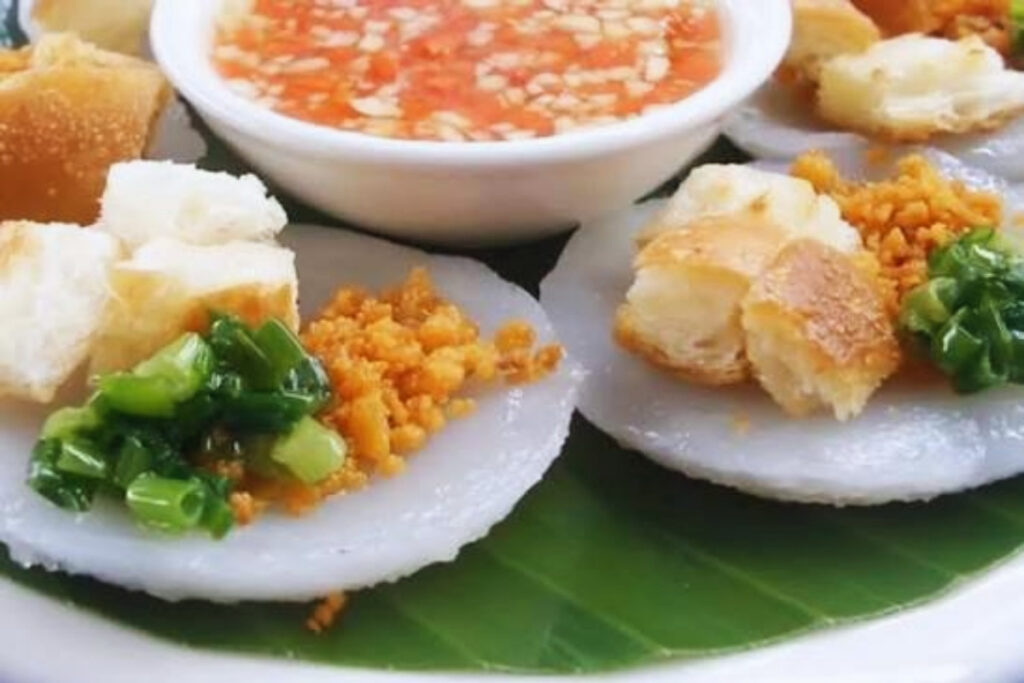
Originally from Hue, bánh bèo demonstrates how elegant Vietnamese cuisine can be with only a handful of ingredients.
Small steamed rice cakes are topped with finely chopped mushrooms, crispy shallots, scallion oil, and vegetarian seasoning before being served in individual porcelain dishes.
Each bite is delicate, soft, and surprisingly flavorful despite its simple appearance.
Local Insight: In Hue, it’s common to order several different varieties of traditional rice cakes together, allowing diners to experience a wider range of imperial-inspired vegetarian specialties in one meal.
18. Bánh Nậm Chay (Steamed Rice Dumplings)
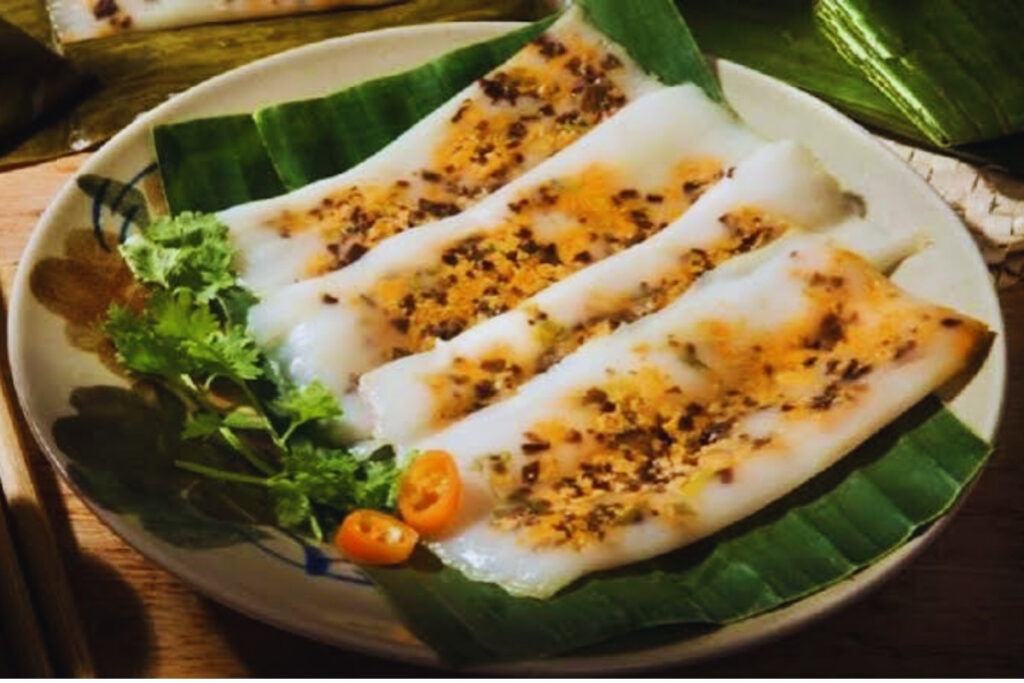
Wrapped in fragrant banana leaves, bánh nậm chay is a traditional Central Vietnamese delicacy that’s as comforting as it is understated.
A thin layer of silky rice batter surrounds a filling of mushrooms, tofu, and aromatic seasonings before being gently steamed until tender. The banana leaves infuse the dumplings with a subtle earthy fragrance that’s impossible to recreate any other way.
Served warm with vegetarian dipping sauce, bánh nậm chay offers a glimpse into Hue’s refined culinary traditions, where simplicity, balance, and careful craftsmanship are valued above extravagance.
For travelers interested in discovering regional specialties beyond Vietnam’s most famous dishes, this is a rewarding place to start.
Worth Knowing
Many of Vietnam’s finest vegetarian dishes aren’t modern inventions. They evolved over centuries in Buddhist temples and family kitchens before becoming everyday favorites enjoyed by people from all walks of life. That’s one reason vegetarian dining in Vietnam feels remarkably authentic—it has always been part of the country’s culinary story.
More Than Meat-Free Cooking
These twelve dishes are only the beginning.
From humble neighborhood eateries to refined Buddhist restaurants, Vietnam’s vegetarian cuisine reflects centuries of culinary tradition shaped by local ingredients, regional identities, and everyday life.
For many travelers, exploring ẩm thực chay becomes one of the most unexpected highlights of visiting Vietnam—not because the food replaces meat, but because it never needs to.
Where to Find the Best Vegetarian Food in Vietnam
One of the biggest advantages of traveling in Vietnam as a vegetarian is that delicious meat-free meals are available almost everywhere. From bustling cities to smaller towns, you’ll find everything from traditional Buddhist restaurants to modern vegan cafés serving creative plant-based cuisine.
While vegetarian dishes can be found throughout the country, each region has its own culinary style and local specialties, making every destination worth exploring.
Hanoi: Traditional Flavors and Hidden Vegetarian Gems
As Vietnam’s capital, Hanoi offers a wonderful mix of traditional and modern vegetarian dining.
Many family-run quán chay have been serving local residents for decades, especially around temples and older neighborhoods. Here, you’ll find comforting bowls of phở chay, bún riêu chay, tofu dishes, and seasonal vegetables prepared with simple yet balanced flavors.
Hanoi’s vegetarian cuisine reflects the character of northern Vietnamese cooking—lightly seasoned, aromatic, and focused on the natural taste of fresh ingredients rather than heavy spices.
In recent years, the city has also welcomed a growing number of vegan cafés offering smoothie bowls, specialty coffee, homemade desserts, and modern interpretations of Vietnamese classics.
If you’re visiting Hanoi, don’t overlook the smaller neighborhood restaurants. Some of the city’s most memorable vegetarian meals are found in modest family-owned eateries rather than tourist hotspots.
Hue: Vietnam’s Vegetarian Capital
For many food lovers, Hue is the best destination in Vietnam for vegetarian cuisine.
Walking through an early morning market in Hue, you’ll often see vendors arranging trays of colorful vegetarian dishes long before sunrise. Office workers stop for a quick breakfast, while Buddhist devotees pick up meals after visiting nearby temples. For many locals, eating chay isn’t a dietary trend—it’s simply part of everyday life.
As the former imperial capital and an important center of Mahayana Buddhism, Hue has developed one of the country’s richest traditions of ẩm thực chay (vegetarian cuisine). Many recipes were originally created for Buddhist temples before becoming part of everyday local cooking.
Restaurants in Hue often serve beautifully presented dishes that showcase impressive knife skills, delicate seasoning, and artistic presentation. Even simple ingredients such as mushrooms, tofu, lotus root, and vegetables are transformed into elegant meals.
You’ll also find vegetarian versions of famous Hue specialties, including:
- Bún Huế chay
- Bánh bèo chay
- Bánh nậm chay
- Bánh lọc chay
If your trip includes only one city dedicated to vegetarian food, Hue should be at the top of your itinerary.
Da Nang: Fresh, Healthy, and Easy to Find
Da Nang has become one of Vietnam’s fastest-growing food destinations, and vegetarian travelers are well served.
The city’s relaxed atmosphere encourages healthy eating, with many cafés and restaurants emphasizing fresh vegetables, tropical fruits, whole grains, and plant-based ingredients.
Traditional vegetarian restaurants remain popular with local families, while newer establishments cater to international visitors seeking vegan brunches, fresh juices, organic salads, and specialty coffee.
Because Da Nang is compact and easy to navigate, it’s simple to explore several vegetarian restaurants during a short stay.
Hoi An: Farm-to-Table Vegetarian Dining
Hoi An’s peaceful atmosphere makes it an ideal place to enjoy slow, mindful meals.
Many restaurants source herbs and vegetables from nearby farming villages, creating dishes that highlight seasonal ingredients at their freshest.
Vegetarian cooking classes are also popular here, giving travelers the opportunity to learn how to prepare dishes such as gỏi cuốn chay, bánh xèo chay, and fresh Vietnamese salads using ingredients purchased from local markets.
Dining in Hoi An often feels less hurried than in larger cities, making it a wonderful destination for travelers who enjoy leisurely meals in beautiful surroundings.
Ho Chi Minh City: Vietnam’s Most Diverse Vegetarian Scene
Ho Chi Minh City offers the country’s widest variety of vegetarian dining experiences.
Traditional Buddhist restaurants sit alongside contemporary vegan cafés, international plant-based restaurants, and innovative fusion kitchens. Whether you’re craving authentic Vietnamese noodle soup, vegan burgers, Mediterranean cuisine, or dairy-free desserts, you’ll find countless options across the city.
The city’s large international community has also encouraged restaurants to clearly label vegan and vegetarian dishes in English, making ordering much easier for foreign visitors.
Many neighborhoods feature vegetarian restaurants within walking distance of each other, allowing travelers to sample several different styles in a single day.
Beyond the Major Cities
Excellent vegetarian food isn’t limited to Vietnam’s largest destinations.
Many smaller towns and rural communities have local quán chay, especially near Buddhist temples. During the first and fifteenth days of the lunar month, temporary vegetarian food stalls often appear in local markets as many Vietnamese people choose to eat chay for religious or cultural reasons.
Even if you’re traveling off the beaten path, you’ll usually be able to find simple but satisfying meals such as:
- Steamed rice with tofu and vegetables
- Stir-fried morning glory with garlic
- Mushroom soup
- Fresh spring rolls
- Vegetable noodle soup
These dishes may not appear in travel guides, but they often provide some of the most authentic dining experiences in Vietnam.
Tips for Finding Vegetarian Restaurants
Finding vegetarian food has never been easier, especially with the help of digital maps and translation apps.
Here are a few simple tips:
- Look for signs that say “Quán Chay,” “Cơm Chay,” or “Nhà Hàng Chay.”
- Search online using the keyword “chay” followed by the city you’re visiting.
- Visit neighborhoods near Buddhist temples, where vegetarian restaurants are especially common.
- Check restaurant menus for clearly labeled vegetarian or vegan options.
- Don’t hesitate to ask staff if a popular dish can be prepared chay, as many restaurants are happy to accommodate requests.
Whether you’re wandering through Hanoi’s historic streets, enjoying imperial cuisine in Hue, relaxing by the beach in Da Nang, exploring Hoi An’s lantern-lit alleys, or discovering Ho Chi Minh City’s vibrant food scene, you’ll find that vegetarian dining is an integral part of Vietnam’s culinary landscape.
For many travelers, these meat-free meals become some of the most memorable—and delicious—experiences of their journey.
Practical Tips for Vegetarian Travelers in Vietnam
Traveling as a vegetarian in Vietnam is generally easy, especially compared with many other destinations in Southeast Asia. However, understanding a few local customs and learning some useful phrases can make your dining experience even smoother.
These practical tips will help you enjoy Vietnam’s incredible food culture with confidence.
Learn the Word “Chay”
If you remember only one Vietnamese word during your trip, make it “chay.”
This simple word tells restaurant staff that you’re looking for vegetarian food. You’ll see it on restaurant signs, menus, food packaging, and even convenience store products.
Look for signs such as:
- Quán Chay – Vegetarian restaurant
- Cơm Chay – Vegetarian rice restaurant
- Nhà Hàng Chay – Vegetarian restaurant
These places are usually the safest choice if you want a completely meat-free meal.
Be Aware of Fish Sauce
One of the biggest surprises for first-time visitors is that fish sauce is a staple ingredient in Vietnamese cooking.
Although a dish may not contain visible meat, it could still include:
- Fish sauce (nước mắm)
- Oyster sauce
- Shrimp paste
- Meat-based broth
At dedicated vegetarian restaurants, these ingredients are replaced with soy sauce, mushroom seasoning, or other plant-based alternatives.
If you’re dining at a regular restaurant, it’s worth asking before you order.
Useful Vietnamese Phrases
Learning a few simple phrases can go a long way.
Tôi ăn chay.
I am vegetarian.
Không thịt.
No meat.
Không cá.
No fish.
Không nước mắm.
No fish sauce.
Không trứng.
No eggs.
Không sữa.
No dairy.
Most people in major tourist destinations understand basic English, but using a few Vietnamese words is always appreciated and often leads to friendlier interactions.
Visit Vegetarian Restaurants on Lunar Calendar Days
Many Vietnamese people follow the tradition of eating chay on the 1st and 15th days of the lunar month.
On these days, you’ll notice:
- More vegetarian restaurants are open.
- Some regular restaurants offer special vegetarian menus.
- Markets sell a wider variety of vegetarian dishes.
- Temporary vegetarian food stalls appear near temples and busy streets.
If your travel dates happen to coincide with these occasions, you’ll have even more opportunities to explore authentic vegetarian cuisine.
Don’t Miss Local Markets
While restaurants are the easiest option, local markets can also be rewarding places for vegetarian travelers.
Morning markets often sell:
- Sticky rice (xôi chay)
- Fresh fruit
- Steamed corn
- Sweet potatoes
- Vegetarian noodle soups
- Fresh spring rolls
Because vendors change throughout the day, mornings usually offer the greatest selection.
If you’re unsure about the ingredients, simply ask whether the dish is chay.
Use Translation and Map Apps
Modern travel tools make finding vegetarian food much easier than in the past.
Google Maps can quickly locate nearby vegetarian restaurants, while translation apps help explain dietary preferences when language becomes a barrier.
Many restaurants also publish menus and customer reviews online, allowing you to check vegetarian options before arriving.
Try Traditional Buddhist Cuisine
Some of Vietnam’s finest vegetarian meals aren’t found in trendy cafés but in traditional Buddhist restaurants.
These establishments often focus on fresh seasonal ingredients, balanced flavors, and beautifully prepared dishes inspired by generations of temple cooking.
Meals are usually simple, affordable, and surprisingly diverse, proving that Vietnamese vegetarian cuisine is far more than just tofu and vegetables.
For travelers interested in culture as well as food, dining at a Buddhist vegetarian restaurant offers a meaningful glimpse into an important part of Vietnamese life.
Stay Open to New Flavors
One of the joys of traveling is discovering dishes you’ve never seen before.
Vietnamese vegetarian cuisine features ingredients that may be unfamiliar to many international visitors, including:
- Banana blossom
- Lotus root
- Young jackfruit
- Taro
- Water spinach (morning glory)
- Wood ear mushrooms
- Perilla leaves
- Fermented tofu
These ingredients have been part of Vietnamese cooking for generations and contribute unique textures and flavors that can’t easily be found elsewhere.
Keeping an open mind often leads to the most memorable meals.
Final Thoughts on vegetarian food in Vietnam
Being vegetarian in Vietnam doesn’t mean missing out on the country’s famous food culture. In many ways, it offers an opportunity to discover a different side of Vietnamese cuisine—one shaped by Buddhist traditions, fresh local produce, and centuries of culinary creativity.
With a little preparation, a few useful Vietnamese phrases, and a willingness to explore beyond the most popular tourist restaurants, you’ll find that Vietnam is one of Asia’s most rewarding destinations for plant-based dining.
From humble neighborhood quán chay to elegant temple-inspired restaurants, every meal tells a story of culture, history, and hospitality—one delicious bite at a time.
Frequently Asked Questions About Vegetarian Food in Vietnam
Is Vietnam a good destination for vegetarians?
Yes. Vietnam is widely considered one of the most vegetarian-friendly destinations in Southeast Asia. Thanks to centuries of Buddhist influence, vegetarian cuisine is deeply rooted in the country’s food culture rather than being a recent trend. Dedicated quán chay (vegetarian restaurants) can be found in every major city, while many traditional Vietnamese dishes are easily adapted into meat-free versions.
Travelers will find everything from simple bowls of phở chay and fresh spring rolls to refined temple-inspired cuisine in cities like Hue. Even if you’re traveling beyond the main tourist destinations, it’s usually possible to find vegetarian rice meals, tofu dishes, noodle soups, and seasonal vegetables. With a little preparation and a few useful Vietnamese phrases, enjoying vegetarian food in Vietnam is both easy and rewarding.
What does “chay” mean in Vietnam?
The Vietnamese word “chay” refers to vegetarian food and is most commonly associated with Buddhist cooking traditions. Restaurants displaying signs such as Quán Chay, Cơm Chay, or Nhà Hàng Chay specialize in meat-free dishes prepared with vegetables, tofu, mushrooms, rice, noodles, and fresh herbs.
Although many chay dishes are naturally vegan, the meaning can vary slightly depending on the restaurant. Some establishments may include eggs or dairy in certain recipes, particularly those serving international visitors. If you follow a strict vegan diet, it’s always a good idea to confirm the ingredients before ordering.
Is Vietnamese vegetarian food the same as vegan food?
Not always.
Many traditional Buddhist restaurants prepare meals that are entirely plant-based, making them suitable for vegans. However, some vegetarian dishes may include eggs, dairy products, or occasionally seasonings that contain fish sauce or oyster sauce, particularly in non-vegetarian restaurants.
If you’re vegan, the safest option is to dine at dedicated vegetarian restaurants and let the staff know about your dietary requirements. In larger cities such as Hanoi, Hue, Da Nang, Hoi An, and Ho Chi Minh City, you’ll also find a growing number of restaurants that clearly label vegan dishes on their menus.
What are the most popular vegetarian dishes in Vietnam?
Some of Vietnam’s best-known vegetarian dishes include phở chay, bánh mì chay, gỏi cuốn chay, bún Huế chay, mì Quảng chay, hủ tiếu chay, cơm chay, bánh xèo chay, đậu hũ sốt cà, and rau muống xào tỏi.
These dishes highlight the freshness of Vietnamese cooking through tofu, mushrooms, seasonal vegetables, rice noodles, aromatic herbs, and flavorful vegetable broths. While many are vegetarian versions of traditional classics, they have become beloved dishes in their own right and are enjoyed by both vegetarians and meat-eaters throughout Vietnam.
Which city has the best vegetarian food in Vietnam?
Every region has its own strengths, but many food experts consider Hue the country’s vegetarian capital. As an important center of Mahayana Buddhism and Vietnam’s former imperial capital, Hue has developed an extraordinary tradition of vegetarian cooking inspired by temple cuisine.
Hanoi is an excellent destination for traditional northern-style vegetarian dishes, while Ho Chi Minh City offers the greatest variety of modern vegan cafés and international plant-based restaurants. Da Nang combines healthy dining with a relaxed coastal atmosphere, and Hoi An is known for farm-to-table vegetarian cuisine and cooking classes using fresh local ingredients.
Is vegetarian street food easy to find in Vietnam?
Yes, although availability varies depending on the location and time of day.
Popular options include bánh mì chay, xôi chay, fresh spring rolls, vegetarian noodle soups, and steamed corn or sweet potatoes sold by street vendors. During the first and fifteenth days of the lunar month, many markets and temporary food stalls also offer a wider selection of vegetarian dishes.
If you’re unsure about the ingredients, simply ask whether the food is chay or choose dedicated vegetarian restaurants for greater peace of mind.
Is Vietnamese vegetarian food healthy?
In general, yes.
Traditional Vietnamese vegetarian meals are built around fresh vegetables, herbs, tofu, mushrooms, legumes, rice, and noodles rather than heavily processed ingredients. Cooking methods often include steaming, boiling, stir-frying, and light braising, helping preserve the natural flavors and textures of seasonal produce.
As with any cuisine, healthier and more indulgent options both exist. Fried snacks, mock meats, and sweet desserts are widely available, but travelers looking for balanced meals will find plenty of nutritious choices throughout Vietnam.
How much does vegetarian food cost in Vietnam?
One of the biggest advantages of eating vegetarian in Vietnam is affordability.
A simple meal at a local quán chay typically costs between 40,000 and 80,000 VND (about US$1.50–3.00), while larger buffet-style vegetarian restaurants usually range from 80,000 to 150,000 VND (US$3.00–6.00) per person.
Modern vegan cafés and upscale restaurants naturally charge more, but compared with many destinations in North America, Europe, or Australia, vegetarian dining in Vietnam remains excellent value for money.
Can I travel in Vietnam as a vegan?
Absolutely.
Vietnam has become increasingly welcoming to vegan travelers, particularly in major cities where dedicated vegan cafés and plant-based restaurants continue to grow in popularity. Many traditional vegetarian restaurants also prepare meals without eggs or dairy, although it’s always worth confirming your dietary requirements when ordering.
Learning a few Vietnamese phrases, using translation apps, and choosing restaurants that specialize in chay cuisine will make traveling as a vegan both convenient and enjoyable.
If you enjoy slower, experience-focused travel, we also share local insights, food experiences, and practical Vietnam travel advice through our YouTube channel:
TAM VOC VIET – VIETNAM INSIGHTS
About the Author
This Vegetarian Food in Vietnam guide was researched and written by the editorial team at Tam Voc Viet, an independent travel publication dedicated to helping international travelers discover the authentic flavors, culture, and traditions of Vietnam.
Our content is based on local knowledge, historical and cultural research, and firsthand understanding of Vietnamese cuisine. Rather than simply listing popular dishes, we explain the stories, regional traditions, and culinary influences behind them, helping visitors experience Vietnam with greater appreciation and confidence.
For this guide, we researched Vietnam’s long-standing vegetarian (chay) traditions, the influence of Buddhist cuisine, regional food cultures, and the diverse range of plant-based dishes enjoyed across the country. We also drew on insights from local culinary sources to ensure our recommendations reflect authentic Vietnamese food rather than tourist-focused interpretations.
Because Vietnam’s food scene continues to evolve, we regularly review and update our travel guides to reflect new dining trends, practical travel information, and the most reliable recommendations. Our goal is simple: to help every traveler discover the rich and flavorful world of vegetarian food in Vietnam through trusted, accurate, and experience-focused guidance.
If this is your first trip to Vietnam, our complete Vietnam Food Guide introduces more than 80 traditional dishes, regional specialties, and dining tips to help you explore the country’s remarkable culinary heritage.
Last updated: July 2026
• Editorial review by the Tam Voc Viet Team
• Estimated reading time: 25 minutes
