


 Tiếng Việt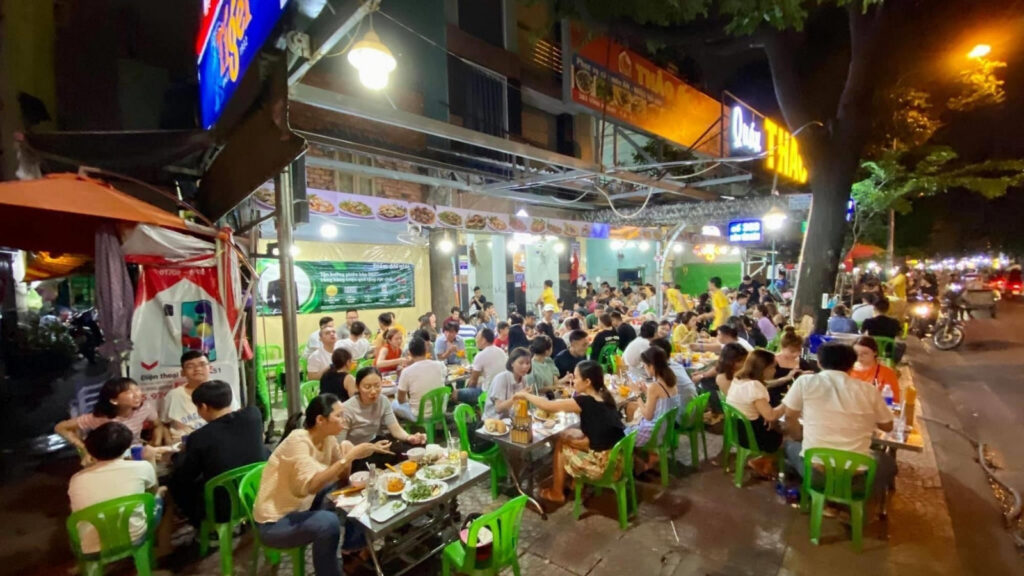
It’s just after sunrise when the first customers pull up on motorbikes.
Steam escapes from giant stockpots that have been simmering through the night. A woman slices fresh herbs with astonishing speed while another vendor pulls golden baguettes from the oven. Within minutes, office workers fill tiny plastic stools, ordering breakfast before the city fully wakes.
This is one of the first sights many travelers encounter in Ho Chi Minh City—and one of the reasons so many leave talking about the food long after the trip ends.
Known to many locals simply as Saigon, Vietnam’s largest city isn’t defined by one famous dish. Instead, it’s a place where hundreds of regional recipes, family traditions, and immigrant influences come together to create one of Asia’s most exciting culinary destinations.
For first-time visitors, the sheer variety can feel overwhelming. One block might be known for generations-old family noodle shops, while the next is lined with modern cafés serving Vietnamese coffee in innovative ways. Tiny alleyways often hide some of the city’s most memorable meals, proving that appearances rarely determine quality in Saigon’s food scene.
Unlike destinations where local specialties are limited to a handful of iconic dishes, Ho Chi Minh City offers an extraordinary collection of regional flavors from across Vietnam. Migrants from the Mekong Delta, Central Vietnam, the North, and the Chinese community of Chợ Lớn have all shaped the city’s culinary identity over generations. The result is a food culture that is incredibly diverse yet unmistakably Vietnamese.
Affordability is another reason travelers consistently rank the city among Asia’s best culinary destinations. A satisfying breakfast can cost just a few dollars, while an evening feast featuring seafood, grilled meats, fresh herbs, and local beer often costs less than a single restaurant entrée in many Western cities. This accessibility encourages visitors to sample more dishes instead of settling for one familiar option.
Food here is also remarkably social. Families gather around bubbling hot pots, friends spend hours sharing grilled seafood and cold drinks, and coworkers regularly meet after work for casual dinners that stretch late into the evening. Meals are rarely rushed. Eating is an opportunity to connect, celebrate, and slow down despite the city’s energetic pace.
One of the greatest pleasures of exploring Ho Chi Minh City is that exceptional food is rarely confined to upscale restaurants. Some of the most respected cooks work from modest storefronts, open-air kitchens, or businesses that have remained in the same family for decades. Many don’t advertise, rely almost entirely on loyal local customers, and close as soon as they sell out for the day.
For travelers willing to venture beyond the main tourist streets, every district offers its own culinary discoveries. District 1 may be the city’s introduction to Vietnamese cuisine, but neighborhoods like District 3, District 5, Bình Thạnh, Phú Nhuận, and Tân Bình reveal an even deeper look into everyday local dining. Exploring these areas often leads to meals that become the highlight of an entire trip.
This Ho Chi Minh City Food Guide brings together the dishes, neighborhoods, markets, cafés, and local dining customs that define Ho Chi Minh City’s remarkable food culture. Whether you’re searching for your first authentic bánh mì, planning a late-night seafood feast, or simply wondering where locals eat every morning, you’ll find everything you need to experience Vietnam’s largest city through its food.
Quick Answer about Ho Chi Minh City Food Guide
Ho Chi Minh City is widely considered Vietnam’s most exciting food destination thanks to its extraordinary mix of street food, regional specialties, seafood, coffee culture, and vibrant night dining. First-time visitors should try cơm tấm, bánh mì, hủ tiếu Nam Vang, bún thịt nướng, Vietnamese coffee, and the city’s famous snail restaurants. Most authentic local meals cost between 30,000 and 100,000 VND, making the city one of Asia’s best-value culinary destinations.
About This Guide
This guide is based on food-focused research across Ho Chi Minh City between 2023 and 2026, including neighborhood markets, family-run eateries, coffee shops, seafood restaurants, and local food streets. Rather than ranking restaurants, the goal is to help international travelers understand how locals actually eat and experience the city’s food culture.
Why Ho Chi Minh City Is One of Asia’s Best Food Destinations
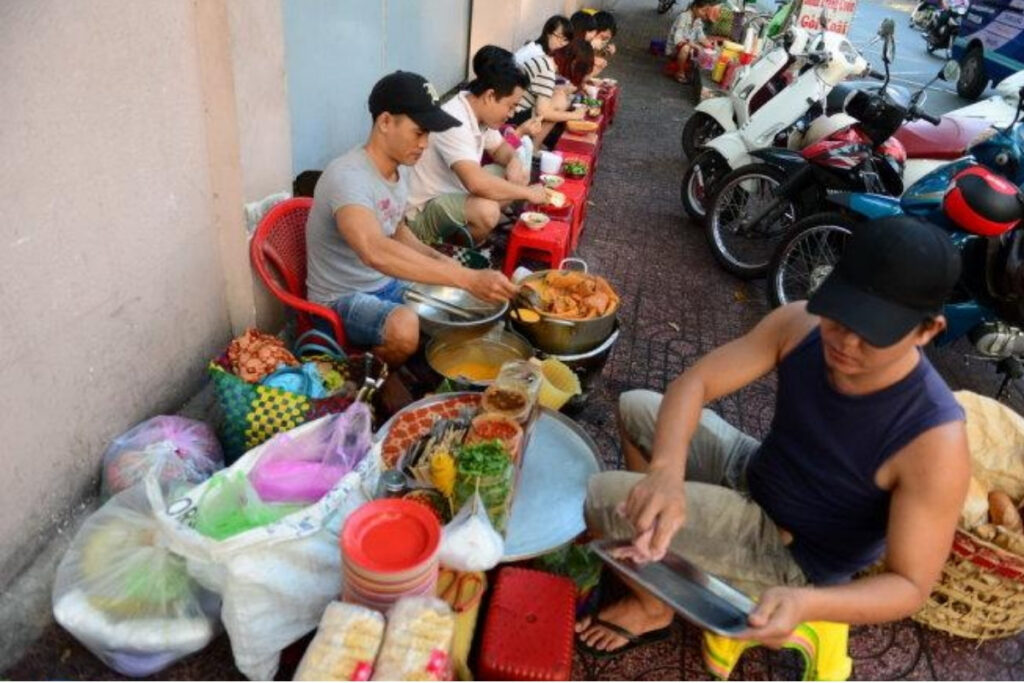
Many travelers arrive expecting excellent Vietnamese food. What surprises them is the incredible diversity found within a single city.
Ho Chi Minh City is not defined by one signature dish or one cooking style. Instead, it serves as Vietnam’s culinary crossroads, where recipes from every region have found a home. Northern noodle soups, Central Vietnamese specialties, Mekong Delta seafood, Chinese-inspired noodle dishes, French colonial influences, and modern international cuisine all coexist within a few kilometers of one another.
This diversity is rooted in the city’s history. As Vietnam’s largest commercial center, Ho Chi Minh City has attracted people from every province for generations. Families brought their hometown recipes, adapted them to local ingredients, and gradually introduced them to new communities. Today, visitors can enjoy specialties that would otherwise require traveling hundreds of kilometers across the country.
The city’s tropical climate also shapes its cuisine. Fresh herbs grow year-round, tropical fruits are abundant, and seafood arrives daily from Vietnam’s southern coastline. Southern cooking generally embraces brighter flavors, a touch more sweetness, and generous use of fresh vegetables compared with northern cuisine. Coconut milk, sugar, tamarind, and tropical herbs frequently appear in dishes, creating bold yet balanced flavors that appeal to a wide range of palates.
Street food is another defining characteristic. Unlike many cities where street vendors operate primarily for tourists, Ho Chi Minh City’s sidewalk eateries remain an essential part of everyday life. Office workers eat breakfast on tiny plastic stools before heading to work, students gather for inexpensive afternoon snacks, and families stop by neighborhood vendors for dinner on the way home. Visitors aren’t observing a performance designed for tourists—they’re participating in the city’s daily rhythm.
Coffee culture deserves equal recognition. Vietnam is one of the world’s leading coffee producers, and Ho Chi Minh City has developed one of Southeast Asia’s most vibrant café scenes. Traditional drip coffee, egg coffee, coconut coffee, salt coffee, and contemporary specialty cafés all contribute to a culture where meeting over coffee is just as important as sharing a meal.
Perhaps the greatest strength of Ho Chi Minh City’s food scene is its accessibility. Travelers don’t need reservations months in advance or expensive tasting menus to enjoy exceptional food. Outstanding meals can be found in local markets, family-run shops, busy street corners, riverside neighborhoods, and hidden alleyways. Often, the restaurants with the longest queues and simplest menus deliver the most memorable experiences.
For many visitors, the city’s food becomes more than a highlight—it becomes the reason they plan a return trip. Every neighborhood reveals new flavors, every market introduces unfamiliar ingredients, and every meal offers another opportunity to understand Vietnam through its people, traditions, and everyday life.
Table of Contents
What Makes Saigon Food Different from Hanoi?
Before deciding what to eat, it’s worth understanding why food in Ho Chi Minh City feels so different from what you’ll find in Hanoi.
Many travelers expect Vietnamese cuisine to be consistent throughout the country, but Vietnam stretches for more than 1,600 kilometers (1,000 miles) from north to south. Geography, climate, agriculture, and centuries of regional traditions have created distinct culinary identities. While both cities celebrate fresh ingredients and balanced flavors, they express those principles in noticeably different ways.
Ho Chi Minh City—still commonly called Saigon by locals—reflects the character of southern Vietnam: energetic, diverse, and constantly evolving. Hanoi, by contrast, preserves many of the culinary traditions associated with northern Vietnam, where recipes often emphasize subtlety, restraint, and long-established family techniques.
Neither style is better than the other. They simply tell different stories about Vietnam.
Ho Chi Minh City: A Culinary Crossroads
As Vietnam’s economic hub, Ho Chi Minh City has welcomed migrants from every region for decades. Families from the Mekong Delta, Central Vietnam, the northern provinces, and the historic Chinese community of Chợ Lớn have all contributed recipes that now form part of the city’s everyday dining culture.
This extraordinary mix means visitors don’t have to travel across the country to experience regional specialties. You can begin the morning with a northern-style bowl of phở, enjoy mì Quảng from Central Vietnam for lunch, snack on southern bánh tráng nướng in the afternoon, and finish the evening with fresh seafood or sizzling snails served the Saigon way.
Few Asian cities offer such culinary variety within a single day.
Innovation is equally important. Young chefs and longtime street vendors alike constantly adapt traditional recipes, introducing new ingredients, creative presentations, and modern interpretations without losing the familiar flavors that locals love.
Hanoi: Tradition Preserved
Hanoi’s cuisine tells a different story.
As Vietnam’s capital and one of its oldest cities, Hanoi has built its culinary reputation on recipes that have been refined over generations rather than reinvented. Many famous restaurants have remained within the same families for decades, serving remarkably consistent dishes with little need for dramatic change.
Northern cuisine generally favors clean, delicate flavors. Broths are often lighter, sweetness is used sparingly, and seasonings are carefully balanced so that individual ingredients remain recognizable. The result is food that feels elegant in its simplicity.
This approach reflects not only tradition but also the cooler climate and agricultural patterns of northern Vietnam, where ingredients differ from those found in the tropical south.
Climate Shapes the Menu
One of the biggest influences on Vietnamese cuisine is geography.
Southern Vietnam enjoys a warm tropical climate throughout the year. Fresh herbs, coconuts, tropical fruits, seafood, and vegetables are available in abundance, encouraging cooks to create dishes with brighter colors, bolder flavors, and generous portions of fresh garnishes.
Sweetness is also more noticeable in southern cooking. A small amount of sugar or coconut is often used to round out salty, sour, and spicy flavors rather than dominate them. This subtle sweetness surprises many first-time visitors but quickly becomes part of the city’s culinary identity.
Northern Vietnam experiences four distinct seasons, resulting in a different selection of ingredients and cooking styles. Dishes tend to highlight the natural taste of meat and broth, with fewer tropical ingredients and less emphasis on sweetness.
Flavor Profiles at a Glance
| Hanoi | Ho Chi Minh City |
|---|---|
| Delicate, subtle seasoning | Bold, vibrant flavors |
| Broths are lighter and cleaner | Richer, slightly sweeter broths |
| Less sugar in savory dishes | Mild sweetness is common |
| Seasonal produce influences menus | Tropical ingredients available year-round |
| Traditional recipes change slowly | Constant innovation and regional influences |
| Signature dishes remain closely tied to northern heritage | Cuisine blends specialties from across Vietnam |
These differences are easy to notice even when ordering familiar dishes. A bowl of phở in Ho Chi Minh City may arrive with an overflowing basket of herbs, bean sprouts, lime wedges, and fresh chilies, allowing diners to customize every bite. In Hanoi, the same dish is often served with far fewer additions, encouraging guests to appreciate the carefully balanced broth exactly as it is prepared.
The City’s Famous Street Food Culture
Perhaps the most memorable difference lies in how people eat.
Street food exists throughout Vietnam, but nowhere does it feel quite as woven into everyday life as it does in Ho Chi Minh City.
Breakfast stalls begin serving before sunrise. Office workers stop for a quick bowl of noodles on the way to work. Students gather around snack carts after school. Families head out together in the evening to share grilled seafood, hot pots, or plates of ốc (snails). Long after midnight, many restaurants remain busy as locals enjoy late-night meals with friends.
Dining here is rarely rushed. Meals often become conversations that last far longer than the food itself, especially when shared alongside iced tea, local beer, or Vietnamese coffee.
For visitors, joining this daily rhythm is one of the easiest ways to experience the city’s culture beyond its museums and landmarks.
Which City Has Better Food?
It’s one of the most common questions travelers ask, but it has no simple answer.
If you appreciate subtle flavors, historic recipes, and dishes prepared much as they were generations ago, Hanoi is likely to become your favorite culinary destination.
If you’re drawn to variety, lively street food, tropical ingredients, creative cooking, and vibrant nightlife, Ho Chi Minh City offers an experience that’s difficult to match anywhere else in Southeast Asia.
Many travelers eventually discover that comparing the two cities misses the point.
Together, they represent the remarkable diversity of Vietnamese cuisine. Hanoi introduces visitors to the country’s culinary heritage, while Ho Chi Minh City demonstrates how that heritage continues to evolve through migration, local creativity, and everyday life.
The best way to appreciate the difference isn’t by choosing one over the other—it’s by experiencing both.
Best Vietnamese Dishes to Try in Ho Chi Minh City
One of the greatest pleasures of eating in Ho Chi Minh City is discovering how every meal reflects a different part of Vietnam. Some dishes were born in the south, while others traveled here with families from the north or central provinces. Over time, Saigon embraced them all, adding local ingredients and subtle twists that make each version unique.
Rather than trying to eat everything at once, focus on a few signature dishes each day. Breakfast might begin with a steaming bowl of noodles, lunch could be a simple plate of broken rice, and the evening is the perfect time for grilled seafood or late-night street food. This slower approach lets you appreciate both the flavors and the stories behind every meal.
These are the dishes every first-time visitor should experience.
Bánh Mì – Vietnam’s Most Famous Sandwich
If you can only try one street food in Ho Chi Minh City, make it bánh mì.
It came from a tiny bakery hidden on a quiet residential street where customers never stopped arriving. Every few seconds another warm baguette emerged from the oven, and before it even had time to cool, it disappeared into someone’s hands.
The line moved quickly.
Nobody seemed to mind waiting.
That was the first clue I’d found somewhere special.
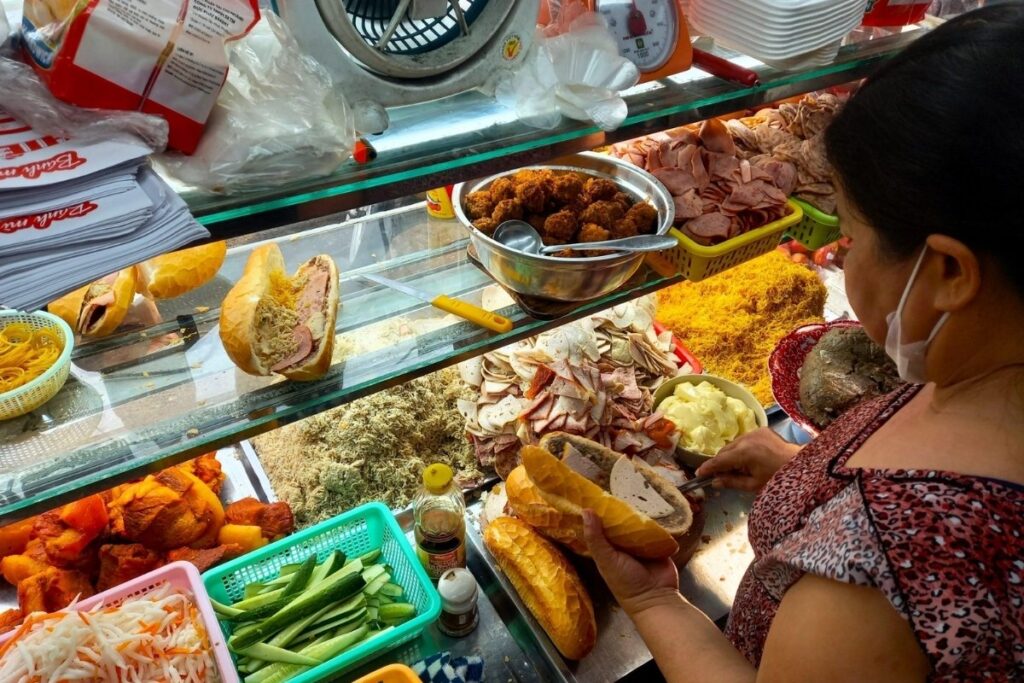
Crispy on the outside, light and airy inside, bánh mì is one of Vietnam’s greatest culinary success stories. It combines the French baguette introduced during the colonial era with unmistakably Vietnamese fillings, creating a sandwich that has become famous around the world.
A classic bánh mì begins with freshly baked bread that shatters slightly with every bite. Inside, vendors layer roasted pork, grilled pork, Vietnamese ham, pâté, pickled carrots and daikon, cucumber, cilantro, fresh chili, soy seasoning, and a touch of mayonnaise or butter. Every shop has its own recipe, and even longtime residents often debate which bakery serves the city’s best version.
One reason bánh mì remains so popular is its versatility. It can be eaten as a quick breakfast before work, an inexpensive lunch between sightseeing stops, or a late-night snack after exploring the city’s nightlife. Vendors can prepare one in less than a minute, making it ideal for travelers with busy itineraries.
Prices are surprisingly affordable. Most neighborhood bakeries charge between 30,000 and 70,000 VND, while premium versions with specialty meats or imported ingredients cost more.
Although District 1 has many well-known shops, some of the best bánh mì is found in residential neighborhoods where local bakeries bake fresh bread throughout the day. If you notice a long line of Vietnamese customers waiting outside a small storefront, it’s usually an excellent sign.
Local tip: Ask for “ít cay” if you prefer less chili, or “không rau mùi” if you don’t enjoy cilantro. Fresh bread is essential, so visit during breakfast or lunchtime when bakeries are busiest.
Cơm Tấm – The Soul of Southern Vietnamese Cuisine
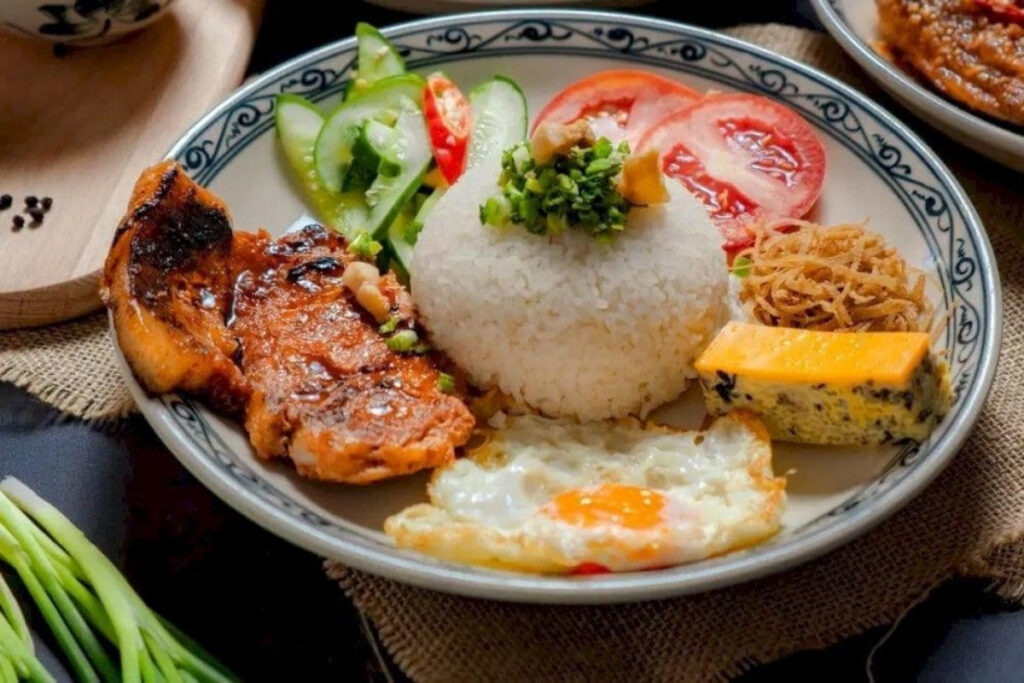
No dish represents Ho Chi Minh City more authentically than cơm tấm, often translated as broken rice.
Originally considered an inexpensive meal made from fractured rice grains that couldn’t be sold at premium prices, cơm tấm has evolved into one of southern Vietnam’s most beloved comfort foods. Today, it’s enjoyed by everyone from students and office workers to business executives and international visitors.
At first glance, the dish appears simple: fragrant broken rice served with a grilled pork chop. But every component contributes to its appeal. The pork is marinated with garlic, fish sauce, sugar, and spices before being grilled over charcoal, creating smoky aromas that drift through the streets every morning.
Alongside the pork, you’ll usually find shredded pork skin, steamed egg meatloaf (chả trứng), sliced cucumber, tomato, pickled vegetables, scallion oil, and a small bowl of clear soup. Everything is finished with a drizzle of sweet-savory fish sauce that ties the flavors together.
Unlike many Vietnamese dishes that rely on broth, cơm tấm highlights the balance between smoky meat, fragrant rice, crisp vegetables, and fresh herbs. The combination is filling without feeling heavy, making it suitable for breakfast, lunch, or dinner.
Most local restaurants serve generous portions for 50,000–90,000 VND, though premium restaurants may charge more for higher-quality cuts of pork or additional toppings.
I’ve visited Ho Chi Minh City many times, yet I still find myself returning to the same tiny family-run cơm tấm shop before sunrise. It isn’t famous on social media, and that’s exactly why I love it.
Local tip: Order a “cơm tấm sườn bì chả” if you’re unsure what to choose. This classic combination includes grilled pork chop, shredded pork skin, and steamed egg meatloaf—the version many locals consider the complete experience.
Hủ Tiếu Nam Vang – A Bowl That Tells the Story of Southern Vietnam
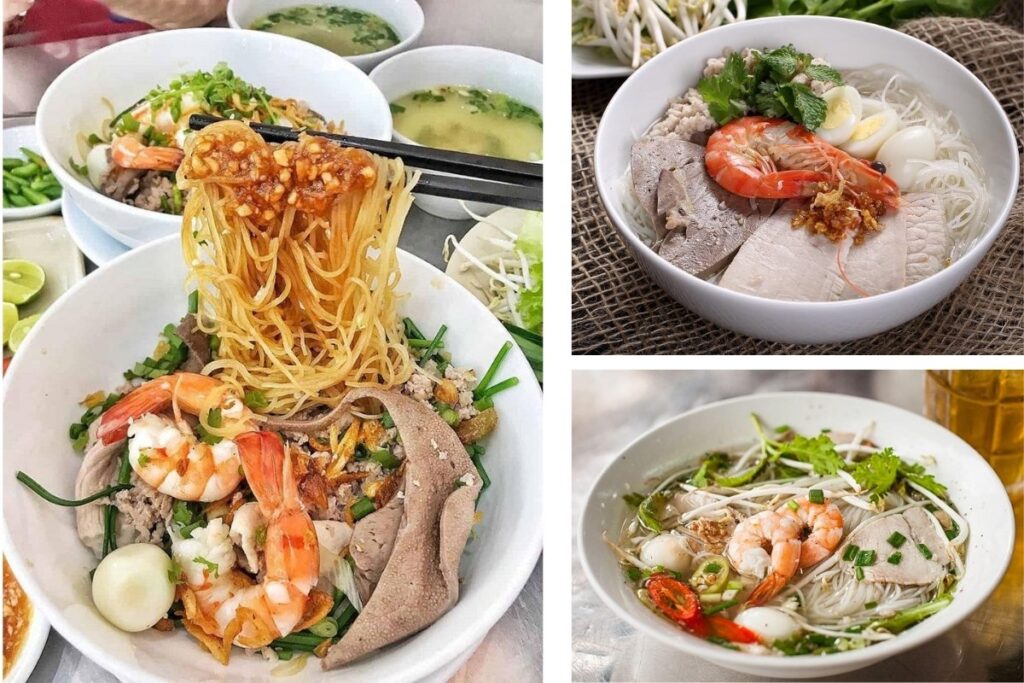
Among Ho Chi Minh City’s countless noodle dishes, hủ tiếu Nam Vang stands out for its fascinating multicultural roots.
Inspired by Cambodian and Chinese culinary traditions before becoming firmly established in southern Vietnam, this comforting noodle soup perfectly reflects the cultural diversity that defines Ho Chi Minh City.
The broth is typically simmered from pork bones and dried seafood for hours until it becomes clear, fragrant, and naturally sweet. Unlike heavier soups, the flavor is delicate enough to let each topping shine.
A traditional bowl includes sliced pork, minced pork, shrimp, quail eggs, liver, and fresh herbs. Diners can choose between rice noodles or chewy egg noodles, and many restaurants even offer a combination of both. Some prefer the soup served separately, allowing the noodles and toppings to remain perfectly textured until the final bite.
One of the joys of eating hủ tiếu Nam Vang is customizing each bowl. Lime juice brightens the broth, fresh chili adds heat, while crispy fried garlic contributes aroma and crunch. Every diner adjusts the flavors to personal preference.
Breakfast is the most popular time to enjoy this dish, although many restaurants remain open throughout the day.
Expect to pay around 55,000–90,000 VND depending on the ingredients and restaurant.
Local tip: If you prefer less broth, ask for the dry version (hủ tiếu khô). The noodles are tossed with a rich savory sauce while the broth is served separately—a favorite choice among many Saigon residents.
Bún Thịt Nướng – Fresh, Smoky, and Perfect for Warm Weather
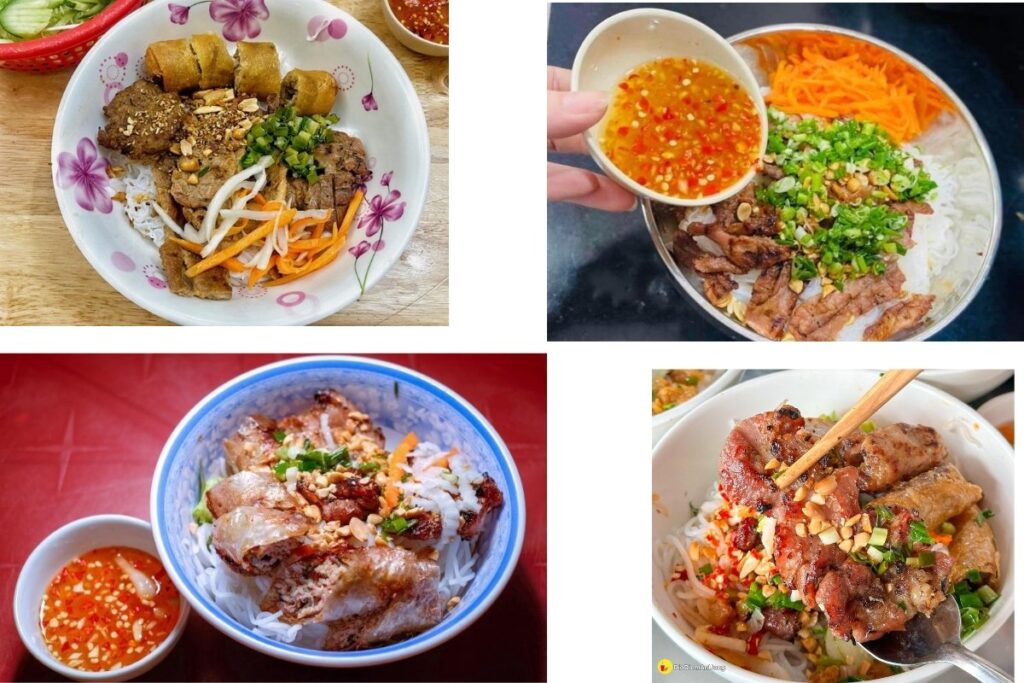
For travelers looking for something lighter, bún thịt nướng is one of Ho Chi Minh City’s most refreshing meals.
Rather than serving noodles in broth, this southern Vietnamese favorite combines cool rice vermicelli with charcoal-grilled pork, crisp vegetables, fresh herbs, pickled carrots, roasted peanuts, fried shallots, and sweet fish sauce.
The contrast of temperatures and textures makes every bite interesting. Warm grilled meat meets chilled noodles, crunchy vegetables balance tender pork, while fragrant herbs add brightness that defines much of Vietnamese cuisine.
Although the name translates simply as “grilled pork with vermicelli,” preparation requires remarkable attention to detail. Pork is marinated overnight before being grilled over charcoal, producing caramelized edges with subtle smokiness. Herbs are washed repeatedly to ensure freshness, and the fish sauce dressing achieves a careful balance of sweet, salty, sour, and savory flavors.
Unlike heavy rice dishes, bún thịt nướng feels particularly satisfying on Ho Chi Minh City’s warm afternoons. It’s filling enough for lunch while remaining surprisingly light.
A typical bowl costs between 45,000 and 80,000 VND, making it one of the city’s best-value meals.
Local tip: Mix everything thoroughly before eating. Every strand of noodle should be coated with fish sauce so that the flavors combine into a single harmonious dish rather than separate ingredients.
Bò Kho – Vietnam’s Rich and Comforting Beef Stew
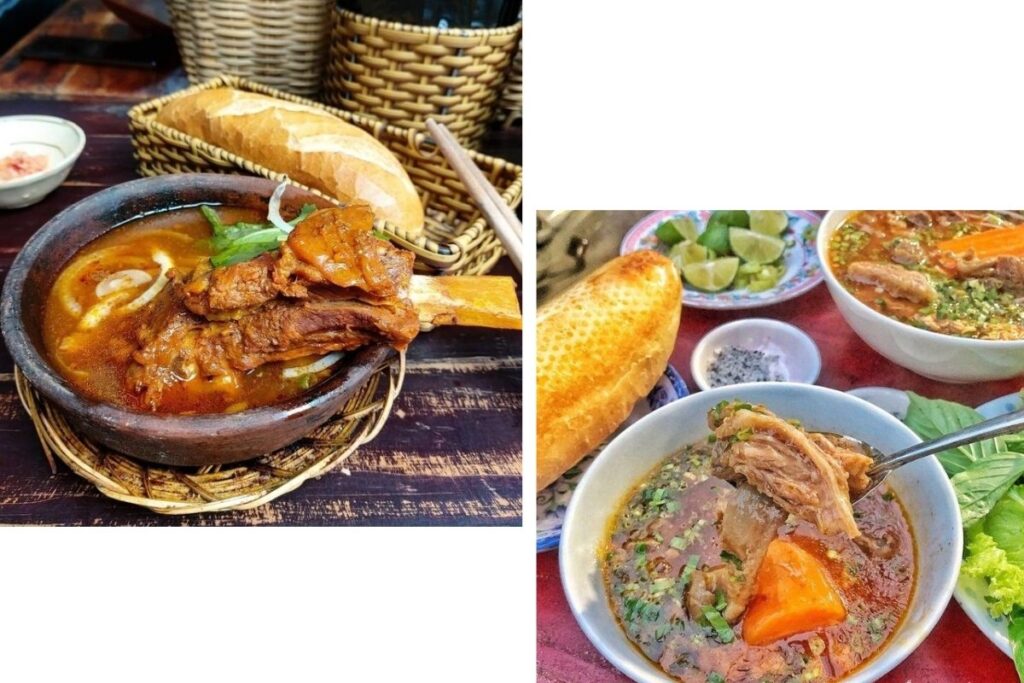
While Vietnam is often associated with noodle soups, bò kho deserves equal recognition.
This slow-cooked beef stew combines tender chunks of beef, carrots, lemongrass, star anise, cinnamon, garlic, and tomatoes in a deeply aromatic broth that’s richer than phở but lighter than many Western stews.
French culinary influence is evident in the long simmering process, yet the finished dish remains unmistakably Vietnamese thanks to the generous use of lemongrass, fish sauce, and warm spices.
Locals enjoy bò kho in several different ways. Some pair it with a crusty baguette for dipping into the flavorful broth, while others choose rice noodles or egg noodles for a heartier meal.
Although available throughout the day, bò kho is especially popular for breakfast and on rainy afternoons when its warming broth becomes even more comforting.
Most restaurants charge 60,000–100,000 VND per serving.
Local tip: Don’t rush through the meal. Tear small pieces of bread into the broth to absorb every layer of flavor—a simple ritual that many locals consider the best part of eating bò kho.
More Must-Try Vietnamese Dishes in Ho Chi Minh City
Once you’ve sampled the city’s iconic sandwiches, rice dishes, and noodle soups, it’s time to explore another side of Ho Chi Minh City’s food culture. These dishes reveal how regional traditions from central and southern Vietnam have blended into the city’s diverse culinary landscape.
Many of them are everyday favorites rather than tourist attractions. They’re the meals locals crave after work, share with family on weekends, or recommend when visitors ask, “What should I eat next?”
Bánh Xèo – Vietnam’s Crispy Savory Pancake
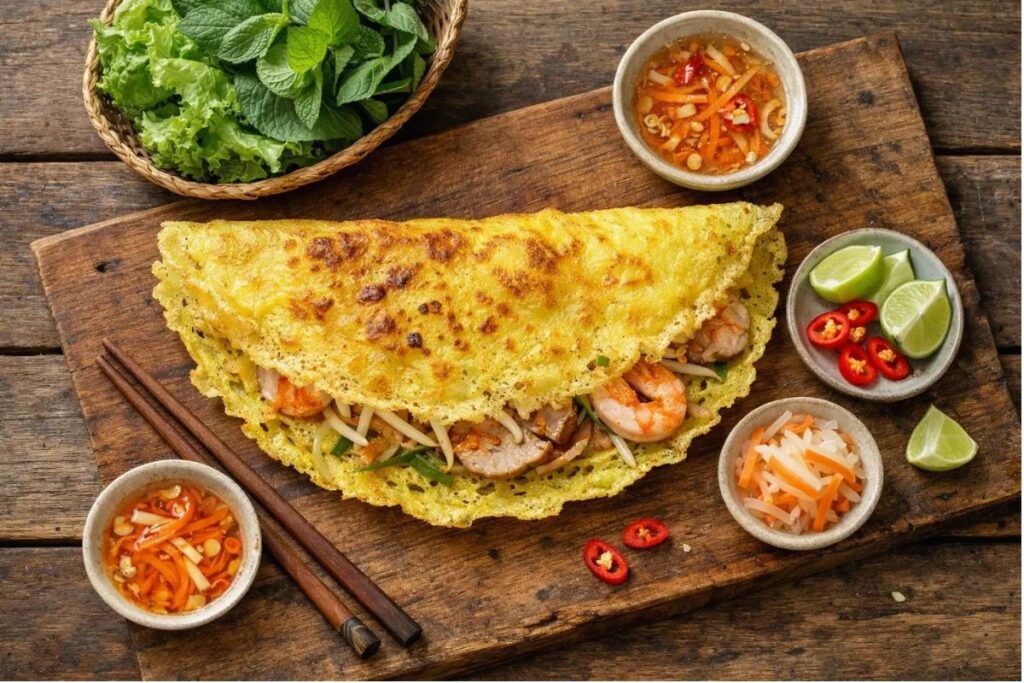
The sizzling sound comes before the first bite.
As batter hits a blazing hot pan, it immediately begins to crisp around the edges, creating the unmistakable “xèo” sound that gives bánh xèo its name.
Made from rice flour, turmeric, and coconut milk, the pancake is folded around a generous filling of shrimp, pork, bean sprouts, and onions before being served with an overflowing basket of fresh herbs and leafy greens.
Eating bánh xèo is an experience rather than simply a meal.
Instead of using chopsticks alone, diners tear off a piece of the crispy pancake, wrap it in lettuce or mustard leaves with fragrant herbs like mint and basil, then dip everything into a lightly sweetened fish sauce. Every bite combines crunchy, juicy, fresh, and aromatic textures.
Southern Vietnamese bánh xèo differs noticeably from versions found elsewhere in the country. In Ho Chi Minh City, the pancakes are typically larger, thinner, and crispier, with coconut milk adding subtle richness to the batter.
Most restaurants prepare each pancake individually to order, so expect to wait a few minutes. The reward is a perfectly crisp shell that would quickly lose its texture if cooked in advance.
A serving usually costs between 70,000 and 150,000 VND, depending on the fillings and restaurant.
Local tip: Don’t eat the pancake by itself. The fresh herbs and lettuce aren’t side dishes—they’re an essential part of the balance that makes bánh xèo so memorable.
Bún Mắm – A Bold Taste of the Mekong Delta
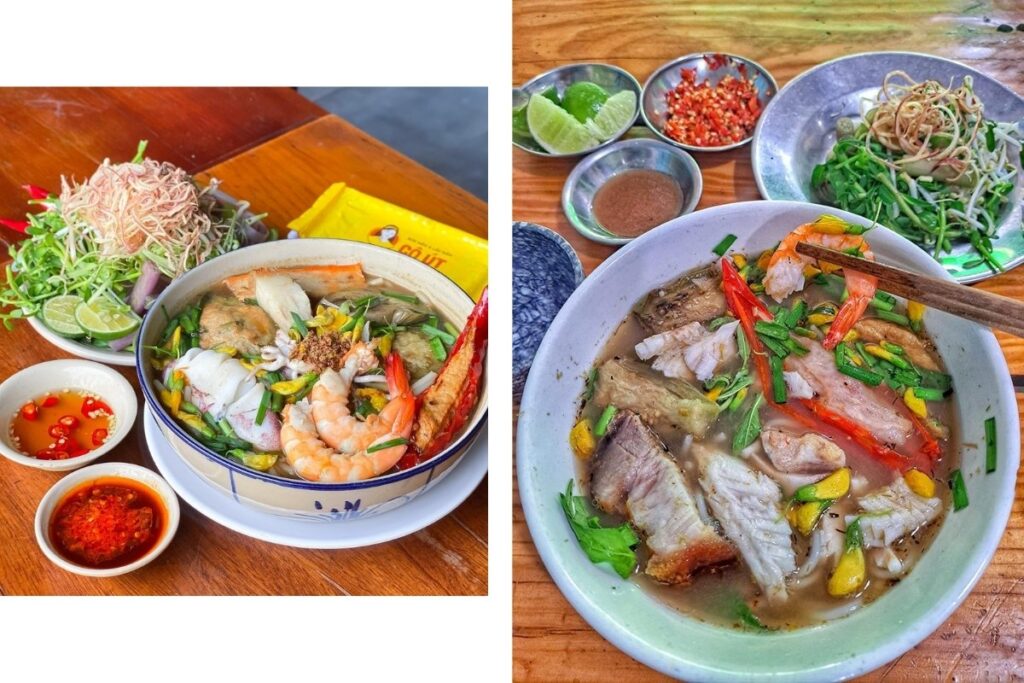
Some dishes divide opinion at first sight. Bún mắm is one of them.
Originating in Vietnam’s Mekong Delta, this deeply flavorful noodle soup is built around fermented fish, creating a broth with remarkable complexity. The aroma may surprise first-time visitors, but many travelers discover that the taste is far gentler and more balanced than expected.
A typical bowl is generously topped with shrimp, squid, roasted pork, eggplant, fresh herbs, and rice vermicelli. The broth carries layers of savory depth without becoming overpowering, while herbs and vegetables add brightness to every spoonful.
Ho Chi Minh City’s large population from the Mekong Delta has made bún mắm one of the city’s signature regional specialties. Many restaurants continue using family recipes that have been passed down for generations.
For adventurous food lovers, this is one of the most rewarding dishes to try because it offers flavors rarely found outside southern Vietnam.
Expect to pay 60,000–100,000 VND for a generous bowl.
Local tip: Visit a busy restaurant during lunchtime. Fresh seafood and herbs are at their best when restaurants serve large numbers of local customers.
Bún Riêu – Comfort in Every Spoonful
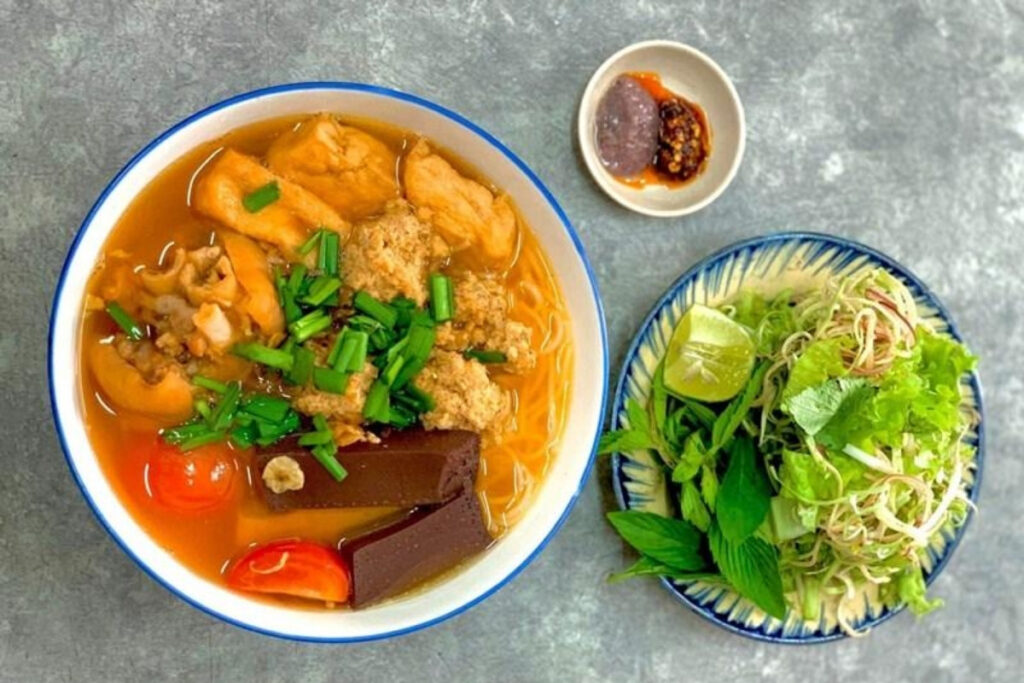
If phở is Vietnam’s most internationally recognized noodle soup, bún riêu is one of its best-kept culinary secrets.
The tomato-based broth achieves a delicate balance between sweetness and gentle acidity, while freshwater crab paste contributes a uniquely rich flavor that distinguishes it from other Vietnamese soups.
A traditional bowl often includes crab cakes, tofu, pork, blood cubes, tomatoes, and thick rice vermicelli. Fresh herbs, shredded banana blossom, bean sprouts, and lime are served alongside, allowing diners to customize every bowl.
In Ho Chi Minh City, southern influences have made bún riêu slightly sweeter than northern versions, while generous herb baskets reflect the abundance of fresh produce available throughout the year.
Unlike heavier noodle soups, bún riêu feels vibrant and refreshing despite its rich flavors. It’s equally popular for breakfast and lunch.
Prices generally range from 50,000 to 85,000 VND.
Local tip: Add herbs gradually instead of all at once. This lets you appreciate how each ingredient changes the flavor of the broth.
Phở – Vietnam’s National Dish, Saigon Style
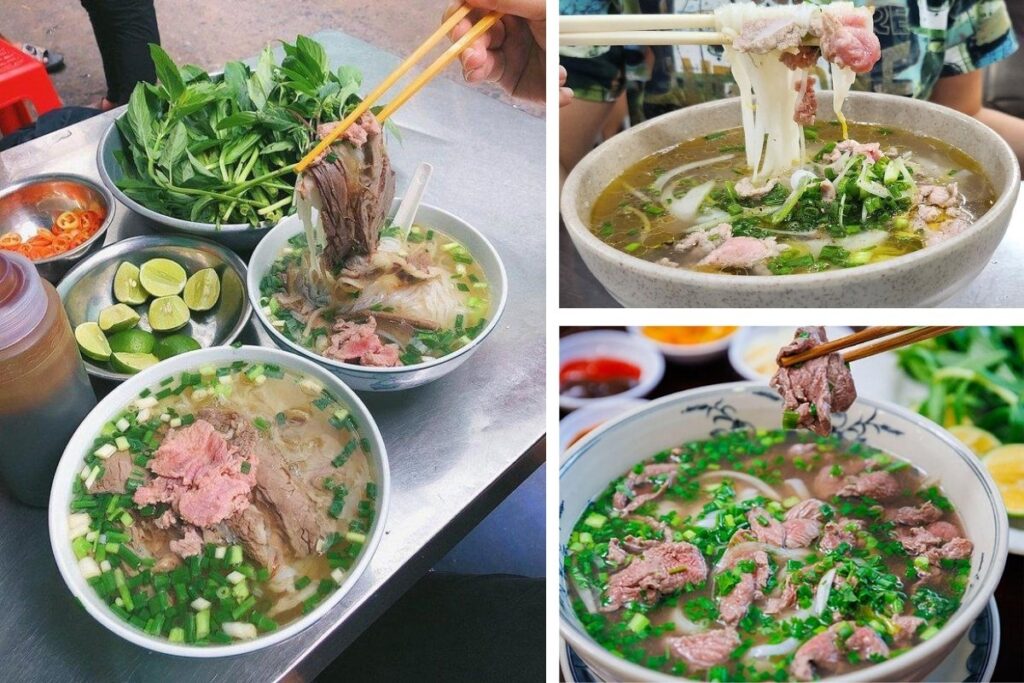
No food guide would be complete without phở.
Although the dish originated in northern Vietnam, Ho Chi Minh City has embraced it wholeheartedly, developing a style that’s distinctly southern while remaining faithful to its roots.
The most noticeable difference appears before you even begin eating.
In Ho Chi Minh City, bowls of phở are accompanied by generous plates of bean sprouts, Thai basil, sawtooth herb, lime wedges, and fresh chilies. Diners are encouraged to personalize each bowl according to their taste.
The broth is typically a little richer and slightly sweeter than many northern versions, while restaurants often offer a wider variety of beef cuts, from brisket and rare steak to meatballs and tendon.
Despite these regional differences, the heart of great phở remains unchanged: a broth patiently simmered for hours with beef bones and aromatic spices until every ingredient comes together in perfect balance.
A quality bowl generally costs between 60,000 and 120,000 VND, depending on the restaurant and the choice of beef.
Local tip: Taste the broth before adding sauces. Experienced diners always appreciate the chef’s original recipe first, adjusting flavors only if needed.
Gỏi Cuốn – Fresh Spring Rolls at Their Finest
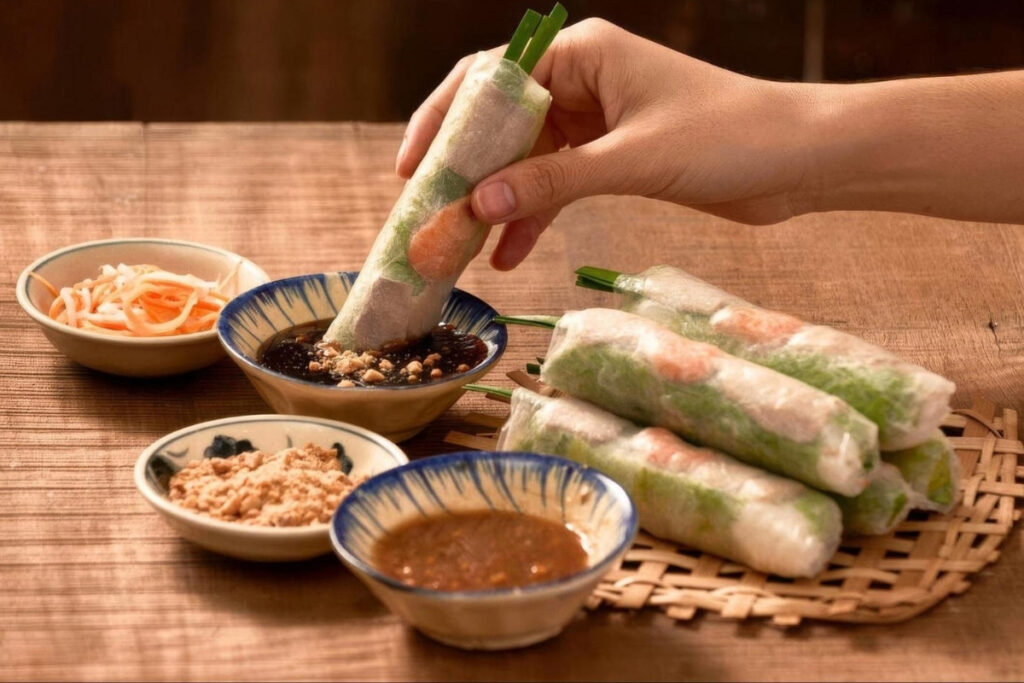
Often called fresh spring rolls or summer rolls, gỏi cuốn showcases Vietnam’s remarkable ability to create flavorful food without relying on heavy cooking.
Each translucent rice paper roll is filled with shrimp, sliced pork, rice vermicelli, lettuce, herbs, and chives before being carefully rolled by hand.
Unlike fried spring rolls, gỏi cuốn celebrates freshness above all else. Every ingredient remains clearly recognizable, making it one of the healthiest and most refreshing dishes in Vietnamese cuisine.
Equally important is the dipping sauce.
Depending on the restaurant, you’ll receive either a rich hoisin-peanut sauce or a lighter fish sauce with garlic and chili. Both complement the rolls beautifully while highlighting different aspects of their flavor.
Because they’re light and refreshing, gỏi cuốn makes an excellent afternoon snack or starter before a larger meal.
Prices usually range from 10,000 to 20,000 VND per roll, with restaurants often serving portions of two or three.
Local tip: Eat them immediately after they’re prepared. Fresh spring rolls are at their best when the rice paper remains soft and the herbs are perfectly crisp.
Chả Giò – Vietnam’s Irresistible Crispy Spring Rolls
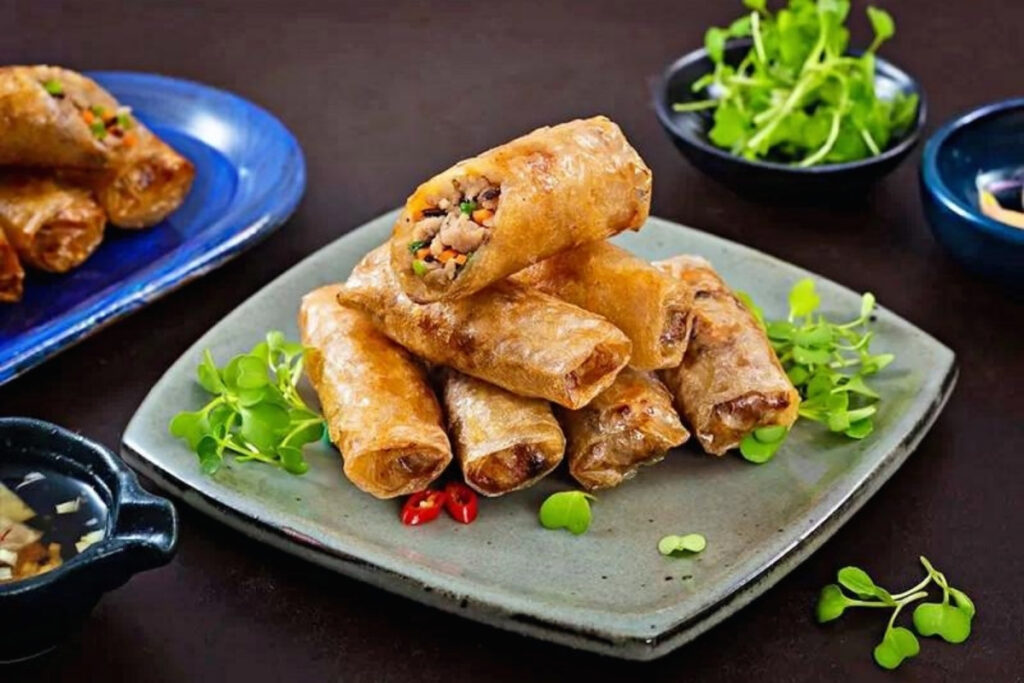
If gỏi cuốn represents freshness, chả giò celebrates crispness.
Known internationally as Vietnamese fried spring rolls, these golden parcels are filled with minced pork, shrimp, glass noodles, mushrooms, carrots, onions, and seasonings before being wrapped in delicate rice paper and fried until perfectly crisp.
The result is a satisfying contrast between the crunchy exterior and juicy filling.
In southern Vietnam, chả giò is rarely eaten alone. Like bánh xèo, it’s commonly wrapped in lettuce with fresh herbs before being dipped into fish sauce, creating a balance that prevents the fried pastry from feeling heavy.
Families often prepare chả giò during Lunar New Year celebrations, weddings, and special gatherings, making it one of Vietnam’s most beloved festive dishes.
Restaurant portions generally cost between 60,000 and 120,000 VND, depending on the number of rolls and ingredients.
Local tip: Let the rolls cool for a minute before taking the first bite. The filling retains heat much longer than the crispy wrapper.
Bò Lá Lốt – Charcoal-Grilled Perfection
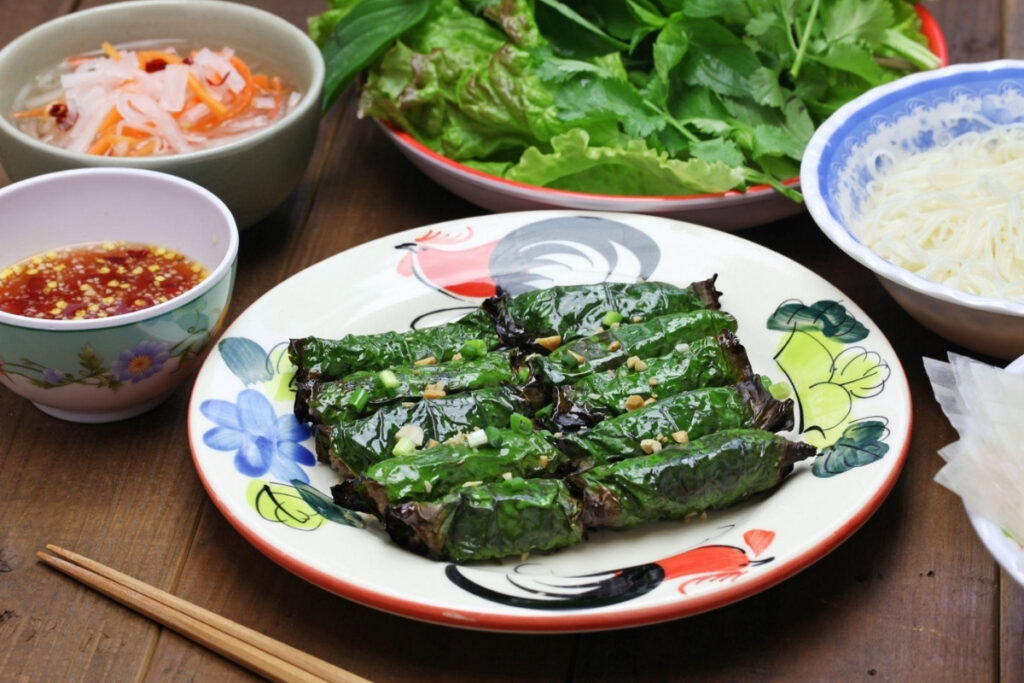
One of Ho Chi Minh City’s most underrated specialties is bò lá lốt.
Seasoned minced beef is wrapped inside fragrant betel leaves before being grilled over glowing charcoal. As the leaves cook, they release a distinctive herbal aroma that perfumes the meat while protecting it from drying out.
The finished rolls are served with rice paper, fresh herbs, pickled vegetables, and dipping sauce, allowing diners to assemble their own wraps at the table.
The smoky fragrance of charcoal, the tenderness of the beef, and the subtle bitterness of the leaves combine to create a flavor unlike any other Vietnamese dish.
Because it’s often cooked over open grills lining the sidewalk, you’ll frequently smell bò lá lốt before you see the restaurant itself.
A typical serving costs 70,000–120,000 VND.
Local tip: Order an extra basket of herbs. The freshness of mint, basil, and perilla leaves balances the rich grilled beef beautifully.
Why These Dishes Matter
Together, these dishes tell the story of Ho Chi Minh City’s remarkable culinary diversity.
Some originated in the Mekong Delta, others traveled from central or northern Vietnam, while a few became famous only after adapting to the tastes of southern diners. Yet all of them have found a permanent home in the city’s restaurants, markets, and street-food stalls.
For visitors, tasting these dishes isn’t simply about checking famous foods off a list. It’s about understanding how migration, geography, history, and local creativity have shaped one of Asia’s most exciting food destinations.
In the next section, we’ll explore another defining feature of Saigon’s food culture—its legendary snail and seafood scene, where lively evening restaurants, charcoal grills, and shared plates create one of the city’s most unforgettable dining experiences.
The Famous Saigon Snail Culture
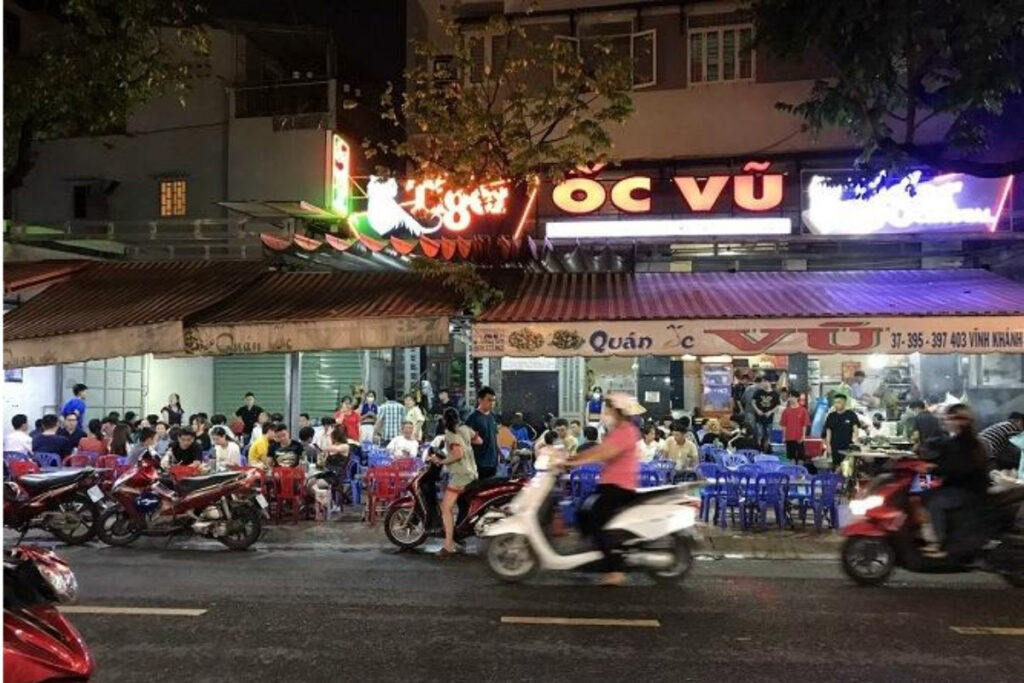
It’s nearly eight o’clock in the evening.
Scooters continue flowing through the streets while every plastic table outside the neighborhood seafood restaurant is already full.
Someone laughs as another plate of grilled scallops arrives.
A waiter balances six steaming dishes with remarkable ease.
Cold beer is poured.
The smell of garlic butter, charcoal, lemongrass, and fresh seafood drifts into the street.
This is Saigon’s famous snail culture—not a tourist attraction, but a nightly ritual repeated across the city.
More Than Snails: A Complete Seafood Experience
First-time visitors often imagine restaurants serving only snails. In reality, most quán ốc (snail restaurants) offer an impressive selection of seafood.
A typical menu may include several varieties of freshwater and sea snails alongside clams, oysters, scallops, razor clams, shrimp, squid, octopus, crab, and even lobster at larger establishments.
Rather than ordering one main course, groups usually select several plates to share. One dish may be grilled over charcoal, another stir-fried with garlic, while a third arrives covered in spicy tamarind sauce. The table gradually fills with colorful seafood, fresh herbs, dipping sauces, and baskets of crusty bread perfect for soaking up every drop of sauce.
This style of dining encourages conversation and discovery. Every few minutes, a new plate arrives, giving everyone another flavor to experience together.
The Most Popular Snail Dishes to Try
The variety can feel overwhelming, especially if you’ve never eaten snails before. Fortunately, a handful of classic preparations appear on menus across the city.
Ốc Hương Nướng
Babylon snails are grilled over charcoal until their naturally sweet meat becomes tender and fragrant. They’re often served with salt, pepper, and lime or a lightly seasoned dipping sauce that lets the seafood shine.
Ốc Mỡ Xào Me
Fat snails cooked in tamarind sauce strike one of Vietnamese cuisine’s signature balances: sweet, sour, salty, and savory in every bite. The glossy sauce is so popular that many locals order extra bread simply to finish every last spoonful.
Ốc Len Xào Dừa
Perhaps the most iconic snail dish in southern Vietnam, this preparation gently cooks coconut snails in rich coconut milk flavored with garlic and herbs.
Locals often sip the aromatic coconut sauce directly from the shell before using a toothpick to remove the tender snail meat—a ritual that surprises many visitors but quickly becomes part of the fun.
Nghêu Hấp Sả
Steamed clams with lemongrass may not technically be a snail dish, but they appear on nearly every seafood menu. The fragrant broth combines lemongrass, chili, and fresh herbs into a light, comforting soup that’s perfect for sharing.
Sò Điệp Nướng Mỡ Hành
Grilled scallops topped with scallion oil and crushed peanuts showcase how simple ingredients can produce extraordinary flavor. Sweet shellfish, smoky charcoal, aromatic scallions, and crunchy peanuts create one of the city’s most beloved seafood dishes.
One of my favorite travel memories wasn’t in a fine-dining restaurant—it was sitting on a blue plastic stool in District 10 while sharing grilled scallops with complete strangers.
Hàu Nướng Phô Mai
Grilled oysters topped with melted cheese have become increasingly popular in Ho Chi Minh City. While inspired by international influences, the dish has earned a loyal following among younger diners seeking rich, indulgent flavors.
Don’t Worry If You’ve Never Eaten Snails Before
Many international travelers hesitate when they first see a menu filled with unfamiliar shellfish.
The good news is that most Vietnamese snails have a mild, slightly chewy texture and absorb the flavors of the sauces they’re cooked in. Garlic butter, tamarind, black pepper, chili salt, and coconut milk often become the dominant flavors, making the dishes surprisingly approachable.
If you’re unsure where to begin, choose grilled scallops, steamed clams, or coconut snails before moving on to more adventurous varieties.
Even experienced travelers often discover that their first evening at a Saigon snail restaurant changes their expectations entirely.
How to Eat Snails Like a Local
Part of the enjoyment comes from learning the technique.
Most restaurants provide small metal picks or wooden toothpicks for removing the meat from each shell. Don’t worry if it feels awkward at first—everyone learns through practice, and locals rarely rush the process.
Seafood is almost always shared. Instead of ordering individual meals, groups place several dishes in the center of the table and sample everything together.
Cold drinks are another essential part of the experience. Whether it’s Vietnamese beer, iced tea, or fresh sugarcane juice, beverages help balance the bold flavors of garlic, chili, and seafood.
Most importantly, take your time.
An evening at a snail restaurant isn’t about finishing dinner quickly. It’s about conversation, laughter, and enjoying each plate as it arrives from the kitchen.
The Best Time to Visit a Snail Restaurant
Unlike phở or bánh mì, which are closely associated with breakfast, snail restaurants truly come alive after sunset.
Many open during the late afternoon, but the busiest hours usually begin around 6:00 p.m. and continue well into the evening. It’s common to see tables packed with families, groups of friends, and coworkers celebrating the end of the day.
Weekends are especially lively, creating an energetic atmosphere that many visitors remember long after returning home.
If you prefer a quieter experience, arrive shortly after opening time before the evening crowds appear.
How Much Does a Snail Feast Cost?
One of the biggest surprises for international visitors is the affordability.
Individual seafood dishes generally range from 60,000 to 180,000 VND, depending on the ingredients and preparation. Premium items such as large crab or lobster naturally cost more, but most travelers can enjoy a generous shared dinner for far less than they would expect in many other Asian cities.
A group of four people can comfortably sample six or seven different dishes without spending a fortune, making snail restaurants one of the best-value dining experiences in Ho Chi Minh City.
Why Snail Restaurants Are a Must-Try Experience
Travel guides often focus on famous dishes like bánh mì or phở, but neither captures the social spirit of Ho Chi Minh City as completely as an evening at a neighborhood seafood restaurant.
Here, strangers become curious observers, friends linger for hours over shared plates, and the city’s fast-moving energy slows just enough for conversation to take center stage.
The experience isn’t really about eating snails.
It’s about discovering one of the traditions that locals genuinely love—gathering around a table filled with seafood, sharing stories between bites, and enjoying the warm tropical evenings that make Ho Chi Minh City’s dining culture unlike anywhere else in Vietnam.
For travelers hoping to experience the city beyond its landmarks, spending one evening at a bustling quán ốc is every bit as memorable as visiting a famous market or historic attraction.
It offers something guidebooks can never fully describe: a glimpse into everyday life, one shared plate at a time.
Best Seafood in Ho Chi Minh City
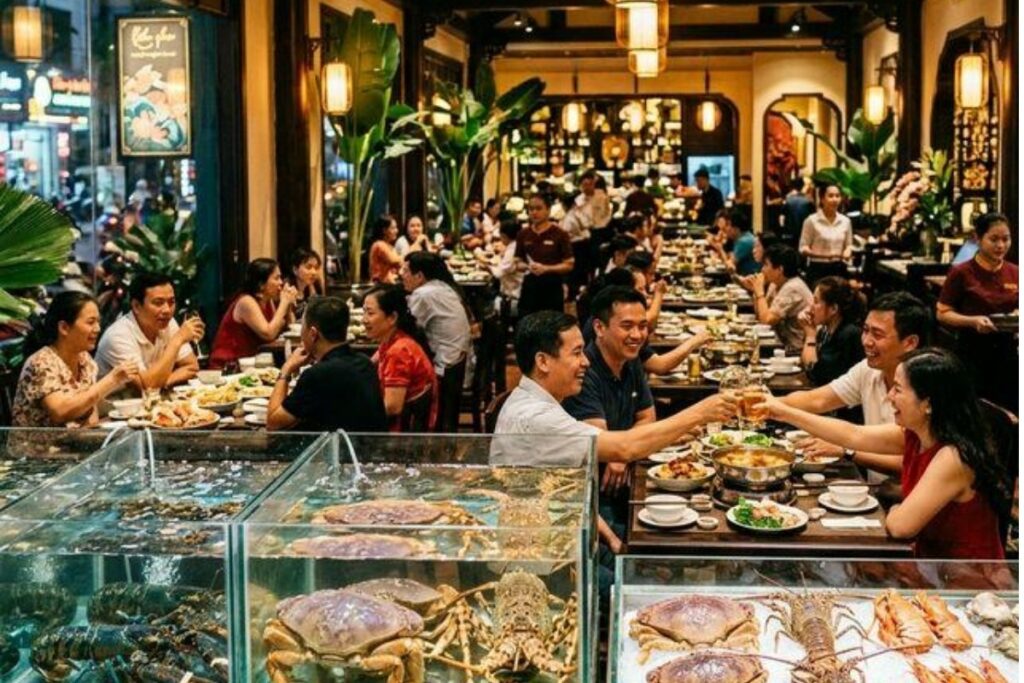
Although Ho Chi Minh City is located nearly 50 miles (80 kilometers) from the coast, seafood plays a surprisingly important role in the city’s culinary identity.
Every morning, fresh catches arrive from coastal provinces such as Vũng Tàu, Bà Rịa, Bình Thuận, Kiên Giang, Cà Mau, and the Mekong Delta. Within hours, fish, shrimp, crab, oysters, squid, and shellfish are delivered to local markets, neighborhood restaurants, and the bustling seafood eateries that define the city’s nightlife.
For visitors, this means there’s no need to travel to the beach to enjoy outstanding seafood. Some of southern Vietnam’s freshest and most flavorful dishes can be found right in the heart of Ho Chi Minh City.
Unlike formal seafood restaurants in many countries, dining here is usually relaxed and interactive. Guests often select live seafood from tanks, choose a preferred cooking method, and share multiple dishes around the table.
The emphasis isn’t on elaborate presentation.
It’s on freshness.
When ingredients arrive at the restaurant only hours after leaving the sea, simple cooking techniques are often all that’s needed.
Walk through almost any seafood restaurant after sunset and you’ll notice something interesting.
Very few people order only one dish.
Instead, tables slowly fill with grilled prawns, clams, squid, crab, vegetables, and cold drinks until there’s barely any space left.
Sharing—not individual portions—is the heart of Vietnamese seafood culture.
Crab – A Southern Vietnamese Favorite
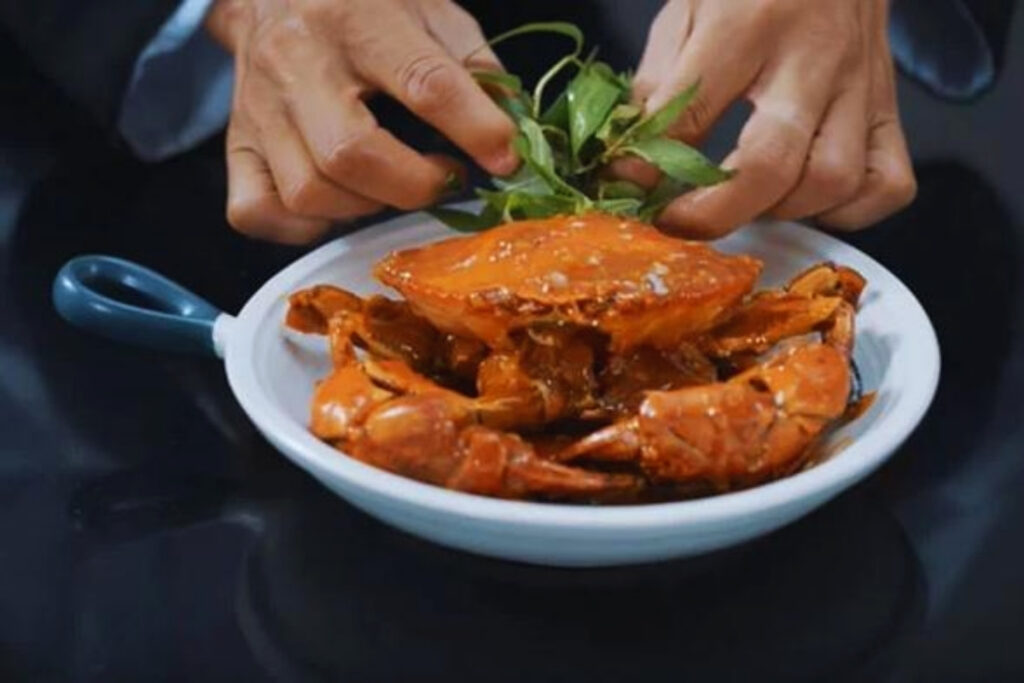
If there’s one seafood that consistently brings families together in Ho Chi Minh City, it’s crab.
Whether steamed, stir-fried, grilled, or coated in rich sauces, crab appears on countless restaurant menus throughout the city.
One of the most popular preparations is stir-fried crab with tamarind sauce. Sweet crab meat pairs beautifully with the glossy sauce, which balances tamarind’s gentle acidity with palm sugar, fish sauce, garlic, and chili. Every bite delivers layers of sweet, sour, salty, and savory flavors that define southern Vietnamese cooking.
Another local favorite is steamed mud crab, served with nothing more than lime, salt, and black pepper. This simple preparation allows the natural sweetness of the crab to take center stage.
Eating crab in Vietnam is rarely elegant.
Plastic gloves, seafood crackers, and plenty of napkins quickly become part of the experience. But for many visitors, cracking open freshly cooked crab while sharing stories with friends becomes one of the most memorable meals of the trip.
Average price: 350,000–900,000 VND per kilogram, depending on the season and species.
Grilled Prawns – Simple, Sweet, and Smoky
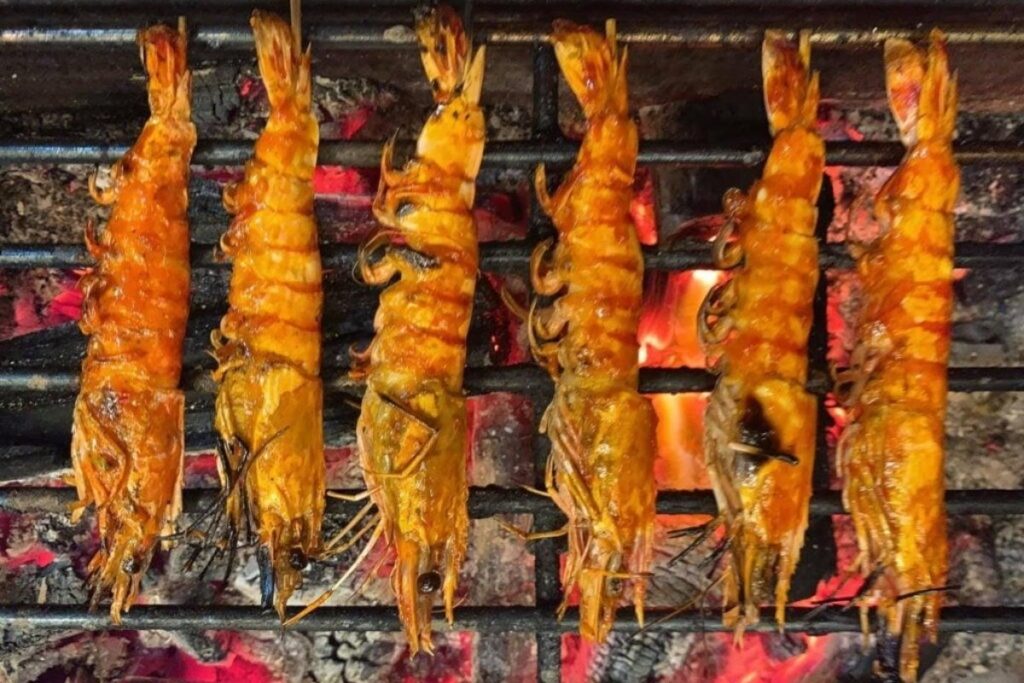
Vietnamese cooks understand that exceptional seafood doesn’t require complicated recipes.
Large freshwater prawns and ocean shrimp are often grilled over charcoal with little more than salt, pepper, garlic, or chili. The intense heat caramelizes the shells while preserving the natural sweetness of the meat.
Another popular preparation features prawns baked with garlic butter, combining French culinary influence with Vietnamese ingredients. The fragrant butter melts into the shell, creating a rich sauce that’s impossible to ignore.
In seafood restaurants, prawns are frequently served alongside fresh herbs, cucumber, pickled vegetables, and lime. These simple accompaniments brighten the dish without overwhelming the seafood itself.
Average price: 180,000–450,000 VND per serving.
Local tip: Don’t throw away the juices left on the plate. Many locals dip pieces of warm bread into the garlic butter or seafood juices before the table is cleared.
Squid – One of Vietnam’s Most Versatile Seafood Dishes
Squid appears almost everywhere in Ho Chi Minh City’s food scene.
Street vendors grill whole squid over charcoal, seafood restaurants stir-fry it with vegetables, and beer gardens serve crispy fried squid as one of their most popular shared dishes.
The secret to excellent squid is speed.
Fresh squid requires only a short cooking time. Overcook it, and it quickly becomes rubbery. Skilled chefs understand this perfectly, producing tender seafood with just enough smokiness from the grill.
Among the city’s favorite preparations are:
- Charcoal-grilled squid with chili salt
- Stir-fried squid with celery and onions
- Crispy fried squid with fish sauce
- Stuffed squid filled with seasoned pork and herbs
The mild flavor makes squid an excellent choice for visitors trying Vietnamese seafood for the first time.
Average price: 150,000–350,000 VND per serving.
Clams – Small Shells, Big Flavor
Clams may be one of the most affordable seafood dishes in Ho Chi Minh City, but they’re also among the most satisfying.
One of the simplest versions is steamed clams with lemongrass, where the shellfish are cooked just until they open, releasing a naturally sweet broth infused with lemongrass, chili, and herbs.
Equally popular are clams stir-fried with garlic butter or spicy chili sauce, creating bold flavors that pair perfectly with cold drinks on warm tropical evenings.
Many diners save the broth until the end of the meal, sipping it directly from the bowl or using bread to soak up every last drop.
Despite their modest appearance, clams demonstrate one of Vietnamese cuisine’s greatest strengths: transforming simple ingredients into unforgettable dishes through balance rather than excess.
Average price: 70,000–180,000 VND per plate.
Scallops – A Street Food Luxury
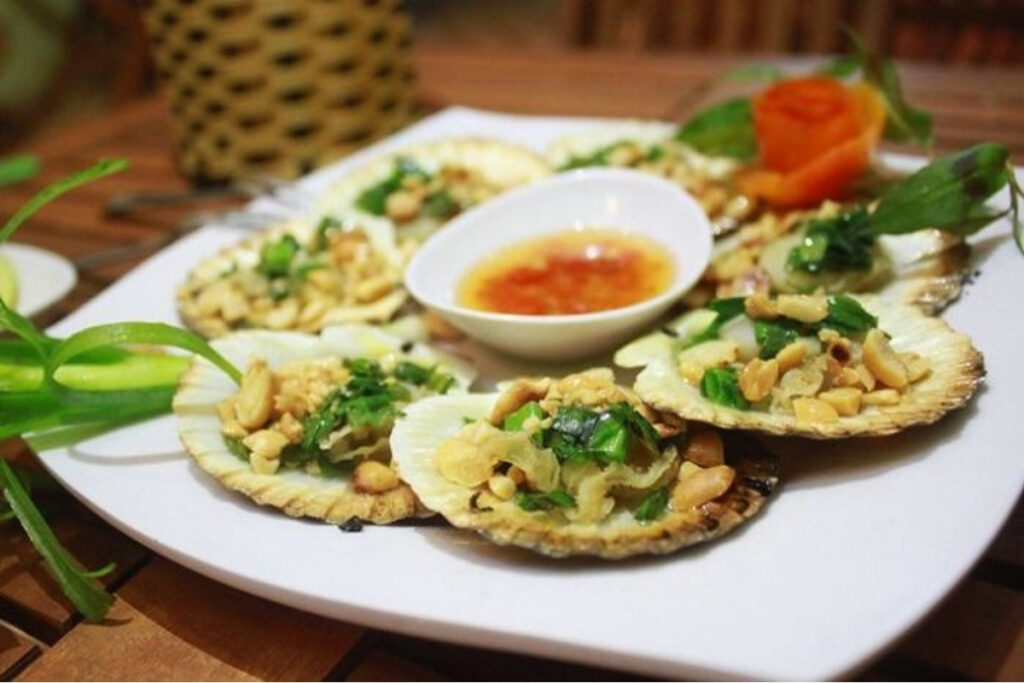
Scallops occupy a special place in southern Vietnamese seafood culture.
Unlike expensive fine-dining versions served elsewhere, grilled scallops in Ho Chi Minh City are surprisingly accessible. Individual shells are topped with scallion oil, roasted peanuts, garlic, or cheese before being grilled until bubbling.
The combination of sweet scallop meat, smoky charcoal, fragrant scallions, and crunchy peanuts creates a remarkable balance of textures.
Because each scallop is prepared individually, they’re often served fresh from the grill while still sizzling.
Many visitors who initially order only a few quickly find themselves asking for another round.
Average price: 25,000–60,000 VND per scallop.
Lobster – A Special Occasion Feast
Although everyday seafood remains the city’s greatest strength, Ho Chi Minh City also offers excellent lobster for travelers celebrating a special occasion.
Restaurants typically source live lobster from Vietnam’s central coastline, where warm waters produce sweet, firm meat.
Cooking methods are intentionally straightforward.
Steamed lobster highlights natural sweetness, while grilled lobster with garlic butter or cheese provides richer flavors without masking the quality of the seafood.
Because lobster is usually priced by weight, costs vary significantly depending on size and season.
For travelers seeking a memorable celebration dinner, however, Vietnamese lobster often delivers exceptional value compared with prices in North America, Europe, or Australia.
Fish Dishes Worth Discovering
While shellfish often receives the spotlight, fish remains central to southern Vietnamese cuisine.
Some of the city’s most popular seafood dishes include:
Grilled Fish Wrapped in Rice Paper
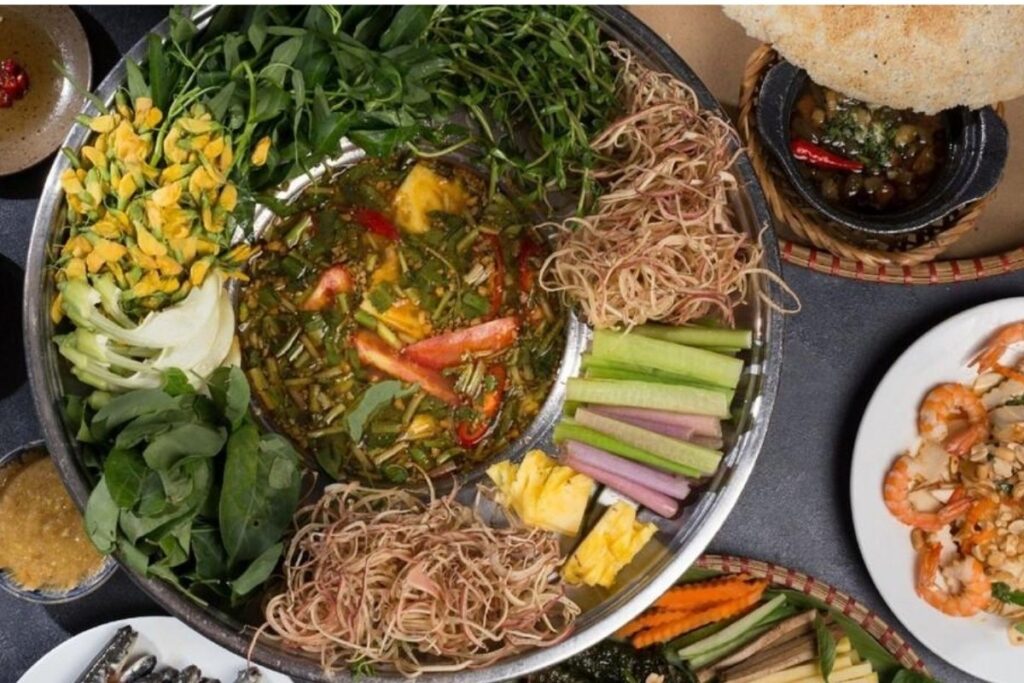
Whole grilled fish is served with rice paper, herbs, cucumber, green banana, pineapple, and dipping sauce. Diners create their own fresh rolls at the table, making the meal highly interactive.
Clay Pot Fish (Cá Kho Tộ)
Slow-cooked in caramel sauce, fish sauce, black pepper, and garlic, this comforting southern classic is best enjoyed with steamed rice.
Sour Fish Soup (Canh Chua Cá)
A vibrant soup featuring tamarind, pineapple, tomatoes, okra, bean sprouts, and fresh herbs. The balance of sweet, sour, and savory flavors perfectly represents the Mekong Delta’s culinary traditions.
These dishes remind visitors that Vietnamese seafood extends far beyond grilled shellfish.
How to Order Seafood Like a Local
Seafood restaurants in Ho Chi Minh City may seem intimidating at first, especially when menus list dozens of unfamiliar shellfish.
Fortunately, ordering is easier than it appears.
Start with three or four dishes rather than trying to sample everything at once. Combining one grilled item, one steamed dish, one stir-fry, and one shellfish preparation creates a balanced meal without overwhelming the table.
If live seafood is displayed in tanks, don’t hesitate to point at what you’d like. Restaurant staff are accustomed to helping visitors choose both the seafood and the most suitable cooking method.
Sharing is expected.
Instead of ordering individual entrées, everyone samples each dish together, allowing the group to experience a much wider variety of flavors.
A Seafood Experience Beyond the Plate
For many travelers, the city’s seafood scene becomes one of the defining memories of their visit.
It’s not simply the freshness of the ingredients or the remarkable affordability that leaves a lasting impression.
It’s the atmosphere.
Children chasing one another between tables.
Friends laughing over piles of crab shells.
The sound of charcoal grills crackling beneath fresh seafood.
Servers weaving effortlessly through crowded outdoor dining areas carrying steaming platters to waiting families.
These moments reveal why seafood in Ho Chi Minh City is about far more than satisfying hunger.
It represents celebration, community, and the relaxed rhythm of southern Vietnamese life.
Whether you’re sharing grilled scallops on a busy sidewalk, cracking open fresh crab at a neighborhood restaurant, or discovering your first bowl of steamed clams with lemongrass, you’ll quickly understand why seafood remains one of the city’s greatest culinary treasures.
Best Vietnamese Desserts in Ho Chi Minh City
Unlike Western desserts that often end a meal with rich cream or chocolate, Vietnamese desserts are designed to refresh rather than overwhelm.
After a spicy dinner, a bowl of chè or fresh tropical fruit feels surprisingly light, which explains why many locals eat dessert several times a week instead of saving it only for special occasions.
A memorable meal in Ho Chi Minh City rarely ends when the main course is finished.
Instead of cakes or pastries, many locals continue the evening with a bowl of chè, a scoop of coconut ice cream, silky tofu pudding, or simply a plate of perfectly ripe tropical fruit. Dessert in southern Vietnam is lighter, fresher, and closely connected to the region’s year-round abundance of coconuts, beans, sticky rice, and seasonal produce.
For travelers, exploring Vietnamese desserts offers another opportunity to experience the country’s remarkable culinary diversity. Many sweets are naturally gluten-free, several are dairy-free, and most are far less sugary than desserts commonly found in North America or Europe.
Perhaps the biggest surprise is the variety.
Rather than relying on chocolate or cream, Vietnamese desserts celebrate texture. Soft beans, chewy tapioca pearls, silky coconut milk, crushed ice, jelly, fresh fruit, and sticky rice come together in countless combinations, each reflecting different regional traditions.
Whether you’re cooling down after a day of sightseeing or searching for a late-night snack, these desserts deserve a place on every Ho Chi Minh City food itinerary.
Chè – Vietnam’s Beloved Sweet Soup
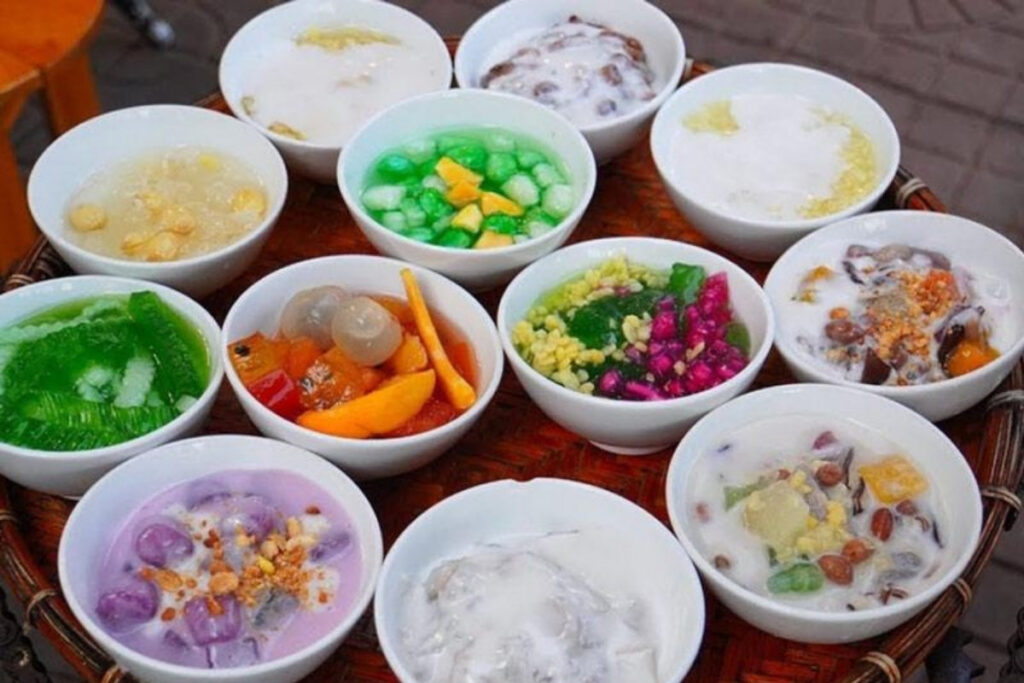
No dessert is more closely associated with southern Vietnam than chè.
Although often translated as “sweet soup,” that description barely hints at its incredible diversity. Across Vietnam, there are dozens of varieties, but Ho Chi Minh City is one of the best places to explore them all.
A single bowl may contain red beans, mung beans, lotus seeds, taro, sweet corn, tapioca pearls, pandan jelly, coconut milk, crushed ice, or tropical fruit. Every ingredient contributes a different texture, creating desserts that feel both refreshing and surprisingly satisfying.
Unlike Western desserts served after a meal, chè can be enjoyed at almost any time of day. Students stop for a bowl after school, office workers enjoy it as an afternoon treat, and families often end dinner with a shared selection of different varieties.
Among the most popular options are:
- Chè Ba Màu (Three-Color Dessert): Layers of red beans, mung bean paste, pandan jelly, coconut milk, and crushed ice create one of Vietnam’s most colorful desserts.
- Chè Thái: Inspired by Thai flavors, this version combines tropical fruits, jackfruit, lychee, coconut milk, jelly, and chewy tapioca.
- Chè Bưởi: A southern specialty featuring pomelo pith, mung beans, and rich coconut milk. The pomelo provides an unexpectedly crisp texture that makes this dessert unlike anything else.
- Chè Đậu Đỏ: Red beans simmered until tender and served warm or over ice with coconut milk.
A typical bowl costs between 20,000 and 45,000 VND, making chè one of the city’s most affordable culinary experiences.
Local tip: If you’re visiting with friends, order several different varieties and share them. Sampling multiple bowls offers a much better introduction to Vietnam’s extraordinary dessert culture.
Vietnamese Flan – A French Legacy with a Local Twist
French colonial influence continues to shape many aspects of Vietnamese cuisine, including one of the country’s most beloved desserts: bánh flan.
At first glance, it resembles the classic crème caramel found in Europe. The custard is silky smooth, topped with golden caramel, and served chilled.
What makes the Vietnamese version unique is how it’s enjoyed.
Many cafés add crushed ice and strong Vietnamese coffee, creating an irresistible combination of creamy custard, bittersweet coffee, and refreshing coldness that’s especially welcome on hot afternoons.
Others pair flan with coconut milk or simply serve it alongside iced coffee, allowing guests to enjoy both separately.
Light, elegant, and never overly sweet, Vietnamese flan demonstrates how international influences have been thoughtfully adapted to local tastes.
Average price: 20,000–40,000 VND.
Coconut Ice Cream – A Tropical Classic
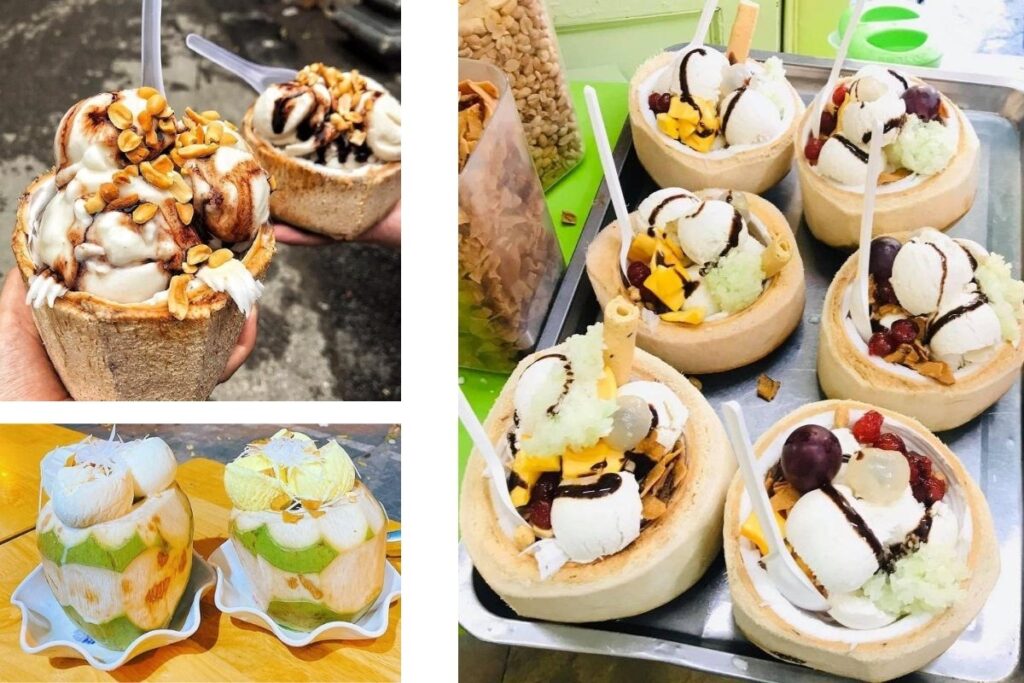
When temperatures climb above 90°F (32°C), few desserts are more satisfying than kem dừa, or Vietnamese coconut ice cream.
Served inside a fresh coconut shell, this refreshing treat usually combines creamy coconut ice cream with toasted coconut flakes, roasted peanuts, sticky rice, or colorful jelly.
The presentation is simple but beautiful.
Natural coconut aromas enhance every spoonful, while crunchy toppings provide contrast to the smooth ice cream.
Because coconuts grow abundantly throughout southern Vietnam, the flavor tastes noticeably fresher than coconut desserts found in many other countries.
It’s the perfect choice after a spicy meal or a long afternoon exploring the city’s markets.
Average price: 40,000–80,000 VND.
Tàu Hũ – Silky Tofu Pudding
Few desserts are as comforting—or as understated—as tàu hũ.
Made from delicate soybean pudding, this traditional dessert has been enjoyed for generations throughout southern Vietnam.
The silky tofu is served warm or chilled, accompanied by ginger syrup, coconut milk, or light sugar syrup. Some modern cafés add black sesame, tapioca pearls, pandan jelly, or fresh fruit while still preserving the dessert’s gentle character.
Unlike richer sweets, tàu hũ feels remarkably light, making it an excellent choice after a large meal.
Its simplicity highlights one of the defining qualities of Vietnamese cuisine: allowing fresh ingredients to speak for themselves.
Average price: 20,000–40,000 VND.
Yogurt – A Surprisingly Popular Local Favorite
Visitors are often surprised by how frequently yogurt appears on dessert menus.
Known locally as sữa chua, Vietnamese yogurt is smooth, mildly tangy, and commonly served with crushed ice, fresh fruit, coffee, or sticky rice.
One particularly popular variation combines yogurt with finely shaved ice and tropical fruit, creating a refreshing dessert that’s ideal during the city’s hottest months.
Another favorite mixes yogurt with Vietnamese coffee, balancing creamy sweetness with the bold intensity of locally grown coffee beans.
Simple, inexpensive, and refreshing, yogurt has become an everyday dessert enjoyed by people of all ages.
Average price: 20,000–45,000 VND.
Tropical Fruits – Nature’s Dessert
Sometimes the best dessert requires no cooking at all.
Southern Vietnam is blessed with one of the richest selections of tropical fruit in Southeast Asia, and Ho Chi Minh City’s markets showcase that abundance throughout the year.
Depending on the season, visitors may discover:
- Sweet mangoes bursting with fragrance.
- Creamy avocado often blended into smoothies.
- Delicate mangosteen with its soft white flesh.
- Rambutan, whose bright red shell hides juicy fruit.
- Longan with its floral sweetness.
- Dragon fruit, prized for its refreshing texture.
- Jackfruit with its distinctive tropical aroma.
- Durian, Vietnam’s most famous—and most controversial—fruit.
Rather than ordering fruit from hotel restaurants, explore neighborhood markets where produce arrives fresh every morning. Vendors are often happy to peel and prepare fruit for customers, making it easy to sample several varieties in one visit.
For many travelers, tasting fruit in Vietnam becomes an unexpected highlight of the journey. The freshness and flavor often exceed what is available overseas, particularly for fruits harvested only hours before reaching the market.
Seasonal Fruits Worth Planning Around
One of the advantages of visiting Ho Chi Minh City is that there’s always fresh tropical fruit available. However, if your trip happens to coincide with peak harvest season, you’ll experience flavors that are noticeably sweeter, juicier, and more aromatic than fruit exported overseas.
Many locals actually look forward to specific months of the year when their favorite fruits are at their absolute best.
May to July – Mangosteen
Often called the “queen of tropical fruits,” mangosteen is prized for its delicate white flesh and naturally sweet flavor with a hint of citrus.
Fresh mangosteen harvested during early summer is remarkably juicy and easy to peel. It’s one of the few fruits that many Vietnamese families eagerly anticipate every year.
If you’re visiting between May and July, don’t miss the opportunity to buy a few kilograms from a neighborhood market rather than a supermarket.
June to August – Rambutan
Bright red and covered with soft, hair-like spines, rambutan is one of Vietnam’s most recognizable tropical fruits.
Beneath its unusual shell lies translucent flesh that’s refreshingly sweet with a subtle floral aroma.
Summer is the ideal season, when rambutans are harvested throughout southern Vietnam and sold in enormous piles across local markets.
May to September – Durian
No fruit divides opinion quite like durian.
Some travelers fall in love with its rich, creamy texture and custard-like flavor, while others struggle with its famously powerful aroma.
Southern Vietnam is one of the country’s best places to try fresh durian during harvest season, when the fruit is naturally ripe rather than artificially ripened for export.
Even if you’re unsure, trying a small portion at a local market is a memorable culinary experience.
Available Year-Round – Dragon Fruit
Dragon fruit has become one of Vietnam’s most recognizable agricultural exports, but tasting it in Vietnam is a completely different experience.
Harvested locally, the fruit is noticeably fresher and often sweeter than versions sold overseas.
Both white-fleshed and red-fleshed varieties are widely available throughout the year, making dragon fruit one of the easiest tropical fruits for visitors to enjoy regardless of the season.
Seasonal Fruit Calendar
| Fruit | Best Season | Why Try It |
|---|---|---|
| Mangosteen | May–July | Sweet, juicy, and exceptionally fresh during peak harvest |
| Rambutan | June–August | Crisp texture and delicate floral sweetness |
| Durian | May–September | Creamy texture and bold flavor at its seasonal best |
| Mango | March–July | Naturally sweet with fragrant golden flesh |
| Longan | July–September | Juicy fruit with a light honey-like sweetness |
| Dragon Fruit | Year-round | Refreshing, mildly sweet, and always easy to find |
Local tip: Skip pre-cut fruit that’s been sitting on display for hours. Instead, buy whole fruit from busy market vendors, who will usually peel and prepare it for you on the spot. You’ll enjoy noticeably fresher flavors while also experiencing one of the simplest pleasures of everyday life in Ho Chi Minh City.
Vietnamese Desserts Are About Balance
One reason visitors remember Vietnamese desserts so fondly is their restraint.
Instead of overwhelming sweetness, most recipes balance creamy coconut milk with fresh fruit, soft beans with chewy tapioca, or cool shaved ice with fragrant syrups. Texture is just as important as flavor, and every spoonful offers something slightly different.
This philosophy mirrors Vietnamese cuisine as a whole.
Meals are designed to feel satisfying without becoming heavy, allowing diners to enjoy several dishes in succession rather than a single oversized portion.
Desserts follow the same principle.
They’re refreshing instead of rich, playful rather than extravagant, and closely connected to the ingredients that flourish in southern Vietnam’s tropical climate.
Save Room for Dessert
After exploring Ho Chi Minh City’s famous noodle soups, grilled meats, seafood feasts, and vibrant street food, it can be tempting to skip dessert.
Don’t.
Some of the city’s most authentic culinary experiences arrive not on elaborate restaurant plates but in modest bowls of chè, freshly sliced fruit, or creamy coconut ice cream enjoyed from a plastic stool on the sidewalk.
They’re affordable, deeply rooted in local tradition, and provide the perfect ending to a day spent discovering Vietnam’s largest city through its food.
In the next section, we’ll turn from desserts to another essential part of everyday life in Ho Chi Minh City: the drinks. From world-famous Vietnamese coffee and refreshing sugarcane juice to fresh coconuts and local craft beer, beverages are every bit as important to the city’s food culture as the dishes themselves.
Best Local Drinks to Try in Ho Chi Minh City
Food may introduce you to Ho Chi Minh City, but its drinks complete the experience.
Throughout the day, the city seems to pause for beverages as often as it does for meals. Early in the morning, sidewalks fill with people enjoying strong Vietnamese coffee before work. By midday, fresh coconut water and sugarcane juice help residents escape the tropical heat. In the evening, friends gather over local craft beer, iced tea, or fresh fruit smoothies that often accompany long seafood dinners.
Unlike many destinations where drinks are simply an afterthought, beverages in Ho Chi Minh City reflect the city’s climate, agricultural abundance, and deeply social culture.
Whether you’re taking a break between museums or relaxing after a street food tour, these are the drinks every visitor should try.
Vietnamese Coffee – The Drink That Defines Everyday Life

If there’s one beverage that captures the spirit of Vietnam, it’s coffee.
Vietnam is the world’s second-largest coffee producer, and nowhere is its coffee culture more vibrant than in Ho Chi Minh City. From humble sidewalk cafés with tiny plastic stools to sleek specialty coffee houses, nearly every neighborhood has its favorite place to gather.
Traditional Vietnamese coffee is brewed using a small metal drip filter known as a phin. Hot water slowly passes through finely ground coffee, producing an intensely aromatic brew that is stronger and more concentrated than many visitors expect.
The slow brewing process is part of the experience.
People don’t simply grab coffee and leave. They sit, talk, read the news, watch traffic pass by, or enjoy quiet moments before the day begins.
For many travelers, this slower rhythm becomes one of the city’s most memorable cultural experiences.
Don’t be surprised if your coffee arrives slowly.
In Vietnam, speed isn’t always the goal.
Many people spend thirty minutes—or even an hour—with a single cup, chatting with friends, reading the newspaper, or simply watching the world pass by.
Coffee here isn’t a takeaway drink.
It’s part of everyday life.
Cà Phê Sữa Đá – Vietnam’s Signature Iced Coffee
Ask any local to recommend one drink for first-time visitors, and cà phê sữa đá will almost certainly be the answer.
Made with dark-roasted Vietnamese coffee, sweetened condensed milk, and plenty of ice, it achieves a remarkable balance between bold bitterness and creamy sweetness.
The first sip is often unforgettable.
The coffee delivers deep chocolate-like notes and subtle roasted aromas before the condensed milk softens the intensity into a smooth, refreshing finish.
Because fresh milk was historically difficult to preserve in Vietnam’s tropical climate, condensed milk became the preferred choice decades ago. Today, it remains an essential part of the country’s coffee identity rather than simply a substitute.
Whether enjoyed at a busy café in District 1 or a quiet neighborhood coffee shop, cà phê sữa đá is an experience every traveler should have at least once.
Average price: 25,000–60,000 VND.
Black Vietnamese Coffee – Strong, Bold, and Uncompromising
For coffee enthusiasts who prefer their drinks without milk, cà phê đen offers a completely different experience.
Served hot (cà phê đen nóng) or over ice (cà phê đen đá), it highlights the full character of Vietnamese Robusta beans.
Compared with many Arabica coffees, Robusta produces a stronger body, higher caffeine content, and deeper roasted flavors.
The result is an energizing drink that’s especially popular with office workers beginning their day.
Many visitors initially find it stronger than expected, but after a few mornings in Ho Chi Minh City, it’s easy to understand why locals have embraced this style of coffee for generations.
Coconut Coffee – A Southern Favorite
Although coconut coffee has gained international attention in recent years, few places prepare it as well as cafés in southern Vietnam.
Fresh coconut cream is blended with ice until smooth and creamy before being poured over concentrated Vietnamese coffee.
The contrast is remarkable.
Rich coffee provides depth and slight bitterness, while the coconut contributes natural sweetness and a silky texture without overwhelming the drink.
Refreshing enough for hot afternoons yet satisfying enough to replace dessert, coconut coffee has become a favorite among both locals and international visitors.
Average price: 45,000–80,000 VND.
Salt Coffee – A Surprisingly Perfect Balance
At first, the idea sounds unusual.
Coffee with salt?
Yet cà phê muối, originally popularized in central Vietnam, has found enthusiastic fans throughout Ho Chi Minh City.
A small amount of salt doesn’t make the drink taste salty. Instead, it softens bitterness while enhancing the natural sweetness of condensed milk and cream.
The result is a rich, velvety coffee with exceptional balance.
For travelers eager to explore beyond the classics, salt coffee offers one of Vietnam’s most interesting modern coffee experiences.
Fresh Sugarcane Juice – The City’s Ultimate Refreshment
When temperatures soar, few drinks are more refreshing than nước mía, or fresh sugarcane juice.
Prepared before your eyes, long sugarcane stalks are fed through a mechanical press that extracts pale green juice in seconds. Many vendors add kumquat or a squeeze of citrus, brightening the drink with gentle acidity.
Naturally sweet yet surprisingly light, sugarcane juice is one of Ho Chi Minh City’s most popular afternoon refreshments.
Because it’s made fresh to order, every glass captures the clean, grassy sweetness of newly pressed cane.
Average price: 15,000–30,000 VND.
Fresh Coconut – Nature’s Perfect Drink
Sometimes simplicity wins.
Young coconuts are sold throughout Ho Chi Minh City, especially near parks, markets, and busy intersections.
Vendors expertly trim the top before inserting a straw, allowing customers to enjoy naturally chilled coconut water that’s rich in electrolytes and wonderfully refreshing after hours of walking in the tropical heat.
Once the water is finished, many vendors will split the coconut open so customers can scoop out the soft, delicate flesh inside.
It’s one drink that requires no added sugar, flavoring, or preparation.
Nature has already done the work.
Average price: 20,000–40,000 VND.
Fresh Fruit Smoothies – Vietnam in a Glass
Southern Vietnam’s tropical climate provides an extraordinary variety of fruit, making smoothies one of the city’s most popular beverages.
Known locally as sinh tố, these drinks are blended to order using fresh fruit, ice, and optional condensed milk or yogurt.
Popular choices include:
- Mango
- Avocado
- Soursop
- Dragon fruit
- Passion fruit
- Durian
- Papaya
- Jackfruit
- Mixed tropical fruit
Unlike many commercial smoothies, Vietnamese versions often rely on fruit that’s harvested locally, giving them exceptional freshness and natural sweetness.
For visitors looking to enjoy Vietnam’s tropical produce in a convenient way, a smoothie is difficult to beat.
Average price: 30,000–60,000 VND.
Local Beer – The Taste of Saigon After Dark
As the sun sets, another side of Ho Chi Minh City’s beverage culture comes to life.
Open-air restaurants fill with friends sharing seafood, grilled meats, and ice-cold local beer.
Unlike formal bars, these lively gatherings are casual, affordable, and wonderfully social.
Popular Vietnamese beers include:
- Saigon Beer – Crisp, refreshing, and closely associated with the city itself.
- 333 Beer – A historic Vietnamese lager with a loyal local following.
- Tiger Beer – Widely available and popular throughout Southeast Asia.
- Heineken – Brewed locally and commonly served in restaurants and bars.
In recent years, Ho Chi Minh City has also become Vietnam’s craft beer capital. Independent breweries now produce everything from citrus-forward pale ales to rich stouts inspired by local ingredients, offering beer lovers another reason to explore the city’s dining scene.
Whether you’re enjoying a casual sidewalk dinner or a rooftop restaurant overlooking the skyline, sharing a cold beer remains one of the simplest ways to experience Saigon’s relaxed evening atmosphere.
Drinks Are Part of the Journey
In Ho Chi Minh City, beverages are never simply something to accompany a meal.
They’re woven into everyday life.
Coffee starts conversations.
Sugarcane juice offers relief from the afternoon heat.
Fresh coconuts accompany long walks through local markets.
Fruit smoothies celebrate Vietnam’s tropical harvest.
Cold beer brings friends together after sunset.
Each drink reflects a different side of the city’s culture, reminding visitors that understanding Ho Chi Minh City isn’t only about what you eat—it’s also about where you pause, what you sip, and the people you meet along the way.
As your culinary journey continues, you’ll soon discover another important question every traveler faces: Should you choose street food or restaurants? In the next section, we’ll compare both experiences, helping you decide where to find the city’s most authentic flavors while dining confidently and safely.
Street Food vs Restaurants: Where Should You Eat in Ho Chi Minh City?
One of the first decisions every visitor faces is surprisingly simple:
Should you eat street food or dine in restaurants?
The answer, of course, is both.
Ho Chi Minh City is one of the few places in the world where a meal served from a tiny sidewalk kitchen can be just as memorable as dinner in an elegant restaurant. Some family-run food stalls have perfected the same recipe for decades, while modern restaurants present traditional Vietnamese dishes in more refined surroundings.
Rather than competing with one another, street food and restaurants offer different ways to experience the city’s culinary culture.
Understanding the strengths of each will help you enjoy the best of both worlds.
Why Street Food Is So Special
Street food isn’t simply an attraction for tourists.
For millions of residents, it’s an essential part of daily life.
Every morning before sunrise, vendors begin preparing broth, grilling pork, baking bread, and chopping herbs. Office workers stop for breakfast on their way to work. Students gather for inexpensive lunches. Families pick up dinner from neighborhood stalls after a busy day.
Many vendors specialize in only one or two dishes.
Instead of offering extensive menus, they focus on preparing a single recipe exceptionally well. Some have served the same dish for thirty or forty years, earning loyal customers who return week after week.
This specialization is one reason Ho Chi Minh City’s street food enjoys such an outstanding reputation.
Rather than trying to do everything, many vendors aim to become experts at one thing.
Advantages of Eating Street Food
For travelers, street food offers experiences that are difficult to recreate elsewhere.
Outstanding Value
A generous meal often costs between 30,000 and 80,000 VND, allowing visitors to sample several dishes without stretching their travel budget.
Authentic Local Atmosphere
Plastic stools, busy sidewalks, the sound of scooters passing by, and conversations drifting through the evening air all become part of the dining experience.
You’re not watching local life from a distance.
You’re participating in it.
Fresh Cooking
Many popular stalls prepare food continuously throughout the day because demand is so high.
Broths are replenished, grilled meats come directly from the charcoal fire, and herbs are replaced regularly.
High turnover often means fresher food.
Discovering Hidden Favorites
Some of the city’s most celebrated meals aren’t found in guidebooks.
They’re tucked away inside residential neighborhoods, narrow alleyways, or traditional markets where generations of locals have gathered long before international tourism became common.
Finding these places is one of the greatest pleasures of exploring Ho Chi Minh City.
Why Restaurants Still Deserve a Place on Your Itinerary
Street food may receive most of the attention, but restaurants offer their own advantages.
For many visitors, especially those traveling with family or celebrating special occasions, restaurants provide a more comfortable environment without sacrificing authenticity.
Many respected Vietnamese restaurants continue using family recipes while offering spacious seating, air conditioning, multilingual menus, and attentive service.
Restaurants also make it easier to sample dishes that require more elaborate preparation, such as seafood feasts, hot pots, or regional tasting menus featuring recipes from across Vietnam.
If you’re visiting during the rainy season, restaurants provide a welcome escape from sudden tropical downpours without interrupting your culinary adventure.
Advantages of Dining in Restaurants
Greater Variety
Restaurants often serve dozens of dishes, making them ideal for groups with different tastes.
Comfortable Environment
Air conditioning, larger tables, and indoor seating can be especially welcome after a full day of sightseeing.
Easier Communication
English menus and bilingual staff are increasingly common, helping first-time visitors feel more confident when ordering unfamiliar dishes.
Excellent for Seafood and Group Dining
Many seafood restaurants display live ingredients, allowing diners to select what they’d like before choosing a preferred cooking method.
This interactive style of dining is difficult to replicate at smaller street stalls.
Which Option Is More Authentic?
This question comes up frequently.
The truth is authenticity isn’t determined by whether food is served on the sidewalk or inside a restaurant.
Some street vendors primarily serve tourists.
Some restaurants are filled almost entirely with local families.
Instead of judging by appearance, pay attention to a few simple signs.
Busy restaurants with steady customer turnover generally indicate fresh ingredients.
Menus focused on a manageable number of specialties often reflect genuine expertise.
Families dining together usually suggest consistent quality.
Most importantly, if locals are willing to wait patiently in line, it’s often worth waiting with them.
Is Street Food Safe?
For many first-time visitors, food safety is one of the biggest concerns.
Fortunately, Ho Chi Minh City’s street food culture has developed practical habits that naturally support freshness.
Here are several tips experienced travelers follow:
Choose Busy Vendors
A long line usually means ingredients are constantly being replenished.
Freshly cooked food spends less time sitting at room temperature.
Watch the Cooking Process
Open kitchens are one advantage of Vietnamese street food.
You can often see ingredients being prepared, grilled, boiled, or stir-fried right in front of you.
Eat During Peak Hours
Breakfast and lunch are excellent times because restaurants prepare food specifically for the busiest periods.
Late afternoon is also ideal for grilled dishes and seafood.
Observe Cleanliness
Look for clean preparation areas, organized ingredients, and vendors who handle food carefully.
No restaurant needs to be luxurious, but attention to hygiene is always a positive sign.
Trust Your Instincts
If something doesn’t look or smell fresh, simply choose another vendor.
With thousands of excellent food stalls throughout the city, there’s never a shortage of alternatives.
The Best Strategy: Mix Both Experiences
Instead of choosing one over the other, combine them throughout your trip.
For example:
Breakfast: Enjoy a neighborhood bowl of phở or hủ tiếu from a busy street vendor.
Lunch: Visit a comfortable local restaurant to try several southern specialties.
Afternoon: Stop at a café for Vietnamese coffee and a light dessert.
Dinner: Share seafood or grilled dishes at a lively restaurant with friends.
Late Evening: Finish with bánh mì or fresh fruit from a popular street stall.
This approach offers the greatest variety while allowing you to experience different sides of the city’s food culture.
Common Myths About Street Food
“Street food is only for adventurous travelers.”
Not true.
Many dishes, such as bánh mì, grilled pork, fresh spring rolls, and Vietnamese coffee, are approachable even for cautious eaters.
“Restaurants always serve better food.”
Not necessarily.
Some of Ho Chi Minh City’s highest-rated dishes are prepared in tiny family-run kitchens that have perfected a single recipe over generations.
“Expensive meals are always higher quality.”
Price and quality don’t always go together.
One of Vietnam’s greatest culinary strengths is that exceptional food is often remarkably affordable.
Some unforgettable meals cost less than a cup of coffee in many Western cities.
Eat Like the Locals Do
The best meals rarely happen because someone found the city’s most expensive restaurant.
They happen because curiosity leads you down a side street, into a crowded market, or toward the irresistible aroma of pork grilling over charcoal.
Ho Chi Minh City’s food culture rewards openness.
Some mornings you’ll find yourself sitting beside office workers enjoying breakfast before sunrise.
Other evenings you’ll spend hours sharing seafood with friends beneath colorful lights as scooters stream past the restaurant.
Neither experience is more “correct.”
Together, they reveal the full character of Vietnam’s largest city.
The smartest travelers don’t choose between street food and restaurants.
They embrace both—and leave Ho Chi Minh City understanding that some of life’s best meals don’t depend on elegant dining rooms, but on fresh ingredients, generous hospitality, and the willingness to try something new.
Quick Comparison
| Street Food | Restaurants |
|---|---|
| Lower prices | Higher comfort |
| Authentic everyday atmosphere | Spacious seating and air conditioning |
| Fast service | More relaxed dining experience |
| Limited menu focused on specialties | Wider menu with many regional dishes |
| Excellent for breakfast, lunch, and quick meals | Ideal for seafood, family dinners, and celebrations |
| Cash is commonly preferred | Cards are accepted more often at larger restaurants |
| Perfect for experiencing local daily life | Better for longer meals and larger groups |
No matter which option you choose, you’ll quickly discover the same truth: in Ho Chi Minh City, great food is found everywhere—from bustling sidewalks and hidden alleyways to elegant dining rooms overlooking the skyline. The city’s greatest luxury isn’t expensive restaurants or celebrity chefs. It’s the extraordinary quality and diversity available at every price point, every day of the week.
Best Food Markets in Ho Chi Minh City
Morning scene.
Arrive just after six in the morning and you’ll see restaurant owners selecting herbs with remarkable care.
Bundles of basil disappear almost as quickly as they’re unloaded.
Fresh seafood still glistens from the morning catch.
By eight o’clock, much of the day’s best produce has already found its way into kitchens across the city.
If restaurants introduce you to Vietnamese cuisine, food markets reveal where it truly comes from.
Long before trendy cafés and modern dining districts appeared across the city, traditional markets were the beating heart of Ho Chi Minh City’s food culture. They remain the places where restaurant owners purchase fresh herbs before sunrise, home cooks bargain for seasonal produce, and generations of vendors continue preparing recipes passed down through their families.
For travelers, visiting a local market offers much more than an opportunity to eat.
It’s a chance to understand how the city’s culinary traditions begin each day.
The fragrance of herbs, the colors of tropical fruit, the rhythm of vendors calling to customers, and the endless variety of ingredients together create one of the most authentic experiences in Ho Chi Minh City.
Whether you’re searching for breakfast, local snacks, or simply hoping to observe everyday life, these markets deserve a place on your itinerary.
Ben Thanh Market – Ho Chi Minh City’s Most Famous Food Market

No market is more recognizable than Ben Thanh Market.
Located in the heart of District 1, this historic landmark has welcomed both locals and international visitors for more than a century. While many travelers first arrive to browse souvenirs, it’s the food court that keeps people coming back.
Inside, dozens of small stalls prepare Vietnamese classics including phở, bún bò Huế, cơm tấm, bánh xèo, gỏi cuốn, and freshly made desserts.
The greatest advantage is convenience.
Instead of traveling across the city, visitors can sample several regional specialties under one roof.
Although prices are generally a little higher than neighborhood markets, they’re still affordable by international standards, and the variety makes Ben Thanh an excellent introduction for first-time visitors.
After sunset, the surrounding streets become even livelier as the nearby night market fills with grilled seafood, Vietnamese pancakes, fresh fruit, and sweet treats.
Best for:
- First-time visitors
- Trying several dishes in one location
- Evening street food
- Convenient central location
Ben Nghe Street Food Market – A Modern Take on Vietnamese Street Food
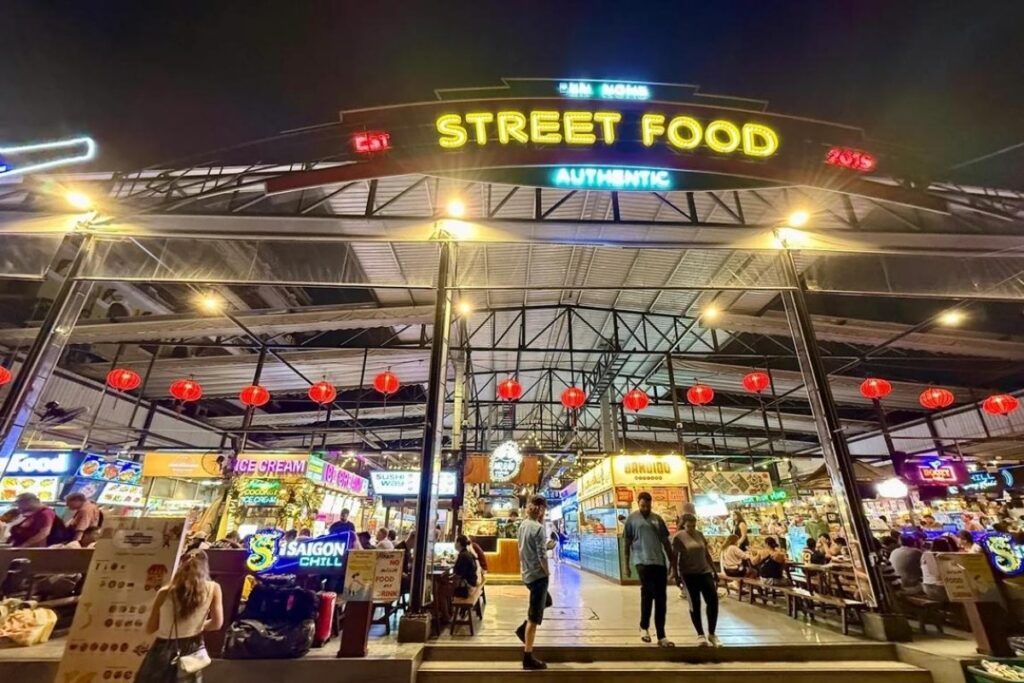
Just a short walk from many of District 1’s major attractions, Ben Nghe Street Food Market offers a more contemporary dining experience.
Unlike traditional wet markets, this open-air food hall brings together vendors from different regions of Vietnam, allowing visitors to explore a remarkable range of local specialties without leaving the city center.
You’ll find everything from northern noodle soups and central Vietnamese dishes to southern seafood, grilled meats, desserts, and Vietnamese coffee.
The atmosphere feels welcoming for international travelers while remaining popular with local office workers during lunch and dinner.
English menus are common, seating is plentiful, and cleanliness is consistently maintained.
For visitors who may feel hesitant about ordering from individual street vendors during their first days in Vietnam, Ben Nghe Street Food Market provides an excellent balance between authenticity and comfort.
Best for:
- Travelers new to Vietnamese cuisine
- Families
- Evening meals
- Sampling food from different regions
Ho Thi Ky Food Market – A Local Favorite After Dark
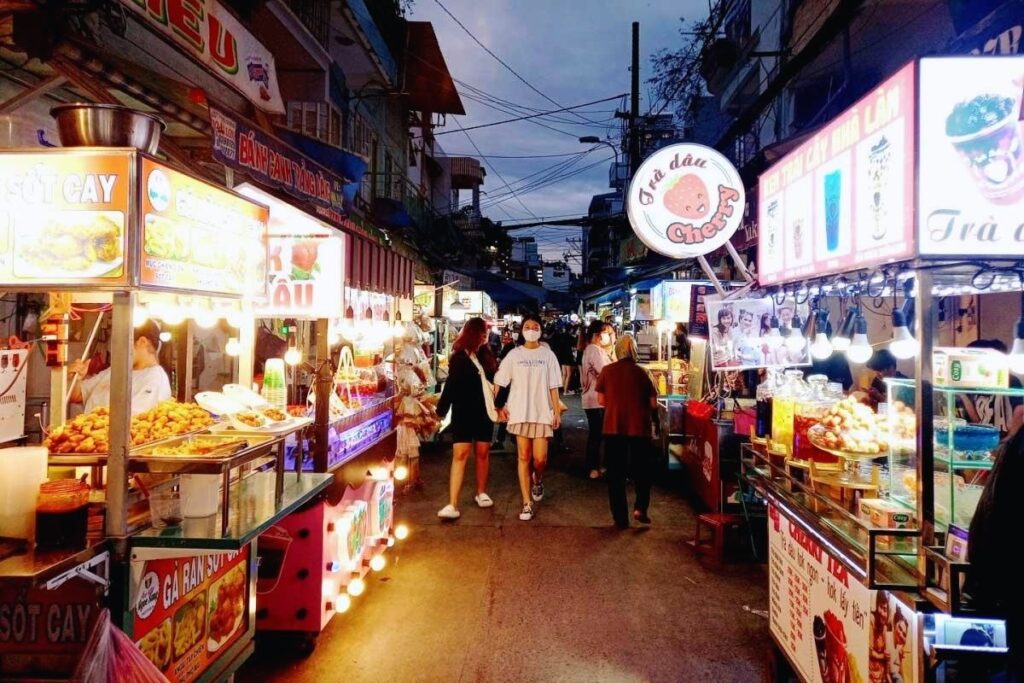
Ask Ho Chi Minh City residents where they go for late-night snacks, and many will mention Ho Thi Ky Food Market.
Located in District 10, this bustling neighborhood market is famous not only for its enormous flower market but also for one of the city’s most exciting street food scenes.
As evening approaches, narrow lanes fill with food stalls serving grilled seafood, Cambodian-inspired dishes, noodle soups, barbecue skewers, desserts, tropical fruit, and creative snacks popular with younger locals.
Compared with Ben Thanh, Ho Thi Ky feels noticeably more local.
English is less common, menus are simpler, and the atmosphere is wonderfully energetic.
For adventurous travelers, this is one of the best places to experience Ho Chi Minh City’s vibrant evening food culture beyond the traditional tourist districts.
Best for:
- Authentic local atmosphere
- Night food
- Budget-friendly dining
- Street food photography
Tan Dinh Market – Everyday Southern Vietnamese Life
Less visited by international tourists, Tan Dinh Market offers an authentic glimpse into everyday shopping habits in Ho Chi Minh City.
Early each morning, local residents arrive to purchase fresh seafood, herbs, vegetables, pork, spices, and tropical fruit.
The prepared food section serves classic southern breakfasts including xôi (sticky rice), bánh mì, noodle soups, and fresh coffee.
Because tourism plays a smaller role here, prices are often lower, and interactions feel refreshingly genuine.
It’s an excellent destination for travelers interested in seeing how local ingredients move from market stalls to family kitchens and neighborhood restaurants.
The nearby streets are also home to numerous cafés and long-established family eateries worth exploring after your market visit.
Best for:
- Morning visits
- Traditional breakfast
- Fresh produce
- Everyday local culture
Binh Tay Market – The Culinary Heart of Chợ Lớn
Located in District 6, Binh Tay Market stands at the center of Chợ Lớn, Ho Chi Minh City’s historic Chinatown.
Unlike markets focused primarily on tourism, Binh Tay functions as one of the city’s largest wholesale trading centers.
Walking through its corridors reveals towering sacks of spices, dried seafood, medicinal herbs, noodles, sauces, teas, and countless ingredients that supply restaurants throughout southern Vietnam.
Outside the market, visitors discover another culinary treasure.
Family-run Chinese-Vietnamese restaurants serve roast duck, wonton noodles, dumplings, steamed buns, herbal soups, and other dishes reflecting generations of cultural exchange.
For anyone interested in the deeper history of Ho Chi Minh City’s food culture, Binh Tay Market provides valuable insight into the Chinese influences that continue shaping the city’s cuisine today.
Best for:
- Chinese-Vietnamese cuisine
- Local ingredients
- Culinary history
- Food photography
Morning Markets vs Night Markets
The experience changes dramatically depending on the time of day.
Morning Markets
Arrive before 8:00 a.m. and you’ll witness the city’s daily food supply in action.
Fresh vegetables arrive by truck.
Fish and seafood are delivered from coastal provinces.
Restaurant owners negotiate prices.
Home cooks carefully select herbs, meat, and fruit for the day’s meals.
Breakfast vendors are busiest during these early hours, making morning the ideal time to enjoy authentic local dishes alongside residents beginning their day.
Night Markets
As the sun sets, the atmosphere transforms completely.
Charcoal grills fill the air with smoky aromas.
Seafood sizzles over open flames.
Fresh fruit is blended into colorful smoothies.
Dessert stalls light up with bowls of chè, coconut ice cream, and sweet soups.
Night markets emphasize social dining, encouraging visitors to wander, snack, and sample multiple dishes rather than sitting down for one large meal.
Tips for Visiting Food Markets
A few simple habits will make your visit more enjoyable.
Bring Cash
Many small vendors accept cash only, especially at traditional markets.
Small denominations are particularly helpful.
Visit Hungry
Instead of eating one large meal beforehand, arrive ready to sample several smaller dishes.
Markets are designed for grazing rather than formal dining.
Watch Before Ordering
If you’re unfamiliar with a dish, spend a few moments observing how locals order and eat it.
This often makes the experience feel much less intimidating.
Respect Personal Space
Markets are busy working environments, not museums.
If you’d like to photograph a vendor or food stall, a smile and polite gesture asking for permission is always appreciated.
Stay Hydrated
Ho Chi Minh City’s tropical climate can be warm and humid throughout the year.
Carry water or enjoy fresh coconut juice while exploring.
Which Market Should You Visit?
The answer depends on the kind of experience you’re looking for.
| Market | Best For |
|---|---|
| Ben Thanh Market | First-time visitors, classic Vietnamese dishes, central location |
| Ben Nghe Street Food Market | Comfortable dining, regional specialties, families |
| Ho Thi Ky Food Market | Authentic night food, local atmosphere, adventurous eaters |
| Tan Dinh Market | Traditional breakfast, everyday local life, fresh produce |
| Binh Tay Market | Chinese-Vietnamese cuisine, culinary history, wholesale food culture |
Markets Tell the Story of the City
Restaurants showcase finished dishes.
Markets reveal everything that comes before them.
Here you’ll see herbs still covered with morning dew, seafood delivered just hours after leaving the coast, tropical fruit stacked in brilliant colors, and generations of vendors whose knowledge has been built over decades rather than written in recipe books.
For travelers hoping to understand Ho Chi Minh City beyond its famous landmarks, few experiences are more rewarding than wandering through its food markets.
Some of your favorite memories may not come from a restaurant at all, but from a quiet conversation with a fruit seller, the irresistible aroma of bread baking before sunrise, or the discovery of a family recipe you’ve never encountered before.
In the next section, we’ll explore the best districts for food lovers, helping you decide exactly where to eat depending on your interests—from historic street-food neighborhoods and hidden local favorites to vibrant nightlife and modern dining destinations.
Best Districts for Food Lovers
One of the greatest advantages of eating in Ho Chi Minh City is that every district has its own culinary personality.
While District 1 introduces many visitors to Vietnamese cuisine, the city’s most memorable meals are often found beyond the main tourist streets. Exploring different neighborhoods reveals how history, migration, and local communities have shaped distinct dining cultures across the city.
Rather than searching for a single “best restaurant,” consider exploring one district at a time.
You’ll discover far more than individual dishes—you’ll experience the rhythm of everyday life that makes Ho Chi Minh City one of Asia’s most exciting food destinations.
District 1 – The Best Place to Start
For first-time visitors, District 1 is the easiest introduction to the city’s food scene.
Here you’ll find a wide variety of Vietnamese classics, international restaurants, rooftop bars, specialty coffee shops, and lively evening food streets within walking distance of many major attractions.
Although some restaurants cater primarily to tourists, there are also long-established local eateries serving excellent bánh mì, phở, cơm tấm, and Vietnamese coffee.
Best for:
- First-time visitors
- Walking food tours
- Vietnamese coffee
- Nightlife
- Easy access
District 3 – Where Locals Eat
Just north of District 1, District 3 feels noticeably quieter and more residential.
Tree-lined streets hide family-run restaurants, neighborhood cafés, traditional bakeries, and noodle shops that have served loyal customers for decades.
Many residents consider District 3 one of the city’s best places for authentic everyday dining without the crowds found in more tourist-oriented areas.
Best for:
- Traditional Vietnamese food
- Breakfast
- Local cafés
- Authentic neighborhood atmosphere
District 5 (Chợ Lớn) – Chinese-Vietnamese Culinary Heritage
District 5, home to historic Chợ Lớn, offers one of the city’s richest culinary experiences.
Chinese migration has influenced this neighborhood for generations, creating a remarkable blend of Cantonese, Teochew, Hokkien, and Vietnamese traditions.
Visitors can explore handmade noodle shops, roast duck restaurants, herbal tea houses, dumpling specialists, and bustling markets that reveal another side of Ho Chi Minh City’s multicultural identity.
Best for:
- Chinese-Vietnamese cuisine
- Dim sum
- Roast duck
- Traditional markets
- Culinary history
District 10 – Street Food After Dark
As evening approaches, District 10 becomes one of the city’s liveliest dining neighborhoods.
Around Ho Thi Ky Food Market and the surrounding streets, visitors will find grilled seafood, barbecue skewers, desserts, hot pots, and late-night snacks enjoyed primarily by local residents.
The atmosphere is energetic, affordable, and wonderfully authentic.
Best for:
- Night food
- Street food
- Young local crowd
- Desserts
- Seafood
Bình Thạnh – Hidden Local Favorites
Bordering District 1, Bình Thạnh has become increasingly popular among food lovers seeking neighborhood restaurants away from the busiest tourist areas.
The district combines traditional family eateries with modern cafés and creative restaurants opened by a younger generation of chefs.
Because relatively few international tourists venture here, prices remain reasonable and the atmosphere feels distinctly local.
Best for:
- Hidden restaurants
- Modern Vietnamese cafés
- Local specialties
- Casual dining
Phú Nhuận – A Neighborhood Full of Culinary Surprises
Located between the airport and the city center, Phú Nhuận rarely appears in traditional guidebooks.
Yet many Ho Chi Minh City residents consider it one of the most rewarding districts for everyday dining.
Its streets are lined with bakeries, noodle shops, family-owned restaurants, coffee houses, and dessert cafés representing every region of Vietnam.
For travelers willing to explore beyond familiar landmarks, Phú Nhuận offers excellent food without the crowds.
Best for:
- Local breakfast
- Vietnamese desserts
- Coffee shops
- Everyday dining
Best Foods for Every Time of Day
One of the joys of eating in Ho Chi Minh City is that different dishes naturally belong to different parts of the day.
Following local habits often leads to the freshest food and the best dining experience.
Breakfast
Morning is the perfect time for:
- Phở
- Hủ tiếu Nam Vang
- Bò kho with bread
- Bánh mì
- Xôi (sticky rice)
- Bánh cuốn
- Vietnamese coffee
Most breakfast stalls begin serving before sunrise and many sell out by late morning.
Lunch
As temperatures rise, locals often choose meals that are filling without feeling too heavy.
Popular lunch choices include:
- Cơm tấm
- Bún thịt nướng
- Bún riêu
- Cơm gà
- Bánh xèo
- Fresh spring rolls
Lunch is also an excellent time to explore neighborhood restaurants away from the busiest tourist districts.
Dinner
Evening brings a completely different atmosphere.
Families and groups of friends gather to share dishes rather than eating individual meals.
Favorites include:
- Seafood
- Snail restaurants
- Hot pot
- Grilled meats
- Barbecue
- Clay pot dishes
Dinner in Ho Chi Minh City is often as much about conversation as food.
Late-Night Eats
The city rarely goes to sleep hungry.
Popular late-night options include:
- Bánh mì
- Grilled seafood
- Snails
- Barbecue skewers
- Instant stir-fried noodles
- Fresh fruit
- Sweet desserts
Many restaurants continue serving well past midnight, particularly on weekends.
A One-Day Ho Chi Minh City Food Itinerary
If you have only one full day, this itinerary offers an excellent introduction to the city’s culinary diversity.
7:30 a.m. – Breakfast
Begin with a bowl of phở or hủ tiếu at a busy neighborhood restaurant, followed by traditional Vietnamese iced coffee.
10:00 a.m. – Coffee Break
Relax at a local café and experience the city’s famous slow coffee culture.
12:30 p.m. – Lunch
Order cơm tấm or bún thịt nướng at a family-run restaurant.
3:00 p.m. – Sweet Treat
Cool down with chè, coconut ice cream, or fresh tropical fruit.
6:30 p.m. – Dinner
Visit a seafood or snail restaurant and share several dishes with friends or family.
9:00 p.m. – Evening Walk
Finish the day with fresh sugarcane juice, a fruit smoothie, or another Vietnamese coffee while exploring the city’s lively streets.
Practical Food Tips for First-Time Visitors
A few simple habits will make your culinary journey smoother.
- Carry small amounts of cash for neighborhood food stalls.
- Learn a few basic Vietnamese phrases such as cảm ơn (thank you) and ngon quá (delicious).
- Don’t be afraid to point at dishes if language becomes difficult.
- Join the busiest restaurants during normal meal times for the freshest food.
- Drink plenty of water, especially during hot afternoons.
- Leave room to try desserts and tropical fruit after every meal.
- Be curious. Some of the city’s best meals are found where you least expect them.
Common Mistakes First-Time Visitors Make
Only eating in District 1.
Skipping neighborhood cafés.
Adding chili sauce before tasting the broth.
Ordering too much seafood at once.
Assuming every famous restaurant is the best restaurant.
Avoiding plastic-stool eateries simply because they look small.
Some of Ho Chi Minh City’s finest meals are served from kitchens no larger than a garage.
Frequently Asked Questions about Ho Chi Minh City Food Guide
What is the most famous food in Ho Chi Minh City?
Cơm tấm is widely considered the city’s signature dish, while bánh mì, hủ tiếu Nam Vang, and Vietnamese coffee are also essential experiences.
Is street food safe in Ho Chi Minh City?
Yes, especially when you choose busy vendors with high customer turnover and food prepared fresh in front of you.
How much should I budget for food each day?
Most travelers can enjoy excellent local meals for 300,000–700,000 VND per day, while those dining in upscale restaurants or ordering premium seafood should budget more.
Do I need to tip?
Tipping is appreciated but not expected. In local restaurants, simply rounding up the bill or leaving a small tip for excellent service is a thoughtful gesture.
Can vegetarians eat well in Ho Chi Minh City?
Absolutely.
Vegetarian restaurants are common throughout the city, serving creative dishes based on tofu, mushrooms, vegetables, rice, noodles, and plant-based versions of traditional Vietnamese recipes.
What’s the best time for a food tour?
Early morning is ideal for breakfast dishes and local markets, while evening offers the liveliest atmosphere for seafood, street food, desserts, and coffee culture.
Final Thoughts on Ho Chi Minh City Food Guide
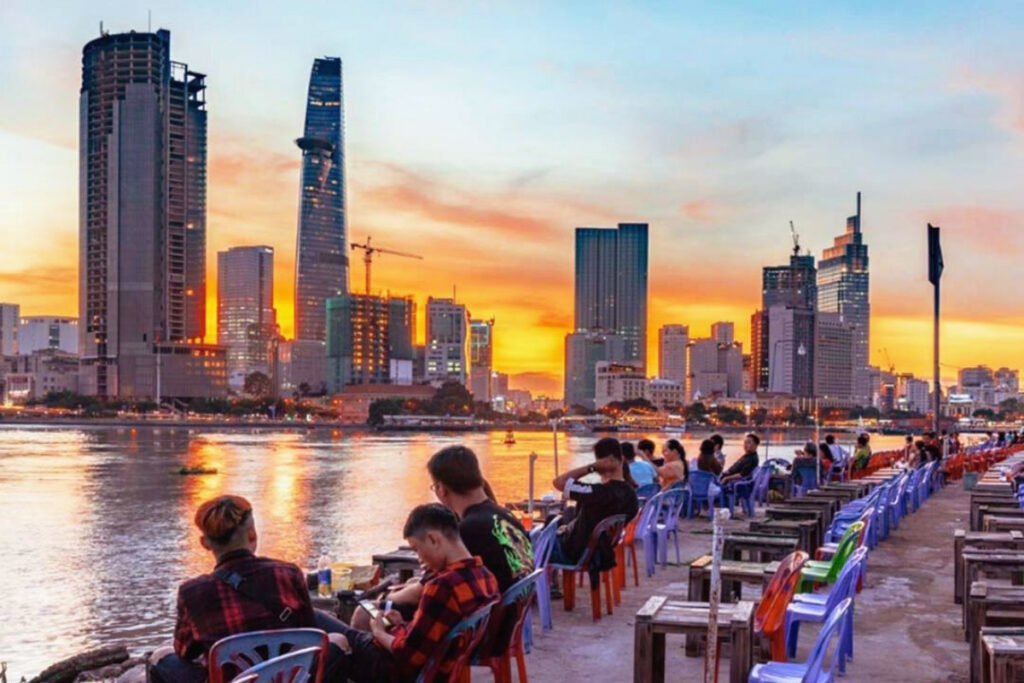
Ho Chi Minh City doesn’t ask visitors to search for perfect meals.
It simply invites them to stay curious.
One morning may begin with a bowl of fragrant noodles prepared from a family recipe that’s older than many of the city’s skyscrapers. By afternoon, you’ll be sipping Vietnamese coffee while watching everyday life unfold from a shaded café. As evening arrives, charcoal grills light up sidewalks, seafood restaurants fill with laughter, and dessert stalls tempt passersby with colorful bowls of chè and freshly cut tropical fruit.
This constant rhythm of eating, gathering, and sharing is what makes Ho Chi Minh City one of Asia’s most rewarding culinary destinations.
You’ll certainly remember the flavors—the smoky grilled pork, the rich coffee, the sweetness of ripe mango, the freshness of herbs picked that morning.
But long after the trip ends, you’ll probably remember something else.
The grandmother smiling as she hands you a warm bánh mì.
The family inviting you to share a table when every seat is taken.
The café owner patiently showing you how to stir condensed milk into your coffee.
The lively conversations drifting across a crowded seafood restaurant late at night.
Food in Ho Chi Minh City is never just about eating.
It’s about people.
It’s about history carried through recipes.
It’s about traditions that continue every single day, from the first bowl of breakfast noodles before sunrise to the final cup of coffee shared long after dark.
If you arrive hungry, you’ll leave with much more than a full stomach.
You’ll leave with a deeper understanding of Vietnam itself.
Explore More Vietnamese Food & Travel Guides
Continue your culinary journey with these guides:
- Vietnam Food Guide – Discover the country’s iconic regional dishes from north to south.
- Hanoi Food Guide – Explore the refined flavors and centuries-old culinary traditions of Vietnam’s capital.
- Vietnam Street Food Guide – Learn how to eat like a local, from bustling markets to hidden alleyways.
- Vietnam Coffee Culture Guide – Understand why coffee is woven into everyday life across Vietnam.
- Vietnamese Desserts Guide – Dive deeper into chè, cakes, sweet soups, and tropical treats.
- Best Food Cities in Vietnam – Compare the country’s most exciting culinary destinations before planning your next adventure.
- Best Things to Do in Ho Chi Minh City – Pair unforgettable meals with the city’s top cultural and historical attractions.
Whether this is your first visit or your fifth, Ho Chi Minh City always has another street to explore, another family recipe to discover, and another unforgettable meal waiting just around the corner.
If Vietnamese desserts have sparked your appetite, continue exploring the country’s incredible food culture through our guides to Vietnam’s best street food, regional specialties, traditional coffee, and local markets. Together, they offer a deeper understanding of why Vietnam has become one of Asia’s most exciting culinary destinations.
If you’re planning your first trip to Vietnam, our Vietnam Visa Guide explains entry requirements and travel preparation. Travelers looking to build a complete itinerary should also explore our Best Places to Visit in Vietnam guide, while our Vietnam Transportation Guide helps visitors navigate the country efficiently.
For accommodation recommendations, see our Best Hotels in Vietnam and Best Resorts in Vietnam guides. Travelers interested in longer stays can also explore our Best Places for Digital Nomads in Vietnam article for destination-specific insights.
These internal guides help travelers better understand transportation, budgeting, itineraries, accommodation, and local travel experiences across Vietnam.
The most memorable trips in Vietnam are rarely the ones that move the fastest.
If you enjoy slower, experience-focused travel, we also share local insights, food experiences, and practical Vietnam travel advice through our YouTube channel:
TAM VOC VIET – VIETNAM INSIGHTS
About This Guide
This Ho Chi Minh City Food Guide was researched and updated after multiple food-focused trips across Vietnam between 2023 and 2026. The featured desserts were explored through visits to traditional markets, family-run dessert shops, neighborhood cafés, and regional food destinations across Hanoi, Hue, Da Nang, Hoi An, Ho Chi Minh City, Ben Tre, and the Mekong Delta.
Recommendations combine firsthand travel experiences, conversations with local vendors, regional culinary research, and practical tips designed specifically for international travelers planning a food-focused journey through Vietnam.
