


 Tiếng Việt
Your Vietnamese colleague says, “Yes.”
You leave the meeting thinking the decision is settled.
Three days later, nothing has happened.
So you ask what went wrong. Your colleague smiles, says the matter is “a little difficult,” and promises to check again.
For a foreigner, this can be confusing. Was the original “yes” an agreement? Was the hesitation a polite way of saying no? And why did nobody simply say what they were thinking in the meeting?
The answer is not necessarily about language.
It is about culture.
Vietnamese work culture is shaped by several forces at once: respect for age and seniority, the importance of relationships, a preference for harmony over open confrontation, and a communication style in which tone, context and silence can sometimes matter as much as the words themselves. At the same time, Vietnam’s workplaces are changing quickly. International companies, startups and a younger generation of workers are bringing more direct communication, flexible working arrangements and different expectations about careers and work-life balance.
That is what makes Vietnamese work culture interesting — and sometimes difficult to read from the outside.
There is no single Vietnamese workplace.
A multinational office in Ho Chi Minh City may feel very different from a family-run business in a provincial town. A young technology company may have a much flatter structure than a traditional organization. A 25-year-old employee may have very different expectations about work-life balance from someone who entered the workforce several decades earlier.
Yet certain patterns remain important.
Hierarchy can influence who speaks first and who makes the final decision. Relationships can matter before a business conversation becomes productive. A direct disagreement may be softened to protect someone’s dignity. Lunch can be more than a break from work. And a polite “yes” may sometimes mean “I understand” rather than “I agree.”
For travelers, these details offer a glimpse into Vietnam that is easy to miss.
You may notice them when talking to a hotel manager, visiting a local business, working remotely from Vietnam, teaching English, joining a Vietnamese company, or simply spending enough time in the country to move beyond the role of tourist.
Understanding Vietnamese work culture is therefore not just useful for people taking a job in Vietnam.
It is another way of understanding how Vietnamese society works.
Table of Contents
Quick Answer: What Is Vietnamese Work Culture Like?
Vietnamese work culture is generally hierarchical, relationship-oriented and focused on maintaining harmony, although workplaces are becoming more flexible and less formal, particularly among younger workers and international companies. Age, seniority and position can influence workplace interactions, while communication is often more indirect than many Americans are accustomed to. Building trust, showing respect and avoiding public confrontation can be important to successful professional relationships.
Working hours also vary considerably by industry and employer. Vietnam’s Labour Code sets normal working time at no more than eight hours per day and 48 hours per week, while encouraging a 40-hour workweek. In practice, some industries and workplaces have longer schedules or overtime, while international and younger companies may place greater emphasis on flexibility and work-life balance.
For foreigners, the most useful rule is simple:
Do not assume that Vietnamese workplace behavior means exactly what it would mean in your home country.
A quiet employee may not be disengaged. A polite “yes” may not be final agreement. A manager who seems formal may be showing respect rather than distance. And a conversation over coffee may be doing more professional work than it appears to.
The more you understand those differences, the easier it becomes to see what is actually happening beneath the surface.
1. Vietnamese Work Culture Is Changing — But Not Disappearing
Walk into a Vietnamese office at 8:30 in the morning and you might notice the hierarchy before anyone explains it.
Someone waits for the manager to speak first.
A younger employee chooses their words carefully.
A few people nod, but nobody openly challenges the idea on the table.
Then imagine walking into a different office across the city — perhaps a young technology company where employees call their managers by first name, work with colleagues overseas, and expect much more flexibility.
Both are Vietnam.
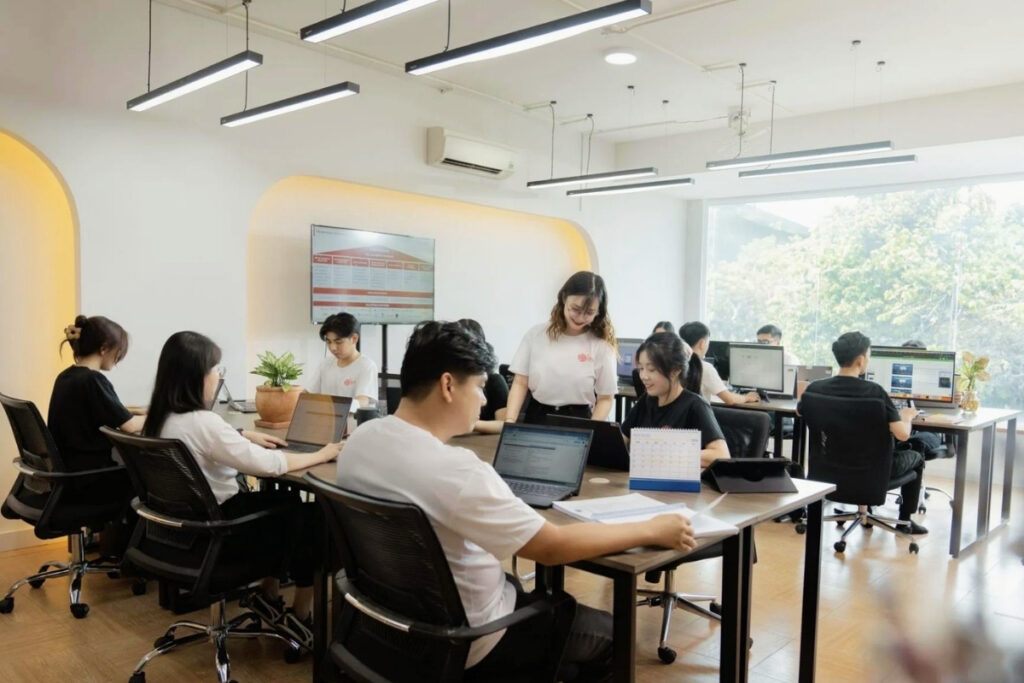
That is one of the first things foreigners should understand about Vietnamese work culture: there is no single Vietnamese workplace.
Vietnam’s rapid economic growth has brought international companies, startups, new industries and younger generations into workplaces that were once shaped by very different expectations. A multinational company in Ho Chi Minh City may operate according to global corporate practices, while a long-established Vietnamese business may place much greater emphasis on seniority, formal relationships and established routines.
Even within the same company, the experience can change from one department to another.
A young employee may be comfortable questioning a manager privately but remain quiet during a large meeting. A company may describe itself as modern while still expecting employees to show considerable respect toward senior leadership. Younger workers may place greater value on flexibility and work-life balance, while older expectations about loyalty, responsibility and hierarchy remain influential.
This is why Vietnamese work culture can sometimes seem contradictory from the outside.
The old and the new are not necessarily replacing one another.
They are often operating side by side.
For a foreigner, that distinction matters. It is easy to see one workplace and assume you have discovered how Vietnam works. But industry, company size, ownership, location, generation and even the personality of a manager can change the experience considerably.
A startup founder may have little interest in formal hierarchy. A traditional organization may rely on a much clearer chain of authority. An international school, factory, bank or family-run business may each develop its own way of working.
So rather than asking, “What are Vietnamese workplaces like?”, a more useful question is:
“What cultural patterns should I understand when I enter one?”
Some patterns appear repeatedly.
Hierarchy can influence who speaks first and who makes the final decision.
Relationships can shape how trust develops.
Harmony can influence how disagreement is expressed.
And context can sometimes matter as much as the words themselves.
These patterns do not define every Vietnamese workplace.
They simply provide a better starting point for understanding one.
And once you begin paying attention to them, ordinary moments at work can start to look very different.
2. Hierarchy Matters More Than Many Foreigners Expect
One of the first things a foreigner may notice in a Vietnamese workplace is that position and seniority can carry more social weight than they do in many American workplaces.
That does not necessarily mean employees are afraid of their managers.
It means the relationship between two people is often understood through more than their job descriptions.
Age can matter.
Seniority can matter.
Position can matter.
And Vietnamese makes these social relationships unusually visible in everyday speech.
In English, you can call almost everyone “you.”
Vietnamese does not work that way.
A speaker commonly chooses pronouns based on age, relationship and social position. Someone older may be addressed as anh, chị, cô, chú or another appropriate term, while a younger person may be referred to as em. These words do more than identify another person. They establish a relationship between the two people speaking.
That social awareness can continue into the workplace.
A foreign manager might think:
“We are all professionals. Everyone should simply speak their mind.”
A Vietnamese employee may think:
“I should know when and how to say this.”
Those two attitudes can lead to very different meetings.
In a Western workplace, disagreeing with a manager in front of colleagues may be seen as evidence of confidence, critical thinking or engagement.
In a Vietnamese workplace, the same behavior can sometimes be interpreted differently — particularly when the disagreement is delivered bluntly or publicly.
This does not mean Vietnamese employees have no opinions.
Often, they have very strong opinions.
The difference may be where and how those opinions are expressed.

A junior employee might remain quiet during a meeting and then explain the problem to a colleague afterward. They might raise the issue privately with their direct manager rather than challenge the director in front of everyone.
Research and reporting on Vietnamese workplaces repeatedly describe this relationship between hierarchy and communication. Cultural Atlas notes that Vietnamese workplaces tend to be hierarchical and that decisions can involve consultation across different levels. A VnExpress perspective similarly describes situations in which employees hesitate to voice opinions that differ from senior leaders.
For a foreigner, this can create an uncomfortable paradox.
You may ask:
“Why didn’t anyone tell me this was a bad idea?”
The answer may be:
“They tried to tell you. You just weren’t listening for it.”
That is why good managers in Vietnam often learn to create more than one channel for feedback.
Instead of asking only:
“Does everyone agree?”
they might ask:
“What problems do you see?”
Or speak privately with team members afterward.
The second approach can produce much more honest information.
Hierarchy Does Not Mean Everyone Is Formal All the Time
There is another important distinction.
Vietnamese workplaces can be hierarchical without being emotionally distant.
Colleagues may have lunch together, drink coffee, joke around or invite one another to family celebrations. A manager may be treated with considerable respect in a meeting and then join the team for karaoke that evening.
Formal and informal relationships can exist at the same time.
This is one reason foreign visitors sometimes find Vietnamese workplaces confusing.
The boss may be “the boss.”
But the boss can also become anh, chị, chú or another familiar form of address in everyday conversation.
The relationship does not necessarily become equal in the Western sense.
It becomes more personal.
And that distinction matters.
A Better Way to Read Hierarchy
If you are working in Vietnam, do not assume hierarchy means you should become excessively formal.
Instead, pay attention to who has authority, who is responsible for the decision and who needs to be consulted before the decision can move forward.
That is often more useful than trying to imitate local behavior.
Respect the structure.
Learn the appropriate forms of address.
And give people a safe way to disagree.
That last point may be the most important.
A workplace where nobody challenges the boss is not necessarily a harmonious workplace.
Sometimes it is simply a workplace where disagreement has moved somewhere you cannot see.
3. Why “Yes” Does Not Always Mean “Yes”
Few aspects of Vietnamese communication create more confusion for foreigners than the word “yes.”
Imagine a manager asking:
“Can you have this ready by Friday?”
The employee smiles.
“Yes.”
The meeting moves on.

But later, the employee mentions that the deadline may be difficult. A colleague suggests that Monday might be more realistic. Nobody seems to think the earlier conversation was contradictory.
To the foreign manager, it may be.
The important distinction is that “yes” does not always function as a firm commitment in the same way it might in a more direct communication culture.
Vietnamese communication is often described as indirect and highly dependent on context. Tone, expression, relationships and pauses can all add meaning to the words being spoken. Even the Vietnamese system of pronouns makes relationships and relative status more visible in everyday conversation.
But this does not mean that Vietnamese people routinely say “yes” when they mean “no.”
The more useful distinction is between acknowledging a request and making a firm commitment.
Someone may say “yes” because they understand what you are asking, intend to try, or do not want to reject the request abruptly. Whether the task is actually realistic may still need to be discussed.
That difference can be easy to miss.
A foreign manager hears:
“Yes. Friday.”
The employee may hear the question more like:
“Can you take this on and try to make it happen?”
Those are not quite the same agreement.
Listen for What Comes After “Yes”
The useful information may come in the sentence that follows.
“Yes, but it may be difficult.”
“Yes, I will try.”
“Yes, perhaps we can…”
These phrases should not automatically be interpreted as refusal.
But they should not automatically be treated as a firm commitment either.
This is where context becomes important.
A foreigner who is accustomed to direct workplace communication may wait for someone to say:
“No, that deadline is impossible.”
A Vietnamese colleague may expect the difficulty to be understood from a softer response.
One VnExpress account from a foreign worker in Vietnam described exactly this kind of misunderstanding: what sounded like a mild suggestion was actually intended as a much stronger instruction.
The problem is not dishonesty.
It is that two people may assign different meanings to the same level of directness.
Silence Can Carry Information Too
The same applies to silence.
A question is asked.
Nobody answers immediately.
The foreign manager feels the need to fill the gap.
Another question follows.
The room becomes even quieter.
In Vietnamese communication, a pause can be purposeful. Cultural Atlas notes that silence may indicate that someone is considering a question carefully, while in situations of tension it can also allow a conversation to settle rather than pushing directly toward confrontation.
That does not mean every silence contains a hidden objection.
Sometimes silence simply means someone is thinking.
But when silence follows a difficult question, criticism or request, it is worth giving people a little room.
Instead of:
“So, everyone agrees?”
try:
“What concerns do you have?”
Instead of:
“Can you do this?”
try:
“Is Friday realistic? If not, what date would work better?”
The second question makes disagreement easier to express.
The Simplest Way to Avoid Misunderstanding
For important decisions, confirm the details in writing.
Not because Vietnamese colleagues cannot be trusted.
Because cross-cultural communication can create ambiguity even when everyone is acting in good faith.
After a meeting, a simple message can help:
“Just to confirm, we agreed that the first draft will be ready Friday afternoon. If that timeline is difficult, please let me know.”
That sentence does something useful.
It does not accuse anyone of misunderstanding.
It simply creates another opportunity to clarify.
Good cross-cultural communication is not about forcing everyone to communicate in exactly the same way.
It is about creating enough clarity for different communication styles to work together.
4. Saving Face: Why Public Criticism Can Backfire
The meeting is almost over.
A manager notices a mistake in a report and points it out in front of everyone.
“You made the wrong decision. Why didn’t you check this first?”
The employee smiles.
“Yes. I understand.”
The conversation continues.
On the surface, nothing dramatic has happened.
But the employee becomes noticeably quieter for the rest of the meeting.
Later, they discuss the problem privately with a colleague.
For a foreign manager, the reaction can be confusing.
The employee appeared to accept the criticism.
So why did the atmosphere change?
One useful concept here is face — the social dignity, reputation and standing a person maintains within a relationship or group. Cultural Atlas identifies face as an important concept in Vietnamese interaction and notes that public criticism can threaten it.
The important point is not that Vietnamese people cannot handle criticism.
They can.
The issue is often how criticism is delivered.
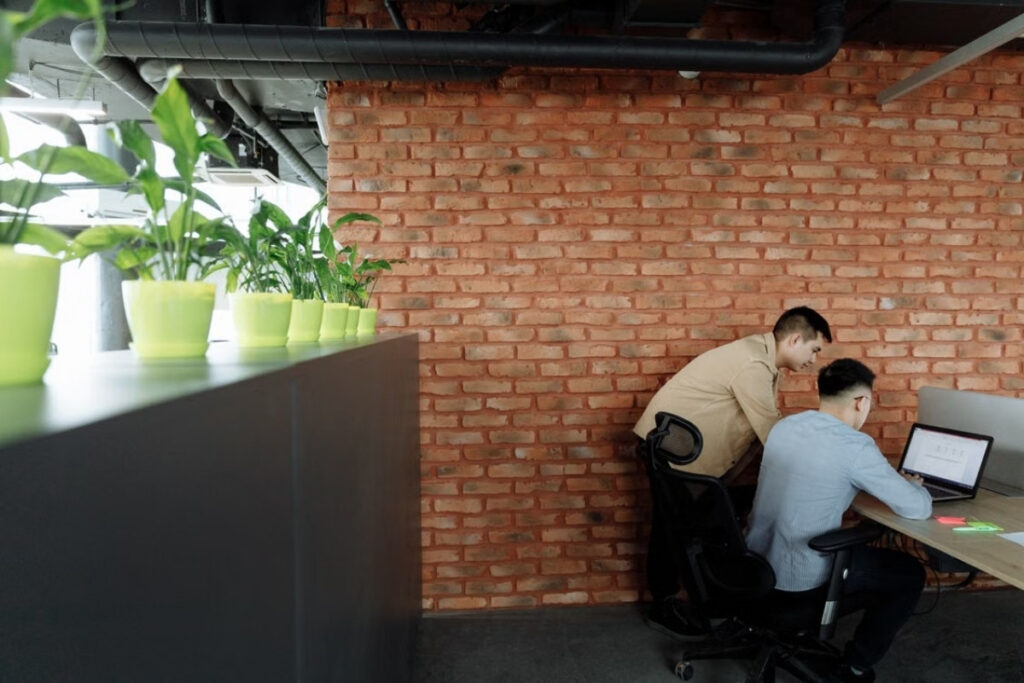
Public criticism puts two things together:
- the mistake itself
- the person’s social standing in front of others
Separating those two can make a difficult conversation much easier.
Instead of:
“You made the wrong decision.”
in front of eight colleagues, a manager might later say privately:
“Can we talk about what happened with yesterday’s report?”
The second approach does not make the problem less serious.
It simply gives the person space to deal with the problem without having to defend themselves publicly.
Direct Does Not Have to Mean Public
This is where foreign managers sometimes misunderstand the idea of saving face.
Protecting someone’s dignity does not require avoiding accountability.
You can still say:
“This needs to be corrected.”
You can still explain what went wrong.
You can still establish a clear expectation for next time.
What changes is the setting.
A private conversation can actually make it easier to be direct because the employee does not have to worry about how they appear in front of the rest of the team.
Cultural Atlas similarly recommends handling disagreement and conflict in a diplomatic and private manner.
The Same Principle Can Work in Reverse
Respect is not only about correcting mistakes.
It also appears in how you give credit.
A person who has worked hard may value public recognition because it reinforces their standing within the group. At other times, someone may prefer a quieter acknowledgment.
There is no universal formula.
The broader lesson is simpler:
In a Vietnamese workplace, the way you correct, challenge and recognize someone can matter almost as much as what you are saying.
5. Work Is Also About Relationships
The meeting has not started yet.

People are drinking coffee.
Someone asks where you are from.
Another person asks whether you have children.
Someone else mentions the traffic.
Eventually, someone opens the laptop and the conversation turns to business.
If you are used to highly transactional meetings, you might wonder when the real meeting began.
In Vietnam, it may have begun several minutes earlier.
Personal relationships can play an important role in Vietnamese business culture, and Cultural Atlas describes trust and familiarity as significant parts of professional relationships. It also recommends allowing some social conversation before moving directly into business.
The coffee is not necessarily a negotiation tactic.
The questions are not necessarily a test.
Sometimes people are simply getting to know one another.
That matters because trust often grows through familiarity.
Coffee Can Be Part of the Work
Vietnam’s coffee culture makes this particularly visible.
A short coffee can be social.
It can also be professional.
Sometimes it is both.
A conversation may wander through family, traffic, food or weekend plans before anyone mentions the actual reason for meeting.
From the outside, that can look inefficient.
But the conversation may already be doing something important.
It is establishing familiarity.
And familiarity can make later communication easier.
Lunch Can Matter Too
The same principle applies to shared meals.
A director, manager, assistant and new employee may sit together over lunch and talk about things that would never appear on a meeting agenda.
Those conversations do not necessarily produce a business decision.
They may simply make people more comfortable around one another.
That distinction matters.
Relationship-building is not automatically transactional.
It does not mean:
“I became friendly with this person so they would help me later.”
It can be much simpler:
Trust grows through time spent together.
Recent reporting on foreign workers in Vietnam has highlighted shared meals, team activities and informal interactions as parts of the workplace experience that can initially feel unfamiliar to foreigners.
You Do Not Have to Say Yes to Everything
There is a practical limit.
Foreigners do not need to attend every dinner, karaoke night, wedding or company outing to prove that they respect Vietnamese culture.
But occasionally joining colleagues for coffee or lunch can make a difference.
You are not promising lifelong friendship.
You are showing that you are willing to participate in the social side of the workplace.
And sometimes that is enough.
The goal is not to turn professional relationships into personal ones.
It is to recognize that, in Vietnam, the boundary between the two may be more flexible than you are used to.
6. The Vietnamese Workday: Early Starts, Lunch Breaks and Long Hours
At noon, an office in Vietnam can become surprisingly quiet.
The lights go out.
Computers are left where they are.
Someone pulls a pillow from a drawer.
Another employee stretches out on the floor.
For a foreigner seeing this for the first time, it can look like the entire office has suddenly closed.
It has not.
Lunch breaks in some Vietnamese workplaces include something that many foreigners are not accustomed to: sleep.
VnExpress has documented foreign workers’ surprise at colleagues taking out pillows, blankets or mattresses after lunch and resting at the office. Other foreign workers interviewed by the publication eventually came to appreciate the practice themselves.
It is one of those small details that reveals how differently a workday can be organized.
A Lunch Break Is Not Always Just Lunch
In some workplaces, the midday break is a genuine pause.
People eat.
They rest.
They talk.
Some sleep.
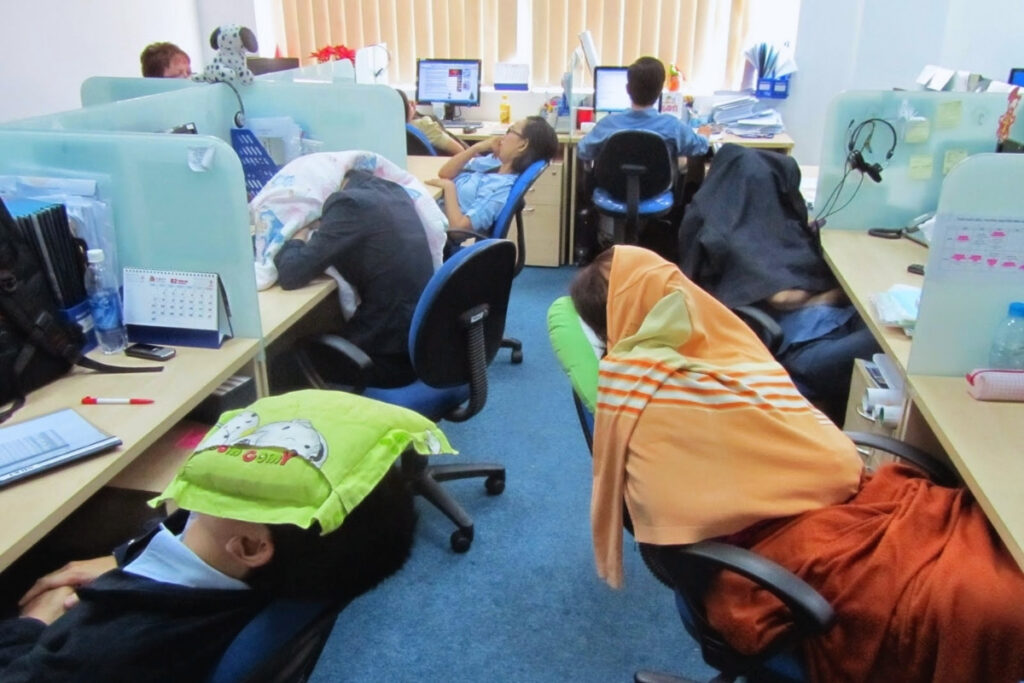
Then the office gradually comes back to life.
The practice is not unique to Vietnam, and it should not be treated as proof that Vietnamese workers are somehow less serious about work. In many cases, it is simply part of the daily rhythm.
The same is true of the broader question of working hours.
But Do Vietnamese People Really Work Long Hours?
Sometimes.
But the answer depends heavily on the workplace.
Vietnam’s Labour Code provides the legal framework for normal working time, with ordinary working hours generally capped at eight hours per day and 48 hours per week; the law also encourages a 40-hour working week. The legal standard, however, is not the same thing as the culture of every employer.
Some foreign workers report long days, after-hours messages and expectations that employees remain available beyond their formal schedule. VnExpress has documented such experiences among foreigners working in Vietnam.
At the same time, other workplaces — particularly some multinational and FDI companies — operate on five-day, 40-hour schedules. A 2026 VnExpress report on working-time expectations in Vietnam described the five-day, 40-hour week as increasingly established among many FDI companies.
So the more useful question is not:
“Do Vietnamese people work long hours?”
It is:
“What does this particular workplace expect?”
That distinction matters.
Early Starts Are Part of the Picture
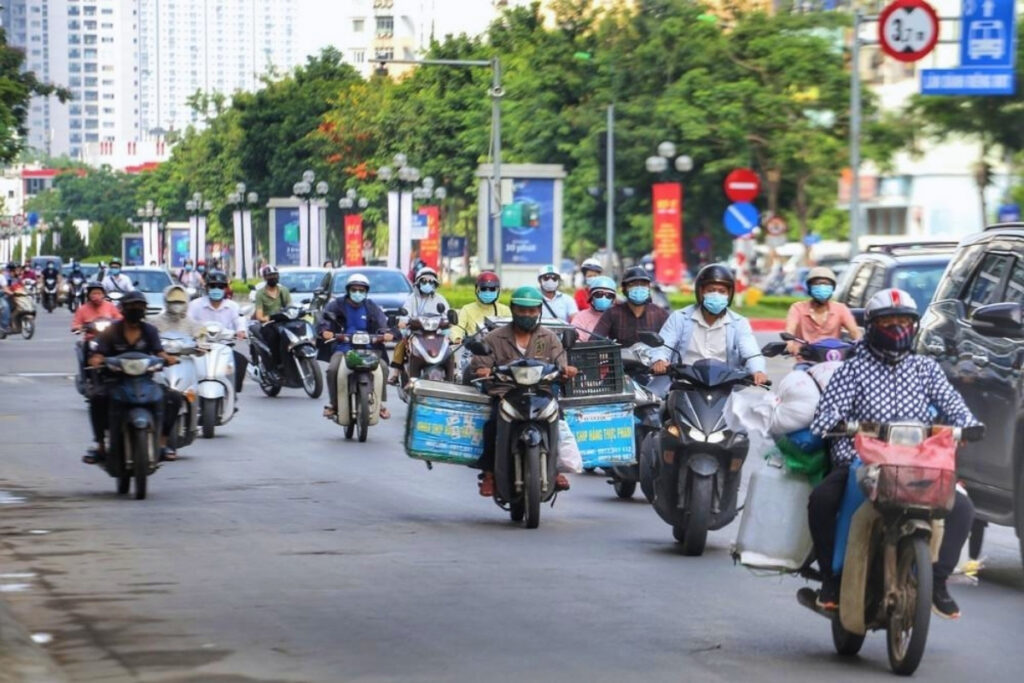
In many parts of Vietnam, daily life begins early — and some workplaces follow that rhythm.
Markets are already open.
Street food vendors are serving breakfast.
Coffee shops fill before the workday is fully underway.
Motorbikes move through residential streets while many Western cities are still quiet.
That does not mean every Vietnamese employee starts work early.
It simply means the country’s daily rhythm can feel different to someone arriving from elsewhere.
The Workday Is Changing Too
The idea of work itself is changing.
Younger Vietnamese professionals are increasingly exposed to international companies, remote collaboration and different expectations about flexibility and personal time.
That shift is already visible in attitudes toward after-hours communication. In 2026, VnExpress reported growing interest among young Vietnamese professionals in the idea of a “right to disconnect,” with a large employee survey finding that many young workers now place work-life balance ahead of promotion opportunities.
That does not mean long hours have disappeared.
It means the conversation is changing.
The traditional expectation that work should occupy as much time as necessary now exists alongside a newer question:
How much of life should work occupy?
That tension is likely to become increasingly important in Vietnamese workplaces.
7. What Foreigners Often Get Wrong About Vietnamese Work Culture
Many workplace misunderstandings begin with a simple mistake:
Someone sees a behavior.
They assign it the meaning they would assign at home.
Then they discover that the meaning was different.
Here are five situations where that can happen.

“Why Didn’t Anyone Challenge the Idea?”
The meeting ends.
Everyone nodded.
Nobody objected.
You assume everyone agreed.
But later, a colleague quietly tells you that several people had concerns.
In a hierarchical workplace, disagreement may be easier to express privately than publicly, particularly when the person proposing the idea is considerably more senior. Cultural Atlas notes the importance of hierarchy in Vietnamese business settings and describes consultation and indirect approaches to difficult issues.
The lesson is not:
“Vietnamese employees never speak up.”
It is:
You may need to create a setting where speaking up feels safe.
“Why Did Everyone Say Yes?”
Because “yes” may acknowledge what you said without functioning as a firm promise in exactly the way you expect.
Listen for what comes next.
Is there hesitation?
A qualification?
A suggestion that something may be difficult?
If the deadline or responsibility matters, clarify it.
Do not assume that a polite acknowledgment automatically equals a firm commitment.
“Why Did the Meeting Start With Small Talk?”
Because the meeting may have started before the agenda did.
Coffee.
Family.
Traffic.
Weekend plans.
A few minutes of social conversation can establish familiarity before business begins. Vietnamese business culture is often described as relationship-oriented, with trust playing an important role in professional interaction.
You do not have to turn every meeting into a social event.
But there is little value in treating every minute before the agenda as wasted time.
“Why Didn’t My Colleague Tell Me There Was a Problem?”
Perhaps they did.
Just not in the form you expected.
A pause.
A softer response.
“That may be difficult.”
“Let me check.”
“Maybe we can consider another option.”
None of these automatically means “no.”
But they may be signals that deserve a second question.
The best response is not to become an expert in hidden meanings.
It is to make clarification easier.
“Why Did the Decision Take So Long?”
Sometimes because more people need to be consulted.
Hierarchy and consultation can slow decision-making in some Vietnamese workplaces. Cultural Atlas specifically notes that consultation may contribute to lengthy negotiations and advises foreigners to remain patient.
But there is an important caveat.
Not every slow decision is cultural.
Sometimes the organization is simply slow.
Sometimes nobody has made the decision.
Sometimes the process is poorly managed.
The skill is knowing the difference.
And that leads to a broader lesson:
Cultural awareness should help you ask better questions, not give you an explanation for everything.
8. How to Work Well With Vietnamese Colleagues

You do not need to become Vietnamese to work well in Vietnam.
You need to become better at reading the environment.
A few habits can make that easier.
Learn How People Address One Another
Listen to how colleagues address each other.
Age, seniority and relationship can influence the Vietnamese terms people use for one another, making forms of address more socially significant than the simple “you” and “I” used in English.
If you are unsure, ask.
“What should I call you?”
is often better than guessing.
You do not need perfect Vietnamese on your first day.
You do need to show that you understand the relationship matters.
Respect Hierarchy Without Becoming Afraid of It
If someone is senior to you, show appropriate respect.
But hierarchy does not mean that a workplace should operate without honest feedback.
If you manage Vietnamese employees, create private opportunities for disagreement.
If you are an employee, learn who needs to be involved before an important decision can move forward.
The goal is not to eliminate hierarchy.
It is to communicate effectively within it.
Ask Questions That Make Honesty Easier
Instead of:
“Does everyone agree?”
try:
“What concerns do you have?”
Instead of:
“Can you finish this tomorrow?”
try:
“Is tomorrow realistic? If not, what would be a reasonable deadline?”
Instead of:
“Why didn’t you tell me?”
try:
“Was there anything that made it difficult to raise this earlier?”
The difference is subtle.
But the second version gives the other person more room to answer honestly without feeling that they are openly challenging you.
Give Critical Feedback Privately
If something went wrong, talk to the person directly and privately.
Be clear.
Be specific.
Do not avoid accountability simply because you want to be polite.
But separate the person’s dignity from the problem you are solving.
You can say:
“This needs to be corrected.”
without saying:
“You are incompetent.”
That distinction is useful everywhere.
It can be particularly important in a workplace where public criticism may damage trust or cause someone to lose face.
Confirm Important Decisions
When something matters, write it down.
After a meeting, confirm:
- what was decided
- who is responsible
- what the deadline is
- what remains uncertain
Then give everyone a chance to correct the summary.
This is not about assuming people are unreliable.
It is about removing ambiguity.
A short written confirmation can bridge two different communication styles more effectively than another long meeting.
Make Time for Relationships
Have coffee.
Join lunch occasionally.
Ask about someone’s weekend.
If your team invites you somewhere and you genuinely have time, consider going.
You do not have to become best friends with your colleagues.
But showing that you are willing to participate can make it easier to build familiarity and trust.
Do Not Assume Every Vietnamese Workplace Is Traditional
Your Vietnamese colleague may have studied abroad.
Your manager may have spent years working for an American company.
Your startup may operate almost entirely in English.
Your Gen Z coworkers may expect flexible hours and direct feedback.
Another workplace may operate very differently.
Vietnamese culture influences workplaces.
It does not completely determine them.
And Do Not Assume Every Difference Is Cultural
This may be the most important rule of all.
Someone misses a deadline?
They may simply have missed the deadline.
A manager communicates badly?
They may simply be a bad manager.
A company is disorganized?
It may simply be disorganized.
Not every workplace problem is a cultural phenomenon.
Cultural awareness becomes dangerous when it turns into an excuse for everything.
The better question is not:
“Why do Vietnamese people do this?”
It is:
“What might I be missing because I am interpreting this through my own cultural assumptions?”
That question leaves room for the individual person.
And that is where good cross-cultural work begins.
What Vietnamese Work Culture Can Teach You About Vietnam
For a traveler, the workplace may seem like an unlikely place to understand a country.
You might come to Vietnam for the food.
You might remember the motorbikes, the coffee shops, the limestone mountains of Ninh Binh or the narrow streets of Hanoi.
You might spend your evenings watching the city change as offices empty and restaurants fill.
But if you stay long enough, another Vietnam begins to appear.
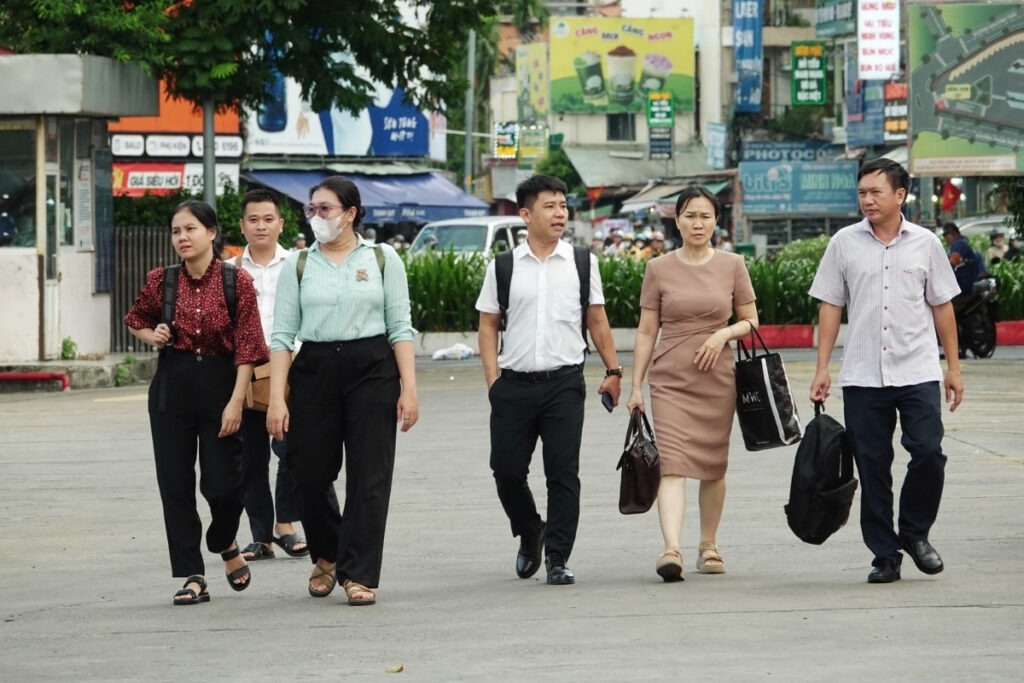
It is visible in the way a younger employee addresses an older colleague.
In the pause before someone disagrees with a manager.
In the coffee shared before a meeting begins.
In the lunch break when an entire office suddenly goes quiet.
In the invitation to dinner that seems social but is also a gesture of trust.
In the message sent after working hours.
In the decision that takes longer than expected because more people need to be consulted.
None of these things tells the whole story.
And none should be turned into a stereotype.
But together, they reveal something important about Vietnamese society: work is rarely only about work.
Relationships matter.
Context matters.
Age and status can matter.
Harmony matters.
And beneath the formal structure of an organization, people are constantly negotiating how to work with one another without damaging the relationships that make the work possible.
That system is changing.
Vietnam’s younger workers are entering a more global economy. International companies bring different management styles. Startups experiment with flatter structures. Expectations around flexibility and personal time are evolving.
But cultural change does not erase everything that came before it.
Often, the old and the new simply learn to coexist.
That may be the most useful way to understand Vietnamese work culture.
Do not expect Vietnam to reproduce the workplace you know at home.
But do not imagine that every Vietnamese office belongs to the past, either.
Look more closely.
Listen for what is said — and what is not.
Notice who speaks first, who makes the decision and who people turn to afterward.
Notice when a business conversation becomes a personal one.
And notice how often trust is built in the moments that do not appear on an agenda.
To understand how Vietnam works, sometimes you have to stop looking at the office and start looking at the relationships around it.
That is where much of Vietnamese work culture actually lives.
Frequently Asked Questions About Vietnamese Work Culture
What is Vietnamese work culture like?
Vietnamese work culture is generally hierarchical and relationship-oriented, with an emphasis on respect, harmony and communication through context. However, workplaces vary significantly by industry, company and generation.
Is Vietnamese work culture hierarchical?
Many Vietnamese workplaces place importance on age, seniority and position. However, hierarchy is becoming less formal in some startups, multinational companies and younger workplaces.
How do Vietnamese communicate at work?
Vietnamese workplace communication can be more indirect than what many Americans are accustomed to. Tone, context, relationships and silence can sometimes communicate meaning beyond the literal words.
Why do Vietnamese workers sometimes avoid saying no?
A direct refusal can create discomfort or confrontation, particularly when speaking to someone senior. Softer expressions can allow both people to maintain a respectful relationship while reconsidering a request.
Do Vietnamese people work long hours?
Working hours vary significantly by employer and industry. Vietnamese labor law establishes limits for normal working hours, while some workplaces may have overtime or longer schedules.
Is work-life balance important in Vietnam?
Work-life balance is becoming increasingly important, particularly among younger workers, although expectations vary considerably between industries, companies and generations.
What should foreigners know before working in Vietnam?
Foreigners should pay attention to hierarchy, communication style, relationships, appropriate forms of address and workplace expectations. It is also useful to confirm important decisions clearly rather than relying only on verbal agreement.
Continue Exploring Vietnam
Understanding Vietnamese work culture is one way to see how relationships, traditions, and everyday life shape modern Vietnam.
But the workplace is only one part of the picture. To understand Vietnam more fully, it helps to look beyond offices and business meetings and explore the family routines, food traditions, social habits, beliefs, and everyday rhythms that shape life across the country.
If you want to explore Vietnam beyond famous destinations and tourist attractions, discover more Vietnam Insights from Tam Voc Viet — stories about everyday life, local perspectives, food culture, traditions, and the details that can be easy to miss on a first visit.
Recommended next reads:
- Vietnamese Culture — Explore the traditions, values, beliefs, and everyday customs that shape Vietnamese culture.
- Vietnamese Family Culture — Understand how family relationships, respect, responsibility, and tradition influence everyday Vietnamese life.
- The Story Behind Vietnam’s Street Food Culture — Discover the history, regional influences, family traditions, and everyday habits behind Vietnam’s street food culture.
- Why Do Vietnamese Families Eat Together? — Understand how meals connect family life, traditions, and relationships.
- Why Do Vietnamese Wake Up So Early? — Explore the morning habits and everyday rhythms that shape life in Vietnam.
- 15 Things That Surprise First-Time Visitors to Vietnam — Discover some of the everyday details that may feel unexpected when you first arrive.
- Common Culture Shocks in Vietnam — A practical look at cultural differences travelers may notice in Vietnam.
- Living in Vietnam: The Complete Guide for Foreigners — Explore the practical and cultural side of living in Vietnam.
Together, these Vietnam Insights offer a closer look at the relationships, routines, traditions, and cultural patterns that shape everyday life in Vietnam.
A Note for Foreigners Working in Vietnam
If you are preparing to work in Vietnam, one of the most useful things you can bring with you is not a list of rules.
It is curiosity.
Vietnamese workplaces can feel unfamiliar at first. A colleague may communicate more indirectly than you expect. A meeting may involve more attention to hierarchy than you are used to. A coffee break may become an important part of building a professional relationship. And a quiet response may sometimes carry more meaning than the words themselves.
Try not to judge these differences too quickly.
Instead, observe how people interact.
Notice how colleagues address one another. Pay attention to who speaks first in a meeting and who makes the final decision. Listen carefully when someone says that something may be “difficult.” Notice how disagreements are handled and where important conversations happen.
And remember that Vietnamese work culture is not the same everywhere.
A multinational company in Ho Chi Minh City may operate very differently from a traditional Vietnamese business. A technology startup may have a flatter structure than an established organization. Younger employees may have very different expectations about communication, flexibility, and work-life balance from older generations.
The goal is not to imitate every local custom.
It is to understand the context behind it.
Be respectful.
Ask when you are unsure.
Confirm important decisions clearly.
Give people room to disagree.
Build relationships instead of treating every interaction as purely transactional.
And allow yourself time to understand the workplace before deciding what a particular behavior means.
The longer you spend in Vietnam, the more these small details begin to connect.
A meeting is no longer just a meeting.
A coffee is not always just coffee.
A lunch break can reveal something about the rhythm of daily life.
And a conversation that seems unrelated to business may be the beginning of professional trust.
You are not just learning how Vietnam works. You are learning how people in Vietnam work with one another.
Sources & Further Reading
- Vietnam Labour Code 2019 — Primary legal framework for employment conditions, working time, rest periods, and related workplace regulations in Vietnam.
- International Labour Organization — Labour Code 2019: Working Hours and Rest Periods — Reference for Vietnam’s legal framework governing working hours, overtime, and rest periods.
- Cultural Atlas — Vietnamese Culture: Communication — Context for Vietnamese communication styles, indirect communication, silence, and non-verbal cues.
- Cultural Atlas — Vietnamese Culture: Business Culture — Background on Vietnamese workplace hierarchy, relationships, communication, meetings, negotiation, and business etiquette.
- VnExpress International — Foreigners Find World of Difference in Vietnam Office Culture — First-hand perspectives from foreign workers about hierarchy, working hours, communication, relationships, and workplace routines in Vietnam.
- VnExpress International — Vietnam’s Siesta Culture Eye-Opening for Foreigners — Background on midday rest and the distinctive rhythm of lunch breaks in Vietnamese workplaces.
Editorial note:
Vietnamese work culture can vary significantly by region, generation, industry, company, and individual workplace. This article therefore avoids presenting any single workplace practice as universal across Vietnam.
Sources are provided to support factual and contextual claims. Cultural interpretation, observations about everyday workplace behavior, and comparisons with Western working environments represent the editorial perspective of Tam Voc Viet.
Working hours, employment regulations, company policies, and workplace practices can also vary and change over time. Readers should consult current official regulations, their employer, or qualified professional advice when making specific employment decisions.
About the Author
Tam Voc Viet Editorial Team
The Tam Voc Viet Editorial Team creates travel and cultural guides for international readers who want to understand Vietnam beyond its most famous destinations.
Our content explores Vietnam through its history, culture, food, traditions, people, and everyday life, with a particular focus on the context that helps international travelers and foreigners experience the country more thoughtfully.
For cultural and travel topics, Tam Voc Viet draws on official Vietnamese sources, established cultural institutions, research materials, and relevant travel resources where appropriate.
When discussing cultural or historical claims, we aim to distinguish documented information from interpretation. When describing everyday experiences, we use contextual examples rather than treating them as universal rules.
We also recognize that Vietnamese culture is not static. Vietnam’s workplaces, family structures, communication styles, and social expectations continue to evolve as younger generations, international businesses, technology, and changing lifestyles reshape everyday life.
Our goal is not to present one fixed version of Vietnamese culture.
It is to help readers understand the patterns, differences, and context behind life in Vietnam.
Article Information
Category: Vietnam Insights
Topic: Vietnamese Work Culture
Published: August 2026
Last Updated: August 2026
Author: Tam Voc Viet Editorial Team
