


 Tiếng Việt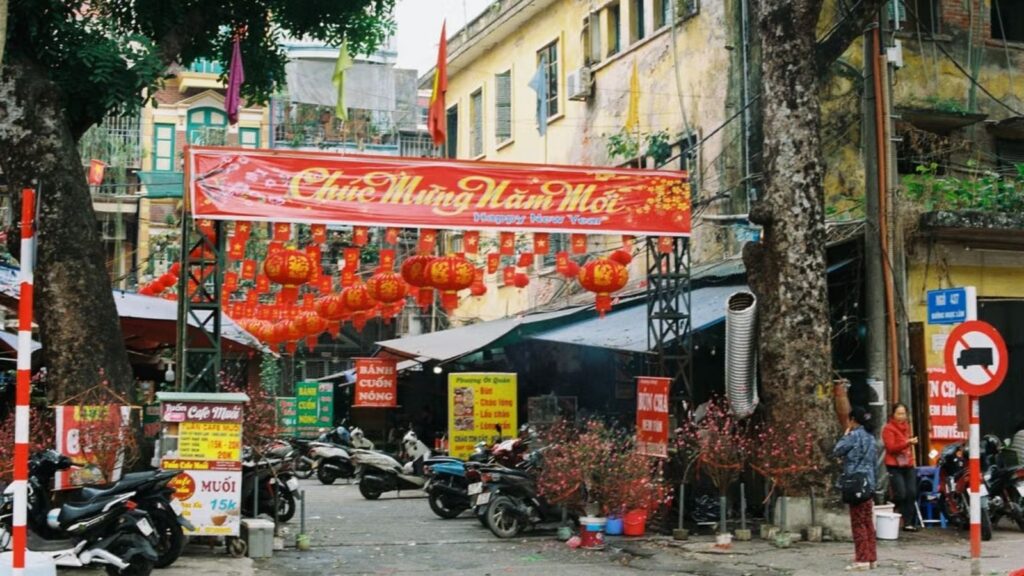
You notice it before anyone explains it.
A week before Tet, Vietnam seems to speed up.
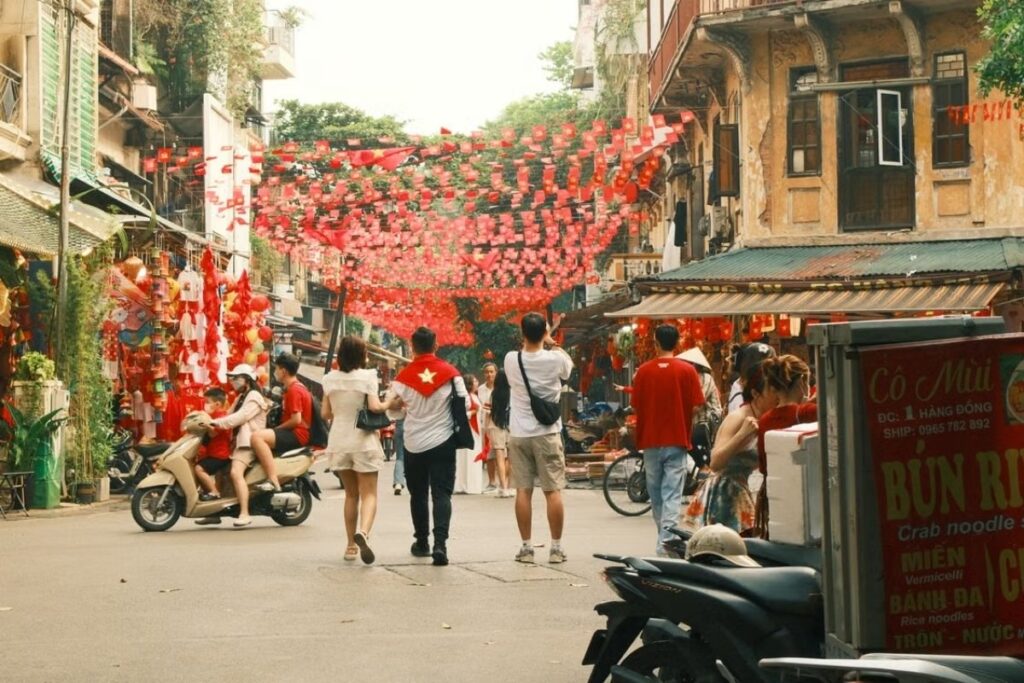
Flower sellers fill streets that looked completely ordinary a few days earlier. Motorbikes carry enormous peach branches, kumquat trees, boxes of gifts, and bags of food. Markets become crowded. Families rush to finish their shopping. Long-distance buses, trains, and airports fill with people heading home.
Then Tet arrives.
And the same country can suddenly feel almost quiet.
A neighborhood restaurant may close its doors. The street vendor who normally serves breakfast is gone. Traffic becomes lighter in some parts of the city. Families disappear behind their gates, gathering around meals, ancestral altars, and relatives they may not see often during the year.
For a traveler, the contrast can be startling.
This is Tet in Vietnam: not simply a festival to watch, but a few days when the country’s normal rhythm changes.
Tet, or Tet Nguyen Dan, is Vietnam’s Lunar New Year and its most important traditional celebration. Families prepare for it weeks in advance, clean their homes, buy flowers and new clothes, prepare special foods, honor ancestors, and make plans to reunite. The first days of the new year are traditionally associated with family visits, lucky money, New Year’s greetings, and hopes for health, prosperity, and good fortune.
For visitors, that creates a fascinating trade-off.
Tet Nguyen Dan can give you one of the most memorable cultural experiences in Vietnam. It can also be one of the least convenient times to travel.
Understanding both sides is what makes the experience meaningful.
Table of Contents
1. What Is Tet in Vietnam Really Like?
The easiest way to understand Tet in Vietnam is to see it as a holiday centered on family, renewal, and the start of a new year.
Tet Nguyen Dan is Vietnam’s Lunar New Year and its most important traditional celebration. The date changes each year because Tet follows the lunar calendar, usually falling in late January or February. The official public holiday period varies by year, while preparations and celebrations often extend beyond the official days off.
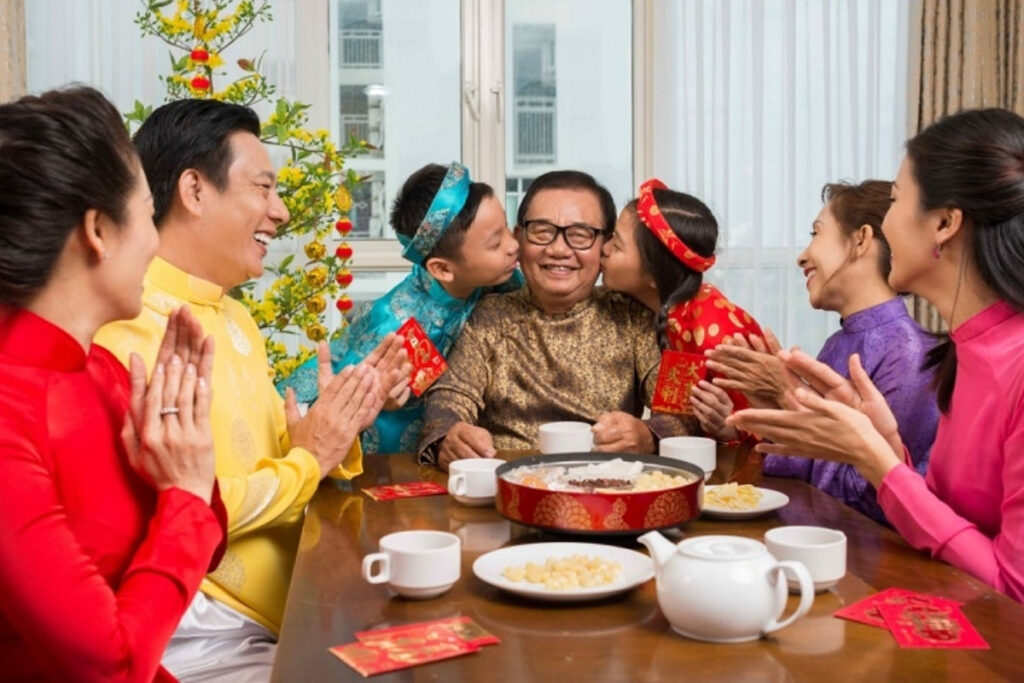
For many Vietnamese families, Tet is the time of year when being together matters most. People may travel from large cities back to their hometowns, return from overseas, or simply make more time for relatives they rarely see during the rest of the year. Vietnam Tourism describes family reunion and honoring ancestors as central parts of the holiday.
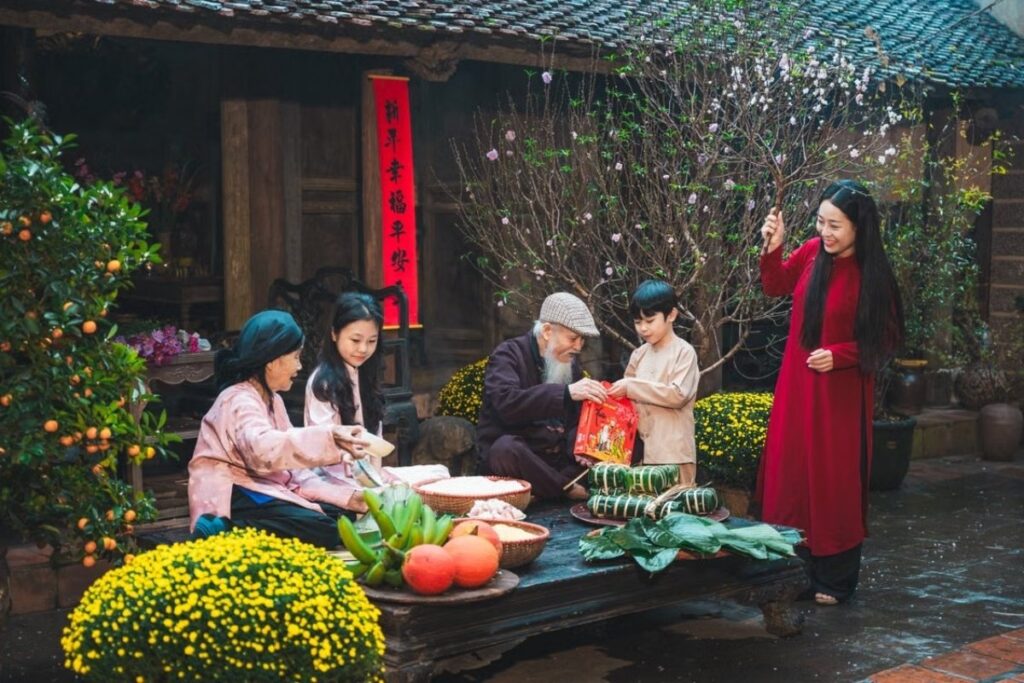
The preparations are equally important. Families clean and decorate their homes, buy flowers, prepare traditional foods, and get ready to welcome the new year. Peach blossoms and kumquat trees are particularly associated with Tet in northern Vietnam, while yellow mai blossoms are strongly associated with southern celebrations.
Tet also carries a strong idea of renewal. The beginning of the new year is traditionally treated as a time for positive wishes, respectful behavior, family gatherings, and hopes for health and prosperity.
But modern Vietnamese families do not all celebrate in exactly the same way.
Some traditions remain deeply important. Others have adapted to urban life, smaller households, changing work patterns, and new technology. A family might prepare a traditional meal while buying some of it from a supermarket. Younger relatives may send lucky money digitally rather than only through red envelopes.
The details vary.
The underlying idea is easier to recognize: Tet creates a reason to pause ordinary life and make room for family, memory, and a new beginning.
That is what travelers should understand before thinking about Tet as simply another Vietnamese festival.
Much of the celebration happens away from public events, inside homes and among relatives. What visitors see in the streets — flowers, decorations, markets, and public celebrations — is only one part of a much larger holiday.
2. Before Tet Nguyen Dan, Vietnam Changes First
If you want to understand Tet in Vietnam, do not wait until New Year’s Day.
The most revealing part may begin a week or two earlier.
Preparation starts gradually.
Homes are cleaned. Decorations appear. People buy new clothes, shop for food, choose flowers, prepare gifts, and finish tasks before the holiday. Streets and markets begin to reflect the approaching celebration.
Then the transformation becomes difficult to miss.
Flower markets become part of the landscape.
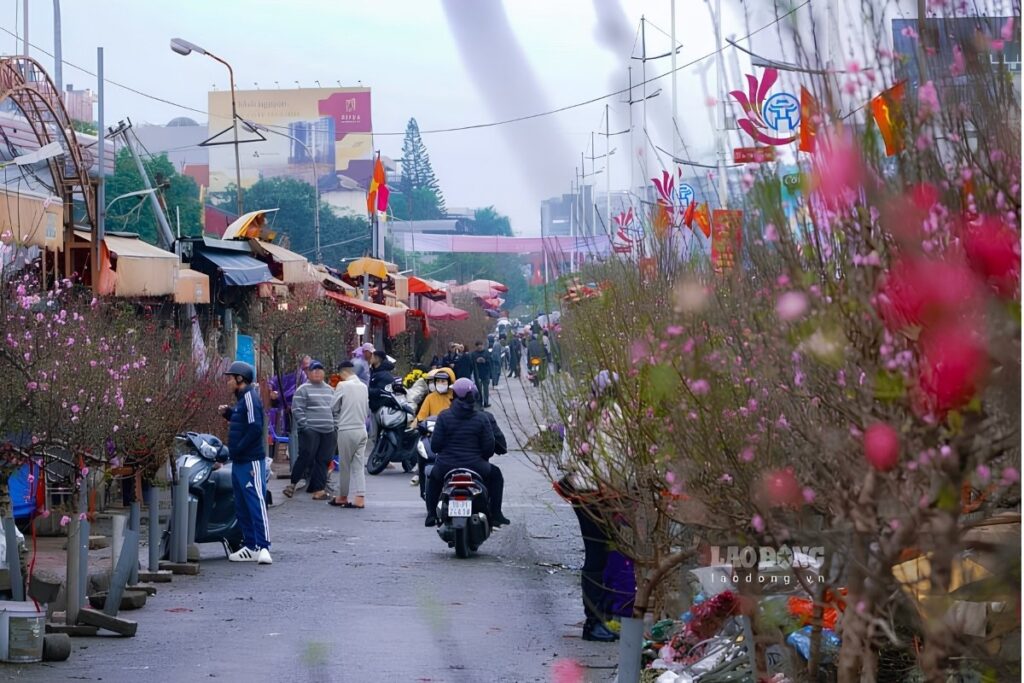
In northern Vietnam, peach blossoms are strongly associated with Tet. In southern Vietnam, yellow mai blossoms are particularly recognizable. Kumquat trees, covered with small orange fruits, are also popular.
The colors are hard to miss: pink peach blossoms, yellow mai flowers, red decorations, and bright orange kumquat trees.
But the flowers are not simply there to create a festive atmosphere for visitors.
People are buying them for their homes.
A family may spend time choosing a particular branch or tree. A motorbike may carry an oversized flower arrangement through traffic. A street that normally sells something completely different may temporarily become a flower market.
This is one of the first clues that Tet is not primarily a tourist event.
The country is preparing for itself.
The holiday is entering people’s homes before it enters the public calendar.
3. The Rush to Get Home
If Tet is centered on being together, the days before it create one of the biggest annual movements of people in Vietnam.
In the weeks leading up to Tet, travelers heading home can put significant pressure on the country’s transportation network. Flights, trains, and long-distance buses become much more heavily demanded, while roads leading out of major cities can become crowded. Vietnam Tourism specifically advises travelers to book transportation and accommodation well in advance if their plans overlap with Tet.
For visitors, the important thing is understanding when the pressure is greatest.
The busiest period is generally the run-up to Tet, when people are leaving cities such as Hanoi and Ho Chi Minh City for their hometowns. After the holiday, the movement gradually reverses as people return to work and school.
That can make an otherwise simple itinerary surprisingly difficult.
A domestic flight may sell out earlier than expected. A train journey that normally requires little planning may need to be booked well ahead. A long-distance bus can take longer because of traffic.
If you are traveling around this period, plan your essential journeys first.
Book important flights, trains, and buses early.
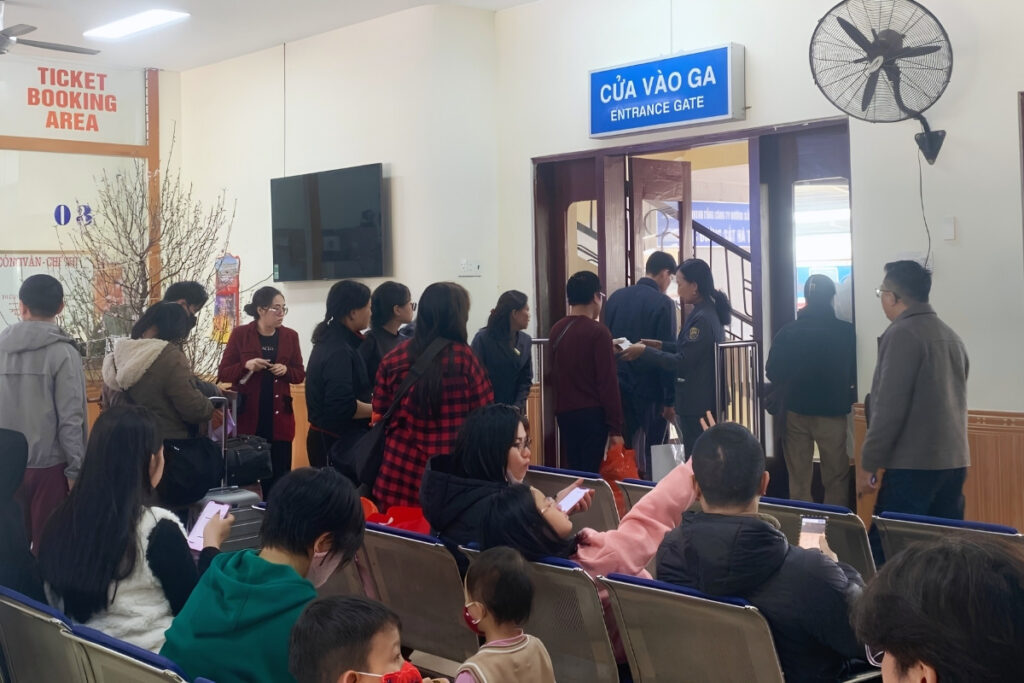
Avoid leaving a long-distance journey until the last minute, especially if it falls in the days immediately before Tet. If your itinerary is flexible, consider staying in one destination rather than moving between several cities during the busiest travel days.
There is also a useful distinction for travelers:
The pre-Tet rush is not the same as Tet itself.
Before the holiday, Vietnam can feel exceptionally busy because people are moving.
Once families have reached their destinations, the rhythm changes.
That contrast is one of the defining features of traveling during Tet.
For visitors, the practical lesson is simple: if you want to experience Tet without spending the holiday dealing with transportation problems, get where you need to be before the main rush begins.
4. What Tet in Vietnam Changes for Travelers
This is the section every traveler should understand before deciding whether to visit Vietnam during Tet.
The holiday does not mean that Vietnam completely shuts down.
But it can change the practical experience of traveling.
Transportation
The biggest pressure often comes before Tet, when people are heading home.
If your itinerary requires domestic flights, trains, or long-distance buses around this period, book early and leave room for delays or changes.
The closer you get to the holiday, the less sensible it is to assume that you can arrange everything at the last minute.
If possible, avoid building an itinerary that requires several long-distance moves during the busiest pre-Tet period.
A slower trip can be much easier.
Restaurants
Many independent restaurants are family-run businesses.
During Tet, the owners and employees may want to go home too.
That means a restaurant that normally opens every day may close for several days.
Some hotels and businesses in major tourist areas continue operating, but availability should never be assumed.
If you have a favorite restaurant you absolutely want to visit, check its holiday schedule.
And keep a backup option.
Shopping
Small local stores may close.
Neighborhood businesses may take a holiday.
Large commercial centers and tourist-oriented businesses are more likely to maintain some services, but opening hours can still change.
Before the holiday begins, stock up on essentials such as medicine, toiletries, snacks, drinks, cash, and other basic travel supplies.
Attractions
Not every attraction follows its normal schedule during Tet.
Public spaces may remain accessible, and major cities often have seasonal decorations or public celebrations, but individual attractions can have holiday hours.
Check current information before you go.
Daily necessities
This is an easy detail to overlook.
A traveler may have a hotel room but need breakfast.
Or medicine.
Or bottled water.
Or a convenience store.
Or laundry.
Or a particular service.
During an ordinary week, these things are easy to find.
During Tet, some may require more planning.
That does not mean you should avoid Vietnam during Tet.
It means you should travel differently.
Build flexibility into the trip instead of fighting the holiday’s rhythm.
Tet Travel Reality at a Glance
| If you’re traveling during Tet | What to expect |
|---|---|
| Flights & trains | Book early; demand rises before Tet |
| Restaurants | Many family-run places close |
| Local shops | Reduced opening or temporary closures |
| Tourist areas | Some services remain available |
| Cash | Carry enough for several days |
| Itinerary | Leave extra flexibility |
| Intercity travel | Avoid unnecessary moves during peak days |
5. Then Tet Arrives — And Vietnam Gets Quiet
Then Tet arrives, and the physical rhythm of many Vietnamese cities changes.
The difference can be surprisingly noticeable.
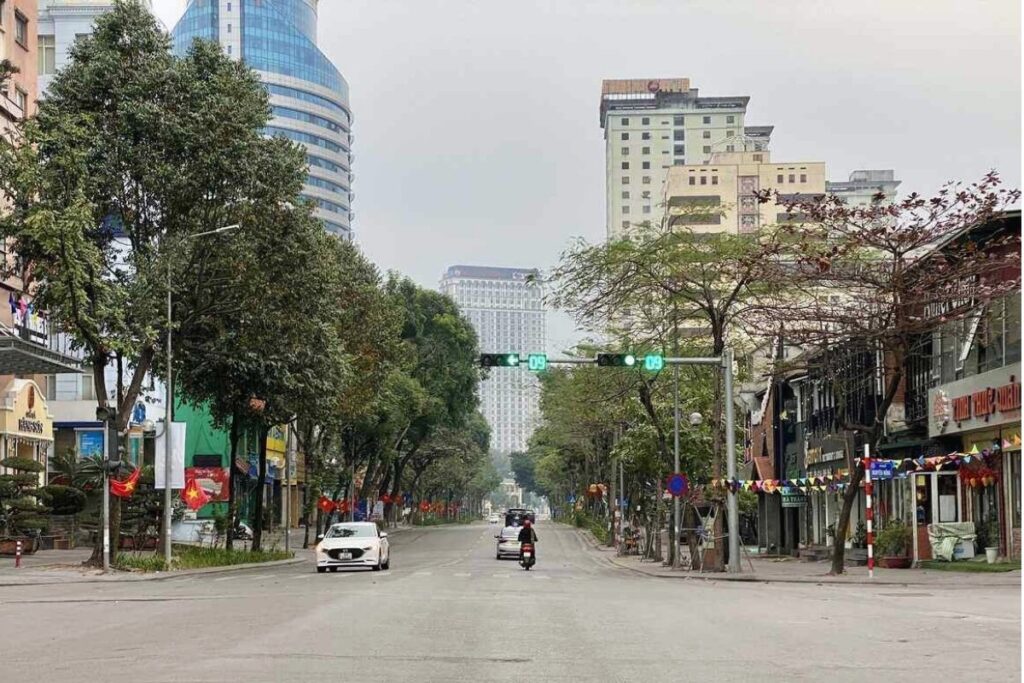
Neighborhood restaurants may close. Family-run shops may take several days off. Street vendors disappear from their usual corners. Traffic can become lighter in residential areas, particularly when large numbers of residents have already left the city for the holiday.
Vietnam Tourism notes that businesses and restaurants commonly close during the first days of Tet, leaving major cities quieter and reducing the usual choice of dining and shopping options.
The contrast is especially interesting because it comes immediately after the intense preparation period.
Before Tet, markets are crowded and transportation is under pressure.
During Tet, some of those same places become noticeably calmer.
This does not mean that Vietnam stops celebrating.
Public spaces in major cities can still be decorated and busy, and organized celebrations may take place. But much of the holiday activity has moved into homes and family gatherings rather than ordinary commercial routines.
For a traveler, the change is practical as well as visual.
A restaurant that was open the previous day may be closed. A neighborhood store may not reopen until after the holiday. An attraction or service may operate on a different schedule.
The safest approach is to check important opening hours and avoid assuming that a normal weekday routine will continue.
Once you understand that, the quieter streets become easier to appreciate.
You are not looking at a city that has stopped functioning.
You are looking at a city whose normal commercial rhythm has temporarily slowed.
6. Why a Closed Restaurant Tells You Something About Vietnam
A closed restaurant is one of the first things that can confuse a traveler during Tet.
You may have eaten there yesterday.
Today, the chairs are stacked, the kitchen is dark, and a small sign says the restaurant will reopen after the holiday.
From a traveler’s perspective, it is inconvenient.
But there is another question worth asking:
Who gets to go home because this restaurant is closed?
The answer may be the owner, the cook, the servers, or several members of the same family.
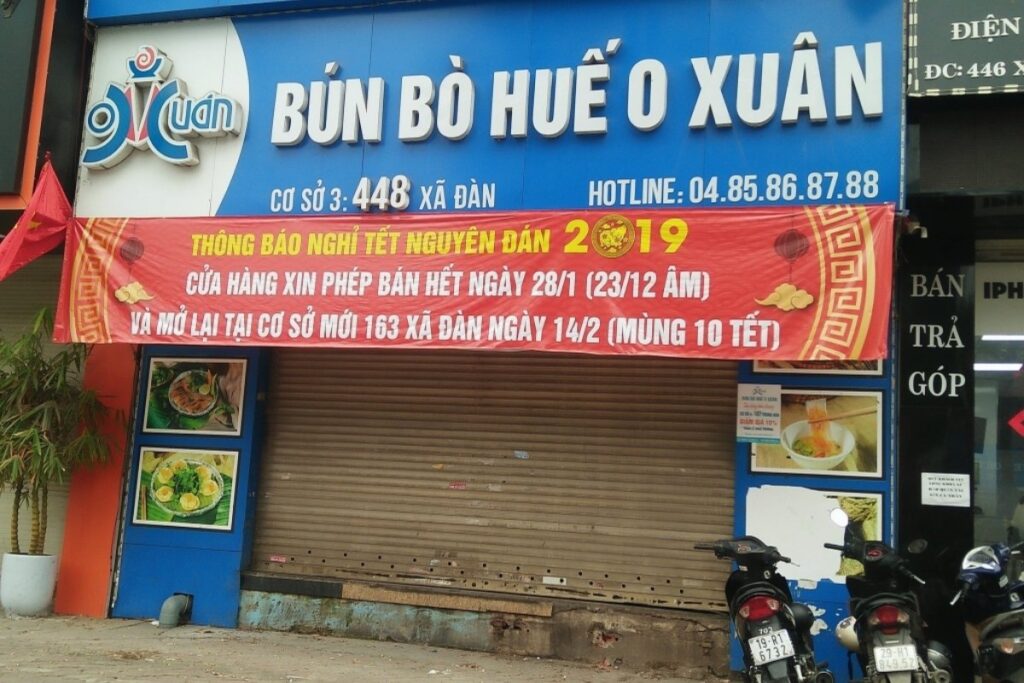
Many small businesses in Vietnam are closely connected to family life. When Tet arrives, taking several days away from work can create time for relatives to reunite, prepare meals, visit elders, and celebrate together.
Vietnam Tourism specifically notes that many businesses and restaurants close during the first days of Tet because staff return home to their families.
Of course, this does not apply to every business.
Hotels, larger restaurants, convenience stores, and businesses serving travelers may remain open. Opening practices also vary between cities and individual owners.
But the temporary closure of a neighborhood restaurant reveals something that is easy to miss during an ordinary trip.
The people running the business are not only service workers.
They are also someone’s children, parents, siblings, or grandparents.
During most of the year, their work is part of the background of urban life. During Tet, stepping away from that work makes their family lives more visible.
That is why a closed restaurant can become more than a travel inconvenience.
It is a small reminder that Vietnam does not stop being a place where people work — but for a few days, work is not necessarily the priority.
The customer can wait. The holiday cannot.
And that is one of the clearest ways Tet changes the relationship between everyday commerce and family life.
7. Tet Food Is About Family and Memory
Food is one of the clearest ways Tet connects generations.
The best-known examples are banh chung and banh tet, two sticky rice cakes made with glutinous rice and traditionally filled with ingredients such as mung bean and pork. Banh chung is square, while banh tet is cylindrical, and their popularity varies by region.
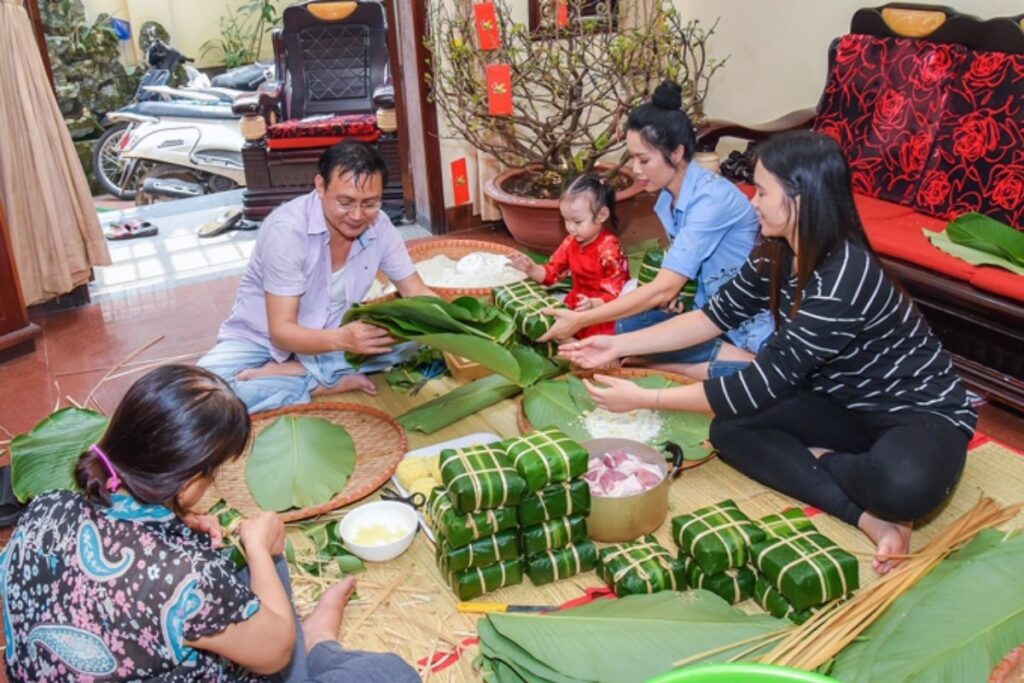
But Tet food is much broader than two famous cakes.
Northern meals can include banh chung, fried spring rolls, and boiled chicken. Southern meals may include thit kho hot vit, bitter melon soup, and other regional dishes. Pickled vegetables such as cu kieu can provide a sharp contrast to richer holiday foods.
The dishes also carry family memories.
A recipe may be prepared the same way every year. A particular dish may remind someone of childhood or of relatives who are no longer there. Younger family members may learn the preparation by watching older relatives rather than following a written recipe.
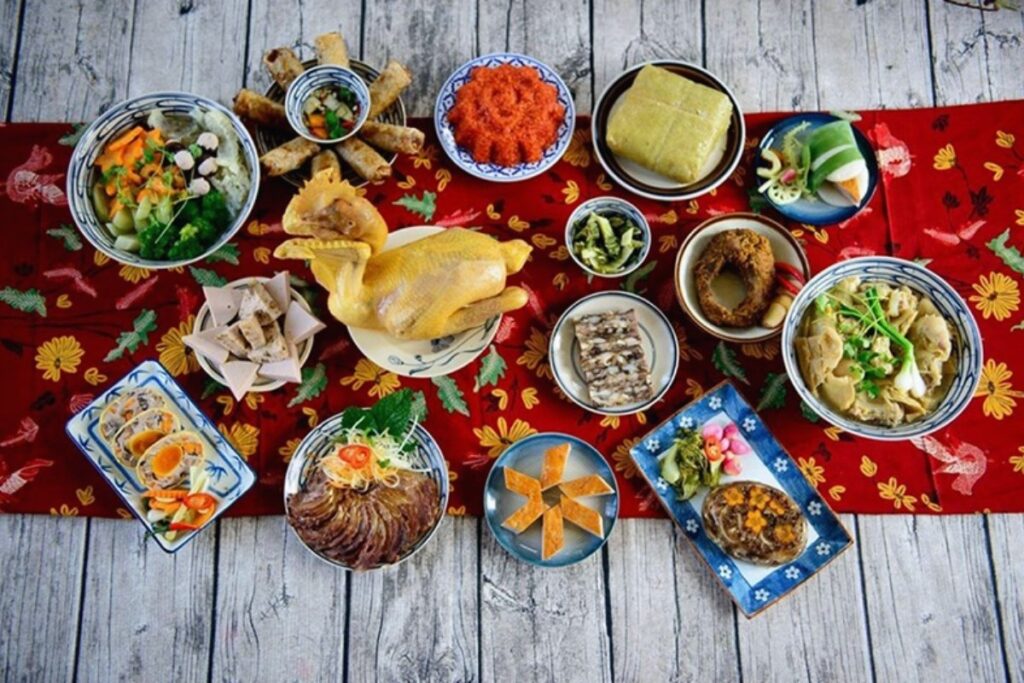
That is why Tet food is better understood as part of family life than simply as seasonal cuisine.
The menu changes from region to region and family to family.
What remains consistent is the role of food in bringing people to the same table.
8. Ancestors, Lucky Money & New-Year Rituals
Tet looks forward to a new year, but many of its traditions also connect families with previous generations.
The exact customs vary between households, but several practices are widely associated with the holiday.
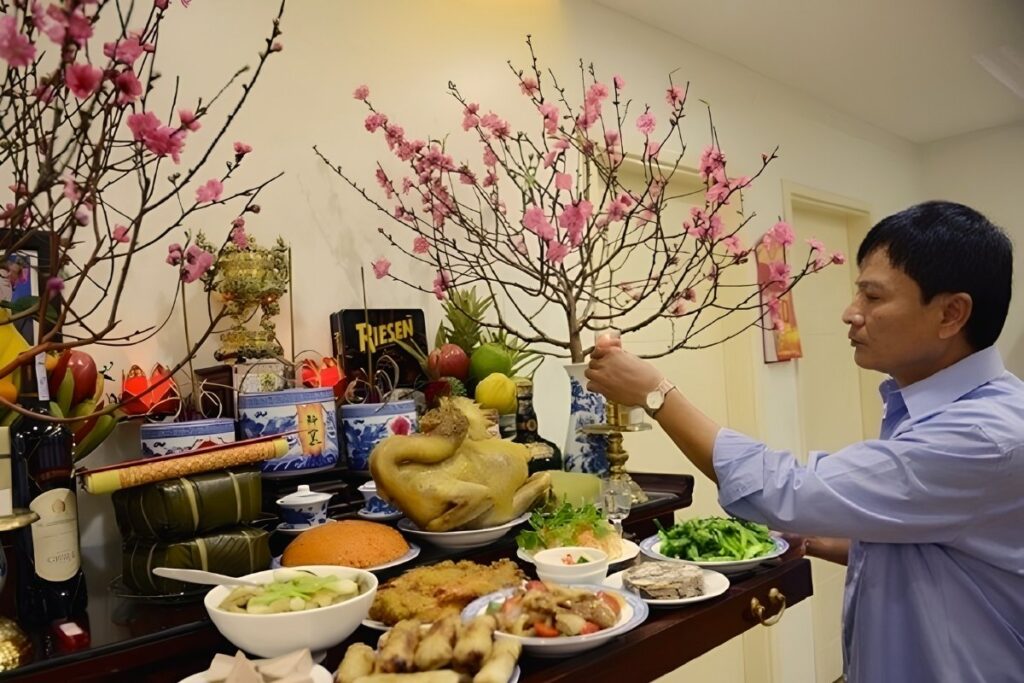
Ancestor remembrance
Honoring ancestors is an important part of Tet for many Vietnamese families. Homes may prepare offerings at an ancestral altar, while some families also visit the graves of deceased relatives as part of their New Year preparations. Vietnam Tourism identifies ancestor veneration as one of the central traditions associated with Tet.
This gives the holiday a sense of continuity.
The new year is not only about what comes next. It is also a time to remember the people and family history that came before.
Li xi: lucky money
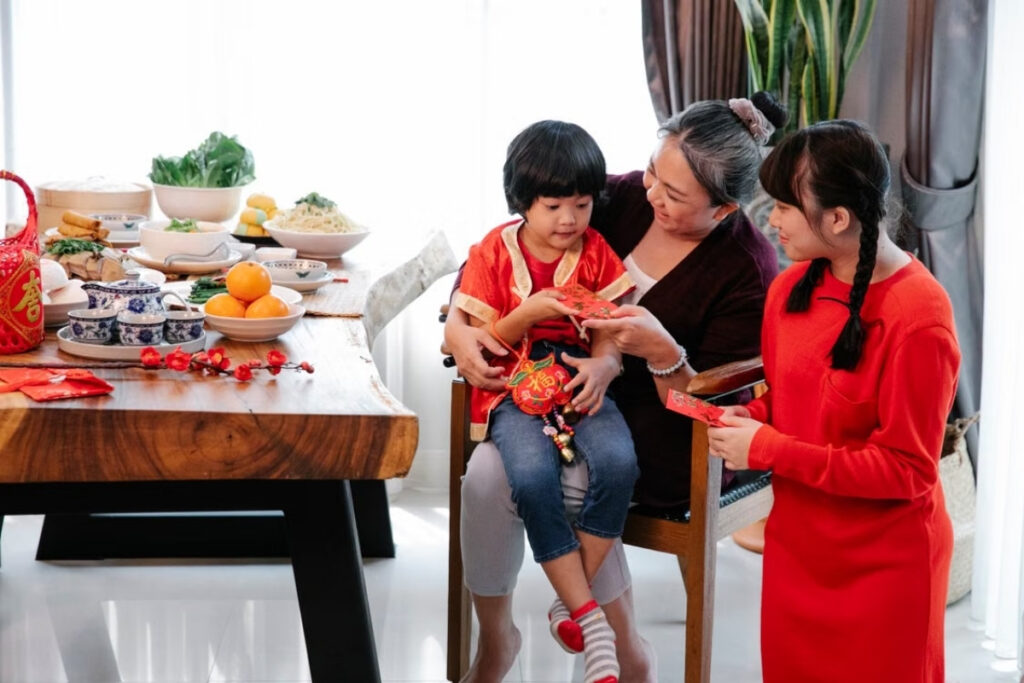
Red envelopes containing lucky money are one of the most recognizable Tet customs.
Traditionally, adults give li xi to children and younger family members as a gesture of good wishes for the new year. In Vietnamese usage, the practice is also known as mung tuoi in northern Vietnam.
The amount of money is not the central point.
The gesture carries wishes for health, happiness, prosperity, and good fortune.
The tradition is also evolving. Some families now use digital transfers alongside physical envelopes, particularly among younger generations.
Xong dat: the first visitor
Another traditional belief concerns the first person to enter a home at the beginning of the new year.
Known as xong dat or xong nha, the practice reflects the belief that the first visitor can influence the household’s luck in the year ahead. Vietnam Tourism notes that this tradition is one reason visitors should not simply arrive unannounced at a Vietnamese home during the first days of Tet.
Not every modern family follows the practice strictly.
But it helps explain why the first days of Tet can carry a different social atmosphere from an ordinary holiday.
New Year greetings
A simple “Chuc Mung Nam Moi” — Happy New Year — is an easy and respectful greeting for visitors to learn.
Warm New Year wishes are particularly appropriate during Tet, with greetings commonly expressing hopes for health, happiness, prosperity, and good fortune.
9. Tet Looks Different Across Vietnam
Tet is celebrated throughout Vietnam, but the details are not identical from one region to another.
Climate, local food traditions, family customs, and regional history all influence what people eat, decorate with, and do during the holiday.
Northern Vietnam
In northern Vietnam, peach blossoms are among the most recognizable Tet decorations. Banh chung is also strongly associated with northern Tet meals.
In Hanoi, the days before Tet can be particularly atmospheric. Flower markets such as Quang Ba become seasonal destinations, with people choosing peach branches and other plants for their homes. Vietnam Tourism also highlights Tet Eve in the Old Quarter as a distinctive experience, with family and religious offerings appearing in the streets and homes around the historic center.
Central Vietnam
Central Vietnamese Tet traditions have their own regional character, including distinctive dishes and family practices.
Rather than treating central Vietnam as a simple midpoint between northern and southern customs, it is better to see it as another regional expression of Tet. Food, household traditions, and local celebrations can vary from one province and family to another.
For travelers, this means that a Tet meal in Hue, Da Nang, or another central destination does not necessarily look like the meal you might encounter in Hanoi or Ho Chi Minh City.
Southern Vietnam
Southern Tet has its own visual and culinary identity.
Yellow mai blossoms are strongly associated with the region, while dishes such as thit kho hot vit — braised pork with duck eggs — are closely associated with Southern Tet meals. Pickled vegetables such as cu kieu are also commonly served alongside richer holiday foods.
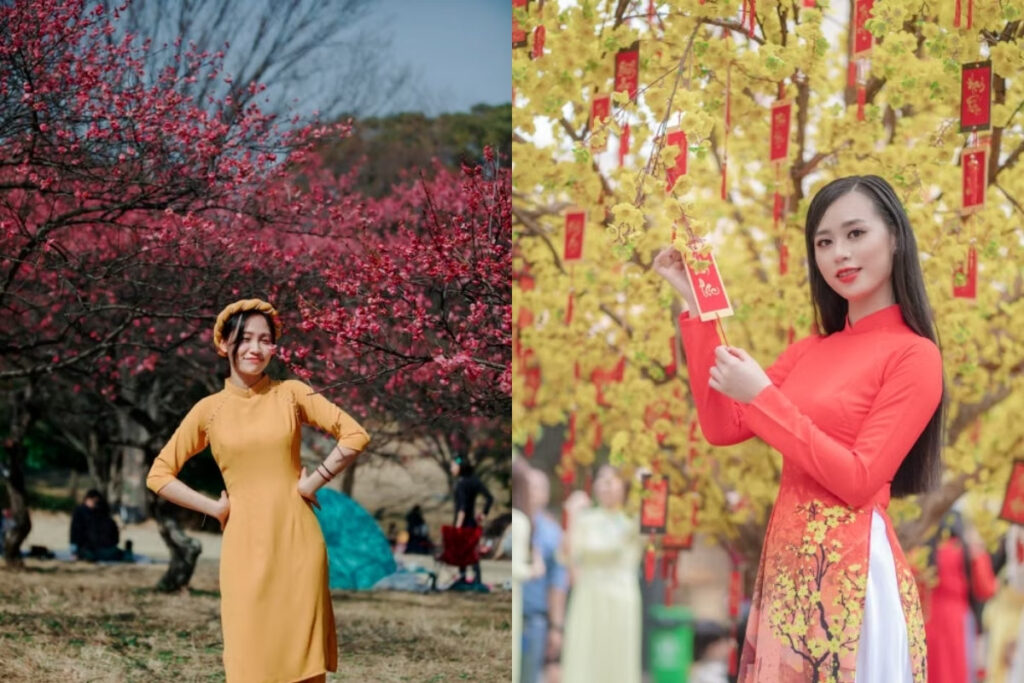
In Ho Chi Minh City, Nguyen Hue Street is particularly associated with large public flower displays during Tet, creating a much more urban and highly staged seasonal experience than a quiet residential neighborhood might offer.
The important point for travelers is not to search for one “correct” version of Tet.
There are many Vietnamese Tets.
The holiday connects the country, but regional food, flowers, family habits, and public celebrations give each place its own character.
10. Tet in Hanoi
Hanoi can be one of the most revealing places to experience Tet because the city shows both sides of the holiday particularly clearly: the intense preparation beforehand and the slower rhythm that follows.
In the week before Tet, flower markets become part of everyday city life. At Quang Ba Flower Market near West Lake, shoppers traditionally come looking for peach branches and other flowers to take home. Vietnam Tourism describes the market as a memorable pre-Tet experience.
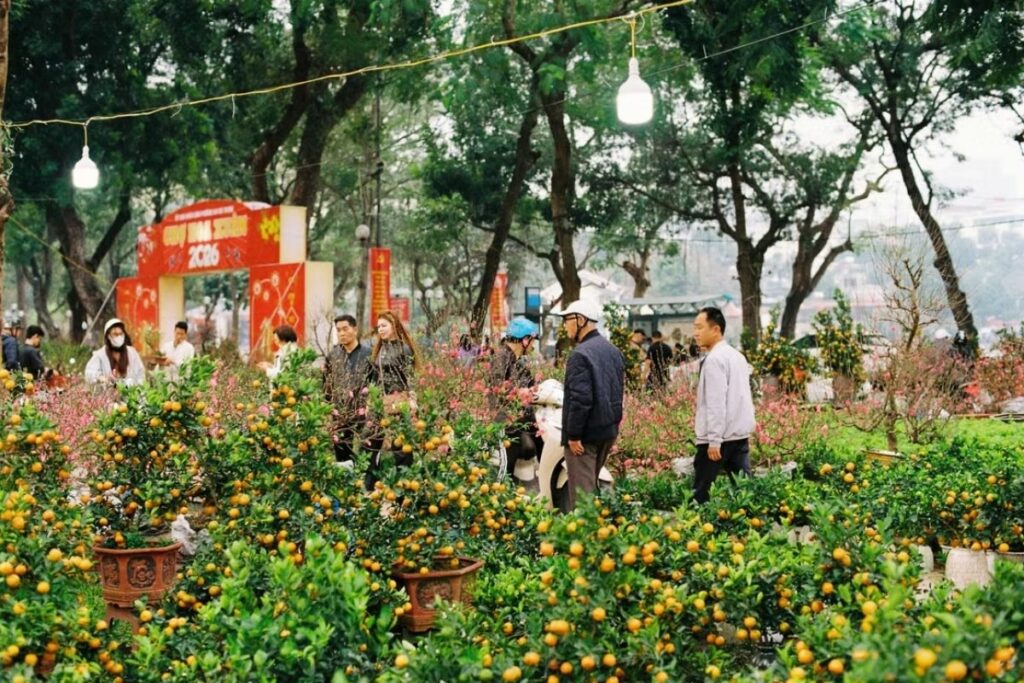
You may also notice Tet preparations on ordinary streets.
A motorbike can carry a large peach branch through traffic. A neighborhood becomes temporarily filled with flower sellers. Families shop for decorations and food. The closer Tet gets, the more visible the preparation becomes.
Then the atmosphere changes.
During the first days of Tet, parts of Hanoi can feel surprisingly calm compared with the city’s normal traffic and commercial activity. Vietnam Tourism notes that the first days of Tet offer visitors a rare opportunity to experience major Vietnamese cities with less of their usual noise and traffic.
The Old Quarter can be particularly interesting because you can see the contrast within a relatively small area.
Before Tet, it is crowded with preparation.
During Tet, some businesses close and the streets can become much quieter.
For a traveler, that contrast is the real attraction.
Rather than trying to see Hanoi exactly as you would during an ordinary trip, use Tet to observe how the city changes around the holiday.
Walk slowly.
Look at the flowers.
Notice which businesses remain open.
Pay attention to residential streets rather than only the major tourist sights.
Hanoi during Tet is less about finding a single event and more about seeing an entire city change its rhythm.
11. Tet in Ho Chi Minh City
Tet in Ho Chi Minh City has a different visual character from Hanoi.
The city is larger, warmer, more commercial, and intensely urban. Its Tet atmosphere therefore tends to combine large public displays with the quieter residential life created when many residents leave the city to return to their hometowns.
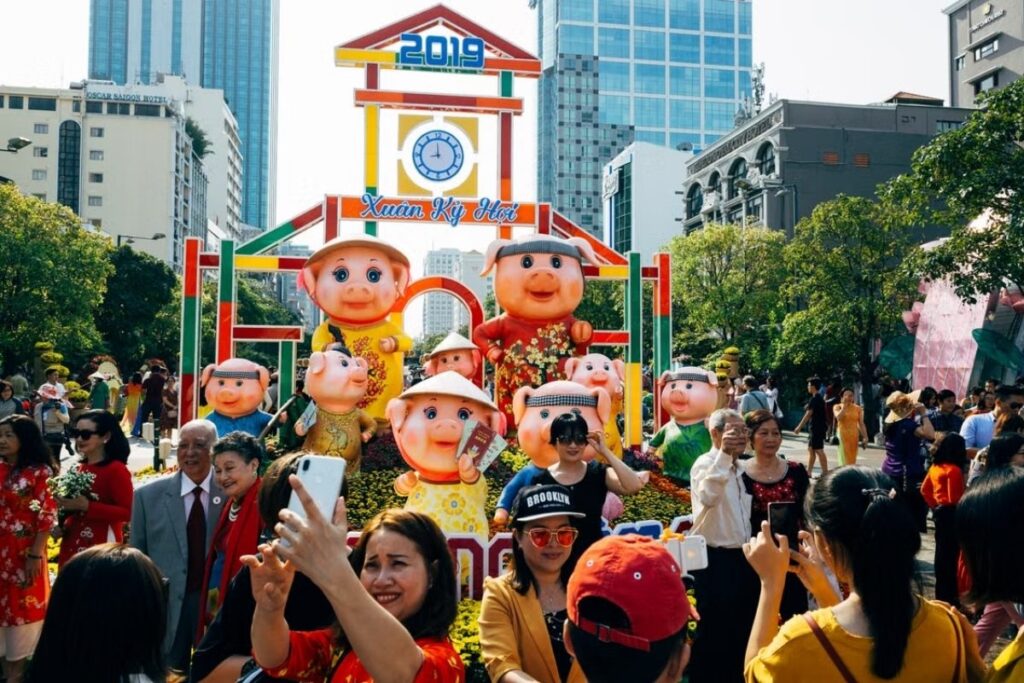
One of the most recognizable places to see the public side of Tet is Nguyen Hue Street in District 1. The street is traditionally transformed with large-scale flower displays, attracting families, young people, and visitors during the holiday period. Vietnam Tourism describes Nguyen Hue as home to one of the country’s largest Tet flower displays.
The experience changes when you move away from the major public spaces.
Some neighborhoods can become noticeably quieter as residents travel home. Shops and restaurants may close temporarily, and the heavy commercial rhythm that normally defines the city can slow down.
This creates an interesting contrast.
At Nguyen Hue, Tet can feel highly public, colorful, and energetic.
A few streets away, the holiday may feel much more private.
For travelers, that contrast is part of what makes Ho Chi Minh City interesting during Tet.
You can experience the celebration as a public spectacle, but you can also see how dramatically urban life changes when many residents leave the city.
Hanoi offers a strong sense of tradition and seasonal preparation; Ho Chi Minh City shows how Tet transforms a modern metropolis.
12. What Foreign Visitors Often Get Wrong About Tet
Tet becomes much easier to appreciate once you stop expecting it to behave like an ordinary travel week.
Some assumptions are understandable if you have never experienced the holiday before.
“Everything will be open.”
No.
Many independent businesses close for part of the holiday, while some hotels, tourist-oriented businesses, and larger establishments continue operating. Check opening hours instead of assuming normal service.
“Tet is one giant street party.”
Not quite.
Major cities can have public celebrations, flower displays, fireworks, and other events. But much of Tet happens privately, through family meals, visits, ancestor remembrance, and time spent at home.
“Tet is basically the same as Chinese New Year.”
Vietnam shares some broader East Asian lunar-calendar traditions, but Vietnamese Tet has its own foods, customs, regional practices, and cultural history.
It is better understood on its own terms.
“Tet will be the easiest time to travel around Vietnam.”
It may be one of the most interesting.
It is not necessarily one of the easiest.
Transportation can be heavily booked before the holiday, while restaurants and shops may operate with reduced availability during the first days.
“Everything in Vietnam stops.”
Also no.
Vietnam continues to function. Hotels operate, some restaurants remain open, and major tourist areas can still have services and public celebrations.
The difference is that normal routines become less predictable.
That is the reality travelers should plan for.
13. What the Quiet Streets Reveal About Vietnam
Once you understand why Vietnam becomes quieter during Tet, the silence starts to look different.
It is not simply a lack of activity. It is a temporary change in who is participating in everyday life.
The breakfast vendor is at home.
The shop owner may have returned to their hometown.
The delivery driver may be spending the holiday with family.
The office commuter is no longer rushing across the city.
Most of the year, these ordinary interactions create the rhythm travelers associate with Vietnam. They are so constant that visitors rarely stop to notice how much daily life depends on them.
Tet makes that background visible by temporarily removing part of it.
This is particularly noticeable in residential neighborhoods. A street that is normally filled with motorbikes, food stalls, deliveries, and small businesses may suddenly feel much more spacious. Homes remain decorated, families continue visiting one another, and people are still moving through the city — but commercial activity no longer dominates the scene.
For travelers, that creates an unusual opportunity.
You can experience a familiar neighborhood without the usual pressure of commerce and traffic. Instead of asking what there is to buy or where there is something to eat, you may find yourself paying more attention to the homes, flowers, decorations, and people around you.
That difference matters.
Travel usually shows you what a place does for visitors. Tet can show you what people do when visitors are no longer the priority.
Vietnam does not disappear during the holiday. Its everyday life simply becomes less visible in commercial spaces and more visible inside homes and among families.
That is why the quiet streets are worth noticing.
They are not the absence of culture. They are evidence of it.
14. What Should You Do as a Visitor During Tet?
The best way to experience Tet is not to fill every day with attractions.
Leave room for observation.
See the preparation before Tet
If your schedule allows, arrive several days before the holiday.
This is when flower markets, shopping streets, food preparation, and transportation activity are at their most visible.
Walk through a flower market
Look at what local families are actually buying rather than treating the market only as a photo opportunity.
In Hanoi, Quang Ba Flower Market is one of the places associated with the pre-Tet atmosphere.
Try a traditional Tet dish
If you find a restaurant or market serving banh chung, banh tet, thit kho hot vit, pickled vegetables, or another regional Tet dish, ask what makes it part of the holiday.
The answer may be more interesting than the food itself.
Visit public celebrations
Major cities may organize flower streets, decorations, performances, fireworks, and other seasonal events. Check the current year’s official program because schedules change.
Explore on foot
When traffic is lighter, walking can give you a different view of neighborhoods that normally feel crowded.
Notice which businesses are open.
Look at the decorations on homes.
Watch how people interact.
Respect private traditions
If you see a family making offerings or gathering privately, give them space.
Tet is a family holiday before it is a tourist experience.
Slow down
You do not need to replace every closed restaurant with another attraction.
Sometimes the most useful thing you can do during Tet is simply allow the country to operate at its own pace.
15. Should You Visit Vietnam During Tet?
There is no single answer.
Tet can be an excellent time to visit Vietnam if you are interested in culture and comfortable with a less predictable travel schedule.
Tet may be right for you if:
- You want to see Vietnamese traditions as they are actually practiced.
- You enjoy observing everyday life rather than following a packed sightseeing schedule.
- You can be flexible with restaurant and shop opening hours.
- You are comfortable booking transportation well in advance.
- You want to experience Vietnam at a slower pace.
- You are interested in family traditions, food, and seasonal celebrations.
Another time may be better if:
- This is your only trip to Vietnam and your itinerary is extremely tight.
- You want maximum restaurant and shopping choices.
- You need attractions and services to operate on predictable schedules.
- You plan to move between several cities during the busiest pre-Tet period.
- You prefer a highly structured vacation.
For many travelers, there is a useful middle ground:
Arrive before Tet and stay through at least part of the holiday.
That lets you experience both sides.
Before Tet, you see Vietnam preparing: crowded markets, flower sellers, shopping, cooking, and the enormous movement of people heading home.
During Tet, you see what happens afterward: quieter streets, family gatherings, closed businesses, and a slower urban rhythm.
That contrast may give you a better understanding of Tet than arriving only for the holiday itself.
But Tet is not only changing the way travelers experience Vietnam. It is also changing alongside the country itself.
16. How Tet Fits Into Modern Vietnamese Family Life
Tet does not show a Vietnam untouched by modern life.
In many ways, it shows the opposite.
Vietnamese families are living through rapid urbanization, changing work patterns, international migration, and increasingly digital lives. Young adults may study or work far from their hometowns. Parents may live in one city while their children build careers somewhere else. Some family members may even live overseas.
Tet creates a reason to reconnect across those distances.
That does not mean every family follows the same traditions, or that younger generations celebrate exactly as their parents did. Instead, many familiar customs have adapted to contemporary life.
A traditional meal might be prepared in a modern apartment.
Tet shopping may happen partly at a supermarket rather than entirely at a traditional market.
A family can maintain an ancestral altar while living in a high-rise building.
Lucky money may still be given in a red envelope, while some younger people also use digital transfers.
The form can change without making the tradition meaningless.
This is one of the most interesting things about Tet in Vietnam.
The holiday does not simply preserve an older version of Vietnamese culture. It gives families a way to carry parts of that culture into a changing society.
A young professional living in Ho Chi Minh City may spend most of the year in a highly modern, urban environment. Yet Tet can still create a strong reason to return to a hometown, visit relatives, prepare familiar foods, or take part in customs learned from older generations.
The same person may celebrate differently from their parents.
That does not necessarily mean the tradition is disappearing.
It may mean the tradition is adapting.
Tet does not prove that Vietnam is traditional. It shows how tradition continues to live inside modern Vietnam.
That distinction is important for travelers.
If you look at Tet only as a collection of old customs, you miss the more interesting story: a society changing quickly while still finding new ways to maintain connections between generations.
17. Tet Is a Reset, Not Just a Celebration
The idea of renewal runs through many parts of Tet.
Homes are cleaned. Flowers are brought inside. Special foods are prepared. New clothes may be bought. Families gather, ancestors are remembered, and New Year wishes are exchanged.
These practices give Tet a sense of transition between one year and the next.
For many Vietnamese families, the holiday is therefore more than a celebration. It is a moment to leave behind the previous year and begin the next one with hopes for health, prosperity, happiness, and good fortune.
The way families create that reset can vary.
Some traditions remain almost unchanged. Others have adapted to modern homes, busy work schedules, smaller households, and changing lifestyles.
But the principle remains recognizable:
Tet creates a pause between one year and the next.
That pause helps explain why the holiday can feel so different from an ordinary festival.
It is not only about what happens during the celebration.
It is also about what people hope the new year will bring.
And for travelers, that may be one of the most useful things to understand before experiencing Tet in Vietnam.
A Final Thought: For a Few Days, Vietnam Goes Home
You can photograph Tet: the flowers, red envelopes, traditional food, decorations, and public celebrations.
But those images only show part of the holiday.
The deeper story is what brings them together.
A flower branch is being carried home.
A traditional dish may connect a family with earlier generations.
A red envelope carries a wish for the year ahead.
An ancestral offering keeps a connection with those who came before.
And a long journey across Vietnam is made because someone is waiting at the other end.
That is what makes Tet in Vietnam different from simply attending a festival.
For a few days, ordinary priorities shift. Work becomes less important. Commercial activity slows. Family gatherings take center stage.
Then the holiday passes.
Restaurants reopen. Shops return. Traffic builds again. The familiar rhythm of Vietnamese cities gradually comes back.
But the contrast remains.
If you experience Tet as a traveler, you may leave with an understanding of Vietnam that is difficult to get from landmarks alone.
You have seen a country change its rhythm for something that matters deeply to the people who live there.
For a few days, Vietnam goes home.
Frequently Asked Questions About Tet in Vietnam
What is Tet in Vietnam?
Tet, or Tet Nguyen Dan, is Vietnam’s Lunar New Year and the country’s most important traditional celebration. It centers on family reunion, ancestor remembrance, New Year greetings, traditional foods, and hopes for health, happiness, prosperity, and good fortune.
When is Tet in Vietnam?
Tet follows the lunar calendar, so its Gregorian date changes each year. It generally falls in late January or February.
How long does Tet last in Vietnam?
The official public holiday period varies by year. However, Tet-related preparation, travel, family visits, and celebrations often begin before the official holiday and continue into the days afterward.
Is Tet a good time to visit Vietnam?
It can be an excellent time for travelers who are interested in culture and can be flexible. It can be less convenient for visitors who need predictable opening hours, extensive restaurant choices, or a tightly scheduled itinerary.
Is Vietnam closed during Tet?
No. Vietnam does not completely shut down. However, many family-run businesses, restaurants, shops, and services may close or operate on reduced schedules.
Are restaurants open during Tet in Vietnam?
Some remain open, particularly in major tourist areas and hotels, but many independent restaurants take several days off. Check individual opening hours rather than assuming normal service.
Can tourists travel around Vietnam during Tet?
Yes, but transportation requires more planning. The period immediately before Tet can be particularly busy because large numbers of people travel home. Booking important transportation early is strongly recommended.
What food is eaten during Tet in Vietnam?
Tet foods vary by region. Banh chung is strongly associated with northern Vietnam, while banh tet is common in central and southern regions. Other dishes include regional meats, vegetables, pickled foods, sweets, and family specialties.
What does the red envelope mean during Tet?
Red envelopes containing lucky money are traditionally given by adults to children and younger family members. The money represents good wishes and fortune for the coming year.
What should tourists say during Tet?
A simple “Chuc Mung Nam Moi”, meaning “Happy New Year,” is an appropriate greeting.
What should tourists avoid doing during Tet in Vietnam?
The most important rule is to be respectful. Avoid treating private family rituals as tourist entertainment, be patient with closures and changed schedules, and remember that some traditional beliefs may influence how families receive visitors during the first days of the year.
Can foreigners celebrate Tet in Vietnam?
Absolutely. Visitors can experience public celebrations, flower markets, traditional foods, seasonal decorations, and the changed rhythm of Vietnamese cities. The most rewarding approach is to observe respectfully and remain flexible.
Continue Exploring Vietnam
Tet offers one of the clearest windows into Vietnamese family life, traditions, and everyday culture.
But understanding Vietnam goes beyond a single holiday. The country’s culture is also shaped by the way families eat, the rhythms of daily life, traditional beliefs, and the small habits that visitors may notice only after spending more time here.
If you want to explore Vietnam beyond its famous destinations and tourist attractions, discover more Vietnam Insights from Tam Voc Viet — stories about everyday life, local perspectives, food culture, traditions, and the details that shape modern Vietnam.
Recommended next reads:
- Vietnamese Culture — Explore the traditions, values, beliefs, and everyday customs that shape Vietnamese culture.
- The Story Behind Vietnam’s Street Food Culture — Discover the history, regional influences, family traditions, and everyday habits behind Vietnam’s street food culture.
- Why Do Vietnamese Families Eat Together? — Understand how meals connect family life, traditions, and relationships.
- Why Do Vietnamese Wake Up So Early? — Explore the morning habits and everyday rhythms that shape life in Vietnam.
- 15 Things That Surprise First-Time Visitors to Vietnam — Discover some of the everyday details that may feel unexpected when you first arrive.
- Common Culture Shocks in Vietnam — A practical look at cultural differences travelers may notice in Vietnam.
- Living in Vietnam: The Complete Guide for Foreigners — Explore the practical and cultural side of living in Vietnam.
Together, these Vietnam Insights offer a closer look at the traditions, routines, relationships, and cultural habits that can be easy to miss on a first trip to Vietnam.
A Note for Travelers
If you are planning to visit Vietnam during Tet, the most important thing to bring is not a perfect itinerary.
It is flexibility.
Tet can be one of the most rewarding times to experience Vietnamese culture, but it does not always operate like an ordinary travel week.
Some businesses close. Transportation can become extremely busy before the holiday. Restaurants may have shorter hours or take several days off. Family life becomes more important than the usual pace of commerce.
Rather than treating these changes as obstacles, try to see what they reveal.
A quiet street may mean that a family-run shop has gone home for the holiday. A crowded flower market may be part of a family’s preparation for the new year. A traditional dish may carry memories that go back generations.
And if you are fortunate enough to experience Tet through a Vietnamese family, remember that you are seeing something personal rather than a performance designed for visitors.
Observe.
Ask questions.
Respect private traditions.
Allow the schedule to slow down.
The most memorable part of Tet may not be a public celebration or a famous landmark. It may be a quiet morning, a family meal, a flower market, or the simple realization that an entire country has temporarily changed its rhythm.
You are not just visiting Vietnam during Tet. You are seeing what Vietnam looks like when everyday life makes room for family, memory, and a new beginning.
Sources & Further Reading
- Vietnam Tourism — A Traveller’s Guide to Tet Holiday — Practical travel information, Tet preparations, transportation, business closures, food, Hanoi, Ho Chi Minh City, and visitor etiquette.
- Vietnam Tourism — Tet Nguyen Dan — Tet traditions, family customs, ancestor remembrance, New Year behavior, and lucky money.
- Vietnam Tourism — Vietnamese Tet — Overview of Tet traditions, flowers, family reunions, and New Year customs.
- Vietnam Tourism — Tet: Tradition, Reunion & Taste — Regional Tet foods, Hanoi, Ho Chi Minh City, and traditional holiday practices.
- Vietnam Tourism — Tet: Tradition, Reunion & Taste — Additional reference for Tet foods including banh chung, banh tet, thit kho hot vit, and cu kieu.
- Vietnam.vn — Tet Nguyen Dan — Contemporary cultural overview of Tet, family reunion, ancestor remembrance, food, lucky money, and New Year traditions.
- Vietnam.vn — Lucky Money — Background on li xi and its symbolic meaning during Lunar New Year.
Editorial note:
Tet traditions can vary significantly by region, generation, family, and individual beliefs. This article therefore avoids presenting any single practice as universal across Vietnam.
Sources are provided to support factual and historical claims. Cultural interpretation, observations about everyday life, and comparisons are the editorial perspective of Tam Voc Viet.
Travel conditions, opening hours, transportation schedules, and public celebrations can also change from year to year. Travelers should verify current information with official sources and individual businesses before making specific plans.
About the Author
Tam Voc Viet Editorial Team
The Tam Voc Viet Editorial Team creates travel and cultural guides for international readers who want to understand Vietnam beyond its most famous destinations.
Our content explores Vietnam through its history, culture, food, traditions, people, and everyday life, with a particular focus on the context that helps international travelers experience the country more thoughtfully.
For cultural and travel topics, we consult official Vietnamese sources, established cultural institutions, research materials, and relevant travel resources where appropriate. We also compare regional perspectives and avoid presenting one city’s customs or experiences as representative of all of Vietnam.
When discussing historical or cultural claims, we aim to distinguish documented facts from interpretation. When describing everyday experiences, we use specific observations and contextual examples rather than treating them as universal rules.
We recognize that Vietnamese culture is not static. Traditions change across generations, regions, families, and communities, while modern life continues to reshape how people celebrate and understand them.
Our goal is not to present one fixed version of Vietnamese culture, but to help readers understand the patterns, differences, and context behind life in Vietnam.
Article Information
Category: Vietnam Insights
Topic: Tet in Vietnam
Published: August 2026
Last Updated: August 2026
Author: Tam Voc Viet Editorial Team
