


 Tiếng Việt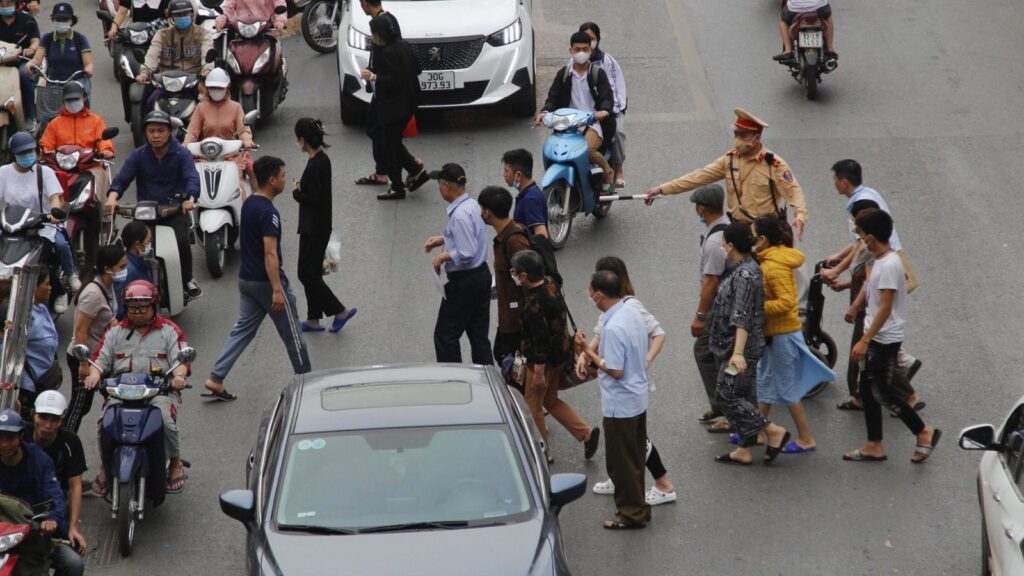
The first time you try to cross a busy street in Vietnam, your instincts may tell you to wait.
So you wait.
A motorcycle passes. Then another. A scooter turns into the street. A car appears from an unexpected direction. Someone on a bicycle moves along the edge of the road.
You look at the other side and wonder when, exactly, the road is supposed to become clear.
Then you notice how a local pedestrian approaches the curb.
They look.
They wait for an appropriate opening.
Then they begin walking.
The traffic does not suddenly disappear. Instead, the pedestrian continues while remaining aware of what is happening around them.
For many first-time visitors, especially travelers accustomed to American roads, crossing the street in Vietnam is one of those small experiences that can make an entire city feel unfamiliar.
The difference is not simply that there are more motorcycles. It is that the relationship between pedestrians and moving traffic can look different from what you are used to.
Official travel advice for Vietnam specifically warns visitors to exercise caution around traffic and not to assume that road users will behave exactly as they would in the United States.
That does not mean every Vietnamese street is dangerous, nor does it mean there is one universal technique for crossing every road.
It means you need to learn to assess the street in front of you.
And that is the real lesson.
You are not trying to make every vehicle stop. Your goal is to make your own movement easy to anticipate.
Once that idea starts to make sense, the first crossing becomes less intimidating—and much more interesting.
Table of Contents
Quick Answer: How Do You Cross the Street in Vietnam?
If you are wondering how to cross the street in Vietnam, the basic approach is simple: stop, look, assess the traffic, choose a manageable crossing point, and cross while continuing to watch your surroundings.
Use traffic lights and marked pedestrian crossings when they are available. However, do not assume that every vehicle will stop just because you are at a crosswalk.
On busy urban streets, especially where motorcycles are common, traffic may continue moving even when there is no completely empty gap. That does not mean you should walk into heavy or fast-moving traffic. If visibility is poor, vehicles are approaching too quickly, or you are uncomfortable with the crossing, wait or find another place to cross.
The U.S. State Department and other government travel advisories recommend particular caution around traffic in Vietnam, including when crossing busy streets. (Smartraveller — Vietnam Travel Advice)
The key is not to find a trick that works on every street. Learn to assess the street in front of you and choose a crossing you can safely manage.
The First Time You Stand at the Edge of the Road
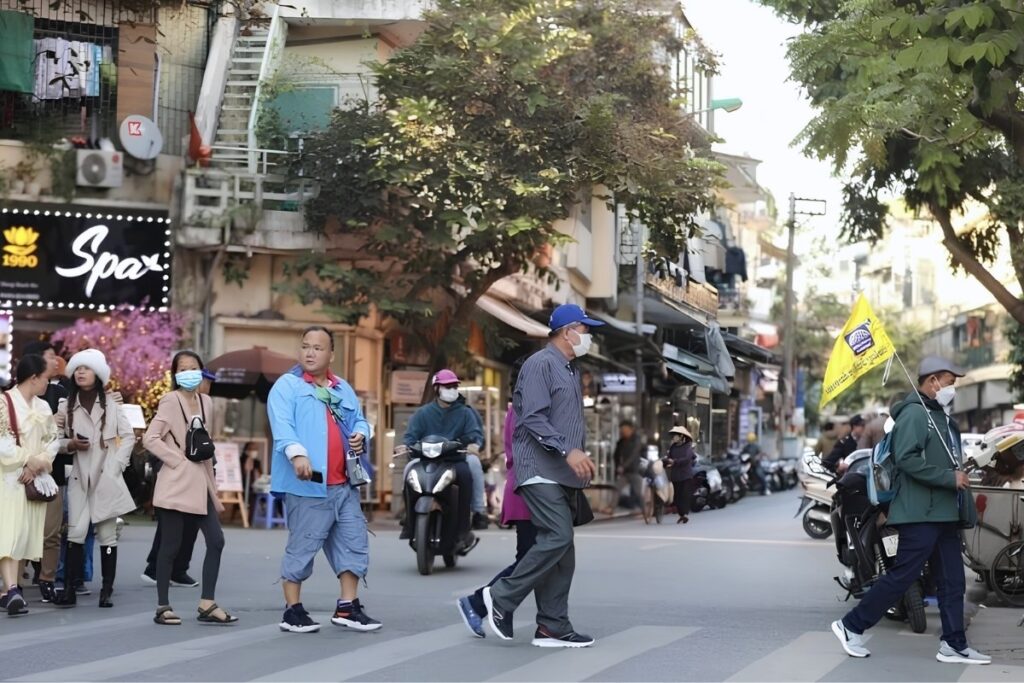
There is a particular moment that almost every first-time visitor recognizes.
You are standing on the sidewalk.
Your destination is directly across the street.
It looks close enough to walk to in less than a minute.
But the road between you and your destination seems to have a life of its own.
Motorcycles continue past. Cars turn. A scooter emerges from a side street. Someone pulls away from the curb. Another pedestrian starts crossing.
Your instinct is to wait until everything stops.
The problem is that on a busy urban street, “everything stops” may not be the moment you are looking for.
That does not mean you should simply step into heavy traffic. It means your first task is not to find a magical empty road. It is to understand whether the particular crossing in front of you is manageable.
The American instinct is understandable
For many first-time visitors, streets are strongly associated with formal pedestrian infrastructure.
You look for a traffic signal.
You look for a marked crosswalk.
You expect vehicles to yield according to a familiar sequence.
Vietnam has all of those things too, but the street environment varies considerably between cities, neighborhoods, and individual roads.
A narrow street in Hanoi’s Old Quarter is not the same environment as a broad arterial road in Ho Chi Minh City.
The safest response is therefore not to memorize a single trick.
It is to assess the conditions you actually have.
Don’t mistake unfamiliarity for an absence of rules
A busy Vietnamese road can look disorganized when you first see it.
But “I don’t immediately understand this” is not the same as “there is no pattern here.”
Motorcycles are a major part of everyday transportation, particularly in urban areas, so visitors may encounter a much denser mix of two-wheelers, cars, pedestrians, deliveries, and turning movements than they are accustomed to at home. The U.S. State Department currently warns travelers that major Vietnamese cities can have dense motorbike traffic and advises caution when crossing streets.
Your job is not to decode every rider.
It is to recognize the broad situation:
- How busy is the road?
- How fast is traffic moving?
- Are vehicles turning across your path?
- Can you see clearly in both directions?
- Is there a signalized or marked crossing nearby?
- Would waiting a little longer make the crossing substantially easier?
Those questions are much more useful than asking whether you are brave enough.
The first crossing teaches you something important
It may not teach you how to navigate every street in Vietnam.
But it teaches you how you react to unfamiliar traffic.
Do you rush?
Do you freeze?
Do you focus on one motorcycle and forget everything else?
Do you wait so long for a perfect opening that you become frustrated?
Recognizing your own reaction is part of becoming comfortable with walking in Vietnam.
The goal is not confidence for its own sake.
The goal is better judgment.
Why Vietnamese Traffic Looks So Different From What Americans Expect
The easiest way to misunderstand Vietnam traffic is to compare every movement with what you already know.
From the sidewalk, a busy Vietnamese street can seem like a continuous stream of motorcycles, cars, bicycles, pedestrians, deliveries, horns, and turning vehicles.
For an American traveler, the visual difference can be striking.
But there is a useful distinction:
There is a difference between not having a system and not having a system you immediately recognize.
Motorcycles change the visual experience
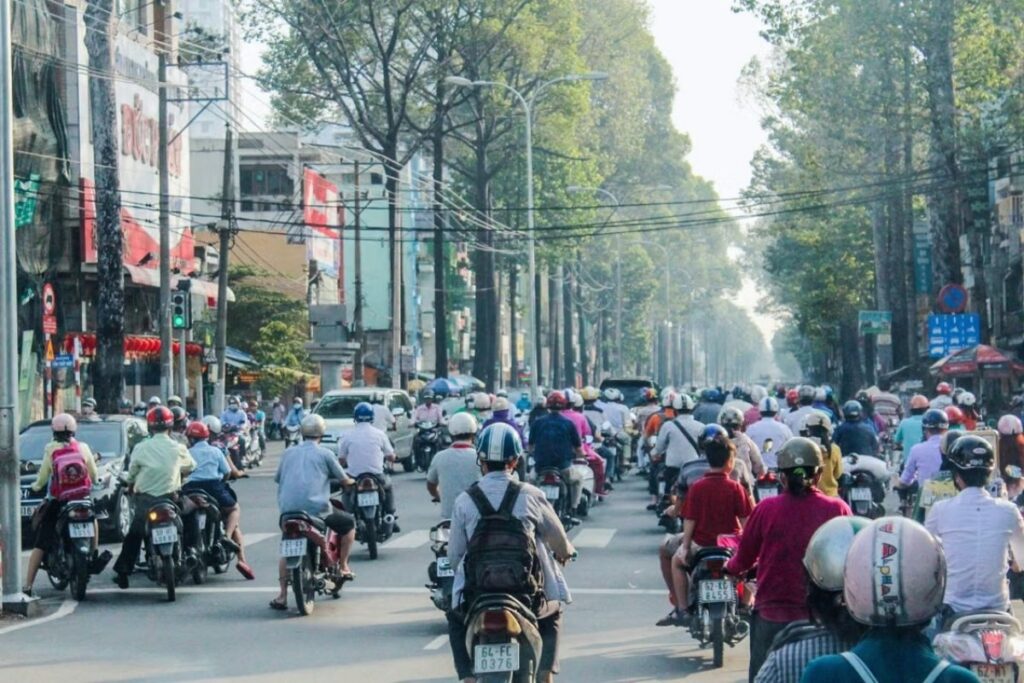
Motorcycles and scooters occupy far less physical space than cars and can move through dense urban environments with considerable flexibility.
That changes what a road looks like.
A stream of motorcycles can fill spaces that might otherwise appear open to a visitor. Riders may be traveling at different speeds, changing position, turning into side streets, or moving around stopped vehicles.
For a pedestrian, that means a road cannot always be understood simply as:
traffic coming toward me → traffic stops → I cross.
Instead, there may be several overlapping movements.
That is why looking both ways is only the beginning.
You also need to notice vehicles turning, entering from side streets, or approaching from angles that are not obvious when you first step toward the road.
Smartraveller makes the same practical point more bluntly: when walking or crossing busy streets in Vietnam, traffic can appear from any direction.
Why the horn sounds different
The first few minutes in a busy Vietnamese city can be surprisingly loud.
Horns are common.
But visitors should be careful about assigning one meaning to every horn.
A horn may alert another road user that a vehicle is approaching. It may communicate frustration. It may simply be part of the driver’s attempt to make their presence known.
The useful response is not to decode the emotion behind every sound.
Treat the horn as information, then look.
If you hear one while standing near the road, check where the vehicle is rather than assuming the driver is angry with you.
The sidewalk is part of the story
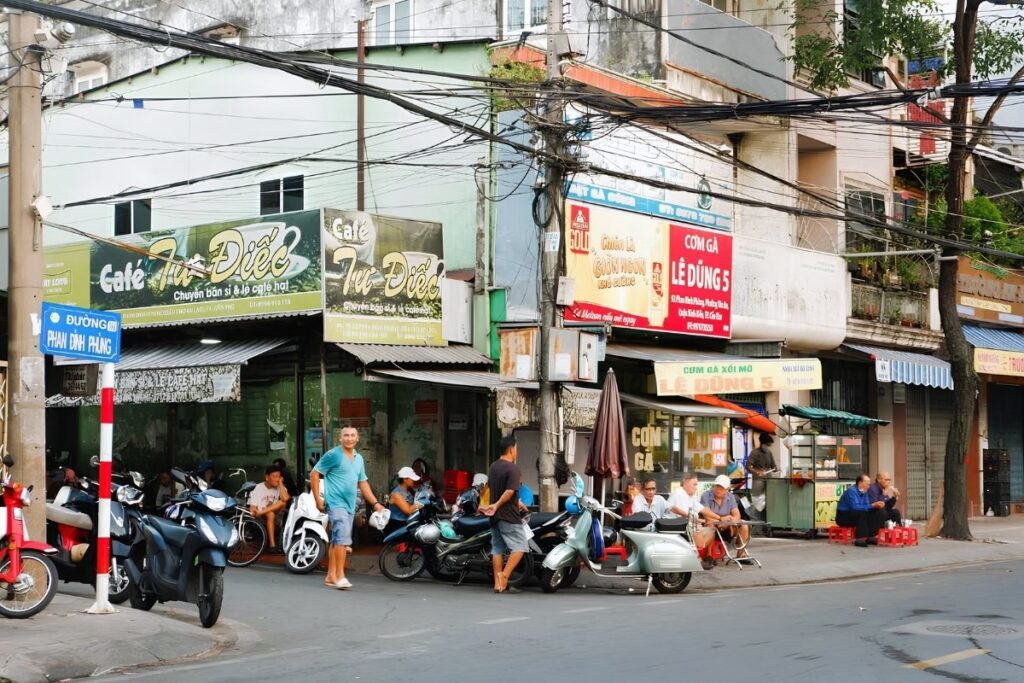
Another difference becomes obvious when you start walking.
In many Vietnamese cities, sidewalks are not used exclusively for walking.
They can accommodate parked motorcycles, food vendors, café seating, deliveries, shop entrances, and other everyday activities.
Urban research on Ho Chi Minh City has specifically examined sidewalks as mixed-use public spaces, rather than treating them as purely pedestrian corridors.
That helps explain why walking in Vietnam can involve more than simply following a clearly separated pedestrian path.
Your route may move around parked scooters.
You may step closer to the curb.
You may pass a café table or a street vendor.
You may suddenly need to watch for a motorcycle entering or leaving a building.
This is one reason the experience of crossing a street cannot be separated entirely from the experience of walking along it.
Formal rules still matter
None of this means traffic rules are irrelevant.
Quite the opposite.
Where traffic lights, signs, and pedestrian crossings are available, use them.
The point is that formal infrastructure should be combined with situational awareness.
The U.S. State Department notes that driving practices and adherence to traffic laws can differ from U.S. expectations, while Smartraveller advises travelers to exercise particular care around busy roads.
So instead of choosing between:
“Follow the rules”
and
“Watch what locals do,”
the better approach is:
Use the infrastructure available, then pay attention to the actual traffic around you.
That distinction will matter throughout your trip.
How to Cross the Street in Vietnam, Step by Step
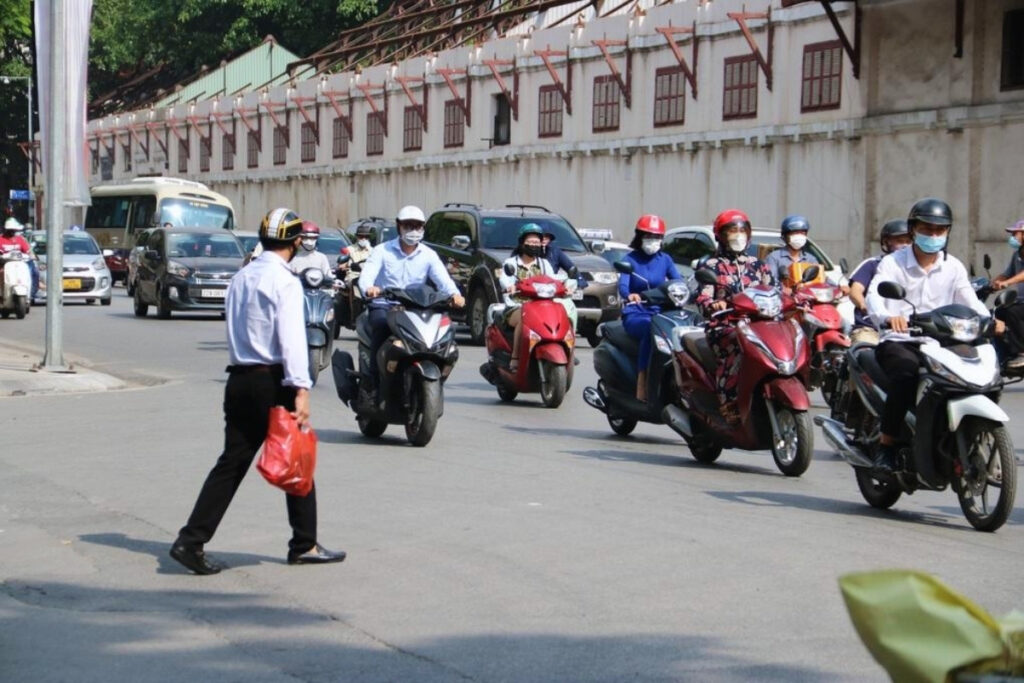
Eventually, you have to cross.
The good news is that the process does not require a secret technique.
It requires attention.
1. Start from the safest available crossing point
If there is a functioning traffic signal or marked pedestrian crossing nearby, consider using it.
You do not gain anything by choosing the most difficult section of road simply because it looks faster.
A slightly longer walk may be a much easier crossing.
2. Stop before the curb and observe
Don’t step directly from the sidewalk into the road.
Take a moment.
Look at the overall traffic rather than focusing on a single motorcycle.
Notice:
- the general direction of traffic;
- vehicles turning;
- motorcycles approaching from side streets;
- vehicles stopping or accelerating;
- your visibility;
- and whether another crossing point would give you a clearer route.
3. Choose a situation you can actually manage
This is the part that cannot be reduced to a universal number of seconds or meters.
A crossing that feels manageable to an experienced pedestrian may be overwhelming to someone visiting Vietnam for the first time.
If you cannot confidently assess the traffic, wait.
If the road is extremely busy, look for a signalized intersection or another crossing point.
There is no prize for crossing the hardest road on the block.
4. Walk at a steady pace
Once you decide to cross, avoid suddenly running or changing direction without a reason.
A steady pace gives you time to continue observing what is happening around you.
This is where the central principle of the article matters:
Your goal is not to make every vehicle stop. Your goal is to make your own movement easy to anticipate.
That does not mean assuming vehicles will automatically move around you.
It means avoiding unnecessary unpredictability while remaining ready to respond to changing traffic.
5. Keep watching while you cross
Do not treat the first few steps as the entire decision.
Traffic can change while you are in the road.
Continue looking.
Pay particular attention to vehicles turning across your path and motorcycles approaching from different angles.
6. If it becomes uncomfortable, prioritize safety
You do not have to prove anything.
If conditions change and you no longer feel comfortable, focus on reaching a safe position rather than trying to maintain a particular plan.
And if the road looks too difficult from the beginning, simply don’t use that crossing.
Waiting is a perfectly legitimate travel decision.
Where Crossing the Street Feels Hardest
Not Every Street in Vietnam Is the Same
One of the biggest weaknesses of generic travel advice about Vietnamese traffic is that it treats the entire country as one street.
It isn’t.
A narrow lane in Hoi An, a residential road in Hue, Hanoi’s Old Quarter, and a major intersection in Ho Chi Minh City can require very different decisions.
The variables include:
- road width;
- traffic volume;
- vehicle speed;
- visibility;
- turning movements;
- weather;
- time of day;
- pedestrian density;
- and the availability of traffic signals or marked crossings.
So the most transferable skill is not memorizing one crossing technique.
It is recognizing what kind of road you are standing beside.
Hanoi: density can be the challenge
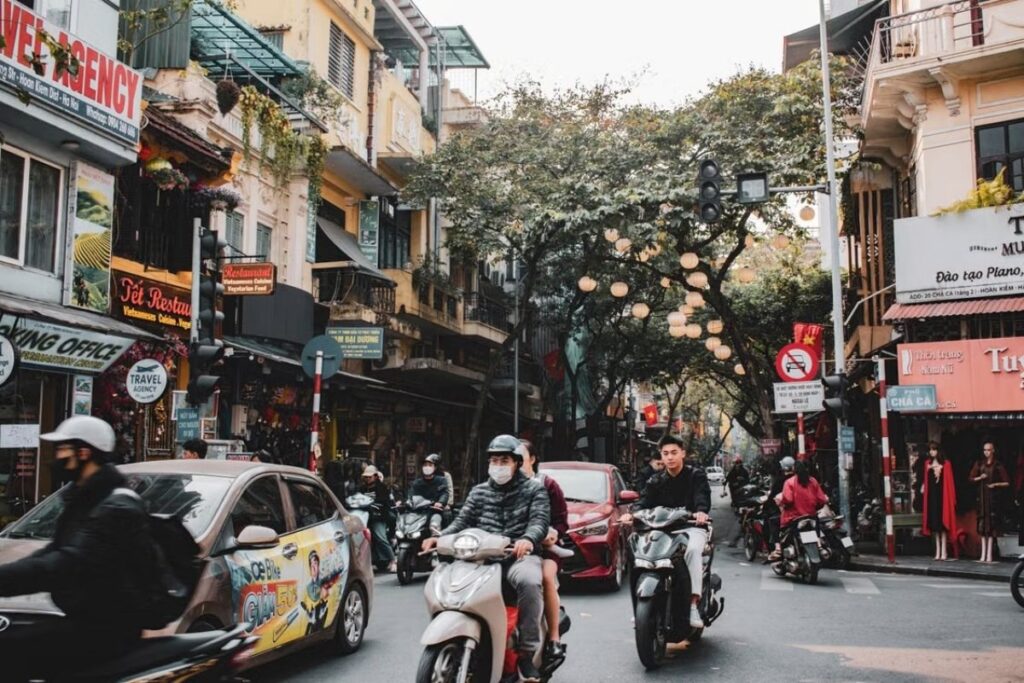
For many first-time visitors, Hanoi‘s central streets are memorable because so much happens within a relatively small space.
In the Old Quarter, motorcycles, pedestrians, shops, cafés, deliveries, parked scooters, and other street activities can all compete for limited space.
The difficulty is often not simply speed.
It is density.
You may need to process several kinds of movement at once.
Research on Hanoi’s pedestrian streets has found that different groups—including residents, visitors, vendors, and authorities—use and adapt to public space in different ways. The 2025 Geoforum study was based on systematic observations and 70 interviews in central Hanoi.
That research is about pedestrian public space rather than a universal rule for crossing roads, but it helps explain why the street can feel like more than a transportation corridor.
Ho Chi Minh City: scale can change the decision
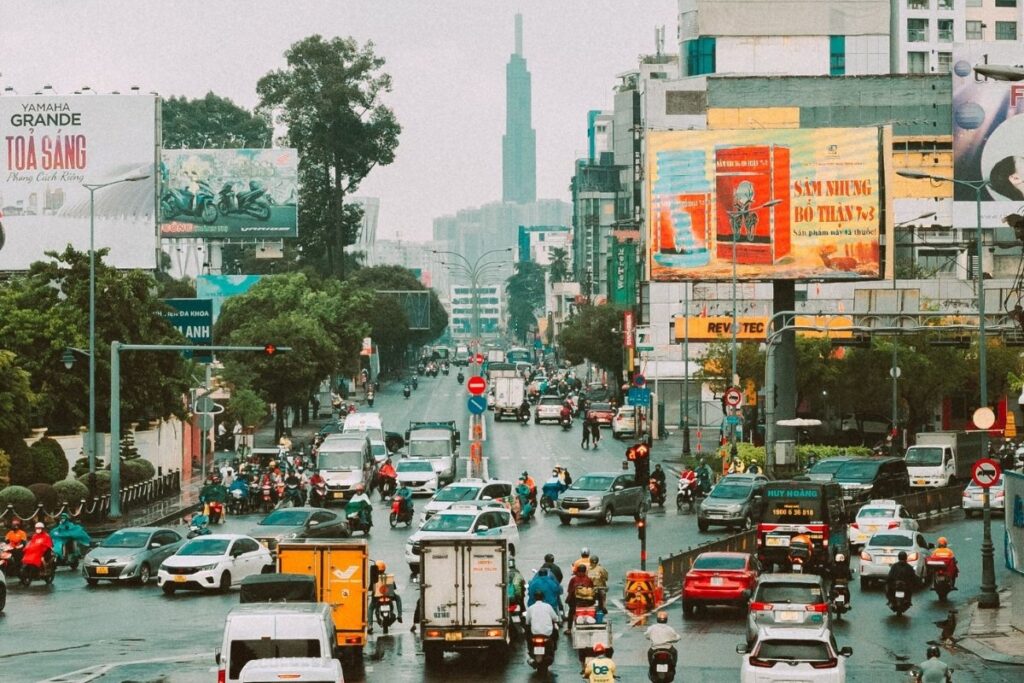
Ho Chi Minh City can present another challenge.
Some major roads are much wider, with heavier traffic and more lanes.
Here, the question may not be:
“Can I walk across this small gap?”
It may be:
“Is this the right place to cross at all?”
If a large intersection feels overwhelming, look for a traffic signal, pedestrian crossing, or a simpler nearby route.
The best crossing is often the one that reduces the number of decisions you have to make.
Smaller cities can feel completely different
Da Nang may have broad roads and more open areas.
Hoi An’s historic center can feel considerably more pedestrian-oriented.
Hue has its own mix of major roads and quieter neighborhood streets.
Smaller towns can be quieter still.
That variation is important because crossing streets in Vietnam is not a single national experience.
Your first street crossing should not become a stereotype for the entire country.
Read the road you are actually standing beside.
The Mistakes First-Time Visitors Make
Seven Mistakes to Avoid When Crossing a Street in Vietnam
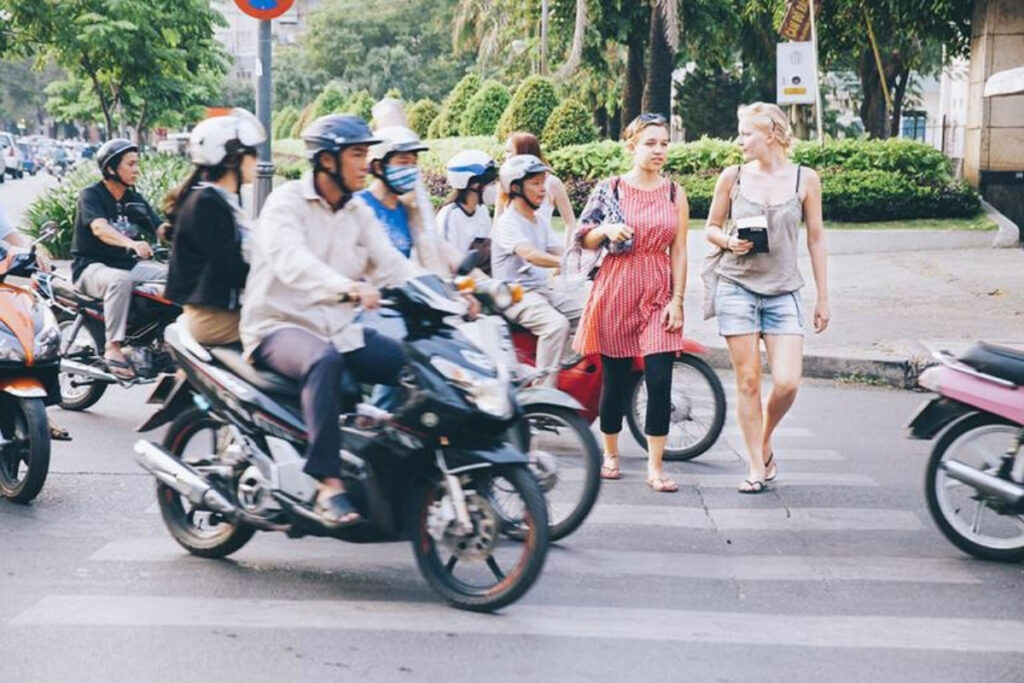
Most problems do not come from failing to memorize an obscure traffic rule.
They come from making an unfamiliar situation harder than it needs to be.
1. Waiting for a completely empty road
On a busy urban street, especially one with heavy motorcycle traffic, you may wait a very long time for the kind of empty road you would normally expect.
But don’t interpret that as an instruction to cross through heavy traffic.
Instead, distinguish between:
a manageable opening
and
a situation that is simply too busy.
If the latter is what you see, wait or find another route.
2. Running because you see a gap
A sudden burst of speed can make your movement harder to anticipate.
If you decide to cross, a steady walking pace is generally easier to manage than sprinting halfway across the road.
You should still be ready to stop or change course if conditions require it.
3. Freezing because a motorcycle gets close
This is one of the most understandable reactions.
You start walking.
A motorcycle approaches.
It suddenly looks much closer than you expected.
The important thing is not to let surprise turn into panic.
Keep observing and make a deliberate decision about where you are safest.
If the situation is genuinely unsafe, safety comes before maintaining a perfect crossing line.
4. Watching only the main traffic stream
A road can have more than one source of movement.
Check for:
- turning vehicles;
- side streets;
- driveways;
- motorcycles approaching from behind or beside you;
- and vehicles entering the road.
This matters particularly at intersections.
5. Assuming eye contact means “go ahead”
Eye contact can sometimes help establish awareness between road users.
But it is not a guarantee.
A driver may look toward you without intending to stop, or may be watching another part of the road.
Treat eye contact as one piece of information, not a promise.
6. Copying a local without understanding the situation
Watching an experienced pedestrian can be useful.
Copying them blindly is not.
A local may know the road extremely well. They may recognize the usual traffic patterns, know where vehicles tend to turn, or simply be much more comfortable judging the situation.
Observe locals to learn.
Don’t treat another person’s decision as proof that the same crossing is safe for you.
7. Treating bravery as the goal
This is perhaps the most important one.
Crossing a busy street is not a test of courage.
If you cannot see clearly, wait.
If the road is too busy, find another crossing.
If you are traveling with children, elderly companions, or bulky luggage, give yourself more time.
Good travel judgment often looks unremarkable.
That is exactly why it works.
The Skill Behind the Crossing
The Trick Is Not Confidence. It Is Predictability.
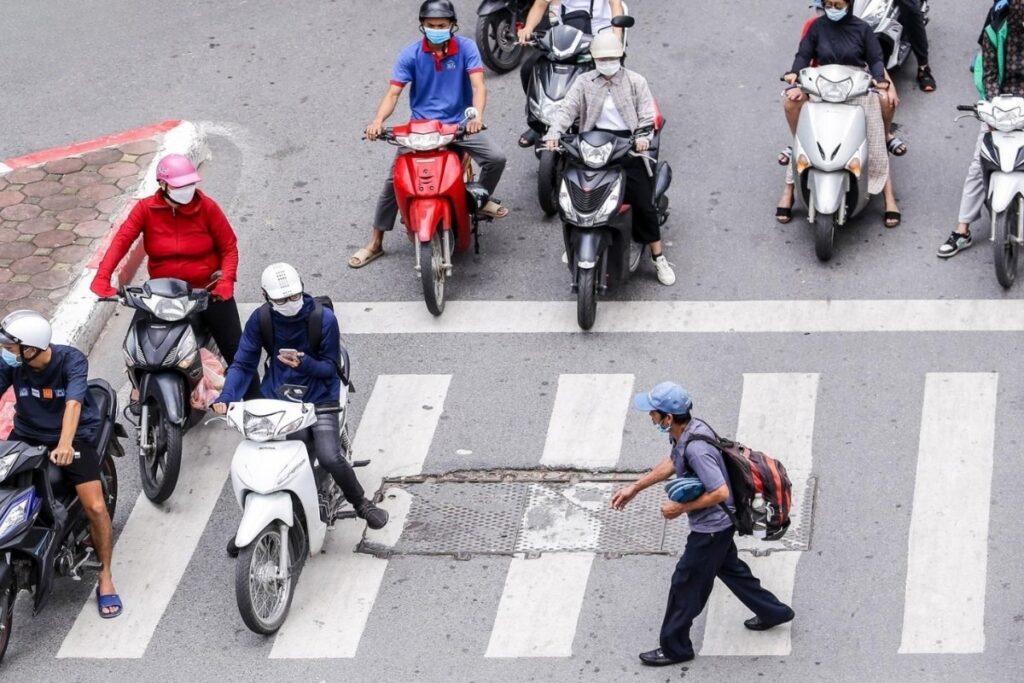
Once the basic mechanics are understood, there is one idea worth keeping.
Predictability matters more than confidence.
Your goal is not to force traffic to behave the way you want.
It is to make your own movement as clear as reasonably possible while continuing to respond to what is happening around you.
Your goal is not to make every vehicle stop. Your goal is to make your own movement easy to anticipate.
This is why several common instincts can work against you.
Running changes your speed suddenly.
Stopping unexpectedly changes your position.
Changing direction without looking can create a new problem.
Walking steadily, by contrast, gives surrounding road users a clearer sense of where you are going.
Again, this is not a guarantee of safety. Vehicles can still behave unpredictably, and official travel advice stresses that visitors should remain cautious around traffic.
The principle is simply about reducing unnecessary uncertainty.
Stop trying to calculate every motorcycle
A first-time visitor may try to track everything.
Motorcycle.
Car.
Scooter.
Another motorcycle.
Another car.
That quickly becomes impossible.
Instead, identify the things that actually matter:
Which vehicles are closest?
Which are changing direction?
Which are approaching quickly?
Where is the open space?
What is happening behind or beside me?
This makes a busy road easier to process.
Watch a Local Before You Cross
One of the easiest ways to learn an unfamiliar street environment is to watch for a moment before participating in it.
Notice where people cross.
Notice whether they use a signal.
Notice how they approach the curb.
Notice how they respond when traffic turns.
But don’t turn observation into imitation.
The point is not:
“That person crossed, so I should cross exactly the same way.”
The point is:
“What are they noticing that I haven’t noticed yet?”
That is a much more useful question.
And sometimes watching for thirty seconds can tell you that your original crossing point is not actually the easiest one.
When the Street Stops Looking Like Chaos
There is a moment when a busy street can start to look different.
Not because it has become quieter.
It hasn’t.
There are still motorcycles.
Cars still turn.
Horns still sound.
People still move around parked scooters and storefronts.
What changes is your ability to separate the important information from the background noise.
You start noticing that some vehicles are moving quickly while others are slowing.
You notice that a turning car creates a different problem from a motorcycle continuing straight.
You notice that a narrow side street changes the situation.
You notice that a road with a traffic signal gives you a different set of choices from an uncontrolled crossing.
This is a more useful form of confidence.
Not:
“I can cross any road.”
But:
“I can recognize when this road is manageable—and when it isn’t.”
That distinction is what makes the advice safer and more transferable.
What Crossing a Street Teaches You About Vietnam
Vietnamese Traffic Is a Lesson in Adaptation
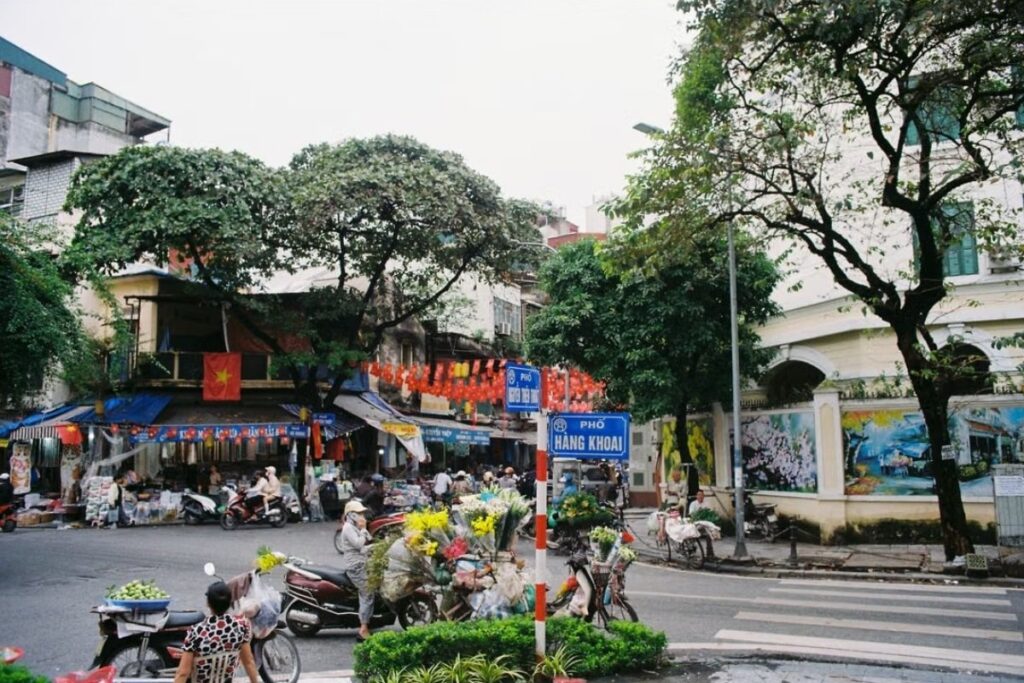
It is tempting to describe Vietnamese traffic with one word:
Chaotic.
It is understandable.
It is also incomplete.
Urban streets are places where many different activities and users overlap. The academic literature on Hanoi’s pedestrian spaces, for example, describes different groups adapting to one another and producing different patterns of activity across the same public spaces.
Research on Ho Chi Minh City’s sidewalks similarly shows how transportation, commerce, and other everyday activities can share the same public space.
That matters because a visitor may initially see a road simply as infrastructure.
A Vietnamese street can be much more than that.
The street is part of everyday life
People eat beside it.
Shop beside it.
Park beside it.
Deliver goods through it.
Meet friends beside it.
Sit in cafés facing it.
Walk children through it.
Wait for rides beside it.
The distinction between “transport space” and “everyday social space” can therefore feel less rigid than it does in many American urban environments.
That is one reason walking in Vietnam can be such an effective way to understand a place.
You are not merely moving between attractions.
You are seeing ordinary life at street level.
Adaptation is something visitors experience too
A trip to Vietnam often involves dozens of small adjustments.
You learn how to order coffee.
How to navigate a sidewalk with parked scooters.
How to recognize a street-side restaurant.
How to interpret a horn.
How to cross a road.
How to wait when your original plan doesn’t work.
None of these is a major cultural revelation by itself.
Together, they change the way you move through the country.
That is why crossing the street in Vietnam is worth writing about.
It is an ordinary task that exposes something much larger:
Travel is partly the process of learning how another place works.
Practical Safety Beyond the Crossing
Keep Your Phone and Belongings Away From Traffic
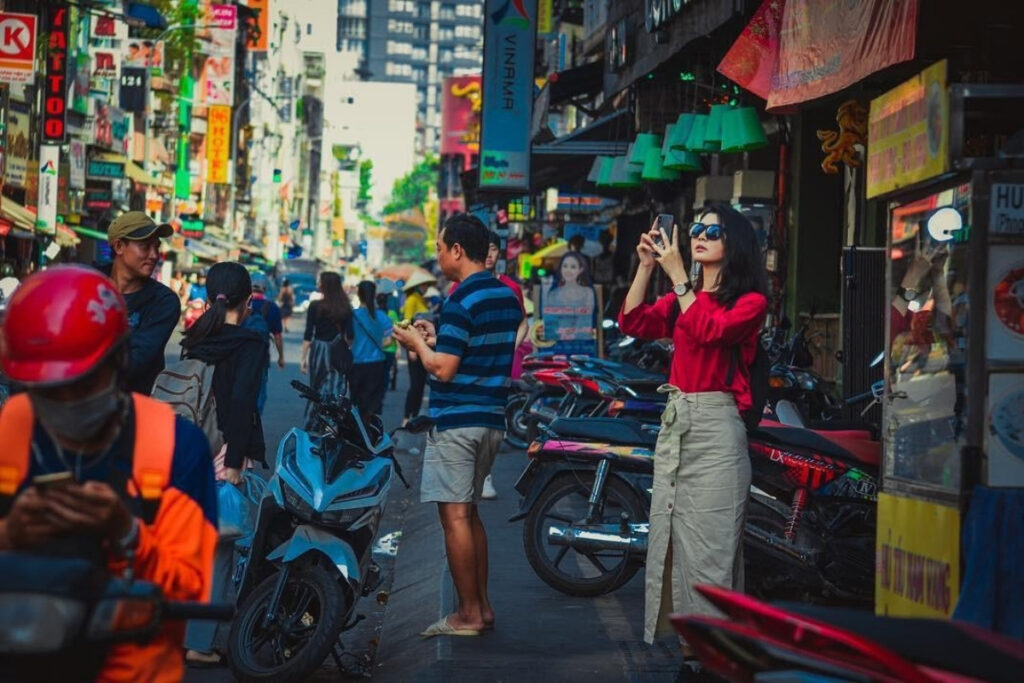
Street awareness does not stop once you reach the other side of the road.
Your phone may be useful for maps, translation, photos, and directions, but busy streets are not the best place to stand close to traffic while holding it out in your hand.
Vietnam Tourism advises travelers to keep phones and cameras secure around busy streets because drive-by snatchings can occur. Smartraveller likewise warns that thieves on motorcycles may target phones, bags, and other belongings carried by pedestrians.
The practical habit is simple:
If you need to check your phone, step away from the curb first.
Keep your bag secure and avoid leaving valuables exposed on the side closest to passing traffic.
This does not mean you need to be constantly suspicious. It is simply another part of being aware of your surroundings while walking in Vietnam.
Once you reach a quieter spot, check your map, take your photo, or send your message. Then put the phone away and keep enjoying the street.
What About Crosswalks?
Yes—use them.
If a marked pedestrian crossing or traffic signal is available, it is generally preferable to crossing at a random point.
But a crosswalk should not switch off your attention.
The U.S. State Department advises travelers to be cautious when crossing streets in Vietnam, while Smartraveller notes that drivers may ignore road rules and that traffic can appear from different directions.
So think of a crosswalk as infrastructure that helps you choose where to cross, not as a guarantee that every vehicle will behave exactly as expected.
Look for turning vehicles.
Watch approaching motorcycles.
Continue paying attention until you are safely across.
The safest mindset is:
“This is the appropriate place to cross, and I still need to look.”
Crossing at Night and in Bad Weather
Crossing a street can become more difficult after dark or during heavy rain.
At night, headlights and lower visibility can make it harder to judge how quickly a vehicle is approaching. Rain can add another layer of difficulty by creating glare, reflections, and slippery surfaces. After a long day of sightseeing, fatigue can also make it harder to pay attention to changing traffic.
When conditions make a crossing difficult to judge, don’t force it simply because you are in a hurry.
Look for a traffic signal or a better-lit intersection. If necessary, wait until visibility improves or choose a different route. A slightly longer walk is usually a better option than attempting a crossing you cannot comfortably assess.
Extra caution is particularly important when traffic is heavy, visibility is poor, or several vehicles are turning through the same intersection.
If you are traveling with a local companion or guide and are unsure about a particularly difficult crossing, ask for help rather than guessing.
Sometimes the smartest move is simply to wait until conditions improve.
The goal is not to cross every street as quickly as possible. It is to recognize when the conditions are suitable for crossing—and when another option makes more sense.
The Skill You Take Home
The First Crossing Is the Hardest
The first time you cross a busy street in Vietnam, you may spend more energy thinking about it than the crossing itself requires.
You stand at the curb.
You watch.
You hesitate.
You see someone else cross.
You reconsider.
Eventually, you decide whether the road in front of you is manageable.
A few moments later, you are on the other side.
The interesting part is not that you have suddenly mastered Vietnamese traffic.
You haven’t.
What has changed is that the street is no longer completely unfamiliar.
You know what you need to look for.
You know that different roads require different judgments.
You know that a local pedestrian’s decision is not automatically your decision.
You know that a crosswalk helps, but does not replace attention.
And perhaps most importantly, you have stopped expecting every part of Vietnam to behave exactly like home.
That is a small but meaningful shift.
Travel begins with noticing differences.
Understanding begins when you start learning how those differences work.
So don’t treat your first street crossing in Vietnam as a test of bravery.
Take your time.
Use the safest infrastructure available.
Stay alert.
Choose crossings that you can actually manage.
And remember the principle that matters most:
You are not trying to make every vehicle stop. You are trying to make your own movement easy to anticipate.
The first crossing may feel intimidating.
The tenth may feel routine.
And somewhere between the two, you may realize that you are no longer simply trying to get across the road.
You are learning to read Vietnam.
Conclusion — Learning to Read the Street
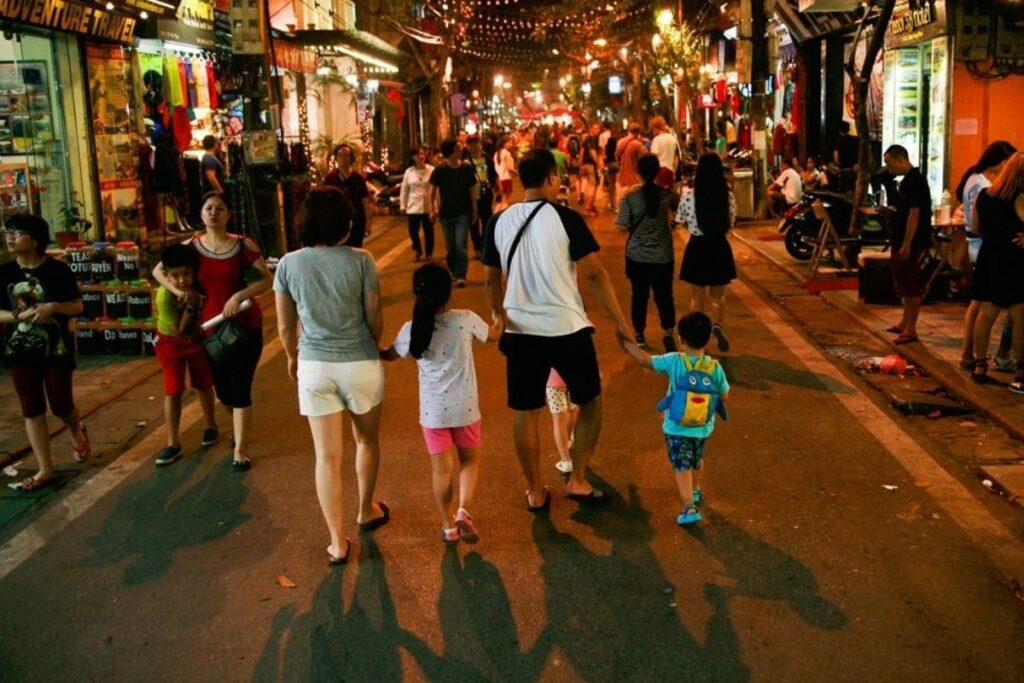
A busy Vietnamese street can be one of the first places where a traveler realizes that knowing the rules of home is not always enough.
You have to observe.
You have to adapt.
You have to recognize when a situation is manageable and when it is better to wait.
That is true for crossing a road, but it is also true of travel more broadly.
Vietnam becomes easier to understand when you stop asking why everything does not work exactly the way it does at home.
The answer is not that one system is always better than another.
The answer is that cities develop their own patterns, shaped by transportation, urban form, public space, habits, and millions of everyday decisions.
Academic research into Hanoi’s pedestrian streets and Ho Chi Minh City’s sidewalks shows just how many different users and activities can occupy and negotiate Vietnamese urban space.
For a visitor, you don’t need to understand all of that before your first walk.
You simply need to pay attention.
The motorcycle approaching the curb.
The pedestrian waiting beside you.
The turning car.
The crosswalk ahead.
The street that looks manageable.
The intersection that clearly isn’t.
Once you begin noticing those details, crossing the street in Vietnam stops being only a travel challenge.
It becomes a small introduction to the country itself.
Sometimes the best way to understand Vietnam is to slow down, look around, and learn how an ordinary street works.
Frequently Asked Questions About Crossing the Street in Vietnam
Is it difficult to cross the street in Vietnam?
It can feel difficult at first, particularly on busy streets in Hanoi and Ho Chi Minh City. The biggest adjustment for many visitors is getting used to dense motorcycle traffic and road behavior that may differ from what they know at home.
How do you cross the street in Vietnam safely?
Use traffic signals and marked pedestrian crossings when available. Before crossing, assess the traffic, choose a manageable situation, walk at a steady pace, and continue watching for vehicles while you cross. If the road feels too difficult, wait or find another crossing point.
Should you run when crossing a street in Vietnam?
Generally, avoid running. A steady pace can make your movement easier for surrounding road users to anticipate and gives you more time to observe changing traffic.
Do cars and motorcycles stop for pedestrians in Vietnam?
Do not assume that every driver or motorcyclist will stop for you, even at a marked crossing. Use available pedestrian infrastructure, but continue watching for approaching and turning vehicles.
Why are there so many motorcycles in Vietnam?
Motorcycles and scooters are a major part of everyday transportation in Vietnam, particularly in urban areas. Their prevalence contributes to the dense, continuously moving traffic that can look unfamiliar to first-time visitors.
Is crossing the street in Hanoi different from Ho Chi Minh City?
Yes. Individual streets vary considerably, but Hanoi’s Old Quarter often presents dense activity on relatively narrow roads, while some major Ho Chi Minh City roads are much wider and carry heavier traffic. Assess the specific street rather than assuming one rule applies everywhere.
Are crosswalks safe to use in Vietnam?
Marked crossings and traffic signals are generally preferable when available, but they do not remove the need to watch for approaching and turning vehicles.
What is the most important thing to remember when crossing a street in Vietnam?
Be aware and predictable. You are not trying to make every vehicle stop for you. You are trying to make your own movement easy to anticipate while responding to the traffic around you.
Continue Exploring Vietnam
If your first time crossing the street in Vietnam made you look at the country a little differently, there is much more to discover beyond the usual travel checklist.
Explore Vietnam Insights from Tam Voc Viet for stories about everyday life, Vietnamese culture, food, traditions, relationships, and the small details that reveal how Vietnam works beneath the surface.
Recommended next reads:
- Living in Vietnam: The Complete Guide for Foreigners
- Vietnamese Culture
- Vietnamese Family Culture
- The Story Behind Vietnam’s Street Food Culture
- Why Do Vietnamese Families Eat Together?
- Why Do Vietnamese Wake Up So Early?
- 15 Things That Surprise First-Time Visitors to Vietnam
- Common Culture Shocks in Vietnam
Together, these stories form part of Vietnam Insights, looking beyond famous destinations to explore how Vietnam is experienced, understood, and lived.
Sources & Further Reading
This article draws on academic and institutional research into Vietnam’s urban mobility, pedestrian environments, sidewalks, public spaces, and the ways people navigate and share busy city streets.
- Annette M. Kim — The Mixed-Use Sidewalk: Vending and Property Rights in Public Space
A peer-reviewed study examining how pedestrians, vendors, property owners, and authorities share and negotiate sidewalk space in Ho Chi Minh City. Published in the Journal of the American Planning Association.
Read the research on Taylor & Francis - Annette M. Kim — Sidewalk City: Remapping Public Space in Ho Chi Minh City
A fieldwork-based study of the social, economic, and spatial life of Ho Chi Minh City’s sidewalks and the many different activities that take place within them.
View the book at the University of Chicago Press - Dang, Huu Lieu; Pham, Thi-Thanh-Hien; Boudreau, Julie-Anne — Rhythmanalysis of pedestrian streets in Hanoi: A spatial–temporal reading of public spaces
Published in Geoforum in 2025, this research examines how residents, visitors, informal vendors, and planners use and negotiate pedestrian streets in central Hanoi, drawing on systematic observation and 70 in-depth interviews.
Read the research on ScienceDirect - World Bank — Developing Networked Mobility in Vietnam
Research examining urban mobility, road-space constraints, congestion, and transportation challenges in Vietnam’s major cities, including Hanoi and Ho Chi Minh City.
Read the World Bank report - World Bank — Vietnam Urbanization Review
Research examining Vietnam’s rapid urbanization, transportation infrastructure, land use, density, and the changing challenges faced by growing Vietnamese cities.
Read the World Bank research - Taylor & Francis — Saigon–Ho Chi Minh City is a “Walker’s Paradise”, so why are people not walking?
Recent research examining pedestrian mobility and walking conditions in Ho Chi Minh City, including the relationship between sidewalks, urban form, and everyday movement.
Read the research on Taylor & Francis
How These Sources Inform This Article
These sources provide context for specific claims about pedestrian movement, sidewalks, urban mobility, and public space in Hanoi and Ho Chi Minh City.
They do not suggest that all Vietnamese streets operate in the same way. The practical advice in this article remains general travel guidance and should always be adapted to actual traffic conditions.
Editorial Note
Vietnam does not have one single traffic environment.
A narrow street in Hanoi’s Old Quarter can feel very different from a major intersection in Ho Chi Minh City, while streets in Hue, Da Nang, and smaller cities may present different conditions again.
Visitors, residents, commuters, vendors, and delivery riders can also experience the same street differently.
This article focuses on a common visitor experience: when an everyday activity suddenly feels unfamiliar.
Crossing a street becomes a lesson in learning how a new city moves.
Our interpretation is informed by research into Vietnamese urban mobility, sidewalks, and public spaces, while recognizing that individual streets and experiences vary.
About Tam Voc Viet
Tam Voc Viet explores Vietnam for international readers who want to understand more than where to go.
Our Vietnam Insights stories explore Vietnamese culture, people, traditions, food, relationships, and everyday experiences through context rather than stereotypes or travel clichés.
As Vietnam changes, its cities, public spaces, transportation, and everyday life continue to evolve. Our goal is to explore those changes with curiosity, context, and respect.
Sometimes the best way to understand Vietnam is to slow down, look around, and notice what is happening on an ordinary street.
Article Information
Category: Vietnam Insights
Topic: Everyday Vietnam / Street Life / Travel Experience
Focus Keyword: crossing the street in Vietnam
Secondary Keywords: how to cross the street in Vietnam / Vietnam traffic / walking in Vietnam / pedestrian safety in Vietnam / crossing streets in Vietnam
Published: September 2026
Last Updated: September 2026
Author: Tam Voc Viet Editorial Team
