


 Tiếng Việt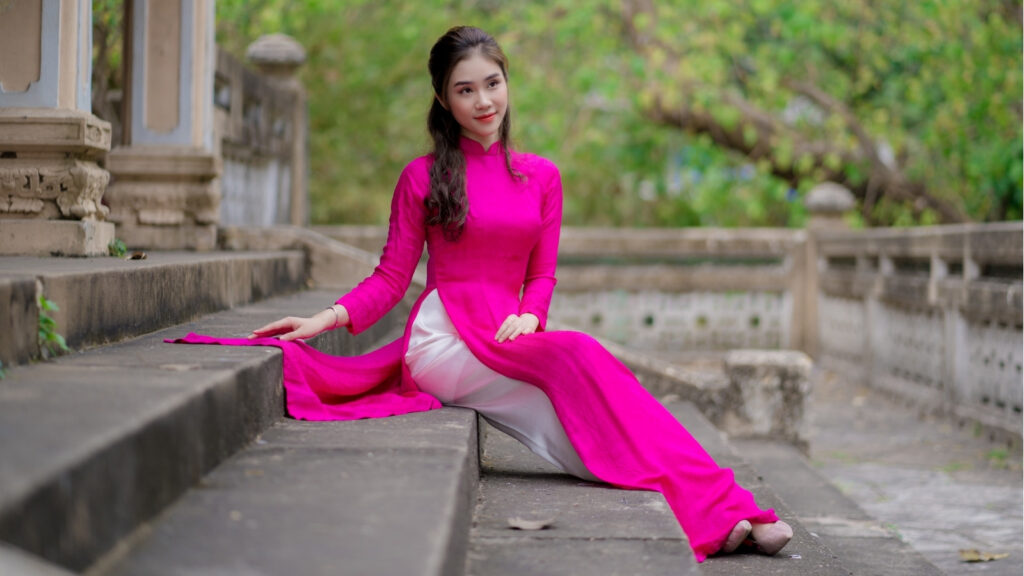
Walk through the lantern-lit streets of Hoi An at sunset, attend a Tet celebration in Hanoi, or watch Quan Ho singers perform in Bac Ninh, and one detail immediately stands out—traditional Vietnamese clothing remains a visible part of everyday cultural life rather than a forgotten historical costume.
Vietnamese traditional clothing is far more than beautiful garments. It tells the story of more than two thousand years of history, regional diversity, craftsmanship, and cultural identity. From the elegant Ao Dai to the richly embroidered textiles of Vietnam’s 54 officially recognized ethnic groups, each garment reflects how generations of Vietnamese communities have preserved tradition while continuing to adapt to modern life.
At a Glance
| Topic | Summary |
|---|---|
| National Dress | Ao Dai |
| Historic Dress | Ao Tu Than |
| Royal Dress | Ao Ngu Than |
| Ethnic Diversity | 54 officially recognized ethnic groups |
| Traditional Materials | Silk • Cotton • Hemp • Brocade |
| Best Places | Hue • Hoi An • Sapa • Ha Giang |
Quick Answer
Vietnamese traditional clothing includes the iconic Ao Dai, the historic Ao Tu Than and Ao Ngu Than, and the distinctive handmade clothing traditions preserved by Vietnam’s 54 ethnic groups. While most Vietnamese people wear modern clothing in daily life, traditional garments remain widely used during Tet, weddings, graduations, religious ceremonies, festivals, and cultural performances. Travelers can experience these traditions throughout Vietnam, especially in Hue, Hoi An, Hanoi, Sapa, and Ha Giang.
Table of Contents
Why Traditional Clothing Matters in Vietnamese Culture
Traditional clothing in Vietnam represents far more than fashion. It reflects centuries of history, regional identity, family values, and craftsmanship that continue to shape Vietnamese culture today. For visitors, understanding these garments offers a deeper appreciation of Vietnam’s traditions, festivals, and everyday life.
Unlike many countries where traditional clothing survives mainly as ceremonial costume, Vietnam has preserved its textile heritage by allowing traditional garments to evolve alongside modern society. The Ao Dai, for example, remains visible in education, diplomacy, tourism, and national celebrations, making it one of Asia’s few historic garments that continues to play an active role in contemporary life.
Expert Perspective
From a cultural history perspective, traditional clothing serves as a visual record of Vietnam’s social development. Historians generally interpret changes in dress as reflections of broader transformations in politics, family life, religion, craftsmanship, and national identity. For this reason, traditional garments are studied not only as works of textile art but also as valuable historical documents that reveal how Vietnamese society evolved over time.
Why This Matters for Travelers
Understanding traditional clothing changes the way many visitors experience Vietnam. Instead of seeing an Ao Dai as simply a beautiful outfit or a festival costume, travelers begin to recognize clothing as part of family traditions, religious customs, regional identity, and everyday cultural life. That perspective often makes museum visits, heritage festivals, and local encounters significantly more meaningful.
A Reflection of National and Regional Identity
Vietnam’s diverse geography has shaped a remarkable variety of traditional clothing. From the cooler northern mountains to the tropical Mekong Delta, local communities adapted fabrics, colors, and designs to suit their environment. As a result, traditional clothing became not only practical but also a powerful expression of regional identity that can still be seen
across Vietnam today.
Clothing as a Symbol of Family and Respect
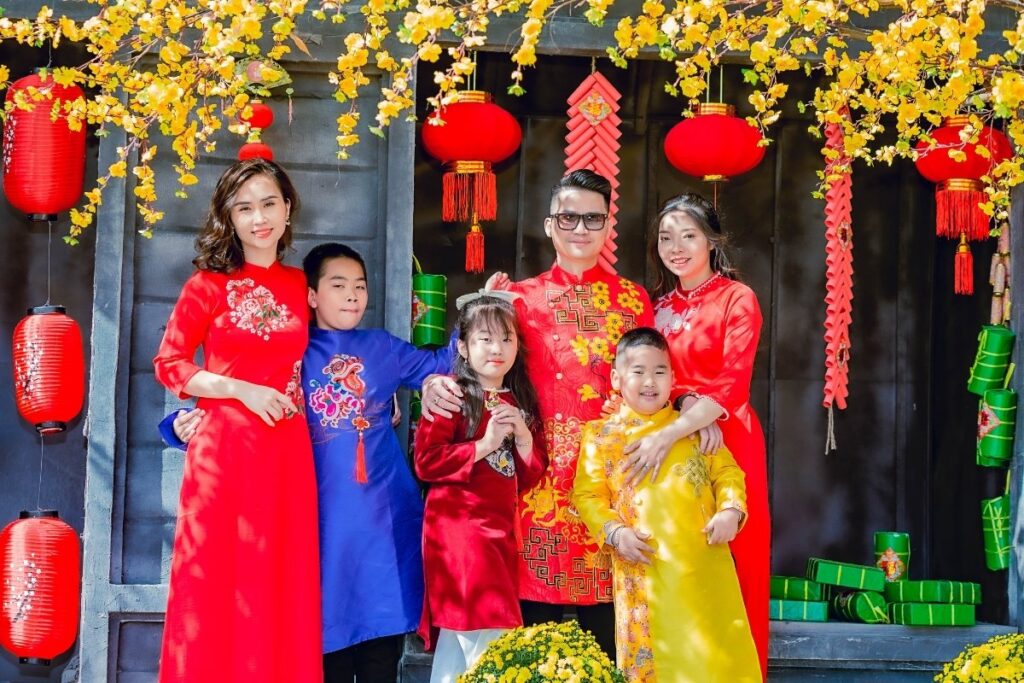
In Vietnamese culture, traditional clothing is closely associated with respect for family, ancestors, and important life events. Wearing an Ao Dai during Tet or a wedding is more than a fashion choice—it reflects gratitude for tradition and a shared sense of cultural identity that continues to unite generations.
Preserving Centuries of Craftsmanship
Traditional clothing also preserves centuries of Vietnamese craftsmanship. Techniques such as silk weaving, brocade production, natural indigo dyeing, and hand embroidery have been passed down through generations. In many artisan villages and ethnic communities, these skills remain an important source of cultural pride and continue to attract travelers interested in authentic local traditions.
Traditional Clothing Reflects Vietnam’s Cultural Diversity
Vietnam officially recognizes 54 ethnic groups, each with its own clothing traditions, weaving techniques, and decorative styles. While the Ao Dai has become the country’s best-known national dress, countless regional garments continue to reflect the diversity of Vietnam’s people and cultural heritage.
The History of Vietnamese Traditional Clothing
Vietnamese traditional clothing has evolved over thousands of years, shaped by indigenous cultures, foreign influences, royal dynasties, and changing social values. Rather than following a single style throughout history, Vietnamese dress reflects a continuous process of adaptation while preserving a distinct cultural identity.
Understanding this historical journey reveals something unique about Vietnam. Unlike many cultures where one dominant style replaced another, Vietnamese clothing evolved through centuries of adaptation. Indigenous traditions absorbed outside influences—from Chinese court dress to French tailoring—without losing their own cultural identity. This gradual transformation explains why modern Vietnamese traditional clothing appears both historically rooted and distinctly Vietnamese, rather than being a copy of any single foreign tradition.
Early Origins: Clothing in Ancient Vietnam
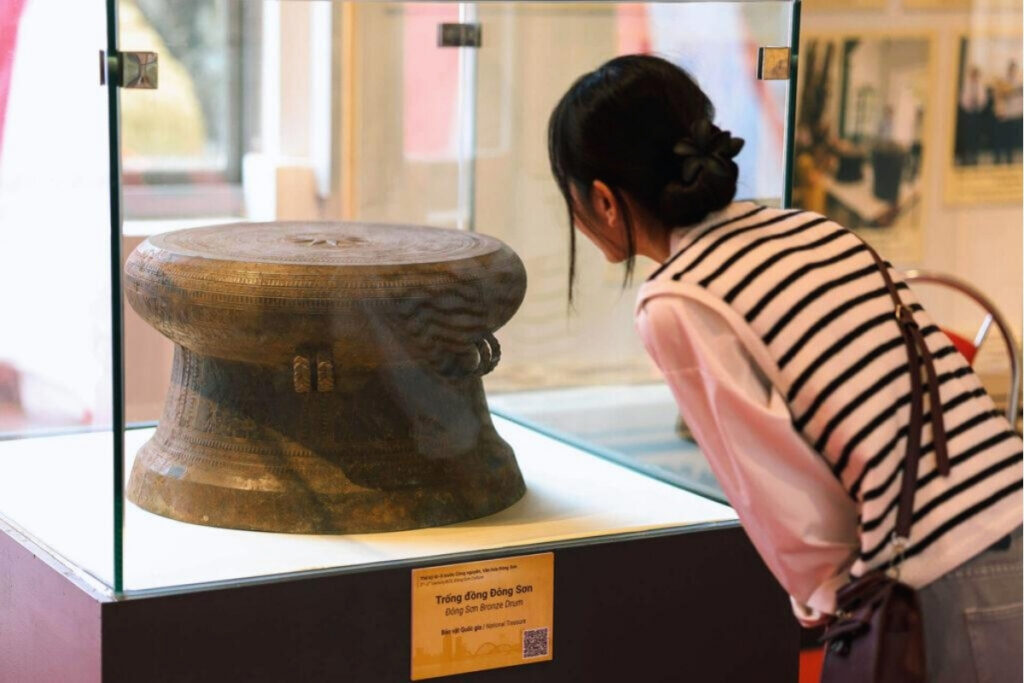
The origins of Vietnamese traditional clothing date back more than 2,000 years to the Dong Son civilization. Archaeological discoveries, particularly the famous bronze drums, depict early communities wearing simple woven garments suited to Vietnam’s tropical climate. Clothing was made from natural materials such as hemp, bark fibers, and later cotton, reflecting both practicality and local craftsmanship. Even in this early period, decorative patterns suggested that clothing already carried social and ceremonial significance.
Chinese Influence and the Rise of Confucian Dress
Centuries of Chinese influence introduced Confucian ideals that reshaped Vietnamese clothing. Longer robes, layered garments, and formal court attire became increasingly common, particularly among scholars and government officials. Rather than adopting Chinese court dress unchanged, Vietnamese artisans selectively adapted foreign styles to suit local climates, materials, and social customs. This ability to absorb external influences while preserving a distinct cultural identity became one of the defining characteristics of Vietnamese civilization. Traditional clothing therefore illustrates not cultural dependence, but cultural resilience.
The French Colonial Era and the Birth of the Modern Ao Dai
French colonial rule from the late nineteenth century introduced Western tailoring techniques, new textiles, and changing ideas about fashion.
Urban centers such as Hanoi, Hue, and Saigon became places where traditional Vietnamese clothing increasingly interacted with European styles. Tailors experimented with fitted silhouettes, darts, buttons, and imported fabrics while preserving traditional elements of Vietnamese dress.
One of the most influential developments occurred in the 1930s, when Vietnamese artists and designers reimagined the traditional Ao Ngu Than into a more streamlined, elegant garment. This evolution eventually produced the modern Ao Dai, combining a high collar, long fitted tunic, side slits, and flowing trousers.
The redesigned Ao Dai represented more than a change in fashion. It reflected a broader transformation within Vietnamese society, where traditional identity increasingly coexisted with modern ideas of education, professionalism, and national consciousness. Its ability to evolve without abandoning its cultural roots ultimately explains why the Ao Dai became Vietnam’s enduring national dress.
Historical Timeline at a Glance
- Dong Son Civilization – Simple woven garments appear on bronze drum carvings.
- Chinese Rule – Confucian dress traditions influence formal clothing.
- Ly–Le Dynasties – Vietnamese court dress develops distinctive local characteristics.
- Nguyen Dynasty – Ao Ngu Than becomes the foundation of formal national dress.
- French Colonial Period – Western tailoring techniques help shape the modern Ao Dai.
- Today – Traditional clothing continues evolving through education, tourism, fashion, and cultural preservation.

Why Vietnamese Clothing Evolved Differently
Vietnam’s clothing history differs from that of many neighboring countries because change occurred through adaptation rather than replacement. Instead of abandoning older garments whenever new cultural influences arrived, Vietnamese society gradually incorporated foreign techniques while preserving indigenous traditions. This continuous process of refinement created clothing that reflects multiple historical periods while remaining unmistakably Vietnamese.
Why Vietnam Is Different from Many Asian Countries
Several Asian countries preserve one iconic historical costume that is now worn mainly during ceremonies. Vietnam followed a different path. Instead of replacing older clothing traditions, Vietnamese communities gradually adapted them over centuries while allowing regional garments to coexist. This explains why modern Vietnam still preserves imperial clothing, northern folk dress, and dozens of distinctive ethnic textile traditions alongside the nationally recognized Ao Dai.

Historical Insight: Vietnam’s traditional clothing illustrates one of the country’s defining cultural characteristics—the ability to absorb outside influences without losing its own identity. Rather than preserving clothing as a static historical artifact, successive generations continually adapted traditional garments to changing political, social, and artistic conditions. This process helps explain why garments such as the Ao Dai remain culturally relevant today.
Ao Dai: Vietnam’s National Dress
Few national garments are as instantly recognizable as Vietnam’s Ao Dai. Combining centuries of cultural evolution with elegant design, it has become an enduring symbol of Vietnamese identity, appearing everywhere from schools and weddings to diplomatic events, fashion collections, and international cultural festivals.
More than a traditional costume, the Ao Dai reflects Vietnam’s ability to preserve cultural heritage while adapting to changing social values. Its continued relevance across education, public life, tourism, and contemporary fashion explains why it remains one of Asia’s most recognizable national garments.
From Royal Garment to National Symbol
The modern Ao Dai evolved from the Ao Ngu Than, a formal garment worn during the Nguyen Dynasty. In the early twentieth century, Vietnamese designers refined its silhouette using Western tailoring techniques while preserving its traditional elegance. Over time, the Ao Dai became a symbol of Vietnamese identity and is now recognized worldwide as the country’s national dress.
Why the Ao Dai Endured
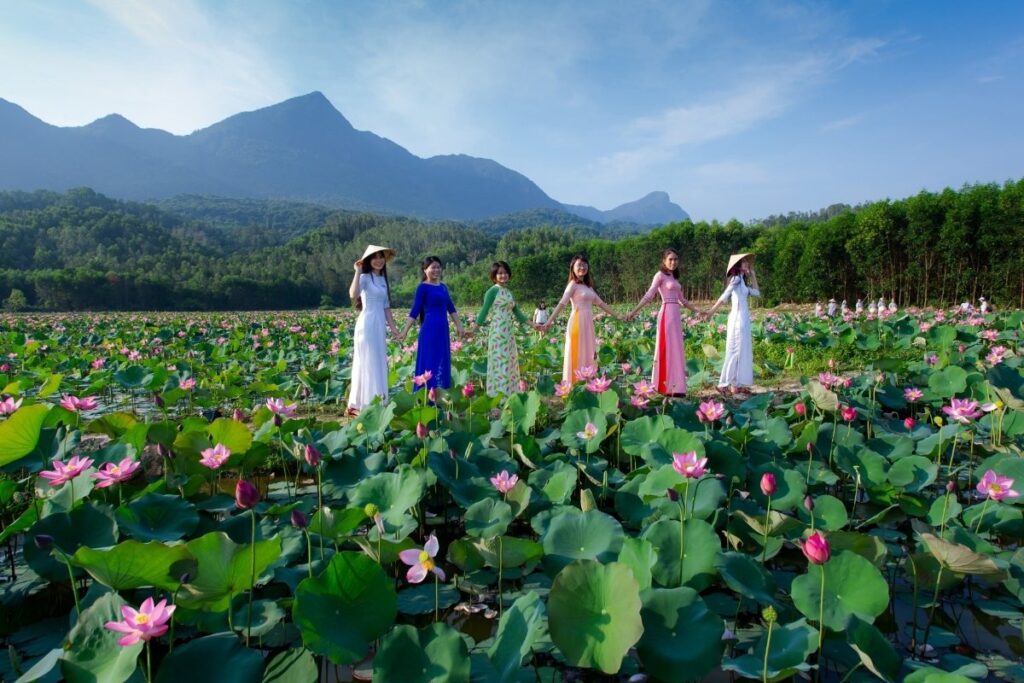
Many historic garments have shaped Vietnamese clothing, yet the Ao Dai became the country’s enduring national dress because of its remarkable adaptability. Rather than remaining confined to royal courts or rural communities, it evolved into school uniforms, professional attire, diplomatic dress, wedding fashion, and contemporary design.
Its ability to remain culturally meaningful while adapting to modern life has allowed successive generations to embrace the Ao Dai not as a historical relic, but as a living symbol of Vietnamese identity.
Why Travelers Often Remember the Ao Dai
Many international visitors expect to see the Ao Dai only in museums or cultural performances. Instead, they often encounter it in schools, wedding ceremonies, graduation celebrations, restaurants, heritage sites, and official events. This continued visibility helps explain why the Ao Dai feels like a living part of Vietnamese society rather than a historical costume preserved only for special occasions.
Expert Perspective
Cultural researchers often regard the Ao Dai as one of the most successful examples of cultural continuity in modern Asia. While many traditional garments gradually disappeared from everyday life, the Ao Dai adapted to changing social roles by becoming part of education, public service, diplomacy, fashion, and tourism. This ability to evolve without losing its symbolic identity explains why it remains internationally recognized today.
What Makes the Ao Dai Unique?
The Ao Dai is distinguished by its high collar, fitted tunic, flowing panels, side slits, and loose trousers. Traditionally made from silk, modern versions also use fabrics such as brocade, linen, chiffon, and velvet depending on the occasion.
Colors and Their Symbolism
Different Ao Dai colors are traditionally associated with specific occasions. White is commonly worn by female students, red symbolizes happiness and prosperity during weddings and Tet, while yellow has historical connections with royalty. Contemporary designers now experiment with a wide range of colors, blending tradition with personal expression.
When Do Vietnamese People Wear the Ao Dai?
Although no longer everyday clothing, the Ao Dai remains an important part of Vietnamese life. It is commonly worn during Tet, weddings, graduation ceremonies, cultural festivals, official events, and traditional performances. These occasions highlight the garment’s continuing role as a symbol of elegance, respect, and national pride.
The Contemporary Ao Dai
Modern designers continue to reinterpret the Ao Dai through sustainable textiles, innovative tailoring, and artistic embroidery while preserving its instantly recognizable silhouette. This balance between innovation and tradition has enabled the garment to remain relevant across generations without losing its cultural identity.
Cultural Insight
The Ao Dai has survived not because it remained unchanged, but because each generation found new ways to make it relevant. This ability to evolve while preserving its cultural symbolism is one of the defining characteristics of Vietnamese traditional clothing and a key reason the Ao Dai continues to represent Vietnam internationally.
Experiencing the Ao Dai as a Traveler
Hoi An is widely regarded as Vietnam’s best destination for a custom-made Ao Dai thanks to its long-established tailoring tradition. Most reputable tailors require at least two fittings to achieve the garment’s distinctive silhouette, with the first visit taking measurements and the second refining the fit. Travelers planning to order an Ao Dai should allow two to three days before leaving Hoi An, particularly during busy travel seasons.
For visitors who prefer not to commission a custom garment, many studios also offer high-quality Ao Dai rentals for photography around the Ancient Town. Early morning and late afternoon provide the most comfortable temperatures and the softest natural light for photos.
Continue Exploring the Ao Dai
Interested in learning more?
Read our dedicated guide, “Ao Dai Vietnam: History, Meaning & Where to Wear Vietnam’s National Dress”, where you’ll discover its historical evolution, regional variations, symbolism, tailoring traditions, etiquette, and the best places across Vietnam to experience this iconic garment.
Quick Facts National Dress Ao Dai Origin Nguyen Dynasty (modern form refined in the 1930s) Common Materials Silk, brocade, linen, chiffon Worn For Tet, weddings, graduations, festivals Best Places to Experience Hoi An, Hue, Hanoi Myth vs Fact
| Myth | Fact |
|---|---|
| The Ao Dai is everyday clothing. | Today it is mainly worn for ceremonies, education, festivals, weddings and formal occasions. |
| Only women wear the Ao Dai. | Men also wear traditional Ao Dai, particularly during weddings and cultural ceremonies. |
| The Ao Dai has never changed. | The modern design evolved significantly during the twentieth century. |
Ao Tu Than: The Traditional Dress of Northern Vietnam

Unlike the elegant Ao Dai, the Ao Tu Than immediately evokes the image of Vietnam’s traditional countryside. Flowing skirts, colorful silk sashes, and the iconic Non Quai Thao hat have become enduring symbols of the Red River Delta, where folk music, village festivals, and agricultural traditions shaped everyday life for centuries.
What Is the Ao Tu Than?
The Ao Tu Than, or “Four-Part Dress,” is one of northern Vietnam’s oldest traditional garments. Unlike the fitted Ao Dai, it features four flowing panels worn over a long skirt and paired with a colorful silk sash. The outfit is often completed with an Ao Yem bodice and the iconic Non Quai Thao flat hat, creating a graceful style closely associated with the Red River Delta.
Why It Matters
Although largely replaced by the Ao Dai, the Ao Tu Than remains one of the clearest symbols of northern Vietnamese folk culture. It illustrates how clothing once reflected agricultural life, community traditions, and family values before industrialization transformed everyday fashion.
Historians frequently view the Ao Tu Than as an important record of rural life in the Red River Delta before industrialization. Unlike later garments associated with urban society, its design reflects the practical needs of farming communities while preserving ceremonial traditions that continue to survive through Quan Ho performances and village festivals.
Everyday Clothing for Rural Women
For centuries, the Ao Tu Than was everyday clothing for women in the Red River Delta. Its loose design provided comfort for farming and household work while maintaining a graceful appearance during village markets and seasonal festivals.
Symbolism Behind the Four Panels
According to popular tradition, the four panels represent the parents of both husband and wife, symbolizing respect for family and harmony between generations. The colorful sash tied around the waist is often interpreted as the bond that unites the family. While historians offer different interpretations, these symbolic meanings remain an important part of the garment’s cultural significance.
A Symbol of Quan Ho Folk Culture
Today, the Ao Tu Than is best known through Quan Ho folk singing, a UNESCO-recognized Intangible Cultural Heritage of Humanity. Female performers wear the garment together with the Non Quai Thao hat, creating one of the most recognizable cultural images of northern Vietnam.
Where to Experience the Ao Tu Than
The best opportunity to experience the Ao Tu Than is during Quan Ho performances in Bac Ninh, particularly around the Lunar New Year festival season. Unlike museum exhibitions, live performances allow visitors to see how the garment moves naturally alongside traditional singing, making the cultural context much easier to appreciate.
Preserving a Northern Vietnamese Tradition
Although rarely worn in daily life, the Ao Tu Than continues to be preserved through cultural festivals, museums, educational programs, and heritage projects. Contemporary designers have also reinterpreted its silhouette, helping younger generations reconnect with one of northern Vietnam’s most iconic traditional garments.
Ao Ngu Than: The Royal Garment That Inspired the Modern Ao Dai
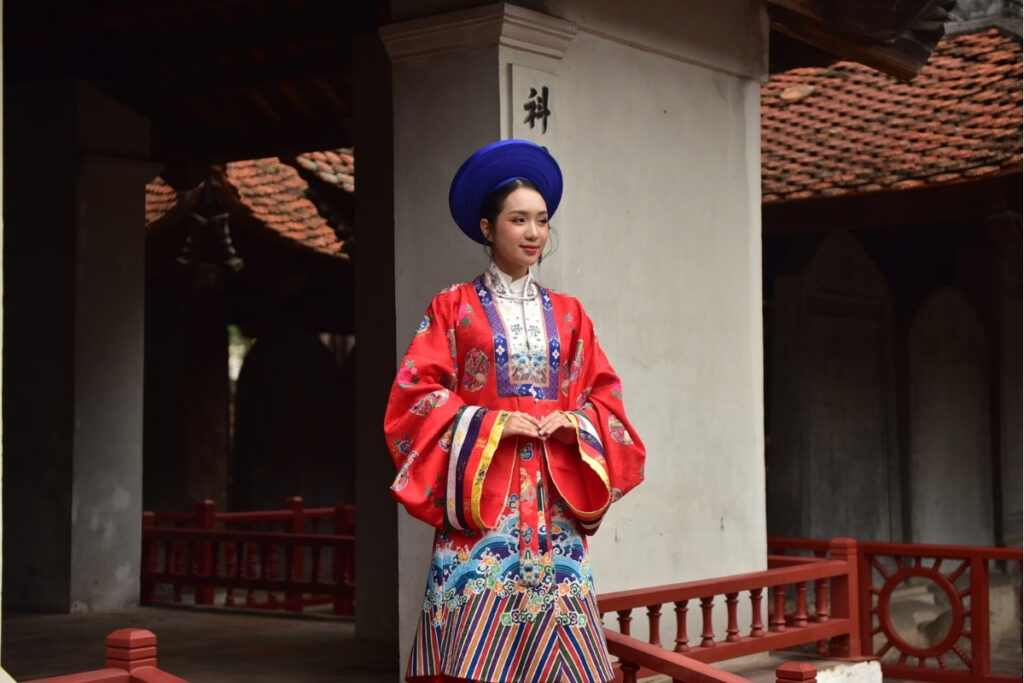
While the modern Ao Dai is celebrated around the world as Vietnam’s national dress, its origins can be traced to an earlier garment that played a defining role in Vietnamese history—the Ao Ngu Than (Five-Part Robe). Worn during the Nguyen Dynasty, this elegant costume marked an important turning point in the evolution of Vietnamese traditional clothing and laid the foundation for the Ao Dai that is recognized today.
More than a royal fashion statement, the Ao Ngu Than reflected political reform, Confucian philosophy, and a growing sense of Vietnamese national identity. Understanding its history offers valuable insight into how traditional clothing became intertwined with the country’s cultural and social development.
What Is the Ao Ngu Than?
The Ao Ngu Than, meaning “Five-Part Robe,” was a formal garment that became widely associated with the Nguyen Dynasty. Designed with five fabric panels and a modest, structured silhouette, it represented an important stage in the evolution of Vietnamese traditional clothing. Today, historians generally regard it as the direct predecessor of the modern Ao Dai.
A Reform Under the Nguyen Dynasty
During the Nguyen Dynasty, clothing became closely regulated as part of broader administrative reforms. The Ao Ngu Than was adopted as formal attire for officials and members of society, reflecting Confucian ideals of order, respect, and social responsibility. These reforms helped establish a distinct Vietnamese court dress that later influenced the development of the modern Ao Dai.
Symbolism of the Five Panels
According to traditional interpretations, the five panels symbolize important moral values and family relationships rooted in Confucian philosophy. Although historians differ in their explanations, the garment is widely regarded as representing harmony, responsibility, and respect for social order—values that were central to Vietnamese society during the Nguyen period.
Many historians consider the Ao Ngu Than a turning point in the history of Vietnamese clothing because it established a distinctly Vietnamese court style during the Nguyen Dynasty. Its influence extends far beyond royal ceremonies, providing the historical foundation from which the modern Ao Dai later developed.
From Court Dress to Cultural Heritage
Although the Ao Ngu Than disappeared from everyday life, it remains an important part of Vietnam’s cultural heritage. Heritage festivals, museum exhibitions, and historical reenactments have helped revive public interest, while scholars and designers continue to study its influence on the evolution of the Ao Dai.
Where Visitors Can See the Ao Ngu Than Today
Although the Ao Ngu Than is no longer worn in everyday life, interest in this historic garment has grown significantly in recent years.
Visitors can see reconstructed Ao Ngu Than at Hue Imperial City and heritage festivals.

Traditional Clothing of Vietnam’s Ethnic Groups
While the Ao Dai is Vietnam’s best-known national dress, it represents only one part of the country’s rich textile heritage. Vietnam officially recognizes 54 ethnic groups, each with its own traditional clothing shaped by local geography, climate, customs, and craftsmanship.
For many ethnic communities, traditional garments are far more than decorative costumes. Every woven fabric, embroidered motif, and naturally dyed textile reflects generations of cultural knowledge, spiritual beliefs, and community identity. Although modern clothing is now common in daily life, traditional attire continues to play an important role during festivals, weddings, religious ceremonies, and other cultural celebrations.
For travelers, exploring the clothing traditions of Vietnam’s ethnic communities offers one of the country’s most authentic cultural experiences.
Why Vietnam’s Textile Heritage Is Exceptional
Unlike many countries that identify with a single traditional costume, Vietnam preserves dozens of living clothing traditions across its officially recognized ethnic communities.
Each community has developed distinctive weaving techniques, natural dyes, embroidery styles, and ceremonial garments adapted to local geography and cultural beliefs. Together, these traditions form one of Southeast Asia’s richest textile heritages.
Anthropologists often describe Vietnam’s textile traditions as one of the country’s richest forms of intangible cultural heritage. Beyond clothing itself, weaving techniques, natural dyeing, embroidery patterns, and ceremonial dress preserve knowledge that has been transmitted through generations, making textiles an important historical resource as well as a cultural expression.
Distinctive Traditional Clothing Across Vietnam
Although every ethnic group has its own unique style, several communities are especially well known for preserving remarkable textile traditions.
Hmong: Masters of Indigo and Embroidery

The Hmong are renowned for handcrafted hemp clothing dyed with natural indigo and decorated with intricate embroidery and beeswax batik. Different Hmong communities maintain distinctive patterns that reflect local identity while preserving centuries-old textile traditions.
Dao and Thai: Elegance Through Embroidery

The Dao and Thai communities are equally celebrated for their distinctive clothing traditions.
Dao clothing is recognized for vivid red embroidery, elaborate headscarves, and handcrafted silver ornaments worn during important ceremonies and festivals.

Thai women are known for elegant fitted blouses paired with beautifully woven skirts featuring colorful geometric borders. Their clothing combines practicality with refined craftsmanship, making it one of the most recognizable traditional styles in northwestern Vietnam.
Cham and Ede: Regional Textile Traditions

In central Vietnam, the Cham people continue to preserve long-established weaving traditions, particularly in Ninh Thuan Province. Their handwoven cotton garments reflect centuries of craftsmanship as well as cultural influences shaped by both Hindu and Islamic traditions.
Further south in the Central Highlands, the Ede are famous for striking black brocade textiles decorated with red, yellow, and white geometric patterns woven directly into the fabric. Rather than relying heavily on embroidery, many designs are created during the weaving process itself, showcasing exceptional technical skill.

Visitors to Dak Lak and neighboring provinces can still observe traditional weaving demonstrations that help preserve these ancient textile traditions.
Shared Characteristics of Ethnic Traditional Clothing
Despite their diversity, many ethnic communities share common artistic traditions that define Vietnam’s textile heritage.
Typical characteristics include:
- Handwoven fabrics made from hemp, cotton, or locally produced fibers.
- Natural dyes, particularly indigo, obtained from native plants.
- Intricate embroidery inspired by nature, daily life, and ancestral traditions.
- Silver jewelry and handcrafted accessories worn during important ceremonies.
- Clothing designed specifically for festivals, weddings, and community celebrations.
These techniques have been passed down through generations and remain an important part of each community’s cultural identity.
Comparison of Traditional Clothing Among Selected Ethnic Groups
| Ethnic Group | Distinctive Features | Main Region |
|---|---|---|
| Hmong | Indigo-dyed hemp, batik patterns, silver jewelry | Northern Mountains |
| Dao | Red embroidery, ceremonial headscarves | Northern Vietnam |
| Thai | Woven skirts, fitted blouses, colorful waistbands | Northwest Vietnam |
| Cham | Handwoven cotton garments influenced by Hindu and Islamic traditions | Central Vietnam |
| Ede | Black brocade with colorful geometric weaving | Central Highlands |
Did You Know?
Some handmade Hmong garments require several months to complete because the entire process—from growing hemp and spinning thread to natural indigo dyeing and embroidery—is performed by hand.
Preserving Ancient Textile Traditions
Traditional clothing remains a living part of many ethnic communities, but preserving these skills has become increasingly important as modernization changes daily life.
Across Vietnam, artisans continue teaching weaving, embroidery, and natural dyeing techniques to younger generations, while museums, cultural organizations, and local cooperatives work to document endangered textile traditions. Responsible tourism has also created new opportunities for artisan villages by increasing demand for authentic handmade textiles.
For travelers, purchasing directly from local weavers not only provides a meaningful souvenir but also helps support traditional craftsmanship and sustainable community livelihoods.
Travel Insight: Some of Vietnam’s most rewarding cultural experiences can be found in local ethnic markets and artisan villages, where visitors can watch traditional fabrics being woven, dyed, and embroidered by hand. Destinations such as Ha Giang, Sapa, Mai Chau, Dak Lak, and Ninh Thuan offer valuable opportunities to appreciate these living traditions beyond museum displays.
Traditional clothing among Vietnam’s ethnic groups demonstrates that the country’s cultural identity cannot be represented by a single garment alone. From the indigo-dyed textiles of the northern mountains to the vibrant brocades of the Central Highlands, each community contributes unique artistic traditions that continue to enrich Vietnam’s cultural heritage.
Quick Comparison of Traditional Vietnamese Clothing
If you’re new to Vietnamese culture, the table below provides a quick overview of the country’s most important traditional garments before exploring each one in greater detail.
Traditional Vietnamese clothing comparison showing Ao Dai, Ao Tu Than, Ao Ngu Than and ethnic costumes.
| Clothing | Traditionally Worn By | Historical Period | Common Occasions Today |
|---|---|---|---|
| Ao Dai | Women and men | Nguyen Dynasty to present | Weddings, Tet, graduations, official ceremonies |
| Ao Tu Than | Northern women | Pre-Nguyen Dynasty | Quan Ho performances, cultural festivals |
| Ao Ngu Than | Royal officials, nobility | Nguyen Dynasty | Cultural events, heritage reenactments |
| Ethnic Costumes | Vietnam’s 54 ethnic groups | Ancient to present | Festivals, weddings, community ceremonies |
| Royal Court Dress | Imperial family and court officials | Nguyen Dynasty | Museums, historical exhibitions, cultural performances |
Although the Ao Dai has become Vietnam’s national dress, each garment represents a different chapter of the country’s history and cultural diversity.
Quick Recommendation
- First-time visitors → Ao Dai
- History lovers → Ao Ngu Than
- Cultural travelers → Ao Tu Than
- Textile enthusiasts → Ethnic clothing
Quick Tip for Travelers
If you only have time to experience one traditional Vietnamese garment during your trip, choose the Ao Dai. If you’re interested in Vietnam’s cultural diversity, explore the traditional costumes of different ethnic communities, where every region preserves its own weaving techniques, colors, and symbolic patterns.
Traditional Clothing for Men in Vietnam

When people think of Vietnamese traditional clothing, the graceful Ao Dai worn by women usually comes to mind first. However, Vietnam also has a rich tradition of men’s attire that reflects centuries of royal customs, Confucian values, and cultural heritage.
Although traditional men’s clothing is rarely worn in everyday life today, it remains an important part of weddings, festivals, religious ceremonies, cultural performances, and historical events. Understanding these garments provides a more complete picture of Vietnam’s clothing traditions beyond the iconic female Ao Dai.
The Traditional Men’s Ao Dai
The men’s Ao Dai shares the same basic structure as the women’s version—a long tunic with a standing collar, side slits, and loose trousers—but its design emphasizes dignity rather than elegance.
Compared with the fitted silhouette of women’s Ao Dai, the men’s version features straighter lines, broader shoulders, and a looser cut that allows comfortable movement while maintaining a formal appearance.
Traditional men’s Ao Dai are commonly made from silk, brocade, velvet, or fine cotton. Modern versions may also use linen or lightweight blended fabrics, especially for weddings and cultural events.
Rather than focusing on fashion, the men’s Ao Dai traditionally represents qualities highly valued in Vietnamese society, including modesty, respect, and refinement.
Ao The and the Scholar Tradition
Before the modern Ao Dai became widely recognized, educated Vietnamese men often wore the Ao The, a long flowing robe closely associated with scholars, teachers, and village intellectuals.
Usually made from dark-colored silk or lightweight fabric, the Ao The featured a relaxed silhouette with wide sleeves suitable for formal occasions. It was commonly paired with white trousers and a traditional Khan Dong (wrapped ceremonial turban).
For centuries, this combination became a symbol of education, Confucian learning, and social respect. Historical paintings and photographs frequently depict scholars wearing the Ao The while participating in examinations, literary gatherings, and official ceremonies.
Although rarely seen today, the Ao The remains an important symbol of Vietnam’s intellectual heritage.
Khan Dong: The Traditional Ceremonial Turban
No traditional men’s outfit is complete without the Khan Dong, a circular wrapped turban that has long been associated with formal Vietnamese attire.
Historically, the Khan Dong complemented garments such as the Ao The and men’s Ao Dai, creating a dignified appearance appropriate for important ceremonies.
The Khan Dong remains an essential accessory for men’s traditional dress and is commonly worn during weddings, Tet, festivals, and ceremonial events.
Many modern Vietnamese grooms continue to wear a matching Ao Dai and Khan Dong during engagement and wedding ceremonies, combining historical tradition with contemporary style.
Traditional Clothing Beyond the Kinh Majority
Traditional men’s clothing also varies among Vietnam’s ethnic minority communities.
Across the northern mountains, Central Highlands, and central coastal regions, many ethnic groups continue wearing handwoven garments made from hemp or cotton and decorated with embroidery, woven patterns, or natural dyes. While designs differ from one community to another, these garments continue to express local identity, craftsmanship, and cultural pride.
Many of these traditional outfits are still worn during seasonal festivals, community celebrations, and cultural performances, helping preserve textile traditions that have been passed down through generations.
Travel Tip
Visitors attending a Vietnamese wedding may occasionally see the groom wearing a traditional men’s Ao Dai together with a Khan Dong. This remains one of the easiest opportunities for international travelers to observe men’s traditional clothing outside museums and heritage performances.
Men’s and Women’s Traditional Clothing Compared
| Feature | Men’s Traditional Clothing | Women’s Traditional Clothing |
|---|---|---|
| Main Style | Straight-cut Ao Dai, Ao The | Ao Dai, Ao Tu Than, traditional skirts |
| Silhouette | Loose, structured, dignified | Elegant, fitted, flowing |
| Common Accessories | Khan Dong, ceremonial belts | Headscarves, jewelry, Non La, Non Quai Thao |
| Typical Occasions | Weddings, Tet, festivals, ceremonies | Weddings, Tet, festivals, graduations, ceremonies |
| Symbolism | Respect, scholarship, dignity | Elegance, family, cultural identity |
Although less internationally recognized than the women’s Ao Dai, traditional men’s clothing completes the story of Vietnamese dress. Together, the Ao Dai, Ao The, and Khan Dong illustrate how clothing reflected education, ceremony, and social values throughout different periods of Vietnamese history.
Traditional Clothing for Women in Vietnam
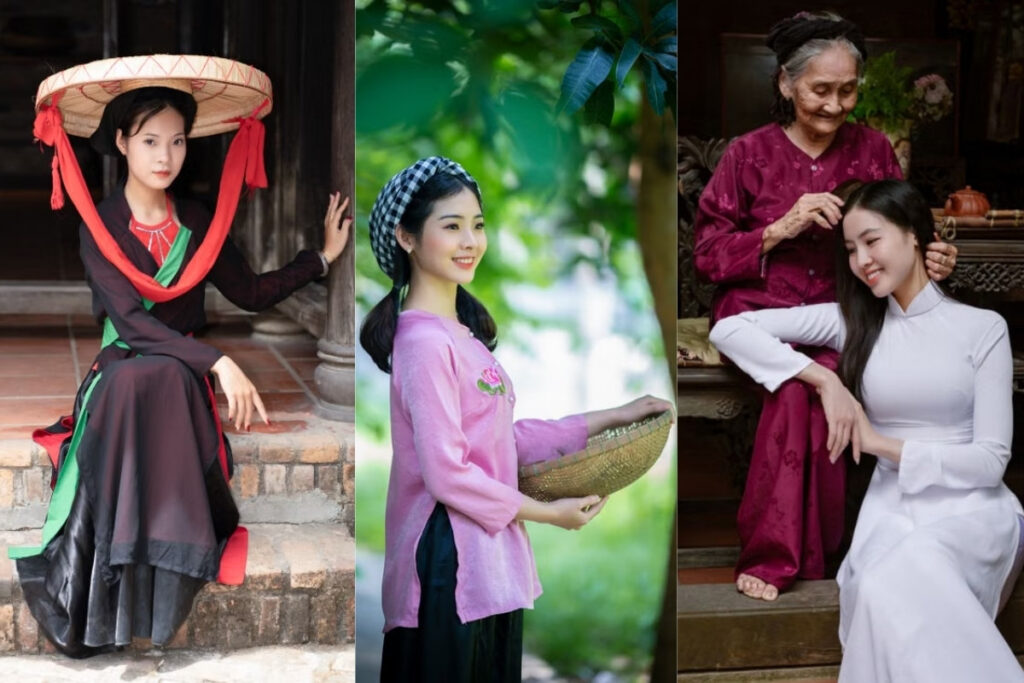
Traditional clothing has long reflected the lives, identities, and creativity of Vietnamese women. Across different historical periods, women not only wore traditional garments but also preserved weaving techniques, embroidery skills, ceremonial customs, and family traditions that continue to shape Vietnam’s cultural identity today.
Although the Ao Dai is the country’s best-known women’s garment, it represents only one chapter in a much broader story. Regional costumes, royal attire, and the handmade textiles of Vietnam’s ethnic communities together demonstrate how women have safeguarded cultural heritage across generations.
Clothing as Cultural Memory
For generations, Vietnamese women have passed traditional clothing knowledge from mothers to daughters through everyday practice rather than formal education. Skills such as weaving, embroidery, natural dyeing, garment preparation, and ceremonial dress have often been preserved within families, allowing traditional clothing to remain part of living culture instead of becoming a museum artifact.
The Ao Dai in Women’s Lives
For many Vietnamese women, the Ao Dai represents important milestones rather than everyday fashion. It accompanies graduation ceremonies, weddings, Tet celebrations, official events, and cultural festivals, becoming closely associated with personal memories and family traditions.
Because women continue wearing the Ao Dai across different stages of life, the garment remains a living expression of Vietnamese identity rather than a historical costume preserved only for special exhibitions.
Diversity Beyond the National Dress
Vietnamese women’s traditional clothing extends far beyond the Ao Dai. Northern garments such as the Ao Tu Than remain closely connected with Quan Ho folk traditions, while the historic Ao Ngu Than reflects Vietnam’s imperial heritage.
Among the country’s 54 ethnic groups, women continue preserving distinctive weaving techniques, embroidery styles, silver jewelry, and ceremonial clothing that vary from one community to another. Together, these traditions illustrate that Vietnam’s textile heritage is defined by diversity rather than a single iconic garment.
Clothing for Life’s Important Moments
Although Western-style fashion dominates everyday life, traditional clothing continues to accompany many of Vietnam’s most meaningful occasions.
Women commonly wear traditional attire during:
- Tet celebrations
- Weddings and engagement ceremonies
- Ancestor worship rituals
- Temple visits
- Graduation ceremonies
- Cultural festivals
- Family portraits
- National celebrations
For many families, wearing traditional clothing during these occasions expresses respect for ancestors, strengthens family connections, and celebrates cultural identity across generations.
Women’s Perspective
Across Vietnam, traditional clothing often carries emotional value that extends beyond appearance. Many families preserve Ao Dai, wedding garments, or handwoven textiles as keepsakes that commemorate graduations, marriages, ancestral ceremonies, and other important moments shared across generations.
Preserving Tradition Across Generations
These traditions help explain why Vietnam’s textile heritage remains a living cultural practice rather than simply a historical collection preserved behind museum glass. For travelers, recognizing this continuity often becomes one of the most rewarding insights gained while exploring Vietnamese culture.
Colors, Fabrics, and Symbolism in Vietnamese Traditional Clothing
Long before clothing became a form of personal fashion, colors and fabrics communicated messages that people across Vietnam immediately understood. A garment’s color could suggest celebration, mourning, status, or prosperity, while its fabric often reflected climate, occupation, or social position.
The Meaning Behind Traditional Colors
Color has long played an important role in Vietnamese culture. Influenced by Confucian philosophy, Buddhism, folk beliefs, and historical customs, different colors are traditionally associated with specific occasions and values.
| Color | Traditional Meaning | Common Occasions |
|---|---|---|
| Red | Happiness, prosperity, good fortune | Weddings, Tet, celebrations |
| Yellow | Royal authority, prosperity | Imperial clothing, heritage events |
| White | Purity, youth, remembrance | Student Ao Dai, memorial ceremonies |
| Blue | Calmness, harmony, professionalism | Modern Ao Dai, formal occasions |
| Black | Simplicity, resilience | Ethnic clothing, artistic performances |
Today, modern Vietnamese fashion embraces a much wider range of colors, but these traditional associations remain especially visible during cultural festivals and important family celebrations.
Traveler Tip
If you visit Vietnam during Tet, don’t be surprised to see bright red, yellow, and pink Ao Dai everywhere. These colors symbolize prosperity, happiness, and good fortune, making them especially popular for family gatherings and festive photography.
Traditional Fabrics and Textile Heritage
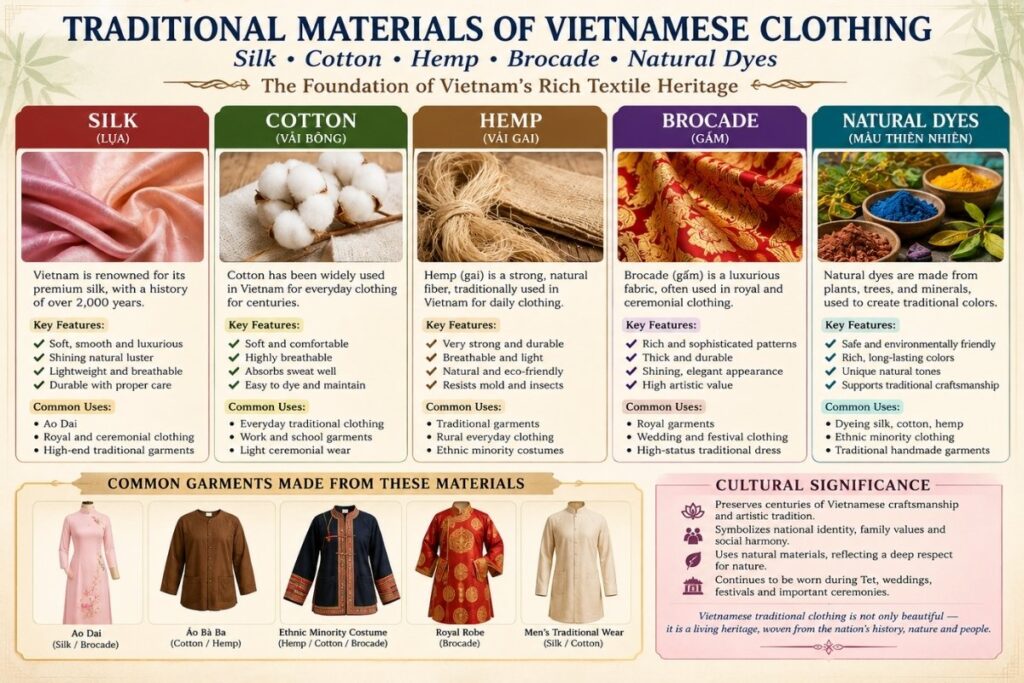
Vietnam’s climate and natural resources have shaped the materials used in traditional clothing for centuries.
Vietnam’s traditional clothing reflects centuries of textile craftsmanship, with different materials chosen according to climate, occupation, and social status.
Silk
Silk has long been regarded as Vietnam’s most prestigious textile.
Historically worn by royalty, scholars, and wealthy families, silk remains the preferred fabric for Ao Dai because of its lightweight texture, elegant drape, and natural sheen. Villages such as Van Phuc (Hanoi) continue producing high-quality silk using techniques that have been preserved for generations.
Cotton
Cotton became Vietnam’s everyday fabric because it was breathable, durable, and well suited to the tropical climate.
Hemp and Natural Fibers
Among many ethnic groups, hemp remains an important traditional material. Producing a single garment requires harvesting, spinning, weaving, and natural indigo dyeing, making each piece highly labor-intensive.
| Fabric | Best Known For | Seen Most Often |
|---|---|---|
| Silk | Elegant Ao Dai | Hue, Hoi An |
| Cotton | Daily clothing | Nationwide |
| Hemp | Hmong textiles | Ha Giang, Sapa |
| Brocade | Ethnic weaving | Central Highlands |
The Art of Natural Dyeing
Long before synthetic dyes became available, Vietnamese artisans relied on plants, minerals, and natural materials to create lasting colors.
Traditional dyes commonly came from:
- Indigo leaves for deep blue fabrics.
- Turmeric for yellow shades.
- Tree bark for warm brown tones.
- Forest plants and roots for earthy reds and greens.
- Charcoal and natural minerals for darker colors.
These techniques continue to be preserved in many artisan villages and ethnic communities, where natural dyeing remains an important part of Vietnam’s intangible cultural heritage.
Symbolic Motifs and Embroidery
Embroidery transforms traditional clothing into visual storytelling.
Across Vietnam, many recurring patterns carry symbolic meaning:
| Motif | Traditional Symbolism |
|---|---|
| Lotus | Purity, resilience, spiritual enlightenment |
| Dragon | Imperial authority and strength |
| Phoenix | Beauty, prosperity, harmony |
| Crane | Longevity and peace |
| Bamboo | Integrity and resilience |
| Clouds and Waves | Harmony between heaven and earth |
| Geometric Patterns | Mountains, rivers, ancestors, and village life |
In many ethnic communities, these designs are memorized and woven or embroidered by hand rather than copied from printed templates, allowing each garment to preserve generations of artistic tradition.
Did You Notice?
Unlike machine embroidery, traditional handmade embroidery rarely produces two garments that are completely identical. Small variations are often signs of authentic craftsmanship rather than imperfections.
Clothing as a Language of Culture
Throughout Vietnamese history, clothing communicated far more than personal style.
Traditional garments often revealed a person’s:
- Social status
- Occupation
- Regional origin
- Ethnic identity
- Religious affiliation
- Age
- Marital status
- Purpose of the occasion
Although modern clothing no longer follows these historical rules as strictly, traditional attire continues to express respect for family, heritage, and cultural identity during important celebrations.
For today’s travelers, recognizing these symbols transforms traditional clothing from something beautiful to photograph into something meaningful to understand. Once you know what colors, fabrics, and motifs represent, even a simple Ao Dai begins telling a much richer cultural story.
Vietnam’s Traditional Silk Villages and Living Textile Heritage
Behind every beautiful Ao Dai and handwoven ethnic costume lies a network of artisan communities that have preserved Vietnam’s textile traditions for centuries. Across the country, silk villages, brocade workshops, and traditional weaving communities continue to pass down techniques that combine craftsmanship, cultural identity, and local history.
For travelers interested in authentic cultural experiences, visiting these artisan villages offers a deeper appreciation of Vietnamese traditional clothing beyond museums and fashion displays. Watching silk being woven by hand or observing natural indigo dyeing demonstrates how Vietnam’s textile heritage remains a living tradition rather than a forgotten craft.
Van Phuc Silk Village (Hanoi)

Located just outside Hanoi, Van Phuc Silk Village has produced high-quality Vietnamese silk for more than a thousand years. Known for its smooth texture, elegant patterns, and traditional weaving techniques, Van Phuc silk has long been associated with premium Ao Dai and ceremonial garments.
Today, visitors can explore family-run workshops, observe traditional looms in operation, and learn how generations of artisans continue preserving one of Vietnam’s oldest silk-making traditions.
Hoi An Silk Village
While Hoi An is internationally known for custom-made Ao Dai, the city’s textile heritage extends beyond tailoring. Hoi An Silk Village introduces visitors to the complete silk-making process, from cultivating mulberry trees and raising silkworms to spinning thread, dyeing fabric, and weaving finished textiles.
Experiencing this process helps travelers better understand why handcrafted silk remains one of the defining materials of traditional Vietnamese clothing.
Planning Your Visit
Morning is usually the best time to visit weaving workshops because artisans are actively working at their looms and temperatures are more comfortable for walking through outdoor villages.
Traditional Brocade Weaving in Ethnic Communities
Beyond silk, Vietnam is equally celebrated for its remarkable brocade traditions. Ethnic communities including the Hmong, Dao, Thai, Cham, Ede, and Ta Oi continue producing handwoven textiles using techniques that have been preserved for generations.
Natural indigo dyeing, intricate embroidery, geometric weaving, and symbolic motifs are not merely decorative elements—they represent local history, spiritual beliefs, and community identity. In many villages, every handmade textile reflects months of skilled craftsmanship passed from one generation to the next.
Living Heritage Through Responsible Tourism
Traditional weaving villages play an increasingly important role in preserving Vietnam’s intangible cultural heritage. Purchasing directly from local artisans, joining weaving workshops, or visiting community cooperatives helps sustain traditional skills while creating meaningful economic opportunities for rural communities.
For culturally curious travelers, these experiences transform traditional clothing from a beautiful souvenir into a deeper understanding of Vietnam’s history, creativity, and living heritage.
Travel Insight
Some handcrafted silk garments and ethnic brocade textiles require weeks—or even several months—to complete. Choosing authentic handmade products not only supports local artisans but also helps preserve traditional knowledge that has been passed down through generations.
UNESCO, Cultural Preservation, and Vietnam’s Textile Heritage
Traditional clothing is closely connected to the broader effort to preserve Vietnam’s intangible cultural heritage. While garments themselves are important cultural artifacts, the knowledge required to weave, dye, embroider, and wear them has been passed from generation to generation through living communities rather than written records.
Rather than protecting clothing alone, many preservation initiatives focus on safeguarding the traditional knowledge behind textile production. This reflects UNESCO’s broader approach to intangible cultural heritage, which emphasizes preserving living practices and community knowledge instead of individual objects.
Across Vietnam, traditional clothing continues to appear in cultural practices that have received international recognition. Quan Ho folk singing in Bac Ninh, for example, is inscribed on UNESCO’s Representative List of the Intangible Cultural Heritage of Humanity, and the distinctive Ao Tu Than worn by female performers remains an essential part of this living tradition. Clothing, music, rituals, and community identity therefore continue to reinforce one another rather than existing as separate cultural expressions.
Beyond internationally recognized traditions, many artisan villages, museums, universities, and local cultural organizations actively document endangered weaving techniques, natural dyeing methods, and ceremonial garments. These preservation projects help ensure that traditional knowledge survives despite rapid urbanization and changing lifestyles.
Why Traditional Craft Preservation Matters
Preserving traditional clothing is about far more than protecting historic garments. Every handwoven textile represents knowledge accumulated over centuries, including local plant cultivation, spinning, weaving, embroidery, natural dyeing, and symbolic design. If these skills disappear, an important part of Vietnam’s cultural memory disappears with them.
Responsible cultural tourism has become one of the most effective ways to support these living traditions. Visiting artisan villages, participating in weaving workshops, purchasing directly from local craftspeople, and learning the stories behind traditional garments all contribute to the long-term sustainability of Vietnam’s textile heritage.
Cultural Insight
Many preservation projects focus not only on protecting historic garments but also on documenting the techniques behind them. Recording weaving patterns, natural dye recipes, and embroidery methods helps ensure that traditional knowledge can continue to be taught even as communities modernize.
When Vietnamese People Wear Traditional Clothing Today
Although modern fashion dominates daily life across Vietnam, traditional clothing remains an important part of the country’s cultural identity. Rather than being reserved for museums or historical displays, garments such as the Ao Dai, Ao Tu Than, Ao Ngu Than, and traditional ethnic costumes continue to be worn during celebrations, ceremonies, and cultural events throughout the year.
For many Vietnamese people, wearing traditional clothing is not about looking nostalgic—it is a way of honoring family traditions, expressing national pride, and preserving cultural heritage for future generations.
The Most Common Occasions
Traditional Vietnamese clothing is most frequently worn during:
- Tet (Vietnamese Lunar New Year)
- Weddings and engagement ceremonies
- Graduation ceremonies
- Religious festivals and temple visits
- Ancestor worship ceremonies
- National celebrations
- Cultural festivals and heritage events
- Traditional music and dance performances
Although each occasion has its own customs, traditional clothing consistently symbolizes respect, celebration, and cultural continuity.
What Visitors Usually Notice
International visitors often expect to see traditional clothing only during festivals. In reality, many travelers first encounter the Ao Dai at school gates, graduation ceremonies, wedding photography sessions, and official celebrations—evidence that traditional clothing continues to play an active role in modern Vietnamese society.
Tet: Vietnam’s Largest Celebration
Tet is the most popular time of year to see traditional clothing across Vietnam.
Families often wear colorful Ao Dai when visiting relatives, paying respects at family altars, attending temple ceremonies, or taking annual family photographs. Bright colors such as red, yellow, and pink are especially popular because they symbolize happiness, prosperity, and good fortune for the coming year.
Historic districts, flower markets, and temples become vibrant gathering places where traditional clothing forms an essential part of the festive atmosphere.
Weddings and Family Celebrations
Traditional clothing continues to play a central role in Vietnamese weddings.
Many brides wear embroidered Ao Dai during engagement ceremonies, tea ceremonies, and wedding receptions, while grooms often wear matching men’s Ao Dai with a ceremonial Khan Dong. Family members may also coordinate their outfits to symbolize unity and respect between generations.
Even couples who choose Western wedding attire frequently include traditional Vietnamese clothing as part of their celebration.
Traveler Etiquette
If you are invited to a Vietnamese wedding, wearing a simple Ao Dai is generally welcomed. Bright white is traditionally associated with the bride, so many visitors choose other elegant colors unless advised otherwise by their hosts.
Graduation Ceremonies and School Traditions
The white Ao Dai worn by female students has become one of the most recognizable images of modern Vietnam.
Many high schools require female students to wear white Ao Dai on designated school days, while graduation season sees campuses filled with students wearing traditional attire for photographs and farewell celebrations.
For many Vietnamese families, these images represent an important milestone marking the transition into adulthood.
Festivals, Heritage Events, and Tourism
Traditional clothing is also widely seen during cultural festivals, historical reenactments, and artistic performances throughout Vietnam.
Historic sites such as Hue’s Imperial City regularly host heritage events where visitors can see recreated Nguyen Dynasty court costumes, while Quan Ho performances in Bac Ninh showcase the elegant Ao Tu Than. Across the country’s mountain regions, ethnic minority communities continue wearing traditional garments during seasonal festivals and community celebrations.
These events allow both local people and international visitors to experience Vietnam’s living cultural heritage.
Best Time to Visit
Many of Vietnam’s largest cultural festivals take place between January and April (lunar calendar), making this one of the best seasons to experience traditional clothing in its original cultural setting.
A Tradition That Continues to Evolve
Traditional clothing is no longer confined to formal ceremonies.
Today, many Vietnamese choose to wear Ao Dai for professional photography, cultural events, tourism experiences, fashion shows, and social media content. Contemporary designers continue introducing modern fabrics and creative designs while preserving the essential character of Vietnam’s traditional dress.
This balance between tradition and innovation has helped traditional clothing remain relevant to younger generations.
Traditional clothing remains a visible expression of Vietnam’s cultural identity. Whether worn during family celebrations, religious ceremonies, school traditions, or national festivals, these garments continue to connect modern Vietnamese life with centuries of history, craftsmanship, and shared cultural values.
Quick Guide: When do Vietnamese wear traditional clothing?
- Tet: Family reunions, temple visits, festive photos
- Weddings: Brides, grooms, and family members
- Graduations: Student Ao Dai and commemorative photos
- Festivals: Cultural performances and heritage events
- Ancestor Worship: Family rituals and memorial ceremonies
| If you visit Vietnam during… | You’ll most likely see… |
|---|---|
| Tet | Colorful Ao Dai |
| Wedding | Bride & Groom Ao Dai |
| Graduation | White Ao Dai |
| Bac Ninh Festival | Ao Tu Than |
| Hue Festival | Ao Ngu Than |
| Ha Giang Market | Hmong Hemp Clothing |
Where Travelers Can Experience Traditional Vietnamese Clothing
One of the best ways to understand Vietnamese culture is to experience its traditional clothing in the places where it naturally belongs. Rather than seeing garments displayed only in museums, visitors can encounter them during festivals, cultural performances, artisan workshops, and heritage sites throughout the country.
Whether watching folk singers perform in a centuries-old village or having an Ao Dai tailored by local craftsmen, these experiences offer a deeper connection to Vietnam’s living cultural heritage.
| Destination | Best Experience | Time Needed | Best Time |
|---|---|---|---|
| Hoi An | Tailoring & Photography | Half–1 day | Early morning / Sunset |
| Hue | Imperial Clothing | Half day | Year-round |
| Bac Ninh | Quan Ho & Ao Tu Than | Half day | Festival season |
| Ha Giang | Ethnic Markets | Full day | Sunday markets |
| Sapa | Hmong Textiles | Full day | Dry season |
Hoi An: The Best Place to Wear an Ao Dai
Few places are more closely associated with the Ao Dai than Hoi An Ancient Town.
Known for its skilled tailors, Hoi An allows visitors to have a custom-made Ao Dai created in just a few days. Wearing an Ao Dai while walking through the lantern-lit streets, historic merchant houses, and riverside promenade has become one of the most memorable cultural experiences for international travelers.
The town is also a popular destination for traditional photography, making it an ideal place to experience Vietnam’s national dress in an authentic setting.
Planning Advice
If you’re having an Ao Dai custom-made, schedule your fitting on one of your first days in Hoi An. Most experienced tailors require at least one fitting before final adjustments, so allowing two to three days usually produces the best results.
Hue: Discover Vietnam’s Imperial Fashion
As Vietnam’s former imperial capital, Hue offers the country’s richest introduction to royal clothing traditions.
Visitors to the Imperial City can explore exhibitions featuring Nguyen Dynasty court costumes and, during heritage festivals, watch historical reenactments where reconstructed imperial garments are worn. Traditional performances and cultural events also provide opportunities to see the historic Ao Ngu Than, the predecessor of today’s Ao Dai.
For anyone interested in Vietnam’s royal history, Hue is an essential destination.
Did You Know?
Hue is one of the few places in Vietnam where visitors can see reconstructed Nguyen Dynasty court clothing within the historical setting where it was originally worn.
Bac Ninh – Experience the Ao Tu Than
In northern Vietnam, Bac Ninh is the heart of Quan Ho folk singing, a UNESCO-recognized cultural tradition.
During festivals and live performances, female singers wear the elegant Ao Tu Than, together with large Non Quai Thao hats and silk scarves. Seeing these performances offers visitors a rare opportunity to experience traditional clothing within its original cultural context rather than as a museum display.
Northern Mountain Regions – Meet Vietnam’s Ethnic Communities

For travelers interested in Vietnam’s ethnic diversity, destinations such as Ha Giang, Sapa, and Mai Chau provide opportunities to discover remarkable textile traditions.
Local markets and artisan villages showcase handwoven hemp fabrics, natural indigo dyeing, intricate embroidery, and traditional clothing that continues to be worn during festivals and community celebrations. In many villages, visitors can observe weaving and embroidery techniques that have been passed down through generations.
Museums and Cultural Centers
Travelers who want to learn more about Vietnamese traditional clothing should also visit museums dedicated to the country’s cultural heritage.
| Museum | Why Visit |
|---|---|
| Vietnam Museum of Ethnology | Ethnic clothing |
| National Museum of History | Historical evolution |
| Hue Museum of Royal Antiquities | Royal dress |
These museums provide valuable historical context, explaining how clothing has evolved alongside Vietnam’s social, political, and cultural development.
Visitors interested primarily in photography may find artisan villages and cultural festivals more rewarding than museums, while travelers seeking historical context will benefit from visiting museums before exploring heritage destinations such as Hue or Hoi An. Combining both experiences provides a more complete understanding of Vietnamese traditional clothing.
Experience Traditional Clothing Respectfully
Traditional clothing is a meaningful expression of Vietnamese identity rather than simply a tourist attraction.
Wearing an Ao Dai is generally welcomed throughout Vietnam, particularly in heritage destinations, cultural festivals, and traditional photography settings. However, visitors should remember that garments associated with religious ceremonies or specific ethnic traditions may carry deeper cultural significance. Asking local guides or artisans for advice before wearing ceremonial clothing demonstrates respect and often leads to more meaningful cultural conversations.
| Do | Don’t |
|---|---|
| Ask before wearing ceremonial clothing | Treat traditional clothing as a costume |
| Support local artisans | Buy obvious mass-produced replicas |
| Wear clothing correctly | Ignore local etiquette |
| Learn the story behind the garment | Focus only on photos |
Attend Cultural Festivals
Traditional festivals remain one of the best places to see authentic Vietnamese clothing worn naturally by local communities. Rather than staged performances alone, many festivals include ancestral ceremonies, folk performances, processions, and community celebrations where traditional dress continues to play an important role.
Travel Tip: If your itinerary includes both Hoi An and Hue, consider experiencing the Ao Dai in different ways at each destination. Hoi An is ideal for tailoring and photography, while Hue offers deeper historical context through its imperial architecture, museums, and heritage performances. Together, they provide complementary perspectives on Vietnam’s best-known traditional garment.
Experiencing traditional Vietnamese clothing in its cultural setting transforms a beautiful garment into something far more meaningful. Whether through royal ceremonies, folk performances, artisan workshops, or village festivals, travelers gain a deeper appreciation of the history, craftsmanship, and traditions that continue to shape Vietnam today.
Can Tourists Wear Vietnamese Traditional Clothing?
Absolutely. Visitors are warmly welcomed to wear Vietnamese traditional clothing, especially the Ao Dai, as long as it is done with appreciation and respect for its cultural significance.
Unlike some ceremonial garments that are reserved for specific religious or official purposes, the Ao Dai is widely embraced as a symbol of Vietnamese culture. Many international visitors choose to wear one during their travels, whether for cultural festivals, weddings, photography sessions, or simply to experience an important part of Vietnam’s heritage.
For many Vietnamese people, seeing foreign visitors wear traditional clothing respectfully is viewed as an expression of cultural appreciation rather than cultural appropriation.
Before You Rent or Buy
Many rental studios provide accessories such as Non La hats, traditional scarves, and basic styling advice. Asking staff to explain how the garment is traditionally worn often makes the experience more authentic while helping visitors avoid common mistakes.
Choose the Right Occasion
Traditional clothing is most appropriate for occasions such as:
- Tet (Vietnamese Lunar New Year)
- Cultural festivals
- Heritage sites
- Traditional performances
- Weddings (when invited)
- Professional photography
- Guided cultural experiences
Although there are no strict rules, wearing traditional clothing in an appropriate setting helps visitors better appreciate its cultural meaning.
Wear It Respectfully
A few simple guidelines can make the experience more meaningful.
- Choose clothing that fits properly.
- Wear the garment as it is traditionally styled.
- Avoid treating traditional clothing as a costume or novelty.
- Follow local customs when visiting temples or places of worship.
- Ask permission before wearing ceremonial items that may have religious significance.
Respect for the culture is always more important than perfect knowledge of every tradition.
Cultural Note
Most Vietnamese people appreciate visitors who wear traditional clothing respectfully. Genuine curiosity and courtesy are generally valued far more than perfect knowledge of every custom.
Support Local Artisans

If you plan to purchase traditional clothing, consider buying directly from local tailors, artisan workshops, or community cooperatives.
Ordering a custom-made Ao Dai or purchasing handwoven textiles from ethnic communities helps preserve traditional craftsmanship while supporting local livelihoods.
Rather than buying mass-produced souvenirs, choosing authentic handmade products creates a more meaningful connection with Vietnam’s cultural heritage.
Visitor Tip
If you plan to wear an Ao Dai during your trip, consider scheduling the fitting early in your itinerary rather than at the end. This allows enough time for alterations while giving you more opportunities to wear the garment at heritage sites, festivals, or cultural experiences throughout your journey.
A Cultural Experience, Not Just a Photograph
For many travelers, wearing traditional Vietnamese clothing becomes one of the most memorable parts of their journey.
Whether walking through the lantern-lit streets of Hoi An, visiting Hue’s Imperial City, or celebrating Tet with local families, traditional clothing offers an opportunity to engage more deeply with Vietnam’s history and culture.
When worn with genuine curiosity and respect, it becomes more than a beautiful outfit—it becomes a meaningful way to participate in one of Vietnam’s most enduring traditions.
Traditional Clothing vs. Modern Fashion in Vietnam
Walk through any major Vietnamese city today and you’ll see global fashion brands, local designers, and traditional clothing comfortably existing side by side. Rather than disappearing, garments such as the Ao Dai have adapted to modern lifestyles while continuing to represent Vietnamese identity during life’s most meaningful occasions.
Rather than existing in competition, traditional and modern fashion now complement one another. Contemporary designers frequently reinterpret historic silhouettes, fabrics, and motifs, allowing Vietnamese cultural identity to remain visible in an increasingly global fashion industry.
Fashion Perspective
Contemporary Vietnamese designers increasingly draw inspiration from historical garments rather than reproducing them exactly. By adapting traditional silhouettes, embroidery, and textile techniques to modern lifestyles, they help ensure that cultural heritage remains relevant to younger generations instead of being confined to museums or ceremonial occasions.
Everyday Fashion
Like most countries, Vietnam’s daily fashion is influenced by international trends, local designers, climate, and practicality. Casual clothing, business attire, sportswear, and global fashion brands are common in major cities such as Hanoi, Ho Chi Minh City, and Da Nang.
Traditional clothing therefore serves a different purpose—not as everyday wear, but as an expression of identity during meaningful cultural occasions.
Traditional Clothing in Contemporary Society
Although everyday clothing has changed significantly, traditional garments continue to accompany many of Vietnam’s most meaningful events. Weddings, Tet celebrations, graduation ceremonies, heritage festivals, religious observances, and official ceremonies remain occasions where traditional dress expresses respect, continuity, and shared cultural values.
Its ongoing visibility demonstrates that traditional clothing has adapted to modern society without losing its symbolic importance.
Innovation Inspired by Heritage
Traditional Vietnamese clothing continues to influence architecture, product design, visual arts, photography, and contemporary fashion. Designers increasingly reinterpret historical patterns, silk weaving, brocade textiles, and symbolic motifs to create collections that appeal to both domestic and international audiences.
This creative approach allows Vietnamese heritage to remain visible in modern cultural expression while encouraging younger generations to engage with traditional aesthetics in new ways.
Looking Ahead
Vietnam’s traditional clothing continues to evolve alongside contemporary society, demonstrating that cultural heritage is strongest when it remains part of everyday cultural life rather than existing only as a historical artifact.
Looking ahead, one of the greatest opportunities for Vietnamese traditional clothing lies in sustainable fashion. Increasing interest in handmade textiles, ethical craftsmanship, and slow fashion has encouraged many younger designers to collaborate with artisan communities, bringing traditional techniques to new global audiences.
Tips for Buying Traditional Vietnamese Clothing
Bringing home traditional Vietnamese clothing is more than buying a souvenir—it is an opportunity to support local craftsmanship and take home a meaningful piece of Vietnam’s cultural heritage. Whether you’re looking for a custom-made Ao Dai or a handwoven textile from an ethnic community, choosing carefully will help you enjoy a more authentic experience.
Before You Buy
Authentic handmade garments often require days or even weeks to complete. Extremely low prices usually indicate machine-made products rather than traditional craftsmanship. Purchasing directly from artisan workshops helps preserve local weaving and embroidery traditions.
Choose the Right Type of Garment
Before making a purchase, think about how you plan to use the clothing.
- Custom-made Ao Dai – Ideal for special occasions, photography, or a lasting keepsake.
- Ready-to-wear Ao Dai – A convenient option if you’re short on time.
- Traditional ethnic textiles – Perfect for travelers interested in Vietnam’s diverse weaving and embroidery traditions.
Selecting the right style ensures you’ll enjoy wearing or displaying your purchase long after your trip.
Buy from Reputable Tailors and Artisan Workshops

For the best quality, purchase traditional clothing from experienced tailors, artisan villages, or trusted cultural shops.
Many local workshops continue to use traditional techniques such as hand embroidery, natural dyeing, and silk weaving. Buying directly from these makers helps preserve centuries-old craftsmanship while supporting local communities.
Consider the Fabric
The fabric has a significant impact on both appearance and comfort.
- Silk offers an elegant drape and is the classic choice for an Ao Dai.
- Cotton is lightweight, breathable, and suitable for everyday wear.
- Handwoven hemp or brocade reflects the textile traditions of many ethnic minority communities.
Choose a material that matches both your budget and how often you plan to wear the garment.
Understand Pricing
Prices vary depending on fabric, craftsmanship, and whether the garment is custom-made or ready-to-wear. Handmade silk Ao Dai and handwoven ethnic textiles naturally cost more because of the time and skill required to produce them.
Local Buying Advice
When comparing prices, remember that handmade embroidery, natural silk, and custom tailoring significantly increase production time. A noticeably cheaper garment may be suitable as a souvenir but is unlikely to reflect the same level of craftsmanship found in traditional artisan workshops. Asking where the garment was made and how long production takes is often one of the simplest ways to understand its quality.
Support Authentic Craftsmanship
When possible, choose products made by local artisans rather than mass-produced souvenirs.
Authentic handmade clothing often features higher-quality materials, more detailed workmanship, and traditional techniques passed down through generations. Your purchase also contributes to preserving Vietnam’s rich textile heritage.
Travel Tip: If you’re ordering a custom Ao Dai, allow enough time for measurements and fittings before leaving Vietnam. Even a simple fitting can significantly improve comfort and create the elegant silhouette that makes the Ao Dai so distinctive.
A thoughtfully chosen traditional garment becomes more than a travel souvenir—it becomes a lasting reminder of Vietnam’s history, artistry, and living cultural traditions.
| Your Goal | Best Option | Why |
|---|---|---|
| Take memorable photos | Rent an Ao Dai | Affordable and convenient for short visits |
| Bring home a lifelong keepsake | Commission a custom silk Ao Dai | Tailored to your measurements and style |
| Buy an authentic cultural souvenir | Purchase handmade brocade | Supports traditional craftsmanship and local artisans |
| Learn about Vietnam’s textile heritage | Visit weaving villages or ethnic markets | See traditional techniques and meet artisans firsthand |
Common Misconceptions About Vietnamese Traditional Clothing
Although the Ao Dai is widely recognized around the world, many visitors are surprised to learn that Vietnamese traditional clothing is far more diverse than a single iconic garment. Understanding a few common misconceptions can help travelers appreciate Vietnam’s cultural heritage more accurately.
Misconception 1: The Ao Dai Is the Only Traditional Clothing in Vietnam
While the Ao Dai is Vietnam’s national dress, it represents only one part of the country’s clothing heritage. Historical garments such as the Ao Tu Than and Ao Ngu Than, together with the traditional costumes of Vietnam’s 54 officially recognized ethnic groups, reflect centuries of regional diversity and cultural development.
Misconception 2: Traditional Clothing Is Only Worn During Festivals
Although traditional clothing is most visible during Tet, weddings, and cultural festivals, it is also worn for graduation ceremonies, official events, school activities, religious observances, artistic performances, and community celebrations throughout the year.
Misconception 3: Traditional Clothing Has Never Changed
Vietnamese traditional clothing has continuously evolved alongside society. Changes in fabrics, tailoring techniques, colors, and fashion trends have allowed garments such as the Ao Dai to remain relevant while preserving their cultural symbolism.
Misconception 4: Traditional Clothing Is Only About Fashion
Traditional garments communicate far more than personal style. They can reflect regional identity, family traditions, ceremonial customs, craftsmanship, historical periods, and cultural values that have been passed from generation to generation.
| Quick Fact | Why It Matters |
|---|---|
| Vietnam has 54 officially recognized ethnic groups | Each community preserves distinctive clothing traditions. |
| The Ao Dai is the national dress | It is the best-known, but not the only traditional garment. |
| Traditional clothing is still worn today | Especially during weddings, Tet, graduations, festivals, and ceremonies. |
| Traditional textiles are still handmade | Silk weaving, brocade, embroidery, and natural dyeing continue in many artisan villages. |
Expert Insight
One of the best ways to understand Vietnamese traditional clothing is to view it as a form of cultural storytelling rather than simply historical fashion. Every garment reflects the people, communities, and traditions that continue to shape Vietnam’s cultural identity today.
Frequently Asked Questions about Vietnamese Traditional Clothing
Is the Ao Dai the only traditional clothing in Vietnam?
No. Although the Ao Dai is Vietnam’s most recognizable national dress, it is only one part of the country’s diverse clothing heritage. Traditional garments such as the Ao Tu Than, Ao Ngu Than, and the distinctive clothing of Vietnam’s 54 ethnic groups all contribute to the nation’s rich cultural identity.
What do Vietnamese people wear during Tet?
During Tet (Vietnamese Lunar New Year), many Vietnamese wear traditional clothing, especially the Ao Dai. Families often choose colorful garments in shades of red, yellow, blue, or pastel tones for ancestor worship, temple visits, family gatherings, and festive photographs celebrating the new year.
Can tourists wear an Ao Dai?
Yes. Visitors are welcome to wear an Ao Dai, and many Vietnamese appreciate travelers who respectfully embrace local culture. Rental shops and tailors in cities such as Hoi An, Hue, and Hanoi make it easy for tourists to experience this iconic garment.
Where can I buy an authentic Ao Dai?
Hoi An is widely regarded as the best destination for custom-made Ao Dai thanks to its long-established tailoring tradition. Visitors can also find high-quality Ao Dai in Hanoi, Hue, and Ho Chi Minh City, while artisan villages and local boutiques often offer handmade silk garments.
Which regions are best for exploring traditional ethnic clothing?
Northern Vietnam offers some of the richest opportunities to experience ethnic minority clothing. Destinations such as Sapa, Ha Giang, Mai Chau, and Bac Ha feature communities where traditional weaving, embroidery, and indigo dyeing remain important parts of daily life.
What is the difference between the Ao Dai and the Ao Tu Than?
The Ao Dai is a fitted long tunic worn over trousers and is recognized as Vietnam’s national dress. The Ao Tu Than is an older four-panel garment traditionally worn by women in northern Vietnam, particularly in the Red River Delta, and is closely associated with Quan Ho folk singing and village festivals.
Is traditional clothing still worn in everyday life?
For most Vietnamese people, modern clothing is worn in daily life. However, traditional garments remain widely used during weddings, Tet celebrations, religious ceremonies, cultural festivals, school events, and official occasions. In many ethnic minority communities, traditional clothing is also still worn more regularly as part of everyday cultural life.
Conclusion
Traditional Vietnamese clothing is more than a reflection of the past—it remains part of the country’s living cultural landscape. From the graceful Ao Dai seen at graduations and weddings to the handmade textiles of ethnic communities in Vietnam’s mountains, these garments continue to connect history with everyday life.
For travelers, understanding traditional clothing adds a new dimension to every journey. A visit to the Imperial City of Hue becomes more meaningful when you recognize the legacy of the Ao Ngu Than. Watching Quan Ho singers in Bac Ninh or browsing a mountain market in Ha Giang becomes richer when you understand the stories woven into every garment.
Whether you choose to wear an Ao Dai, visit a traditional weaving village, or simply learn the meaning behind Vietnam’s textile traditions, you’ll discover that clothing is not only something people wear—it is one of the most enduring ways a culture tells its story.
The best souvenirs from Vietnam are often not the ones you pack in your suitcase, but the stories and traditions you carry home with you.
Continue Exploring Vietnamese Culture
If you enjoyed learning about Vietnamese traditional clothing, there’s much more to discover about the customs, history, and traditions that shape Vietnam’s cultural identity. Explore these related guides to deepen your understanding before your trip.
- Vietnamese Culture Guide – Discover the traditions, values, customs, and everyday life that define Vietnamese culture.
- Vietnamese Family Culture – Learn why family remains at the heart of Vietnamese society and how it influences daily life.
- Ao Dai: Vietnam’s National Dress – Explore the history, symbolism, and modern significance of Vietnam’s most iconic traditional garment.
- Tet Holiday in Vietnam – Find out why the Lunar New Year is the most important celebration for families and one of the best times to experience traditional dress.
- Vietnamese Festivals Guide – Explore the major festivals where visitors can see colorful traditional costumes, folk performances, and local customs.
- Vietnamese Etiquette – Learn practical customs and cultural etiquette, including respectful dress when visiting temples, heritage sites, and local communities.
- Vietnamese Religion & Beliefs – Understand the spiritual traditions that have influenced Vietnamese clothing, ceremonies, and cultural practices for centuries.
- Ancestor Worship in Vietnam – Discover how ancestral traditions continue to shape Vietnamese family life and ceremonial attire.
- Vietnamese Ethnic Groups – Meet the 54 ethnic communities whose unique weaving, embroidery, and textile traditions contribute to Vietnam’s extraordinary cultural diversity.
References & Trusted Resources
The references below were selected for their historical, cultural, and academic relevance. Additional regional practices may vary across local communities. For additional information about Vietnam’s cultural heritage, consider these trusted resources:
👉 Vietnam National Authority of Tourism – Official travel information, destinations, and cultural experiences across Vietnam.
👉 UNESCO – Viet Nam Intangible Cultural Heritage – Learn more about Vietnam’s UNESCO-recognized traditions, including folk arts and cultural
👉 Ministry of Culture, Sports and Tourism of Viet Nam – Official information on Vietnam’s cultural preservation initiatives, heritage sites, museums, and festivals.
About the Author
Tam Voc Viet Editorial Team
The Tam Voc Viet Editorial Team is dedicated to introducing Vietnam to international readers through carefully researched, experience-driven content that goes beyond the country’s most famous landmarks.
Our articles combine historical research, official government publications, academic references, local perspectives, and firsthand travel insights to create practical, trustworthy guides about Vietnamese culture, history, cuisine, and travel.
Every guide is regularly reviewed and updated to ensure it remains accurate, relevant, and helpful for travelers seeking authentic experiences throughout Vietnam.
Article Information
Category: Vietnamese Culture
Topic: Vietnamese Traditional Clothing
Reading Time: Approximately 20–25 minutes
Published: July 2026
Last Updated: July 2026
Author: Tam Voc Viet Editorial Team
