

 Tiếng Việt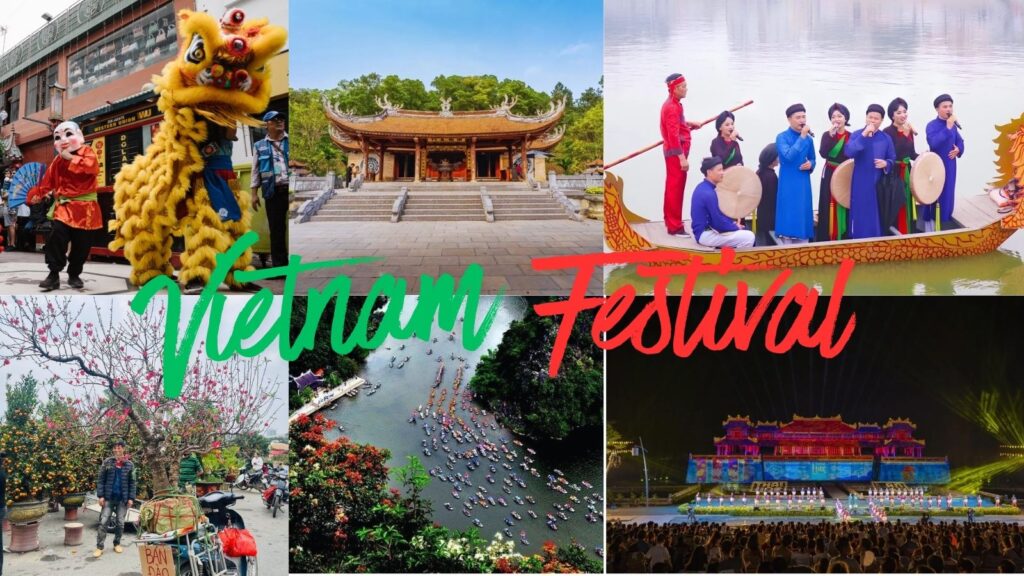
From the joyful reunions of Tet Lunar New Year to lantern-lit streets during the Mid-Autumn Festival, Vietnam’s festivals offer travelers a unique window into the country’s history, beliefs, and everyday life.
When people think of Vietnam, they often picture emerald rice terraces, limestone islands rising from the sea, or steaming bowls of pho enjoyed on bustling street corners. Yet one of the country’s most unforgettable experiences isn’t found in a landscape or a famous dish—it’s found in its festivals.
Across Vietnam, festivals transform villages, cities, temples, and historic landmarks into vibrant gathering places where centuries-old traditions continue to shape modern life. Some celebrations honor legendary kings who helped found the nation. Others welcome the arrival of spring, celebrate successful harvests, pay tribute to ancestors, or bring entire communities together through music, dance, food, and religious rituals.
Unlike many destinations where festivals are primarily entertainment, Vietnamese festivals remain deeply woven into everyday culture. They are occasions for families to reunite, neighbors to reconnect, and younger generations to learn traditions passed down over hundreds of years. For visitors, they offer an opportunity to experience Vietnam beyond its famous attractions and discover the values that continue to define Vietnamese society.
Whether you’re planning your first trip to Vietnam or looking for the best time to return, understanding the country’s festival calendar can completely change the way you experience its culture. Choosing to visit during a major celebration often means witnessing colorful ceremonies, tasting seasonal specialties, enjoying traditional performances, and sharing moments that rarely appear in guidebooks.
This guide explores Vietnam’s most important festivals throughout the year, explaining their history, cultural significance, and what travelers can expect when attending them. You’ll also find practical tips on timing your visit, local customs to respect, and recommendations for experiencing each celebration responsibly.
What Makes Vietnamese Festivals Different?
One of the biggest surprises for first-time visitors is that Vietnamese festivals aren’t staged for tourists—they’re celebrated first and foremost by local communities.
While many countries host cultural festivals primarily as public entertainment, most Vietnamese festivals remain deeply connected to family traditions, village life, religious beliefs, and seasonal rituals that have been passed down for generations.
You won’t simply watch a performance from the sidelines.
Instead, you may find yourself standing beside families offering incense at ancient temples, sharing homemade festival foods with local residents, or listening to centuries-old folk songs performed not on concert stages, but in village courtyards and riverside communities.
That authenticity is what makes Vietnam’s festivals unlike anywhere else in Southeast Asia.
Quick Overview of Major Vietnamese Festivals
| Festival | Time | Importance |
|---|---|---|
| Tet Holiday | Late Jan–Feb | Largest national celebration |
| Mid-Autumn Festival | Sept–Oct | Children’s festival |
| Hung Kings Festival | April | National history |
| Perfume Pagoda Festival | Jan–Mar | Biggest Buddhist pilgrimage |
| Hue Festival | Every two years | Cultural heritage |
| Lim Festival | February | Folk music |
| Wandering Souls Festival | August (Lunar) | Ancestor worship |
| Whale Festival | Various | Coastal traditions |
| Kate Festival | October | Cham culture |
| Ok Om Bok Festival | November | Khmer culture |
Table of Contents
Why Festivals Are the Heart of Vietnamese Culture
To understand Vietnam, it’s important to understand its festivals.
While Vietnam has rapidly modernized over the past few decades, festivals remain one of the strongest connections between contemporary life and centuries of cultural heritage. Across the country, annual celebrations continue to preserve customs that existed long before the modern nation took shape.
Many Vietnamese festivals are shaped by three interconnected traditions: ancestor worship, Buddhism, and long-standing folk beliefs honoring village founders, guardian spirits, and legendary national heroes.
Rather than existing separately, these influences often blend seamlessly within a single celebration. A family may begin the day by paying respect to their ancestors at home, continue with prayers at a Buddhist pagoda, and later join neighbors for folk performances, traditional games, or communal feasts.
This combination of spirituality, history, and social connection gives Vietnamese festivals a character that feels both meaningful and welcoming to visitors.
Many festivals also reflect Vietnam’s agricultural heritage. Long before rapid industrialization, farming shaped the rhythm of daily life, and seasonal celebrations marked the arrival of spring, prayed for favorable weather, or expressed gratitude for successful harvests. Although modern Vietnam has changed dramatically, these traditions continue to influence many festivals today.
Perhaps most importantly, festivals strengthen Vietnam’s sense of community. During Tet, millions travel home for family reunions, while smaller village celebrations bring neighbors together through shared rituals, meals, music, and volunteer activities that reinforce social bonds across generations.
For travelers, attending a Vietnamese festival offers much more than colorful photographs. It provides a rare opportunity to witness living traditions that continue to play an essential role in Vietnamese identity.
Vietnam: A Country of Thousands of Festivals
One of the reasons Vietnam offers such remarkable cultural diversity is the sheer number of traditional festivals celebrated across the country.
According to Vietnam’s cultural authorities, the country hosts more than 8,000 traditional festivals every year. Most are organized by local communities rather than national institutions, reflecting customs that have been preserved for generations.
While international travelers are usually familiar with Tet or the Mid-Autumn Festival, these nationally recognized celebrations represent only a small part of Vietnam’s living cultural heritage. Across the country, villages, temples, fishing communities, and ethnic minority groups continue to celebrate local festivals that honor historical figures, guardian spirits, agricultural traditions, and religious beliefs.
This extraordinary diversity means that no matter when you visit Vietnam, there’s a good chance you’ll encounter a festival taking place somewhere in the country.
Did You Know?
Vietnam celebrates over 8,000 traditional festivals annually, making it one of the richest festival cultures in Southeast Asia.
Understanding Vietnam’s Festival Calendar
One of the first things international visitors notice is that many Vietnamese festivals don’t appear on the same date every year.
That’s because most traditional celebrations follow the Vietnamese lunar calendar, rather than the Gregorian calendar used internationally. As a result, festival dates shift annually, usually falling between late January and early November depending on the lunar cycle.
Major celebrations including Tet, the Hung Kings Festival, Vu Lan Festival, and the Mid-Autumn Festival all follow the lunar calendar, causing their dates to shift each year.
For travelers, checking the official festival calendar before booking flights is essential. Arriving just a few days earlier or later can dramatically change the experience—from peaceful flower markets before Tet to lantern-filled streets during the Mid-Autumn Festival.
Not every festival is celebrated nationwide. Northern Vietnam is known for traditions such as the Lim Festival and Giong Festival, central Vietnam preserves the Cham community’s Kate Festival, while the Mekong Delta showcases Khmer celebrations like Ok Om Bok. This regional diversity ensures that every part of the country offers unique cultural experiences throughout the year.
The following guide explores Vietnam’s most significant festivals, explaining their cultural importance, what travelers can expect, and which celebrations best match different travel styles.
Before You Plan Your Trip
Timing can completely change your festival experience.
Visiting just one or two days before a major celebration often allows you to enjoy bustling flower markets, lantern workshops, and traditional food fairs while avoiding the largest crowds.
Arriving during the festival itself offers unforgettable ceremonies but usually means heavier traffic, higher hotel prices, and larger domestic crowds.
If your goal is photography, consider arriving early and staying until the final day to experience both the preparations and the celebrations.
Vietnamese Festivals Compared with Other Asian Festivals
Although Vietnam shares certain cultural influences with neighboring countries, its festivals have evolved in distinctive ways that reflect the country’s own history and traditions.
| Festival | Vietnam | Other Asian Countries |
|---|---|---|
| Lunar New Year | Strong emphasis on family reunions and ancestor worship | Celebrated across East Asia with different customs and traditions |
| Mid-Autumn Festival | Children’s celebrations, lion dances, lantern processions | Often focuses more on moon appreciation and family gatherings |
| Ancestor Worship | Integrated into many festivals throughout the year | Usually observed through separate memorial traditions in many countries |
These similarities and differences reflect centuries of cultural exchange while highlighting the uniquely Vietnamese identity of the country’s traditional celebrations.
The Complete Vietnam Festival Calendar: Month-by-Month
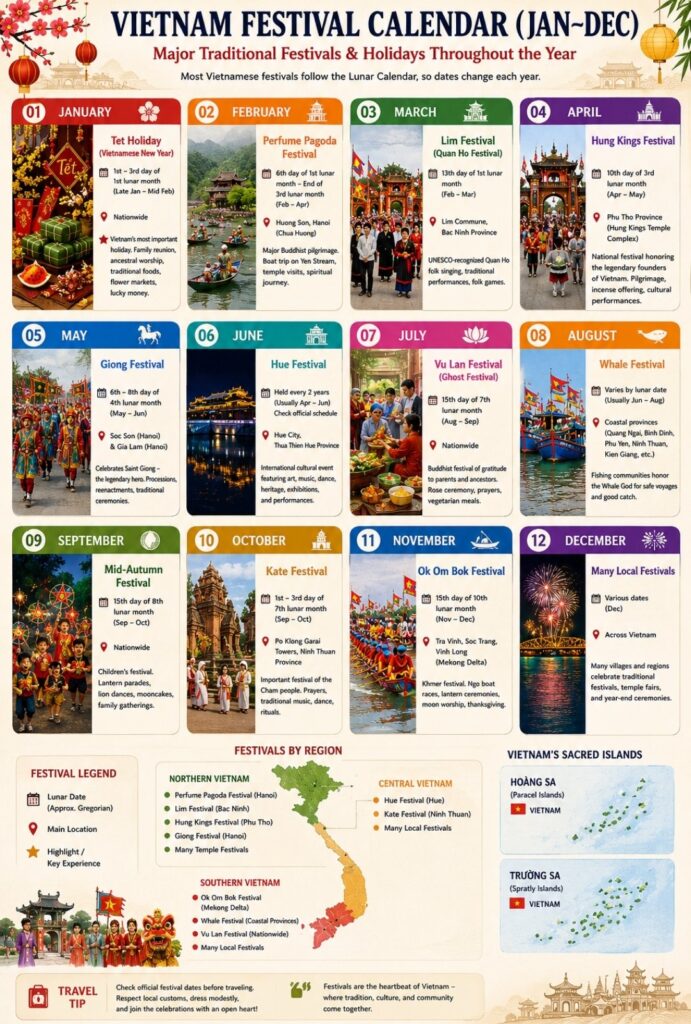
One of the biggest advantages of planning your trip around a Vietnamese festival is that there’s something happening almost every month of the year. While some celebrations are nationwide holidays, others are unique to specific regions, ethnic communities, or religious traditions.
The calendar below highlights Vietnam’s most significant festivals and the best times to experience them. Because many traditional celebrations follow the lunar calendar, exact dates change each year. If you’re planning your itinerary around a particular festival, always confirm the official dates before booking flights and accommodations.
Quick Festival Calendar
| Month | Major Festivals | Best Places to Experience |
|---|---|---|
| January | Tet preparations, Flower Festivals | Hanoi, Ho Chi Minh City, Hue |
| February | Tet (Lunar New Year), Lim Festival, Perfume Pagoda Festival begins | Nationwide, Bac Ninh, Hanoi |
| March | Perfume Pagoda Festival, Giong Festival | Hanoi, Soc Son |
| April | Hung Kings Festival | Phu Tho Province |
| May | Buddha’s Birthday (Vesak) | Buddhist temples nationwide |
| June | Local village festivals | Northern Vietnam villages |
| July | Traditional temple festivals | Various provinces |
| August | Vu Lan Festival (Ghost Festival) | Pagodas across Vietnam |
| September | Mid-Autumn Festival | Hanoi, Hoi An, Ho Chi Minh City |
| October | Kate Festival | Ninh Thuan Province |
| November | Ok Om Bok Festival | Soc Trang, Tra Vinh |
| December | Christmas celebrations | Ho Chi Minh City, Hanoi |
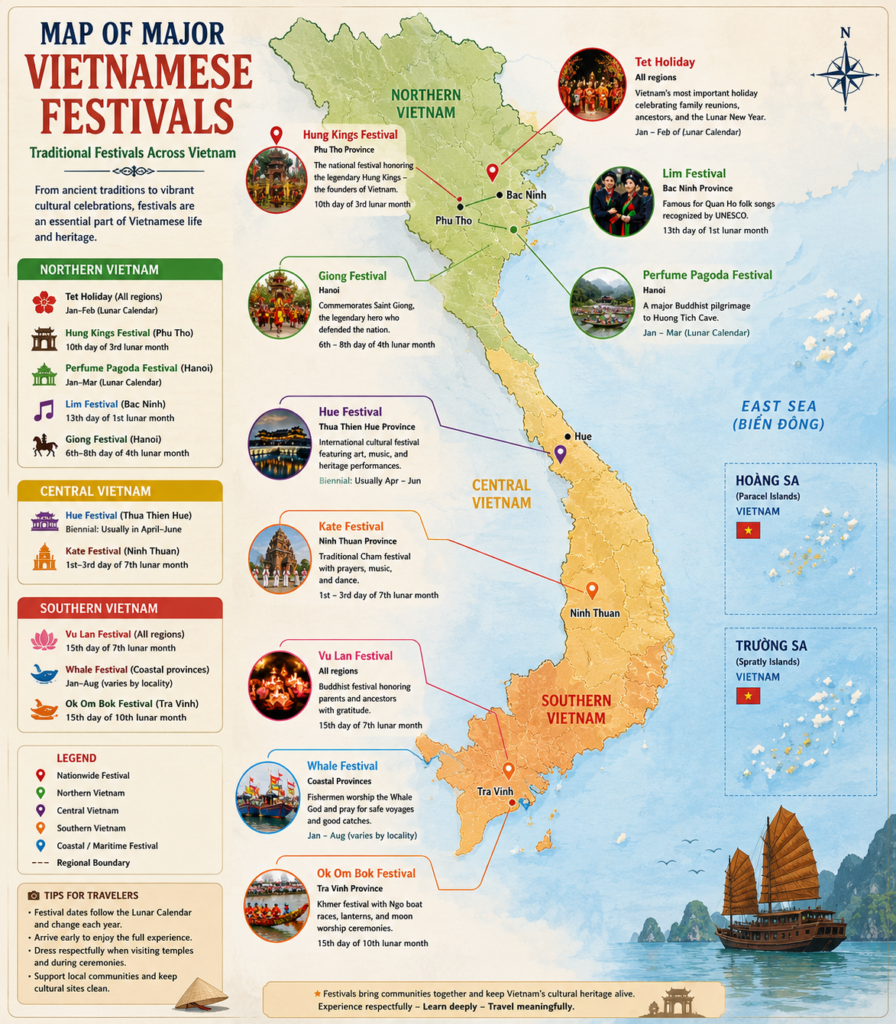
Festival Highlights by Region
Although festivals take place throughout Vietnam, each region has developed its own distinctive traditions shaped by history, geography, and local communities.
| Region | Famous Festivals | Cultural Highlights |
|---|---|---|
| Northern Vietnam | Tet, Lim Festival, Giong Festival, Hung Kings Festival, Perfume Pagoda Festival | Ancient villages, Buddhist traditions, folk music, legendary heroes |
| Central Vietnam | Hue Festival, Kate Festival | Imperial heritage, Cham civilization, royal arts |
| Southern Vietnam | Ok Om Bok Festival, Whale Festival | Khmer culture, maritime traditions, harvest celebrations |
| Nationwide | Tet, Mid-Autumn Festival, Vu Lan | Family reunions, ancestor worship, community celebrations |
This regional diversity makes it possible to experience different aspects of Vietnamese culture no matter which part of the country you choose to visit.
Which Vietnamese Festivals Should You Experience?
Every traveler experiences Vietnam differently. Some seek colorful street celebrations, others are drawn to history, spirituality, or local traditions.
The festivals below highlight the best choices for different travel interests, helping you decide which celebrations deserve a place on your itinerary.
If It’s Your First Visit to Vietnam
If you’re visiting Vietnam for the first time, these festivals offer the broadest introduction to Vietnamese culture.
Tet (Vietnamese Lunar New Year)
If you can experience only one Vietnamese festival, choose Tet. It offers the country’s clearest introduction to family traditions, ancestor worship, and Lunar New Year customs.
Mid-Autumn Festival
For travelers who prefer lively public celebrations, the Mid-Autumn Festival combines lantern displays, lion dances, and evening street festivities that are especially easy for international visitors to enjoy.
If You Love History and Heritage
Vietnam’s history stretches back thousands of years, and several festivals commemorate legendary figures and important milestones in the country’s development.
Hung Kings Festival
The Hung Kings Festival is ideal for travelers interested in Vietnam’s origins and national identity, offering one of the country’s most meaningful historical commemorations.
Giong Festival
The UNESCO-recognized Giong Festival showcases living legends through ceremonial processions and symbolic battle reenactments.
If You’re Interested in Spiritual Traditions
Religion plays an important role in everyday Vietnamese life, and several festivals are centered around Buddhist practices and traditional beliefs.
Perfume Pagoda Festival
The Perfume Pagoda Festival offers Vietnam’s most important Buddhist pilgrimage, combining spectacular natural scenery with centuries-old spiritual traditions.
Vu Lan Festival
Vu Lan provides a quieter, deeply emotional experience centered on gratitude, remembrance, and family values.
If You Want Authentic Local Culture
Some of Vietnam’s most fascinating festivals remain relatively unknown outside the country, offering visitors a chance to experience traditions preserved within local communities.
Lim Festival
The Lim Festival introduces visitors to UNESCO-recognized Quan Ho folk singing in an authentic village setting just outside Hanoi.
Kate Festival
The Kate Festival offers a rare opportunity to experience the living traditions of Vietnam’s Cham community through music, dance, and temple ceremonies.
If You’re Traveling with Children
Families traveling with children will find the Mid-Autumn Festival the most enjoyable, thanks to lantern parades, lion dances, mooncakes, and lively evening celebrations in cities such as Hanoi and Hoi An.
Best Festivals for Different Types of Travelers
Choosing the right festival depends on the experience you’re looking for.
The comparison below provides a quick starting point.
| Traveler | Recommended Festival | Why You’ll Love It |
|---|---|---|
| First-time visitors | Tet | Vietnam’s biggest cultural celebration |
| Families with children | Mid-Autumn Festival | Lanterns, lion dances, family-friendly atmosphere |
| History enthusiasts | Hung Kings Festival | Celebrates Vietnam’s legendary founders |
| Photographers | Mid-Autumn Festival | Colorful lanterns, street performances, vibrant night scenes |
| Spiritual travelers | Perfume Pagoda Festival | Vietnam’s largest Buddhist pilgrimage |
| Music lovers | Lim Festival | UNESCO-recognized Quan Ho folk singing |
| Cultural explorers | Kate Festival | Unique Cham traditions and ceremonies |
| Heritage travelers | Giong Festival | Historic rituals recognized by UNESCO |
Planning Around Festival Dates
Because many Vietnamese festivals attract large domestic crowds, planning ahead can make a significant difference to your experience.
If you hope to visit during Tet or the Mid-Autumn Festival, book flights and accommodations several months in advance. Transportation during Tet is particularly busy as millions of Vietnamese return to their hometowns, and popular hotels often sell out early.
For smaller regional festivals, advance planning is still worthwhile, especially if you’re traveling to rural destinations where accommodation options may be limited.
Fortunately, the reward is well worth the preparation. Experiencing Vietnam during one of its major festivals allows travelers to see the country at its most vibrant, welcoming, and culturally rich.
UNESCO-Recognized Festival Traditions
Several cultural traditions associated with Vietnamese festivals have been recognized by UNESCO for their outstanding cultural value.
| UNESCO Heritage | Related Festival |
|---|---|
| Quan Ho Folk Songs | Lim Festival |
| Giong Festival | Giong Festival |
| Royal Court Music (Nhã Nhạc) | Hue Festival |
| Worship of the Hung Kings | Hung Kings Festival |
These recognitions highlight the international importance of preserving Vietnam’s living cultural heritage for future generations.
While thousands of festivals take place across Vietnam every year, only a relatively small number have become nationally recognized cultural icons or internationally known travel experiences.
Some attract millions of pilgrims. Others preserve ancient music, royal traditions, or the heritage of Vietnam’s ethnic communities.
Together, they offer one of the richest introductions to Vietnamese culture that travelers can experience.
Vietnam’s Most Important Traditional Festivals
While Vietnam celebrates thousands of festivals each year, only a handful have become national symbols recognized across the country. These celebrations are more than colorful events on a calendar—they reflect Vietnam’s history, religious beliefs, family values, and regional traditions.
If you’re only able to experience a few festivals during your visit, start with these. Each offers a different perspective on Vietnamese culture and leaves visitors with memories that extend far beyond sightseeing.
Rather than ranking these festivals from best to least important, the following guide introduces each celebration through a different lens—from family traditions and spiritual pilgrimages to ethnic heritage and regional customs.
1. Tet Holiday (Vietnamese Lunar New Year)
Vietnamese name: Tết Nguyên Đán
When: First day of the first lunar month (usually late January or February)
Best places to experience it: Hanoi, Hue, Ho Chi Minh City, Hoi An, and virtually every town and village across Vietnam.
Why Tet Is Vietnam’s Most Important Festival
No celebration shapes Vietnamese life more profoundly than Tet, the Vietnamese Lunar New Year.
For many international visitors, Tet is often compared to Christmas and New Year combined. While the comparison helps explain its scale, Tet carries a deeper cultural meaning. It is a time when families return home, generations gather under one roof, ancestors are honored, and people begin the new year with hopes for health, prosperity, and happiness.
Weeks before the holiday arrives, cities across Vietnam begin to change. In Hanoi, flower markets begin filling before sunrise as families compare peach blossom branches, discuss prices with growers, and search for a tree they believe will bring good fortune in the coming year. In southern Vietnam, rows of bright yellow apricot blossoms create an equally recognizable New Year scene, while kumquat trees line sidewalks outside homes, offices, and cafés.
For Vietnamese people, Tet is not simply a public holiday—it’s the emotional center of the year.
By the Numbers
- Largest annual holiday in Vietnam
- Celebrated nationwide by millions of families
- Marks the beginning of the lunar calendar
- Generates the busiest travel period of the year
- Most businesses close for several days to allow family reunions
For many Vietnamese, no other celebration carries the same emotional, cultural, and social importance as Tet.
The Origins of Tet
Tet has roots stretching back more than a thousand years, influenced by ancient agricultural traditions and the lunar calendar that once guided farming communities throughout East Asia.
Over time, the celebration absorbed elements of Confucianism, Buddhism, and indigenous Vietnamese beliefs, gradually becoming a uniquely Vietnamese tradition centered on family and ancestor worship.
Although modern celebrations have evolved, the underlying values remain unchanged: expressing gratitude for the past, honoring family traditions, and welcoming a fresh beginning.
How Vietnamese Families Celebrate Tet
Preparations for Tet often begin several weeks in advance.
Homes are thoroughly cleaned to symbolize leaving behind the difficulties of the previous year. Families decorate their houses with flowering trees, prepare traditional foods, buy new clothes, and visit local markets to purchase offerings for family altars.
Outside many homes, kumquat trees heavy with small golden fruit symbolize prosperity for the coming year, while red calligraphy scrolls decorate entrances with wishes for happiness and success.
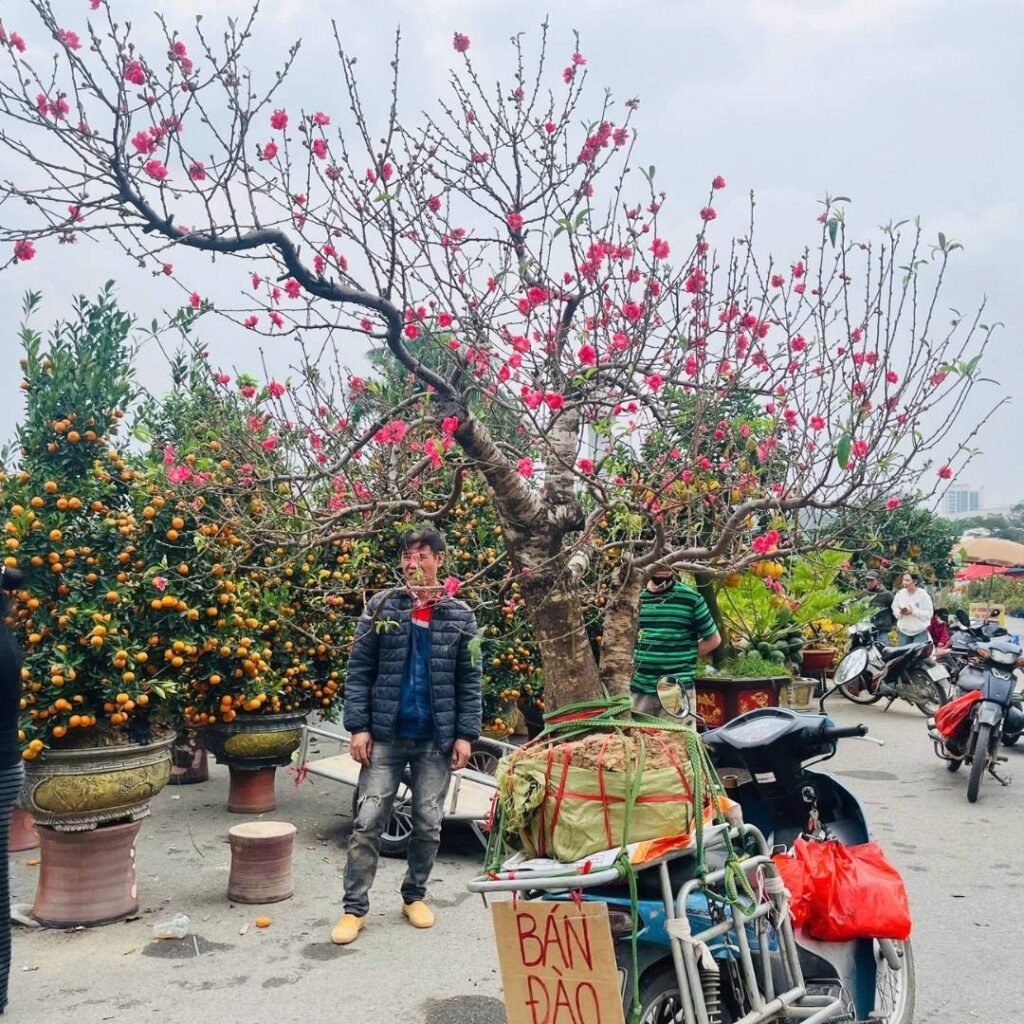
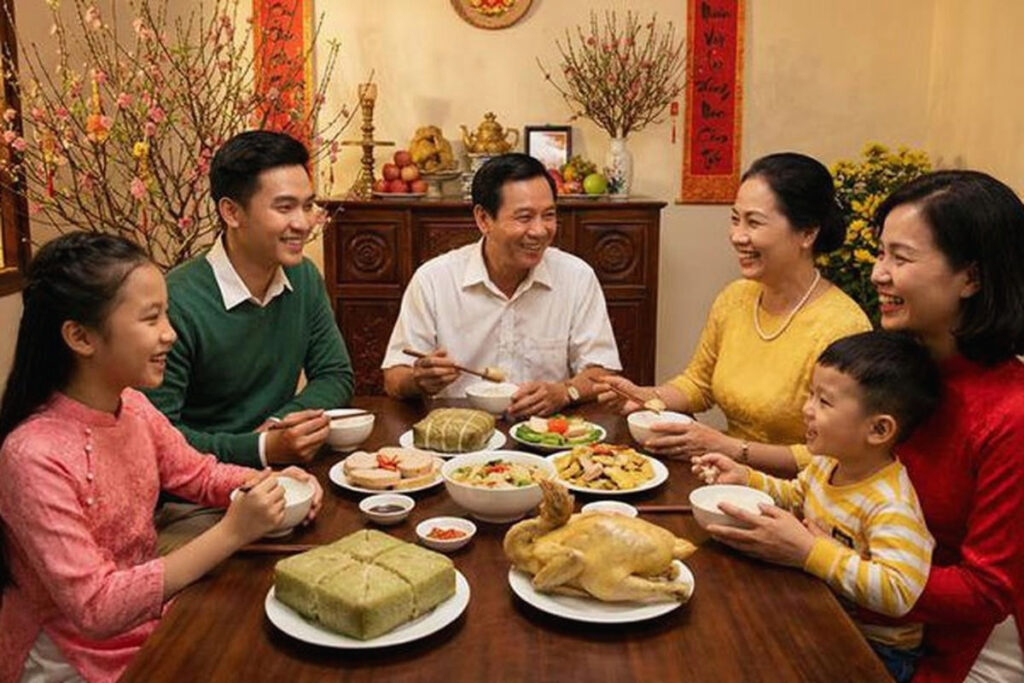
On New Year’s Eve, dining tables gradually fill as relatives who may not have seen one another for months gather for the year’s most important family meal. Before dinner begins, many households pause quietly at the family altar to remember parents, grandparents, and earlier generations.
After midnight, many families visit temples to pray for peace, health, and success during the coming year.
Throughout the holiday, younger family members receive lì xì—red envelopes containing lucky money—from parents, grandparents, and older relatives as blessings for the year ahead.
Traditional Tet Foods
Food plays an essential role in every Tet celebration.
Many dishes are prepared only once each year, making them closely associated with the holiday itself.
Some of the best-known Tet specialties include:
- Bánh Chưng – Square sticky rice cake wrapped in green leaves, traditionally prepared in northern Vietnam and symbolizing the Earth.
- Bánh Tét – Cylindrical sticky rice cake popular in southern Vietnam, often filled with pork and mung beans.
- Pickled vegetables (Dưa món) – Served alongside rich dishes to balance flavors.
- Boiled chicken – Frequently offered on family altars before being shared during reunion meals.
- Candied fruits and seeds (Mứt Tết) – Offered to guests throughout the holiday.
Preparing these foods is often a family activity, with recipes passed down through generations.
Tet Through the Eyes of Travelers
For visitors, Tet offers a rare opportunity to experience Vietnamese family life at its most authentic.
However, it also brings practical challenges.
Many restaurants, museums, shops, and locally owned businesses close for several days as families celebrate together. Domestic transportation becomes extremely busy in the days leading up to the holiday, and hotel prices in popular destinations may increase.
On the other hand, travelers who plan ahead are rewarded with unforgettable experiences:
- Walking through vibrant flower markets.
- Watching dragon and lion dance performances.
- Visiting beautifully decorated temples.
- Seeing families dressed in traditional áo dài.
- Experiencing festive decorations in every city.
Rather than expecting a typical sightseeing itinerary, Tet invites visitors to slow down and observe how Vietnamese families celebrate their most meaningful holiday.
Travel Tips for Visiting During Tet
If you’re planning to experience Tet in Vietnam:
- Book flights and accommodation 3–6 months in advance.
- Check opening hours before visiting attractions.
- Carry some cash for smaller businesses.
- Dress respectfully when visiting temples.
- Learn a few Tet greetings to connect with locals.
Insider Tip
Many first-time visitors assume Tet is the busiest time to explore Vietnam’s famous attractions. In reality, the opposite can be true.
While transportation hubs become crowded before the holiday, major city centers often feel surprisingly peaceful during the first days of Tet as local residents stay home with their families. It’s one of the few times each year when normally busy streets in Hanoi or Ho Chi Minh City become noticeably quieter.
Local Insight
One tradition that often surprises international visitors is xông đất, or “the first visitor of the new year.”
Many Vietnamese families believe the first person to enter their home after midnight influences the household’s luck for the coming year. Because of this, some families carefully choose who should visit first, while others arrange for a respected relative to arrive shortly after the new year begins.
Although customs vary by region, this tradition highlights how Tet remains deeply connected to family, symbolism, and hopes for a prosperous year ahead.
While Tet marks the beginning of the lunar year, another celebration later in the calendar captures a very different side of Vietnamese family life.
2. Mid-Autumn Festival (Tết Trung Thu)
Vietnamese name: Tết Trung Thu
When: 15th day of the eighth lunar month (usually September or early October)
Best places to experience it: Hanoi, Hoi An, Ho Chi Minh City, Tuyen Quang.
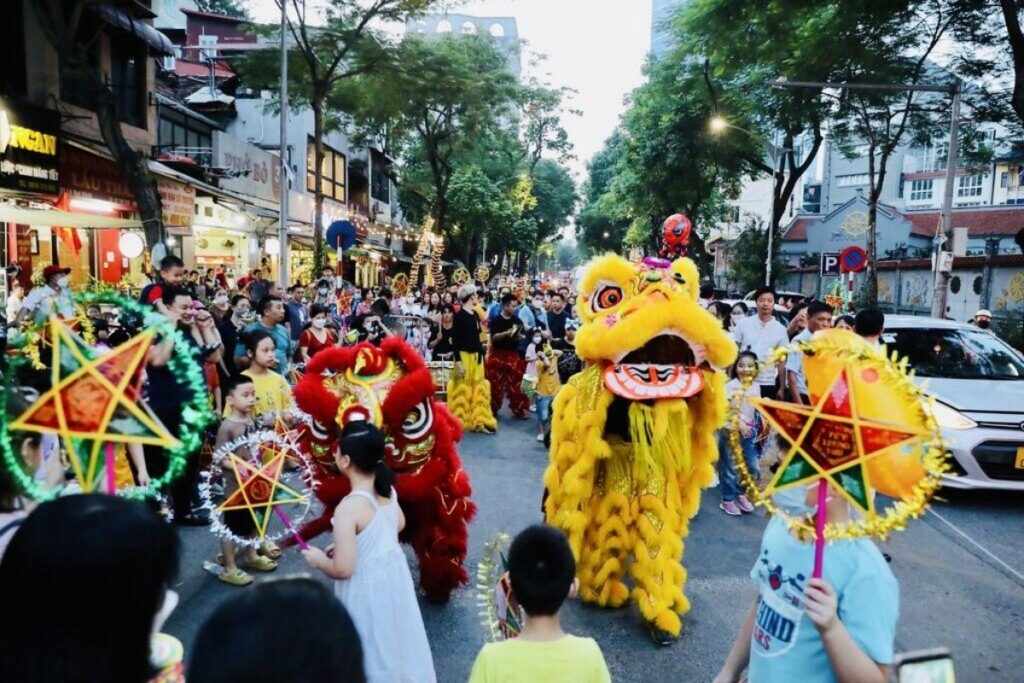
An Evening That Belongs to Children
As dusk settles over Hoi An, shopkeepers light hundreds of silk lanterns while children clutch brightly colored paper lanterns and wait excitedly for the first beat of the lion dance drums. Within an hour, quiet streets transform into one of Vietnam’s most magical cultural celebrations.
This is the Mid-Autumn Festival—not simply a children’s holiday, but one of the country’s most beloved evenings of family, tradition, and community.
Often called Vietnam’s “Children’s Festival,” this annual celebration transforms streets, neighborhoods, and ancient towns into vibrant displays of glowing lanterns, lion dances, traditional music, and colorful decorations.
Many shopkeepers pause their business to welcome lion dance troupes, believing the performance brings prosperity and good fortune for the months ahead.
For travelers, it is one of the country’s most photogenic cultural events and one of the easiest festivals to experience without detailed planning.
Why Families Treasure This Night
The Mid-Autumn Festival has been celebrated in Vietnam for centuries and takes place during the full moon of the eighth lunar month.
Originally connected with the autumn harvest, the celebration gradually evolved into a festival centered on family unity and children’s happiness.
Today, the festival represents gratitude, hope, and wishes for good fortune while preserving traditions that continue to bring communities together each year.
When the Streets Come Alive
As evening approaches, Vietnamese neighborhoods come alive.
Children proudly carry star-shaped lanterns, rabbit lanterns, and colorful paper fish lanterns through neighborhood streets while parents follow close behind taking photos and sharing mooncakes with relatives.
Public squares, shopping streets, and historic districts host cultural performances, games, and family activities that continue late into the evening.
In destinations such as Hoi An Ancient Town, hundreds of handcrafted lanterns illuminate riverside streets, creating one of Vietnam’s most recognizable festival scenes.
Mooncakes: The Taste of Mid-Autumn
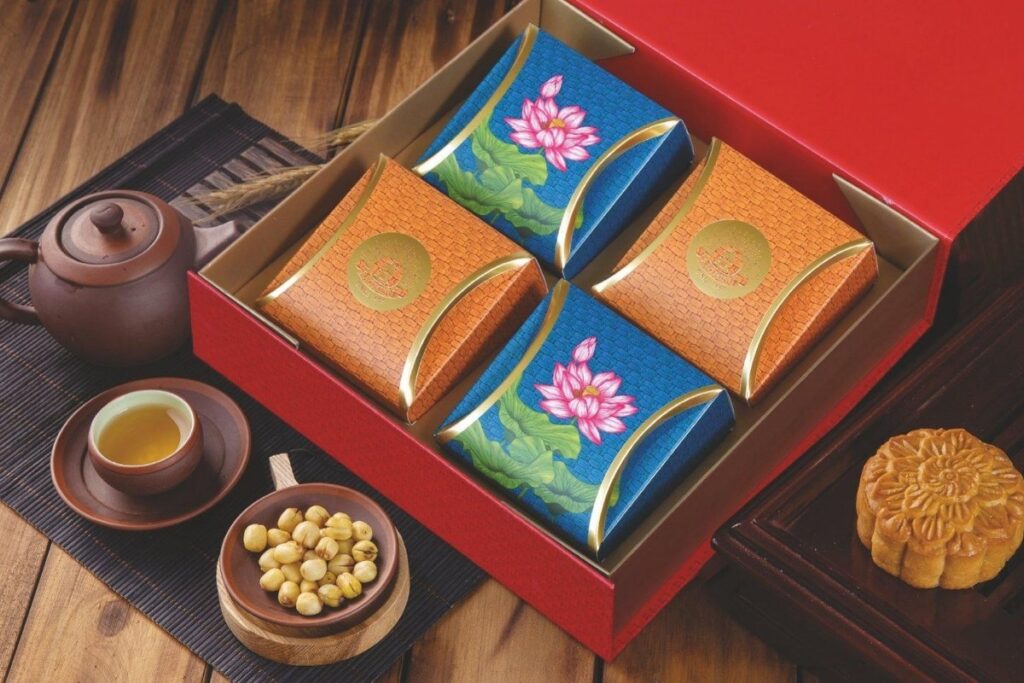
Several weeks before the festival, bakery windows begin displaying elaborate mooncake gift boxes that have become one of the most recognizable signs that Mid-Autumn is approaching.
No Mid-Autumn Festival is complete without mooncakes.
Traditionally exchanged as gifts among family members, friends, and business partners, mooncakes symbolize reunion and completeness.
Modern bakeries now produce dozens of varieties, ranging from traditional lotus seed and salted egg yolk fillings to contemporary flavors such as green tea, chocolate, coffee, and tropical fruits.
For many Vietnamese families, sharing mooncakes while admiring the full moon remains one of the festival’s most cherished traditions.
Insider Tip
If you’re visiting Hoi An during the Mid-Autumn Festival, arrive before sunset.
The transformation happens gradually. Shopkeepers begin hanging lanterns in the late afternoon, children gather with handmade lanterns before dark, and as night falls, the streets become illuminated with thousands of colorful lights.
Many experienced photographers consider the hour just after sunset the perfect time to capture both the lantern glow and the remaining natural light.
Why It’s One of Vietnam’s Most Visitor-Friendly Festivals
Unlike Tet, when many businesses close for family celebrations, the Mid-Autumn Festival is highly accessible for visitors.
Markets, cafés, restaurants, and cultural attractions remain open, allowing travelers to enjoy festive activities while continuing their sightseeing plans.
Because celebrations take place outdoors in the evening, the festival is especially popular among photographers seeking colorful street scenes, traditional performances, and beautifully illuminated historic neighborhoods.
If the Mid-Autumn Festival celebrates childhood and family, the next festival looks even further back—to the legendary origins of the Vietnamese nation itself.
3. Hung Kings Festival (Giỗ Tổ Hùng Vương)
Vietnamese name: Giỗ Tổ Hùng Vương
When: 10th day of the third lunar month (usually April)
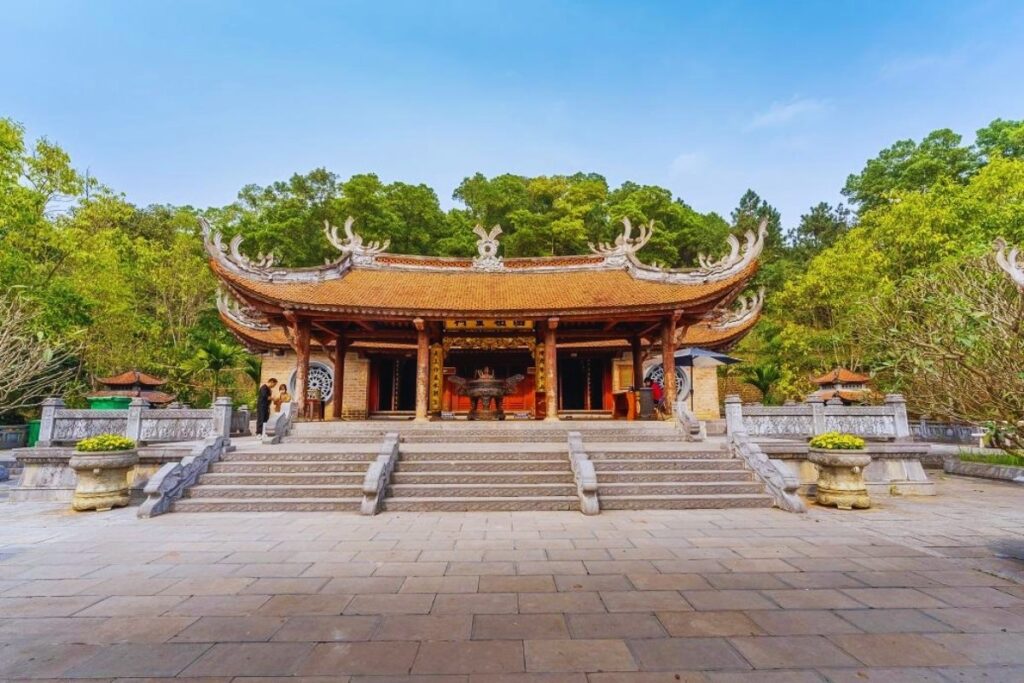
Best place to experience it: Hung Kings Temple Historical Site, Phu Tho Province
Why Every Vietnamese Knows the Hung Kings
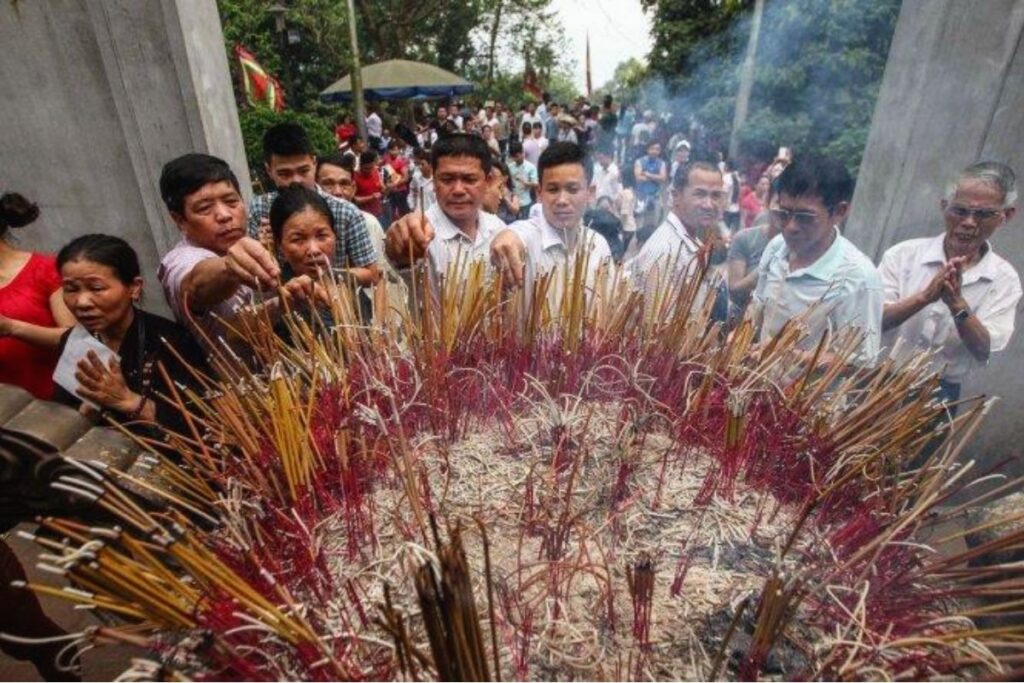
Why do millions of Vietnamese willingly climb Nghia Linh Mountain every year?
The answer lies in a tradition that reaches back to the legendary founders of the nation. The Hung Kings Festival is more than a public holiday—it is a collective act of remembrance that reinforces a shared sense of identity across generations.
Every year, millions of Vietnamese make pilgrimages to Hung Kings Temple in northern Vietnam to pay tribute to the legendary rulers believed to have founded the first Vietnamese state more than 2,000 years ago.
For many Vietnamese, this is more than a historical commemoration. It is an expression of gratitude toward the nation’s ancestors and a reminder of the shared origins that continue to unite the country today.
A famous Vietnamese saying captures this sentiment:
“When drinking water, remember its source.”
The festival embodies this philosophy, encouraging each generation to honor those who came before them.
More Than a National Holiday
Unlike Tet, which centers on individual families, the Hung Kings Festival celebrates the nation’s extended family.
Before sunrise, long lines of pilgrims begin climbing Nghia Linh Mountain carrying flowers, incense, and ceremonial offerings. The higher the path climbs, the quieter the atmosphere becomes as visitors prepare to pay tribute inside the temple complex.
Beyond the temple grounds, the atmosphere gradually shifts from solemn ceremony to lively community celebration, with traditional games, folk performances, and local food stalls drawing families throughout the day.
The combination of ceremonial rituals and community celebrations creates an atmosphere that is both respectful and festive.
What International Visitors Often Discover Here
For international visitors interested in Vietnamese history, this festival provides valuable context that cannot be found inside museums alone.
The ceremonies demonstrate how historical memory remains part of everyday life in Vietnam, where legendary figures continue to influence national identity.
Because the festival is primarily attended by Vietnamese pilgrims rather than international tourists, it also offers a more authentic cultural experience than some of the country’s larger public celebrations.
Travel Tips
- Arrive early to avoid long queues.
- Wear comfortable walking shoes.
- Dress modestly inside the temple complex.
- Expect heavy domestic crowds during the holiday.
From national history, Vietnam’s festival calendar naturally moves toward spirituality, where millions of pilgrims begin each new year with journeys to sacred temples.
4. Perfume Pagoda Festival
Vietnamese name: Lễ hội Chùa Hương
When: Sixth day of the first lunar month until the end of the third lunar month
Best place to experience it: Perfume Pagoda, Hanoi
Vietnam’s Largest Buddhist Pilgrimage
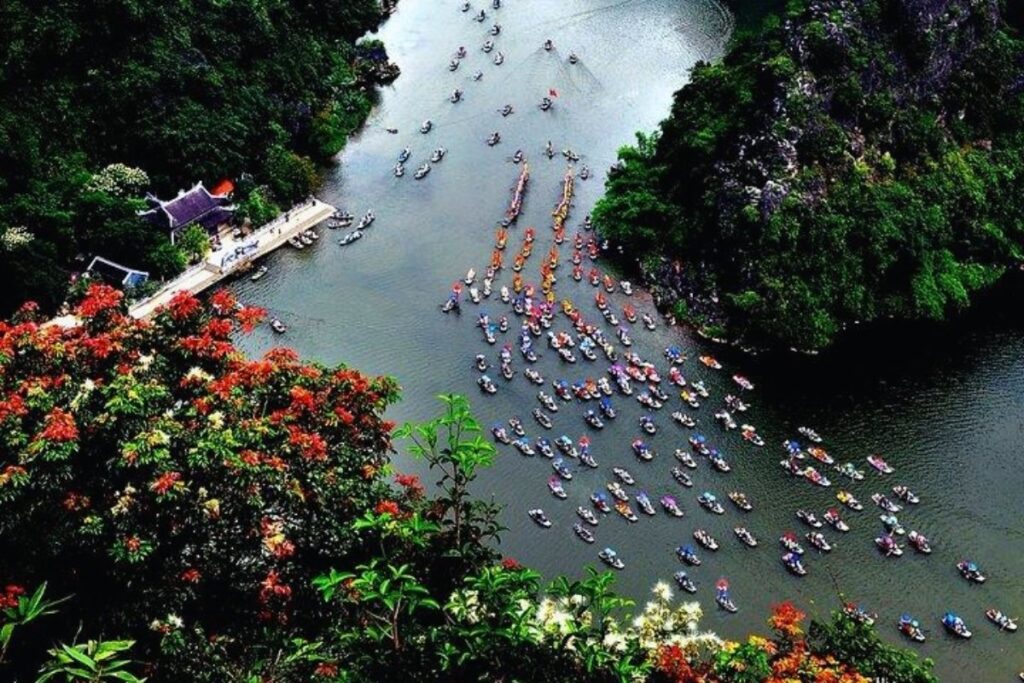
The journey begins before sunrise.
At Ben Duc Wharf, small rowboats begin departing soon after sunrise. As they glide along the Yen Stream, the sounds of traffic disappear, replaced by birdsong, quiet conversations, and the steady rhythm of wooden paddles cutting through the water.
By the time visitors reach the cave temples, the pilgrimage has already become part of the experience.
This is the beginning of the Perfume Pagoda Festival, the country’s largest annual Buddhist pilgrimage.
Unlike festivals centered on performances or street celebrations, this journey focuses on reflection, prayer, and spiritual renewal.
Many Vietnamese believe that beginning the year with a pilgrimage to Perfume Pagoda brings health, peace, prosperity, and good fortune for the months ahead.
The Pilgrimage Begins on the Water
One reason the Perfume Pagoda Festival is so memorable is that reaching the temples is part of the experience.
The journey unfolds gradually. First comes the peaceful boat ride, followed by shaded walking paths lined with food vendors and incense stalls, before the climb toward Huong Tich Cave begins.
Many visitors stop briefly beneath centuries-old banyan trees before continuing uphill toward Huong Tich Cave, making the pilgrimage feel as much about the journey as the destination.
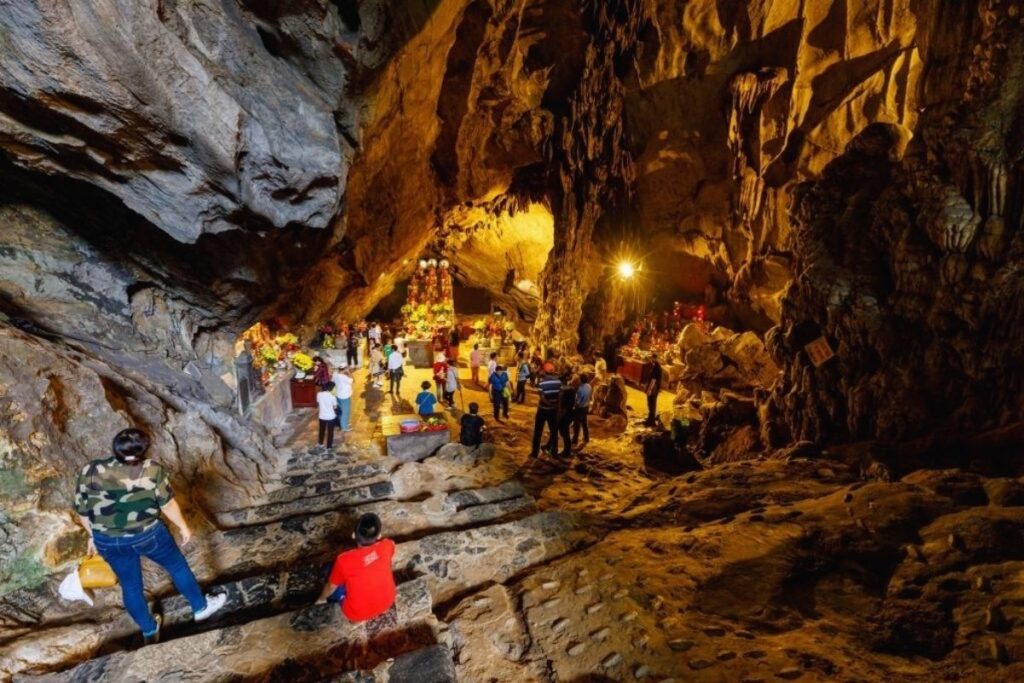
The route itself feels less like sightseeing and more like participating in a centuries-old tradition.
Vendors selling fresh sugarcane juice, vegetarian dishes, incense, and small offerings line parts of the route, creating a lively contrast to the quiet atmosphere inside the temples.
Along the Yen Stream
Long before reaching the pagoda itself, the pilgrimage has already begun.
As small wooden boats glide quietly along the Yen Stream, the sounds of traffic disappear, replaced by birdsong, gentle conversations, and the rhythmic splash of paddles against the water.
For many visitors, this peaceful boat ride becomes just as memorable as the temples waiting beyond the mountains.
Why Millions Make This Journey Every Year
For Buddhists, the pilgrimage represents an opportunity to pray for:
- Good health
- Family harmony
- Academic success
- Prosperity
- Inner peace
Many visitors also make symbolic offerings while reflecting on personal goals for the coming year.
Even travelers without religious beliefs often describe the experience as calming and deeply memorable because of its natural scenery and cultural atmosphere.
Visitor Tips
- Visit on weekdays if possible to avoid weekend crowds.
- Wear comfortable walking shoes.
- Carry cash for boat tickets, food, and donations.
- Start early to enjoy cooler temperatures and quieter waterways.
Not every Vietnamese festival centers on religion. Some preserve traditions that can only be understood through music, poetry, and local community life.
5. Lim Festival
Vietnamese name: Hội Lim
When: Around the 13th day of the first lunar month
Best place to experience it: Bac Ninh Province
Where Vietnam’s Most Beautiful Folk Songs Come to Life
Before visitors see the singers, they usually hear them.
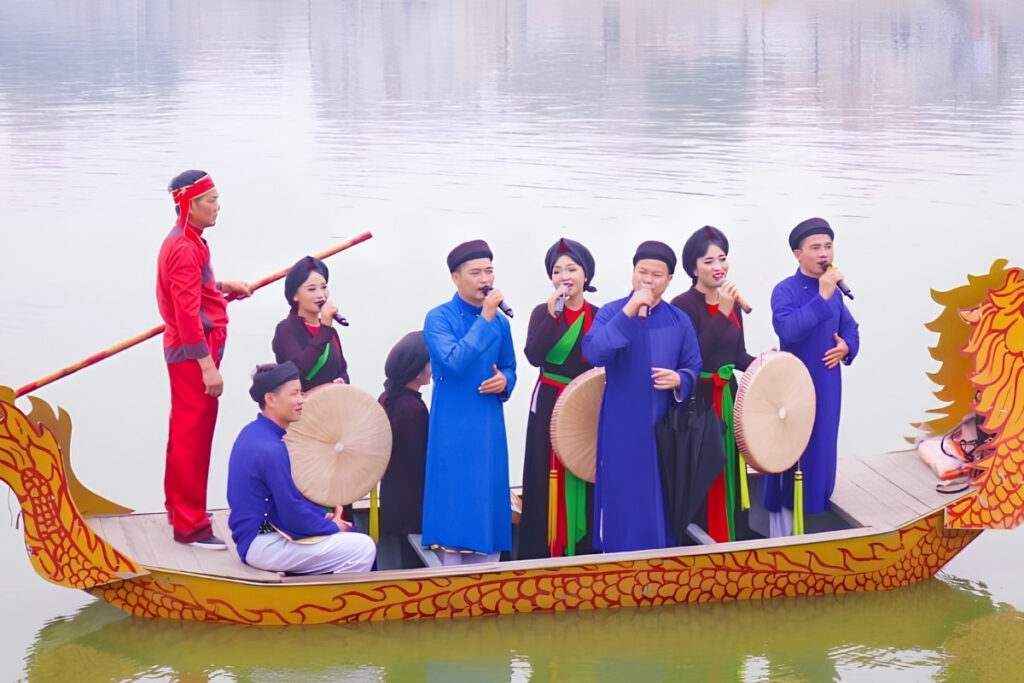
Visitors usually hear the singing before they find the performers. Across village ponds, Quan Ho melodies travel naturally over the water, making the music feel as though it belongs to the landscape itself.
Recognized by UNESCO as an Intangible Cultural Heritage of Humanity, Quan Ho originated in the villages of Bac Ninh, just northeast of Hanoi.
Rather than performing on large concert stages, singers dressed in elegant traditional clothing perform graceful call-and-response songs that have been passed down through generations.
Watching these performances beside lakes, temples, or village courtyards offers visitors an intimate glimpse into northern Vietnam’s cultural heritage.
Listen Before You Photograph
Many visitors instinctively reach for their cameras when the singing begins.
Instead, spend a few moments simply listening.
Quan Ho isn’t just music—it’s a dialogue between singers that reflects friendship, respect, and centuries of local tradition. Understanding this before taking photographs often makes the experience far more meaningful.
When an Entire Village Becomes a Stage
The Lim Festival is as much a community gathering as it is a musical celebration.
Walking through the festival grounds, visitors move naturally between singing performances, village games, calligraphy stalls, and traditional costume displays rather than following a fixed program.
The relaxed atmosphere makes the festival particularly enjoyable for travelers interested in photography and local culture.
Why Many Travelers Leave Surprised
Unlike Vietnam’s larger nationwide festivals, the Lim Festival remains closely connected to local communities.
This authenticity allows visitors to experience traditions that continue to be practiced for cultural preservation rather than tourism alone.
Because Bac Ninh is less than an hour from Hanoi, the festival also makes an excellent day trip for travelers staying in the capital.
If Lim celebrates harmony through music, the Giong Festival tells a story of courage through ritual and legend.
6. Giong Festival
Vietnamese name: Hội Gióng
When: April and May (depending on the temple)
Best places to experience it: Soc Son and Gia Lam, Hanoi
When Legend Becomes Living Tradition
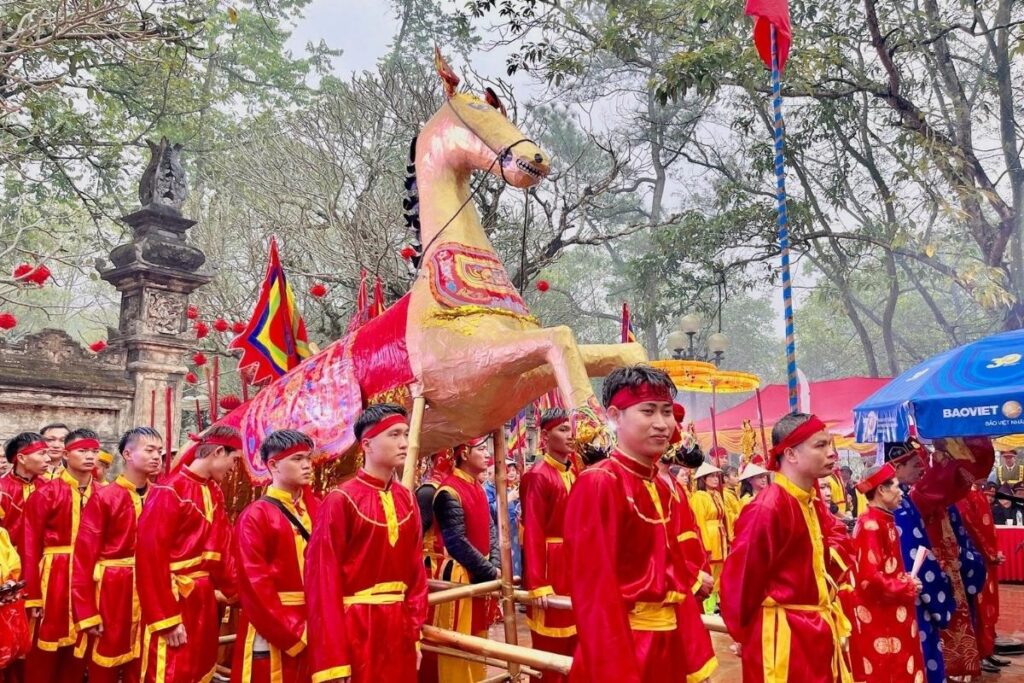
Long before the ceremonial battle begins, villagers gather around the temple grounds while participants in brightly colored traditional costumes prepare for the processions that have been repeated for generations.
The Giong Festival commemorates Saint Giong, one of Vietnam’s most celebrated legendary heroes.
According to folklore, Giong was a miraculous child who grew into a giant overnight and successfully defended the country against invading forces before ascending to heaven.
His story symbolizes courage, patriotism, and the determination to protect the nation.
A UNESCO-Recognized Tradition
The Giong Festival was inscribed on UNESCO’s Representative List of the Intangible Cultural Heritage of Humanity in 2010.
Unlike theatrical reenactments performed for tourists, the festival remains a genuine community tradition involving thousands of local participants.
Highlights include:
- Grand ceremonial processions
- Symbolic battle reenactments
- Traditional music
- Ritual dances
- Offerings at historic temples
Every element of the festival carries symbolic meaning rooted in Vietnamese folklore and village traditions.
What to Expect on Festival Day
Travelers attending the festival should expect a deeply traditional atmosphere rather than a modern entertainment event.
The ceremonies are colorful and dramatic, yet they also serve as acts of collective remembrance that strengthen community identity.
For those interested in Vietnam’s legends and intangible heritage, the Giong Festival offers one of the country’s most meaningful cultural experiences.
Beyond village traditions, Vietnam’s festival culture also reflects centuries of imperial history, nowhere more clearly than in the former royal capital of Hue.
7. Hue Festival
Vietnamese name: Festival Huế
When: Typically held every two years (dates vary)
Best place to experience it: Hue City, Thua Thien Hue
Where Vietnam’s Imperial Heritage Comes Alive
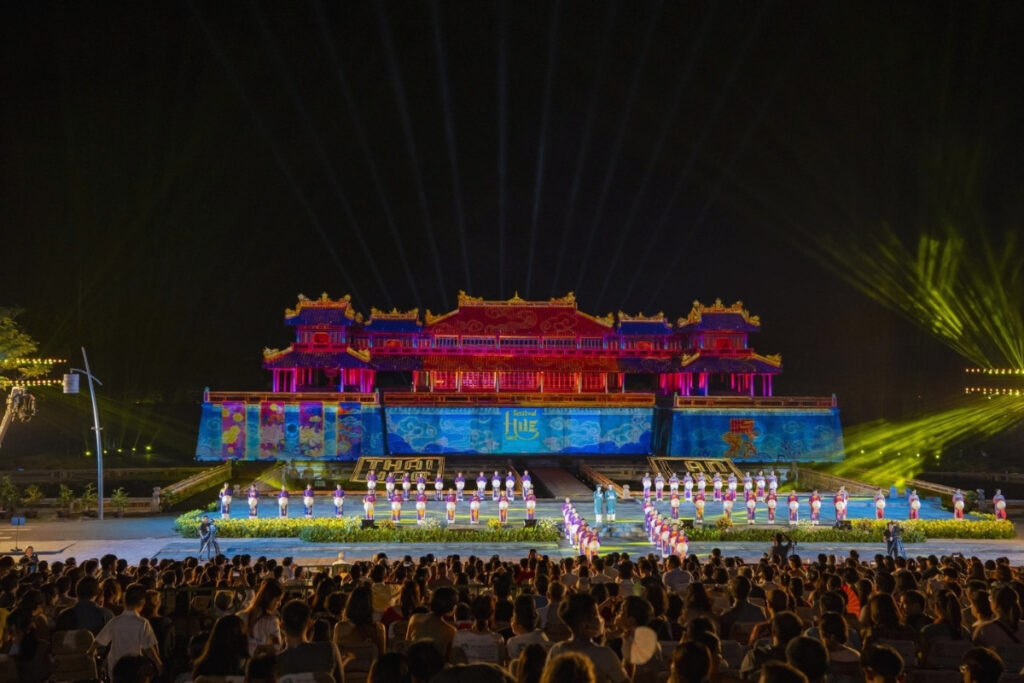
As evening approaches, the Imperial City gradually changes character. Palace courtyards that remain quiet during the day begin filling with music, while lanterns and carefully placed lighting transform historic architecture into open-air performance spaces.
Ancient palace walls host royal music performances, riverside parks fill with cultural exhibitions, and lanterns illuminate the Perfume River long after sunset.
Once the capital of the Nguyen Dynasty (1802–1945), Hue remains one of Vietnam’s richest cultural destinations. During the festival, its ancient citadel, royal palaces, and riverside streets become stages for performances inspired by Vietnam’s royal court traditions.
For travelers, this is one of the best opportunities to experience Vietnamese performing arts, traditional craftsmanship, and historical architecture in one place.
A Festival Spread Across an Entire City
Rather than focusing on a single religious ceremony, the Hue Festival brings together hundreds of cultural activities over several days.
Visitors may encounter:
- Royal court music performances (Nhã nhạc), recognized by UNESCO.
- Traditional áo dài fashion shows set against the backdrop of the Imperial City.
- Lantern displays along the Perfume River.
- Artisan workshops showcasing embroidery, lacquerware, wood carving, and conical hat making.
- Street performances by artists from across Vietnam and around the world.
- Culinary events highlighting Hue’s renowned royal cuisine.
Many tasting menus recreate imperial recipes once served to Nguyen emperors, with each small dish presented almost like a work of art.
As darkness falls, the illuminated walls of the Imperial City create a dramatic backdrop for performances that once entertained Vietnam’s royal court.
The result is a city-wide celebration that blends history with contemporary cultural exchange.
More Than a Traditional Festival
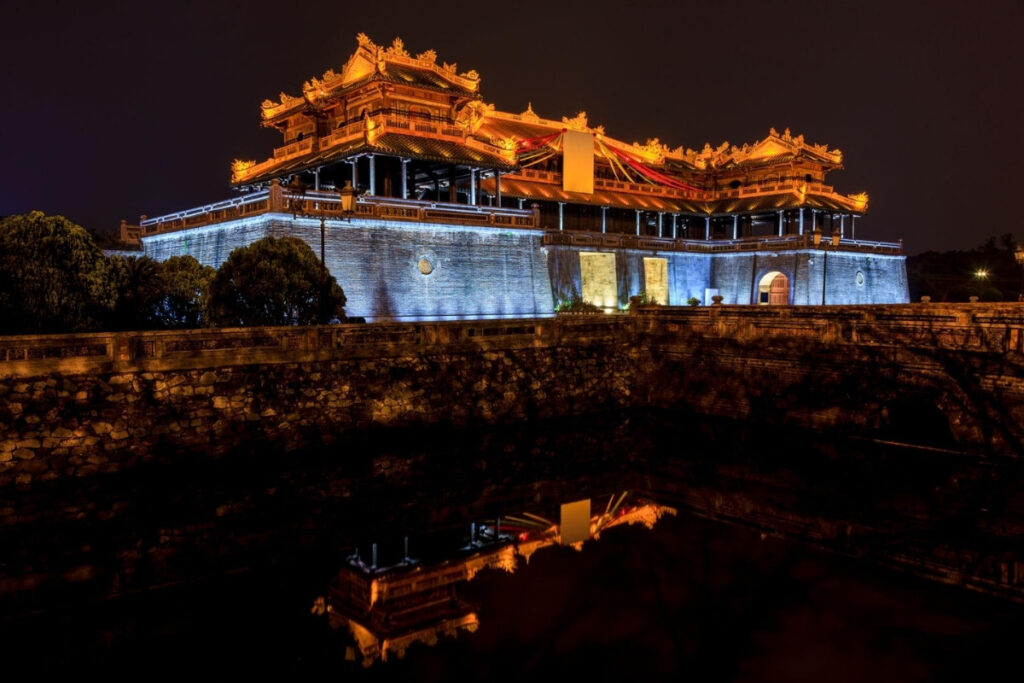
Unlike traditional village festivals that focus primarily on religious ceremonies, the Hue Festival combines history, architecture, music, cuisine, and contemporary performing arts into one city-wide cultural celebration.
For travelers, it feels less like attending a single festival and more like exploring an open-air museum where every historic monument becomes part of the performance.
Unlike many festivals centered on a single day of rituals, the Hue Festival offers a full itinerary of performances, exhibitions, and cultural experiences spread across multiple days.
This makes it especially appealing for travelers who want flexibility. Visitors can explore Hue’s UNESCO-listed monuments during the day before attending evening concerts, light shows, or traditional performances.
Because many events are designed with international audiences in mind, English-language information is often more accessible than at smaller regional festivals.
Travel Tips
- Book accommodation early.
- Reserve popular evening performances in advance.
- Wear lightweight clothing suitable for humid weather.
- Allow at least three days to explore both the festival and Hue’s heritage sites.
While Hue celebrates cultural heritage on a grand public stage, Vu Lan returns to something far more personal—the quiet relationship between parents, children, and gratitude.
8. Vu Lan Festival (Ghost Festival)
Vietnamese name: Lễ Vu Lan
When: 15th day of the seventh lunar month (usually August or September)
Best places to experience it: Buddhist pagodas throughout Vietnam
A Festival of Gratitude and Compassion
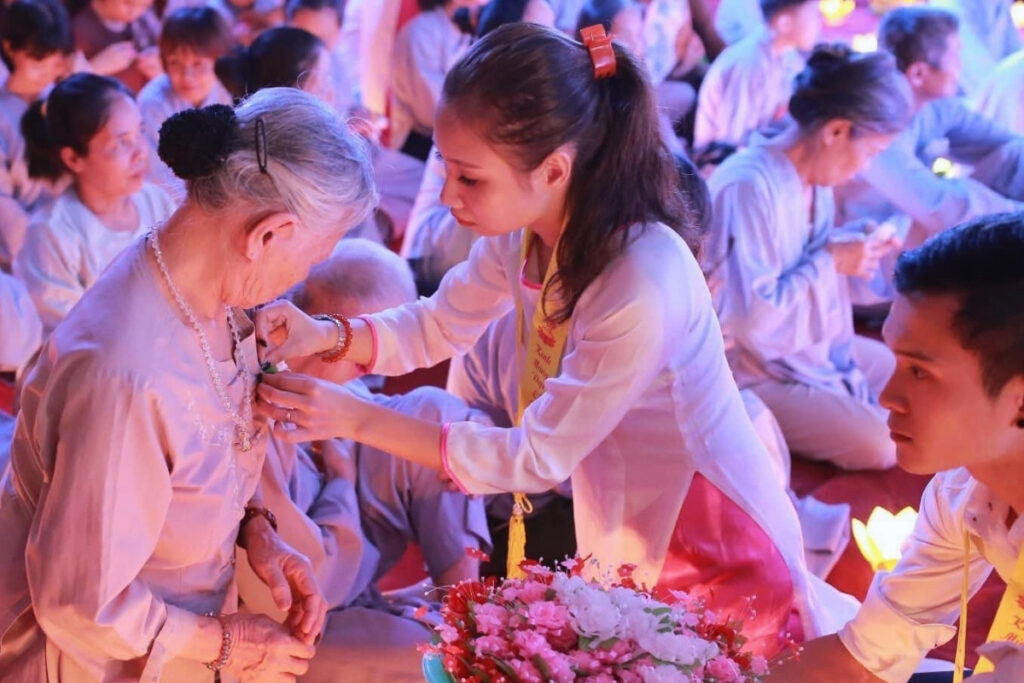
White roses pinned to visitors’ shirts quietly reveal a deeply personal story.
In Vietnam, a white rose honors parents who have passed away, while a red rose symbolizes gratitude for those still living.
Often referred to as the Festival of Filial Piety, it is dedicated to expressing gratitude toward parents, grandparents, and ancestors. Inspired by Buddhist teachings, Vu Lan reminds people to honor those who raised them and to remember loved ones who have passed away.
Unlike Western holidays centered on gifts or commercial celebrations, Vu Lan emphasizes reflection, kindness, and family bonds.
A Rose That Says Everything Without Words
One of the festival’s most recognizable traditions is the Rose Ceremony.
Inside many pagodas, worshippers quietly pin either a red or white rose to their clothing before joining the ceremony, creating one of the festival’s most moving visual traditions.
A red rose symbolizes that one’s parents are still living.
A white rose honors parents who have passed away.
The simple gesture has become one of the festival’s most moving traditions, reminding participants to appreciate their loved ones while they still can.
Inside the Pagoda
Throughout the day, temple courtyards remain busy with families carrying flowers, fruit, and incense while volunteers prepare vegetarian meals for worshippers and visitors alike.
Many temples also organize free vegetarian meals and community service activities.
International visitors are welcome to observe these ceremonies respectfully.
Visitor Etiquette
When visiting pagodas during Vu Lan:
- Dress conservatively, covering shoulders and knees.
- Speak quietly inside prayer halls.
- Remove hats before entering sacred areas.
- Avoid interrupting worshippers during ceremonies.
- Ask permission before photographing monks or participants.
Experiencing Vu Lan respectfully offers travelers a deeper understanding of the values of gratitude and compassion that remain central to Vietnamese culture.
Vietnam’s spiritual traditions extend beyond temples. Along the country’s long coastline, generations of fishing communities have developed their own sacred customs connected to the sea.
9. Whale Festival (Lễ hội Cá Ông)
Vietnamese name: Lễ hội Nghinh Ông
When: Dates vary by coastal community
Best places to experience it: Vung Tau, Binh Thuan, Khanh Hoa, Phu Yen
Honoring the Guardian of the Sea
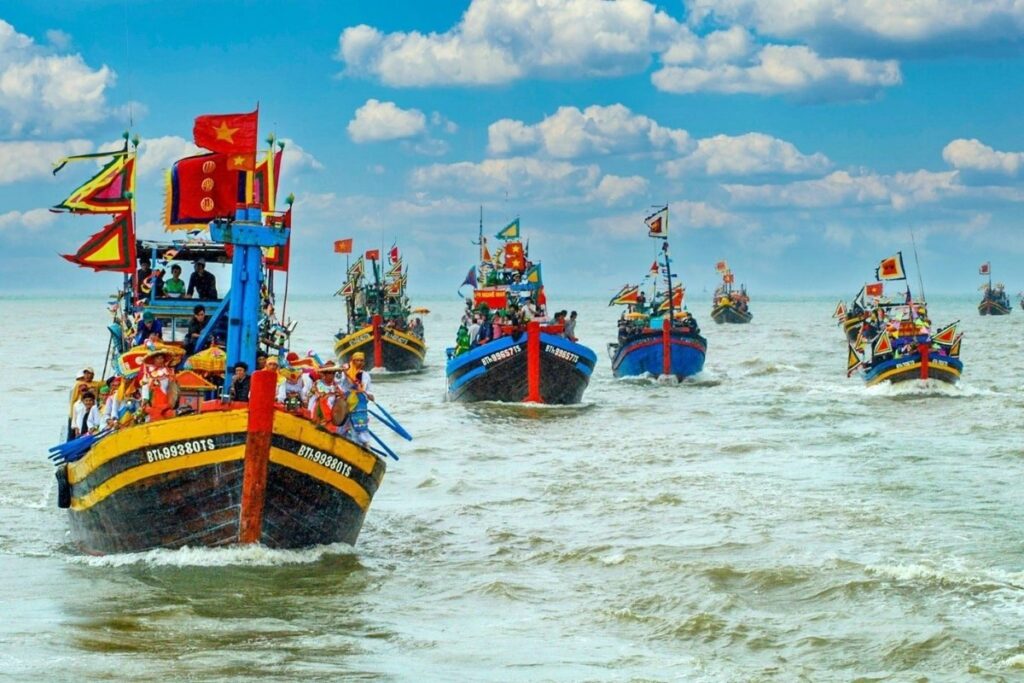
At sunrise, brightly decorated fishing boats leave the harbor together, their colorful flags fluttering above calm coastal waters. The procession isn’t a parade—it is a centuries-old ritual asking for protection before another fishing season begins.
Colorful ceremonial flags flutter above the boats as entire fishing communities gather along the shoreline to watch the procession depart.
Along Vietnam’s coastline, generations of fishermen have shared a remarkable belief: whales are protectors who rescue sailors during dangerous storms.
Known respectfully as Cá Ông (“Grandfather Whale”), these magnificent marine animals are regarded as sacred guardians rather than ordinary wildlife.
The Whale Festival celebrates this enduring relationship between coastal communities and the sea.
Where Faith Meets the Ocean
The festival usually begins with a ceremonial procession in which decorated fishing boats sail together to welcome the spirit of the whale before returning to shore.
Back on shore, families gather beneath temporary tents to share seafood meals, watch traditional performances, and celebrate the beginning of a new fishing season together.
The atmosphere reflects both religious devotion and community pride.
Why This Tradition Still Matters
While whales are often viewed simply as marine wildlife elsewhere in the world, many Vietnamese fishing communities continue to regard them as sacred protectors.
This unique relationship between people and the sea has shaped coastal traditions for centuries, making the Whale Festival one of the country’s most distinctive cultural celebrations.
Few countries celebrate whales as protectors of fishermen in quite the same way as Vietnam.
For travelers exploring coastal destinations beyond the country’s major cities, the Whale Festival offers insight into maritime traditions that have shaped life along Vietnam’s shores for centuries.
Leaving the coast behind, travelers discover another dimension of Vietnam’s diversity through the traditions of the Cham people in central Vietnam.
10. Kate Festival
Vietnamese name: Lễ hội Katê
When: Around October (Cham calendar)
Best place to experience it: Ninh Thuan Province
Discovering Vietnam’s Cham Heritage
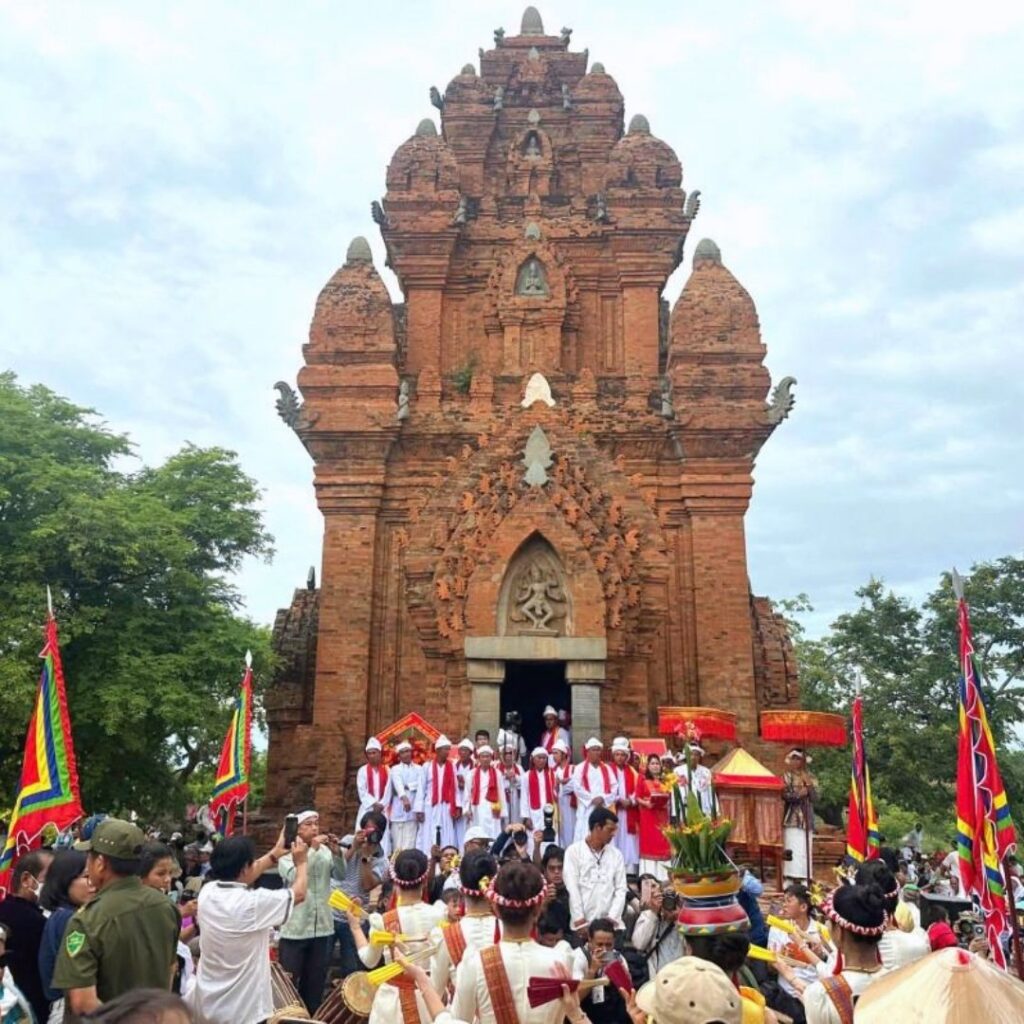
Long before the first drum sounds, the red-brick towers of Po Klong Garai begin to fill with families dressed in vibrant traditional clothing. What might seem like an ancient archaeological site on an ordinary day becomes a living place of worship during the Kate Festival.
Vietnam is home to 54 officially recognized ethnic groups, each preserving its own customs and traditions.
Among them, the Cham people maintain one of Southeast Asia’s oldest living civilizations.
The Kate Festival is their most important annual celebration.
Held at ancient Cham temple complexes, the festival honors kings, ancestors, and spiritual guardians while preserving traditions that date back hundreds of years.
The Heart of Cham Cultural Life
During Kate, temple grounds fill with the sounds of traditional Cham drums and wind instruments.
The deep sound of traditional Cham drums and the haunting melody of the saranai wind instrument echo across the ancient brick towers throughout the celebration.
Colorfully dressed participants perform ceremonial dances while elders conduct rituals honoring ancestors and historical leaders.
Beyond the temple ceremonies, visitors often find weaving demonstrations, handicraft stalls, and community gatherings that continue throughout the day.
Unlike larger national festivals, Kate provides an intimate opportunity to experience one of Vietnam’s lesser-known cultural traditions.
The Towers Are Only the Beginning
Many travelers visit the Po Klong Garai Towers simply to admire their remarkable architecture.
During the Kate Festival, however, these centuries-old monuments become living places of worship where traditional music, colorful costumes, and ancestral rituals continue to be practiced by the Cham community rather than recreated for visitors.
It’s this continuity between past and present that makes the experience especially memorable.
Why This Festival Leaves a Lasting Impression
For visitors interested in archaeology, minority cultures, or ancient history, the Kate Festival pairs perfectly with a visit to the Po Klong Garai Towers—one of the best-preserved Cham temple complexes in Vietnam.
The combination of living traditions and centuries-old architecture makes this one of the country’s most rewarding cultural experiences.
Vietnam’s cultural landscape becomes even more diverse in the Mekong Delta, where Khmer communities continue to celebrate harvest traditions that differ from those found elsewhere in the country.
11. Ok Om Bok Festival
Vietnamese name: Lễ hội Oóc Om Bóc
When: 15th day of the tenth lunar month (usually November)
Best places to experience it: Soc Trang, Tra Vinh, Mekong Delta
Celebrating the Moon and the Harvest
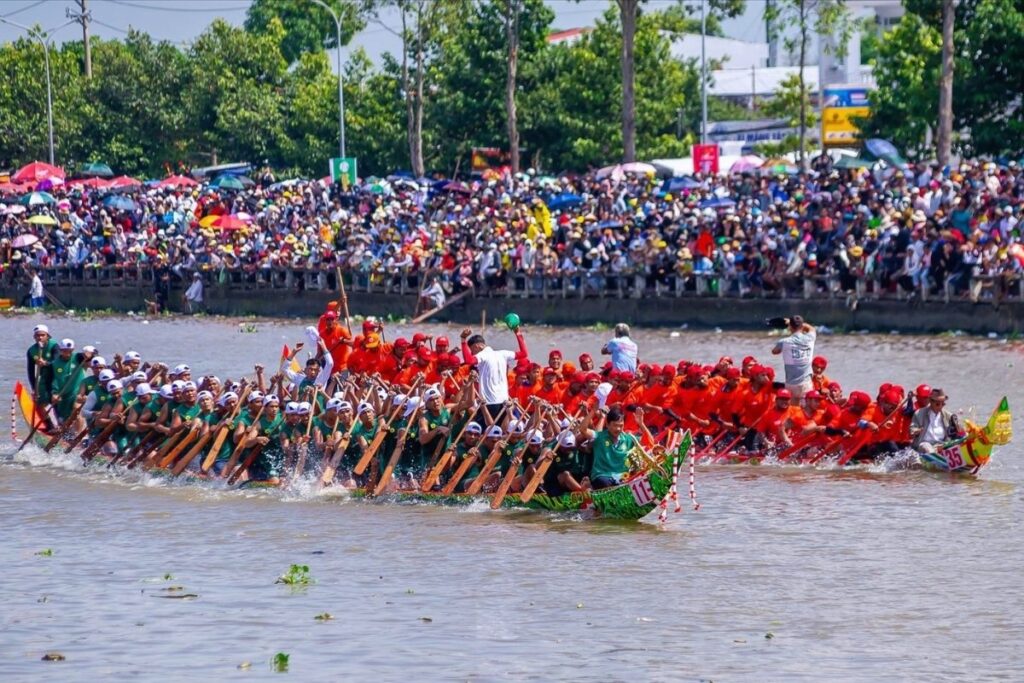
The first thing visitors notice isn’t the ceremony—it’s the sound of synchronized paddles striking the river as dozens of rowers race toward the finish line. The spectacular Ngo boat races have become the most recognizable image of the Ok Om Bok Festival.
Held after the rice harvest, the festival gives thanks to the Moon God for a successful growing season and offers prayers for prosperity in the year ahead.
The Race Everyone Waits For
The highlight of the festival is the spectacular Ngo boat race.
Teams of dozens of paddlers compete in long, beautifully decorated wooden boats, drawing thousands of enthusiastic spectators along the riverbanks.
Away from the river, lantern ceremonies, Khmer music, food stalls, and temple activities continue well into the evening, allowing visitors to experience far more than the boat races alone.
The energy of the event makes it one of the Mekong Delta’s most exciting annual celebrations.
Beyond Vietnam’s Familiar Tourist Trail
Many travelers never venture beyond Vietnam’s famous destinations.
Attending the Ok Om Bok Festival offers the chance to discover the country’s rich cultural diversity while exploring the Khmer heritage of the Mekong Delta.
It is a reminder that Vietnamese culture is not defined by a single tradition but by the many communities that have contributed to the nation’s history.
Editor’s Note
Although festivals like Tet and the Mid-Autumn Festival are internationally recognized, Vietnam hosts more than 8,000 traditional festivals each year. Many of the most memorable experiences aren’t found at the country’s biggest events but in village celebrations, coastal communities, mountain towns, and ethnic minority regions where traditions continue to be practiced as part of everyday life rather than performances for tourists.
Experiencing these festivals is about far more than watching ceremonies or taking photographs.
Understanding a few local customs will help visitors participate respectfully while gaining a deeper appreciation of the communities that keep these traditions alive.
How to Experience Vietnamese Festivals Respectfully
Attending a festival in Vietnam is more than watching a performance or taking photographs. Many celebrations are deeply connected to religion, family traditions, and local customs that have been preserved for generations.
Understanding a few basic etiquette guidelines will help you enjoy the experience while showing respect to local communities.
Fortunately, Vietnamese people are generally welcoming toward international visitors who approach their traditions with curiosity and courtesy.
Dress Modestly at Religious Sites
Many Vietnamese festivals take place at temples, pagodas, or communal houses.
When visiting sacred sites:
- Cover your shoulders and knees.
- Remove hats before entering prayer halls.
- Wear shoes that are easy to remove if requested.
- Avoid revealing clothing, even in hot weather.
Dressing modestly is a simple way to show respect for local traditions.very festival, dressing respectfully is considered a sign of appreciation for local traditions.
Observe Before Participating
Every festival follows its own customs.
IIf you’re unsure what to do, spend a few minutes observing local participants first.
You may notice people:
- Lighting incense
- Bowing before altars
- Making donations
- Waiting quietly during ceremonies
Following local behavior is the easiest way to avoid interrupting important rituals.
Ask Before Taking Close-Up Photos
Vietnam’s festivals are wonderfully photogenic, but not every moment should become a photo opportunity.
It’s generally acceptable to photograph public performances, dragon dances, lantern displays, and processions.
However, always ask permission before photographing:
- Monks.
- Elderly worshippers.
- Families making offerings.
- Children participating in ceremonies.
- Individuals praying.
A smile and a polite request are usually appreciated.
Respect Sacred Spaces
During religious ceremonies:
- Keep your voice low.
- Silence your phone.
- Avoid standing directly in front of worshippers.
- Do not touch religious objects unless invited.
- Never climb onto altars or ceremonial platforms for photographs.
Simple gestures of respect are always appreciated.
Support Local Communities
Support local communities by choosing handmade crafts, regional foods, artisan textiles, and locally produced souvenirs whenever possible.
Traditional Festival Foods You Should Try
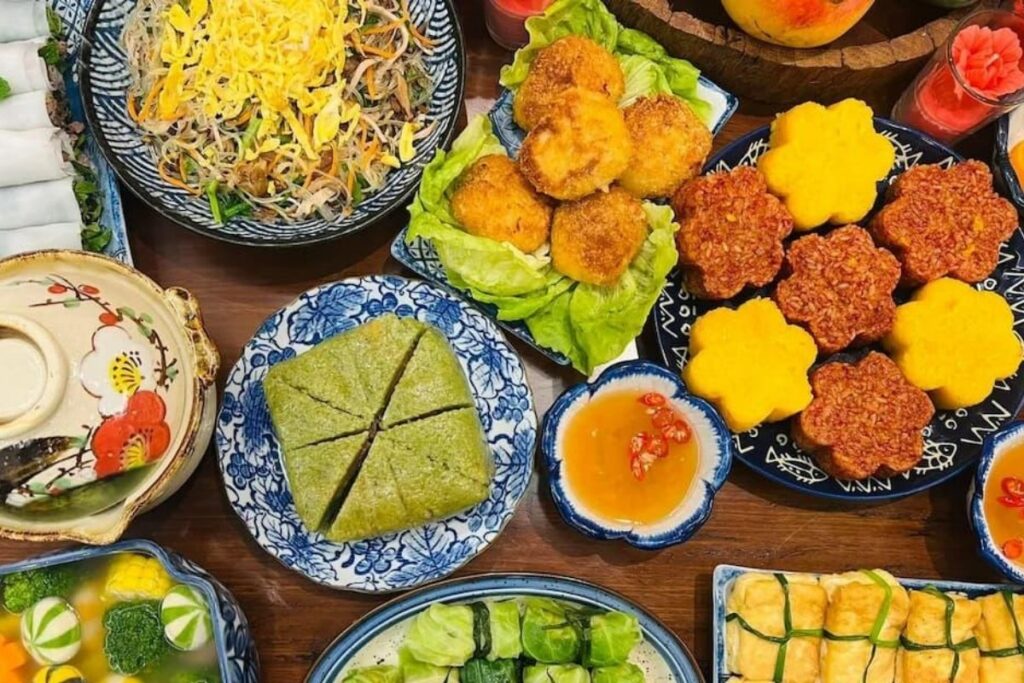
Food is one of the easiest—and most enjoyable—ways to experience Vietnamese festivals. Many dishes appear only during specific celebrations, making them an important part of the cultural experience.
Rather than simply satisfying hunger, festival foods often carry symbolic meanings related to prosperity, family unity, gratitude, or wishes for good fortune.
Bánh Chưng
No food is more closely associated with Tet than Bánh Chưng.
This square sticky rice cake, wrapped in green leaves and filled with pork and mung beans, symbolizes the Earth according to Vietnamese legend.
Families often gather to prepare the cakes together, slowly cooking them overnight in large pots—a tradition that is as meaningful as the meal itself.
Bánh Tét
Popular in southern Vietnam, Bánh Tét is a cylindrical variation of the traditional sticky rice cake.
While similar in ingredients to Bánh Chưng, its shape and regional variations reflect the culinary diversity found across Vietnam.
Mooncakes
During the Mid-Autumn Festival, bakeries throughout Vietnam display beautifully packaged mooncakes in dozens of flavors.
Traditional fillings include:
- Lotus seed paste.
- Salted egg yolk.
- Red bean.
- Mixed nuts.
Modern bakeries also experiment with coffee, green tea, chocolate, tropical fruits, and ice cream varieties.
Mooncakes are commonly exchanged as gifts among family members, friends, and business partners.
Vegetarian Temple Cuisine
Religious festivals such as Vu Lan and the Perfume Pagoda Festival often feature delicious vegetarian dishes.
Many Buddhist temples prepare simple meals using fresh vegetables, tofu, mushrooms, herbs, and rice.
For visitors, these meals provide an opportunity to experience Vietnamese cuisine from a spiritual perspective while supporting charitable community kitchens.
Local Festival Specialties
Every region has its own seasonal favorites.
Depending on where you travel, you may discover:
- Sesame candies in Bac Ninh.
- Hue royal desserts.
- Cham rice cakes.
- Khmer sweet sticky rice.
- Fresh seafood during coastal festivals.
Trying regional specialties is one of the best ways to appreciate Vietnam’s extraordinary culinary diversity.
Festival Etiquette: Do’s and Don’ts
A few simple guidelines will help you enjoy Vietnamese festivals respectfully.
| Do | Don’t |
|---|---|
| Dress modestly at temples | Wear revealing clothing inside sacred sites |
| Ask before photographing people | Interrupt religious ceremonies |
| Keep your voice low | Play loud music or shout |
| Follow local customs | Touch sacred objects without permission |
| Support local vendors | Litter festival grounds |
| Carry small cash donations | Assume every ritual is open to participation |
Best Vietnamese Festivals for Every Type of Traveler
Not every festival offers the same experience. Some are ideal for photographers, while others appeal more to history enthusiasts or families traveling with children.
The table below can help you choose the celebrations that best match your interests.
| If You Are… | Recommended Festival | Why It’s Worth Visiting |
|---|---|---|
| First-time visitor | Tet | Vietnam’s most important cultural celebration |
| Family traveler | Mid-Autumn Festival | Lantern parades, lion dances, child-friendly atmosphere |
| Photographer | Mid-Autumn Festival | Vibrant street scenes and colorful lanterns |
| History enthusiast | Hung Kings Festival | Honors Vietnam’s legendary founders |
| Spiritual traveler | Perfume Pagoda Festival | Largest Buddhist pilgrimage in Vietnam |
| Music lover | Lim Festival | UNESCO-recognized Quan Ho folk singing |
| Heritage explorer | Hue Festival | Imperial architecture and royal traditions |
| Off-the-beaten-path traveler | Kate Festival | Authentic Cham cultural heritage |
| Nature and culture lover | Whale Festival | Coastal traditions and maritime ceremonies |
| Mekong explorer | Ok Om Bok Festival | Khmer heritage and spectacular boat races |
This comparison helps travelers quickly identify festivals that align with their interests instead of simply choosing the most famous events.
Responsible Festival Tourism
Responsible tourism helps preserve Vietnam’s living festival traditions.
Visitors can contribute by:
- Respecting local customs
- Avoiding disruption during ceremonies
- Reducing plastic waste
- Supporting local artisans
- Learning a few Vietnamese greetings
- Leaving sacred places clean
When Is the Best Time to Visit Vietnam for Festivals?
Vietnam’s festival calendar spans the entire year, but the best time to visit depends on the type of experience you’re looking for.
If your goal is to witness Vietnam’s biggest national celebration, plan your trip around Tet (Vietnamese Lunar New Year). The country becomes a vibrant showcase of flowers, family traditions, temple visits, and festive decorations. Keep in mind, however, that transportation is extremely busy and many locally owned businesses close for several days.
Travelers looking for lively street celebrations often prefer the Mid-Autumn Festival, when historic neighborhoods glow with lanterns, lion dances, and cultural performances. Because most tourist attractions remain open, it’s one of the easiest festivals for international visitors to enjoy.
Those interested in spiritual traditions should consider visiting during the Perfume Pagoda Festival or Vu Lan Festival, both of which provide meaningful insight into Vietnamese Buddhism and the country’s long-standing practice of ancestor worship.
If your interests lie in heritage, traditional music, or ethnic cultures, festivals such as the Lim Festival, Kate Festival, or Ok Om Bok Festival offer authentic experiences beyond Vietnam’s major tourist routes.
Ultimately, there is no single “best” festival. Each reflects a different aspect of Vietnamese culture, making the ideal choice depend on your travel style and interests.
Vietnam Festival Facts at a Glance
| Fact | Information |
|---|---|
| Traditional festivals | 8,000+ annually |
| Largest national festival | Tet (Vietnamese Lunar New Year) |
| Largest Buddhist pilgrimage | Perfume Pagoda Festival |
| Most famous children’s festival | Mid-Autumn Festival |
| UNESCO-related festivals in this guide | Hung Kings, Lim, Giong, Hue |
| Ethnic minority festival featured | Kate, Ok Om Bok |
| Coastal festival featured | Whale Festival |
This quick summary provides travelers with an easy reference when planning a cultural journey through Vietnam.
Even after exploring Vietnam’s festival calendar, many travelers still have practical questions about planning their visit.
The answers below address some of the most common questions asked before traveling to Vietnam during festival season.
Vietnam Festival Comparison: Tet vs Mid-Autumn vs Hung Kings Festival vs Hue Festival
| Festival | Main Purpose | Typical Time | Primary Location | Best For | Signature Experience |
|---|---|---|---|---|---|
| Tet Holiday | Celebrate the Lunar New Year, reunite families, honor ancestors | Late Jan–Mid Feb (1st lunar month) | Nationwide | First-time visitors, cultural immersion | Family reunion dinners, flower markets, lucky money, ancestral worship |
| Mid-Autumn Festival | Celebrate children, family, and the harvest moon | September–October (15th day of the 8th lunar month) | Nationwide | Families, photographers | Lantern parades, lion dances, mooncakes, festive night markets |
| Hung Kings Festival | Honor Vietnam’s legendary founders | April (10th day of the 3rd lunar month) | Hung Kings Temple, Phu Tho | History and culture enthusiasts | Pilgrimage, incense ceremonies, traditional performances |
| Hue Festival | Showcase Vietnam’s imperial and contemporary arts | Official schedule varies by edition | Hue, Thua Thien Hue | Arts, architecture, photographers | Imperial City performances, royal music, cultural exhibitions |
| Planning Tip |
|---|
| Check official festival dates before traveling, as most traditional festivals follow the lunar calendar and dates change each year. |
Frequently Asked Questions About Vietnamese Festivals
How many traditional festivals are celebrated in Vietnam?
Vietnam celebrates more than 8,000 traditional festivals each year, ranging from nationwide holidays to village ceremonies, ethnic celebrations, and religious events. While only a few are internationally known, local festivals remain an essential part of community life across the country.
What is the most important festival in Vietnam?
For first-time visitors, Tet and the Mid-Autumn Festival provide the broadest introduction to Vietnamese culture. Travelers seeking more specialized experiences may prefer the Perfume Pagoda, Lim, Hue, or Kate festivals.
Which Vietnamese festival is best for tourists?
For first-time visitors, Tet and the Mid-Autumn Festival are often the most rewarding because they are celebrated nationwide and offer vibrant cultural experiences.
Travelers seeking quieter or more specialized experiences may enjoy the Perfume Pagoda Festival, the Lim Festival, the Hue Festival, or the Kate Festival, each highlighting a different aspect of Vietnam’s heritage.
Can foreigners participate in Vietnamese festivals?
Yes. International visitors are welcome at most public celebrations. While some religious rituals are intended primarily for worshippers, respectful visitors are encouraged to observe and learn about local traditions.
Are festival dates the same every year?
Not always.
Many of Vietnam’s traditional festivals follow the lunar calendar, so their dates change annually when converted to the Gregorian calendar.
If you’re planning a trip around a specific festival, it’s always a good idea to check the official dates before making travel arrangements.
Is Tet a good time to visit Vietnam?
Yes—if you’re interested in authentic cultural experiences. Tet offers Vietnam’s richest family traditions, although transportation is busy and some businesses close during the holiday.
Which Vietnamese festival is best for photography?
The Mid-Autumn Festival is widely considered one of the country’s most photogenic celebrations.
Lantern displays, lion dances, colorful costumes, illuminated streets, and family celebrations create exceptional opportunities for travel and street photography.
Hoi An Ancient Town and Hanoi’s Old Quarter are especially popular during the festival.
What should I wear when attending a Vietnamese festival?
Lightweight, comfortable clothing is suitable for most festivals.
However, when visiting temples, pagodas, or religious ceremonies, visitors should wear modest attire that covers the shoulders and knees as a sign of respect.
Comfortable walking shoes are also recommended, as many festivals involve exploring large temple grounds, village streets, or outdoor markets.
Which Vietnamese festival feels the most authentic?
Travelers seeking authentic local traditions often recommend the Lim, Kate, and Whale festivals, where community customs remain central to the celebration.
Final Thoughts on Traditional festivals in Vietnam
Vietnam’s festivals are far more than colorful celebrations or attractions on a travel itinerary. They are living traditions that continue to shape everyday life, connecting generations through shared beliefs, family gatherings, music, food, and community rituals. Whether it is the joyful reunion of Tet, the glowing lanterns of Mid-Autumn Festival, the sacred pilgrimage to the Perfume Pagoda, or the thrilling Ngo boat races of the Mekong Delta, each celebration offers a different window into the soul of Vietnam.
What makes these festivals truly memorable is not only what visitors see, but what they experience: the scent of incense drifting through ancient temples, the sound of Quan Ho folk songs echoing across village ponds, the quiet respect shown during ancestral ceremonies, and the warmth of families welcoming another year together. These moments reveal a culture that continues to honor its heritage not as a performance for tourists, but as an essential part of everyday life.
For travelers, joining a Vietnamese festival is more than attending an event—it is an opportunity to understand the values, traditions, and communities that have shaped the country for centuries. Visit with curiosity, participate with respect, and allow each celebration to unfold at its own pace. You may arrive searching for a festival, but you will leave with a deeper appreciation of Vietnam, its people, and the enduring traditions that continue to bring the nation together.
Continue Exploring Vietnamese Culture
Vietnam’s festivals are just one part of the country’s rich cultural heritage. If you’d like to explore the traditions, beliefs, and everyday customs that shape life in Vietnam, these related guides offer deeper insights and practical travel inspiration.
- Vietnamese Culture Guide – Explore Vietnam’s history, traditions, beliefs, cuisine, and everyday customs.
- Vietnamese Family Culture – Learn how family values continue to shape Vietnamese society.
- Ao Dai: Vietnam’s National Dress – Discover the history and symbolism of Vietnam’s national dress.
- Tet Holiday in Vietnam – Explore Vietnam’s most important celebration and learn about Lunar New Year traditions, family reunions, ancestor worship, lucky customs, festive foods, and travel tips for visiting during Tet.
- Mid-Autumn Festival in Vietnam
Discover why this beloved festival is known as Vietnam’s Children’s Festival, featuring colorful lanterns, lion dances, mooncakes, and vibrant celebrations across the country.
Understand essential cultural etiquette for visiting Vietnam, including temple etiquette, dining customs, greetings, dress codes, and respectful behavior during festivals and religious ceremonies.
- Vietnamese Religion & Beliefs – Understand the beliefs behind Vietnam’s festivals and traditions.
- Ancestor Worship in Vietnam
Discover why ancestor worship remains one of the most important traditions in Vietnamese culture and how it influences festivals, family ceremonies, and everyday life.
- Vietnamese Ethnic Groups – Explore the cultures of Vietnam’s 54 officially recognized ethnic groups.
- Vietnamese Traditional Clothing
Learn about Vietnam’s traditional clothing, including the Ao Dai, Ao Tu Than, Ao Ngu Than, and the diverse traditional costumes worn by ethnic communities throughout the country.
Editor’s Note: Festival dates in Vietnam are based primarily on the lunar calendar and may vary from year to year. If you’re planning your trip around a specific celebration, check the official festival schedule or local tourism authorities before traveling. Customs and celebrations may also differ between regions and ethnic communities.
References & Trusted Resources
This guide is based on historical research, official publications, and reputable cultural sources. Festival traditions may vary by region, ethnic community, and local customs. For further reading, we recommend the following trusted resources:
👉 Vietnam National Authority of Tourism – Official travel information, cultural experiences, destinations, and annual tourism events throughout Vietnam.
👉 UNESCO – Viet Nam Intangible Cultural Heritage – Information about UNESCO-recognized festivals, folk arts, traditional music, and other elements of Vietnam’s living cultural heritage.
👉 Ministry of Culture, Sports and Tourism of Viet Nam – Official resources on cultural preservation, historical sites, museums, festivals, and national heritage programs.
About the Author
Tam Voc Viet Editorial Team
The Tam Voc Viet Editorial Team is dedicated to helping international readers discover the authentic stories behind Vietnam’s culture, history, and people.
Our editorial approach combines historical research, official government publications, UNESCO resources, academic references, local perspectives, and firsthand travel insights to create practical, trustworthy guides for curious travelers.
Every article is carefully reviewed and regularly updated to ensure it remains accurate, relevant, and valuable for visitors seeking meaningful cultural experiences throughout Vietnam.
Article Information
Category: Vietnamese Culture
Topic: Vietnamese Festivals
Reading Time: Approximately 25–30 minutes
Published: July 2026
Last Updated: July 2026
Author: Tam Voc Viet Editorial Team
