


 Tiếng Việt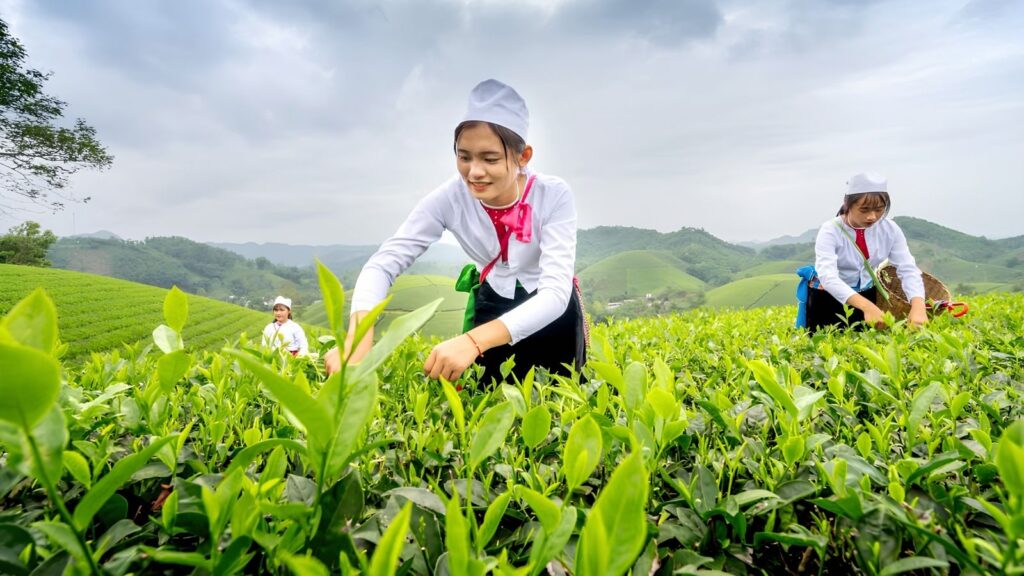
If coffee fuels Vietnam’s busy cities, tea quietly shapes its everyday life.
From elderly neighbors chatting beneath banyan trees to families serving guests with freshly brewed lotus tea, tea remains one of Vietnam’s oldest cultural traditions. It is offered before conversations begin, during important ceremonies, after meals, and even at roadside stalls where locals gather every morning.
Unlike formal tea ceremonies in some neighboring countries, Vietnamese tea culture feels deeply connected to daily life. It values sincerity over perfection, conversation over ritual, and hospitality over performance.
Whether you’re visiting Hanoi’s ancient tea houses, exploring mountain tea plantations in northern Vietnam, or sharing green tea with a local family, understanding tea culture offers one of the most authentic ways to experience Vietnam.
Quick Facts About Vietnamese Tea
| Feature | Details |
|---|---|
| National drink | Green tea (Trà Xanh) |
| Tea history | Over 2,000 years |
| Most common tea | Fresh green tea |
| Famous specialty | Lotus tea |
| Best tea-growing regions | Thai Nguyen, Ha Giang, Moc Chau, Bao Loc |
| Typical serving | Small porcelain cups |
| Tea drinking occasions | Daily life, family gatherings, ancestor worship, weddings |
| Best season | Year-round |
Table of Contents
Before I Understood Vietnam, I Had to Accept a Cup of Tea
“The first thing you’ll receive in a Vietnamese home isn’t food. It’s tea.”
When I planned my trip to Vietnam, I expected coffee to define the experience.
Nearly every travel guide celebrated Hanoi’s famous egg coffee, Ho Chi Minh City’s vibrant café culture, and Vietnam’s reputation as one of the world’s leading coffee producers. Tea, if it appeared at all, was usually mentioned as a complimentary drink served before meals.
That assumption lasted less than twenty-four hours.
By the end of my first morning, I had discovered something no guidebook had prepared me for: while coffee energizes modern Vietnam, tea quietly shapes the country’s everyday life. It welcomes strangers, begins conversations, and reflects values that have been passed from one generation to the next.
My journey had barely begun, yet Vietnam had already chosen tea—not coffee—to introduce itself.
A Welcome That Needed No Translation
The first memorable cup of tea I received wasn’t served in an elegant tea house.
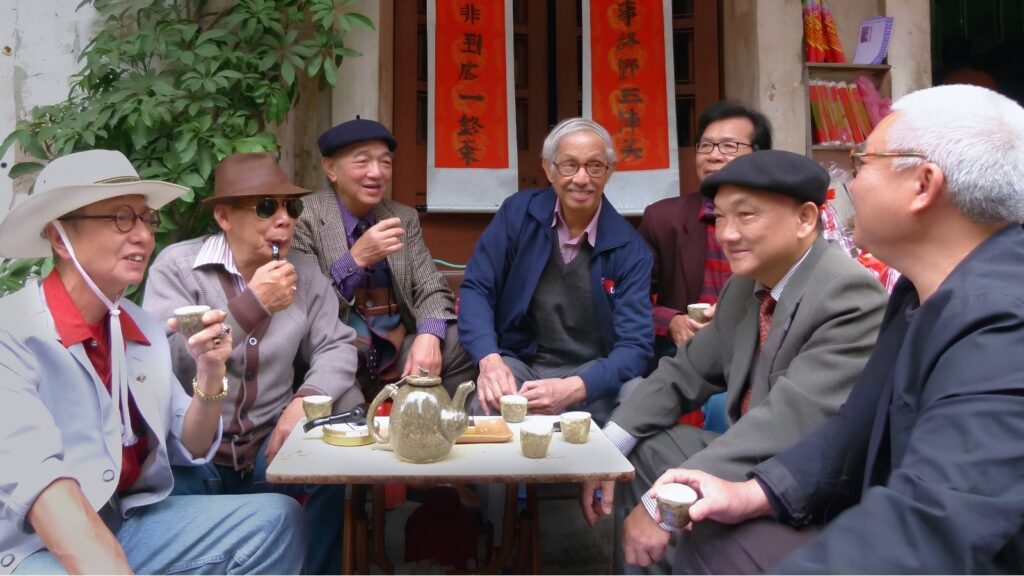
It came from an elderly man sitting outside his modest home in northern Vietnam.
Without saying much, he poured steaming green tea into a tiny porcelain cup and gently placed it in front of me.
That was all.
No explanation about the tea.
No story about where it had been grown.
No attempt to impress a visitor.
The gesture felt so natural that accepting the cup seemed like the only possible response.
Only later did I understand that I wasn’t simply accepting a drink.
I was accepting an invitation to slow down, sit for a while, and share a moment with someone I had only just met.
Why Tea Comes Before Conversation in Vietnam
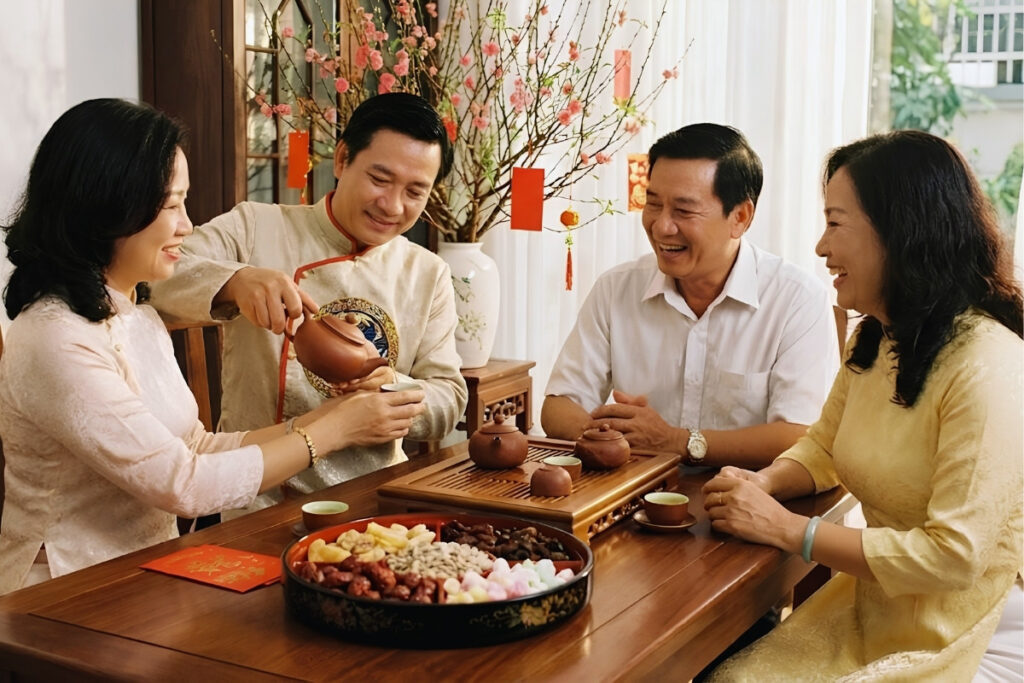
As I continued traveling across Vietnam, I noticed the same quiet ritual almost everywhere.
Whether I visited a family home in Hanoi, a village workshop in Thai Nguyen, or a small roadside garage in the countryside, someone reached for the teapot before asking why I had come.
Nobody announced it as a tradition.
It simply happened.
Tea wasn’t offered because people were thirsty.
It was offered because someone had arrived.
That subtle difference revealed more about Vietnamese culture than many museums or history books ever could.
Hospitality here wasn’t expressed through grand gestures.
It often began with a small porcelain cup.
My First Lesson in Vietnamese Hospitality
A few days later, I visited a farming family outside Thai Nguyen, Vietnam’s best-known green tea region.
Before asking about my journey, the grandmother quietly disappeared into the kitchen and returned carrying a well-used metal kettle and a porcelain teapot polished smooth by years of daily use.
She warmed the pot with hot water.
Added a handful of fresh leaves.
Then poured tea into each cup before serving herself.
Nobody hurried her.
The room settled into a comfortable silence as steam drifted gently from the cups.
Only after everyone had taken the first sip did the conversation begin.
A Culture Hidden in Plain Sight
Many travelers search for culture in famous landmarks, colorful festivals, or carefully staged performances.
Vietnam certainly offers all of those.
Yet one of its richest traditions often goes unnoticed because it isn’t designed for visitors.
It lives in ordinary moments.
A neighbor stopping by after work.
A family gathering around the table after dinner.
An elderly couple chatting beneath the shade of a tree.
Tea appears so naturally in these scenes that locals rarely think of it as remarkable.
Unlike traditions preserved mainly for display, Vietnamese tea culture continues to exist because it remains part of everyday life.
Why Vietnamese Tea Is About More Than Flavor
At first, I approached Vietnamese tea the way many travelers probably would.
I paid attention to the flavor.
Fresh green tea greeted me with a gentle bitterness before leaving a surprisingly sweet finish.
I compared aromas, asked about growing regions, and tried to identify different brewing styles.
Before long, however, I realized that flavor was only part of the experience.
Months later, I struggled to remember which tea tasted best.
What I remembered instead were the people who served it.
The old man outside his home.
The grandmother in Thai Nguyen.
The monk who quietly poured another cup after morning prayers.
Each cup carried a different story because each one was shared by a different person.
The Journey Begins With a Cup
That first cup changed the way I traveled through Vietnam.
Instead of searching only for famous places, I began paying closer attention to the quiet routines of everyday life.
Those ordinary moments would eventually become the most memorable part of the journey.
And my next lesson was waiting several hours north of Hanoi, where generations of tea farmers had spent their lives cultivating the leaves that appear on tables across the country.
Thai Nguyen Tea Farms: Where Every Great Cup Begins
“If you want to understand Vietnamese tea,” my host said over breakfast, “don’t start in a tea house. Start where the leaves are still growing.”
The following morning, I left Hanoi before sunrise.
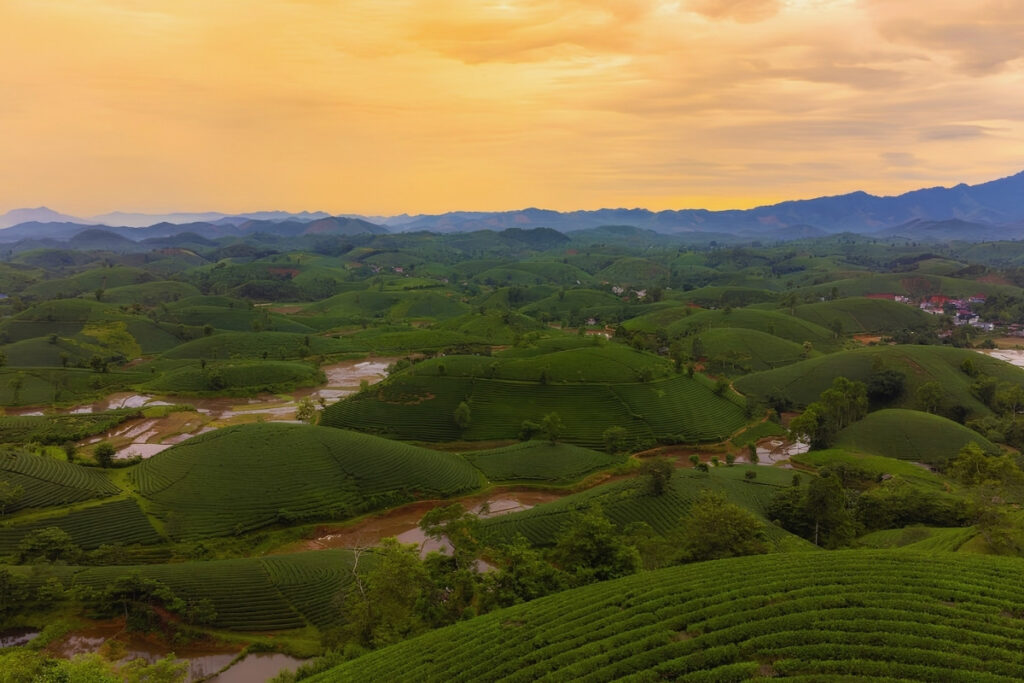
As the city slowly disappeared behind us, apartment buildings gave way to rice fields glistening with dew. The traffic thinned, the air turned cooler, and low hills began to emerge through the morning mist.
A little over two hours later, we arrived in Thai Nguyen, a province that rarely appears on international bucket lists but occupies a special place in the hearts of Vietnamese tea drinkers.
Mention Thai Nguyen almost anywhere in Vietnam, and chances are someone will immediately think of green tea.
For generations, this region has produced some of the country’s most respected teas, prized for their fresh aroma, gentle bitterness, and lingering sweetness. Yet standing at the edge of the plantations, I quickly realized that reputation wasn’t built by the landscape alone.
It was built by the people who had worked these hillsides for decades.
The Day Begins Before Sunrise
When my host invited me to join the morning harvest, I imagined a leisurely walk through the fields.
Instead, my alarm rang at 4:30 a.m.
By the time I stepped outside, the family was already preparing for work.
The grandmother packed breakfast into small containers.
Her son loaded empty woven baskets onto the back of a motorbike.
Two grandchildren, still rubbing sleep from their eyes, pulled on rubber boots before following the adults into the plantation.
Harvesting begins early for a reason.
The cool morning air helps preserve the freshness of young tea buds, while the leaves remain crisp from the night’s moisture. As temperatures rise, those delicate qualities gradually begin to fade.
The work couldn’t wait.
Learning to See What Matters
From a distance, every tea bush looked almost identical.
Standing beside them, they suddenly became very different.
I reached toward a branch, hoping to help.
The grandmother smiled and gently stopped me.
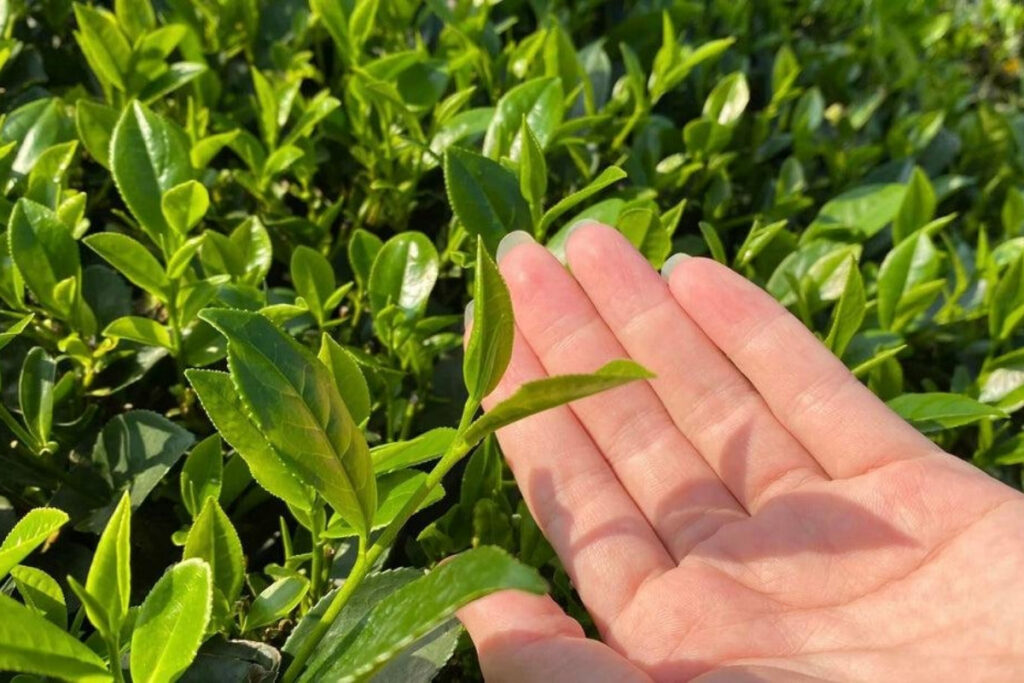
She pointed to the very tip of the plant.
“One bud,” she said.
Then she touched the two small leaves beneath it.
“Only these.”
Everything below remained untouched.
Those tender shoots would eventually produce the finest tea, while older leaves stayed on the plant to support future growth.
Watching experienced harvesters move from bush to bush, I realized their speed came not from rushing, but from years of practice.
Each tender bud was picked by hand with remarkable precision, repeated thousands of times throughout the harvest season.
Why Thai Nguyen Tea Tastes Different
Several natural and human factors combine to make Thai Nguyen Vietnam’s most respected green tea region. As I spent time with local tea farmers, I began to understand why this landscape has earned such a remarkable reputation.
As we rested beneath the shade of the tea bushes, curiosity finally got the better of me.
“What makes tea from here different?” I asked.
The answer began with the landscape.
Thai Nguyen’s rolling hills receive abundant rainfall, frequent morning mist, and moderate temperatures throughout much of the year. Combined with fertile soil and careful cultivation, these conditions allow tea leaves to grow more slowly than they would in hotter climates.
For many Vietnamese, Thai Nguyen is widely regarded as the benchmark for high-quality green tea, making it one of the country’s most respected tea-producing regions.
Slower growth gives the leaves time to develop richer natural compounds, creating the balanced flavor for which Thai Nguyen tea is known.
Local tea drinkers often describe that flavor as a journey.
The first sip brings a fresh vegetal note.
A gentle bitterness follows.
Then, several moments later, a lingering sweetness quietly appears.
One elderly farmer laughed as I searched for the right words to describe it.
“You don’t judge tea by the first sip,” he said.
“You wait for the aftertaste.”
How Thai Nguyen Green Tea Is Processed
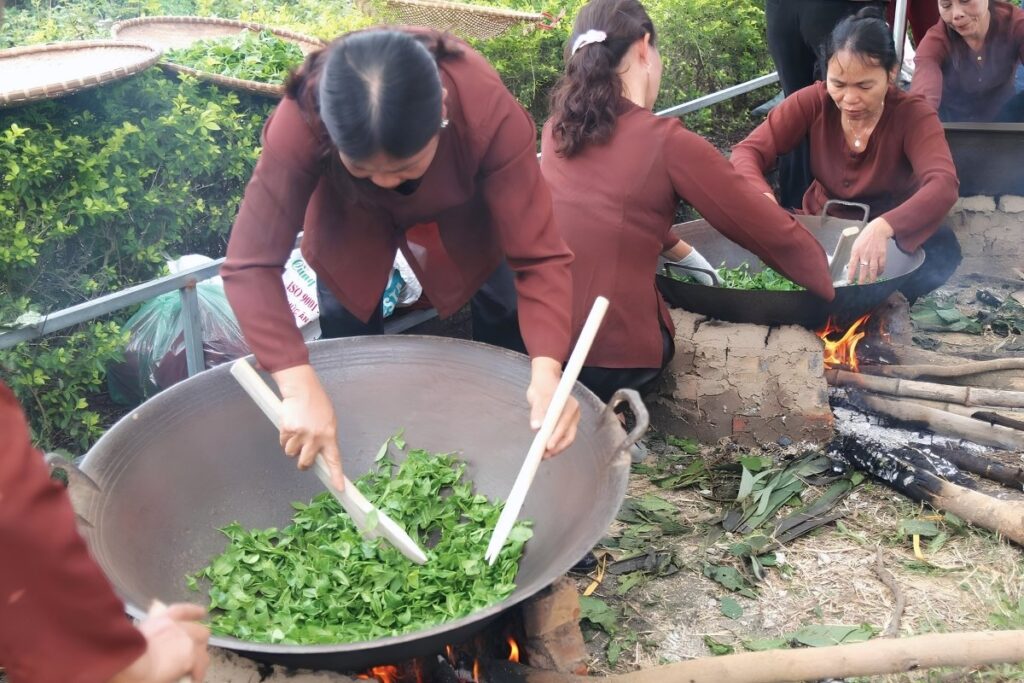
Harvesting is only the beginning.
By late morning, woven baskets filled with fresh leaves returned to a small workshop beside the family’s home.
Inside, the atmosphere changed completely.
Instead of cool mountain air, warmth radiated from large metal pans used to heat the leaves.
Freshly harvested tea was carefully spread across woven trays before being heated to stop oxidation, preserving its vibrant green color and delicate aroma.
The leaves were then rolled by hand, helping release natural oils while forming the slender shape characteristic of Vietnamese green tea.
Finally came drying.
Every stage required careful attention.
Too much heat could scorch the leaves.
Too little would leave excess moisture behind, shortening the tea’s shelf life.
Unlike industrial factories, this workshop relied almost entirely on experience.
When I asked how he knew the temperature was right, the tea maker smiled.
“I’ve been doing this since I was a boy,” he said.
“After a while, the leaves tell you.”
It sounded poetic.
Watching him work, it also sounded entirely believable.
Three Generations, One Tradition
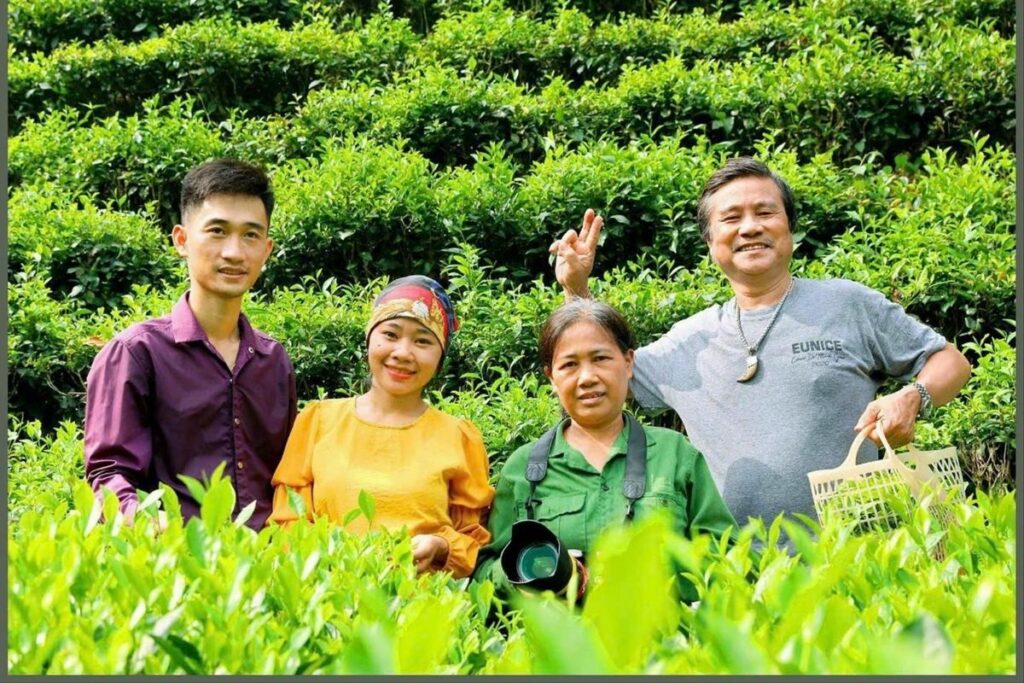
That evening, the family gathered outside after dinner.
The grandfather spoke about harvesting tea before roads reached the village.
His son discussed changing weather patterns and new cultivation techniques.
Meanwhile, his granddaughter answered customer messages from overseas on her phone, explaining different teas in fluent English.
Three generations.
Three very different worlds.
Yet every morning, they still walked into the same fields together.
It struck me that tea farming in Vietnam wasn’t frozen in the past.
It had simply adapted.
Modern tools had made some tasks easier, but the heart of the craft remained unchanged.
Someone still rose before dawn.
Someone still picked only the youngest leaves.
Someone still brewed the first pot before breakfast.
The Gift That Meant More Than Tea
Before I left Thai Nguyen, the grandmother handed me a small paper packet tied with cotton string.
Inside was tea harvested only the day before.
When I reached for my wallet, she shook her head.
“No,” she said with a smile.
“This is for remembering.”
Months later, whenever I brewed those leaves at home, the first thing that came back wasn’t their aroma.
It was the mist drifting across the hills before sunrise and the quiet rhythm of experienced hands moving through the tea bushes.
Only then did I fully appreciate how much work exists behind a single cup of tea.
| Feature | Details |
|---|---|
| Tea Type | Green tea |
| Region | Thai Nguyen Province, Northern Vietnam |
| Flavor | Fresh, vegetal, gentle bitterness, lingering sweetness |
| Best Brewing Temperature | 80–85°C (176–185°F) |
| Best Time to Visit | March–May and September–November |
Ancient Shan Tuyết Tea Forests in Ha Giang
“These trees were already old when my grandfather was a child.”
The Dao elder rested his hand against the rough trunk before looking up through the branches.
I followed his gaze.
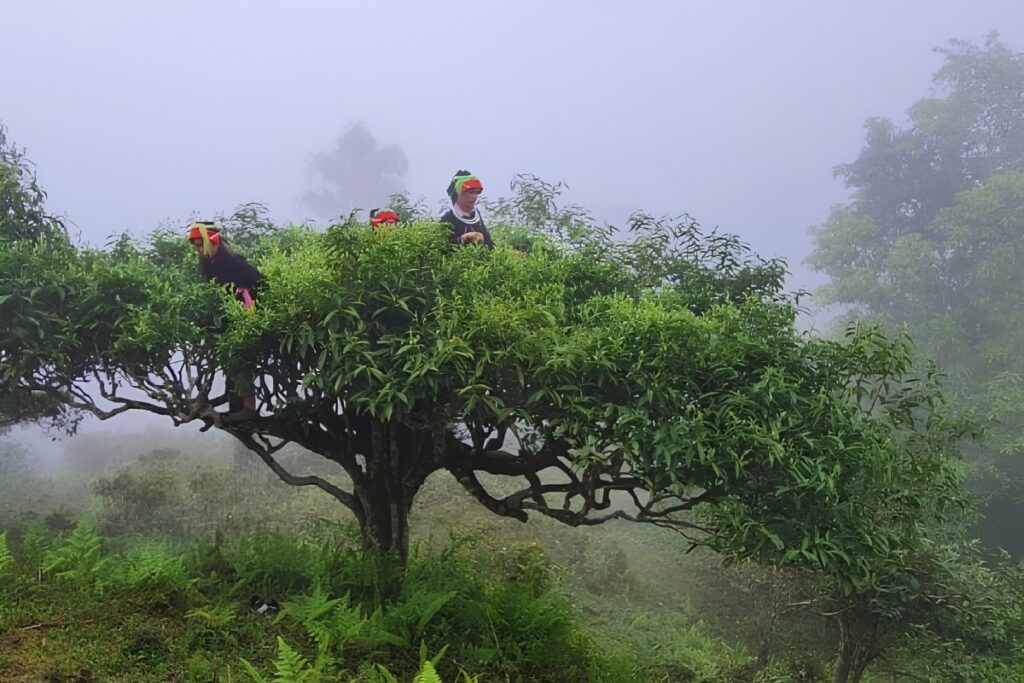
The tree rose nearly seven meters into the mist, its limbs stretching across the mountainside like those of an ancient oak. Moss clung to the bark, while pale silver lichen covered the older branches. It looked nothing like the waist-high tea bushes I had walked through in Thai Nguyen.
Until that moment, I had assumed tea was something people planted.
Ha Giang challenged that assumption.
Here, some of Vietnam’s most celebrated teas still come from forests where the trees have grown naturally for centuries.
Leaving the Plantations Behind
The drive from Thai Nguyen into Vietnam’s northern highlands felt like entering another country.
The roads became narrower.
The valleys deeper.
Terraced rice fields gradually gave way to towering limestone peaks wrapped in drifting clouds.
Every turn revealed another dramatic landscape before it disappeared behind the mist.
Most travelers come to Ha Giang for the famous mountain loop, one of Southeast Asia’s most spectacular road trips.
Few realize that beyond those winding roads lies one of Vietnam’s oldest tea-growing landscapes.
Not plantations.
Forests.
That distinction would become increasingly important over the next two days.
Tea That Nature Planted
My guide smiled the first time I referred to the area as a tea plantation.
“It isn’t a plantation,” he corrected gently.
“It’s a forest.”
Only after walking among the trees did I understand the difference.
There were no straight rows.
No carefully trimmed bushes.
No irrigation systems.
Instead, tea trees stood wherever nature had allowed them to grow—along steep ridges, beside streams, and deep within mountain forests.
Some trees stood alone, while others formed loose clusters across the mountainsides, many growing tall enough to require experienced harvesters to climb into their branches.
Unlike commercial plantations designed for efficiency, these forests had never been organized by human hands.
The landscape still followed nature’s rhythm.
Why Shan Tuyết Tea Looks Different
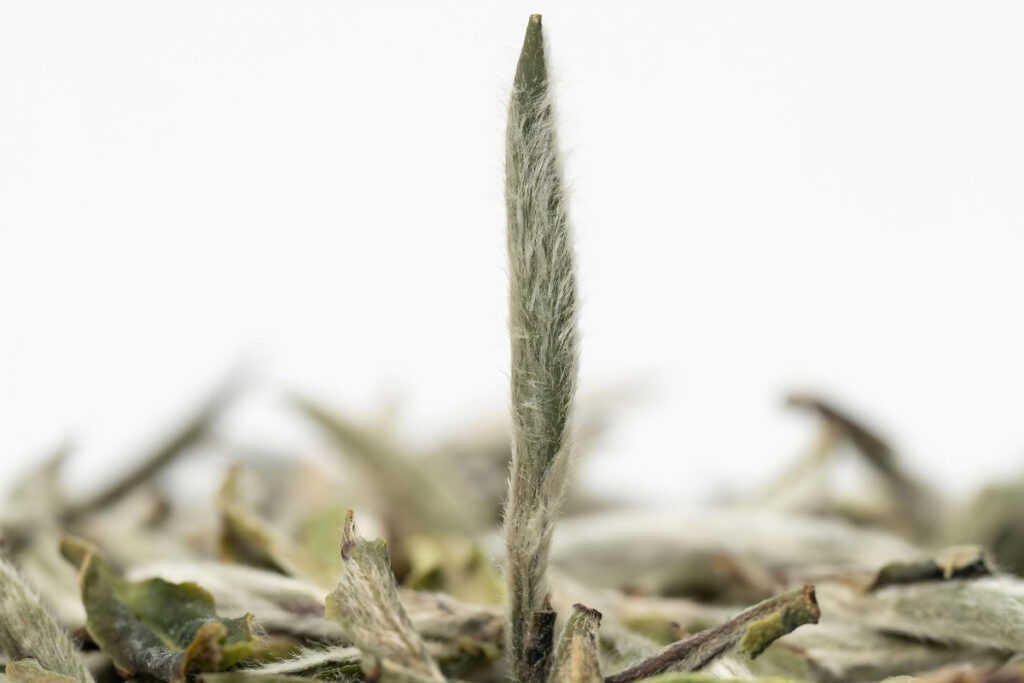
Unlike plantation-grown tea, Shan Tuyết develops under unique mountain conditions that shape both its appearance and flavor.
Before sunrise the following morning, I joined several Dao villagers as they headed into the forest carrying woven baskets.
The climb was steeper than I expected.
Morning mist drifted between the trees while birds echoed across the valley below.
After several minutes, one harvester carefully picked a fresh bud and placed it in my hand.
It shimmered with thousands of tiny white hairs.
“This is Shan Tuyết,” he said.
The young buds shimmered with fine silvery hairs, giving the tea its poetic name—often translated as “Mountain Snow.”
Unlike the neatly trimmed bushes I had seen in Thai Nguyen, these leaves came from ancient tea trees growing naturally in the forests of northern Vietnam.
Even before processing, the leaves looked remarkably different from the bright green tea I had seen in Thai Nguyen.
Nature had already left its signature.
Harvesting Requires Experience, Not Speed
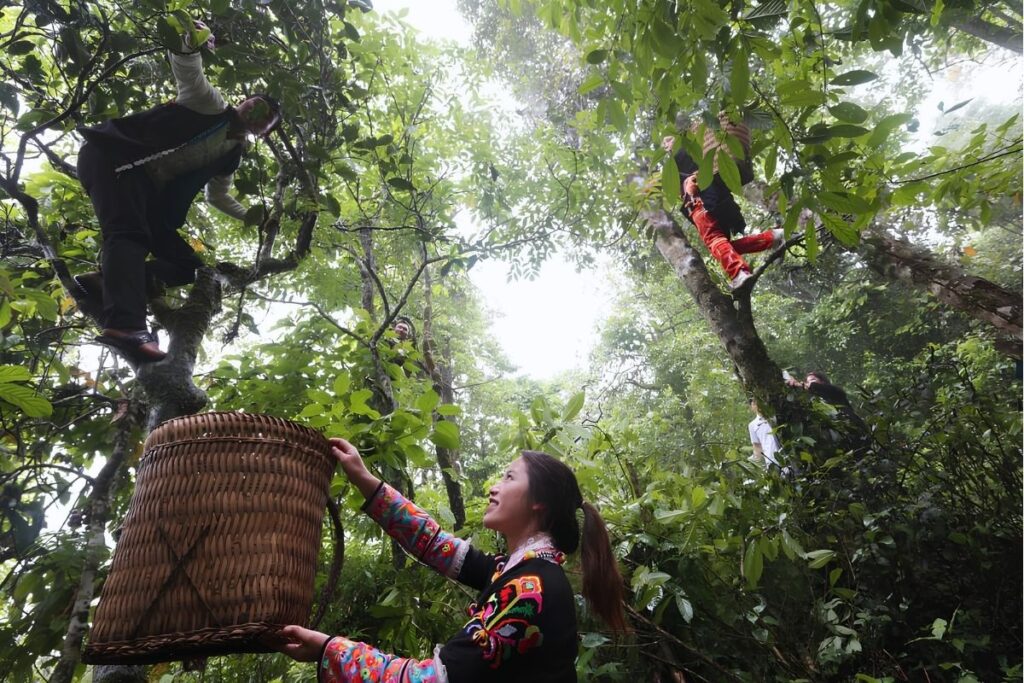
Watching the villagers harvest ancient tea trees was unlike anything I had seen before.
One man secured a simple rope around his waist before climbing several meters into the branches with practiced confidence.
Below, another family member steadied a woven basket while fresh buds drifted gently to the ground.
Nobody rushed.
There were no machines.
No engines.
Only the occasional rustle of leaves and quiet conversation between people who had worked together for years.
When I offered to help, everyone laughed.
One woman smiled kindly.
“Maybe after a few seasons.”
Standing beneath trees several centuries old, I realized harvesting here depended less on strength than on familiarity.
The people knew each tree almost as if it were a member of the family.
The Mountain Shapes Every Cup
Back in the village, the day’s harvest ended the same way it had for generations—with a freshly brewed pot of Shan Tuyết tea overlooking the valley.
The aroma surprised me immediately.
Instead of fresh-cut grass, I noticed wildflowers, honey, damp wood, and the clean scent of mountain air after rain.
The flavor unfolded slowly.
A gentle sweetness appeared first.
Then subtle floral notes.
Finally, a lingering mineral finish remained long after the last sip.
One farmer explained that the mountains do much of the work long before harvesting begins.
Cool temperatures slow the growth of young leaves.
Frequent mist protects them from intense sunlight.
Rich forest soil provides minerals absorbed over decades.
The result isn’t simply stronger tea.
It’s tea with greater complexity.
For the first time, I understood why experienced tea drinkers often speak about “tasting the landscape.”
More Than a Crop
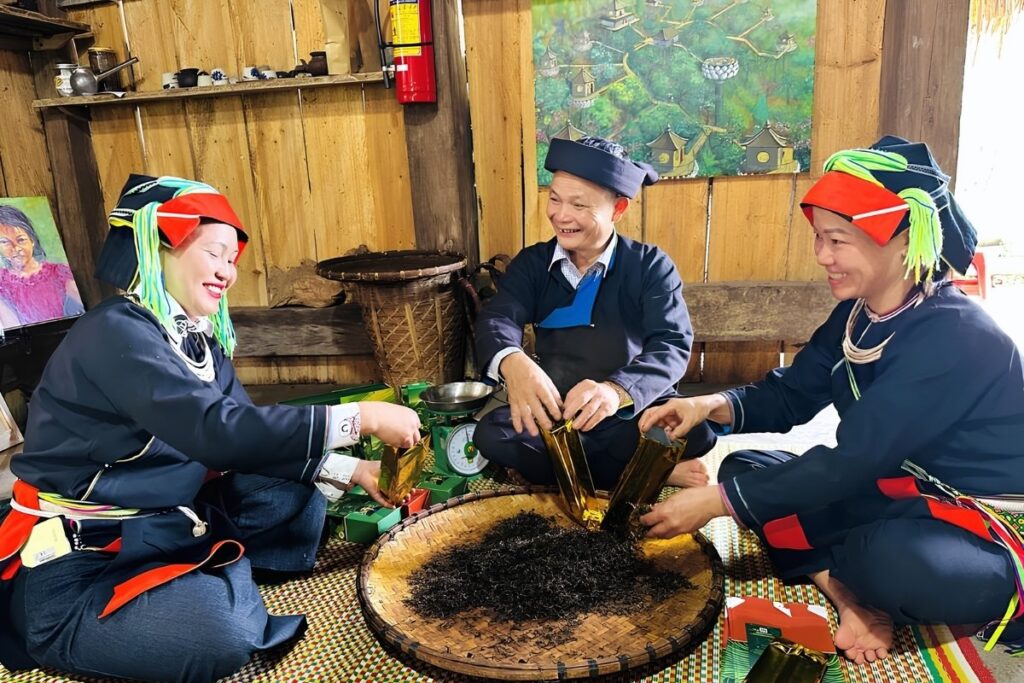
That evening, I asked one of the elders how long his family had harvested these trees.
He shrugged.
“My father harvested here.”
“So did my grandfather.”
“And his father before him.”
No one knew the exact age of the oldest trees.
There had never been a reason to count.
The forest itself was the history book.
Unlike cultivated plantations that can be replanted within years, these ancient tea forests represent generations of careful stewardship.
Families harvest selectively.
Young trees are left to mature.
Older trees are protected because they continue producing exceptional leaves decade after decade.
The goal isn’t to maximize this year’s harvest.
It’s to ensure the forest remains healthy for the next generation.
Why Ancient Tea Forests Are Protected
On my final morning in Ha Giang, dense fog drifted quietly through the forest as the first sunlight filtered between the branches.
Nothing seemed hurried.
Not the people.
Not the trees.
Not even the clouds.
Standing there, I began to understand why these forests felt so different from modern agriculture.
Plantations are measured by seasons.
Ancient forests are measured by generations.
That perspective changes everything.
When you know a tree may outlive you by centuries, harvesting becomes less about taking and more about caring.
Leaving With a New Understanding
As we drove away from Ha Giang, another small bag of tea rested in my backpack.
Yet once again, the tea itself wasn’t what stayed with me.
I kept thinking about the people who climbed trees their great-grandparents had harvested before them.
About forests that had quietly survived wars, changing borders, and generations of human history.
Until arriving in Ha Giang, I believed Vietnamese tea culture was mainly about hospitality.
These mountains revealed another side of the story.
Tea is also about stewardship—protecting something ancient today so that someone else, many years from now, can stand beneath the same tree and share another cup.
What Makes Shan Tuyết Tea Unique?
- Harvested from ancient tea trees, often several hundred years old
- Grown at high elevations in northern Vietnam
- Naturally covered with fine white hairs (“snow”)
- Rich, layered flavor with floral and mineral notes
- Traditionally hand-picked by ethnic minority communities
Lotus Tea in Hanoi: Vietnam’s Most Delicate Tea Tradition
“The tea leaf comes from the mountains,” the tea master said as he carefully lifted the lid from a clay teapot. “But its soul comes from the lotus.”
Before sunrise, West Lake looked nothing like the Hanoi I thought I knew.
The streets were almost empty.
A thin layer of mist drifted across the water while narrow wooden boats moved quietly between hundreds of lotus blossoms.
Somewhere among them, artisans were already harvesting flowers for one of Vietnam’s most treasured teas.
That morning, I wasn’t following tea into the mountains.
Tea had brought me back to the heart of the capital.
Harvesting Lotus Flowers Before Sunrise
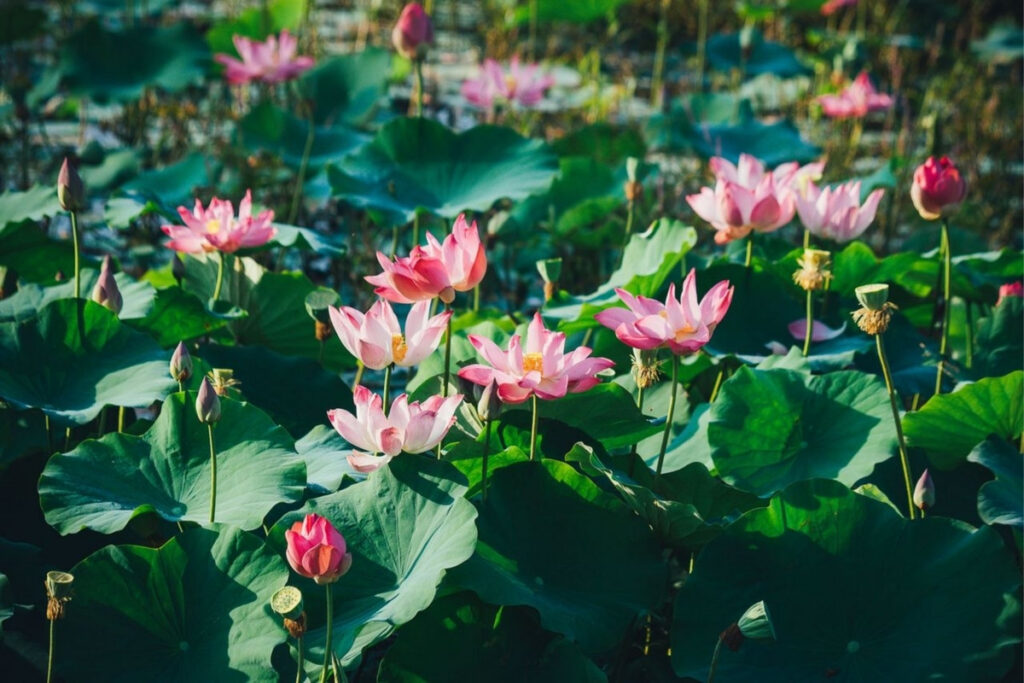
Before sunrise, West Lake feels almost unrecognizable.
The busy roads surrounding the lake are still quiet.
Morning mist drifts across the water while fishermen prepare their boats in near silence.
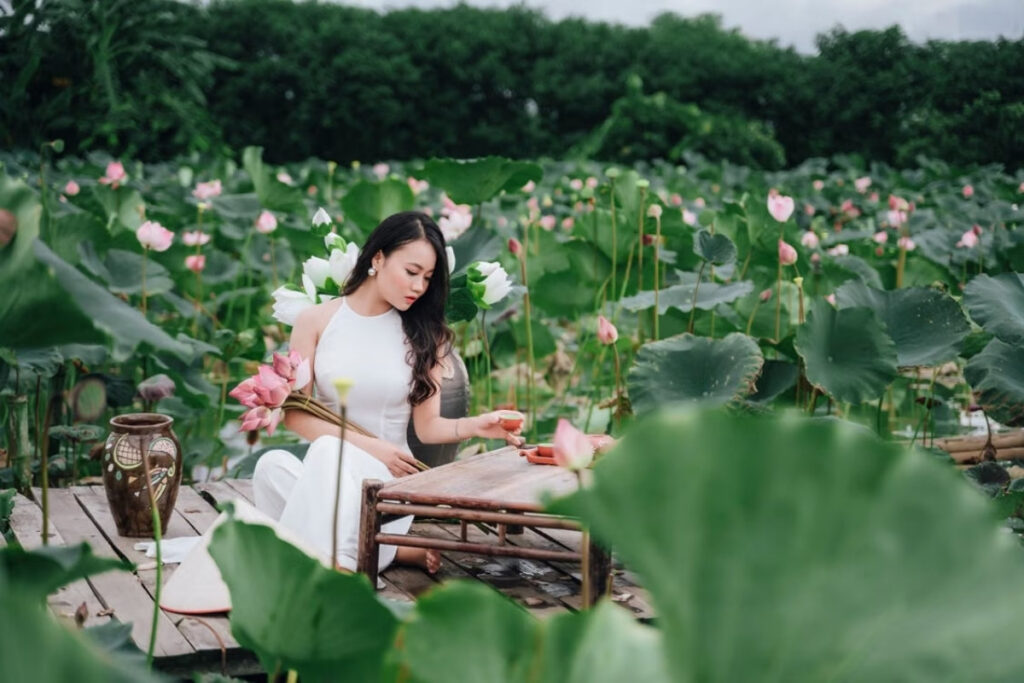
Farther from the shore, hundreds of pink lotus blossoms rise above broad green leaves, their petals still closed after the cool night.
By six o’clock, the first harvest has already begun.
Lotus growers move slowly through the ponds in narrow wooden boats, carefully selecting flowers that have only just opened.
Timing matters.
Once the morning sun grows stronger, much of the flower’s delicate fragrance begins to fade.
For artisans who produce traditional lotus tea, those early hours are the most valuable part of the day.
A Craft Measured in Flowers, Not Kilograms
Watching the tea-making process changed the way I thought about craftsmanship.
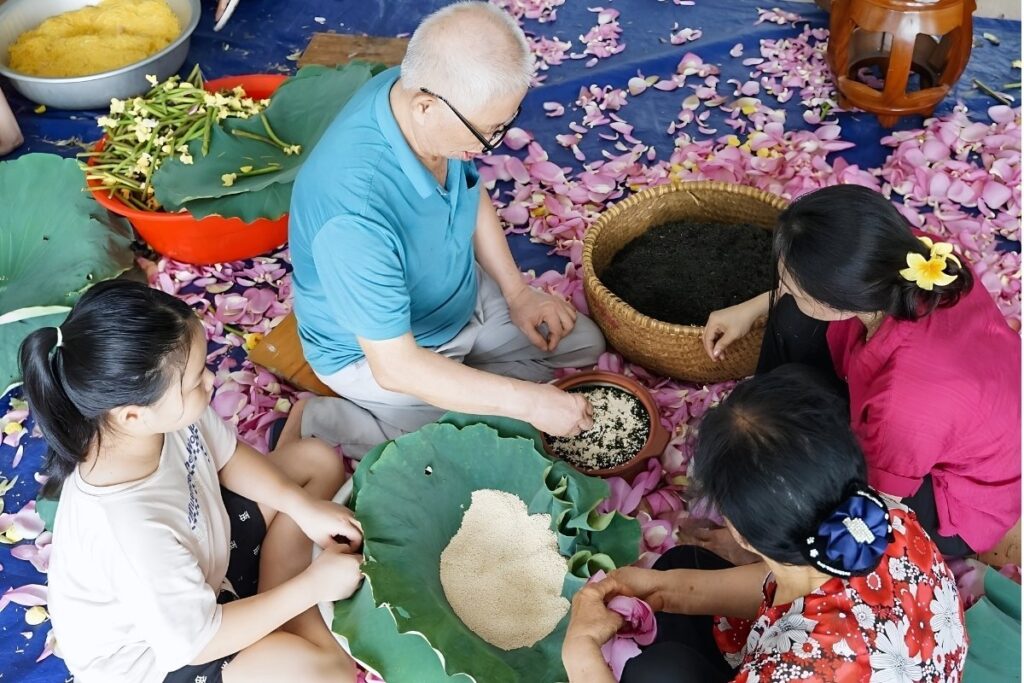
Inside a small workshop near the lake, freshly harvested lotus blossoms were opened one by one.
Each flower revealed a cluster of pale yellow stamens surrounding its center.
The artisan gently separated the fragrant stamens before layering them together with premium green tea, usually sourced from Thai Nguyen.
The mixture rested overnight.
By morning, the tea had absorbed the flower’s natural aroma.
For ordinary scented tea, the process could stop there.
For exceptional lotus tea, it began again.
Fresh stamens were layered with the tea once again before another night of waiting began.
Some producers repeat the process seven or eight times before considering the tea complete.
The numbers were astonishing.
Producing just one kilogram of premium lotus tea may require well over a thousand lotus blossoms.
Standing in that workshop, I finally understood why authentic trà sen is regarded as one of Vietnam’s greatest culinary treasures.
It isn’t rare because the lotus is difficult to grow.
It is rare because patience cannot be rushed.
Brewing Without Looking at the Clock
Once the fragrance had filled the room, the tea master slid the teapot gently toward me.
“Your turn,” he said.
I reached for the kettle, hesitated, then asked the question that seemed obvious.
“How long should I steep it?”
He smiled.
“Watch the tea.”
Not the clock.
The tea.
He explained that water temperature changes with every pour.
Different teas respond differently.
Even the weather can subtly influence the brewing process.
There was no universal number of seconds.
Only careful observation.
He lifted the lid slightly and inhaled the first wave of steam before pouring the tea into tiny porcelain cups.
The aroma arrived gradually rather than all at once.
Soft floral notes appeared first, followed by the fresh scent of green tea.
Nothing felt overpowering.
The fragrance seemed to reveal itself slowly, rewarding patience rather than demanding attention.
Why the Lotus Means So Much
To understand why lotus tea is so highly prized, it’s important to understand what the lotus represents in Vietnamese culture.
During my journey through Vietnam, I had seen lotus flowers almost everywhere.
Temple courtyards.
Village ponds.
Traditional paintings.
Silk embroidery.
Wedding decorations.
Family altars.
Only in Hanoi did those images begin to connect.
For centuries, the lotus has symbolized purity, resilience, and inner calm because it blooms beautifully despite growing in muddy water.
Those values appear repeatedly throughout Vietnamese art, literature, and Buddhist philosophy.
The tea master picked up a fresh blossom resting beside the teapot.
“This flower reminds us,” he said, “that beauty isn’t found by avoiding difficulty.”
It was a simple observation, yet it explained why lotus tea holds such a special place in Vietnamese culture.
The flower contributes more than fragrance.
It carries meaning.
Tea Houses That Refuse to Hurry
Traditional tea houses in Hanoi differ noticeably from the cafés that fill the city’s busiest streets.
Few people arrive carrying laptops.
Conversations are quieter.
Phones spend more time face down on the table.
Some guests read.
Others simply watch the garden while another pot of tea slowly unfolds across several infusions.
The tea changes with each pour.
The first infusion is bright and delicate.
The second becomes fuller.
The third often reveals subtle sweetness that wasn’t noticeable before.
No one rushes to finish.
Perhaps that is why so many regular customers return to the same tea house year after year.
They come as much for the atmosphere as for the tea itself.
More Than a Luxury

Around the world, luxury is often associated with rarity or price.
Vietnam offered me another definition.
In an increasingly hurried world, those quiet hours around West Lake felt unexpectedly luxurious.
Not because they were expensive.
Because nothing was rushed.
Carrying the Fragrance Home
Before leaving the tea house, the owner handed me a small tin of lotus tea wrapped in brown paper.
“It will remind you of Hanoi,” he said.
Months later, I opened that tin at home.
The aroma was unmistakable.
Yet something was missing.
The stillness of West Lake before sunrise.
The quiet concentration inside the workshop.
The patient movements of hands that had repeated the same craft for decades.
The tea remained extraordinary.
But the experience belonged to Hanoi.
And perhaps that is exactly what makes authentic lotus tea impossible to fully export.
The tea still carried its delicate fragrance, but what lingered even longer was a new appreciation for the people whose patience transformed ordinary green tea into something impossible to reproduce on an industrial scale.
Why Is Authentic Lotus Tea So Expensive?
Authentic lotus tea requires an extraordinary amount of manual work.
Premium green tea is repeatedly scented inside freshly harvested lotus blossoms, allowing the leaves to absorb the flower’s natural fragrance over several days. Depending on the producer and technique, hundreds or even more than a thousand lotus flowers may be needed to create just one kilogram of premium lotus tea.
That combination of seasonal harvesting, skilled craftsmanship, and time-intensive production explains why authentic trà sen is considered one of Vietnam’s most valuable traditional teas.
Vietnamese Tea Traditions Around the Family Table
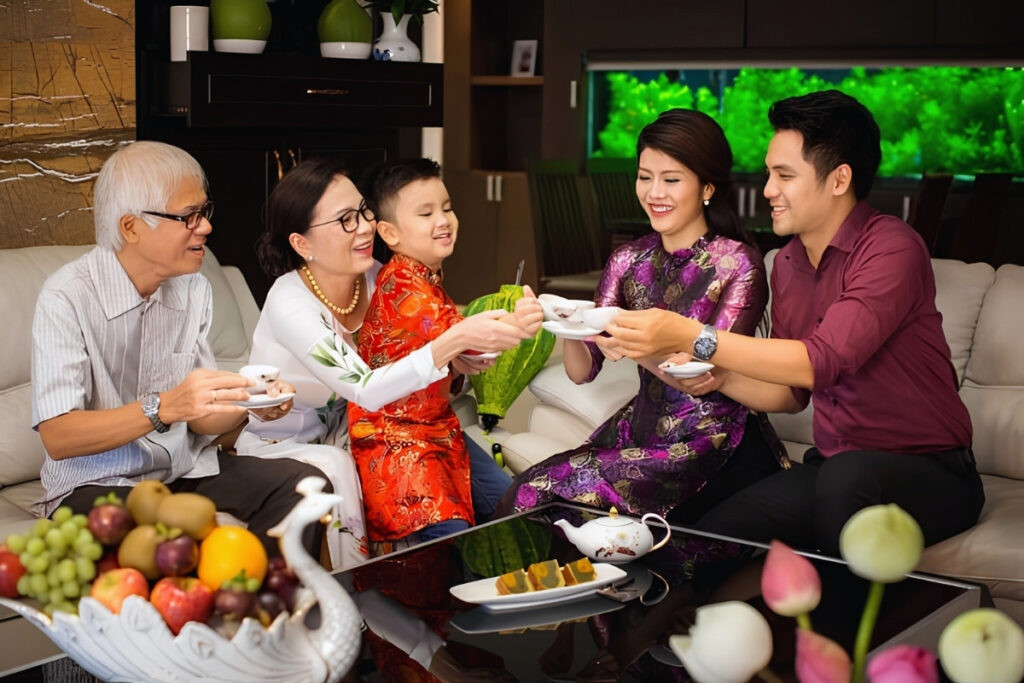
“You don’t have to ask if someone wants tea,” my host’s grandmother said with a smile. “If they’re in your home, you simply pour it.”
By this point in my journey, I had tasted tea in mountain villages, ancient forests, and quiet tea houses.
Yet none of those places explained Vietnamese tea culture as completely as an ordinary family living room.
There were no tea masters.
No centuries-old trees.
No rare varieties worth hundreds of dollars.
Just a wooden table.
A well-used teapot.
And three generations sharing an evening together.
It was here, more than anywhere else, that I began to understand why tea has remained part of Vietnamese life for so long.
The First Thing Every Guest Receives
One afternoon, a neighbor stopped by without calling ahead.
He parked his motorbike outside, greeted everyone with a familiar smile, and walked straight into the house.
Before anyone asked why he had come, the grandmother was already filling the kettle.
Within minutes, tea sat on the table.
Only then did the conversation begin.
I watched the same scene repeat itself in home after home.
Visitors were rarely asked what they wanted to drink.
Tea simply appeared.
The gesture wasn’t formal.
It wasn’t ceremonial.
It was instinctive.
In Vietnam, offering tea is less about serving a beverage than acknowledging someone’s presence.
The message is simple:
“You’re welcome here. Sit for a while.”
Every Teapot Has Its Own Story
As I visited more families, I noticed something surprisingly consistent.
Almost every home had a favorite teapot.
Some were made from simple white porcelain.
Others were dark clay, their surfaces polished smooth by decades of use.
Most were simple everyday teapots, worn smooth by decades of regular use rather than valued for their appearance.
One elderly woman noticed me admiring hers.
“My mother used this one,” she said, carefully placing it back on the table.
“I’ve never wanted another.”
That answer stayed with me.
The value of the teapot had very little to do with money.
It had quietly witnessed birthdays, weddings, New Year celebrations, and thousands of ordinary conversations.
In many ways, it had become part of the family’s history.
When Is Tea Traditionally Served in Vietnam?
- Welcoming guests
- Family gatherings
- Weddings
- Ancestor worship
- Tet (Lunar New Year)
- Business meetings
Lessons Children Learn Without Being Taught
Some traditions survive because they are taught in classrooms.
Others survive because children grow up watching adults repeat them every day.
Vietnamese tea culture belongs to the second group.
As dinner drew to a close, the youngest grandson quietly stood up without anyone saying a word.
Without anyone asking, he picked up the teapot and walked around the room.
He refilled his grandfather’s cup first.
Then his grandmother’s.
Next came his parents, followed by an uncle visiting from another village.
Only after everyone else had fresh tea did he sit down and refill his own cup.
Nobody praised him.
Nobody applauded.
The moment passed as though nothing unusual had happened.
Later, I asked his mother when children were taught to do that.
She thought for a moment before answering.
“We never really teach them,” she said.
“They grow up watching.”
Tea Before Business
Tea also appeared in places I hadn’t expected.
One morning, I accompanied a local friend to visit a furniture workshop.
The owner greeted us warmly before leading us to a small wooden table tucked into the corner.
Tea arrived almost immediately.
For nearly twenty minutes, nobody mentioned work.
Instead, they talked about family, recent weather, and a neighbor’s wedding.
Only after the teapot had been refilled did the conversation gradually turn to business.
My friend later explained that rushing straight into negotiations can feel impersonal.
Sharing tea first creates trust.
Business may be the reason people meet.
Tea reminds them that relationships matter just as much.
A Cup Offered With Gratitude
During my stay in northern Vietnam, I was fortunate enough to witness preparations for a traditional wedding.
Relatives moved busily through the house arranging flowers and gifts while children laughed in the courtyard.
Then everything became noticeably quieter.
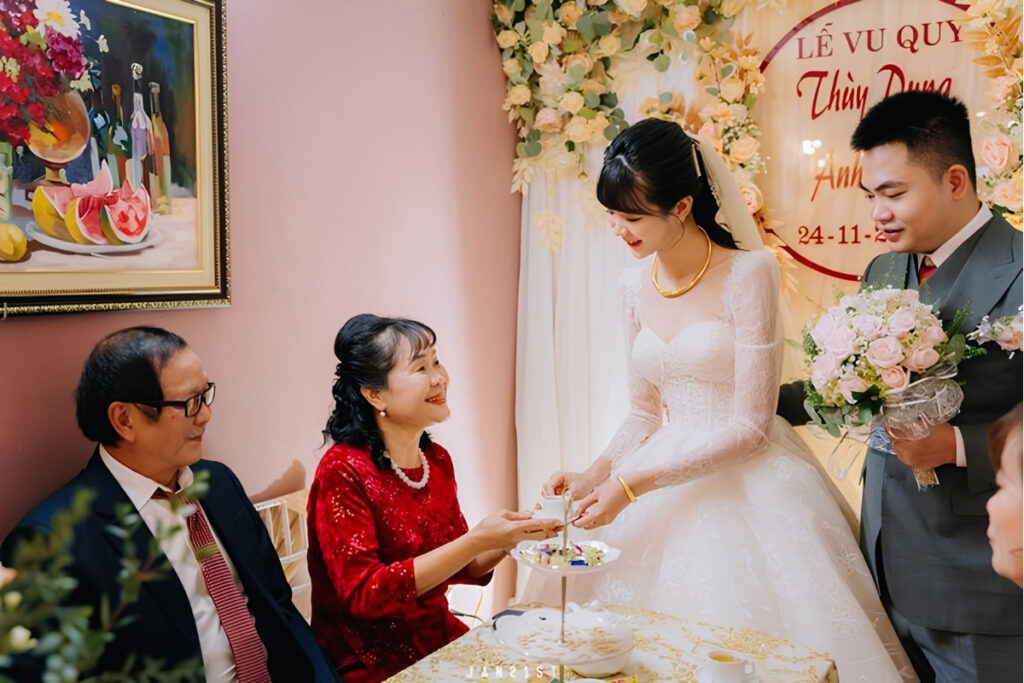
The bride and groom approached their parents carrying small cups of tea.
They bowed respectfully before offering them.
No speeches were necessary.
Everyone in the room understood the meaning.
The tea expressed gratitude for years of love, sacrifice, and guidance.
Watching the ceremony, I realized that some emotions are easier to express through familiar traditions than through words alone.
Remembering Those Who Came Before
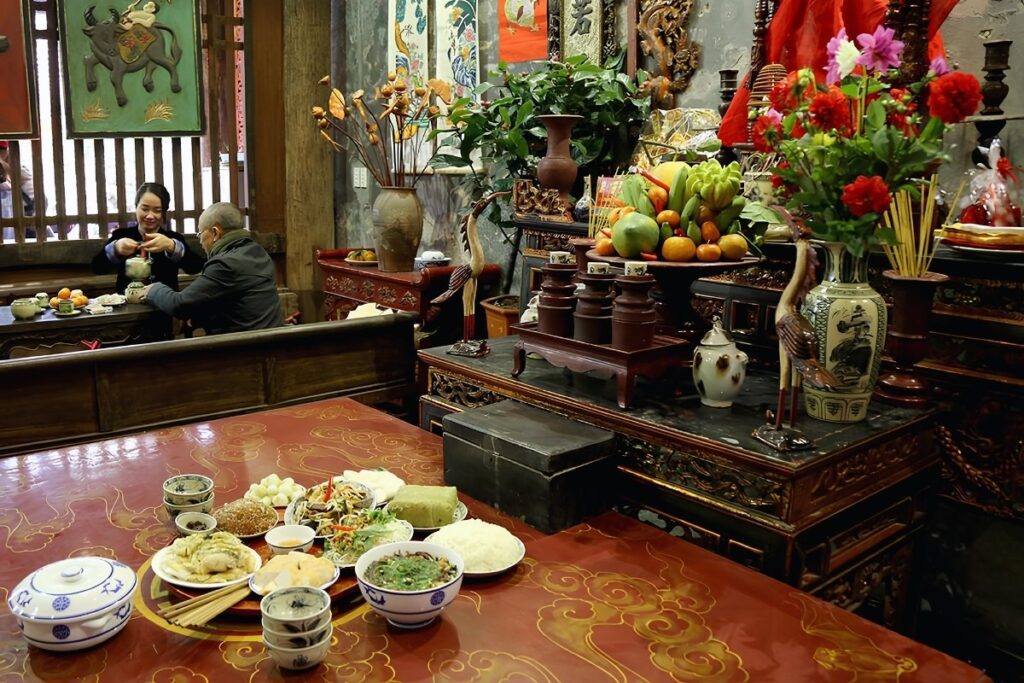
Early one morning, I noticed fresh cups of tea placed carefully on the family altar beside fruit, flowers, and burning incense.
The tea wasn’t meant for anyone sitting in the room.
It was prepared for ancestors.
Across Vietnam, offering tea on family altars remains a quiet expression of remembrance and respect.
The ritual lasted only a few moments, yet it reflected a belief that family connections extend beyond the present generation.
The same drink shared with living relatives also becomes a way of honoring those whose influence continues to shape the family.
Why the Tradition Endures
Vietnam has changed dramatically over the past few decades.
Cities have grown taller.
Work has become faster.
Coffee shops have multiplied.
Yet in almost every home I entered, tea still occupied the same familiar place.
Sometimes the kettle was electric instead of charcoal.
Sometimes the teapot was made of glass rather than clay.
The details had evolved.
The intention had not.
Tea still marked the transition from stranger to guest.
From visitor to friend.
From everyday conversation to meaningful connection.
Perhaps that’s why the tradition has remained so resilient.
Watching young tea makers work alongside older generations, I realized the future of Vietnamese tea doesn’t depend on preserving the past unchanged.
It depends on giving each generation a reason to value it in their own way.
What Stayed With Me
The families I met never described tea as a tradition worth preserving.
They simply continued living it.
Perhaps that is the strongest reason Vietnamese tea culture has survived for so many generations.
The grandmother quietly placing another cup in front of me before pouring one for herself.
The little boy carefully serving his grandparents without being asked.
The laughter that filled the room long after the teapot had emptied.
Those scenes revealed something no museum could fully explain.
Vietnamese tea culture isn’t built around rare leaves or complicated techniques.
Its true strength lies in the way it brings people together, day after day, generation after generation.
And perhaps that is why, long after the flavor fades, the memory of sharing tea in a Vietnamese home remains so vivid.
Modern Vietnamese Tea Culture: Tradition Meets Innovation
“Tradition doesn’t disappear here,” a young tea entrepreneur told me. “It simply finds a new way to be shared.”
On my last weekend in Hanoi, I expected to spend one final afternoon drinking tea before heading home.
Instead, I found myself surrounded by university students discussing harvest seasons, ceramic teapots, and brewing techniques with an enthusiasm I hadn’t expected.
It completely changed my assumption that Vietnamese tea belonged only to older generations.
I had watched families harvest young leaves before sunrise in Thai Nguyen.
I had climbed into the ancient tea forests of Ha Giang, where some trees have stood for centuries.
I had learned why artisans in Hanoi spend days scenting green tea with fresh lotus blossoms.
Those experiences all belonged to tradition.
What I hadn’t expected was to discover that Vietnamese tea also has an exciting future.
Not despite younger generations.
Because of them.
Looking Beyond the Coffee Shops
At first glance, it is easy to assume that coffee has replaced tea in Vietnam’s cities.
Walk through Hanoi or Ho Chi Minh City and you’ll find busy cafés on almost every corner.
Young professionals work behind laptops.
Students revise for exams over iced drinks.
Friends meet after work for espresso, cold brew, or coconut coffee.
Tea seems almost invisible.
Until you know where to look.
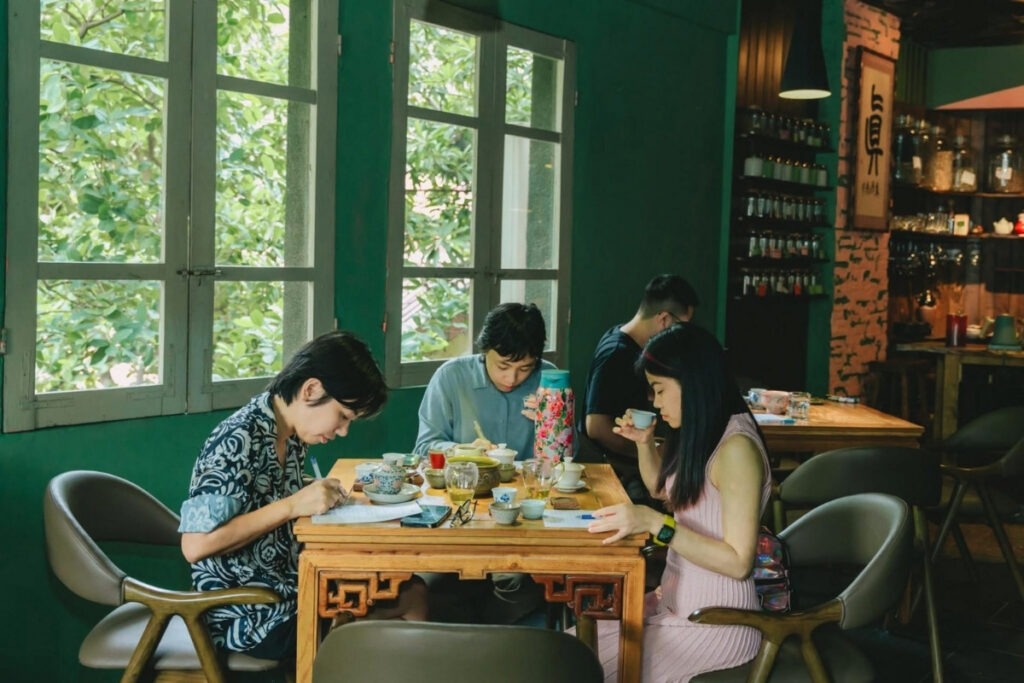
A local friend led me down a quiet alley in Hanoi to a small tea studio hidden behind an old courtyard house.
There were no large signs outside.
No music playing.
No queues of tourists taking photographs.
Inside, every table was occupied.
Most customers were in their twenties or thirties.
Some read quietly, while others discussed photography, architecture, or upcoming travel plans over a shared pot of tea.
The atmosphere felt less like a café and more like a place where people deliberately escaped the pace of the city.
Tea hadn’t disappeared.
It had simply found a different audience.
From Family Farms to Global Shelves
One conversation stayed with me long after I left the tea studio.
Instead of leaving the family business behind, she had chosen to reinvent it.
The tea fields remained exactly where they had always been.
The harvesting methods changed very little.
What looked different was everything after the harvest.
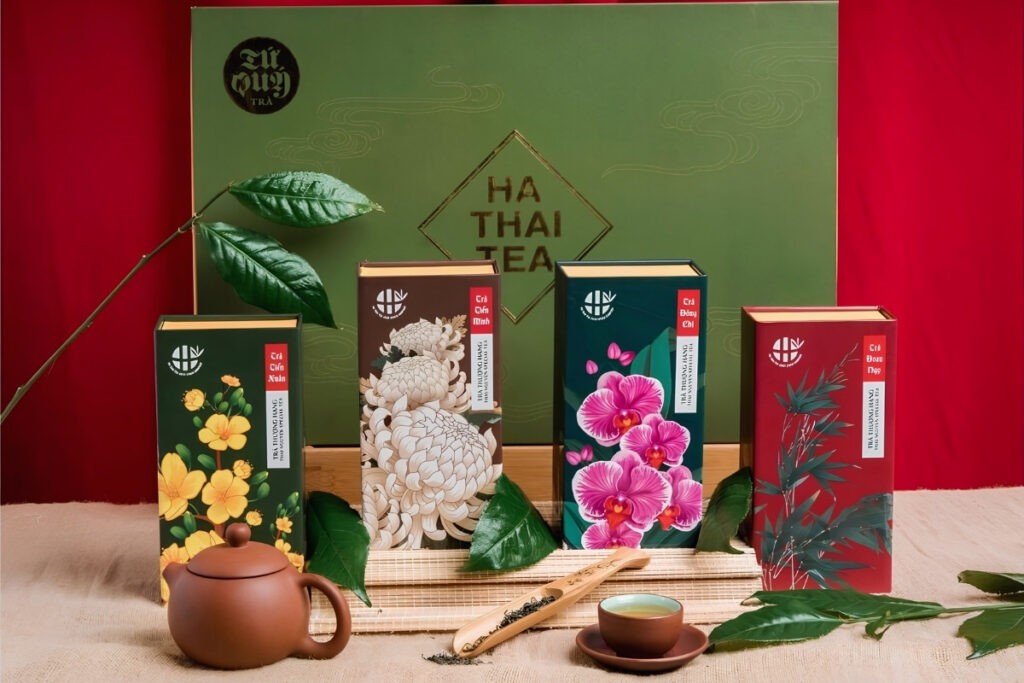
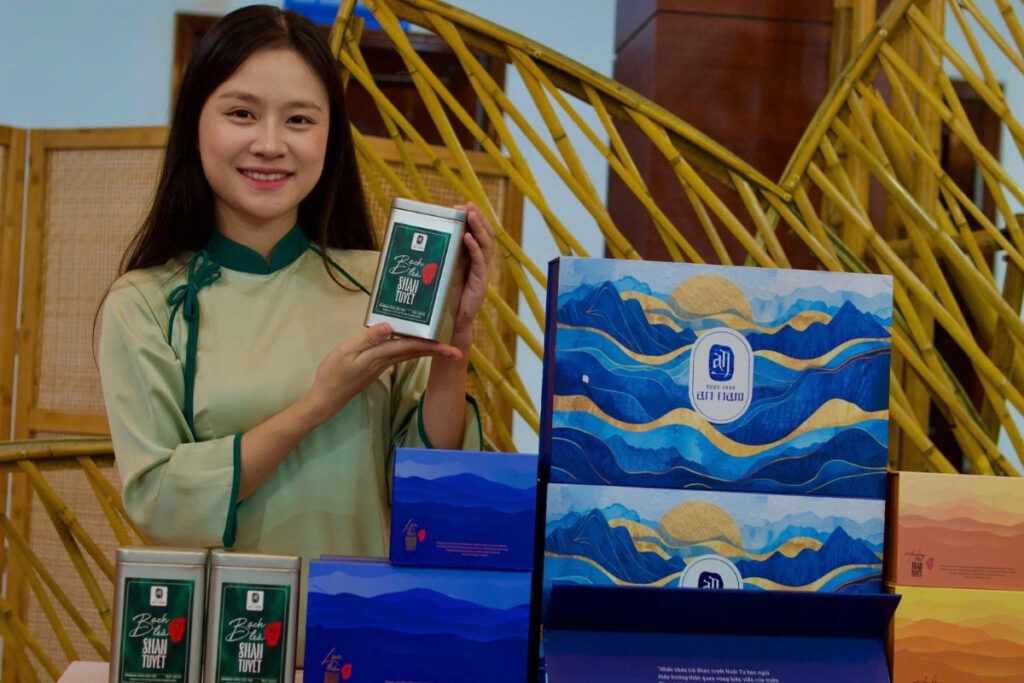
Elegant packaging replaced plain paper bags.
Each box identified the harvest season, growing region, and tea variety.
QR codes linked customers to videos showing the people who had picked the leaves only days earlier.
For international buyers, the tea was no longer anonymous.
It came with a place.
A family.
A story.
Watching her prepare orders for customers in Singapore, Australia, and the United States, I realized that Vietnamese tea was entering a new chapter.
Not by changing its identity.
By telling its story more clearly.
The Return of Craftsmanship
One afternoon, I attended a small tea tasting hosted by several young tea enthusiasts.
The event felt surprisingly relaxed.
Nobody claimed to be an expert.
Instead, people compared aromas, discussed different brewing temperatures, and debated whether one tea reminded them of orchids, roasted nuts, or mountain herbs.
What impressed me most wasn’t their knowledge.
It was their curiosity.
For many years, Vietnam exported enormous quantities of tea around the world, often without much recognition for where it came from.
Today, a growing number of producers are focusing on something different.
Quality over quantity.
Origin over anonymity.
Craftsmanship over mass production.
The movement reminded me of what happened with specialty coffee years ago.
People increasingly wanted to know not only what they were drinking, but who had produced it.
Technology Meets Tradition
Modern technology hasn’t replaced traditional tea making in Vietnam.
Instead, it has helped small producers reach people who might never have discovered Vietnamese tea before.
The biggest surprise came in Ha Giang.
An elderly farmer carefully tied finished tea into paper bundles while his grandson photographed each package with a smartphone.
Within minutes, the tea appeared online for customers thousands of kilometers away.
Two generations worked side by side.
One relied on decades of experience in the mountains.
The other understood digital marketing and international shipping.
Neither could replace the other.
Together, they were helping preserve a tradition that might otherwise have struggled to reach younger audiences.
Technology hadn’t changed the tea.
It had changed who could discover it.
Why Vietnamese Tea Matters More Than Ever
Modern life moves quickly.
People spend more time looking at screens and less time sitting around the table.
Perhaps that is why tea feels increasingly relevant.
Everywhere I traveled, tea offered something that had become unexpectedly rare.
Time.
Time to pause before speaking.
Time to welcome a visitor properly.
Time to notice the aroma changing with each infusion.
Time to share a conversation without constantly checking a phone.
The longer I stayed in Vietnam, the more I realized tea wasn’t surviving because people resisted modern life.
It was surviving because it answered something modern life often forgets.
The importance of slowing down.
Looking Ahead
On my final evening in Hanoi, I returned to the same tea house where my understanding of lotus tea had begun.
The customers looked remarkably similar to those I had seen days earlier.
An elderly couple quietly sharing the final pot of the afternoon.
A university student reading by the window.
Two young designers discussing a new project.
Different generations.
Different lives.
One tradition.
As I watched another kettle begin to boil, I understood something that had escaped me at the beginning of my journey.
Vietnamese tea culture isn’t preserved inside museums.
It lives because every generation finds its own reason to keep pouring another cup.
That may be the strongest sign of all that its story is far from finished.
Modern Vietnamese Tea Trends
- Online tea brands
- Boutique tea houses
- Single-origin tea
- Tea tourism
- Sustainable farming
The Last Cup: What Vietnamese Tea Taught Me About Vietnam
“When you come back, we’ll drink tea again.”
Those were among the last words spoken to me before I left Vietnam.
Not “Have a safe flight.”
Not “See you next time.”
Simply,
“We’ll drink tea again.”
At first, it sounded like an ordinary farewell.
Only after I was sitting on the plane did I realize it perfectly captured everything I had experienced over the previous weeks.
As the plane lifted above Hanoi, I realized that every cup I’d accepted had quietly marked another step in the journey.
Without noticing it at first, tea had become the thread connecting every place I visited—from misty tea hills and ancient forests to family homes and quiet tea houses.
It wasn’t the reason I came to Vietnam.
Yet somehow, it became the story I brought home.
Looking Back on the Journey
I had come for the landscapes, the food, and the famous coffee culture.
Yet somewhere between the misty hills of Thai Nguyen, the ancient forests of Ha Giang, the lotus ponds of Hanoi, and the family tables where every visitor received a warm cup before a conversation began, tea quietly became the thread connecting my entire journey.
Each destination revealed a different chapter of the same story.
Farmers taught me patience, artisans demonstrated craftsmanship, families showed quiet generosity, and young entrepreneurs proved that tradition can continue evolving without losing its identity.
Five Lessons I Brought Home
Every memorable journey changes the way we see a place.
This one changed the way I think about tea.
Looking back, the journey left me with four lasting impressions: hospitality often begins with a simple cup, true craftsmanship starts long before the leaves reach the teapot, traditions survive because they remain part of everyday life, and the most memorable travel experiences often begin with an unexpected invitation to slow down.
Those lessons stayed with me long after I left Vietnam.
The Memory That Stayed With Me
The last packet of tea remained unopened for weeks after I returned home.
When I finally brewed it, the memories arrived long before the aroma.
The tea had become more than a souvenir.
It had become a reminder that the most memorable part of the journey was never the tea itself, but the people who chose to share it with me.
Where to Experience Vietnamese Tea Culture
If your itinerary allows, these destinations offer some of the country’s most rewarding tea experiences.
| Destination | Why Visit |
|---|---|
| Thai Nguyen | Vietnam’s most famous green tea region, ideal for plantation visits and family-run farms. |
| Ha Giang | Ancient Shan Tuyết tea forests, ethnic minority communities, and breathtaking mountain landscapes. |
| Hanoi | Historic tea houses, authentic lotus tea, and traditional tea appreciation. |
| West Lake (summer) | The best place to witness the centuries-old art of scenting tea inside fresh lotus blossoms. |
| Moc Chau | Rolling tea hills, cooler climate, and beautiful scenery in northern Vietnam. |
| Bao Loc | A quieter Central Highlands destination known for green tea, oolong, and black tea production. |
Quick Comparison
| Tea | Best For |
|---|---|
| Thai Nguyen | First-time visitors |
| Shan Tuyết | Tea enthusiasts |
| Lotus Tea | Cultural experience |
| Oolong | Smooth floral flavor |
Still planning your tea journey through Vietnam? These are some of the questions travelers ask most often, along with practical answers based on the traditions and places explored throughout this guide.
Frequently Asked Questions About Vietnam’s Tea
Is tea more popular than coffee in Vietnam?
Both are popular but serve different roles. Coffee dominates Vietnam’s café culture, while tea remains an essential part of family life, hospitality, religious traditions, and everyday gatherings. Rather than competing, tea and coffee complement each other in modern Vietnamese culture.
What is the best Vietnamese tea for first-time visitors?
Thai Nguyen green tea is the best introduction to Vietnamese tea. Its fresh aroma, gentle bitterness, and naturally sweet finish make it approachable for beginners. Afterward, try Shan Tuyết tea from Ha Giang or traditional lotus tea from Hanoi for more complex flavors.
How is Vietnamese tea culture different from Chinese or Japanese tea culture?
Vietnamese tea culture is generally more informal. While Japanese tea emphasizes ceremony and Chinese tea showcases diverse brewing styles, Vietnamese tea focuses on hospitality, family, and conversation. Tea is meant to be shared naturally rather than performed as a ritual.
Where can travelers experience authentic Vietnamese tea culture?
Visit Thai Nguyen for green tea plantations, Ha Giang for ancient Shan Tuyết tea forests, and Hanoi for traditional tea houses and lotus tea. Family-run tea farms often provide the most authentic experiences.
Can visitors buy authentic Vietnamese tea?
Yes. The best places to buy authentic tea are specialty tea houses, trusted local producers, and family-run tea farms. Look for tea that clearly lists its origin, harvest region, and production method.
What should I know before visiting a Vietnamese tea house?
No special knowledge is required. Accept the first cup as a sign of hospitality, observe the host’s brewing style, and take your time. Vietnamese tea houses are designed for conversation and relaxation rather than quick visits.
What is lotus tea, and why is it so special?
Lotus tea (Trà Sen) is one of Vietnam’s finest specialty teas. It is traditionally made by scenting premium green tea inside fresh lotus blossoms, creating a delicate floral aroma. Authentic lotus tea is closely associated with Hanoi’s West Lake.
What makes Vietnamese tea culture unique?
Vietnamese tea culture is unique because it is part of everyday life rather than reserved for formal ceremonies. From family homes and village gatherings to weddings and ancestor worship, tea symbolizes hospitality, respect, and meaningful human connection.
One Last Cup
On my final morning in Vietnam, I arrived at the airport carrying several carefully wrapped bags of tea.
Thai Nguyen green tea.
Ancient Shan Tuyết.
A small tin of lotus tea.
They fit easily inside my luggage.
The memories did not.
Looking back, I don’t remember the journey as a series of destinations.
I remember it as a series of conversations that began with someone quietly placing a warm cup into my hands.
Vietnam’s greatest treasures aren’t always the ones listed on maps.
Sometimes they arrive in a porcelain cup no bigger than the palm of your hand.
Final Thoughts on Vietnamese Tea Culture
Before this journey, I thought Vietnamese tea was simply another regional specialty waiting to be tasted.
I left realizing it was something far more meaningful.
Tea is the thread connecting Vietnam’s mountains, villages, cities, and families. It reflects centuries of craftsmanship, deep respect for nature, and a culture where hospitality is expressed through quiet acts rather than grand gestures.
For travelers, exploring Vietnamese tea culture isn’t just about discovering new flavors. It’s about slowing down long enough to experience the rhythm of everyday life, one conversation, one family, and one shared cup at a time.
If someone in Vietnam places a small porcelain cup in front of you, don’t rush to finish it.
Take a moment to notice where the tea came from, who prepared it, and the conversation unfolding around the table.
You may discover that the most memorable part of Vietnamese tea isn’t its flavor, but the stories shared while drinking it.
Because in Vietnam, the journey often begins only after the tea is poured.
Continue Exploring Vietnam’s Cultural Heritage
If you enjoyed discovering the traditions of Vietnamese tea culture, continue your journey through Vietnam’s rich heritage with these related guides on Tam Voc Viet:
- Vietnamese Culture Guide – Discover the traditions, customs, festivals, cuisine, and values that shape everyday life in Vietnam.
- Vietnamese Family Culture – Explore how family values influence Vietnamese society, relationships, and daily life.
- Ao Dai: Vietnam’s National Dress -Discover the history and symbolism behind Vietnam’s iconic traditional costume.
- Tet Holiday in Vietnam – Experience Vietnam’s most important festival, where family reunions and ancestral traditions take center stage.
- Vietnamese Etiquette – Understand the customs and social etiquette that will help you travel respectfully in Vietnam.
- Ancestor Worship in Vietnam – Learn about one of the country’s most enduring traditions and its significance in family life.
- Vietnamese Traditional Clothing – Discover the remarkable diversity of traditional attire worn by Vietnam’s ethnic communities beyond the famous áo dài.
- Vietnamese Festivals – Explore the religious and cultural celebrations that bring communities together throughout the year.
- Vietnamese Religion & Beliefs – Learn how Buddhism, ancestor worship, and folk beliefs influence Vietnam’s traditions, hospitality, and everyday life.
Together, these guides offer a deeper understanding of Vietnam’s history, traditions, and everyday culture—helping you experience the country beyond its famous landmarks.
Editor’s Note:
Tea is more than a beverage in Vietnam. It reflects the country’s landscapes, craftsmanship, hospitality, and deep respect for human connection. From the misty tea hills of Thai Nguyen and the ancient forests of Ha Giang to the lotus ponds of Hanoi and family homes across the country, every cup tells part of a larger cultural story.
Tea traditions also vary by region, season, and family. While brewing methods and favorite teas may differ, the values behind them—hospitality, patience, respect, and togetherness—remain remarkably consistent throughout Vietnam.
If you have the opportunity to visit a Vietnamese tea house, a local tea farm, or simply accept a cup offered by a host, take your time. Some of the most memorable travel experiences begin with an ordinary conversation over tea.
What Surprised Us Most
After traveling through Vietnam’s tea-growing regions and meeting farmers, artisans, and local families, one thing became clear: tea is woven into everyday life rather than reserved for special occasions.
Whether shared with guests, served during family gatherings, offered on ancestral altars, or enjoyed in a quiet neighborhood tea house, tea creates moments of connection that reveal the warmth and rhythm of Vietnamese culture in ways few travelers expect.
References & Trusted Resources
This guide is based on field observations, historical research, official publications, academic references, and internationally recognized cultural resources. For readers who wish to explore Vietnamese tea culture in greater depth, we recommend consulting the following references:
👉 Vietnam National Authority of Tourism – Official information on Vietnam’s cultural attractions, festivals, and travel experiences.
👉 UNESCO – Viet Nam Intangible Cultural Heritage – Resources on Mother Goddess Worship, traditional festivals, and other UNESCO-recognized cultural heritage.
👉 Ministry of Culture, Sports and Tourism of Viet Nam – Official information on religious heritage, historic sites, museums, and cultural preservation.
About the Author
Tam Voc Viet Editorial Team
The Tam Voc Viet Editorial Team is passionate about helping international travelers discover Vietnam through its history, culture, and everyday traditions.
Our guides combine official government resources, UNESCO publications, academic research, local perspectives, and firsthand travel experiences to create reliable, engaging, and practical content for curious visitors.
Each article is carefully reviewed and updated to ensure it remains accurate, informative, and relevant.
Article Information
Category: Vietnamese Culture
Topic: Vietnamese Tea Culture
Reading Time: Approximately 18–22 minutes
Published: August 2026
Last Updated: August 2026
Author: Tam Voc Viet Editorial Team
