

 Tiếng Việt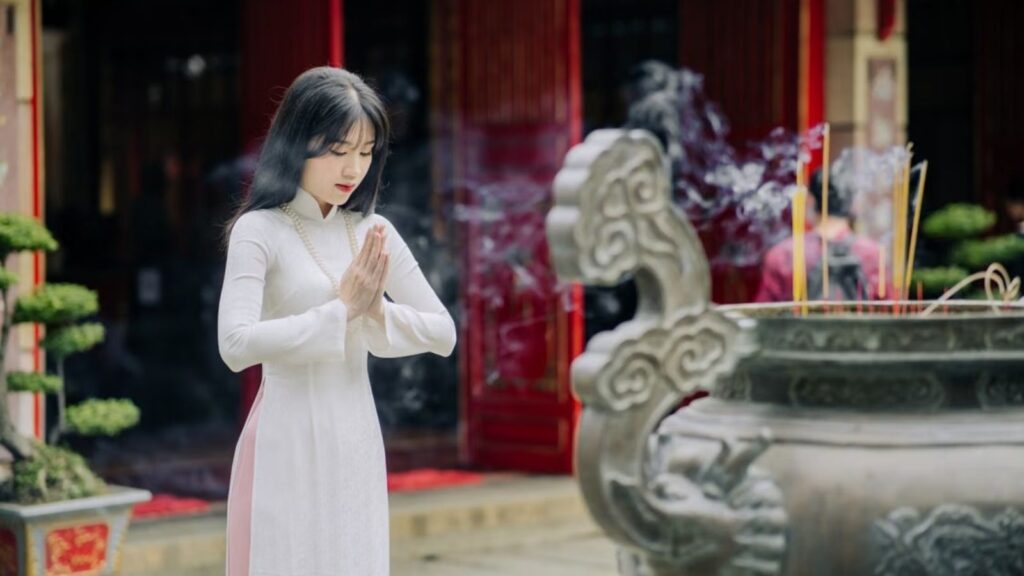
Vietnam is often described as one of the most spiritual countries in Southeast Asia—but perhaps not in the way many visitors expect.
Rather than following a single religion, many Vietnamese people blend Buddhist teachings, ancestor worship, folk beliefs, Confucian values, Taoist philosophy, and local traditions into everyday life. A person may visit a Buddhist pagoda, maintain an ancestor altar at home, celebrate traditional festivals, and still identify as having no formal religion.
For travelers, understanding these beliefs offers much more than historical knowledge. It explains why incense fills ancient temples, why families gather before ancestral altars during Tet, why lucky dates matter for weddings and business openings, and why respect for elders remains central to Vietnamese society.
This guide explores Vietnam’s unique religious landscape, the beliefs that shape everyday life, and how visitors can respectfully experience the country’s spiritual traditions.
Quick Answer
Vietnam has no single dominant religion. Instead, Vietnamese spirituality combines Buddhism, ancestor worship, indigenous folk religion, Confucian ethics, Taoist philosophy, Christianity, Cao Dai, Hoa Hao Buddhism, Islam, Hinduism, and several ethnic minority belief systems. Many Vietnamese practice multiple traditions simultaneously rather than belonging exclusively to one religion.verse countries in Southeast Asia.
📌 Quick Fact
Vietnam officially recognizes 16 religions, but many Vietnamese families practice more than one spiritual tradition at the same time. It’s common to see Buddhism, ancestor worship, folk beliefs, and family customs coexist naturally in everyday life.
Vietnam’s Spiritual Landscape at a Glance
| Tradition | What It Emphasizes | Where Visitors Often Experience It |
|---|---|---|
| Buddhism | Compassion, mindfulness, merit | Pagodas throughout Vietnam |
| Ancestor Worship | Family remembrance | Homes across the country |
| Mother Goddess Worship | Nature, protection, prosperity | Phủ Dầy, Nam Định |
| Village Guardian Beliefs | Community identity | Village communal houses (đình) |
| Cao Dai | Unity of world religions | Tây Ninh Holy See |
| Catholicism | Christian worship and community life | Churches nationwide |
Table of Contents
My First Morning in Vietnam: A Different Kind of Spirituality
My first morning in Vietnam didn’t begin with the sound of traffic.
It began with the scent of incense.
Walking through a quiet neighborhood in Hanoi just after sunrise, I noticed an elderly woman placing fresh flowers in front of a small altar inside her home. A few doors away, a shop owner lit three incense sticks before unlocking his café. Around the corner, young office workers stopped briefly at a pagoda, bowed their heads for a moment, then continued on their way to work with takeaway coffee in hand.
No one seemed to be in a hurry.
No one appeared to be performing a grand religious ceremony.
Yet spirituality was quietly everywhere.
As I continued travelling through Vietnam—from the ancient streets of Hoi An to the floating markets of the Mekong Delta—I kept seeing the same scenes repeated in different forms. Families gathered around ancestor altars before Tet. Fishermen whispered a short prayer before taking their boats out to sea. University students visited temples before exams. Newlyweds burned incense before beginning married life together.
Like many first-time visitors, it’s easy to assume Buddhism explains everything.
It didn’t.
The more locals shared their stories, the more I realized that Vietnam isn’t a country where most people fit neatly into one religious label. A grandmother might visit a Buddhist pagoda every month, while the family also keeps an ancestor altar at home, celebrates traditional village festivals, and follows customs rooted in beliefs that existed long before Buddhism arrived.
No one seemed concerned about whether those traditions belonged to different religions.
To them, they simply belonged to Vietnam.
That realization changed the way Vietnam began to make sense.
Instead of seeing temples as tourist attractions, I started noticing the quiet rituals happening around them. The incense wasn’t simply smoke drifting through the air—it was a gesture of gratitude. The fruit placed on family altars wasn’t decoration—it was an offering to loved ones who were still considered part of the family, even after death.
Religion in Vietnam isn’t something you encounter only inside sacred buildings.
You discover it while sharing dinner with a local family, wandering through a village market, watching neighbors prepare for Tet, or simply observing how naturally tradition fits into modern life.
Vietnam’s spiritual world isn’t defined by a single faith.
It’s woven into everyday moments—subtle, welcoming, and deeply connected to family, community, and gratitude.
For many travelers, understanding that simple truth is the first step toward understanding Vietnam itself.
Why Many Vietnamese Say They Have “No Religion”
One question stayed with me after those first few days in Vietnam.
If spirituality seemed to be everywhere, why did so many people smile and say, “I don’t have a religion”?
At first, the answer felt puzzling.
In many Western countries, saying you have no religion usually means you don’t practice religious traditions at all. In Vietnam, however, those same words often carry a very different meaning.
A local guide in Hue explained it with a smile.
“We may not belong to one religion, but we still honor our ancestors, visit temples, and keep the traditions our families have followed for generations.”
That simple explanation unlocked something I had been trying to understand.
Across Vietnam, spiritual life is often less about belonging to a particular faith than about preserving family traditions. Lighting incense, preparing offerings, visiting a pagoda, or gathering around an ancestor altar are not always seen as religious obligations. Instead, they are expressions of gratitude, respect, and remembrance.
During a homestay in central Vietnam, this became especially clear.
Before lunch, the grandmother quietly placed a small bowl of freshly cooked rice and a cup of tea on the family altar. Nobody recited formal prayers. After a brief moment of silence, everyone returned to the dining table, laughing and chatting as if nothing unusual had happened.
To a visitor, it might have looked like a religious ceremony.
To the family, it was simply a way of inviting loved ones who had passed away to remain part of an important moment.
The farther I traveled, the more familiar these quiet rituals became.
A shop owner lighting incense before opening for the day.
Students stopping by a pagoda before university entrance exams.
Couples choosing an auspicious wedding date.
Families gathering at home during Tet to honor previous generations.
None of these moments required someone to identify with a single religion.
Instead, they reflected a shared cultural understanding that family, gratitude, and tradition are worth carrying forward.
That may be why asking, “What religion are you?” often reveals less than asking, “What traditions does your family keep?”
The answer might include Buddhist customs, ancestor worship, village festivals, or simply values passed down from parents and grandparents. These influences are rarely viewed as separate or competing. Together, they form a way of life that has evolved over centuries.
For many travelers, this is one of Vietnam’s most fascinating discoveries.
Spirituality isn’t always defined by religious labels.
More often, it’s found in the quiet traditions that connect families across generations—and in the everyday moments that remind people where they come from.
The Family Altar That Taught Me More Than Any Museum

One evening, while staying with a local family, dinner was almost ready.
Bowls of steaming rice were already on the table, and without thinking, I reached for my chopsticks.
My host smiled.
“Just a second,” she said.
She walked over to the family altar, placed a small bowl of rice and a pair of chopsticks in front of the framed photographs, lit a stick of incense, and stood quietly for a few moments.
Only then did everyone take their seats.
Noticing my curiosity, she explained,
“We invite our grandparents to share the meal with us first.”
There was nothing elaborate about the ritual.
It lasted less than a minute.
No one spoke while the incense burned.
No one treated it as a performance.
It was simply part of dinner, as familiar as setting the table or pouring tea.
That quiet moment changed the way I understood ancestor worship.
Before arriving in Vietnam, I had imagined it as a formal religious practice carried out only on important occasions.
Instead, I found something much more personal.
For many Vietnamese families, the ancestor altar is not a reminder of the past alone. It represents an ongoing relationship with previous generations—one built on gratitude, remembrance, and the belief that family connections continue beyond a single lifetime.
Later, I noticed similar altars in city apartments, countryside homes, family-run cafés, and even small businesses.
They varied in size and appearance, but they all reflected the same idea.
Remembering those who came before is not reserved for special ceremonies.
It remains part of everyday life.
💡 Local Insight
If you’re invited into a Vietnamese home, you may notice a family altar in the living room. It isn’t simply a decorative feature. For many families, it is the spiritual heart of the home—a place to remember previous generations and express gratitude during everyday life as well as important celebrations.
A Morning at the Pagoda: Discovering Buddhism in Everyday Vietnam
The first pagoda I visited in Vietnam was far quieter than I had imagined.
There were no crowds gathering at the entrance, no tour guides speaking through loudspeakers, and no long lines of visitors waiting to enter.
Instead, elderly residents arrived one by one, parking their bicycles beneath the shade of old trees before walking calmly through the temple gate.
No one seemed to be in a hurry.
As I stepped inside, I paused for a moment, unsure whether visitors were expected to light incense before entering the main hall.
A woman arranging fresh lotus flowers noticed my hesitation and smiled.
“There’s no right or wrong,” she said gently. “Some people offer incense. Others simply come to sit quietly for a while.”
Her answer surprised me.
I had expected rules.
Instead, I was given permission simply to be respectful.
Following her example, I stood quietly to one side and watched the morning unfold.
An elderly man bowed briefly before the altar.
A university student closed her eyes for only a few seconds before heading to class.
Another visitor placed fresh flowers on the altar without saying a single word.
Nothing felt rehearsed.
These weren’t performances for visitors.
They were ordinary moments woven naturally into the rhythm of everyday life.
That quiet morning changed the way I looked at Vietnamese pagodas.
I had arrived expecting impressive architecture and centuries of history.
What stayed with me instead was something much simpler: people using these sacred spaces as part of their daily lives—to express gratitude, seek a moment of calm, or begin the day with quiet reflection.
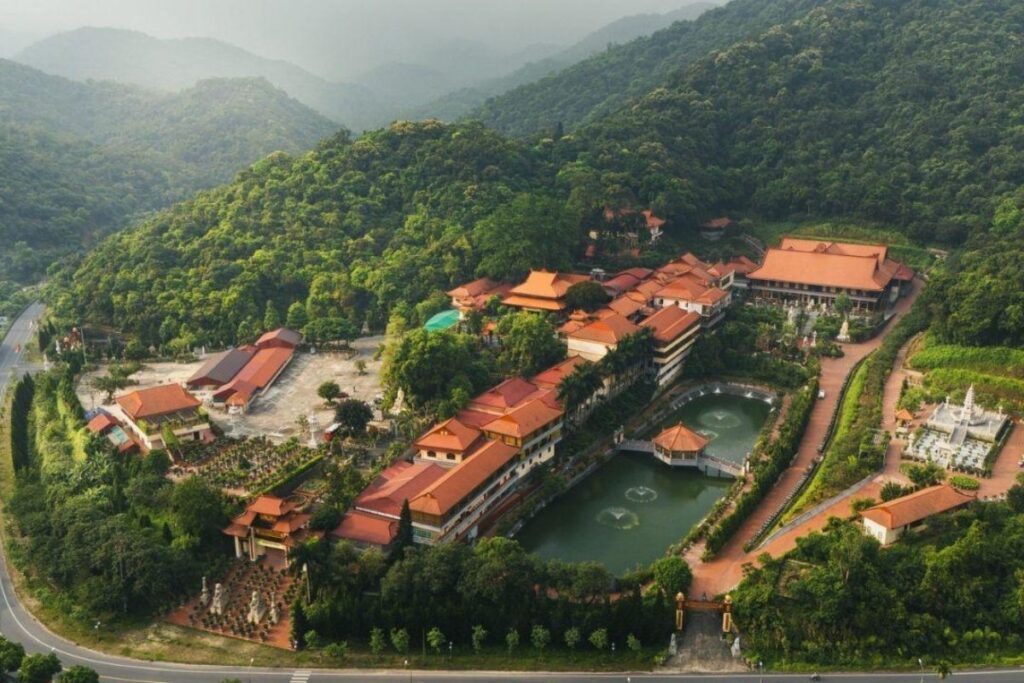
Many of Vietnam’s most famous pagodas, from Thiên Mụ Pagoda in Hue to Yên Tử in Quảng Ninh and Bái Đính Pagoda in Ninh Bình, welcome millions of visitors every year. Yet beyond their architectural beauty and historical significance, they continue to serve the same purpose they always have—as living places of worship where local communities gather, pray, and preserve traditions that have endured for generations.
🍃 Did You Know?
Many international visitors assume every Buddhist tradition in Vietnam was introduced from abroad.
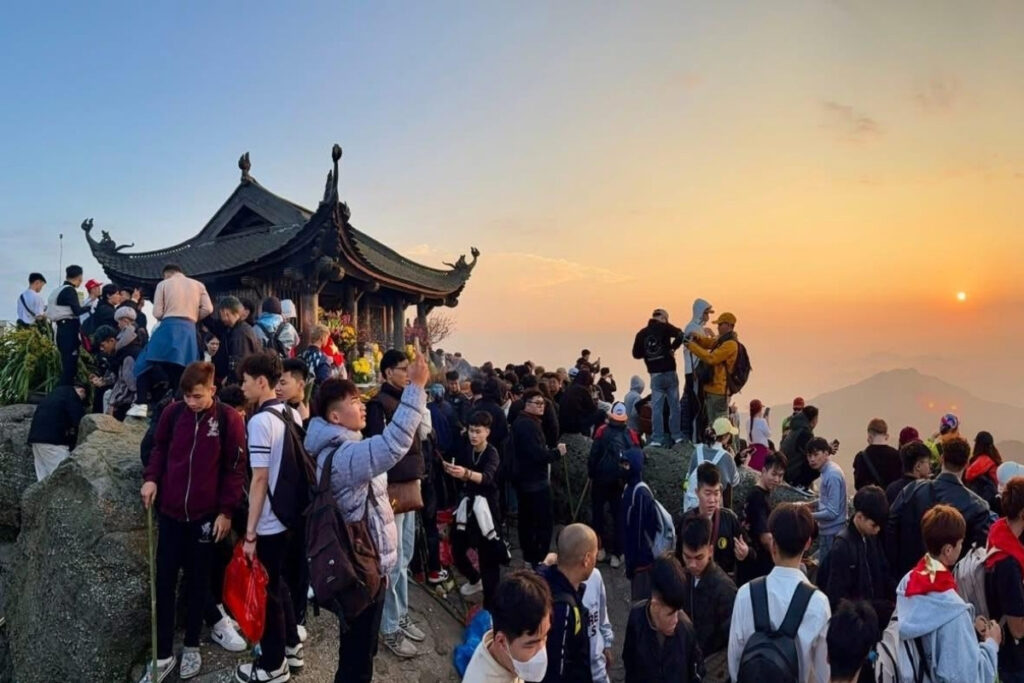
In fact, one of the country’s most influential Buddhist schools—Trúc Lâm Zen—was founded in Vietnam during the 13th century by King Trần Nhân Tông after he voluntarily abdicated the throne.
Unlike some Buddhist traditions that emphasize monastic seclusion, Trúc Lâm encourages practitioners to cultivate compassion and mindfulness while remaining engaged in family, work, and society.
For travelers, Yên Tử Mountain in Quảng Ninh Province remains the most important place to experience this uniquely Vietnamese Zen tradition. Pilgrims and visitors climb the mountain not only for its spectacular scenery but also to follow the path once walked by the king who became a monk.
That was when I began to understand something I hadn’t expected.
Vietnam’s pagodas are not simply historic landmarks.
They are living parts of the communities around them, where faith is expressed not through grand ceremonies, but through small, everyday acts of gratitude, remembrance, and hope.
Beyond Buddhism: The Invisible Beliefs That Shape Daily Life
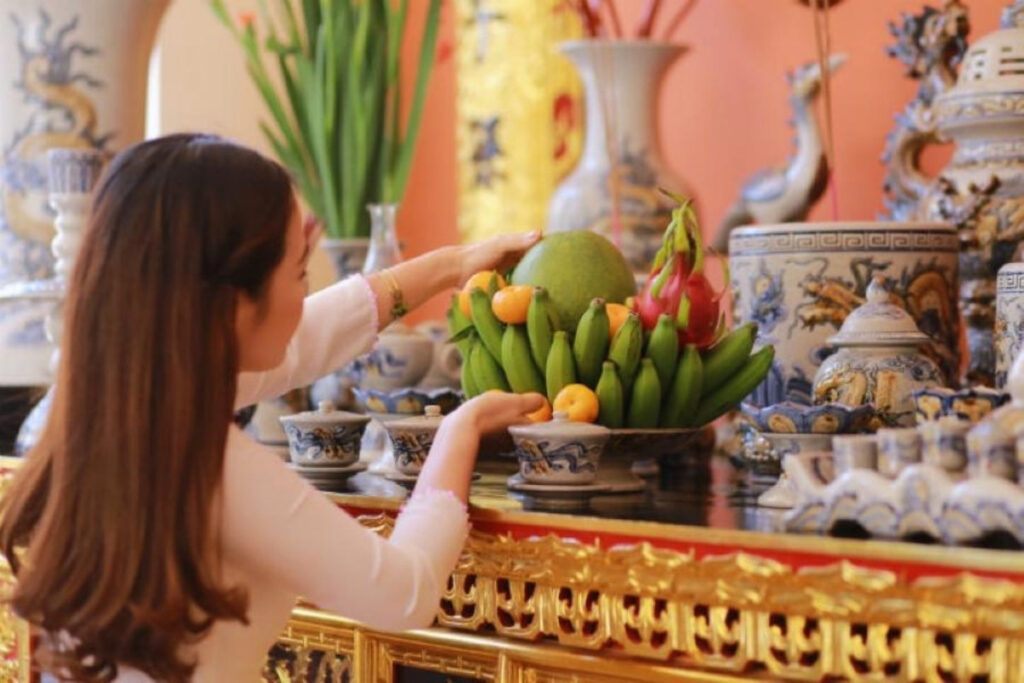
By this point in the journey, one thing had become impossible to ignore.
Vietnam’s spiritual life extends far beyond the walls of its pagodas.
Some of the country’s most enduring beliefs don’t belong to a single religion at all. Instead, they quietly shape everyday decisions—from choosing a wedding date and moving into a new home to opening a family business or celebrating the Lunar New Year.
They’re easy to overlook unless you know what you’re seeing.
A café owner places fresh fruit beside a small altar before welcoming the first customers of the day. A family delays moving house because another date is considered more auspicious. During Tet, conversations often turn to the first visitor of the New Year, a tradition many believe will influence the year’s fortune.
To many international travelers, these customs may seem like superstition.
To many Vietnamese, they’re simply part of everyday culture.
While talking with local families, I noticed that very few people described these traditions as strict religious rules. Instead, the words that came up most often were respect, harmony, and good intentions.
One elderly homeowner explained it in a way that has stayed with me ever since.
“These customs remind us to begin important things with the right mindset.”
That simple sentence changed the way I understood many of the rituals I had been seeing.
Practices such as choosing an auspicious date, arranging a home according to phong thủy (feng shui), or making a small offering before opening a business are often less about predicting the future than about approaching new beginnings thoughtfully. They encourage people to slow down, prepare carefully, and show gratitude before taking the next step.
What surprised me most was how differently younger Vietnamese often talked about phong thủy.
Few described it as a religion.
Many saw it as a blend of cultural tradition, practical wisdom, and family advice. Some admitted they didn’t believe every rule literally, yet still chose a favorable moving date or accepted suggestions from parents and grandparents—not because they feared bad luck, but because these customs had become meaningful family traditions.
Whether every detail is believed isn’t always the point.
The tradition itself creates a shared language between generations.
That balance between old and new appears throughout modern Vietnam.
Glass office towers stand beside centuries-old temples. Technology startups begin the workday with laptops and video meetings, while a small ancestor altar quietly occupies one corner of the office. Modern apartments feature smart home devices alongside family altars that continue to receive fresh flowers and incense.
Rather than disappearing, these traditions have adapted alongside a rapidly changing society.
They remain visible not because people resist modern life, but because they continue to offer something timeless—a reminder to value family, express gratitude, and begin life’s important moments with care.
Perhaps that’s why Vietnam’s spiritual traditions often feel so natural.
They don’t ask to be noticed.
They simply become part of everyday life, quietly connecting the past with the present in ways that many visitors only begin to appreciate after slowing down and looking a little closer.
Where Every Village Has a Story
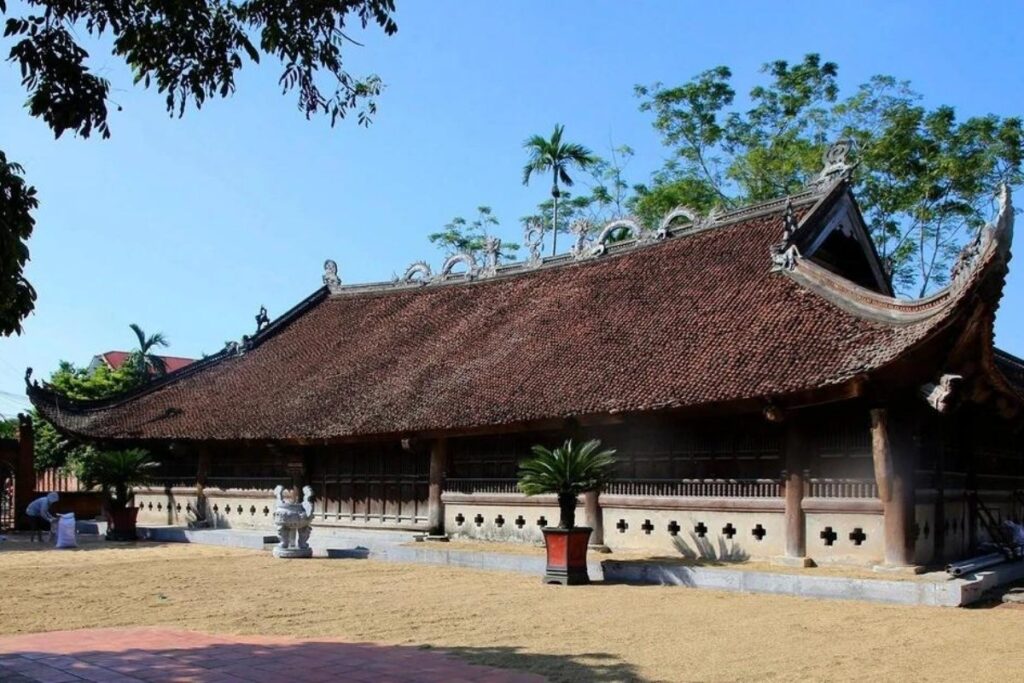
The deeper I traveled into Vietnam, the more I realized that spirituality isn’t found only in famous temples or historic pagodas.
Sometimes, it waits quietly in the center of a village.
On an afternoon in northern Vietnam, a narrow country road led to an old wooden building shaded by towering banyan trees. Children chased each other across the courtyard while elderly villagers chatted on stone benches nearby. There were no ticket counters, souvenir shops, or tour groups—just a peaceful place that seemed to belong entirely to the community.
This wasn’t a temple.
It was the village’s communal house, known in Vietnamese as a đình.
Almost every traditional village has one. More than a meeting place, the đình is where local people honor the village’s guardian spirit, known as the thành hoàng.
In many villages, this guardian spirit isn’t a mythical deity at all. It may be a respected military commander, a scholar, a village founder, or another historical figure whose contributions shaped the community centuries ago. Over time, history and legend often blend together, making it difficult to separate documented facts from local folklore.
For villagers, however, historical accuracy isn’t the main point. The đình exists to remember the people whose courage, leadership, or wisdom helped build the community—a tradition that continues to strengthen local identity today.
For visitors, these buildings are easy to overlook.
Yet they reveal an important part of Vietnam’s spiritual heritage.
Long before Buddhism spread across the country, Vietnamese villages had already developed their own beliefs centered on the land around them. Rivers, mountains, forests, and ancient trees were not simply part of the landscape. They were woven into local legends, seasonal festivals, and community identity.
Those traditions never disappeared.
Instead, they blended naturally with later religious influences, creating a spiritual culture that feels uniquely Vietnamese.
Traveling from one region to another, the stories changed, but the spirit remained remarkably similar.
Along the coast, fishing communities held ceremonies to pray for calm seas and safe journeys.
In farming villages, annual festivals celebrated a successful harvest and expressed gratitude for nature’s generosity.
In the mountains, ethnic communities continued traditions that honored forests, rivers, and the land that had sustained their families for centuries.
Each place had its own story.
Some were based on history.
Others on legend.
Many blurred the line between the two.
Whether every tale could be historically verified seemed almost beside the point. These stories gave each village its own identity and helped preserve memories that might otherwise have been forgotten.
Looking back, I realized that Vietnam’s cultural heritage isn’t preserved only inside museums or UNESCO sites.
It also lives in these quiet communities, where local festivals, family traditions, and centuries-old legends continue to shape everyday life.
For travelers willing to leave the main tourist route, a village communal house often offers something no famous attraction can provide—a glimpse into the beliefs that have held communities together for generations.
Sometimes, the most meaningful discoveries aren’t marked on a map.
They’re found in the places where local people still gather, celebrate, and remember the stories that define who they are.
A Celebration Unlike Any Other: Discovering Mother Goddess Worship
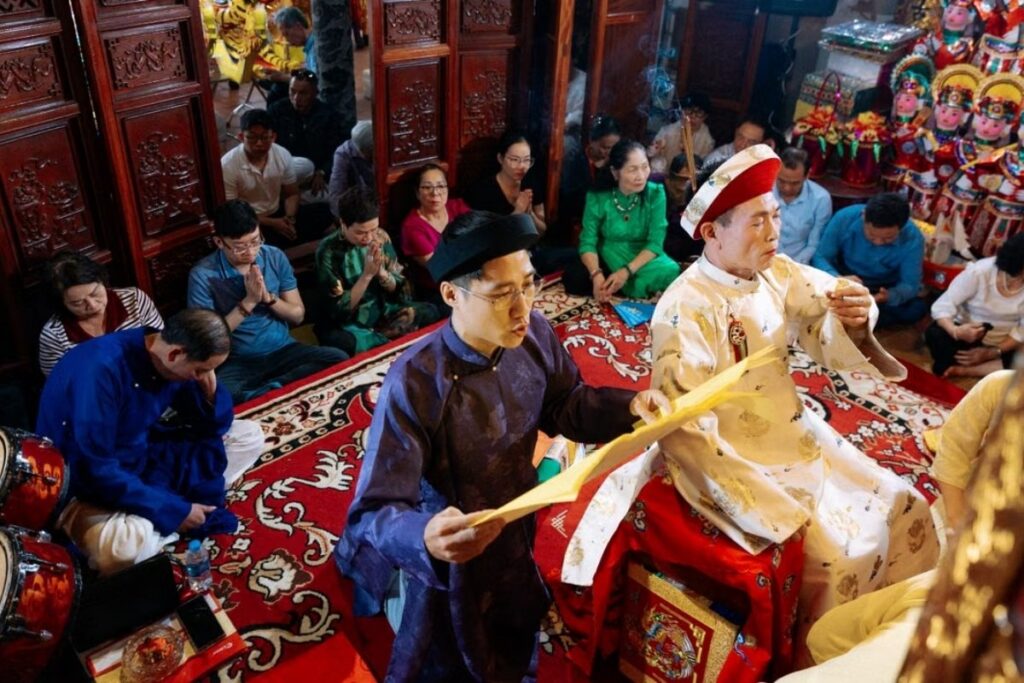
Until this point, Vietnam’s spiritual traditions had been defined by quiet moments.
The gentle scent of incense.
The peaceful atmosphere of pagodas.
The silence surrounding family altars.
Then everything changed.
Inside a temple in northern Vietnam, the air suddenly filled with the sound of drums, traditional string instruments, and powerful singing. Brilliant robes in shades of crimson, emerald, gold, and royal blue swept across the room as performers moved gracefully through a ceremony unlike anything I had experienced before.
For a moment, it looked like a cultural performance.
It wasn’t.
It was a hầu đồng ceremony—one of the most distinctive expressions of Đạo Mẫu, or the Worship of the Mother Goddesses.
Few international visitors realize that the Worship of the Mother Goddesses is found only in Vietnam.
Unlike many belief systems centered on a single supreme deity, Đạo Mẫu honors a group of powerful Mother Goddesses representing Heaven, Mountains and Forests, Water, and Earth. Together, they reflect the deep respect Vietnamese culture has long held for nature, motherhood, protection, and prosperity.
One of the best places to experience this living tradition is Phủ Dầy in Nam Định Province (Ninh Binh Province in 2026), widely regarded as the spiritual heart of Mother Goddess Worship. During the annual Phủ Dầy Festival, thousands of pilgrims gather to take part in ceremonies, music, and hầu đồng rituals that have been preserved for generations.
Unlike many religious ceremonies that emphasize solemn reflection, this one was full of life.
Music echoed through the temple.
Traditional musicians performed centuries-old melodies.
Mediums changed into elaborate embroidered costumes, each representing a different historical or spiritual figure. Worshippers offered flowers, incense, and quiet prayers while family members watched with deep respect.
The atmosphere felt less like attending a formal ritual and more like witnessing a living tradition passed from one generation to the next.
What makes Đạo Mẫu especially remarkable is that it celebrates life as much as spirituality.
People come to pray for good health, successful businesses, safe journeys, family happiness, and peace of mind. The ceremony reflects hope, gratitude, and the belief that everyday life deserves to be celebrated.
Its cultural significance extends far beyond religion.
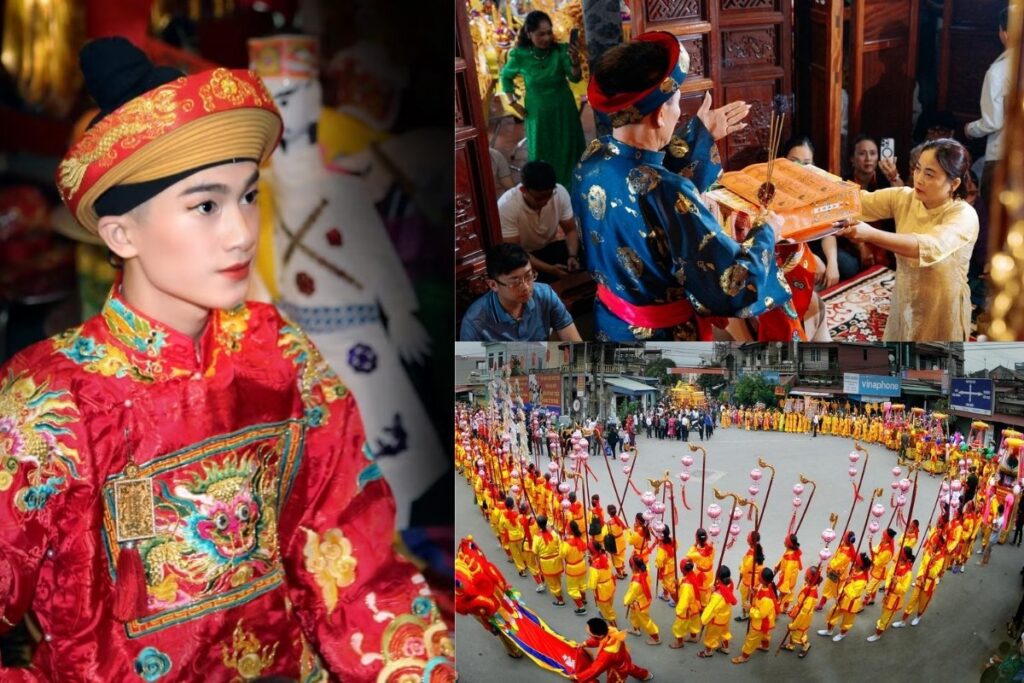
🌸 Did You Know?
One detail surprises many first-time visitors to a hầu đồng ceremony.
During a single ritual, the medium may change into more than a dozen elaborate costumes, with each outfit representing a different deity, historical figure, or spiritual guardian. The colors, music, dances, and ceremonial objects all change accordingly, creating a vivid performance that blends devotion, traditional music, costume design, and oral storytelling.
Rather than being theatrical entertainment, each transformation symbolizes the presence of a different spiritual figure invited to bless the ceremony and the community.
According to UNESCO, the Practices Related to the Beliefs in the Mother Goddesses of Three Realms of Vietnam were inscribed on the Representative List of the Intangible Cultural Heritage of Humanity in 2016. The recognition celebrates not only the belief itself, but also the music, traditional costumes, craftsmanship, oral traditions, and strong community participation that keep it alive today.
Standing quietly at the back of the temple, it became clear that this wasn’t simply a ceremony preserved for visitors.
It was a living part of Vietnamese identity.
Perhaps that’s what makes Vietnam’s spiritual heritage so memorable.
Some traditions are experienced in complete silence.
Others unfold through music, color, and celebration.
Together, they reveal a culture where faith is expressed in remarkably different ways, yet always returns to the same enduring values—gratitude, community, and respect for the generations that came before.
More Than One Faith: A Country Shaped by Many Beliefs
By now, one thing had become impossible to ignore.
Vietnam isn’t defined by a single religion.
Instead, it is a place where different beliefs have quietly shared the same landscape for centuries, each adding another layer to the country’s cultural identity.
That diversity becomes visible almost everywhere.
A centuries-old Buddhist pagoda may stand only a short walk from a Catholic church built during the French colonial period. In southern Vietnam, the colorful towers of a Cao Dai temple rise above the surrounding countryside, while nearby communities continue traditions rooted in Buddhism, folk beliefs, and ancestor worship.
Rather than competing with one another, these traditions have learned to coexist.
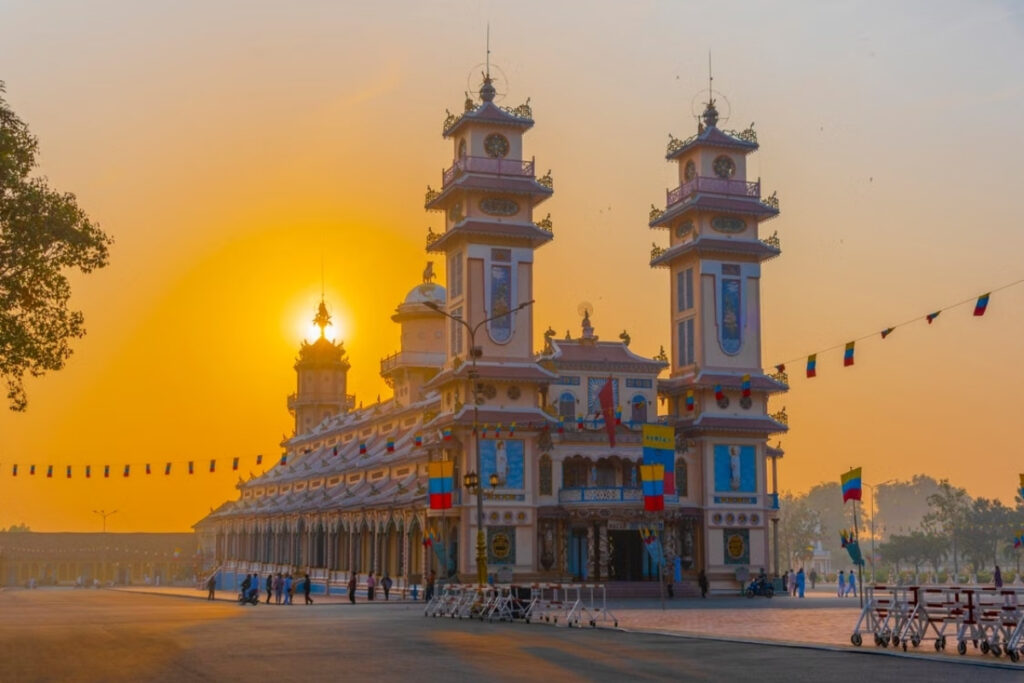
One of the most memorable examples can be found in Tây Ninh, home to the spectacular Cao Dai Holy See.
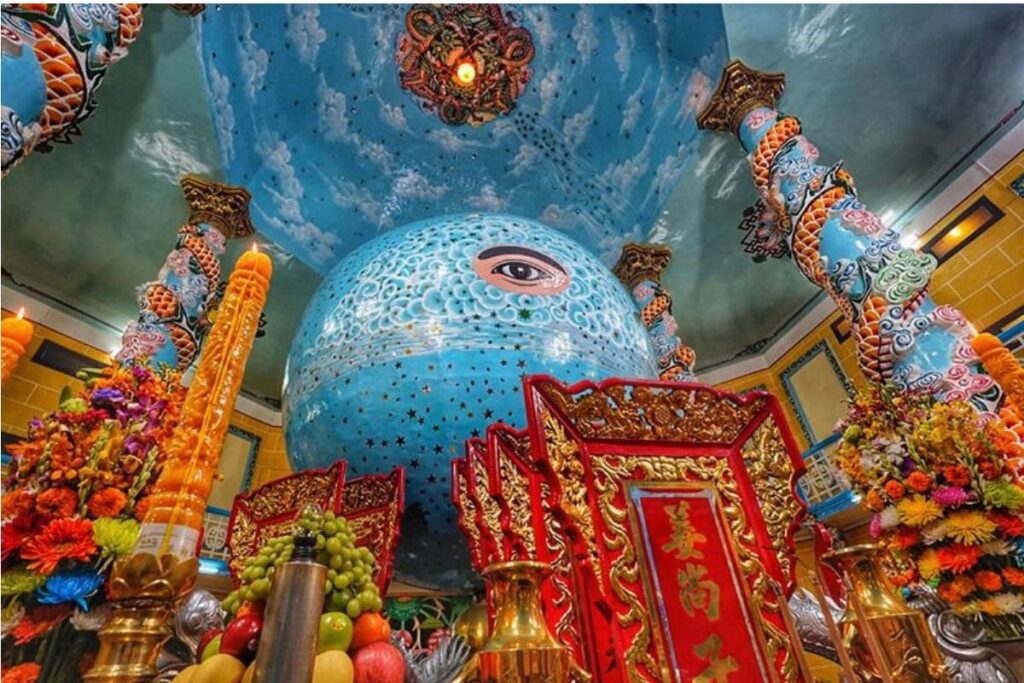
Even before stepping inside, the building captures attention with its vibrant colors, dragon-wrapped columns, and the striking Divine Eye overlooking the main hall. As worshippers dressed in flowing white robes gather for prayer, the atmosphere feels both peaceful and remarkably distinctive.
Founded in 1926, Cao Dai is one of the few major religions to originate in Vietnam, bringing together ideas from Buddhism, Taoism, Confucianism, Christianity, and several other spiritual traditions.
One detail surprises almost every first-time visitor.
High above the main hall, the Divine Eye watches over every ceremony. Rather than serving as decoration, it symbolizes the presence of the Supreme Being and represents wisdom, truth, and spiritual guidance. Throughout every service, worshippers face the Divine Eye, making it the visual and spiritual focal point of every Cao Dai temple.
This remarkable blend of architecture, symbolism, and philosophy reflects Cao Dai’s central belief—that different religions can ultimately guide humanity toward the same universal values.
Farther south, in the fertile Mekong Delta, another uniquely Vietnamese faith continues to flourish.
👁️ Did You Know?
One of the most unusual aspects of Cao Dai is the remarkable diversity of figures it honors.
Alongside religious founders such as Buddha, Lao Tzu, and Confucius, Cao Dai’s teachings also recognize several influential historical and cultural figures from around the world, reflecting its belief that wisdom can emerge across different civilizations and traditions.
This global outlook makes Cao Dai one of the world’s most distinctive religions—and one found only in Vietnam.
Hoa Hao Buddhism emphasizes simplicity, compassion, and service to the community. Places of worship are often modest, reflecting the belief that faith is expressed not through elaborate ceremonies but through everyday acts of kindness and moral living.
Vietnam’s religious diversity extends beyond these homegrown traditions.
Among the Cham communities in central and southern Vietnam, Islam and Hinduism have been practiced for centuries, preserving a remarkable cultural legacy from the ancient Kingdom of Champa. In the northern mountains and Central Highlands, many ethnic minority groups continue to honor ancestral spirits, sacred forests, rivers, and mountains through customs that remain closely connected to nature.
For travelers, these differences are not always obvious at first.
What stands out instead is the sense of harmony.
People of different faiths celebrate national holidays together. Families with diverse religious backgrounds gather around the same table during Tet. Historic churches, pagodas, temples, and communal houses all form part of the same cultural landscape, each telling a different chapter of Vietnam’s story.
Perhaps that’s what makes Vietnam’s religious heritage so remarkable.
Its richness isn’t measured by the number of religions practiced here, but by the way they have shaped the country’s history without losing the shared values that unite them—respect for family, gratitude for previous generations, compassion for others, and a deep connection to community.
By the end of my journey, it no longer felt meaningful to ask which religion best represented Vietnam.
The real answer lay in the remarkable way they have learned to exist together, creating a spiritual landscape as diverse and welcoming as the country itself.
When Vietnam Celebrates, Faith Comes Alive
It’s one thing to read about Vietnam’s beliefs.
It’s something entirely different to experience them during a festival.
On ordinary days, spirituality often reveals itself through quiet rituals—a stick of incense placed on a family altar, a brief visit to a neighborhood pagoda, or a simple prayer before opening a small business.
Festival days tell a different story.
Every spring, millions of people travel throughout Vietnam to take part in religious festivals. Some attract only a few hundred villagers, while others—such as the Perfume Pagoda Festival near Hanoi—welcome pilgrims and visitors from across the country. Together, these celebrations show that many of Vietnam’s oldest spiritual traditions remain vibrant parts of modern life rather than customs preserved only in history books.
One of the most memorable examples is Tet, Vietnam’s Lunar New Year.
In the weeks leading up to the holiday, flower markets burst into color as families search for peach blossoms in the north, yellow apricot blossoms in the south, and kumquat trees believed to bring prosperity. Homes are cleaned from top to bottom, traditional dishes are prepared, and millions of people travel home to reunite with their families.
Yet before the celebrations truly begin, many households pause for a quieter tradition.
Fresh fruit is placed on the family altar.
Incense is lit.
For a few peaceful moments, gratitude comes before celebration as families welcome their ancestors home for the New Year.
That simple ritual reveals something deeply Vietnamese.
Tet is not only a celebration of a new beginning.
It is also a moment to remember the people who made the present possible.
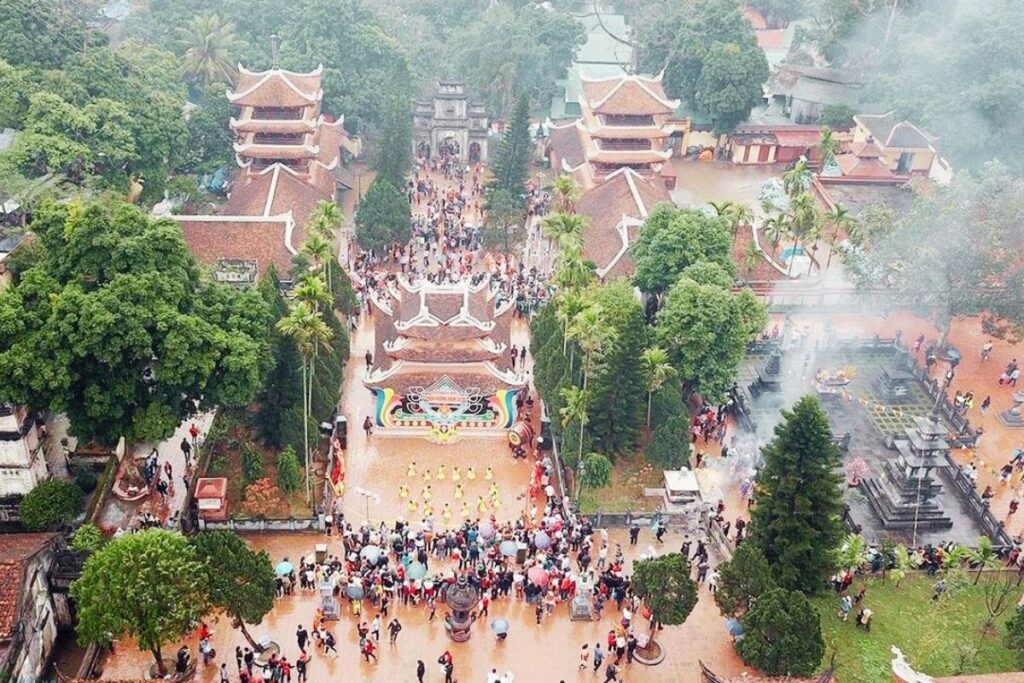
Another unforgettable experience is the Perfume Pagoda Festival, one of Vietnam’s largest annual pilgrimages.
The journey begins not at the temple itself, but on the water. Small wooden boats glide along the Yến Stream, passing limestone mountains and rice fields before visitors continue on foot toward ancient temples nestled among the hills.
Some pilgrims come to pray for health.
Others seek good fortune.
Many simply continue a family tradition that has been passed down for generations.
The destination matters.
But so does the journey.
Perhaps the most moving celebration I encountered was Vu Lan, often called Vietnam’s Festival of Filial Piety.
At pagodas across the country, visitors receive a small flower pinned to their clothing. A red rose symbolizes that one’s mother is still living, while a white rose honors those whose mothers have passed away.
Without a single word being spoken, the meaning is immediately understood.
It is one of the simplest yet most powerful traditions I witnessed in Vietnam.
What impressed me most wasn’t the ceremonies themselves.
It was watching how every generation took part.
Grandparents patiently explained customs to curious children.
Teenagers balanced taking photos with joining family rituals.
Young professionals returned from busy cities to celebrate alongside parents and relatives they might not have seen for months.
These festivals are not performances staged for tourists.
They are living traditions that continue to strengthen families and communities year after year.
For travelers, attending one of these celebrations offers something no museum, documentary, or guidebook can fully capture.
It reveals a Vietnam where history, spirituality, family, and community come together naturally—not as separate parts of life, but as one continuous tradition that is still being lived every day.
Visiting Vietnam’s Sacred Places with Respect
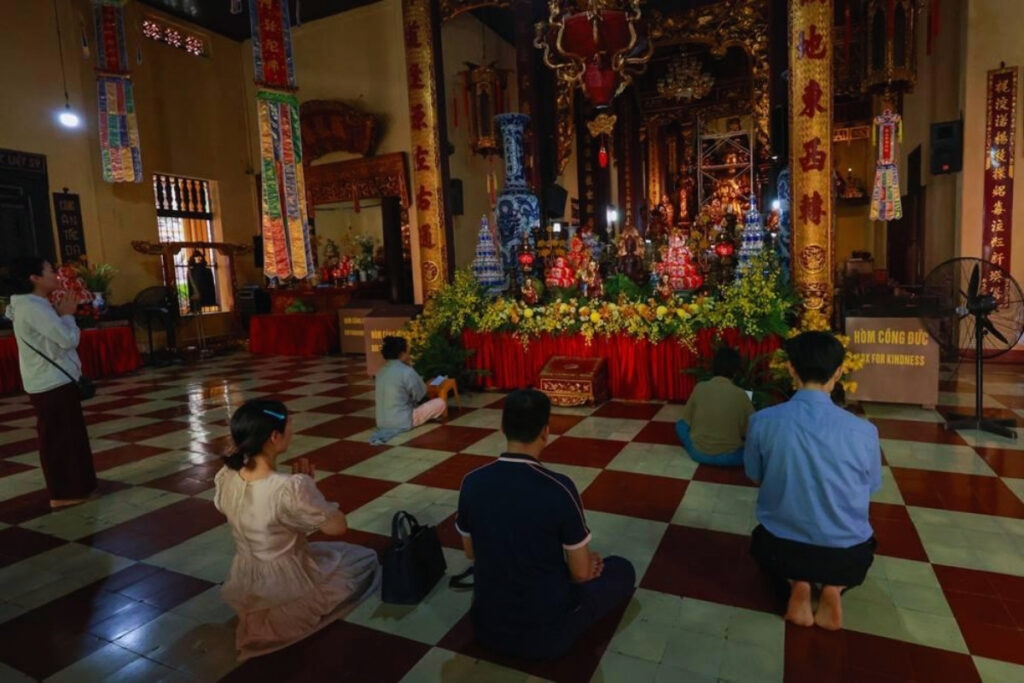
One lesson became clear each time I visited a temple or pagoda.
Respect is learned by observing.
During one visit, I quietly stepped into the main prayer hall and instinctively reached for my camera.
Almost at the same moment, I noticed everyone around me lowering their phones.
A local visitor standing nearby caught my eye and smiled.
“They’re in the middle of a ceremony,” he whispered.
I slipped the camera back into my bag.
For the next few minutes, no one spoke.
The only sounds were the soft chanting of prayers, the distant ringing of a temple bell, and the gentle crackle of burning incense.
Watching in silence taught me far more than taking another photograph could have.
That experience also changed the way I approached every sacred place afterward.
Rather than wondering where to stand for the best picture, I found myself looking for the rhythm of daily life instead.
An elderly woman arranging fresh flowers.
Parents quietly showing children how to bow before the altar.
A monk sweeping fallen leaves across the courtyard before the first visitors arrived.
None of these moments were created for tourists.
They happened because these places continue to serve the communities around them.
Showing respect in Vietnam doesn’t require knowing every custom.
Dressing modestly, speaking softly, avoiding interruptions during ceremonies, and asking permission before photographing monks or worshippers are simple gestures that local people genuinely appreciate.
Many visitors also wonder whether they should light incense.
The answer is entirely personal.
Some choose to participate, while others simply pause for a moment of quiet reflection.
Both are welcomed when approached with sincerity and respect.
Long after the photographs fade into your travel album, these quiet moments are often what remain.
They reveal that Vietnam’s sacred places are not simply destinations to visit, but living spaces where history, family, gratitude, and community continue to shape everyday life.
🎒 Traveler’s Tip
Visit temples and pagodas early in the morning whenever possible. You’ll experience a quieter atmosphere, observe local worshippers rather than tour groups, and gain a more authentic understanding of how these sacred places continue to serve the community today.
Ancient Traditions in a Modern Vietnam
One of the biggest surprises about Vietnam isn’t how old its traditions are.
It’s how naturally they fit into modern life.
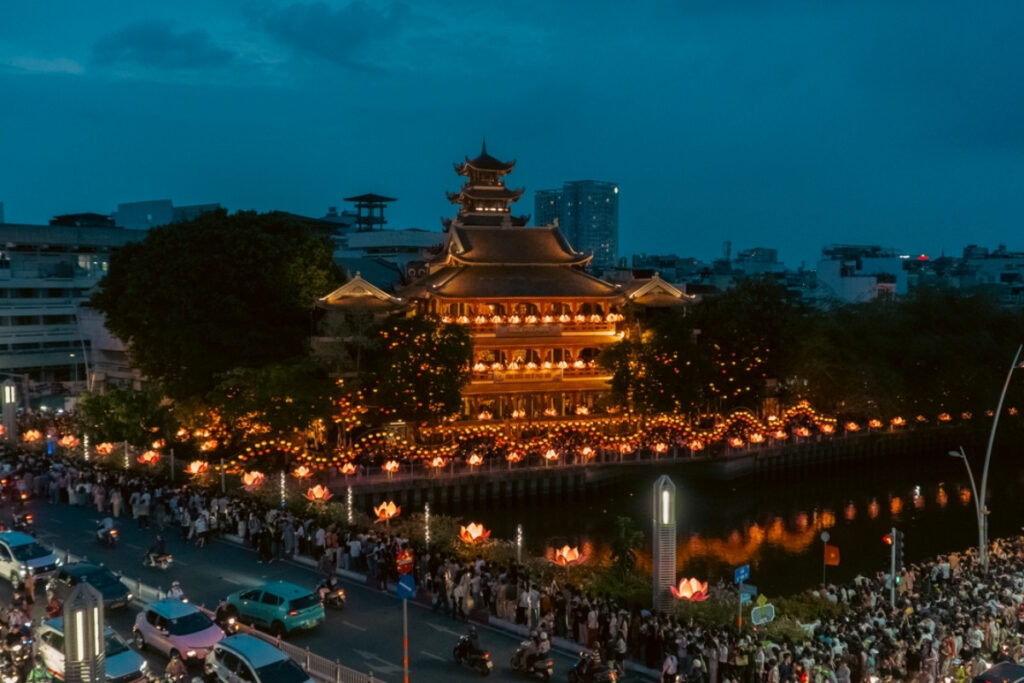
Walk through Ho Chi Minh City on a weekday morning and you’ll pass glass office towers, busy cafés, and technology companies filled with young professionals. Just around the corner, a neighborhood pagoda quietly welcomes residents stopping by before work, while the scent of incense drifts into streets filled with motorbikes and commuters.
Nothing feels out of place.
Old and new exist side by side.
According to Vietnam’s Government Committee for Religious Affairs, the country officially recognizes 16 religions practiced by millions of followers. At the same time, countless Vietnamese families continue traditions that combine formal religious practice with ancestor worship, village customs, and long-standing cultural beliefs. Rather than existing separately, these traditions often complement one another, creating a spiritual landscape that is both diverse and uniquely Vietnamese.
That balance becomes even more visible inside Vietnamese homes.
A family may gather around a smart television, order groceries through a mobile app, and video call relatives living overseas. Yet in the same living room, the ancestor altar often remains one of the most carefully maintained spaces in the house. Fresh flowers are replaced regularly, incense is lit during important occasions, and family photographs quietly connect the present with previous generations.
For younger Vietnamese, tradition doesn’t always look the way many visitors expect.
Not everyone regularly attends religious ceremonies or identifies with a particular faith. Yet many still return home for Tet, join family memorials, celebrate village festivals, or follow customs passed down by parents and grandparents.
These practices are often less about religious obligation than about preserving a sense of belonging.
The same balance appears throughout the country.
Centuries-old pagodas stand beside modern apartment buildings.
Catholic churches continue serving local communities surrounded by expanding cities.
Village communal houses remain the heart of annual festivals, even as younger generations study abroad, launch businesses, and embrace new technology.
Rather than becoming relics of the past, these places continue to evolve alongside the communities they serve.
Perhaps that is one of Vietnam’s greatest strengths.
Progress hasn’t required abandoning tradition.
Instead, the two have learned to grow together.
For travelers, this creates an experience unlike many destinations where historic religious sites function mainly as museums.
In Vietnam, spiritual traditions are still lived every day.
The morning incense continues to rise from neighborhood temples.
Families still gather around ancestor altars before important celebrations.
Communities still come together to honor local traditions that have shaped their identity for centuries.
Modern Vietnam moves forward with remarkable energy.
Yet it carries its cultural heritage with it—quietly, confidently, and without feeling the need to choose between the past and the future.
The Lessons You Don’t Expect to Bring Home
Every journey leaves behind memories.
Some come from spectacular landscapes.
Others from unforgettable meals or famous landmarks.
Vietnam offers all of those.
Yet the memories that stayed with me the longest were surprisingly ordinary.
A grandmother carefully replacing fresh flowers on the family altar.
A monk smiling quietly as local residents entered a neighborhood pagoda.
A café owner pausing for a brief moment of reflection before opening the doors for another busy day.
A family sitting together during Tet, sharing stories of relatives whose lives continue to shape the generations that followed.
Individually, these moments seem small.
Together, they reveal something much larger.
Throughout Vietnam, spirituality is rarely separated from everyday life. It isn’t measured by how often someone visits a temple or which religion appears on an official document. More often, it is reflected in simple habits—showing gratitude, caring for parents, honoring ancestors, helping neighbors, and preserving traditions that strengthen the community.
That perspective quietly changes the way many visitors experience the country.
Temples become more than beautiful architecture.
Festivals become more than colorful celebrations.
Family altars become more than cultural symbols.
Each one reflects the same enduring values expressed in different ways.
As the journey continued, I realized that Vietnam’s religious diversity wasn’t the most remarkable discovery.
The deeper lesson was how naturally different beliefs coexist without competing for attention. Buddhism, ancestor worship, folk traditions, Christianity, Cao Dai, Hoa Hao Buddhism, and many other beliefs all contribute to the same cultural landscape, where respect for family and community often matters more than religious labels.
Perhaps that’s why conversations about Vietnam rarely end with temples or festivals.
More often, they return to the people—the families, neighbors, and communities whose everyday traditions give those places their meaning.
Long after the details of an itinerary begin to fade, those quiet human moments are often what remain.
They remind us that understanding a country isn’t only about learning its history or visiting its landmarks.
Sometimes, it begins with noticing the simple traditions that people continue to practice every day—often without realizing how extraordinary they appear to someone seeing them for the very first time.
Experiencing Vietnam’s Spiritual Heritage with Respect
By this stage of the journey, I had stopped trying to understand every ritual.
Instead, I started paying attention to the people.
The grandmother who smiled while arranging flowers on a family altar.
The monk who greeted every visitor with the same quiet warmth.
The young couple who paused to light incense before beginning an important day.
Those ordinary moments explained Vietnam’s spiritual culture more clearly than any guidebook ever could.
For travelers, the most meaningful experiences rarely come from seeing more temples.
They come from spending more time in them.
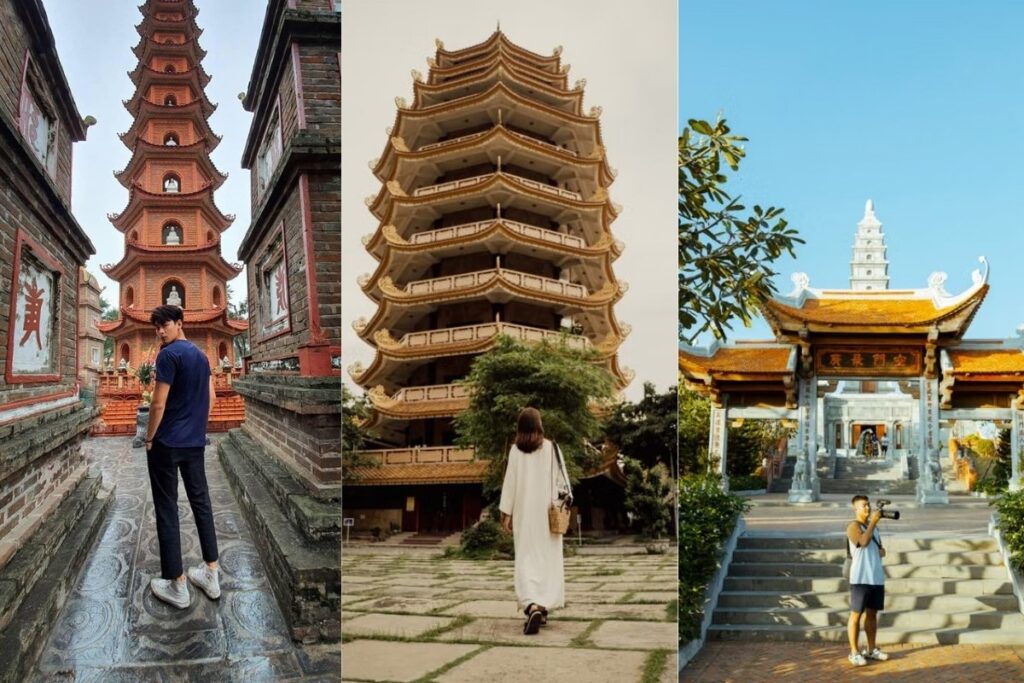
Arrive early in the morning, before tour groups fill the courtyards. Sit beneath an old tree and simply observe. Listen to the sound of the temple bell, watch local residents stop by on their way to work, and notice how naturally these sacred places remain part of everyday life.
Curiosity is always welcome.
If you have the opportunity to visit with a local guide or stay with a Vietnamese family, ask about the traditions you see. A conversation about a family altar, a village festival, or a simple offering of fruit often reveals far more about Vietnamese culture than a long historical explanation.
Respect, however, matters even more than curiosity.
Dress modestly when entering places of worship, keep your voice low, and avoid interrupting people who are praying. Photography is usually welcome, but a smile and a polite request before taking close-up pictures of monks or worshippers is always appreciated.
Perhaps the most valuable lesson is also the simplest.
Don’t worry about understanding every symbol or ceremony.
Instead, pay attention to the values they express.
Gratitude.
Respect for family.
Compassion.
Community.
These ideas appear again and again, whether you’re visiting a Buddhist pagoda, attending a village festival, exploring a Cao Dai temple, or sharing a meal with a local family.
In the end, the most rewarding experiences rarely come from seeing more places.
They come from slowing down long enough to notice what local people have quietly practiced for generations.
And once you begin to notice those quiet traditions, Vietnam reveals a side of itself that many travelers never have the chance to see.
The Spirit of Vietnam Stays with You
Every journey eventually comes to an end.
Suitcases are packed.
Boarding passes are printed.
The photographs are safely stored on a phone or camera.
Yet the memories that linger are rarely the ones anyone expects.
Looking back on Vietnam, I don’t immediately think of the tallest pagoda, the oldest temple, or the most impressive festival.
Instead, I remember the quieter moments.
The fragrance of incense drifting through a neighborhood before sunrise.
A grandmother carefully preparing an offering with the same patience she had practiced for decades.
Children following their parents into a pagoda, learning traditions simply by watching and doing.
A village coming together to celebrate a festival that has connected generations for centuries.
Those memories reveal something guidebooks often struggle to explain.
Vietnam’s spiritual heritage isn’t confined to sacred buildings or special occasions.
It lives in ordinary routines.
In family homes.
In conversations between generations.
In small acts of gratitude that are repeated so naturally they often pass unnoticed.
Perhaps that’s why Vietnam leaves such a lasting impression on so many visitors.
The country’s religions and beliefs are wonderfully diverse, yet they are united by values that feel remarkably universal—respect for family, appreciation for those who came before, compassion for others, and a belief that traditions still have a place in modern life.
You don’t need to understand every ceremony to appreciate those values.
You don’t need to memorize the names of every temple or recognize every religious symbol.
Sometimes, simply slowing down, observing with curiosity, and accepting an invitation to experience everyday life is enough.
Because the true spirit of Vietnam isn’t found in a single pagoda, church, temple, or festival.
It’s found in the people who continue to keep these traditions alive—quietly, generously, and without expecting anyone to notice.
And perhaps that is the most meaningful discovery of all.
Long after the itinerary has been forgotten, those values are often what travelers remember most about Vietnam.
Key Takeaways
Vietnam has no single dominant religion.
Ancestor worship is a cornerstone of Vietnamese family life.
Buddhism, folk beliefs, Confucian values, and Taoist philosophy often coexist.
Religious traditions remain an important part of modern Vietnamese society.
Respecting local customs will enrich your travel experience.
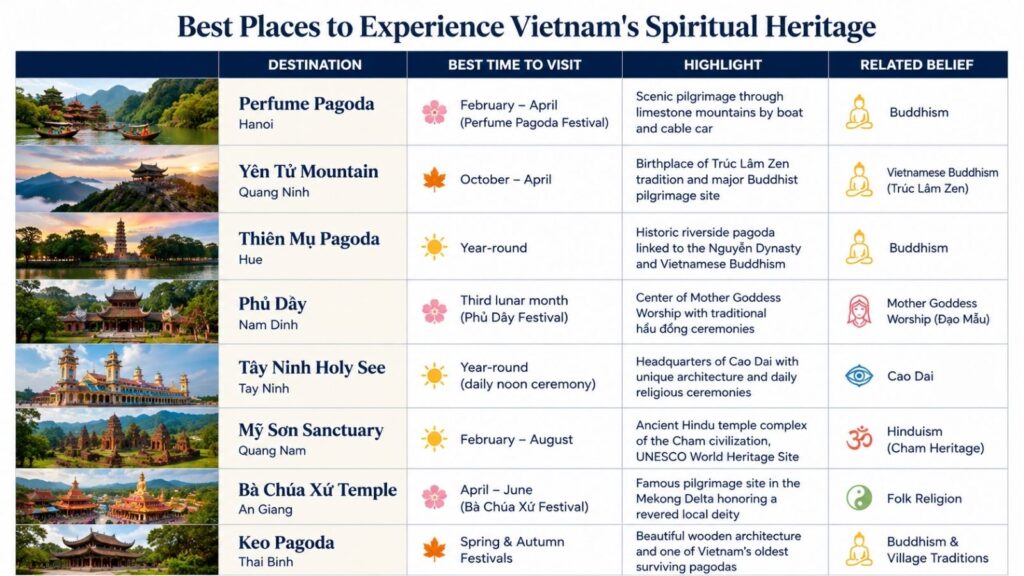
Best Places to Experience Vietnam’s Spiritual Heritage
| Destination | Best Time to Visit | Highlight | Related Belief |
|---|---|---|---|
| Perfume Pagoda (Hà Nội) | February–April (Perfume Pagoda Festival) | Scenic pilgrimage through limestone mountains by boat and cable car | Buddhism |
| Yên Tử Mountain (Quảng Ninh) | October–April | Birthplace of Vietnam’s Trúc Lâm Zen tradition and one of the country’s most important Buddhist pilgrimage sites | Vietnamese Buddhism (Trúc Lâm Zen) |
| Thiên Mụ Pagoda (Huế) | Year-round | Historic riverside pagoda closely associated with the Nguyễn Dynasty and Vietnamese Buddhism | Buddhism |
| Phủ Dầy (Nam Định) | Third lunar month (Phủ Dầy Festival) | The spiritual center of Mother Goddess Worship with traditional hầu đồng ceremonies | Mother Goddess Worship |
| Tây Ninh Holy See | Year-round (daily noon ceremony) | Headquarters of Cao Dai, famous for its colorful architecture and daily religious ceremonies | Cao Dai |
| Mỹ Sơn Sanctuary (Quảng Nam) | February–August | Ancient Hindu temple complex built by the Cham civilization and recognized as a UNESCO World Heritage Site | Hinduism (Cham Heritage) |
| Bà Chúa Xứ Temple (An Giang) | April–June (Bà Chúa Xứ Festival) | One of southern Vietnam’s most visited pilgrimage sites honoring a revered local guardian deity | Folk Religion |
| Keo Pagoda (Thái Bình) | Spring & Autumn Festivals | Beautiful wooden architecture and one of Vietnam’s oldest surviving pagodas | Buddhism & Village Traditions |
Planning Your Visit
Although Vietnam’s sacred sites welcome visitors throughout the year, your experience can vary significantly depending on the season. Visiting during a major festival offers the opportunity to witness colorful ceremonies, traditional music, and local customs, while traveling outside festival periods allows for a quieter atmosphere better suited to reflection and photography.
Regardless of when you visit, remember that these are living places of worship rather than museums. Dressing modestly, speaking softly, and respecting those who are praying will help ensure a meaningful experience for both visitors and local communities.
Frequently Asked Questions about Vietnamese Religion & Beliefs
Is Vietnam a Buddhist country?
Buddhism has had a profound influence on Vietnam’s history, culture, and daily life, but Vietnam is not exclusively a Buddhist country. Many Vietnamese also practice ancestor worship, folk beliefs, Christianity, Cao Dai, Hoa Hao Buddhism, or a combination of traditions. For many families, cultural customs and spiritual practices are just as important as formal religious affiliation.
Is Vietnam an atheist country?
No. Although many Vietnamese identify as having “no religion” in official statistics, this does not necessarily mean they are atheists. Many families maintain ancestor altars, burn incense, visit pagodas, celebrate traditional festivals, and observe customs rooted in Buddhism and indigenous beliefs. In Vietnam, spirituality is often expressed through cultural traditions rather than formal religious identity.
Is ancestor worship a religion?
Generally, no. Ancestor worship is considered a cultural and spiritual tradition rather than a separate religion. It reflects the Vietnamese values of gratitude, filial piety, and respect for previous generations. Many people practice ancestor worship alongside Buddhism, Christianity, Cao Dai, or other faiths, making it a shared cultural tradition across different religious communities.
What religion did Vietnam practice before Buddhism?
Before Buddhism arrived from India and China more than 2,000 years ago, communities throughout Vietnam practiced indigenous beliefs centered on nature, ancestral spirits, and village guardian deities. Many of these traditions continue today through ancestor worship, village communal houses (đình), seasonal festivals, and local ceremonies, blending naturally with later influences from Buddhism, Confucianism, and Taoism.
Can Christians visit Buddhist temples in Vietnam?
Yes. Visitors of all religions are welcome at most Buddhist temples and pagodas in Vietnam. Many Vietnamese also visit temples regardless of their own religious background, particularly during festivals or important family occasions. International visitors should dress modestly, speak quietly, and respect those who are praying or participating in religious ceremonies.
Why do Vietnamese burn incense?
Burning incense is a traditional way of expressing respect, gratitude, and remembrance. It is commonly practiced at family altars, temples, pagodas, and ancestral tombs. Depending on the occasion, incense may be offered to honor ancestors, pay respect to deities, remember loved ones, or mark important festivals and family celebrations.
What’s the best way to experience Vietnam’s spiritual culture?
The most meaningful experiences often come from observing everyday life rather than only visiting famous landmarks. Explore neighborhood pagodas early in the morning, attend a local festival if your trip coincides with one, visit sacred sites respectfully, and take time to learn from local people. Vietnam’s spiritual traditions are best understood through the values they express—gratitude, family, community, and respect—rather than through ceremonies alone.
Continue Exploring Vietnam’s Cultural Heritage
If you enjoyed discovering Vietnam’s rich spiritual traditions, continue exploring the country’s culture through these related guides on Tam Voc Viet:
- Vietnamese Culture Guide – Discover the traditions, customs, festivals, cuisine, and values that shape everyday life in Vietnam.
- Vietnamese Family Culture – Explore how family values influence Vietnamese society, relationships, and daily life.
- Ao Dai: Vietnam’s National Dress -Discover the history and symbolism behind Vietnam’s iconic traditional costume.
- Tet Holiday in Vietnam – Experience Vietnam’s most important festival, where family reunions and ancestral traditions take center stage.
- Vietnamese Etiquette – Understand the customs and social etiquette that will help you travel respectfully in Vietnam.
- Ancestor Worship in Vietnam – Learn about one of the country’s most enduring traditions and its significance in family life.
- Vietnamese Traditional Clothing – Discover the remarkable diversity of traditional attire worn by Vietnam’s ethnic communities beyond the famous áo dài.
- Vietnamese Festivals – Explore the religious and cultural celebrations that bring communities together throughout the year.
Together, these guides provide a deeper understanding of Vietnam’s history, beliefs, traditions, and the cultural values that continue to shape everyday life.
Editor’s Note:
Vietnam’s spiritual landscape is remarkably diverse. While Buddhism has had a profound influence on the country’s history and culture, many Vietnamese also practice ancestor worship, folk beliefs, Christianity, Cao Dai, Hoa Hao Buddhism, and other faiths. For many families, these traditions coexist naturally rather than belonging to a single religious identity.
Religious festivals and traditional ceremonies often follow the Vietnamese lunar calendar, so celebration dates vary each year. If you’re planning to experience a festival during your visit, check the latest schedule with local tourism authorities or your destination before traveling.
What Surprised Us Most
After exploring Vietnam’s religious traditions, one thing became clear: spirituality here is woven into everyday life. Whether through a family altar, a quiet visit to a neighborhood pagoda, or a village festival, faith is often expressed through gratitude, respect, and community rather than formal religious identity.
References & Trusted Resources
This guide is based on historical research, official publications, academic references, and internationally recognized cultural resources. To learn more, we recommend the following:
👉 Vietnam National Authority of Tourism – Official information on Vietnam’s cultural attractions, festivals, and travel experiences.
👉 UNESCO – Viet Nam Intangible Cultural Heritage – Resources on Mother Goddess Worship, traditional festivals, and other UNESCO-recognized cultural heritage.
👉 Ministry of Culture, Sports and Tourism of Viet Nam – Official information on religious heritage, historic sites, museums, and cultural preservation.
👉 Government Committee for Religious Affairs (Vietnam) – Information on Vietnam’s religious policies, recognized religions, and religious organizations.
About the Author
Tam Voc Viet Editorial Team
The Tam Voc Viet Editorial Team is passionate about helping international travelers discover Vietnam through its history, culture, and everyday traditions.
Our guides combine official government resources, UNESCO publications, academic research, local perspectives, and firsthand travel experiences to create reliable, engaging, and practical content for curious visitors.
Each article is carefully reviewed and updated to ensure it remains accurate, informative, and relevant.
Article Information
Category: Vietnamese Culture
Topic: Vietnamese Religion & Beliefs
Reading Time: Approximately 18–22 minutes
Published: August 2026
Last Updated: August 2026
Author: Tam Voc Viet Editorial Team
