


 Tiếng Việt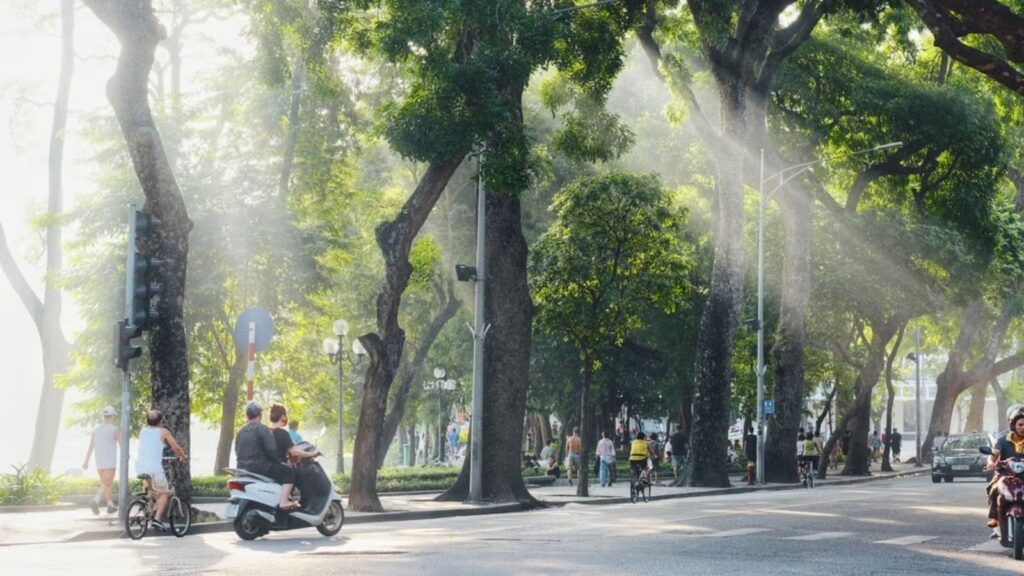
At 6 a.m. in Hanoi, Hoan Kiem Lake may already have its morning crowd.
A woman is stretching beside the water. Two men walk side by side, talking as they circle the lake. A group gathers for exercise. Down a nearby street, a breakfast vendor lifts the lid from a steaming pot while a small coffee shop serves its first customers.
The city is not fully awake yet.
But it is already living.
For a traveler used to quiet streets and closed cafés at this hour, Vietnam can feel as if it started the day without you.
So, why do Vietnamese wake up so early?
The answer is not simply that Vietnamese people are more hardworking or disciplined. Vietnam’s early mornings are shaped by a combination of climate, food culture, work schedules, family routines, exercise, and a strong tradition of spending time outdoors and around other people.
For many locals, an early start is simply part of the normal rhythm of daily life. The weather is cooler, breakfast is already being served, markets are getting busy, and people are exercising or meeting friends before the working day begins.
And that is what makes Vietnam’s morning culture so interesting.
It is not just about waking up early. It is about what happens once the country is awake.
Table of Contents
Why Do Vietnamese Wake Up So Early in the Morning?
There is no official Vietnamese wake-up time, and plenty of people sleep later than 6 a.m. But in many neighborhoods, the day begins early enough that 6 a.m. can already feel like the middle of the morning.
That rhythm is not created by one tradition. It comes from several parts of everyday life happening at roughly the same time.
The weather is cooler. People head out for exercise. Breakfast stalls begin serving customers. Markets receive fresh food. Parents get children ready for school. Workers start their commutes. Neighborhood cafés open for their regulars.
None of these activities is unusual on its own.
What is distinctive is how much of them happens in public and at roughly the same time.
Walk around a Vietnamese neighborhood early in the morning and you may see a market seller arranging vegetables while a nearby vendor prepares breakfast. A few streets away, people are exercising in a park. Someone stops for coffee before work. Motorbikes gradually begin filling the road.
The morning does not arrive with one big event.
It builds piece by piece.
That is why early rising in Vietnam is better understood as a daily rhythm than as a national rule about sleep.
For some people, it is simply practical. For others, it is habit. For many, it is also a chance to do things that are harder once the heat, traffic, and workday take over.
And because these routines happen outdoors, travelers can see them very easily.
You do not need to arrange a special cultural experience.
You just need to be awake.
The Weather Makes Early Mornings Easier
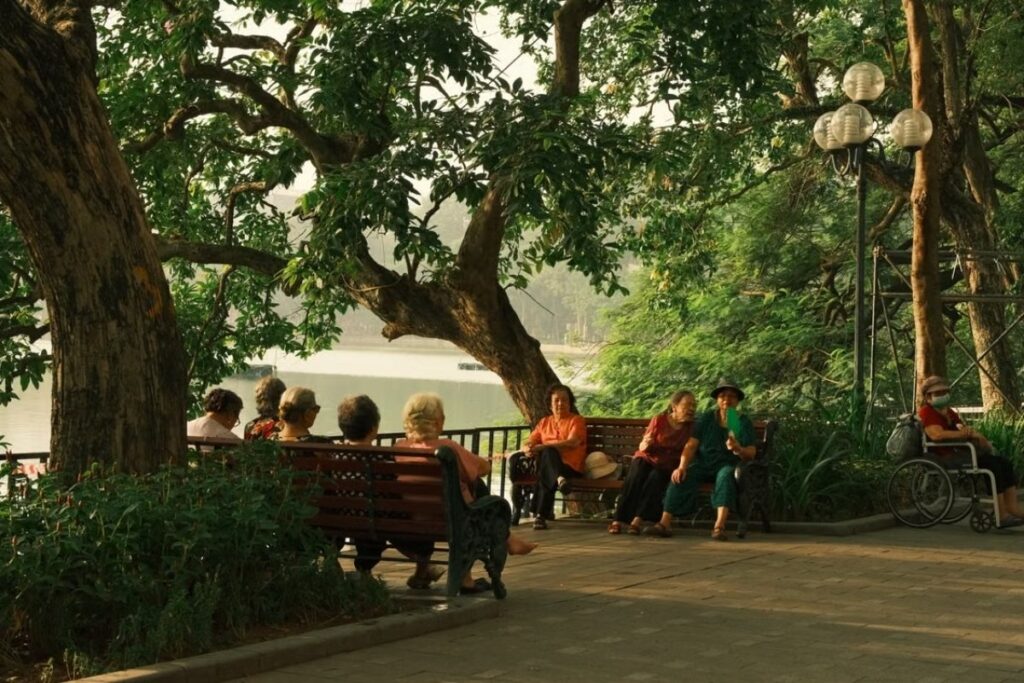
Start with the most practical explanation:
Vietnam can get hot.
Across much of the country, mornings are considerably more comfortable than the middle of the day. Depending on the region and season, temperatures and humidity can rise quickly once the sun is fully up.
That makes the early hours valuable.
Walking around a park at 6 a.m. is a very different experience from doing the same thing at 11 a.m. Sitting outside with a bowl of noodles is easier before the heat becomes intense. Market vendors working outdoors also benefit from getting some of their work done before the hottest part of the day.
This is particularly noticeable in places where outdoor life is part of the local routine.
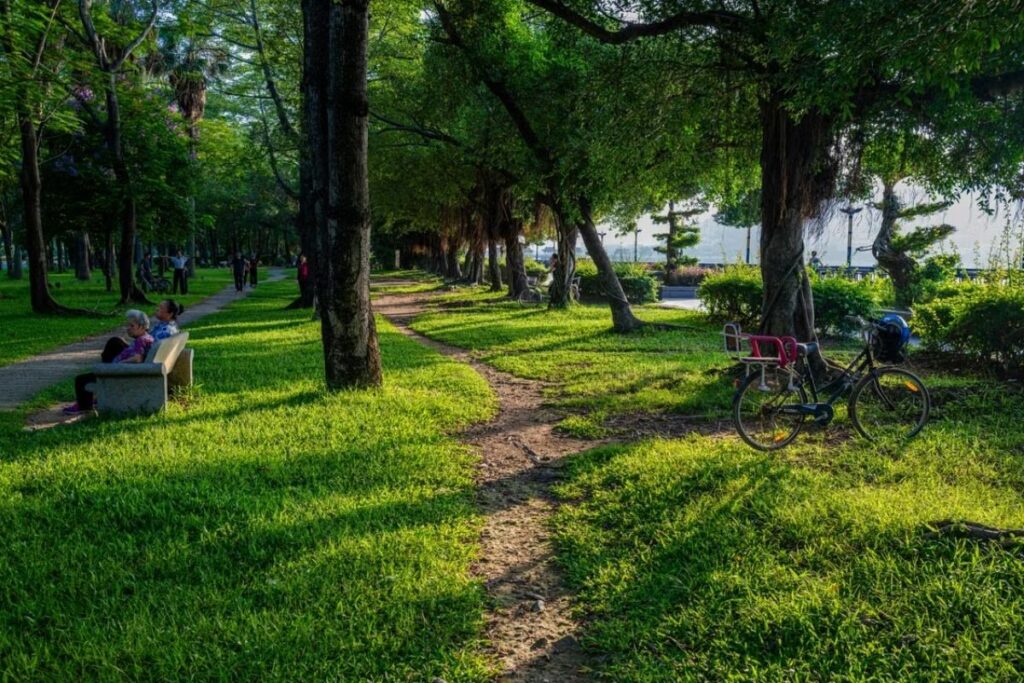
Look around a lake in Hanoi early in the morning and you may see people walking, stretching, practicing tai chi or other forms of exercise, or simply meeting friends.
On the coast, residents may head to the beach before sunrise or shortly afterward.
In rural areas, farmers and other outdoor workers have practical reasons to make use of the cooler hours.
The weather does not explain everything.
But it sets the clock.
In a hot climate, early morning is not necessarily an inconvenient time to be outside. It may actually be the best time of day.
The Morning Is Also an Economic Rhythm
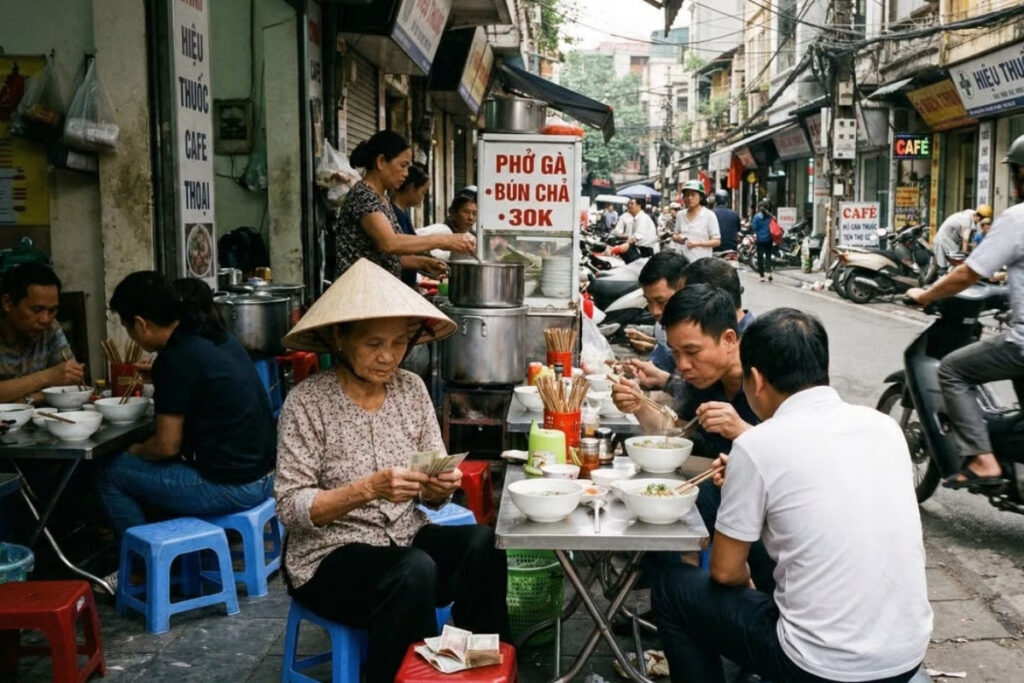
One of the easiest ways to understand Vietnam’s early mornings is to follow what happens to food before it reaches the table.
The morning is not just a cultural habit.
It is an economic rhythm.
Before a traveler sits down to a bowl of phở at 7 a.m., a much longer chain of activity may already have taken place.
Fresh produce has been harvested or delivered.
Fish, meat, herbs, noodles, and other ingredients have moved through suppliers and markets.
Vendors have prepared their stalls.
Restaurants and breakfast sellers have started cooking.
And finally, customers arrive.
The sequence can look something like this:
farmer or fisherman → supplier → market → vendor → breakfast → commuter
Not every meal follows this exact path, of course. But the pattern helps explain why so much of Vietnam appears to be awake before sunrise.
Someone has to start early for everyone else to have a normal morning.
This is especially visible in traditional markets.
A market may look like a tourist attraction when you visit at 9 or 10 a.m., but for local residents it can be part of a much earlier daily system. Sellers need time to set up. Fresh products need to arrive. Restaurant owners may need to shop before opening. Families may want ingredients for the day.
Breakfast works in much the same way.
The person eating a bowl of noodles at 7 a.m. is usually not the first person involved in getting that bowl onto the table.
By the time the customer arrives, the morning economy has already been running.
That is one reason an early walk through a Vietnamese neighborhood can be so revealing. You are not simply watching people wake up.
You are watching a city prepare itself for the day.
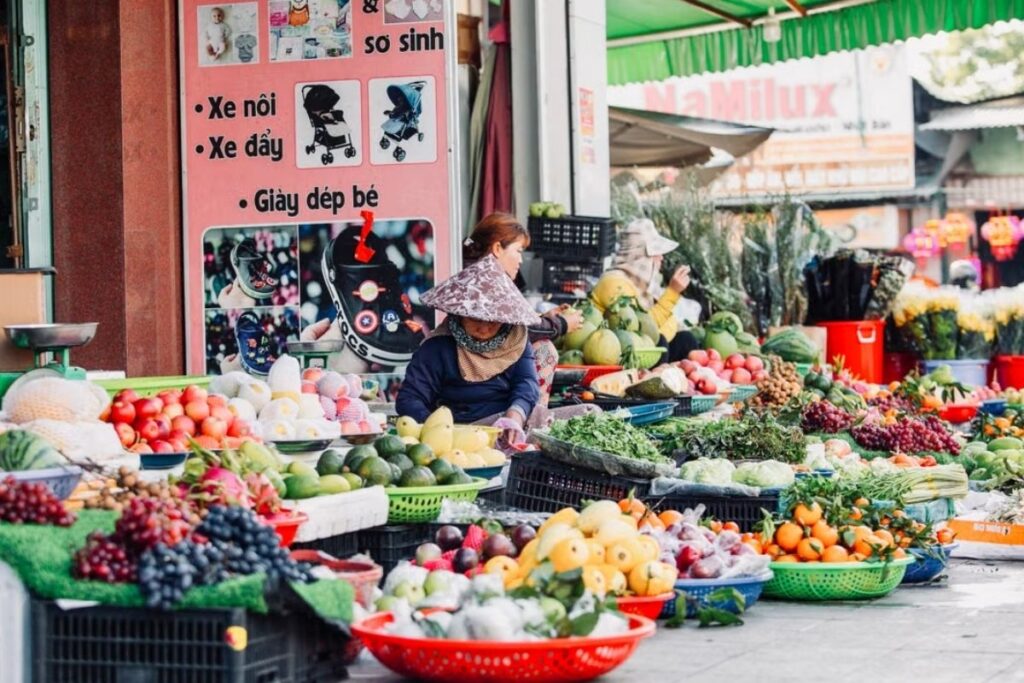
Breakfast Starts Before the Workday
One of the easiest ways to understand Vietnam’s early rhythm is to follow the food.
Vietnamese breakfast is often quick, affordable, local, and eaten outside the home.
Walk through a neighborhood early enough and you might find a small stall serving phở, bánh cuốn, cháo, xôi, or another familiar breakfast dish.
There may be only a few plastic stools, a pot of steaming broth, and a handful of regular customers.
But the place can be busy.
This is very different from the idea of breakfast as a leisurely weekend meal.
For many Vietnamese, breakfast is simply the first meal of the working day.
And because people need to get to work or school, breakfast starts early.
The vendors have an even earlier morning.
Before the first customer arrives, ingredients have to be prepared. Herbs need to be washed. Meat needs to be portioned. Broth has to be ready. Rice and noodles need to be prepared. A sidewalk stall needs to be set up.
By the time a traveler walks past at 7 a.m., the person selling breakfast may already have been working for several hours.
This is one reason Vietnam’s street-food culture feels so closely connected to the morning.
The food does not simply appear when customers arrive.
The morning food economy is already moving before most visitors see it.
And if you want to experience everyday Vietnam rather than a tourist version of it, breakfast is one of the easiest places to start.
Markets Start Early Too
Vietnamese markets have their own clock.
In traditional markets, the earliest hours can be among the busiest.
Fresh vegetables, herbs, meat, seafood, fruit, and other ingredients need to move through the system before the day gets too hot.
Restaurant owners and food vendors may shop early. Families may stop by to buy ingredients for the day. Sellers arrive before their customers because the products they sell have already been moving since dawn.
This creates a chain reaction.
The farmer or fisherman starts early.
The supplier starts early.
The market seller starts early.
The restaurant starts preparing early.
The breakfast vendor opens early.
And eventually, the customer wakes up early too.
This is one reason a market that looks like a normal daytime shopping destination to a visitor can actually have a very different character at 6 or 7 a.m.
The morning market is not only a place to buy food.
It is part of the infrastructure of daily life.
You can see what people are buying, what ingredients are in season, what local dishes are being prepared, and how much of a neighborhood’s food system depends on people getting to work long before the tourist attractions open.
For travelers, an early market visit can therefore be much more revealing than simply walking through a market at lunchtime.
Morning Exercise Is a Social Ritual
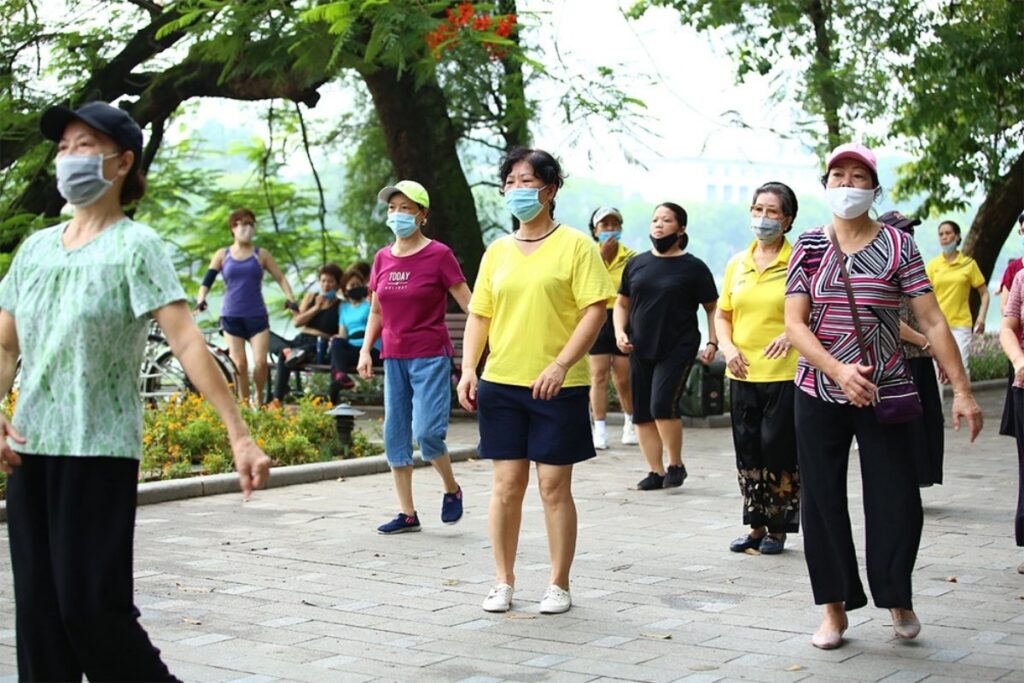
Perhaps nothing makes Vietnam’s early mornings more visible than exercise.
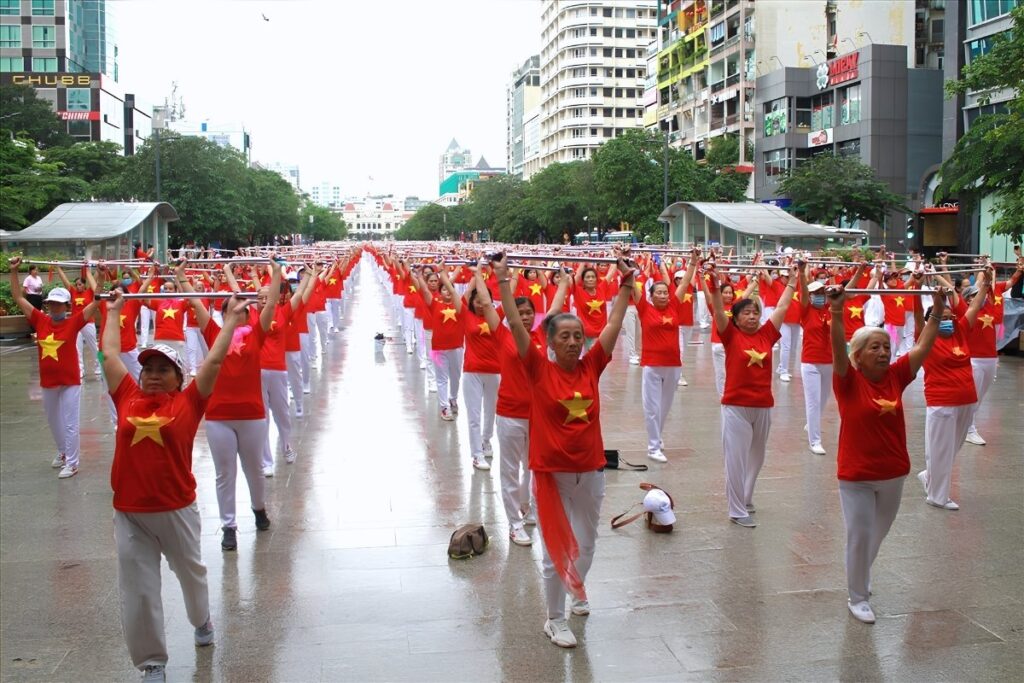
Go to a large park, lake, riverside, or public square around sunrise and you may find people walking, stretching, dancing, practicing tai chi, doing group exercises, or simply moving at their own pace.
Vietnam Tourism has highlighted this communal morning exercise culture, particularly around lakes, parks, and rivers where residents gather before the heat of the day.
But calling it “exercise culture” does not quite tell the whole story.
For many people, the social side matters too.
You see familiar faces.
You meet a friend.
You talk while walking.
You exercise with the same group you saw yesterday.
Then perhaps you go for coffee.
That is why these morning gatherings can feel less like going to the gym and more like participating in a neighborhood ritual.
A recent Tuoi Tre report described early-morning groups in Vietnam combining activities such as dancing, meditation, and exercise with socializing afterward, including meeting for coffee.
This is an important distinction for travelers.
In some cultures, exercise is something you fit into your schedule alone.
In Vietnam, especially among older residents and community groups, morning exercise can be a reason to get out of the house and spend time with other people.
The workout is only part of the ritual.
Coffee Is Part of the Morning
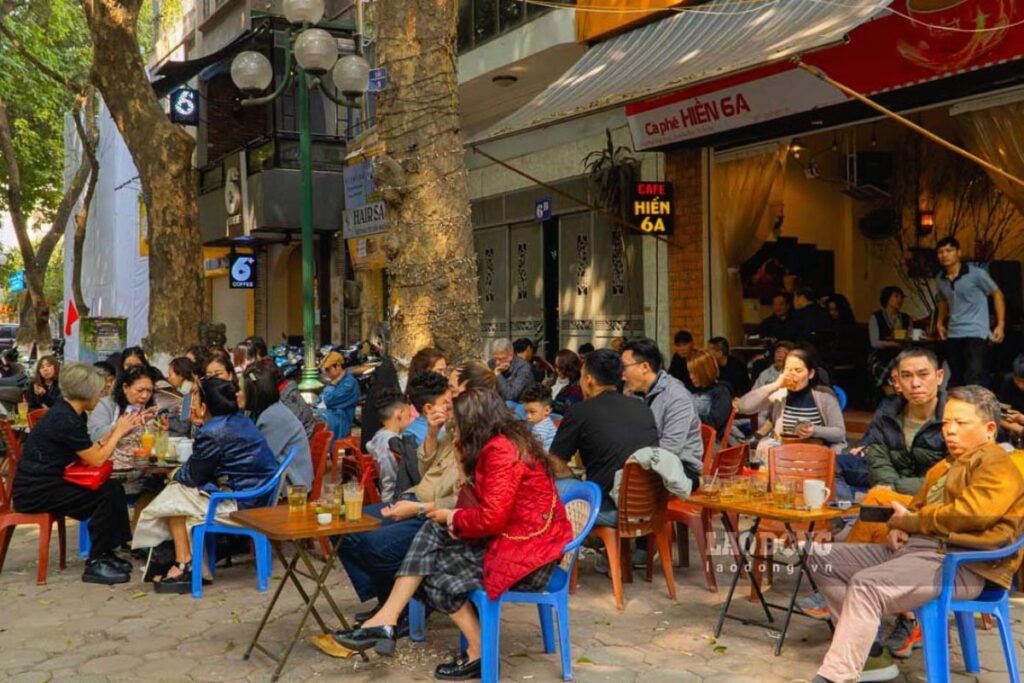
Then there is coffee.
Vietnam’s coffee culture is famous around the world, but its everyday morning rhythm is easy to underestimate until you see it in person.
A small neighborhood café can already have regular customers early in the morning.
Some are alone with their phones.
Some are reading.
Some are talking with friends.
Others appear to be doing absolutely nothing except watching the street.
And that last group may be the most interesting.
Coffee in Vietnam is not always something you consume while rushing toward the next task.
It can be a pause.
A place to sit.
A place to talk.
A place to watch the neighborhood wake up.
This fits naturally into the country’s sidewalk culture, where cafés, food stalls, shops, and conversations often spill into public space.
The result is that the morning does not feel purely functional.
People are not simply moving from home to work.
There is often a small social period in between.
Wake up.
Exercise.
Eat.
Have coffee.
Talk.
Then start the workday.
For a traveler, this is one of the easiest Vietnamese routines to borrow.
You do not need a tour guide.
Find a neighborhood café, order a Vietnamese coffee, and watch what happens around you.
Work, School and Family Push the Day Forward
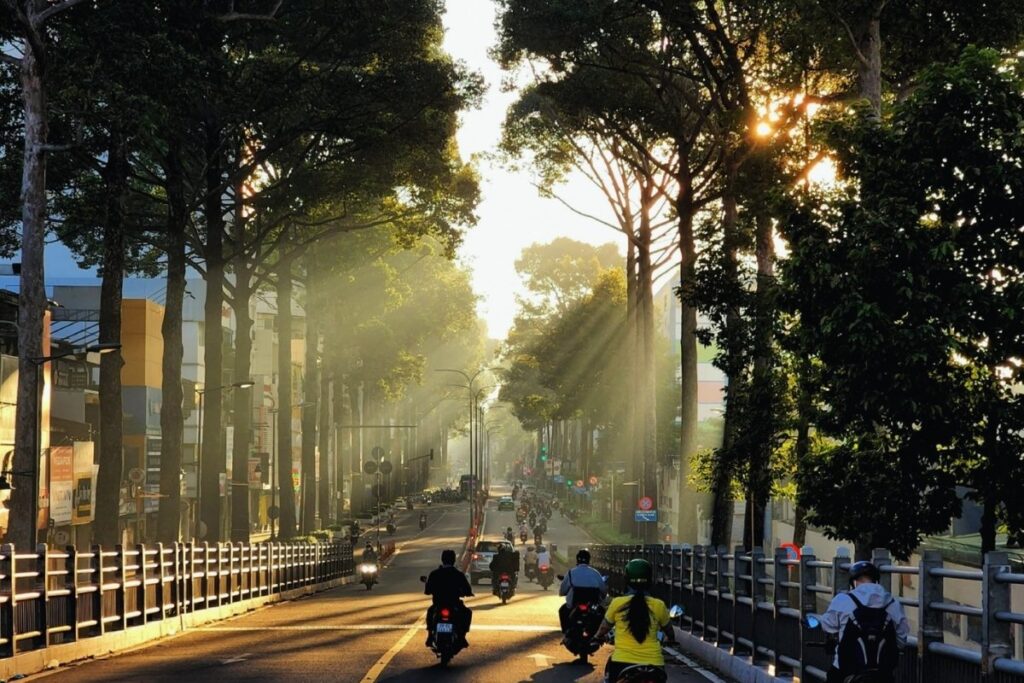
Of course, there is also a very practical reason for early mornings:
people have somewhere to be.
Vietnamese cities can have busy morning commutes, particularly in Hanoi and Ho Chi Minh City.
Schools begin in the morning.
Businesses open.
Factories and industrial areas start shifts.
Offices begin the workday.
Parents need to get children ready.
People who live farther from their workplace need time to travel.
That means the morning has to begin before the official workday begins.
A person who needs to be at work at 8 a.m. cannot necessarily wake up at 7:45.
There is breakfast to eat, children to prepare, traffic to navigate, and sometimes a considerable distance to travel.
This is especially noticeable in large cities, where a short distance on a map can take much longer during rush hour.
Family life adds another layer.
Vietnamese households vary enormously, but in many families the morning is a shared period of activity rather than a long, private transition from sleep to work.
Someone prepares breakfast.
Someone gets the children ready.
Someone starts the motorbike.
Someone buys food.
Someone leaves for work.
The house becomes active.
And then, almost at the same time, the neighborhood becomes active too.
Why Vietnamese Mornings Feel So Social
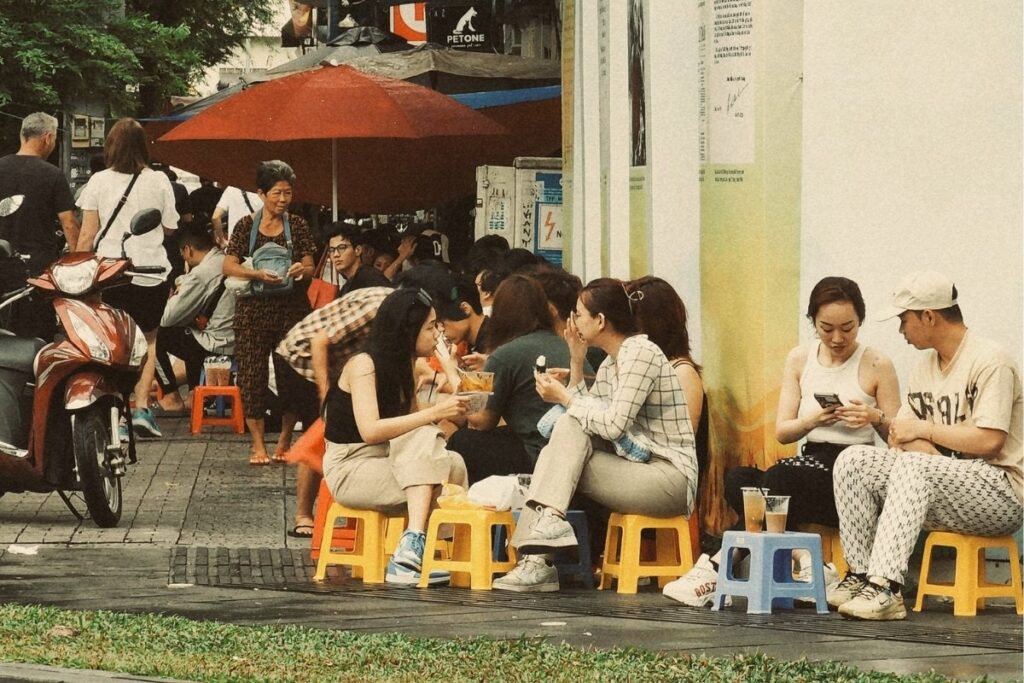
This is perhaps the most interesting part of the story.
Vietnam’s early morning is not only about time.
It is about where daily life happens.
A lot of ordinary Vietnamese life takes place outside the home.
People eat on sidewalks.
They drink coffee on tiny plastic stools.
They shop at local markets.
They exercise in public parks.
They meet friends around lakes.
They sit outside and watch the street.
That means the morning becomes a shared public experience.
Consider the difference between these two mornings.
In one, you wake up, make coffee alone, eat something quickly, get into a car, and disappear into traffic.
In the other, you walk outside and see the same people who live around you.
You buy breakfast from a familiar vendor.
You sit at a café.
You meet someone you know.
You see a group exercising in the park.
The morning is still part of a workday.
But it is also social.
That is why Vietnamese mornings can feel surprisingly lively without feeling rushed.
There is movement everywhere, but there is also time to stop.
And that combination is one of the most distinctive things a visitor can notice.
What Travelers Miss by Sleeping In
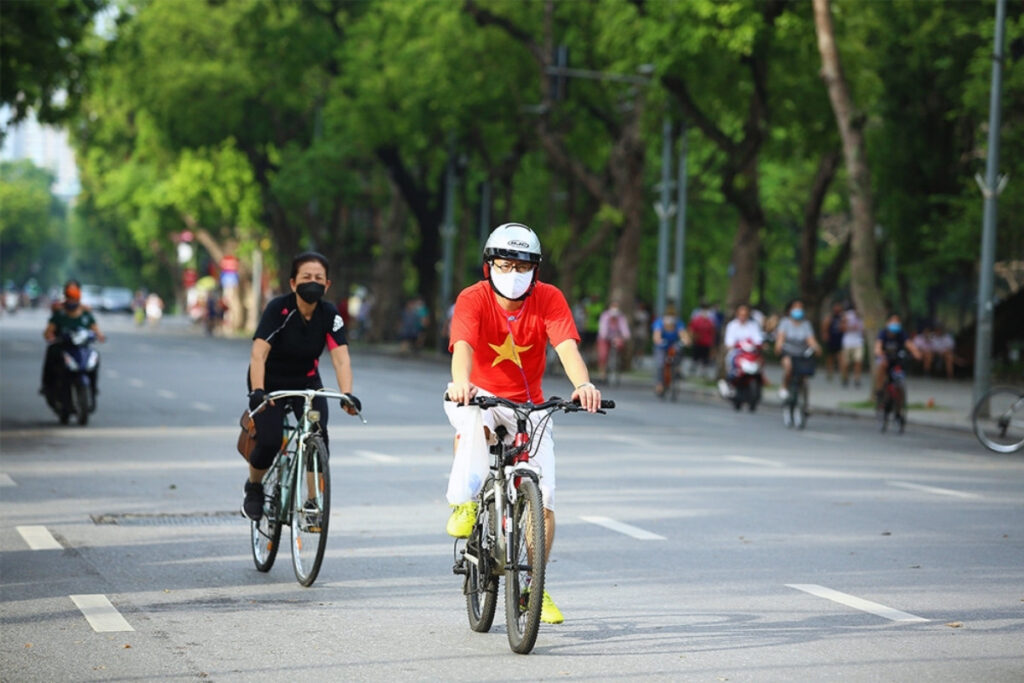
There is nothing wrong with sleeping late on vacation.
Vietnam has excellent hotels, comfortable beds, and plenty of reasons to take your time.
But if you sleep until 9 or 10 every morning, you will miss a surprisingly important part of the country.
You may see Vietnam’s famous attractions.
You may eat great food.
You may visit beautiful beaches and historic towns.
But you will see less of ordinary Vietnamese life.
The early morning reveals things that are difficult to notice later.
You see residents rather than tour groups.
You see breakfast rather than lunch.
You see vendors preparing for the day rather than serving tourists.
You see people exercising because they always do it, not because someone put it on an itinerary.
You see neighborhoods before traffic takes over.
And you get a better sense of how a place actually functions.
This is particularly valuable in cities such as Hanoi.
Around Hoan Kiem Lake early in the morning, for example, the atmosphere can be completely different from the busy streets you encounter later in the day.
The same city is there.
But the rhythm has changed.
For travelers interested in culture, that difference is worth waking up for.
How to Experience a Vietnamese Morning
You do not need an elaborate tour.
In fact, the best approach is usually very simple:
Wake up early and walk.
Choose a neighborhood where people actually live rather than heading straight to a major attraction.
Then look for three things:
a park or lake, a breakfast stall, and a coffee shop.
That combination will tell you a lot.
Hanoi
Start around Hoan Kiem Lake before 7 a.m.
Walk around the lake and watch the morning exercise groups, walkers, vendors, and residents.
Then find a local breakfast spot and continue to a small café.
Do not rush.
The point is to observe how the morning works.
Ho Chi Minh City
In Ho Chi Minh City, early morning can offer a welcome break from the heat and traffic that arrive later.
Look for parks, riverside areas, or residential neighborhoods where locals exercise, walk, and eat breakfast.
The city is already moving, but the pace can feel noticeably different before the streets become crowded.
Nha Trang
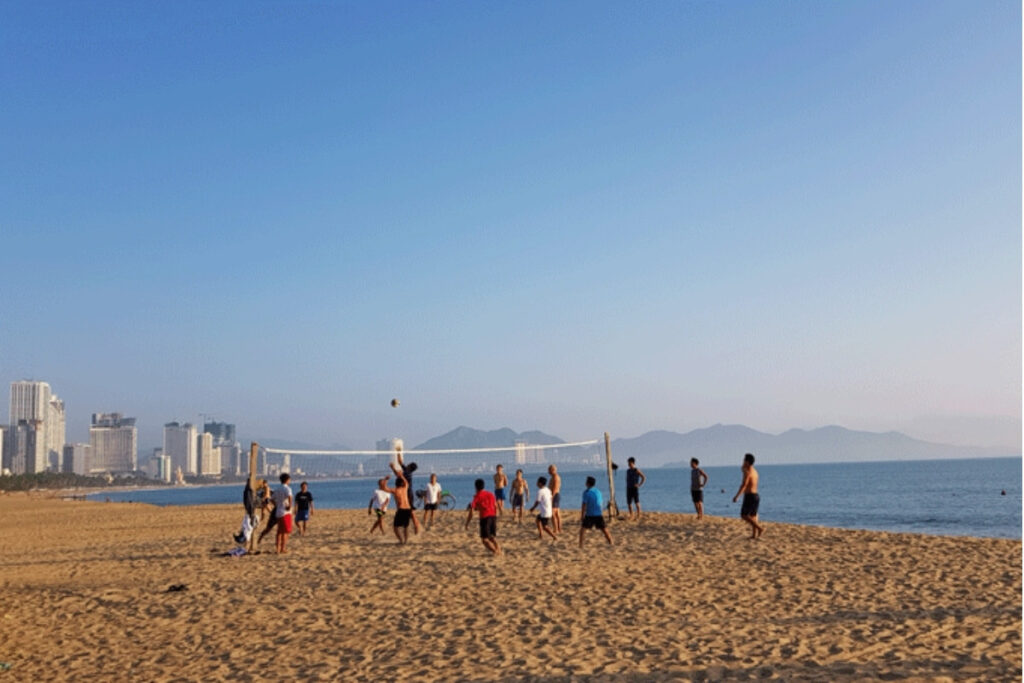
The beach is the obvious place to start.
Go early enough and you may find local residents walking, exercising, or swimming before the day’s heat sets in.
Nha Trang’s morning beach culture is particularly visible around sunrise, when locals use the waterfront as part of their daily routine.
For travelers staying near the beach, this can be one of the easiest cultural experiences in the city.
You simply walk outside.
The Mekong Delta
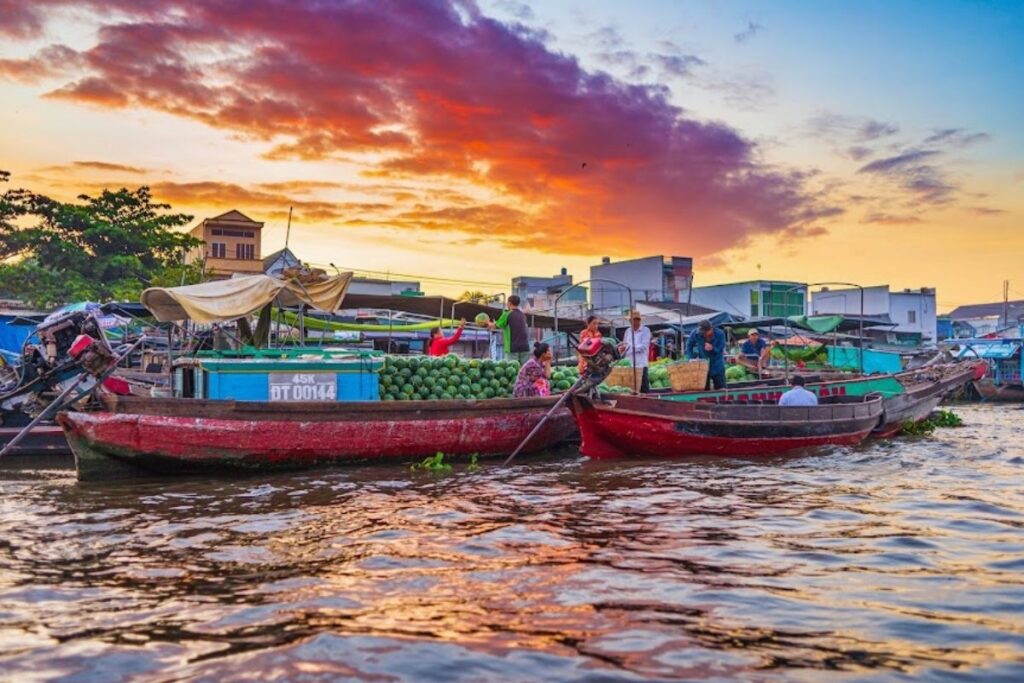
The Mekong Delta takes the early-morning idea even further.
If you are visiting Cai Rang Floating Market near Can Tho, you need to start very early.
Vietnam Tourism recommends departing around 5 a.m. to experience the market while it is active.
This is a different kind of morning.
Instead of watching a city wake up, you are watching a river-based trading community already doing business.
For travelers interested in everyday life, that is precisely why the early start is worthwhile.
Do You Really Need to Wake Up at 5 a.m.?
No.
Unless you are visiting a destination where an early departure is genuinely necessary, such as a floating market, you do not need to set your alarm for 4:30 every morning.
For most travelers, around 6 to 7 a.m. is enough.
By then, many neighborhoods are already active.
Breakfast is available.
People are exercising.
Coffee shops are opening.
Markets are operating.
The temperature is usually more comfortable than later in the day.
And you still have almost the entire day ahead of you.
The goal is not to prove that you can wake up earlier than the locals.
It is to see Vietnam during a part of the day when ordinary life is particularly visible.
One early morning is enough.
You can sleep in tomorrow.
Vietnam Is Not a Country Where Everyone Wakes Up at 5 a.m.
There is one important caveat.
It would be a mistake to turn this observation into another stereotype about Vietnam.
Not every Vietnamese person is an early riser.
Young people may sleep late.
Night-shift workers have completely different schedules.
People who work in hospitality or entertainment may begin their days later.
Urban lifestyles are changing, too.
Vietnamese cities are increasingly connected to global working hours, nightlife, technology, entertainment, and flexible schedules.
So the question is not really:
“Do Vietnamese people wake up early?”
It is:
“Why does early morning life remain so visible in Vietnam?”
And that distinction matters.
The answer lies in the number of everyday activities that naturally happen early: outdoor exercise, markets, breakfast, coffee, school, work, commuting, and family routines.
The culture is changing.
But the morning rhythm remains remarkably strong.
What an Early Morning Tells You About Vietnam
There is a reason this simple observation is worth discussing.
Travelers often learn about a country through its famous landmarks.
Vietnam has plenty of them.
But culture is often easier to understand through ordinary routines.
A person walking around a lake.
A vendor preparing breakfast.
A grandmother buying vegetables.
A group of friends drinking coffee.
A fisherman returning with the morning catch.
A family leaving for work and school.
None of these things would normally appear on a list of Vietnam’s top attractions.
Yet together, they tell you how the country works.
The early morning is when many of those routines overlap.
That is what makes it so interesting.
Vietnamese mornings are not simply early.
They are shared.
They combine work and leisure, food and conversation, exercise and community.
And because so much of it happens in public, travelers can see it simply by stepping outside.
Frequently Asked Questions – Vietnamese Morning Culture
Why do Vietnamese people wake up so early?
Vietnamese people often start their mornings early because several parts of daily life begin early, including work, school, markets, breakfast, and outdoor exercise. Vietnam’s hot climate also makes the cooler morning hours more comfortable for many activities. For many people, early rising is simply part of a familiar daily routine rather than a deliberate effort to be more productive.
What time do Vietnamese people usually wake up?
There is no single wake-up time for everyone in Vietnam. However, people with traditional work or school schedules may commonly be up around 5:30 to 7 a.m. Older residents and people who exercise outdoors may start even earlier, while younger people and those with later work schedules may wake up much later.
Why are Vietnamese markets open so early?
Traditional markets often begin early because fresh food needs to be delivered, prepared, and sold while it is still fresh. Vendors may arrive before sunrise to set up, while restaurants, food sellers, and households shop for ingredients needed during the day.
Why do Vietnamese people exercise so early in the morning?
Early morning is cooler and generally more comfortable for outdoor activity than the hotter hours later in the day. Parks, lakes, and public spaces also provide places for people to walk, stretch, exercise, and meet others before work and school begin.
Is morning coffee popular in Vietnam?
Yes. Morning coffee is a familiar part of daily life for many Vietnamese. People may stop at a neighborhood café or sidewalk coffee shop before work, sometimes using the time to talk with friends, read, check their phones, or simply watch the street.
Do I need to wake up at 5 a.m. when traveling in Vietnam?
No. Most travelers do not need to wake up that early every day. Around 6 to 7 a.m. is usually early enough to see neighborhoods becoming active, find breakfast, visit a local market, or watch people exercise. A much earlier start is mainly useful for experiences such as a floating market or sunrise activity.
Is everyone in Vietnam an early riser?
No. Vietnam has many different lifestyles and schedules. Younger people, night-shift workers, hospitality employees, and people with flexible working hours may sleep much later. Early mornings are simply very visible because many traditional and practical activities still begin early.
What is the best way to experience a Vietnamese morning?
The simplest approach is to leave your hotel early and explore a neighborhood on foot. Look for a local breakfast stall, a market, a park, or a small coffee shop. You do not need a tour or a fixed itinerary. The value is in observing how ordinary life begins around you.
Conclusion
So, Why Early Mornings Are Normal in Vietnam?
There is no single answer.
Vietnam’s climate makes the cooler morning hours attractive. Markets and breakfast stalls need to start early. Schools and workplaces create practical schedules. Exercise groups gather before the heat. Coffee shops become social meeting places. Families begin their routines before the working day officially starts.
But the deeper explanation is cultural.
The morning is part of public life in Vietnam.
People do not only wake up early to work.
They walk.
They exercise.
They eat.
They drink coffee.
They talk.
They shop.
They meet other people.
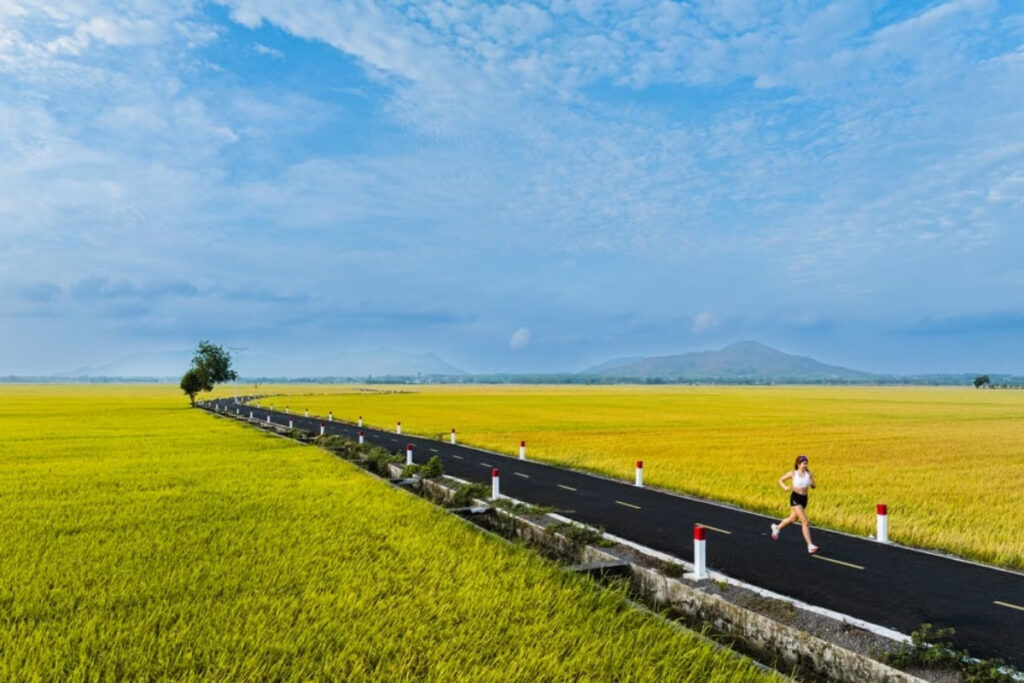
That rhythm does not belong only to Vietnam’s cities. From busy neighborhoods to quiet roads through the rice fields, the day often begins long before the tourist day does.
If you are visiting Vietnam, you do not need to wake up at 5 a.m. every day.
Just try it once.
Leave your hotel before the streets become busy. Find a local breakfast stall. Walk through a neighborhood. Have a coffee. Watch the morning unfold.
Sometimes, the best way to understand Vietnam is simply to see how it begins its day.
Continue Exploring Vietnam
A Vietnamese morning is only one small part of a much larger cultural story.
If you want to understand Vietnam beyond famous landmarks and tourist attractions, explore more Vietnam Insights from Tam Voc Viet — stories about everyday life, local perspectives, food culture, traditions, and the experiences that shape modern Vietnam.
Recommended next reads:
- Vietnamese Family Culture — Discover how family relationships influence everyday routines, traditions, and social expectations.
- Vietnamese Markets & Bargaining Culture — See how local markets fit into everyday Vietnamese life and why they often begin early.
- Vietnamese Etiquette — Understand the small social customs that can make interactions with locals easier and more respectful.
- Why Are There So Many Motorbikes in Vietnam? — Explore the history, practicality, and everyday role of motorbikes in Vietnam.
- 15 Things That Surprise First-Time Visitors to Vietnam — Discover some of the everyday details that may feel unexpected when you first arrive.
- Common Culture Shocks in Vietnam: 15 Things First-Time Visitors Should Know — A practical look at everyday differences travelers may notice.
- Why Is Coffee So Important in Vietnam?
- Why Do Vietnamese Families Eat Together?
- The Story Behind Vietnam’s Street Food Culture
- What It’s Really Like to Celebrate Tet in Vietnam
- Vietnamese Work Culture Explained
- What Foreigners Love Most About Living in Vietnam
- Living in Vietnam: The Complete Guide for Foreigners
Together, these Vietnam Insights offer a closer look at the everyday routines, cultural habits, and small details that can be easy to miss on a first trip to Vietnam.
A Note for Travelers
You don’t need to wake up at 5 a.m. every day to experience Vietnamese morning culture.
In fact, the goal is not to copy every local routine. It is simply to slow down enough to notice what is happening around you.
If you have the chance, try getting up early once during your trip.
Step outside before the streets become busy. Walk through a neighborhood, visit a local market, find a small breakfast stall, or sit at a sidewalk café with a Vietnamese coffee.
Notice the people exercising in the park. Watch vendors prepare food for the morning rush. Listen to the sounds of motorbikes beginning to fill the streets.
You may notice that the morning feels less like a quiet transition from sleep to work and more like a shared part of everyday life.
You don’t need to understand every custom or know exactly what to look for.
Just observe, slow down, and let the morning unfold around you.
That is often when Vietnam feels most local — not at a famous attraction, but in the ordinary moments before the rest of the day gets busy.
Sources & Further Reading
This article draws on information about Vietnamese morning routines, food culture, coffee culture, public exercise, markets, work schedules, and everyday life.
Because daily routines can vary by region, age, occupation, family, season, and individual preference, the examples in this guide should be understood as cultural context rather than rules that apply to every Vietnamese person.
For current travel information, including transportation, attractions, opening hours, regulations, and other practical details, always check official sources before your trip.
Suggested sources:
- Vietnam National Authority of Tourism / Vietnam Tourism – Official information about Vietnam’s destinations, culture, food, and travel experiences.
- Vietnamese Museum of Ethnology – Background on Vietnamese communities, cultural traditions, and everyday life.
- Voice of Vietnam (VOV5) – Cultural features and reporting on Vietnamese society, traditions, and contemporary life.
- Tuoi Tre News — Reporting and features on contemporary Vietnamese life and society.
Editorial note: Vietnamese daily life continues to change. Early-morning exercise, traditional markets, street breakfast, neighborhood coffee, school and work schedules, and modern urban lifestyles can all coexist in contemporary Vietnam. Practices may differ significantly between regions, generations, and individual households. Tam Voc Viet presents these examples as cultural context to help international travelers understand Vietnam, not as universal rules about how Vietnamese people live.
About the Author
Tam Voc Viet Editorial Team
The Tam Voc Viet Editorial Team creates travel and cultural guides for international readers who want to understand Vietnam beyond its most famous destinations.
Our content explores Vietnam through its history, culture, food, traditions, people, and everyday life, with a particular focus on the context that helps international travelers experience the country more thoughtfully.
For cultural and travel topics, we consult official Vietnamese sources, established cultural institutions, research materials, and relevant travel resources where appropriate. We aim to explain Vietnamese life in a clear and accessible way while recognizing that Vietnam is not culturally uniform and that everyday experiences can differ across regions and generations.
Our goal is simple:
To help international visitors experience Vietnam with more context, curiosity, and confidence.
Article Information
Category: Vietnam Insights
Topic: Vietnamese Morning Culture & Everyday Life
Published: August 2026
Last Updated: August 2026
Author: Tam Voc Viet Editorial Team
