


 Tiếng Việt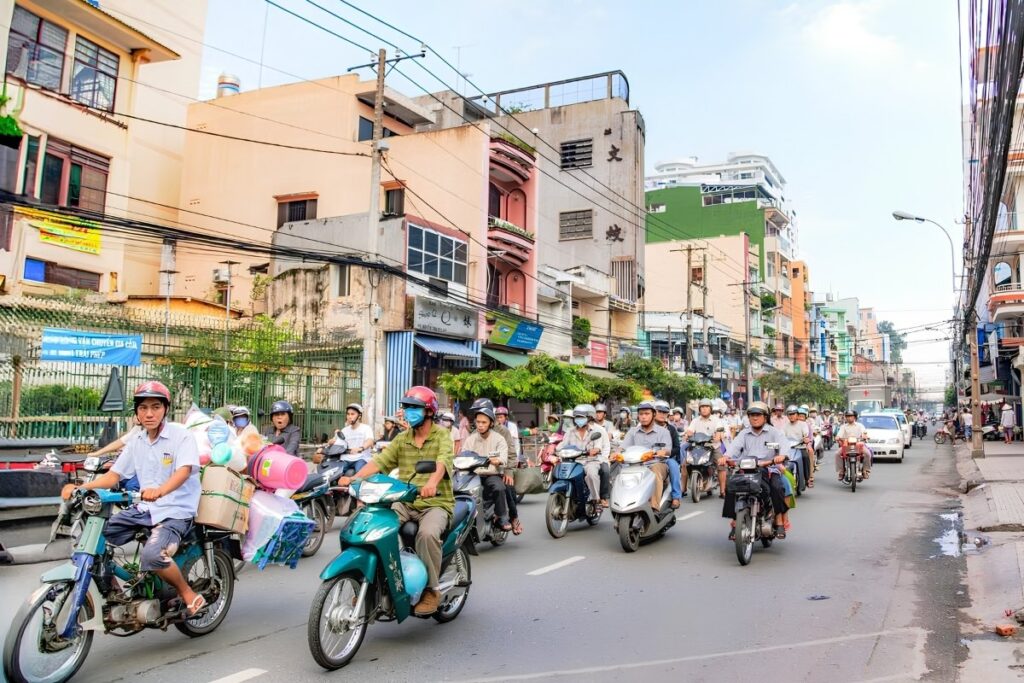
If you have never been to Vietnam before, one of the first things you may notice is not a famous temple, a bowl of pho, or a beautiful bay.
It is the traffic.
Step onto a busy street in Hanoi or Ho Chi Minh City and you may see motorcycles moving in almost every direction. They carry office workers, students, parents with children, delivery drivers, groceries, flowers and sometimes what seems like half a small business.
For an American traveler, the scene can be difficult to process at first. In the United States, the car is usually the default form of everyday transportation. In Vietnam, the motorcycle has traditionally played that role.
So why are there so many motorbikes in Vietnam?
The answer goes far beyond the idea that motorcycles are simply cheap.
Vietnam’s motorcycle culture developed from a combination of economic growth, urbanization, household needs, narrow streets, limited parking and the practical advantages of two-wheel transportation. Over several decades, motorcycles became deeply integrated into work, family life and the way Vietnamese cities function.
Today, the motorcycle is more than a vehicle. It is one of the clearest ways to understand everyday life in modern Vietnam.
Table of Contents
Quick Answer: Why Are There So Many Motorbikes in Vietnam?
Vietnam has so many motorbikes because they are relatively affordable, practical, easy to park and well suited to the country’s dense cities and narrow streets. Motorcycles also provide flexible transportation for families, workers and small businesses.
As Vietnam’s economy grew, motorcycles became widely accessible while remaining more practical for many everyday trips than private cars. Over time, an entire transportation culture developed around them.
Why Motorbikes Became Vietnam’s Default Vehicle
It Is Not Just a Tourist Impression
The sheer number of motorcycles in Vietnam can be surprising to visitors, but this is not simply something that happens in tourist districts.
Motorcycles are woven into ordinary life.
In the morning, they carry people to work and school. Around lunchtime, they move through crowded commercial streets. In the afternoon, they pick up children, transport groceries and deliver packages. In the evening, they fill the roads again as millions of people make their way home.
The motorcycle is everywhere because it solves a very ordinary problem:
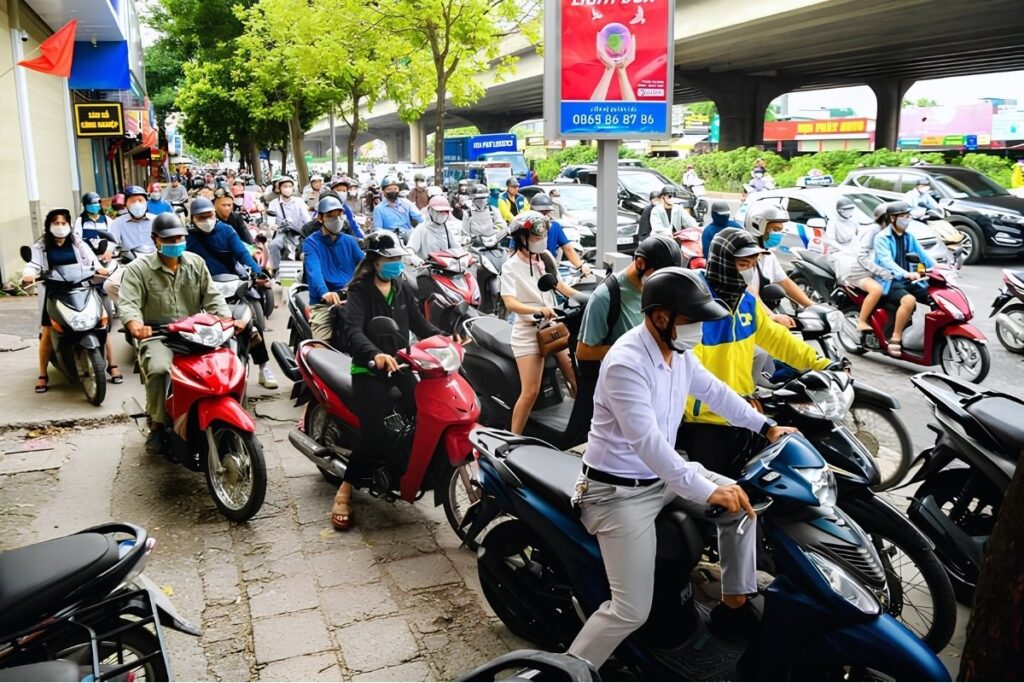
How do you move through a busy city quickly, cheaply and independently?
For much of modern Vietnam, the motorcycle has been one of the best answers.
This is particularly important in cities where residential neighborhoods, markets, shops, restaurants and workplaces are packed closely together and connected by streets and alleys that were never designed around large numbers of private cars.
A motorcycle can fit into that environment naturally.
It takes up little space, can be parked relatively easily and is practical for short trips. It can also travel beyond the immediate neighborhood without requiring the time or physical effort of a bicycle.
That combination made motorcycles attractive long before they became the defining image of Vietnamese traffic.
Why Did the Motorcycle Become Vietnam’s Default Vehicle?
There was no single moment when Vietnam suddenly became a motorcycle country.
The change happened gradually.
For much of the 20th century, bicycles were an important form of everyday transportation. They were inexpensive, simple and accessible to ordinary households.
But bicycles had limitations.
They were slower over longer distances and required physical effort. As Vietnam’s economy developed and people’s incomes increased, demand grew for transportation that offered greater speed and range without the high cost of owning a car.
The motorcycle occupied exactly that space.
It provided many of the advantages people wanted from motorized transportation without requiring the financial commitment or road space associated with a private automobile.
That made it particularly well suited to a country undergoing rapid economic and urban change.
The motorcycle was not simply a luxury that people wanted to own.
For many households, it was a practical tool.
It could take someone to work.
It could take a child to school.
It could carry groceries home.
It could help a small business move products.
And it could do all of this without requiring a large amount of space.
As more households acquired motorcycles, another important change occurred: the motorcycle became normal.
Once most people around you are using the same type of vehicle, the transportation system naturally begins to adapt around it.
Businesses provide parking areas.
Road users learn how to share the streets with motorcycles.
Families organize daily routines around them.
Young people grow up seeing motorcycles as an ordinary part of life.
The result is a transportation culture that reinforces itself.
From Bicycles to Motorbikes
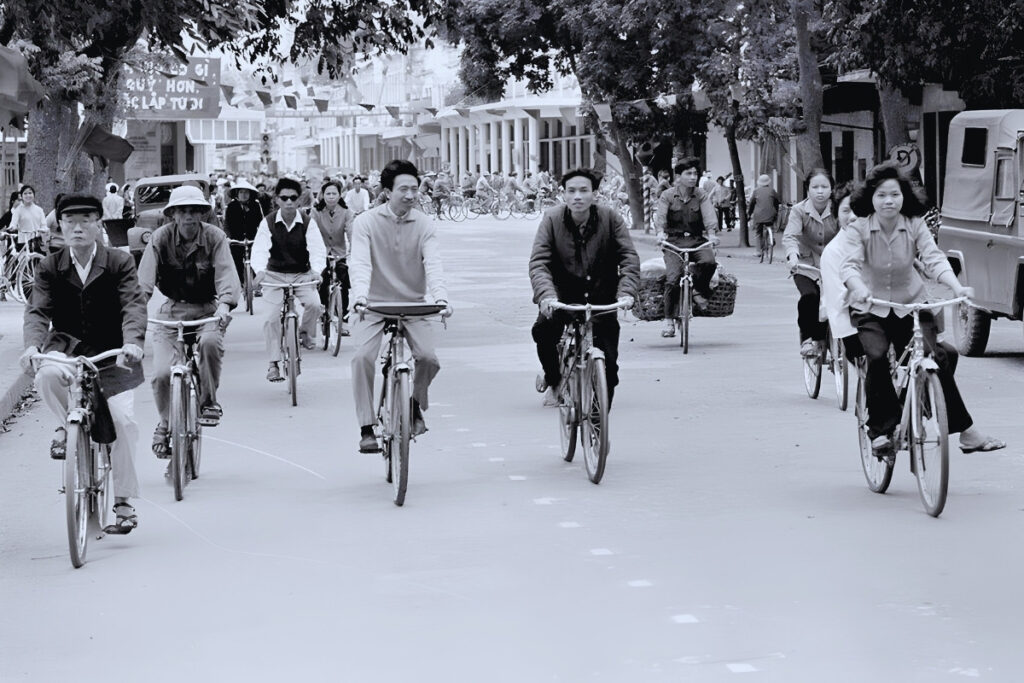
Before Vietnam’s motorcycle boom, bicycles were a familiar sight on Vietnamese streets.
They were especially important for students, workers and families who needed inexpensive transportation.
Bicycles remain common today, but the motorcycle offered something that became increasingly valuable as cities expanded: speed without sacrificing flexibility.
A bicycle works well for a short trip.
A motorcycle can make the same trip faster while also making longer journeys practical.
That difference became increasingly important as Vietnamese cities grew.
People could live farther from work.
Students could travel across town for school.
Workers could reach industrial areas outside traditional city centers.
Families could visit relatives more easily.
Small businesses could serve customers across a wider area.
The motorcycle effectively expanded the distance people could travel as part of their normal daily lives.
This was especially significant because Vietnam did not develop its modern cities around the same model of mass private-car ownership seen in many parts of the United States.
Instead, two-wheel transportation became deeply embedded in urban mobility.
Đổi Mới and the Rise of Motorization
One of the most important pieces of the story is Đổi Mới, Vietnam’s economic reform program launched in 1986.
The reforms helped move Vietnam toward a more market-oriented economy and were followed by decades of rapid economic growth.
As household incomes increased, consumer choices expanded.
People could buy goods that had previously been difficult to afford. Businesses expanded. Cities attracted workers. International trade increased. New residential and industrial areas developed.
Transportation needs changed along with everything else.
People needed to travel farther and more frequently.
A growing economy required greater mobility.
The motorcycle was an unusually good match for that transformation.
It was considerably more affordable than a private car, but it provided far greater mobility than a bicycle.
That made it accessible to a much broader part of the population.
The growth of motorcycle ownership therefore cannot be separated from Vietnam’s broader economic development.
As people became more mobile, they could access more jobs, businesses could reach more customers and families gained greater freedom to move around their cities.
The motorcycle became part of the infrastructure of economic growth—not because it was formally planned as such, but because millions of people found it useful.
Japanese Motorcycle Brands Helped Build the Market
The development of Vietnam’s motorcycle market was also closely associated with Japanese manufacturers such as Honda, Yamaha and Suzuki.
Honda became particularly well known among Vietnamese consumers.
Reliability, practicality and relatively manageable running costs mattered in a market where people expected a motorcycle to serve as a long-term everyday vehicle.
Over time, motorcycles became available in a wide range of styles and price points.
Automatic scooters became especially popular in urban areas because they were convenient for stop-and-go traffic and relatively simple to operate.
The important point is not any single brand.
It is that motorcycles became increasingly accessible to ordinary Vietnamese households at precisely the time when the country was becoming more prosperous and more urbanized.
The result was a dramatic expansion of two-wheel mobility.
The Motorcycle Boom Followed Vietnam’s Growing Cities
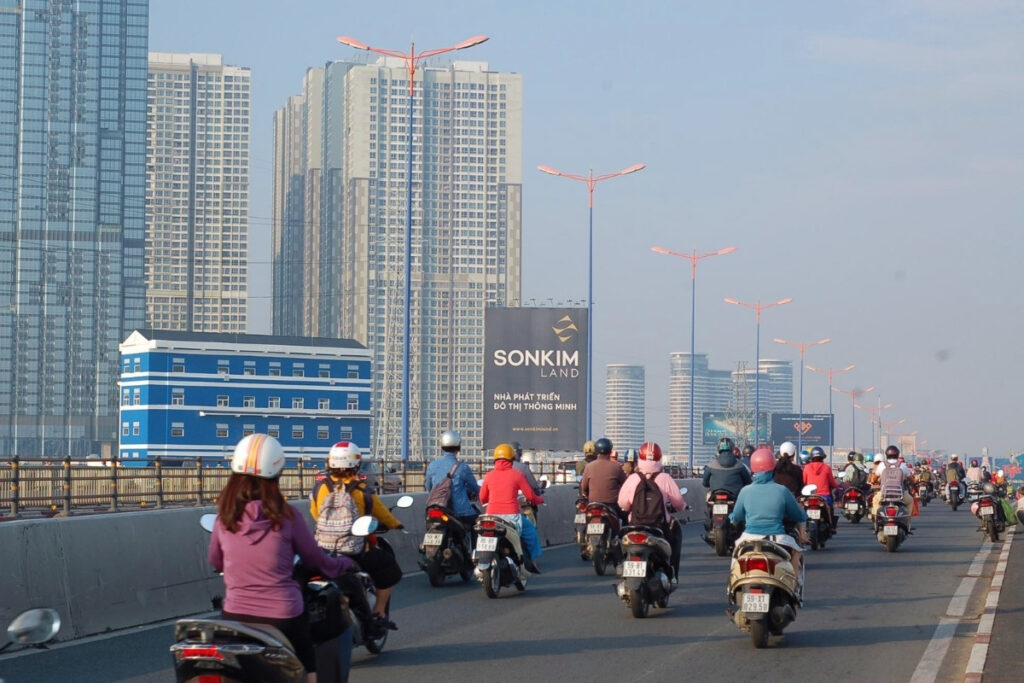
Economic growth changed not only what Vietnamese people could buy, but also where they lived and worked.
Hanoi and Ho Chi Minh City expanded.
Industrial zones attracted workers.
New residential areas developed farther from traditional urban centers.
Universities, offices, factories, shops and services became distributed across increasingly large metropolitan areas.
People needed a way to connect all of these places.
Motorcycles provided that connection.
A worker did not necessarily need to live next to the factory.
A student did not need to live beside a university.
A small business did not need to operate on a major road.
The ability to move efficiently through dense neighborhoods gave people more choices about where they could live, work and shop.
This is one of the most important reasons motorcycles became so deeply embedded in Vietnam.
They were not merely responding to urban growth.
They helped people adapt to it.
A Motorcycle Changed What Was Possible
The importance of a motorcycle is easier to understand when you look at it from the perspective of an ordinary household.
Imagine a family whose transportation options are limited to walking, bicycles and public transit.
A trip across the city may take considerable time.
Then the family buys a motorcycle.
The change is immediate.
A parent can take a child to school.
Someone can commute to a job farther away.
The family can shop at a larger market.
A relative living across town becomes easier to visit.
A small business can deliver products directly to customers.
None of these activities is particularly dramatic.
But together, they represent something important:
greater mobility.
For millions of Vietnamese households, the motorcycle helped turn distance into a smaller obstacle.
That practical value is a major reason the motorcycle became more than a consumer product.
It became part of everyday life.
From Transportation to Everyday Infrastructure
Once motorcycles became widespread, Vietnamese society adapted around them.
Restaurants needed places for customers to park.
Apartment buildings incorporated motorcycle parking.
Businesses used motorcycles to move supplies.
Schools and offices filled their surrounding streets with two-wheelers at peak hours.
Markets became surrounded by parked motorcycles.
Delivery services relied on them.
Families planned daily routines around them.
At this point, the motorcycle was no longer simply an individual choice.
It had become part of the transportation ecosystem.
That distinction helps explain why motorcycles remain so dominant even as Vietnam becomes wealthier.
People are not choosing between a motorcycle and a completely neutral transportation system.
They are choosing within an environment that has developed around motorcycles for decades.
Why This History Matters
If you only look at a photograph of a crowded Vietnamese intersection, it is easy to ask:
Why doesn’t everyone just drive a car?
But that question assumes that Vietnam’s transportation system developed from the same starting point as America’s.
It didn’t.
Vietnam’s cities, household economics and transportation habits evolved differently.
The motorcycle became widespread because it solved several problems at once.
It offered speed without the cost of a car.
It offered mobility without requiring large roads or parking spaces.
It worked for families and businesses.
And it became increasingly accessible during a period of rapid economic growth.
That combination created a self-reinforcing culture.
Today, when visitors see an almost endless stream of scooters moving through Hanoi or Ho Chi Minh City, they are seeing the result of decades of economic development and adaptation—not simply a preference for motorcycles.
And there is another important part of the story.
Vietnam’s streets themselves help explain why the motorcycle works so well.
That is where the next part begins.
Why Motorbikes Make More Sense Than Cars in Vietnam
The history explains how motorcycles became widespread. But history alone does not explain why they have remained so useful.
For that, you have to look at the streets themselves.
Vietnamese cities were not designed around the assumption that every household would own a large private vehicle. In many urban neighborhoods, daily life happens at a much smaller scale: homes sit close to shops, cafés occupy narrow storefronts, markets spill into busy streets, and small alleys connect one neighborhood to another.
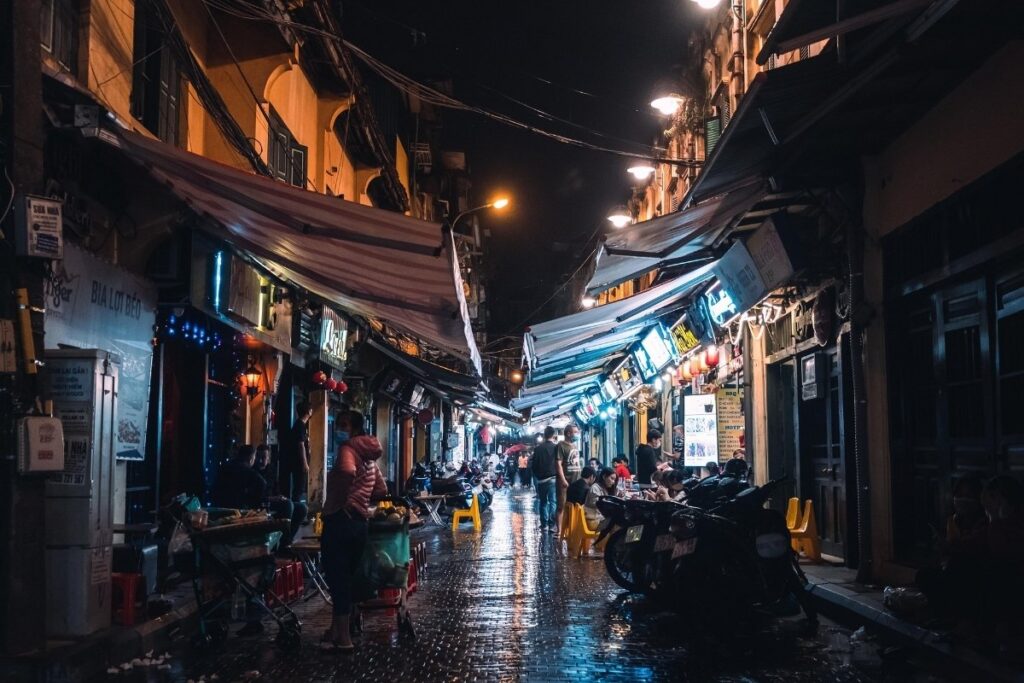
A motorcycle fits naturally into this environment.
A car can certainly get you there. But for many everyday trips, it is simply more vehicle than you need.
Cars Are More Expensive to Own and Use
The most obvious advantage of a motorcycle is cost.
Buying a car requires a much larger financial commitment than buying a typical scooter or motorcycle. Ownership also brings additional expenses, including fuel, maintenance, insurance, registration and parking.
For many Vietnamese households, especially when motorcycles first became widespread, the difference was significant.
A motorcycle offered motorized transportation without requiring the same level of household income.
That mattered during Vietnam’s rapid economic development.
As millions of families entered the growing middle class, a motorcycle could provide a substantial increase in mobility without consuming as much of the household budget as a car.
But affordability is only part of the explanation.
If motorcycles were simply cheap, they would not necessarily remain so dominant in cities where incomes have risen dramatically.
The more important point is that motorcycles are also extremely practical.
Vietnam’s Cities Favor Two-Wheelers
Walk through an older neighborhood in Hanoi or Ho Chi Minh City and you will quickly notice something that is easy to miss from a map.
Many streets are narrow.
Some are little more than lanes between buildings.
Homes, restaurants, cafés, shops and businesses can sit directly alongside the road, often with limited space between the entrance and moving traffic.
A motorcycle can move through these environments with relative ease.
A car cannot always do the same.
This does not mean Vietnamese cities are impossible to navigate by car. They are not.
It means that the physical scale of many everyday trips favors smaller vehicles.
A motorcycle can enter a narrow neighborhood, turn around in a limited space and stop close to a destination.
That flexibility is particularly useful when your destination is not on a major road.
And in Vietnam, many destinations aren’t.
A café may be down a small lane.
A family home may be several turns away from a main street.
A local restaurant may have only a tiny frontage.
A market stall may be surrounded by other businesses and parked motorcycles.
The motorcycle is well adapted to this kind of urban geography.
Parking Changes the Equation
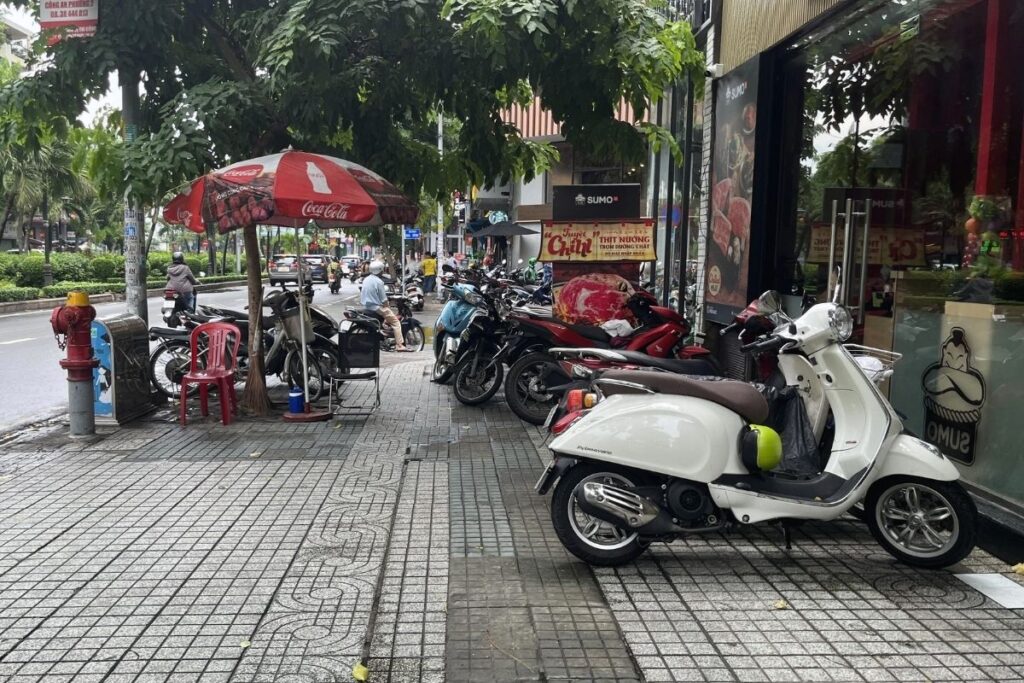
Parking is another reason motorcycles make sense.
A car needs a significant amount of space.
A motorcycle needs much less.
That difference becomes important when millions of people are trying to use the same limited urban space.
In Vietnam, it is common to see motorcycles parked in front of shops, restaurants, cafés, apartment buildings and offices.
A relatively small area can accommodate many two-wheelers.
The same space might hold only a few cars.
This affects everyday life in ways travelers may not immediately notice.
When you ride a motorcycle, your destination does not necessarily need a large parking lot.
You can often stop near the building you are visiting and continue on foot.
For businesses operating in dense neighborhoods, that makes a major difference.
A small restaurant can serve customers without needing a large dedicated parking facility.
A neighborhood shop can operate from a narrow storefront.
A café can occupy a compact space on a busy street.
The motorcycle therefore works not only as transportation, but also within the physical economy of dense urban neighborhoods.
Traffic Favors Flexibility
Then there is congestion.
Vietnam’s major cities can become extremely busy, particularly during commuting hours.
Cars are larger and require more road space.
Motorcycles, by comparison, are much smaller and more maneuverable.
That does not mean motorcycles magically eliminate traffic.
When thousands or millions of vehicles are using the same roads, congestion is inevitable.
But smaller vehicles can make better use of limited space.
They can move through narrow streets and around slow-moving traffic more easily than large vehicles.
For an individual traveler, this can make a motorcycle particularly useful for short urban trips.
A journey that looks simple on a map may take longer than expected in a car when roads are crowded.
A motorcycle may offer more flexibility.
This is one reason motorcycles remain practical even as car ownership grows.
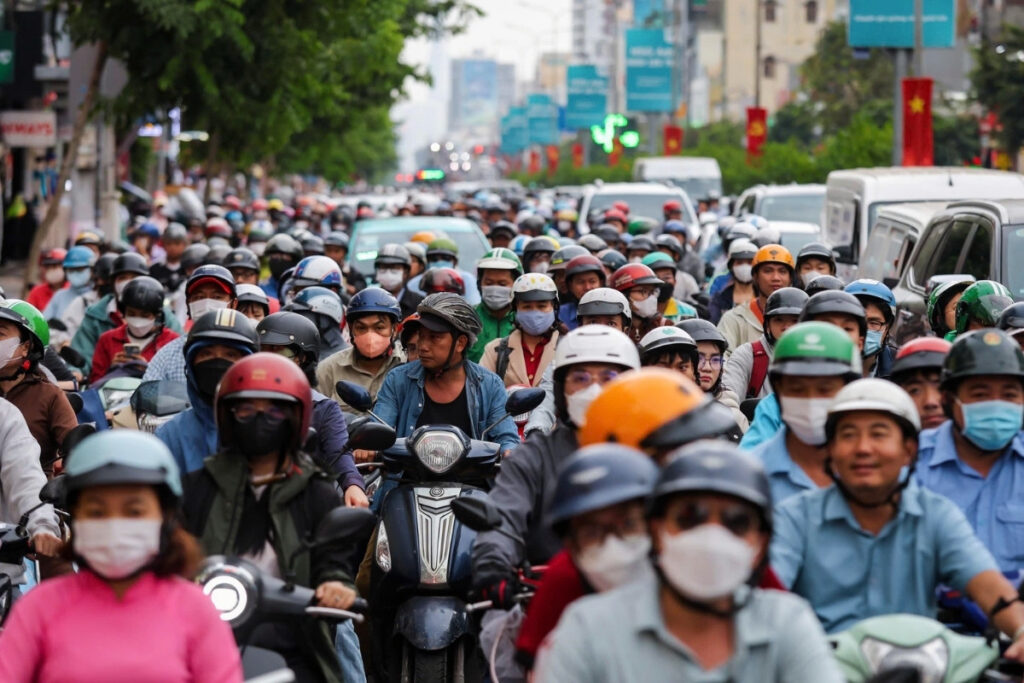
The Sidewalk and the Street Work Differently
Visitors from the United States may also notice that the boundary between street, sidewalk and business space can feel different in Vietnam.
In many Vietnamese neighborhoods, sidewalks are active parts of everyday life.
They may contain parked motorcycles, small businesses, food stalls, café seating or people moving between buildings.
The relationship between buildings, sidewalks and streets is therefore more fluid than many American travelers are accustomed to.
Motorcycles fit into this environment because they are small enough to move between these different spaces relatively easily.
This is also one reason a photograph of Vietnamese traffic can sometimes look chaotic to a foreign visitor.
There are simply more things happening within the same limited amount of space.
Cars, motorcycles, pedestrians, vendors, parked vehicles and storefronts all interact closely.
The motorcycle’s compact size gives it an advantage in this environment.
Why Not Just Take Public Transportation?
If motorcycles are useful because cities are crowded, another obvious question is:
Why doesn’t everyone simply take the bus or train?
Public transportation is an important part of Vietnam’s future, and major cities have been expanding their systems.
But public transportation does not necessarily take you directly from your front door to your destination.
A bus or train follows a fixed route.
A motorcycle does not.
That distinction matters for everyday life.
Someone may live several blocks from the nearest transit station.
Their workplace may be another kilometer from the station at the other end.
A child may need to be dropped off somewhere along the way.
A family may need to stop at a market before going home.
A motorcycle can combine all of these trips into one journey.
It provides what transportation planners often call door-to-door mobility.
For many short trips, that convenience is difficult to replace.
Public transportation can move large numbers of people efficiently, but a motorcycle provides personal flexibility.
The two systems therefore do not necessarily have to compete.
A future Vietnamese transportation system can use both.
One Motorcycle Can Replace Several Different Trips
Another advantage is that a motorcycle can serve multiple purposes during the same day.
A person might ride to work in the morning.
At lunchtime, they may use it to pick up food.
After work, they might stop at a market.
Then they can ride home.
A parent may take a child to school before continuing to work.
A small business owner can use the same motorcycle to collect supplies and make deliveries.
This flexibility is difficult to achieve with a fixed public transportation route.
It is also one reason motorcycles became so deeply integrated into everyday Vietnamese routines.
They are not simply commuting vehicles.
They are general-purpose transportation.
Why Motorbikes Remain Practical as Vietnam Gets Richer
Vietnam is much wealthier today than it was when motorcycles first became widespread.
Car ownership has increased.
Urban incomes have risen.
More families can afford private automobiles.
Yet motorcycles remain extremely common.
That may seem surprising until you consider the basic economics of urban transportation.
A higher income does not automatically make a car the best choice for every trip.
A person may be able to afford a car and still prefer a motorcycle for a short journey through a crowded neighborhood.
A family may own a car for long-distance travel while keeping motorcycles for commuting.
A business owner may use a car for some purposes and a motorcycle for deliveries.
In other words, rising incomes do not necessarily eliminate the practical advantages of two-wheel transportation.
They simply give people more choices.
The Motorcycle Fits the Scale of Everyday Vietnam
Perhaps the simplest way to understand Vietnam’s motorcycle culture is to look at the scale of everyday life.
Many daily trips are relatively short.
People travel from home to work, school, a market, a café, a restaurant or a nearby business.
The motorcycle is large enough to make these trips quickly but small enough to remain practical in crowded neighborhoods.
A car can perform the same task.
But often, it does not provide enough additional benefit to justify the extra cost, space and inconvenience.
That is why the motorcycle remains so effective.
It is not necessarily the best vehicle for every journey.
It is simply an unusually good vehicle for many of the journeys Vietnamese people make every day.
And that distinction helps explain why the motorcycle has survived decades of economic growth.
Vietnam is not poor because it uses motorcycles.
Vietnam uses motorcycles because, in many situations, they are an efficient solution to the country’s urban transportation needs.
The next question is even more revealing:
What happens when a motorcycle becomes part of almost every aspect of daily life—not just getting from one place to another, but working, shopping and taking care of a family?
How Motorbikes Fit Into Everyday Vietnamese Life
The easiest way to understand Vietnam’s motorcycle culture is to stop thinking of the motorbike as a vehicle used only for commuting.
In Vietnam, one motorcycle can be part of almost everything that happens during the day.
It takes children to school, carries people to work, moves groceries home, delivers food, transports supplies and connects small businesses with their customers.
That versatility is one of the main reasons motorcycles became so deeply embedded in everyday Vietnamese life.
Family and Daily Errands
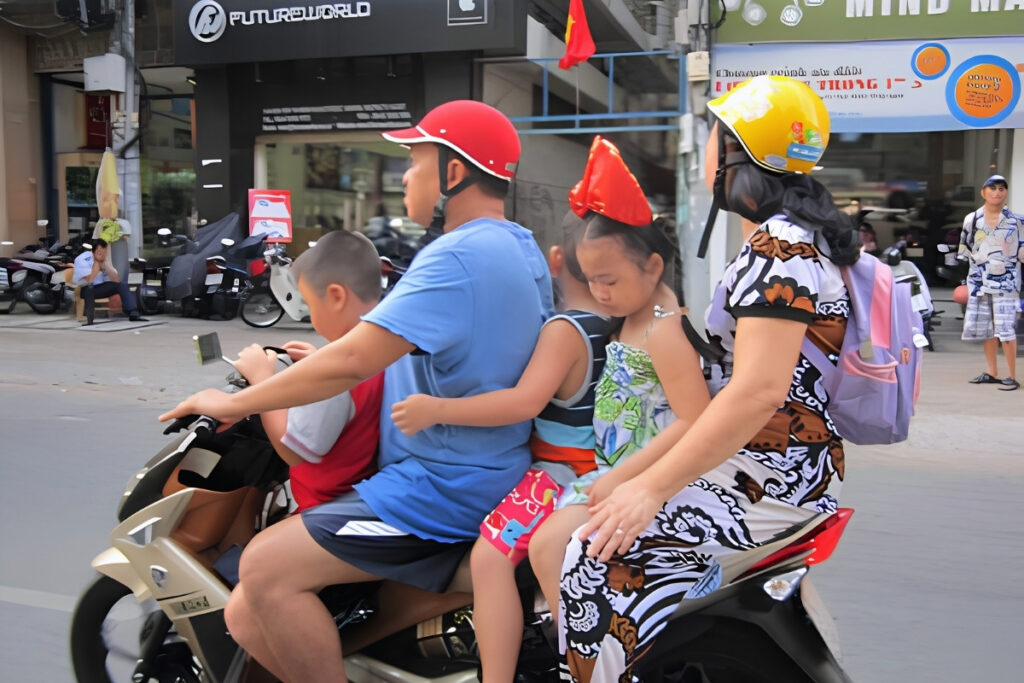
For many Vietnamese families, a motorcycle is simply the most convenient way to handle the day’s routine.
A parent may take a child to school in the morning, continue to work, stop at a market on the way home and then pick up another family member later in the day.
The same vehicle can handle all of these trips.
This matters in cities where people often have several destinations rather than one simple journey from home to work and back.
A motorcycle makes it easy to combine them.
It also gives families a degree of independence from public transportation schedules.
You do not need to wait for a bus or plan your entire day around a fixed route. You simply get on and go.
For a family with several daily responsibilities, that flexibility can be more valuable than the additional comfort a car provides.
Motorbikes and School Life
One of the most familiar sights in Vietnamese cities is the stream of motorcycles around schools at the beginning and end of the school day.
Parents pick up children.
Older students ride themselves.
Traffic builds briefly around school gates and then disperses into surrounding streets.
The motorcycle works particularly well for this because school trips are often relatively short.
A parent does not need a large vehicle to travel a few kilometers with one or two children.
The same pattern appears around universities, offices and other workplaces.
Two-wheel transportation connects residential neighborhoods with the institutions people visit every day.
It is an ordinary part of the daily rhythm rather than something people think about as a special form of travel.
Motorcycles Keep Small Businesses Moving
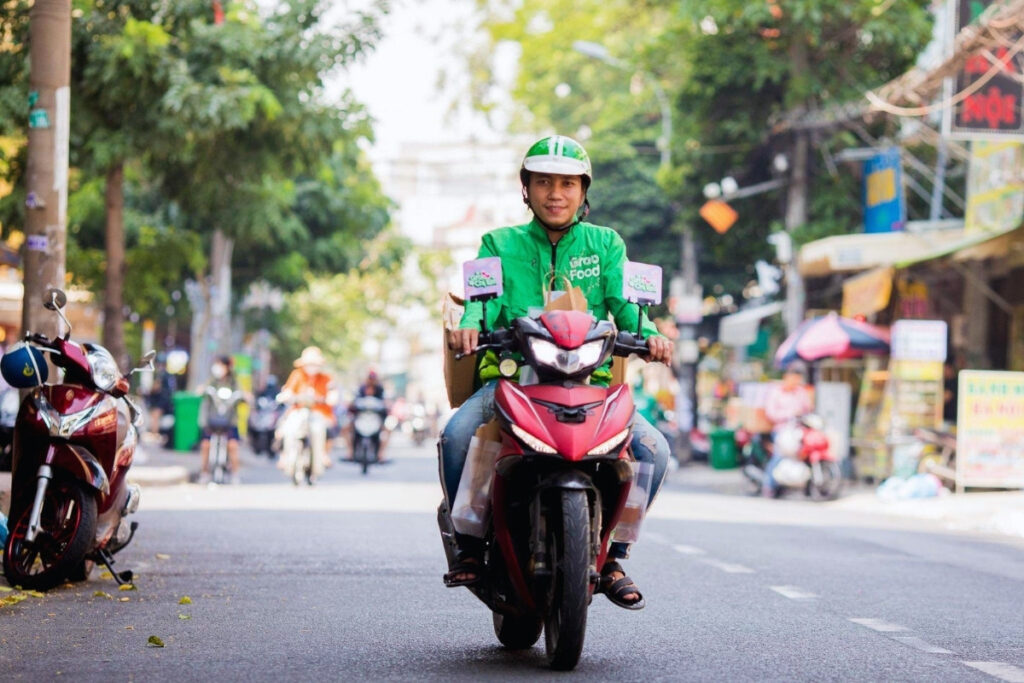
The motorcycle is also closely connected to Vietnam’s enormous network of small businesses.
A neighborhood restaurant needs ingredients.
A shop needs stock.
A florist needs to move flowers.
A repair worker needs tools.
A market seller needs supplies.
A courier needs to deliver a package.
For many of these jobs, a motorcycle is an extremely practical business tool.
It can carry a useful amount of cargo without requiring a large vehicle or dedicated delivery truck.
It can also reach customers in narrow streets and residential lanes where larger vehicles may be inconvenient.
This is particularly important in Vietnam’s dense urban neighborhoods, where many businesses operate on a relatively small scale.
The motorcycle allows a business to remain mobile.
A shop does not necessarily need to be located beside a major road to serve customers.
A restaurant can operate from a small storefront and send food across the neighborhood.
A worker can travel between several customers during the same day.
The vehicle therefore supports not only transportation, but also the way many small businesses operate.
The Delivery Economy Runs on Two Wheels
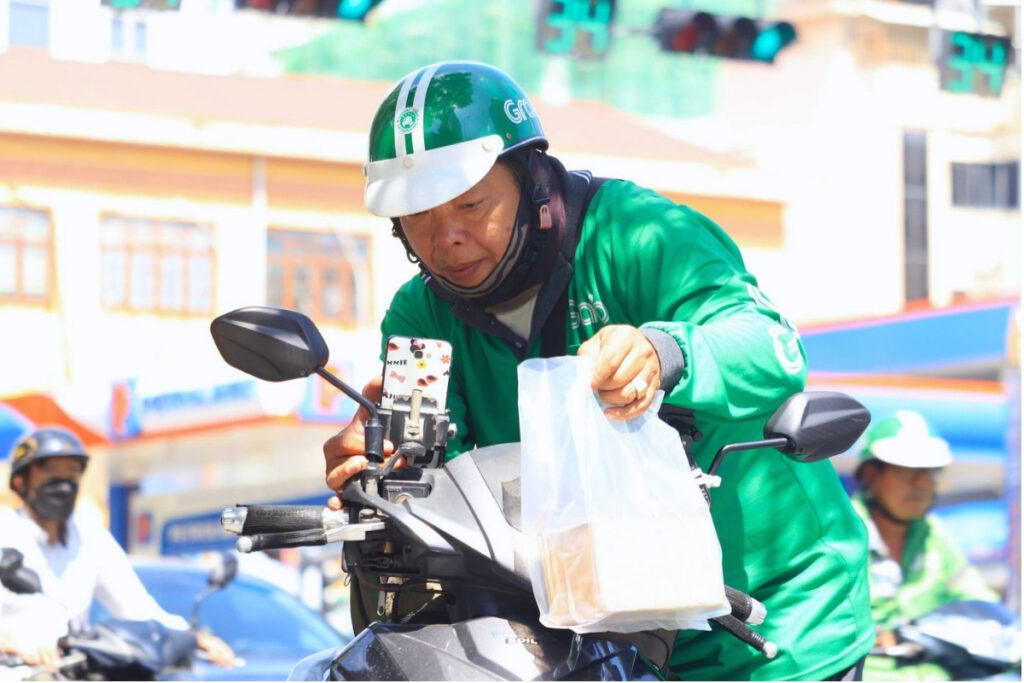
Modern technology has made this role even more visible.
Open a food-delivery app in a Vietnamese city and many of the people bringing those orders to customers will be traveling by motorcycle.
The same principle applies to parcels, groceries and other local deliveries.
A smartphone may now connect the customer, restaurant and driver, but the physical movement of the product still depends on a very familiar technology: the motorbike.
This is one reason Vietnam’s motorcycle culture has adapted so easily to the digital economy.
The technology changed.
The basic transportation advantage did not.
A motorcycle remains compact, relatively inexpensive to operate and capable of moving quickly through crowded urban streets.
For delivery work, those characteristics are especially valuable.
One Vehicle, Many Jobs
The versatility of the motorcycle is perhaps its greatest advantage.
A car can certainly perform all of the same functions, but a motorcycle can often do them with less space and lower operating costs.
A single motorcycle might serve as:
- a commuter vehicle;
- a school-run vehicle;
- a shopping vehicle;
- a delivery vehicle;
- a business vehicle;
- a family vehicle.
That flexibility matters because Vietnamese households and businesses do not necessarily separate transportation into specialized categories.
The same vehicle can be used for whatever the day requires.
This helps explain why motorcycle ownership became so widespread in the first place—and why the habit has continued across generations.
The Motorcycle Became Part of the Household
Once a family has depended on a motorcycle for years, it becomes more than a machine parked outside the house.
It becomes part of the household routine.
Keys may sit near the front door.
Helmets are kept ready for the next trip.
The motorcycle is used almost automatically whenever someone needs to go somewhere nearby.
Children grow up seeing their parents ride.
Young adults eventually use motorcycles to travel independently.
The vehicle becomes so ordinary that people may not think of this as “motorcycle culture” at all.
It is simply daily life.
That is an important distinction for visitors.
A traveler may see hundreds of motorcycles and think of the scene as a distinctive feature of Vietnamese culture.
For a Vietnamese resident, it may be no more remarkable than seeing cars in an American suburb.
The difference is that the motorcycle occupies a much more central position in everyday transportation.
Why This Culture Is Difficult to Replace
Once a transportation system becomes embedded in family and economic life, replacing it is not as simple as introducing another vehicle.
A new system has to provide comparable convenience.
Suppose a city builds a new public transit line.
That is useful, but a resident may still need a way to travel from home to the station, from the destination station to work, or to make several stops along the way.
A motorcycle already handles all of those journeys.
The same is true of businesses.
A delivery company can introduce larger vehicles, but larger vehicles may be less convenient on narrow streets.
A small shop can use a van, but a motorcycle may be cheaper for a small delivery.
A family can buy a car, but a motorcycle may still be easier for a short trip.
This is why the future of transportation in Vietnam is unlikely to be as simple as “motorcycles disappear and cars take over.”
Different forms of transportation serve different needs.
But Vietnam Is Getting Richer
Vietnam’s economic growth has changed the role of the motorcycle.
As household incomes rise, more families can afford cars.
That trend is visible on Vietnamese roads, particularly in large cities.
But greater purchasing power does not automatically make motorcycles obsolete.
A household can afford a car and still find a motorcycle more convenient for everyday errands.
A family may use a car for long journeys or when traveling with several people, while using motorcycles for commuting and short trips.
Businesses may also use both.
The result is not necessarily a complete shift from motorcycles to cars.
Instead, Vietnam is developing a more diverse transportation system.
Motorcycles remain the practical choice for many everyday journeys, while cars increasingly fill roles where their additional space and protection are useful.
The Motorcycle Is Still the Middle Ground
This helps explain why motorcycles continue to occupy such an important position.
Walking is inexpensive but limited by distance and physical effort.
Public transportation can move many people efficiently but follows fixed routes and schedules.
Cars offer comfort and protection but cost more and require more road and parking space.
Motorcycles sit somewhere in between.
They provide personal mobility without the size and expense of a car.
That makes them particularly effective for the short, frequent trips that make up much of everyday urban life.
And after decades of use, Vietnamese cities, businesses and households have developed around that reality.
A Motorcycle Culture Is Really a Mobility Culture
Ultimately, Vietnam’s motorcycle culture is not really about motorcycles.
It is about mobility.
The motorcycle gives people the ability to connect home, work, school, family, shopping and business without needing a large amount of infrastructure for every individual trip.
That is why the motorcycle became so important.
It was useful enough to become common.
Once it became common, everyday life adapted around it.
And once everyday life adapted around it, replacing it became much harder.
For travelers, this is the part of Vietnam’s traffic that is easiest to miss.
The thousands of motorcycles on the road are not thousands of isolated transportation choices.
They are part of a larger system that connects millions of people to the places and activities that make up their daily lives.
And that is also why the experience can feel so different when you arrive in Vietnam as a visitor.
The motorcycle is not just moving through the city.
It is helping the city function.
What Vietnam’s Motorbike Culture Means for Travelers
For someone visiting Vietnam for the first time, the motorcycle may be the most noticeable part of everyday life.
You will see them outside cafés, parked beside restaurants, waiting at intersections and moving through residential streets. In Hanoi and Ho Chi Minh City, they can seem to fill every available space during rush hour.
At first, the traffic may look chaotic.
After a few days, however, you begin to notice that there is a pattern to it.
Understanding that pattern makes traveling in Vietnam much easier.
What Vietnam’s Traffic Feels Like
Vietnamese traffic can feel very different from what travelers are used to in the United States.
Instead of large numbers of cars moving between clearly separated lanes, you may see motorcycles, cars, buses, bicycles and pedestrians sharing relatively limited road space.
The traffic is constantly adjusting.
A motorcycle slows down for a pedestrian.
Another moves around a parked vehicle.
A car waits for a gap.
A scooter turns into a side street.
Someone crosses the road while the flow continues around them.
To a first-time visitor, this can look unpredictable.
But Vietnamese road users are accustomed to operating in this environment.
That does not mean traffic is perfectly organized or always safe. Accidents happen, and congestion can be frustrating. It simply means that what looks chaotic from the outside has developed its own informal rhythm.
The motorcycle’s small size is a major part of that rhythm.
It allows traffic to adapt continuously to changing conditions.
Crossing the Street Is Part of the Experience
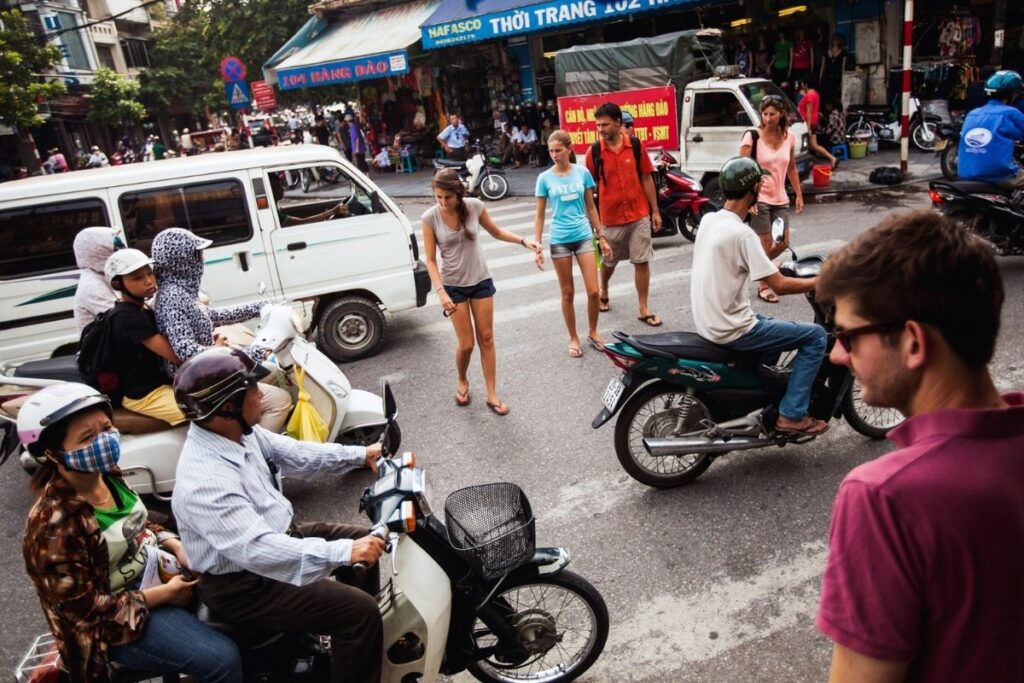
One of the most common culture shocks for first-time visitors is crossing a busy Vietnamese street.
At a large intersection, hundreds of motorcycles may be moving through the same area.
The instinct of an American traveler may be to wait until the road is completely clear.
In many Vietnamese cities, that moment may never come.
Instead, pedestrians often cross at a steady, predictable pace while approaching vehicles adjust their speed and direction.
For visitors, the important lesson is not to imitate local pedestrians blindly or assume that traffic will always stop.
Follow local pedestrian rules, use marked crossings and signals where available, and be especially careful on busy roads.
The first few crossings can feel intimidating.
Eventually, you begin to understand why the traffic appears to move around pedestrians rather than simply stopping for them.
Do Tourists Need to Ride a Motorbike?
No.
This is important because the sight of millions of motorcycles can create the impression that riding one is essential to experiencing Vietnam.
It isn’t.
Travelers can explore the country using taxis, ride-hailing services, private drivers, buses, trains, domestic flights and organized tours.
In major cities, motorcycle-based ride-hailing services also allow visitors to experience two-wheel transportation without having to operate a motorcycle themselves.
For travelers with little or no motorcycle experience, this may be the better option.
Vietnam’s traffic can be demanding, particularly in large cities, and familiarity with local road conditions matters.
If you do decide to ride, make sure you understand the current legal requirements for foreign visitors, including licensing, insurance and helmet requirements.
Do not assume that being able to ride a scooter at home automatically means you are prepared for Vietnamese urban traffic.
The two experiences can be very different.
Why Motorcycle Taxis Are So Useful for Travelers
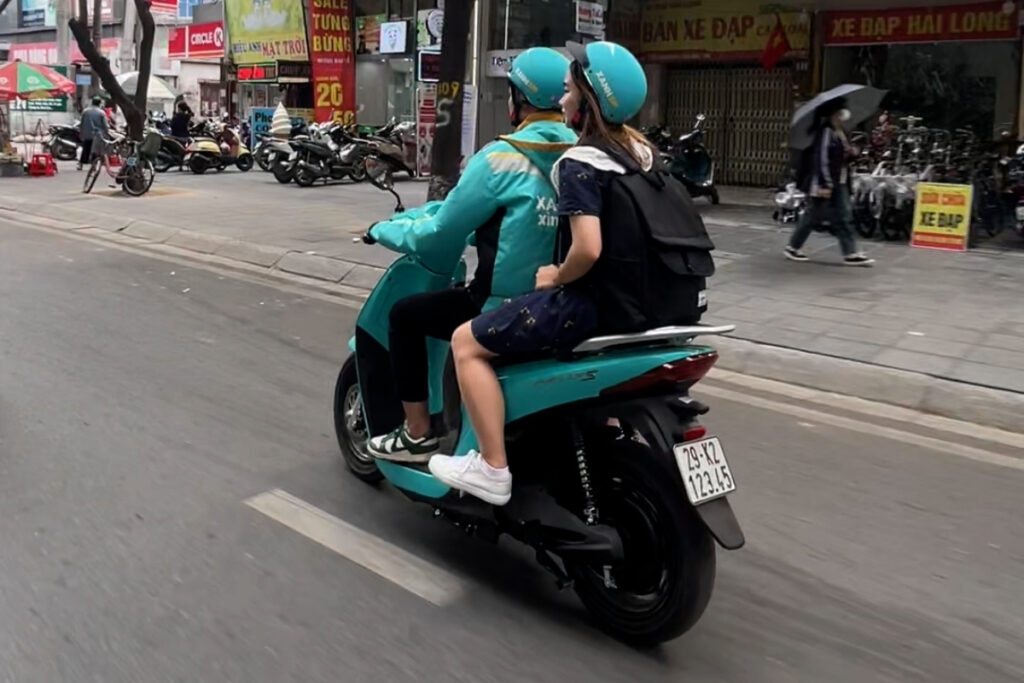
For visitors, motorcycle taxis provide an interesting middle ground.
You get the speed and flexibility of a motorcycle without having to navigate the traffic yourself.
A local driver already understands the roads, traffic patterns and shortcuts.
For a short journey through a crowded city, this can be particularly convenient.
It also gives travelers a different perspective on the city.
From the back of a motorcycle, streets feel more immediate.
You notice small shops, cafés, markets and residential neighborhoods that might pass unnoticed from inside a car.
The experience is not necessarily something every traveler needs to try, but it can help explain why motorcycles are so deeply integrated into urban life.
The Downsides Are Impossible to Ignore
Vietnam’s motorcycle culture has clear advantages, but it also comes with serious challenges.
Traffic safety is one of them.
A road dominated by two-wheelers can be vulnerable to collisions, especially when traffic is dense and road users have different levels of experience.
Noise is another issue.
Busy streets can be loud, with engines, horns and other traffic sounds creating a constant urban soundtrack.
Air pollution and emissions are also concerns, particularly in heavily congested cities.
And as car ownership increases, Vietnamese cities face a difficult transportation challenge: adding more cars to streets that are already crowded can make congestion worse.
This creates an interesting contradiction.
Cars are a sign of rising household income and can provide greater comfort and protection.
But if too many people switch from motorcycles to cars, the same roads have to accommodate vehicles that take up considerably more space.
So becoming wealthier does not automatically make a city easier to move around.
Vietnam Is Looking Toward Electric Two-Wheelers
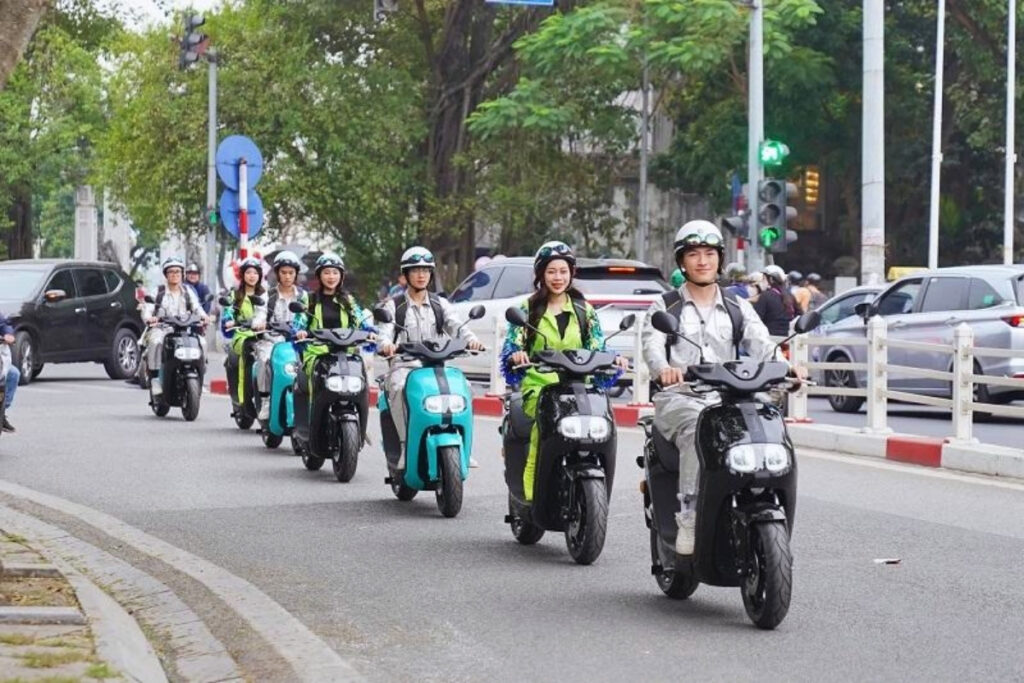
One of the most interesting developments in Vietnam’s transportation story is the growth of electric motorcycles and scooters.
Electric two-wheelers offer a way to preserve many of the advantages that made motorcycles successful while addressing some of their environmental drawbacks.
They are compact.
They remain suitable for dense urban neighborhoods.
They require relatively little parking space.
And they can provide the convenience of personal transportation without relying on a traditional gasoline engine.
For Vietnam, this could be significant.
The country does not necessarily have to choose between maintaining motorcycle mobility and moving toward cleaner transportation.
Electric motorcycles could allow the two trends to develop together.
The transition will not solve every transportation problem, of course.
Congestion, road safety, parking and infrastructure remain separate issues.
But electrification could change what Vietnam’s enormous two-wheel transportation system looks and sounds like in the future.
Will Cars Eventually Replace Motorbikes?
Probably not in the simple way a visitor might imagine.
Vietnam is becoming wealthier, and car ownership is increasing.
But motorcycles still offer advantages that cars cannot easily reproduce in dense urban environments.
They are smaller.
They are easier to park.
They are generally cheaper to operate.
And they are already deeply integrated into daily routines.
More likely, Vietnam’s cities will develop a mixture of transportation options.
Cars will become more common.
Public transportation will expand.
Metro systems will serve more commuters.
Electric motorcycles will become increasingly important.
And traditional motorcycles are likely to remain part of everyday life for a long time.
The future is therefore less about replacing one vehicle with another and more about finding a workable balance between different forms of transportation.
What This Means for Travelers
Understanding Vietnam’s motorcycle culture can make a trip more enjoyable.
Instead of seeing the traffic simply as noise and congestion, you can begin to see what it represents.
Those motorcycles are taking people to work.
They are carrying children to school.
They are delivering food.
They are bringing groceries home.
They are helping small businesses operate.
They are connecting residential neighborhoods with the rest of the city.
Once you see that, the traffic starts to make more sense.
You may still find crossing a busy street stressful.
You may still be surprised by the number of scooters parked outside a café.
And you may still wonder how thousands of motorcycles manage to move through the same intersection.
But the scene becomes less mysterious.
It is not random.
It is the result of decades of economic development, urban growth and adaptation.
So, Why Are There So Many Motorbikes in Vietnam?
The short answer is simple: motorbikes work.
They work economically because they are more affordable than cars for many households.
They work geographically because they fit dense neighborhoods and narrow streets.
They work practically because they are easy to use for short trips and everyday errands.
They work commercially because small businesses and delivery services can rely on them.
And they work culturally because generations of Vietnamese families have built their daily routines around them.
That is why Vietnam’s motorcycle culture is about much more than transportation.
It is a story about how people adapt to their cities.
It is a story about economic growth and changing lifestyles.
And for travelers, it is one of the clearest examples of how everyday life in Vietnam can look completely different from what they are used to at home.
The next time you find yourself watching a seemingly endless stream of motorcycles move through a Vietnamese street, look beyond the traffic.
You are not simply seeing a lot of scooters.
You are seeing one of the systems that keeps modern Vietnam moving.
What Should You Remember About Vietnam’s Motorbikes?
You do not need to understand every detail of Vietnam’s transportation system to appreciate what you are seeing on the streets.
The simplest explanation is that motorcycles became popular because they solved several everyday problems at once.
They were affordable enough for ordinary households, practical in crowded cities, easy to park and useful for everything from commuting to running a small business.
Over time, millions of people built their routines around them.
That created the motorcycle culture visitors see today.
So when you arrive in Vietnam and encounter a street filled with scooters, try not to see it simply as traffic.
Look at what the motorcycles are carrying and where they are going.
A parent is taking a child to school.
A worker is heading to the office.
A restaurant is receiving supplies.
A delivery rider is bringing lunch to a customer.
A family is going to the market.
The same type of vehicle serves all of these purposes.
That versatility is the real story.
Frequently Asked Questions
Why are there so many motorbikes in Vietnam?
Vietnam has so many motorbikes because they are affordable, practical and well suited to dense urban areas with narrow streets and limited parking. They are also widely used by families, commuters, small businesses and delivery services.
How many motorbikes are there in Vietnam?
Vietnam has tens of millions of registered two-wheelers. The exact number changes over time as motorcycles are purchased, transferred, retired and replaced, so dated official statistics are more useful than a single permanent figure.
Are motorbikes more common than cars in Vietnam?
Yes. Motorcycles and other two-wheelers greatly outnumber private cars in Vietnam. They remain the dominant form of everyday personal transportation, particularly in major cities.
Why don’t Vietnamese people just drive cars?
Cars are more expensive, require considerably more road and parking space, and can be less convenient for short trips through crowded neighborhoods. A motorcycle often provides enough mobility without the additional cost and space requirements of a car.
Do tourists need to ride a motorbike in Vietnam?
No. Travelers can explore Vietnam using taxis, ride-hailing services, private drivers, buses, trains, domestic flights and organized tours. Visitors without appropriate experience or documentation should not feel that they need to rent a motorcycle simply because motorcycles are common.
Is it safe to ride a motorbike in Vietnam?
Motorcycle riding in Vietnam requires experience, awareness and appropriate legal documentation. Traffic can be challenging, particularly in large cities. Travelers should understand local rules and licensing requirements and should consider their own riding experience before deciding to rent a motorcycle.
The Bigger Picture
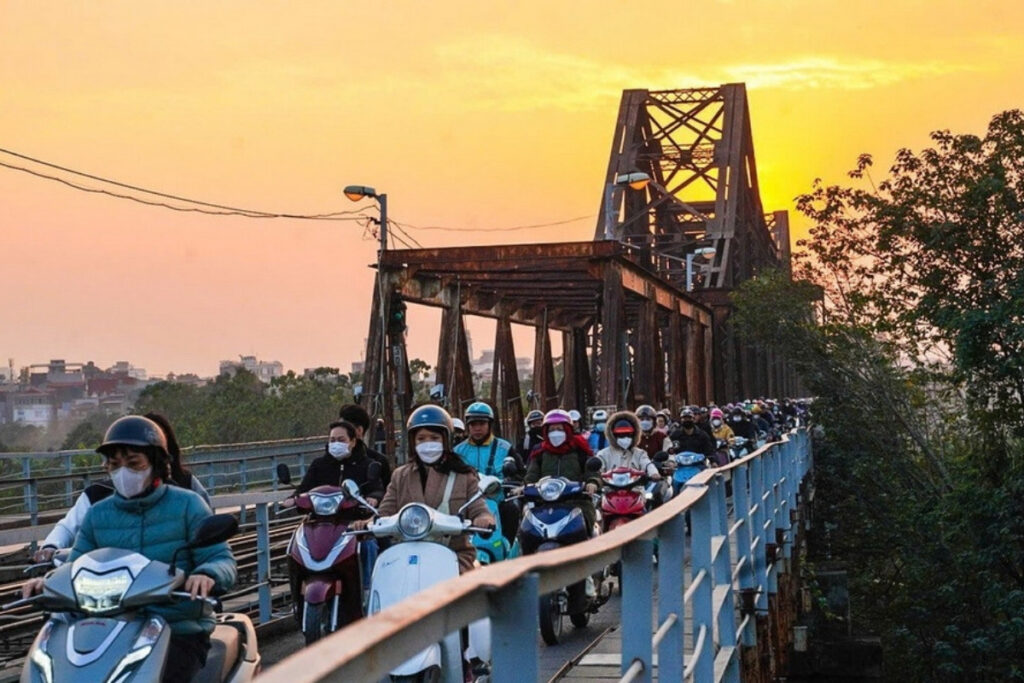
Vietnam’s motorcycles are easy to notice because there are so many of them.
But their importance goes deeper than the traffic you see on a busy street.
They reflect Vietnam’s economic development, the structure of its cities and the practical way millions of people organize everyday life.
The motorcycle became popular because it was useful.
It stayed popular because Vietnamese cities and households adapted around it.
And today, even as cars, public transportation and electric vehicles become more important, two-wheel transportation remains one of the defining features of daily life in Vietnam.
For a traveler, that is perhaps the most useful way to understand the scene.
Vietnam’s motorbikes are not simply everywhere because Vietnamese people like scooters. They are everywhere because, for decades, they have been one of the most practical ways to make modern Vietnamese life work.
Continue Exploring Vietnam Insights
Want to understand Vietnam beyond the usual tourist checklist? Continue exploring these Vietnam Insights from Tam Voc Viet, covering everyday life, local perspectives, food culture, and the experiences that often surprise international visitors:
- Common Culture Shocks in Vietnam
- 15 Things That Surprise First-Time Visitors to Vietnam
- Why Is Coffee So Important in Vietnam?
- Why Do Vietnamese Families Eat Together?
- Why Do Vietnamese Wake Up So Early?
- The Story Behind Vietnam’s Street Food Culture
- What It’s Really Like to Celebrate Tet in Vietnam
- Vietnamese Work Culture Explained
- What Foreigners Love Most About Living in Vietnam
- Living in Vietnam: The Complete Guide for Foreigners
Together, these Vietnam Insights look beyond famous attractions to explore the everyday habits, cultural perspectives, and experiences that help travelers understand how life in Vietnam really works.
A Note for Travelers Experiencing Vietnam’s Traffic
Vietnam’s motorbike traffic can feel overwhelming when you first encounter it.
The number of motorcycles, the constant movement, the sound of horns, and the way traffic flows through busy intersections may be very different from what you are used to at home.
Give yourself time to observe before trying to make sense of it.
You may notice that motorcycles are not simply being used for commuting. They carry families to school, workers to their jobs, food to customers, groceries home from the market, and goods between small businesses.
That is part of what makes Vietnam’s motorcycle culture so interesting.
For visitors, the goal is not to master every local traffic habit or assume that every road works the same way. Instead, pay attention to your surroundings, follow local traffic rules, use marked crossings where available, and choose transportation that matches your own experience and comfort level.
Most importantly, remember that the traffic you see is not random.
Behind the thousands of motorcycles on Vietnam’s streets is a transportation system shaped by history, urban development, economics, family life, and everyday practicality.
Once you understand that, the traffic starts to look less like chaos and more like one of the defining features of modern Vietnam.
Sources & Further Reading
This guide draws on established information about Vietnamese transportation, urban life, motorcycle culture, and everyday mobility.
Vietnam is a diverse and rapidly changing country, so transportation patterns and everyday experiences can vary by city, region, generation, and individual circumstances.
For cultural context, readers should distinguish between broad national patterns and experiences specific to particular cities or communities. For practical travel information—including traffic regulations, licensing requirements, transportation services, and other current rules—always check official sources before traveling, as these details can change.
Suggested sources:
- Vietnam National Authority of Tourism / Vietnam Tourism – Official information about destinations, tourism, culture, and travel in Vietnam.
- Vietnamese Museum of Ethnology – Cultural and historical resources relating to Vietnam’s communities, traditions, and everyday life.
- Vietnam Government Portal – Legal Documents – Official government database for laws, regulations, and other legal documents relevant to transportation and public administration.
- World Bank – Taking Stock: Viet Nam Economic Update, March 2025 – Recent data and analysis on Vietnam’s transportation, urban development, economic growth, and the transition toward electric mobility.
Editorial note: Vietnam’s motorcycle culture varies across regions and continues to evolve as cities grow, incomes rise, public transportation expands, and electric vehicles become more common. The observations in this guide describe broad patterns that travelers may encounter rather than rules that apply to every Vietnamese person or every city. Tam Voc Viet aims to provide cultural context while recognizing the differences between traditional habits, regional practices, and modern urban life.
About the Author
Tam Voc Viet Editorial Team
The Tam Voc Viet Editorial Team creates practical travel and cultural guides for international readers who want to understand Vietnam beyond its most famous destinations.
Our guides explore Vietnam through its travel, history, culture, food, traditions, people, and everyday life, with an emphasis on practical information and cultural context for international travelers.
For travel and cultural topics, we consult official Vietnamese sources, established cultural references, and relevant research where appropriate. We aim to explain Vietnam in a way that is informative, accessible, and respectful while recognizing that everyday experiences can vary across regions, generations, and communities.
Our goal is simple: to help international visitors experience Vietnam with more context, curiosity, and confidence.
Article Information
Category: Vietnam Insights
Topic: Vietnam Transportation & Everyday Life
Published: August 2026
Last Updated: August 2026
Author: Tam Voc Viet Editorial Team
