

 Tiếng Việt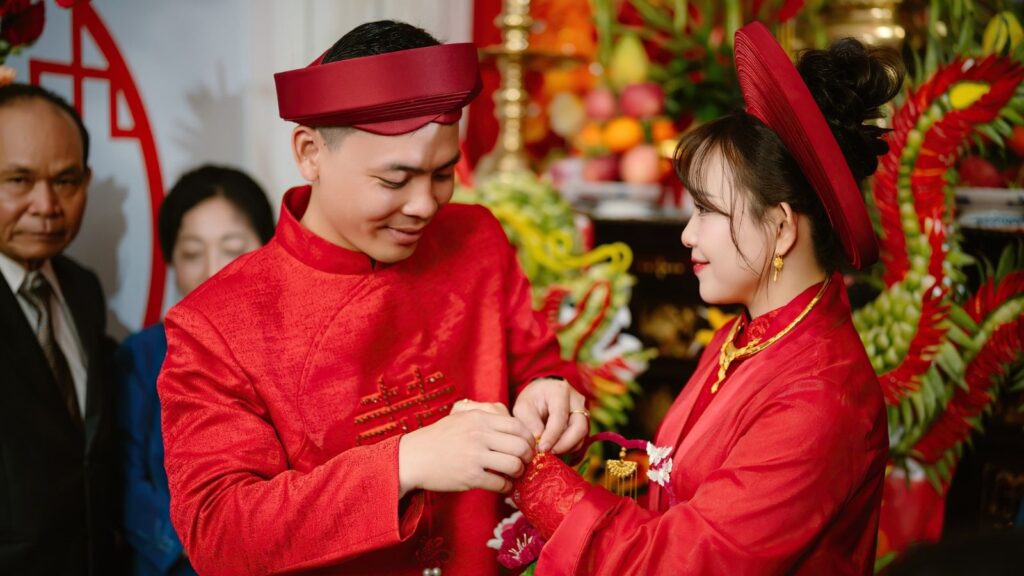
Imagine arriving at a traditional Vietnamese home on a wedding morning. Red decorations frame the entrance, relatives dressed in elegant áo dài welcome guests with warm smiles, and beautifully arranged ceremonial gift trays are carried inside one by one. The gentle scent of incense drifts from the family altar as two families prepare to celebrate not only the union of a bride and groom, but also the beginning of a lifelong relationship between generations.
A traditional Vietnamese wedding is far more than a legal or social ceremony. It is a cultural celebration that reflects centuries of history, Confucian values, ancestor reverence, and the importance of family. While modern weddings often include contemporary venues and Western-inspired elements, the most meaningful traditions—honoring parents, paying respect to ancestors, and strengthening family bonds—remain at the heart of the celebration.
Today, Vietnamese weddings blend ancient customs with modern lifestyles. A couple may exchange vows in a luxury hotel, yet still begin the day with ancestral rituals at home. Guests may see a bride wearing a traditional áo dài during the family ceremony before changing into a white wedding gown for the reception. This harmonious balance between heritage and modernity is one of the defining characteristics of Vietnamese wedding traditions today.
Quick Answer
Vietnamese wedding traditions are a series of meaningful ceremonies that unite not only the bride and groom but also their families. Key customs include the engagement ceremony (Lễ Ăn Hỏi), ceremonial gift trays (Mâm Quả), ancestor worship (Lễ Gia Tiên), the Vietnamese tea ceremony, and the wedding reception (Tiệc Cưới). Although customs vary by region and family, every ceremony reflects enduring values of respect, gratitude, family unity, and cultural continuity.
In this guide, you’ll discover the history and meaning behind Vietnamese wedding traditions, learn how each ceremony unfolds, explore regional differences and modern influences, and find practical etiquette tips for attending a Vietnamese wedding as an international visitor.
Key Vietnamese Wedding Terms
If you’re new to Vietnamese culture, you’ll come across several traditional terms throughout this guide. Here’s a quick reference to help you follow each ceremony more easily.
| Vietnamese Term | English Meaning | Why It Matters |
|---|---|---|
| Lễ Ăn Hỏi | Engagement Ceremony | The formal engagement where the groom’s family presents ceremonial gifts to the bride’s family. |
| Lễ Gia Tiên | Ancestor Worship Ceremony | A family ritual honoring ancestors and asking for their blessings before the marriage begins. |
| Mâm Quả | Ceremonial Gift Trays | Decorated trays filled with symbolic gifts representing prosperity, happiness, and respect between families. |
| Áo Dài | Traditional Vietnamese Dress | Vietnam’s iconic national costume, commonly worn during wedding ceremonies. |
| Khăn Đóng | Traditional Ceremonial Headdress | A formal headdress traditionally worn with the áo dài by Vietnamese grooms. |
| Lì Xì | Lucky Money in a Red Envelope | The most common wedding gift presented to newlyweds as a symbol of good fortune and prosperity. |
| Tráp Cưới | Wedding Gift Tray Set | Another commonly used term for the ceremonial gift trays exchanged between families, especially in Northern Vietnam. |
Table of Contents
Vietnamese Wedding Traditions at a Glance
| Quick Facts | Details |
|---|---|
| Country | Vietnam |
| Main Purpose | Celebrate the union of two families and a new marriage |
| Traditional Ceremonies | Lễ Ăn Hỏi (Engagement Ceremony), Lễ Gia Tiên (Ancestor Worship Ceremony), Vietnamese Tea Ceremony, Wedding Reception |
| Typical Duration | One day to several days, depending on family traditions and regional customs |
| Traditional Attire | Áo dài for the bride and groom during family ceremonies |
| Common Wedding Gift | Cash presented in a red envelope (lì xì) |
| Best Time of Year | Weddings take place year-round, with many couples choosing auspicious dates based on the lunar calendar |
| Regional Differences | Customs vary across Northern, Central, and Southern Vietnam while sharing the same core family values |
| Suitable for Visitors? | Yes. International guests are warmly welcomed and encouraged to respect local customs. |
Why Weddings Matter in Vietnamese Culture
To understand Vietnamese wedding traditions, it’s important to understand what marriage represents in Vietnamese society. A wedding is more than a celebration of love—it marks the union of two families and the beginning of a lifelong commitment built on mutual respect, shared responsibility, and family values.
For centuries, family has been at the heart of Vietnamese culture. Influenced by Confucian philosophy and long-standing local traditions, marriage has been viewed as an important milestone that strengthens family ties and continues the family lineage. Parents, grandparents, and close relatives are therefore active participants in the wedding, not simply invited guests.
One of the defining features of a Vietnamese wedding is its emphasis on family rather than individualism. Before the wedding day, the groom’s family formally visits the bride’s family during the engagement ceremony, bringing ceremonial gifts as a sign of respect and sincerity. Throughout the celebration, both families exchange blessings, welcome one another, and publicly acknowledge their new relationship.
Respect for elders is another cornerstone of Vietnamese wedding traditions. During the tea ceremony, the bride and groom express gratitude to their parents and grandparents, who in return offer blessings, advice, and symbolic gifts. These rituals reinforce the belief that marriage is strengthened by the wisdom and support of previous generations.
Many families also honor their ancestors before the wedding begins. By offering incense at the family altar, the couple expresses gratitude to those who came before them and seeks blessings for a happy and prosperous marriage. For most Vietnamese families, this is a cultural tradition that reflects remembrance and family continuity rather than a formal religious practice.
Although Vietnamese weddings have become increasingly modern—with luxury venues, destination celebrations, and Western-style wedding gowns—these core values remain remarkably consistent. Traditional ceremonies continue to emphasize family unity, gratitude, respect, and the importance of beginning married life with the support of both families.
The History and Cultural Origins of Vietnamese Wedding Traditions
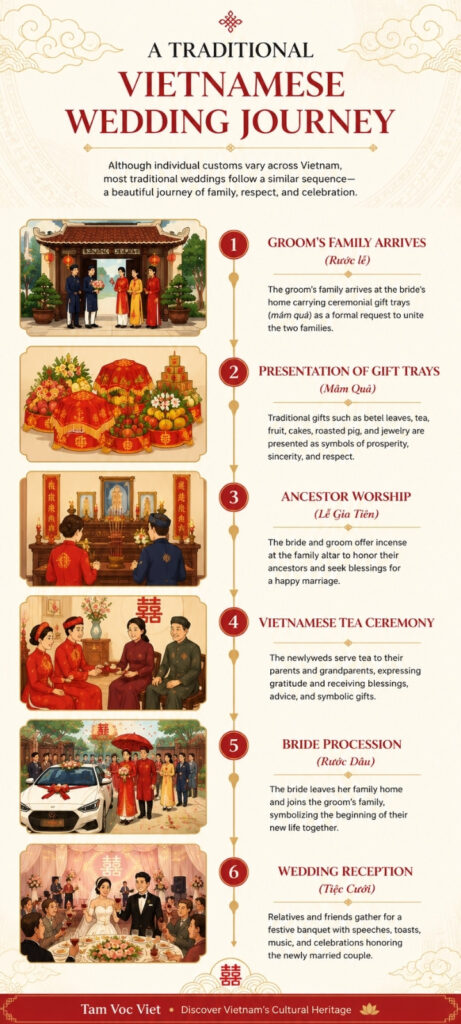
Long before modern wedding venues and professional photographers became part of the celebration, Vietnamese weddings took place in family homes and village communities. Every ceremony—from offering incense to presenting ceremonial gifts—carried a deeper purpose than simply celebrating a marriage. These traditions reflected the values that Vietnamese families considered most important: respect for elders, gratitude to ancestors, harmony between families, and the continuation of future generations.
Over more than two thousand years, Vietnamese wedding traditions have evolved through periods of foreign influence, national independence, imperial rule, and rapid modernization. Yet despite changing fashions and lifestyles, the central meaning of marriage has remained remarkably consistent: a wedding is not only the union of two individuals but also the joining of two families.
Historical Timeline of Vietnamese Wedding Traditions
| Historical Period | Cultural Influence | Lasting Impact on Wedding Traditions |
|---|---|---|
| 111 BCE–939 CE | Chinese administration and Confucian philosophy | Introduced formal marriage rituals, ancestor reverence, filial piety, and family hierarchy. |
| 939–1802 | Independent Đại Việt kingdoms | Vietnamese customs gradually blended Confucian traditions with local beliefs and village culture. |
| 1802–1945 | Nguyễn Dynasty | Ceremonial gift trays (Mâm Quả), ancestral rites, formal etiquette, and elaborate wedding attire became increasingly standardized. |
| 1945–1986 | Social and economic change | Weddings became simpler in many regions due to changing living conditions, though essential family rituals were preserved. |
| 1986–Present | Đổi Mới and globalization | Modern receptions, luxury venues, and Western influences developed alongside traditional ceremonies that remain central to Vietnamese family life. |
Historical Fact: Although Vietnamese weddings have changed significantly over the centuries, the core principles of family respect, ancestor worship, and gratitude have remained remarkably resilient. These enduring values continue to distinguish Vietnamese weddings from many contemporary celebrations around the world.
How Confucianism Shaped Vietnamese Weddings
One of the strongest historical influences on Vietnamese wedding traditions came from Confucian philosophy, which emphasized filial piety, family hierarchy, and respect for social relationships. Marriage was viewed not simply as a personal decision but as an important responsibility connecting generations and strengthening family ties.
Many customs still practiced today—including asking permission from both families, honoring parents before the ceremony, presenting symbolic gifts, and paying respect at the ancestral altar—reflect these long-standing cultural values. While modern Vietnamese couples enjoy greater freedom in choosing their partners, weddings continue to celebrate the importance of family alongside romantic love.
A Living Tradition That Continues to Evolve
Vietnamese weddings have never remained completely unchanged. Urbanization, international travel, social media, and global wedding trends have introduced new ideas, from destination weddings to personalized receptions and digital invitations. At the same time, many couples deliberately preserve traditional ceremonies such as Lễ Ăn Hỏi, Lễ Gia Tiên, and the Vietnamese tea ceremony because these rituals express respect for their families and cultural heritage.
This balance between continuity and change is one of the defining characteristics of Vietnamese wedding traditions today. Rather than replacing the past, modern celebrations often reinterpret long-established customs for a new generation, allowing Vietnamese weddings to remain both deeply traditional and unmistakably contemporary.
Did You Know?
Many customs seen at Vietnamese weddings today originated hundreds of years ago, yet they continue to evolve as modern couples blend tradition with contemporary celebrations.
The Three Main Vietnamese Wedding Ceremonies
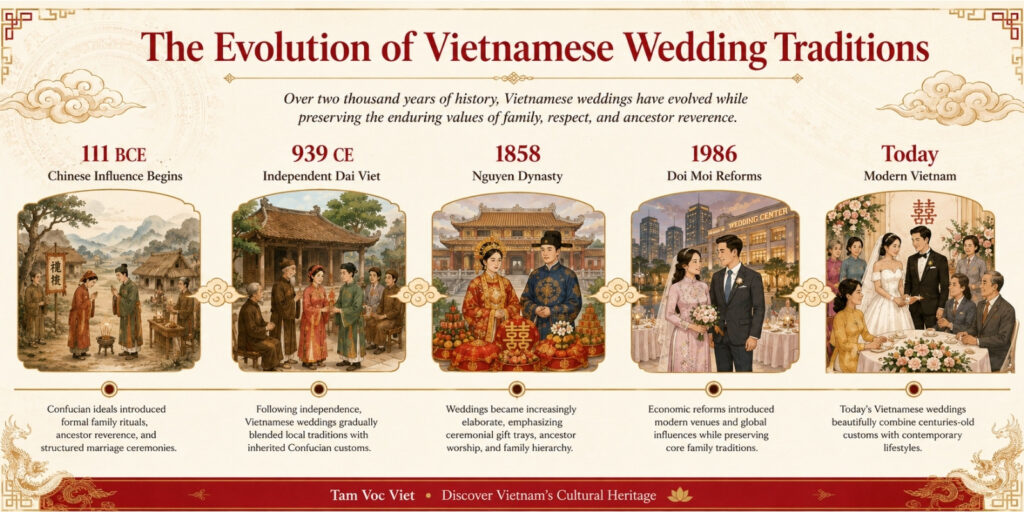
Although every Vietnamese wedding is unique, most traditional celebrations follow a similar journey that unfolds over several ceremonies. Rather than taking place in a single event, a Vietnamese wedding is traditionally divided into meaningful stages, each representing an important milestone in the relationship between the bride, the groom, and their families.
The celebrations usually begin with the engagement ceremony, continue with family rituals centered around ancestor worship and the tea ceremony, and conclude with a joyful wedding reception attended by relatives, friends, and colleagues. Together, these ceremonies reflect the values of respect, gratitude, family unity, and cultural continuity that have shaped Vietnamese society for generations.
At a Glance: The Three Main Ceremonies
| Ceremony | Vietnamese Name | Main Purpose |
|---|---|---|
| Engagement Ceremony | Lễ Ăn Hỏi | The groom’s family formally asks for the bride’s hand in marriage and presents ceremonial gifts. |
| Family Wedding Ceremony | Lễ Gia Tiên & Tea Ceremony | The couple honors their ancestors, receives blessings from parents and grandparents, and officially becomes husband and wife within the family. |
| Wedding Reception | Tiệc Cưới | Family members, friends, and guests gather to celebrate the marriage with speeches, food, music, and congratulations. |
Quick Overview: While many countries celebrate weddings in a single ceremony, Vietnamese weddings traditionally unfold in several meaningful stages. Each ceremony serves a different purpose, but together they celebrate not only the couple’s union, but also the joining of two families.
A Journey Rather Than a Single Event
For many international visitors, one of the biggest surprises is that a Vietnamese wedding is rarely just one ceremony. Depending on family traditions, regional customs, and modern preferences, the celebrations may take place over one or several days.
The engagement ceremony formally connects the two families. The family ceremony focuses on honoring parents and ancestors before the couple begins married life. Finally, the wedding reception transforms the occasion into a joyful public celebration shared with relatives, friends, and colleagues.
Although the details may differ across Vietnam, this progression—from family commitment to community celebration—remains one of the defining characteristics of Vietnamese wedding traditions.
The Engagement Ceremony (Lễ Ăn Hỏi)
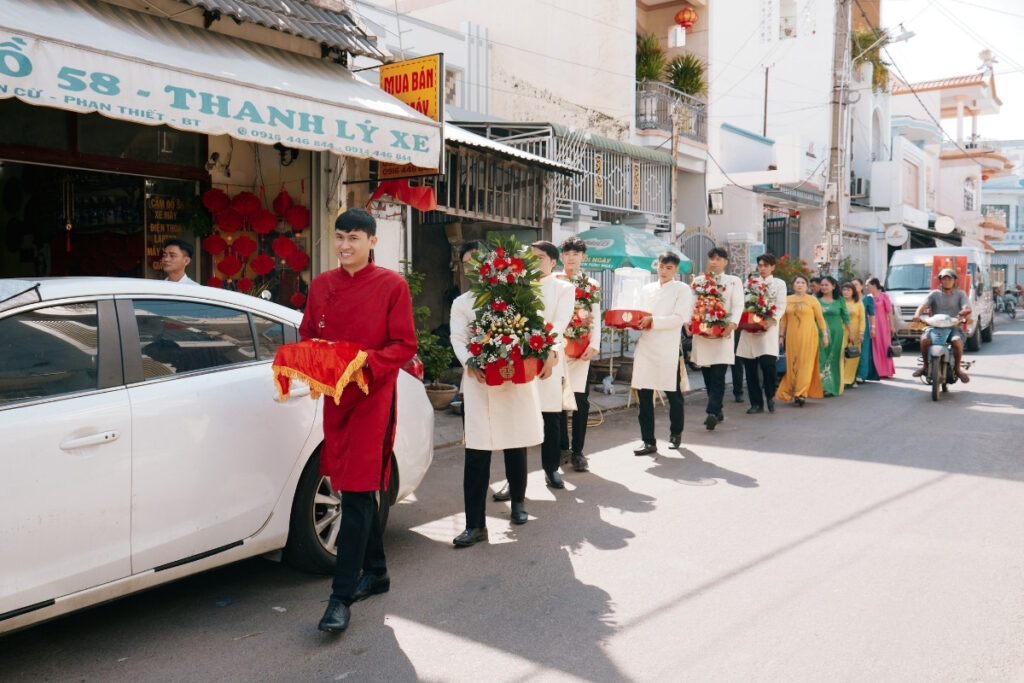
The excitement often begins long before the wedding reception. Early in the day, the groom’s family arrives at the bride’s home carrying beautifully decorated ceremonial gift trays covered in red cloth. Relatives gather outside to welcome the procession, photographs capture the moment, and both families exchange warm greetings before the formal rituals begin.
Known as Lễ Ăn Hỏi, the Vietnamese engagement ceremony is one of the most significant stages of a traditional wedding. More than simply announcing an upcoming marriage, it formally marks the union of two families and symbolizes their mutual respect, commitment, and shared blessings for the couple’s future.
Unlike many Western engagements, which are often private or informal, Lễ Ăn Hỏi is a family-centered ceremony that follows long-established customs. Once this ceremony has taken place, the couple is traditionally recognized as being formally committed to marriage.
The Procession of Ceremonial Gift Trays (Mâm Quả)
One of the most recognizable moments of Lễ Ăn Hỏi is the arrival of the ceremonial gift trays, known as Mâm Quả. These gifts are carried by unmarried representatives from the groom’s family and presented to the bride’s family as a gesture of sincerity, gratitude, and respect.
The number of trays varies by region and family tradition, but it is usually an odd number, such as five, seven, or nine, which is considered auspicious in Vietnamese culture.
Symbolic Wedding Gifts
| Traditional Gift | Symbolic Meaning |
|---|---|
| Betel leaves & areca nuts | Love, loyalty, and the beginning of marriage |
| Tea | Respect, hospitality, and harmony between families |
| Wine | Celebration and shared happiness |
| Sticky rice cakes | Prosperity and abundance |
| Fresh fruit | Fertility, good fortune, and a fruitful future |
| Roasted pig (optional) | Prosperity, generosity, and celebration |
| Jewelry (often presented later) | Blessings and financial security for the bride |
Although many modern families now include imported chocolates, premium wines, or luxury gift baskets, traditional symbolic items remain at the heart of the ceremony.
Why It Matters: The ceremonial gifts are not intended to measure wealth or social status. Instead, they represent the groom’s family’s sincerity and their respect for the bride’s family, reinforcing that marriage in Vietnamese culture is the joining of two families rather than simply two individuals.
A Ceremony Rooted in Family Values
After the gifts have been accepted, representatives from both families exchange formal greetings and discuss the upcoming wedding. The couple is introduced before relatives, receives blessings from parents and elders, and often shares tea with family members to mark the beginning of their new relationship.
For international visitors, Lễ Ăn Hỏi is often one of the most memorable parts of a Vietnamese wedding. Rather than focusing on the couple alone, the ceremony highlights the importance of family, mutual respect, and gratitude—values that continue to define Vietnamese wedding traditions today.
The Vietnamese Wedding Ceremony (Lễ Thành Hôn)
The Wedding Ceremony (Lễ Thành Hôn) is the official celebration of marriage in Vietnam. While modern weddings may differ in style and scale, the ceremony continues to reflect the country’s strong emphasis on family, gratitude, and cultural tradition.
Unlike many Western weddings that center on exchanging vows, a traditional Vietnamese wedding focuses on honoring parents, paying respect to ancestors, and welcoming the bride and groom into their new families.
Preparing for the Wedding Day
On the wedding day, both families prepare their homes to receive relatives and guests. Decorations featuring the double happiness symbol (囍), red banners, flowers, and traditional wedding displays create a festive atmosphere symbolizing good fortune and prosperity.
The bride and groom usually wear traditional áo dài during the family ceremonies, although many couples later change into Western wedding attire for the reception.
The Groom’s Procession
One of the day’s most symbolic moments is the groom’s arrival at the bride’s home with his family and relatives. Carrying ceremonial gifts and accompanied by close family members, the groom’s procession represents respect, sincerity, and the formal joining of two families.
After greetings are exchanged, both families officially welcome one another before the couple begins the traditional family rituals.
Family Ceremonies
The wedding ceremony commonly includes several important customs:
- Paying respect to the family’s ancestors.
- Serving tea to parents and grandparents.
- Receiving blessings and marriage advice from elders.
- Exchanging symbolic gifts and congratulations.
These rituals emphasize gratitude, respect for previous generations, and the support of both families as the couple begins married life.
Welcoming the Bride
Following the ceremonies at the bride’s home, the couple traditionally travels to the groom’s family home, where similar family rituals may take place. Although many modern families simplify this tradition, the symbolic meaning remains unchanged: the bride is warmly welcomed into her new family while both families celebrate their lasting relationship.
A Blend of Tradition and Modern Celebration
Today’s Vietnamese weddings often combine traditional customs with contemporary celebrations. Family ceremonies held at home are frequently followed by a reception at a restaurant or hotel, where relatives and friends gather to celebrate with speeches, music, and a banquet.
Although individual customs may vary, the heart of the ceremony remains the same—bringing two families together while honoring the values of respect, gratitude, and lifelong commitment.
A Typical Vietnamese Wedding Day Timeline
| Stage | Main Activity | Purpose |
|---|---|---|
| Family Preparation | Prepare offerings and welcome relatives | Begin the celebration respectfully |
| Groom’s Arrival | Groom’s family visits the bride’s home | Unite both families |
| Family Rituals | Ancestor worship and tea ceremony | Honor elders and ancestors |
| Bride Procession | Bride joins groom’s family | Symbolize the new family |
| Wedding Reception | Banquet with guests | Celebrate the marriage |
Ancestor Worship and the Vietnamese Tea Ceremony
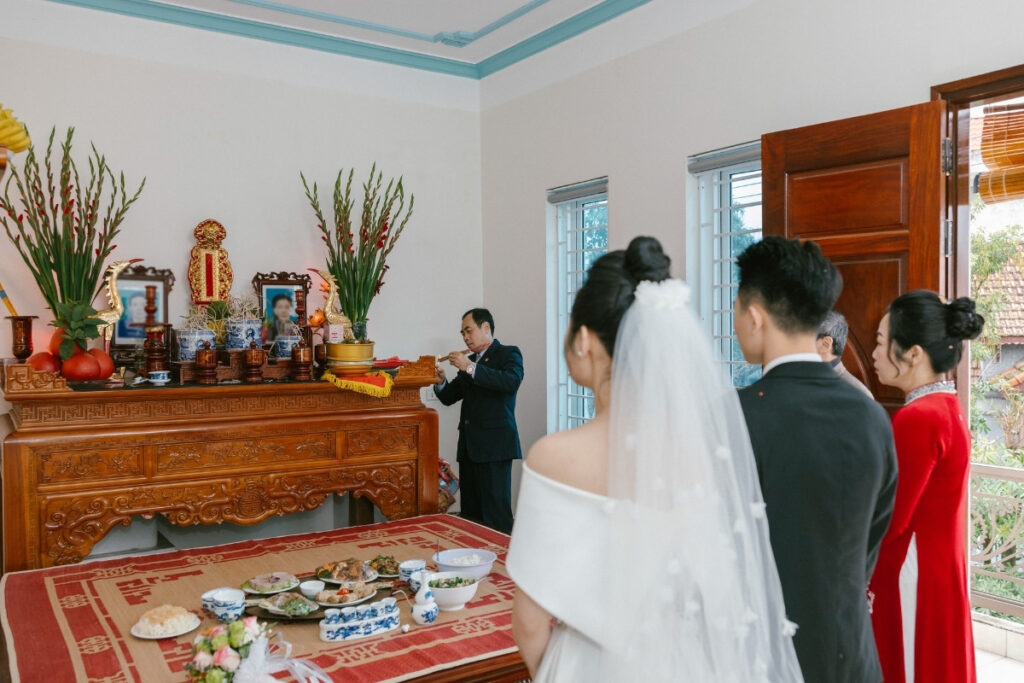
As conversations soften and the excitement of the engagement ceremony settles, the atmosphere becomes noticeably quieter. Family members gather around the ancestral altar while the bride and groom stand side by side, holding incense with both hands. For many international visitors, this is the most emotional and culturally distinctive moment of a Vietnamese wedding.
These family rituals—ancestor worship (Lễ Gia Tiên) and the Vietnamese tea ceremony—represent the spiritual heart of the celebration. Before joining the wider festivities, the newlyweds first express gratitude to those who came before them and seek the blessings of both their ancestors and their living families.
Honoring the Ancestors (Lễ Gia Tiên)
Ancestor worship has been an essential part of Vietnamese family life for centuries. During the wedding, the couple lights incense, bows before the family altar, and offers prayers to inform their ancestors of the marriage and ask for their blessings.
For Vietnamese families, this ceremony symbolizes continuity across generations. Marriage is not viewed as the beginning of a completely new family, but as the continuation of a family lineage that connects the past, present, and future.
Rather than being simply a religious practice, ancestor worship reflects one of the most enduring values of Vietnamese culture—gratitude toward previous generations and respect for family heritage.
Common Misconception: Many first-time visitors assume ancestor worship is purely a religious ritual. In reality, for most Vietnamese families it is primarily an expression of remembrance, gratitude, and respect for those who came before them, regardless of personal religious beliefs.
The Vietnamese Tea Ceremony
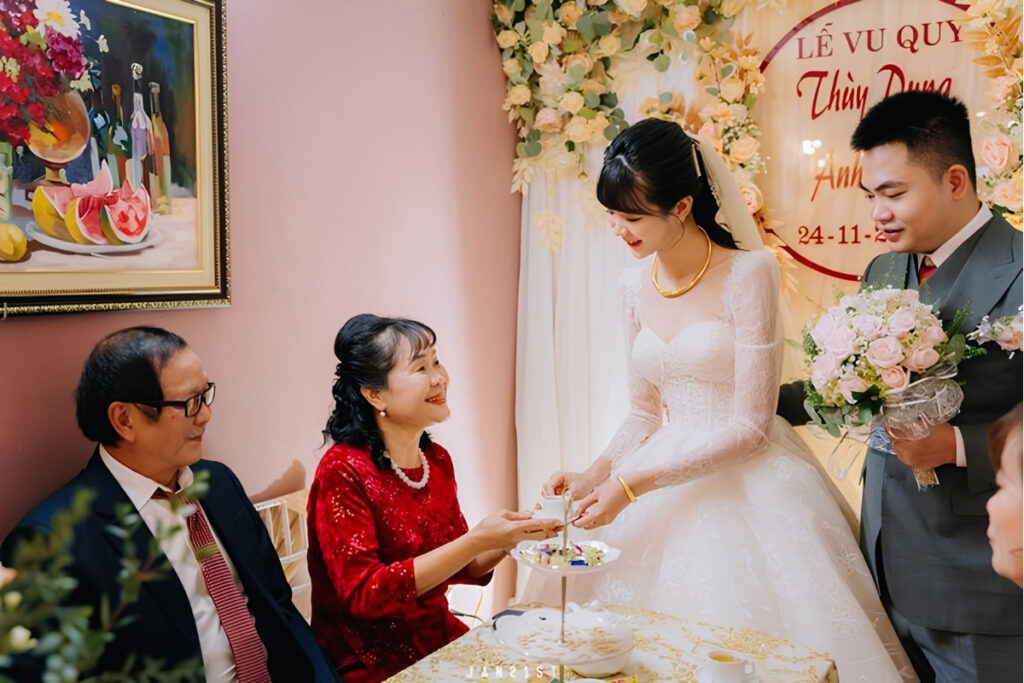
After paying respect to the ancestors, the ceremony naturally turns toward the living generations. The bride and groom respectfully serve tea to their parents and grandparents, presenting each cup with both hands as a gesture of gratitude and filial respect.
In return, parents and grandparents offer their blessings, words of encouragement, and sometimes symbolic gifts such as jewelry or lucky money. These exchanges often become one of the most emotional moments of the entire wedding, as families celebrate not only the marriage itself but also the values they hope will guide the couple’s future.
Unlike wedding toasts found in many Western cultures, the Vietnamese tea ceremony is quiet, intimate, and deeply personal. Every cup of tea represents appreciation, respect, and the passing of wisdom from one generation to the next.
Why Tea Holds Special Meaning
Tea has long been associated with hospitality, harmony, and respect throughout Vietnamese culture. Serving tea during a wedding symbolizes the couple’s gratitude toward their parents while acknowledging the sacrifices made by previous generations.
Although the ceremony is simple, its meaning is profound. By offering tea before beginning married life, the newlyweds publicly recognize that family support, mutual respect, and gratitude form the foundation of a lasting marriage.
Cultural Note: Many modern Vietnamese couples personalize their wedding celebrations with contemporary venues and Western-inspired receptions, yet the ancestor worship ceremony and tea ceremony remain among the traditions most families choose to preserve. These rituals continue to reflect the timeless Vietnamese values of filial piety, family unity, and gratitude across generations.
Traditional Vietnamese Wedding Gifts (Mâm Quả)
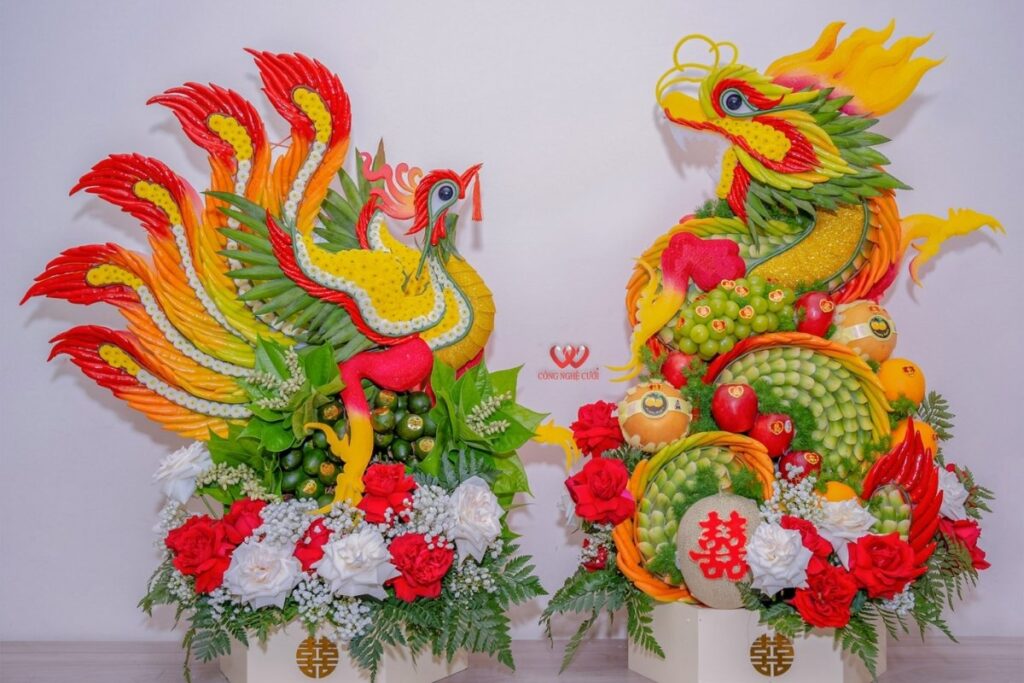
One of the most recognizable features of a Vietnamese engagement ceremony is the presentation of mâm quả—decorated ceremonial gift trays carried by the groom’s family to the bride’s home.
More than beautifully arranged gifts, these trays symbolize sincerity, gratitude, prosperity, and the groom’s family’s respect for the bride’s family. Each item carries a traditional meaning, expressing wishes for a happy and successful marriage.
Common Wedding Gifts and Their Meanings
| Gift | Symbolic Meaning |
|---|---|
| Betel leaves and areca nuts (Trầu Cau) | Love, loyalty, and the lifelong bond between husband and wife. |
| Tea | Respect, gratitude, and the joining of two families. |
| Rice wine | Celebration, happiness, and good fortune. |
| Fresh fruit | Abundance, fertility, and prosperity. |
| Traditional cakes | Sweetness, harmony, and lasting happiness. |
| Roasted pig | Wealth, generosity, and respect for the bride’s family. |
| Gold jewelry | Welcome, commitment, and blessings for the bride’s future. |
Among these gifts, trầu cau (betel leaves and areca nuts) holds special significance in Vietnamese culture. According to a well-known Vietnamese legend, betel and areca represent faithful love and lifelong devotion, making them an essential symbol of marriage for generations.
The Number of Gift Trays
Depending on regional customs and family traditions, the groom’s family usually prepares an odd number of ceremonial trays, such as five, seven, or nine. Each tray is carefully decorated with red fabric, flowers, and ribbons, reflecting wishes for happiness and prosperity.
Today, the number and contents of the trays often depend on family preferences rather than strict tradition, but the symbolic meaning remains unchanged.
Regional Variations
The presentation of mâm quả varies throughout Vietnam.
- Northern Vietnam generally follows more formal traditions with carefully arranged ceremonial trays.
- Central Vietnam often emphasizes simplicity while preserving traditional symbolism.
- Southern Vietnam frequently features larger, more elaborate gift displays and a wider variety of offerings.
Despite these regional differences, the purpose is the same: expressing respect for the bride’s family and celebrating the union of two families.
Modern Wedding Gifts
Many modern couples personalize their engagement gifts while maintaining traditional customs. Imported fruit, premium tea, chocolates, wine, or luxury gift boxes may appear alongside traditional offerings.
Although the presentation has evolved, mâm quả continues to symbolize goodwill, family respect, and the beginning of a lifelong partnership.
Did You Know?
Although modern gift trays often include imported chocolates and premium wines, betel leaves and areca nuts remain the most symbolic wedding gift in many Vietnamese families.
Traditional Vietnamese Wedding Attire
As the family ceremonies conclude, another beautiful tradition often unfolds—the changing of wedding attire. Throughout the celebration, clothing becomes more than a matter of style; it reflects respect for tradition, family identity, and the significance of the occasion.
Today, it is common for Vietnamese couples to wear both traditional and modern outfits during different parts of the wedding. Many brides begin the day in a beautifully embroidered áo dài, while grooms wear a matching áo dài with a traditional khăn đóng. Later, the couple may change into a Western-style wedding gown and suit for the evening reception, symbolizing the seamless blend of heritage and contemporary celebration.
The Bride’s Traditional Attire
The áo dài remains the most iconic garment worn by Vietnamese brides. Traditionally crafted from silk or brocade and embroidered with delicate patterns, it symbolizes elegance, grace, and respect for Vietnamese cultural heritage.
Bridal áo dài are often created in auspicious colors such as red, gold, or deep crimson, representing happiness, prosperity, and good fortune. In recent years, many brides have also embraced white or pastel-colored áo dài, reflecting modern tastes while preserving the garment’s timeless silhouette.
During family ceremonies such as Lễ Ăn Hỏi and Lễ Gia Tiên, the áo dài continues to be the preferred choice because it honors tradition and reflects the formal nature of these important rituals.
The Groom’s Traditional Attire
Traditional Vietnamese grooms commonly wear a matching áo dài paired with a khăn đóng, a circular ceremonial headdress that has long been associated with formal occasions.
Although many modern grooms later change into a Western-style suit for the reception, wearing traditional attire during the family ceremony demonstrates respect for both families and acknowledges the cultural significance of the wedding.
Traditional and Modern Wedding Fashion
| Wedding Stage | Typical Attire |
|---|---|
| Engagement Ceremony (Lễ Ăn Hỏi) | Bride and groom usually wear traditional áo dài. |
| Ancestor Worship & Tea Ceremony | Traditional áo dài remains the preferred attire for both families. |
| Wedding Reception | Many couples change into a Western wedding gown and suit, while some continue wearing áo dài throughout the celebration. |
Rather than replacing one another, traditional Vietnamese attire and Western wedding fashion often complement each other. This combination allows couples to honor their cultural heritage while expressing their own personalities and contemporary style.
Did You Know? Many Vietnamese brides change outfits two or even three times during their wedding day. It is common to begin the celebration in a traditional áo dài for family ceremonies before changing into a white wedding gown for the reception and, in some cases, another elegant evening dress for the banquet or after-party.
More Than Beautiful Clothing
For international visitors, the beauty of Vietnamese wedding attire lies not only in its appearance but also in its cultural meaning. Every embroidered áo dài, every carefully chosen color, and every ceremonial khăn đóng reflects generations of tradition, respect for family, and pride in Vietnamese identity.
Whether worn in a centuries-old village home or a luxury hotel ballroom, traditional wedding attire continues to symbolize one of the defining characteristics of Vietnamese weddings: the harmonious balance between cultural heritage and modern life.
Vietnamese Wedding Banquet (Tiệc Cưới)
As the formal family ceremonies come to an end, the atmosphere changes dramatically. The quiet moments of ancestor worship and the tea ceremony give way to music, laughter, and celebration as relatives, friends, colleagues, and neighbors gather to honor the newly married couple.
For many visitors, the wedding reception is the most vibrant and memorable part of a Vietnamese wedding. While family traditions remain at its heart, the reception transforms the occasion into a joyful celebration shared with the wider community.
A Celebration Shared with Family and Friends
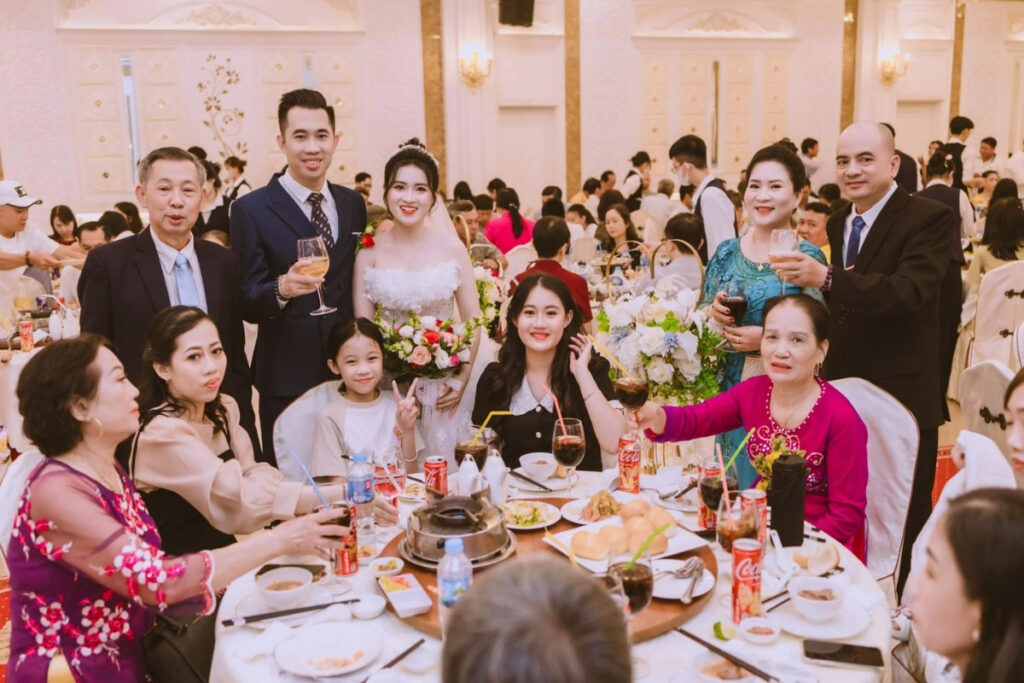
Vietnamese wedding receptions are typically held in hotels, restaurants, wedding convention centers, or, in rural areas, large family homes with outdoor banquet tents.
Guest lists are often much larger than those seen in many Western countries. Depending on the family’s size and social connections, receptions may welcome anywhere from one hundred to several hundred guests, reflecting the Vietnamese emphasis on community, hospitality, and extended family relationships.
Rather than celebrating only the couple, the reception also honors the joining of two families and the support of everyone who has shared in their journey.
What Happens During the Reception?
Although every wedding is different, most Vietnamese receptions follow a familiar sequence.
| Stage | What Happens |
|---|---|
| Guest Arrival | Guests sign the guest book, present their wedding gifts or red envelopes, and take commemorative photographs. |
| Grand Entrance | The bride and groom are formally introduced and welcomed with applause. |
| Opening Speeches | Family representatives or the master of ceremonies offer greetings and congratulations. |
| Champagne Toast | The couple raises a toast to thank their guests and celebrate the beginning of married life. |
| Wedding Banquet | Multiple shared courses are served while guests socialize and enjoy the celebration. |
| Entertainment | Live music, performances, games, or karaoke may be included depending on local customs and family preferences. |
The Wedding Banquet
Food plays an important role in Vietnamese wedding receptions because sharing a meal symbolizes hospitality, abundance, and togetherness.
Guests are usually seated at large round tables where every dish is shared among family and friends. A traditional banquet often includes appetizers, seafood, meat dishes, soup, rice or noodles, fresh fruit, and desserts, although modern menus vary widely by region and venue.
Unlike formal plated dinners common in some countries, Vietnamese wedding banquets encourage conversation and shared dining, creating a warm and lively atmosphere throughout the evening.
Dining Tip: At Vietnamese wedding receptions, dishes are served for the entire table rather than individually. Sharing food is an important expression of togetherness and reflects the communal spirit of Vietnamese family life.
Music, Toasts, and Celebration
As dinner progresses, the atmosphere becomes increasingly festive. Friends and relatives congratulate the newlyweds, glasses are raised in celebration, and guests are invited to join photographs or informal conversations with the couple.
Many receptions feature live bands, professional singers, or karaoke, while younger couples often include personalized videos, games, or dance performances. Although styles continue to evolve, the spirit of celebration remains the same: expressing happiness for the couple and sharing this important milestone with family and friends.
A Modern Celebration Rooted in Tradition
Today’s Vietnamese wedding receptions often combine elegant contemporary venues with long-standing cultural values. A luxury ballroom, modern lighting, or international cuisine may create a different visual experience, yet the reception still celebrates the same ideals that have defined Vietnamese weddings for generations—family unity, gratitude, generosity, and community.
For international visitors, attending a Vietnamese wedding reception offers more than an enjoyable evening. It provides a meaningful glimpse into the warmth of Vietnamese hospitality, where every toast, shared meal, and heartfelt congratulations reflects the enduring importance of family and human connection.
Did You Know? Many Vietnamese couples personally visit every table during the reception to thank their guests. This tradition gives the bride and groom an opportunity to express gratitude face-to-face, making every guest feel welcomed and appreciated.
Choosing a Lucky Wedding Date in Vietnam
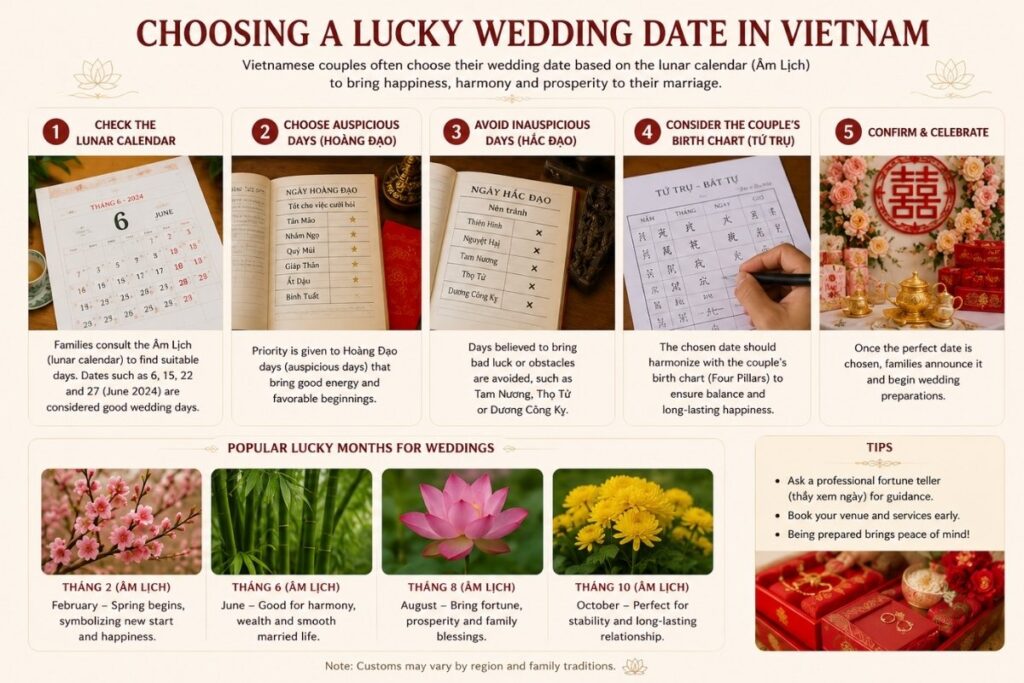
Choosing an auspicious wedding date has long been an important part of Vietnamese wedding traditions. Many families believe that selecting a favorable day brings harmony, happiness, and good fortune to the couple’s married life.
Although modern couples often balance family traditions with work schedules and venue availability, choosing a lucky date remains a meaningful custom for many Vietnamese families.
How Families Choose a Wedding Date
Traditionally, parents or respected elders consulted the lunar calendar to identify an auspicious day for the engagement ceremony and wedding. Some families also sought advice from fortune tellers or spiritual advisors, while others relied on long-established family customs.
Today, practices vary widely. Some couples carefully follow traditional recommendations, while others simply choose a convenient date that works for both families.
The Meaning Behind the Tradition
For many Vietnamese people, selecting a lucky date is less about predicting the future and more about beginning married life with positive wishes and family blessings.
The custom reflects optimism and respect for tradition rather than a guarantee of marital success. Regardless of the chosen date, families generally believe that mutual respect, understanding, and commitment are the true foundations of a happy marriage.
A Modern Perspective
Younger generations often take a more flexible approach. Wedding venues, travel arrangements, and guests’ availability may influence the final decision as much as traditional beliefs.
Even so, many couples still consult the lunar calendar or involve their parents in choosing the date as a way of honoring family traditions.
Modern Vietnamese Weddings: Tradition Meets Contemporary Life
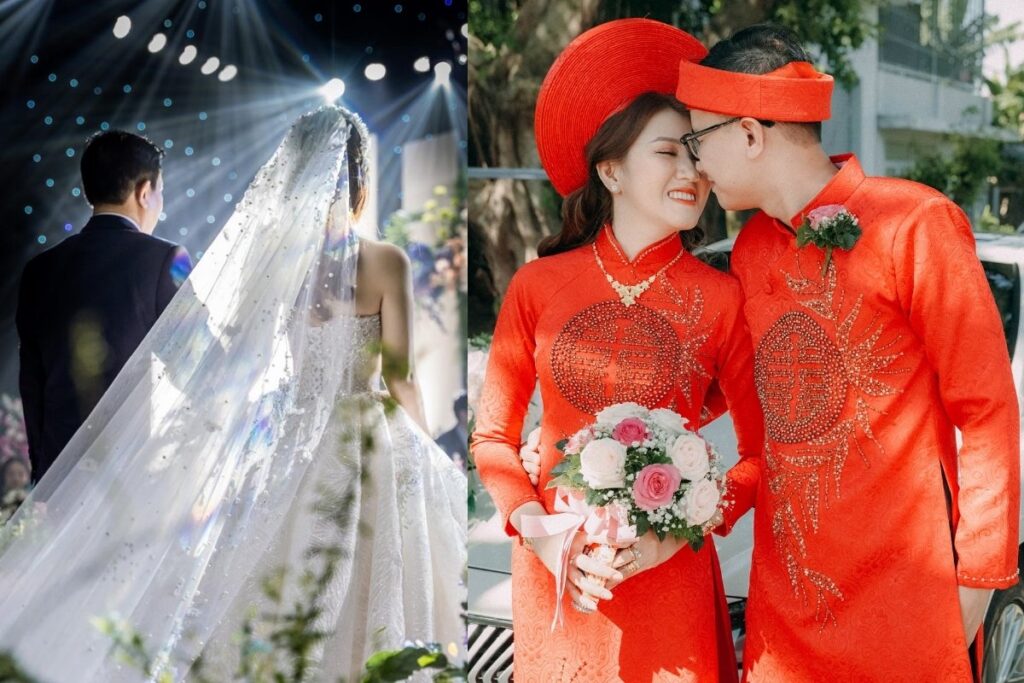
Today’s Vietnamese weddings beautifully reflect a country that embraces change while remaining deeply connected to its cultural roots. It is not unusual for a couple to begin the morning in a traditional family home, wearing elegant áo dài and participating in ancestral rituals, before celebrating that evening in a luxury hotel ballroom with hundreds of guests.
Rather than replacing tradition, modern Vietnamese weddings often build upon it. Couples personalize their celebrations with contemporary styles, yet many of the most meaningful customs continue to be preserved because they represent family, gratitude, and cultural identity.
How Vietnamese Weddings Have Changed
Over the past few decades, rapid economic development, international travel, and global wedding trends have influenced how Vietnamese couples celebrate their special day.
Common modern features include:
- Luxury hotels, resorts, and dedicated wedding convention centers.
- Professional photography and cinematic wedding films.
- Personalized decorations, floral themes, and custom stage designs.
- Digital invitations and online RSVP systems.
- Live bands, DJs, and multimedia entertainment.
- Destination weddings and intimate celebrations for smaller groups.
These additions have transformed the visual style of Vietnamese weddings without changing their underlying cultural meaning.
Traditions That Continue Today
Despite these modern influences, many customs remain central to Vietnamese weddings across the country.
| Tradition | Still Common Today? | Why It Endures |
|---|---|---|
| Lễ Ăn Hỏi | ✔ Yes | Symbolizes the formal union of two families. |
| Ancestor Worship | ✔ Yes | Honors family heritage and previous generations. |
| Vietnamese Tea Ceremony | ✔ Yes | Expresses gratitude and filial respect toward parents and grandparents. |
| Traditional Áo Dài | ✔ Yes | Preserves cultural identity during family ceremonies. |
| Wedding Reception | ✔ Yes | Celebrates the marriage with relatives, friends, and the wider community. |
Rather than disappearing, these traditions have adapted to modern lifestyles while continuing to express the same values they have represented for generations.
A Balance Between Heritage and Personal Expression
Modern Vietnamese couples often seek a balance between honoring family expectations and expressing their own personalities. A bride may wear a traditional red áo dài during the morning ceremony before changing into a white wedding gown for the reception. Couples may exchange vows beneath contemporary floral arches while still beginning the day by offering incense at the family altar.
This combination of old and new has become one of the defining characteristics of Vietnamese weddings today. It allows each celebration to feel unique while maintaining a strong connection to Vietnamese cultural heritage.
Trend Watch: Many younger couples now personalize their weddings through custom themes, destination venues, and digital experiences, but family ceremonies such as Lễ Gia Tiên and the Vietnamese tea ceremony remain among the traditions most commonly preserved. Modern Vietnamese weddings are evolving—not by abandoning tradition, but by reinterpreting it for a new generation.
A Living Tradition
Vietnamese weddings continue to evolve with every generation, reflecting changes in society, fashion, technology, and personal preferences. Yet their enduring appeal lies in something much deeper than beautiful venues or elegant decorations.
Whether celebrated in a village courtyard, a historic family home, or a five-star hotel, a Vietnamese wedding remains a celebration of love, family, gratitude, and continuity. This ability to embrace the future while honoring the past is what makes Vietnamese wedding traditions both timeless and uniquely meaningful.
Vietnamese Wedding Etiquette & Tips for Foreign Guests
Being invited to a Vietnamese wedding is more than attending a celebration—it’s an opportunity to experience one of Vietnam’s most cherished family traditions. While every family celebrates differently, understanding a few basic customs will help you feel comfortable and show respect for your hosts.
The good news is that Vietnamese families generally appreciate sincere participation far more than perfect etiquette. A warm smile, polite manners, and genuine congratulations are often the most important things you can bring.
Before the Wedding
Wedding invitations in Vietnam usually specify the date, time, and venue clearly. Arriving on time—or just a few minutes early—is considered polite, especially for ceremonies held at family homes.
If you are unable to attend, letting the couple know in advance is considered courteous.
What Should You Wear?
For most weddings, guests are encouraged to dress smartly and respectfully.
Suitable choices include:
- Dresses, cocktail attire, or elegant traditional clothing.
- A collared shirt with trousers or a suit for men.
- Modest and well-presented outfits for family ceremonies.
Although there are no universal dress rules, many guests avoid wearing all-white outfits, as white is traditionally associated with the bride. Clothing that is overly casual or revealing may feel out of place, particularly during ancestor worship or tea ceremonies.
Wedding Gifts
Cash presented in a red envelope (lì xì) is the most common wedding gift in Vietnam today. The amount varies depending on your relationship with the couple and local customs, so there is no single “correct” value.
Some guests also choose meaningful household gifts or personalized presents, though cash remains the most widely accepted option because it helps the newlyweds begin their married life.
During the Ceremony
Family ceremonies such as ancestor worship and the Vietnamese tea ceremony are solemn moments. Guests are encouraged to observe quietly, follow the guidance of the host family, and avoid interrupting the rituals.
Photography is usually welcome, but it is considerate to avoid blocking family members or distracting the couple during important ceremonial moments.
At the Wedding Reception
The reception is much more relaxed and festive.
Guests are welcome to:
- Join the applause as the couple enters.
- Enjoy the shared banquet with other guests.
- Offer congratulations to the bride and groom.
- Participate in toasts and group photographs when invited.
In many receptions, the bride and groom visit each table personally to thank their guests. This is a perfect opportunity to congratulate them and wish them happiness in their new life together.
Quick Etiquette Tips
| Do | Avoid |
|---|---|
| Dress neatly and respectfully. | Wear overly casual clothing to traditional ceremonies. |
| Congratulate the couple warmly. | Interrupt family rituals or ceremonial prayers. |
| Present your gift politely. | Assume every wedding follows identical customs. |
| Follow the guidance of the host family. | Worry about making small cultural mistakes. |
Traveler Tip: Vietnamese families understand that international guests may not be familiar with every tradition. Showing genuine respect, curiosity, and appreciation for the culture will always leave a positive impression, even if you are unfamiliar with every custom.
Regional Differences in Vietnamese Wedding Traditions
Travel across Vietnam and you’ll quickly discover that no two weddings feel exactly the same. While the core values of family, respect, and ancestor reverence remain constant throughout the country, each region has developed its own customs, ceremonial styles, cuisine, and wedding atmosphere over centuries of local history.
From the elegant formality of Northern Vietnam to the deeply preserved traditions of Central Vietnam and the lively celebrations of the South, these regional variations make Vietnamese weddings even richer and more fascinating.
Regional Comparison at a Glance
| Tradition | Northern Vietnam | Central Vietnam | Southern Vietnam |
|---|---|---|---|
| Atmosphere | Formal and traditional | Respectful and ceremonial | Relaxed, lively, and festive |
| Gift Trays (Mâm Quả) | Carefully arranged with symbolic meaning | Often elaborate and highly traditional | Flexible with modern additions |
| Wedding Attire | Traditional áo dài commonly worn | Traditional attire strongly preserved | Greater mix of traditional and Western fashion |
| Wedding Banquet | Elegant and structured | Regional specialties with family traditions | Larger celebrations with modern entertainment |
| Music & Entertainment | Traditional and formal | Traditional performances in some areas | Live bands, games, and karaoke are common |
| Modern Influences | Moderate | More conservative | Strong influence from international wedding trends |
Northern Vietnam
Weddings in Northern Vietnam, particularly around Hanoi and the Red River Delta, are often characterized by formality and respect for long-established customs. Family ceremonies usually follow traditional etiquette closely, and symbolic rituals such as ancestor worship and the presentation of ceremonial gift trays remain central to the celebration.
Wedding attire often features richly embroidered áo dài, while receptions tend to emphasize elegant organization rather than elaborate entertainment. Many families continue to preserve customs that have been passed down through several generations.
Central Vietnam
Central Vietnam is widely known for preserving some of the country’s most traditional wedding customs. Influenced by the cultural heritage of the former imperial capital of Huế, ceremonies are often more ceremonial and carefully structured.
Families may place particular emphasis on etiquette, ancestral rituals, and symbolic traditions. Wedding decorations, gift trays, and formal greetings frequently reflect the region’s long-standing appreciation for refinement and cultural continuity.
Southern Vietnam
Southern Vietnamese weddings are often recognized for their warm, energetic, and welcoming atmosphere. Cities such as Ho Chi Minh City have embraced many contemporary wedding trends while continuing to preserve important family rituals.
Couples commonly combine traditional ceremonies at home with modern hotel receptions featuring professional photography, live entertainment, personalized décor, and large guest lists. The result is a celebration that feels both distinctly Vietnamese and unmistakably modern.
Different Traditions, Shared Values
Although customs vary from region to region, the purpose of every Vietnamese wedding remains remarkably consistent. Whether celebrated in a traditional village home in the north, a historic family residence in central Vietnam, or a luxury ballroom in Ho Chi Minh City, every ceremony reflects the same enduring values: honoring parents, remembering ancestors, strengthening family relationships, and celebrating the beginning of a new life together.
Cultural Note: Regional customs add diversity to Vietnamese weddings, but they do not change the fundamental meaning of the celebration. Across Vietnam, marriage continues to represent the union of two families as much as the union of two individuals.
Common Myths About Vietnamese Weddings
As Vietnamese weddings become more familiar to international audiences, a number of misconceptions have also become widespread. Understanding the facts behind these traditions helps visitors appreciate Vietnamese culture more accurately.
| Myth | Fact |
|---|---|
| All Vietnamese weddings are the same. | Customs vary significantly between Northern, Central, and Southern Vietnam, although they share common family values. |
| Vietnamese weddings are entirely religious ceremonies. | Most traditions are rooted in family customs, ancestor respect, and cultural heritage rather than formal religious practice. |
| Every Vietnamese bride wears red. | While red remains a popular traditional color, many modern brides also wear white or pastel áo dài and Western wedding gowns. |
| Cash gifts are impersonal. | Giving money in a red envelope is considered a thoughtful and practical way to support the newlyweds as they begin married life. |
| Foreign guests must know every custom. | Vietnamese families generally value sincerity, respect, and participation far more than perfect knowledge of local traditions. |
Good to Know: Vietnamese weddings continue to evolve with every generation. While styles, venues, and celebrations may change, the enduring values of family, gratitude, and respect remain at the heart of every ceremony.
Frequently Asked Questions about Vietnam wedding traditions
What are the main Vietnamese wedding ceremonies?
A traditional Vietnamese wedding usually includes three main stages: the Engagement Ceremony (Lễ Ăn Hỏi), the Wedding Ceremony (Lễ Thành Hôn), and the Wedding Reception (Tiệc Cưới). Together, these ceremonies celebrate the union of two families while honoring parents and ancestors.
Why is ancestor worship important in Vietnamese weddings?
Ancestor worship allows the couple to express gratitude to previous generations and seek blessings before beginning married life. It is widely regarded as a cultural tradition that reflects family continuity and respect.
What is the Vietnamese tea ceremony?
During the tea ceremony, the bride and groom serve tea to their parents and grandparents as a symbol of gratitude and respect. Elders then offer blessings and often present symbolic gifts to the newlyweds.
What gifts are exchanged during a Vietnamese engagement ceremony?
The groom’s family traditionally presents mâm quả (ceremonial gift trays) containing items such as betel leaves, areca nuts, tea, fruit, cakes, roasted pig, or jewelry. Each gift represents wishes for prosperity, happiness, and a successful marriage.
What do Vietnamese brides and grooms wear?
Traditional wedding attire includes the áo dài, often paired with a khăn đóng during family ceremonies. Many couples later change into Western wedding attire for the reception.
Do Vietnamese people still follow traditional wedding customs?
Yes. Although modern weddings often include contemporary venues and Western influences, many families continue to observe traditions such as Lễ Ăn Hỏi, ancestor worship, the tea ceremony, and ceremonial gift exchanges.
Can foreigners attend a Vietnamese wedding?
Absolutely. Foreign guests are warmly welcomed. Dressing respectfully, arriving on time, and offering sincere congratulations are usually all that is expected.
What is the most important value behind Vietnamese wedding traditions?
Above all, Vietnamese weddings celebrate family unity, respect for elders, gratitude to ancestors, and the joining of two families, making marriage both a personal and family milestone.
Final Thoughts on Vietnamese wedding customs
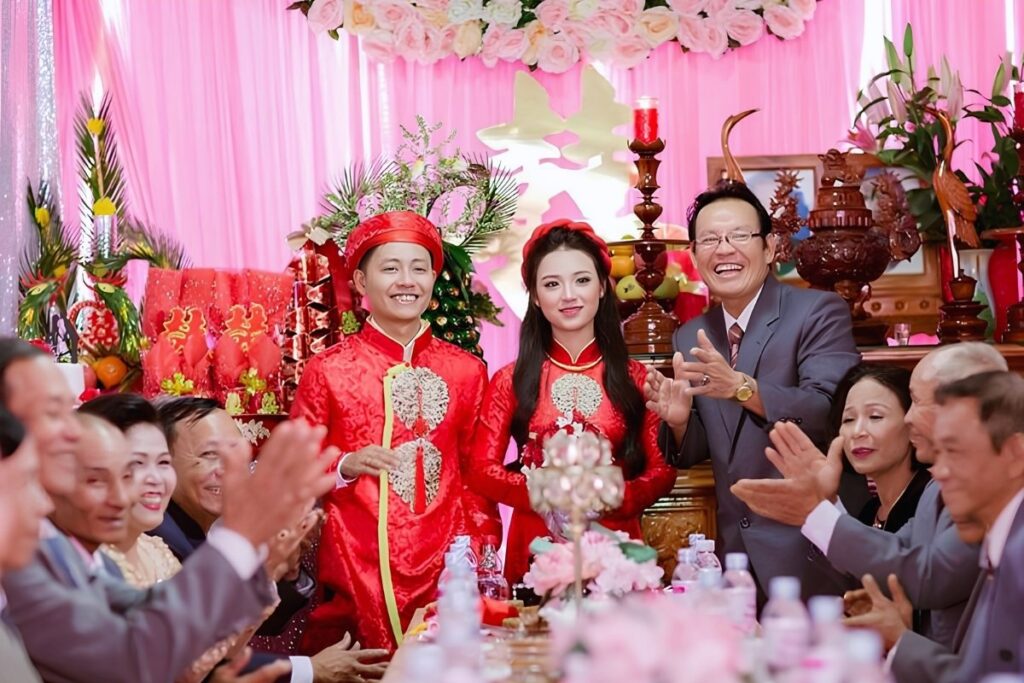
A Vietnamese wedding is far more than a celebration of two people in love. It is a meaningful journey that brings together generations, strengthens family bonds, honors ancestors, and welcomes a new chapter in life.
From the colorful procession of ceremonial gift trays and the quiet reverence of the ancestor worship ceremony to the joyful wedding banquet shared with family and friends, every tradition reflects values that have shaped Vietnamese society for centuries. Although modern weddings continue to evolve with new fashions, venues, and personal styles, their heart remains unchanged: gratitude, respect, family unity, and the hope for a happy future together.
For travelers, attending a Vietnamese wedding offers a rare opportunity to experience these values firsthand. Beyond the beautiful áo dài, delicious food, and lively celebrations lies a deeper understanding of Vietnamese culture—one where marriage is not simply the union of two individuals, but the joining of two families and the continuation of traditions passed from one generation to the next.
Whether you are planning to attend a wedding in Vietnam, learning about Vietnamese culture, or simply curious about the country’s traditions, these ceremonies offer a fascinating glimpse into one of Vietnam’s most cherished cultural treasures.
Continue Exploring Vietnamese Culture
Interested in learning more about Vietnam’s rich cultural heritage? Explore these related guides on Tam Voc Viet:
- Vietnamese Culture Guide – Discover the traditions, beliefs, festivals, cuisine, and customs that shape Vietnamese life.
- Vietnamese Family Culture – Learn why family remains the foundation of Vietnamese society.
- Ao Dai: Vietnam’s National Dress – Explore the history and symbolism of Vietnam’s national dress.
- Tet Holiday in Vietnam -Experience Vietnam’s Lunar New Year and its most cherished traditions.
- Mid-Autumn Festival in Vietnam – Discover Vietnam’s colorful Moon Festival with lanterns, lion dances, and mooncakes.
- Vietnamese Etiquette – Learn the essential customs and social etiquette for visiting Vietnam.
- Vietnamese Religion & Beliefs – Understand the spiritual traditions that influence Vietnamese culture.
- Ancestor Worship in Vietnam – Discover one of Vietnam’s most enduring cultural traditions.
- Vietnamese Ethnic Groups – Explore the diverse cultures of Vietnam’s 54 ethnic communities.
- Vietnamese Traditional Clothing – Learn about Vietnam’s traditional costumes beyond the áo dài.
Together, these traditions reveal a culture where history, family, and community remain deeply connected—making Vietnam one of the most rewarding destinations for anyone seeking authentic cultural experiences.
Editor’s Note: Many Vietnamese festivals, ceremonies, and auspicious dates follow the Vietnamese lunar calendar, so their dates change each year on the Gregorian calendar. If you’re planning your trip around a specific celebration, check the latest schedule with local tourism authorities before you travel.
Customs and celebrations may also vary between regions and ethnic communities, making every cultural experience in Vietnam unique.
References & Trusted Resources
This Vietnamese Wedding Traditions Guide is based on historical research, official publications, and reputable cultural sources. Festival traditions may vary by region, ethnic community, and local customs. For further reading, we recommend the following trusted resources:
👉 Vietnam National Authority of Tourism – Official travel information, cultural experiences, destinations, and annual tourism events throughout Vietnam.
👉 UNESCO – Viet Nam Intangible Cultural Heritage – Information about UNESCO-recognized festivals, folk arts, traditional music, and other elements of Vietnam’s living cultural heritage.
👉 Ministry of Culture, Sports and Tourism of Viet Nam – Official resources on cultural preservation, historical sites, museums, festivals, and national heritage programs.
About the Author
Tam Voc Viet Editorial Team
The Tam Voc Viet Editorial Team is dedicated to helping international readers discover the authentic stories behind Vietnam’s culture, history, and people.
Our editorial approach combines historical research, official government publications, UNESCO resources, academic references, local perspectives, and firsthand travel insights to create practical, trustworthy guides for curious travelers.
Every article is carefully reviewed and regularly updated to ensure it remains accurate, relevant, and valuable for visitors seeking meaningful cultural experiences throughout Vietnam.
Article Information
Category: Vietnamese Culture
Topic: Vietnamese Festivals
Reading Time: Approximately 25–30 minutes
Published: July 2026
Last Updated: July 2026
Author: Tam Voc Viet Editorial Team
