


 Tiếng Việt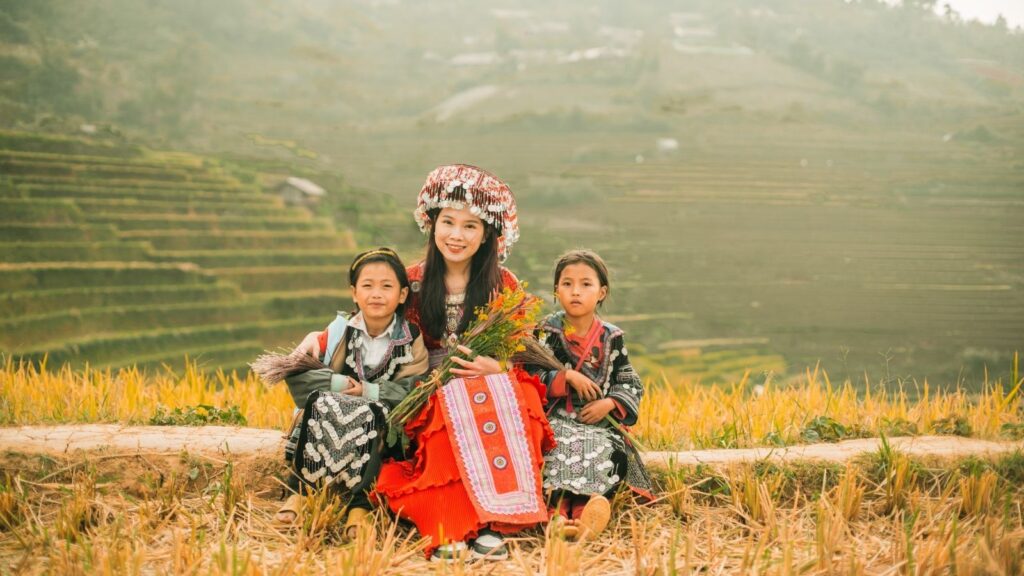
As the morning mist slowly lifts above the terraced rice fields of Sapa, women dressed in hand-embroidered H’Mông clothing begin walking toward the weekly market. Nearby, Red Dao elders greet neighbors in their own language while children laugh and play between rows of colorful textiles. A few hundred kilometers away, in Vietnam’s Central Highlands, the deep sound of bronze gongs echoes through a village preparing for a traditional harvest celebration. Further south, ancient Cham towers still watch over communities that have preserved centuries-old customs.
These experiences reveal something many first-time visitors never expect: Vietnam is not defined by a single culture. Officially home to 54 recognized ethnic groups, the country is a remarkable mosaic of languages, traditions, architecture, festivals, and ways of life that have evolved over thousands of years.
For travelers, exploring Vietnam ethnic groups diversity is far more than visiting beautiful landscapes. It is an opportunity to meet local communities, discover living traditions, and gain a deeper understanding of one of Southeast Asia’s richest cultural heritages.
Quick Answer
Vietnam officially recognizes 54 ethnic groups. The Kinh (Viet) people account for approximately 85% of the population, while the other 53 ethnic groups live throughout the country’s mountains, highlands, river valleys, and coastal regions. Each community has its own traditions, language, clothing, architecture, festivals, and cultural practices, making Vietnam one of the most ethnically diverse countries in Southeast Asia.
Table of Contents
Why Vietnam Is So Culturally Diverse
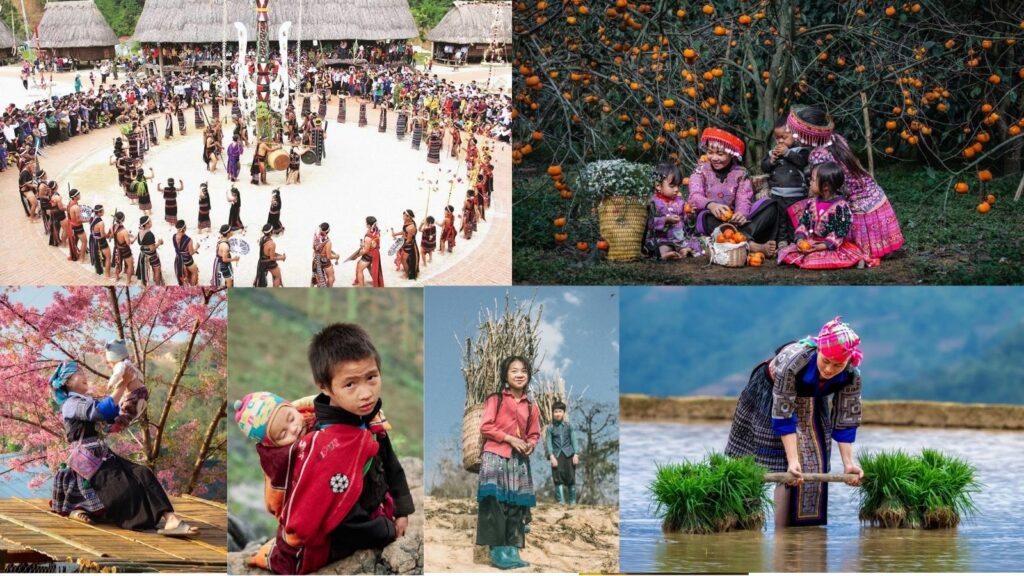
Imagine leaving Hanoi in the early morning and arriving in the northern mountains just a few hours later. The language spoken in local villages changes, traditional clothing becomes more colorful, and wooden stilt houses replace urban streets. Continue south to the Central Highlands, and the landscape transforms again—longhouses, bronze gong performances, and indigenous traditions define daily life. Along the South Central Coast, ancient Cham temples and centuries-old craft villages tell the story of a different civilization altogether.
Few countries in Southeast Asia offer such remarkable cultural diversity within a relatively compact area.
The foundation of this diversity lies in Vietnam’s geography. Stretching more than 1,600 kilometers (1,000 miles) from north to south, the country encompasses high mountain ranges, fertile river deltas, dense forests, volcanic plateaus, and an extensive coastline. Over centuries, these varied landscapes encouraged communities to adapt to different environments, developing distinctive languages, clothing, architecture, farming methods, and cultural traditions.
Historical migration, trade, and cultural exchange further enriched this diversity. Rather than forming a single uniform culture, interactions between indigenous communities, neighboring civilizations, and successive kingdoms created a rich cultural mosaic. Today, Vietnam officially recognizes 54 ethnic groups, each preserving its own identity while contributing to a shared national heritage.
One of the most remarkable aspects of Vietnam is how dramatically local cultures can change over relatively short distances. Travelers may leave a bustling city and, within just a few hours, arrive in villages where indigenous languages, traditional farming methods, and centuries-old customs remain part of everyday life.
This diversity is reflected across every region of the country. The northern mountains are known for terraced rice fields, colorful hill communities, and weekly ethnic markets. Central Vietnam preserves the legacy of the ancient Champa Kingdom, while the Central Highlands are famous for indigenous longhouses and UNESCO-recognized gong culture. In the south, Kinh, Khmer, Hoa, and Chăm communities together create one of Vietnam’s most multicultural regions.
Despite rapid modernization, traditional festivals, handwoven textiles, ancestral customs, local languages, and community traditions continue to thrive. Rather than existing only in museums, these cultural practices remain a living part of everyday life.
For travelers, this means every region offers a distinctly different cultural experience. Exploring Vietnam is not simply a journey across changing landscapes—it is an opportunity to discover living cultures that have evolved over thousands of years and continue to shape one of Southeast Asia’s richest cultural destinations.
| Period | Major Development |
|---|---|
| Prehistoric | Earliest communities settle in different ecological regions |
| Bronze Age | Đông Sơn culture influences northern communities |
| 10th century | Independent Vietnamese kingdoms emerge |
| 15th–19th century | Migration expands into central and southern Vietnam |
| Modern Vietnam | 54 ethnic groups officially recognized |
A Living Cultural Heritage
What makes Vietnam’s ethnic diversity truly remarkable is that it is not preserved only in museums or historical sites—it remains part of everyday life.
Across the country, communities continue to weave traditional textiles, cultivate ancestral rice terraces, celebrate seasonal festivals, and pass down local languages, crafts, and customs from one generation to the next. Weekly markets, village gatherings, and family ceremonies are not staged performances for visitors but living traditions that continue to shape community life.
For travelers, the most meaningful experiences often come through these everyday encounters. Sharing a meal with a local family, visiting a traditional craft village, or listening to stories from community elders offers a deeper understanding of Vietnam’s cultural heritage than monuments alone ever could.
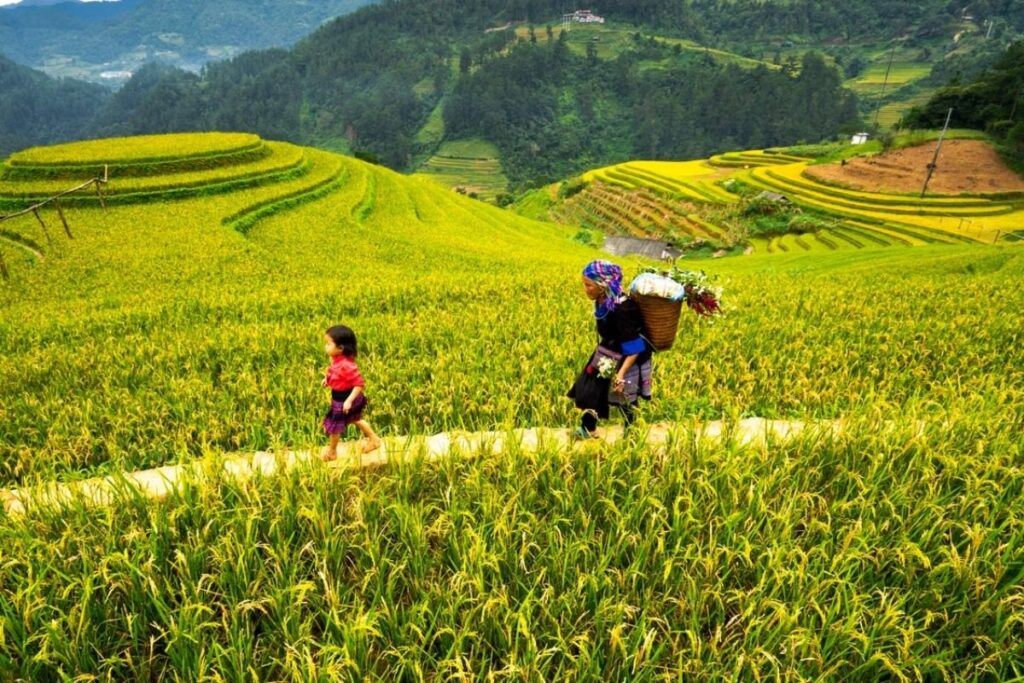
How Many Ethnic Groups Are There in Vietnam?
Vietnam officially recognizes 54 ethnic groups, a classification established by the government based on shared history, language, cultural heritage, and community identity. Together, these communities form one of the most ethnically diverse populations in Southeast Asia.
The Kinh (Viet) people are the largest ethnic group, accounting for approximately 85% of the population, according to the 2019 Population and Housing Census. They are concentrated in major cities, coastal plains, and river deltas. The remaining 53 ethnic minority groups make up about 15% of the population and are primarily found in mountainous regions, highlands, border areas, and parts of the Mekong Delta.
Although visitors may encounter the term tribe in older travel literature, ethnic group is the preferred and more accurate term in the Vietnamese context. These communities possess long-established histories, complex social structures, and distinct cultural identities rather than representing isolated tribal societies.
Vietnam’s ethnic diversity is also reflected in its remarkable linguistic heritage. More than 100 languages and dialects belonging to five major language families—including Austroasiatic, Tai–Kadai, Hmong–Mien, Sino-Tibetan, and Austronesian—are still spoken today. In many communities, younger generations grow up bilingual, using Vietnamese in education and public life while preserving their ancestral language at home and during cultural celebrations.
For travelers, this diversity can be experienced through traditional markets, community-based tourism, local festivals, museums, craft villages, and family-run homestays, where many customs continue to be practiced alongside modern life.
💡 Did You Know?
Although Vietnam officially recognizes 54 ethnic groups, linguists estimate that more than 100 languages and dialects are spoken across the country. In many ethnic communities, children grow up bilingual—using Vietnamese for school and public life while speaking their ancestral language at home and during traditional ceremonies. This rich linguistic diversity is one of the reasons Vietnam is considered one of Southeast Asia’s most culturally diverse nations.
Vietnam’s Largest Ethnic Groups at a Glance
While Vietnam officially recognizes 54 ethnic groups, only a small number have populations exceeding one million people. Together, these larger communities account for most of Vietnam’s ethnic minority population and represent many of the cultural traditions that travelers are most likely to encounter.
The table below provides an overview of Vietnam’s largest ethnic groups, where they are primarily located, and the cultural characteristics for which they are best known. Smaller ethnic communities—although not included here—are equally important in preserving the country’s remarkable cultural heritage.
| Ethnic Group | Estimated Population (2019 Census) | Main Regions | Known For |
|---|---|---|---|
| Kinh (Viet) | 85.3% of the population | Throughout Vietnam | Ancestor worship, áo dài, traditional festivals, Vietnamese cuisine |
| Tày | ~1.85 million | Cao Bằng, Lạng Sơn, Bắc Kạn, Thái Nguyên | Stilt houses, Then singing, wet-rice farming |
| Thái | ~1.82 million | Sơn La, Điện Biên, Lai Châu | Xòe dance, brocade weaving, stilt villages |
| Mường | ~1.45 million | Hòa Bình, Thanh Hóa | Traditional houses, folk songs, rice cultivation |
| Khmer | ~1.32 million | Mekong Delta | Theravāda Buddhist temples, festivals, Khmer cuisine |
| Nùng | ~1.08 million | Lạng Sơn, Cao Bằng | Blacksmithing, farming, colorful markets |
| H’Mông | ~1.03 million | Sapa, Hà Giang, Mù Cang Chải | Terraced rice fields, indigo textiles, ethnic markets |
| Dao (Yao) | ~0.89 million | Northern Mountains | Red embroidered clothing, herbal baths, silver jewelry |
| Gia Rai | ~0.51 million | Gia Lai | Longhouses, gong culture, coffee-growing region |
| Ê Đê (Rhade) | ~0.40 million | Đắk Lắk | Longhouses, matrilineal traditions, weaving |
| Ba Na | ~0.29 million | Kon Tum, Gia Lai | Rong houses, gong performances |
| Chăm | ~0.18 million | Ninh Thuận, Bình Thuận, An Giang | Cham temples, weaving, pottery, living Champa heritage |
Note: Population figures are based on the 2019 Vietnam Population and Housing Census. Vietnam’s remaining ethnic communities vary greatly in size—from tens of thousands of people to only a few hundred—but each plays an important role in preserving the country’s cultural diversity.
Language Family Representative Groups Austroasiatic Kinh, Mường, Khmer Tai–Kadai Tày, Nùng, Thái Hmong–Mien H’Mông, Dao Austronesian Chăm, Ê Đê, Gia Rai Sino-Tibetan Hà Nhì, Lô Lô, La Hủ
Where Are Vietnam’s Ethnic Groups Located?
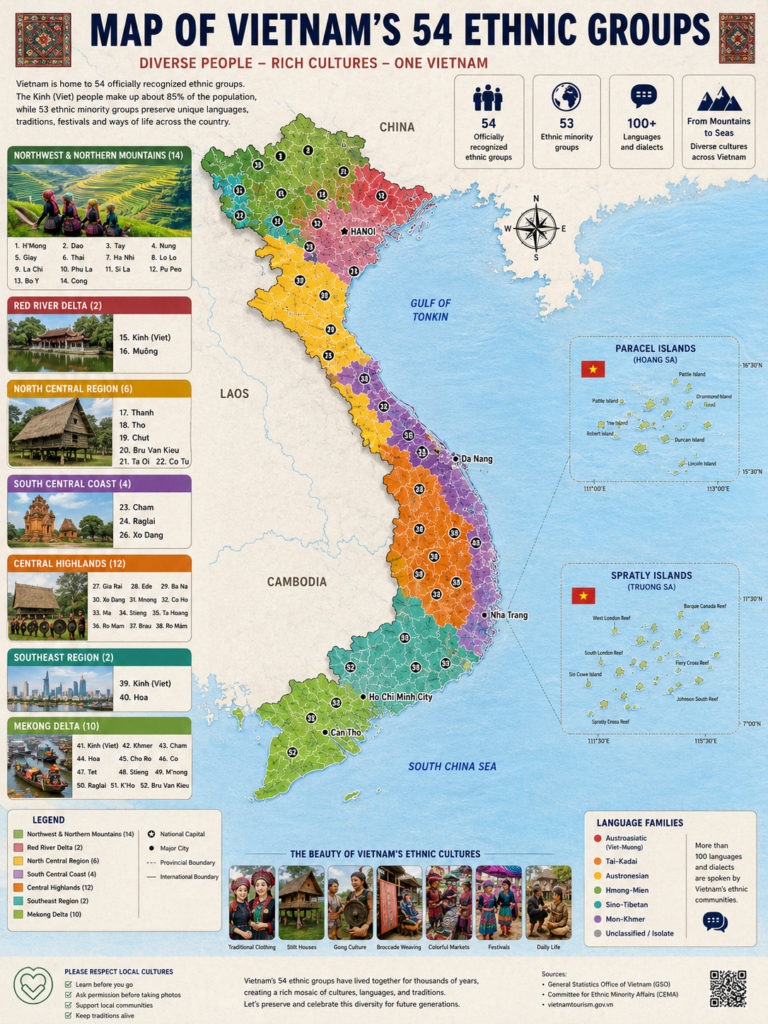
Vietnam’s ethnic communities are distributed across almost every region of the country, although their cultural traditions vary significantly depending on geography and history. While the Kinh people form the majority in cities, river deltas, and coastal plains, most ethnic minority communities are concentrated in mountainous areas, highlands, and border regions where distinctive languages, customs, and ways of life have been maintained for generations.
The table below highlights the regions where travelers are most likely to experience Vietnam’s ethnic diversity.
| Region | Major Ethnic Groups | Best Known For | Best Time to Visit |
|---|---|---|---|
| Northern Mountains | H’Mông, Dao, Tày, Nùng, Lô Lô | Rice terraces, ethnic markets, trekking, traditional textiles | September–November, March–May |
| North Central Vietnam | Thổ, Bru–Vân Kiều, Tà Ôi | Forest traditions, upland villages, lesser-visited communities | February–August |
| Central Highlands | Ê Đê, Gia Rai, Ba Na, M’Nông, Xơ Đăng | Longhouses, UNESCO Gong Culture, indigenous heritage, coffee plantations | November–March |
| South Central Coast | Chăm | Cham temples, weaving, pottery, living Champa heritage | January–August |
| Mekong Delta | Khmer, Hoa, Chăm, Kinh | Khmer pagodas, floating markets, multicultural traditions | December–April |
Each region offers a distinct cultural landscape. The Northern Mountains are best known for colorful hill communities and spectacular rice terraces. Central Vietnam preserves the legacy of the ancient Champa Kingdom, while the Central Highlands showcase indigenous longhouses and the UNESCO-recognized Space of Gong Culture. In the Mekong Delta, Khmer, Hoa, Chăm, and Kinh communities have lived alongside one another for centuries, creating one of Vietnam’s most culturally diverse regions.
Because the following sections explore these regions in greater detail, think of this overview as a starting point for planning your journey rather than a complete guide to Vietnam’s ethnic communities.
The Kinh People: Vietnam’s Majority Culture
The Kinh (Viet) people are Vietnam’s largest ethnic group, representing approximately 85% of the population according to the 2019 Population and Housing Census. They live throughout the country but are concentrated in the Red River Delta, major cities, coastal plains, and the Mekong Delta.
As Vietnam’s majority population, the Kinh have played a central role in shaping the country’s national identity. The Vietnamese language, many traditional festivals, ancestor worship, the áo dài, and much of Vietnam’s internationally recognized cuisine all have their roots in Kinh culture. At the same time, Vietnam’s cultural identity has also been enriched by centuries of interaction with the country’s many ethnic minority communities.
At the same time, Kinh culture has never developed in isolation. Centuries of interaction with Vietnam’s other ethnic communities, together with influences from neighboring civilizations, have shaped a culture that continues to evolve while maintaining its distinctive identity.
| Ethnic Group | Approx. Population | Main Regions |
|---|---|---|
| Kinh | ~85% | Nationwide |
| Tày | ~1.9 million | Northeast |
| Thái | ~1.8 million | Northwest |
| Mường | ~1.5 million | Northern Midlands |
| Khmer | ~1.3 million | Mekong Delta |
| H’Mông | ~1.4 million | Northern Mountains |
Daily Life and Family Traditions
Family, ancestor worship, and shared meals remain central to Kinh culture, reflecting values that continue to shape everyday life throughout much of Vietnam. Visitors often experience these traditions through local festivals, neighborhood markets, family-run businesses, and community celebrations.
For travelers, everyday experiences—sharing a home-cooked meal, visiting a neighborhood market, or enjoying coffee at a local café—often provide a more authentic understanding of Kinh culture than major tourist attractions alone.
To learn more about family values, ancestor worship, and everyday customs, explore our comprehensive guide to Vietnamese Family Culture.
Where to Experience Kinh Culture
Because Kinh communities live throughout Vietnam, visitors can experience their culture in almost every destination. Some of the most rewarding places include:
| Destination | Cultural Highlights |
|---|---|
| Hanoi | Historic Old Quarter, temples, traditional cuisine |
| Huế | Imperial heritage and royal traditions |
| Ninh Bình | Rural villages and agricultural life |
| Mekong Delta | River culture and local markets |
Although the Kinh people form the majority of Vietnam’s population, they are only one part of the country’s cultural mosaic. Understanding Kinh traditions provides a useful foundation for appreciating the unique histories and identities of Vietnam’s 53 other officially recognized ethnic groups.
Northern Mountain Ethnic Groups
The mountains of northern Vietnam are home to some of the country’s best-known ethnic minority communities and offer one of Southeast Asia’s richest cultural landscapes. Towering limestone peaks, mist-covered valleys, and spectacular terraced rice fields have allowed generations of communities to preserve their languages, traditions, and distinctive ways of life.
For many international travelers, destinations such as Sapa, Hà Giang, Bắc Hà, Mù Cang Chải, and Hoàng Su Phì provide the first opportunity to experience Vietnam’s ethnic diversity. Weekly markets, traditional festivals, handwoven textiles, and community-run homestays continue to play an important role in everyday life, making the region one of the country’s most rewarding cultural destinations.
Although each ethnic community has its own language, history, and customs, several groups are especially well known to visitors.
H’Mông
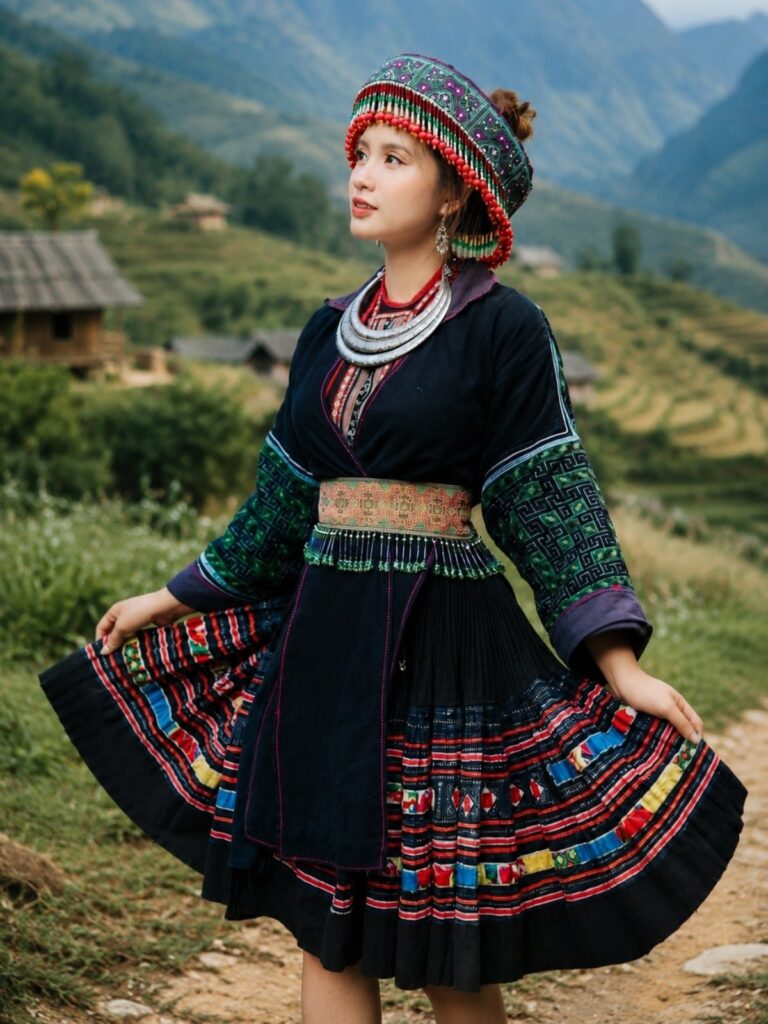
The H’Mông are among Vietnam’s most recognizable ethnic communities, living mainly in the high mountains of Hà Giang, Lào Cai, Yên Bái, and Sơn La. They are renowned for dramatic terraced rice fields, indigo-dyed hemp textiles, intricate embroidery, and vibrant weekly markets. Many H’Mông villages now welcome travelers through trekking routes and community-based tourism while continuing to preserve traditional farming practices and cultural customs.
Dao (Yao)
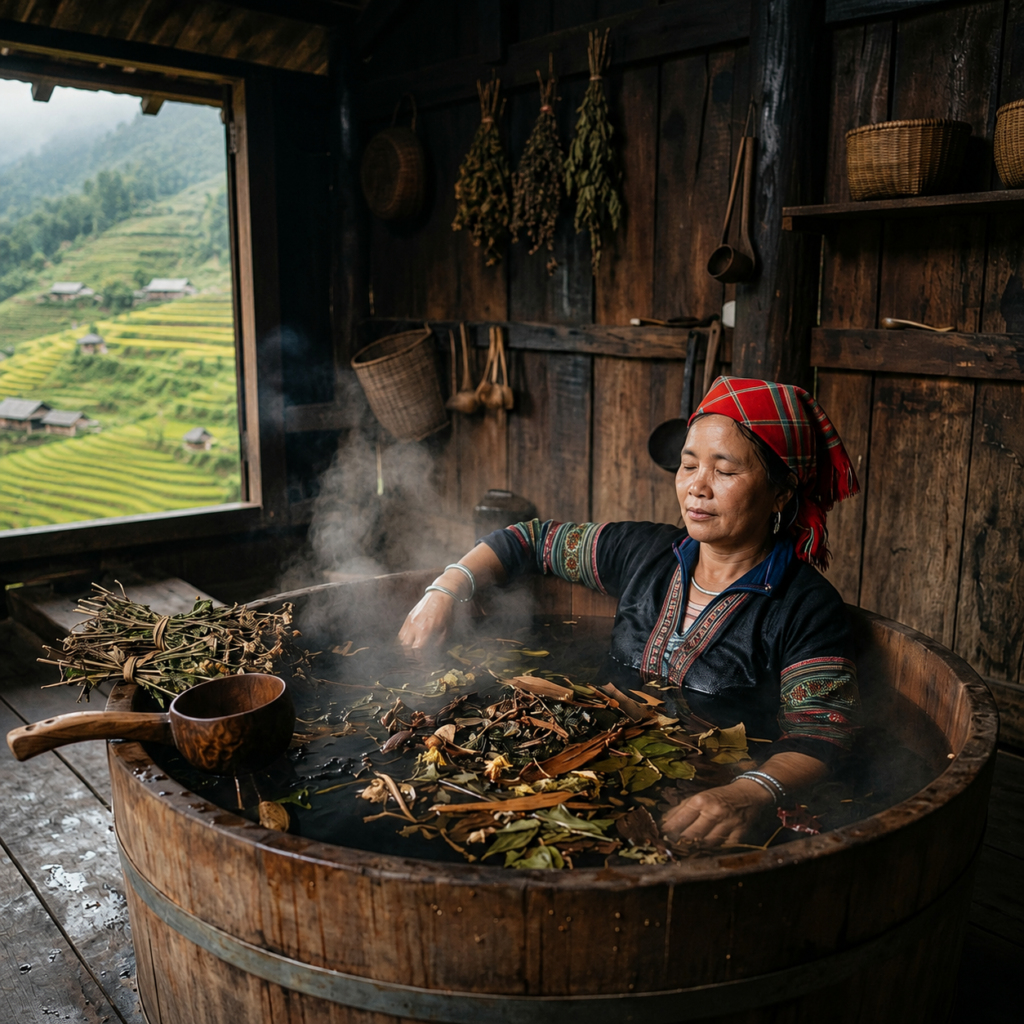
The Dao people are easily recognized by their elaborately embroidered clothing and distinctive red headscarves worn by many women. Found throughout northern mountain provinces, Dao communities are also known for traditional herbal medicine, medicinal bathing practices, silver jewelry, and forest knowledge that has been passed down for generations.
Tày and Nùng
Living primarily in valleys rather than high mountain slopes, the Tày and Nùng traditionally cultivate wet-rice fields and build spacious wooden stilt houses. Their villages are often associated with peaceful rural landscapes, Then folk singing, local festivals, and traditional craftsmanship that reflects centuries of agricultural life.
Lô Lô and Smaller Mountain Communities
Northern Vietnam is also home to smaller ethnic communities such as the Lô Lô, Phù Lá, Pà Thẻn, and La Chí. Although their populations are much smaller, many continue to preserve distinctive ceremonial clothing, traditional architecture, local languages, and unique cultural practices that contribute to the extraordinary diversity of Vietnam’s northern highlands.
Traveler Tip
Respectful cultural experiences begin with choosing community-based tourism, asking permission before photographing people, purchasing locally made handicrafts, and learning about local customs from community guides. These small actions help support both cultural preservation and sustainable tourism.
Responsible Highland Travel
Visiting Vietnam’s northern highlands is an opportunity to experience living cultures rather than simply admire beautiful landscapes. Respectful travel helps ensure that local traditions continue to thrive while bringing meaningful benefits to host communities.
⚠️ Common Mistake
It’s easy to assume that every ethnic village offers the same experience. In reality, each community has its own language, traditions, architecture, clothing, and customs. A H’Mông village in Hà Giang, for example, differs greatly from a Tày village in Cao Bằng or a Dao community in Lào Cai. Learning about these differences before your visit will make your journey far more rewarding.
Central Highlands Ethnic Groups
The Central Highlands (Tây Nguyên) offer a very different cultural experience from northern Vietnam. Instead of terraced rice fields and bustling ethnic markets, this region is known for rolling coffee plantations, dense forests, volcanic plateaus, and indigenous communities whose traditions have been shaped by the highland environment for centuries.
Home to ethnic groups such as the Ê Đê, Gia Rai, Ba Na, M’Nông, and Xơ Đăng, the Central Highlands preserve some of Vietnam’s most distinctive cultural traditions. Longhouses remain symbols of family life in many communities, while oral storytelling, traditional music, weaving, and seasonal ceremonies continue to play an important role in preserving cultural identity.
UNESCO-Recognized Gong Culture
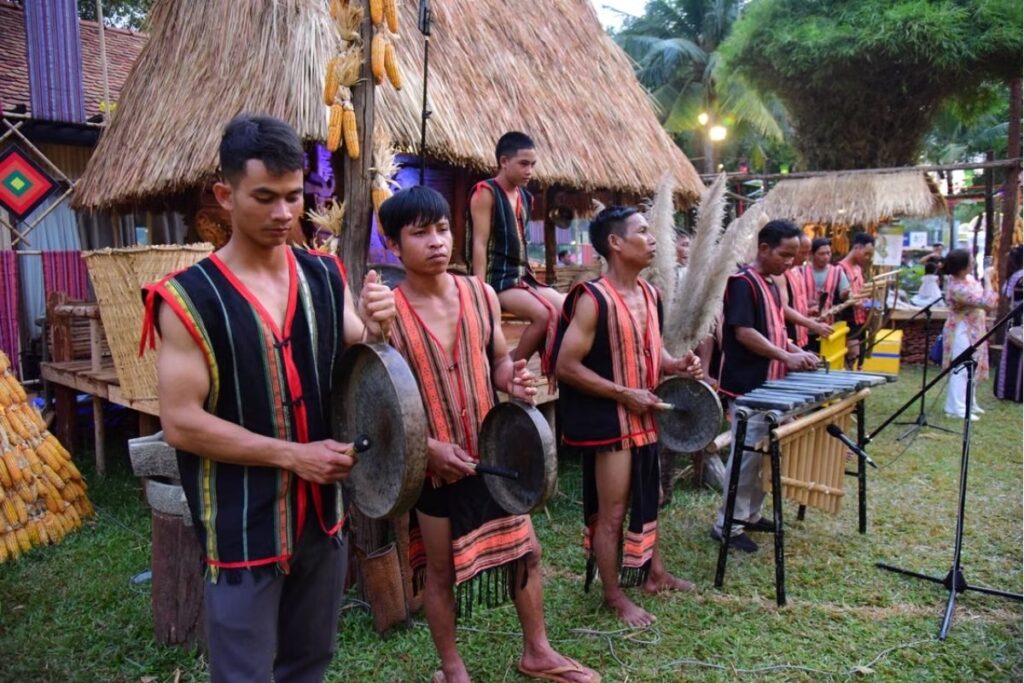
One of the region’s greatest cultural treasures is the Space of Gong Culture, inscribed by UNESCO as an Intangible Cultural Heritage of Humanity. For many highland communities, bronze gongs are far more than musical instruments—they are regarded as sacred objects used during harvest festivals, weddings, funerals, and important community ceremonies.
Rather than being performed solely for visitors, gong performances remain part of living cultural traditions that connect generations through music, spirituality, and community celebrations.
Longhouses and Matrilineal Traditions
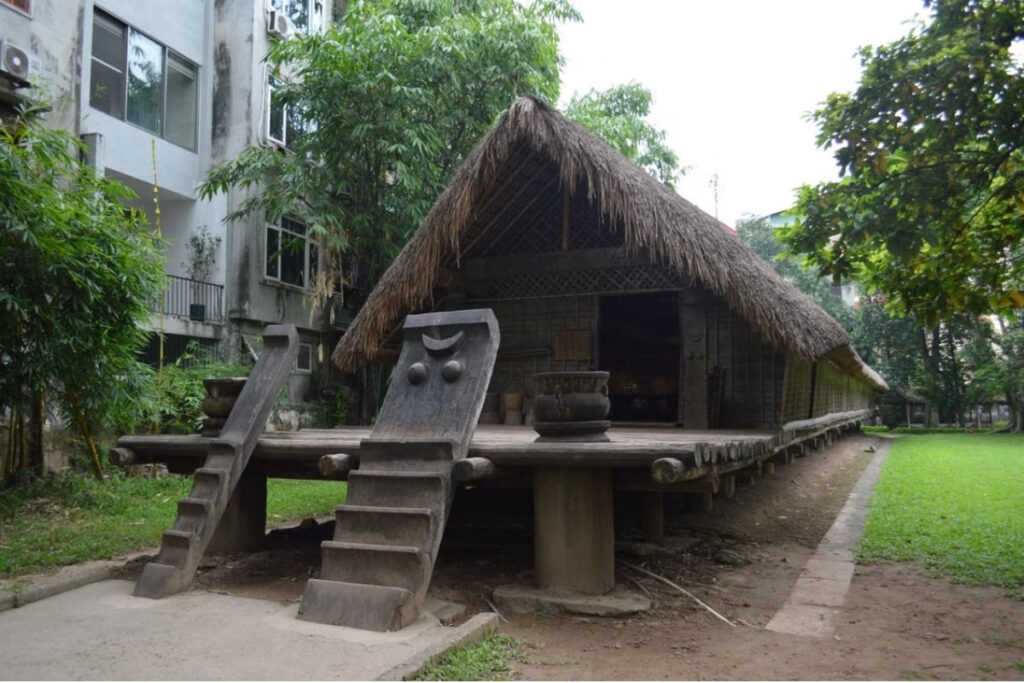
Among the Ê Đê and Gia Rai, traditional longhouses reflect the importance of extended families and community life. Some groups also maintain matrilineal traditions, where family lineage and property are traditionally passed through the mother’s family—a cultural practice that differs from the predominantly patrilineal customs found in much of Vietnam.
Although contemporary lifestyles continue to evolve, these long-standing customs remain an important part of local identity and provide valuable insight into the diversity of Vietnamese society.
Experiencing the Central Highlands Responsibly
Many indigenous communities now welcome visitors through locally managed cultural experiences that emphasize authenticity, cultural preservation, and respect for traditional customs.
Ethnic Communities of Central & Southern Vietnam
As travelers journey south from the Central Highlands, Vietnam’s cultural landscape changes once again. Along the South Central Coast and across the Mekong Delta, centuries of trade, migration, and cultural exchange have created one of the country’s most diverse regions.
Here, visitors encounter the living heritage of the Chăm, Khmer, Hoa (Chinese Vietnamese), and Kinh communities. Rather than existing separately, these cultures have influenced one another for generations, shaping distinctive architecture, religions, festivals, cuisines, and traditional crafts that continue to define southern Vietnam today.
The Chăm: Guardians of the Champa Legacy
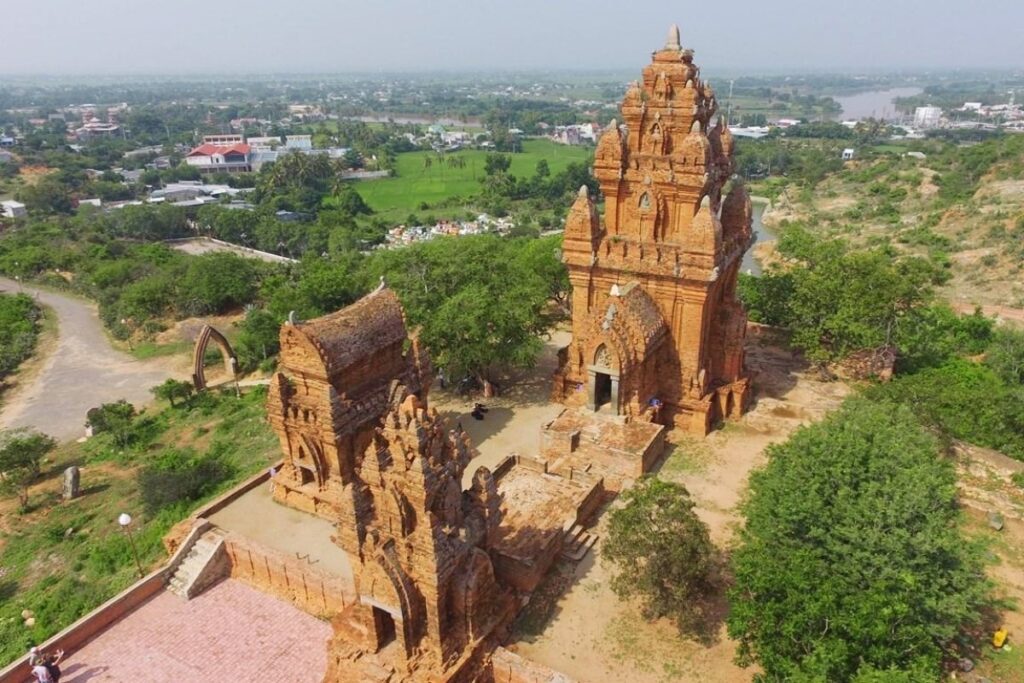
The Chăm people are descendants of the ancient Kingdom of Champa, which flourished along Vietnam’s central coast for centuries. Today, most Chăm communities live in Ninh Thuận, Bình Thuận, and An Giang, where they continue to preserve traditions through temple ceremonies, weaving villages, pottery making, and distinctive cultural festivals.
First-time visitors can explore impressive Cham temple complexes, observe centuries-old craft techniques, and learn how both Hindu and Islamic traditions continue to shape different Chăm communities today.
The Khmer: Buddhist Heritage of the Mekong Delta
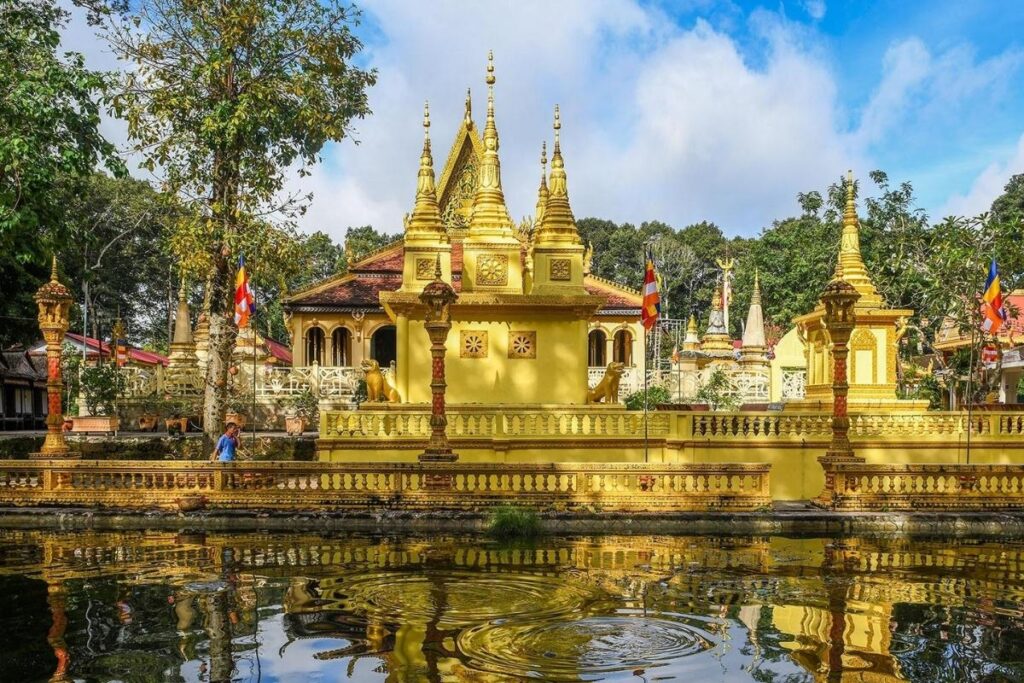
The Khmer are the largest ethnic minority in southern Vietnam and have lived in the Mekong Delta for centuries. Their cultural identity is closely connected with Theravāda Buddhism, reflected in ornate pagodas, monastery schools, and annual festivals that remain central to community life.
Destinations such as Trà Vinh, Sóc Trăng, and An Giang offer opportunities to visit beautifully decorated Khmer temples, experience traditional music and dance, and discover a cuisine that blends local ingredients with centuries of Khmer culinary traditions.
The Hoa: A Legacy of Trade and Entrepreneurship
The Hoa, or Chinese Vietnamese community, have made lasting contributions to Vietnam’s commercial and cultural development. Many families settled in southern Vietnam through historic trading networks and helped establish vibrant commercial districts that continue to thrive today.
In Chợ Lớn (Ho Chi Minh City’s historic Chinatown), travelers can explore traditional assembly halls, Chinese temples, herbal medicine shops, bustling markets, and family-owned restaurants that preserve generations of cultural heritage.
Experiencing Southern Vietnam’s Cultural Diversity
Unlike many destinations where cultures are experienced separately, southern Vietnam offers opportunities to discover multiple traditions within a relatively short journey. A single itinerary might include visiting Cham temples, exploring Khmer pagodas, wandering through Chinese heritage districts, and enjoying Kinh cuisine—all within a few days.
This remarkable cultural richness reflects centuries of coexistence and exchange, making southern Vietnam one of the country’s most rewarding regions for travelers interested in history, religion, architecture, and everyday cultural life.
Material Culture of Vietnam’s Ethnic Groups
Beyond languages, customs, and traditions, Vietnam’s ethnic diversity is also reflected in its rich material culture—the physical expressions of everyday life that have been shaped by geography, history, and generations of craftsmanship.
Across the country, ethnic communities have developed distinctive clothing, architecture, and handicrafts using locally available materials and techniques adapted to their natural environments. From handwoven hemp textiles in the northern mountains to indigenous longhouses in the Central Highlands and centuries-old pottery traditions along the south-central coast, these cultural expressions continue to tell the story of Vietnam’s diverse peoples.
Unlike museum collections, much of this heritage remains part of daily life. Traditional clothing is still worn during festivals and ceremonies, artisans continue to weave and carve by hand, and many villages preserve architectural styles that have evolved over centuries.
The following sections explore three of the most recognizable elements of Vietnam’s ethnic material culture: traditional clothing, traditional houses, and traditional handicrafts.
Traditional Clothing Across Vietnam
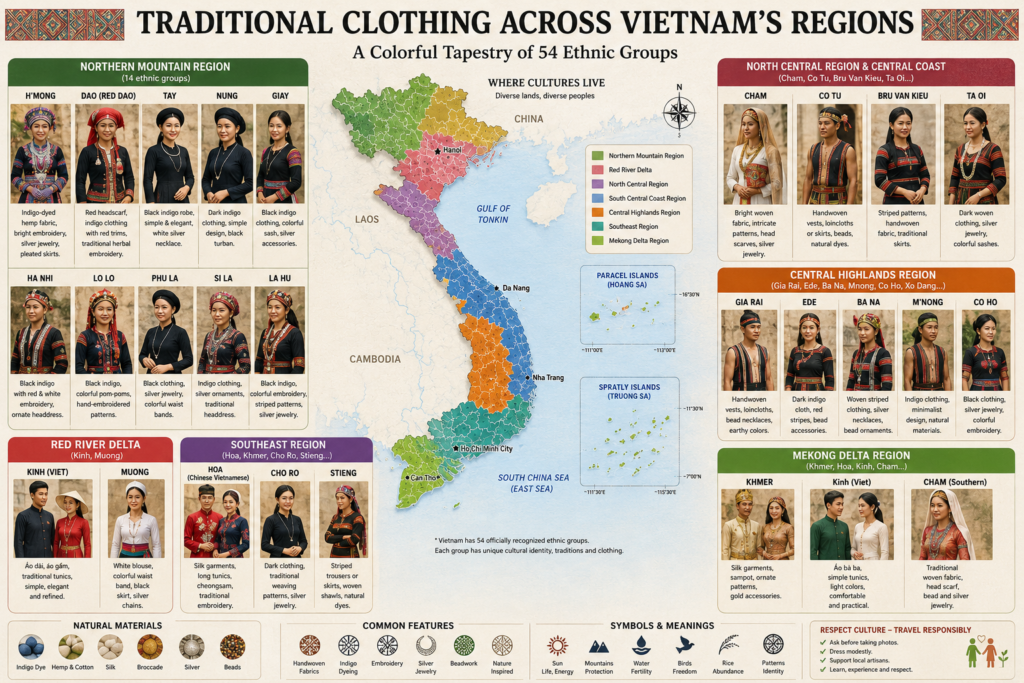
One of the easiest ways to appreciate Vietnam’s ethnic diversity is through its traditional clothing.
Every ethnic community has developed distinctive garments that reflect local climate, available materials, craftsmanship, and cultural identity. While modern clothing has become part of everyday life throughout Vietnam, traditional attire continues to play an important role during festivals, weddings, religious ceremonies, and other important cultural events.
Many garments require weeks or even months of weaving, natural dyeing, embroidery, and sewing, making them valuable expressions of heritage rather than simply everyday clothing.
Traditional Clothing Comparison
| Ethnic Group | Signature Clothing | Distinctive Feature | Where Travelers Can See It |
|---|---|---|---|
| H’Mông | Indigo hemp garments | Batik patterns and intricate embroidery | Sapa, Hà Giang |
| Red Dao | Red embroidered headscarves | Silver jewelry and colorful embroidery | Sapa, Y Tý |
| Thái | Elegant black dresses | Handwoven belts and embroidered details | Mai Châu, Sơn La |
| Ê Đê | Woven geometric textiles | Indigenous weaving traditions | Đắk Lắk |
| Chăm | Flowing dresses and woven scarves | Champa artistic influences | Ninh Thuận |
| Khmer | Silk ceremonial garments | Worn during Buddhist festivals | Trà Vinh, Sóc Trăng |
| Kinh | Áo dài | Vietnam’s national dress | Throughout Vietnam |
Supporting Local Artisans
Many traditional garments require weeks or even months to complete. Artisans often weave fabric by hand, dye it with natural materials such as indigo, and decorate each piece with intricate embroidery or batik patterns that reflect their community’s history and identity.
If you wish to purchase traditional textiles, choose products made by local artisans or community cooperatives whenever possible.
⚠️ Common Mistake
Many visitors assume traditional clothing is simply a colorful costume for photographs. In reality, these garments often represent cultural identity, family heritage, and generations of craftsmanship. If you’re invited to wear traditional attire during a homestay or cultural activity, follow your host’s guidance and treat each garment with the same respect you would give traditional dress in your own culture.
Traditional Houses and Village Architecture
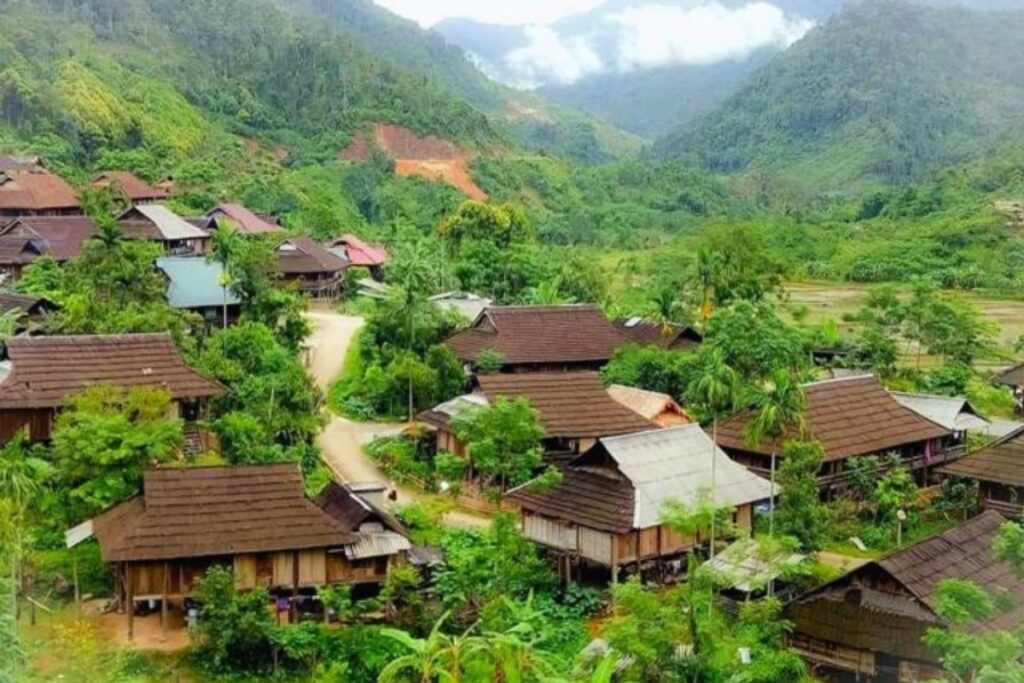
Traditional houses are among the clearest reflections of Vietnam’s ethnic diversity. Across the country, communities have developed distinctive architectural styles that respond to local climates, landscapes, available building materials, and social traditions.
Rather than following a single architectural model, each ethnic group has adapted its homes to suit the environment in which it lives. Elevated stilt houses help protect families from seasonal flooding and wild animals in mountainous regions, while spacious longhouses in the Central Highlands reflect the importance of extended family life. In coastal areas, homes are often designed to withstand strong winds and tropical weather.
These traditional houses are more than places to live—they are centers of family life, community gatherings, and cultural traditions passed from one generation to the next.
Traditional Houses Across Vietnam
| Ethnic Group | Traditional House | Distinctive Features | Where Travelers Can See It |
|---|---|---|---|
| Tày & Nùng | Wooden stilt house | Raised floors, spacious family living areas | Cao Bằng, Bắc Kạn, Lạng Sơn |
| Thái | Large stilt house | Curved roofs, woven bamboo walls | Mai Châu, Sơn La, Điện Biên |
| H’Mông | Earthen or wooden house | Thick walls for mountain climates | Hà Giang, Sapa |
| Ê Đê | Longhouse | Extended family living, wooden architecture | Đắk Lắk |
| Gia Rai | Longhouse | Community-oriented design | Gia Lai |
| Ba Na | Rong house | Tall communal house with dramatic roof | Kon Tum, Gia Lai |
| Chăm | Brick villages with traditional homes | Close to temples and weaving villages | Ninh Thuận |
Preserving Traditional Architecture
Although many families now live in modern homes, traditional architecture continues to play an important role during festivals, community gatherings, and cultural tourism. In many villages, historic houses are carefully maintained as symbols of local identity and craftsmanship.
Community-based tourism has also helped preserve traditional architecture by creating new economic opportunities while encouraging families to protect their cultural heritage. Staying in a traditional stilt house or longhouse allows visitors to experience everyday life in a way that hotels cannot offer.
Traveler Tip
When staying in a traditional village, remember that these houses are private homes rather than tourist exhibits. Follow your host’s guidance, respect family spaces, remove your shoes where requested, and help preserve the quiet atmosphere that makes these communities unique.
Traditional Handicrafts
Traditional handicrafts are more than beautiful souvenirs—they are living expressions of cultural identity, history, and craftsmanship. Across Vietnam, ethnic communities continue to create textiles, pottery, basketry, wood carvings, and jewelry using techniques that have been passed down through generations.
Many of these crafts originated as practical necessities for everyday life before becoming important symbols of community identity. Today, they remain closely connected to festivals, family traditions, and local economies.
Traditional Handicrafts Across Vietnam
| Craft | Ethnic Groups | Distinctive Features | Where Travelers Can Experience It |
|---|---|---|---|
| Indigo Textiles | H’Mông, Dao | Handwoven hemp, natural indigo dye, batik patterns | Sapa, Hà Giang, Bắc Hà |
| Brocade Weaving | Thái, Ê Đê, Gia Rai | Colorful geometric motifs inspired by nature | Mai Châu, Sơn La, Đắk Lắk, Gia Lai |
| Pottery | Chăm | Hand-shaped pottery fired without traditional kilns | Bàu Trúc Village, Ninh Thuận |
| Silver Jewelry | H’Mông, Dao | Handcrafted necklaces, bracelets, and ceremonial ornaments | Bắc Hà, Sapa, Hà Giang |
| Bamboo & Rattan Crafts | Tày, Ba Na, M’Nông | Household items, baskets, fishing tools, furniture | Northern Mountains, Central Highlands |
| Wood Carving | Ba Na, Gia Rai | Decorative carvings for communal houses and ceremonies | Kon Tum, Gia Lai |
Craftsmanship That Preserves Cultural Identity
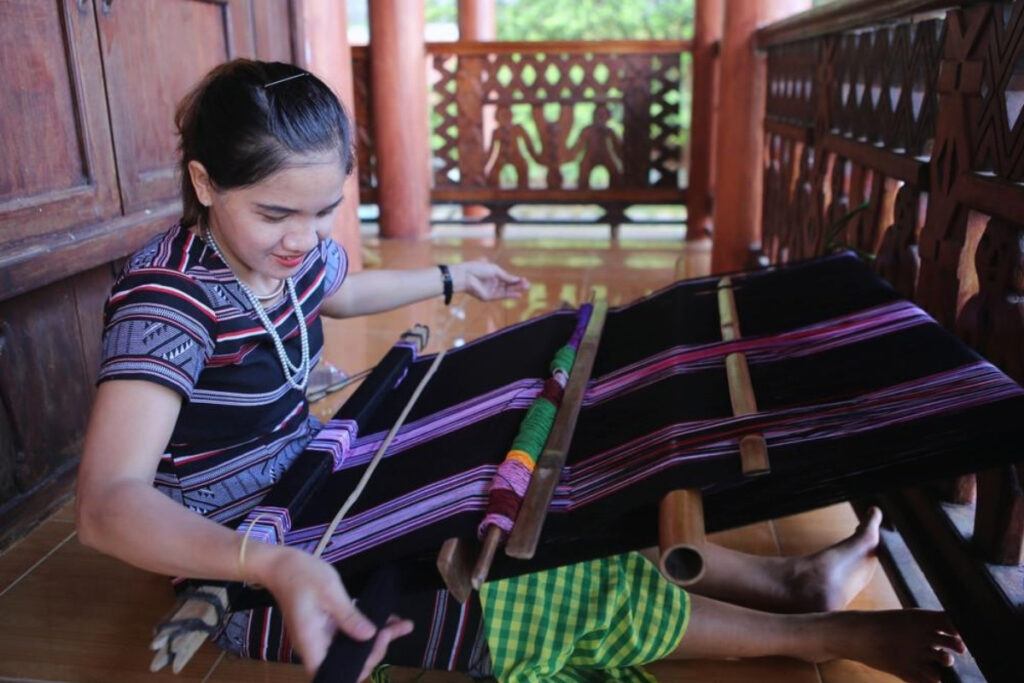
Behind every handcrafted object is a story of knowledge passed from one generation to the next. Techniques such as natural indigo dyeing, backstrap weaving, bamboo weaving, wood carving, and pottery making are often taught within families, allowing traditional skills to survive despite rapid social and economic change.
In many communities, handcrafted objects are still created for daily use, religious ceremonies, weddings, and seasonal festivals—not solely for the tourist market. This living tradition gives visitors the opportunity to appreciate craftsmanship within its original cultural context rather than simply as decorative art.
Supporting Local Artisans
Choosing authentic handmade products directly from artisans or village cooperatives helps sustain traditional craftsmanship and provides income for local communities. It also encourages younger generations to continue learning skills that might otherwise disappear.
When shopping for handicrafts, take time to ask about the materials, production process, and meaning behind the designs. Many patterns symbolize local legends, natural landscapes, family heritage, or spiritual beliefs, making every handcrafted piece a reflection of the community that created it.
Living Cultural Traditions
While Vietnam’s landscapes and architecture are immediately visible to visitors, the country’s greatest cultural treasures are often found in the traditions that continue to shape everyday life. Across Vietnam’s 54 ethnic groups, festivals, music, local markets, storytelling, and community gatherings remain important ways of preserving identity and strengthening social bonds.
Although each ethnic community has its own customs, many traditions share a common purpose: celebrating nature, honoring ancestors, strengthening family ties, and passing cultural knowledge from one generation to the next. These living traditions continue to evolve while maintaining deep connections to the past.
Festivals and Seasonal Ceremonies
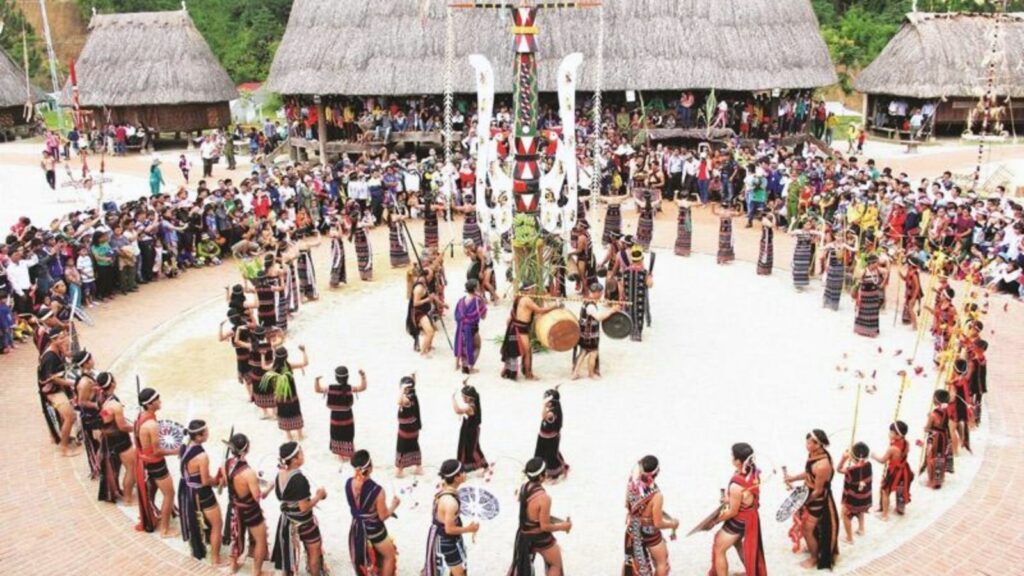
Traditional festivals are among the best opportunities to experience Vietnam’s ethnic diversity. Many celebrations follow the agricultural calendar, marking the beginning of the planting season, the rice harvest, the Lunar New Year, or important spiritual events unique to each community.
Beyond colorful costumes and performances, these festivals bring together families and villages through traditional music, communal meals, games, rituals, and religious ceremonies. For many communities, festivals remain an essential part of cultural life rather than events organized solely for visitors.
Travelers may encounter celebrations such as H’Mông New Year festivities in the northern mountains, Khmer Buddhist festivals in the Mekong Delta, or gong ceremonies held by indigenous communities in the Central Highlands. Each reflects the history, beliefs, and local environment of the people who celebrate it.
Markets and Community Life
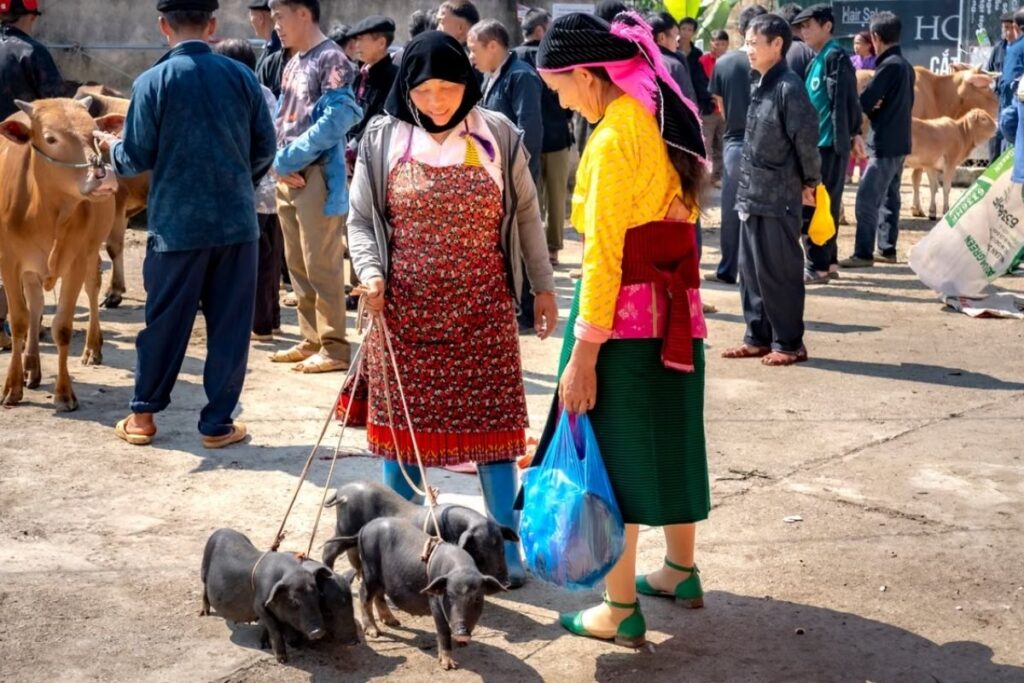
Across Vietnam, traditional markets are far more than places to buy and sell goods. For many ethnic communities, they remain important social and cultural gathering places where families meet, friendships are renewed, news is exchanged, and traditions continue from one generation to the next.
In the northern mountains, weekly markets such as Bắc Hà, Cán Cấu, and Mèo Vạc bring together H’Mông, Dao, Tày, Nùng, and other communities from surrounding villages. People often travel for hours on foot or by motorbike, not only to trade livestock, produce, textiles, and handmade crafts, but also to meet relatives, celebrate special occasions, and strengthen community ties.
Elsewhere in Vietnam, markets reflect the unique identity of their regions. Floating markets in the Mekong Delta showcase river-based lifestyles, while local markets in the Central Highlands feature indigenous agricultural products, woven textiles, forest produce, and traditional handicrafts. Along the South Central Coast, visitors can also discover markets known for Chăm pottery, weaving, and regional specialties.
For travelers, visiting a traditional market offers one of the most authentic ways to experience everyday life. The colorful clothing, local dialects, handmade products, seasonal foods, and lively atmosphere provide a glimpse into cultural traditions that continue to thrive beyond museums and tourist attractions.
Market Etiquette
Markets are working spaces and community gathering places before they are tourist destinations. Respectful behavior helps preserve their authentic character while creating more meaningful interactions with local people.
When visiting, ask permission before taking close-up photographs, especially of individuals or children. Support local livelihoods by purchasing handmade products directly from artisans whenever possible, and avoid aggressive bargaining over items that require significant time and skill to produce. Learning a few simple Vietnamese greetings—or following the guidance of a local guide—can also make conversations more welcoming and enjoyable.
Traveler Tip
Arrive early in the morning to experience traditional markets at their busiest. This is when local communities gather to trade fresh produce, livestock, textiles, and handcrafted goods, creating the most vibrant atmosphere and offering excellent opportunities for cultural photography and authentic local interactions.Before exploring Vietnam’s ethnic communities in greater detail, it’s worth clearing up a few common misconceptions. Many first-time visitors arrive with assumptions that don’t fully reflect the country’s cultural reality.
Common Misconception Reality All ethnic villages are the same. Every ethnic community has its own language, traditional clothing, architecture, festivals, customs, and history. Even neighboring villages may have distinct cultural identities. Traditional clothing is worn every day. While some communities still wear traditional attire daily, many reserve ceremonial clothing for festivals, weddings, markets, and important cultural events. Ethnic minority cultures are disappearing. Although modernization has brought changes, many communities continue to preserve their languages, crafts, music, festivals, and cultural practices through everyday life and community initiatives.
How to Experience Vietnam’s Ethnic Diversity Respectfully
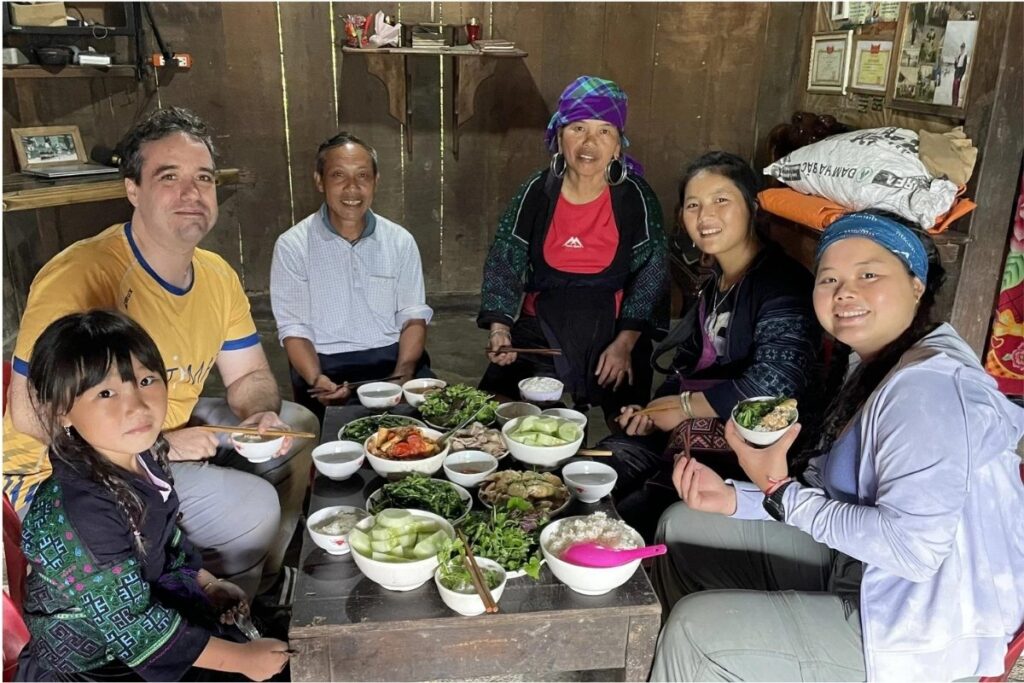
Exploring Vietnam’s ethnic diversity is about much more than visiting beautiful landscapes or taking memorable photographs. It is an opportunity to connect with living cultures that have been preserved through generations and continue to shape everyday life across the country.
Respectful travel not only creates richer experiences for visitors but also helps local communities preserve their traditions while benefiting from sustainable tourism.
1. Choose Community-Based Tourism
Whenever possible, stay in locally owned homestays, hire local guides, and join experiences organized in partnership with community members. Community-based tourism provides a more authentic understanding of local life while ensuring that tourism income supports the people who preserve these traditions.
2. Respect Local Customs and Traditions
Every ethnic community has its own customs, beliefs, and social etiquette. Observe local practices, dress modestly when visiting temples or family homes, and remove your shoes whenever requested. If you are unsure about local customs, politely ask your host or guide before participating.
3. Ask Before Taking Photographs
Many visitors are eager to photograph traditional clothing, ceremonies, or village life. Always ask permission before photographing individuals, particularly elders, children, or people participating in religious ceremonies or family events.
A friendly conversation before taking a photograph often creates a more meaningful interaction than simply pointing a camera.
4. Support Local Artisans
Traditional weaving, embroidery, pottery, silver jewelry, bamboo weaving, and wood carving remain important sources of income in many communities. Purchasing directly from artisans or village cooperatives helps preserve traditional skills while supporting local families.
Whenever possible, choose authentic handmade products instead of inexpensive factory-made souvenirs.
5. Learn Beyond the Surface
Every textile pattern, longhouse, market, festival, or musical performance tells a story. Taking time to understand the meaning behind hese long-standing customs transforms a sightseeing trip into a genuine cultural experience.
Even learning a few simple Vietnamese greetings or asking questions about local customs demonstrates respect and genuine curiosity.
6. Travel at a Comfortable Pace
Rather than trying to visit several ethnic villages in a single day, spend more time in one destination. Joining a guided village walk, sharing meals with local families, or participating in cultural activities often provides a far deeper understanding than simply checking famous locations off an itinerary.
7. Leave a Positive Impact
Thoughtful travelers help protect the communities they visit by respecting local traditions, minimizing environmental impact, supporting locally owned businesses, and sharing their experiences responsibly. Small actions—such as carrying reusable water bottles, avoiding litter, and respecting sacred spaces—contribute to preserving Vietnam’s cultural and natural heritage for future generations.
Responsible Traveler Checklist
✓ Stay in locally owned homestays whenever possible.
✓ Hire local guides and support community-based tourism.
✓ Ask permission before taking photographs.
✓ Dress respectfully at temples and family homes.
✓ Buy handmade products directly from local artisans.
✓ Learn about local customs before participating in cultural activities.
✓ Respect sacred sites, ceremonies, and private spaces.
✓ Leave every destination as beautiful and welcoming as you found it.
By approaching each community with curiosity, humility, and respect, travelers become more than visitors—they become partners in preserving one of Southeast Asia’s richest cultural landscapes. The most memorable journeys through Vietnam are often defined not by the places people see, but by the relationships they build and the stories they carry home.
Why This Cultural Diversity Matters
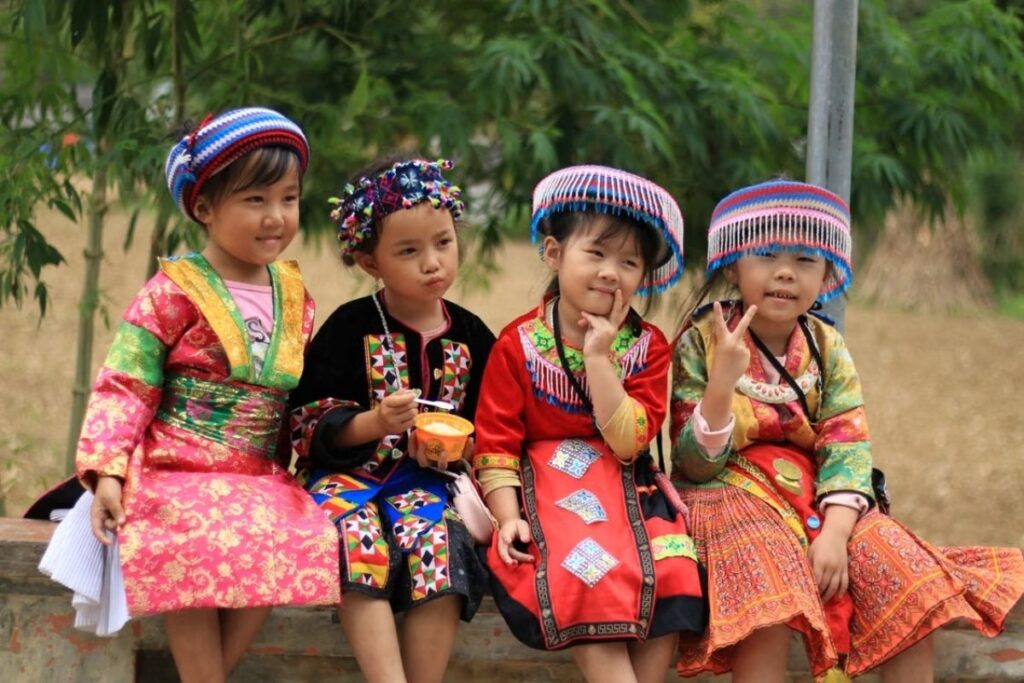
Vietnam’s ethnic diversity is one of the country’s greatest strengths.
Each community contributes unique languages, music, festivals, crafts, agricultural knowledge, and spiritual traditions that together create a vibrant national identity. Rather than existing as isolated cultures, these communities have interacted for centuries, enriching one another while preserving their own heritage.
For travelers, understanding this diversity transforms a journey through Vietnam. A visit becomes more than sightseeing—it becomes an opportunity to appreciate the people, stories, and traditions that make every region unique.
Whether exploring the terraced mountains of Hà Giang, attending a gong performance in the Central Highlands, wandering through ancient Chăm temples, or visiting a Khmer pagoda in the Mekong Delta, travelers discover that Vietnam’s greatest cultural treasures are found not only in its landscapes, but in the communities that continue to preserve them.
Best Places to Experience Ethnic Culture
Vietnam’s ethnic communities are spread across diverse landscapes, from the misty mountains of the north to the fertile Mekong Delta in the south. Each region offers distinct cultural experiences shaped by local history, geography, and traditions.
Whether you’re interested in trekking through mountain villages, staying with local families, exploring ancient temples, or attending traditional festivals, choosing the right destination can help you experience Vietnam’s remarkable cultural diversity in a meaningful way.
Best Destinations for Ethnic Cultural Experiences
| Destination | Main Ethnic Communities | Signature Experiences | Best Time to Visit | Ideal For |
|---|---|---|---|---|
| Sapa (Lào Cai) | H’Mông, Dao, Giáy, Tày | Rice terraces, trekking, village homestays, textile workshops | September–November, March–May | First-time visitors |
| Hà Giang | H’Mông, Dao, Lô Lô, Tày | Mountain landscapes, ethnic markets, Hà Giang Loop, traditional villages | September–November, October (buckwheat flowers), March–April | Adventure travelers & photographers |
| Mai Châu (Hòa Bình) | Thái, Mường | Stilt houses, cycling, local cuisine, community-based tourism | October–April | Families & relaxed cultural travel |
| Pù Luông (Thanh Hóa) | Thái, Mường | Rice terraces, eco-lodges, village walks, bamboo water wheels | May–June, September–October | Nature lovers |
| Buôn Ma Thuột (Đắk Lắk) | Ê Đê, M’Nông | Longhouses, coffee culture, UNESCO Gong Culture, indigenous villages | November–March | Indigenous culture enthusiasts |
| Ninh Thuận | Chăm | Ancient Cham towers, pottery villages, weaving traditions | January–August | History & architecture lovers |
| Trà Vinh & Sóc Trăng | Khmer, Hoa, Kinh | Buddhist pagodas, Khmer festivals, multicultural heritage | November–April | Spiritual & cultural travelers |
Quick Comparison: Which Destination Is Right for You?
| If You’re Looking For… | Best Destination | Why It’s Recommended |
|---|---|---|
| Your first ethnic cultural experience | Sapa | Easy access, spectacular scenery, and opportunities to meet several ethnic communities in one trip. |
| Fewer crowds and deeper cultural immersion | Hà Giang | Remote villages, dramatic mountain landscapes, and authentic local experiences. |
| Comfortable community-based homestays | Mai Châu | Welcoming Thái families, peaceful villages, and excellent homestay experiences. |
| UNESCO-recognized cultural heritage | Central Highlands | Experience the UNESCO-listed Space of Gong Culture and indigenous longhouse traditions. |
| Traditional ethnic markets | Bắc Hà | One of Vietnam’s most vibrant weekly markets where multiple ethnic communities gather to trade. |
| Traditional textiles and handicrafts | Sapa | Famous for indigo dyeing, embroidery, handwoven fabrics, and batik techniques. |
| Ancient temples and living history | Ninh Thuận | Explore Cham towers, pottery villages, weaving traditions, and the living heritage of the Chăm people. |
| Khmer Buddhist culture | Trà Vinh | Home to beautiful Khmer pagodas, religious festivals, and one of Vietnam’s largest Khmer communities. |
| Landscape and cultural photography | Hà Giang | Dramatic mountain passes, colorful markets, and traditional villages provide outstanding photography opportunities. |
| Family-friendly cultural experiences | Mai Châu | Gentle cycling routes, peaceful villages, and accessible cultural activities suitable for all ages. |
If this is your first visit to Vietnam, Sapa offers the easiest introduction to the country’s ethnic diversity thanks to its excellent tourism infrastructure and wide variety of nearby villages. Travelers seeking a more off-the-beaten-path experience may prefer Hà Giang or the Central Highlands, where cultural traditions remain deeply rooted in everyday community life.
Frequently Asked Questions about Vietnam Minority Groups
How many ethnic groups are officially recognized in Vietnam?
Vietnam officially recognizes 54 ethnic groups. The Kinh people make up the majority of the population, while the remaining 53 ethnic minority communities contribute to the country’s extraordinary cultural diversity.
Which ethnic group is the largest?
The Kinh (Viet) people are the largest ethnic group, representing approximately 85% of Vietnam’s population according to the 2019 Population and Housing Census.
Which ethnic groups live in Sapa?
Sapa is home to several ethnic communities, including the H’Mông, Dao, Tày, Giáy, and Xa Phó. Visitors can experience local markets, traditional villages, terraced rice fields, and family-run homestays throughout the region.
Where can travelers experience authentic ethnic culture?
Some of Vietnam’s best destinations include:
Each destination offers distinctive traditions, architecture, festivals, and local cuisine.
Do people still wear traditional clothing every day?
In most communities, modern clothing has become the norm for daily life. Traditional attire is commonly worn during festivals, weddings, religious ceremonies, and important cultural celebrations, although some remote villages continue to use traditional garments more frequently.
Can visitors stay with ethnic minority families?
Yes. Community-based tourism has expanded across many regions of Vietnam, particularly in Sapa, Hà Giang, Mai Châu, and Pù Luông. Staying in locally operated homestays allows travelers to learn about daily life while directly supporting local families.
💡 Did You Know?
Experiencing Vietnam’s ethnic diversity doesn’t always require traveling to remote villages. Museums, cultural festivals, traditional craft villages, community-based tourism projects, and local markets throughout the country also offer meaningful opportunities to learn about the traditions of Vietnam’s ethnic communities.
Which Cultural Experience Matches Your Travel Style?
| If You Love… | Choose… | Why |
|---|---|---|
| Mountain scenery | Sapa | Rice terraces and H’Mông villages |
| Adventure road trips | Hà Giang | Spectacular landscapes and remote communities |
| Authentic homestays | Mai Châu | Peaceful villages and local hospitality |
| Indigenous traditions | Central Highlands | Longhouses, Gong Culture, community festivals |
| Ancient civilizations | Ninh Thuận | Cham temples and living heritage |
| Buddhist culture | Mekong Delta | Khmer pagodas and seasonal festivals |
| Traditional crafts | Northern Highlands | Weaving, embroidery, indigo dyeing |
| Food and multicultural heritage | Southern Vietnam | Khmer, Hoa, Kinh and Chăm influences |
Conclusion
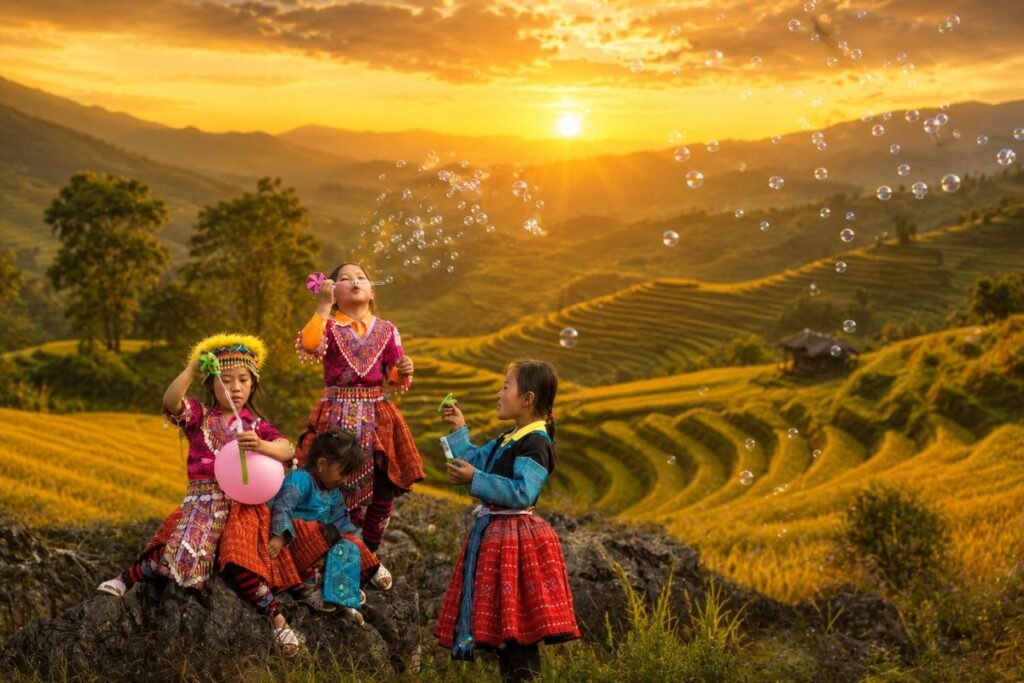
Vietnam’s ethnic diversity is one of the country’s greatest cultural treasures. Across its 54 officially recognized ethnic groups, each community contributes distinctive languages, traditions, craftsmanship, music, architecture, and ways of life that together form the rich cultural mosaic of modern Vietnam.
From the terraced mountains of Hà Giang and Sapa to the gong villages of the Central Highlands, the ancient Cham towers of Ninh Thuận, and the Khmer pagodas of the Mekong Delta, every region offers a different perspective on Vietnam’s remarkable heritage. While each community has preserved its own unique identity, centuries of cultural exchange have helped shape the diverse nation visitors experience today.
For travelers, discovering Vietnam’s communities is about far more than visiting scenic destinations. It is an opportunity to learn from local communities, appreciate traditions that continue to thrive in everyday life, and experience the warmth and hospitality that define Vietnamese culture.
By traveling with curiosity, respect, and an open mind, you’ll leave with far more than beautiful photographs. You’ll return home with stories shared over family meals, memories of mountain markets and village festivals, and a deeper appreciation for the communities whose traditions continue to shape Vietnam today.
Long after the journey ends, these encounters often become the experiences travelers remember most—not simply because they visited Vietnam, but because they came to understand the people who give the country its remarkable cultural richness.
Continue Exploring Vietnam’s Cultural Heritage
If you enjoyed learning about Vietnam’s ethnic diversity, continue your journey through the country’s rich cultural traditions with these related guides on Tam Voc Viet:
- Vietnamese Culture Guide – Explore the traditions, beliefs, festivals, cuisine, and customs that define everyday life in Vietnam.
- Vietnamese Family Culture – Discover why family remains at the heart of Vietnamese society and how its values continue to shape modern life.
- Ao Dai: Vietnam’s National Dress – Learn the history, symbolism, and evolution of Vietnam’s iconic national costume.
- Tet Holiday in Vietnam -Experience Vietnam’s most important celebration and the traditions that bring families together each Lunar New Year.
- Mid-Autumn Festival in Vietnam – Discover the magic of Vietnam’s Moon Festival, from colorful lanterns and lion dances to mooncakes and family celebrations.
- Vietnamese Etiquette – Understand the customs, social norms, and cultural etiquette that will help you travel respectfully and confidently.
- Vietnamese Religion & Beliefs – Explore the spiritual traditions that have influenced Vietnamese society for centuries.
- Ancestor Worship in Vietnam – Learn about one of the country’s most enduring traditions and its significance in family life.
- Vietnamese Traditional Clothing – Discover the remarkable diversity of traditional attire worn by Vietnam’s ethnic communities beyond the famous áo dài.
- Vietnamese Festivals – Explore the celebrations, ceremonies, and seasonal events that showcase Vietnam’s living cultural heritage.
Together, these guides offer a deeper understanding of the people, traditions, and values that make Vietnam one of Southeast Asia’s most culturally fascinating destinations.
Editor’s Note: Vietnam is home to 54 officially recognized ethnic groups, each with its own customs, festivals, languages, and cultural traditions. Practices described in this guide may vary between regions and communities, reflecting the country’s remarkable cultural diversity.
Many traditional festivals and ceremonial events follow the Vietnamese lunar calendar, meaning their dates change each year on the Gregorian calendar. If you’re planning to visit Vietnam during a particular celebration, it’s always a good idea to confirm the latest schedule with local tourism authorities or your destination before traveling.
What Surprised Us Most
After researching Vietnam’s 54 ethnic communities, one pattern stands out: although each group has its own language, traditions, and identity, many share common values such as respect for ancestors, strong family ties, and close relationships with nature.
References & Trusted Resources
This guide is based on historical research, official publications, academic references, and internationally recognized cultural resources. For readers interested in exploring the topic further, we recommend the following sources:
👉 Vietnam National Authority of Tourism – Official travel information, cultural experiences, destinations, and annual tourism events throughout Vietnam.
👉 UNESCO – Viet Nam Intangible Cultural Heritage – Information about UNESCO-recognized festivals, folk arts, traditional music, and other elements of Vietnam’s living cultural heritage.
👉 Ministry of Culture, Sports and Tourism of Viet Nam – Official resources on cultural preservation, historical sites, museums, festivals, and national heritage programs.
👉 National Statistics Office of Vietnam – Completed Results of the 2019 Population and Housing Census – Official publication presenting the complete results of Vietnam’s 2019 Population and Housing Census, including population by ethnicity, administrative units, demographics, and housing statistics.
About the Author
Tam Voc Viet Editorial Team
The Tam Voc Viet Editorial Team is passionate about introducing international readers to the people, history, culture, and traditions that make Vietnam unique.
Our articles combine historical research, official government publications, UNESCO resources, academic references, local knowledge, and firsthand travel insights to create reliable, practical, and engaging guides for curious travelers.
Every guide is carefully reviewed and updated to ensure it remains accurate, relevant, and helpful for visitors seeking authentic cultural experiences throughout Vietnam.
Article Information
Category: Vietnamese Culture
Topic: Vietnamese Ethnic Groups
Reading Time: Approximately 20–25 minutes
Published: July 2026
Last Updated: July 2026
Author: Tam Voc Viet Editorial Team
