

 Tiếng Việt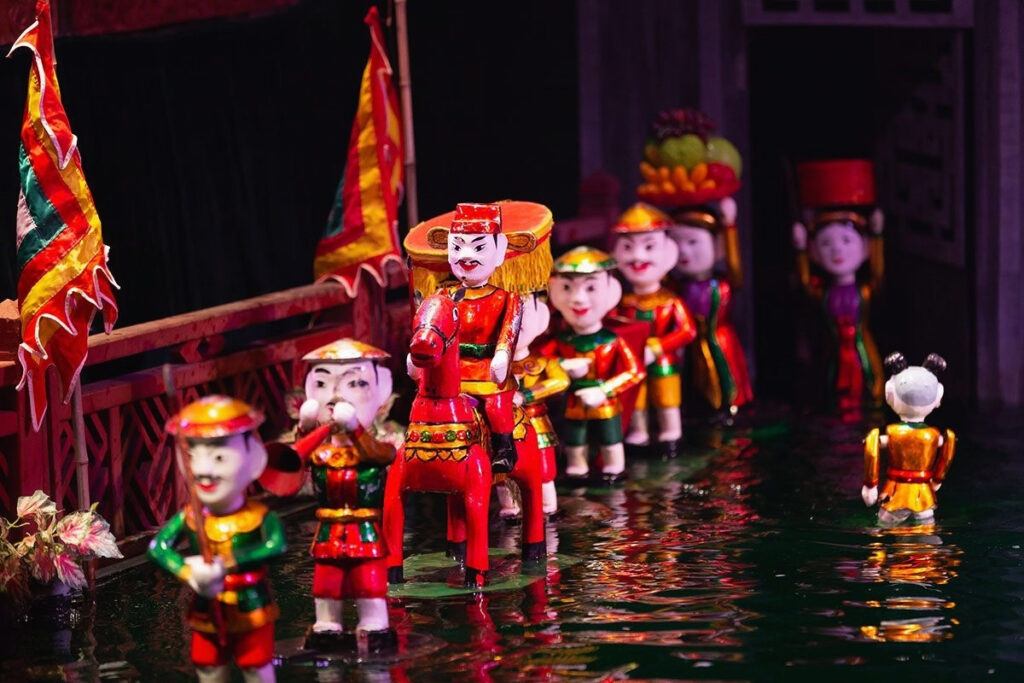
If you’re looking for a cultural experience in Vietnam that feels genuinely different from the usual temples, museums, and food tours, a Vietnamese water puppet show is worth considering.
Known locally as múa rối nước, water puppetry is a traditional Vietnamese performing art in which wooden puppets move across a pool of water while musicians perform behind a screen. The scenes draw heavily from village life, Vietnamese folklore, farming, fishing, festivals, and mythology.
For most first-time visitors, Hanoi is the best place to see it. The city’s Thang Long Water Puppet Theatre is centrally located near Hoan Kiem Lake, making it easy to combine with an evening in the Old Quarter.
Most water puppet performances are relatively short, making them easy to fit into a Hanoi sightseeing day. Check the current performance schedule when booking, as showtimes and performance details can change.
The bigger question is whether it deserves a place in your Vietnam itinerary.
For most travelers spending several days in Hanoi, I’d say yes. For someone with only one free evening in the city, it depends on what kind of traveler you are.
Table of Contents
Quick Answer: Is a Water Puppet Show Worth Seeing in Vietnam?
Yes — especially in Hanoi.
A Vietnamese water puppet show is a good choice if you want an introduction to traditional Vietnamese performing arts, folklore, music, and visual storytelling.
You don’t need to speak Vietnamese to follow the basic action, and the format works particularly well for first-time visitors and families.
But it isn’t a universal must-see.
If your only evening in Hanoi is already reserved for street food, nightlife, or simply exploring the Old Quarter, you may prefer to keep your original plans.
If you have room in your itinerary and want to experience a distinctly Vietnamese art form, a water puppet show is worth considering.
Vietnamese Water Puppet Show at a Glance
| What to know | Quick answer |
|---|---|
| Best city for first-time visitors | Hanoi |
| Best-known Hanoi venue | Thang Long Water Puppet Theatre |
| Location | Near Hoan Kiem Lake |
| Performance length | Varies by venue; Thang Long currently lists 50 minutes |
| Language | Vietnamese |
| Do you need Vietnamese? | No |
| Good for children? | Yes |
| Best for | Culture travelers, families, first-time visitors |
| Main appeal | Puppetry, music, folklore, and traditional village life |
| Book ahead? | Recommended if you need a specific time or seats together |
Why Hanoi Is the Best Place to See Vietnamese Water Puppetry
You can find water puppet performances in several parts of Vietnam, but Hanoi is the most straightforward choice for a first-time visitor.
The reason is both cultural and practical.
Water puppetry developed in northern Vietnam, particularly in the Red River Delta, and Hanoi remains closely connected to that tradition.
More importantly for travelers, the city’s best-known theater sits beside Hoan Kiem Lake, within easy reach of the Old Quarter.
That means you can experience water puppetry without making a separate day trip or changing the structure of a typical Hanoi itinerary.
For most visitors, the combination of cultural significance and central location makes Hanoi the logical place to start.
Thang Long Water Puppet Theatre: What to Know
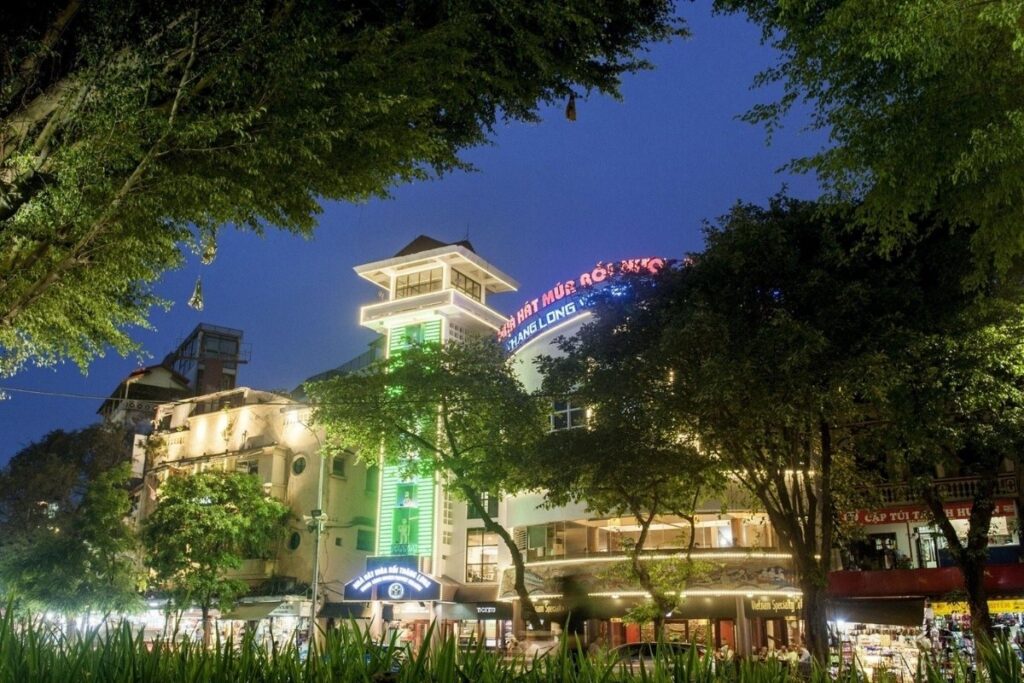
For most first-time visitors to Hanoi, Thang Long Water Puppet Theatre is the most practical place to see a traditional water puppet performance.
The theater is at 57B Đinh Tiên Hoàng Street in Hoàn Kiếm, directly beside Hoan Kiem Lake and close to Hanoi’s Old Quarter. Its central location means you can combine the performance with an evening of sightseeing, dinner, and walking around the historic center rather than making a separate trip across the city.
Why Thang Long is a good choice
Dedicated water puppet venue
The theater specializes in Vietnamese puppet arts and has become one of Hanoi’s best-known places to experience water puppetry.
Traditional performance format
The production combines puppetry, Vietnamese music, singing, folklore, and scenes inspired by village life.
Accessible to international visitors
The performance is in Vietnamese, but much of the storytelling is visual. The theater also currently lists multilingual audio-guide options, subject to the ticket and performance selected.
Current practical information
The theater currently lists performances at 50 minutes. Check its official ticket information before booking because schedules and availability can change.
What is the theater’s history?
The present-day Thang Long Water Puppet Theatre grew out of Hanoi’s puppet tradition and developed into a dedicated professional theater. According to the theater’s own history, the venue at 57B Đinh Tiên Hoàng was established as its performance home in the early 1990s after the former Hòa Bình cinema was renovated for puppet theater.
Since then, the theater has performed for audiences in Vietnam and abroad. Its official history records international tours and festival appearances, reflecting how Vietnamese water puppetry has moved from a regional folk tradition to a performance art recognized by audiences outside Vietnam.
What should you know before booking?
The theater currently lists:
- Address: 57B Đinh Tiên Hoàng, Hoàn Kiếm, Hanoi
- Capacity: 300 seats
- Performance duration: 50 minutes
- Language: Vietnamese
- Audio guide: Available in seven languages according to the theater’s current ticket information
- Age suitability: Listed as suitable for all ages
For current showtimes, ticket availability, seating, and booking, check the official Thang Long Water Puppet Theatre information before your visit.
Is Thang Long the only place to see water puppetry in Hanoi?
No.
Hanoi has other venues and, outside the city, visitors can also encounter water puppetry in places such as Đào Thục Village, a traditional water-puppet community on the outskirts of Hanoi. Vietnam Tourism identifies the village as one of the remaining places where visitors can learn more about puppet-making and the village tradition behind the art.
But these are different experiences.
If your priority is convenience, Thang Long is the obvious choice for a first-time visitor staying in central Hanoi.
If your priority is understanding the craft and its village roots, a visit beyond the city center can offer a different perspective.
For most travelers with a normal Hanoi itinerary, I would start with the theater.
What Is Vietnamese Water Puppetry?
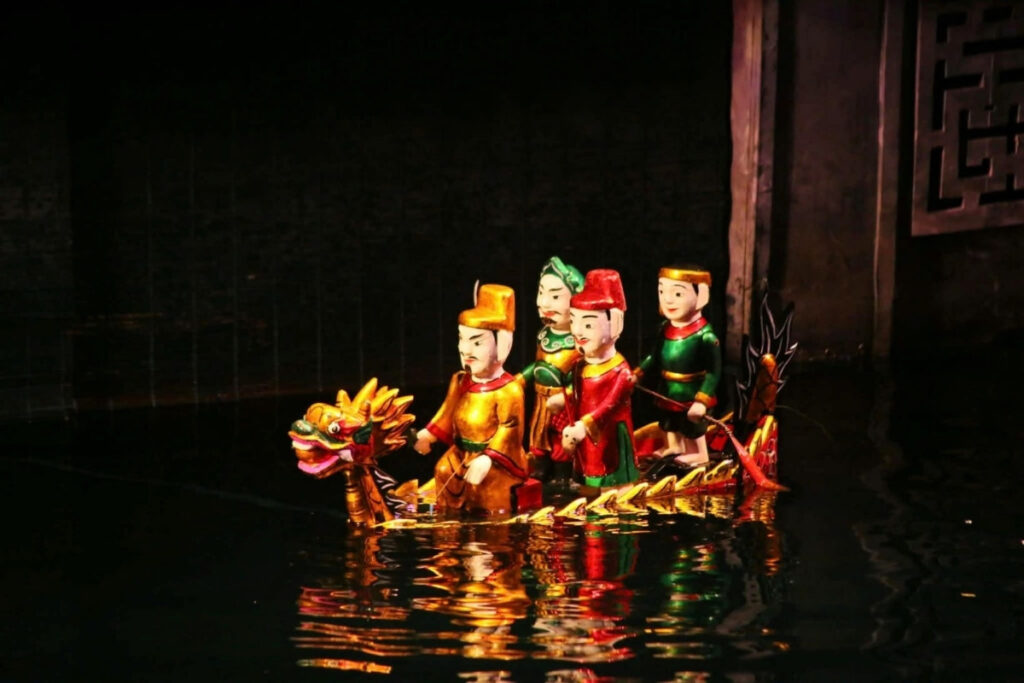
Vietnamese water puppetry, or múa rối nước, is a traditional form of Vietnamese theater in which wooden puppets perform across a shallow pool of water.
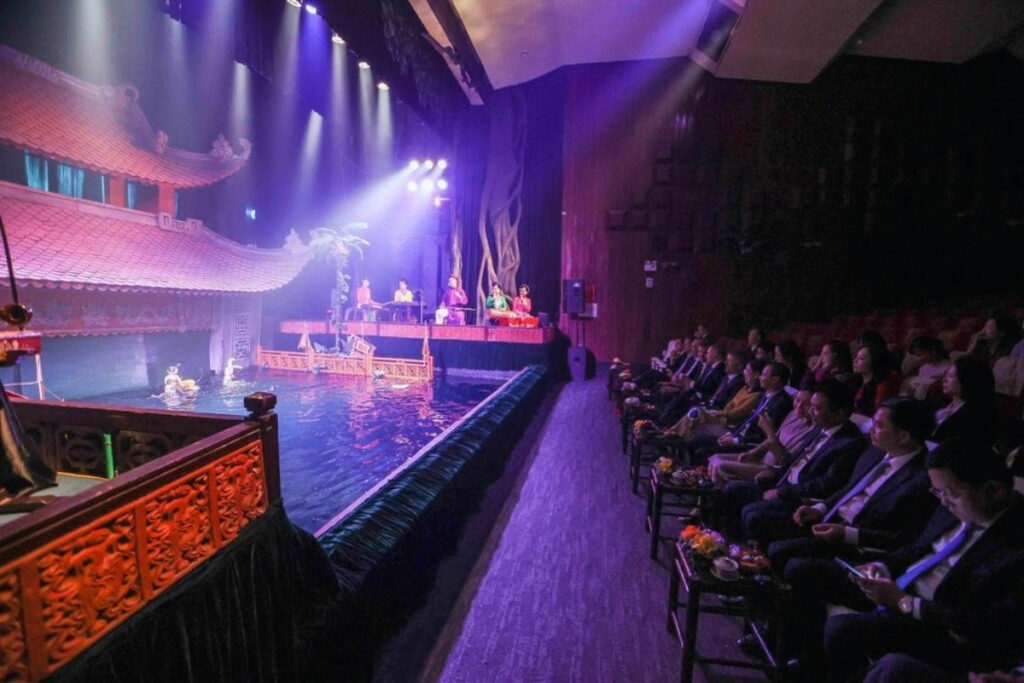
Unlike conventional puppetry, the performers remain hidden behind a screen and control the puppets using mechanisms beneath the water. From the audience’s perspective, the puppets appear to move, dance, row boats, splash through the water, and interact with one another on their own.
Performances combine puppetry, traditional Vietnamese music, singing, and storytelling. Scenes often feature village life, farming, fishing, festivals, folklore, and mythical creatures. One recurring character is Tễu, a humorous figure who often appears between scenes.
The water is more than a backdrop. It is an essential part of the performance, allowing the puppets to move in ways that would be difficult to reproduce on a conventional stage.
For travelers, that combination of puppetry, music, water, and Vietnamese folklore is what makes múa rối nước different from a typical theater performance.
A Short History of Water Puppetry
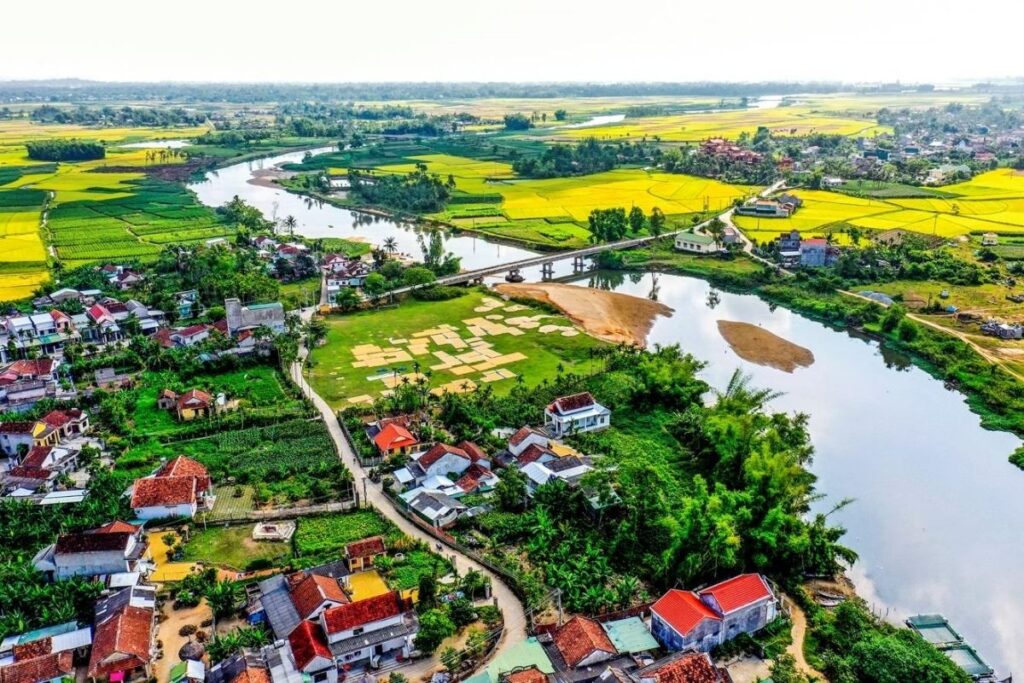
Vietnamese water puppetry, or múa rối nước, is closely associated with the Red River Delta of northern Vietnam, where rice farming and village life were shaped by water.
According to Vietnam’s national tourism authority, water puppetry emerged roughly a thousand years ago, when villagers incorporated performances into festivals held around the annual rice harvest. Flooded rice fields could become temporary stages, turning an everyday feature of rural life into part of the performance itself.
The tradition later moved beyond village celebrations. During the Lý Dynasty in the 12th century, water puppet troupes were selected to perform for the royal court, giving an art form rooted in rural communities a place in royal entertainment as well.
That history helps explain why modern performances often focus on ordinary scenes rather than a single historical narrative. Farmers working in rice fields, fishermen, buffalo, ducks, boats, village festivals, and mythical creatures all appear in the traditional repertoire.
The connection with water has also remained central.
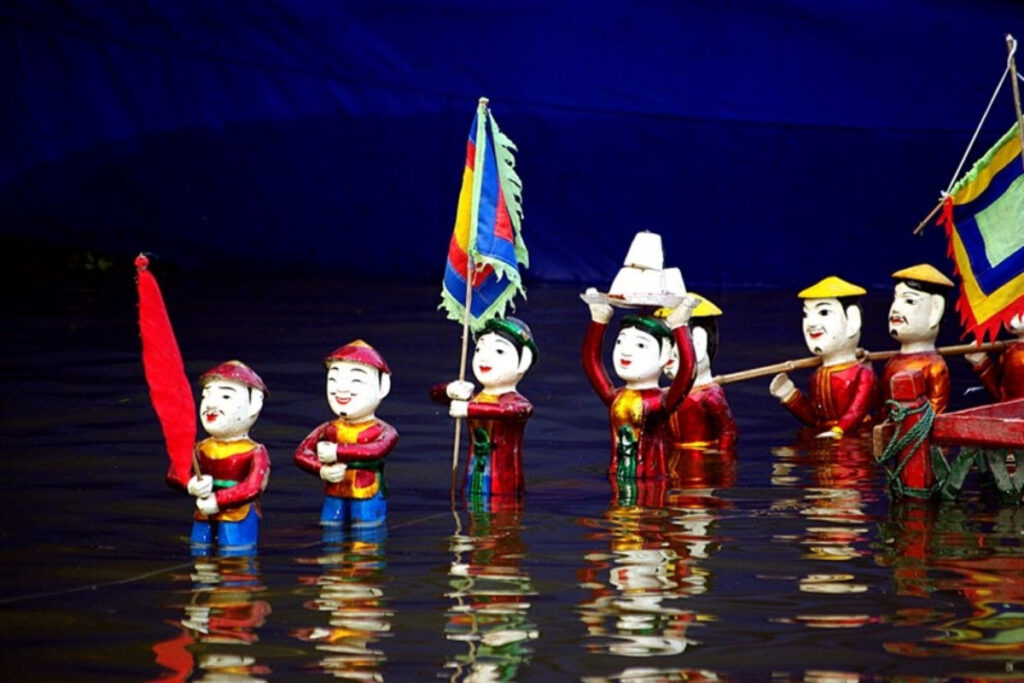
In a modern theater, the rice field has been replaced by a purpose-built pool. The puppeteers stand behind a screen, partially immersed in water, and control wooden puppets using mechanisms beneath the surface. The puppets are traditionally made from buoyant wood and coated with lacquer, while musicians perform alongside the water stage.
One of the recurring characters is Tễu, a humorous figure who often introduces or connects different scenes. Other performances may feature dragons, phoenixes, farming scenes, fishing, boat races, royal processions, and episodes from Vietnamese folklore.
For a traveler, the interesting part is not simply that the tradition is old. It is that the basic relationship between water, puppetry, music, and village life has survived as the art moved from flooded fields to modern theaters.
That continuity is what makes a water puppet show more than a colorful stage performance. It is a modern presentation of an art form that grew out of the landscape and agricultural life of northern Vietnam.
What Happens During a Water Puppet Show?
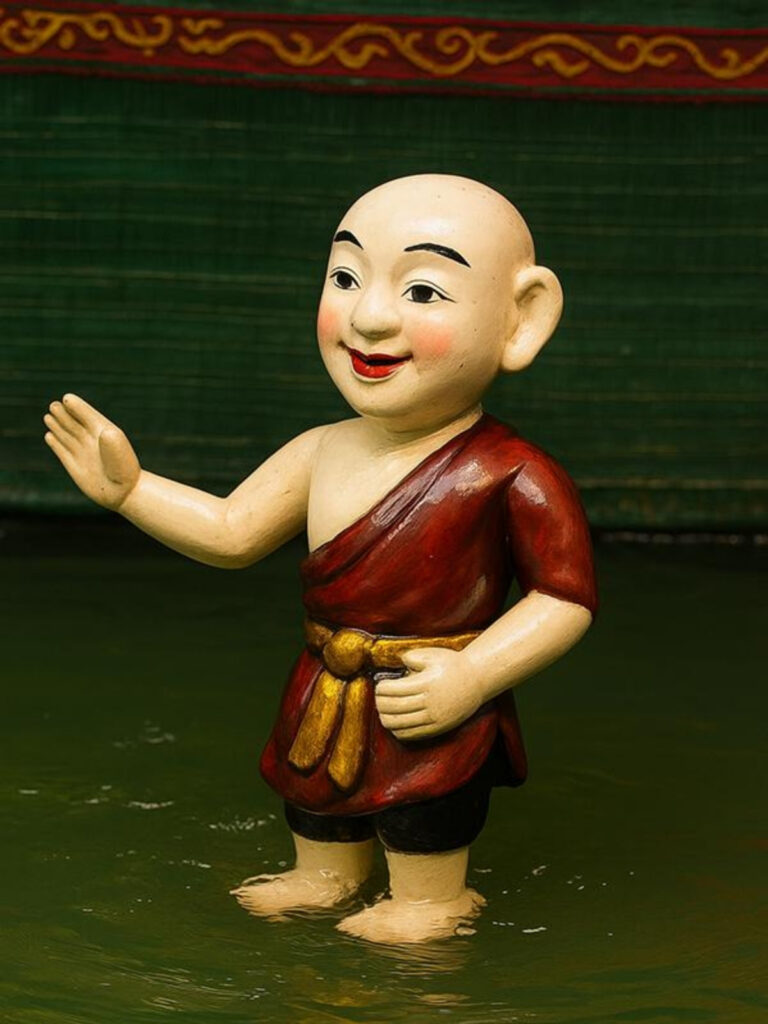
A water puppet performance usually isn’t one continuous story. Instead, it moves through a series of short scenes inspired by Vietnamese village life, folklore, farming, fishing, festivals, and mythology.
You may see farmers working in rice fields, fishermen, ducks, boats, dragons, fairies, or legendary characters.
One recurring figure is Tễu, a humorous character who often appears between scenes.
The storytelling is visual rather than dialogue-heavy, which makes the performance relatively easy for international visitors to follow.
If you’re expecting a complex theatrical plot, this may feel simple. If you’re interested in folklore, craftsmanship, music, and visual storytelling, that simplicity is part of its appeal.
How Do the Puppets Move?
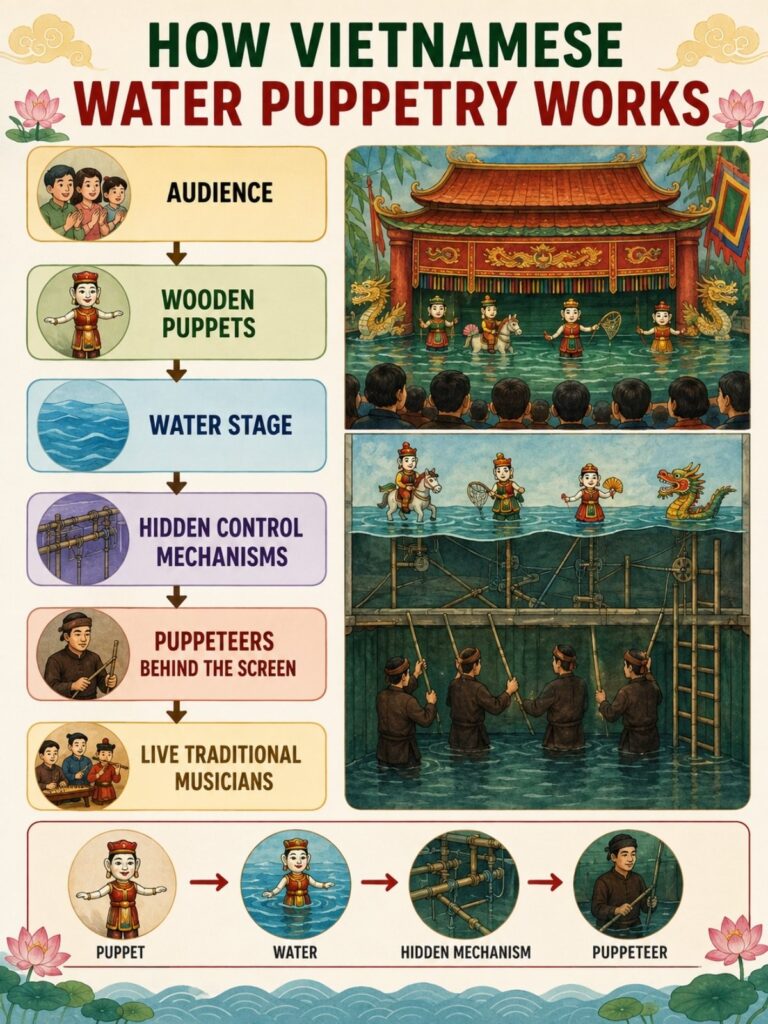
The puppeteers stand behind the stage and remain hidden from the audience.
They manipulate the puppets using rods and string mechanisms that extend beneath the water.
Because the mechanisms are concealed, a puppet can appear to walk, row, turn, jump, dance, or disappear beneath the surface without revealing how the movement is being produced.
Once you understand the basic technique, it becomes tempting to spend the entire show trying to figure out where the puppeteers are standing.
That’s part of the fun.
The technique is also physically demanding. Performers have to coordinate multiple movements while working from behind the screen and, in traditional performance conditions, standing in water for extended periods.
The Music Matters More Than You Might Expect
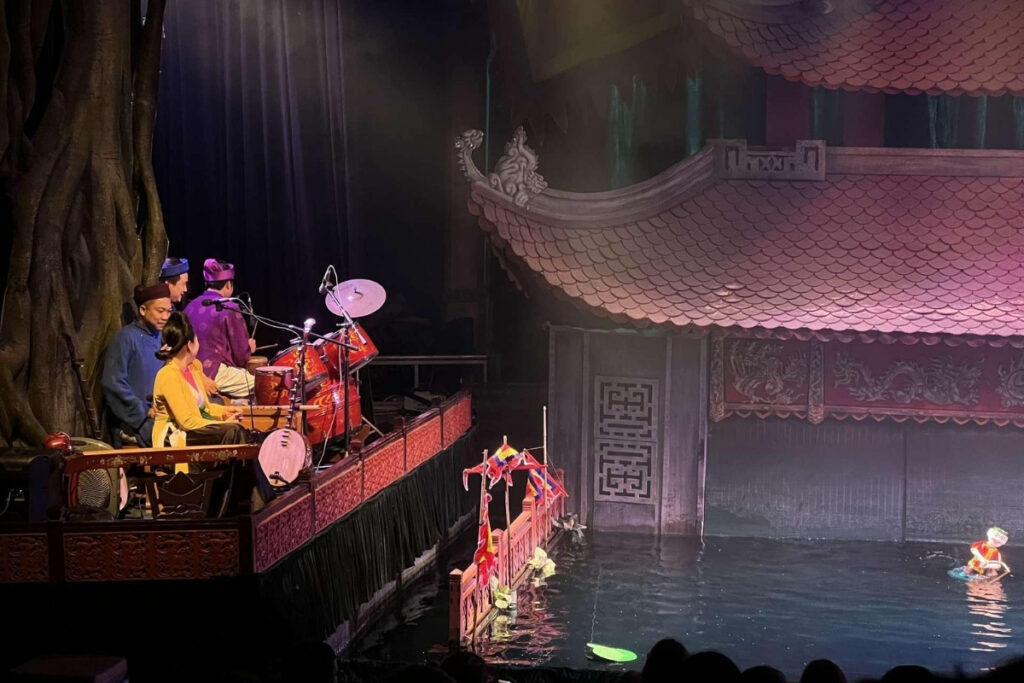
The puppets may get most of the attention, but the musicians help drive the performance.
Traditional instruments, percussion, singing, and sound effects accompany the scenes, reinforcing movement and changes in mood.
If you have a clear view of the musicians, watch them as well as the puppets. The performance makes more sense when you see the puppetry and music as parts of the same production rather than separate elements.
Do You Need to Understand Vietnamese?
No.
The performance is in Vietnamese, but much of the storytelling is visual. You can follow the basic action through movement, music, and familiar characters without understanding every line.
You may miss some jokes or cultural references, but that doesn’t prevent you from enjoying the production.
If you want more context, learning a little about Tễu, Vietnamese folklore, and traditional village life before the show can make the experience richer.
Is a Water Puppet Show a Tourist Trap?
This is a fair question, particularly for travelers who have visited heavily touristed cities before.
It is tourist-friendly, but that doesn’t automatically make it a tourist trap.
The performances are clearly designed to be accessible to visitors, and international tourists make up a significant part of the audience at the best-known Hanoi venues.
But the underlying art form is genuinely Vietnamese and predates modern tourism by centuries.
The important distinction is between a traditional art presented to tourists and an attraction invented solely for tourists.
Water puppetry falls into the first category.
That doesn’t mean every performance will appeal to every traveler. The experience is still staged, timed, and packaged for a modern audience.
But if your concern is whether the cultural tradition itself is authentic, there is a meaningful historical foundation behind what you’re watching.
Who Should See a Vietnamese Water Puppet Show?
A water puppet show is particularly well suited to:
First-time visitors to Vietnam
It provides a quick introduction to Vietnamese performing arts and folklore.
Families
The colorful puppets, animals, dragons, music, and short running time make it relatively easy for children to enjoy.
Culture-focused travelers
If you enjoy traditional crafts, folklore, music, and local history, there is plenty to appreciate.
Travelers with limited time
A performance can usually fit into a normal sightseeing day without requiring a major time commitment.
Travelers staying around Hoan Kiem
The central Hanoi location makes the theater especially convenient.
Who Might Want to Skip It?
A water puppet show isn’t automatically worth seeing for everyone.
You may want to skip it if:
- You strongly dislike theater or staged performances.
- You have only one evening in Hanoi and would rather focus entirely on food and street life.
- You expect a complex, dialogue-driven story.
- You’re looking for an immersive village experience rather than a theater production.
- You’ve already seen several traditional puppet or folk performances and want something completely different.
This is why I would describe a water puppet show as a strong recommendation, not a universal must-see.
That distinction matters when you’re planning a limited vacation.
Is a Water Puppet Show Good for Kids?
Yes, and it is one of the easier cultural activities to recommend to families.
Children don’t need to understand the historical background. The visual elements do most of the work: moving puppets, animals, dragons, boats, music, and water effects.
The short performance is another advantage.
For families with young children, an afternoon show may be easier than a late evening performance.
Is a Water Puppet Show Worth the Time?
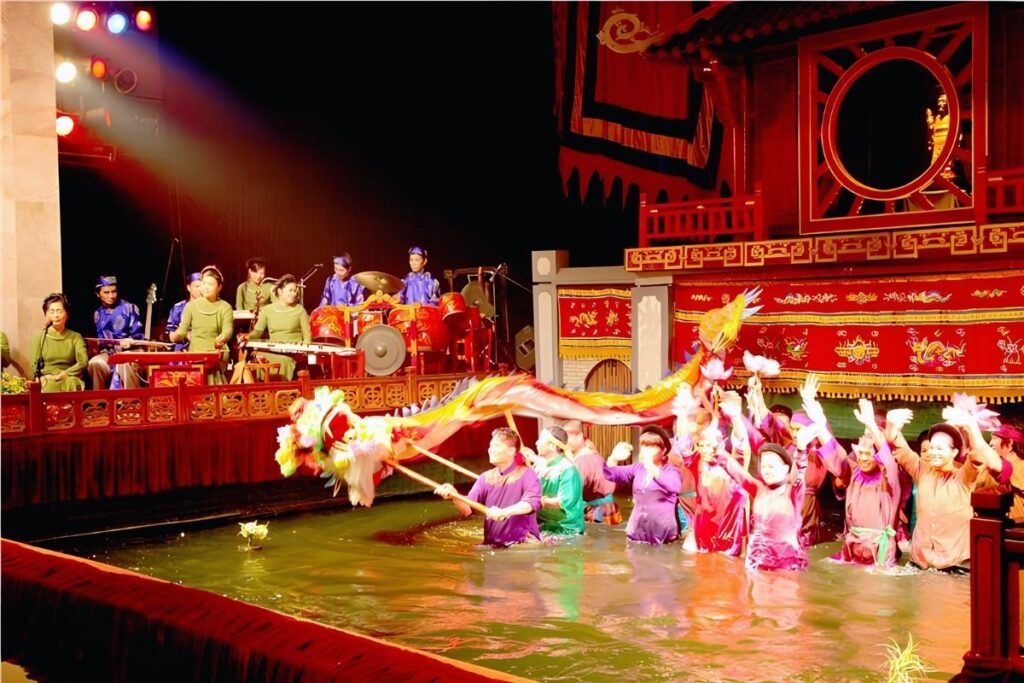
For most travelers spending several days in Hanoi, yes — especially if you’re interested in Vietnamese culture, traditional performing arts, or experiences that are difficult to find elsewhere.
The main advantage is that the show can fit naturally into an evening around Hoan Kiem Lake and the Old Quarter.
That doesn’t mean it should automatically outrank every other Hanoi experience.
If you have only one evening in the city, think about what you want from that evening. A street-food tour, an evening wandering the Old Quarter, or simply spending time around Hoan Kiem Lake may suit you better if food and atmosphere are your priorities.
A water puppet show makes more sense if you want something structured, cultural, visual, and distinctly Vietnamese.
For most first-time visitors with enough time in Hanoi, the relatively small time commitment is worthwhile if traditional Vietnamese performing arts interest you.
Where Else Can You See Water Puppetry in Vietnam?
Hanoi is the strongest recommendation for most first-time visitors, but it isn’t your only option.
Hoi An
Hoi An has water puppet performances and can be a convenient choice if the town is already on your itinerary.
Hue
Hue also offers traditional puppet performances, making it another possibility for travelers exploring central Vietnam.
Ho Chi Minh City
Southern Vietnam has its own water puppet venues, including performances aimed at visitors who want to experience the tradition without traveling north.
If Hanoi is already part of your trip, however, I wouldn’t add another city to your itinerary solely to see water puppetry.
Should You Buy Tickets in Advance?
If you have a fixed itinerary, yes.
Booking ahead makes the most sense if:
- You want a specific performance time.
- You’re traveling with children.
- You need seats together.
- You’re visiting during a busy period.
- You have only one evening available.
For current showtimes, ticket availability, and seating information, check the theater’s official booking information before you go.
Where Should You Sit?
A central seat with a clear view of the water stage is usually the safest choice.
You don’t necessarily need the most expensive ticket.
Sitting too close can make it harder to appreciate the entire stage, while a central position gives you a better sense of how the puppets interact with the water and with one another.
For families, I would prioritize sitting together and having an unobstructed view over simply choosing the closest seats.
A Simple Hanoi Water Puppet Evening
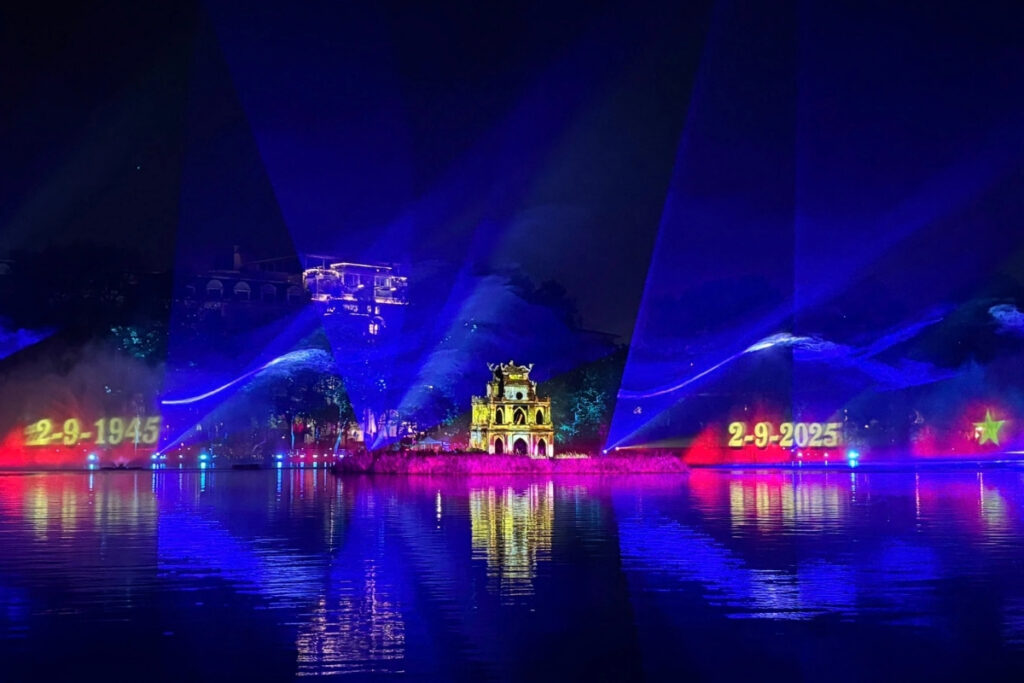
One easy way to combine the show with a Hanoi evening is:
Late afternoon: Explore Hoan Kiem Lake and the Old Quarter.
Early evening: Have dinner nearby.
Before the show: Walk to Thang Long Water Puppet Theatre.
After the show: Continue exploring the Old Quarter or stop for Vietnamese coffee or dessert.
The point isn’t to build an entire evening around the theater.
It’s to let the performance fit naturally into an evening you were already planning to spend in central Hanoi.
Water Puppet Show vs. Other Hanoi Cultural Experiences
If you’re deciding how to spend limited time in Hanoi, here’s a useful way to think about it:
| Hanoi Experience | Best If You Want… |
|---|---|
| Water puppet show | Traditional performing arts, folklore, and a short cultural experience |
| Temple of Literature | History, architecture, and a quieter cultural visit |
| Old Quarter | Street life, food, shopping, and atmosphere |
| Vietnamese Women’s Museum | Social history and stories about Vietnamese women |
| Hoan Kiem Lake | A relaxed walk through central Hanoi |
| Street food tour | Local food and a more interactive experience |
| Traditional music performance | Vietnamese music and live cultural performance |
There isn’t a universally “best” choice.
The water puppet show makes the most sense if you want something traditional, visual, and distinctly Vietnamese.
What Makes Vietnamese Water Puppetry Different?
Plenty of countries have puppet traditions.
What makes Vietnamese water puppetry unusual is the relationship between the puppets and the water.
The water isn’t simply a background.
It hides the mechanism, shapes the movement, reflects the stage lighting, and connects the modern theater performance to the ponds and flooded fields where the tradition developed.
The result is difficult to reproduce in an ordinary puppet theater.
That is what makes the tradition worth seeing in person.
Not because it is the most spectacular attraction in Vietnam, but because there are very few other places where you can watch a traditional performance built around an actual pool of water.
Final Verdict: Should You See a Vietnamese Water Puppet Show?
For most first-time visitors spending several days in Hanoi, yes.
Vietnamese water puppetry offers something different from the city’s temples, museums, food tours, and historic streets: a traditional performance built around water, live music, folklore, and handcrafted puppets.
You don’t have to understand Vietnamese to appreciate it, and you don’t need to be deeply interested in theater to enjoy the visual spectacle.
At the same time, it isn’t a universal must-see.
If your interests lie elsewhere, there is no reason to force it into a tightly packed itinerary.
But if you’re curious about Vietnamese culture and want an experience that is both entertaining and rooted in the country’s traditional performing arts, a water puppet show is one of the easier cultural experiences to recommend in Hanoi.
Vietnamese water Puppet Show FAQ
How long does a water puppet show last?
Performance times vary by venue. Thang Long Water Puppet Theatre currently lists its performances at 50 minutes. Check the theater’s official information when booking for the latest schedule.
Do you need to understand Vietnamese to enjoy a water puppet show?
No. The performance is in Vietnamese, but much of the storytelling is visual. Puppetry, music, movement, and familiar characters make the basic action easy to follow even if you don’t understand the language.
Is a water puppet show good for children?
Yes. The colorful puppets, animals, music, water effects, and visual storytelling can make the performance particularly appealing to children. Families should consider choosing a convenient showtime and booking seats together.
Should you book a water puppet show in advance?
If you have a fixed Hanoi itinerary, booking ahead is a good idea. It is especially useful if you want a specific performance time, need seats together, or have only one evening available.
Where is the best place to see a water puppet show in Hanoi?
For most first-time visitors, Thang Long Water Puppet Theatre is the most convenient choice. It is located beside Hoan Kiem Lake, close to Hanoi’s Old Quarter, and specializes in Vietnamese water puppetry.
Is a water puppet show a tourist trap?
Not necessarily. The experience is presented for tourists, but the art form itself is a genuine Vietnamese traditional performance tradition. The key is to approach it as a cultural performance rather than expecting an immersive village experience.
What is Tễu in Vietnamese water puppetry?
Tễu is a humorous recurring character in Vietnamese water puppetry. He often appears between scenes and serves as one of the most recognizable figures in the traditional performance.
Is a water puppet show worth seeing in Hanoi?
For most first-time visitors interested in Vietnamese culture, yes. It offers a compact introduction to traditional puppetry, music, folklore, and visual storytelling that is quite different from Hanoi’s museums, temples, and food experiences.
Continue Exploring Vietnamese Culture
A water puppet show is one small window into Vietnamese culture. If you want to understand more about the traditions, family values, festivals, and beliefs that shape everyday life in Vietnam, continue exploring these guides from Tam Voc Viet:
- Vietnamese Culture – Explore the traditions, values, beliefs, and everyday customs that shape life across Vietnam.
- Vietnamese Family Culture – Learn how family relationships, respect for elders, and community remain central to Vietnamese life.
- Ao Dai: Vietnam’s National Dress -Discover the history and cultural significance of Vietnam’s iconic traditional costume.
- Tet Holiday in Vietnam – Discover the traditions, family gatherings, and ancestral customs surrounding Vietnam’s most important holiday.
- Vietnamese Etiquette – Understand everyday customs, forms of respect, greetings, and social behavior that can help you travel more comfortably in Vietnam.
- Ancestor Worship in Vietnam – Discover why family ancestry and remembrance remain important parts of Vietnamese cultural life.
- Vietnamese Traditional Clothing – Explore the cultural meaning and diversity of traditional clothing across Vietnam.
- Vietnamese Festivals – Explore the festivals and community traditions that bring Vietnamese villages and cities to life throughout the year.
- Vietnamese Religion & Beliefs – Understand the Buddhist, Confucian, Taoist, folk, and other influences that have shaped Vietnamese culture.
- Vietnamese Architecture – Explore the houses, temples, communal spaces, and architectural traditions that reflect Vietnam’s cultural history.
Together, these guides provide a broader look at the cultural traditions behind many of the experiences travelers encounter in Vietnam.
A Note for Travelers
You don’t need to know much about Vietnamese performing arts before attending a water puppet show.
In fact, one of the best ways to appreciate it is simply to watch how the different elements work together.
Notice the relationship between the puppets and the water. Listen to the musicians behind the stage. Pay attention to the scenes of farming, fishing, village celebrations, and mythology.
These details are not random.
They reflect the rural landscapes and community life in which Vietnamese water puppetry developed, particularly in the Red River Delta of northern Vietnam.
You may not understand every song, joke, or cultural reference, and that’s okay. The performance is highly visual, and you can still appreciate the craftsmanship and storytelling without speaking Vietnamese.
If something catches your attention, look it up afterward. Learning about Tễu, Vietnamese dragons, village festivals, or the traditional water pavilion can add another layer of meaning to what you have just seen.
For travelers, that’s part of the value of a cultural performance: you don’t have to understand everything immediately for it to make you curious about Vietnam.
Sources & Further Reading
This guide draws on Vietnamese cultural resources, tourism information, and established research on Vietnamese water puppetry and traditional performing arts.
For practical information such as current performance times and ticket availability, travelers should always check the relevant theater’s official information before visiting, as schedules and prices can change.
Suggested sources:
- Vietnam Tourism — All About Vietnamese Water Puppets — Vietnam’s national tourism website provides background on the history, traditional performance setting, puppets, music, Tễu, and the connection between water puppetry and northern Vietnamese village life.
- Thang Long Water Puppet Theatre — Official Website — The theatre’s official site provides information about the venue, performances, artists, and its role in preserving and developing Vietnamese water puppetry.
- Thang Long Water Puppet Theatre — Official Ticket Information — Useful for checking the theatre’s location, ticket information, seating, and current visitor information.
- Vietnam Tourism — Hanoi’s Must-See Attractions — Provides additional official tourism information about the Water Puppet Theatre, its location near Hoan Kiem Lake, and its role as a Hanoi cultural attraction.
- UNESCO — Viet Nam Intangible Cultural Heritage Resources — Provides broader heritage context for traditional cultural practices and their transmission in Vietnam.
Editorial note: Historical and cultural information in this guide should be supported by authoritative Vietnamese cultural institutions and established scholarship rather than relying solely on commercial travel websites.
About the Author
Tam Voc Viet Editorial Team
The Tam Voc Viet Editorial Team creates practical travel and cultural guides for international readers who want to understand Vietnam beyond its most famous destinations.
Our guides explore Vietnam through its history, culture, traditions, food, people, and everyday life, with a focus on information that helps travelers understand what they see and experience during a trip.
For cultural topics, we consult official Vietnamese sources, established cultural references, and relevant research. We aim to distinguish between documented cultural traditions and modern tourist experiences while keeping our guides practical and accessible for international travelers.
Article Information
Category: Vietnamese Culture
Topic: Vietnamese Water Puppet Shows
Published: August 2026
Last Updated: August 2026
Author: Tam Voc Viet Editorial Team
