

 Tiếng Việt
If you’re invited into a Vietnamese home, one of the first things you may notice isn’t the furniture or décor—it’s a small altar placed in a position of honor. Decorated with fresh flowers, fruit, candles, and incense, this sacred space quietly reflects one of Vietnam’s most enduring traditions: ancestor worship.
For many international visitors, especially those from Western countries, the idea of maintaining an altar for deceased family members may seem unfamiliar or even religious. In Vietnam, however, ancestor worship is less about religion and more about family, gratitude, and remembrance. It is a cultural tradition practiced by millions of Vietnamese people regardless of whether they identify as Buddhist, Catholic, or non-religious.
For visitors, ancestor worship offers a unique window into everyday Vietnamese life. It influences family traditions, home design, major celebrations, and even the rhythm of the Lunar New Year. It shapes the design of family homes, the timing of important celebrations, funeral customs, wedding rituals, and especially Tết (Vietnamese Lunar New Year), when families gather to honor both the living and the departed.
Unlike many cultures where remembrance is limited to funerals or annual memorials, Vietnamese families believe that ancestors remain an important part of family life. Through simple acts such as lighting incense, preparing favorite dishes, or gathering for annual remembrance ceremonies, each generation expresses respect for those who came before them while passing traditions on to the next.
Understanding ancestor worship in Vietnam offers far more than cultural knowledge—it helps explain why family relationships remain exceptionally strong, why respect for elders is deeply valued, and why many Vietnamese traditions continue to thrive in a rapidly modernizing society.
Whether you’re planning your first trip to Vietnam, living in the country, or simply curious about Vietnamese culture, this guide explores the history, beliefs, rituals, and modern-day significance of one of Vietnam’s most meaningful traditions.
Quick Answer
Ancestor worship in Vietnam is the long-standing tradition of honoring deceased family members through home altars, incense offerings, prayers, and family ceremonies. Rather than being a separate religion, it is a cultural practice rooted in filial piety, gratitude, and the belief that ancestors continue to watch over and bless future generations. It remains one of the most important traditions in Vietnamese society today.
Table of Contents
What Is Ancestor Worship in Vietnam?
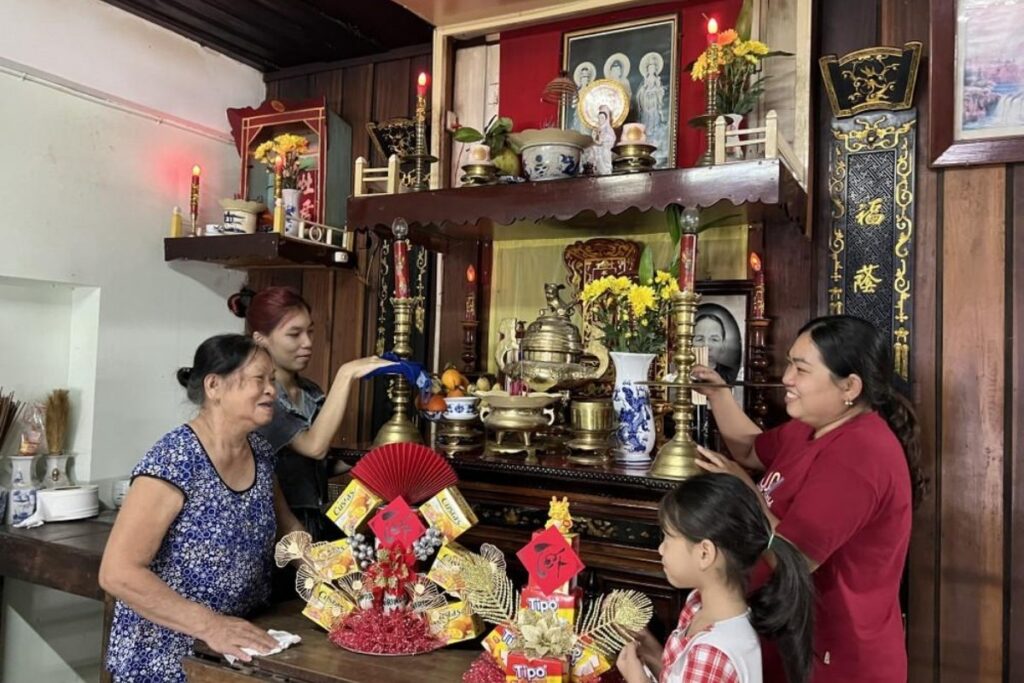
Ancestor worship in Vietnam is the tradition of honoring deceased family members and maintaining a symbolic relationship with them through remembrance, rituals, and family ceremonies. Known in Vietnamese as “thờ cúng tổ tiên”, the practice is deeply woven into everyday life and is considered one of the defining characteristics of Vietnamese culture.
Unlike the word worship, which may suggest the adoration of a deity in English, ancestor worship in Vietnam is better understood as a lifelong expression of gratitude and filial respect. Vietnamese people do not regard their ancestors as gods. Instead, they believe that family members who have passed away continue to care for their descendants in the spiritual world, while the living have a responsibility to remember and honor them.
A Tradition Rooted in Family Rather Than Religion
One of the biggest misconceptions among international visitors is that ancestor worship is a separate religion. In reality, it is a cultural tradition that exists alongside many different faiths.
A Vietnamese family may attend a Buddhist pagoda, a Catholic church, or have no formal religious affiliation at all, yet still maintain an ancestor altar at home. This coexistence reflects Vietnam’s long history of blending cultural traditions with religious beliefs.
The Philosophy Behind Ancestor Worship
Ancestor worship is closely connected to the Vietnamese concept of filial piety (hiếu), a value strongly influenced by Confucian philosophy.
Children are taught from an early age that respect for parents does not end with death. Instead, caring for ancestors continues through remembrance, family gatherings, and maintaining the family altar.
Many Vietnamese also believe that ancestors continue to watch over their descendants. While beliefs vary from family to family, ancestors are often seen as spiritual guardians who may offer protection, guidance, and blessings, particularly during important moments such as weddings, business openings, examinations, or the Lunar New Year.
Whether interpreted spiritually or symbolically, the tradition encourages each generation to remember where they came from and to honor the legacy they have inherited.
How Ancestor Worship Is Practiced
Ancestor worship is not limited to special occasions. In many Vietnamese households, it is part of everyday life.
Common practices include:
- Lighting incense at the family altar.
- Offering fresh fruit, flowers, tea, or cooked food.
- Keeping the altar clean and well maintained.
- Remembering ancestors during important family events.
- Gathering for annual death anniversary ceremonies (Giỗ).
- Visiting and cleaning family graves, especially before Tết.
These rituals are usually quiet and personal rather than elaborate. Even families living in small apartments often dedicate a modest space to honoring their ancestors, demonstrating that the tradition is valued regardless of wealth or living conditions.
The Origins and History of Ancestor Worship in Vietnam
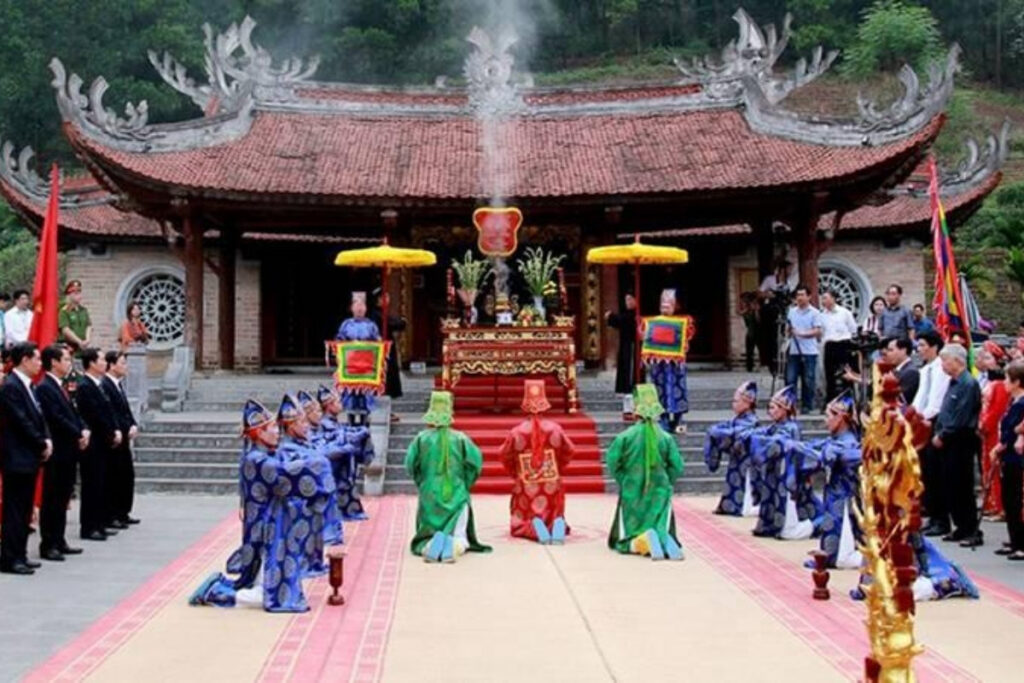
To many visitors, ancestor worship may appear to be a religious practice rooted in Buddhism or influenced by Chinese culture. While these traditions have certainly shaped its development, the origins of ancestor worship in Vietnam go back much further.
Long before Buddhism, Confucianism, or Taoism reached Vietnam, early Vietnamese communities believed that the spirits of deceased family members continued to exist and remained connected to the living. These beliefs formed the foundation of what would later become one of Vietnam’s most enduring cultural traditions.
Today, ancestor worship reflects thousands of years of history, blending indigenous beliefs with philosophical and religious influences into a uniquely Vietnamese way of honoring the past.
Indigenous Roots: A Connection Between the Living and the Dead
Archaeological evidence suggests that prehistoric communities living in the Red River Delta practiced rituals associated with death and remembrance long before written history.
Like many ancient agricultural societies, early Vietnamese people viewed life and nature as part of a continuous cycle. Death was not necessarily considered an end but a transition to another realm where ancestors continued to care for their descendants.
Families believed that maintaining a respectful relationship with departed relatives helped ensure harmony, prosperity, and protection for future generations. These early beliefs laid the groundwork for traditions that continue to be practiced today, including maintaining family altars and making offerings during important occasions.
The Influence of Confucianism
One of the most significant influences on ancestor worship arrived during the period of Chinese rule, when Confucian philosophy became deeply embedded in Vietnamese society.
Central to Confucian thought is the principle of filial piety—the moral obligation to respect, obey, and care for one’s parents and elders. In Vietnam, this value naturally extended beyond a person’s lifetime.
Honoring deceased parents and grandparents became an essential expression of family duty rather than simply a personal choice. Over time, ancestor worship evolved into a practice that reinforced social values such as respect, responsibility, family hierarchy, and continuity between generations.
Even today, these ideals remain visible in Vietnamese family life, where elders are highly respected and family relationships often take priority over individual interests.
Buddhism and Taoism Add Spiritual Dimensions
Beginning around the first centuries CE, Buddhism and Taoism also became influential in Vietnam.
Rather than replacing existing traditions, these belief systems blended with local customs.
Buddhism contributed ideas about compassion, remembrance, and the cycle of life and death. Many Vietnamese families invite Buddhist monks to conduct memorial ceremonies or pray for deceased relatives, particularly during funerals or annual remembrance rituals.
Taoism introduced concepts related to harmony between the spiritual and physical worlds, reinforcing the belief that maintaining balance between the living and the dead benefits the entire family.
This ability to absorb different influences without losing its original identity is one reason ancestor worship has remained remarkably resilient throughout Vietnamese history.
A Tradition That Survived Dynasties and Change
Vietnam has experienced centuries of political change, foreign occupation, colonial rule, wars, and rapid modernization. Yet ancestor worship has endured through every period.
During the imperial dynasties, ancestor worship was encouraged as a way of strengthening family values and social order. Even during times of conflict and economic hardship, families continued to maintain ancestral altars whenever possible.
In modern Vietnam, lifestyles have changed dramatically. Many people now live in apartments instead of traditional family homes, and younger generations often study or work abroad. Despite these changes, the tradition has adapted rather than disappeared.
A compact altar in a city apartment, a virtual family gathering during a death anniversary, or a trip home for Tết all reflect the same enduring belief: family bonds do not end with death.
The Philosophy Behind Ancestor Worship
At the heart of ancestor worship in Vietnam is a simple but powerful belief: a family’s connection does not end when someone passes away. While life is temporary, the bond between generations continues through memory, gratitude, and shared responsibility.
This philosophy explains why ancestor worship has remained one of Vietnam’s most enduring traditions. Rather than focusing solely on rituals or ceremonies, it reflects the values that shape family life, social relationships, and personal identity.
Filial Piety: Respect Beyond a Lifetime
One of the most important principles behind ancestor worship is filial piety, known in Vietnamese as hiếu.
From childhood, Vietnamese people are taught to respect, care for, and support their parents and grandparents. These responsibilities do not end with death. Instead, honoring deceased family members is viewed as a continuation of the same respect shown during their lifetime.
Maintaining an ancestor altar, remembering death anniversaries, or offering incense during important occasions are not seen as obligations imposed by religion. They are expressions of appreciation for the sacrifices made by previous generations.
A common Vietnamese saying captures this idea:
“When drinking water, remember its source.” (Uống nước nhớ nguồn.)
Although the phrase is often translated literally, its deeper meaning is to never forget the people whose efforts made today’s opportunities possible.
Gratitude as a Way of Life
Ancestor worship is closely tied to gratitude.
For many Vietnamese families, every generation inherits not only material possessions but also family values, traditions, and responsibilities. Remembering ancestors is a way of acknowledging that individual success is rarely achieved alone.
This perspective influences everyday life. Children are encouraged to appreciate their parents’ sacrifices, adults often care for aging family members at home, and important achievements—such as graduating from university, starting a business, or buying a new house—may be shared symbolically with ancestors through a simple offering of incense.
In this sense, ancestor worship is less about looking backward than recognizing the continuous support of previous generations.
Family Is a Continuous Line
In many Western cultures, family history is often viewed through photographs, genealogy records, or occasional reunions. In Vietnam, the relationship between generations tends to be more active.
Many Vietnamese believe that ancestors remain spiritually connected to the family, continuing to watch over children and grandchildren. Whether interpreted literally or symbolically, this belief encourages families to preserve traditions and maintain strong relationships across generations.
It also explains why extended families often remain closely connected, even when members live in different cities or countries. Annual gatherings for Giỗ (death anniversaries) or Tết become opportunities not only to honor ancestors but also to strengthen family bonds among the living.
The Vietnamese Family Altar: The Heart of the Home
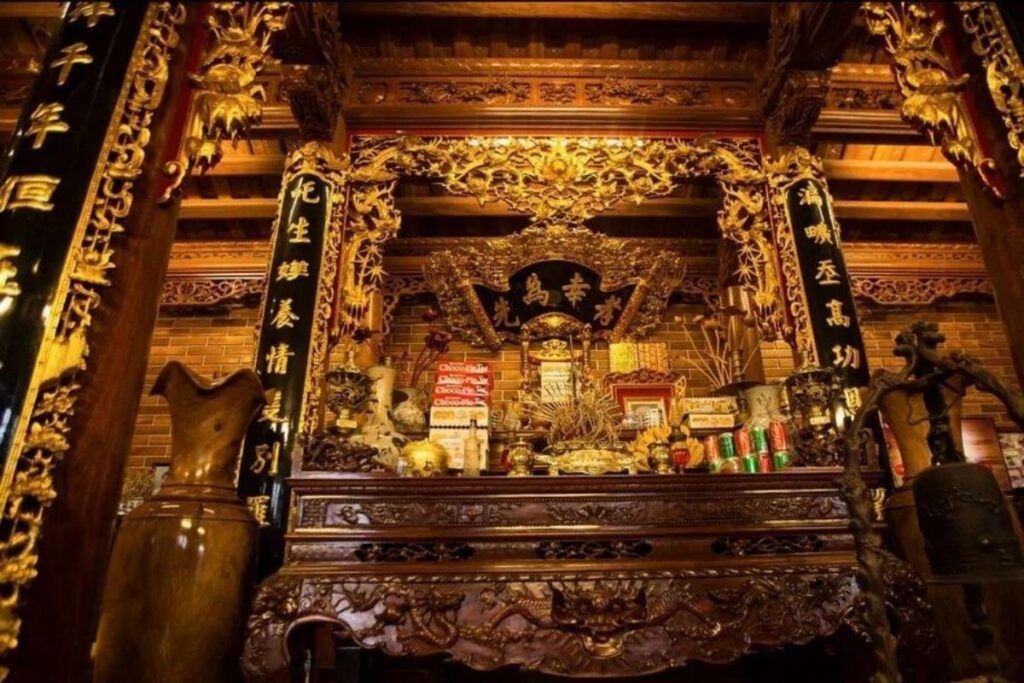
For many travelers, the family altar is one of the most recognizable features inside a Vietnamese home. Whether in a centuries-old ancestral house, a suburban townhouse, or a modern apartment, this sacred space quietly reflects the importance of family, remembrance, and respect.
Known in Vietnamese as bàn thờ gia tiên, the ancestor altar is far more than a decorative display. It serves as the spiritual center of the household—a place where family members honor previous generations and mark life’s most meaningful moments.
Unlike places of worship that people visit occasionally, the family altar is part of daily life. It reminds each generation that the home is built not only by those who live there today but also by those whose lives and sacrifices made it possible.
Where Is the Family Altar Placed?
Traditionally, the ancestor altar occupies the most respected location in the home.
In older Vietnamese houses, it is often positioned in the main reception room, where guests are welcomed and important family gatherings take place. In multi-story homes, the altar is frequently placed on the highest floor, symbolizing honor and closeness to the spiritual world.
Modern apartments, where space is more limited, usually feature a compact altar mounted on a wall or placed on a dedicated cabinet. Although the design may be simpler, the meaning remains the same.
Regardless of size or style, the altar is carefully maintained and treated with great respect.
What You’ll Find on a Vietnamese Family Altar
Although every family arranges its altar differently, several elements are commonly found throughout Vietnam.
Common Items on a Vietnamese Family Altar
Ancestor Photographs
Framed photographs of deceased parents, grandparents, or other relatives are usually placed at the center of the altar. In some older ancestral homes, families may instead display wooden memorial tablets engraved with the names of their ancestors.
Incense Burner
The incense burner is considered the focal point of the altar. During prayers or family ceremonies, incense sticks are placed here as a symbolic way of expressing respect and remembrance.
Candles or Oil Lamps
Fresh Flowers
Fruit Offerings
Tea, Rice Wine, and Water
More Than Decoration
To someone unfamiliar with Vietnamese culture, the altar may simply appear to be an attractive piece of furniture.
For Vietnamese families, however, every object has symbolic meaning.
The altar represents continuity between generations. The photographs remind family members of their roots, the incense symbolizes communication between the living and the departed, while flowers and offerings express gratitude and remembrance.
Rather than being used only during religious occasions, the altar often becomes the first place family members visit before significant events such as examinations, weddings, business openings, or long journeys.
Caring for the Altar
Maintaining the family altar is considered an act of respect.
Family members regularly:
- Dust and clean the altar.
- Replace fresh flowers and fruit.
- Refill cups of water or tea.
- Light incense during important occasions.
- Remove offerings after ceremonies.
Before Tết, many households perform a thorough cleaning of the altar and decorate it with festive flowers and traditional New Year offerings. This preparation symbolizes welcoming both ancestors and good fortune into the home for the coming year.
Respecting the Altar as a Visitor
If you’re invited into a Vietnamese home, you may notice family members pausing briefly at the altar before beginning an important celebration or family meal.
Visitors are not generally expected to participate, but showing respect is appreciated.
Some simple guidelines include:
- Avoid touching objects on the altar unless invited to do so.
- Do not place personal belongings on or near the altar.
- Ask permission before taking photographs.
- Speak quietly when standing nearby.
- If invited to light incense, follow your host’s instructions.
Most Vietnamese families understand that foreign visitors may be unfamiliar with these customs and are usually happy to explain their traditions.
Daily Rituals and Offerings in Ancestor Worship
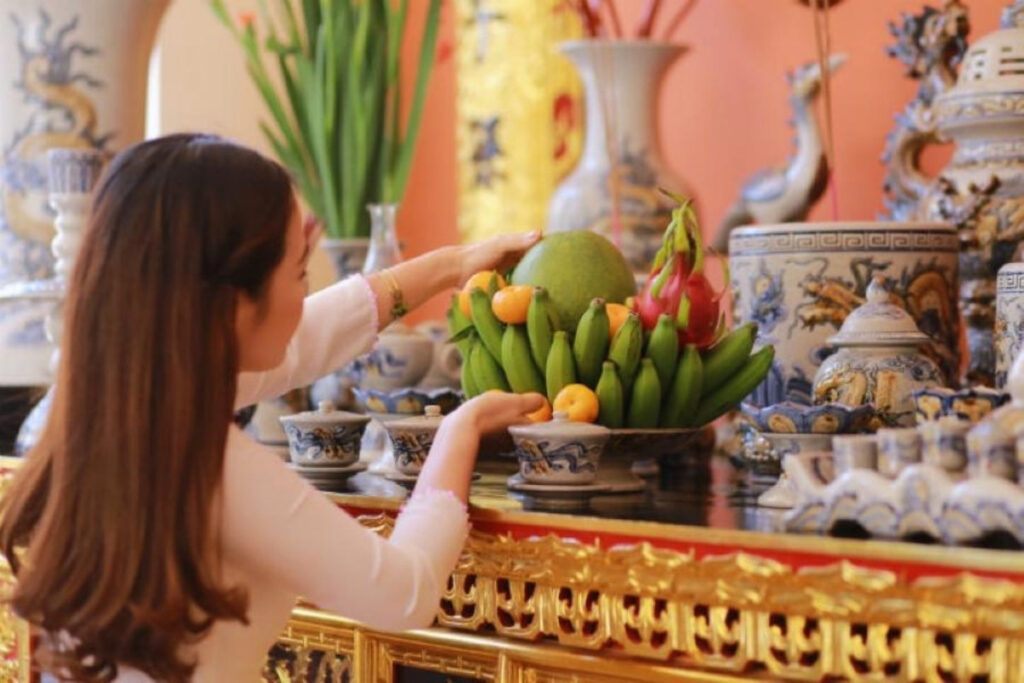
While festivals such as Tết and annual Giỗ ceremonies receive the most attention, ancestor worship in Vietnam is not limited to special occasions. For many families, it is woven into everyday life through simple rituals that take only a few minutes but carry deep personal meaning.
These daily practices are less about following strict religious rules than expressing gratitude, remembering loved ones, and keeping family traditions alive. The rituals vary from household to household, yet the intention remains remarkably consistent across the country.
Lighting Incense
The most recognizable ritual is the lighting of incense.
In many Vietnamese homes, incense is burned on important days such as the first and fifteenth day of the lunar month, family celebrations, or before significant life events. Some households also light incense every morning, while others do so less frequently depending on family traditions.
As the fragrant smoke rises, it symbolizes respect and remembrance. Many Vietnamese quietly bow before the altar, offering a brief prayer or simply taking a moment to reflect on their family.
For visitors, this ritual may appear solemn, but within Vietnamese homes it is often a calm and familiar part of everyday life.
Offering Food and Drinks
Food plays an important role in ancestor worship because sharing meals has long been a symbol of family unity in Vietnamese culture.
Offerings commonly include:
- Fresh seasonal fruit
- Tea or fresh water
- Rice wine
- Traditional cakes
- Home-cooked dishes prepared for special occasions
During larger family ceremonies, the meal placed on the altar often includes dishes that the deceased particularly enjoyed during their lifetime. After the ceremony is completed, the food is shared among family members, turning the ritual into a meal that brings generations together.
Rather than being viewed as food left for spirits, these offerings symbolize hospitality, gratitude, and the continuing bond between the living and their ancestors.
Keeping the Altar Clean
Caring for the ancestor altar is itself considered an act of respect.
Fresh flowers are replaced regularly, fruit is renewed before it spoils, and the altar is kept free from dust. Burned incense ashes are removed carefully, and decorative items are arranged neatly.
Before major festivals, especially Tết, families often spend considerable time cleaning and redecorating the altar. This tradition reflects the belief that welcoming a new year should begin with a clean and respectful space for both ancestors and the living.
Seeking Blessings During Important Moments
Ancestor worship also accompanies many of life’s milestones.
Before significant occasions, family members often light incense and pay their respects at the family altar. These moments may include:
- A wedding ceremony
- The birth of a child
- University entrance examinations
- Starting a new job
- Opening a business
- Buying a new home
- Leaving for a long journey
Rather than asking for miracles, these quiet rituals are generally seen as a way of seeking encouragement and honoring family support before entering a new stage of life.
Giỗ: Vietnam’s Annual Death Anniversary Tradition
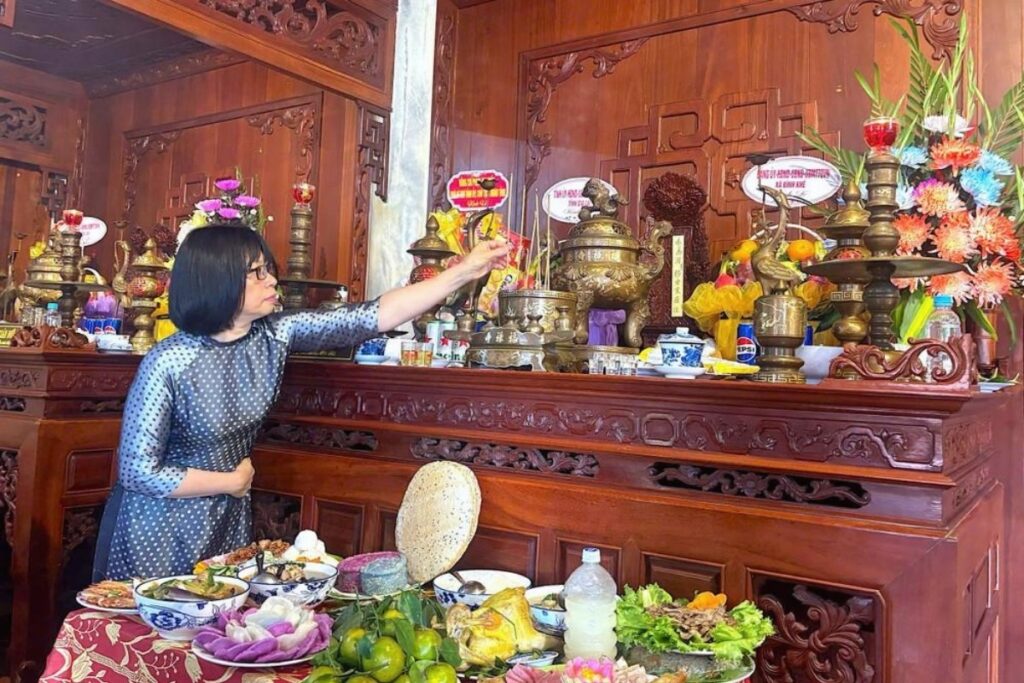
Among all the rituals associated with ancestor worship in Vietnam, none is more personal or significant than the Giỗ (death anniversary). Rather than marking the date of a person’s birth, Vietnamese families commemorate the day their loved one passed away—a tradition that reinforces the belief that family bonds continue beyond death.
For many visitors, the idea of celebrating a death anniversary may seem unusual. In Vietnam, however, Giỗ is not a day of mourning. Instead, it is a day of remembrance, gratitude, and family reunion.
Across the country, relatives return home, stories are shared, favorite family recipes are prepared, and younger generations learn about the lives of grandparents and ancestors they may never have met.
What Is a Giỗ?
A Giỗ is the annual ceremony held on the lunar calendar to honor a deceased family member.
The observance usually takes place at the home of the eldest child or at the family’s ancestral house, where the ancestor altar is located. Close relatives—and in many families, neighbors and close friends—are invited to attend.
Unlike public memorial services, a Giỗ is primarily a family occasion. While customs vary from region to region, the central purpose remains the same: to remember the deceased with gratitude and bring the family together.
Preparing for the Ceremony
Preparation often begins a day or two in advance.
Family members clean the ancestor altar, arrange fresh flowers, replace fruit offerings, and prepare a meal that reflects family traditions. In many households, several generations work together in the kitchen, making the preparation itself an important part of the occasion.
The menu varies depending on the region and the family’s preferences, but dishes are usually homemade and served in generous portions.
Many families intentionally prepare foods that the deceased particularly enjoyed during their lifetime, adding a deeply personal touch to the ceremony.
The Ceremony
When everything is ready, the family gathers at the ancestor altar.
The ceremony is typically simple and respectful.
The eldest family member or the designated host lights incense and offers prayers expressing gratitude to the ancestors. Other relatives follow by lighting incense, bowing before the altar, and taking a quiet moment to remember the person being honored.
Unlike formal religious services, there is no single script or universal ritual. Each family follows customs that have been passed down through generations.
The atmosphere is usually peaceful rather than solemn, reflecting respect rather than grief.
A Family Reunion Across Generations
One of the most meaningful aspects of a Giỗ is the opportunity it creates for family members to reconnect.
Relatives who live in different cities—or even overseas—often arrange their schedules to return home whenever possible. Children and grandchildren hear stories about earlier generations, preserving memories that might otherwise be lost over time.
During the shared meal, conversations often move naturally between memories of the deceased, updates about family life, and hopes for the future.
In this way, the ceremony strengthens relationships among the living while honoring those who came before them.
Why Giỗ Matters
To many foreign visitors, a death anniversary might sound like an occasion centered on loss.
For Vietnamese families, it represents something quite different.
A Giỗ is an opportunity to celebrate a person’s life, acknowledge the sacrifices of previous generations, and strengthen the bonds that connect the family today. It reminds each generation that while individuals pass away, the family itself continues.
This perspective helps explain why ancestor worship remains such a vital part of Vietnamese culture—not because it focuses on death, but because it celebrates continuity, memory, and the enduring importance of family.
While Giỗ is observed throughout the year according to each family’s lunar calendar, ancestor worship reaches its most visible expression during Tết, when millions of Vietnamese families across the country prepare to welcome not only a new year, but also the symbolic return of their ancestors to celebrate alongside them.
Ancestor Worship During Tết: Welcoming Ancestors Home
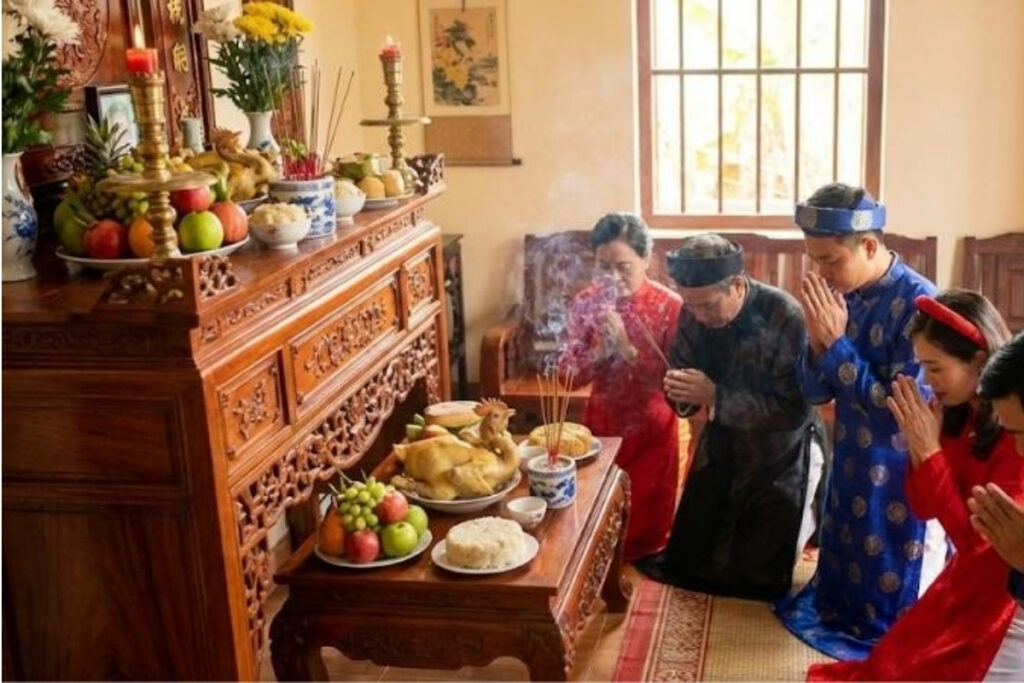
No time of year better illustrates the importance of ancestor worship in Vietnam than Tết Nguyên Đán, the Vietnamese Lunar New Year.
While visitors often associate Tết with fireworks, lion dances, lucky money, and colorful flower markets, the holiday begins with a quieter and more meaningful tradition inside the home. Before families exchange greetings or celebrate with friends, they first pay respect to their ancestors.
For many Vietnamese people, Tết is not complete until ancestors have been welcomed home to join the family for the New Year.
Preparing the Ancestor Altar for the New Year
In the days leading up to Tết, homes across Vietnam undergo a thorough cleaning. The ancestor altar receives special attention, as families believe it should be spotless before welcoming the new year.
Fresh flowers replace old arrangements, candles are renewed, and seasonal fruit is carefully displayed. Decorative items are polished, and the altar is arranged with extra care to create a warm and respectful space.
This preparation is not simply about appearance. It symbolizes gratitude for the past year and expresses the family’s readiness to welcome both good fortune and their ancestors into the home.
Inviting Ancestors to Celebrate Tết
One of the most distinctive Tết traditions is the ceremony that symbolically invites ancestors to return home for the holiday.
On New Year’s Eve or shortly before the new year begins, family members gather around the ancestor altar to light incense and offer prayers. They prepare a special meal and respectfully invite departed parents, grandparents, and earlier generations to celebrate alongside the family.
While individual beliefs differ, the ceremony reflects the idea that family is never limited to those who are physically present.
For visitors unfamiliar with the tradition, it offers a moving reminder that Tết is fundamentally a celebration of family continuity rather than simply the start of a new calendar year.
Traditional Tết Offerings
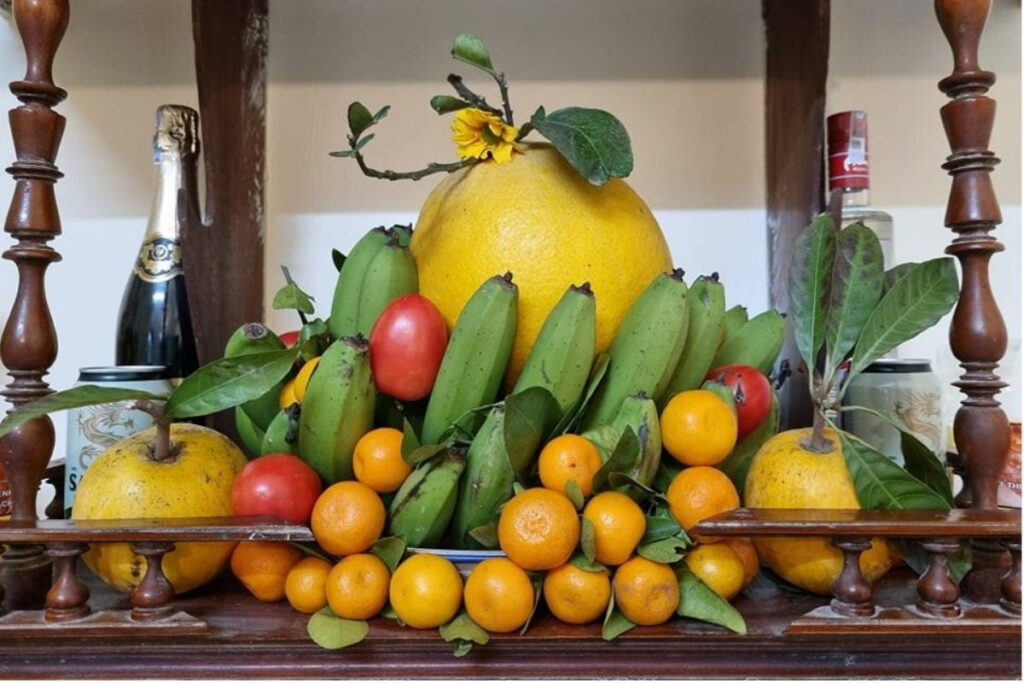
The ancestor altar during Tết is often more elaborate than at any other time of the year.
Although customs vary by region, common offerings include:
- A five-fruit tray (mâm ngũ quả), symbolizing hopes for prosperity, health, and good fortune.
- Fresh flowers such as peach blossoms in northern Vietnam or yellow apricot blossoms in the south.
- Sticky rice cakes, including bánh chưng in the north and bánh tét in many southern provinces.
- Home-cooked dishes prepared for the family’s New Year feast.
- Tea, rice wine, and fresh water.
Many of these foods are later shared among relatives, reinforcing the idea that Tết is a celebration of togetherness across generations.
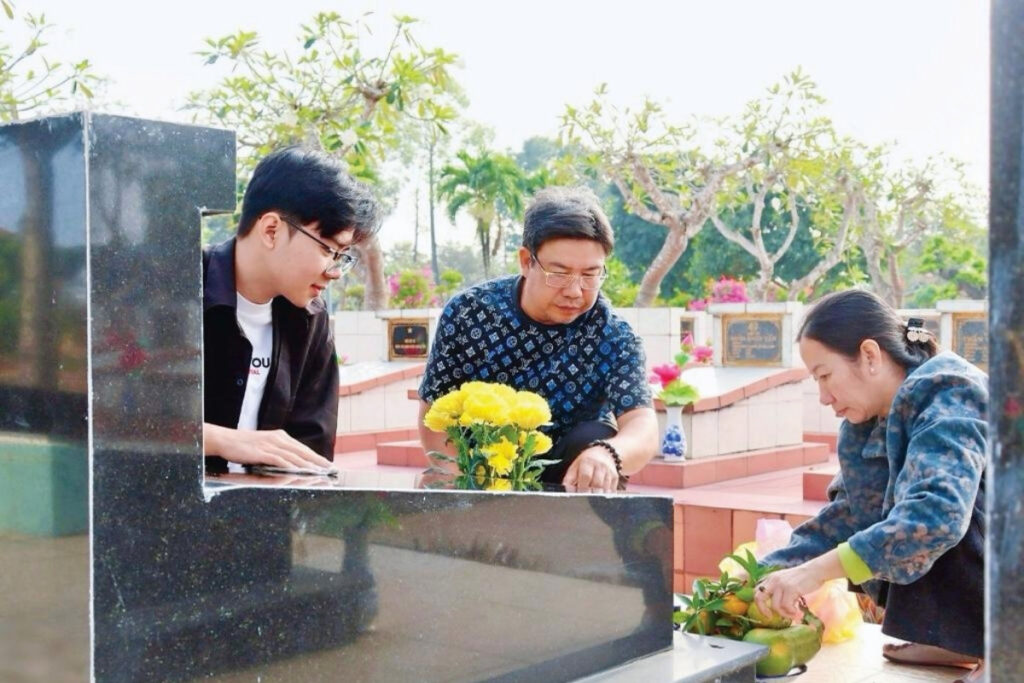
Visiting Family Graves Before Tết
For many Vietnamese families, preparations begin even before the holiday arrives.
In the days leading up to Tết, relatives often visit family cemeteries to clean graves, remove weeds, replace flowers, and burn incense.
This tradition, sometimes referred to as grave sweeping, is both practical and symbolic. It ensures that ancestors are respectfully remembered before they are invited to join the family’s New Year celebrations.
Across Vietnam, cemeteries become places of reunion rather than sadness, with multiple generations working together to care for family graves.
Understanding Tết Through Ancestor Worship
Visitors sometimes describe Tết as Vietnam’s version of Christmas or New Year combined. While the comparison helps explain its festive atmosphere, it overlooks what many Vietnamese consider its deepest meaning.
At its heart, Tết is about renewing family bonds.
Ancestor worship reminds every generation that the new year begins by acknowledging the past. It is an opportunity to express gratitude, remember loved ones, and strengthen the relationships that define Vietnamese family life.
Understanding this tradition allows travelers to see Tết not simply as a colorful festival, but as a celebration of continuity—where the living and the remembered are symbolically united around the same family table.
Although ancestor worship is practiced throughout Vietnam, it is not confined to a single faith. In the next section, we’ll explore how this tradition coexists with Buddhism, Catholicism, Taoism, and other religious beliefs, making it one of the most inclusive aspects of Vietnamese culture.
Ancestor Worship and Religion in Vietnam
One of the questions international visitors ask most often is whether ancestor worship in Vietnam is a religion. The answer is both simple and surprisingly complex.
Ancestor worship is not a separate religion. Instead, it is a cultural tradition that exists alongside many different faiths and belief systems. Throughout Vietnam, families of various religious backgrounds continue to honor their ancestors, demonstrating how deeply this practice is woven into Vietnamese identity.
Rather than competing with religion, ancestor worship complements it. For many Vietnamese people, remembering deceased family members is considered a moral and cultural responsibility rather than an act of religious worship.
Buddhism and Ancestor Worship
Buddhism is the largest organized religion in Vietnam, and many Vietnamese Buddhists also practice ancestor worship.
The two traditions coexist naturally.
Families may visit a Buddhist pagoda to pray, participate in religious festivals, or seek guidance from monks while maintaining an ancestor altar at home for daily remembrance.
During funerals and death anniversaries, Buddhist monks are often invited to chant sutras and offer prayers for the deceased. These ceremonies reflect Buddhist teachings about compassion and remembrance while preserving long-standing Vietnamese family traditions.
For many Buddhists, there is no conflict between practicing their religion and honoring their ancestors.
Ancestor Worship in Vietnamese Catholic Families
Many first-time visitors are surprised to learn that ancestor worship is also common among Vietnamese Catholics.
Historically, there were periods when the practice created debate within the Catholic Church because some viewed it as incompatible with Christian teachings. Over time, however, the Church recognized that Vietnamese ancestor worship is primarily an expression of family respect rather than the worship of other deities.
Today, many Catholic households display family photographs of deceased relatives alongside crosses or other Christian symbols. They may attend Mass while also remembering ancestors on important family occasions.
Although the rituals are often simpler than those found in Buddhist households, the underlying values of gratitude and remembrance remain the same.
Taoist and Folk Beliefs
Traditional Vietnamese folk beliefs and Taoist philosophy have also influenced ancestor worship over the centuries.
These traditions emphasize harmony between the human world and the spiritual world. Many families believe that maintaining respectful relationships with ancestors contributes to peace within the household and good fortune for future generations.
Elements of these beliefs can be seen in practices such as choosing auspicious dates for ceremonies, burning incense, or preparing offerings during important festivals.
Rather than following strict religious doctrine, these customs have gradually become part of everyday Vietnamese culture.
Regional Differences in Ancestor Worship Across Vietnam
Although ancestor worship in Vietnam is practiced throughout the country, its rituals and customs are not entirely uniform. Vietnam stretches more than 1,600 kilometers (1,000 miles) from north to south, encompassing diverse histories, climates, and cultural influences. As a result, each region has developed its own traditions while preserving the same core values of gratitude, family continuity, and respect for ancestors.
For travelers, these regional differences offer a fascinating glimpse into Vietnam’s cultural diversity. Whether visiting a centuries-old ancestral house in Huế or a modern family home in Ho Chi Minh City, you’ll notice that the spirit of ancestor worship remains the same—even if the rituals look slightly different.
Northern Vietnam: Tradition and Formality
Northern Vietnam, particularly the Red River Delta, is often regarded as the birthplace of many Vietnamese customs. It is also where the influence of Confucian philosophy has historically been strongest.
Families in the north generally follow ancestor worship traditions that are more formal and structured.
Common characteristics include:
- Elaborately carved wooden ancestor altars.
- Clearly defined family hierarchies during ceremonies.
- Traditional etiquette when offering incense.
- Carefully prepared ceremonial meals.
- Strong emphasis on maintaining genealogical records.
Many northern families continue to gather at ancestral homes during important occasions, especially Tết and annual Giỗ ceremonies.
In rural villages, some extended families even maintain ancestral houses (nhà thờ họ), dedicated buildings where descendants gather to honor a common ancestor. These houses often serve as the cultural center of an entire family lineage.
Central Vietnam: Preserving Family Heritage
Central Vietnam, particularly around Huế, is known for preserving many traditions associated with the former imperial court.
Ancestor worship in this region often reflects a deep respect for family history and ceremonial customs.
Many long-established families maintain detailed genealogies that trace their ancestry back for generations. Family altars are often highly decorative, featuring lacquered wood, intricate carvings, and carefully arranged offerings.
Because Huế was once the imperial capital of Vietnam, ceremonial etiquette tends to be especially refined. Rituals are often performed with great attention to detail, reflecting the region’s historical emphasis on scholarship, tradition, and family honor.
Visitors exploring historic homes in Huế may notice ancestor altars occupying the most prominent room of the house, highlighting their central role in family life.
Southern Vietnam: Simplicity and Openness
Southern Vietnam developed under different historical circumstances and has long been known for its openness to new ideas and cultural influences.
As a result, ancestor worship in the south is often less formal than in northern or central Vietnam while remaining equally meaningful.
Family ceremonies tend to be relaxed and welcoming, with greater emphasis on gathering relatives than following strict ritual procedures.
In cities such as Ho Chi Minh City, many families live in apartments where space is limited. Instead of large wooden altars, they may use compact altar cabinets or wall-mounted shrines that fit modern homes.
Despite these practical adaptations, southern families continue to observe important traditions such as offering incense, celebrating Giỗ, and honoring ancestors during Tết.
Ethnic Minority Traditions
Vietnam is home to 54 officially recognized ethnic groups, many of which have their own ancestral customs.
Among groups such as the Tày, Thái, Mường, Dao, and others, honoring ancestors remains an important part of community life, although rituals, beliefs, and ceremonial objects may differ significantly from those practiced by the ethnic Kinh majority.
Some communities combine ancestor worship with nature worship or local spiritual traditions, reflecting the rich cultural diversity found throughout Vietnam’s mountains and highlands.
For travelers visiting ethnic minority villages, these traditions offer a broader understanding of how different communities preserve their heritage while sharing similar values of respect for previous generations.
Ancestor Worship in Modern Vietnamese Families
Vietnam has changed dramatically over the past few decades. Rapid urbanization, economic growth, international travel, and digital technology have transformed the way people live, work, and communicate. Yet despite these changes, ancestor worship remains an integral part of family life for millions of Vietnamese.
Rather than disappearing in the face of modernization, the tradition has evolved to fit contemporary lifestyles. Today’s ancestor altar may stand in a high-rise apartment instead of a traditional wooden house, but its purpose remains remarkably unchanged.
From Traditional Houses to Modern Apartments
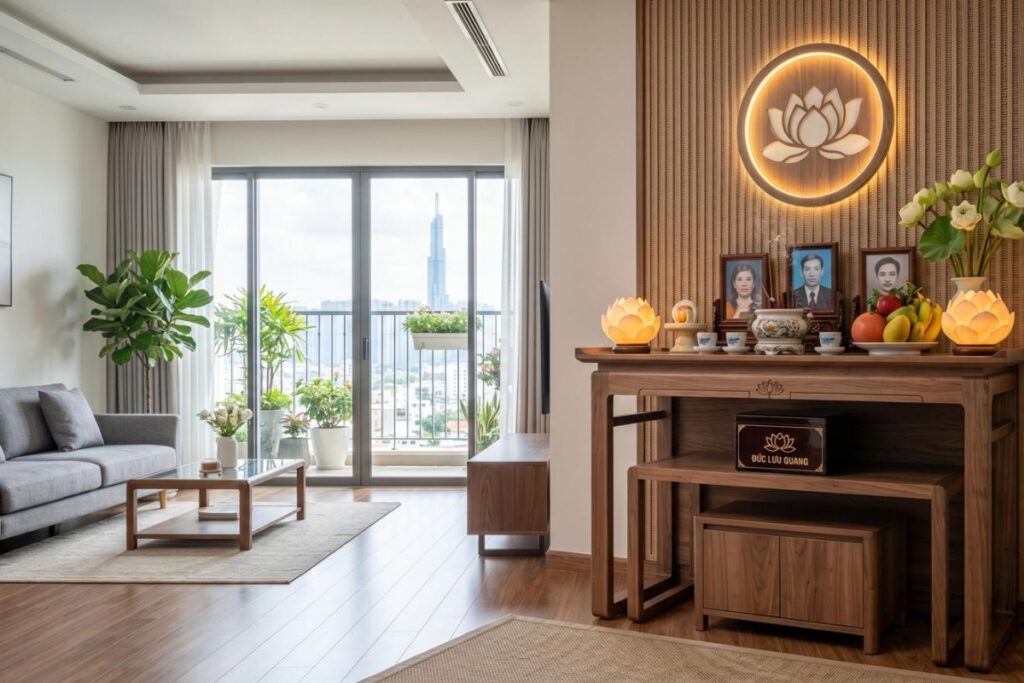
In the past, Vietnamese families often lived in multi-generational homes with spacious rooms dedicated to ancestor worship.
Today’s reality is different.
As more people move to cities such as Hanoi, Ho Chi Minh City, and Da Nang, living spaces have become smaller. Large carved wooden altars have gradually given way to compact altar cabinets or wall-mounted shrines designed for apartments.
Although these modern altars occupy less space, they continue to serve the same role as the spiritual heart of the home.
For many families, having even a small ancestor altar is considered more important than its size or appearance.
Technology Helps Families Stay Connected
Technology has also changed the way families maintain traditions.
Relatives living overseas can now join memorial gatherings through video calls, allowing them to participate even when they cannot return home.
Family group chats help coordinate Giỗ ceremonies, while digital photographs preserve family histories that were once kept only in printed albums.
Although the rituals themselves remain rooted in tradition, technology has made it easier for families separated by distance to stay connected.
Younger Generations and Cultural Identity
Some visitors assume that younger Vietnamese are becoming less interested in traditional customs.
In reality, the picture is far more nuanced.
Many young adults embrace modern lifestyles while continuing to value family traditions. Even those who do not perform daily rituals often return home for major ceremonies, help prepare Tết celebrations, or learn about their family history from parents and grandparents.
For Vietnamese living abroad, ancestor worship can become an important way of maintaining a connection to their heritage. A small family altar or participation in annual memorial ceremonies provides a tangible link to home, even thousands of miles away.
Balancing Tradition and Modern Life
Modern Vietnamese families often adapt traditions to fit their circumstances.
Some examples include:
- Using compact altars in apartments.
- Holding smaller family ceremonies when relatives live far apart.
- Scheduling memorial gatherings on weekends to accommodate work commitments.
- Combining traditional rituals with contemporary lifestyles.
These adjustments demonstrate that ancestor worship is not defined by rigid rules but by the intention to remember and honor previous generations.
A Living Tradition, Not a Museum Piece
One reason ancestor worship has survived for centuries is its ability to evolve.
Unlike customs preserved only for historical interest, it continues to have practical meaning in everyday life. It reminds families to pause, reflect, and acknowledge the people whose sacrifices shaped the present.
Whether expressed through a simple stick of incense, a shared family meal, or a journey home for Tết, the tradition continues to reinforce values that remain central to Vietnamese society.
For travelers, this adaptability offers an important insight into modern Vietnam. The country may be changing rapidly, but many of its deepest cultural traditions continue to thrive—not because they resist change, but because they evolve with each new generation.
Understanding ancestor worship also helps visitors interact more respectfully with Vietnamese families. In the next section, we’ll look at cultural etiquette and practical tips for travelers who may encounter ancestor altars or be invited to participate in family ceremonies during their visit to Vietnam.
Visitor Etiquette: How to Respect Ancestor Worship in Vietnam
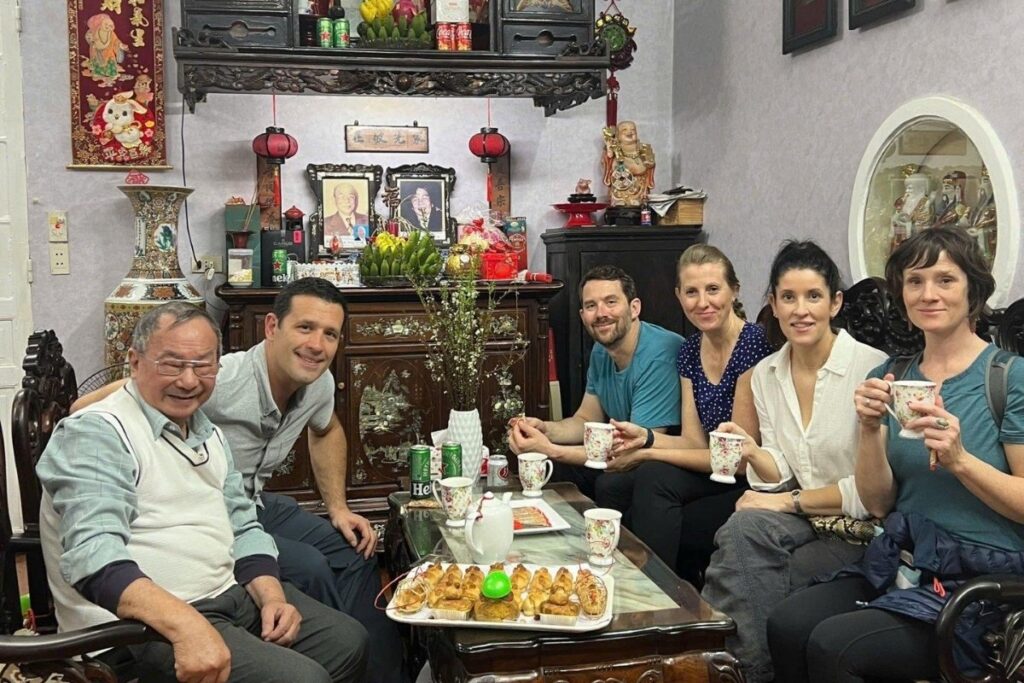
For many travelers, being invited into a Vietnamese home is one of the most memorable experiences of a trip. It offers a chance to experience local hospitality beyond tourist attractions and gain a deeper understanding of everyday life.
If your visit coincides with Tết, a family gathering, or a Giỗ ceremony, you may find yourself standing before a family altar or observing ancestor worship firsthand.
There’s no need to worry about knowing every custom. Vietnamese families generally understand that international visitors are unfamiliar with these traditions. Showing genuine curiosity and respect is far more important than performing every ritual perfectly.
Recognize That the Family Altar Is a Sacred Space
The ancestor altar is one of the most respected places in a Vietnamese home.
Although it may resemble a decorative cabinet, it holds deep emotional and cultural significance for the family. It represents generations of parents, grandparents, and relatives whose memories continue to shape the household.
Treating the altar with the same respect you would show in a place of worship is always a good rule of thumb.
Ask Before Taking Photographs
Many travelers are fascinated by the beauty of Vietnamese family altars, especially during Tết when they are decorated with flowers, fruit, and traditional offerings.
However, because the altar often includes photographs of deceased family members, it’s courteous to ask permission before taking pictures.
Some families are happy to share their traditions, while others prefer to keep these moments private.
A simple question shows respect for both the family and their customs.
Follow Your Host’s Lead
If you’re invited to participate in a family ceremony, don’t feel pressured to know exactly what to do.
Your host will usually guide you through the process.
If invited to light incense, observe how other family members hold the incense sticks, bow, and place them in the incense burner before doing the same.
If you’re not comfortable participating, politely observing the ceremony is perfectly acceptable.
Avoid Touching Items on the Altar
Objects placed on the ancestor altar—including incense burners, photographs, offerings, and ceremonial items—often have symbolic meaning.
Unless you’re specifically invited, avoid touching, moving, or rearranging anything on the altar.
Likewise, avoid placing phones, bags, drinks, or other personal belongings on or near the altar.
Accept Hospitality Graciously
After a ceremony, families often invite guests to share the meal that was prepared as an offering.
Accepting the invitation—even if only for a small portion—is generally seen as a gesture of friendship and respect.
The shared meal represents togetherness, and participating is often one of the most rewarding ways to experience Vietnamese hospitality.
Common Mistakes Visitors Should Avoid
Most cultural misunderstandings are unintentional and easily avoided.
Here are a few simple things to keep in mind:
- Don’t point at ancestor photographs while talking.
- Don’t joke about religious or spiritual customs.
- Don’t interrupt family members during prayers.
- Don’t touch ceremonial objects without permission.
- Don’t assume every family follows exactly the same traditions.
Vietnam is culturally diverse, and ancestor worship varies from one family to another.
Frequently Asked Questions About Ancestor Worship in Vietnam
Is ancestor worship the main religion in Vietnam?
No. Ancestor worship is not a religion but a cultural tradition practiced by many Vietnamese families. It exists alongside religions such as Buddhism, Catholicism, Protestantism, Cao Dai, and Hoa Hao. Many people who identify with these religions also maintain an ancestor altar and observe family remembrance rituals.
Why do Vietnamese people worship their ancestors?
The primary purpose is to express gratitude, respect, and filial piety toward previous generations.
Many Vietnamese believe that ancestors continue to care for their descendants spiritually, while others view the tradition as a meaningful way to preserve family history and strengthen family bonds. Regardless of personal beliefs, ancestor worship serves as a reminder of the sacrifices made by parents and grandparents.
Can foreigners participate in ancestor worship?
Yes—if they are invited.
Vietnamese families generally welcome respectful guests to observe or participate in family ceremonies. If you’re invited to light incense or join a memorial meal, simply follow your host’s guidance.
If you’re unsure what to do, politely asking questions is perfectly acceptable and is usually appreciated.
Why is incense burned during ancestor worship?
Incense symbolizes remembrance, respect, and communication between generations.
As the incense smoke rises, it represents prayers, gratitude, and the family’s continuing connection with their ancestors. Lighting incense is one of the most recognizable and meaningful rituals in Vietnamese culture.
What is the difference between a Giỗ and a funeral?
A funeral takes place shortly after a person’s death and focuses on saying goodbye to the deceased.
A Giỗ, on the other hand, is an annual death anniversary observed every year according to the lunar calendar. It is typically a family gathering centered on remembrance, gratitude, and shared meals rather than mourning.
Is ancestor worship only practiced during Tết?
No.
Although ancestor worship is especially visible during Tết, families honor their ancestors throughout the year.
Common occasions include:
- Annual Giỗ ceremonies.
- The first and fifteenth day of the lunar month.
- Weddings and engagements.
- Birth celebrations.
- Business openings.
- University entrance examinations.
- Moving into a new home.
- Other important family milestones.
Is it disrespectful if visitors do not participate?
Not at all.
Vietnamese families understand that international visitors may have different cultural or religious backgrounds. Simply observing respectfully is entirely acceptable.
Showing genuine interest and following your host’s guidance are usually considered more important than participating in every ritual.
Why is ancestor worship still important in modern Vietnam?
Despite rapid modernization, ancestor worship continues to reflect values that remain central to Vietnamese society: gratitude, family unity, respect for elders, and cultural continuity.
Whether practiced in a traditional ancestral home or a modern city apartment, the tradition reminds each generation of its connection to the past while strengthening relationships in the present.
Final Thoughts
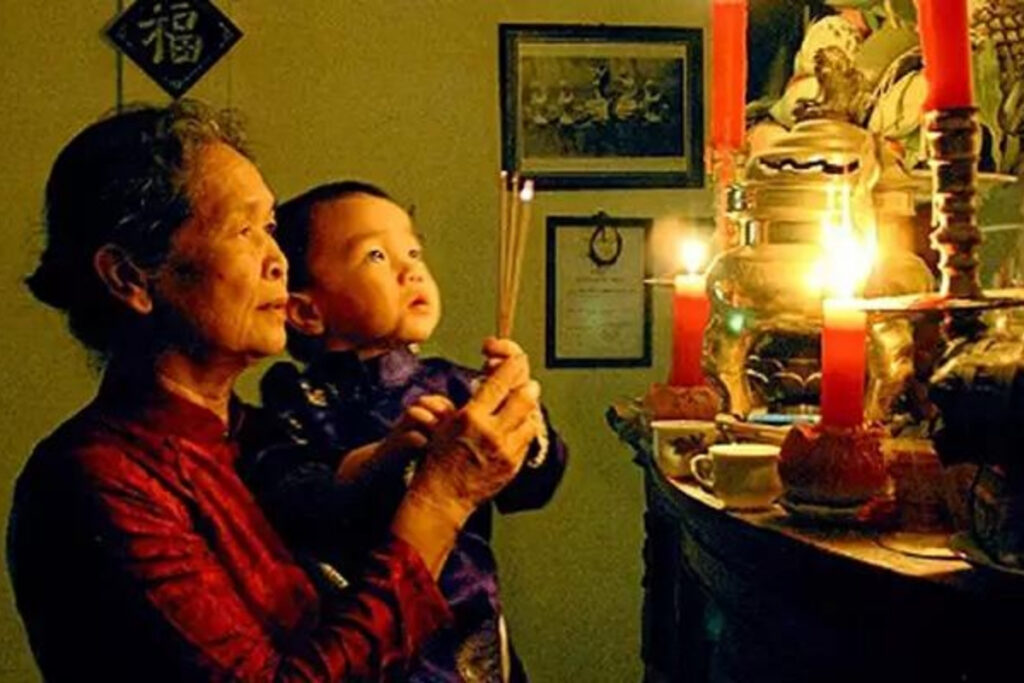
Ancestor worship is one of the clearest expressions of what matters most in Vietnamese culture. It is not defined by elaborate rituals or religious doctrine, but by a lasting commitment to family, remembrance, and gratitude.
For travelers, understanding this tradition transforms everyday observations into meaningful cultural experiences. A quiet moment before a family altar, the scent of incense drifting through a home, or relatives gathering for a memorial meal are no longer simply unfamiliar customs—they become expressions of values that have shaped Vietnamese society for centuries.
As Vietnam continues to modernize, ancestor worship remains a living tradition that bridges past and present. It reminds families where they come from, celebrates the contributions of earlier generations, and reinforces the belief that family is a bond that extends beyond a single lifetime.
Whether you’re visiting Vietnam for the first time or seeking a deeper appreciation of its culture, understanding ancestor worship offers a valuable insight into the traditions that continue to unite Vietnamese families across the country and around the world.
Continue Exploring Vietnamese Culture
If you found ancestor worship in Vietnam fascinating, continue exploring the traditions and values that have shaped Vietnamese society for generations.
- Vietnamese Culture Guide – An introduction to Vietnam’s traditions, customs, beliefs, and everyday life.
- Vietnamese Family Culture – Discover why family is considered the foundation of Vietnamese society.
- Vietnamese Religion & Beliefs – Explore the diverse spiritual traditions that influence life in Vietnam.
- Tet Holiday in Vietnam – Learn how the Lunar New Year celebrates family, ancestors, and new beginnings.
- Vietnamese Festivals Guide – Experience the country’s most important cultural and religious festivals.
- Vietnamese Etiquette – Practical customs and etiquette every visitor should know.
- Ao Dai: Vietnam’s National Dress – Discover the story behind Vietnam’s most iconic traditional costume.
- Vietnamese Wedding Traditions – Explore the customs that bring families together during one of life’s most important celebrations.
Further Reading
👉 Vietnam National Authority of Tourism
👉 UNESCO – Viet Nam Intangible Cultural Heritage
👉 Ministry of Culture, Sports and Tourism of Viet Nam
About the Author
Tam Voc Viet Editorial Team
The Tam Voc Viet Editorial Team is passionate about sharing Vietnam through carefully researched, experience-driven articles that help international readers understand the country beyond its famous attractions.
Our writers combine historical research, official government resources, local perspectives, and firsthand travel experiences to produce practical, trustworthy guides about Vietnamese culture, history, cuisine, and travel.
Every article is reviewed regularly to ensure it remains accurate, up to date, and useful for travelers planning a visit to Vietnam.
Article Details
Reading Time: 20–25 minutes
Topic: Vietnamese Culture
Published: July 2026
Last Updated: July 2026
Author: Tam Voc Viet Editorial Team
Reading Time: 20–25 minutes
