


 Tiếng Việt
The best place to understand Vietnam isn’t a palace.
It isn’t an ancient temple.
It isn’t even a UNESCO World Heritage Site.
It’s a market.
Before sunrise, Vietnam is already awake.
Farmers unload vegetables still covered with dew. Fishing boats return with baskets of seafood caught only hours earlier. Restaurant owners weave through crowded aisles searching for the freshest herbs, while flower sellers arrange lotus blossoms with practiced hands.
The air is filled with the scent of coriander, grilled pork, roasted coffee, and simmering broth.
Scooters weave through narrow lanes while vendors greet familiar customers by name.
For first-time visitors, the scene feels wonderfully chaotic. For millions of Vietnamese people, it’s simply another morning.
If you want to understand how Vietnamese people eat, work, celebrate, and preserve traditions across generations, there’s no better classroom than a traditional market.
This Vietnamese Markets & Bargaining Culture guide is based on those experiences, combined with historical research, official tourism resources, and conversations with local vendors and artisans across Vietnam.
Table of Contents
Quick Answer: What Makes Vietnamese Markets Unique?
Unlike supermarkets or shopping malls, Vietnamese markets remain vibrant community spaces where daily life unfolds from the earliest hours of the morning.
Many people still shop for fresh ingredients every day, reflecting Vietnam’s long-standing preference for seasonal produce and freshly prepared meals.
Visitors come not only to shop, but also to:
- Experience authentic Vietnamese daily life
- Taste regional street food prepared by local families
- Discover handmade crafts and traditional products
- Learn local shopping customs and bargaining etiquette
- Photograph colorful scenes full of character
- Support small family businesses and local artisans
At a Glance
| Best For | Recommendation |
|---|---|
| Best traditional market | Đồng Xuân Market (Hanoi) |
| Best food market | Hội An Central Market |
| Best floating market | Cái Răng Floating Market |
| Best ethnic market | Bắc Hà Market |
| Best souvenir shopping | Bến Thành Market |
| Best wholesale market | Bình Tây Market |
| Best time to visit | 6:00–8:00 a.m. |
| Bargaining | Common in traditional markets, uncommon in supermarkets |
| Payment | Cash preferred; QR payments increasingly accepted in cities |
Vietnam’s Market Culture by the Numbers
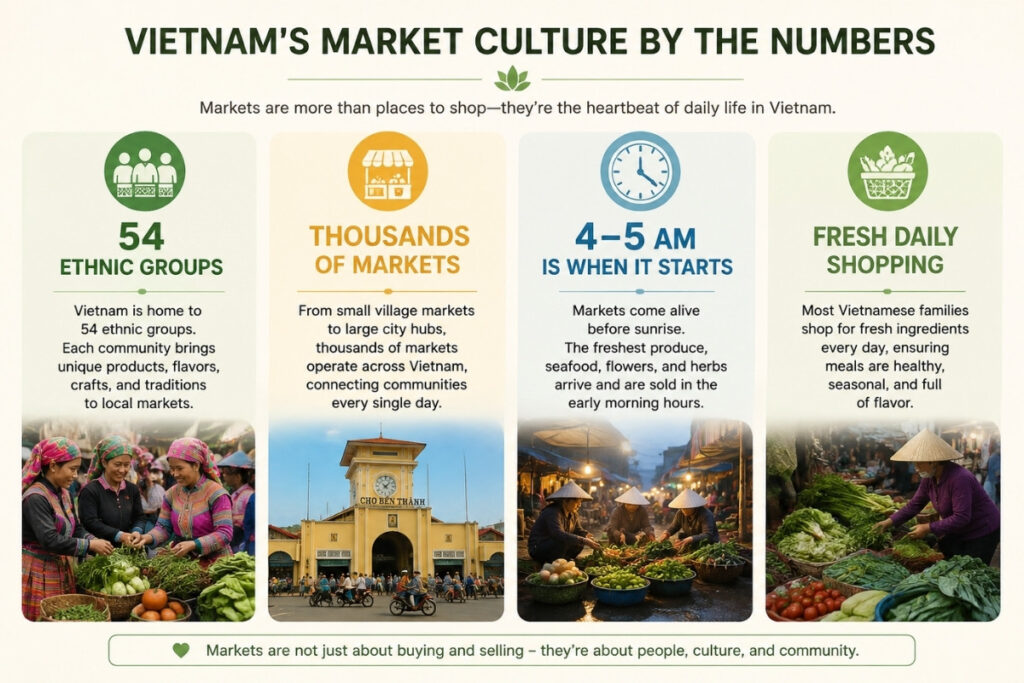
Traditional markets continue to play a central role in everyday life throughout Vietnam, despite the rapid growth of supermarkets and online shopping.
Some figures help illustrate their importance:
| Fact | Why It Matters |
|---|---|
| Thousands of traditional markets | Daily shopping remains deeply rooted in local life. |
| 54 ethnic groups | Each community contributes distinct crafts, foods, and market traditions. |
| 4:00–5:00 a.m. starts | Early mornings offer the most authentic experience. |
| Fresh ingredients bought daily | Reflects Vietnam’s preference for freshness over long-term storage. |
Why Markets Matter More Than Shopping
During my first days in Vietnam, I treated markets as places to visit rather than places to understand. That changed one morning while eating pho in a neighborhood market in Hanoi. Around me, restaurant owners, grandparents, and office workers went about their daily routines, reminding me that markets are not attractions—they’re part of everyday life.
Why Every Region Feels Different
Vietnam’s geography has shaped remarkably diverse market traditions. From northern mountain towns to the Mekong Delta, each region reflects its own climate, agriculture, and culinary heritage.
Why You Should Visit Early
If there’s one piece of advice worth remembering, it’s this:
Wake up early.
The most authentic moments happen before most tourists are awake.
Between 6:00 and 8:00 a.m., restaurant owners are buying ingredients, breakfast stalls are busiest, flowers have just arrived, and local residents outnumber visitors.
By mid-morning, much of that energy has already faded.
The Vietnam that wakes before sunrise is often the Vietnam travelers remember most.
What You’ll Discover in This Guide
Throughout this guide, you’ll learn:
- Why traditional markets remain essential in modern Vietnam
- The different types of markets found across the country
- Floating markets and ethnic mountain markets
- How bargaining really works—and when it doesn’t
- The best souvenirs and regional specialties
- Essential shopping etiquette and practical travel tips
- The most rewarding markets to visit from north to south
By the end, you’ll understand why Vietnamese markets are far more than shopping destinations.
They are living cultural spaces where history, food, craftsmanship, and community continue to shape everyday life.
A Morning I Still Remember
At around 6:30 a.m. in Hanoi, I watched a woman buying herbs for breakfast. Before leaving, the vendor quietly tucked a few extra sprigs of coriander into her bag with a smile. No money changed hands for the extra herbs. It was simply a small gesture between two people who had known each other for years. Moments like this reveal that Vietnamese markets are built as much on relationships as on commerce.
Understanding Vietnamese Markets: A Guide to the Different Types of Markets
After spending my first few mornings exploring Hanoi, I quickly realized something that surprised me.
People often talk about “Vietnamese markets” as though they’re all the same.
They’re not.
A floating market in the Mekong Delta has almost nothing in common with a neighborhood market in Hanoi.
A mountain market in Lào Cai feels completely different from the lively night markets of Ho Chi Minh City.
Even two markets located in the same city can serve entirely different purposes.
Some exist for wholesale trade.
Some supply local neighborhoods.
Others preserve centuries-old traditions or attract visitors looking for street food and handmade crafts.
Understanding these differences will help you decide which markets deserve a place on your itinerary—and what kind of experience you can expect at each one.
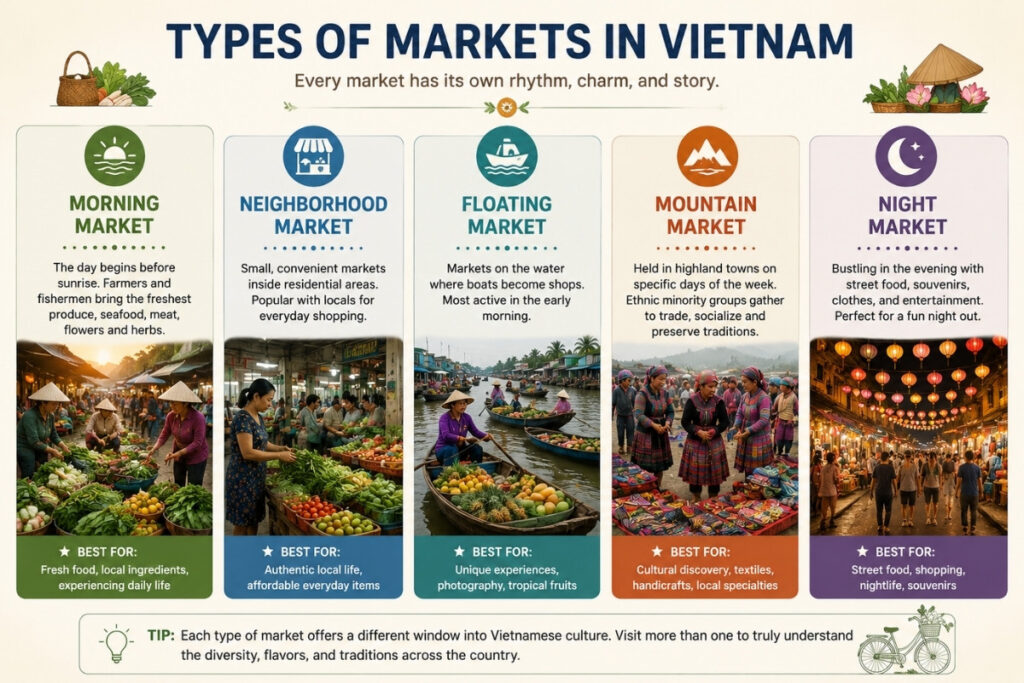
Quick Answer: What Types of Markets Are There in Vietnam?
Although every market has its own personality, most fall into one of six categories.
| Market Type | Best For | Typical Opening Hours |
|---|---|---|
| Morning Markets | Fresh food and local life | 5:00–9:00 a.m. |
| Neighborhood Markets | Daily shopping | Morning to early afternoon |
| Wholesale Markets | Large-scale trading | 3:00–8:00 a.m. |
| Floating Markets | River commerce | Sunrise to mid-morning |
| Ethnic Mountain Markets | Culture and handicrafts | Weekly |
| Night Markets | Street food and souvenirs | 6:00–10:00 p.m. |
Each tells a different story about Vietnam.
Together, they reveal how diverse the country’s market culture truly is.
Why Traditional Markets Still Thrive
Traditional markets continue to thrive because they offer flexibility that supermarkets often cannot. Vendors adjust to seasonal produce, customer preferences, and local demand, making markets an important part of daily shopping routines across Vietnam.
The Six Types of Vietnamese Markets
1. Morning Markets
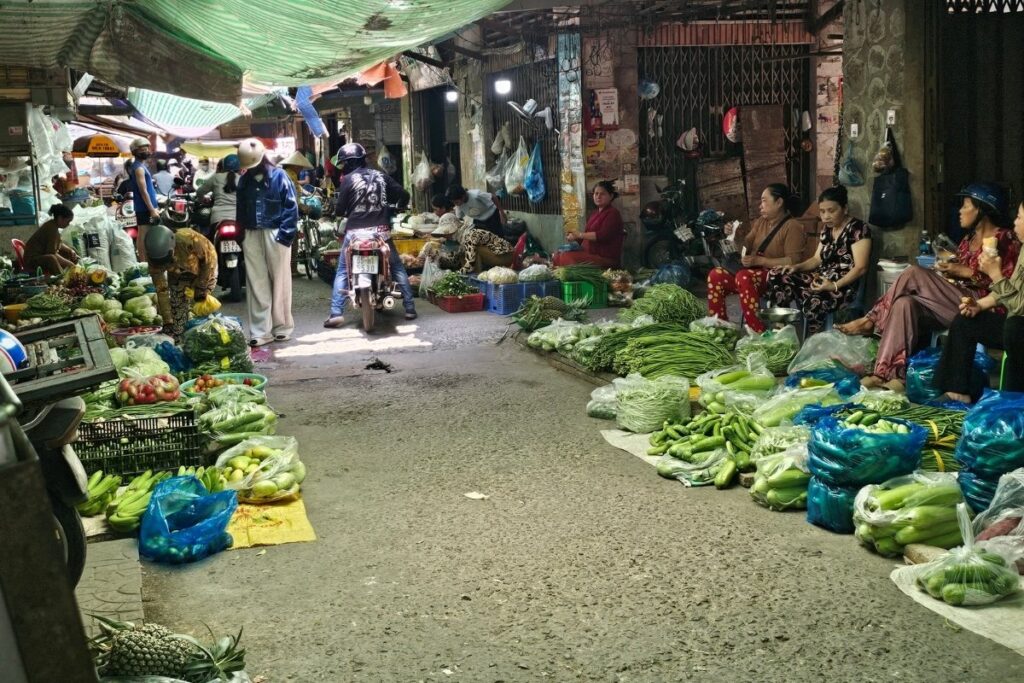
Morning markets focus on fresh produce and breakfast ingredients. Visiting early offers the best opportunity to observe everyday local life.
2. Neighborhood Markets
Neighborhood markets primarily serve local residents, offering fresh food and household essentials rather than souvenirs.
3. Wholesale Markets
Wholesale markets supply restaurants, retailers, and smaller markets, operating during the early hours of the morning before most travelers are awake.
4. Floating Markets
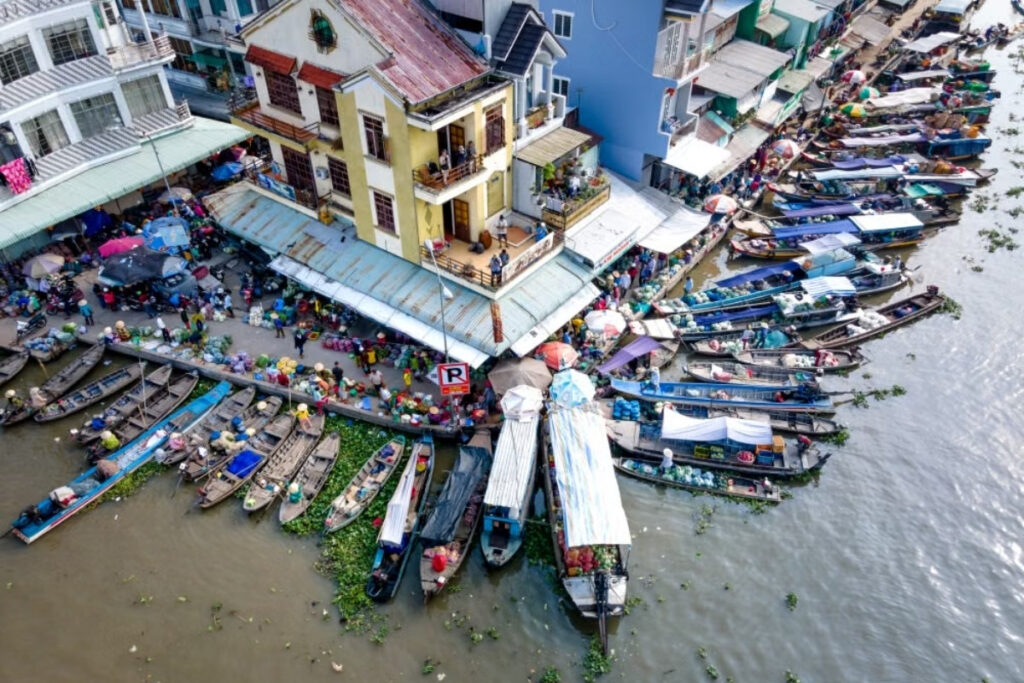
In the Mekong Delta, rivers have long served as transportation routes.
Instead of meeting on land, traders gather by boat.
Fresh fruit, vegetables, and other produce are sold directly from wooden vessels, creating one of Vietnam’s most distinctive cultural traditions.
We’ll explore floating markets in much greater detail later in this guide.
5. Ethnic Mountain Markets
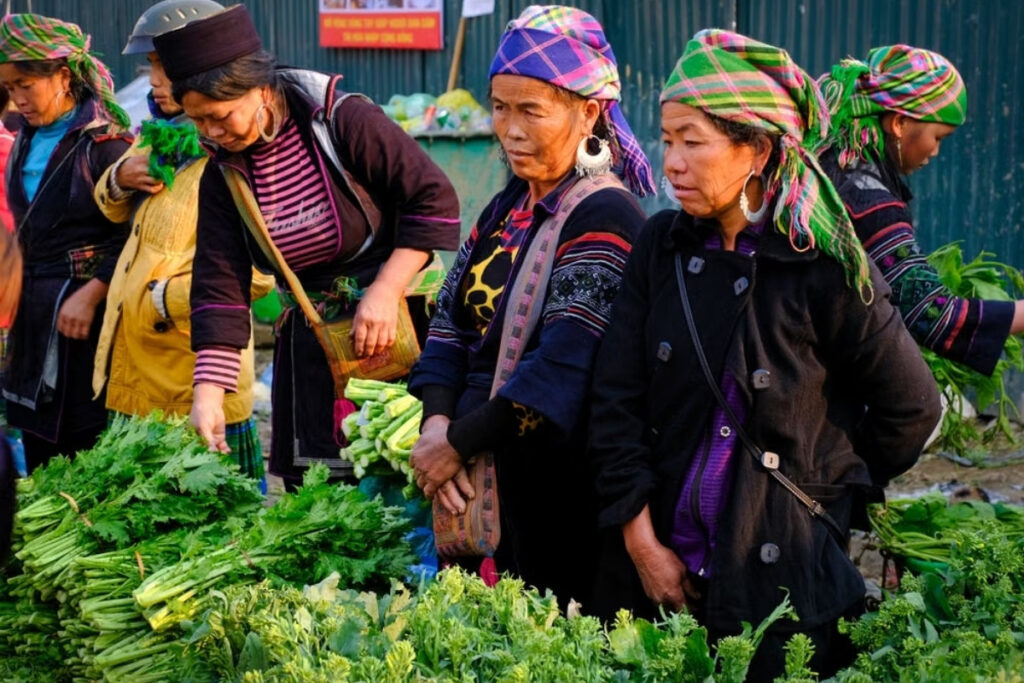
Many mountain markets operate weekly, bringing together ethnic communities to trade local products and handmade crafts.
6. Night Markets
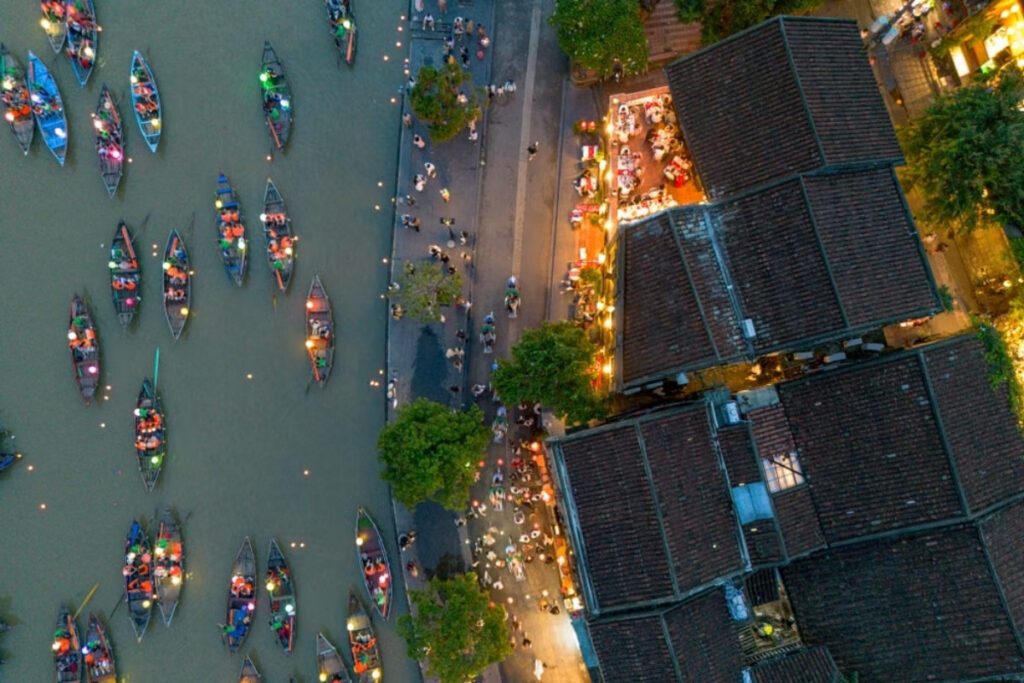
Night markets come alive after sunset, featuring street food, local specialties, handmade crafts, clothing, and souvenirs. Their lively atmosphere, colorful lights, and evening entertainment make them one of the most enjoyable ways to experience Vietnam after dark.
Markets Across Vietnam: How Geography Shapes Every Shopping Experience
If you’ve visited just one market in Vietnam, you’ve only seen one small part of the story.
Travel farther, and you’ll quickly discover that Vietnamese markets change dramatically from region to region.
The differences aren’t simply about size.
They’re shaped by geography.
Climate.
Agriculture.
History.
Even the rhythm of daily life.
A market in Hanoi reflects four distinct seasons and centuries of northern traditions.
Markets in central Vietnam showcase imperial cuisine and maritime trade.
In the south, tropical fruit and river commerce dominate everyday life.
Rather than repeating the same experience, each region offers its own perspective on Vietnamese culture.
That’s what makes exploring markets across Vietnam so rewarding.
From north to south, Vietnam’s markets reflect dramatic differences in climate, agriculture, history, and local traditions. Rather than offering the same shopping experience, each region introduces travelers to distinct ingredients, crafts, and ways of life.
Northern Vietnam: Where Tradition Begins the Day

Northern Vietnam was where I first understood why traditional markets remain so important.
The day begins early.
By sunrise, restaurant owners are already selecting ingredients, flower vendors are arranging fresh blooms, and families are shopping for breakfast and dinner.
Markets here feel practical rather than commercial.
Most people aren’t browsing.
They know exactly what they need.
Seasonality also plays a much bigger role than many visitors expect.
Throughout the year, the appearance of the market changes naturally as different fruits, vegetables, and flowers come into season.
For travelers, this means that visiting the same market in spring and autumn can feel like two completely different experiences.
What Makes Northern Markets Special?
Highlights include seasonal produce, traditional breakfast foods, fresh flowers, and locally made rice products.
Rather than being tourist attractions, they remain an essential part of daily life.
Central Vietnam: Markets Rich in History and Flavor

Central Vietnam has long been influenced by royal courts, international trade, and coastal fishing communities.
Those influences are immediately visible inside its markets.
In Hội An, riverside stalls overflow with herbs, seafood, noodles, and ingredients destined for local restaurants.
Only a short walk away, tailors search for fabrics while visitors sample regional specialties like cao lầu and white rose dumplings.
Further north, Huế’s Đông Ba Market offers another perspective.
Instead of focusing on souvenirs, it introduces visitors to the ingredients that define imperial cuisine—aromatic herbs, fermented sauces, rice flour, sesame candy, and traditional spices.
Markets in central Vietnam are less about shopping alone.
They’re about understanding the food traditions that have shaped the region for centuries.
What Makes Central Markets Unique?
Visitors will find:
- Regional street food
- Fresh seafood
- Traditional spices
- Handcrafted products
- Local delicacies unique to each province
Southern Vietnam: Tropical, Colorful, and Always Moving

Crossing into southern Vietnam, the atmosphere changes almost immediately.
The pace feels faster.
The colors become brighter.
Markets overflow with tropical fruit, coconuts, seafood, and fresh produce arriving from the fertile Mekong Delta.
Ho Chi Minh City is home to some of Vietnam’s busiest commercial markets.
Famous destinations like Bến Thành Market attract travelers from around the world, while Bình Tây Market in Chợ Lớn continues serving wholesalers and local businesses much as it has for generations.
Together, they illustrate the contrast between tourism and everyday commerce.
Southern Specialties
Some of the region’s most popular products include:
- Coffee
- Tropical fruit
- Coconut products
- Fresh seafood
- Rice products
- Local sweets
The tropical climate allows an extraordinary variety of produce to be available throughout the year.
Regional Shopping Guide
| Region | Best Things to Buy |
|---|---|
| Hanoi & Northern Delta | Tea, lacquerware, ceramics, silk |
| Northern Highlands | Handmade textiles, embroidery, silver jewelry |
| Huế | Sesame candy, incense, conical hats |
| Hội An | Lanterns, tailored clothing, leather goods |
| Central Highlands | Coffee |
| Ho Chi Minh City | Coffee, handicrafts, souvenirs |
| Mekong Delta | Coconut candy, dried fruit, local snacks |
Shopping by region not only helps you find better products—it also connects each souvenir to a specific place and memory.
Vietnam’s Most Extraordinary Markets: Floating Markets & Ethnic Mountain Markets
Some markets are places to shop.
Others become destinations in their own right.
Vietnam’s floating markets and mountain markets belong firmly in the second category.
Unlike neighborhood markets that serve local communities every day, these markets evolved because of geography.
In the Mekong Delta, rivers became highways.
In the northern mountains, valleys became meeting places for villages separated by steep terrain.
The result is two of the most distinctive market traditions in Southeast Asia—both offering travelers a rare opportunity to experience cultures that continue to thrive despite rapid modernization.
Quick Comparison: Floating Markets vs. Mountain Markets
| Floating Markets | Mountain Markets |
|---|---|
| Located on rivers and canals | Located in mountain towns and valleys |
| Trading takes place by boat | Trading takes place in open-air markets |
| Daily operation | Weekly operation |
| Fresh produce and wholesale goods | Handicrafts, livestock, local produce |
| Best visited at sunrise | Best visited early on market day |
| Mekong Delta | Northern Vietnam |
Although both are called “markets,” the experiences couldn’t be more different.
Floating Markets: Where Rivers Become Trading Streets
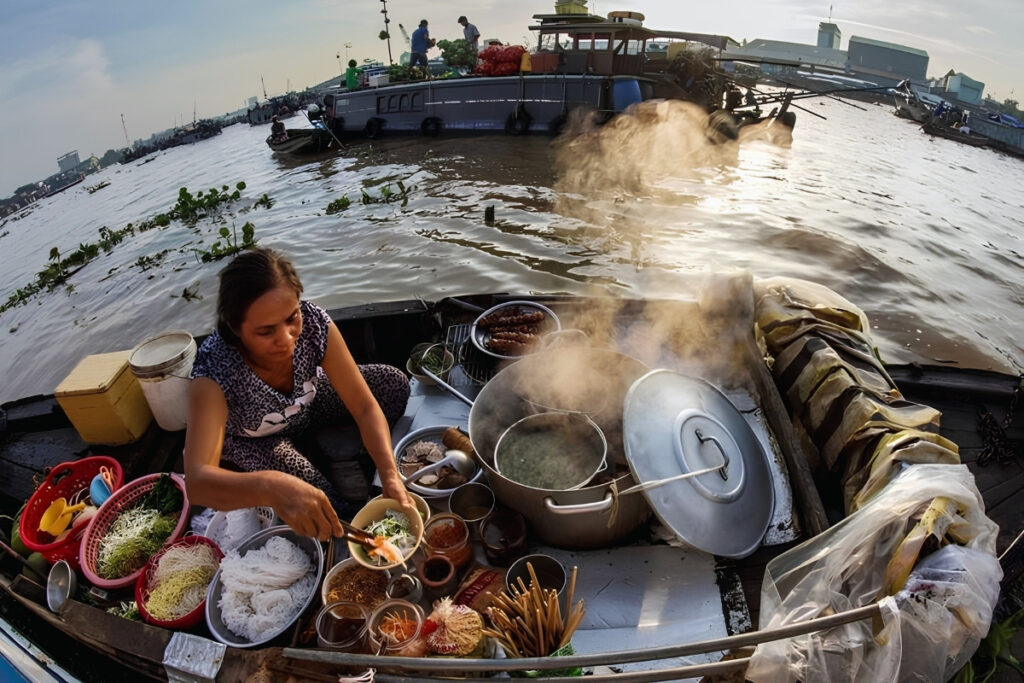
The first time I visited a floating market, I expected to see boats selling fruit.
What I didn’t expect was to witness an entire community built around the river.
As dawn broke over the Mekong Delta, hundreds of boats slowly gathered along wide waterways.
Some carried pineapples.
Others overflowed with watermelons, coconuts, pumpkins, or sweet potatoes.
Smaller boats drifted between larger trading vessels, delivering coffee, breakfast, and supplies.
There were no streets.
No sidewalks.
No storefronts.
The river itself had become the marketplace.
Why Floating Markets Developed
The Mekong Delta contains one of the world’s largest river systems, with thousands of kilometers of rivers and canals connecting towns and farming communities.
Long before modern highways existed, water offered the fastest way to move goods.
Farmers transported produce by boat.
Merchants met on the river.
Trading naturally developed where waterways intersected.
Although roads have reduced their economic importance, several floating markets continue to operate as working commercial centers while also attracting visitors interested in Vietnam’s river culture.
The Bamboo Pole Tradition
One of the floating market’s most distinctive features is surprisingly simple.
Instead of signs, many boats display a tall bamboo pole with samples of the products they sell hanging from the top.
A pineapple.
A cabbage.
A pumpkin.
A bunch of bananas.
Known locally as cây bẹo, this tradition allows buyers to identify products from a distance without boats needing to move close together.
It’s an elegant solution that has remained remarkably effective for generations.
Best Floating Markets to Visit
Cái Răng Floating Market (Cần Thơ)
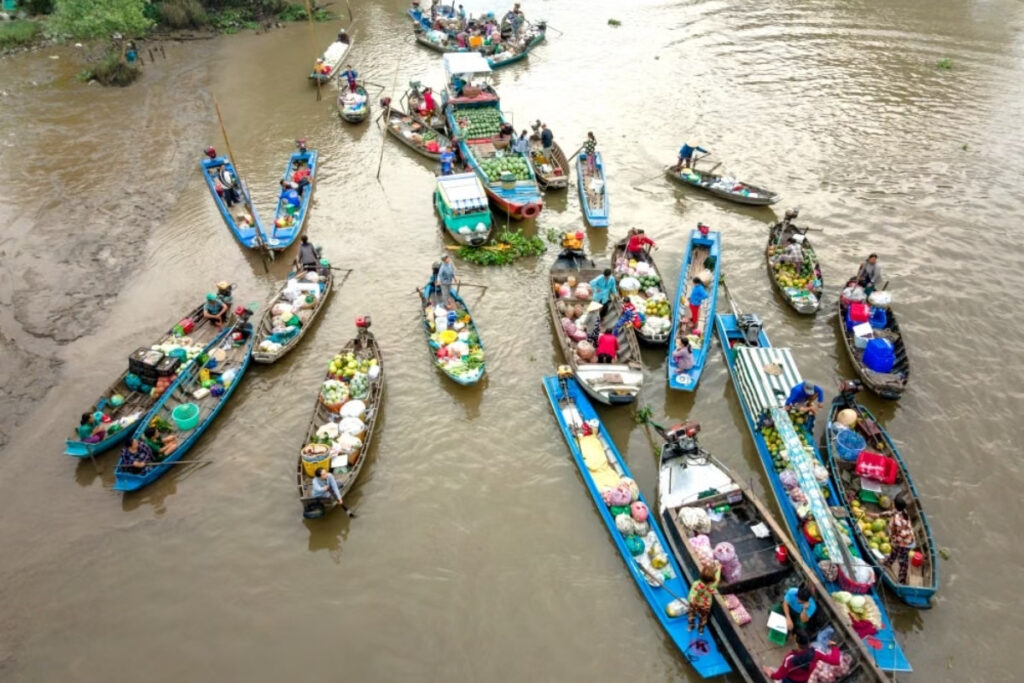
Vietnam’s best-known floating market remains one of the country’s most authentic.
While tourism has grown, local traders still gather each morning to buy and sell fresh produce.
Best for:
- First-time visitors
- Photography
- Sunrise boat tours
- Breakfast on the river
Cái Bè Floating Market (Tiền Giang)
A quieter alternative to Cái Răng, Cái Bè combines floating trading with nearby fruit orchards and riverside villages.
Long Xuyên Floating Market
Less visited than the previous two, Long Xuyên offers a more local atmosphere and fewer tour boats.
It’s a good choice for travelers looking beyond the classic tourist route.
Best Time to Visit
The busiest trading usually takes place between 5:30 and 7:30 a.m.
By mid-morning, much of the wholesale activity has finished.
Early arrivals experience the market at its liveliest.
Ethnic Mountain Markets: A Celebration of Culture

If floating markets are shaped by rivers, mountain markets are shaped by communities.
Traveling into Vietnam’s northern highlands, the scenery changes dramatically.
Rice terraces climb steep hillsides.
Villages become smaller.
Roads wind through mist-covered mountains.
And once each week, those quiet landscapes transform into lively gathering places as families travel from surrounding villages to attend market day.
Unlike urban markets, these gatherings are about far more than buying and selling.
They are opportunities to meet friends, exchange news, celebrate traditions, and strengthen community ties.
Why Mountain Markets Matter
Vietnam officially recognizes 54 ethnic groups, many with their own languages, clothing styles, handicrafts, and culinary traditions.
Mountain markets provide an important meeting point where communities exchange goods that are difficult to produce locally.
Visitors will often find:
- Handwoven textiles
- Traditional embroidery
- Silver jewelry
- Medicinal herbs
- Livestock
Each market reflects the culture of the communities that attend it.
Bắc Hà Market
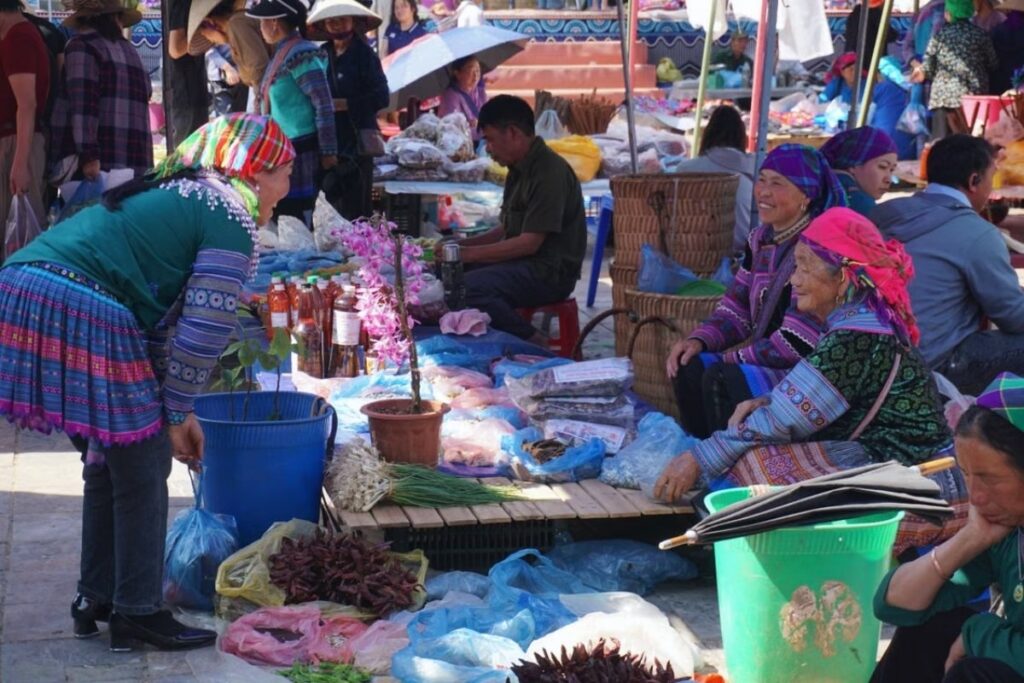
Held every Sunday in Lào Cai Province, Bắc Hà Market is one of Vietnam’s most famous ethnic markets.
Its colorful atmosphere comes from the many communities that gather there, including Hmong, Dao, Tày, and Phù Lá families.
Visitors can explore sections dedicated to textiles, livestock, food, handicrafts, and agricultural products while experiencing one of northern Vietnam’s most vibrant cultural traditions.
Cán Cấu Market
Smaller than Bắc Hà, Cán Cấu Market attracts fewer visitors and offers a quieter experience.
Traditional clothing, handmade crafts, and local produce remain the main attractions, making it an excellent choice for travelers looking for a less crowded market.
More Than a Place to Shop
Whether on the river or in the mountains, these markets share one important characteristic.
They bring people together.
Children accompany parents.
Neighbors exchange news.
Friends meet after weeks apart.
Meals are shared.
Stories are told.
Commerce provides the reason to gather—but community remains at the heart of the experience.
Traveler’s Tips
To make the most of your visit:
- Arrive early, especially at floating markets.
- Ask permission before taking close-up portraits.
The most memorable experiences often come from simply slowing down.
Did You Know?
Some of Vietnam’s mountain markets have served surrounding communities for centuries. Long before modern roads connected remote villages, these weekly gatherings were essential for trade, social life, and cultural exchange. Many continue to fulfill those roles today.
Why These Markets Belong on Every Vietnam Itinerary
Neighborhood markets reveal everyday routines.
Floating markets showcase the ingenuity of river communities.
Mountain markets celebrate Vietnam’s extraordinary cultural diversity.
Experiencing all three offers a far richer understanding of the country than visiting only famous landmarks.
Each market tells a different story—but together they reveal how geography, tradition, and community continue to shape life across Vietnam.
Bargaining in Vietnam: How to Negotiate with Confidence and Respect
One question comes up again and again among first-time visitors:
How does bargaining actually work in Vietnam?
Should you negotiate every price?
How much should you offer?
And perhaps most importantly, how do you bargain without offending the seller?
The answers are simpler than many travelers expect.
In Vietnam, bargaining is usually friendly, brief, and expected only in certain situations. Understanding when to negotiate—and when to simply pay the listed price—will help you shop with confidence while respecting local customs.
Quick Answer: Do You Need to Bargain in Vietnam?
Yes—but only in certain places.
Bargaining is common in traditional markets selling souvenirs, clothing, accessories, artwork, and handicrafts.
It is generally not expected in supermarkets, shopping malls, convenience stores, restaurants, cafés, pharmacies, or branded retail stores.
A simple rule works well for most travelers:
If the price is clearly displayed, pay the listed price. If there is no price tag in a traditional market, polite bargaining is usually acceptable.
Where Bargaining Is Appropriate
Understanding when to negotiate is just as important as knowing how.
| Shopping Location | Bargaining? |
|---|---|
| Traditional markets | ✅ Usually |
| Souvenir stalls | ✅ Usually |
| Clothing vendors | ✅ Usually |
| Handicraft shops | ✅ Often |
| Tailor shops | ✅ Sometimes |
| Art galleries | ⚠️ Occasionally |
| Street food stalls | ❌ No |
| Restaurants | ❌ No |
| Coffee shops | ❌ No |
| Supermarkets | ❌ No |
| Convenience stores | ❌ No |
| Shopping malls | ❌ No |
| Brand-name stores | ❌ No |
Knowing this distinction immediately removes much of the uncertainty first-time visitors often feel.
Why Bargaining Is Part of Market Culture
Traditional markets developed long before fixed pricing became common.
Because each stall operates independently, prices often reflect factors such as craftsmanship, seasonality, demand, and quantity purchased.
That flexibility makes polite negotiation a natural part of the shopping experience.
For local shoppers, bargaining isn’t unusual.
It’s simply another conversation between buyer and seller.
A Simple Way to Bargain Politely
You don’t need special negotiation skills.
Most successful conversations follow a similar pattern.
1. Greet the Vendor
A smile and a simple “Xin chào” immediately create a friendlier atmosphere.
2. Ask the Price
Say:
“Bao nhiêu tiền?”
(How much is it?)
Listen carefully before responding.
Many vendors will type the price into a calculator if language becomes a barrier.
3. Make a Reasonable Offer
Rather than offering an unrealistically low price, suggest a modest reduction.
For many souvenirs and handicrafts, offering around 10–20% below the asking price provides a respectful starting point.
The exact amount always depends on the item and the situation.
4. Find a Fair Middle Ground
Most negotiations end with both sides adjusting slightly.
If the vendor lowers the price and you’re comfortable with it, that’s usually a good time to accept.
Remember:
The goal isn’t to “win.”
It’s to reach an agreement.
Local Insight
A lantern seller in Hội An once told me that many international visitors focused on negotiating the lowest possible price, while local customers were more likely to ask about the quality of the bamboo frame, the fabric, or how the lantern had been made. That conversation changed the way I approached bargaining. Asking thoughtful questions often led to more interesting conversations—and sometimes a better price as well.
5. Thank the Vendor
Whether you decide to buy or not, finish with a smile and a simple:
“Cảm ơn.”
(Thank you.)
Courtesy is remembered long after the negotiation ends.
Five Common Bargaining Mistakes
Even experienced travelers occasionally make these mistakes.
Offering an Unrealistically Low Price
A very low first offer often ends the conversation before it begins.
Start with a reasonable counteroffer instead.
Negotiating Without Intending to Buy
If you negotiate all the way to an agreed price and then walk away, the vendor may feel their time has been wasted.
Only bargain when you’re genuinely interested in purchasing the item.
Forgetting the Human Side
Behind nearly every market stall is a family business.
Supporting local artisans and small vendors is one of the reasons many travelers choose to shop in traditional markets.
Paying a fair price helps preserve those businesses.
Comparing Everything to Home
Visitors sometimes focus on converting every purchase into their own currency.
Instead, think about the craftsmanship, uniqueness, and local value of what you’re buying.
A handmade lantern or embroidered textile represents hours of skilled work—not just a price tag.
Taking Bargaining Too Seriously
The best negotiations often include laughter.
Approach the conversation with patience rather than competition.
A smile is usually more effective than a hard bargain.
What Should You Do? A Quick Bargaining Guide
Bargaining doesn’t have to feel uncomfortable. Most negotiations in Vietnam are friendly, brief, and based on mutual respect rather than confrontation.
If you’re unsure how to respond in different situations, this quick guide can help.
| Situation | What to Do | Why It Works |
|---|---|---|
| The first price seems too high | Smile, thank the seller, and politely ask if there’s a better price. | Opens the conversation without creating tension. |
| The seller lowers the price slightly | Make one reasonable counteroffer instead of negotiating aggressively. | Shows respect while keeping the discussion friendly. |
| The price is already fair | Accept it without bargaining. | Many neighborhood markets and food stalls use fixed or very reasonable prices. |
| You can’t agree on a price | Thank the seller and walk away politely. | Ending respectfully leaves a positive impression and avoids unnecessary conflict. |
| You’ve agreed on a price | Complete the purchase without trying to negotiate further. | In Vietnamese market culture, changing your mind after reaching an agreement is generally considered impolite. |
| You’re buying several items | Ask whether a small discount is available for multiple purchases. | Vendors are often more flexible when selling several items at once. |
Once you understand how to respond in different bargaining situations, learning a few simple Vietnamese phrases can make the experience feel even more natural and enjoyable.
Useful Vietnamese Shopping Phrases
Learning just a few words makes shopping much easier.
| Vietnamese | Meaning |
|---|---|
| Xin chào | Hello |
| Bao nhiêu tiền? | How much is it? |
| Có giảm không? | Is there a discount? |
| Đắt quá | That’s a little expensive. |
| Cảm ơn | Thank you |
| Tạm biệt | Goodbye |
Even imperfect pronunciation is usually appreciated.
Bargaining and Responsible Tourism
Responsible bargaining isn’t about paying the lowest possible price.
It’s about paying a fair price while respecting the people behind the products you buy.
Did You Know?
Many long-time Vietnamese customers receive small gifts instead of discounts. A vendor might add an extra handful of herbs, another piece of fruit, or a small local snack as a gesture of appreciation. These simple acts reflect the trust and relationships that traditional markets have always been built upon.
What to Buy at Vietnamese Markets: Authentic Souvenirs, Local Food & Smart Shopping Tips
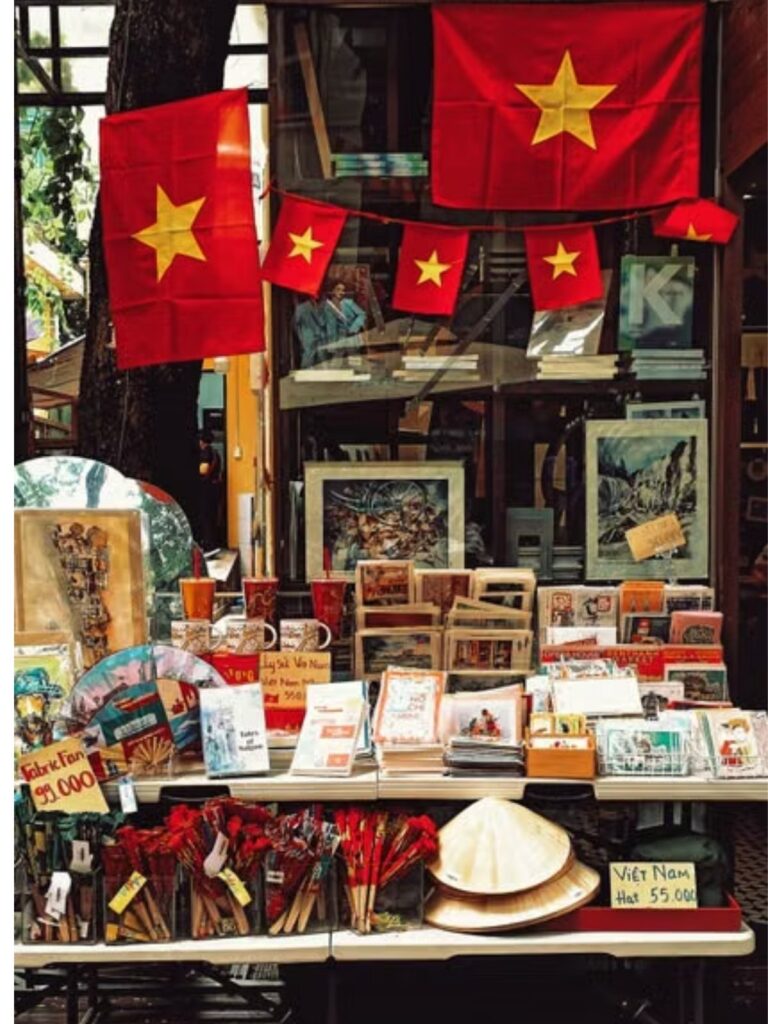
One of the best things about shopping in Vietnam is that every region has something unique to offer.
Instead of finding the same souvenirs everywhere, markets reflect the history, craftsmanship, and local resources of the communities around them.
In Hanoi, you’ll discover lacquerware and ceramics.
In Hội An, silk lanterns light up every street.
The Central Highlands are famous for coffee.
The Mekong Delta is known for coconut products and tropical fruit.
Rather than asking, “What should I buy in Vietnam?”, a better question is:
“What is this region famous for?”
The answer usually leads to more meaningful souvenirs—and better travel memories.
Vietnam’s Best Handmade Souvenirs
Rather than buying mass-produced souvenirs, look for products that reflect Vietnam’s craftsmanship and regional traditions. Many of the country’s most memorable keepsakes are still made by skilled artisans using techniques passed down through generations.
Vietnamese Coffee
Vietnam is one of the world’s largest coffee producers, making locally roasted beans one of the country’s most popular souvenirs. Pair a bag of coffee with a traditional phin filter for an authentic Vietnamese brewing experience at home.
Best places to buy: Buôn Ma Thuột, Đà Lạt, Ho Chi Minh City, Hanoi
Interested in Vietnam’s unique coffee traditions? Explore our Vietnam Coffee Culture Guide to learn about egg coffee, cà phê sữa đá, and regional brewing styles.
Vietnamese Tea
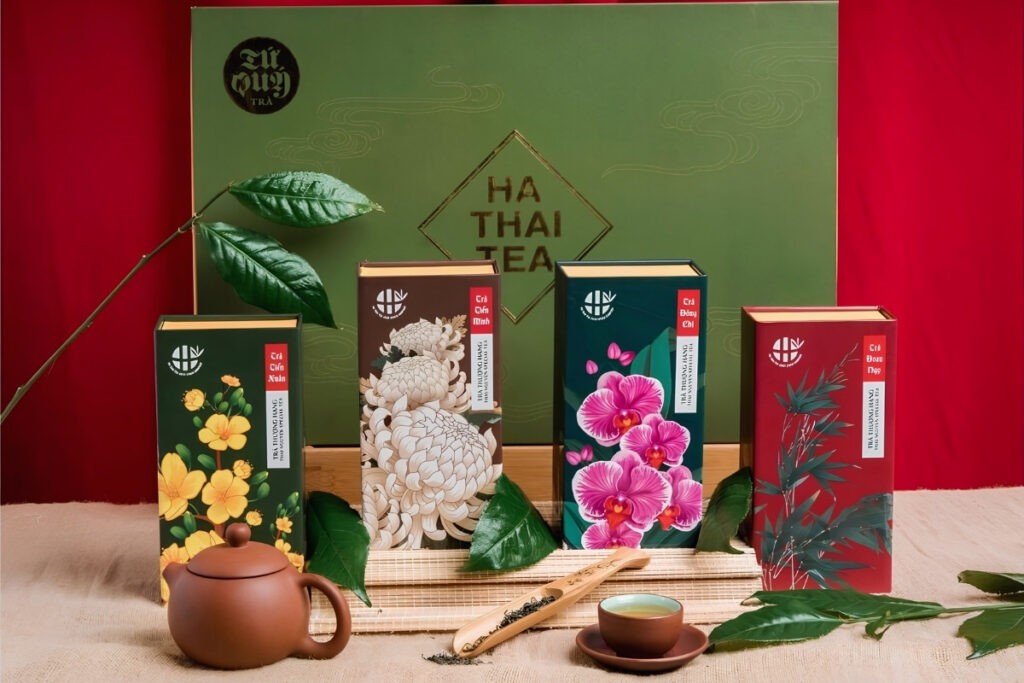
Tea has been part of Vietnamese daily life for centuries, from welcoming guests to family gatherings and ancestral ceremonies. Popular varieties include fragrant lotus tea, jasmine tea, and high-quality green tea from northern Vietnam. Lightweight and beautifully packaged, tea is one of the easiest souvenirs to bring home.
Best places to buy: Thái Nguyên, Hanoi, Huế
To discover how tea shapes Vietnamese hospitality and everyday culture, read our Vietnamese Tea Culture.
Silk
From elegant scarves to tailored clothing, Vietnamese silk is valued for its smooth texture and timeless style. If you’re investing in silk, ask whether the fabric is pure silk or a blend, as quality can vary between vendors.
Best places to buy: Hội An, Hanoi
Lanterns
Handmade lanterns have become one of Vietnam’s most recognizable cultural symbols. Foldable versions are lightweight and easy to pack, making them a practical souvenir despite their delicate appearance.
Best place to buy: Hội An Ancient Town
Ceramics
Vietnam’s ceramic tradition dates back centuries, and handcrafted pottery remains both practical and decorative. Tea sets, bowls, vases, and small plates are popular choices for travelers seeking authentic handmade gifts.
Best place to buy: Bát Tràng Ceramic Village (near Hanoi)
Lacquerware
Vietnamese lacquerware combines traditional craftsmanship with contemporary design. Jewelry boxes, trays, bowls, and decorative artwork are among the most popular choices, especially when purchased from reputable workshops rather than tourist stalls.
Best places to buy: Hanoi, Ho Chi Minh City
Handwoven Textiles
Many ethnic minority communities continue weaving textiles using traditional patterns unique to their culture. Scarves, bags, table runners, and embroidered fabrics offer meaningful souvenirs while helping support local artisans.
Best places to buy: Bắc Hà Market, Sa Pa, Hà Giang
Bamboo & Rattan Crafts
Lightweight, sustainable, and easy to carry, bamboo and rattan products range from baskets and trays to home déco
r and kitchen accessories. They make excellent gifts for travelers looking for eco-friendly souvenirs.
Best places to buy: Craft markets throughout Vietnam
Best Vietnamese Souvenirs: Where to Buy, What to Expect & How to Pack
Not all souvenirs are equally practical.
Some are easy to pack, while others require extra care. Some make excellent gifts, whereas others are best purchased for personal use.
This quick comparison can help you choose the right souvenir based on your travel style and available luggage space.
| Souvenir | Best Region / Destination | Why It’s Famous There | Easy to Pack | Typical Price |
|---|---|---|---|---|
| Vietnamese Coffee | Buôn Ma Thuột, Đà Lạt, Ho Chi Minh City | Vietnam’s coffee capital and home to premium Robusta beans | ✅ | $5–20 |
| Vietnamese Tea | Thái Nguyên, Hanoi | Renowned for high-quality green tea and traditional tea culture | ✅ | $5–15 |
| Silk Products | Hội An, Hanoi | Tailoring tradition and quality silk products | ✅ | $15–50 |
| Handmade Lanterns | Hội An | Symbol of the Ancient Town’s craft heritage | ⚠ Foldable | $10–40 |
| Lacquerware | Hanoi | Long-established lacquer workshops and galleries | ⚠ Fragile | $20–80 |
| Ceramics | Bát Tràng (Hanoi) | Vietnam’s best-known ceramic village | ❌ Fragile | $15–60 |
| Handwoven Textiles | SaPa, Bắc Hà, Hà Giang | Traditional weaving by ethnic minority communities | ✅ | $20–80 |
| Bamboo & Rattan Crafts | Throughout Vietnam | Sustainable handmade home décor | ✅ | $10–40 |
| Coconut Candy | Bến Tre | Famous coconut-growing region in the Mekong Delta | ✅ | $3–10 |
| Local Spices | Huế, Hội An | Regional spices used in central Vietnamese cuisine | ✅ | $2–15 |
Prices are approximate and may vary depending on craftsmanship, quality, and location.
Why Buying Locally Matters
Whenever possible, buy products in the region where they are traditionally made. Not only will you often find better craftsmanship and a wider selection, but you’ll also have the opportunity to learn about the local traditions behind each item. Purchasing directly from artisans or regional markets helps support local communities while giving your souvenir a stronger connection to the place you visited.
Choosing the Right Souvenir
- Coffee lovers: Vietnamese coffee and a traditional phin filter.
- Food lovers: Tea, spices, coconut candy, and dried fruit.
- Light packers: Silk scarves, coffee, tea, and spices.
- Home décor enthusiasts: Lanterns, lacquerware, and ceramics.
- Craft enthusiasts: Handwoven textiles and bamboo products.
Don’t Miss Vietnam’s Local Food Products

Markets are also excellent places to buy edible souvenirs.
Popular choices include:
- Lotus tea
- Jasmine tea
- Cinnamon
- Star anise
- Black pepper
- Cashew nuts
- Coconut candy
- Dried fruit
Most travel well and make thoughtful gifts.
Before purchasing fresh food products, check your home country’s customs regulations to ensure they can be imported legally.
What to Eat at Vietnamese Markets
Traditional markets are among the best places to experience Vietnam’s everyday food culture. Rather than searching for famous restaurants, look for busy stalls where local residents gather for breakfast or lunch.
Some of the dishes commonly found in markets include:
- Phở – Beef or chicken noodle soup
- Bánh mì – Crispy Vietnamese baguette sandwiches
- Bún chả – Grilled pork with rice noodles
- Bánh xèo – Crispy savory pancakes
- Cao lầu – A regional specialty from Hội An
- Seasonal tropical fruit – Often sold freshly cut or whole
Instead of choosing the stall with the biggest sign, follow the locals. A busy queue is often the best indication of freshness and quality.
👉 Traditional markets are one of the best places to experience Vietnam’s incredible food culture. If you’d like to explore beyond the market stalls, our Vietnamese Food Guide introduces the country’s most iconic regional dishes, while the Vietnamese Street Food Guide focuses on everyday favorites enjoyed across Vietnam. Planning to explore specific destinations? Our Hanoi Food Guide and Ho Chi Minh city Food Guide offer detailed recommendations on where to experience local specialties like a resident rather than a tourist.
Food Safety Checklist
Choosing street food in Vietnamese markets doesn’t have to be complicated.
✔ Choose busy stalls
High customer turnover usually means fresher ingredients.
✔ Eat food served hot
Freshly cooked dishes are generally the safest choice.
✔ Drink bottled or filtered water
Avoid untreated tap water.
✔ Peel fruit yourself
Whole fruit is usually a safer option than pre-cut fruit.
✔ Wash or sanitize your hands
Carry a small bottle of hand sanitizer when visiting busy markets.
✔ Follow local crowds
If local families regularly eat at a stall, it’s often a good sign of consistent quality.
What Not to Buy
Responsible travel also means knowing what to avoid.
Skip products such as:
- Counterfeit luxury goods
- Wildlife products
- Coral or protected shells
- Unverified antiques
- Unlabeled herbal medicines
Choosing authentic, locally made products helps support traditional crafts while protecting Vietnam’s natural and cultural heritage.
Packing & Customs Tips for Bringing Souvenirs Home
Finding the perfect souvenir is only part of the journey. Packing it safely—and making sure it can be brought into your home country—is just as important.
These simple tips can help protect your purchases and avoid unnecessary problems at customs.
Coffee, Tea & Spices
These are among the easiest Vietnamese souvenirs to transport.
✔ Keep products in their original sealed packaging.
✔ Store them in a dry place inside your luggage.
✔ Check your destination country’s customs rules if carrying large quantities.
Ceramics & Lacquerware
Fragile items should always be wrapped carefully.
Use clothing or bubble wrap to cushion delicate pieces, and place them in the center of your suitcase rather than near the edges.
Some larger workshops can also arrange international shipping.
Lanterns
Most lanterns sold in Hội An are designed to fold flat, making them surprisingly easy to pack.
To avoid damaging the bamboo frame, place the lantern between soft clothing inside your suitcase.
Textiles & Silk
Scarves, clothing, and embroidered fabrics travel well and rarely require special packing.
If purchasing tailored clothing, allow enough time for fittings and alterations before your departure.
Food Products
Before buying fresh fruit, meat products, or homemade preserves, check your country’s import regulations.
Many countries restrict fresh agricultural products, while sealed coffee, tea, spices, and packaged sweets are generally much easier to bring home.
Quick Packing Reference
| Product | Easy to Pack | Customs-Friendly |
|---|---|---|
| Coffee, tea, spices | ✅ | Usually |
| Silk & textiles | ✅ | Yes |
| Lanterns | ⚠ | Yes |
| Ceramics | ❌ | Yes |
| Fresh fruit | ⚠ | Depends |
*Always check the latest customs regulations in your destination country before traveling.
How to Spot Authentic Handmade Products
One of the greatest pleasures of shopping in Vietnam is discovering products made by skilled local artisans. However, not every item sold in a market is genuinely handmade.
These simple tips can help you identify authentic craftsmanship and make more informed purchases.
Look for Small Imperfections
Handmade products are rarely identical.
Slight variations in stitching, brush strokes, wood grain, or woven patterns often indicate that an item was crafted by hand rather than produced in a factory.
Perfect uniformity can sometimes be a sign of mass production.
Ask Where the Product Was Made
Don’t hesitate to ask the vendor where the item comes from.
Many sellers are proud to explain whether it was produced in a nearby craft village or by local artisans.
These conversations often add as much value as the souvenir itself.
Check the Materials
Authentic Vietnamese handicrafts are commonly made from natural materials such as:
- Silk
- Bamboo
- Rattan
- Wood
- Ceramic
- Cotton
- Lacquer
If the materials feel unusually lightweight or synthetic, they may not be traditional handmade products.
Be Realistic About Price
Handmade craftsmanship takes time.
If a product is dramatically cheaper than similar items nearby, it’s worth asking why.
A fair price often reflects the skill, labor, and materials involved in creating the piece.
Remember, paying slightly more for authentic craftsmanship usually offers better long-term value than buying a low-cost imitation.
Buy from Reputable Sellers
Whenever possible, purchase directly from:
- Craft villages
- Artisan workshops
- Family-run businesses
- Vendors who can explain the making process
These sources are generally more reliable than anonymous souvenir stalls selling large quantities of identical products.
Authentic vs. Mass-Produced
| Authentic Handmade | Mass-Produced |
|---|---|
| Small natural variations | Nearly identical items |
| Natural materials | Synthetic materials are common |
| Vendor knows the maker or workshop | Limited product knowledge |
| Produced in smaller quantities | Large volumes of identical items |
| Higher craftsmanship | Focus on low cost |
Traveler’s Insight
Rather than asking, “What’s the cheapest souvenir?”, ask yourself:
“What’s the story behind this product?”
A lantern handcrafted in Hội An, a ceramic bowl from Bát Tràng, or a handwoven textile purchased directly from an artisan often becomes more meaningful because of the people and traditions behind it.
👉 Many authentic handicrafts are closely connected to Vietnam’s traditional craft villages and cultural heritage. If you’re interested in the stories behind these centuries-old techniques, explore our guides to Vietnamese Traditional Clothing, Vietnamese Ethnic Groups, and Ao Dai: Vietnam’s National Dress, where you’ll discover how regional craftsmanship continues to shape Vietnamese culture today.
Average Price Guide for Popular Vietnamese Souvenirs
Prices vary depending on quality, craftsmanship, and where you shop. Tourist markets generally charge more than neighborhood markets or artisan workshops, but these estimates provide a useful starting point.
| Product | Typical Price (USD) | Typical Price (VND) |
|---|---|---|
| Local coffee (250–500 g) | $5–15 | 130,000–390,000 |
| Premium coffee | $15–30 | 390,000–780,000 |
| Lotus or green tea | $5–20 | 130,000–520,000 |
| Silk scarf | $15–40 | 390,000–1,040,000 |
| Handmade lantern | $10–35 | 260,000–910,000 |
| Lacquerware | $20–80 | 520,000–2,080,000 |
| Ceramic tea set | $20–60 | 520,000–1,560,000 |
| Handwoven textile | $20–80 | 520,000–2,080,000 |
| Coconut candy | $3–8 | 80,000–210,000 |
| Local spices | $2–10 | 50,000–260,000 |
Prices are approximate and may vary by season, quality, and location.
What Affects the Price?
Several factors influence how much you’ll pay:
- Craftsmanship – Handmade products naturally cost more than factory-made items.
- Materials – Pure silk, high-quality ceramics, and premium coffee command higher prices.
- Location – Tourist hotspots often have higher prices than neighborhood markets or craft villages.
- Season – Some food products and handicrafts become more expensive during major holidays such as Tết.
Understanding these factors makes it easier to judge whether a price is reasonable before negotiating.
Instead of automatically choosing the cheapest option, consider the craftsmanship, materials, and story behind each product. Paying a little more for authentic handmade work often provides better long-term value while supporting local artisans.
Typical Budget
Under $25: coffee, tea, spices, coconut candy, small handicrafts.
$25–75: silk scarves, lanterns, lacquerware, embroidered textiles.
Over $75: tailored clothing, premium ceramics, larger handcrafted pieces.
Editor’s Tip
If you find a handmade product you genuinely love and the price feels fair, don’t negotiate simply because bargaining is possible. Paying a reasonable price for quality craftsmanship is one of the easiest ways to support local artisans while bringing home a souvenir you’ll appreciate for years.
Visiting Vietnamese Markets Like a Local: Etiquette, Practical Tips & Common Mistakes
By this point, you know what Vietnam’s markets look like, where to find them, what to buy, and how bargaining works.
The final step is understanding how to experience them respectfully.
Markets are more than places to shop.
They are workplaces, gathering places, and an important part of everyday community life.
A little cultural awareness not only helps you avoid awkward situations—it also leads to warmer conversations, better photographs, and more memorable experiences.
Quick Checklist Before You Visit
Use this simple checklist before heading to any traditional market.
✅ Arrive early for the best atmosphere.
✅ Carry small Vietnamese đồng notes.
✅ Bring a reusable shopping bag.
✅ Ask before photographing people.
✅ Bargain politely only where appropriate.
✅ Taste regional specialties.
✅ Support local artisans whenever possible.
Following these simple habits will help you experience Vietnam’s markets with confidence and respect.
Market Etiquette Every Traveler Should Know
Greet People with a Smile
You don’t need to speak fluent Vietnamese.
A smile and a simple “Xin chào” (Hello) immediately create a friendly atmosphere.
Many vendors genuinely appreciate visitors who make the effort to learn even a few local words.
Ask Before Taking Portrait Photos
Traditional markets are filled with colorful scenes and fascinating people.
While photographing products or wide market views is generally acceptable, it’s courteous to ask permission before taking close-up portraits.
Most vendors are happy to agree.
Some even enjoy posing for visitors.
Respecting the wishes of those who decline is simply good travel etiquette.
Remember That Markets Are Workplaces
Unlike museums or attractions, markets exist to serve local communities.
People are shopping before work.
Restaurant owners are buying ingredients.
Families are earning a living.
Try not to block narrow walkways while taking photographs or browsing stalls.
Being aware of your surroundings makes everyone’s experience more enjoyable.
Handle Products Carefully
Many stalls display fresh food, handmade crafts, or delicate products.
Unless invited, avoid handling merchandise unnecessarily.
If you’d like to inspect an item more closely, simply ask.
Vendors are usually happy to help.
Practical Tips for First-Time Visitors
Bring Cash
Although QR code payments have become increasingly common in Vietnam’s cities, cash remains the easiest payment method in many traditional markets.
Carrying smaller banknotes also makes transactions faster and more convenient.
Dress Comfortably
Most market visits involve plenty of walking.
Choose comfortable shoes, lightweight clothing, and a hat if you’ll be outdoors during warmer months.
Visit Early
The atmosphere changes dramatically throughout the morning.
If you’re interested in local life, arrive between 6:00 and 8:00 a.m.
If you’re visiting a floating market, aim for sunrise.
The earlier you arrive, the more authentic the experience is likely to be.
Supporting Local Communities Through Responsible Shopping
One of the greatest advantages of shopping in traditional markets is knowing where your money goes.
Many stalls are independently owned family businesses.
Rather than purchasing mass-produced souvenirs, consider supporting artisans who continue traditional crafts such as:
- Embroidery
- Bamboo weaving
- Ceramics
- Lacquerware
- Handwoven textiles
- Lantern making
Buying directly from the people who create these products helps preserve cultural traditions while supporting local livelihoods.
Common Mistakes to Avoid at Vietnamese Markets
Most visits to Vietnamese markets are enjoyable, welcoming, and hassle-free. However, a few simple mistakes can affect your experience. Whether you’re exploring for the culture or shopping for souvenirs, these practical tips will help you make the most of your visit.
1. Treating Markets as a Quick Tourist Stop
Vietnamese markets are more than places to shop—they’re part of everyday life. Instead of rushing from stall to stall, slow down. Enjoy a local breakfast, watch vendors prepare fresh food, or simply observe the morning rhythm of the market. These everyday moments often become the most memorable part of the experience.
2. Visiting Only Famous Markets
Well-known markets such as Ben Thanh Market or Dong Xuan Market are excellent introductions, but smaller neighborhood markets often provide a more authentic glimpse of daily life. If your itinerary allows, try visiting at least one local market where most customers are Vietnamese residents.
3. Buying Too Quickly
Avoid purchasing the first item you see. Walk through the market first, compare quality, and talk with different vendors. Taking a little extra time often leads to better craftsmanship, fairer prices, and a more rewarding shopping experience.
4. Focusing Only on the Lowest Price
Successful bargaining isn’t about winning. Instead of concentrating only on discounts, pay attention to quality, craftsmanship, and the story behind the product. A handmade souvenir purchased directly from a local artisan is often worth more than a mass-produced item sold for less.
5. Ignoring Regional Specialties
Different regions of Vietnam are known for different products. Coffee from the Central Highlands, silk lanterns from Hội An, ceramics from Bát Tràng, and handwoven textiles from the northern mountains all reflect local traditions. Buying products where they’re traditionally made usually results in higher quality and more meaningful souvenirs.
6. Common Shopping Mistakes
Even in friendly markets, a little attention can help you avoid unnecessary problems.
| Situation | What to Do |
|---|---|
| Fake branded goods | Be cautious of luxury brands sold at unusually low prices. Many are imitation products rather than genuine items. |
| Wrong change | Count your change before leaving the stall, especially when paying with larger banknotes. |
| Damaged or fragile products | Inspect ceramics, lacquerware, electronics, and handmade crafts carefully before paying. |
| Antiques and cultural artifacts | Avoid purchasing antiques or cultural relics without proper documentation, as some items may be subject to export restrictions when leaving Vietnam. |
| Making expensive purchases on your first day | Visit several markets before buying high-value items. Comparing quality is usually more valuable than comparing prices alone. |
Travel Tip
Most Vietnamese market vendors are honest, welcoming, and proud of what they sell. A friendly smile, a few simple Vietnamese phrases, genuine curiosity about a product, and a respectful attitude will usually create a far better experience than focusing only on bargaining. The best market memories often come from conversations with local people rather than the discounts you receive.
Frequently Asked Questions about Vietnamese Markets & Bargaining Culture
1. Are Vietnamese markets open every day?
Most traditional and neighborhood markets operate daily, although opening hours vary by location. Floating markets usually begin before sunrise and finish by mid-morning, while many ethnic minority markets in northern Vietnam are held only on specific days of the week.
2. What is the best time to visit Vietnamese markets?
For the most authentic experience, visit between 6:00 and 8:00 a.m. Early morning is when local shoppers, restaurant owners, and market vendors are busiest, offering the freshest produce and the liveliest atmosphere.
3. Do I need cash when shopping at Vietnamese markets?
Yes. Cash remains the preferred payment method in most traditional markets. Although many urban vendors now accept QR code payments, international travelers should carry enough Vietnamese đồng in small denominations for everyday purchases.
4. Can I use credit cards or QR payments?
Large souvenir shops, department stores, and some market vendors in major cities accept QR payments, but international credit cards are still uncommon at traditional market stalls. Carrying cash is the simplest and most reliable option.
5. Is bargaining expected everywhere?
No. Bargaining is common when buying souvenirs, clothing, handicrafts, and other non-food items in traditional markets. However, prices are generally fixed at supermarkets, shopping malls, convenience stores, restaurants, and neighborhood fresh-food markets where most customers are local residents.
6. Can I bargain at Ben Thanh Market?
Yes. Bargaining is a normal part of shopping at Ben Thanh Market, particularly for souvenirs, clothing, and handicrafts. Start with a friendly smile, negotiate politely, and remember that the goal is to reach a fair price rather than the lowest possible one.
7. What are the best souvenirs to buy in Vietnam?
Some of Vietnam’s most popular souvenirs include locally roasted coffee, Vietnamese tea, silk products, handmade lanterns, ceramics, lacquerware, handwoven textiles, bamboo crafts, and regional food specialties such as spices and coconut candy.
8. Can I bring Vietnamese coffee, tea, or spices back home?
In many countries, commercially packaged and sealed coffee, tea, and spices may be brought home for personal use. However, customs regulations vary by destination, so always check the latest import rules before traveling. Fresh fruit, meat products, and some agricultural items may be restricted.
9. Is street food in Vietnamese markets safe?
In most cases, yes. Choose busy stalls with high customer turnover, order food that is freshly cooked, and observe where local families eat. Freshly prepared dishes are generally a safer choice than food left sitting for long periods.
10. Are Vietnamese markets safe for tourists?
Yes. Vietnamese markets are generally welcoming and safe for visitors. As in any busy public place, keep an eye on your belongings, avoid displaying valuables, and stay aware of your surroundings, especially in crowded tourist areas.
11. What is the most famous market in Vietnam?
Vietnam is home to many iconic markets, each offering a different experience. Among the most famous are Ben Thanh Market (Ho Chi Minh City), Dong Xuan Market (Hanoi), Hoi An Central Market, Cai Rang Floating Market, and Bac Ha Market. The best choice depends on whether you’re interested in food, shopping, photography, or local culture.
12. Should I tip market vendors?
Tipping is not customary when buying goods in Vietnamese markets. Paying a fair price, treating vendors respectfully, and supporting local artisans through thoughtful purchases are generally more appreciated than leaving an additional tip.
Final Thoughts: Why Markets Explain Vietnam Better Than Any Attraction
Before I visited Vietnam, I thought markets were places where people bought things.
After traveling across the country, I realized they were places where people shared life.
Every morning, before the monuments fill with visitors…
Before cafés become busy…
Before museums open…
Vietnam begins its day in the market.
Families choose ingredients for breakfast.
Florists arrange flowers for temples and homes.
Restaurant owners search for the freshest herbs.
Friends exchange neighborhood news.
Children stop for breakfast on their way to school.
Grandparents continue businesses they’ve managed for decades.
These scenes rarely appear in postcards.
Yet they reveal more about Vietnam than almost any famous landmark.
Markets tell the story of a country that values freshness over convenience.
Community over anonymity.
Craftsmanship over mass production.
Relationships over transactions.
For travelers, they’re also a reminder that the most meaningful experiences often happen in ordinary places.
Not because they’re designed to impress visitors.
But because they’re real.
Long after you forget exactly how much you paid for a lantern, a bag of coffee, or a handwoven scarf, you’ll probably remember something else instead.
The woman who taught you how to bargain with a smile.
The vendor who insisted you taste a slice of dragon fruit before buying it.
The tiny plastic stool where you ate the best bowl of noodles of your trip.
The flower seller arranging lotus blossoms in the soft light before sunrise.
Those are the memories that stay with you.
And perhaps that’s the greatest gift Vietnamese markets offer.
Not simply something to take home in your suitcase—
but a deeper understanding of the people, traditions, and everyday moments that make Vietnam one of the most captivating destinations in Asia.
Continue Exploring Vietnam’s Cultural Heritage
If Vietnamese markets gave you a glimpse into the heart of everyday life, there’s so much more to discover about the traditions that have shaped Vietnam for centuries.
Continue exploring Vietnam’s rich cultural heritage with these in-depth guides from Tam Voc Viet:
- Vietnamese Culture Guide – Explore the customs, traditions, cuisine, festivals, and values that define modern Vietnam while preserving centuries of cultural heritage.
- Vietnamese Family Culture – Explore how family values influence Vietnamese society, relationships, and daily life.
- Ao Dai: Vietnam’s National Dress -Discover the history and symbolism behind Vietnam’s iconic traditional costume.
- Tet Holiday in Vietnam – Experience Vietnam’s most important festival, where family reunions and ancestral traditions take center stage.
- Vietnamese Etiquette – Understand the customs and social etiquette that will help you travel respectfully in Vietnam.
- Ancestor Worship in Vietnam – Learn about one of the country’s most enduring traditions and its significance in family life.
- Vietnamese Traditional Clothing – Discover the remarkable diversity of traditional attire worn by Vietnam’s ethnic communities beyond the famous áo dài.
- Vietnamese Festivals – Explore the religious and cultural celebrations that bring communities together throughout the year.
- Vietnamese Religion & Beliefs – Learn how Buddhism, ancestor worship, and folk beliefs influence Vietnam’s traditions, hospitality, and everyday life.
- Vietnam Tea Culture – Discover Tea Culture of Vietnam through its traditions, ceremonies, famous teas, etiquette, regional customs, and where to enjoy authentic tea..
- Vietnamese Ethnic Groups – Explore Vietnam’s 54 ethnic groups, their unique cultures, traditional clothing, customs, languages, festivals, and where to experience authentic ethnic heritage.
Together, these guides provide a deeper understanding of Vietnam beyond its famous landmarks—revealing the traditions, stories, and everyday experiences that make the country one of Asia’s richest cultural destinations.
Editor’s Note:
Markets are among the few places where Vietnam’s past and present naturally come together.
Every morning, farmers, fishermen, artisans, restaurant owners, and families continue traditions that have been passed down through generations. While each market has its own personality, they all reflect the same enduring values: community, hospitality, craftsmanship, and a deep appreciation for fresh food and local relationships.
Rather than treating markets simply as shopping destinations, we encourage travelers to slow down, start conversations, taste regional specialties, and observe everyday life with curiosity and respect. Often, the most memorable moments aren’t the things you buy—they’re the people you meet along the way.
What Surprised Us Most
After exploring markets across northern Vietnam, the central coast, and the Mekong Delta, one thing became remarkably clear:
Vietnamese markets are built on relationships, not transactions.
Fresh ingredients are still purchased daily. Vendors know many of their regular customers by name. Families continue operating the same market stalls across multiple generations. Even in an age of supermarkets and online shopping, traditional markets remain the social and cultural heart of countless communities.
For travelers, this offers something increasingly rare—a chance to experience authentic daily life rather than a performance created for visitors.
References & Trusted Resources
This guide draws on firsthand travel experiences, historical research, official tourism publications, academic sources, and internationally recognized cultural references. Readers interested in learning more about Vietnam’s market culture may find the following resources valuable:
👉 Vietnam National Authority of Tourism – Official travel information, regional destinations, cultural attractions, and visitor resources.
👉 UNESCO – Viet Nam Intangible Cultural Heritage – Information on Vietnam’s recognized cultural traditions, traditional crafts, festivals, and community heritage.
👉 Ministry of Culture, Sports and Tourism of Viet Nam – Official resources covering cultural preservation, museums, heritage sites, and traditional arts.
About the Author
Tam Voc Viet Editorial Team
The Tam Voc Viet Editorial Team is dedicated to helping international travelers discover Vietnam through its history, culture, traditions, and everyday life.
Our editorial approach combines firsthand travel experiences with official government publications, UNESCO resources, academic research, interviews with local communities, and insights from regional experts. Every guide is carefully researched, fact-checked, and regularly updated to provide reliable, practical, and engaging information for travelers seeking authentic experiences throughout Vietnam.
Article Information
Category: Vietnamese Culture
Topic: Vietnamese Markets & Bargaining Culture
Reading Time: Approximately 40–50 minutes
Published: August 2026
Last Updated: August 2026
Author: Tam Voc Viet Editorial Team
